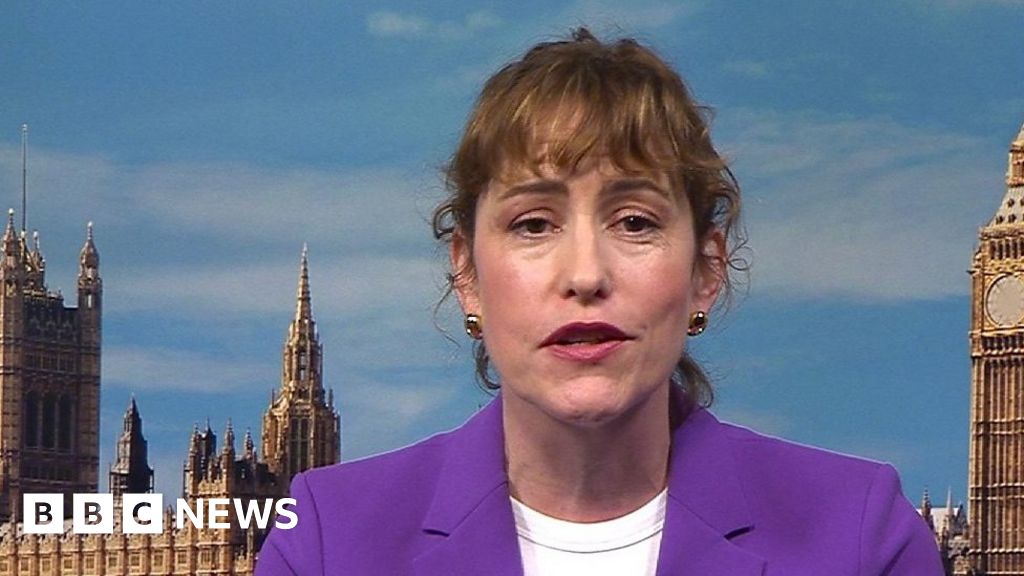
Can health secretary name NHS trusts performing well?

Victoria Atkins was challenged to name some health trusts meeting their targets to cut waiting lists.But the health secretary said she was wanted to be “even handed” and declined to name any individual trusts hitting the expected standard for treating 80% of people in casualty within four hours.BBC Breakfast’s Naga Munchetty pressed her to back up her claims on which areas of England were performing well, adding that viewers across the country contacted the programme about their own experiences.Fact-checking PM’s claims on prisons, crime and the NHS

Read more →

How to Be Less Self-Critical When Perfectionism Is a Trap

Young people are struggling with social comparison and self-criticism, but experts say there are ways to quiet those voices.Yuxin Sun, a psychologist in Seattle, sees a lot of clients at her group practice who insist they aren’t perfectionists. “‘Oh, I’m not perfect. I’m far from perfect,’” they tell her.But perfectionism isn’t about being the best at any given pursuit, Dr. Sun said, “it’s the feeling of never arriving to that place, never feeling good enough, never feeling adequate.” And that can make for a harsh internal voice that belittles and chastises us.Perfectionism is so pervasive that there’s a test to measure it: the Multidimensional Perfectionism Scale. When researchers looked at how college students have responded to the scale’s questions over time, they found that rates of perfectionism surged in recent decades, skyrocketing between 2006 and 2022.Thomas Curran, an associate professor of psychology at the London School of Economics and Political Science who led the analysis, said the type of perfectionism with the steepest rise — socially prescribed perfectionism — was rooted in the belief that others expect you to be perfect. Today’s young person is more likely to score much higher on this measure than someone who took the test decades ago. There could be a number of causes for the uptick: increasing parental expectations, school pressures, the ubiquity of social media influencers and advertising.The feeling of not being good enough or that “my current life circumstances are inadequate or not sufficient” has created an “unrelenting treadmill,” Dr. Curran said, where there is “no joy in success and lots of self-criticism.”Regardless of whether you consider yourself a perfectionist, experts say there are a number of small things you can try to keep your inner critic in check.We are having trouble retrieving the article content.Please enable JavaScript in your browser settings.Thank you for your patience while we verify access. If you are in Reader mode please exit and log into your Times account, or subscribe for all of The Times.Thank you for your patience while we verify access.Already a subscriber? Log in.Want all of The Times? Subscribe.

Read more →

24 Hours at a Makeshift Refuge for Migrants in the California Wilderness

It was 1:53 a.m., and Peter Fink was on a barren mountain plateau near Campo, Calif., passing out blankets to people from four continents who had arrived there under the cover of night.This was a nocturnal ritual for the 22-year-old, dressed in a ball cap and a wool overshirt, whose perch — just over 300 yards up a rocky incline from the United States-Mexico border wall — had become a round-the-clock boarding space for people who had crossed unlawfully onto American soil.With Mexico’s armed National Guard now stationed at the most popular crossing sites along southeastern San Diego County, migrant routes have shifted further into the remote wilderness, where people face more extreme terrains and temperatures with little to no infrastructure to keep them alive.For migrants who were aiming to be apprehended by U.S. Border Patrol agents and begin applying to stay in the country, Mr. Fink’s makeshift camp, a dirt patch under the lattices of a high-voltage tower, had become a first stop, where modest rations of donated food, water and firewood helped migrants survive while they waited for agents to traverse the landscape and detain them before their health languished dangerously.At this site and others along the border, migrants have waited for hours or sometimes days to be taken into custody, and a Federal District Court judge ruled last week that the Border Patrol must move “expeditiously” to get children into safe and sanitary shelters. But unlike outdoor waiting areas that had arisen in more populated areas, Mr. Fink’s site had no aid tents or medical volunteers, no dumpsters or port-a-potties — just a hole that he had dug as a communal toilet, and Mr. Fink himself.Michelle Cuenca, 28, with her son, Ezequiel Molina, 9, waited inside a tent. They arrived after walking for seven hours without food, though they felt their journey had been easier than most.Ariana Drehsler for The New York TimesWe are having trouble retrieving the article content.Please enable JavaScript in your browser settings.Thank you for your patience while we verify access. If you are in Reader mode please exit and log into your Times account, or subscribe for all of The Times.Thank you for your patience while we verify access.Already a subscriber? Log in.Want all of The Times? Subscribe.

Read more →

First migraine pill could help 170,000 in England

Published30 minutes agoShareclose panelShare pageCopy linkAbout sharingImage source, Getty ImagesBy Aurelia FosterHealth reporter, BBC News The first oral treatment for preventing both chronic and episodic migraines could soon be available on the NHS.Health experts said up to 170,000 people in England could benefit from taking atogepant to prevent severe head pain, which can be debilitating.It has been recommended for those who have not responded well to other medications or cannot have injections.One migraine charity described it as a positive step and said it hoped access to the drug would be “swift”.The National Institute for Health and Care Excellence (NICE) has recommended the drug, which comes in tablet form, after clinical trials suggested it was effective in some adults.In its final draft guidance, NICE said atogepant should be offered to people who had unsuccessfully tried three other medications which are taken by injection or infusion. Migraines are often characterised by a throbbing pain in one side of the head and can last several days. Other symptoms include dizziness, sensitivity to light, and difficulty speaking.It is not clear how many people are affected by migraines, but the NHS believes the number to be about six million across the UK, with many more women experiencing them than men.Atogepant is designed to be taken daily to prevent both chronic migraines (occurring more than 15 times a month) and episodic migraines (occurring between four and 15 times a month).At first, it will only be available from specialist doctors in secondary care settings, rather than from GPs.Rob Music, chief executive of the Migraine Trust, said it was good news as migraines could be very “debilitating”. “It is positive to see even more therapies emerging for people with migraine, as many still rely on treatments developed for other conditions.”However, the charity warned that many people had struggled to access similar new drugs, because of a lack of knowledge among doctors, and long waiting lists for specialists.”We now need to ensure access is swift, so that migraine patients can benefit from them as quickly as possible,” Mr Music said. Image source, Deborah SloanLife ‘back on track’Atogepant is a new type of anti-calcitonin gene-related peptide (CGRP) drug, which is specifically designed to treat migraines. They work by blocking the receptor of the CGRP protein. This is found in nerves in the head and neck and is thought to cause inflammation and migraine pain. These drugs have fewer side effects than older migraine drugs, some of which were originally developed for other conditions.It follows the introduction of a similar drug, rimegepant, in England and Scotland. Deborah Sloan, from Brighton, told the BBC that rimegepant had put her life “back on track” after suffering chronic migraines for 40 years. Other treatments led to severe side effects.She said can now work again after losing two careers because of being unwell with migraines for 20 days of each month.”I was at the end of my tether,” she said. “I became so desperate, I wasn’t sure how I was going to carry on. I didn’t think I could take another migraine attack because they are so disabling.”They can last three days, constantly vomiting. You’re not able to do anything. You feel like you want to die, that’s how I felt.”However, Mrs Sloan said she had to obtain rimegepant privately at first because of a long wait for a referral to a specialist doctor who could prescribe it.Atogepant is expected to be made available on the NHS in England from next month.It is already available in Scotland to prevent and relieve migraine symptoms.More on this storyMigraine attack treatment to benefit thousandsPublished14 September 2023NHS backs new wafer to prevent migrainesPublished31 May 2023’Huge deal’ therapy cuts migraine attacksPublished30 November 2017Related Internet LinksThe NHS website – NHSNICE – The National Institute for Health and Care ExcellenceHome – The Migraine TrustThe BBC is not responsible for the content of external sites.

Read more →

New way to generate human cartilage

University of Montana researchers and their partners have found a new method to generate human cartilage of the head and neck.
Mark Grimes, a biology professor in UM’s Division of Biological Sciences, said they have induced stem cells to become the cell type that normally makes up human craniofacial cartilage. Stem cells can replicate themselves and also develop into different types of cells.
“The cells that normally give rise to this type of cartilage are called neural crest cells,” Grimes said. “We found a novel method for generating craniofacial organoids from neural crest cells.”
Organoids are a simplified, miniature version of an organ that mimic the architecture and gene expression of the organ. “Organoids are a good model for certain human tissues that we can study in ways that are not possible using tissue from human beings,” he said.
Grimes said there is a critical unmet need for new methods to regenerate human cartilage for the 230,000 children born annually in the U.S. with craniofacial defects. Growing cartilage in the laboratory also could lead to effective treatments to repair craniofacial cartilage damage due to injuries.
The researchers studied gene expression data at the RNA and protein level to reveal how cartilage cells arise from stem cells. They revealed that stem cells communicate in the early stages to become elastic cartilage, which makes up human ears.
To accomplish this, the team used extensive analysis of biological markers and machine-learning pattern-recognition techniques to understand the cell signaling pathways involved when cells differentiate into cartilage.
It is difficult to reconstruct natural features such as a person’s ears, nose or larynx with current plastic surgery techniques, and transplanted tissue is often rejected without immunosuppressants.
“To use patient-derived stem cells to generate craniofacial cartilage in the laboratory, you need to understand the human-specific differentiation mechanisms,” Grimes said. “Our aim is to develop a protocol for craniofacial cartilage generation for transplantation using human stem cells.”
The research was published in the journal iScience. Besides Grimes, contributing UM authors include Lauren Foltz, Nagashree Avabhrath and Jean-Marc Lanchy. Other authors are Bradly Peterson of Missoula’s Pathology Consultants of Western Montana and Tyler Levy, Anthony Possemato and Majd Ariss of Cell Signaling Technology of Danvers, Massachusetts.

Read more →

More than half a million global stroke deaths may be tied to climate change

A changing climate may be linked to growing death and disability from stroke in regions around the world, according to a study published in the April 10, 2024, online issue of Neurology®, the medical journal of the American Academy of Neurology. Researchers found over three decades that non-optimal temperatures, those above or below temperatures associated with the lowest death rates, were increasingly linked to death and disability due to stroke. The study does not prove that climate change causes stroke. It only shows an association. The study also did not examine other risk factors such as high blood pressure and high cholesterol levels.
Researchers found that the majority of these strokes were due to lower than optimal temperatures, however they also found an increase in strokes tied to higher than optimal temperatures. With lower temperatures, a person’s blood vessels can constrict, increasing blood pressure. High blood pressure is a risk factor for stroke. Higher temperatures may cause dehydration, affecting cholesterol levels and resulting in slower blood flow, factors that can also lead to stroke.
“Dramatic temperature changes in recent years have affected human health and caused widespread concern,” said study author Quan Cheng, PhD, of Xiangya Hospital Central South University in Changsha, China. “Our study found that these changing temperatures may increase the burden of stroke worldwide, especially in older populations and areas with more health care disparities.
For the study, researchers looked at 30 years of health records for more than 200 countries and territories. They examined the number of stroke deaths and burden of stroke-related disability due to non-optimal temperatures.
They then divided the data to look at different regions, countries and territories. They also looked at age groups and genders.
In 2019, there were 521,031 stroke deaths linked to non-optimal temperatures. There were also 9.4 million disability-adjusted life years due to stroke linked to non-optimal temperatures. Disability-adjusted life years are the number of years of life lost due to premature death and years lived with illness.
When looking at low temperatures compared to high temperatures, they found that 474,002 of the total deaths were linked to low temperatures.

Researchers found that the rate of death from stroke from temperature changes for male participants was 7.7 per 100,000 compared to 5.9 per 100,000 for female participants.
When looking at regions, central Asia had the highest death rate for stroke linked to non-optimal temperatures with 18 per 100,000. At the national level, North Macedonia had the highest death rate with 33 per 100,000.
“More research is needed to determine the impact of temperature change on stroke and to target solutions to address health inequalities,” Cheng said. “Future research should aim to reduce this threat by finding effective health policies that address potential causes of climate change, such as the burning of fossil fuels, deforestation and industrial processes.”
The study was supported by Hunan Youth Science and Technology Talent Project.

Read more →

Mixed diets balance nutrition and carbon footprint

What we eat can impact our health as well as the environment. Many studies have looked at the impacts of diets in very general terms focused at the level of food groups. A new study led by researchers at the University of Tokyo explores this issue following a more nuanced dish-level approach. One of the benefits of this kind of study is that people’s connections with their diets vary around the world and have strong cultural associations. Knowledge of the impacts of diets using dishes rather than broad food groups can help individuals make informed choices and those in the food industry improve their practices.
“Our main conclusion is this: Mixed diets can offer good health and environmental outcomes. This is because mixed diets can afford consumers a larger diversity of dishes that can meet both nutritional requirements and have low carbon footprints,” said the lead author of the study, Associate Professor Yin Long from the University of Tokyo’s Graduate School of Engineering. “We identified trade-offs in terms of nutrition, carbon footprint and price for individual dishes with multiple ingredients, rather than using broad food categories such as red meat, fish or vegetables, as has been done in most similar studies so far. Although dishes from the same broad categories such as beef-based or fish-based dishes exhibit familiar trends as found in other studies in having comparatively higher carbon footprints, there are times when dishes do not follow the patterns of their respective food groups. It is also interesting to see a large concentration of dishes with low nutrient density and correspondingly low emissions and prices.”
Such examples are diets based on dishes with a greater proportion of plant-based ingredients that indeed tend to have lower carbon footprints, but sometimes fail to meet daily requirements for some nutrients. Conversely, mixed diets strike a balance between what is considered good nutritional outcome and carbon footprint. This is because mixed diets tend to afford larger combinations of dishes that both meet daily nutrient requirements and have low carbon footprints than stricter diets, for example, diets relying only on a subset of dish categories. The researchers found this out by analyzing data on 45 dishes popular in Japan that consist of multiple ingredients and have different cooking times, using algorithms that seek to optimize some parameters within sets of data.
“We should stress that we do not believe that impact analyses based on food groups and dishes are mutually exclusive, though. Instead, we believe they are highly complementary. For example, approaches relying on food groups can reveal broadly what sustainable diets can look like and how to achieve them at the production level, pointing to feasible directions for transforming food systems at the global and international levels,” said Professor Alexandros Gasparatos, another author of the study from the University of Tokyo’s Institute for Future Initiatives. “At the same time, we believe dish-based approaches can inform better the day-to-day organization of food consumption at the national and local levels, by acting as a reality check to inform, design and convey feasible and acceptable ways to steer dietary habits toward more sustainable directions.”
In a sense, dish-based approaches can better reflect how food is actually prepared and consumed in a given local context. This in turn better reflects cultural preferences for certain tastes or cooking methods, and cultural acceptability of certain food items. It can also better reflect the relative availability of certain food items, which itself might be due to local environmental conditions, which continue to change.
“Varying cultural preferences and ingredient availability lead to radically different ways to build healthy and sustainable diets between different countries and local contexts,” said Gasparatos. “Dietary choices have important ramifications for human health and the environment. On the one hand, unhealthy dietary habits have been associated with the increased prevalence of obesity, diabetes and various types of cancers. On the other hand, food production can have severe environmental impacts through land use, carbon emissions, methane emissions, water pollution, and overconsumption and more. I myself have tried to make some diet-conscious changes in the last couple of years before working on this study. However, the engagement with this research reaffirmed my belief that mixed diets offer lots of benefits and helped me to identify some items and dishes to maybe be consumed in moderation.”
Funding: This study was funded by the Leading Initiative for Excellent Young Researchers (LEADER) Program of 2022, and financially supported by the Asahi Group Foundation.

Read more →

AI powered ‘digital twin’ models the infant microbiome

The gut microbiome has a profound impact on the health and development of infants. Research shows that dysbiosis — or imbalances in the microbial community — is associated with gastrointestinal diseases and neurodevelopmental deficits. Understanding how gut bacteria interact, and how these interactions may lead to some of these problems, however, is difficult and time consuming through traditional laboratory experiments.
Researchers at the University of Chicago have developed a new generative artificial intelligence (AI) tool that models the infant microbiome. This “digital twin” of the infant microbiome creates a virtual model that predicts the changing dynamics of microbial species in the gut, and how they change as the infant develops. Using data from fecal samples collected from preterm infants in the neonatal intensive care unit (NICU), researchers used the model, called Q-net, to predict which babies were at risk for cognitive deficits with 76% accuracy.
“You can only get so far by looking at snapshots of the microbiome and seeing the different levels of how many bacteria are there, because in a preterm infant, the microbiome is constantly changing and maturing,” said Ishanu Chattopadhyay, PhD, Assistant Professor of Medicine and senior author of the new study, published in Science Advances. “So, we developed a new approach using generative AI to build a digital twin of the system that models the interactions of the bacteria as they change.”
Just like other forms of AI, the digital twin concept is a potentially transformative technology, bridging the fields of computer science, engineering, mathematics, and life sciences to replicate the behavior of biological systems. In the case of microbiome dynamics, Chattopadhyay says it’s a matter of scale. Typical wet lab experiments that test the interactions of bacteria are time consuming. Testing all the two-way interactions of a typical colony with 1,000 species would take more than 1,000 years — not to mention that more complex interactions of three, four, or more species are common.
The Q-net model drastically speeds up the time of testing out these interactions, highlighting those that may be of interest for links to a particular outcome. Chattopadhyay and his colleagues trained the model using fecal sample data from infants at UChicago’s Comer Children’s Hospital. Next, they validated its predictions about how the microbiome would develop using sample data from Beth Israel Deaconess Medical Center in Boston. The model predicted which babies were at risk for cognitive deficits, as measured by head circumference growth, with 76% accuracy.
The model also indicated that interventions like restoring the abundance of a particular bacterial species could reduce the developmental risk of about 45% of the babies. The authors caution, however, that the model also showed that incorrect interventions can make the risk worse.
“You can’t just give probiotics and hope that the developmental risk is going to go down,” Chattopadhyay said. “What you are supplanting is important, and for many subjects, you also have to time it precisely.”
Since Q-net can identify potentially interesting combinations of bacteria, it vastly narrows the search for potential treatment targets. If the gut microbiome is the proverbial haystack, Q-net can give researchers the one-inch squares where they can find the needles.

Chattopadhyay’s research partners, like co-author Erika Claud, MD, Professor of Pediatrics and Director of the Center for the Science of Early Trajectories are working with bioreactors that simulate the live gut microbiome environment where they can test out potential interventions and see what happens.
At its core, Q-net models large numbers of variables that interact with each other, so Chattopadhyay believes it can be used for other systems beyond the microbiome, such as the evolution of viruses, or even social phenomena like public opinions.
“If you have a large amount of data, you can train this system well and it will figure out what the connections are,” he said. “It can capture very subtle differences, so it has a really large number of applications.”

Read more →

Size of salty snack influences eating behavior that determines amount consumed

The size of an individual snack piece not only influences how fast a person eats it, but also how much of it they eat, according to a new study led by researchers at Penn State. With nearly a quarter of daily calorie intake in the United States coming from snacks, these findings may have implications for helping people better understand how eating behavior impacts calorie and sodium intake.
The team of food scientists investigated how the size of pretzels influences eating behavior — overall intake, eating rate, bite size and snacking duration — and found that people eat larger pretzels quicker with larger bites. They also found that while people ate smaller pretzels slower and with smaller bites, and ate less overall, they still had higher intake of sodium. Their results are available online now and will be published in the June issue of Appetite.
Seventy-five adults participated in the study, eating snacks three different times in the Sensory Evaluation Center. The oversized snack was about 2.5 servings of one of three sizes of pretzel — small, medium or large. To calculate eating rate and bite size, the researchers video recorded each snacking session, noting how many minutes each participant spent snacking and the number of bites. They also measured how much each participant ate in both weight and calories.
When participants were given the same amount of food, how much they ate — in both snack weight and calories — depended on unit size, with study participants consuming 31% and 22% more of the large pretzels compared to the small and medium sized pretzels, respectively. Size of the pretzel also influenced eating rate and bite size, with the largest pretzel size yielding the fastest eating rate and largest mean bite size.
The researchers also reported that, after accounting for eating behavior, the pretzel size alone did not significantly affect how much a person ate, suggesting the eating behavior the different pretzel sizes prompted was driving total intake. Their results suggest larger pretzel size induces a person to eat more quickly and take bigger bites.
Together, these findings indicate that unit size influences intake by affecting eating behavior and they show that food characteristics such as unit size can be leveraged to moderate snack intake, explained corresponding author John Hayes, professor of food science and director of the Penn State Sensory Evaluation Center.
“The study suggests that food structure — texture, size and shape — can be used to modulate eating behavior and food intake,” he said. “Food geometry, specifically unit size, is of particular utility for snack foods. We’re interested in how the material properties of foods can be harnessed to help people eat less without impacting their enjoyment.”
The relationship between pretzel size and sodium intake was obvious but previously overlooked, noted Madeline Harper, a graduate student in food science and lead author on the study. She explained that eating more smaller pretzels likely results in higher sodium consumption. The smaller size has more surface area for the same weight, so the researchers hypothesize that more total salt on the surface means that a snacker would consume more sodium eating them.

“So, we’re suggesting that if you’re trying to watch your calorie intake or are trying to reduce the amount that you’re eating in a snack, then maybe a smaller pretzel would meet your needs better, because of the inherent way the size of the pretzel affects your eating rate,” she said. “But if you’re more worried about hypertension or the amount of sodium you’re consuming, the larger pretzel might be better for you, because you’ll consume less sodium in that treatment, even though you might consume more grams of pretzel.”
Paige Cunningham, postdoctoral scholar in the Department of Food Science and the Department of Nutritional Sciences at Penn State, and Ciaran Forde, professor and chair in Sensory Science and Eating Behaviour Group in the Division of Nutrition, at Wageningen University, contributed to the research.
The U.S. Department of Agriculture’s National Institute of Food and Agriculture supported this research.

Read more →

Laughing gas abuse caused student’s death – coroner

Published13 hours agoShareclose panelShare pageCopy linkAbout sharingNitrous oxide abuse contributed to a student’s death, a coroner concluded. Ellen Mercer, 24, died in hospital in February 2023, two weeks after she was left bedbound by burning her legs with a laughing gas canister. Berkshire’s senior coroner Heidi Connor found Ms Mercer’s death was caused by her substance abuse and a blood clot. When Ms Mercer died, possession of nitrous oxide for personal use was not illegal but it was made a class C drug last November.Nitrous oxide is regularly used as a painkiller in medicine and dentistry. When mixed with oxygen, it is known as “gas and air”, which can help reduce pain during childbirth.An inquest at Berkshire Coroner’s Court in Reading heard Ms Mercer inhaled two to three “big bottles” of it a day. What is nitrous oxide and why is it being banned?She was taken to Wexham Park Hospital in Slough on 9 February 2023 but died the next day.The inquest heard a post-mortem examination found her death was caused by a bilateral pulmonary thromboembolism, deep vein thrombosis and “long-term complications of nitrous oxide use”.Mrs Connor said that abuse was a “significant cause” for her immobility. “Ellen Mercer’s death was caused by nitrous oxide abuse and immobility that led to the development of a pulmonary embolism,” she said.”This case has highlighted how hugely dangerous it is to use nitrous oxide.”An emergency medical technician who attended Ms Mercer’s home was told she had been unable to walk or go to the toilet for a fortnight after spilling a gas canister on her legs. Michaela Kirtley said she found a “bare” room, where there was a “severely stained” duvet on the bed. It was clear to her, she said, that Ms Mercer was vulnerable. She had been diagnosed with bipolar disorder but authorities failed to follow up a mental health review, the inquest heard.At the hospital, staff failed to carry out a test that could have found that Ms Mercer was at higher risk of developing a blood clot. But Mrs Connor concluded that did not cause Ms Mercer’s death. Follow BBC South on Facebook, X, or Instagram. Send your story ideas to south.newsonline@bbc.co.uk or via WhatsApp on 0808 100 2240.More on this storyFirst jailing over intention to supply nitrous oxidePublished19 FebruaryPolice find nitrous oxide and illegal drugs in carPublished19 FebruaryDoctor’s warning to laughing gas usersPublished2 JanuaryPolice crackdown on nitrous oxide use after banPublished29 December 2023Nitrous oxide ban in UK comes into forcePublished8 November 2023Related Internet LinksHM Courts & Tribunals ServiceThe BBC is not responsible for the content of external sites.

Read more →