Damaging impact of heat waves on vital organs

Researchers from the University of California, Irvine have found evidence of the molecular causes of the damaging impact heat stress causes on the gut, liver and brain in the elderly. These findings point to the potential of developing precise prognostic and therapeutic interventions.
These organs have a complex and multidirectional communication system that touches everything from our gastrointestinal tract to the nervous system. Whether it is our brain affecting hunger or the liver influencing mental health, understanding the gut-liver-brain communication or “axis” is crucial to protecting human health.
Their study, which was conducted on mouse models, is published in thejournal Scientific Reports, a Nature Portfolio journal. It is one of the first to fill the knowledge gap on the effects of heat stress on a molecular level of this crucial biological conversation.
“Inflammation in the brain and spine contributes to cognitive decline, compromises the ability to form new neurons and exacerbates age-related diseases,” said corresponding author, Saurabh Chatterjee, a professor of environmental & occupational health at the UC Irvine Program in Public Health. “By investigating the effects of heat stress on the gut-liver-brain crosstalk, we can better protect our increasingly vulnerable aging population.”
Using RNA analysis and bioinformatics to analyze elderly, heat-stressed mice, Chatterjee and his team found evidence of heat stress-affected genes in the brain and liver. A significant increase in the production of ORM2, a liver-produced protein, was observed in the heat-stressed mice. The control group of unstressed mice did not show a change, providing proof of organ dysfunction in the heat-stressed mice.
Researchers believe that increased secretion of ORM2 is a coping mechanism that may be due to gut inflammation and imbalance. In addition, ORM2 may impact the brain through a leaky blood-brain barrier, emphasizing intricate multi-organ crosstalk.
Additionally, the study shows the potential to use ORM2 for targeted biomarker interventions to prevent liver disease in heat exposure. This observation advances molecular insights into the pathophysiology of adverse heat events and will serve as a foundation for future research.
“Our findings have the potential to be used for the development of prognostic and therapeutic markers for precise interventions,” said Chatterjee. “In a dynamically changing global landscape, the imminent threat of climate change is evident in rising temperatures, raising concerns about intermittent heat waves. Our heating planet is undoubtedly leading to acute and chronic heat stress that harms the health of our aging population.”
Additional authors from UCI Public Health include members of the Environmental Health and Disease Laboratory: doctoral students Subhajit Roy (the first author), Punnag Saha, Dipro Bose, Ayushi Trivedi and Madhura More; and Christina Lin, Jie Wu and Melanie Oakes with the UCI genomics high-throughput facility.
A grant from the National Institute of Environmental Health Sciences and a Veterans Affairs Merit award provided study support.

Read more →

An adjuvant made in yeast could lower vaccine cost and boost availability

Adjuvants make vaccines more effective, though one of the best is an expensive extract from the soap bark tree. To lower the cost and avoid the laborious extraction process from bark, UC Berkeley and Berkeley Lab synthetic biologists introduced 38 separate genes into yeast to recreate the synthesis of the active molecule, a complex chemical, QS-21, that has a terpene core and numerous sugars. This may be the longest biosynthetic pathway ever inserted into yeast.
Vaccines save lives, as shown during the recent pandemic, but one component of most vaccines — including the Novavax COVID-19 vaccine — goes unheralded: a molecule or other compound that primes the immune system to mount a more robust defense against infection.
These so-called adjuvants are added in small quantities but have a big protective effect, particularly in infants with immature immune systems and older people with a declining immune response.
Yet, one of the strongest adjuvants, an extract of the Chilean soap bark plant, is so difficult to produce that it costs several hundred million dollars per kilogram (2.2 pounds).
University of California, Berkeley, and Lawrence Berkeley National Laboratory (Berkeley Lab) scientists have now wielded the power of synthetic biology to produce the active ingredient of soap bark, a molecule called QS-21, in yeast. Producing compounds like this in yeast is not only cheaper, but more environmentally friendly, avoiding many of the caustic and toxic chemicals needed to extract the compound from plants.
While yields from the yeast-based process are still small — a few hundred dollars’ worth from a liter of broth — the feat promises to make one of the most effective adjuvants available more broadly and to lower the cost of vaccines, in general.
“During the pandemic, public health officers were really worried about QS-21 adjuvant availability because that only comes from one tree,” said Jay Keasling, UC Berkeley professor of chemical and biomolecular engineering and senior faculty scientist at Berkeley Lab. “From a world health perspective, there’s a lot of need for an alternative source of this adjuvant.”
The production of QS-21 involved the insertion of 38 different genes from six organisms into yeast — building one of the longest biosynthetic pathways ever transplanted into any organism, Keasling said.

“The production of the potent vaccine adjuvant QS-21 in yeast highlights the power of synthetic biology to address both major environmental, as well as human, health challenges,” said former UC Berkeley postdoctoral fellow Yuzhong Liu, first author of the paper and now an assistant professor at Scripps Research in La Jolla, California.
The results will be published May 8 in the journal Nature.
Building upon malaria work
The benefit of adding an adjuvant to a vaccine was first noted in the 1920s, when alum — an aluminum salt — was discovered to boost the effectiveness of a diphtheria vaccine. Alum has since been added to many vaccines that use a portion of a pathogen — though not the infectious part — to induce immunity. Because adjuvants make vaccines more effective, they also allow doctors to use smaller doses of the active ingredient, called an antigen.
Not long after alum was discovered to boost the effectiveness of vaccines, a group of soap-like molecules was found to do the same. By the 1960s, researchers had focused on an extract of the Chilean soapbark tree (Quillaja saponaria) that strongly activates different components of the immune system to amplify the effect of giving a vaccine antigen alone. For the last 25 years, one component of that extract — QS-21 — has been one of the main non-aluminum adjuvants in vaccines, having been tested in more than 120 clinical trials. It is found in the shingles vaccine (Shingrix) given to older adults, a malaria vaccine (Mosquirix) currently used in children to protect against the parasite Plasmodium falciparum, and the Novavax SARS-COVID-19 vaccine.
QS-21 is produced today by stripping bark from the tree and chemically extracting and separating its many compounds, some of which are toxic. Though QS-21 is a complex molecule containing a terpene core and eight sugar molecules, it has been synthesized in the laboratory. But that synthesis takes 79 separate steps, starting from an intermediate chemical that itself has to be synthesized.

Keasling, who is the CEO of the U.S. Department of Energy-funded Joint BioEnergy Institute (JBEI) in Emeryville, Calif., was asked to try to recreate the synthesis process in yeast because he has worked for years adding genes to yeast to get them to make terpene compounds, among them artemisinin, an antimalarial drug, but also scents and flavorings. Terpene compounds, like those responsible for the scent of pine trees, are often fragrant.
“This work builds on our malaria work,” he said. “We worked on the malaria therapy. Now, this could be an adjuvant for the malaria vaccines in the future.”
Adding the eight sugars proved challenging, as did balancing unsuspected interactions among enzymes in yeast. All this had to be accomplished without throwing off critical metabolic pathways that are needed for yeast growth.
“It has eight sugars and a terpenoid in the middle. I mean, it makes the artemisinin biosynthetic pathway look like nothing,” Keasling said. “I am gratified that synthetic biology has come so far that we can now build a pathway to produce a molecule like QS-21. It’s a testament to how far the field has progressed in the last two decades.”
He and his lab colleagues, led by postdoctoral fellow Liu, worked closely with plant researcher Anne Osbourn at the John Innes Center in the United Kingdom. Osbourn had earlier teased out the many enzymatic steps involved in the soapbark tree’s production of natural QS-21. Over the past five years, as Osbourn discovered new steps in the process and tested them in tobacco plants, Keasling’s lab gradually added these new genes to yeast to replicate the synthetic steps.
“It was a great collaboration, because as soon as she’d get a new gene in the pathway, they’d send it our way, and we’d put it into yeast,” Keasling said. “It was also good for her, because she got a test of whether her tobacco assay was telling her the right thing.”
‘Everything from a single sugar’
Earlier this year, Osbourn and Keasling published the complete 20-step process by which the soapbark tree makes QS-21, reconstituted in tobacco. Unfortunately, tobacco is a test bed for plant chemistry, but not a scalable way to produce a chemical compound.
The new paper reconstitutes that process in yeast, with additional steps added because yeast do not contain some enzymes that naturally exist in plants. Currently, a liter of the fermenting bioengineered yeast can produce about 100 micrograms of QS-21 in three days, with a market value of about $200. But yeast biosynthesis is scalable.
“Even at the levels we’re producing it, it’s cheaper than producing it from the plant,” Keasling said.
The engineered yeast subsist only on sugar, which is an added advantage, he said.
“My whole thing is, I want to make everything from a single sugar. I just want to feed yeast glucose, because eventually we want this process to be scaled. And if you feed them a bunch of fancy intermediates, then it’s going to result in a process that is not scalable,” Keasling said. “In the end, I’d like to start with glucose, so when the production is performed in large tanks, they’re able to produce QS-21 as easily and inexpensively as possible.”
While Keasling plans to leave optimization of the process for large-scale production to others, he does hope to tweak the enzymatic steps he has introduced into yeast to produce variants of QS-21 that could potentially be more effective than QS-21. And yeast biosynthesis allows him to experiment with pruning the QS-21 molecule to see which portions can be eliminated without altering the molecule’s effectiveness.
The research was funded by an industrial grant.

Read more →

New target for potential leukemia therapy

Boston — A team of Dana-Farber Cancer Institute investigators discovered that a subset of myeloid and lymphoid leukemias depend on a molecular complex called PI3Kgamma for survival. The study provides both mechanistic and preclinical evidence supporting the rapid initiation of clinical trials for patients with acute myeloid leukemia (AML) to test an existing medicine that inhibits the complex, called eganelisib, both alone and in combination with the most used AML chemotherapy, cytarabine. The study was published in Nature.
“Given what we’ve observed, we can move very quickly to take these medicines, which appear to be safe and well tolerated, to patients with AML,” says principal investigator Andrew Lane, MD, PhD, a clinician-scientist in the Adult Leukemia Program at Dana-Farber. “We are planning clinical trials to start hopefullywithin the next year.”
Treatment for AML has advanced in the last decade, but most patients ultimately relapse after treatment. Therapies that target AML-related mutations have provided options for subsets of patients, though the cancer eventually evolves to evade the therapy.
The Dana-Farber team took a different approach to searching for therapeutic targets. Rather than focusing on mutations, first author Qingyu Luo, MD, PhD, a research fellow in Lane’s lab, used genome wide CRISPR interference to search for genes that AML cells rely on to grow.
He found a promising hit. A subset of leukemia cells relied on a gene called PI3KR5 to survive. That gene produces an important portion of the PI3Kgamma complex.
This hit was attractive in part because the PI3Kgamma complex had been studied before, though not in AML. In addition, a medicine already existed to inhibit it. This drug, eganelisib, has been tested in trials for certain solid tumors to enhance cancer immunotherapy.
What Luo and Lane had found, however, was a completely different mechanism of action in which the drug might work directly on leukemia cells to stop their growth.

To validate this hypothesis, the team treated animal models harboring patient-derived leukemia xenografts with eganelisib. They found that the leukemia xenografts predicted to be highly dependent on PI3Kgamma shrank, and the animal models survived longer when treated with eganelisib.
Looking at The Cancer Genome Atlas Data (TCGA), the team found that patients with AML predicted to be sensitive to eganelisib don’t do as well in terms of survival on existing therapies compared to those with negative biomarkers. This finding suggests that this patient group, which can be identified by high levels of PI3KR5 expression, has a need for new medicines and could potentially benefit from treatment with eganelisib.
“This is a drug that is ready to be tested in patients with AML,” says Lane. “It’s already been used in clinical trials for many patients with solid tumors.”
Luo, who initiated this research to improve existing therapies for AML, also treated animal models of leukemia with cytarabine alone and with eganelisib plus cytarabine. The team found that those treated with a combination of eganelisib and cytarabine survived longer than those treated with cytarabine alone, regardless of the leukemia’s sensitivity to PI3Kgamma inhibition alone.
The observations suggested that the two medicines worked synergistically. Luo investigated and found that PI3Kgamma, when inhibited, also results in the suppression of a leukemia cell metabolic process called oxidative phosphorylation (OXPHOS). Leukemia cells depend on OXPHOS for energy, and suppression of OXPHOS can result in their demise.
Luo also discovered that leukemia cells that survive standard treatment with cytarabine tend to be more dependent on PI3Kgamma than they were prior to treatment. These surviving leukemia cells — which are the cause of AML relapse — could be vulnerable to combination therapy with eganelisib and cytarabine.
“We want synergy, where two drugs mesh with each other,” says Luo. “Through inhibition of PI3Kgamma, eganelisib has this downstream effect of suppressing an energy pathway important in AML relapse.”
The team is now focused on designing clinical trials for patients.
“This study provides the scientific rationale for a clinical application and also helps us understand where the discoveries apply to the needs of our patients,” says Lane. “Dana-Farber is one of the unique places where you can go from molecular biology in the lab to testing in models based on patient samples and then to rapidly initiating a clinical trial on the basis of this science.”

Read more →

Faster approach for starting extended-release naltrexone to treat opioid use disorder shown effective

Starting people with opioid use disorder on extended-release, injectable naltrexone (XR-naltrexone) within five to seven days of seeking treatment is more effective than the standard treatment method of starting within 10-15 days, but requires closer medical supervision, according to results from a clinical trial supported by the National Institutes of Health’s (NIH) National Institute on Drug Abuse (NIDA). Published in JAMA Network Open, the findings suggest that this rapid treatment protocol could make XR-naltrexone more viable as a treatment option for opioid use disorder, which continues to take lives at an alarming rate.
“When someone is ready to seek treatment for opioid use disorder, it is crucial that they receive it as quickly as possible,” said Nora Volkow, M.D., NIDA director. “This study paves the way for more timely care with one of the three medications for opioid use disorder we have available, better supporting people in their ability to choose the treatment option that will work best for them.”
XR-naltrexone is one of three Food and Drug Administration-approved medications for the treatment of opioid use disorder. It works by binding to and blocking opioid receptors in the brain, which reduces opioid cravings and prevents the euphoric and sedative effects of opioids. However, starting treatment with XR-naltrexone has traditionally required patients to go through a seven to 10-day opioid-free period, to avoid experiencing painful withdrawal symptoms caused when naltrexone abruptly stops the effects of opioids in the brain. During this waiting period, patients are at high risk of returning to opioid use or discontinuing treatment. This has been a significant barrier to implementation of XR-naltrexone.
To address this challenge, researchers tested the effectiveness of a more rapid procedure to start people with opioid use disorder on XR-naltrexone. Between March 2021 and September 2022, the study enrolled and followed 415 patients with opioid use disorder who were admitted at six community-based inpatient addiction facilities across the U.S. and who chose treatment with XR-naltrexone. Every 14 weeks, the sites were randomized to either provide the standard XR-naltrexone procedure, or the more rapid procedure.
In the study, standard XR-naltrexone prescribing included a three- to five-day treatment period with buprenorphine to ease withdrawal symptoms, followed by a seven- to 10-day opioid-free period. The rapid procedure consisted of one day of buprenorphine (up to 10 mg), a 24-hour opioid-free period, and a gradual increase in low-dose oral naltrexone for three to four days prior to getting an injection of XR-naltrexone. Doctors also used medications such as clonidine and clonazepam throughout the process to manage withdrawal symptoms.
The study found that patients on the rapid five to seven-day treatment procedure were significantly more likely to receive a first injection of XR-naltrexone compared to those on the standard seven to 15-day treatment procedure (62.7% vs. 35.8%). Withdrawal severity was generally low and comparable across the two groups. Targeted safety events and serious adverse events (such as a fall or overdose) were infrequent overall but occurred more on rapid procedure (5.3% and 6.7%) than on standard procedure (2.1% and 1.6%), and the rapid procedure required more staff attention. This indicates that closer monitoring and greater clinical expertise may be needed if patients start treatment with the rapid procedure.
Though the shorter wait-time improved the proportion of people who started on XR-naltrexone overall, these findings underscore that challenges remain in starting patients on XR-naltrexone and also keeping them in treatment long term. Across both the standard and rapid procedures, the most commonly reported reason that participants did not receive a first dose of XR-naltrexone was that they chose to leave the treatment unit early. The authors also note that only about 10% of all patients entering treatment chose XR-naltrexone. These findings reaffirm that a small but sizable proportion of people with opioid use disorder do opt for treatment with XR-naltrexone when presented with all three medication choices, and that it is important to support research into making this evidence-based treatment option more viable for those who choose it.

“Time has been an important barrier that we’ve seen hinder the use of extended-release naltrexone for opioid use disorder in the past, both among individuals and treatment providers,” said Matisyahu Shulman, M.D., a clinician researcher at New York State Psychiatric Institute and Columbia University Irving Medical Center, New York City, and lead author on the study. “We hope that these findings can help encourage more treatment settings to offer extended-release naltrexone as a safe and effective option for patients, to help prevent overdose and support recovery.”
The authors note that future studies should explore sustainability, feasibility, and health economic aspects of this more rapid treatment protocol for XR-naltrexone. Despite cost savings from fewer days on the rapid procedure, the resources needed for intensive monitoring should also be considered.
In 2022, over 107,000 people died of a drug overdose, with 75% of those deaths involving an opioid. The overall rise in overdose deaths is largely attributable to the proliferation in the drug supply of illicit fentanyl, a highly potent synthetic opioid. Decades of research have shown the overwhelming benefit of three existing medications for opioid use disorder: methadone, buprenorphine, and XR-naltrexone.
The study, known as the Surmounting Withdrawal to Initiate Fast Treatment with Naltrexone (SWIFT) study, was conducted at six sites within the NIDA Clinical Trials Network and funded through NIH’s Helping to End Addiction Long-Term Initiative (or NIH HEAL initiative). The study was led by researchers at New York State Psychiatric Institute and Columbia University Irving Medical Center.

Read more →

More than 321,000 U.S. children lost a parent to drug overdose from 2011 to 2021

An estimated 321,566 children in the United States lost a parent to drug overdose from 2011 to 2021, according to a study published in JAMA Psychiatry. The rate of children who experienced this loss more than doubled during this period, from approximately 27 to 63 children per 100,000. The highest number of affected children were those with non-Hispanic white parents, but communities of color and tribal communities were disproportionately affected. The study was a collaborative effort led by researchers at the National Institutes of Health’s (NIH) National Institute on Drug Abuse (NIDA), the Substance Abuse and Mental Health Services Administration (SAMHSA), and the Centers for Disease Control and Prevention (CDC).
Children with non-Hispanic American Indian/Alaska Native parents consistently experienced the highest rate of loss of a parent from overdose from 2011 to 2021 — with 187 per 100,000 children affected in this group in 2021, more than double the rate among non-Hispanic white children (76.5 per 100,000) and among non-Hispanic Black children (73 per 100,000). While the number of affected children increased from 2011 to 2021 across all racial and ethnic populations, children with young non-Hispanic Black parents (18 to 25 years old) experienced the highest — roughly 24% — increase in rate of loss every year. Overall, children lost more fathers than mothers (192,459 compared to 129,107 children) during this period.
“It is devastating to see that almost half of the people who died of a drug overdose had a child. No family should lose their loved one to an overdose, and each of these deaths represents a tragic loss that could have been prevented,” said Nora Volkow, M.D., NIDA director. “These findings emphasize the need to better support parents in accessing prevention, treatment, and recovery services. In addition, any child who loses a parent to overdose must receive the care and support they need to navigate this painful and traumatic experience.”
From 2011 to 2021, 649,599 people aged 18 to 64 died from a drug overdose. Despite these tragic numbers, no national study had previously estimated the number of children who lost a parent among these deaths. To address this gap, researchers used data about people aged 18 to 64 participating in the 2010 to 2019 National Surveys on Drug Use and Health (NSDUH) to determine the number of children younger than 18 years living with a parent 18 to 64 years old with past-year drug use. NSDUH defines a parent as biological parent, adoptive parent, stepparent, or adult guardian.
The researchers then used these data to estimate the number of children of the nearly 650,000 people who died of an overdose in 2011 to 2021 based on the national mortality data from the CDC National Vital Statistics System. The data were examined by age group (18 to 25, 26 to 40, and 41 to 64 years old), sex, and self-reported race and ethnicity.
The researchers found that among the estimated 321,566 American children who lost a parent to overdose from 2011 to 2021, the highest numbers of deaths were among parents aged 26 to 40 (175,355 children) and among non-Hispanic white parents (234,164). The next highest numbers were children with Hispanic parents (40,062) and children with non-Hispanic Black parents (35,743), who also experienced the highest rate of loss and highest year-to-year rate increase, respectively. The racial and ethnic disparities seen here are consistent with overall increases in overdose deaths among non-Hispanic American Indian/Alaska Native and Black Americans in recent years, and highlight disproportionate impacts of the overdose crisis on minority communities.
“This first-of-its-kind study allows us to better understand the tragic magnitude of the overdose crisis and the reverberations it has among children and families,” said Miriam E. Delphin-Rittmon, Ph.D., HHS Assistant Secretary for Mental Health and Substance Use and the leader of SAMHSA. “These data illustrate that not only are communities of color experiencing overdose death disparities, but also underscore the need for responses to the overdose crisis moving forward to comprehensively address the needs of individuals, families and communities.”
Based on their findings, the researchers emphasize the importance of whole-person health care that treats a person with substance use disorder as a parent or family member first and foremost, and provides prevention resources accordingly to support families and break generational cycles of substance use. The study also points to the need to incorporate culturally-informed approaches in prevention, treatment, recovery, and harm reduction services, and to dismantle racial and ethnic inequities in access to these services.
“Children who lose a parent to overdose not only feel personal grief but also may experience ripple effects, such as further family instability,” said Allison Arwady, M.D., M.P.H., director of CDC’s National Center for Injury Prevention and Control. “We need to ensure that families have the resources and support to prevent an overdose from happening in the first place and manage such a traumatic event.”

Read more →

Childhood maltreatment responsible for up to 40 percent of mental health conditions

A study examining childhood maltreatment in Australia has revealed the shocking burden for Australians, estimating it causes up to 40 percent of common, life-long mental health conditions.
The mental health conditions examined were anxiety, depression, harmful alcohol and drug use, self-harm and suicide attempts. Childhood maltreatment is classified as physical, sexual and emotional abuse, and emotional or physical neglect before the age of 18.
Childhood maltreatment was found to account for 41 percent of suicide attempts in Australia, 35 percent for cases of self-harm and 21 percent for depression.
The analysis, published in JAMA Psychiatry is the first study to provide estimates of the proportion of mental health conditions in Australia that arise from childhood maltreatment.
The researchers said the results are a wakeup call for childhood abuse and neglect to be treated as a national public health priority.
“The results are devasting and are an urgent call to invest in prevention — not just giving individual support to children and families, but wider policies to reduce stress experienced by families,” said Dr Lucinda Grummitt, from the University of Sydney’s Matilda Centre, who led the study.
“Investments to address childhood maltreatment have the potential to avert millions of cases of mental disorders in Australia.”
The analysis also found that if childhood maltreatment was eradicated in Australia, more than 1.8 million cases of depression, anxiety and substance use disorders could be prevented.

The study also found elimination of childhood maltreatment in Australia would, in 2023, have prevented 66,143 years of life lost (death) and 118,493 years lived with disability, totaling 184,636 years of healthy life lost through mental health conditions.
Researchers examined data that included national surveys provided by the Australian Child Maltreatment Study in 2023 (8500 participants), the Australian National Study of Mental Health and Wellbeing 2020-2022 (15,893 participants) and the Australian Burden of Disease study 2023.
The study made use of analytical methods to investigate the link between child maltreatment and mental health, which isolated other influential factors such as genetics or social environments. This provides stronger evidence that childhood maltreatment causes some mental health conditions.
Mental health conditions are currently the leading cause of disease burden globally and affect 13 percent of the global population. In Australia, suicide is the leading cause of death for young people.
Previous research (independent to the University of Sydney study) found over half (53.8 percent) of Australians experienced maltreatment during their childhood.
Dr Grummitt said there are effective interventions, such as programs to support children experiencing maltreatment or parent education programs, but the most sustainable solution to prevent child maltreatment is policy-driven prevention.

“Policies to alleviate stress experienced by families, such as paid parental leave, affordable childcare, income support like Jobseeker, and making sure parents have access to treatment and support for their own mental health could make a world of difference for Australian children.
“Addressing the societal and economic conditions that give rise to child maltreatment can play a large part in preventing mental disorders at a national level,” Dr Grummitt said.
The researchers cite an example in the United States where the introduction of state paid parental leave policies and timely access to subsidised childcare were strongly linked to reduced rates of child maltreatment.

Read more →

How psychedelic drugs interact with serotonin receptors to potentially produce therapeutic benefits

Researchers at the Icahn School of Medicine at Mount Sinai have shed valuable light on the complex mechanisms by which a class of psychedelic drugs binds to and activates serotonin receptors to produce potential therapeutic effects in patients with neuropsychiatric disorders such as depression and anxiety. In a study published May 8 in Nature, the team reported that certain psychedelic drugs interact with an underappreciated member of the serotonin receptor family in the brain known as 5-HT1A to produce therapeutic benefits in animal models.
“Psychedelics like LSD and psilocybin have entered clinical trials with promising early results, though we still don’t understand how they engage different molecular targets in the brain to trigger their therapeutic effects,” says first author Audrey Warren, a PhD candidate in the Graduate School of Biomedical Sciences at Icahn Mount Sinai “Our study highlights, for the first time, how serotonin receptors like 5-HT1A likely modulate the subjective effects of the psychedelic experience and also play a potentially pivotal role in their clinically observed therapeutic outcome.”
LSD and 5-MeO-DMT, a psychedelic found in the secretions of the Colorado River Toad, are known to mediate their hallucinogenic effects through the serotonin receptor 5-HT2A, though these drugs also activate 5-HT1A, a validated therapeutic target for treating depression and anxiety. Working closely with co-author Dalibor Sames, PhD, Professor in the Department of Chemistry at Columbia University, the team synthesized and tested 5-MeO-DMT derivatives in cell signaling assays and cryo-electron microscopy to identify the chemical components most likely to cause a drug to preferentially activate 5-HT1A over 5-HT2A. That exercise led to the discovery that a compound termed 4-F, 5-MeO-PyrT was the most 5-HT1A-selective compound in this series. Lyonna Parise, PhD, an instructor in the lab of Scott Russo, PhD, Director of the Center for Affective Neuroscience and the Brain and Body Research Center at Icahn Mount Sinai, then tested that lead compound in a mouse model of depression and showed that 4-F, 5-MeO-PyrT had antidepressant-like effects that are effectively mediated by 5-HT1A.
“We were able to fine-tune the 5-MeO-DMT/serotonin scaffold to obtain the maximum activity at the 5-HT1A interface and minimal activity at 5-HT2A,” explains senior author Daniel Wacker, PhD, Assistant Professor of Pharmacological Sciences and Neuroscience at Icahn Mount Sinai. “Our findings suggest that receptors other than 5-HT2A not only modulate behavioral effects stemming from psychedelics, but may substantially contribute to their therapeutic potential. In fact, we were pleasantly surprised by the strength of that contribution to 5-MeO-DMT, which is currently being tested in several clinical trials for depression. We believe our study will lead to a better understanding of the complex pharmacology of psychedelics that involve many receptor types.”
Indeed, researchers are hopeful based on their breakthrough findings that it may soon be possible to design novel psychedelic-derived medications that don’t possess the hallucinogenic properties of current drugs. Raising their expectations is the discovery that their lead compound — the most 5-HT1A-selective analog to 5-MeO-DMT — showed antidepressant effects without the 5-HT2A-related hallucinations.
Another near-term target for scientists is investigating the impact of 5-MeO-DMT in preclinical models of depression (given the research restrictions around psychedelic drugs, studies involving a 5-MeO-DMT derivative have been limited to animal models). “We’ve demonstrated that psychedelics have complex physiological effects that span many different receptor types,” emphasizes first author Warren, “and are now ready to build on that finding to develop improved therapeutics for a range of mental health disorders.”

Read more →

Google Unveils AI for Predicting Behavior of Human Molecules

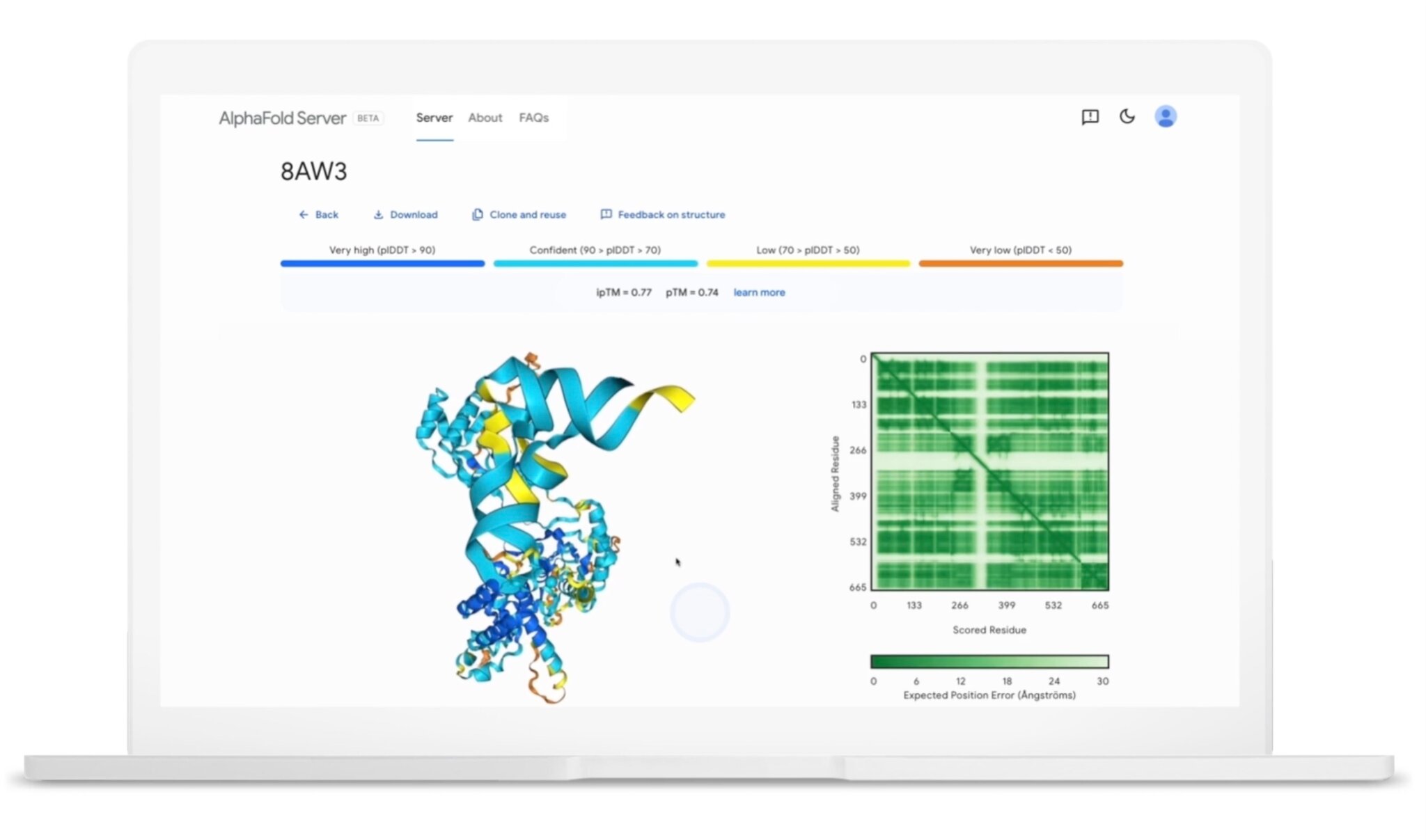
The system, AlphaFold3, could accelerate efforts to understand the human body and fight disease.Artificial intelligence is giving machines the power to generate videos, write computer code and even carry on a conversation.It is also accelerating efforts to understand the human body and fight disease.On Wednesday, Google DeepMind, the tech giant’s central artificial intelligence lab, and Isomorphic Labs, a sister company, unveiled a more powerful version of AlphaFold, an artificial intelligence technology that helps scientists understand the behavior of the microscopic mechanisms that drive the cells in the human body.An early version of AlphaFold, released in 2020, solved a puzzle that had bedeviled scientists for more than 50 years. It was called “the protein folding problem.”Proteins are the microscopic molecules that drive the behavior of all living things. These molecules begin as strings of chemical compounds before twisting and folding into three-dimensional shapes that define how they interact with other microscopic mechanisms in the body.Biologists spent years or even decades trying to pinpoint the shape of individual proteins. Then AlphaFold came along. When a scientist fed this technology a string of amino acids that make up a protein, it could predict the three-dimensional shape within minutes.When DeepMind publicly released AlphaFold a year later, biologists began using it to accelerate drug discovery. Researchers at the University of California, San Francisco, used the technology as they worked to understand the coronavirus and prepare for similar pandemics. Others used it as they struggled to find remedies for malaria and Parkinson’s disease.The hope is that this kind of technology will significantly streamline the creation of new drugs and vaccines.A segment of a video from Google DeepMind demonstrating the new AlphaFold3 technology.Video by Google Deepmind“It tells us a lot more about how the machines of the cell interact,” said John Jumper, a Google DeepMind researcher. “It tells us how this should work and what happens when we get sick.”The new version of AlphaFold — AlphaFold3 — extends the technology beyond protein folding. In addition to predicting the shapes of proteins, it can predict the behavior of other microscopic biological mechanisms, including DNA, where the body stores genetic information, and RNA, which transfers information from DNA to proteins.“Biology is a dynamic system. You need to understand the interactions between different molecules and structures,” said Demis Hassabis, Google DeepMind’s chief executive and the founder of Isomorphic Labs, which Google also owns. “This is a step in that direction.”Demis Hassabis, Google DeepMind’s chief executive and the founder of Isomorphic Labs.Taylor Hill/Getty ImagesThe company is offering a website where scientists can use AlphaFold3. Other labs, most notably one at the University of Washington, offer similar technology. In a paper released on Tuesday in the scientific journal Nature, Dr. Jumper and his fellow researchers show that it achieves a level of accuracy well beyond the state of the art.The technology could “save months of experimental work and enable research that was previously impossible,” said Deniz Kavi, a co-founder and the chief executive of Tamarind Bio, a start-up that builds technology for accelerating drug discovery. “This represents tremendous promise.”

Read more →

Environmental Changes Are Fueling Human, Animal and Plant Diseases, Study Finds

Biodiversity loss, global warming, pollution and the spread of invasive species are making infectious diseases more dangerous to organisms around the world.Several large-scale, human-driven changes to the planet — including climate change, the loss of biodiversity and the spread of invasive species — are making infectious diseases more dangerous to people, animals and plants, according to a new study.Scientists have documented these effects before in more targeted studies that have focused on specific diseases and ecosystems. For instance, they have found that a warming climate may be helping malaria expand in Africa and that a decline in wildlife diversity may be boosting Lyme disease cases in North America.But the new research, a meta-analysis of nearly 1,000 previous studies, suggests that these patterns are relatively consistent around the globe and across the tree of life.“It’s a big step forward in the science,” said Colin Carlson, a biologist at Georgetown University, who was not an author of the new analysis. “This paper is one of the strongest pieces of evidence that I think has been published that shows how important it is health systems start getting ready to exist in a world with climate change, with biodiversity loss.”In what is likely to come as a more surprising finding, the researchers also found that urbanization decreased the risk of infectious disease.The new analysis, which was published in Nature on Wednesday, focused on five “global change drivers” that are altering ecosystems across the planet: biodiversity change, climate change, chemical pollution, the introduction of nonnative species and habitat loss or change.We are having trouble retrieving the article content.Please enable JavaScript in your browser settings.Thank you for your patience while we verify access. If you are in Reader mode please exit and log into your Times account, or subscribe for all of The Times.Thank you for your patience while we verify access.Already a subscriber? Log in.Want all of The Times? Subscribe.

Read more →

Agency charging NHS nearly £2,000 for nurse shift

Published30 minutes agoShareclose panelShare pageCopy linkAbout sharingImage source, BBC NewsBy Caroline Alton and Hugh PymBBC NewsAn agency providing last-minute freelance nurses to NHS hospitals is routinely charging up to £2,000 a shift, BBC News has discovered.Glen Burley, chief executive of an NHS trust, said that Thornbury Nursing Services is targeting areas in England where nurses are in short supply.He says it is “profiteering” from an overstretched NHS, but Thornbury says it offers a valuable, flexible service.The government says new measures will end the use of expensive agencies. Under NHS rules, hospital managers are obliged to use staffing agencies that work within an agreed framework, with a limit or cap on how much should be paid. But when last-minute essential cover is needed, trusts may use off-framework agencies, such as Thornbury. These are not legally obliged to abide by pre-agreed pay scales. Workload pressures in the NHS and a desire for more flexibility over shifts are thought to be driving more nurses to work for such agencies, which tend to pay the people on their books more while also taking a payment for themselves. BBC News has discovered Thornbury charges almost £2,000 for a 12-hour bank holiday shift by a specialist paediatric nurse – an area of expertise where there are known staff shortages. Of that, BBC News calculates the nurse receives about £1,050 – meaning nearly £800 goes to the agency.  For a midweek afternoon and evening shift, the agency charges trusts £91.45 per hour, 85% above what the nurse is paid, at £49.50 per hour. Our calculations indicate that for a single Friday shift the trust is charged almost £1,000, of which £539 goes to the nurse, and £400 goes to the agency. Thornbury also pays nurses their travel expenses, and charges the hospital separately for those costs too. ‘No option’Mr Burley is chief executive of the Foundation Group, one of the largest NHS organisations in England. It comprises South Warwickshire Trust, George Eliot Hospital Trust, Worcestershire Acute Hospitals Trust and Wye Valley Trust.  Speaking to the BBC, he says each of the four hospitals in the group is currently spending more than £500,000 a year on staffing provided by Thornbury.He says although the group has reduced the amount it has spent, sometimes short-notice issues force its hand, especially in specialist areas like paediatrics and emergency care.”Where you’ve got a critical service to continue, you have no option other than sometimes to go to these very high-cost agencies,” he says. Mr Burley says Thornbury is active in areas with nurse shortages and is offering such attractive rates that some staff are being tempted away from the NHS. “I am sure they would say they are an agency of last resort and they are providing a service, but if that’s created a bigger problem by pulling nurses away from the NHS, then that’s certainly profiteering,” he says.’Flexible service’Thornbury is owned by one of the largest companies in the agency sector, Independent Clinical Services (ICS), which in turn is controlled by Acacium, a company based in Jersey.    Company accounts show ICS turnover increased by 46% in 2021-2022, to nearly £400m. The company says less than 50% of that is related to Thornbury. In a statement, Thornbury says: “We offer a valuable and flexible service that helps hospitals guarantee safe staffing levels.  “Requests are typically at very short notice – often as little as four hours before a shift is due to start. The level of rates necessarily reflects the last-minute and urgent nature of requests.” Thornbury, which covers England and Wales, has a sister company, Scottish Nursing Guild, which operates in Scotland and Northern Ireland. Health experts say the continued growth in spending on freelance health workers reflects wider factors. Staff shortages in some areas have  added to pressure on rotas and there is now a challenge for employers to try to persuade more staff to stay in the NHS rather than leaving. Agency spending for health workers in England increased from £3bn in 2021-22 to £3.5bn the following year, according to the Nuffield Trust think tank. Thea Stein, chief executive of Nuffield, says what agencies are able to charge is “probably not fair, but it is legal”. “The amount some agencies are charging does seem extraordinary. I don’t blame any NHS trust – you have a safety critical service you need to fill a shift for – what else are they going to do?” Chancellor Jeremy Hunt said in his recent Budget speech that he wanted to end costly off-framework agency staffing.In a statement, the Department of Health and Social Care said: “NHS staff are prioritised when shifts need filling, and we are controlling spending by limiting hourly pay for temporary staff. ” It said an NHS workforce plan will see “an unprecedented expansion in training and a significant boost in retention, reducing the need to hire agency workers”. More on this storyRecord revenue for staff agencies supplying NHSPublished24 March 2023Related Internet LinksThornbury Nursing ServicesThe BBC is not responsible for the content of external sites.

Read more →