Robots’ and prosthetic hands’ sense of touch could be as fast as humans

Research at Uppsala University and Karolinska Institutet could pave the way for a prosthetic hand and robot to be able to feel touch like a human hand. Their study has been published in the journal Science. The technology could also be used to help restore lost functionality to patients after a stroke.
“Our system can determine what type of object it encounters as fast as a blindfolded person, just by feeling it and deciding whether it is a tennis ball or an apple, for example,” says Zhibin Zhang, docent at the Department of Electrical Engineering at Uppsala University.
He and his colleague Libo Chen performed the study in close cooperation with researchers from the Signals and Systems Division at Uppsala University, who provided data processing and machine learning expertise, and a group of researchers from the Department of Neurobiology, Care Sciences and Society, Division of Neurogeriatrics at Karolinska Institutet.
Drawing inspiration from neuroscience, they have developed an artificial tactile system that imitates the way the human nervous system reacts to touch. The system uses electrical pulses that process dynamic tactile information in the same way as the human nervous system. “With this technology, a prosthetic hand would feel like part of the wearer’s body,” Zhang explains.
The artificial system has three main components: an electronic skin (e-skin) with sensors that can detect pressure by touch; a set of artificial neurons that convert analogue touch signals into electrical pulses; and a processor that processes the signals and identifies the object. In principle, it can learn to identify an unlimited number of objects, but in their tests the researchers have used 22 different objects for grasping and 16 different surfaces for touching.
“We’re also looking into developing the system so it can feel pain and heat as well. It should also be able to feel what material the hand is touching, for example, whether it is wood or metal,” says Assistant Professor Libo Chen, who led the study.
According to the researchers, interactions between humans and robots or prosthetic hands can be made safer and more natural thanks to tactile feedback. The prostheses can also be given the ability to handle objects with the same dexterity as a human hand.
“The skin contains millions of receptors. Current e-skin technology cannot deliver enough receptors, but this technology makes it possible, so we would like to produce artificial skin for a whole robot,” says Chen.
The technology could also be used medically, for example, to monitor movement dysfunctions caused by Parkinson’s disease and Alzheimer’s disease, or to help patients recover lost functionality after a stroke.
“The technology can be further developed to tell if a patient is about to fall. This information can be then used to either stimulate a muscle externally to prevent the fall or prompt an assistive device to take over and prevent it,” says Zhang.

Read more →

Drug compounds to combat neurodegenerative diseases

Prions are the abnormal, pathogenic agents that are transmissible and are able to induce abnormal folding of specific normal cellular proteins.Prion disease is an umbrella term for a group of fatal and currently untreatable neurodegenerative diseases that not only affect humans, but also wild and captive animals. These diseases include Creutzfeldt-Jakob disease (CJD) in humans, bovine spongiform encephalopathy (BSE, or “mad cow disease”), and chronic wasting disease (CWD) affecting deer, elk and moose.
The central event in these diseases is the conversion of the prion protein (PrPC) from its normal shape into a pathological structure (PrPSc) that is toxic to neurons and can replicate itself through binding to unconverted PrPC molecules. This ability to self-replicate makes these misfolded proteins infectious, which has enormous implications for public health.
In a new study, researchers from Boston University Chobanian & Avedisian School of Medicine have identified 10 compounds that are able to reduce PrPSc levels in infected cells and have shown that the most potent molecules can also prevent the toxicity that was observed when applying PrPSc to cultured neurons.
“Excitingly, five of these molecules have a history of use in humans: rimcazole and haloperidol for neuropsychiatric conditions, (+)-pentazocine for neuropathic pain, and SA 4503 and ANAVEX2-73, which are in clinical trials for ischemic stroke and Alzheimer’s disease, respectively,” explained lead author Robert C.C. Mercer, PhD, an instructor of biochemistry and cell biology at the school.
The researchers had initially explored the anti-prion properties of these molecules because they were known to bind to the sigma receptors (σ1R and σ2R), which they had reason to believe were involved in prion proliferation. Using gene knockout technology (CRISPR), they determined that the sigma receptors were not the relevant targets of these drugs, from the perspective of their anti-prion properties.
Using Neuro2a cells (N2a) from an experimental model that had been infected with prions, these cells were then exposed to increasing concentrations of each drug, and the levels of PrPSc were determined. They then used CRISPR technology to “edit” the σ1R and σ2R genes, such that they no longer coded for a protein, and found this had no effect upon the decrease in PrPSc levels they observed when applying the drugs. This led them to conclude that σ1R and σ2R were not responsible for the anti-prion effects of these drugs. They then went on to test the ability of these drugs to inhibit the PrPC to PrPSc conversion and found they had no effect on these cell-free reactions, indicating that another protein mediates the effects of these drugs.
According to the researchers, prion diseases have enormous public health implications from the safety of the blood supply to the proper decontamination of surgical tools used in neurosurgery. “From a clinical standpoint, we believe this research has uncovered anti-prion properties of drugs that have already been shown to be safe to use in humans. Because of this, especially considering the absence of any effective treatment for these diseases, these compounds could be re-purposed for treatment of prion diseases,” said corresponding author David A. Harris, MD, PhD, the Edgar Minas Housepian professor and chair of biochemistry & cell biology at the school.
These findings appear online in the journal ACS Chemical Neuroscience.
Funding for this study was provided by the National Institutes of Health grant number 5R01NS065244, awarded to David A. Harris. Robert C.C. Mercer is supported by grants from the Department of Defense (W81XWH-21-1-0141) and the Creutzfeldt-Jakob Disease Foundation.

Read more →

Highly pathogenic avian flu detected in New York City wild birds

A small number of New York City wild birds carry highly pathogenic H5N1 avian influenza, according to a recent study published in the Journal of Virology,a journal of the American Society for Microbiology. The work highlights that the interface between animals and humans that may give rise to zoonotic infections or even pandemics is not limited to rural environments and commercial poultry operations, but extends into urban centers.
“To my knowledge, this is the first large-scale U.S. study of avian influenza in an urban area, and the first with active community involvement,” said study co-author Christine Marizzi, PhD, principal investigator of the New York City Virus Hunters (NYCVH) Program, and BioBus director of community science, Harlem, New York City. “Birds are key to finding out which influenza and other avian viruses are circulating in the New York City area, as well as important for understanding which ones can be dangerous to both other birds and humans. And we need more eyes on the ground — that’s why community involvement is really critical.”
The study came out of a program to monitor wild birds, which is a partnership between BioBus, the Icahn School of Medicine at Mount Sinai and the Wild Bird Fund. Through the program, local high school students partake in the research and communication efforts as paid interns under expert mentorship. Wearing appropriate protective gear, the students collect bird fecal samples in urban parks and green spaces. Additional samples from wild urban birds are submitted to the study by local animal rehabilitation centers such as the Wild Bird Fund and Animal Care Centers of New York. Students then help screen all samples in the Krammer laboratory at the Icahn School of Medicine at Mount Sinai for viruses.
In the study, the NYCVH collected and screened 1927 samples between January 2022 and November 2023 and picked up the H5N1 signal by detecting it in 6 city birds representing 4 different species. All the positive samples came from the urban wildlife rehabilitation centers, stressing the critical role such centers can play in viral surveillance. By comparing the genetic makeup of the samples to each other and other available H5N1 viruses in a public database, the researchers found that they were slightly different and belonged to 2 different genotypes, which are both a mix of Eurasian H5N1 2.3.4.4.b clade virus and local North American avian influenza viruses. New York City is a popular stopover location for migrating wild birds during their remarkable journey.
“It is important to mention that, because we found H5N1 in city birds, this does not signal the start of a human influenza pandemic. We know that H5N1 has been around in New York City for about 2 years and there have been no human cases reported,” Marizzi said.
Marizzi said that in their outreach, they spread awareness about H5N1 in city birds and provide information about what people can do to protect themselves. “It’s smart to stay alert and stay away from wildlife. This also includes preventing your pets from getting in close contact with wildlife,” said Marizzi. If one must handle wildlife, it is important to always use safe practices any time when handling a sick or injured bird or other animals.

Read more →

Repurposed beer yeast may offer a cost-effective way to remove lead from water

Every year, beer breweries generate and discard thousands of tons of surplus yeast. Researchers from MIT and Georgia Tech have now come up with a way to repurpose that yeast to absorb lead from contaminated water.
Through a process called biosorption, yeast can quickly absorb even trace amounts of lead and other heavy metals from water. The researchers showed that they could package the yeast inside hydrogel capsules to create a filter that removes lead from water. Because the yeast cells are encapsulated, they can be easily removed from the water once it’s ready to drink.
“We have the hydrogel surrounding the free yeast that exists in the center, and this is porous enough to let water come in, interact with yeast as if they were freely moving in water, and then come out clean,” says Patricia Stathatou, a former postdoc at the MIT Center for Bits and Atoms, who is now a research scientist at Georgia Tech and an incoming assistant professor at Georgia Tech’s School of Chemical and Biomolecular Engineering. “The fact that the yeast themselves are bio-based, benign, and biodegradable is a significant advantage over traditional technologies.”
The researchers envision that this process could be used to filter drinking water coming out of a faucet in homes, or scaled up to treat large quantities of water at treatment plants.
MIT graduate student Devashish Gokhale and Stathatou are the lead authors of the study, which appears today in the journal RSC Sustainability. Patrick Doyle, the Robert T. Haslam Professor of Chemical Engineering at MIT, is the senior author of the paper, and Christos Athanasiou, an assistant professor of aerospace engineering at Georgia Tech and a former visiting scholar at MIT, is also an author.
Absorbing lead
The new study builds on work that Stathatou and Athanasiou began in 2021, when Athanasiou was a visiting scholar at MIT’s Center for Bits and Atoms. That year, they calculated that waste yeast discarded from a single brewery in Boston would be enough to treat the city’s entire water supply.

Through biosorption, a process that is not fully understood, yeast cells can bind to and absorb heavy metal ions, even at challenging initial concentrations below 1 part per million. The MIT team found that this process could effectively decontaminate water with low concentrations of lead. However, one key obstacle remained, which was how to remove yeast from the water after they absorb the lead.
In a serendipitous coincidence, Stathatou and Athanasiou happened to present their research at the AIChE Annual Meeting in Boston in 2021, where Gokhale, a student in Doyle’s lab, was presenting his own research on using hydrogels to capture micropollutants in water. The two sets of researchers decided to join forces and explore whether the yeast-based strategy could be easier to scale up if the yeast were encapsulated in hydrogels developed by Gokhale and Doyle.
“What we decided to do was make these hollow capsules — something like a multivitamin pill, but instead of filling them up with vitamins, we fill them up with yeast cells,” Gokhale says. “These capsules are porous, so the water can go into the capsules and the yeast are able to bind all of that lead, but the yeast themselves can’t escape into the water.”
The capsules are made from a polymer called polyethylene glycol (PEG), which is widely used in medical applications. To form the capsules, the researchers suspend freeze-dried yeast in water, then mix them with the polymer subunits. When UV light is shone on the mixture, the polymers link together to form capsules with yeast trapped inside.
Each capsule is about half a millimeter in diameter. Because the hydrogels are very thin and porous, water can easily pass through and encounter the yeast inside, while the yeast remain trapped.
In this study, the researchers showed that the encapsulated yeast could remove trace lead from water just as rapidly as the unencapsulated yeast from Stathatou and Athanasiou’s original 2021 study.

Scaling up
Led by Athanasiou, the researchers tested the mechanical stability of the hydrogel capsules and found that the capsules and the yeast inside can withstand forces similar to those generated by water running from a faucet. They also calculated that the yeast-laden capsules should be able to withstand forces generated by flows in water treatment plants serving several hundred residences.
“Lack of mechanical robustness is a common cause of failure of previous attempts to scale-up biosorption using immobilized cells; in our work we wanted to make sure that this aspect is thoroughly addressed from the very beginning to ensure scalability,” Athanasiou says.
After assessing the mechanical robustness of the yeast-laden capsules, the researchers constructed a proof-of-concept packed-bed biofilter, capable of treating trace lead-contaminated water and meeting U.S. Environmental Protection Agency drinking water guidelines while operating continuously for 12 days.
This process would likely consume less energy than existing physicochemical processes for removing trace inorganic compounds from water, such as precipitation and membrane filtration, the researchers say.
This approach, rooted in circular economy principles, could minimize waste and environmental impact while also fostering economic opportunities within local communities. Although numerous lead contamination incidents have been reported in various locations in the United States, this approach could have an especially significant impact in low-income areas that have historically faced environmental pollution and limited access to clean water, and may not be able to afford other ways to remediate it, the researchers say.
“We think that there’s an interesting environmental justice aspect to this, especially when you start with something as low-cost and sustainable as yeast, which is essentially available anywhere,” Gokhale says.
The researchers are now exploring strategies for recycling and replacing the yeast once they’re used up, and trying to calculate how often that will need to occur. They also hope to investigate whether they could use feedstocks derived from biomass to make the hydrogels, instead of fossil-fuel-based polymers, and whether the yeast can be used to capture other types of contaminants.
“Moving forward, this is a technology that can be evolved to target other trace contaminants of emerging concern, such as PFAS or even microplastics,” Stathatou says. “We really view this as an example with a lot of potential applications in the future.”
The research was funded by the Rasikbhai L. Meswani Fellowship for Water Solutions, the MIT Abdul Latif Jameel Water and Food Systems Lab (J-WAFS), and the Renewable Bioproducts Institute at Georgia Tech.

Read more →

Alzheimer’s disease without symptoms: How is that possible?

Everyone experiences aging in their own way, and factors such as genetics, lifestyle and environment play a role in this process. Some individuals reach the age of 90 or even 100 in good health, without medications or brain disease. But how do these individuals maintain their health as they age?
Luuk de Vries from Joost Verhaagen’s group, and his colleagues Dick Swaab and Inge Huitinga, looked at brains from the Netherlands Brain Bank. The Netherlands Brain Bank stores brain tissue from more than 5,000 deceased brain donors with a wide range of different brain diseases. What makes the Netherlands Brain Bank so unique is that, in addition to the stored tissue with very precise neuropathological diagnoses, they also keep the documented medical history and detailed disease course with the symptoms of each donor.
Resilient group
The team found a subgroup of people who had Alzheimer’s disease processes in their brains, but did not show any clinical symptoms while alive. A so-called ‘resilient’ group. But how is it possible that they did not experience any symptoms while others did?
Luuk de Vries: ‘what is happening in these people at a molecular and cellular level was not clear yet. We therefore searched for donors with brain tissue abnormalities who did not show cognitive decline in the Brain Bank. Of all the donors we found 12, so it is quite rare. We think that genetics and lifestyle play an important role in resilience, but the exact mechanism is still unknown.’
Keep challenging yourself
‘Exercise or being cognitively active and having a lot of social contacts can help in delaying the onset of Alzheimer’s disease. It has recently also been found that those who receive a lot of cognitive stimuli, like through a complex job, can build up more Alzheimer’s pathology before developing symptoms. If we can find the molecular basis for resilience, then we have new starting points for the development of medication, which could activate processes related to resilience in Alzheimer’s patients.’
Alzheimer’s versus resilient group
‘When we looked at gene expression, we saw that a number of processes were altered in the resilient group. First of all, the astrocytes appeared to produce more of the antioxidant metallothionein. Astrocytes are like garbage collectors and provide a protective role for the brain. Astrocytes often also ask for help from microglia, but because they can be quite aggressive, they sometimes worsen inflammation. In the resilient group a microglia pathway that’s often linked to Alzheimer’s disease appeared to be less active. In addition, we saw that the so-called “unfolded protein response,” a reaction in brain cells that automatically removes a misfolded toxic protein, was affected in Alzheimer’s patients, but was relatively normal in resilient individuals. Finally, we found indicators that there may also be more mitochondria in the brain cells resilient individuals, which ensures better energy production.’
But what do these differences in processes mean? And is there cause or effect? ‘It remains difficult to determine from human data which process initiates the disease process. You can only demonstrate this by changing something in cells or animal models and seeing what happens next. That is the first thing we have to do now.’

Read more →

An astrocytic pH regulator that can repair the blood-brain barrier and reverse brain damage caused by ischemic stroke

Ischemic stroke is a leading cause of death and disability, affecting about 15 million worldwide each year. Among the various factors contributing to the pathogenesis of this condition is the loss of the blood-brain barrier, a highly selective protective cellular barrier that prevents harmful chemicals from entering the brain through the blood. Understanding the mechanisms that regulate the integrity of the blood-brain barrier, developing strategies to repair it, and reversing brain damage will have far-reaching benefits for patients suffering from stroke and related neurological conditions.
A recent study from the laboratory of Dr. Hyun Kyoung Lee, associate professor at Baylor College of Medicine and an investigator at the Jan and Dan Duncan Neurological Research Institute (Duncan NRI) at Texas Children’s Hospital, has found that an ion transporter protein that regulates the pH of specific brain cells can repair the blood-brain barrier and restore normal brain function after ischemic stroke.
The study, published in Cell Reports, is the first to reveal novel and specific therapeutic targets for ischemic stroke and related brain conditions for which no targeted treatments exist currently.
The blood-brain barrier and pH regulation are disrupted in stroke and other neurological conditions
“Disruption of blood-brain barrier integrity is a pathophysiological hallmark of stroke and several devastating neurological disorders,” Dr. Lee, a Cynthia and Anthony G. Petrello Endowed Scholar in Neurological Research, said. “A damaged blood-brain barrier often leads to severe consequences such as brain edema, neuronal damage, and eventually, motor and cognitive deficits. Very little was known about how stroke damages the blood-brain barrier prior to this study.
While endothelial cells form the core of the blood-brain barrier, emerging evidence suggests astrocytes, which are the most abundant and diverse type of support cells in the central nervous system, play a critical role in maintaining the integrity of this structure.
In addition to this barrier, a strict balance of pH (a measure of acidity or alkalinity of a solution) within the brain cells and their surrounding environment is crucial for optimal brain function. Dysregulation of pH homeostasis in the brain is often implicated in a range of neurological conditions.

Ischemic stroke injury is associated with a drastic reduction in pH. However, until this study, the precise reason for this alteration and the role of astrocytes in this process was not known.
Astrocytic Slc4a4 plays a critical role in the maintenance of the blood-brain barrier
Previous studies have demonstrated that a sodium-carbonate cotransporter 1 (Slc4a4), which is enriched in the astrocytes, is responsible for shuttling acid-base ions across the cell membrane in a bidirectional manner to regulate both intra- and extracellular pH in response to internal and external stimuli. Moreover, patients with Slc4a4 variants have been associated with many brain disorders, including ischemic stroke.
This is the first study to investigate whether and how Slc4a4 governs astrocyte-endothelial cell interaction in blood-brain barrier maintenance and repair after stroke.
To test the biological role of Slc4a4, the Duncan NRI team generated a conditional mouse model of Slc4a4 using which they could specifically delete the expression of this gene in the brain astrocytes during development and in adult mice.
Using this mouse model, they found that deleting Slc4a4 from astrocytes altered their structure and function. “We found that the brain vasculature was altered in the absence of astrocytic Slc4a4 — there was >40% increase in the diameter of the blood vessels in the brain, a three-fold increase in the number of small molecules that were able to infiltrate the brain along with the loss of junctional markers — which together provided compelling evidence that the blood-brain barrier was disrupted in the absence of astrocytic Slc4a4 in these mice,” Dr. Qi Ye, lead author and postdoctoral fellow in the Lee lab said.

Slc4a4 is critical for remodeling the blood-brain barrier after ischemic stroke
To test if astrocytic Slc4a4 was important for remodeling the blood-brain barrier after ischemic stroke, they used a cortical photothrombotic stroke model in Slc4a4 animal models. This stroke injury model in animals closely mimics the size, location, as well as reactive gliosis, a scar-like inflammatory response to ischemic stroke injury in human brains.
In this model using multi-omics analyses, they found that loss of astrocytic Slc4a4 increased the secretion of a CCL2, a pro-inflammatory molecule, which activated the CCR2 receptor present on the nearby endothelial cells to increase permeability, damaging the blood-brain barrier and increasing leakage between the two cell types. Finally, they found this breakdown of the blood-brain barrier was mediated by increased levels of specific metabolites (arginine and nitrous oxide) caused by changes in astrocytic pH levels.
“By revealing the precise mechanism and key players involved in the breakdown of the blood-brain barrier after stroke, this study has opened potential new avenues to treat ischemic stroke and several associated brain pathologies,” Dr. Lee said. “It is promising that key players identified in this pathway — the Slc4a4 transporter protein, the CCL2-CCR2 axis as well the metabolites — are ‘druggable’ and can be developed into potential therapeutic targets.”

Read more →

The doctor is in…. but what’s behind them?

Americans have gotten used to seeing their doctors and other health care providers using telehealth video visits in the past four years. But a new study reveals that what a doctor has behind them during a telehealth visit can make a difference in how the patient feels about them and their care.
Even if the doctor is miles away from their usual in-person clinic or exam room, they should make it look like they’re there, the study suggests.
Even better: sitting in an office with their diplomas hanging behind them — or perhaps having a virtual background that’s a photo of such an office. This is especially true if they haven’t seen the patient before, the study shows.
A home office with a bookshelf or a plain solid-color background are both acceptable to patients, too.
But providers should use blurred or virtual backgrounds if they carry out the visit in a home environment with a kitchen or a bed in the background, the study shows.
The findings come from a survey that asked patients to react to seven different backgrounds behind a model physician, and to rate how knowledgeable, trustworthy, caring, approachable and professional the physician appeared in each, and how comfortable the patient would feel with that provider. It also asked them to consider each background for a first or returning appointment with a primary care or specialty provider.
The study is published in JAMA Network Open by a team from the University of Michigan’s academic medical center, Michigan Medicine, and the VA Ann Arbor Healthcare System. More than 1,200 patients who had seen providers at one of the two health systems completed the study surveys, and the researchers compiled their responses.

Lead researcher Nathan Houchens, M.D., is an associate professor of internal medicine at U-M and associate chief of medicine at VAAAHS. His past work on how interpersonal communications affects the patient-provider relationship — including non-verbal factors like attire and posture — led to the new telehealth study.
“The transition to virtual care was rapid and came without specific guidance during the start of the COVID-19 pandemic, but telehealth appears to be here to stay so it’s important to understand what patients prefer when it comes to the setting their provider is in,” says Houchens, a hospitalist who worked with U-M and VA general internist Jennifer Meddings, M.D., M.Sc. and others on the study.
He notes that during the first year of the pandemic, providers were urged to conduct telehealth visits outside of clinics if they didn’t need to go in, to reduce the chance of COVID-19 transmission.
But now, some clinics have created dedicated spaces for providers to sit in if they have telehealth appointments on days when they’re also seeing patients in person. Some of those might be spaces shared with other clinicians, so a virtual background would also serve to reduce visual distractions.
Houchens notes that as telehealth increased in use and became a standard way to receive care, some guidance on “webside manner” has been suggested to guide providers in the ways in which they interact verbally over a virtual connection. But very little guidance is available about the background for their video visits.
He and his colleagues were surprised at the level of dislike that patients had for kitchen and bedroom settings, with only 2% and 3.5% saying they preferred these backgrounds respectively, compared with 35% for an office with displayed diplomas, 18% for a physician office, 14% for a plain color background, and around the same for a home office with bookshelf or an exam room.

There were also significant differences in the composite scores for how patients rated the way each background would make them feel about receiving care from the provider. The bedroom and kitchen backgrounds received far lower composite scores than any of the other five backgrounds.
Houchens and colleagues including co-author Sanjay Saint, M.D., M.P.H., have previously published work on patients’ preferences for what physicians wear during clinical encounters. Just like with video visit background, these seemingly superficial factors can actually make a difference in the patient experience, he says.
“Patients have expectations of what physicians’ attire and workspaces should look like. This study showed that patients prefer what have been previously termed traditional or professional attire and settings,” he said. “Diplomas and credentials remind patients of the expertise they expect a physician to have, and conversely, something is lost when the background conveys a relaxed, informal home environment.”
The team is currently analyzing more data from the same study, to assess other factors that affect patients’ telehealth experiences — including their access to high-speed internet and their ability to use necessary technologies.
But for now, they suggest that providers can take immediate steps to conduct virtual visits from an office or exam room. Clinics may want to make unused clinical rooms available for use by providers conducting virtual visits during in-person clinic days.
Another option is to create virtual backgrounds that will evoke these types of professional settings.
Houchens also notes that while they haven’t yet studied what physicians think of the backgrounds behind patients during video visits, these may provide helpful information.
The rise of “Hospital at Home” and home-based primary care means that patients with more acute conditions may be able to see their providers virtually, and that their setting can give clues to the way physical and social factors play a role in their health. Discussing visible elements from both a provider’s and a patient’s virtual background — art and other hobby-related items, for example — can also help build rapport, Houchens notes.
“This is a reminder that patients often do care about some of the details that providers and health systems may not have emphasized,” he said. “It’s important to remember that our words and our nonverbal behaviors are taken to heart by those we care for, and it behooves us to care about them as well.”
Meddings and Saint are members of the VA Center for Clinical Management Research and the U-M Institute for Healthcare Policy and Innovation.
In addition to Houchens, Meddings and Saint, the study’s authors are Latoya Kuhn MPH, David Ratz MS, Jason M. Engle MPH of VA CCMR.

Read more →

Did You Have Syphilis When You Were Pregnant? We Want to Hear From You.

Congenital syphilis has risen significantly in the United States. The Times would like to talk to women who experienced the condition when pregnant and learn how they dealt with it.Sexually transmitted diseases are resurging across the United States. More than 3,700 cases of congenital syphilis were reported in 2022, roughly 11 times the number recorded a decade ago.Syphilis during pregnancy can lead to miscarriage and stillbirth, and infants who survive may become blind or deaf or have severe developmental delays. But timely testing and treatment can prevent most of these outcomes.Sexually transmitted infections disproportionately affect communities of color. Socioeconomic status and education level can also influence prenatal care.I report on infectious diseases at The Times. I would like to hear firsthand from women who experienced syphilis when pregnant. Were you offered testing when pregnant? If you tested positive, were you treated? How did syphilis affect the health of your child?The Times will not publish any part of your submission without contacting you first. We may use your contact information to follow up with you.Congenital syphilis has risen significantly in the United States. The Times would like to talk to women who experienced the condition when pregnant and learn how they dealt with it.

Read more →

Overdose Deaths Dropped in U.S. in 2023 for First Time in Five Years

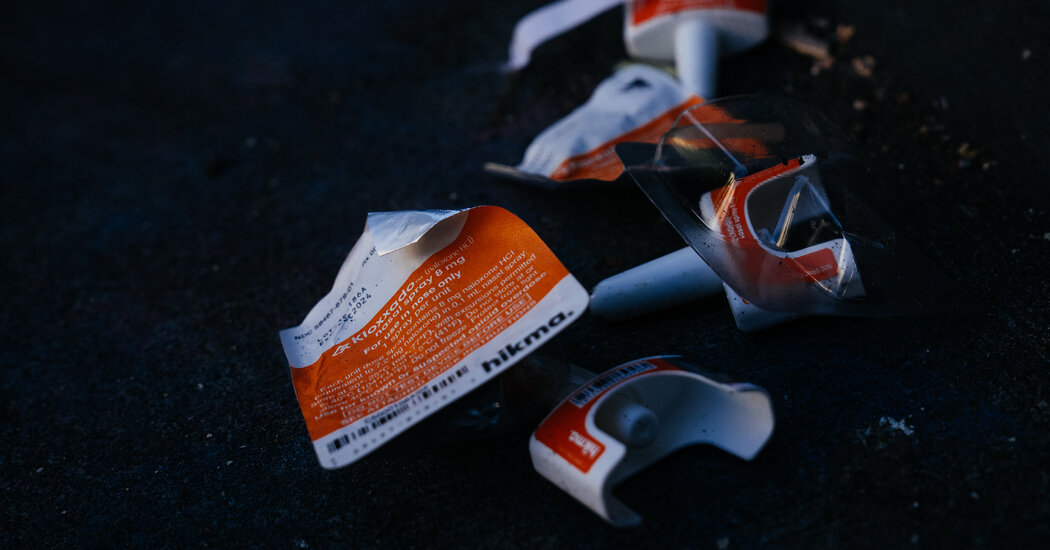
Preliminary numbers show a nearly 4 percent decrease in deaths from opioids, largely fentanyl, but a rise in deaths from meth and cocaine.Overdose deaths in the United States declined slightly last year, the first decrease in five years, according to preliminary federal data released Wednesday.The rare good news in the decades-old addiction crisis was attributable mostly to a drop in deaths from synthetic opioids, chiefly fentanyl, said researchers at the National Center for Health Statistics, who compiled the numbers.But the full portrait of the death toll from street drugs remains grim. Even as opioid deaths fell, deaths from stimulants such as cocaine and methamphetamine rose. And some states, including Oregon and Washington, continued to experience sharp rises in overall overdose fatalities.Drug overdoses overall in 2023 were estimated at 107,543, down from 111,029 in 2022, a 3 percent drop. Opioid deaths fell 3.7 percent while deaths from cocaine rose 5 percent and deaths from meth rose 2 percent.The report from the health statistics agency, an arm of the Centers for Disease Control and Prevention, did not offer reasons for the drop. But naloxone, a drug that reverses opioid overdoses, has become more widely available: In 2023, 22 million doses of Narcan, the best-known brand, were distributed in the United States and Canada. Test strips for users to detect the presence of fentanyl in a drug became more popular, and many communities and clinics offered programs that hand out sterile syringes.Dr. Bruce Hurley, president of the American Society of Addiction Medicine, a professional organization of more than 7,500 treatment providers, said that the group appreciated what he called “the leveling of the overdose curve.”We are having trouble retrieving the article content.Please enable JavaScript in your browser settings.Thank you for your patience while we verify access. If you are in Reader mode please exit and log into your Times account, or subscribe for all of The Times.Thank you for your patience while we verify access.Already a subscriber? Log in.Want all of The Times? Subscribe.

Read more →

Emma Seppälä Has Thoughts on How to Avoid Kneejerk Decisions

The psychologist studies how to recognize emotions and cope with them. She learned the hard way.When it comes to your brain, who’s in charge: you, or the onslaught of incoming stimulation? In “Sovereign: Reclaim Your Freedom, Energy, and Power in a Time of Distraction, Uncertainty and Chaos,” Emma Seppälä, a psychologist with academic postings at Yale and Stanford, argues that modernity has forced the human brain into a highly reactive mode, effectively hijacking it with nonstop information and noise.To soothe ourselves, Dr. Seppälä says, we mindlessly adopt an array of coping mechanisms, some of which are self-destructive, from excessive eating and alcohol intake to angry outbursts and social withdrawal. But there are ways to interrupt our kneejerk reactions and cope more thoughtfully, Dr. Seppälä argues. She spoke to The New York Times about her work and the science of resilience. This conversation has been edited and condensed for clarity.In the book, you describe a formative experience in college involving your relationship to food. What happened?Starting at the age of about 16 or 17, I developed an eating disorder. I would binge-eat when I was feeling low, and then I would feel worse. It was an addictive habit, a compulsion.In college, in 1996, I went to a meditation session. It was Korean Zen, strict: You stared at the carpet for an hour with little to no instruction. I thought, I’m never ever doing this again.But I felt peaceful afterward. Then, the next day, I felt down again. There was an old leftover pizza in the dorm room. It wasn’t even a kind I liked; it was gross. But I had this impulse to binge, because that’s what I did when I felt bad. And suddenly a light went off in my head and I thought: I always cry after I binge, and that makes me feel a little better, so why don’t I cry first? In that moment I thought, OK, I’ll cry and then I’ll binge all I want.We are having trouble retrieving the article content.Please enable JavaScript in your browser settings.Thank you for your patience while we verify access. If you are in Reader mode please exit and log into your Times account, or subscribe for all of The Times.Thank you for your patience while we verify access.Already a subscriber? Log in.Want all of The Times? Subscribe.

Read more →