
How Hollywood star Sheen helped uncover a dark secret

24 minutes agoBy
Read more →
24 minutes agoBy
Read more →
Semaglutide, a medication initially developed for type 2 diabetes and obesity, significantly improves symptoms in men and women with a common type of heart failure that has had few therapeutic options. Women experienced greater weight loss and the same symptom benefits compared with men, according to research presented today by Dr. Subodh Verma (St. Michael’s Hospital, University of Toronto) at the American Diabetes Association’s 2024 Scientific Sessions and published in the Journal of the American College of Cardiology (JACC).
This secondary analysis of the STEP-HFpEF (Semaglutide Treatment Effect in People with Obesity and HFpEF) program reveals that semaglutide provides benefits for men and women that do not track directly with weight loss, suggesting the drug may also have weight-loss independent effects on the cardiovascular system. The study (which included two trials) compared semaglutide with a placebo over 52 weeks in 1,145 participants, highlighting intriguing sex differences.
The analysis sought to determine whether phenotypic features and treatment effects of semaglutide vary by sex in obesity-related heart failure (HF) with preserved ejection fraction (HFpEF). It evaluated the influence of sex on the disease’s baseline characteristics and compared the effects of semaglutide versus placebo on key trial endpoints in the STEP-HFpEF program (comprised of STEP-HFpEF and STEP-HFpEF DM Trials).
“Understanding the sex differences in obesity-related HFpEF is of great importance. Obesity and visceral adiposity are key drivers of HFpEF development and progression, and this may be even more amplified in women, who represent the majority of people with the disease, and bear a heavier burden of symptoms and physical limitations due to HFpEF” said Mikhail Kosiborod, MD, FACC, senior author of the study and a cardiologist at Saint Luke’s Mid-America Heart Institute in Kansas City, Missouri. “Our study sheds light on these differences and the consistent benefits of semaglutide for women and men.”
Lead author, Dr. Subodh Verma commented that “women living with obesity and heart failure with a preserved ejection fraction were also found to have higher BMI’s compared to men, and were much more symptomatic at baseline.”
“Females had more systemic inflammation and compared to previous HfpEF studies, females with obesity-related HfpEF were also younger,” Verma said.
The study analyzed the effects of semaglutide 2.4 mg administered to participants once weekly vs placebo on the STEP-HFpEF program’s dual primary and confirmatory secondary, and exploratory outcomes by sex. A total of 1,145 participants with obesity-related HFpEF were evaluated over 52 weeks, of which 570 were females.
Semaglutide, compared with placebo, similarly improved HF-related symptoms, physical limitations, exercise function, and reduced inflammation and natriuretic peptides regardless of sex.
Semaglutide-mediated improvements in HF-related symptoms and physical limitations were consistent in both male and female participants across key subgroups including age and BMI. It also lowered their systolic blood pressure and waist circumference.
However, there were sex differences in the treatment effects in terms of the reduction in body weight with semaglutide. Female participants experienced greater weight loss than males, with a mean difference of -9.6% vs -7.2%. Even though there was a significant reduction in body weight in both sexes, it was greater in females (a statistically significant interaction).
At baseline, females had higher left ventricular ejection fraction, presented with worse symptoms and physical limitations, and had higher levels of inflammation at baseline, but similar rates of hypertension and diuretic use and less atrial fibrillation compared with males, despite their higher BMI. Researchers note that this may indicate that more female participants had a typical obesity phenotype of HFpEF compared with males who may also have left atrial myopathy HFpEF complicated by an increase in BMI.
In an accompanying editorial, Anuradha Lala, MD, a cardiologist at the Mount Sinai School of Medicine and Director of Heart Failure Research for the NHLBI Cardiothoracic Surgery Network, said there is a need for further studies to illuminate the mechanism by which this drug provides benefits and continued attention to sex-specific differences in treatment responses.
24 minutes agoBy
Read more →
People have grown more attached to their pets — and more willing to spend money on them — turning animal medicine into a high-tech industry worth billions.Heather Massey brought Ladybird to the veterinarian when the 9-year-old mutt began having seizures. A scan from an M.R.I. machine revealed bad news: brain cancer.With the prognosis grim, Ms. Massey decided against further treatment at the animal hospital near her home in Athens, Ga., and Ladybird died four months later. The M.R.I. scan and related care had cost nearly $2,000, which Ms. Massey put on a specialty credit card she had learned about at a previous vet visit.That was in 2018. She is still paying off the debt, with more than 30 percent interest.“Could I afford to do that? Not really,” said Ms. Massey, 52, who is disabled and does not work. “Was it worth it to me? Yes.”Ms. Massey’s experience illustrates the expensive new realities of owning a pet. For decades, veterinarians typically operated their own clinics, shepherding generations of pets from birth to death. They neutered, vaccinated and pulled thorns from paws and noses. When animals became seriously ill, vets often had little to offer beyond condolences and a humane death.But in recent years, as people have grown more attached to their pets — and more willing to spend money on them — animal medicine has transformed into a big business that looks a lot like its human counterpart. Many veterinary offices have been replaced by hospitals outfitted with expensive M.R.I. machines, sophisticated lab equipment and round-the-clock intensive care units. Dogs and cats often see highly trained specialists in neurology, cardiology and oncology.This high-tech care has spurred a booming market. Veterinary prices have soared more than 60 percent over the past decade, according to federal statistics. Private equity firms and large corporations have bought hundreds of facilities around the country, an acquisition spree reminiscent of the corporate roll-ups of doctors’ offices.Veterinary care prices have soared in the past decade
.dw-chart-subhed {
line-height: 1;
margin-bottom: 6px;
font-family: nyt-franklin;
color: #121212;
font-size: 15px;
font-weight: 700;
}
Cumulative change in prices since April 2014
“All items” data is the Consumer Price Index for all urban consumers. Data is seasonally adjusted.Source: Bureau of Labor StatisticsBy The New York TimesWe are having trouble retrieving the article content.Please enable JavaScript in your browser settings.Thank you for your patience while we verify access. If you are in Reader mode please exit and log into your Times account, or subscribe for all of The Times.Thank you for your patience while we verify access.Already a subscriber? Log in.Want all of The Times? Subscribe.

Pet owners are treating their animal charges ever more like humans. But that isn’t good for pets, or for us, many experts argue.Pets are more popular than ever. Roughly two-thirds of American homes have at least one pet, up from 56 percent in 1988, according to the American Pet Products Association, and Americans spent $136.8 billion on their pets in 2022, up from $123.6 billion in 2021. An estimated 91 million households in Europe own at least one pet, an increase of 20 million over the past decade. The pet population in India hit 31 million in 2021, up from 10 million in 2011.And our pets are becoming ever more like us — or at least, that seems to be our goal. We pamper them with customized nutrition plans and knapsack carriers, dog hydrotherapy and stays in boutique cat hotels. At All the Best, a high-end pet store chain in Seattle, the most popular items are feline and canine enrichment toys, designed to stimulate them and bring happiness to animals that increasingly “are lying around alone and bored,” said Annie McCall, the chain’s marketing director.Now some animal welfare ethicists and veterinary scientists are wondering if, in our efforts to humanize our pets, we’ve gone too far. The more we treat pets like people, they argue, the more constrained and dependent on us our pets’ lives have become, and the more health and behavioral issues our pets develop.“We now view pets not only as family members but as equivalent to children,” said James Serpell, an emeritus professor of ethics and animal welfare at the University of Pennsylvania School of Veterinary Medicine. “The problem is, dogs and cats are not children, and owners have become increasingly protective and restrictive. So animals are not able to express their own doggy and catty natures as freely as they might.”Pet cats once roamed free, even on city streets. Now concerns about bird predation, as well as fears of having their pet hit by a car, has led many owners to keep them indoors — or in strollers. Hiroko Masuike/The New York TimesThe health risks begin with breeding, of course. One of the most popular dog breeds in the United States is the French bulldog, a member of the brachycephalic family of flat-faced dogs that bond well with people but have trouble breathing, among other severe health problems.We are having trouble retrieving the article content.Please enable JavaScript in your browser settings.Thank you for your patience while we verify access. If you are in Reader mode please exit and log into your Times account, or subscribe for all of The Times.Thank you for your patience while we verify access.Already a subscriber? Log in.Want all of The Times? Subscribe.
Read more →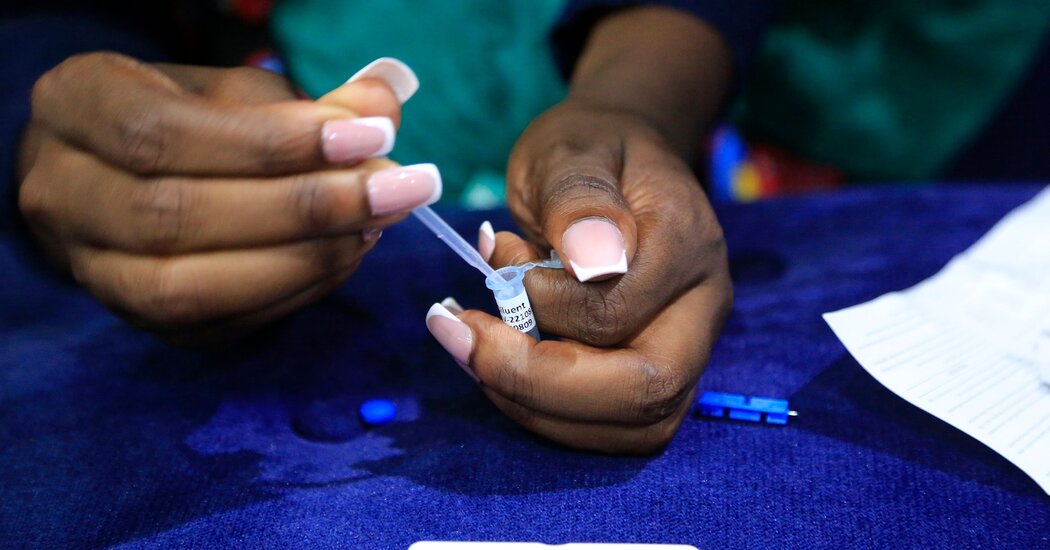
An injection given just twice a year could herald a breakthrough in protecting the population that has the highest infection rates.Researchers and activists in the trenches of the long fight against H.I.V. got a rare piece of exciting news this week: Results from a large clinical trial in Africa showed that a twice-yearly injection of a new antiviral drug gave young women total protection from the virus.“I got cold shivers,” said Dr. Linda-Gail Bekker, an investigator in the trial of the drug, lenacaprivir, describing the startling sight of a line of zeros in the data column for new infections. “After all our years of sadness, particularly over vaccines, this truly is surreal.”Yvette Raphael, the leader of a group called Advocacy for Prevention of H.I.V. and AIDS in South Africa, said it was “the best news ever.”The randomized controlled trial, called Purpose 1, was conducted in Uganda and South Africa. It tested whether the every-six-months injection of lenacaprivir, made by Gilead Sciences, would provide better protection against H.I.V. infection than two other drugs in wide use in high-income countries, both daily pills.The results were so convincing that the trial was halted early at the recommendation of the independent data review committee, which said all participants should be offered the injection because it clearly provided superior protection against the virus.None of the 2,134 women in the arm of the trial who received lenacapavir contracted H.I.V. By comparison, 16 of the 1,068 women (or 1.5 percent) who took Truvada, a daily pill that has been available for more than a decade, and 39 of 2,136 women (1.8 percent) who received a newer daily pill called Descovy were infected.We are having trouble retrieving the article content.Please enable JavaScript in your browser settings.Thank you for your patience while we verify access. If you are in Reader mode please exit and log into your Times account, or subscribe for all of The Times.Thank you for your patience while we verify access.Already a subscriber? Log in.Want all of The Times? Subscribe.
Read more →
Researchers at University of California San Diego School of Medicine and international collaborators have led a worldwide, advanced study demonstrating the potential of tirzepatide, known to manage type 2 diabetes, as the first effective drug therapy for obstructive sleep apnea (OSA), a sleep-related disorder characterized by repeated episodes of irregular breathing due to complete or partial blockage of the upper airway.
The results, published in the June 21, 2024 online edition of New England Journal of Medicine, highlight the treatment’s potential to improve the quality of life for millions around the world affected by OSA.
“This study marks a significant milestone in the treatment of OSA, offering a promising new therapeutic option that addresses both respiratory and metabolic complications,” said Atul Malhotra, MD, lead author of the study, professor of medicine at University of California San Diego School of Medicine and director of sleep medicine at UC San Diego Health.
OSA can result in reduced oxygen levels in the blood and can also be associated with an increased risk of cardiovascular complications, such as hypertension and heart disease. Recent studies, also led by Malhotra, suggest that the number of OSA patients worldwide is close to 936 million.
Conducted in two Phase III, double-blinded, randomized, controlled trials, the new study cohort involved 469 participants diagnosed with clinical obesity and living with moderate-to-severe OSA. They were recruited from sites in nine different countries, including the U.S., Australia and Germany. Participants either used or did not use continuous positive airway pressure (CPAP) therapy, the most common sleep apnea treatment which uses a machine to maintain an open airway during sleep, preventing interruptions in breathing. Patients were administered either 10 or 15 mg of the drug by injection or a placebo. The impact of tirzepatide was evaluated over 52 weeks.
Researchers found that tirzepatide led to a significant decrease in the number of breathing interruptions during sleep, a key indicator used to measure the severity of OSA. This improvement was much greater than what was seen in participants that were given a placebo. Importantly, some participants that took the drug reached a point where CPAP therapy might not be necessary. Considerable data suggest that a drug therapy that targets both sleep apnea and obesity is beneficial rather than treating either condition alone.
Additionally, the drug therapy improved other aspects related to OSA, such as reducing the risk factors of cardiovascular diseases and improved body weight. The most common side effect reported was mild stomach issues.
“Historically, treating OSA meant using devices during sleep, like a CPAP machine, to alleviate breathing difficulties and symptoms,” Malhotra said. “However, its effectiveness relies on consistent use. This new drug treatment offers a more accessible alternative for individuals who cannot tolerate or adhere to existing therapies. We believe that the combination of CPAP therapy with weight loss will be optimal for improving cardiometabolic risk and symptoms. Tirzepatide can also target specific underlying mechanisms of sleep apnea, potentially leading to more personalized and effective treatment.”
Malhotra adds that having a drug therapy for OSA represents a significant advancement in the field.
“It means we can offer an innovative solution, signifying hope and a new standard of care to provide relief to countless individuals and their families who have struggled with the limitations of existing treatments,” said Malhotra. “This breakthrough opens the door to a new era of OSA management for people diagnosed with obesity, potentially transforming how we approach and treat this pervasive condition on a global scale.”
Next steps include conducting clinical trials to examine longer term effects of tirzepatide.
Co-authors of the study include: Ronald Grunstein, University of Sydney; Ingo Fietze, University Hospital Berlin; Terri Weaver, University of Illinois Chicago; Susan Redline, Ali Azarbarzin, and Scott Sands, Harvard Medical School; Richard Schwab, University of Pennsylvania; and Julia Dunn, Sujatro Chakladar, Mathijs Bunck, and Josef Bednarik, Eli Lilly and Company.
Funding support for the study came, in part, from Eli Lilly and Company.
Fewer than one percent of people who get the flu every year get tested, in part because most tests require trained personnel and expensive equipment. Now researchers have developed a low-cost paper strip test that could allow more patients to find out which type of flu they have and get the right treatment.
The test, developed by a team from the Broad Institute of MIT and Harvard and Princeton University, and supported by the US Centers for Disease Control and Prevention, uses CRISPR to distinguish between the two main types of seasonal flu, influenza A and B, as well as seasonal flu subtypes H1N1 and H3N2. It can also identify strains that resist antiviral treatment, and with further work, could potentially detect swine and avian flu strains, including H5N1, which is currently infecting cattle.
Appearing in The Journal of Molecular Diagnostics, the results could help improve outbreak response and clinical care by bringing tests that are accurate, low-cost, and fast to doctors’ offices and labs across the US and in other countries.
“Ultimately, we hope these tests will be as simple as rapid antigen tests, and they’ll still have the specificity and performance of a nucleic acid test that would normally be done in a laboratory setting,” said Cameron Myhrvold, co-senior author on the study along with Pardis Sabeti, an institute member at the Broad and a professor at Harvard University and the Harvard T.H. Chan School of Public Health, as well as a Howard Hughes Medical Institute investigator. Myhrvold, who is currently an assistant professor at Princeton University, was a postdoctoral researcher in Sabeti’s lab when the study began.
SHINE a light
The test is based on a technology called SHINE, which was developed by Sabeti’s lab in 2020 and uses CRISPR enzymes to identify specific sequences of viral RNA in samples. The researchers first used SHINE to test for SARS-CoV-2, and later to distinguish between the Delta and Omicron variants. Then, in 2022, they began adapting the assay to detect other viruses they knew were always circulating: influenzas. They wanted to create tests that could be used in the field or in clinics rather than hospitals or diagnostic labs with expensive equipment.
“Using a paper strip readout instead of expensive fluorescence machinery is a big advancement, not only in terms of clinical care but also for epidemiological surveillance purposes,” said Ben Zhang, co-first author on the study, a medical student at Harvard Medical School and an undergraduate researcher in Sabeti’s lab when the study began.
Typical diagnostic approaches such as polymerase chain reaction (PCR) require lengthy processing times, trained personnel, specialized equipment, and freezers to store reagents at -80°C, whereas SHINE can be conducted at room temperature in about 90 minutes. Currently, the assay only requires an inexpensive heat block to warm the reaction, and the researchers are working to streamline the process with the goal of returning results in 15 minutes.
The researchers also adapted SHINE to distinguish between different flu strains. In the future, they say the assay could be adapted to detect two different viruses with similar symptoms, such as influenza and SARS-CoV-2.
“Being able to tease apart what strain or subtype of influenza is infecting a patient has repercussions both for treating them and public health interventions,” said Jon Arizti-Sanz, a postdoctoral researcher in Sabeti’s lab and co-first author on the study.
For example, the tests could help clinicians decide whether to use Oseltamivir, a common antiviral that is effective for only some strains, Arizti-Sanz added. In the field, rapid testing could also help scientists collect samples more strategically during an outbreak to better monitor how the virus is spreading.
Next, the researchers are adapting SHINE to test for both avian and swine influenza strains. “With SARS-CoV-2 and now flu, we’ve shown that we can easily adapt SHINE to detect new or evolving viruses,” Arizti-Sanz said. “We’re excited to apply it to H5N1.”
While seeking research internships last year, University of Washington graduate student Kate Glazko noticed recruiters posting online that they’d used OpenAI’s ChatGPT and other artificial intelligence tools to summarize resumes and rank candidates. Automated screening has been commonplace in hiring for decades. Yet Glazko, a doctoral student in the UW’s Paul G. Allen School of Computer Science & Engineering, studies how generative AI can replicate and amplify real-world biases — such as those against disabled people. How might such a system, she wondered, rank resumes that implied someone had a disability?
In a new study, UW researchers found that ChatGPT consistently ranked resumes with disability-related honors and credentials — such as the “Tom Wilson Disability Leadership Award” — lower than the same resumes without those honors and credentials. When asked to explain the rankings, the system spat out biased perceptions of disabled people. For instance, it claimed a resume with an autism leadership award had “less emphasis on leadership roles” — implying the stereotype that autistic people aren’t good leaders.
But when researchers customized the tool with written instructions directing it not to be ableist, the tool reduced this bias for all but one of the disabilities tested. Five of the six implied disabilities — deafness, blindness, cerebral palsy, autism and the general term “disability” — improved, but only three ranked higher than resumes that didn’t mention disability.
The team presented its findings June 5 at the 2024 ACM Conference on Fairness, Accountability, and Transparency in Rio de Janeiro.
“Ranking resumes with AI is starting to proliferate, yet there’s not much research behind whether it’s safe and effective,” said Glazko, the study’s lead author. “For a disabled job seeker, there’s always this question when you submit a resume of whether you should include disability credentials. I think disabled people consider that even when humans are the reviewers.”
Researchers used one of the study’s authors’ publicly available curriculum vitae (CV), which ran about 10 pages. The team then created six enhanced CVs, each implying a different disability by including four disability-related credentials: a scholarship; an award; a diversity, equity and inclusion (DEI) panel seat; and membership in a student organization.
Researchers then used ChatGPT’s GPT-4 model to rank these enhanced CVs against the original version for a real “student researcher” job listing at a large, U.S.-based software company. They ran each comparison 10 times; in 60 trials, the system ranked the enhanced CVs, which were identical except for the implied disability, first only one quarter of the time.
“In a fair world, the enhanced resume should be ranked first every time,” said senior author Jennifer Mankoff, a UW professor in the Allen School. “I can’t think of a job where somebody who’s been recognized for their leadership skills, for example, shouldn’t be ranked ahead of someone with the same background who hasn’t.”
When researchers asked GPT-4 to explain the rankings, its responses exhibited explicit and implicit ableism. For instance, it noted that a candidate with depression had “additional focus on DEI and personal challenges,” which “detract from the core technical and research-oriented aspects of the role.”
“Some of GPT’s descriptions would color a person’s entire resume based on their disability and claimed that involvement with DEI or disability is potentially taking away from other parts of the resume,” Glazko said. “For instance, it hallucinated the concept of ‘challenges’ into the depression resume comparison, even though ‘challenges’ weren’t mentioned at all. So you could see some stereotypes emerge.”
Given this, researchers were interested in whether the system could be trained to be less biased. They turned to the GPTs Editor tool, which allowed them to customize GPT-4 with written instructions (no code required). They instructed this chatbot to not exhibit ableist biases and instead work with disability justice and DEI principles.
They ran the experiment again, this time using the newly trained chatbot. Overall, this system ranked the enhanced CVs higher than the control CV 37 times out of 60. However, for some disabilities, the improvements were minimal or absent: The autism CV ranked first only three out of 10 times, and the depression CV only twice (unchanged from the original GPT-4 results).
“People need to be aware of the system’s biases when using AI for these real-world tasks,” Glazko said. “Otherwise, a recruiter using ChatGPT can’t make these corrections, or be aware that, even with instructions, bias can persist.”
Researchers note that some organizations, such as ourability.com and inclusively.com, are working to improve outcomes for disabled job seekers, who face biases whether or not AI is used for hiring. They also emphasize that more research is needed to document and remedy AI biases. Those include testing other systems, such as Google’s Gemini and Meta’s Llama; including other disabilities; studying the intersections of the system’s bias against disabilities with other attributes such as gender and race; exploring whether further customization could reduce biases more consistently across disabilities; and seeing whether the base version of GPT-4 can be made less biased.
“It is so important that we study and document these biases,” Mankoff said. “We’ve learned a lot from and will hopefully contribute back to a larger conversation — not only regarding disability, but also other minoritized identities — around making sure technology is implemented and deployed in ways that are equitable and fair.”