New approach accurately identifies medications most toxic to the liver

The current method for assessing medication-related liver injury is not providing an accurate picture of some medications’ toxicity — or lack thereof — to the liver, according to a new study led by researchers from the Perelman School of Medicine at the University of Pennsylvania. Classification of a medication’s potential to damage the liver, termed “hepatotoxicity,” has been historically determined by counting individual reported cases of acute liver injury (ALI). Instead, the researchers used real-world health care data to measure rates of ALI within a population and uncovered that some medications’ levels of danger to the liver are being misclassified. This paper was published in JAMA Internal Medicine.
“From a clinical standpoint, knowing the rate of severe ALI after starting a medication in real-world data will help determine which patients should be monitored more closely with liver-related laboratory tests during treatment,” said senior author Vincent Lo Re, MD, MSCE, an associate professor of Medicine and Epidemiology. “Incidence rates of severe ALI can be a valuable tool for determining a medication’s toxicity to the liver and when patients should be monitored, since incidence rates provide a truer, real-world look at this toxicity. Case reports did not accurately reflect observed rates of ALI because they do not consider the number of persons exposed to a medication, and cases of drug-induced liver injury are often underreported.”
Within the study, 17 different medications had rates that exceeded five severe ALI events per 10,000 “person-years,” a measure that reflects both the amount of people in a group and how long the study observes them (12 person-years could mean one person with data covering 12 years or two people covering six years). The team determined that 11 of these medications were in lower categories of hepatoxicity by case counts that were likely not reflective of their true risk, since their incidence rates revealed higher levels of toxicity. One of the medications that fell into this group was metronidazole, an antimicrobial that can be used to treat infections in the reproductive or gastrointestinal systems, as well as some dermatological conditions.
Incidence rates, the number of new cases of a disease within a time period divided by the number of people at risk for the disease, are a key measure for examining health in a population because they give a more complete picture than simple counting. For instance, a medication with 60 reports of liver injury would be considered the most hepatotoxic through the traditional method, using the raw number of reported liver injury cases. However, if that medication had 60 observed severe ALI events and was used by five million people, the incidence rate would be very low and likely point to the medication not being dangerous to the liver. However, if 60 severe ALI events were observed within a population of 1,000 patients, it would reflect a higher, potentially more important, rate of injury.
To determine incidence rates, Lo Re and his team, including lead author Jessie Torgersen, MD, MHS, MSCE, an assistant professor of Medicine, examined electronic medical record data on almost 8 million people provided by the United States Veterans Health Administration that had been compiled from 2000 through 2021. Each person did not have pre-existing liver or biliary disease (a condition affecting bile ducts or the gallbladder) when they began taking any of the 194 medications that were studied. Each of those medications were analyzed due to suspicion that they could cause harm to the liver, since each had more than four published reports of liver toxicity associated with their use.
On the other side of the hepatotoxicity coin, the researchers found eight medications that were classified as the most hepatotoxic based on the number of published case reports, but should actually be in the least liver-toxic group, with incidence rates of less than one severe ALI event per 10,000 person-years. For example, rates of severe ALI for statin medications, often used for high cholesterol, were in the group that had fewer than one event per 10,000 person-years.
“The systematic approach that we developed enables successful measurement of the rates of liver toxicity after starting a medication,” Lo Re said. “It wasn’t surprising that the case report counts did not accurately reflect observed rates of severe acute liver injury given the inherent limitations with case reports.”
With these findings, the researchers hope that there might soon be mechanisms established within electronic medical records to alert clinicians to closely monitor the liver-related laboratory tests of patients who start a medication with a high observed rate of severe ALI.
“Importantly, our approach offers a method to allow regulatory agencies and the pharmaceutical industry to systematically investigate reports of drug-induced ALI in large populations,” Lo Re said.

Read more →

Study reveals new opportunities to develop cancer treatments

Researchers at Baylor College of Medicine and collaborating institutions have uncovered new potential therapeutic targets for cancer and new insights into existing cancer drug targets, expanding the breadth of possibilities for treating this disease. Using a comprehensive approach that included integrating proteomics, genomics and epigenomics data from 10 cancer types, the team identified protein and small protein or peptide targets in cancer tissues and validated many of them experimentally as promising candidates for therapeutic strategies. The study appeared in Cell.
“Experience has shown that targeted therapies, cancer treatments directed at specific proteins in cancer cells, hold promise for achieving more effective clinical results than traditional radiotherapy and chemotherapy,” said co-corresponding author Dr. Bing Zhang, professor of molecular and human genetics and part of the Lester and Sue Smith Breast Center at Baylor. “Although there is progress identifying potential vulnerabilities of specific cancer types, fewer than 200 proteins are targeted by FDA-approved cancer drugs. In this study we significantly expanded the list of potential therapeutic targets by analyzing data from more than 1,000 tissue samples spanning 10 cancer types.”
The researchers applied computational tools to integrate proteogenomic data comprising genome-wide information on DNA, RNA and proteins that was generated by the Clinical Proteomic Tumor Analysis Consortium (CPTAC) from prospectively collected samples of treatment-naïve primary tumors, many with matched normal adjacent tissues for comparison. The team integrated the CPTAC dataset with other public datasets to investigate the similarities and differences among gene and protein alterations found in diverse tumor types to illuminate protein targets for cancer therapy.
“Our goal was to better understand the characteristics of known drug targets. We also hoped to identify new targets that could lead to new drug developments,” said Zhang, a McNair scholar and member of Baylor’s Dan L Duncan Comprehensive Cancer Center.
The team applied the data integration approach to systematically identify proteins and genes that are important for cancer growth and development. For instance, proteins that are overexpressed or hyperactive in cancer tissues but not in normal counterparts, and loss of tumor suppressor genes, which can create dependencies on other proteins that could then be therapeutically targeted. They also searched for tumor antigens, including neoantigens — cancer-specific peptides derived from gene mutations in tumors.
“Our study revealed new opportunities for repurposing drugs currently approved for other conditions,” Zhang said. “For example, we show that an antifungal drug can also reduce growth of several cancer types, supporting further exploration of the anti-cancer value of this drug.”
The researchers also identified potential protein targets currently without a drug — some are enzymes called kinases and others are cell surface proteins. “These findings open opportunities for drug development, including small-molecule drugs or drug-antibody conjugates,” Zhang said.
Furthermore, computational identification of several tumor-associated proteins shared among different cancer types was followed by experimental confirmation of their importance for cancer in cells grown in the lab and in animal models, validating these proteins as potential therapeutic targets worthy of more study.
“I am very excited that we have created a comprehensive resource of protein targets, significantly expanding the therapeutic landscape by identifying many new candidates and covering various therapeutic modalities. And we have made our findings publicly available at https://targets.linkedomics.org,” Zhang said. “We hope that this resource will pave the way to repurposing currently available drugs and developing new therapies for cancer treatment.”

Read more →

How much oxygen do very premature babies need after birth?

Giving very premature babies high concentrations of oxygen soon after birth may reduce the risk of death by 50 percent, compared to lower levels of oxygen says new research led by University of Sydney researchers.
When premature babies are born, they sometimes need help breathing because their lungs haven’t finished developing. To help babies during this process, doctors may give them extra oxygen through a breathing mask or breathing tube.
The study, published in JAMA Pediatrics, examined clinical trial data and outcomes of over one thousand premature babies who were given different oxygen concentrations. This included low concentrations of oxygen (~30 percent), intermediate (~50-65 percent) or high (~90 percent).
The study found for babies born prematurely, at less than 32 weeks (less than three quarters of the way through a full pregnancy), starting resuscitation with high concentrations of oxygen (90 percent or greater), could increase chances of survival compared to low levels (21 to 30 percent).
For comparison, the air we breathe, also known as ‘room air’ only has about 21 percent oxygen.
When a doctor provides oxygen to babies that need help breathing, there is a device that regulates how oxygen is mixed together to reach the desired concentration. The researchers believe higher initial levels of oxygen may jump-start independent breathing, but more research is required to explore the underlying cause for this effect.
The researchers emphasise that additional large studies will be important to confirm this finding, and that even when starting with high oxygen, it needs to be adjusted to lower levels quickly to avoid hyperoxia (oxygen poisoning).

How the oxygen is delivered during the first 10 minutes of the infant’s life is critical. Doctors may give the baby high levels of oxygen at the start but then monitor vital signs and continually adjust the oxygen to avoid over or under exposure.
If confirmed in future studies, the findings challenge current international recommendations that suggest giving preterm babies the same amount of oxygen as babies born at term, 21 percent to 30 percent oxygen (room air), rather than extra oxygen.
This study also demonstrates that there may not be a one-size-fits-all approach, and babies born prematurely may have different needs than babies born at term.
Worldwide, over 13 million babies are born prematurely each year, and close to 1 million die shortly after birth.
“Ensuring very premature infants get the right treatment from the beginning sets them up to lead healthy lives. There is no better time to intervene than immediately after birth,” said lead author Dr James Sotiropoulos from the University of Sydney’s NHMRC Clinical Trials Centre.
“The goal is to find the right balance — how do we give enough oxygen to prevent death and disability, but not damage vital organs.”
“Whilst promising and potentially practice-changing, these findings will need to be confirmed in future larger studies.”

Historically, oxygen with a 100 percent concentration was used to resuscitate all newborn infants. But due to studies that found high concentrations of oxygen over time can lead to hyperoxia and subsequent organ damage, in 2010 it prompted changes in international treatment recommendations for the use of blended oxygen (starting with low oxygen) for preterm infants.
However, researchers say the change was mainly based on evidence for full-term infants, who have fully developed lungs and who are often not as sick as premature infants.
To date, there is little conclusive evidence to guide best practice for premature infants.
The researchers emphasise the findings should not minimise the dangers of hyperoxia.
“The debate around exactly how much oxygen is best for extremely premature babies is still ongoing but, ultimately, everyone has the same shared goal of determining the best treatment for newborns,” said Dr Anna Lene Seidler from the NHMRC Clinical Trials Centre.
“Our findings, together with all the other research that is currently happening, may help the most vulnerable preterm infants have the best chance of survival.”
“We are very lucky to work with a highly collaborative international group on this question, some of whom have been studying it for decades. The group’s diverse expertise and experience is a major strength of this work,” said Dr Sotiropoulos.

Read more →

Trial offers hope for cheaper, more tolerable, ketamine treatment

For those suffering from treatment-resistant depression, the anaesthetic drug ketamine offers hope, but it has side effects and can be costly to access — a University of Otago-led clinical trial may change that.
Working in collaboration with New Zealand’s Douglas Pharmaceuticals, researchers have conducted a trial of ketamine in an extended-release tablet form.
The study, published in the journal Nature Medicine, involved 168 adults for whom regular anti-depressant therapy repeatedly failed. They either took a range of oral doses of ketamine or a placebo for 12 weeks.
Professor Paul Glue, Otago’s Hazel Buckland Chair in Psychological Medicine, says the highest dose of ketamine — 180mg — showed significant improvement in depressive symptoms, compared with patients who received placebo.
“Ketamine can be given by injection or nasal spray, but these methods can leave people feeling spaced out, sedated, and increases their blood pressure.
“This study shows the extended-release ketamine tablets are safe and effective, and overall, tolerability was good, with participants reporting minimal side effects,” he says.
Douglas Pharmaceuticals is now seeking the interest of partners to complete registrational clinical trials and prepare for commercialisation of the tablets.

“We have found there are many people, here in New Zealand and around the world, who have treatment-resistant depression, and who have no or very little chance of accessing ketamine.
“Because most doses of this tablet formulation can be taken at home, this is potentially a much cheaper and convenient option for these patients compared with weekly clinic visits for ketamine injections or nasal sprays.”
Ketamine has been used legally by doctors in New Zealand since the 1970s for sedation and pain relief, but it has been classified as an illegal drug for recreational use since the 1980s.
Professor Glue says having the drug in a tablet form reduces the risk of abuse as the manufacturing process makes them difficult to manipulate.

Read more →

Ketamine slow-release tablet reduces symptoms of severe depression: Clinical trial

A new tablet form of ketamine has shown promise in treating severe depression, offering a potential alternative to existing clinic-based treatments that can be expensive and lacking in convenience for some patients.
Unlike the injectable and nasal spray alternatives that require clinicians to monitor patients for two hours while side effects subside, the slow-release tablet form can be taken safely at home without medical supervision and with negligible side effects.
Led by Professor Paul Glue of University of Otago, researchers from UNSW Sydney and the affiliated Black Dog Institute (BDI) collaborated with colleagues from other research institutions in Australia and New Zealand to run a randomised-controlled trial testing the effectiveness of ketamine tablets to treat depression compared with placebo.
The researchers randomly assigned 168 patients with treatment-resistant depression to one of five groups: four that received different strengths of ketamine, and one that received placebo.
Patients on the strongest dose of ketamine — at 180mg, taken orally twice a week — had the best results when compared to placebo, the researchers found. Success was measured by the size of reduction in a patient’s MADRS score — a measure of depression symptoms, where the higher the score, the more serious the depression.
In the 180mg group, the average reduction in MADRS score dropped by 14 points from a high of 30. In the placebo group, the average reduction was 8 points. All of the remaining doses of ketamine (120mg, 60mg and 30mg) had slightly better outcomes than placebo.
The results were published today in Nature Medicine.

Fascinating results
Professor Colleen Loo, who is clinical psychiatrist and researcher with UNSW and BDI, has previously contributed to research on the injectable and nasal spray versions of ketamine treatment for depression.
“The kind of results we’re seeing look as good as other ways of giving ketamine, and are fascinating for two reasons,” she says.
“First of all, there’s the practical clinical reason that this is a way of administering ketamine to treat depression that’s much easier to give. Rather than having to come to the clinic and have an injection and have medical monitoring for two hours, once or twice a week, this is much more convenient and allows patients to have their treatment at home, making it as convenient as other antidepressant medications.
“It is also possible that some people may respond to one approach to treatment, such as the tablet, while others respond to another, such as the injection, so having more treatment approaches is very useful.”
The second reason is that it challenges some beliefs about how ketamine works in helping people successfully overcome depression.

“There’s one school of thought that says what we call dissociative effects — where you’re feeling a kind of altered reality and perception — are actually integral to the ability to improve the depression with ketamine,” Prof. Loo says.
“And that’s very similar to the psychedelic assisted therapy model that says changing your brain circuit functioning in that very profound way gives you new insights that help you to break out of your way of thinking, and that this acute kind of dissociative altered reality experience is necessary for you to improve.
“But with this tablet form you don’t experience that because only a tiny amount is released into the bloodstream at a time, with ongoing slow release over days, and you don’t experience the dissociation at all, and yet people are improving.
“So it could be that the theory that you must have these altered reality perceptions to improve may not be correct.”
Further research needed
The double-blind trial — where the allotment of ketamine or placebo to each group was hidden from both trial administrators and participants — was the first to measure the effectiveness of a slow-release tablet form of ketamine to treat depression. But it is likely years away, and more millions of dollars spent on further trials before it becomes an approved clinical treatment.
“Douglas Pharmaceuticals, which is the New Zealand company that has produced the drug, still needs to do further studies, and it’s important to note this is not yet approved by the FDA in the US or the TGA here in Australia.
“But if it does get through all those hoops and becomes an approved treatment, it certainly makes it much more convenient, not to mention cheaper, to use ketamine to treat severe depression.”
The next step, says Prof. Loo, is for the group to run similar studies in multiple sites around the world in larger numbers of patients to show that the results are reproducible. One such study could look at how the tablet form of ketamine compares with other modes of delivery such as injection, which to date has shown strong results.

Read more →

Circulating microRNAs likely as effective as A1C for predicting type 2 diabetes in youth

Type 2 diabetes in young people ages 10 to19 has more than doubled in the past 20 years, yet it remains difficult for physicians to predict who will be diagnosed and who will improve with treatment. A newly published study from the University of Oklahoma shows that measuring the circulating abundance of microRNAs — which affect insulin-producing beta cells in the pancreas — is likely as effective as measuring the level of sugar in the blood for determining how a young person with the condition will fare.
Jeanie Tryggestad, M.D., an associate professor of pediatrics in the OU College of Medicine, led the study, which is published in The Journal of Clinical Endocrinology & Metabolism. It marks one of the first times microRNA abundance has been explored to predict the progression of Type 2 diabetes in youth. The specific microRNAs in the study are involved in insulin resistance and other actions that can stress beta cells or cause their death. The research is significant because it points to a process that is necessary to understand in order to ultimately design a strategy for prevention.
“Type 2 diabetes in youth is so aggressive, and the decline of beta cell function in youth is much more than we see in adults,” Tryggestad said. “We believe that predicting what will cause beta cell dysfunction, and eventually preventing that dysfunction, is one of the keys for preventing or treating Type 2 diabetes.”
Tryggestad’s study showed that the microRNAs, at baseline, were nearly as effective as A1C measurement (average level of blood sugar) when predicting who would fail to respond to treatment for Type 2 diabetes. Treatment failure was defined as having an A1C of greater than 8% for six months or a circumstance that caused the study participant to go back on insulin without the ability to come back off. Circulating microRNAs also predicted a 20% decrease in beta cell function during the first six months of the study.
Currently, microRNAs can be measured only in a research setting, not in a clinic, but that may change in the future, Tryggestad said. The study’s implications are important not only for the predictive potential of microRNAs, but because they represent a mechanism, or part of the process by which Type 2 diabetes develops and worsens.
“Glucose and A1C are relevant to me as a clinician, but as a clinician-researcher, it’s important to have this additional piece of information about microRNAs because it points us toward a mechanism. It’s the mechanism that we need to understand to design a prevention. It adds a layer of understanding that we haven’t had before,” she said.
Addressing the dramatic increase in Type 2 diabetes in children is only becoming more critical. Each year in the United States, cases of Type 2 diabetes in youth increase by 5.3%. At that rate, the prevalence is expected to increase by a staggering 700% by the year 2060. Tryggestad said that today, more youth ages 15 to 19 are living with Type 2 diabetes than Type 1 diabetes — the first time that has ever happened.
The samples analyzed in this research came from participants in the landmark TODAY study (Treatment Options for Type 2 Diabetes in Adolescents and Youth). The OU College of Medicine played a major role in the multi-center clinical trial, which began recruiting participants in 2003 and ended in 2020. The trial featured 699 study participants, and Oklahoma enrolled more patients than any other participating site.
The trial was the first and largest of its kind to compare treatments for Type 2 diabetes in youth, but it has continued to yield information since the original study ended. The OU College of Medicine was awarded an additional grant to analyze microRNA samples taken during the first 10 years of the study.

Read more →

Is Fish Oil Helpful or Harmful for the Heart?

Despite decades of research, the evidence for omega-3 supplements is murky.In 1970, two Danish researchers traveled to Greenland to investigate a nutritional paradox: The Inuit people living in the region consumed foods very high in fat, yet reportedly had very low rates of heart attacks.That observation flew in the face of nutrition dogma at the time, which held that eating fatty foods — like whale and seal meat and oily fish — would clog your arteries and cause heart disease.The Inuit on Greenland, a Danish territory, had lower levels of blood cholesterol and triglycerides than people back in Denmark, the researchers reported. The reason, they hypothesized, was that the Inuit diet was rich in omega-3 fatty acids — particularly EPA and DHA, which are concentrated in fish and the animals that eat them.These findings sparked decades of scientific and commercial interest in the role omega-3 fatty acids play in heart health, even after later studies suggested that, in fact, the Inuit had rates of heart disease similar to those found in Europe, the United States and Canada. Today, omega-3 supplements are among the most popular in the United States, surpassed only by multivitamins and vitamin D. Among U.S. adults 60 and older, about 22 percent reported taking omega-3s in a 2017-2018 survey.Unlike most other supplements, fish oil has been rigorously studied, said Dr. JoAnn Manson, a professor of medicine at Harvard Medical School. But the results of those studies have been mixed, leaving researchers and doctors still debating whether fish oil is beneficial for heart health. They have also revealed that taking fish oil is linked to a slightly greater risk of developing atrial fibrillation, a type of irregular heartbeat.Here’s where the evidence for both the benefits and risks of fish oil stands today.A boatload of studies, but unclear benefitsAfter reading the dispatches from Greenland, researchers began looking at people elsewhere in the world and finding, in study after study, that those who consumed fish at least once per week were less likely to die from coronary heart disease than those who rarely ate fish. In animal experiments, they found that fish oil helped keep electrical signaling in heart cells functioning properly, said Dr. Dariush Mozaffarian, a cardiologist and director of the Food is Medicine Institute at Tufts University.We are having trouble retrieving the article content.Please enable JavaScript in your browser settings.Thank you for your patience while we verify access. If you are in Reader mode please exit and log into your Times account, or subscribe for all of The Times.Thank you for your patience while we verify access.Already a subscriber? Log in.Want all of The Times? Subscribe.

Read more →

At Animal Hospitals, Social Workers Offer Care for the Humans

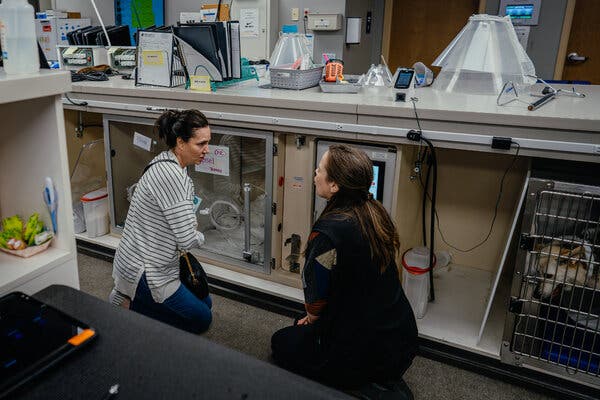
Amy Conroy sat alone in a veterinary exam room, hands clutching a water bottle, eyes blinking back tears. Her 16-year-old cat, Leisel, had been having trouble breathing. Now, she was waiting for an update.The door opened, and Laurie Maxwell came in.Ms. Maxwell works for MedVet, a 24-hour emergency veterinary hospital in Chicago. But when she took a seat opposite Ms. Conroy on a Monday evening in May, she explained that she wasn’t there for the cat. She was there for Ms. Conroy.Ms. Maxwell is a veterinary social worker, a job in a little-known corner of the therapy world that focuses on easing the stress, worry and grief that can arise when a pet needs medical care.Pets no longer exist at the periphery of the human family — to take one example, a survey in 2022 found that almost half of Americans sleep with an animal in their bed. As that relationship has intensified, so has the stress when something goes wrong. Those emotions can spill over at animal hospitals, where social workers can help pet owners work through difficult choices, such as whether to euthanize a pet or whether they can afford to pay thousands of dollars for their care.Though still rare, social workers in animal hospitals are growing in their ranks. Large chains, like VCA, are beginning to employ them, as are major academic veterinary hospitals. The service is typically offered for free. About 175 people have earned a certification in veterinary social work from the University of Tennessee, Knoxville, which is a center for the field.Laurie Maxwell, director of social work, right, with Amy Conroy, who was visiting her cat, Liesel.We are having trouble retrieving the article content.Please enable JavaScript in your browser settings.Thank you for your patience while we verify access. If you are in Reader mode please exit and log into your Times account, or subscribe for all of The Times.Thank you for your patience while we verify access.Already a subscriber? Log in.Want all of The Times? Subscribe.

Read more →