Biden Shifts Vaccination Strategy in Drive to Reopen by July 4

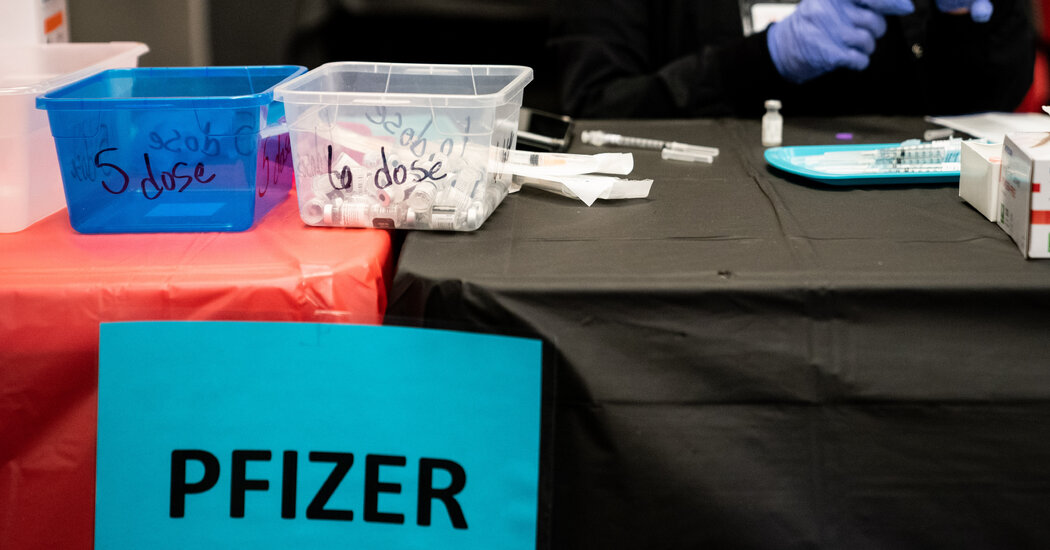
President Biden, facing a slowing rate of vaccinations and a hope for near normalcy by Independence Day, said the government would shift from mass vaccination sites to local settings.WASHINGTON — President Biden, confronting lagging vaccinations that threaten his promise of near normalcy by July 4, on Tuesday overhauled the strategy to battle the pandemic, shifting from mass vaccination sites to more local settings to target younger Americans and those hesitant to get a shot.In a speech at the White House, Mr. Biden said he was launching a new phase in the fight against the coronavirus, with a goal of at least partly vaccinating 70 percent of adults by Independence Day and with a personal plea to all of the unvaccinated: “This is your choice. It’s life and death.”After three months of battling supply shortages and distribution bottlenecks, the Biden administration is confronting a problem that the president said was inevitable: Many of those who were most eager to get vaccinated have already done so. Vaccination sites at stadiums once filled with carloads of people seeking shots are closing, and states that once clamored for more vaccines are finding that they cannot use all of the doses that the federal government wants to ship to them.Yet the administration’s own health experts say tens of millions more Americans must be vaccinated before the infection rate is low enough to return to what many people consider ordinary life.The administration now wants tens of thousands of pharmacies to allow people to walk in for shots. It has also ordered up pop-up and mobile clinics, especially in rural areas, and it plans to devote tens of millions of dollars for community outreach workers to provide transport and help arrange child care for those in high-risk neighborhoods who want to be vaccinated.To build up confidence in vaccines, federal officials plan to enlist the help of family doctors and other emissaries who are trusted voices in their communities.In a new effort to match supply with demand, federal officials informed states on Tuesday that if they did not order their full allocation of doses in any given week, that vaccine would be considered part of a federal pool that is available to other states that want to order more. Until now, if states failed to order all of the doses allotted to them on the basis of population, they could carry over that supply to the next week.Mr. Biden also announced a new federal website and phone number that will help people find the vaccination site closest to them. “We’re going to make it easier than ever to get vaccinated,” he promised.The administration is hoping for an uptick in vaccinations if the Food and Drug Administration authorizes the use of the Pfizer-BioNTech vaccine for adolescents ages 12 to 15 by early next week, as expected. The president said adolescents were important in the fight against the virus because while they are not as susceptible to severe disease, they can still get sick and infect others.Experts say the United States may never reach herd immunity, the point at which the virus dies out because of a lack of hosts to transmit it. And the president suggested that the nation was still far from beating the pandemic.While the vast majority of seniors have been vaccinated, “We’re still losing hundreds of Americans under 65 years of age every week,” Mr. Biden said. “And many more are getting seriously ill from long stretches at a time.” He warned that the nation would be vaccinating people into the fall.Still, the president said, if 70 percent of the nation’s adults have received at least one shot of vaccine by July 4, “Americans will have taken a serious step toward a return to normal.”To get there, Mr. Biden said, the government must shift the focus from mass vaccination sites to doctors’ offices, pharmacies and other local settings, and mount a far more concerted effort to reach those who are reluctant to get shots or simply figure it is too much trouble.“We’re going to keep at it,” the president said, expressing optimism that “most people will be convinced by the fact that their failure to get the vaccine may cause other people to get sick and maybe die.”As of Tuesday, more than 106 million people in the United States were fully vaccinated and more than 56 percent of adults — or almost 148 million people — had received at least one shot. That has contributed to a steep decline in infections, hospitalizations and deaths across all age groups, federal officials said.But despite a flood of doses available, the pace of vaccination has fallen off considerably over the past two and a half weeks. Providers are now administering an average of about 2.19 million doses per day, about a 35 percent decrease from the peak of 3.38 million reported on April 13, according to data from the Centers for Disease Control and Prevention.Mr. Biden called for 160 million adults to be fully vaccinated by July 4 — an increase of 55 million people, or more than 50 percent. About 35 million more adults would have to receive at least one shot to reach the president’s goal of 70 percent of adults who are at least partly protected. While this next phase of the vaccination effort is “easier because I don’t have to put together this massive logistical effort,” Mr. Biden said, “in the other sense it’s harder, it’s beyond my personal control.”Asked whether the United States would help other countries that are worse off, the president promised that by the Fourth of July, his administration will “have sent about 10 percent of what we have to other nations.” It was not clear whether he was referring only to doses from AstraZeneca, which is not authorized for distribution in the United States, or to the nation’s vaccine stock as a whole. He also pledged to move quickly “to get as many doses from Moderna and Pfizer as possibly can be produced and export those around the world.”Until now, White House officials have stuck to formulas that allocated vaccine doses to the states by population, and they were extremely reluctant to send doses of approved vaccines abroad. The administration had been unwilling to shift doses to states that were faster to administer them out of a concern that rural areas or underserved communities would lose out to urban or richer areas where residents were more willing to get shots.But as the pace of vaccination slows, officials have decided that the benefits of a looser system outweigh that risk.States that want more than their allotment will be able to request up to 50 percent more doses, officials said. States that do not claim all of their doses one week will not be penalized and will still be able to request their full allotments the next week, officials said.A vaccination site in April at a church in Queens.James Estrin/The New York TimesThe shift makes little difference to some states that have routinely drawn down as many doses as the federal government was willing to ship. But it could help some states that are able to use more than the federal government was shipping.Jen Psaki, the White House press secretary, said on Tuesday that the move offered governors more flexibility. “Even just a few weeks ago,” she said, “we were in a different phase of our vaccination effort when supply was more constrained, and states for the most part were ordering at or near their full allocation.”Virginia is a case in point. Last week, for the first time, the state did not order every dose it could have, said Dr. Danny Avula, the state vaccine coordinator.Now, he said, “supply is exceeding demand across the state, and the work will be much slower and harder as we find ways to vaccinate a few people at a time.” Dr. Avula said the change “will be very helpful for the handful of states that still have localized areas with high demand.”States with low demand, like Arkansas, may find that their allotted doses are being shipped elsewhere. Arkansas has used only 69 percent of the doses delivered to it so far, data shows. Last week, a state health department spokeswoman said, the state did not order any doses from the federal government. Just over a third of adults in Arkansas have received at least one dose, one of the lowest totals in the country.See How the Vaccine Rollout Is Going in Your County and StateSee where doses have gone, and who is eligible for a shot in each state.Ms. Psaki said the administration was working with states to determine what kinds of settings made the most sense at this point in the vaccination campaign.“We’re constantly evaluating the best delivery mechanisms,” she said, “and if something is not the most effective one, we will make changes.”Mr. Biden suggested that family doctors and pediatricians will play a key role in propelling the vaccination program, as will other community figures. If the Pfizer vaccine is authorized for adolescents, he said, the administration plans to immediately make it available to them at about 20,000 pharmacies that participate in the federal vaccination program.But some doses will be shipped directly to pediatricians so that “parents and their children can talk to their family doctor about it and get the shot from a provider they trust the most,” the president said. Dr. Vivek Murthy, the surgeon general, said last week that about “80 percent of people who are trying to decide about a vaccine say that they want to talk to their doctor about that decision — and we’ve heard that loud and clear.”

Read more →

Gene therapy in Alzheimer's disease mouse model preserves learning and memory

Researchers at University of California San Diego School of Medicine, with colleagues elsewhere, have used gene therapy to prevent learning and memory loss in a mouse model of Alzheimer’s disease (AD), a key step toward eventually testing the approach in humans with the neurodegenerative disease.
The findings are published online in advance of the June 11, 2021 issue of Molecular Therapy-Methods & Clinical Development.
AD is characterized by the accumulation of clumps of misfolded proteins called amyloid plaques and neurofibrillary tau tangles, both of which impair cell signaling and promote neuronal death. Current AD treatments targeting plaques and tangles address only symptoms, which the study’s authors say suggests a reversal and cure of AD will likely require a combination of interventional approaches that both decrease aggregating toxins and promote neuronal and synaptic plasticity.
Gene therapy is based on the premise that introducing a therapeutic compound to a precisely targeted region of the brain may restore or protect normal neural function and/or reverse neurodegenerative processes. In this case, researchers used a harmless adeno-associated viral vector to introduce synapsin-Caveolin-1 cDNA (AAV-SynCav1) into the hippocampus region of three-month-old transgenic AD mice.
The mice had been genetically modified to exhibit learning and memory deficits at 9 and 11 months, respectively. These deficits are associated with decreased expression of Caveolin-1, a scaffolding protein that builds the membranes housing cellular signaling tools, such as neurotrophin receptors that receive the critical extracellular signals, which govern all cellular life and function. With decay and destruction of these membranes, cell dysfunction and neurodegeneration follow.
“Our goal was to test whether SynCav1 gene therapy in these AD mouse models might preserve neuronal and synaptic plasticity in targeted parts of the membrane, and improve higher brain function,” said senior author Brian P. Head, PhD, adjunct professor in the Department of Anesthesiology at UC San Diego School of Medicine and research health scientist at the VA San Diego Healthcare System.
And, in fact, that’s what happened after mice received a single injection of AAV-SynCav1 to their hippocampus, which is a complex region deep within the brain that plays a major role in learning and memory. In AD, the hippocampus is among the first areas of the brain to be impaired.
At 9- and 11-months, said Head, hippocampal learning and memory in the mice were preserved. Moreover, researchers found that critical membrane structures and associated neurotrophin receptors also remained intact. Furthermore, these neuroprotective effects from SynCav1 gene delivery occurred independent of reducing amyloid plaque depositions.
“These results suggest SynCav1 gene therapy is an attractive approach to restore brain plasticity and improve brain function in AD and potentially in other forms of neurodegeneration caused by unknown etiology,” wrote the authors.
Head’s laboratory is currently testing SynCav1 gene delivery in other AD models at symptomatic stages as well as in a mouse model of amyotrophic lateral sclerosis (Lou Gehrig’s disease). He hopes to advance this work to human clinical trials soon.
The SynCav1 gene therapy is patented through UC San Diego and the Department of Veterans Affairs.
Co-authors include: Shanshan Wang, Joseph S. Leem, Natalia Kleschevnikov, Mehul Dhanani, Kimberly Zhou, Atsushi Miyanohara, David M. Roth, Hemal H. Patel and Piyush M. Patel, VA San Diego Healthcare System and UC San Diego; Paul Savchenko, Isabella C. Kelly, Sonia Podvin, Vivian Hook, Phuong Nguyen, Alexander Kleschevnikov and Steve L. Wagner, UC San Diego; Tong Zhang, Ohio State University; and John Q. Trojanowski, University of Pennsylvania.
Story Source:
Materials provided by University of California – San Diego. Original written by Scott LaFee. Note: Content may be edited for style and length.

Read more →

A trait of the rare few whose bodies naturally control HIV: 'trained' immune cells

Immunity often calls to mind the adaptive immune response, made up of antibodies and T cells that learn to fight specific pathogens after infection or vaccination. But the immune system also has an innate immune response, which uses a set number of techniques to provide a swift, non-specialized response against pathogens or support the adaptive immune response.
In the past few years, however, scientists have found that certain parts of the innate immune response can, in some instances, also be trained in response to infectious pathogens, such as HIV. Xu Yu, MD, a Core Member of the Ragon Institute of MGH, MIT and Harvard, and colleagues recently published a study in the Journal of Clinical Investigation which showed that elite controllers, a rare subset of people whose immune system can control HIV without the use of drugs, have myeloid dendritic cells, part of the innate immune response, that display traits of a trained innate immune cell.
“Using RNA-sequencing technology, we were able to identify one long-noncoding RNA called MIR4435-2HG that was present at a higher level in elite controllers’ myeloid dendritic cells, which have enhanced immune and metabolic states,” says Yu. “Our research shows that MIR4435-2HG might be an important driver of this enhanced state, indicating a trained response.”
Myeloid dendritic cells’ primary job is to support T cells, which are key to the elite controllers’ ability to control HIV infection. Since MIR4435-2HG was found in higher levels only in cells from elite controllers, Yu explains, it may be part of a learned immune response to infection with HIV. Myeloid dendritic cells with increased MIR4435-2HG also had higher amounts of a protein called RPTOR, which drives metabolism. This increased metabolism may allow the myeloid dendritic cells to better support the T cells controlling the HIV infection.
“We used a novel sequencing technology, called CUT&RUN, to study the DNA of these cells,” says postdoctoral fellow Ciputra Hartana, MD, PhD, the paper’s first author. “It allowed us to study epigenetic modifications like MIR4435-2HG, which are molecules that bind to the DNA and change how, or if, the DNA is read by the cell’s machinery.”
The team found that MIR4435-2HG might work by attaching to the DNA near the location of the RPTOR gene. The bound MIR4435-2HG would then encourage the cell’s machinery to make more of the RPTOR protein, using the instructions found in the RPTOR gene. This type of epigenetic modification, a trained response to HIV infection, would allow the myeloid dendritic cells to stay in an increased metabolic state and therefore provide long-term support to the T cells fighting the virus.
“Myeloid dendritic cells are very rare immune cells, accounting for only 0.1-0.3% of cells found in human blood,” says Yu. “We were fortunate and thankful to have access to hundreds of millions of blood cells from the many study participants who have donated their blood to support our HIV research. These donations were key to making this discovery.”
Understanding exactly how elite controllers’ immune systems can control HIV is a key part of HIV cure research. If scientists can understand how elite controllers suppress this deadly virus, they may be able to develop treatments that allow other people living with HIV to replicate the same immune response, removing the need for daily medication to control the virus and achieving what is known as a functional cure.
Story Source:
Materials provided by Massachusetts General Hospital. Note: Content may be edited for style and length.

Read more →

Without commuter traffic, pandemic-era drivers are speeding up, increasing noise pollution

As pandemic lockdowns went into effect in March 2020 and millions of Americans began working from home rather than commuting to offices, heavy traffic in America’s most congested urban centers — like Boston — suddenly ceased to exist. Soon afterwards, the air was noticeably cleaner. But that wasn’t the only effect. A team of Boston University biologists who study how human-related sounds impact natural environments seized the opportunity to learn how the reduced movement of people would impact local ecosystems. They found — surprisingly — that sound levels increased in some nature conservation areas, a result of cars driving faster on roads no longer choked by traffic.
BU ecologist Richard Primack and Carina Terry, an undergraduate student working in Primack’s research lab, ventured into Boston-area parks, iPhones in hand, to take environmental sound recordings to see how sound levels had changed in comparison to pre-pandemic times, when there were more people out and about, construction underway, and cars on the road. Primack, a BU College of Arts & Sciences professor of biology, has studied noise pollution for over four years and has trained over a hundred students and citizen conservationists to collect noise samples in nature sanctuaries across Massachusetts.
The team focused their study on three locations in Massachusetts: Hammond Pond Reservation in Newton, Hall’s Pond Sanctuary in Brookline, and Blue Hills Reservation — by far the largest of the three — which covers parts of Milton, Quincy, Braintree, Canton, Randolph, and Dedham. They collected noise samples from all three parks using a specialized sound-sensing app on iPhones, called SPLnFFT. Then, by referencing the Primack lab’s huge library of previously collected sound data, the study authors compared sound levels collected in the months during the pandemic to measurements collected before the pandemic began. The resulting paper was recently published in the journal Biological Conservation.
They found that Hammond Pond Reservation and Hall’s Pond Sanctuary, both located in suburban residential areas, had lower levels of noise. But at Blue Hills Reservation, they found the opposite — sound levels increased substantially in all areas of the park, “which was very surprising,” Terry says. Blue Hills is a popular destination for local hikes and it is intersected by several major highways and roadways. While there are less cars on the roads these days, the researchers say their sound recordings indicate cars are moving much faster, generating more noise. This finding aligns with a trend that has been observed nationwide — the pandemic has seen traffic jams replaced with increased reports of recklessly fast drivers speeding on open roadways.
“Before the pandemic, traffic was going relatively slow on [I-93] because it was so congested,” says Primack, the study’s senior author. Now, noise from faster-moving cars is “penetrating the entire park,” he says, measuring about five decibels noisier, even in the interior of the park, compared to pre-pandemic times.
“It’s not so much the [number] of cars, but the speed,” says Terry, the study’s lead author. This study was part of her undergraduate honors thesis from the department of earth and environment and the Kilachand Honors College which she graduated from in 2020, and won her the Francis Bacon Award for Writing Excellence in the Natural Sciences.

Read more →

Elections 2021: 'Parents shouldn't have to fight for child's care'

The mother of a disabled boy has said she believes he is being failed by the social care system.Zach, 10, from Mansfield, has multiple life-limiting conditions, including learning disabilities, sensory processing disorder and intestinal failure.He also has a central line – a tube connected to a large vein near his heart – which provides him with vital fluids and medication.Despite having continuous care needs, Zach faces a wait of up to a year for essential new equipment, according to his mum Tricy.”His bed isn’t suitable. He’s damaged his central line three times,” she said.Together For Shorter Lives, a charity which supports seriously ill children and their families, said it has seen an increase in the number of calls from parents who are struggling to access continuing health care, while children’s services in England have been described as being “woefully underfunded” by the Association of Directors of Children’s Services.Laurence Jones, service director, commissioning and resources in children and family services at Nottinghamshire County Council, said the authority was “sympathetic” towards Zach’s situation.”We strive to ensure that children and young people receive the support they need. We are providing ongoing social care support for which the county council is responsible and regularly assess to ensure this is reviewed as the child’s needs change,” he added.A spokesperson for NHS Nottingham and Nottinghamshire Clinical Commissioning Group (CCG) said: “We cannot comment on a patient’s individual case. However, the CCG always works in partnership with colleagues across the system in education and social care to ensure that the needs of children with complex conditions are met.”On 6 May across England millions of people will be voting for new councillors, mayors and police and crime commissioners. Register to vote here.Video journalist: Alex ThorpFollow BBC East Midlands on Facebook, Twitter, or Instagram. Send your story ideas to eastmidsnews@bbc.co.uk.

Read more →

Tamara Press, Olympian Whose Feats Raised Questions, Dies at 83

She won three gold medals in the 1960s but was the focus of speculation about her gender. She retired after pulling out of a track meet that would have required a sex test.Tamara Press, a dominant Soviet shot-putter and discus thrower who won three Olympic gold medals in the 1960s but was the focus of speculation about her gender because of her physique, died on April 26. She was 83.Her death was announced by the Russian Ministry of Sport, which did not specify where she died or cite the cause.Press, who was 5-foot-11 and 225 pounds, began to attract international notice in 1958, when she won the gold medal in the discus and the bronze in the shot-put at the European Athletic Championships in Stockholm.More success followed. At the 1960 Summer Olympics in Rome, she won a gold medal in the shot-put and a silver in the discus. Four years later, at the Summer Olympics in Tokyo, she set Olympic records while winning gold medals in both events.But Press and her sister, Irina — who won gold medals in the 80-meter hurdles in Rome and in the pentathlon in Tokyo — received more than glory from their athletic careers.They heard cruel taunts about their size, some of it from sportswriters who compared Tamara to a defensive tackle. She and Irina were sometimes called the “Press brothers.”“I’m a champion, but you can see I’m a woman,” Tamara Press told The Associated Press in 1964. “The fact that a girl is a sportswoman has nothing to do with femininity.”Press throwing the discus at the 1964 Summer Olympics in Tokyo. She won gold medals that year in both the discus and the shot-put. Rolls Press/Popperfoto, via Popperfoto, via Getty ImagesSeven decades later, a contentious debate continues in track and field regarding the eligibility of intersex athletes — those born with sex characteristics that do not conform to binary descriptions of male and female.Caster Semenya, a two-time Olympic champion at 800 meters, has been challenging, so far without success, the rules of World Athletics, track and field’s governing body, which require intersex athletes who identify as female to suppress their natural testosterone levels below that of men before being able to compete in women’s races from a quarter-mile to a mile.World Athletics has acknowledged that the restrictions are discriminatory, but nonetheless said they’re necessary to provide a level playing field during competition. Critics, including the World Medical Association and the United Nations High Commissioner for Human Rights, have called the rules unnecessary and humiliating.In 1966, when Press was 29, her career (as well as her sister’s) came to a near-total end when they decided to withdraw from the European Athletics Championships in Budapest.It is not clear why Press decided to withdraw. Had she taken anabolic steroids to gain strength, endurance and bulk, she might have aroused suspicion, but she would not have faced little risk of being detected, because drug testing was in its infancy in those days.If she was intersex, Press might have feared failing a new test instituted at the athletics championships: the so-called nude parade, which required women athletes to appear before a medical panel that would determine their eligibility.“There was something different about the Press sisters,” said John Hoberman, a historian of doping in sports and the author of “Testosterone Dreams: Rejuvenation, Aphrodisia, Doping” (2005). He added that it was “not out of the question” that both things were true — that the sisters were intersex and that they also used steroids.All Soviet officials would say about the sisters’ absence from the meet is that they had to stay at home to care for their sick mother.Tamara Natanovna Press was born on May 10, 1937, in Kharkov, Ukraine, and lived there until her family was evacuated to Samarkand, Uzbekistan, early in World War II. Her father was in the Soviet military and died in battle in 1942. At 18, Tamara moved to Leningrad to train under Viktor Aleksyev, a renowned track and field coach.From 1959 to 1965, Press set 11 world records, including her personal bests: 18.59 meters (or 60.9 feet) in the shot-put and 59.70 meters (195.9 feet) in the discus.Press, lying down, with her sister, Irina, in an undated photo. Irina Press won gold medals in the 80-meter hurdles at the 1960 Rome Olympics and the pentathlon in Tokyo in 1964.Ullstein Bild/ullstein bild, via Getty ImagesFollowing the Press sisters’ decision not to compete in Budapest, Tamara Press stayed active until 1967. At one of her last meets, the Moskow Spartakiad, an all-Soviet event that did not require gender testing, she won the shot-put. She retired later that year.In the years after she stopped competing, Press worked as an engineer and a coach. In 1996 she worked to help re-elect Boris Yeltsin as Russia’s president. She was also the vice president of the Physical Culture and Health Fund, a charity that helps promising Russian athletes, and the author of several books, including “The Price of Victory.”In 2012, President Vladimir Putin wished Press a happy 75th birthday, saying in a statement, “You earned the respect of opponents and the love of millions of fans.”Information about her survivors was not immediately available. Her sister died in 2004.In 1996, as the Summer Olympics were taking place in Atlanta, Press told The Christian Science Monitor that her success in the 1960 and 1964 Games “was a victory for our country,” adding, “Communism — that’s another question.”And she recalled that she was so focused at the Tokyo Olympics that at some point she was unaware that one of her competitors had dropped the shot on her thigh.“There was so much tension that I didn’t even notice,” she said. “After the competition I saw a black mark on my leg and thought, ‘What’s this?’”

Read more →

3D 'bioprinting' used to create nose cartilage

A team of University of Alberta researchers has discovered a way to use 3-D bioprinting technology to create custom-shaped cartilage for use in surgical procedures. The work aims to make it easier for surgeons to safely restore the features of skin cancer patients living with nasal cartilage defects after surgery.
The researchers used a specially designed hydrogel — a material similar to Jell-O — that could be mixed with cells harvested from a patient and then printed in a specific shape captured through 3-D imaging. Over a matter of weeks, the material is cultured in a lab to become functional cartilage.
“It takes a lifetime to make cartilage in an individual, while this method takes about four weeks. So you still expect that there will be some degree of maturity that it has to go through, especially when implanted in the body. But functionally it’s able to do the things that cartilage does,” said Adetola Adesida, a professor of surgery in the Faculty of Medicine & Dentistry.
“It has to have certain mechanical properties and it has to have strength. This meets those requirements with a material that (at the outset) is 92 per cent water,” added Yaman Boluk, a professor in the Faculty of Engineering.
Adesida, Boluk and graduate student Xiaoyi Lan led the project to create the 3-D printed cartilage in hopes of providing a better solution for a clinical problem facing many patients with skin cancer.
Each year upwards of three million people in North America are diagnosed with non-melanoma skin cancer. Of those, 40 per cent will have lesions on their noses, with many requiring surgery to remove them. As part of the procedure, many patients may have cartilage removed, leaving facial disfiguration.

Read more →

Your stomach may be the secret to fighting obesity

Scientists believe a stomach-specific protein plays a major role in the progression of obesity, according to new research in Scientific Reports. The study co-authored by an Indiana University School of Medicine researcher, could help with development of therapeutics that would help individuals struggling with achieving and maintaining weight loss.
Researchers focused on Gastrokine-1 (GKN1) — a protein produced exclusively and abundantly in the stomach. Previous research has suggested GKN1 is resistant to digestion, allowing it to pass into the intestine and interact with microbes in the gut.
In the Scientific Reports study, researchers show that inhibiting GKN1 produced significant differences in weight and levels of body fat in comparison to when the protein was expressed.
“While diet and exercise are critical to maintaining a healthy weight, some individuals struggle with weight loss — even in cases of bariatric surgery, maintaining weight loss can be a challenge,” said David Boone, PhD, associate professor of microbiology and immunology at IU School of Medicine, an adjunct professor in the Department of Biology at the University of Notre Dame and a co-author of the study. “These results are an example of how a better understanding of the gut microbiome and the physiological aspects of obesity — how our bodies regulate metabolism and accumulate body fat — could help inform new therapies.”
Data from the Centers for Disease Control show adult obesity rates have increased to 42.4 percent in the United States. In addition to increasing an individual’s risk of stroke, diabetes, certain cancers and other health issues, obesity can also increase the risk of severe illness due to COVID-19.
Boone and his team conducted a microbiome analysis of mouse models with and without the GKN1 protein expressed. Researchers measured food intake, caloric extraction, blood sugar, insulin and triglyceride levels. They used magnetic resonance imagining to monitor body composition. The team also calculated energy expenditure and observed inflammation levels.
Models without GKN1 weighed less and had lower levels of total body fat and higher percentages of lean mass — despite consuming the same amount of food. When put on a high-fat diet, models without GKN1 showed a resistance to weight gain, increased body fat and hepatic inflammation, which can lead to liver disease. Researchers also found no evidence of adverse effects such as cancer, diabetes, loss of appetite, malabsorption or inflammation — and results were consistent in male and female models.
While more research is needed to determine the efficacy of blocking GKN1 to prevent obesity, researchers said if proved as a viable solution, such therapies could reduce the burden on health care systems and help improve quality of life for patients.
Story Source:
Materials provided by Indiana University School of Medicine. Note: Content may be edited for style and length.

Read more →

New Covid Cases in Arizona Are Up 21 Percent in Two Weeks

While most of the United States has seen a steady decline in new coronavirus cases recently, Arizona has been an outlier.The state has not been swamped with another virus wave, but public health experts are worried about a steady increase in cases and hospitalizations. As of Monday, Arizona’s daily average had climbed 21 percent in the last two weeks, tying it with Wyoming for the largest rise in the nation over that period. Only three other states reported increases of more than 10 percent in that time: Washington, Oregon and Missouri.Arizona’s daily new case load, at 10 per 100,000 people, is still below the national average of 15 per 100,000. Over the last 14 days, as federal health officials have suggested that the virus’s trajectory is improving, the country has seen a 26 percent decrease in new coronavirus cases, and 28 states have seen declines of 15 percent or more, according to a New York Times database.Will Humble, the former state health director who now heads the Arizona Public Health Association, said the increase in new cases could be attributed to several factors, including a spring influx of travelers and the prevalence of a virus variant first detected in Britain. The variant, B.1.1.7., has been associated with increased transmissibility.Mr. Humble said the rise in Arizona was not likely to yield a substantial rise in deaths, which have been declining in the state. Most older adults and other people in the state who are at elevated risk of severe illness have already been vaccinated, he said, while the new cases are predominantly people in their 20s, 30s and 40s who are more likely to have milder cases.Mr. Humble said the rise in cases has “totally different public health implications” now than it would have several months ago, when far fewer people were vaccinated.“We’re not going to experience the type of lethal experiences that we would have in December, January or February,” Mr. Humble said. Even so, he said, there had been “a notable upward movement in general ward beds and also I.C.U.”Arizona was slow to put restrictions in place and quick to remove them last summer as cases skyrocketed and intensive-care beds filled to near capacity. For more than a month, from early June until mid-July, the state reported new cases at the highest rate in the country, relative to its size, reaching a peak of 3,800 a day.In January, Arizona again had the highest rate of daily new cases for a time. At one point, it averaged more than 8,000 a day, more than double the summer peak.Gov. Doug Ducey signed an executive order in March that lifted all Covid-19 restrictions in the state and barred local governments from imposing mask mandates.Mr. Humble said that policy might have left Arizona more vulnerable.“There’s no mitigation at all here, and there hasn’t been for months,” he said.About 41 percent of Arizonans have received a first dose of the vaccine, and 30 percent have been fully vaccinated, just below the national average. But the picture varies considerably from one part of the state to another. Three of Arizona’s 15 counties have vaccinated more than 40 percent of residents, but six have vaccinated fewer than 30 percent, as of Monday.Dr. Cara Christ, the director of the Arizona Department of Health Services, told reporters last month that the initial rush for vaccines had slowed considerably. “Vaccine appointments used to be snapped up almost as soon as they were made available,” she said. “Now it’s to a point where it’s possible to get a same-day appointment at virtually any state site.”

Read more →

Pfizer Will Seek Approval to Give Covid Vaccine to Children

Pfizer expects to apply to the Food and Drug Administration in September for emergency authorization to administer its coronavirus vaccine to children between the ages of 2 and 11, the company told Wall Street analysts and reporters on Tuesday during its quarterly earnings call.The company said it also plans to apply this month for full approval of the vaccine for use in people from ages 16 to 85. And it said it expected to have clinical trial data on the safety of its vaccine in pregnant women by early August.The Pfizer-BioNTech vaccine is being given to adults under an emergency use authorization that the companies received in December. Obtaining full F.D.A. approval would, among other things, allow the companies to market the vaccine directly to consumers. The approval process is expected to take months.“Full approval is a welcome indicator of the continued safety and efficacy of the Pfizer vaccine,” Saskia Popescu, an infectious disease epidemiologist at George Mason University, said in an email. It could also “build further confidence in the importance of vaccination,” she said.The Pfizer-BioNTech coronavirus vaccine was the first to receive emergency authorization in the United States. Emergency authorizations are meant to be temporary, and can be revoked when a public health emergency is over.Full approval would allow the vaccine to remain on the market as the pandemic fades. It may also make it easier for companies, government agencies, schools and other entities to require vaccination. The University of California and California State University school systems, for instance, have announced that once coronavirus vaccines receive full F.D.A. approval, they will require students, faculty and staff members to be vaccinated. The U.S. military, which has seen many troops decline coronavirus vaccines, has said that it would not make them mandatory as long as they have only emergency authorization.The F.D.A. is expected to issue an emergency use authorization early next week allowing the vaccine to be used in children 12 to 15 years old.Jen Psaki, the White House press secretary, said at a news conference on Tuesday that she did not want to get ahead of the F.D.A.’s authorization process, but that if a vaccine were to be approved, the administration was preparing to “make that accessible to additional, younger populations.”Dr. Popescu said the possibility of opening up use of the vaccine to children in the United States was both exciting and frustrating. “We have essential workers around the world unable to get vaccines, and countries that may not have access for a year or more, so this conversation needs to be broadened to include global access,” she said.As of Tuesday, more than 131 million doses of the Pfizer-BioNTech vaccine had been administered in the United States, according to the Centers for Disease Control and Prevention. They make up a bit more than half of all doses administered in the country so far.Pfizer’s chief executive, Dr. Albert Bourla, said the company approached the F.D.A. on Friday with new data that it hopes will persuade the agency to allow its vaccine to be kept at refrigerator temperatures, rather than frozen, for up to four weeks. Currently, the limit is five days. He said the company is working on an updated version of the vaccine that could potentially be kept in refrigerators for up to 10 weeks, and hopes to have supporting data for that in August.Rebecca Robbins

Read more →