White House Says It Will Narrowly Miss July 4 Vaccination Goal

People ages 18 to 26 have been slow to get their shots, aides to President Biden said, ruling out the possibility of getting 70 percent of adults at least partly vaccinated by Independence Day.WASHINGTON — The White House publicly acknowledged on Tuesday that President Biden did not expect to meet his goal of having 70 percent of adults at least partly vaccinated by July 4 and instead would reach that milestone only with people older than 26.It would be the first time that Mr. Biden has failed to meet a vaccination goal he has set. If the rate of adult vaccinations continues on the current seven-day average, the country will come in just shy of his target, with about 67 percent of adults having at least one shot by July 4, according to a New York Times analysis.White House officials have argued that falling short by a few percentage points is not significant, given all the progress the nation has made against Covid-19. “We have built an unparalleled, first-of-its-kind, nationwide vaccination program,” Jeffrey D. Zients, the administration’s pandemic response coordinator, said during a White House briefing. “This is a remarkable achievement.”But health experts warn that the slowing vaccination rate could mean renewed coronavirus outbreaks this winter when cold weather drives people indoors, with high daily death rates in areas in which comparatively few people have protected themselves with shots.“I give credit to the Biden administration for putting in place a mass vaccination program for adults that did not exist,” said Dr. Paul A. Offit, the director of the Vaccine Education Center at Children’s Hospital of Philadelphia. “But now we’ve hit a wall.”Dr. Anthony S. Fauci, the nation’s top infectious disease expert, said at the White House briefing that “there is a danger, a real danger, that if there is a persistence of a recalcitrance to getting vaccinated that you could see localized surges,” or regional spikes.He also warned of the rising prevalence of the Delta variant, first identified in India, which is more contagious than previous versions of the virus and may cause more severe disease. The variant now accounts for an estimated 20 percent of new infections, he said. A new analysis of nearly one-quarter of a million infections in the United States released Monday suggests the variant will soon be the dominant form of the virus here.The three vaccines authorized in the United States are effective against the Delta variant, and Dr. Fauci said its spread lent new urgency to the campaign to vaccinate as many Americans as soon as possible.Data released by the administration this week shows that young adults are most reluctant to get vaccinated. “Where the country has more work to do is particularly with 18 to 26 year olds,” Mr. Zients said. Many of them, he added, feel “like Covid-19 is not something that impacts them, and they’ve been less eager to get the shot.”According to a Centers for Disease Control and Prevention report released Monday, just over one-third of adults ages 18 to 39 reported being vaccinated. In that group, those who were either 24 or younger, as well as non-Hispanic Black people and those with lower incomes, less education and no health insurance had the lowest reported vaccination rates and expressed the least interest in getting vaccinated, the report said. They most often cited concerns about the safety and effectiveness of the vaccines.Mr. Zients said it would take “a few extra weeks” beyond July 4 to reach enough young adults to achieve the goal of 70 percent of adults at least partly vaccinated. But Dr. Fauci stressed that 70 percent “is not the goal line, nor is it the end game.” A certain percentage of Americans are simply adamantly against the vaccine, said Dr. Marcus Plescia, the chief medical officer of the Association of State and Territorial Health Officials. “But I think there’s still people out there who are kind of on the fence about it and that’s where our opportunity is,” he added.In announcing the goal on May 4, Mr. Biden made a personal plea to the unvaccinated, saying getting a shot was a “life and death” choice. According to the latest figures from the C.D.C., 150 million Americans — 45 percent of the population — have been fully vaccinated and 177 million have received at least one dose.In recent weeks, new infections, hospitalizations and deaths related to the virus have declined sharply nationwide. As of Monday, the seven-day average of new virus cases across the United States was 11,243 cases a day, a decrease of nearly 30 percent over the last two weeks, according to a Times database.Lazaro Gamio

Read more →

Rap1 controls the body's sugar levels from the brain

Managing type 2 diabetes typically involves losing weight, exercise and medication, but new research by Dr. Makoto Fukuda and colleagues at Baylor College of Medicine and other institutions suggests that there may be other ways to control the condition through the brain. The researchers have discovered a mechanism in a small area of the brain that regulates whole-body glucose balance without affecting body weight, which suggests the possibility that modulating the mechanism might help keep blood sugar levels in a healthy range.
“A growing body of evidence strongly suggests that the brain is a promising yet unrealized therapeutic target for type 2 diabetes, as it has been shown that it can regulate glucose metabolism,” said Fukuda, assistant professor of pediatrics-nutrition at Baylor. “To further materialize this concept, it is of great interest to identify potentially druggable molecular targets mediating the brain’s antidiabetic effects.”
Regulating whole-body glucose balance from the brain
Research has shown that within the hypothalamic region of the brain, a small area known as the ventromedial nucleus of the hypothalamus (VMH) contains glucose-sensing neurons and regulates glucose metabolism in peripheral tissues.
“VMH neurons are thought to be crucial mediators of the neural glucoregulatory mechanism,” Fukuda said. “However, the signaling mechanisms within VMH neurons that mediate whole-body sugar control remain elusive. In this study, we identified a molecular pathway in the VMH that mediates whole-body glucose balance and involves Rap1, an enzyme known to mediate overnutrition-associated disorders.”
The researchers worked with a diabetes model of high-fat diet-induced obesity in mice, in which they either activated or eliminated Rap1 specifically in VMH neurons by using either genetic or pharmacological techniques.
They discovered that activation of Rap1 in the hypothalamus exaggerated the high blood sugar levels or hyperglycemia in the diet-induced obesity mouse model. In contrast, genetic loss of hypothalamic Rap1 decreased hyperglycemia in dietary obesity.
“Interestingly, the changes in glucose levels were observed without alterations in body weight, suggesting a primary role of Rap1 in glucoregulatory function,” Fukuda said. “Our findings that Rap1 activity can be regulated via pharmacological intervention provide proof-of-concept for the potential of targeting Rap1 signaling within the brain to improve glucose imbalance and induce antidiabetic effects.”
While having no effect on body weight regardless of sex, diet and age, Rap1 deficiency in VMH neurons markedly lowered blood glucose and insulin levels and improved glucose and insulin tolerance.
Taken together, the data suggest that hypothalamic Rap1 is a molecular pathway for the control of glucose metabolism and mediates high-fat diet-induced glucose imbalance, thereby making it a potential target for therapeutics.
“If we gain weight, blood glucose seems to be disturbed. That’s why obese people may have diabetes,” Fukuda said. “But in this mouse model we discovered that by modulating the activity of Rap1 in a small brain area we could regulate whole-body glucose metabolism without body weight change. There is still much work to do, but our findings suggest that maybe in the future obese people with diabetes could lower blood sugar levels by manipulating this mechanism of Rap1 in the brain without having to lose weight.”
Story Source:
Materials provided by Baylor College of Medicine. Original written by Ana María Rodríguez, Ph.D.. Note: Content may be edited for style and length.

Read more →

Switching from Western diet to a balanced diet may reduce skin, joint inflammation

The secret to healthier skin and joints may reside in gut microorganisms. A study led by UC Davis Health researchers has found that a diet rich in sugar and fat leads to an imbalance in the gut’s microbial culture and may contribute to inflammatory skin diseases such as psoriasis.
The study, published in the Journal of Investigative Dermatology, suggests that switching to a more balanced diet restores the gut’s health and suppresses skin inflammation.
“Earlier studies have shown that Western diet, characterized by its high sugar and fat content, can lead to significant skin inflammation and psoriasis flares,” said Sam T. Hwang, professor and chair of dermatology at UC Davis Health and senior author on the study. “Despite having powerful anti-inflammatory drugs for the skin condition, our study indicates that simple changes in diet may also have significant effects on psoriasis.”
What is psoriasis?
Psoriasis is a stubborn skin condition linked to the body’s immune system. When immune cells mistakenly attack healthy skin cells, they cause skin inflammation and the formation of scales and itchy red patches.
Up to 30% of patients with psoriasis also have psoriatic arthritis with symptoms such as morning stiffness and fatigue, swollen fingers and toes, pain in joints and changes to nails.

Read more →

In many cases, MS starts long before the diagnosis

Persons suffering from the autoimmune disease multiple sclerosis can develop various neurological symptoms caused by damage to the nervous system. Especially in early stages, these may include sensory dysfunction such as numbness or visual disturbances. In most patients, MS starts with recurring episodes of neurological disability, called relapses or demyelinating events. These clinical events are followed by a partial or complete remission. Especially in the beginning, the symptoms vary widely, so that it is often difficult even for experienced doctors to interpret them correctly to arrive at a diagnosis of MS.
Above-average numbers of medical appointments
It has been evident for some time, however, that patients with MS show significantly higher numbers of physician visits and hospital admissions even years before the first diagnosis as compared to healthy control persons. In recent years, specialists have seen this pre-diagnosis period as a possible prodromal phase of the disease.
MS often begins far in advance of the diagnosis
A new study carried out by a team working with the neurologist Prof. Bernhard Hemmer at TUM suggests that many complaints prior to diagnosis might not represent a prodromal phase. “Instead, we suspect that unrecognized MS relapses cause these individuals to seek medical attention,” says Prof. Hemmer. “That is because we have found that the physician appointments and hospital admissions frequently involved complaints indicating typical MS symptoms. We believe that many complaints that have been attributed to a prodromal phase are in fact caused by ongoing disease. We therefore believe that, although the disease has not yet been diagnosed, it is fully active and not in a preliminary or prodromal phase.”
A path to an earlier diagnosis
The results of the study could also open up possibilities to optimize MS treatment: “The sooner MS is recognized, the better we can treat the disease,” says first author Dr. Christiane Gasperi, a physician and researcher at the Neuro-Head Center at the TUM Klinikum rechts der Isar. “We now need to take a closer look at which early symptoms of MS might be overlooked. This could allow us to recognize the disease at an earlier stage and thus enable earlier treatment initiation.”
Less frequent respiratory tract infections
Along with the more frequent complaints in the years before an MS diagnosis, the results of the study also showed that persons with MS were actually less likely to seek medical attention for upper respiratory tract infections. “This was unexpected, in view of the fact that MS relapses have sometimes been associated with infections,” says co-first author and Adjunct Teaching Professor Dr. Alexander Hapfelmeier of the TUM Institute of General Practice and Health Services Research. “However, future studies will be needed to determine whether there is a causal link between MS and a degree of protection against certain infections, or whether the health data we analyzed reflect protective behavior adopted by persons with MS.”
Story Source:
Materials provided by Technical University of Munich (TUM). Note: Content may be edited for style and length.

Read more →

It's true: Stress does turn hair gray (and it's reversible)

Legend has it that Marie Antoinette’s hair turned gray overnight just before her beheading in 1791.
Though the legend is inaccurate — hair that has already grown out of the follicle does not change color — a new study from researchers at Columbia University Vagelos College of Physicians and Surgeons is the first to offer quantitative evidence linking psychological stress to graying hair in people.
And while it may seem intuitive that stress can accelerate graying, the researchers were surprised to discover that hair color can be restored when stress is eliminated, a finding that contrasts with a recent study in mice that suggested that stressed-induced gray hairs are permanent.
The study, published June 22 in eLife, has broader significance than confirming age-old speculation about the effects of stress on hair color, says the study’s senior author Martin Picard, PhD(link is external and opens in a new window), associate professor of behavioral medicine (in psychiatry and neurology) at Columbia University Vagelos College of Physicians and Surgeons.
“Understanding the mechanisms that allow ‘old’ gray hairs to return to their ‘young’ pigmented states could yield new clues about the malleability of human aging in general and how it is influenced by stress,” Picard says.
“Our data add to a growing body of evidence demonstrating that human aging is not a linear, fixed biological process but may, at least in part, be halted or even temporarily reversed.”
Studying hair as an avenue to investigate aging

Read more →

Ei-ichi Negishi, Nobel Prize Winner in Chemistry, Dies at 85

His work in creating a method to build complex organic molecules applied to everything from pharmaceutical manufacturing to electronics.Ei-ichi Negishi, who shared the Nobel Prize in Chemistry in 2010 for developing techniques now ubiquitous in the manufacture of pharmaceuticals, died on June 6 in Indianapolis. He was 85.His death, at a hospital, was announced by Purdue University, where Dr. Negishi was a professor for four decades. No cause was given.Dr. Negishi’s Nobel-winning research involved chemical reactions that produce complex organic compounds — large carbon-based molecules used in drugs, plastics and many other industrial materials. Coaxing one carbon atom to bond to another can be difficult, but Dr. Negishi and other chemists figured out that metals, palladium in particular, could be used as intermediary matchmakers.In these reactions, two carbon-based molecules first stick to the palladium. The palladium then disconnects from them, and the two carbons attach to each other, forming a new, larger molecule. With the palladium working as a catalyst, the organic chemistry reactions can run at lower temperatures with fewer steps, reducing cost and waste.“It just allows this enormous selectivity,” said James M. Tour, a professor of chemistry at Rice University in Houston, who was a graduate student of Dr. Negishi’s. “When you build molecules, you have to be able to work on one part of the molecule without destroying the other part.”Chemists had discovered the magic of palladium earlier, and in 1977 Dr. Negishi built on that work by using zinc compounds to ease the mingling of carbon atoms on palladium. That made the process more applicable to a wider range of reactions.“Without organic compounds, none of us can live,” Dr. Negishi said in a news conference on the day the Nobel was announced. “One of our major dream goals is to be able to synthesize any organic compounds in high yield, high efficiency.”He gave as an analogy the creating of elaborate Lego formations. “That is a pretty accurate description of what we have been trying to do,” he said.Traditionally, organic chemists largely limited themselves to molecules using the 10 or so elements found in organic compounds. Dr. Negishi said that he and others had “realized that we should make sure of the entire periodic table.”By expanding to other elements like palladium, chemists in effect increased the number of Lego pieces they could use, and that opened new avenues to synthesize the molecules they wanted to make.Dr. Negishi shared the 2010 Nobel in Chemistry with Richard F. Heck of the University of Delaware and Akira Suzuki of Hokkaido University in Sapporo, Japan.Unlike many Nobelists who say they never expected to receive the highest honor in the science world, Dr. Negishi said it was “not a major surprise” to receive an early morning phone call on Oct. 6, 2010, from the Royal Swedish Academy of Sciences, which administers the Nobels.Dr. Tour said Dr. Negishi had pursued research that he thought was Nobel-worthy. “He dreamed about it,” Dr. Tour said. “He often discussed the Nobel Prize. And what would have to be done to win this.”To that end, Dr. Negishi could be relentless. “He was extremely exacting,” Dr. Tour said. “He had no trouble pushing people to the point of tears at a blackboard.”Dr. Negishi in 2011 before presenting a talk at Purdue University. When the audience applauded him as he was introduced, he applauded the audience. John Terhune/Journal & Courier, via Associated PressDr. Tour said Dr. Negishi also had a generous side. “If anybody would walk up to his office door and knock, his door was always open,” Dr. Tour said. “And you’d usually sit down for much longer than you bargained for, because he analyzed the whole project you’re working on, not just the question that you’re asking.”Ei-ichi Negishi was born on July 14, 1935, in Changchun, China, then known as Hsinking, the capital of the Japanese-controlled part of the country, in the northeast. His family moved to Tokyo after World War II and then to a rural area outside Tokyo, where his father farmed and his mother took care of the family’s five children.After graduating from the University of Tokyo in 1958 with a bachelor of engineering degree, he worked as a research chemist at the Iwakuni Research Laboratories in Japan. By his account, he realized that he needed more academic training but felt that graduate school was financially out of reach.His fortunes changed in 1960, however, when he won a Fulbright scholarship to attend the University of Pennsylvania. After finishing his doctorate in 1963, he joined the laboratory of Herbert C. Brown at Purdue. Dr. Brown became the first Purdue faculty member to win a Nobel Prize, in 2004; Dr. Negishi was the second.“In terms of research, he is my only mentor” Dr. Negishi said of Dr. Brown in an interview after the Nobel announcement. “I have had other professors, but he taught me just about everything as to how to do research.”Dr. Negishi moved to Syracuse University as an assistant professor in 1972 and returned to Purdue in 1979 as a professor. He retired in 2019, having been an author of more than 400 scientific papers.In 2010, Dr. Negishi, who remained a Japanese citizen, received the Order of Culture from Emperor Akihito. He was elected to the National Academy of Sciences in 2014.Survivors include two daughters, four grandchildren and one great-granddaughter. His wife of 58 years, Sumire, died in 2018.“When he got his Nobel Prize, he became nicer,” Dr. Tour said. “He’d take his wallet out of his pocket, and protruding from his wallet was the Nobel Prize medallion.”Dr. Tour said Dr. Negishi would pass the medal around and wouldn’t mind if someone dropped it. “You could see the ding in one side of it,” Dr. Tour said. “And he just laughed about it.”

Read more →

How pancreatic cancer cells dodge drug treatments

Cancer cells can become resistant to treatments through adaptation, making them notoriously tricky to defeat and highly lethal. Cold Spring Harbor Laboratory (CSHL) Cancer Center Director David Tuveson and his team investigated the basis of “adaptive resistance” common to pancreatic cancer. They discovered one of the backups to which these cells switch when confronted with cancer-killing drugs.
KRAS is a gene that drives cell division. Most pancreatic cancers have a mutation in the KRAS protein, causing uncontrolled growth. But, drugs that shut off mutant KRAS do not stop the proliferation. The cancer cells find a way to bypass the blockage and keep on dividing. Derek Cheng, the lead author of the study and a former Medical Scientist Training Program student in the Tuveson lab, compares this process to backup engines on a ship. He says:
“You take away your main engine, you’re kind of on some backup engines. But it’s getting by on those. The ship isn’t sinking yet. It’s still moving at a slower pace. Ultimately what we want to do is sink the ship.”
Tuveson and his team wanted to figure out the “backup engines” in these cancer cells. They used a technique called biotin proximity labeling to identify what other proteins interacted with mutant KRAS. Cheng says, “I basically attach a spray can to my favorite protein, or rather least favorite protein, in this case. And so it attaches biotin, basically spraying biotin ‘paint’ to nearby proteins, and we’re able to analyze it to figure out what proteins were labeled.”
The scientists found “biotin paint” on a protein named RSK1, which is part of a complex that keeps a nearby group of proteins, called RAS proteins, dormant. The scientists were surprised to discover that when they inactivated mutant KRAS, the nearby RSK1 complex stopped working as well. This allowed the RAS proteins to activate and take over the work of the missing mutant KRAS.
Stopping pancreatic cancer cells may require drugs that can simultaneously target multiple molecules. Tuveson hopes to uncover more of the players contributing to adaptation in cancer cells to improve future treatments.
Story Source:
Materials provided by Cold Spring Harbor Laboratory. Original written by Luis Sandoval. Note: Content may be edited for style and length.

Read more →

They Relied on Chinese Vaccines. Now They’re Battling Outbreaks.

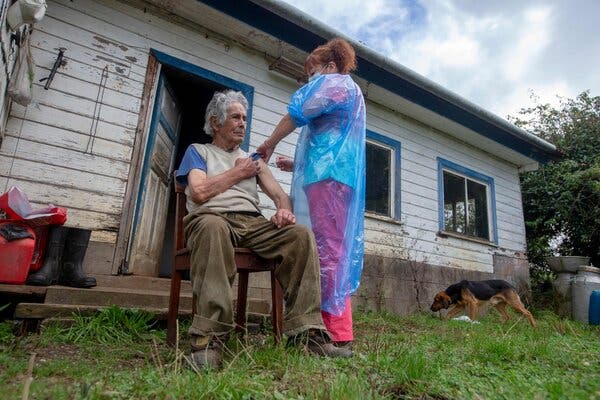
More than 90 countries are using Covid shots from China. Experts say recent infections in those places should serve as a cautionary tale in the global effort to fight the disease.Mongolia promised its people a “Covid-free summer.” Bahrain said there would be a “return to normal life.” The tiny island nation of the Seychelles aimed to jump start its economy.All three put their faith, at least in part, in easily accessible Chinese-made vaccines, which would allow them to roll out ambitious inoculation programs at a time when much of the world was going without.But instead of freedom from the coronavirus, all three countries are now battling a surge in infections.China kicked off its vaccine diplomacy campaign last year by pledging to provide a shot that would be safe and effective at preventing severe cases of Covid-19. Less certain at the time was how successful it and other vaccines would be at curbing transmission.Now, examples from several countries suggest that the Chinese vaccines may not be very effective at preventing the spread of the virus, particularly the new variants. The experiences of those countries lay bare a harsh reality facing a post-pandemic world: The degree of recovery may depend on which vaccines governments give to their people.In the Seychelles, Chile, Bahrain and Mongolia, 50 to 68 percent of the populations have been fully inoculated, outpacing the United States, according to Our World In Data, a data tracking project. All four ranked among the top 10 countries with the worst Covid outbreaks as recently as last week, according to data from The New York Times. And all four are mostly using shots made by two Chinese vaccine makers, Sinopharm and Sinovac Biotech.“If the vaccines are sufficiently good, we should not see this pattern,” said Jin Dongyan, a virologist at the University of Hong Kong. “The Chinese have a responsibility to remedy this.” A nurse in Chiloe Island, Chile, vaccinates an elderly man. In the Seychelles, Chile, Bahrain and Mongolia, 50 to 68 percent of the populations have been fully vaccinated.Alvaro Vidal/Agence France-Presse — Getty ImagesScientists don’t know for certain why some countries with relatively high inoculation rates are suffering new outbreaks. Variants, social controls that are eased too quickly and careless behavior after only the first of a two-shot regimen are possibilities. But the breakthrough infections could have lasting consequences.In the United States, about 45 percent of the population is fully vaccinated, mostly with doses made by Pfizer-BioNTech and Moderna. Cases have dropped 94 percent over six months.Israel provided shots from Pfizer and has the second-highest vaccination rate in the world, after the Seychelles. The number of new daily confirmed Covid-19 cases per million in Israel is now around 4.95.In the Seychelles, which relied mostly on Sinopharm, that number is more than 716 cases per million.Disparities such as these could create a world in which three types of countries emerge from the pandemic — the wealthy nations that used their resources to secure Pfizer-BioNTech and Moderna shots, the poorer countries that are far away from immunizing a majority of citizens, and then those that are fully inoculated but only partially protected.China, as well as the more than 90 nations that have received the Chinese shots, may end up in the third group, contending with rolling lockdowns, testing and limits on day-to-day life for months or years to come. Economies could remain held back. And as more citizens question the efficacy of Chinese doses, convincing unvaccinated people to line up for shots may also become more difficult.One month after receiving his second dose of Sinopharm, Otgonjargal Baatar fell ill and tested positive for Covid-19. The 31-year-old miner spent nine days in a hospital in Ulaanbaatar, the capital of Mongolia. Mr. Otgonjargal said he is now questioning the usefulness of the shot. “People were convinced that if we were vaccinated, the summer will be free of Covid,” he said. “Now it turns out that it’s not true.”Xi Jinping, China’s leader, pledged to deliver a Chinese vaccine that could be easily stored and transported to millions of people around the world. He called it a “global public good.”Andrea Verdelli/Getty ImagesBeijing saw its vaccine diplomacy as an opportunity to emerge from the pandemic as a more influential global power. China’s top leader, Xi Jinping, pledged to deliver a Chinese shot that could be easily stored and transported to millions of people around the world. He called it a “global public good.”Mongolia was a beneficiary, jumping at the chance to score millions of Sinopharm shots. The small country quickly rolled out an inoculation program and eased restrictions. It has now vaccinated 52 percent of its population. But on Sunday, it recorded 2,400 new infections, a quadrupling from a month before.In a statement, China’s Foreign Ministry said it did not see a link between the recent outbreaks and its vaccines. It cited the World Health Organization as saying that vaccination rates in certain countries had not reached sufficient levels to prevent future outbreaks, and that countries needed to continue to maintain controls.“Relevant reports and data also show that many countries that use Chinese-made vaccines have expressed that they are safe and reliable, and have played a good role in their epidemic prevention efforts,” the ministry said. China has also emphasized its vaccines target severe disease rather than transmission.No vaccine fully prevents transmission and people can still fall ill after getting inoculated, but the relatively low efficacy rates of Chinese shots have been identified as a possible cause of the recent outbreaks.Pfizer-BioNTech and Moderna have efficacy rates of more than 90 percent. A variety of other vaccines — including AstraZeneca and Johnson & Johnson — have efficacy rates of around 70 percent. The Sinopharm vaccine developed with the Beijing Institute of Biological Products has an efficacy rate of 78.1 percent; the Sinovac vaccine has an efficacy rate of 51 percent.The Chinese companies have not released much clinical data to show how their vaccines work at preventing transmission. On Monday, Shao Yiming, an epidemiologist with the Chinese Center for Disease Control and Prevention, said that China needed to fully vaccinate 80 to 85 percent of its population to achieve herd immunity, revising a previous official estimate of 70 percent.Data on breakthrough infections has not been made available either, though a Sinovac study out of Chile showed that the vaccine was less effective than Pfizer-BioNTech and Moderna at preventing infection among vaccinated individuals.A representative from Sinopharm hung up the phone when reached for comment. Sinovac did not respond to a request for comment.William Schaffner, medical director of the National Foundation for Infectious Diseases at Vanderbilt University, said the efficacy rates of Chinese shots could be low enough “to sustain some transmission, as well as create illness of a substantial amount in the highly vaccinated population, even though it keeps people largely out of the hospital.”Mongolia now ranks among the top countries that have fully vaccinated its population, inoculating about 52 percent of its people. But on Sunday, it recorded 2,400 new infections, quadrupling from a month before.Khasar Sandag for The New York TimesDespite the spike in cases, officials in both the Seychelles and Mongolia have defended Sinopharm, saying it is effective in preventing severe cases of the disease.Batbayar Ochirbat, head researcher of the Scientific Advisory Group for Emergencies at Mongolia’s Ministry of Health, said that Mongolia made the right decision to go with the Chinese-made shot, in part because it has helped keep the mortality rate low in the country. Data from Mongolia showed that the Sinopharm vaccine was actually more protective than the doses developed by AstraZeneca and Sputnik, a Russian vaccine, according to the health ministry.The reason for the surge in Mongolia, Mr. Batbayar said, is that the country reopened too quickly, and many people believed they were protected after only one dose. “I think you could say Mongolians celebrated too early,” he said. “My advice is the celebrations should start after the full vaccinations, so this is the lesson learned. There was too much confidence.”Some health officials and scientists are less confident.Nikolai Petrovsky, a professor at the College of Medicine and Public Health at Flinders University in Australia, said that with all of the evidence, it would be reasonable to assume the Sinopharm vaccine has minimal effect on curbing transmission. A major risk with the Chinese inoculation is that vaccinated people may have few or no symptoms and still spread the virus to others, he said.“I think that this complexity has been lost on most decision makers around the world.”In Indonesian, where a new variant is spreading, more than 350 doctors and health care workers recently came down with Covid-19 despite being fully vaccinated with Sinovac, according to the risk mitigation team of the Indonesian Medical Association. Across the country, 61 doctors died between February and June 7. Ten of them had taken the Chinese-made vaccine, the association said.The numbers were enough to make Kenneth Mak, Singapore’s director of medical services, question the use of Sinovac. “It’s not a problem associated with Pfizer,” said Mr. Mak at a news conference on Friday. “This is actually a problem associated with the Sinovac vaccine.”Bahrain and the United Arab Emirates were the first two countries to approve the Sinopharm shot, even before late-stage clinical trial data was released. Since then, there have been extensive reports of vaccinated people falling ill in both countries. In a statement, the Bahraini government’s media office said the kingdom’s vaccine roll out had been “efficient and successful to date.”Still, last month officials from Bahrain and the United Arab Emirates announced they would offer a third booster shot. The choices: Pfizer or more Sinopharm.Khaliun Bayartsogt,

Read more →

Scientists identify combination of biological markers associated with severe dengue

Researchers have identified a combination of biological markers in patients with dengue that could predict whether they go on to develop moderate to severe disease, according to a study published today in eLife.
Biomarkers are used to identify the state or risk of a disease in patients. Examples of biomarkers can include naturally occurring molecules or genes in the vascular, inflammatory or other biological pathways. The new findings could aid the development of biomarker panels for clinical use and help improve triage and risk prediction in patients with dengue.
Dengue is the most common mosquito-borne viral disease to affect humans globally. In 2019, the World Health Organization identified dengue as one of the top 10 threats to global health, with transmission occurring in 129 countries and an estimated 3.9 billion people being at risk.
“While most symptomatic dengue infections are self-limiting, a small number of patients develop complications that usually occur at around four to six days from symptom onset,” explains first author Vuong Nguyen Lam, Researcher and PHD Student at Oxford University Clinical Research Unit (OUCRU), Ho Chi Minh City, Vietnam. “Large numbers of patients therefore need regular assessments to identify these complications. The accurate and early identification of such patients, particularly within the first three days of illness, should allow for the appropriate care to be provided.”
The role of blood biomarkers in predicting severe outcomes has been investigated in other studies, but mostly later in the disease progression or at hospital admission. Many of these biomarkers either peak too late in the disease course or have too short a half-life to be clinically useful.
To address this, Vuong and colleagues selected 10 candidate biomarkers from vascular, immunological and inflammatory pathways that are associated with dengue disease pathogenesis. These biomarkers were: VCAM-1, SDC-1, Ang-2, IL-8, IP-10, IL-1RA, sCD163, sTREM-1, ferritin, and CRP. They were chosen based on their likelihood to be increased during the early stages of disease.
The team then conducted a study using samples and clinical information from a large multi-country observational study called ‘Clinical evaluation of dengue and identification of risk factors for severe disease’ (IDAMS study). Of the 2,694 laboratory-confirmed dengue cases included in the IDAMS study, 38 and 266 cases were classified as severe and moderate dengue, respectively.
For the current study, the researchers selected 281 cases in four countries — Vietnam, Cambodia, Malaysia and El Salvador — as the blood samples from these participants were stored at the OUCRU laboratory. For comparison, the team also selected 556 patients with uncomplicated dengue who shared similar geographies and demographic characteristics.
They measured the participants’ blood biomarkers at two different time points — one during the first three days of illness, and the second following recovery (10-31 days after symptom onset). They found that, during the first three days of illness, higher levels of any of the 10 biomarkers increased a patient’s risk of developing moderate to severe dengue.
They also identified a combination of six biomarkers that was best associated with severe disease in children, and a combination of seven biomarkers that was best associated with severe disease in adults. “This highlights how relationships between biomarkers and clinical outcome can differ between age groups,” Vuong says.
“Together, our findings should assist the development of biomarker panels to help improve future triage and early assessment of dengue patients,” concludes senior author Sophie Yacoub, Dengue Research Group Head at OUCRU. “This would help improve individual patient management and healthcare allocation, which would be of major public health benefit especially in outbreak settings.”
Story Source:
Materials provided by eLife. Note: Content may be edited for style and length.

Read more →

Inherited risk of early-onset cancer is higher among minority families

Increased risk of cancer due to a genetic predisposition in first- and second-degree relatives is long-established but has previously only been studied in white or European populations.
Now, a new study published in eLife is the first to demonstrate that the inherited risk of early-onset cancer is significantly higher among Latino and African American families for solid tumors, and Asian/Pacific Islander families for blood-based cancers, compared to non-Latino white families in California.
“Cancer clustering within families, meaning the devastating diagnosis of more than one early-onset cancer within the same family, usually points to a genetic cause. Interestingly, family cancer clustering has only been examined previously at the population level in white, or European origin population studies,” says study author Joseph Wiemels, PhD, a member of the Cancer Epidemiology Program at the USC Norris Comprehensive Cancer Center, and professor of Preventive Medicine at the Keck School of Medicine of USC. “In this study, we looked at clustering of cancer cases in young family members in California over the past 30 years within non-white populations and compared it, for the first time, to white populations. We found that family-based cancer clustering occurs more frequently among minority populations.”
Researchers used California population-based health registries to evaluate the relative cancer risk among parents, siblings and children of patients diagnosed with cancer by the age of 26. Between 1989 and 2015, they identified 29,632 early-onset cancer patients and then examined cancer incidence in 62,863 healthy family members. They found that overall, mothers and siblings of those cancer patients had a higher relative risk of early onset cancer. But when they looked at the role of race and ethnicity in genetic predisposition, they found that for patients with solid tumors, the familial cancer risk was significantly higher for Latino and non-Latino Black mothers and siblings compared to non-Latino white families. Asian/Pacific Islanders had a higher familial risk for blood-based cancers compared to non-Latino whites.
This study demonstrates the need for increased scrutiny on familial cancer clustering in minority populations. This information could help health care providers and genetic counselors offer more precision-based care and advice, particularly in the multiethnic populations that reside in Los Angeles County.
Story Source:
Materials provided by Keck School of Medicine of USC. Original written by Hinde R Kast. Note: Content may be edited for style and length.

Read more →