Anticoagulants help moderately ill COVID-19 patients, study finds

Moderately ill patients hospitalized with COVID-19 have better chances of survival if treated with therapeutic-dose anticoagulation, according to an international study involving 121 sites, including UT Southwestern Medical Center.
Moderately ill COVID-19 patients treated with therapeutic-dose anticoagulation with unfractionated or low molecular-weight heparin were 27% less likely to need cardiovascular respiratory organ support such as intubation, said Ambarish Pandey, M.D., Assistant Professor of Internal Medicine at UT Southwestern, who served as site investigator and co-author of the study reported in The New England Journal of Medicine. Moderately ill patients had a 4% increased chance of survival until discharge without requiring organ support with anticoagulants, according to the study involving 2,200 patients.
“The 4% increase in survival to discharge without needing organ support represents a very meaningful clinical improvement in these patients,” said Dr. Pandey, a Texas Health Resources Clinical Scholar who specializes in preventive cardiology and heart failure with preserved ejection fraction. “If we treat 1,000 patients who are hospitalized with COVID-19 with moderate illness, an additional 40 patients would have meaningful improvement in clinical status.”
Participating platforms for the study, which defined moderately ill patients as those who did not need intensive care unit-level support, included Antithrombotic Therapy to Ameliorate Complications of COVID-19 (ATTACC); A Multicenter, Adaptive, Randomized Controlled Platform Trial of the Safety and Efficacy of Antithrombotic Strategies in Hospitalized Adults with COVID-19 (ACTIV-4a); and Randomized, Embedded, Multifactorial Adaptive Platform Trial for Community-Acquired Pneumonia (REMAP-CAP). Comparisons between the three platforms are provided in the supplementary appendix, available with the full text of the article at NEJM.org.
A parallel study in The New England Journal of Medicine found that therapeutic-dose anticoagulation did not help severely ill patients.
Story Source:
Materials provided by UT Southwestern Medical Center. Note: Content may be edited for style and length.

Read more →

As Childhood Covid Cases Spike, School Vaccination Clinics Are Slow Going

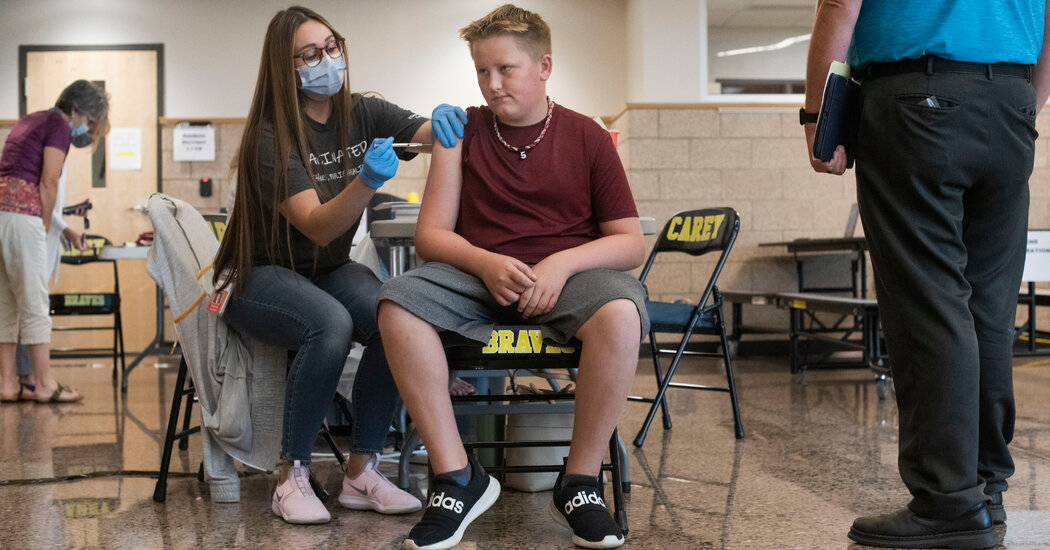
Districts are heeding President Biden’s call to host pop-up vaccination clinics. But promoting vaccines is politically difficult, and persuading parents isn’t easy.CHEYENNE, Wyo. — There were no cheery signs urging “Get your Covid-19 vaccine!” at the back-to-school immunization clinic at Carey Junior High School last week. In the sun-drenched cafeteria, Valencia Bautista sat behind a folding table in a corner, delivering a decidedly soft sell.Hundreds of 12- and 13-year-olds streamed through with their parents to pick up their fall schedules and iPads. Ms. Bautista, a county public health nurse, wore a T-shirt that said “Vaccinated. Thanks, Public Health” and offered vaccines against ailments like tetanus and meningitis, while broaching the subject of Covid shots gently — and last.By day’s end, she had 11 takers. “If they’re a no, we won’t push it,” she said.Vaccination rates among middle and high school students need to rise drastically if the United States is going to achieve what are arguably the two most important goals in addressing the pandemic in the country right now: curbing the spread of the highly infectious Delta variant and safely reopening schools. President Biden told school districts to hold vaccination clinics, but that is putting superintendents and principals — many of whom are already at the center of furious local battles over masking — in a delicate position.The Pfizer-BioNTech vaccine is authorized for people 12 and older, but administering it to anyone younger than 18 usually requires parental consent, and getting shots into the arms of teenagers has proved harder than vaccinating adults. Only 33 percent of 12- to 15-year-olds and 43 percent of 16- and 17-year-olds are fully vaccinated, according to federal data, compared with 62 percent of adults. Yet some school districts offering the shots, along with pediatrics practices, appear to be making progress: Over the past month, the average daily number of 12- to 15-year-olds being vaccinated rose 75 percent, according to Biden administration officials.Wyoming won national praise for keeping schools open all last year. Despite the Delta surge and a C.D.C. recommendation for universal masking in schools, Gov. Mark Gordon recently said he would not impose another mandate but would leave it to each district to decide.Rachel Woolf for The New York TimesAs the school year begins, many superintendents do not know how many of their students are vaccinated against Covid-19; because it is not required, they do not ask.It is no surprise that nurses like Ms. Bautista are circumspect in their approach. In Tennessee, the state’s top immunization leader, Dr. Michelle Fiscus, said she was fired last month after she distributed a memo that suggested some teenagers might be eligible for vaccinations without their parents’ consent.In Detroit, where county health officials have been running school-based clinics all summer, nurses discovered “strong hesitancy” when they made more than 10,000 calls to parents of students 12 and older to ask whether their children would get the shots and answer questions about them, said the deputy superintendent, Alycia Meriweather. More than half said no.In Georgia, Savannah-Chatham County Public Schools held their back-to-school clinic at the mall — a “neutral location,” said M. Ann Levett, the superintendent. She is also planning school-based clinics, she said, despite some political pushback and “Facebook chatter” accusing her of “pushing the vaccine on kids.”Ms. Levett said she was deeply concerned about whether she would be able to keep schools open.“This is only the second day of school, and already we have positive cases among children,” she said in a recent interview. Her district has a mask mandate, but with 37,000 students, “I just introduced 37,000 more opportunities for the numbers to rise.”In Laramie County, the center of the Delta surge in Wyoming, the Health Department proposed back-to-school clinics to Janet Farmer, the head nurse in the larger of the county’s two school districts. Ms. Farmer knew she would have to tread carefully. The flier she drafted for parents of students at the county’s three middle schools made little mention of Covid-19.“Vaccines — NOT Mandatory,” it declared.Nationally, more children are hospitalized with Covid-19 — an average of 276 each day — than at any other point in the pandemic. In Laramie County, Dr. Andrew B. Rose, a pediatrician at the Cheyenne Children’s Clinic and the president of Wyoming’s chapter of the American Academy of Pediatrics, said two newborns — one a few days old, the other younger than two weeks — were recently admitted to the hospital with Covid-19 symptoms after their parents tested positive.Dr. Andrew B. Rose, a pediatrician at the Cheyenne Children’s Clinic and the president of Wyoming’s chapter of the American Academy of Pediatrics, said two newborns were recently admitted to the hospital with Covid-19 symptoms after their parents tested positive.Rachel Woolf for The New York TimesMargaret Crespo, the superintendent of Laramie County School District 1 in Wyoming, plans to make an official announcement on masking on Friday, before school starts on MondayRachel Woolf for The New York TimesWyoming, a heavily Republican state where nearly 70 percent of voters cast their ballots for former President Donald J. Trump in 2020, has one of the nation’s lowest vaccination rates, with about a third of its population fully vaccinated. Laramie County has about 100,000 people and Cheyenne, the state capital, which bills itself as “home to all things Western” including “rodeos, ranches, gunslingers” and eight-foot-tall cowboy boots.At Casey Junior High, few children or adults wore masks at the recent clinic, despite a sign on the door saying they were “strongly recommended.” Parents seemed to have visceral reactions; they were either enthusiastic about the Covid shot or adamantly against it. Those who were wavering were few and far between, and not easy to persuade.A nurse in blue scrubs and her husband, a nuclear and missile operations officer at the nearby Air Force base, who declined to give their names, wandered past Ms. Bautista’s table with their 12-year-old son. Their daughter, 13, has cystic fibrosis and is vaccinated. But their son was reluctant. They chatted amiably with Ms. Bautista, but decided to wait.Cheyenne Gower, 28, and her stepson Jaxson Fox, 12, both said they were leaning toward getting the shot after talking with their doctors. Ms. Gower, citing the Delta surge, said she would get vaccinated soon. Jaxson said he was “still thinking about it” after his pediatrician discussed the risk of heart inflammation, a very rare side effect seen in young boys ages 12 to 17.“Put down that I’m more on the getting it side,” he instructed, eyeing a reporter’s notebook.Although the vaccines were tested on tens of thousands of people and have been administered to nearly 200 million in the United States alone, many parents cited a lack of research in refusing. Aubrea Valencia, 29, a hair stylist, listened carefully as Ms. Bautista explained the reasons for the human papilloma virus and meningitis vaccines. Ms. Valencia agreed that her daughter should take both.But when it came to the coronavirus vaccine, she drew the line. “The other two have been around longer,” she said, adding that she might feel “different about it if we had known someone who died” from the coronavirus.Every once in a while, the nurses encountered a surprise, as when Kristen Simmons, 43, a professional dog handler, marched up with her son, Trent.“He turned 12 on Monday, and so we want to get his Covid vaccine,” she declared. Ms. Bautista and the other nurses looked stunned.District 1 offered coronavirus vaccines at mandatory clinics to educate high school student athletes about concussions; 32 students accepted shots, said Janet Farmer, a nurse.Rachel Woolf for The New York Times“We tend to be more liberal,” Ms. Simmons later said — a statement that would have sounded odd in explaining a medical decision before the pandemic.In the spring, when vaccines were limited to older Americans who were clamoring for them, officials including Dr. Anthony S. Fauci, the top U.S. infectious diseases expert, envisioned fall 2021 as the last mile of a campaign that could produce “herd immunity” by year’s end. Vaccinating children was crucial to that plan.Now it is clear that will not happen. Children ages 11 and under are not yet eligible, but if and when the vaccine is authorized for them, experts expect it could be harder to persuade their parents than those of older children. A recent survey by the Kaiser Family Foundation found that parents of younger children were “generally more likely to be hesitant to vaccinating,” said Liz Hamel, who directed the research..css-1xzcza9{list-style-type:disc;padding-inline-start:1em;}.css-3btd0c{font-family:nyt-franklin,helvetica,arial,sans-serif;font-size:1rem;line-height:1.375rem;color:#333;margin-bottom:0.78125rem;}@media (min-width:740px){.css-3btd0c{font-size:1.0625rem;line-height:1.5rem;margin-bottom:0.9375rem;}}.css-3btd0c strong{font-weight:600;}.css-3btd0c em{font-style:italic;}.css-w739ur{margin:0 auto 5px;font-family:nyt-franklin,helvetica,arial,sans-serif;font-weight:700;font-size:1.125rem;line-height:1.3125rem;color:#121212;}#NYT_BELOW_MAIN_CONTENT_REGION .css-w739ur{font-family:nyt-cheltenham,georgia,’times new roman’,times,serif;font-weight:700;font-size:1.375rem;line-height:1.625rem;}@media (min-width:740px){#NYT_BELOW_MAIN_CONTENT_REGION .css-w739ur{font-size:1.6875rem;line-height:1.875rem;}}@media (min-width:740px){.css-w739ur{font-size:1.25rem;line-height:1.4375rem;}}.css-9s9ecg{margin-bottom:15px;}.css-16ed7iq{width:100%;display:-webkit-box;display:-webkit-flex;display:-ms-flexbox;display:flex;-webkit-align-items:center;-webkit-box-align:center;-ms-flex-align:center;align-items:center;-webkit-box-pack:center;-webkit-justify-content:center;-ms-flex-pack:center;justify-content:center;padding:10px 0;background-color:white;}.css-pmm6ed{display:-webkit-box;display:-webkit-flex;display:-ms-flexbox;display:flex;-webkit-align-items:center;-webkit-box-align:center;-ms-flex-align:center;align-items:center;}.css-pmm6ed > :not(:first-child){margin-left:5px;}.css-5gimkt{font-family:nyt-franklin,helvetica,arial,sans-serif;font-size:0.8125rem;font-weight:700;-webkit-letter-spacing:0.03em;-moz-letter-spacing:0.03em;-ms-letter-spacing:0.03em;letter-spacing:0.03em;text-transform:uppercase;color:#333;}.css-5gimkt:after{content:’Collapse’;}.css-rdoyk0{-webkit-transition:all 0.5s ease;transition:all 0.5s ease;-webkit-transform:rotate(180deg);-ms-transform:rotate(180deg);transform:rotate(180deg);}.css-eb027h{max-height:5000px;-webkit-transition:max-height 0.5s ease;transition:max-height 0.5s ease;}.css-6mllg9{-webkit-transition:all 0.5s ease;transition:all 0.5s ease;position:relative;opacity:0;}.css-6mllg9:before{content:”;background-image:linear-gradient(180deg,transparent,#ffffff);background-image:-webkit-linear-gradient(270deg,rgba(255,255,255,0),#ffffff);height:80px;width:100%;position:absolute;bottom:0px;pointer-events:none;}.css-uf1ume{display:-webkit-box;display:-webkit-flex;display:-ms-flexbox;display:flex;-webkit-box-pack:justify;-webkit-justify-content:space-between;-ms-flex-pack:justify;justify-content:space-between;}.css-wxi1cx{display:-webkit-box;display:-webkit-flex;display:-ms-flexbox;display:flex;-webkit-flex-direction:column;-ms-flex-direction:column;flex-direction:column;-webkit-align-self:flex-end;-ms-flex-item-align:end;align-self:flex-end;}.css-12vbvwq{background-color:white;border:1px solid #e2e2e2;width:calc(100% – 40px);max-width:600px;margin:1.5rem auto 1.9rem;padding:15px;box-sizing:border-box;}@media (min-width:740px){.css-12vbvwq{padding:20px;width:100%;}}.css-12vbvwq:focus{outline:1px solid #e2e2e2;}#NYT_BELOW_MAIN_CONTENT_REGION .css-12vbvwq{border:none;padding:10px 0 0;border-top:2px solid #121212;}.css-12vbvwq[data-truncated] .css-rdoyk0{-webkit-transform:rotate(0deg);-ms-transform:rotate(0deg);transform:rotate(0deg);}.css-12vbvwq[data-truncated] .css-eb027h{max-height:300px;overflow:hidden;-webkit-transition:none;transition:none;}.css-12vbvwq[data-truncated] .css-5gimkt:after{content:’See more’;}.css-12vbvwq[data-truncated] .css-6mllg9{opacity:1;}.css-qjk116{margin:0 auto;overflow:hidden;}.css-qjk116 strong{font-weight:700;}.css-qjk116 em{font-style:italic;}.css-qjk116 a{color:#326891;-webkit-text-decoration:underline;text-decoration:underline;text-underline-offset:1px;-webkit-text-decoration-thickness:1px;text-decoration-thickness:1px;-webkit-text-decoration-color:#326891;text-decoration-color:#326891;}.css-qjk116 a:visited{color:#326891;-webkit-text-decoration-color:#326891;text-decoration-color:#326891;}.css-qjk116 a:hover{-webkit-text-decoration:none;text-decoration:none;}For school superintendents and public health officials who are intent on bringing students back to the classroom — and keeping them there — the low vaccination rates, coupled with the Delta surge, are worrisome. Wyoming won national praise for keeping schools open all last year. Gov. Mark Gordon, who contracted Covid-19 last year and has encouraged people to get vaccinated, imposed a statewide mask mandate in December that he kept in place for schools even after he lifted it in March, which helped limit the spread of disease in classrooms. Despite the Delta surge and a recommendation from the C.D.C. for universal masking in schools, Mr. Gordon, a Republican, said this month that he would not impose another mandate and that he would leave it to each district to decide.In Laramie County School District 1, which has about 14,000 students, including about 840 at Carey Junior High, the school board recently cut short its public meeting about masking when a man began ranting about another hot-button issue: critical race theory.The vaccine clinic, top right, shared a room with a back-to-school event at Carey Junior High.Rachel Woolf for The New York Times“Fifty percent of the calls here have been, ‘Please mask our kids,’ and 50 percent of the calls have been, ‘We’re not wearing masks,’” said Margaret Crespo, who left Boulder, Colo., about six weeks ago to become the new District 1 superintendent. “There’s no gray area.”Dr. Crespo plans to make an announcement on masking on Friday, just before the school year starts on Monday. Fights over the masking issue are even more divisive than the vaccination campaign, “and that is playing out in front of our eyes,” said Ray Hart, the executive director of the Council of the Great City Schools, which represents the country’s largest urban school districts. “Everywhere I go this summer, that’s part of the message: Let’s get vaccinated,” said Allen Pratt, the executive director of the National Rural Education Association. But “because it’s government, you’ve got a line in the sand where people don’t trust you, and you’ve got to be understanding.”White House officials have also been encouraging pediatricians to incorporate coronavirus vaccination into back-to-school sports physicals. Many districts are offering the shots during sports practice, with a reminder to athletes that if they are vaccinated, they will not have to quarantine and miss games if they are exposed to the coronavirus.Sarah McFadden waiting with her 12-year-old son, Benjamin, after he received his Covid vaccine at the clinic at Carey Junior High School last week.Rachel Woolf for The New York TimesLaramie County District 1 offered coronavirus vaccines at mandatory clinics to educate high school student athletes about concussions; 32 students accepted shots, said Ms. Farmer, the nurse. The numbers were better at the junior high clinics; over two days at three schools with a total of about 2,400 students, more than 100 took their shots.Ms. Farmer was satisfied.“If it’s 100 people,” she said, “that’s 100 that didn’t have it yesterday.”

Read more →

Once Again, Travelers Ask: ‘Should I Cancel My Trip?’

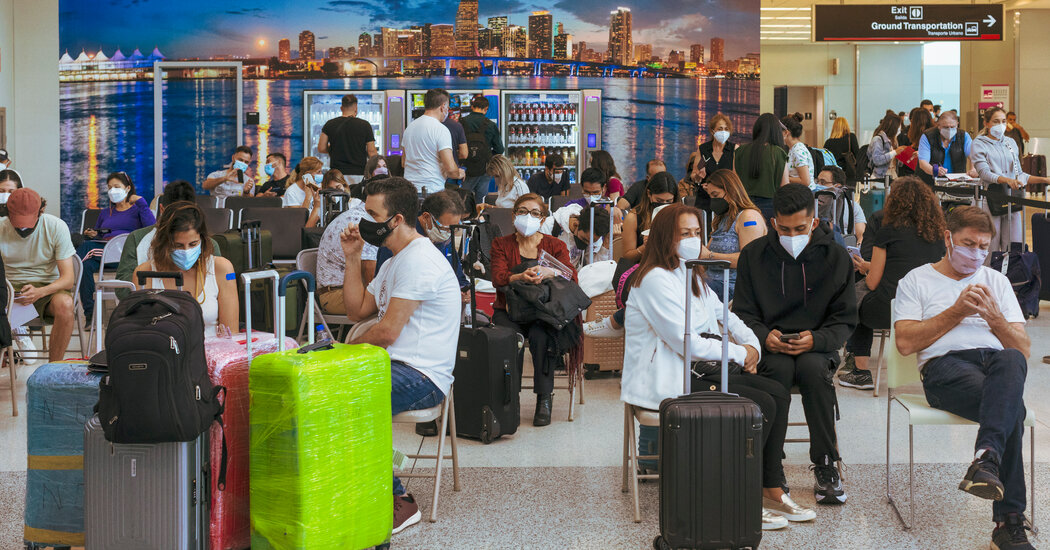
For travel-starved Americans, the Delta variant has brought the return of a practice well-honed by the pandemic: waiting.As the fourth wave of the coronavirus swells across the United States, driven by the highly contagious Delta variant, travelers who had booked late summer travel are now facing a familiar quandary: Should they once again cancel their plans?For many — among them, those who are vaccinated, headed to high-risk areas and concerned about breakthrough infections — the answer is yes. New data shows that although vaccines provide strong protection against severe illness and hospitalization, even vaccinated people are at risk of contracting the virus and spreading it, and getting sick themselves.But while the slowdown is puncturing hopes of a rebound after the travel industry’s worst year in recent history, the dip in bookings is — for now — relatively small, according to travel advisers and hospitality companies. The hope is that the current situation will be more of a speed bump than a stoplight.TripActions, a travel management company, reports that while new domestic bookings remain strong, cancellations for same-week travel have been steady at 26 percent for the past month, an uptick from an 18 percent average over the summer, before the Delta variant pushed virus cases up in every state. The airfare app Hopper is seeing a surge in demand for flexible bookings, with a 33 percent increase since early July in tickets that can be canceled for any reason. The company predicts domestic airfare prices will drop 10 percent in the coming weeks, a forecast supported by data from the Transportation Security Administration, which has seen the number of passengers it screens daily dip by about 30,000 since July.Dolores Halls, a human relations coordinator and plus-size fashion blogger in Chicago, has adjusted three upcoming trips because of fears about the Delta variant. She nixed a planned November vacation in Italy with her husband; has put an October girls’ trip to New Orleans on hold, and switched a September visit to Florida, which leads the nation in new coronavirus cases, to California, where she will land in Los Angeles and take a ferry to Catalina Island in hopes of avoiding crowds.“Covid has really kicked us in the butt,” said Ms. Halls, 28. Early in the pandemic, her mother was hospitalized with Covid-19 pneumonia. And despite now being vaccinated, “I’m definitely scared of breakthrough infections,” she said. “I’m also a plus-size girl, and I see the stories and statistics where something like that could impact how Covid affects you.”In a recent survey by Scott’s Cheap Flights, a travel site that alerts subscribers to airfare deals, 74 percent of members said that the Delta variant had impacted their travel plans, with 35 percent not booking any new trips right now and 24 percent choosing to book only domestic travel.“Of those who are booking new international trips, the vast majority are booking for 2022,” said Andrew Hickey, senior public relations manager for Scott’s Cheap Flights. “People are also determining where they’ll go based on Covid.”Just three weeks ago, Mr. Hickey himself pulled the plug on a November trip to Portugal, deciding the Delta variant made it unsafe to travel internationally as a family. He had booked tickets to Lisbon for himself, his wife and their two children, 8 and 11, in April. “We felt so confident at the time,” Mr. Hickey, who is vaccinated, said. “I now have over $1,000 in travel credits to use over the next two years, and some of that credit was from a trip we had canceled in 2020.”Despite hospital I.C.U.s once again buckling and death counts already surpassing 2020 numbers, public officials are hesitant to bring back lockdowns. The result is haphazard restrictions that vary by city: Chicago on Tuesday issued an indoor mask mandate, joining Los Angeles, San Francisco and Washington, D.C.; New York City will require proof of vaccination for indoor dining; while in Las Vegas, event organizers are excused from the state’s indoor masking requirement if they can prove all attendees are fully vaccinated.But with sporting events forging ahead, restaurants continuing to seat diners both indoors and out, and music festivals, like the recent Lollapalooza in Chicago, deciding the shows will go on, the decision of whether or not to travel is now a personal one.As a result, reactions in the face of the Delta variant are varied. Zeta Global, a marketing technology company that has been tracking American travel behavior, reports an inverse trend based on vaccination status: Hotel stays in states with high vaccination rates have dropped in recent months, and travel to hot spots like Florida has decreased among those who are inoculated against Covid-19 but has increased among those who are not.Southwest and Frontier Airlines, meanwhile, have lowered their profit expectations this quarter as demand for flights diminishes. Many air carriers were banking on increased business travel this fall, which was only just beginning to rebound. But with companies, including Facebook and Coca-Cola, rolling back their return-to-office plans in the face of the variant, there is fear that business travel will return to a full-on stall.“There are two distinct consumer behaviors that we’re observing. One is if you’re making a decision with your own dollars, and one is if you’re making a decision with your company’s dollars,” said Jan Freitag, senior vice president of lodging insights for STR, a hospitality analytics company.Ron Bension, president and chief executive of ASM Global, the world’s largest event management company, said that since conventions and large-scale business events have such a long lead time, Delta simply extended the status quo created in March 2020. “Most everything had already been canceled. What we’re seeing is not a lot of rebooking yet,” he said.For travel-starved Americans, the Delta variant has brought the return of a practice well-honed by the pandemic: waiting.“This is a marathon, not a sprint,” said Dr. Ravi Starzl, an epidemics expert and chief executive of BioPlx, an advanced microbiomics company. “As a country, we wanted to tell ourselves that getting back to normal was a possibility. But the virus had other plans.”Follow New York Times Travel on Instagram, Twitter and Facebook. And sign up for our weekly Travel Dispatch newsletter to receive expert tips on traveling smarter and inspiration for your next vacation.

Read more →

Lockdown screen time sees rise in short-sightedness

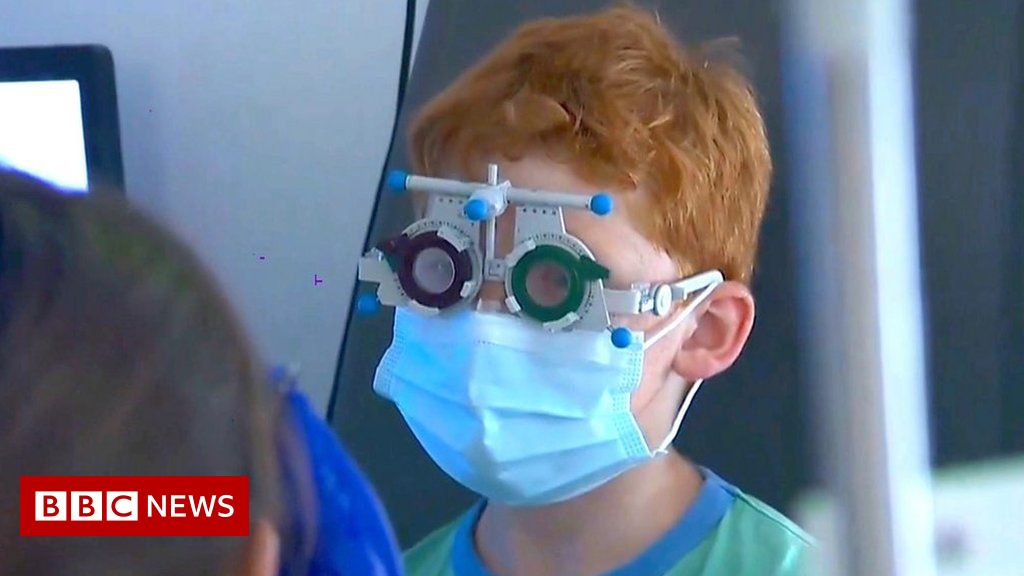
Optometrists across the country say they are diagnosing higher numbers of children with short-sightedness (myopia) since the start of the pandemic.They put this down to less time spent outside due to Covid restrictions, more time spent on screens, and a drop-off in numbers of eye tests carried out during the pandemic.The College of Optometrists is calling for parents to get kids playing outside for two hours a day, this is proven to prevent or stop the development of myopia; and to take their children for eye tests. They’re also asking for more funding for research in the UK population into the impact of the pandemic on children’s eyesight.

Read more →

New insights on mechanism that could help treat muscle-related diseases

Investigators who previously developed a recipe for turning skin cells into primitive muscle-like cells that can be maintained indefinitely in the lab without losing the potential to become mature muscle have now uncovered how this recipe works and what molecular changes it triggers within cells. The research, which was led by scientists at Massachusetts General Hospital (MGH) and is published in Genes & Development, could allow clinicians to generate patient-matched muscle cells to help treat muscle injuries, aging-related muscle degeneration, or conditions such as muscular dystrophy.
It’s known that expression of a muscle regulatory gene called MyoD is sufficient to directly convert skin cells into mature muscle cells; however, mature muscle cells do not divide and self-renew, and therefore they cannot be propagated for clinical purposes. “To address this shortcoming, we developed a system several years ago to convert skin cells into self-renewing muscle stem-like cells we coined induced myogenic progenitor cells, or iMPCs. Our system uses MyoD in combination with three chemicals we previously identified as facilitators of cell plasticity in other contexts,” explains senior author Konrad Hochedlinger, PhD, a principal investigator at the Center for Regenerative Medicine at MGH and a professor of medicine at Harvard Medical School.
In this latest study, Hochedlinger and his colleagues uncovered the details behind how this combination converts skin cells into iMPCs. They found that while MyoD expression alone causes skin cells to take on the identity of mature muscle cells, adding the three chemicals causes the skin cells to instead acquire a more primitive stem cell-like state. Importantly, iMPCs are molecularly highly similar to muscle tissue stem cells, and muscle cells derived from iMPCs are more stable and mature than muscle cells produced with MyoD expression alone. “Mechanistically, we showed that MyoD and the chemicals aid in the removal of certain marks on DNA called DNA methylation,” says lead author Masaki Yagi, PhD, a research fellow at MGH. “DNA methylation typically maintains the identity of specialized cells, and we showed that its removal is key for acquiring a muscle stem cell identity.”
Hochedlinger notes that the findings may be applicable to other tissue types besides muscle that involve different regulatory genes. Combining the expression of these genes with the three chemicals used in this study could help researchers generate different stem cell types that closely resemble a variety of tissues in the body.
Story Source:
Materials provided by Massachusetts General Hospital. Note: Content may be edited for style and length.

Read more →

Superconducting nanowire single-photon detectors: Next big thing in blood flow measurement

In order to function properly, the brain requires a steady flow of blood through the cerebral arteries and veins, which deliver oxygen and nutrients and also remove metabolic byproducts. Therefore, cerebral blood flow is considered a vital and sensitive marker of cerebrovascular function. Optical methods offer a noninvasive approach for measuring cerebral blood flow. Diffuse correlation spectroscopy (DCS), a method gaining popularity, involves the illumination of tissues with near-infrared laser rays. The light is scattered by the movement of red blood cells and the resulting pattern formed is analyzed by a detector to determine blood flow.
The ideal operating conditions for accurate measurement are: 1) large source-detector (SD) separation ( >30 mm), 2) high acquisition rates, and 3) longer wavelengths ( >1000 nm). However, current DCS devices — which use single-photon avalanche photodiode (SPAD) detectors — cannot attain that ideal. Due to high signal-to-noise ratio and low photon efficiency, they cannot allow an SD separation greater than 25 mm or wavelength greater than 900 nm.
To enable the operation of DCS devices under ideal conditions, researchers from Massachusetts General Hospital, Harvard Medical School, and MIT Lincoln Laboratory recently proposed the use of superconducting nanowire single-photon detectors (SNSPDs) in DCS devices.
SNSPDs, first demonstrated 20 years ago, consist of a thin film of superconducting material with excellent single-photon sensitivity and detection efficiency. Commonly used in telecommunications, optical quantum information, and space communications, SNSPDs are seldom used in biomedicine. SNSPDs outperform SPADs in multiple parameters, such as time resolution, photon efficiency, and range of wavelength sensitivity.
To demonstrate the operational superiority of the new SNSPD-DCS system, the researchers conducted cerebral blood flow measurements on 11 participants using both SNSPD-DCS and SPAD-DCS systems provided by Quantum Opus. The SNSPD-DCS system operated at a wavelength of 1064 nm with two SNSPD detectors, whereas the SPAD-DCS system operated at 850 nm.
The SNSPD-based DCS system showed significant improvement in SNR compared to the conventional SPAD-based DCS. This improvement was attributable to two factors. First, with illumination at 1064 nm, the SNSPD detectors received seven to eight times more photons than SPAD detectors at 850 nm did. Second, SNSPD has a higher photon detection efficiency (88 percent) than SPAD’s photon detection efficiency of 58 percent. While the SPAD-DCS could only allow signal acquisition at 1 Hz at 25 mm SD separation owing to low SNR, the 16 times increase in SNR for the SNSPD-DCS system allowed signal acquisition at 20 Hz at the same SD separation allowing clear detection of arterial pulses.
As cerebral blood flow sensitivity increases substantially for measurements taken at larger SD separation, the researchers also performed measurements at 35 mm SD separation. The SNSPD-DCS system recorded a 31.6 percent relative increase in blood flow sensitivity. In contrast, the SPAD-DCS system could not be operated at 35 mm SD separation because of its low SNR.
Finally, the performance of the SNSPD-DCS system was validated by measurements taken during breath-holding and hyperventilation exercises. Theoretically, blood flow increases during the first 30 seconds of breath-holding and slowly returns to normal thereafter. During hyperventilation, blood flow to the scalp increases and blood flow to the brain decreases. SNSPD-DCS measurements showed an increase of 69 percent and a decrease of 18.5 percent in relative cerebral blood flow for breath-holding and hyperventilation, respectively. These measurements are in agreement with those obtained from PET and MRI studies.
The SNSPD-DCS system facilitates higher photon collection, larger SD separations, and higher acquisition rates, leading to better accuracy. Given these advantages, this novel system may allow for a noninvasive and more precise measurement of cerebral blood flow — an important marker of cerebrovascular function — for adult clinical applications.

Read more →

Cognitive rehabilitation improves cognitive impairment in people with multiple sclerosis

In a review of recent literature, a team of researchers from Kessler Foundation conclude that cognitive rehabilitation programs are efficacious in treating multiple sclerosis-related cognitive dysfunction, and urge clinicians to consider this low-cost, low-risk, yet effective treatment approach for their patients.
The article, “Neurological update: cognitive rehabilitation in multiple sclerosis” was published in Journal of Neurology on May 24, 2021. The authors are Michelle H. Chen, PhD, Nancy D. Chiaravalloti, PhD, and John DeLuca, PhD, of Kessler Foundation. The authors have academic appointments at Rutgers New Jersey Medical School.
Cognitive impairment is a common and debilitating symptom of multiple sclerosis (MS), affecting as many as two-thirds of people with the disease. Symptoms of cognitive impairment vary among individuals, but often include slow information processing speed and inefficient learning and memory. Such deficits can be extremely disruptive to everyday life, affecting a person’s ability to manage their disease, complete commonplace errands, and maintain employment. Unfortunately, there is no gold-standard treatment for MS-related cognitive impairment, as medications approved to treat MS have shown limited efficacy in treating cognitive dysfunction.
One promising treatment approach is cognitive rehabilitation, in which behavioral interventions are used to improve cognition. There are two general approaches to cognitive rehabilitation: restorative and compensatory. Restorative cognitive rehabilitation (also known as cognitive remediation) aims to reinforce, strengthen, and recover cognitive skills, typically through repetitive cognitive exercises using computer-assisted paradigms. In contrast, compensatory cognitive rehabilitation does not aim to restore lost cognitive skills. Rather, it helps patients compensate for their cognitive difficulties using various strategies such as visualization and reminders.
In their review, the Kessler team summarized the current state of cognitive rehabilitation research, both restorative and compensatory, among people with MS. Based on available evidence, they suggest that cognitive rehabilitation is an effective approach to improving MS-related cognitive impairment, as demonstrated by 81 published studies, most of which were published since 2011.
“Cognitive rehabilitation should be part of a comprehensive treatment plan for people with MS who experience cognitive deficits,” said co-author Dr. DeLuca, Senior Vice President for Research and Training at Kessler Foundation. “Given the lack of approved pharmacological treatments, behavioral approaches are the best treatment options that clinicians can currently offer,” he stressed. “Patients generally report enjoying treatment, which would be conducive to compliance. Furthermore, computer-based treatments can be easily delivered at home, making this low-cost effective intervention more convenient and accessible to individuals in need.”
Story Source:
Materials provided by Kessler Foundation. Note: Content may be edited for style and length.

Read more →

Study reveals existing drugs that kill SARS-CoV2 in cells

Since the beginning of the pandemic, researchers worldwide have been looking for ways to treat COVID-19. And while the COVID-19 vaccines represent the best measure to prevent the disease, therapies for those who do get infected remain in short supply. A new groundbreaking study from U-M reveals several drug contenders already in use for other purposes — including one dietary supplement — that have been shown to block or reduce SARS-CoV2 infection in cells.
The study, published recently in the Proceedings of the National Academy of Science, uses artificial intelligence-powered image analysis of human cell lines during infection with the novel coronavirus. The cells were treated with more than 1,400 individual FDA-approved drugs and compounds, either before or after viral infection, and screened, resulting in 17 potential hits. Ten of those hits were newly recognized, with seven identified in previous drug repurposing studies, including remdesivir, which is one of the few FDA-approved therapies for COVID-17 in hospitalized patients.
“Traditionally, the drug development process takes a decade — and we just don’t have a decade,” said Jonathan Sexton, Ph.D., Assistant Professor of Internal Medicine at the U-M Medical School and one of the senior authors on the paper. “The therapies we discovered are well positioned for phase 2 clinical trials because their safety has already been established.”
The team validated the 17 candidate compounds in several types of cells, including stem-cell derived human lung cells in an effort to mimic SARS-CoV2 infection of the respiratory tract. Nine showed anti-viral activity at reasonable doses, including lactoferrin, a protein found in human breastmilk that is also available over the counter as a dietary supplement derived from cow’s milk.
“We found lactoferrin had remarkable efficacy for preventing infection, working better than anything else we observed,” Sexton said. He adds that early data suggest this efficacy extends even to newer variants of SARS-CoV2, including the highly transmissible Delta variant.
The team is soon launching clinical trials of the compound to examine its ability to reduce viral loads and inflammation in patients with SARS-CoV2 infection.

Read more →

Fermented Foods: The Dos and Dont's

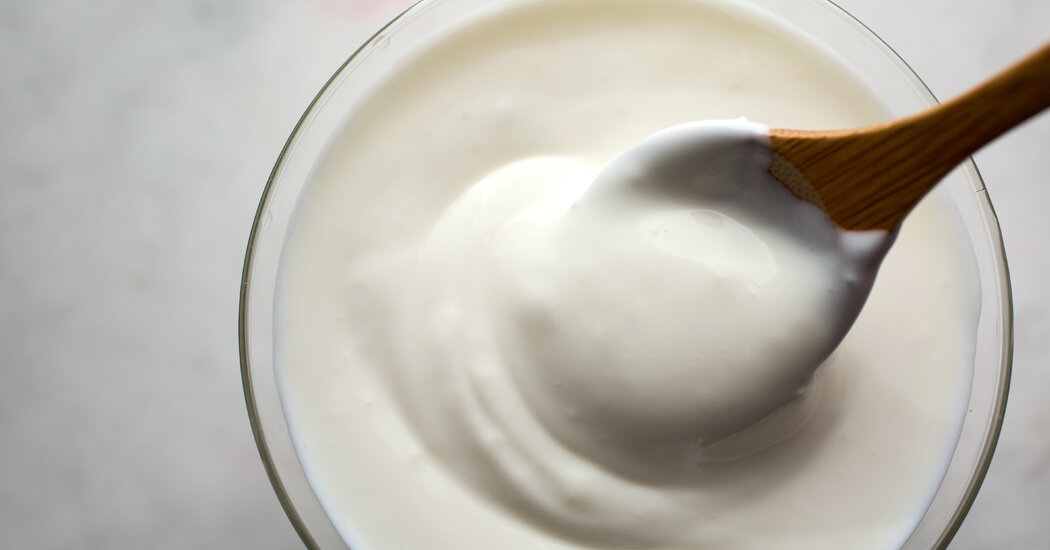
Is all yogurt created equal? Does it matter if the kimchi is spicy? And what if my kombucha has sugar? Your questions answered.This is a preview of the Well newsletter, which is reserved for Times subscribers. Sign up to get it in your inbox weekly.I was fascinated by a recent story about fermented foods by my colleague Anahad O’Connor. The story explains the science of how six servings a day of fermented foods can lower inflammation and improve the diversity of your gut microbiome, which may lower your risk of chronic disease. But I wanted to know how to put the advice into practice. I asked Anahad, the smartest food science reporter I know, for more details. Here’s our conversation:TPP: Can you explain a little about what fermentation is? AO: To put it simply, fermentation occurs when microorganisms like bacteria, yeast and mold convert the starches and sugars in food into alcohol, lactic acid, carbon dioxide and other compounds. Known as probiotics, these live microorganisms that are found in fermented foods can produce vitamins, and other healthful nutrients as well. Probiotic-rich foods have long been considered beneficial for gut health, and the latest study that I wrote about suggests that they may also reduce inflammation.TPP: Where can I find a list of fermented foods? Should I just eat those used in this study?AO: There are probably thousands of different types of fermented foods consumed around the world. But the authors of the new study focused on five in particular: yogurt, kimchi, sauerkraut, kombucha and kefir. These foods are chock-full of live microorganisms, known as probiotics, and they are widely available at grocery stores, supermarkets and farmers’ markets. You can find a wide variety of other fermented foods as well, like miso, cottage cheese, Gouda cheese and some types of apple cider vinegar. People who took part in the new study also consumed a lot of probiotic-containing “gut shots,” which are small bottles of fermented beverages, usually about two ounces in size, sold in many grocery stores. If you are the adventurous type, you could also make your own fermented foods at home. Erica and Justin Sonnenburg, two Stanford microbiologists who are married and co-authored the new study, ferment their own homemade kimchi, kefir, kombucha and pickles. One of the simplest fermented foods to make is sauerkraut. Here’s a quick recipe. To get started, all you need is a head of cabbage, salt and a Mason jar.TPP: How should I shop for fermented foods?AO: If you’re like me, and you prefer to buy fermented foods, there are some important things to look for. Not all foods that are made through fermentation contain live microorganisms when they reach store shelves or your kitchen table. The dough that is used to make sourdough bread, for example, is fermented by bacteria (hence the sour flavor), but the microbes are destroyed during baking. Wine is made by fermenting grape juice. But commercial wines are filtered and processed to get rid of most of the live microbes.Dr. Justin Sonnenburg said that to ensure the fermented foods you are buying actually contain probiotics, read the packaging and look for statements like “contains probiotics” or “contains live cultures.” Some packages might simply say “naturally fermented.” And some foods, like yogurt and kefir, will often list the probiotic strains that they contain on their label. You will typically find these fermented foods in refrigerated aisles at grocery stores.TPP: Kimchi is too spicy for me. Is the spicy sauce part of the benefit?AO: According to Dr. Sonnenburg, kimchi is exceptional because it’s relatively complex for a fermented food. “It has a lot of ingredients, and in some cases it even includes fish sauce or soy sauce, which are also fermented foods.” It’s possible that some of the spices in kimchi confer health benefits, he added. But the benefits seen in the new study were likely a result of more than just the spicy component of kimchi.Most fermented foods contain fewer ingredients than kimchi, and it’s easy to find ones that are not spicy at all, including yogurt, kefir, kombucha and sauerkraut. But there are many recipes for kimchi, and you might be able to find some online that are on the milder side, said Christopher Gardner, a co-author of the new study and director of nutrition studies at the Stanford Prevention Research Center.TPP: There are so many different kinds of yogurt with varying levels of sugar and processing. Is all yogurt created equal? What should I look for?AO: The starter cultures used to make yogurt are pretty standardized. But often manufacturers will add additional probiotic strains. Every yogurt manufacturer uses its own cocktail of probiotics. The key is to look on the label for statements like “contains live and active cultures.” But Dr. Sonnenburg stressed that you should be careful not to buy flavored yogurts that contain a lot of added sugar. “Most yogurts are probably fairly equivalent except for the yogurts that contain as much sugar as soda,” he said. “At that point, the huge amount of sugar they contain is probably more than negating any positive effects from the fermented foods.”Kombucha, a type of fermented tea, is another food that can contain a lot of added sugar, which manufacturers often add to the drink before they bottle it to mask its sour flavors. Some brands of kombucha are also pasteurized, which destroys their probiotics. Look for brands that are low in added sugar and that say things like “contains live organisms” on the label.TPP: Did the people in the study feel any different after trying fermented foods? Or was the difference seen only in the microbiome data?AO: A lot of the participants enjoyed adding the fermented foods to their diets and continued eating them after the study ended. In general, though, they did not report feeling any different when they were surveyed about things like fatigue, focus and their overall quality of life during the study, said Dalia Perelman, a co-author of the study and a research dietitian at Stanford. A few of the participants did say that they had fewer cravings for sweets during the study, but that was anecdotal, she added.TPP: Has this study changed your eating habits?AO: Yes, definitely. I’ve always tried to include fermented foods in my diet because I had reason to believe they were good for your health based on what we know about probiotics. Plus, these foods tend to have other health properties as well: Sauerkraut and kimchi are made from vegetables, which are generally good for you, and yogurt is an excellent source of protein.Yogurt is one of my favorite foods: I eat it daily. But now I’m also including sauerkraut and other fermented foods in my diet on a regular basis as well, which I’ve found easy to do. I keep a jar of sauerkraut in my fridge, for example, and I take a few bites at lunch or dinner. I bought a bottle of Sriracha sauce at my local grocery store that’s made from kimchi, and I use a little on some of my dinners. It’s made by a company called Wildbrine: It’s fermented, and it contains live microorganisms (You can find it here). When I make a salad for lunch, I top it with olive oil and a brand of apple cider vinegar that I bought at Trader Joe’s for less than $3. It’s unpasteurized and unfiltered, and it contains the “mother,” the substance that contains the friendly bacteria, which gives some apple cider vinegars their murky appearance. I also found a brand of zero-sugar kombucha drinks that I like, made by a company called Remedy, which I have as an occasional treat.So, I’d say that on a daily basis, I now eat two or three types of fermented foods. I enjoy eating them, they’re easy to find and include in my diet, and the evidence suggests that they’re likely to be good for your health. So, at the very least, I don’t see any downside to eating them.You can read Anahad’s original article here:How Fermented Foods May Alter Your Microbiome and Improve Your HealthAssociated Press ImagesWhat would you do for a free cream puff?Not surprisingly, there’s been a lot of really sad coronavirus news lately. The Washington Post wrote about an unvaccinated Galveston couple in their 40s who died of Covid-19 within days of each other, leaving behind four children. A doctor wrote in The Los Angeles Times that she was running out of compassion for the unvaccinated. Alabama has run out of beds in its intensive care units, CNN reported.But I’m going to leave you with a bit of positive news from The Milwaukee Record: More than 600 people were vaccinated at the Wisconsin State Fair, lured by the prospect of a free cream puff. The news proves, “once again, that Wisconsinites will do anything for a free food item that would normally cost them $4,” wrote Matt Wild, the paper’s co-founder and editor. (You can learn more about Wisconsin’s famous cream puffs here.)Dawn Rick of Sheboygan and her husband got their shots at the fair’s walk-up booth. “I figure it’s only a matter of time before it’s mandated,” Ms. Rick told The Milwaukee Journal Sentinel. “I work in health care administration, so I know we’re going to need it eventually, so I figured I’d just get it done.”I found the news heartening. While there are a number of people who are adamant about refusing the vaccine, it gives me hope knowing there are many people who just haven’t gotten around to it. If you know someone who isn’t vaccinated, talk to them. Offer to take them to a clinic. Promise them a free lunch — or a cream puff — when you’re done.Learn more about people who haven’t been vaccinated yet:No, the Unvaccinated Aren’t All Just Being DifficultHow to helpThe world is dealing with two new humanitarian crises in Haiti and Afghanistan. Our friends at National Public Radio have put together two great lists for how you can help.Find charitable organizations that need your support:The Simple Steps You Can Take Right Now to Help Afghan RefugeesHere’s How You Can Support Earthquake Relief Efforts in HaitiThe Week in WellHere are some stories you don’t want to miss:Gretchen Reynolds asks whether an exoskeleton suit is in your future.Jane Brody writes about living with obsessive-compulsive disorder during a pandemic. Dr. Perri Klass has advice about a bumpy return to school.I write about concerns over those anti-Covid transparent barriers.And of course, Toby Bilanow will stump you with the Weekly Health Quiz. (Now you can compare your scores with other readers’!)Let’s keep the conversation going. Follow me on Facebook or Twitter for daily check ins, or write to me at well_newsletter@nytimes.com.Stay well!

Read more →

Nursing Homes Face Quandary: Vaccinate Staff or Don’t Get Paid.

A new policy from President Biden will require all nursing home workers to be vaccinated against Covid. Facilities that fall short could be penalized or lose federal funding.Marita Smith runs a nursing home in Seattle, while Janet Snipes manages one in Denver. They share years of experience in the industry and painful memories of Covid-19, but have sharply differing views of a new federal policy that will mandate vaccinations for all nursing home employees.In Ms. Smith’s view, unvaccinated people should not be caring for a vulnerable population already hit hard by the pandemic. The industry is again experiencing rising infection rates and deaths among residents, although none approaching the peak figures of last year, and the mandate is intended to head off another surge.“It’s great,” said Ms. Smith, administrator at St. Anne Nursing and Rehab Center, calling the policy a “pretty big deal” that would “flush out health care professionals who shouldn’t be in health care.”Such departures are precisely what worry Ms. Snipes, executive director of Holly Heights Care Center in Denver. She, too, wants to see all nursing home workers vaccinated, but not at the risk of losing employees who won’t comply, amid a labor shortage in an industry with an already high turnover rate.Of the 1.5 million nursing home staff in the United States, some 540,000 — 40 percent of the work force — are unvaccinated. Their fate could be directly impacted by a policy announced Wednesday by President Biden requiring all nursing home employees to be vaccinated, with the rules likely to take effect sometime in September. Facilities that fail to meet that target could face fines or lose eligibility to receive federal reimbursement, a vital source of income for many.The practical effect of the policy is that workers will have to be vaccinated or lose their jobs. Ms. Snipes said several employees had told her that they might leave. One, whom she described as her best nurse, told her she was “very, very afraid” of the vaccine, in part because she is Black and concerned about medical experimentation of the past.Getting vaccinated “is the safest thing for our residents and our staff, but we feel strongly he needs to mandate for all health care settings,” Ms. Snipes said of President Biden. “We can’t afford to lose staff to hospitals and assisted living facilities.”Several major nursing home chains, and some states, have already imposed vaccine mandates. Industry officials said inoculations were strongly advised, but their position on the new policy echoed that of Ms. Snipes.“We will lose tens of thousands, maybe hundred thousands, of workers,” said Mark Parkinson, president and chief executive of the American Health Care Association, a major nursing home trade group. He said he was hoping for policy modifications and had already spoken about them to Dr. Lee A. Fleisher, chief medical officer of the Centers for Medicare & Medicaid Services, and was seeking a meeting with Xavier Becerra, the secretary of health and human services.People demonstrated against staff vaccine mandates outside Duke Hospital in Durham, N.C., last month. Some in the nursing home industry fear losing workers is a greater threat than infection.Cornell Watson for The New York TimesThe chief change sought by the industry is a signal from the administration that a mandate will eventually apply across all health care settings, so that nursing home employees recognize that there is nowhere else to go. “Mandate it for everybody,” Mr. Parkinson said.In fact, roughly 2,000 hospitals have already issued vaccine mandates, reducing job options for unvaccinated health care workers.Dr. Fleisher said that the C.M.S. and the Centers for Disease Control and Prevention had seen in recent data a “direct relationship” between rising infections at nursing homes and unvaccinated staff.“The higher the percentage of unvaccinated staff, the higher the percentage of cases we saw in those homes,” Dr. Fleisher said. “There was a strong relationship.”Currently, 60 percent of nursing home staff nationwide are vaccinated, far below the industry’s earlier goal of 75 percent by the end of June.Mr. Parkinson said the industry also was lobbying the government to start “a much more intense media campaign to influence workers” that vaccines are safe and effective. The trade organization also wants the government to create a grace period for hesitant staff.Uy, a geriatrician and medical director of a nursing home in Philadelphia, said he had already seen the staffing challenges and was “ecstatic about the mandate.”“I am exhausted,” he said. “The vaccine is like a mini fortress around the most vulnerable, where even though there is a fire raging outside, those inside stay safe.”The mandate aims to avoid a surge in Covid cases and deaths in a highly vulnerable population.Of the 625,000 Covid deaths in the United States to date, nearly one-fifth — 133,700 — have been nursing home residents, according to the C.D.C..css-1xzcza9{list-style-type:disc;padding-inline-start:1em;}.css-3btd0c{font-family:nyt-franklin,helvetica,arial,sans-serif;font-size:1rem;line-height:1.375rem;color:#333;margin-bottom:0.78125rem;}@media (min-width:740px){.css-3btd0c{font-size:1.0625rem;line-height:1.5rem;margin-bottom:0.9375rem;}}.css-3btd0c strong{font-weight:600;}.css-3btd0c em{font-style:italic;}.css-w739ur{margin:0 auto 5px;font-family:nyt-franklin,helvetica,arial,sans-serif;font-weight:700;font-size:1.125rem;line-height:1.3125rem;color:#121212;}#NYT_BELOW_MAIN_CONTENT_REGION .css-w739ur{font-family:nyt-cheltenham,georgia,’times new roman’,times,serif;font-weight:700;font-size:1.375rem;line-height:1.625rem;}@media (min-width:740px){#NYT_BELOW_MAIN_CONTENT_REGION .css-w739ur{font-size:1.6875rem;line-height:1.875rem;}}@media (min-width:740px){.css-w739ur{font-size:1.25rem;line-height:1.4375rem;}}.css-9s9ecg{margin-bottom:15px;}.css-16ed7iq{width:100%;display:-webkit-box;display:-webkit-flex;display:-ms-flexbox;display:flex;-webkit-align-items:center;-webkit-box-align:center;-ms-flex-align:center;align-items:center;-webkit-box-pack:center;-webkit-justify-content:center;-ms-flex-pack:center;justify-content:center;padding:10px 0;background-color:white;}.css-pmm6ed{display:-webkit-box;display:-webkit-flex;display:-ms-flexbox;display:flex;-webkit-align-items:center;-webkit-box-align:center;-ms-flex-align:center;align-items:center;}.css-pmm6ed > :not(:first-child){margin-left:5px;}.css-5gimkt{font-family:nyt-franklin,helvetica,arial,sans-serif;font-size:0.8125rem;font-weight:700;-webkit-letter-spacing:0.03em;-moz-letter-spacing:0.03em;-ms-letter-spacing:0.03em;letter-spacing:0.03em;text-transform:uppercase;color:#333;}.css-5gimkt:after{content:’Collapse’;}.css-rdoyk0{-webkit-transition:all 0.5s ease;transition:all 0.5s ease;-webkit-transform:rotate(180deg);-ms-transform:rotate(180deg);transform:rotate(180deg);}.css-eb027h{max-height:5000px;-webkit-transition:max-height 0.5s ease;transition:max-height 0.5s ease;}.css-6mllg9{-webkit-transition:all 0.5s ease;transition:all 0.5s ease;position:relative;opacity:0;}.css-6mllg9:before{content:”;background-image:linear-gradient(180deg,transparent,#ffffff);background-image:-webkit-linear-gradient(270deg,rgba(255,255,255,0),#ffffff);height:80px;width:100%;position:absolute;bottom:0px;pointer-events:none;}.css-uf1ume{display:-webkit-box;display:-webkit-flex;display:-ms-flexbox;display:flex;-webkit-box-pack:justify;-webkit-justify-content:space-between;-ms-flex-pack:justify;justify-content:space-between;}.css-wxi1cx{display:-webkit-box;display:-webkit-flex;display:-ms-flexbox;display:flex;-webkit-flex-direction:column;-ms-flex-direction:column;flex-direction:column;-webkit-align-self:flex-end;-ms-flex-item-align:end;align-self:flex-end;}.css-12vbvwq{background-color:white;border:1px solid #e2e2e2;width:calc(100% – 40px);max-width:600px;margin:1.5rem auto 1.9rem;padding:15px;box-sizing:border-box;}@media (min-width:740px){.css-12vbvwq{padding:20px;width:100%;}}.css-12vbvwq:focus{outline:1px solid #e2e2e2;}#NYT_BELOW_MAIN_CONTENT_REGION .css-12vbvwq{border:none;padding:10px 0 0;border-top:2px solid #121212;}.css-12vbvwq[data-truncated] .css-rdoyk0{-webkit-transform:rotate(0deg);-ms-transform:rotate(0deg);transform:rotate(0deg);}.css-12vbvwq[data-truncated] .css-eb027h{max-height:300px;overflow:hidden;-webkit-transition:none;transition:none;}.css-12vbvwq[data-truncated] .css-5gimkt:after{content:’See more’;}.css-12vbvwq[data-truncated] .css-6mllg9{opacity:1;}.css-qjk116{margin:0 auto;overflow:hidden;}.css-qjk116 strong{font-weight:700;}.css-qjk116 em{font-style:italic;}.css-qjk116 a{color:#326891;-webkit-text-decoration:underline;text-decoration:underline;text-underline-offset:1px;-webkit-text-decoration-thickness:1px;text-decoration-thickness:1px;-webkit-text-decoration-color:#326891;text-decoration-color:#326891;}.css-qjk116 a:visited{color:#326891;-webkit-text-decoration-color:#326891;text-decoration-color:#326891;}.css-qjk116 a:hover{-webkit-text-decoration:none;text-decoration:none;}And a recent C.D.C. study at 4,000 nursing homes found that the effectiveness of the Pfizer and Moderna vaccines among nursing home residents dropped from 75 percent in the spring to 53 percent by midsummer, as the Delta variant became more widespread. “The findings highlight the critical importance of Covid-19 vaccination of staff members, residents, and visitors,” the study’s authors noted.Public health experts are concerned that unvaccinated employees could bring Covid-19 into a nursing home and infect residents. More than 80 percent of nursing home residents nationwide are vaccinated, but already cases are rising in this population. In the week ending Aug. 15, 354 nursing home residents died with Covid-19, the highest figure since mid-March, and 3,585 tested positive, according to the C.D.C.Pharmacists delivering vaccines at a nursing home in Brooklyn in January. To date, nearly one-fifth of the 625,000 Covid deaths in the U.S. were nursing home residents.Yuki Iwamura/ReutersMore staff members are getting sick too, the C.D.C. has found. The week ending Aug. 15 saw 5,810 nursing home employees ill with Covid-19, five times higher than a month earlier, and 25 staff members died.Earlier this month, Good Samaritan Society, which operates 142 nursing homes nationwide, announced that all 15,000 staff members must be vaccinated by Nov. 1 — a position the company took after seeing a rise in resident infections in homes where unvaccinated staff also tested positive. So far, staffing levels have remained steady, said Randy Bury, the company’s chief executive, who has argued in the past that such mandates would create safe, desirable workplaces.But he argued that the Biden administration’s new policy was misguided unless it was applied across the whole health care sector. “What’s the difference in a long-term care facility or in a hospital?” Mr. Bury said. “They’re susceptible to the virus if they come in contact with unvaccinated staff.”LeadingAge, a nonprofit representing 2,000 nursing homes, and which had previously called for mandates at individual homes, criticized the Biden policy for its narrow focus.“The administration is right,” Katie Smith Sloan, president and chief executive of LeadingAge, said in a published statement. “We are on wartime footing. Defunding the care providers who continue to fight on the front lines would be a tragic misstep.”Ms. Snipes, the director of Holly Heights in Denver, said she has spent months trying to educate the staff and encourage vaccination. She said that most of her unvaccinated employees had agreed to obey the mandate, but she mentioned three whom she feared might leave. One told her that said she did not want to put anything foreign in her body. A second, who was Catholic, said he did not want an mRNA vaccine on religious grounds, and he had a letter of support from his bishop.The third was the Black nurse who “of all the people I’ve spoken to sounds the most afraid,” Ms. Snipes said. “I want to save her as an employee.”

Read more →