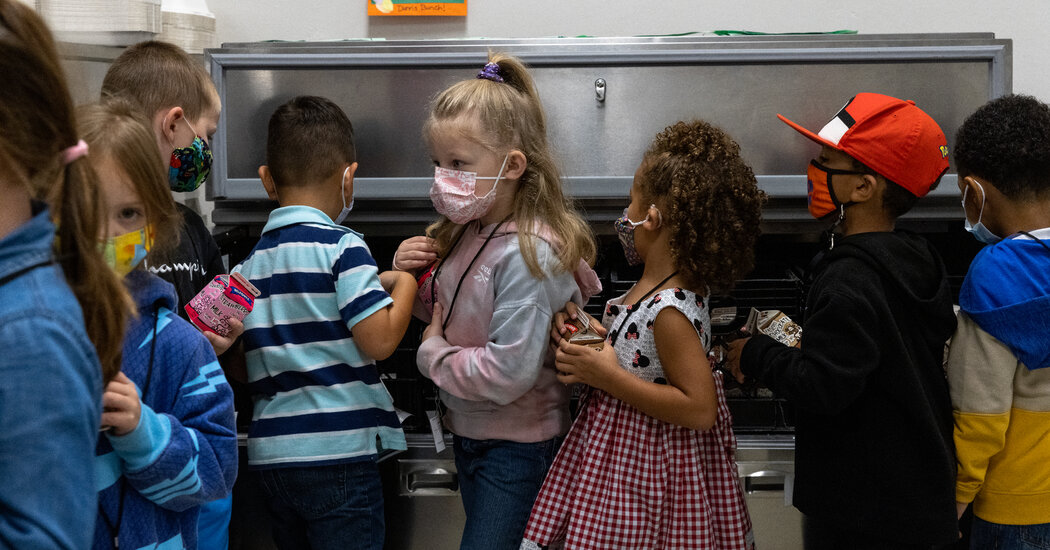
Children’s dislike of cauliflower, broccoli could be written in their microbiome

Many children, as well as adults, dislike Brassica vegetables, such as broccoli, cauliflower, cabbage and Brussels sprouts. In the mouth, enzymes from these vegetables and from bacteria in saliva can produce unpleasant, sulfurous odors. Now, researchers reporting in ACS’ Journal of Agricultural and Food Chemistry have found that levels of these volatile compounds are similar in parent-child pairs, suggesting shared oral microbiomes. They also found that high levels cause children to dislike the vegetables.
Brassica vegetables contain a compound called S-methyl-ʟ-cysteine sulfoxide that produces potent, sulfurous odors when acted upon by an enzyme in the plant’s tissues, as well as by the same enzyme produced by bacteria in some people’s oral microbiomes. Previous studies have shown that adults have different levels of this enzyme in their saliva, but whether children also have different levels, and whether this influences their food preferences, is unknown. Damian Frank and colleagues, who conducted this research at CSIRO, Australia’s national science agency, wanted to investigate differences in sulfur volatile production in saliva from children and adults and analyze how they affect Brassica acceptance.
The researchers used gas chromatography-olfactometry-mass spectrometry to identify the main odor-active compounds in raw and steamed cauliflower and broccoli. Then, they asked 98 child/parent pairs, with children between 6 and 8 years of age, to rate the key odor compounds. Dimethyl trisulfide, which smells rotten, sulfurous and putrid, was the least liked odor by children and adults. The team then mixed saliva samples with raw cauliflower powder and analyzed the volatile compounds produced over time. Large differences in sulfur volatile production were found between individuals, and children usually had similar levels as their parents, which is likely explained by similar microbiomes. Children whose saliva produced high amounts of sulfur volatiles disliked raw Brassica vegetables the most, but this relationship was not seen in adults, who might learn to tolerate the flavor over time. These results provide a new potential explanation for why some people like Brassica vegetables and others (especially children) don’t, the researchers say.
Story Source:
Materials provided by American Chemical Society. Note: Content may be edited for style and length.

Read more →

Sonic hedgehog protein pathway stimulation could help Parkinson's patients

Levodopa, or L-dopa, is considered the most effective treatment for Parkinson’s disease today. After a few years of treatment, however, almost all patients develop a debilitating side-effect called L-dopa induced dyskinesia, or LID, which causes involuntary movements in the limbs, face, and torso. Deep brain stimulation can alleviate LID, but the procedure is highly invasive and not all patients are eligible.
Now, a new study led by researchers at the Graduate Center, CUNY and the CUNY School of Medicine shows that drugs that increased signaling by a protein called sonic hedgehog, or Shh, can inhibit LID. Such a treatment would have the potential to help most Parkinson’s patients, the authors said.
The study appears in Communications Biology.
“In rodent and non-human primate models, the administration of L-dopa together with sonic hedgehog agonists attenuate the expression of LID,” said Lauren Malave, Ph.D., first author and postdoctoral fellow at Columbia University, previously a Ph.D. student in the lab of Professor Andreas Kottmann, Ph.D., at the CUNY School of Medicine at City College of New York and the Graduate Center. “We provide novel insight into the underlying mechanisms behind LID formation and provide a potential therapeutic solution.”
Parkinson’s disease is caused by the death of dopamine neurons, which is why the disease is treated with medications that are converted to dopamine once they enter the body. Key to the new study, though, is that these neurons also produce neurotransmitters other than dopamine, including GABA, glutamate, and Shh.
Shh has not previously been considered a neurotransmitter, but the new paper shows that it does in fact act as a neuromodulator. The researchers found that dopamine neurons use Shh to communicate with cholinergic neurons, which scientists have thought might play a role in LID. They then used animal models of Parkinson’s disease to show that decreased Shh signaling in the basal ganglia, caused by death of dopamine neurons, facilitates LID. On the other hand, mimicking increased signaling by Shh reduced LID. Because of this, the authors suggest that the imbalance between dopamine and Shh after L-dopa treatment is a major cause of LID.
The next steps will be to develop new therapeutics that act downstream in the Shh pathway in cholinergic neurons and begin clinical trials.
“Deep brain stimulation doesn’t help everyone, it’s very invasive, and not all people are eligible for the surgery. The procedure is also not accessible to everyone,” said Kottmann, who was the corresponding author on the paper. “What we find in this study is that in several animal models, by replacing not only dopamine but dopamine together with agonists that mimic the effects of sonic hedgehog, these dyskinesias can be very much suppressed.”
This research was supported by the American Parkinson Disease Association and the National Institutes of Health and the Research Foundation of the City University of New York.
Story Source:
Materials provided by The Graduate Center, CUNY. Note: Content may be edited for style and length.

Read more →

Infants have more microplastics in their feces than adults

Microplastics — tiny plastic pieces less than 5 mm in size — are everywhere, from indoor dust to food to bottled water. So it’s not surprising that scientists have detected these particles in the feces of people and pets. Now, in a small pilot study, researchers reporting in ACS’ Environmental Science & Technology Letters discovered that infants have higher amounts of one type of microplastic in their stool than adults. Health effects, if any, are uncertain.
Little is known about the magnitude of human exposure to microplastics or their health effects. Although microplastics were once thought to pass harmlessly through the gastrointestinal tract and exit the body, recent studies suggest that the tiniest pieces can cross cell membranes and enter the circulation. In cells and laboratory animals, microplastic exposure can cause cell death, inflammation and metabolic disorders. Kurunthachalam Kannan at the New York University School of Medicine and colleagues wanted to assess human exposure to two common microplastics — polyethylene terephthalate (PET) and polycarbonate (PC) — by measuring levels in infant and adult feces.
The researchers used mass spectrometry to determine the concentrations of PET and PC microplastics in six infant and 10 adult feces samples collected from New York state, as well as in three samples of meconium (a newborn infant’s first stool). All samples contained at least one type of microplastic. Although average levels of fecal PC microplastics were similar between adults and infants, infant stool contained, on average, more than 10 times higher PET concentrations than that of adults. Infants could be exposed to higher levels of microplastics through their extensive use of products such as bottles, teethers and toys, the researchers say. However, they note that larger studies are needed to corroborate these findings.
Story Source:
Materials provided by American Chemical Society. Note: Content may be edited for style and length.

Read more →

Covishield: UK recognises Covid jab after India outcry

SharecloseShare pageCopy linkAbout sharingimage source, Getty ImagesThe UK government has amended its foreign travel guidance to clarify that the Indian-made version of the AstraZeneca vaccine is an approved jab.But it is not clear whether people from India can travel to the UK without having to self-isolate for 10 days.The UK’s refusal to recognise Covishield had triggered a firestorm of protests in India.With more than 721 million doses administered so far, Covishield is India’s primary vaccine.On Tuesday, India described the rule as “discriminatory” and asked the UK to stop requiring fully-vaccinated Indians to self-isolate on arrival.At present, India is not listed as a country where people are recognised as fully vaccinated even if they’ve had both doses of an approved jab.So, Indians travelling to Britain have to self-isolate as well as book and take Covid-19 tests before they are allowed to move freely.Last week, the UK announced new rules – which will come into effect on 4 October – which mandate that travellers from a number of countries arriving in England do not have to self-isolate if they are fully vaccinated. India was not included in that list either.Prominent Indians called the rule “highly discriminatory”, “racist” and “asinine”, among other things.Foreign Minister S Jaishankar had taken up the matter “strongly” with his UK counterpart Liz Truss, according to India’s foreign secretary Harsh Vardhan Shringla. It is “a discriminatory policy and does impact our citizens travelling to the UK”, Mr Shringla told reporters. He had warned that India might take “reciprocal measures” if the UK did not address India’s concerns. Such measures generally include India imposing similar restrictions on those arriving from Britain. British travellers to India are thermally screened for fever on arrival, and provide a negative Covid-19 test. They do not need to quarantine.A leading MP from the main opposition Congress party, Jairam Ramesh, had tweeted that the “bizarre” decision “smacked of racism”. Absolutely bizarre considering Covishield was originally developed in the UK and The Serum Institute, Pune has supplied to that country too! This smacks of racism. https://t.co/GtKOzMgydf— Jairam Ramesh (@Jairam_Ramesh) September 20, 2021
The BBC is not responsible for the content of external sites.View original tweet on TwitterOthers said the move appeared to be a “money making opportunity”.I feel it’s just a money making opportunity. A fully vaccinated family friend just traveled to London on 7th, is there right now. D rules stipulate 8 days home quarantine – with 3 separate and very expensive home test kits that one has to buy n that are mailed to you.— ProG (@Mrs_DoSoLittle) September 20, 2021
The BBC is not responsible for the content of external sites.View original tweet on TwitterShashi Tharoor, author and Congress party MP, said he had cancelled a planned tour to participate in a debate at Cambridge University and to promote his new book in protest against the move.”Why should Indians be deemed to be lesser breeds than others? It is deeply offensive that fully vaccinated Indians have to quarantine, while others who may have taken the same vaccine in other countries, do not,” Mr Tharoor wrote in The Quint. “The UK has done its image in India a profound disservice by failing to offer clarity on the question at the heart of the issue.” About 25% of adults in India have been fully vaccinated so far – an estimated 150 million have received both doses of Covishield at home. The Serum Institute of India – the world’s biggest vaccine manufacturer which makes the jab under licence from AstraZeneca – has also supplied millions of doses to countries in Asia, Africa and Latin America under deals signed with various governments and as part of the global Covax scheme for poorer countries.image source, KaliprasadIn July, British PM Boris Johnson said he was “very confident” there “will not prove to be a problem” for travellers who had received an Indian-made Covid jab. Downing Street said the UK’s medicines regulator had shared its data on the jab with its European counterpart. Vaccine expert Prof Adam Finn said the vaccines – AstraZeneca and Covishield – were “exactly the same stuff”. And 23 countries of the European Union have approved the Covishield jab.”There seems to be no obvious explanation [behind the rule]. Clearly different standards are at play, depending on which part of the world the traveller is coming from,” says Amitabh Kant, CEO of Niti Aayog, an Indian government-backed think-tank.Did the move have something to do with some reports of fake vaccines? WHO had reported that counterfeit versions of Covishield were seized by authorities in India and Africa between July and August and called for their removal from circulation. Or does the rule have something to do with India’s “dodgy documentation”, as Mr Tharoor quoted a source as telling him. In other words, there were concerns about whether the vaccination certificates produced by Indian travellers were genuine or not.Earlier this month, Check Point, a leading US-based cyber security company, reported that there was a surging black market in vaccine certificates on Telegram in 28 countries. (This followed US President Joe Biden’s vaccine mandate announcements.) In India, these certificates were selling for $75 apiece, the firm reported. A spokesperson for the British High Commission in India told the BBC that its government was “working with India to expand recognition of vaccine certification”.Mr Tharoor says the Indian certificates carry QR codes which can be verified and there “may be some other ways of confirming tangible evidence” of their authenticity. “Making it such a stumbling block reeks of bad faith,” he says.Meanwhile, Indian travellers bound for the UK are distraught and say it is “ridiculous” to be in quarantine despite being fully vaccinated. Those who have travelled to Britain continue to self-isolate for 10 days and get tests done at their own expense. “Why are they discriminating against our vaccines? This is all adding more stress to what is an already stressful time and adding to our costs,” says Hema Anand, mother of a student who has travelled to the UK and is now in self-isolation.Have you had a vaccine not recognised by the UK government? Share your experiences by emailing haveyoursay@bbc.co.uk.Please include a contact number if you are willing to speak to a BBC journalist. You can also get in touch in the following ways:WhatsApp: +44 7756 165803Tweet: @BBC_HaveYourSayUpload pictures or videoPlease read our terms & conditions and privacy policy

If you are reading this page and can’t see the form you will need to visit the mobile version of the BBC website to submit your question or comment or you can email us at HaveYourSay@bbc.co.uk. Please include your name, age and location with any submission.

Read more →

Pressure Grows on U.S. Companies to Share Covid Vaccine Technology

Moderna accepted $2.5 billion in taxpayer money to develop its Covid-19 vaccine. But officials in the U.S. and overseas are having trouble persuading the company to license its technology.As President Biden convenes heads of state for a Covid-19 summit on Wednesday, pressure is growing on American drug companies — particularly Moderna, the upstart biotech firm that developed its coronavirus vaccine with billions of dollars in taxpayer money — to share their formulas with manufacturers in nations that desperately need more shots.Last year’s successful race to develop vaccines in extraordinarily short order put companies like Moderna and Pfizer in a highly favorable spotlight. But now, with less than 10 percent of those in many poor nations fully vaccinated and a dearth of doses contributing to millions of deaths, health officials in the United States and abroad are pressing the companies to do more to address the global shortage.The Biden administration has privately urged both Pfizer and Moderna to enter into joint ventures where they would license their technology to contract manufacturers with the aim of providing vaccines to low- and middle-income countries, according to a senior administration official.Those talks led to an agreement with Pfizer, expected to be announced on Wednesday, to sell the United States an additional 500 million doses of its vaccine at a not-for-profit price — rather than license its technology — to donate overseas.The discussions with Moderna have not been fruitful, said the official, who expressed deep frustration with the company but requested anonymity to discuss sensitive information.A coalition of major drug and vaccine manufacturers in developing countries around the world is drafting an appeal to Mr. Biden asking him to press the companies more aggressively to share the formulations and processes used to make their vaccines.The World Health Organization has also had trouble getting Moderna to the negotiating table, according to Dr. Martin Friede, a W.H.O. official, and Charles Gore, who runs a United Nations-backed nonprofit organization, Medicines Patent Pool. Both are working with a W.H.O.-backed technology transfer hub in South Africa, set up to teach manufacturers from developing countries how to make mRNA vaccines, a new type of vaccine technology used by both American companies.“We would love to get a discussion with Moderna, about a license to their intellectual property — this would make life so much simpler, but for the moment all attempts have resulted in no reply,” Dr. Friede said.At Wednesday’s virtual summit, on the sidelines of the United Nations General Assembly meeting in New York, Mr. Biden will convene heads of state, drug company executives, philanthropic groups and nongovernmental organizations to encourage them to work together toward vaccinating 70 percent of the world’s population by this time next year, according to a draft document the White House sent to the summit participants.Global health advocates say Moderna has a special obligation to share its technology because its vaccine relies in part on technology developed by the National Institutes of Health, and because the company accepted $2.5 billion from the federal government as part of Operation Warp Speed, the Trump administration’s fast-track vaccine initiative.A Moderna spokeswoman, Colleen Hussey, said in an email message Tuesday night that the company had agreed not to enforce its Covid-related patents and was “willing to license our intellectual property for Covid-19 vaccines to others for the post pandemic period.”But advocates say the world needs Moderna’s know-how now — not after the pandemic is over.While sharing the vaccine “recipe” is a vital first step, it is not in and of itself enough to allow for the swift and efficient set up of new mRNA manufacturing locations, said Alain alSalhani, a vaccines expert with Doctors Without Borders’ access-to-medicines campaign.“You need someone to share all the process, because it’s a new technology,” he said. “One of the problems we have is that the scientific literature about industrial-scale manufacturing of mRNA vaccines is so slim. This is why it’s not just about a recipe, it’s about an active and full tech transfer.”Pfizer, in an emailed statement, noted that it and its partner, BioNTech, had signed a letter of intent, announced last month, with the South African biopharmaceutical company Biovac, which is part of the South African hub, to manufacture Pfizer’s vaccine for African nations. But Biovac will only bottle the vaccine, which does not necessitate sharing the formula. The actual “drug substance” will be made in Europe.In the absence of voluntary cooperation from the companies, some legal experts and global health advocates say the Biden administration could attempt to force them to share their intellectual property, using the powers of the Defense Production Act, a 1950 law that gives the president broad power over American companies in emergency situations.Lawrence O. Gostin, a public health law expert at Georgetown University, said Mr. Biden could declare the pandemic a national security threat, which would enable him to “require companies to sign technology transfer contracts in exchange for reasonable compensation,” from either the federal government or manufacturing partners.“Moderna accepted substantial federal funding under Operation Warp Speed and both Pfizer and Moderna benefited from N.I.H. dollars for the basic research over decade for mRNA technology,” Mr. Gostin said, adding that the companies “hold a special social and ethical responsibility to share that technology for the benefit of the world.”Biden administration officials say that forcing the companies to act is not as simple as it sounds, and that an effort to compel them to share their technology would invariably lead to a drawn-out legal battle, which would be counterproductive..css-1xzcza9{list-style-type:disc;padding-inline-start:1em;}.css-3btd0c{font-family:nyt-franklin,helvetica,arial,sans-serif;font-size:1rem;line-height:1.375rem;color:#333;margin-bottom:0.78125rem;}@media (min-width:740px){.css-3btd0c{font-size:1.0625rem;line-height:1.5rem;margin-bottom:0.9375rem;}}.css-3btd0c strong{font-weight:600;}.css-3btd0c em{font-style:italic;}.css-w739ur{margin:0 auto 5px;font-family:nyt-franklin,helvetica,arial,sans-serif;font-weight:700;font-size:1.125rem;line-height:1.3125rem;color:#121212;}#NYT_BELOW_MAIN_CONTENT_REGION .css-w739ur{font-family:nyt-cheltenham,georgia,’times new roman’,times,serif;font-weight:700;font-size:1.375rem;line-height:1.625rem;}@media (min-width:740px){#NYT_BELOW_MAIN_CONTENT_REGION .css-w739ur{font-size:1.6875rem;line-height:1.875rem;}}@media (min-width:740px){.css-w739ur{font-size:1.25rem;line-height:1.4375rem;}}.css-9s9ecg{margin-bottom:15px;}.css-16ed7iq{width:100%;display:-webkit-box;display:-webkit-flex;display:-ms-flexbox;display:flex;-webkit-align-items:center;-webkit-box-align:center;-ms-flex-align:center;align-items:center;-webkit-box-pack:center;-webkit-justify-content:center;-ms-flex-pack:center;justify-content:center;padding:10px 0;background-color:white;}.css-pmm6ed{display:-webkit-box;display:-webkit-flex;display:-ms-flexbox;display:flex;-webkit-align-items:center;-webkit-box-align:center;-ms-flex-align:center;align-items:center;}.css-pmm6ed > :not(:first-child){margin-left:5px;}.css-5gimkt{font-family:nyt-franklin,helvetica,arial,sans-serif;font-size:0.8125rem;font-weight:700;-webkit-letter-spacing:0.03em;-moz-letter-spacing:0.03em;-ms-letter-spacing:0.03em;letter-spacing:0.03em;text-transform:uppercase;color:#333;}.css-5gimkt:after{content:’Collapse’;}.css-rdoyk0{-webkit-transition:all 0.5s ease;transition:all 0.5s ease;-webkit-transform:rotate(180deg);-ms-transform:rotate(180deg);transform:rotate(180deg);}.css-eb027h{max-height:5000px;-webkit-transition:max-height 0.5s ease;transition:max-height 0.5s ease;}.css-6mllg9{-webkit-transition:all 0.5s ease;transition:all 0.5s ease;position:relative;opacity:0;}.css-6mllg9:before{content:”;background-image:linear-gradient(180deg,transparent,#ffffff);background-image:-webkit-linear-gradient(270deg,rgba(255,255,255,0),#ffffff);height:80px;width:100%;position:absolute;bottom:0px;pointer-events:none;}.css-uf1ume{display:-webkit-box;display:-webkit-flex;display:-ms-flexbox;display:flex;-webkit-box-pack:justify;-webkit-justify-content:space-between;-ms-flex-pack:justify;justify-content:space-between;}.css-wxi1cx{display:-webkit-box;display:-webkit-flex;display:-ms-flexbox;display:flex;-webkit-flex-direction:column;-ms-flex-direction:column;flex-direction:column;-webkit-align-self:flex-end;-ms-flex-item-align:end;align-self:flex-end;}.css-12vbvwq{background-color:white;border:1px solid #e2e2e2;width:calc(100% – 40px);max-width:600px;margin:1.5rem auto 1.9rem;padding:15px;box-sizing:border-box;}@media (min-width:740px){.css-12vbvwq{padding:20px;width:100%;}}.css-12vbvwq:focus{outline:1px solid #e2e2e2;}#NYT_BELOW_MAIN_CONTENT_REGION .css-12vbvwq{border:none;padding:10px 0 0;border-top:2px solid #121212;}.css-12vbvwq[data-truncated] .css-rdoyk0{-webkit-transform:rotate(0deg);-ms-transform:rotate(0deg);transform:rotate(0deg);}.css-12vbvwq[data-truncated] .css-eb027h{max-height:300px;overflow:hidden;-webkit-transition:none;transition:none;}.css-12vbvwq[data-truncated] .css-5gimkt:after{content:’See more’;}.css-12vbvwq[data-truncated] .css-6mllg9{opacity:1;}.css-qjk116{margin:0 auto;overflow:hidden;}.css-qjk116 strong{font-weight:700;}.css-qjk116 em{font-style:italic;}.css-qjk116 a{color:#326891;-webkit-text-decoration:underline;text-decoration:underline;text-underline-offset:1px;-webkit-text-decoration-thickness:1px;text-decoration-thickness:1px;-webkit-text-decoration-color:#326891;text-decoration-color:#326891;}.css-qjk116 a:visited{color:#326891;-webkit-text-decoration-color:#326891;text-decoration-color:#326891;}.css-qjk116 a:hover{-webkit-text-decoration:none;text-decoration:none;}Pfizer and Moderna executives have said that the mRNA production process is so complex, and that there are so few people with experience in it available, that setting up new operations in other parts of the world would not be feasible and could not happen quickly enough to be useful. They say that their combined manufacturing will produce more than enough vaccines to meet global need by the middle of next year and that the fastest way to address vaccine inequity would be through distribution of donated doses.People in Manila awaiting the Moderna vaccine. The company said it would license the intellectual property for its Covid vaccine to others — but only after the pandemic ends.Eloisa Lopez/ReutersBut some pharmaceutical manufacturing experts and drug-access advocates argue that the events of the last 18 months make it clear that manufacturing in developing countries is going to be crucial to ensuring equitable access.Many of the donated doses bound for use in Africa, for example, were meant to come from the Serum Institute of India. But five months ago, the Indian government blocked the company from exporting any vaccines, ordering that the supply instead be directed to trying to stanch a raging second Covid wave in that country. (India now says it will allow exports to resume next month.)“We keep hearing, ‘The vaccines are coming, the vaccines are coming,’ but three million people have died since the Pfizer vaccine was first authorized by the F.D.A.,” said Zain Rizvi, an expert on access to medicines with the advocacy organization Public Citizen.Moderna and Pfizer have a direct financial interest in keeping their technology to themselves and guarding a competitive advantage not just in the sale of Covid vaccines, which are on track to bring in more than $53 billion in revenue this year, but also other potentially lucrative mRNA vaccines in development. such as one for malaria, he said, adding, “They don’t want to stand up a future competitor.”The coalition of drugmakers in developing countries that is drafting an appeal to Mr. Biden plans to ask the U.S. government to pressure companies for several things: a license for the intellectual property, a license for the technology involved in the manufacturing of the vaccines, the provision of items such as cell lines and assistance in acquiring vital but scarce equipment.In exchange for sharing its process, Moderna would be compensated with a licensing fee, a percentage of each dose sold.Even without Moderna’s cooperation, the W.H.O. says its tech transfer hub in South Africa will focus on trying to replicate as closely as possible the Moderna formula, as the gold standard against which to compare candidates from other biotechnology companies, and then teach any manufacturer who wants to make it how to do so at scale.“If we had Moderna or BioNTech with us, we could get to an approved vaccine in 18 months, but without them we have to go through full development — so it’s 36 months if everything goes perfectly, but it could be longer,” said Dr. Friede, who heads the W.H.O.’s Initiative for Vaccine Research.Pfizer and Moderna are at a pivotal moment where they can decide what role they want to play in the process, he said. “I’ve made many successful vaccines; with me I have other people who have made successful vaccines,” he said. “What we are actually saying is: ‘We’re going to do this. So you can come in and try and maintain some control by actually producing vaccines locally, or we’re going to do it without you. And then you’ve lost control’.”Rebecca Robbins

Read more →

Moderna vs. Pfizer: Both Knockouts, but One Seems to Have the Edge

A series of studies found that the Moderna vaccine seemed to be more protective over the long term than the Pfizer-BioNTech vaccine. Here’s why.It was a constant refrain from federal health officials after the coronavirus vaccines were authorized: These shots are all equally effective.That has turned out not to be true.Roughly 221 million doses of the Pfizer-BioNTech vaccine have been dispensed thus far in the United States, compared with about 150 million doses of Moderna’s vaccine. In a half-dozen studies published over the past few weeks, Moderna’s vaccine appeared to be more protective over the long term than the Pfizer-BioNTech vaccine.Research published on Friday by the Centers for Disease Control and Prevention found that the efficacy of the Pfizer-BioNTech vaccine against hospitalization fell from 91 percent to 77 percent after a four-month period following the second shot. The Moderna vaccine showed no decline over the same period.If the efficacy gap continues to widen, it may have implications for the debate on booster shots. Federal agencies this week are evaluating the need for a third shot of the Pfizer-BioNTech vaccine for some high-risk groups, including older adults.Scientists who were initially skeptical of the reported differences between the Moderna and Pfizer-BioNTech vaccines have slowly become convinced that the disparity is small but real.“Our baseline assumption is that the mRNA vaccines are functioning similarly, but then you start to see a separation,” said Natalie Dean, a biostatistician at Emory University in Atlanta. “It’s not a huge difference, but at least it’s consistent.”But the discrepancy is small and the real-world consequences uncertain, because both vaccines are still highly effective at preventing severe illness and hospitalization, she and others cautioned.“Yes, likely a real difference, probably reflecting what’s in the two vials,” said John Moore, a virologist at Weill Cornell Medicine in New York. “But truly, how much does this difference matter in the real world?”“It’s not appropriate for people who took Pfizer to be freaking out that they got an inferior vaccine.”Even in the original clinical trials of the three vaccines eventually authorized in the United States — made by Pfizer-BioNTech, Moderna and Johnson & Johnson — it was clear that the J.&J. vaccine had a lower efficacy than the other two. Research since then has borne out that trend, although J.&J. announced this week that a second dose of its vaccine boosts its efficacy to levels comparable to the others.The Pfizer-BioNTech and Moderna vaccines rely on the same mRNA platform, and in the initial clinical trials, they had remarkably similar efficacy against symptomatic infection: 95 percent for Pfizer-BioNTech and 94 percent for Moderna. This was in part why they were described as more or less equivalent.The subtleties emerged over time. The vaccines have never been directly compared in a carefully designed study, so the data indicating that effects vary are based mostly on observations.Results from those studies can be skewed by any number of factors, including the location, the age of the population vaccinated, when they were immunized and the timing between the doses, Dr. Dean said.For example, the Pfizer-BioNTech vaccine was rolled out weeks before Moderna’s to priority groups — older adults and health care workers. Immunity wanes more quickly in older adults, so a decline observed in a group consisting mostly of older adults may give the false impression that the protection from the Pfizer-BioNTech vaccine falls off quickly.Given those caveats, “I’m not convinced that there truly is a difference,” said Dr. Bill Gruber, a senior vice president at Pfizer. “I don’t think there’s sufficient data out there to make that claim.”But by now, the observational studies have delivered results from a number of locations — Qatar, the Mayo Clinic in Minnesota, several other states in the United States — and in health care workers, hospitalized veterans or the general population.Moderna’s efficacy against severe illness in those studies ranged from 92 to 100 percent. Pfizer-BioNTech’s numbers trailed by 10 to 15 percentage points.The two vaccines have diverged more sharply in their efficacy against infection. Protection from both waned over time, particularly after the arrival of the Delta variant, but the Pfizer-BioNTech vaccine’s values fell lower. In two of the recent studies, the Moderna vaccine did better at preventing illness by more than 30 percentage points.A few studies found that the levels of antibodies produced by the Pfizer-BioNTech vaccine were one-third to one-half those produced by the Moderna vaccine. Yet that decrease is trivial, Dr. Moore said: For comparison, there is a more than 100-fold difference in the antibody levels among healthy individuals..css-1xzcza9{list-style-type:disc;padding-inline-start:1em;}.css-3btd0c{font-family:nyt-franklin,helvetica,arial,sans-serif;font-size:1rem;line-height:1.375rem;color:#333;margin-bottom:0.78125rem;}@media (min-width:740px){.css-3btd0c{font-size:1.0625rem;line-height:1.5rem;margin-bottom:0.9375rem;}}.css-3btd0c strong{font-weight:600;}.css-3btd0c em{font-style:italic;}.css-w739ur{margin:0 auto 5px;font-family:nyt-franklin,helvetica,arial,sans-serif;font-weight:700;font-size:1.125rem;line-height:1.3125rem;color:#121212;}#NYT_BELOW_MAIN_CONTENT_REGION .css-w739ur{font-family:nyt-cheltenham,georgia,’times new roman’,times,serif;font-weight:700;font-size:1.375rem;line-height:1.625rem;}@media (min-width:740px){#NYT_BELOW_MAIN_CONTENT_REGION .css-w739ur{font-size:1.6875rem;line-height:1.875rem;}}@media (min-width:740px){.css-w739ur{font-size:1.25rem;line-height:1.4375rem;}}.css-9s9ecg{margin-bottom:15px;}.css-16ed7iq{width:100%;display:-webkit-box;display:-webkit-flex;display:-ms-flexbox;display:flex;-webkit-align-items:center;-webkit-box-align:center;-ms-flex-align:center;align-items:center;-webkit-box-pack:center;-webkit-justify-content:center;-ms-flex-pack:center;justify-content:center;padding:10px 0;background-color:white;}.css-pmm6ed{display:-webkit-box;display:-webkit-flex;display:-ms-flexbox;display:flex;-webkit-align-items:center;-webkit-box-align:center;-ms-flex-align:center;align-items:center;}.css-pmm6ed > :not(:first-child){margin-left:5px;}.css-5gimkt{font-family:nyt-franklin,helvetica,arial,sans-serif;font-size:0.8125rem;font-weight:700;-webkit-letter-spacing:0.03em;-moz-letter-spacing:0.03em;-ms-letter-spacing:0.03em;letter-spacing:0.03em;text-transform:uppercase;color:#333;}.css-5gimkt:after{content:’Collapse’;}.css-rdoyk0{-webkit-transition:all 0.5s ease;transition:all 0.5s ease;-webkit-transform:rotate(180deg);-ms-transform:rotate(180deg);transform:rotate(180deg);}.css-eb027h{max-height:5000px;-webkit-transition:max-height 0.5s ease;transition:max-height 0.5s ease;}.css-6mllg9{-webkit-transition:all 0.5s ease;transition:all 0.5s ease;position:relative;opacity:0;}.css-6mllg9:before{content:”;background-image:linear-gradient(180deg,transparent,#ffffff);background-image:-webkit-linear-gradient(270deg,rgba(255,255,255,0),#ffffff);height:80px;width:100%;position:absolute;bottom:0px;pointer-events:none;}.css-uf1ume{display:-webkit-box;display:-webkit-flex;display:-ms-flexbox;display:flex;-webkit-box-pack:justify;-webkit-justify-content:space-between;-ms-flex-pack:justify;justify-content:space-between;}.css-wxi1cx{display:-webkit-box;display:-webkit-flex;display:-ms-flexbox;display:flex;-webkit-flex-direction:column;-ms-flex-direction:column;flex-direction:column;-webkit-align-self:flex-end;-ms-flex-item-align:end;align-self:flex-end;}.css-12vbvwq{background-color:white;border:1px solid #e2e2e2;width:calc(100% – 40px);max-width:600px;margin:1.5rem auto 1.9rem;padding:15px;box-sizing:border-box;}@media (min-width:740px){.css-12vbvwq{padding:20px;width:100%;}}.css-12vbvwq:focus{outline:1px solid #e2e2e2;}#NYT_BELOW_MAIN_CONTENT_REGION .css-12vbvwq{border:none;padding:10px 0 0;border-top:2px solid #121212;}.css-12vbvwq[data-truncated] .css-rdoyk0{-webkit-transform:rotate(0deg);-ms-transform:rotate(0deg);transform:rotate(0deg);}.css-12vbvwq[data-truncated] .css-eb027h{max-height:300px;overflow:hidden;-webkit-transition:none;transition:none;}.css-12vbvwq[data-truncated] .css-5gimkt:after{content:’See more’;}.css-12vbvwq[data-truncated] .css-6mllg9{opacity:1;}.css-qjk116{margin:0 auto;overflow:hidden;}.css-qjk116 strong{font-weight:700;}.css-qjk116 em{font-style:italic;}.css-qjk116 a{color:#326891;-webkit-text-decoration:underline;text-decoration:underline;text-underline-offset:1px;-webkit-text-decoration-thickness:1px;text-decoration-thickness:1px;-webkit-text-decoration-color:#326891;text-decoration-color:#326891;}.css-qjk116 a:visited{color:#326891;-webkit-text-decoration-color:#326891;text-decoration-color:#326891;}.css-qjk116 a:hover{-webkit-text-decoration:none;text-decoration:none;}Still, other experts said that the corpus of evidence pointed to a disparity that would be worth exploring, at least in people who respond weakly to vaccines, including older adults and immunocompromised people.“At the end of the day, I do think there are subtle but real differences between Moderna and Pfizer,” Dr. Jeffrey Wilson, an immunologist and physician at the University of Virginia in Charlottesville who was a co-author of one such study, published in the journal JAMA this month. “In high-risk populations, it might be relevant. It’d be good if people took a close look.”“Pfizer is a big hammer,” Dr. Wilson added, but “Moderna is a sledgehammer.”Several factors might underlie the divergence. The vaccines differ in their dosing and in the time between the first and second doses.Vaccine manufacturers would typically have enough time to test a range of doses before choosing one — and they have done such testing for their trials of the coronavirus vaccine in children.But in the midst of a pandemic last year, the companies had to guess at the optimal dose. Pfizer went with 30 micrograms, Moderna with 100.Moderna’s vaccine relies on a liquid nanoparticle, which can deliver the larger dose. And the first and second shots of that vaccine are staggered by four weeks, compared with three for the Pfizer-BioNTech vaccine.The extra week may give immune cells more time to proliferate before the second dose, said Dr. Paul Burton, Moderna’s chief medical officer. “We need to keep studying this and to do more research, but I think it’s plausible.”Moderna’s team recently showed that a half dose of the vaccine still sent antibody levels soaring. Based on those data, the company asked the F.D.A. this month to authorize 50 micrograms, the half dose, as a booster shot.There is limited evidence showing the effect of that dose, and none on how long the higher antibody levels might last. Federal regulators are reviewing Moderna’s data to determine whether the available data are sufficient to authorize a booster shot of the half dose.Ultimately, both vaccines are still holding steady against severe illness and hospitalization, especially in people under 65, Dr. Moore said.Scientists had initially hoped that the vaccines would have an efficacy of 50 or 60 percent. “We would have all seen that as great result and been happy with it,” he said. “Fast forward to now, and we’re debating whether 96.3 percent vaccine efficacy for Moderna versus 88.8 percent for Pfizer is a big deal.”

Read more →

Why Exercise Alone Isn't Enough to Lose Weight

Our bodies compensate for at least a quarter of the calories we expend during exercise, undermining our best efforts to lose weight by working out. For every 100 calories we might expect to burn as a result of working out, most of us will actually net fewer than 72 calories burned, according to an eye-opening new study of how physical activity affects our metabolisms. The study finds that our bodies tend to automatically compensate for at least a quarter of the calories we expend during exercise, undermining our best efforts to drop pounds by working out. The results also show that carrying extra pounds unfortunately compounds calorie compensation, making weight loss through exercise even more elusive for those who are already overweight.But the study suggests, too, that calorie compensation varies from person to person, and that learning how your metabolism responds to workouts may be key to optimizing exercise for weight control.In theory — or in a kindlier, alternative universe — exercise would aid substantially in weight loss. When we move, our muscles contract, requiring more fuel than at rest, while other organs and biological systems likewise expend extra energy. Thanks to past laboratory studies, we know approximately how much energy these processes demand. Walking a mile, for instance, burns approximately 100 calories, depending on someone’s body size and walking speed.Until recently, most people, including exercise scientists, assumed that this process would be additive — that is, stroll a single mile, burn 100 calories. Stroll two, burn 200, and so on, in logical, mathematical fashion. If we do not then replace those calories with extra food, we should wind up burning more calories than we consume that day and start dropping pounds.But that rational outcome rarely happens. In study after study, most people who begin a new exercise program lose less weight than would be expected based on the number of calories they burn during their workouts, even if they strictly monitor their diets.So, some scientists began speculating that energy expenditure might be less elastic than we had thought. In other words, it might have limits. That possibility gained traction in 2012, with the publication of an influential study of African hunter-gatherers. It showed that, although the tribespeople regularly walked or jogged for hours, they burned about the same number of total daily calories as relatively sedentary Western men and women. Somehow, the study’s authors realized, the active tribespeople’s bodies were compensating, dialing back overall calorie burning, so that they avoided starvation as they stalked their food.Other small studies since have reinforced the finding that more activity does not necessarily result in greater daily calorie expenditure. But few large-scale experiments have tried to pin down just how much our bodies compensate for the calories burned while moving, since measuring metabolic activity in people is complex and expensive.As part of an ambitious new scientific initiative, however, dozens of researchers recently pooled their metabolic data from multiple studies involving thousands of men and women. These studies involved drinking doubly labeled water, the gold standard in metabolic research. It contains isotopes that allow researchers precisely to track how many calories someone burns throughout the day.For the new study, which was published in August in Current Biology, some of the scientists involved in the initiative set out to see what happens to our metabolisms when we move. They pulled data for 1,754 adults that included their doubly labeled water results, as well as measures of their body compositions and basal energy expenditure, which is how many calories they burn simply by being alive, even if they otherwise are inactive. Subtracting basal numbers from total energy expenditure gave the researchers an approximation of people’s energy expenditure from exercise and other movement, such as standing, walking and general fidgeting.Then, using statistical models, the researchers could tally whether calories burned during activity increased people’s daily energy expenditure as expected — that is, whether people burn commensurately more total daily calories when they move more. But, the researchers found, they did not tend to burn more calories. In fact, most people seemed to be burning only about 72 percent as many additional calories, on average, as would be expected, given their activity levels.“People appear to be energy compensating for additional calories burned through activity by at least a quarter,” said Lewis Halsey, a professor of life and health sciences at the University of Roehampton in London and one of the lead authors of the new study.Unexpectedly, the researchers also found that energy compensation levels increased among people with relatively high levels of body fat. They tended to compensate for 50 percent or more of the calories they burned by being active.It is important to point out that the study did not look at people’s food intake. It concentrated solely on energy outlay and how our bodies seem able to offset some of the calories burned during exercise by reducing biological activity elsewhere in the body. Just how we unconsciously orchestrate this feat, though, and which internal systems could be most affected remain unclear, Dr. Halsey said. He and his colleagues speculate that immune system operations, which require considerable energy, may get dialed down somewhat. Or we could unknowingly fidget less or otherwise grow more sedentary, over all, on days we exercise. Perhaps, too, some of the inner workings of our cells may slow, reducing our bodies’ overall energy expenditure.But the new science of exercise and calorie compensation is not completely discouraging. Even people whose bodies compensate for 50 percent or more of the calories they expend during physical activity will burn more calories per day than if they remain still, Dr. Halsey pointed out. A more intractable problem with using exercise for weight loss, he continued, is that exercise realistically burns few calories, period. To drop pounds, we also will have to eat less. “Half a cookie or half a can of cola” after a half-hour walk, and you will have taken in more calories than you burned, he said, however much or little you compensate.

Read more →

C.D.C. Panel Will Meet on Who Gets Pfizer Vaccine Booster

Scientific advisers to the Centers for Disease Control and Prevention are scheduled to meet on Wednesday to decide which Americans should get booster shots of the Pfizer-BioNTech coronavirus vaccine — and when.The committee’s discussions are normally a scientific affair of little interest to most people. But this meeting is likely to be closely watched — the stakes are high. It follows a dramatic exchange at the Food and Drug Administration on Friday, when advisers overwhelmingly rejected a proposal to offer Pfizer booster shots for Americans over 16, but then voted unanimously in favor of third doses for some high-risk people and those older than 65.The role of the C.D.C. advisers on Wednesday is to decide who belongs in those high-risk groups. Depending on their verdict, booster shots could be offered to most Americans — or only to a select few.The decision may come as late as Thursday. But it is likely to be too late for the Biden administration, which had planned to begin offering third doses this week to most fully vaccinated adults in the United States.At the meeting on Friday, senior scientists at Pfizer and the Israeli Ministry of Health presented data they said indicated waning immunity in people who received the Pfizer vaccine months earlier. Boosting immune defenses with a third shot has made a difference in Israel, they said, and could stem the tide of infections in the United States.The F.D.A. advisers also evaluated data from the C.D.C. on the trajectory of the virus in the United States, as well as summaries from several studies on the effectiveness of the vaccines.But after reviewing the evidence, the scientists on the committee concluded that while protection against infection may be waning, especially in older adults, the original two-shot regimen still offers excellent protection against severe illness and hospitalization in most people.“It’s unclear that everyone needs to be boosted, other than a subset of the population that clearly would be at high risk for serious disease,” said Dr. Michael G. Kurilla, a committee member and official at the National Institutes of Health.One key difference between Israel and the United States may explain why the two countries have had different experiences with the vaccine: The countries define severe illness differently.In Israel, anyone with an accelerated respiratory rate and an oxygen level of below 94 percent is severely ill. By contrast, the C.D.C. reserves that category for people who are sick enough to be hospitalized, said Dr. Sara Oliver, a C.D.C. scientist who presented the American data..css-1xzcza9{list-style-type:disc;padding-inline-start:1em;}.css-3btd0c{font-family:nyt-franklin,helvetica,arial,sans-serif;font-size:1rem;line-height:1.375rem;color:#333;margin-bottom:0.78125rem;}@media (min-width:740px){.css-3btd0c{font-size:1.0625rem;line-height:1.5rem;margin-bottom:0.9375rem;}}.css-3btd0c strong{font-weight:600;}.css-3btd0c em{font-style:italic;}.css-w739ur{margin:0 auto 5px;font-family:nyt-franklin,helvetica,arial,sans-serif;font-weight:700;font-size:1.125rem;line-height:1.3125rem;color:#121212;}#NYT_BELOW_MAIN_CONTENT_REGION .css-w739ur{font-family:nyt-cheltenham,georgia,’times new roman’,times,serif;font-weight:700;font-size:1.375rem;line-height:1.625rem;}@media (min-width:740px){#NYT_BELOW_MAIN_CONTENT_REGION .css-w739ur{font-size:1.6875rem;line-height:1.875rem;}}@media (min-width:740px){.css-w739ur{font-size:1.25rem;line-height:1.4375rem;}}.css-9s9ecg{margin-bottom:15px;}.css-16ed7iq{width:100%;display:-webkit-box;display:-webkit-flex;display:-ms-flexbox;display:flex;-webkit-align-items:center;-webkit-box-align:center;-ms-flex-align:center;align-items:center;-webkit-box-pack:center;-webkit-justify-content:center;-ms-flex-pack:center;justify-content:center;padding:10px 0;background-color:white;}.css-pmm6ed{display:-webkit-box;display:-webkit-flex;display:-ms-flexbox;display:flex;-webkit-align-items:center;-webkit-box-align:center;-ms-flex-align:center;align-items:center;}.css-pmm6ed > :not(:first-child){margin-left:5px;}.css-5gimkt{font-family:nyt-franklin,helvetica,arial,sans-serif;font-size:0.8125rem;font-weight:700;-webkit-letter-spacing:0.03em;-moz-letter-spacing:0.03em;-ms-letter-spacing:0.03em;letter-spacing:0.03em;text-transform:uppercase;color:#333;}.css-5gimkt:after{content:’Collapse’;}.css-rdoyk0{-webkit-transition:all 0.5s ease;transition:all 0.5s ease;-webkit-transform:rotate(180deg);-ms-transform:rotate(180deg);transform:rotate(180deg);}.css-eb027h{max-height:5000px;-webkit-transition:max-height 0.5s ease;transition:max-height 0.5s ease;}.css-6mllg9{-webkit-transition:all 0.5s ease;transition:all 0.5s ease;position:relative;opacity:0;}.css-6mllg9:before{content:”;background-image:linear-gradient(180deg,transparent,#ffffff);background-image:-webkit-linear-gradient(270deg,rgba(255,255,255,0),#ffffff);height:80px;width:100%;position:absolute;bottom:0px;pointer-events:none;}.css-uf1ume{display:-webkit-box;display:-webkit-flex;display:-ms-flexbox;display:flex;-webkit-box-pack:justify;-webkit-justify-content:space-between;-ms-flex-pack:justify;justify-content:space-between;}.css-wxi1cx{display:-webkit-box;display:-webkit-flex;display:-ms-flexbox;display:flex;-webkit-flex-direction:column;-ms-flex-direction:column;flex-direction:column;-webkit-align-self:flex-end;-ms-flex-item-align:end;align-self:flex-end;}.css-12vbvwq{background-color:white;border:1px solid #e2e2e2;width:calc(100% – 40px);max-width:600px;margin:1.5rem auto 1.9rem;padding:15px;box-sizing:border-box;}@media (min-width:740px){.css-12vbvwq{padding:20px;width:100%;}}.css-12vbvwq:focus{outline:1px solid #e2e2e2;}#NYT_BELOW_MAIN_CONTENT_REGION .css-12vbvwq{border:none;padding:10px 0 0;border-top:2px solid #121212;}.css-12vbvwq[data-truncated] .css-rdoyk0{-webkit-transform:rotate(0deg);-ms-transform:rotate(0deg);transform:rotate(0deg);}.css-12vbvwq[data-truncated] .css-eb027h{max-height:300px;overflow:hidden;-webkit-transition:none;transition:none;}.css-12vbvwq[data-truncated] .css-5gimkt:after{content:’See more’;}.css-12vbvwq[data-truncated] .css-6mllg9{opacity:1;}.css-qjk116{margin:0 auto;overflow:hidden;}.css-qjk116 strong{font-weight:700;}.css-qjk116 em{font-style:italic;}.css-qjk116 a{color:#326891;-webkit-text-decoration:underline;text-decoration:underline;text-underline-offset:1px;-webkit-text-decoration-thickness:1px;text-decoration-thickness:1px;-webkit-text-decoration-color:#326891;text-decoration-color:#326891;}.css-qjk116 a:visited{color:#326891;-webkit-text-decoration-color:#326891;text-decoration-color:#326891;}.css-qjk116 a:hover{-webkit-text-decoration:none;text-decoration:none;}Some committee experts said they also did not feel comfortable offering booster shots to young people who may not need them, when the risks of a third dose are unknown.The vaccines have been tied to rare cases of myocarditis, inflammation of the heart, in younger people. The risk is very small, and studies have shown that Covid-19 is much more likely to cause the condition.Last week brought other research in support of the F.D.A. committee’s decision, including one paper by an international team of scientists that analyzed dozens of studies and concluded that the world would be better served by using vaccine doses to protect the billions who remain unvaccinated.The authors of that study included the top two vaccine experts at the F.D.A., who announced plans to leave the agency this fall. Their departure is in part in protest of the Biden administration’s push for boosters before federal scientists and regulators had reviewed the evidence.

Read more →

High Covid Hospitalizations Have Delayed Elective Surgeries

In areas inundated with coronavirus patients, hospitals have postponed treatments and surgeries for people with other serious conditions.In chronic pain, Mary O’Donnell can’t get around much. At most, she manages to walk for a short time in her kitchen or garden before she has to sit down. “It’s just frustrating at this point,” said Ms. O’Donnell, 80, who lives in Aloha, Ore. “I’m really depressed.”She had been preparing for back surgery scheduled for Aug. 31, hoping the five-hour procedure would allow her to be more active. But a day before the operation, at OHSU Health Hillsboro Medical Center, she learned it had been canceled.“Nope, you can’t come, our hospital is filling up,” she said she was told.Faced with a surge of Covid-19 hospitalizations in Oregon, the hospital has not yet rescheduled her surgery. “I don’t know what is going to happen,” Ms. O’Donnell said, worrying that her ability to walk might be permanently impaired if she is forced to wait too long.Recent spikes in Covid cases forced the OHSU hospital in Portland, Ore., to reschedule elective surgeries.Alisha Jucevic for The New York TimesEchoes of the pandemic’s early months are resounding through the halls of hospitals, with an average of more than 90,000 patients in the United States being treated daily for Covid. Once again, many hospitals have been slammed in the last two months, this time by the Delta variant, and have been reporting that intensive care units are overflowing, that patients have to be turned away and even that some patients have died while awaiting a spot in an acute or I.C.U. ward.In this latest wave, hospital administrators and doctors were desperate to avoid the earlier pandemic phases of blanket shutdowns of surgeries and other procedures that are not true emergencies. But in the hardest-hit areas, especially in regions of the country with low vaccination rates, they are now making difficult choices about which patients can still be treated. And patients are waiting several weeks, if not longer, to undergo non-Covid surgeries.“We are facing a dire situation,” said Dr. Marc Harrison. the chief executive of Intermountain Healthcare, the large Utah-based hospital group, which announced a pause of nearly all non-urgent surgeries on Sept. 10.“We do not have the capacity at this point in time to take care of people with very urgent conditions yet are not immediately life threatening,” he said at a news conference.In some of the hardest-hit areas, like Alaska and Idaho, doctors are taking even more extreme steps and rationing care.When they can, some hospitals and doctors are trying to seek a balance between curtailing or shuttering elective procedures and screenings — often lucrative sources of revenue — and maintaining those services to ensure that delays in care don’t endanger patients.The industry was largely insulated last year from the revenues they lost during the pandemic after Congress authorized $178 billion in relief funding for providers. Some large hospital groups were even more profitable in 2020 than before the virus took its financial toll, with some going on spending sprees and buying up doctors’ practices and expanding. Many had starting seeing operations return to normal levels.A few large hospital chains did not meet the criteria for aid they had received, and returned some of it. It’s unclear how much more hospitals can expect, even if they shutter some of their operations during this latest wave. The Biden administration said earlier this month that it planned to release $26 billion in remaining Covid relief funds.Officials have also had to weigh the risk of admitting patients who could infect others.But doctors have also been monitoring some of the long-term effects of long waiting times for non-Covid patients during the pandemic, wary of the specter of unchecked cancers or ignored ulcerative conditions if screenings are postponed.And the waiting is still extremely stressful, troubling both doctors and patients with pressing illnesses who do not view their conditions as non-urgent.Robin Strong at her home in Columbus, Ga. Her doctor told her that because of rising Covid cases, a procedure to repair her paralyzed vocal cord would be delayed.Audra Melton for The New York TimesIn Columbus, Ga., Robin Strong’s doctor told her a few weeks ago that the rising Covid caseloads there would delay a procedure to repair a vocal cord that was paralyzed in a previous surgery.Because of her condition, she chokes easily and has a hard time breathing. “I just cry all the time because of my situation,” she said.Compounding the physical discomfort is her frustration that so many people in her state won’t get vaccinated against Covid, and they are getting sick and taking up hospital beds.Only 66 percent of adults in Georgia have received at least one vaccine dose, compared with 77 percent of all adults in the United States who have received at least one dose of the vaccine, according to the latest data from federal and state health officials.“They are punishing people like me,” Ms. Strong said.In some areas, doctors are explicitly rationing care. On Thursday, Idaho state officials expanded “crisis standards of care” across the state, a standard that had been limited to the northern part of the state earlier in the month. “We don’t have enough resources to adequately treat the patients in our hospitals, whether you are there for Covid-19 or a heart attack or because of a car accident,” Dave Jeppesen, the director of the Idaho Department of Health and Welfare, said in a statement.With precious few available intensive-care beds, Idaho hospitals had largely stopped providing hernia surgeries or hip replacements before the new order. Now they are postponing cancer and heart surgeries, too, said Brian Whitlock, the chief executive of the Idaho Hospital Association. The hospitals there “have been doing their level best,” he said.In Alaska, the state’s largest hospital, Providence Alaska Medical Center in Anchorage, has also begun rationing care as patients wait for hours to get to the emergency room and doctors scramble to find beds. “While we are doing our utmost, we are no longer able to provide the standard of care to each and every patient who needs our help,” said the hospital’s medical staff in a letter to the community in mid-September.When the pandemic first slammed hospitals last year, many institutions found no alternative to postponing nonessential procedures. “We weren’t sure what we were really going to face,” said Dr. Matthias Merkel, senior associate chief medical officer for capacity management and patient flow at Oregon Health & Science University, the state’s academic medical center in Portland. “We pre-emptively stopped elective surgeries and emptied out the hospitals.”In this latest round, hospitals and doctors have been more willing to continue doing procedures like colonoscopies for some patients if they can. “We want to continue to do as much as we can in all areas,” Dr. Merkel said.His hospital, he added, hadn’t “yet recovered from the backlog we created” from delaying treatments earlier in the pandemic.Even so, some patients with serious conditions are living in a precarious limbo. Paul McAlvain, 41, had waited months to get a surgery opening at OHSU to repair a leaking heart valve.“They kept saying how bad I was and how they needed to get me in right away,” said Mr. McAlvain, a helicopter pilot for Life Flight Network, which ferries critically ill patients to medical centers. He had developed an irregular heart beat from his condition, and was finally scheduled for surgery Sept. 1.But the spike in cases this summer further postponed his operation. “I had made work arrangements, life arrangements, got mentally ready,” Mr. McAlvain said. The surgery took place on Sept. 8.Dr. Merkel acknowledged the toll that uncertainty can take on patients. “It might medically make no difference, but emotionally it could have a huge impact,” he said.Paul McAlvain recovering in the cardiovascular intensive care unit after his surgery, which was moved from Sept. 1 to Sept. 8 because of Covid cases.Alisha Jucevic for The New York TimesSome hospital officials say they have been assessing the effects of delayed care caused by the shutting down of elective procedures earlier in the pandemic. “It was very clear that many of these folks had decompensated or were more acutely ill than they would have otherwise been,” said Dr. Bryan Alsip, the chief medical officer at University Health in San Antonio, Texas..css-1xzcza9{list-style-type:disc;padding-inline-start:1em;}.css-3btd0c{font-family:nyt-franklin,helvetica,arial,sans-serif;font-size:1rem;line-height:1.375rem;color:#333;margin-bottom:0.78125rem;}@media (min-width:740px){.css-3btd0c{font-size:1.0625rem;line-height:1.5rem;margin-bottom:0.9375rem;}}.css-3btd0c strong{font-weight:600;}.css-3btd0c em{font-style:italic;}.css-w739ur{margin:0 auto 5px;font-family:nyt-franklin,helvetica,arial,sans-serif;font-weight:700;font-size:1.125rem;line-height:1.3125rem;color:#121212;}#NYT_BELOW_MAIN_CONTENT_REGION .css-w739ur{font-family:nyt-cheltenham,georgia,’times new roman’,times,serif;font-weight:700;font-size:1.375rem;line-height:1.625rem;}@media (min-width:740px){#NYT_BELOW_MAIN_CONTENT_REGION .css-w739ur{font-size:1.6875rem;line-height:1.875rem;}}@media (min-width:740px){.css-w739ur{font-size:1.25rem;line-height:1.4375rem;}}.css-9s9ecg{margin-bottom:15px;}.css-16ed7iq{width:100%;display:-webkit-box;display:-webkit-flex;display:-ms-flexbox;display:flex;-webkit-align-items:center;-webkit-box-align:center;-ms-flex-align:center;align-items:center;-webkit-box-pack:center;-webkit-justify-content:center;-ms-flex-pack:center;justify-content:center;padding:10px 0;background-color:white;}.css-pmm6ed{display:-webkit-box;display:-webkit-flex;display:-ms-flexbox;display:flex;-webkit-align-items:center;-webkit-box-align:center;-ms-flex-align:center;align-items:center;}.css-pmm6ed > :not(:first-child){margin-left:5px;}.css-5gimkt{font-family:nyt-franklin,helvetica,arial,sans-serif;font-size:0.8125rem;font-weight:700;-webkit-letter-spacing:0.03em;-moz-letter-spacing:0.03em;-ms-letter-spacing:0.03em;letter-spacing:0.03em;text-transform:uppercase;color:#333;}.css-5gimkt:after{content:’Collapse’;}.css-rdoyk0{-webkit-transition:all 0.5s ease;transition:all 0.5s ease;-webkit-transform:rotate(180deg);-ms-transform:rotate(180deg);transform:rotate(180deg);}.css-eb027h{max-height:5000px;-webkit-transition:max-height 0.5s ease;transition:max-height 0.5s ease;}.css-6mllg9{-webkit-transition:all 0.5s ease;transition:all 0.5s ease;position:relative;opacity:0;}.css-6mllg9:before{content:”;background-image:linear-gradient(180deg,transparent,#ffffff);background-image:-webkit-linear-gradient(270deg,rgba(255,255,255,0),#ffffff);height:80px;width:100%;position:absolute;bottom:0px;pointer-events:none;}.css-uf1ume{display:-webkit-box;display:-webkit-flex;display:-ms-flexbox;display:flex;-webkit-box-pack:justify;-webkit-justify-content:space-between;-ms-flex-pack:justify;justify-content:space-between;}.css-wxi1cx{display:-webkit-box;display:-webkit-flex;display:-ms-flexbox;display:flex;-webkit-flex-direction:column;-ms-flex-direction:column;flex-direction:column;-webkit-align-self:flex-end;-ms-flex-item-align:end;align-self:flex-end;}.css-12vbvwq{background-color:white;border:1px solid #e2e2e2;width:calc(100% – 40px);max-width:600px;margin:1.5rem auto 1.9rem;padding:15px;box-sizing:border-box;}@media (min-width:740px){.css-12vbvwq{padding:20px;width:100%;}}.css-12vbvwq:focus{outline:1px solid #e2e2e2;}#NYT_BELOW_MAIN_CONTENT_REGION .css-12vbvwq{border:none;padding:10px 0 0;border-top:2px solid #121212;}.css-12vbvwq[data-truncated] .css-rdoyk0{-webkit-transform:rotate(0deg);-ms-transform:rotate(0deg);transform:rotate(0deg);}.css-12vbvwq[data-truncated] .css-eb027h{max-height:300px;overflow:hidden;-webkit-transition:none;transition:none;}.css-12vbvwq[data-truncated] .css-5gimkt:after{content:’See more’;}.css-12vbvwq[data-truncated] .css-6mllg9{opacity:1;}.css-qjk116{margin:0 auto;overflow:hidden;}.css-qjk116 strong{font-weight:700;}.css-qjk116 em{font-style:italic;}.css-qjk116 a{color:#326891;-webkit-text-decoration:underline;text-decoration:underline;text-underline-offset:1px;-webkit-text-decoration-thickness:1px;text-decoration-thickness:1px;-webkit-text-decoration-color:#326891;text-decoration-color:#326891;}.css-qjk116 a:visited{color:#326891;-webkit-text-decoration-color:#326891;text-decoration-color:#326891;}.css-qjk116 a:hover{-webkit-text-decoration:none;text-decoration:none;}Though his hospital is confronting yet another wave of Covid cases, Dr. Alsip said, it is still scheduling surgeries that do not require an overnight hospital stay.In North Carolina, the pent-up demand for care has added a new layer of strain now that Delta has pushed some hospitals to their limits.“From an overall community perspective, this time, compared to March and April, our E.D. volumes are at all-time highs,” referring to the hospital emergency department, said Dr. John Mann, a surgeon who oversees surgical and specialty care services for Novant Health, a large hospital group based in North Carolina. “It’s every illness imaginable. They’re all coming in for care.”This year, unlike last, Novant is not making any universal decisions about how to handle cases that have been deemed non-urgent. While rising Covid cases forced it to stop elective procedures at its Rowan Medical Center for weeks, orthopedic and colorectal surgeries are continuing at Novant Health Clemmons Medical Center, a much smaller hospital. “We’re doing it facility by facility,” Dr. Mann said.While hospitals have generally been better able to predict what resources they will need as the pandemic ebbs and flows, making them less likely to halt elective procedures, more have started to do so recently, said David Jarrard, a hospital consultant.Hospitals are also still struggling with a severe shortage of nurses, but are less worried about running out of critical equipment like N95 masks.“We all learned a tremendous amount over the last year and a half,” said Dr. David Hoyt, the executive director for the American College of Surgeons, which released guidelines to help surgeons adjust their caseloads rather than cancel non-urgent procedures.Government officials have also been much less likely to call for an absolute stop, which occurred frequently in the early months of the pandemic. Amber McGraw Walsh, a lawyer with McGuireWoods who has closely monitored Covid restrictions, said state, local and even federal agencies do not have the appetite this time around to prohibit elective surgeries.Now, hospitals are much more likely to work with public health officials and their competitors to better manage the higher demands for care, making decisions as a group rather than individually. “You do see a lot of local hospital associations coming together, making their own rules of the road,” she said.Hospital administrators have sought a balance between curtailing elective procedures and maintaining them to ensure that delays in care don’t endanger patients.Alisha Jucevic for The New York TimesStill, the last few weeks have tested nurses and hospital staffs like no other period of the pandemic.As an anesthesiologist and intensivist working in critical care, Dr. Merkel described the last two weeks as the most difficult of his career.Despite widespread vaccine availability, Dr. Merkel and his colleagues are now caring for younger patients, those under 50, who are dying of complications from Covid, including organ failure and acute respiratory distress syndrome. Many were transferred from other hospitals because they were so ill.“It is hard to see a patient’s life ending from something where we could have had a preventive intervention,” Dr. Merkel said.

Read more →

Melbourne protests: Violent anti-vaccine protests enter third day

The state of Victoria has entered its third day of protests against the compulsory vaccination of construction workers. The protesters have been slammed by the state’s premier Daniel Andrews, who said “they’re not there to protest, they’re there for a fight”.Australia’s Victoria state had shut construction sites after violent protests on Monday.

Read more →