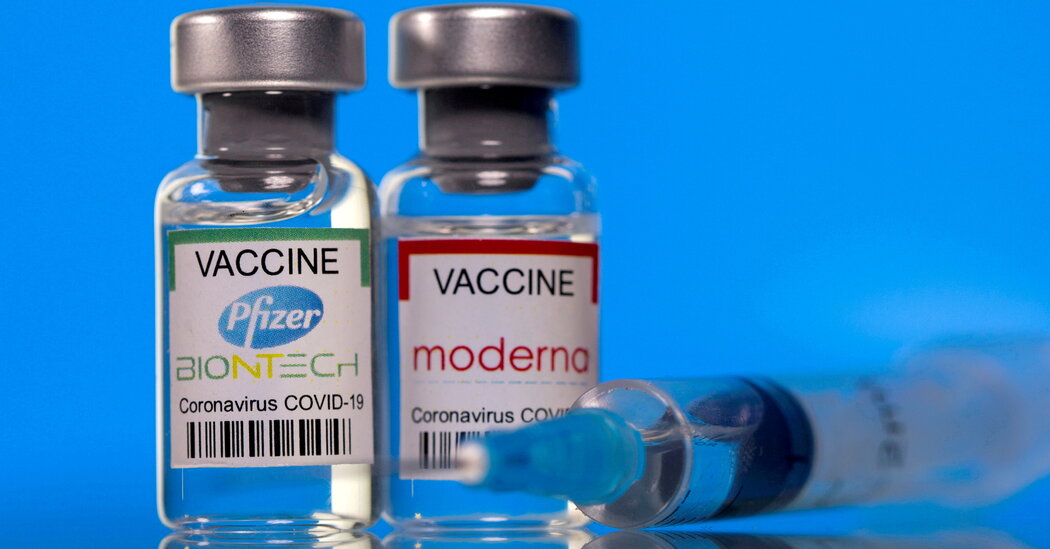
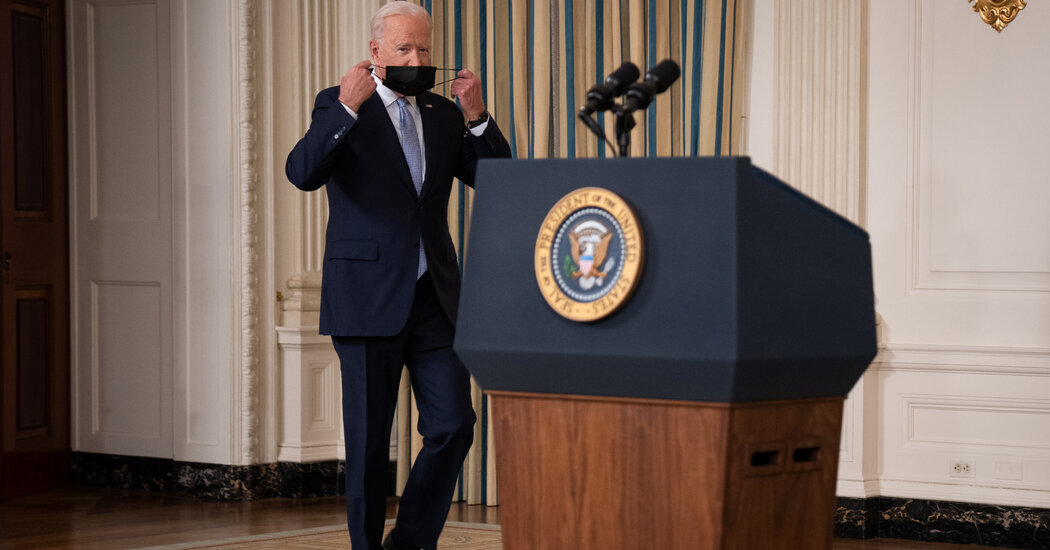
Health officials were preparing on Friday to start giving booster shots to older and at-risk Americans, trying to make sense of new and broad eligibility guidelines.WASHINGTON — State health officials rushed on Friday to roll out campaigns to provide coronavirus booster shots for millions of vulnerable people who got the Pfizer-BioNTech vaccine and to help a confused public understand who qualifies for the extra shots.Among their challenges: making sure that recipients of the Moderna and Johnson & Johnson vaccines know that they are not yet eligible for boosters, reaching isolated elderly people and informing younger adults with medical conditions or jobs that place them at higher risk that they might be eligible under the broad federal rules.“Those of us overseeing vaccine rollouts don’t have a clear idea of what to do,” said Dr. Clay Marsh, West Virginia’s Covid-19 czar.In his state, pharmacies sent staff members into the largest nursing homes on Friday to administer booster doses. In Vermont, health officials opened booster shot appointments to people 80 and older on Friday, and said many other eligible people could get them starting next week. But the state said it was waiting for clarity from the Centers for Disease Control and Prevention on which workers and medical conditions would qualify.In virus-battered North Dakota, officials struggling to make sense of the federal guidance delayed a broad booster rollout until next week, with a focus on reaching elderly residents and those in long-term care settings, said Kylie Hall, an adviser to the state’s Health Department.Across the country, vaccine providers are facing the reality that many more people became eligible for boosters after Dr. Rochelle P. Walensky, the C.D.C. director, overruled her expert committee early Friday. She said people at greater risk of exposure to the virus “because of occupational or institutional setting” would qualify, opening up boosters to millions of people her advisory committee had left out.People 65 and older and residents of long-term care facilities and adults who have certain medical conditions also qualify for the boosters.After Dr. Walensky’s announcement, President Biden said 20 million people could get boosters immediately because they had gotten their second Pfizer-BioNTech shot at least six months ago. In all, he said, 60 million people will be eligible for a Pfizer-BioNTech booster over the coming months.“If you got the Pfizer vaccine in January, February, March of this year and you’re over 65 years of age, go get the booster,” Mr. Biden said. “Or if you have a medical condition like diabetes, or you’re a frontline worker, like a health care worker or a teacher, you can get a free booster now.”Still, people like Don Driscoll remain wary of coronavirus vaccines. Mr. Driscoll, 38, who lives in suburban Pittsburgh, has been derided by friends for not getting vaccinated. But he is not comfortable yet, he said, because of the lack of consensus about the shots.With exasperation, he pointed to the ping-ponging of contradictory booster advice in the last few weeks from federal health authorities and the White House, which has only reinforced his apprehension.“I feel that everything that has been happening is justifying people’s hesitancy,” he said.State and federal officials said the booster program would look much different than earlier coronavirus vaccination drives, which relied heavily on mass inoculation sites at sports stadiums and convention centers. Instead, pharmacies, primary care physicians and smaller vaccination clinics that have become accustomed to offering shots will deliver boosters.“That track has been laid, and we can continue to move the booster train, if you will, right down that same set of tracks,” Karen Timberlake, the secretary designee of Wisconsin’s Department of Health Services, told reporters this week.Pharmacies are providing roughly 70 percent of coronavirus vaccinations as of this week, according to the C.D.C. Mr. Biden said booster shots would be available at 80,000 locations around the country, including more than 40,000 pharmacies.CVS said on Friday that its pharmacies were ready to provide booster shots and would rely on customers to “self-attest” regarding their eligibility.Patrick Allen, the director of the Oregon Health Authority, said that as officials in his state sorted out federal guidance, their message to people with questions about eligibility was: “Call your doctor or check with your local pharmacy.” A large vaccination site at a county fairgrounds was set to offer booster shots starting this weekend, he said. Another site at Oregon State University could open if demand for boosters proves high enough, he added.“This gets to the whole unknowable thing of what the uptake is going to be,” he said.Administration officials were hoping that the C.D.C.’s recommendations would bring some closure to a dissent-filled month of preparing for a booster campaign. The C.D.C. held calls with state health departments and pharmacies on Friday to discuss how to roll out the shots, and the White House briefed governors on the topic.Dr. Mark Levine, Vermont’s top health official, pointed to one potential challenge for his state: Many teachers there received the single-dose Johnson & Johnson vaccine, for which booster shots are not yet authorized, leaving them in limbo. A booster program with only Pfizer-BioNTech’s vaccine, he said, will require “a lot more messaging and communication.”In West Virginia, which has one of the highest daily average case rates in the country, Dr. Marsh said many who most needed extra shots would be left waiting. More isolated nursing homes in the state received the Moderna vaccine, he said. So did rural communities in Alaska, said Dr. Anne Zink, the state’s top health official. But Dr. Marsh praised the C.D.C.’s allowance of booster shots for health workers, saying it could help sustain badly strained hospitals in his state.Dr. Zink said the early morning C.D.C. decision had provided needed clarity about how to advise vaccine providers. “It was the bow at the end,” she said.Most nursing homes, whose residents have been particularly vulnerable during the pandemic, are not concerned about their ability to deliver booster shots. While the Trump administration had relied on the large national pharmacy chains CVS and Walgreens to deliver vaccines when they became available last winter, facilities are now largely using the pharmacies they typically use for vaccinations and prescriptions.These specialized pharmacies are used to working with nursing homes, going room to room to immunize residents. “We can vaccinate for both the Covid booster and the seasonal flu vaccine,” said Chad Worz, the chief executive of the American Society of Consultant Pharmacists, a trade group for pharmacists serving older adults..css-1xzcza9{list-style-type:disc;padding-inline-start:1em;}.css-3btd0c{font-family:nyt-franklin,helvetica,arial,sans-serif;font-size:1rem;line-height:1.375rem;color:#333;margin-bottom:0.78125rem;}@media (min-width:740px){.css-3btd0c{font-size:1.0625rem;line-height:1.5rem;margin-bottom:0.9375rem;}}.css-3btd0c strong{font-weight:600;}.css-3btd0c em{font-style:italic;}.css-w739ur{margin:0 auto 5px;font-family:nyt-franklin,helvetica,arial,sans-serif;font-weight:700;font-size:1.125rem;line-height:1.3125rem;color:#121212;}#NYT_BELOW_MAIN_CONTENT_REGION .css-w739ur{font-family:nyt-cheltenham,georgia,’times new roman’,times,serif;font-weight:700;font-size:1.375rem;line-height:1.625rem;}@media (min-width:740px){#NYT_BELOW_MAIN_CONTENT_REGION .css-w739ur{font-size:1.6875rem;line-height:1.875rem;}}@media (min-width:740px){.css-w739ur{font-size:1.25rem;line-height:1.4375rem;}}.css-9s9ecg{margin-bottom:15px;}.css-16ed7iq{width:100%;display:-webkit-box;display:-webkit-flex;display:-ms-flexbox;display:flex;-webkit-align-items:center;-webkit-box-align:center;-ms-flex-align:center;align-items:center;-webkit-box-pack:center;-webkit-justify-content:center;-ms-flex-pack:center;justify-content:center;padding:10px 0;background-color:white;}.css-pmm6ed{display:-webkit-box;display:-webkit-flex;display:-ms-flexbox;display:flex;-webkit-align-items:center;-webkit-box-align:center;-ms-flex-align:center;align-items:center;}.css-pmm6ed > :not(:first-child){margin-left:5px;}.css-5gimkt{font-family:nyt-franklin,helvetica,arial,sans-serif;font-size:0.8125rem;font-weight:700;-webkit-letter-spacing:0.03em;-moz-letter-spacing:0.03em;-ms-letter-spacing:0.03em;letter-spacing:0.03em;text-transform:uppercase;color:#333;}.css-5gimkt:after{content:’Collapse’;}.css-rdoyk0{-webkit-transition:all 0.5s ease;transition:all 0.5s ease;-webkit-transform:rotate(180deg);-ms-transform:rotate(180deg);transform:rotate(180deg);}.css-eb027h{max-height:5000px;-webkit-transition:max-height 0.5s ease;transition:max-height 0.5s ease;}.css-6mllg9{-webkit-transition:all 0.5s ease;transition:all 0.5s ease;position:relative;opacity:0;}.css-6mllg9:before{content:”;background-image:linear-gradient(180deg,transparent,#ffffff);background-image:-webkit-linear-gradient(270deg,rgba(255,255,255,0),#ffffff);height:80px;width:100%;position:absolute;bottom:0px;pointer-events:none;}.css-uf1ume{display:-webkit-box;display:-webkit-flex;display:-ms-flexbox;display:flex;-webkit-box-pack:justify;-webkit-justify-content:space-between;-ms-flex-pack:justify;justify-content:space-between;}.css-wxi1cx{display:-webkit-box;display:-webkit-flex;display:-ms-flexbox;display:flex;-webkit-flex-direction:column;-ms-flex-direction:column;flex-direction:column;-webkit-align-self:flex-end;-ms-flex-item-align:end;align-self:flex-end;}.css-12vbvwq{background-color:white;border:1px solid #e2e2e2;width:calc(100% – 40px);max-width:600px;margin:1.5rem auto 1.9rem;padding:15px;box-sizing:border-box;}@media (min-width:740px){.css-12vbvwq{padding:20px;width:100%;}}.css-12vbvwq:focus{outline:1px solid #e2e2e2;}#NYT_BELOW_MAIN_CONTENT_REGION .css-12vbvwq{border:none;padding:10px 0 0;border-top:2px solid #121212;}.css-12vbvwq[data-truncated] .css-rdoyk0{-webkit-transform:rotate(0deg);-ms-transform:rotate(0deg);transform:rotate(0deg);}.css-12vbvwq[data-truncated] .css-eb027h{max-height:300px;overflow:hidden;-webkit-transition:none;transition:none;}.css-12vbvwq[data-truncated] .css-5gimkt:after{content:’See more’;}.css-12vbvwq[data-truncated] .css-6mllg9{opacity:1;}.css-qjk116{margin:0 auto;overflow:hidden;}.css-qjk116 strong{font-weight:700;}.css-qjk116 em{font-style:italic;}.css-qjk116 a{color:#326891;-webkit-text-decoration:underline;text-decoration:underline;text-underline-offset:1px;-webkit-text-decoration-thickness:1px;text-decoration-thickness:1px;-webkit-text-decoration-color:#326891;text-decoration-color:#326891;}.css-qjk116 a:visited{color:#326891;-webkit-text-decoration-color:#326891;text-decoration-color:#326891;}.css-qjk116 a:hover{-webkit-text-decoration:none;text-decoration:none;}But vaccinating older Americans who are living in less formal arrangements — in assisted-living facilities, adult day care centers or getting care at home — could be more challenging. For some who had been eagerly waiting for a booster, the C.D.C. recommendation was all they needed to spring into action. Gary Valan, a technology consultant in Oakland, Calif., who said he was older than 65, was so eager for the booster that he scheduled an appointment for Friday afternoon. In an online comment about a New York Times article on booster shots, he wrote: “Folks in my neighborhood, just stay the heck away from my path to the pharmacy. I’ll knock down the old ladies to get my shot 🙂 You have been warned.”Others were still trying to make sense of the recommendations. Mildred Fine, 96, who lives in an assisted-living facility in Baton Rouge, La., said it had been confusing to watch television coverage of the debate about whether booster shots were needed and for whom.“They seem to change their minds every day or two,” she said of federal scientists. She was eager to get her Pfizer-BioNTech booster shot as soon as possible. With so many virus cases in Louisiana, she said, she was still wary of going to Costco to get her hearing aids adjusted, or eating inside a restaurant.State and federal officials said they were unconcerned for now about the vaccine supply, which remains ample enough to cover at least those eligible for booster shots over the next few months.“There are tens of millions of doses already out at sites across the country now, and pharmacies and states can continue to order additional supply,” said Sonya Bernstein, a senior policy adviser for the White House’s Covid-19 Response Team. But officials are most anxious to get shots to unvaccinated Americans, a concurrent campaign that many public health experts say is more important than boosting those already vaccinated. “We can’t take our foot off the gas” with the unvaccinated, said Ms. Hall, the adviser in North Dakota, which ranks near the bottom in the U.S. in vaccination rates.The booster campaign is getting underway amid a fierce debate among vaccine experts about what kinds of benefits the extra shots confer and who needs them. Scientists at the Food and Drug Administration and C.D.C. have said that protection against severe Covid-19 and hospitalization — the metrics they would typically use to assess whether boosters are needed — have remained high across age groups. Top F.D.A. vaccine experts have publicly argued that there is no case for giving them to the general population.At the C.D.C.’s advisory committee meeting this week, experts agreed that a third dose could substantially increase antibody levels. But they said it was unclear how long the resulting protection might last, whether it translated to meaningful extra protection against severe Covid-19 and whether it could significantly decrease transmission of the virus.As a practical matter, the official recommendations were unlikely to deter millions of Americans who might not be eligible yet from pursuing booster doses, by claiming medical conditions or weakened immune systems, by asking doctors to prescribe the vaccine off label or by finding a pharmacist willing to give them one. The C.D.C. said on Thursday that millions of Americans had already received an extra shot.Asked on Friday how officials might prevent ineligible people from getting a shot, Dr. Walensky said providers would have to rely on people giving their word.Winthrop Gardner, of Durham, N.C., said that several weeks ago his 65-year-old wife, a hospital administrator, was growing anxious; her second Pfizer-BioNTech shot had been nine months earlier. So, Mr. Gardner said, she decided to take matters into her own hands.On an online pharmacy portal, she read a list of medical conditions that would render her eligible, some of which she did not even recognize. The last option read: “I don’t know.” Because she is scrupulously honest, he said, she checked that box. And immediately got her booster appointment.
Read more →