What could cause so sudden a decline?The 47-year-old woman lay in bed, exhausted and in pain. Her longtime partner lay next to her, anxious to do anything to help her feel better. Suddenly her right leg jerked and jumped as if possessed by some demon spirit — the movement was fast and erratic and lasted less than five seconds. “What was that?” her partner asked, amazed and worried. Then it happened again. And again.The previous two weeks had been full of bizarre symptoms like this. It started, the woman thought, after she finished a 20-mile run. She was training for a marathon, and the long run felt great. The next day, though, she had an odd tightness in her chest. Her mother died of heart disease just a few years earlier, and she wondered anxiously if this was the first sign that it was in her future as well. She took some ibuprofen, and the tightness eased.The next day she felt achy, as if she might be coming down with something. The day after that she had a headache. A couple of days later her jaw started to hurt so bad that it was hard to eat.Then the chest pain came back with a vengeance. It hurt to move, even to breathe. She called her primary-care doctor’s office and was told to go to the emergency room. That was the first of several visits to the tiny hospital in her rural Wisconsin community, an hour outside Madison. The visit, like the others that followed, involved lots of tests but no answers. An EKG and chest X-ray were normal, but her white-blood-cell count was elevated — a finding that suggested she might have an infection. She was tested for Lyme disease and, because Lyme is common in southern Wisconsin, was started on doxycycline even before the results came back. And for a day or two the woman thought the antibiotic might be helping. But then the strange symptoms started again. She had pain in her jaw, in her back, in her arm, down her leg. She was tired and sometimes weak, feverish and sometimes sweaty.Two weeks after that 20-mile run, she was taking a walk with her partner when, after a half-mile, she had to stop and rest. Her legs were so weak and painful that she barely made it home. Most days, she was exhausted by afternoon. Napping — once rare — was now needed daily. She had been healthy all her life, and now this?In Search of Abnormal Test ResultsDr. Masaru Furukawa, her regular doctor, was fully booked, so she went to see his physician assistant, Maria Denu. The patient described the fevers and these strange neurological symptoms — numbness in her jaw, pain and weakness in her legs. To Denu, that combination suggested a tick-borne disease. Moreover, the patient worked in an outdoor theater and so spent much of her day in tick territory. She said she’d never found a tick, but they are hard to see. Her Lyme test was negative, but it’s not the only disease that ticks carry. Denu sent off blood to look for some of the other tick-borne infections, as well as signs of inflammation and rheumatological diseases.It was the next day when the patient had the scary episode of leg-jerking. She called Denu, who discussed this new symptom with Furukawa. The patient needed to see a neurologist, he told her. Denu referred the patient to one. She also started the woman on a different antibiotic to treat the possible tick-borne illness and gave her a new medication for what sounded like neurological pain.Nothing helped. Her jaw ached. Her back ached. Pain shot down her legs. She couldn’t eat; she could barely sleep. She lost 20 pounds in these two and a half weeks. She went back to the emergency room again. No one had an answer. Finally, she got in to see her primary-care doctor. Furukawa saw that she was thinner and that she was using a cane, and he was worried. He sent her for more tests. She had been sick for three weeks by then; surely something had to show up to give them clues about where to look. They had run so many tests and gotten so little information out of them. It was frustrating, but he had to keep looking because she was clearly getting worse.Finally, the lab tests revealed an abnormality: Her liver enzymes were high — three to four times the normal level — and her red-blood-cell count was low. And among the red blood cells, a few were very abnormal. When Furukawa saw these results, he repeated the tests — just to make sure the abnormalities were real. He was shocked by the results. In the four days between the two sets of tests, everything had become much worse. Clearly this disease was moving faster than they were. She needed to be in a hospital, but he worried that the small hospital in town wouldn’t have the experts needed for something as unusual as this woman’s disease. Instead, he sent her an hour away to Meriter Hospital in Madison.Illustration by Ina JangA Notably Swift DeclineIt was late afternoon by the time Dr. Jeremy Jaskunas, who was assigned to her care, first met the patient. She brought a diary detailing the symptoms of the past few weeks, along with a huge stack of results from all her emergency-room and lab visits. He set those aside to hear her tell her story of random pains, weakness and fevers. He was struck by the swiftness with which this patient had been transformed from an athlete training for a marathon to someone so weak and debilitated that she had to use a walker in the days before she came to the hospital. On exam, her heart was racing and her arms and legs were weak and tender.Although the patient now had many abnormal lab results, the most striking were still those from the liver, which, over the course of a few days, went from nearly normal to more than 20 times the normal value. Jaskunas ordered an ultrasound and then an M.R.I. of the liver. The imaging revealed a shadow that darkened much of the liver’s uniform gray. It could be from an infection, the radiologist reported, but it was most likely some form of cancer.One Final TestEven before Dr. Saurabh Rajguru, an oncologist, met the patient, he had a good idea of what she might have. The abnormal red blood cells told him that something was wrong in her bone marrow, where blood is made. And an M.R.I. of her brain showed abnormalities there, so it had to be a disease that could spread throughout the body. And finally, there were very few diseases that could move as fast as this one had. She probably had a type of lymphoma, Rajguru explained to the patient and her partner. It was frightening to hear these words said out loud, but to the anxious couple, it was a relief to finally be able to put a name to what she’d been through these past few weeks.Lymphomas are cancers of the lymph nodes, Rajguru explained. They usually cause painless enlargement of these collections of white blood cells. There are many types of lymphomas, depending on which kind of cell is involved and how rapidly these now abnormal cells reproduce. Diagnosis is usually made by testing tissue from the abnormal lymph nodes, but in her case, they were all hidden deep inside her abdomen. The next step would have to be a bone-marrow biopsy, Rajguru said. And if that didn’t give them an answer, she would need a liver biopsy.The next morning the patient was taken to an operating room. She lay on her stomach with drapes covering most of her body, leaving only a patch at the top of her buttocks exposed. After numbing the region, a radiologist inserted a large needle into her pelvic bone. It didn’t hurt, the patient told me, but the pressure was intense.She got her answer later that day. She had Burkitt lymphoma, a disease most frequently seen in children. It is one of the most rapidly growing tumors known, with a tumor-cell-doubling time of 25 hours. In oncology, Rajguru told me, it is said that a doctor must never let the sun set on a suspected case of Burkitt. The patient started treatment with chemotherapy the next day.That was two years ago. Chemo was tough, but now she feels nearly back to normal. She did a half marathon in May and a 10K last month.Lisa Sanders, M.D., is a contributing writer for the magazine. Her latest book is “Diagnosis: Solving the Most Baffling Medical Mysteries.” If you have a solved case to share with Dr. Sanders, write her at Lisa .Sandersmd@gmail.com.
Read more →SharecloseShare pageCopy linkAbout sharingImage source, Getty ImagesMany people who have taken anti-depressants for at least two years may be able to stop them without relapsing, but most will still need long-term treatment, a UK study suggests.Prescriptions for the drugs have more than doubled in the past 15 years because people are staying on them for much longer. But it’s not clear how well they work over many years.The researchers say they want to find out who is benefitting and who isn’t.Their findings, published in The New England Journal of Medicine, show 44% of people who gradually stopped taking their anti-depressants did not have another bout of depression in the following year.Of people who continued to take their medication as normal, 61% did not relapse.’Not ideal for everyone’Study author Dr Gemma Lewis, from University College London, said: “Our findings add to evidence that for many patients, long-term treatment is appropriate, but we also found that many people were able to effectively stop taking their medication when it was tapered over two months.”The researchers said it was important to consult a doctor before doing this. They also said psychological therapies could help prevent a relapse, although there was often a waiting list.Prof Glyn Lewis, also from UCL, said: “Anti-depressants are effective but, like many medications, are not ideal for everyone.”Anti-depressants work, major study says’My anti-depressant withdrawal was worse than depression’The 478 adults involved in the study were recruited from 150 GP surgeries across England, and all had been taking anti-depressants for at least two years and felt ready to come off them.They were separated into two groups – in one, people continued to take their medication while in another, their drugs were tapered off over three months – and followed up for a year.Of those who stopped taking anti-depressants, 56% said they relapsed or felt depressed again for more than two weeks at some point. They were also more likely to experience symptoms of withdrawal, which could be confused with a relapse and may mean some people need to come off the drugs more slowly, the researchers said.Despite this, only half chose to start taking anti-depressants again, and by the end of the study, 59% of the group who had stopped the drugs were no longer taking any depression medication.Even in the group which continued taking their medication, more than a third said they felt depressed at some stage.Long-term useThe research team does not know why some people seem able to come off their anti-depressants and some cannot, but predicting who can stop them safely is the next challenge.With prescriptions for anti-depressants increasing, there are concerns that more and more people could end up taking them for life – and the risks of long-term use are still unclear.Study author Prof Tony Kendrick, from the University of Southampton, says long-term use in people over 65 may be leading to more falls, strokes and seizures – but the overall risks are low, and it is not known whether it is the drugs causing these issues, or underlying health problems.Younger middle-aged patients reported far fewer side-effects from taking anti-depressants for many years.Prof Kendrick said he was “cheered” by the findings which showed people were not taking the drugs “unnecessarily”.The medications in the study are some of the most commonly prescribed – citalopram, sertraline, fluoxetine or mirtazapine. Other drugs, which are more difficult to withdraw from, were not studied.’No right answer’Professor Sir Simon Wessely, regius chair of psychiatry at King’s College London, said the study was “very important”, and would help patients make an informed choice.”Yes, you can come off medication, provided it’s done slowly, but there is a small, but not insignificant, risk of another illness,” he said.”As ever there is no right answer, but this study provides more information to assist people in making up their minds.”Mental health charity Mind said it wanted to make sure that people have access “to a range of treatments and are able to have open discussions with their GP”.These discussions should include any possible side effects so people feel they can change or withdraw from medication safely, it said. Researchers from the universities of York, Southampton and Bristol, and McMaster University in Canada, were also involved in the study.Related Internet LinksOverview – Antidepressants – NHSAntidepressants A-Z – Mind, the mental health charity – help for mental health problemsThe BBC is not responsible for the content of external sites.
Read more →Describing a previously unknown genetic condition that affects children, researchers at University of California San Diego School of Medicine and Rady Children’s Institute for Genomic Medicine say they also found a potential method to prevent the gene mutation by administering a drug during pregnancy.
The findings publish in the September 30, 2021 issue of The New England Journal of Medicine.
The work involved researchers in Egypt, India, the United Arab Emirates, Brazil and the United States. “Although different doctors were caring for these children, all of the children showed the same symptoms and all had DNA mutations in the same gene,” said senior author Joseph G. Gleeson, MD, Rady Professor of Neuroscience at UC San Diego School of Medicine and director of neuroscience at the Rady Children’s Institute for Genomic Medicine.
The research team dubbed the condition “Zaki syndrome” after co-author Maha S. Zaki, MD, PhD, of the National Research Center in Cairo, Egypt, who first spotted the condition. Zaki syndrome affects prenatal development of several organs of the body, including eyes, brain, hands, kidneys and heart. Children suffer from lifelong disabilities. The condition appears to be rare, but future studies are required to determine prevalence.
“We have been perplexed by children with this condition for many years,” said Gleeson. “We had observed children around the world with DNA mutations in the Wnt-less (WLS) gene, but did not recognize that they all had the same disease until doctors compared clinical notes. We realized we were dealing with a new syndrome that can be recognized by clinicians, and potentially prevented.”
Co-author Bruno Reversade, PhD, a research director at the Agency for Science, Technology and Research (A*STAR) in Singapore, helped identify several families with members suffering from Zaki syndrome and investigate potential therapeutic intervention.
“While we have shown that it’s possible to mimic WNT-deficiency with dedicated drugs, the real challenge was to overcome, and possibly rescue, this congenital disease,” Reversade said.
Using whole genome sequencing, researchers documented mutations in the WLS gene, which controls signaling levels for a hormone-like protein known as Wnt (pronounced wint). Wnt signaling is a highly conserved group of protein pathways involved in embryonic development.
The scientists generated stem cells and mouse models for Zaki syndrome, and treated the condition with a drug called CHIR99021, which boosts Wnt signaling. In each mouse model, they found CHIR99021 boosted Wnt signals, and restored development. Mouse embryos grew body parts that had been missing and organs resumed normal growth.
“The results were very surprising because it was assumed that structural birth defects like Zaki syndrome could not be prevented with a drug,” said first author Guoliang Chai, PhD, a former postdoctoral fellow at UC San Diego School of Medicine now at Capital Medical University in Beijing, China. “We can see this drug, or drugs like it, eventually being used to prevent birth defects, if the babies can be diagnosed early enough.”
Co-authors include: Changuk Chung, Zhen Li, Lu Wang, Trevor Marshall, Nan Jiang, Xiaoxu Yang, Jennifer McEvoy-Venneri, Valentina Stanley, Paula Anzenberg and Nhi Lang, all at Rady Children’s and UC San Diego; Karl Willert, UC San Diego; Emmanuelle Szenker-Ravi, Muznah Khatoo and Vanessa Wazny, Genome Institute of Singapore; Jia Yu and David M. Virshup, National University of Sinapore; Rie Nygaard, Filippo Mancia, Rebecca Hernan and Wendy K. Chung, Columbia University; Rijad Merdzanic and Aida M. Bertoli-Avella, Centogene, Germany; Maria B.P. Toralles and Paula M.L. Pitanga, Laboratorio e Genetica Medica, Brazil; Ratna D. Puri, Sir Ganga Ram Hospital; and Nouriya Al-Sannaa, Dhahran Health Center, Saudi Arabia.
New research, led by experts at the University of Nottingham, shows that the use of menopausal hormone therapy (MHT — also known as hormone replacement therapy, HRT) is not linked to an increased risk of developing dementia.
The study, which was led by Dr Yana Vinogradova from the School of Medicine at the University and is published today in the BMJ, provides the most comprehensive and reliable risk estimates to date, and the findings should reassure women in need of MHT.
The large UK study, based on clinical records over many years of women representative of the general population, has shown that this is true regardless of hormone type, dose, or duration of use.
Only in the subgroup of women with a specific diagnosis for Alzheimer’s disease was a small increasing risk association found for use of oestrogen-progestogen treatments, but this was measurable only after long-term usage of five years or more.
MHT relieves symptoms such as hot flushes, sleep disturbance, mood swings, memory losses and depression experienced by many women during menopause. Some symptoms are similar to early signs of developing dementia, and results from laboratory studies and small trials have suggested a possible beneficial link between oestrogen and age-related brain decline.
The Women’s Health Initiative Memory Study, however, reported an increased risk of developing dementia in users of combined oestrogen-progestogen treatments and a recent large Finnish study in Finland has shown a higher risk of developing Alzheimer’s disease, not only for users of combined treatments, but also for oestrogen-only therapy. Existing studies all had a range of weaknesses — size, period for which data was available, limitations in the range of treatments covered or methodological issues
Researchers at the Universities of Nottingham, Oxford and Southampton designed a study using two of the largest primary care databases in the UK (QResearch and CPRD). These contain records of diagnoses made and prescriptions issued and have links to hospital records and other data collections. This has allowed the investigators to explore in detail the dementia outcomes for women using any of the MHT treatments commonly-prescribed within the UK National Health Service over a long period.
The life-support system called ECMO can rescue COVID-19 patients from the brink of death, but not at the rates seen early in the pandemic, a new international study finds.
Where once about 60% of such patients survived at least 90 days in spring 2020, by the end of the year it was just under half.
The decreased survival over time might be due to a combination of factors, including which critically ill patients clinicians chose to place on ECMO as the pandemic went on, and the treatments the patients had received before they started on ECMO.
The new findings show how important it is for hospitals that offer ECMO to choose carefully which patients get access to this labor-intensive level of care, the authors say.
Hospitals should also make policies that can guide such choices when ECMO circuits are in high demand because of a pandemic surge, they advise.
The new findings are published in Lancet by an international team co-led by ECMO experts from the University of Michigan, Singapore and Columbia Universiity. The paper uses data from more than 4,800 patients over age 16 who were treated with ECMO for advanced COVID-19 in 41 countries during 2020.
Young people who are repeatedly bullied by siblings are more likely to suffer from poor mental health and wellbeing issues later in adolescence, a new study has suggested.
The new research, which analysed data from over 17,000 participants, found that as the frequency of bullying increased in early-to-middle adolescence, so did the severity of mental health outcomes in their late teens
The paper also found that sibling bullying in early adolescence, irrespective of whether the individual was a victim, perpetrator, or both, has a long-term effect on both positive and negative mental health in late adolescence.
Previous studies have shown that adolescence is a particularly vulnerable period for the deterioration of mental health, and problematic sibling relationships can be a key factor in the development of mental health difficulties during adolescence.
Lead author, Dr Umar Toseeb from the University of York’s Department of Education, said: “Whilst sibling bullying has previously been linked to poor mental health outcomes, it was not known whether there is a relationship between the persistence of sibling bullying and the severity of mental health outcome, in the longer term.”
“In the first study of its kind, we comprehensively investigated a whole range of mental health outcomes, which included measures of both positive (eg wellbeing and self-esteem) and negative (eg symptoms of psychological distress) mental health.
“Of particular note was the finding that even those who bullied their siblings, but weren’t bullied themselves (ie the bullies) had poorer mental health outcomes years later,” Dr Toseeb added.
Finally, the paper suggests that prevention and clinical interventions aimed at reducing mental health difficulties and promoting positive mental health during late adolescence are likely to benefit from reducing sibling bullying in early adolescence.
The study made use of data from the UK-based Millennium Cohort Study. The study was set up in the early 2000s to investigate the lives of children in the new century. Young people completed questionnaires about sibling bullying at age 11 and 14 years, and further questionnaires about their mental health and wellbeing when they were 17 years old. Parents completed questionnaires about their child’s mental health difficulties when they were 11, 14, and 17 years old.
Story Source:
Materials provided by University of York. Note: Content may be edited for style and length.
Ministers say GP practices in England must offer face-to-face appointments to patients who want them, alongside offers of telephone and video consultations.Figures show 57% of appointments were in person in July, well below the 80% seen before the pandemic.The Royal College of GPs said it is concerned about a growing public perception that remote consultations are “substandard” compared with seeing a GP in the surgery. It is calling for the government to urgently deliver on a manifesto pledge to provide an extra 6,000 GPs by 2024 so it can safely deliver care to patients.The BBC heard from patients, and GP Simon Hodes.
Read more →If you test positive in an at-home Covid test, you’re very likely carrying the virus.In the early months of the pandemic, getting a coronavirus test typically required visiting a health care center, a laboratory or a dedicated testing site, a process that sometimes involved long lines and waiting a week or more to get the results.Americans can now take rapid virus tests from the comfort of their own homes. Many of these tests are available without a prescription and return results in just 15 minutes.Demand for the tests has surged in recent months, as the highly infectious Delta variant has spread and schools and offices have reopened. “All the manufacturers are ramping up production, but right now they can be hard to find,” said Gigi Gronvall, a testing expert at Johns Hopkins University.Although rapid tests have their limitations, they are an important public health tool, experts said, particularly if you know how to use them.“Having that information and being able to make better decisions is very powerful,” said Mara Aspinall, an expert in biomedical diagnostics at Arizona State University who is also on the board of directors of OraSure, which makes rapid Covid tests. “And the ability to do this on a while-you-wait basis is something that we couldn’t do a year ago.”What kinds of tests are available?A handful of rapid at-home tests are available without a prescription, including the Abbott BinaxNOW, the Ellume Covid-19 Home Test and the Quidel QuickVue At-Home Covid-19 Test. Prices range from about $10 to $40 per test, though President Biden has announced plans to reduce prices by roughly one-third.All three detect small viral proteins, called antigens. The tests require rubbing a shallow nasal swab inside your nostrils and then exposing the swab to a few drops of chemicals. They provide results in about 15 minutes.The tests themselves are fairly straightforward, but each one involves a slightly different procedure, which should be followed to the letter. “If you’re doing at-home tests, you must read the instructions and follow them meticulously,” said Dr. Patrick Godbey, a former president of the College of American Pathologists.Dr. Aspinall concurred. “This is not the time for creativity,” she said.How accurate are rapid antigen tests?Polymerase chain reaction tests, which have typically been considered the gold standard for detecting the virus, are typically performed in a laboratory and involve making many copies of the virus’s genetic material. That process helps P.C.R. tests to detect even minute traces of the virus.Rapid antigen tests, which do not amplify the virus, are less sensitive than P.C.R. tests. If you take one during the earliest phase of an infection, before the virus has replicated widely, the test could return a false negative.Some of the at-home antigen tests have an overall sensitivity of roughly 85 percent, which means that they are catching roughly 85 percent of people who are infected with the virus and missing 15 percent. In some studies, their real-world performance has been even lower.A demonstration of the Ellume at-home test. Rapid tests are a good option for people who have been exposed to the virus or who want to know whether their sore throat is just a cold or Covid.Ellume, via Associated PressBut the tests are more sensitive in people with symptoms than without and are most sensitive during the first week of symptoms, studies have found.And antigen tests are excellent at flagging people who have high viral loads — and who are thus most likely to be actively transmitting the virus to others, experts said.“The more virus you have in your nose, the more virus you’re breathing out into the air, and the more virus other people can then breathe in,” Dr. Gronvall said. “The tests are very accurate, and correlate very well with P.C.R., when people are most infectious.”Using the tests repeatedly — to routinely screen students for the virus, for instance — can compensate for their lower sensitivity. In one recent study, researchers found that when they tested infected college students and employees every three days, rapid antigen tests successfully identified 98 percent of infections, on par with P.C.R. tests.When and how should I use them?Rapid at-home tests are a good option for people who have been exposed to the virus, who want to know whether a sore throat is Covid-19 or just a cold, or who want a little bit of extra assurance before visiting a vulnerable relative or after traveling to a virus hot spot, experts said.People with symptoms can take a rapid antigen test immediately, experts said, but those who have had a known exposure to the virus should wait three to five days before doing so. Testing too soon, before the virus has had a chance to replicate, increases the odds of a false negative.“And that is a critical, critical piece,” Ms. Aspinall said. “There are a lot of people taking a plane, getting off the plane and saying, ‘I’m negative — I can go visit Grandma.’”Some businesses, travel authorities and other organizations may not accept the results of at-home tests when proof of a negative test result is required, however.I tested negative. Now what?Rapid antigen tests work best when they are used serially. If you test negative after a possible or known exposure to the virus, or after developing symptoms of Covid-19, you should take a second test a day or two later, experts said.“Tests are a moment in time,” Dr. Gronvall said. “You don’t know the day or the hour” that the virus “breached your immune defenses and took up residence.”But until the tests are cheaper and more readily available, it may be difficult to persuade people to use them frequently, she noted. “We definitely need more tests on the market, and we need them to be lower cost,” Dr. Gronvall said.I tested positive. Now what?Rapid antigen tests are highly specific, which means that they generate few false positives. “If you test positive, the error rate is quite low,” Dr. Gronvall said.If you test positive, you should isolate yourself, monitor your symptoms and seek medical care if necessary.Consumers should also report positive results to their local health authorities.“If we don’t report tests accurately, we still won’t have a good idea of the actual caseload — how many people are running around that might be contagious, that might be passing this along to other folks,” Dr. Godbey said.
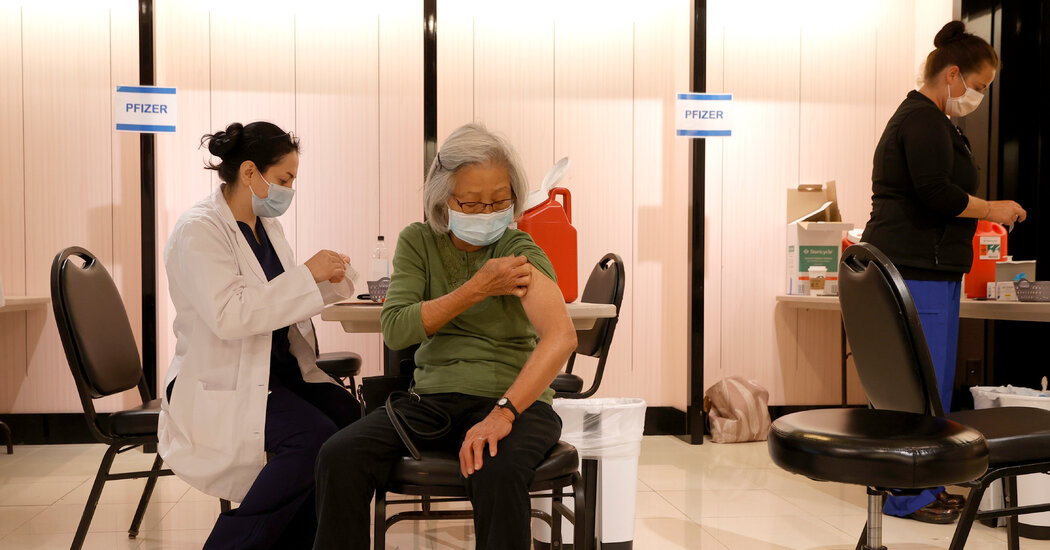
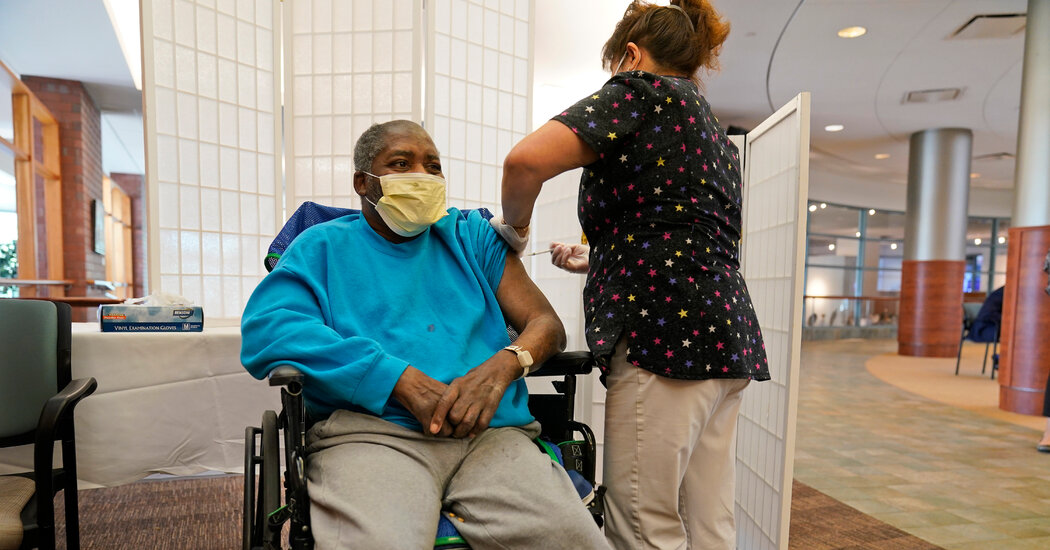
Read more →In an urgent plea on Wednesday, federal health officials asked that any American who is pregnant, planning to become pregnant or currently breastfeeding get vaccinated against the coronavirus as soon as possible.Covid-19 poses a severe risk during pregnancy, when an individual’s immune system is tamped down, and raises the risk of stillbirth or another poor outcome, according to the Centers for Disease Control and Prevention. Twenty-two pregnant individuals died of Covid in August, the highest number in a single month since the pandemic started.Some 125,000 pregnant people have tested positive for the virus; 22,000 pregnant individuals with Covid have been hospitalized, and 161 have died. Hospital data indicates that 97 percent of those who were infected with the virus when they were hospitalized — for illness, or for labor and delivery — were not vaccinated.Vaccination rates among those who are pregnant are lower than among the general population. Fewer than one-third of all pregnant people were vaccinated before or during their pregnancy, the agency said.The rates vary widely by race and ethnicity, with the highest vaccination coverage among pregnant Asian American individuals, nearly half of whom are vaccinated, and the lowest rates among pregnant Black individuals, at just 15 percent.Pregnancy is on the C.D.C.’s list of health conditions that increase the risk of severe Covid. Though the absolute risk of severe disease is low, pregnant patients who are symptomatic are more than twice as likely as other symptomatic patients to require admission to intensive care or interventions like mechanical ventilation, and may be more likely to die.Some data also suggest that pregnant individuals with Covid-19 are more likely to experience conditions that complicate pregnancy — like a kind of high blood pressure called preeclampsia — compared with pregnant individuals who don’t have Covid. Pregnant individuals with the disease are also at increased risk for poor birth outcomes, like preterm birth.Clinical trials have a long history of excluding those who are pregnant from participation, and pregnant individuals were not included in the coronavirus vaccine trials. As a result, data on the safety and effectiveness of vaccines is limited in this group.Studies conducted since the vaccines were authorized, however, have shown that the vaccines do not increase the risk of a miscarriage. Both the Pfizer-BioNTech and Moderna vaccines produced robust immune responses in those who are pregnant, and did not damage the placenta, researchers have found.“Pregnancy can be both a special time and also a stressful time, and pregnancy during a pandemic is an added concern for family,” said Dr. Rochelle Walensky, the director of the C.D.C. She encouraged those who are pregnant and those who may become pregnant “to talk with their health care provider about the protective benefits of the Covid-19 vaccine to keep their babies and themselves safe.”
Read more →