mRNA COVID vaccines highly effective at preventing symptomatic infection in health workers, study finds

COVID-19 vaccines are highly effective in preventing symptomatic illness among health care workers in real-world settings.
The study, published in the New England Journal of Medicine, found that health care personnel who received a two-dose regimen of Pfizer-BioNTech vaccine had an 89% lower risk for symptomatic illness than those who were unvaccinated. For those who received the two-dose regimen of the Moderna vaccine, the risk was reduced by 96%.
The researchers also found that the vaccines appeared to work just as well for people who are over age 50, are in racial or ethnic groups that have been disproportionately affected by COVID-19, have underlying medical conditions and have greater exposure to patients with COVID-19.
The vaccines’ effectiveness was, however, lower in immunocompromised people.
“That this study demonstrated the effectiveness of the Pfizer-BioNTech and Moderna COVID-19 vaccines to protect health care workers — people who worked tirelessly and at great potential risk to care for their friends and neighbors — is a major statement to address any remaining skepticism about the importance of everyone getting vaccinated,” said Dr. David Talan, a professor of emergency medicine and of medicine and infectious diseases at the David Geffen School of Medicine at UCLA, and the study’s co-lead author.
The project, Preventing Emerging Infections through Vaccine Effectiveness Testing, or PREVENT, was conducted with researchers from the University of Iowa’s Carver College of Medicine. The study evaluated nearly 5,000 health care workers — 1,482 who had tested positive for COVID-19 and displayed symptoms of the disease and 3,449 who had COVID-19-like symptoms but had tested negative for the disease. The participants were from 33 U.S. academic medical centers, including Olive View-UCLA Medical Center in Sylmar, California.
All of the participants completed surveys covering their demographic information, job type and risk factors for severe disease from COVID-19, as well as their vaccination status.
Other findings include: A two-dose regimen of either of the mRNA vaccines reduced the risk of illness by 95% among Black and African American people, 89% among Hispanic people, 89% among Asian or Pacific Islander people, and 94% among American Indians and Alaskan Native people, compared to unvaccinated people. Of all those who received a single dose of either of the two-dose mRNA vaccines, the risk of illness was reduced by 86% among Black and African American people, 82% among Hispanic people, 80% among Asian or Pacific Islander people, and 76% among American Indians and Alaskan Native people compared to unvaccinated people. For people who are obese or overweight, a two-dose regimen reduced the risk of illness by 91%; among the same group, partial vaccination reduced the risk by 76% among partially vaccinated compared to unvaccinated. For people who have hypertension, a two-dose regimen of either mRNA vaccine reduced the risk of illness by 92%, and partial vaccination reduced the risk by 83% among partially vaccinated compared to unvaccinated. For people who have asthma, a two-dose regimen of either mRNA vaccine reduced the risk of illness by 91%, and partial vaccination reduced the risk by 78% among partially vaccinated compared to unvaccinated. For immunocompromised people, the risk of illness was reduced by 39% whether they received a single dose or two doses of either mRNA vaccine. Sixty-two people in the study were pregnant at the time they were surveyed. Vaccination was 77% effective in preventing symptomatic COVID-19 illness among pregnant people who had received at least one dose of one of the mRNA vaccines.Because of the relatively short time period of the study — from December 2020 to May 2021 — the research does not address how long vaccines continue to provide protection against COVID-19. In addition, data was collected before the emergence of the delta variant, so the vaccines’ effectiveness today may be different than they would be against earlier variants.
PREVENT is a collaboration between EMERGEncy ID NET — a CDC-supported network led by Talan that comprises 12 U.S. emergency departments and focuses on studying emerging infectious diseases — and a previously assembled group of sites that worked under Project COVERED, another CDC-funded effort to assess the risk to emergency department providers of acquiring COVID-19 through direct contact with patients and to determine ways to mitigate that risk.
Story Source:
Materials provided by University of California – Los Angeles Health Sciences. Note: Content may be edited for style and length.

Read more →

Orphaned children: More than 140,000 U.S. children lost a primary or secondary caregiver due to the COVID-19 pandemic

One U.S. child loses a parent or caregiver for every four COVID-19 deaths, a new modeling study published today in Pediatrics reveals. The findings illustrate orphanhood as a hidden and ongoing secondary tragedy caused by the COVID-19 pandemic and emphasizes that identifying and caring for these children throughout their development is a necessary and urgent part of the pandemic response — both for as long as the pandemic continues, as well as in the post-pandemic era.
From April 1, 2020 through June 30, 2021, data suggest that more than 140,000 children under age 18 in the United States lost a parent, custodial grandparent, or grandparent caregiver who provided the child’s home and basic needs, including love, security, and daily care. Overall, the study shows that approximately 1 out of 500 children in the United States has experienced COVID-19-associated orphanhood or death of a grandparent caregiver. There were racial, ethnic, and geographic disparities in COVID-19-associated death of caregivers: children of racial and ethnic minorities accounted for 65% of those who lost a primary caregiver due to the pandemic.
Children’s lives are permanently changed by the loss of a mother, father, or grandparent who provided their homes, basic needs, and care. Loss of a parent is among the adverse childhood experiences (ACEs) linked to mental health problems; shorter schooling; lower self-esteem; sexual risk behaviors; and increased risk of substance abuse, suicide, violence, sexual abuse, and exploitation.
“Children facing orphanhood as a result of COVID is a hidden, global pandemic that has sadly not spared the United States,” said Susan Hillis, CDC researcher and lead author of the study. “All of us — especially our children — will feel the serious immediate and long-term impact of this problem for generations to come. Addressing the loss that these children have experienced — and continue to experience — must be one of our top priorities, and it must be woven into all aspects of our emergency response, both now and in the post-pandemic future.”
The study was a collaboration between the Centers for Disease Control and Prevention (CDC), Imperial College London, Harvard University, Oxford University, and the University of Cape Town, South Africa. Published in the Oct. 7 issue of the journal Pediatrics, it was jointly led by CDC’s COVID Response and Imperial College London, and partly funded by the National Institute on Drug Abuse (NIDA), part of the National Institutes of Health (NIH), as well as Imperial College London.
“The magnitude of young people affected is a sobering reminder of the devastating impact of the past 18 months,” said Dr Alexandra Blenkinsop, co-lead researcher, Imperial College London. “These findings really highlight those children who have been left most vulnerable by the pandemic, and where additional resources should be directed.”
The analysis used mortality, fertility, and census data to estimate COVID-19-associated orphanhood (death of one or both parents) and deaths of custodial and co-residing grandparents between April 1, 2020, and June 30, 2021, for the U.S. broadly, and for every state. “COVID-19-associated deaths” refers to the combination of deaths caused directly by COVID-19 and those caused indirectly by associated causes, such as lockdowns, restrictions on gatherings and movement, decreased access or quality of health care and of treatment for chronic diseases. The data were also separated and analyzed by race and ethnicity, including White, Black, Asian, and American Indian/Alaska Native populations, and Hispanic and non-Hispanic populations.

Read more →

Naloxone access doesn’t make heroin seem less risky

The medication naloxone is so effective at saving the lives of opioid overdose victims that some people worry that it might make drug users think heroin and related drugs are no longer risky.
But a new study suggests that is not the case.
Increased access to naloxone didn’t lead Americans, even drug users, to think heroin was less risky, the findings showed.
“It is really difficult to change people’s perceptions of how risky heroin is,” said Mike Vuolo, co-author of the study and associate professor of sociology at The Ohio State University.
“Even people who use heroin know it is risky, and access to naloxone has not changed that.”
Vuolo conducted the study with Brian Kelly, professor of sociology at Purdue University. It was published today (October 7, 2021) in the journal Addiction.

Read more →

Beyond childhood: Picky eating in college students

Looking beyond the picky eating of childhood, researchers looked at this behavior in college students. Self-identified picky eaters ate significantly less fiber and vegetables and reported greater levels of social phobia than non-picky eaters, according to a new study in the Journal of Nutrition Education and Behavior, published by Elsevier. Social phobia is the fear of being evaluated during everyday activities by others.
“Picky eating is typically defined as the rejection of both familiar and new foods. It is a common occurrence during childhood; however, there are cases in which picky eating can persist into adolescence and adulthood. The primary aim of this study was to examine relationships between picky eating behaviors and dietary consumption as well as some of the psychosocial outcomes that might be associated with this, like social phobia, quality of life and picky eating distress. We were also interested in examining picky eating as an eating identity,” said Lauren Dial, PhD, Department of Psychology, Bowling Green State University, Bowling Green, OH, USA.
Of the 488 Midwestern undergraduate students, 190 identified as a picky eater (almost 40%). Most picky eaters (65%) reported consuming a diet of fewer than 10 foods. In addition to social phobia, picky eating was associated with overall and situational distress and lower quality of life. The challenges of picky eaters included finding acceptable food, not eating, other people they were eating with, and excessive meal planning.
Interestingly, some benefits of picky eating reported by participants resembled versions of reported challenges. For example, difficulty finding acceptable foods is opposite to enjoying simplicity in selecting foods or restaurants. However, participants from the same sample viewed eating in restaurants as a challenge and a benefit. These qualitative results suggest that picky eating in adulthood is a multifaceted, complex phenomenon in which the variability in reported challenges and benefits may depend on variables like age, gender and social support.
“Overall, this study sheds some more light on the consequences of picky eating in young adults and might help future research identify how picky eating is related to other eating behaviors,” Dial said.
Story Source:
Materials provided by Elsevier. Note: Content may be edited for style and length.

Read more →

Learning to Protect Communities with COVID-19 Home Testing Programs

Credit: Say Yes! COVID Test

With most kids now back in school, parents face a new everyday concern: determining whether their child’s latest cough or sneeze might be a sign of COVID-19. If so, parents will want to keep their child at home to protect other students and staff, while also preventing the spread of the virus in their communities. And if it’s the parent who has a new cough, they also will want to know if the reason is COVID-19 before going to work or the store.

Home tests are now coming online to help concerned people make the right choice quickly. As more COVID-19 home tests enter the U.S. marketplace, research continues to help optimize their use. That’s why NIH and the Centers for Disease Control and Prevention (CDC) are teaming up in several parts of the country to provide residents age 2 and older with free home-testing kits for COVID-19. These reliable, nasal swab tests provide yes-or-no answers in about 15 minutes for parents and anyone else concerned about their possible exposure to the novel coronavirus.

The tests are part of an initiative called Say Yes! COVID Test (SYCT) that’s evaluating how best to implement home-testing programs within range of American communities, both urban and rural. The lessons learned are providing needed science-based data to help guide public health officials who are interested in implementing similar home-testing programs in communities throughout their states.

After successful eight-week pilot programs this past spring and summer in parts of North Carolina, Tennessee, and Michigan, SYCT is partnering this fall with four new communities. They are Fulton County, Georgia and Honolulu County, Hawaii, along with other communities in the South and in the Midwest that will be announced later this month.

The Georgia and Hawaii partnerships, launched on September 20, are already off to a flying start. In Fulton County, home to Atlanta and several small cities, 21,673 direct-to-consumer orders (173,384 tests) have already been received. In Honolulu County, demand for the tests has exceeded all expectations, with 91,000 orders received in the first week (728,000 tests). The online ordering has now closed in Hawaii, and the remaining tests will be distributed on the ground through the local public health department.

SYCT offers the Quidel QuickVue® At-Home COVID-19 test, which is supplied through the NIH Rapid Acceleration of Diagnostics (RADx) initiative. The antigen test uses a self-collected nasal swab sample that is placed in a test tube containing solution, followed by a test strip. Colored lines that appear on the test strip indicate a positive or negative result—similar to a pregnancy test.

The program allows residents in participating counties to order free home tests online or for in-person pick up at designated sites in their community. Each resident can ask for eight rapid tests, which equals two weekly tests over four weeks. An easy-to-navigate website like this one and a digital app, developed by initiative partner CareEvolution, are available for residents to order their tests, sign-up for testing reminders, and allow voluntary test result reporting to the public health department.

SYCT will generate data to answer several important questions about self or home-testing. They include questions about consumer demand, ensuring full community access, testing behavior, willingness to report test results, and, above all, effectiveness in controlling the spread of SARS-CoV-2, the coronavirus that causes COVID-19

Researchers at the University of North Carolina-Chapel Hill; Duke University, Durham, NC; and the University of Massachusetts, Amherst, will help crunch the data and look for guiding themes. They will also conduct a study pre- and post-intervention to evaluate levels of SARS-CoV-2 in the community, including using measures of virus in wastewater. In addition, researchers will compare their results to other counties similar in size and infection rates, but that are not participating in a free testing initiative.

The NIH and CDC are exploring ways to scale a SYCT-like program nationally to communities experiencing surges in COVID-19. The Biden Administration also recently invoked the Defense Production Act to purchase millions of COVID-19 home tests to help accelerate their availability and offer them at a lower cost to more Americans. That encompasses many different types of people, including concerned parents who need a quick-and-accurate answer on whether their children’s cough or sneeze is COVID-19.

Links:

COVID-19 Research (NIH)

Say Yes! COVID TestRapid Acceleration of Diagnostics (RADx) (NIH)

NIH Support: National Institute of Biomedical Imaging and Bioengineering; National Heart, Lung, and Blood Institute; National Institute on Minority Health and Health Disparities

Read more →

Pfizer Asks F.D.A. to Authorize Its Covid-19 Vaccine for Children 5 to 11

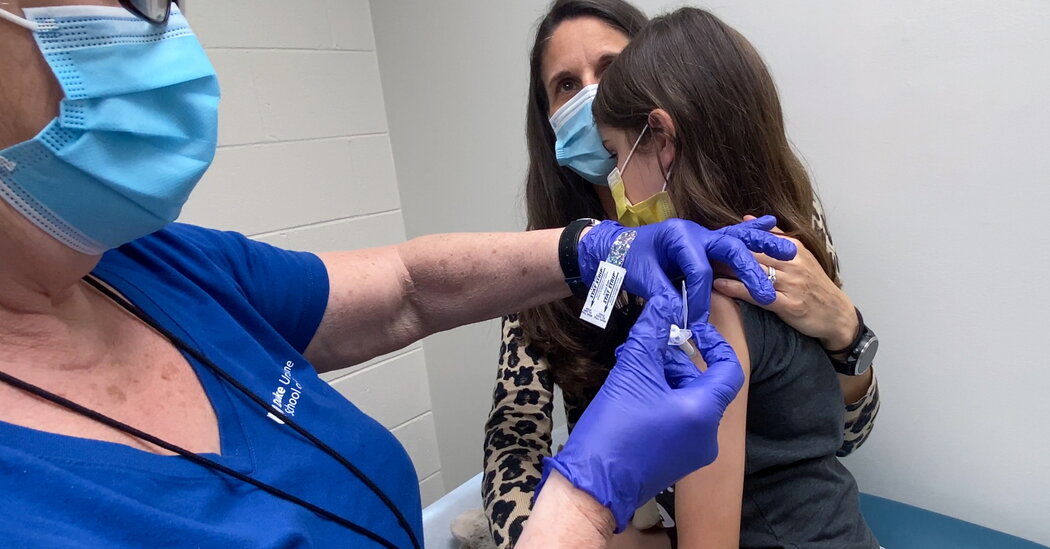
The agency has promised to move quickly on the request and has tentatively scheduled a meeting at the end of the month to consider it.WASHINGTON — Pfizer and BioNTech said on Thursday morning that they had asked federal regulators to authorize emergency use of their coronavirus vaccine for children ages 5 to 11, a move that could help protect more than 28 million people in the United States.The companies have said they were submitting data supporting the change to the Food and Drug Administration. The agency has promised to move quickly on the request and has tentatively scheduled a meeting on Oct. 26 to consider it. A ruling is expected between Halloween and Thanksgiving.Parents across the United States are anxiously awaiting the regulators’ decision, which could affect family life and the operation of schools. Clearance depends not only on the strength of the clinical trial data, but on whether they can prove to regulators that they are able to properly manufacture a new pediatric formulation.Dr. Janet Woodcock, the acting F.D.A. commissioner, said last week that children might require “a different dosage or formulation from that used in an older pediatric population or adults.”Pfizer has proposed giving children one-third of the adult dosage. That might require adding more diluent to each injection or using a different vial or syringe. The company was expected to describe the method it intended to use in its submission to the Food and Drug Administration.Regulators will have to examine the purity and stability of mass-manufactured doses of the vaccine and determine that it matches the quality and potency of doses given to children in clinical trials. A pediatric dose will also most likely require new labeling, with special codes that would allow the Centers for Disease Control and Prevention to track specific lots in case of reports of serious side effects.Children rarely become severely ill from Covid-19, but the Delta variant drove nearly 30,000 of them to hospitals in August. According to the American Academy of Pediatrics, nearly 5.9 million Americans younger than 18 have been infected with the coronavirus. Of the roughly 500 Americans under 18 who have died, about 125 were children ages 5 to 11.“It really bothers me when people say kids don’t die of Covid,” said Dr. Grace Lee, an associate chief medical officer at Stanford Children’s Health who also leads a key advisory committee to the C.D.C. “They die of Covid. It’s heartbreaking.”About one in every six Americans infected since the beginning of the pandemic was under 18 years old. But with the surge of the Delta variant, children accounted for as many as one in four infections last month, according to the American Academy of Pediatrics. The Food and Drug Administration authorized emergency use of Pfizer’s vaccine for 12- to 15-year-olds in May.The infection rate in the United States is currently falling, prompting hope that the Delta variant is ebbing. But public health experts worry that the onset of colder weather could result in increased transmission.Although federal regulators are under enormous pressure to quickly review Pfizer’s application, they also face other pressing decisions. Next week, they might rule on whether people who received the Moderna and Johnson & Johnson coronavirus vaccines should receive booster shots, both potentially contentious decisions.Public health experts have said that the agency’s review of a Pfizer pediatric dose would be closely scrutinized. According to a recent survey conducted by the Kaiser Family Foundation, roughly a third of parents of children between ages 5 and 11 said they would wait and see before allowing their children to receive such a shot.Dr. Walt A. Orenstein, an epidemiologist at Emory University and a former director of the U.S. immunization program, said that given the competing pressures on the Food and Drug Administration to make vaccine decisions quickly but carefully, public discussion was essential.He said many parents were wavering between fear of Covid-19 and fear of side effects of a pediatric vaccine. If they were less worried about the consequences of coronavirus infection, he said, safety would be their top priority. If they were more worried, the vaccine’s effectiveness would matter more. As with other vaccines, Dr. Orenstein said, pediatricians would play a critical role in easing parental anxiety..css-1xzcza9{list-style-type:disc;padding-inline-start:1em;}.css-3btd0c{font-family:nyt-franklin,helvetica,arial,sans-serif;font-size:1rem;line-height:1.375rem;color:#333;margin-bottom:0.78125rem;}@media (min-width:740px){.css-3btd0c{font-size:1.0625rem;line-height:1.5rem;margin-bottom:0.9375rem;}}.css-3btd0c strong{font-weight:600;}.css-3btd0c em{font-style:italic;}.css-1kpebx{margin:0 auto;font-family:nyt-franklin,helvetica,arial,sans-serif;font-weight:700;font-size:1.125rem;line-height:1.3125rem;color:#121212;}#NYT_BELOW_MAIN_CONTENT_REGION .css-1kpebx{font-family:nyt-cheltenham,georgia,’times new roman’,times,serif;font-weight:700;font-size:1.375rem;line-height:1.625rem;}@media (min-width:740px){#NYT_BELOW_MAIN_CONTENT_REGION .css-1kpebx{font-size:1.6875rem;line-height:1.875rem;}}@media (min-width:740px){.css-1kpebx{font-size:1.25rem;line-height:1.4375rem;}}.css-1gtxqqv{margin-bottom:0;}.css-16ed7iq{width:100%;display:-webkit-box;display:-webkit-flex;display:-ms-flexbox;display:flex;-webkit-align-items:center;-webkit-box-align:center;-ms-flex-align:center;align-items:center;-webkit-box-pack:center;-webkit-justify-content:center;-ms-flex-pack:center;justify-content:center;padding:10px 0;background-color:white;}.css-pmm6ed{display:-webkit-box;display:-webkit-flex;display:-ms-flexbox;display:flex;-webkit-align-items:center;-webkit-box-align:center;-ms-flex-align:center;align-items:center;}.css-pmm6ed > :not(:first-child){margin-left:5px;}.css-5gimkt{font-family:nyt-franklin,helvetica,arial,sans-serif;font-size:0.8125rem;font-weight:700;-webkit-letter-spacing:0.03em;-moz-letter-spacing:0.03em;-ms-letter-spacing:0.03em;letter-spacing:0.03em;text-transform:uppercase;color:#333;}.css-5gimkt:after{content:’Collapse’;}.css-rdoyk0{-webkit-transition:all 0.5s ease;transition:all 0.5s ease;-webkit-transform:rotate(180deg);-ms-transform:rotate(180deg);transform:rotate(180deg);}.css-eb027h{max-height:5000px;-webkit-transition:max-height 0.5s ease;transition:max-height 0.5s ease;}.css-6mllg9{-webkit-transition:all 0.5s ease;transition:all 0.5s ease;position:relative;opacity:0;}.css-6mllg9:before{content:”;background-image:linear-gradient(180deg,transparent,#ffffff);background-image:-webkit-linear-gradient(270deg,rgba(255,255,255,0),#ffffff);height:80px;width:100%;position:absolute;bottom:0px;pointer-events:none;}.css-19zsuqr{display:block;margin-bottom:0.9375rem;}.css-12vbvwq{background-color:white;border:1px solid #e2e2e2;width:calc(100% – 40px);max-width:600px;margin:1.5rem auto 1.9rem;padding:15px;box-sizing:border-box;}@media (min-width:740px){.css-12vbvwq{padding:20px;width:100%;}}.css-12vbvwq:focus{outline:1px solid #e2e2e2;}#NYT_BELOW_MAIN_CONTENT_REGION .css-12vbvwq{border:none;padding:10px 0 0;border-top:2px solid #121212;}.css-12vbvwq[data-truncated] .css-rdoyk0{-webkit-transform:rotate(0deg);-ms-transform:rotate(0deg);transform:rotate(0deg);}.css-12vbvwq[data-truncated] .css-eb027h{max-height:300px;overflow:hidden;-webkit-transition:none;transition:none;}.css-12vbvwq[data-truncated] .css-5gimkt:after{content:’See more’;}.css-12vbvwq[data-truncated] .css-6mllg9{opacity:1;}.css-qjk116{margin:0 auto;overflow:hidden;}.css-qjk116 strong{font-weight:700;}.css-qjk116 em{font-style:italic;}.css-qjk116 a{color:#326891;-webkit-text-decoration:underline;text-decoration:underline;text-underline-offset:1px;-webkit-text-decoration-thickness:1px;text-decoration-thickness:1px;-webkit-text-decoration-color:#326891;text-decoration-color:#326891;}.css-qjk116 a:visited{color:#326891;-webkit-text-decoration-color:#326891;text-decoration-color:#326891;}.css-qjk116 a:hover{-webkit-text-decoration:none;text-decoration:none;}Pfizer’s clinical trial for children was not intended to draw meaningful conclusions about the vaccine’s ability to prevent disease or hospitalizations. Instead, researchers looked at antibody levels, comparing them with levels in adults that had conferred high protection. Regulators are expected to compare those immune responses to vaccine efficacy data in the adult population.The trial included 2,268 children, two-thirds of whom had received two doses of the vaccine three weeks apart. The remaining volunteers were injected with two doses of saltwater placebo. Regulators over the summer asked for the trial size to be expanded to 3,000 children.At a virtual panel on Covid-19 last week, Norman Baylor, the former director of the Food and Drug Administration’s vaccines office, said that the number of participants in Pfizerpediatric study was noticeably small. The adult trial involved about 44,000 people.“It does beg the question of the size, given what we have for the adults: Would one expect more for the pediatric population?” he said. “They may be thinking, ‘Well, we know the vaccine is safe, because look at how many people we had in the adults.’ But as we know, things may shift in that pediatric population.”The Pfizer-BioNTech and Moderna vaccines have been tied to increased risks of myocarditis, or inflammation of the heart muscle; and pericarditis, inflammation of the lining around the heart, particularly in younger men. In August, the Food and Drug Administration published results from an analysis of Pfizer-BioNTech’s vaccine that used a U.S. health care claims database and found that the risk of the conditions in 16- and 17-year-old vaccinated boys could be as high as 1 in 5,000.The cases in the database were unconfirmed, but they were considered a reasonable estimate of possible risk, the agency wrote.A lower dose of the vaccine for children could alleviate those concerns.Officials in a number of countries have recommended a single dose of the Pfizer-BioNTech vaccine for children ages 12 and older, which would provide partial protection from the virus, but without the potential effects occasionally observed after two doses. Sweden and Denmark joined those countries, announcing on Wednesday that adolescents should get only one dose of the Moderna vaccine.Amy Schoenfeld Walker

Read more →

Secondary breast cancer at 32, with a 10-month-old

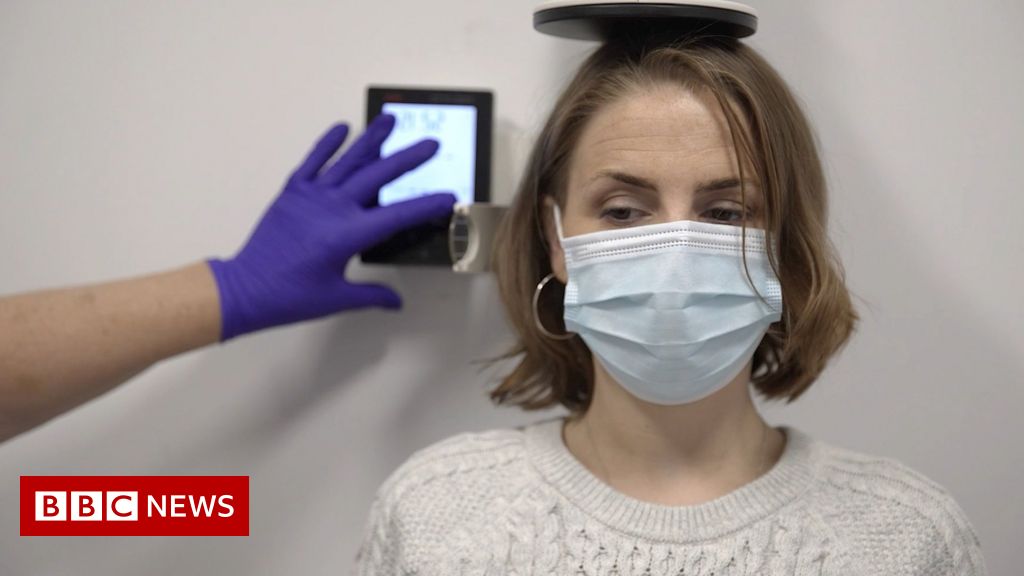
For the first time, patients with secondary breast cancer in England are going to be counted in a special audit funded by the NHS. Secondary breast cancer is when the cancer has already spread to other parts of the body. The condition reached the headlines in September after the death of the singer Sarah Harding. Campaigners have fought for a decade for this information, which they say will improve patient treatment and support. 11,000 people die each year from breast cancer.The BBC met Alina who was diagnosed with secondary breast cancer two years ago.Correspondent: Jeremy Cooke. Producer: Claire KendallCamera/editing: Stephen FildesIf you’ve been affected by cancer, help and support is available at BBC Action Line.

Read more →

Texas abortion: Judge temporarily blocks enforcement of law

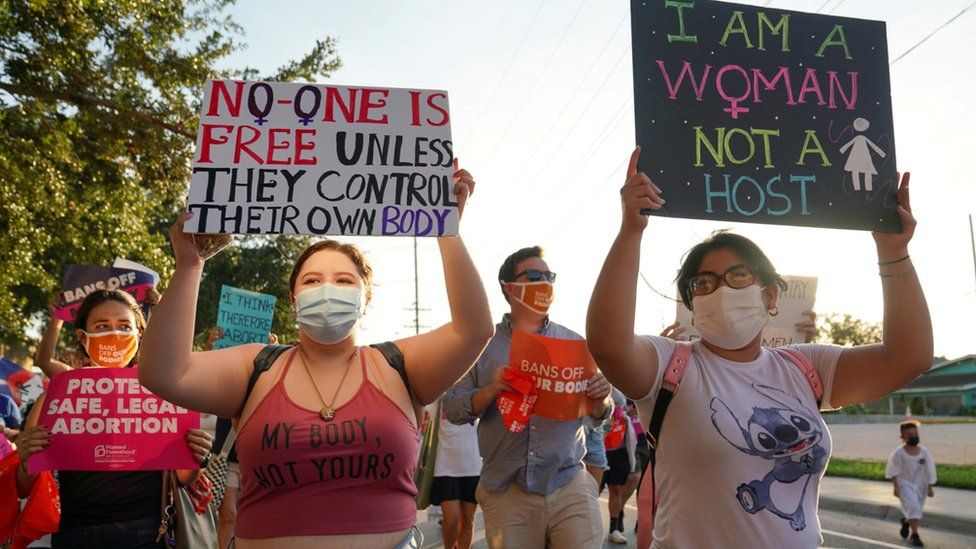
SharecloseShare pageCopy linkAbout sharingImage source, ReutersA US judge has temporarily blocked a controversial new law in Texas that effectively bans women from having an abortion in the state.District Judge Robert Pitman granted a request by the Biden administration to prevent any enforcement of the law while its legality is being challenged.The law was put forward and approved by Republican politicians in Texas.The White House praised the ruling as an important step to restoring women’s constitutional rights. Judge Pitman, of Austin, wrote in an 113-page opinion that, from the moment the law came into effect on 1 September, “women have been unlawfully prevented from exercising control over their lives in ways that are protected by the Constitution”.”This court will not sanction one more day of this offensive deprivation of such an important right,” he said.Whole Woman’s Health, which runs a number of clinics in Texas, said it was making plans to resume abortions “as soon as possible”.But the anti-abortion group Texas Right to Life, accused judges of “catering to the abortion industry” and called for a “fair hearing” at the next stage.This is the first legal setback for Texas since the law was implemented, and state officials immediately appealed Judge Pitman’s ruling.President Joe Biden’s administration took legal action after the conservative-majority Supreme Court declined to prevent Texas from enacting the law. The justice department filed an emergency motion to block enforcement of the law while it pursues legal action.Mr Biden, a Democrat, has described the law as an “unprecedented assault” on women’s rights, but Texas Governor Greg Abbott has defended it, saying: “The most precious freedom is life itself.”VOICES: What Texas women make of abortion lawANALYSIS: The implications of Supreme Court’s abortion rulingThe “Heartbeat Act” bans terminations after the detection of what anti-abortion campaigners call a foetal heartbeat, something medical authorities say is misleading. This effectively bans abortions from as early as six weeks into a pregnancy, at a time when most women will not be aware they are pregnant. It is enforced by giving any individual – from Texas or elsewhere – the right to sue doctors who perform an abortion past the six-week point. However, it does not allow the women who get the procedure to be sued.One doctor who admitted breaking the state’s new abortion legislation has already been sued.Writing for the Washington Post, Dr Alan Braid said he “acted because I had a duty of care to this patient, as I do for all patients, and because she has a fundamental right to receive this care”.Despite the injunction, some clinics remain hesitant to resume procedures as there is some uncertainty over whether they could be sued retroactively during the ban.The law itself includes a provision that stipulates clinics and doctors may still be liable for abortions carried out while an emergency injunction is in place, legal experts say. But whether that provision will be enforceable is unclear, and Judge Pitman said in his ruling that it was “of questionable legality”.”The threat of being sued retroactively will not be completely gone until [the law] is struck down for good,” Nancy Northup, the president of the Center for Reproductive Rights, said in a statement.

Read more →

A New Vaccine Strategy for Children: Just One Dose, for Now

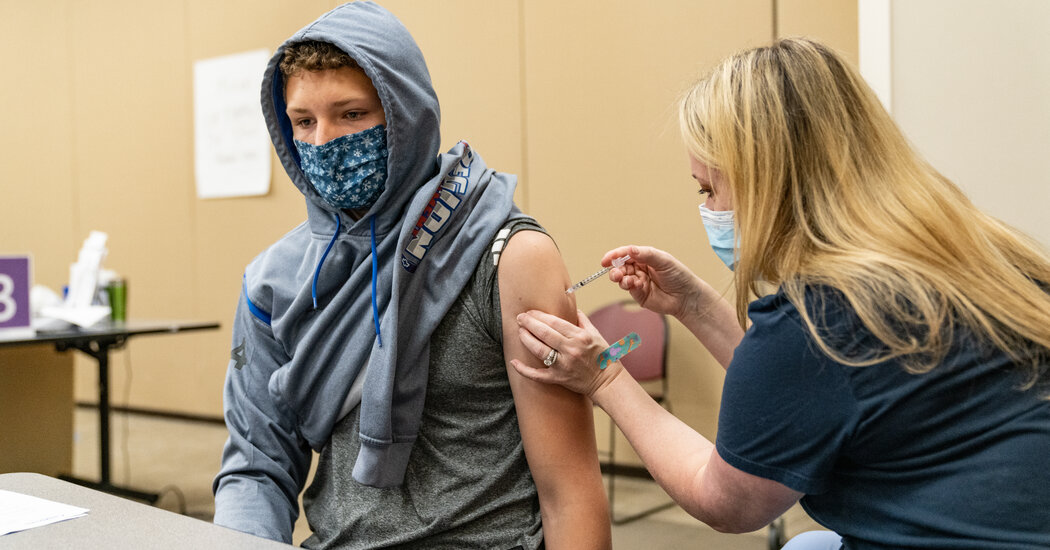
Myocarditis, a rare side effect, occurs mostly after the second dose. So in some countries, officials are trying out single doses for children.Even as parents in the United States wrestle with difficult questions over vaccinating their children against the coronavirus, families in other countries have been offered a novel option: giving children just one dose of the vaccine.Officials in Hong Kong as well as in Britain, Norway and other countries have recommended a single dose of the Pfizer-BioNTech vaccine for children ages 12 and older — providing partial protection from the virus, but without the potential harms occasionally observed after two doses. On Wednesday, Sweden and Denmark joined the ranks, announcing that adolescents should get only one jab of the Moderna vaccine.Health officials in those countries are particularly worried about increasing data suggesting that myocarditis, an inflammation of the heart, may be more common among adolescents and young adults after vaccination than had been thought.The risk remains very small, and significant only after the second dose of an mRNA vaccine. But the numbers have changed the risk-benefit calculus in countries where new infections are mostly lower than in the United States.Advisers to the Centers for Disease Control and Prevention reviewed data on myocarditis in June, and unanimously voted to recommend the vaccine for children ages 12 and older, saying the benefits far outweighed the risk.Agency research has estimated that for every million vaccinated boys ages 12 to 17 in the United States, the shots might cause a maximum of 70 myocarditis cases, but they would prevent 5,700 infections, 215 hospitalizations and two deaths. Studies have also shown that the risk of heart problems after Covid-19 is much higher than after vaccination.Myocarditis was among the concerns that led the Food and Drug Administration to ask vaccine makers this summer to increase the number of children in clinical trials. The issue is likely to be the focus of intense discussion when agency advisers meet next week to review the evidence for vaccinations of children ages 5 to 11.The latest analysis, which was published on Wednesday in The New England Journal of Medicine, found that the incidence of myocarditis after vaccination in Israel was highest among males aged 16 to 29. About 11 of every 100,000 males in that age group developed the condition a few days after being vaccinated, a rate higher than most earlier estimates. (The risk was negligible in females of any age.)Of the 54 cases identified in the study, one was severe enough to require ventilation. Another patient with a history of heart disease died of an unknown cause soon after discharge from the hospital.Of the 14 patients in the new study who showed heart abnormalities when they were admitted to the hospital, 10 still had some signs of problems when they were discharged. But when the patients were examined again a few weeks later, all five of those for whom results were available appeared to have fully recovered.A second study, which was also published in the journal, found that boys between 16 and 19 years of age had the highest incidence of myocarditis after the second dose — nine times as high when compared with unvaccinated boys of the same age during the same time.Health officials in other countries plan to revisit the one-dose strategy as more safety information becomes available, and they may choose to proceed with second shots. But the possibility of deferring the second jab has not received enough attention in the United States, said Dr. Walid Gellad, a drug safety expert at the University of Pittsburgh.“In the U.S., people have not wanted to talk about it, for unclear reasons,” Dr. Gellad said. “Parents who are hesitant may appreciate the fact that the risk of side effects is actually much lower for one dose than it is for two doses.”Serious side effects have primarily been seen in boys, so the dosing calculus should be different for boys and girls, he added.Of the 15 myocarditis cases recorded in a recent study, 13 occurred after the second dose. The chances of myocarditis after one dose were not any higher than usual for that population. Jacquelyn Martin/Associated PressIt is too early to know whether myocarditis might permanently weaken the hearts of some people after vaccination, said Dr. Jeremy Brown, an expert in respiratory diseases at University College London and a member of Britain’s vaccine advisory group.“That makes it very hard for us to make the absolute statement that it’s totally safe to give this vaccine,” Dr. Brown said. “We need some feel for what the long-term consequences of the myocarditis might be.”The urgency of fully vaccinating children with two doses has to be weighed for each country’s particular situation, experts said. In Britain, high rates of vaccination among older and high-risk adults have helped to keep hospitals mostly free of patients severely ill with Covid-19.“The chance of getting severe Covid in a healthy 12- to 15-year-old is almost negligible,” Dr. Brown said. “Against that, you have to make sure that the vaccine that you’re giving is utterly safe.”Some experts have argued that immunizing children would help to sever chains of transmission and contain the virus. But immunizing children to protect others — when there may be a risk to the recipient, however small — was indefensible, Dr. Brown said.“You don’t vaccinate a 15-year-old to prevent them infecting other adults — that’s not morally, ethically the right thing to do,” he said.In Hong Kong, the argument for double-dosing adolescents is even weaker than in Britain, said Benjamin Cowling, an epidemiologist at the University of Hong Kong.Hong Kong has recorded only 213 deaths and just over 12,000 cases of Covid-19 since the start of the pandemic, with fewer than 10 cases per day since April. So the risk of myocarditis, however rare, outweighs the benefit of fully vaccinating adolescents, Dr. Cowling said.Clinical trials of the vaccine in children are not large enough to detect rare side effects like myocarditis, he added. “You’d only see it when it goes to the population level, and then it’s too late.” Whether to offer second doses to children “does need a careful consideration.”Vaccinations in the Tate Modern museum in London. High rates of vaccination among older and high-risk adults have helped to keep hospitals mostly free of patients severely ill with Covid-19. Tolga Akmen/Agence France-Presse — Getty ImagesBut the United States is not in same position as other countries, noted Dr. Jeffrey Duchin, an infectious diseases physician and a nonvoting member of the C.D.C.’s advisory group on vaccines..css-1xzcza9{list-style-type:disc;padding-inline-start:1em;}.css-3btd0c{font-family:nyt-franklin,helvetica,arial,sans-serif;font-size:1rem;line-height:1.375rem;color:#333;margin-bottom:0.78125rem;}@media (min-width:740px){.css-3btd0c{font-size:1.0625rem;line-height:1.5rem;margin-bottom:0.9375rem;}}.css-3btd0c strong{font-weight:600;}.css-3btd0c em{font-style:italic;}.css-1kpebx{margin:0 auto;font-family:nyt-franklin,helvetica,arial,sans-serif;font-weight:700;font-size:1.125rem;line-height:1.3125rem;color:#121212;}#NYT_BELOW_MAIN_CONTENT_REGION .css-1kpebx{font-family:nyt-cheltenham,georgia,’times new roman’,times,serif;font-weight:700;font-size:1.375rem;line-height:1.625rem;}@media (min-width:740px){#NYT_BELOW_MAIN_CONTENT_REGION .css-1kpebx{font-size:1.6875rem;line-height:1.875rem;}}@media (min-width:740px){.css-1kpebx{font-size:1.25rem;line-height:1.4375rem;}}.css-1gtxqqv{margin-bottom:0;}.css-16ed7iq{width:100%;display:-webkit-box;display:-webkit-flex;display:-ms-flexbox;display:flex;-webkit-align-items:center;-webkit-box-align:center;-ms-flex-align:center;align-items:center;-webkit-box-pack:center;-webkit-justify-content:center;-ms-flex-pack:center;justify-content:center;padding:10px 0;background-color:white;}.css-pmm6ed{display:-webkit-box;display:-webkit-flex;display:-ms-flexbox;display:flex;-webkit-align-items:center;-webkit-box-align:center;-ms-flex-align:center;align-items:center;}.css-pmm6ed > :not(:first-child){margin-left:5px;}.css-5gimkt{font-family:nyt-franklin,helvetica,arial,sans-serif;font-size:0.8125rem;font-weight:700;-webkit-letter-spacing:0.03em;-moz-letter-spacing:0.03em;-ms-letter-spacing:0.03em;letter-spacing:0.03em;text-transform:uppercase;color:#333;}.css-5gimkt:after{content:’Collapse’;}.css-rdoyk0{-webkit-transition:all 0.5s ease;transition:all 0.5s ease;-webkit-transform:rotate(180deg);-ms-transform:rotate(180deg);transform:rotate(180deg);}.css-eb027h{max-height:5000px;-webkit-transition:max-height 0.5s ease;transition:max-height 0.5s ease;}.css-6mllg9{-webkit-transition:all 0.5s ease;transition:all 0.5s ease;position:relative;opacity:0;}.css-6mllg9:before{content:”;background-image:linear-gradient(180deg,transparent,#ffffff);background-image:-webkit-linear-gradient(270deg,rgba(255,255,255,0),#ffffff);height:80px;width:100%;position:absolute;bottom:0px;pointer-events:none;}.css-19zsuqr{display:block;margin-bottom:0.9375rem;}.css-12vbvwq{background-color:white;border:1px solid #e2e2e2;width:calc(100% – 40px);max-width:600px;margin:1.5rem auto 1.9rem;padding:15px;box-sizing:border-box;}@media (min-width:740px){.css-12vbvwq{padding:20px;width:100%;}}.css-12vbvwq:focus{outline:1px solid #e2e2e2;}#NYT_BELOW_MAIN_CONTENT_REGION .css-12vbvwq{border:none;padding:10px 0 0;border-top:2px solid #121212;}.css-12vbvwq[data-truncated] .css-rdoyk0{-webkit-transform:rotate(0deg);-ms-transform:rotate(0deg);transform:rotate(0deg);}.css-12vbvwq[data-truncated] .css-eb027h{max-height:300px;overflow:hidden;-webkit-transition:none;transition:none;}.css-12vbvwq[data-truncated] .css-5gimkt:after{content:’See more’;}.css-12vbvwq[data-truncated] .css-6mllg9{opacity:1;}.css-qjk116{margin:0 auto;overflow:hidden;}.css-qjk116 strong{font-weight:700;}.css-qjk116 em{font-style:italic;}.css-qjk116 a{color:#326891;-webkit-text-decoration:underline;text-decoration:underline;text-underline-offset:1px;-webkit-text-decoration-thickness:1px;text-decoration-thickness:1px;-webkit-text-decoration-color:#326891;text-decoration-color:#326891;}.css-qjk116 a:visited{color:#326891;-webkit-text-decoration-color:#326891;text-decoration-color:#326891;}.css-qjk116 a:hover{-webkit-text-decoration:none;text-decoration:none;}About 2,000 Americans are dying every day, and hospitals in many parts of the country are still packed. “We’ve had a significant impact on our pediatric population,” Dr. Duchin said.Nearly 900,000 children have been hospitalized with Covid-19 since the pandemic began, and about 520 have died. Some children have developed so-called long Covid-19, in which symptoms can persist for months, and more than 4,000 have been diagnosed with a dangerous condition called multisystem inflammatory syndrome in children.“All the data that we have so far suggests the disease itself is significantly worse than the vaccine side effects,” Dr. Duchin said. Given all of that, a small risk of myocarditis is well worth taking, he said, and two doses are justified.Dr. Duchin said he also had some concerns that one dose of the vaccine might not shield children against infection or illness — at least, not for long. “I just have not seen data that would suggest that one dose would have a durable and high level of protection,” he said.All of these concerns, as well as the data on myocarditis, should inform a national conversation about the wisdom of offering one dose versus two shots to adolescents, some experts said.“There hasn’t been enough discussion about the potential harms of vaccination, because everybody is very, very sensitive about hesitancy and doesn’t want to give any fuel to anti-vaccination campaigns,” Dr. Cowling said.In the United States, in particular, many public health experts have been reluctant to voice concerns about the vaccines, Dr. Gellad said: “No one wants to introduce any doubt that kids should be vaccinated.”“But I think there are ways to talk about it that will appeal to people who are hesitant.”Kristina Rogers, a 51-year-old mother of two in Oklahoma, said she would welcome the option to give her 12-year-old daughter only one dose of the vaccine.Ms. Rogers, who is fully immunized, worries that not enough was known about the vaccines’ long-term effects in children and said she wished there were more open discussion.Ms. Rogers has diabetes and developed chronic kidney disease after a severe bout with Covid last year. She lost her brother-in-law to Covid a year ago.But the two doses of vaccine left her feeling flattened and fatigued, as well, and she worried the shots might prove too much for her children. Her children wear masks to school and wash their hands regularly, but she and her husband are not yet ready to vaccinate them.“The last thing you want to do is mess with their ticker, man — that’s what makes them go,” she said. “I would be more up for the one dose, if that was an option.”

Read more →