Why Aren’t More People Comparison Shopping for Health Plans?
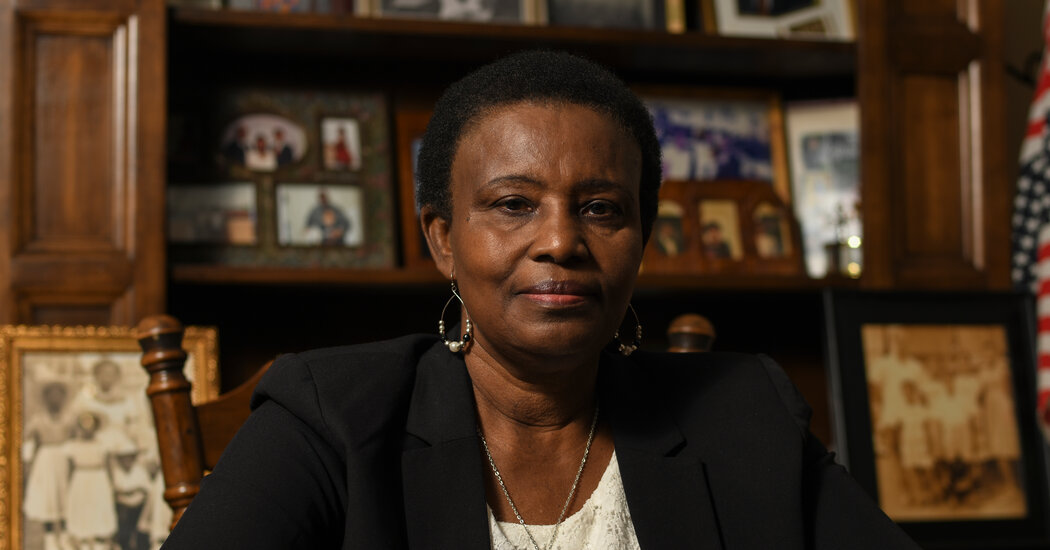
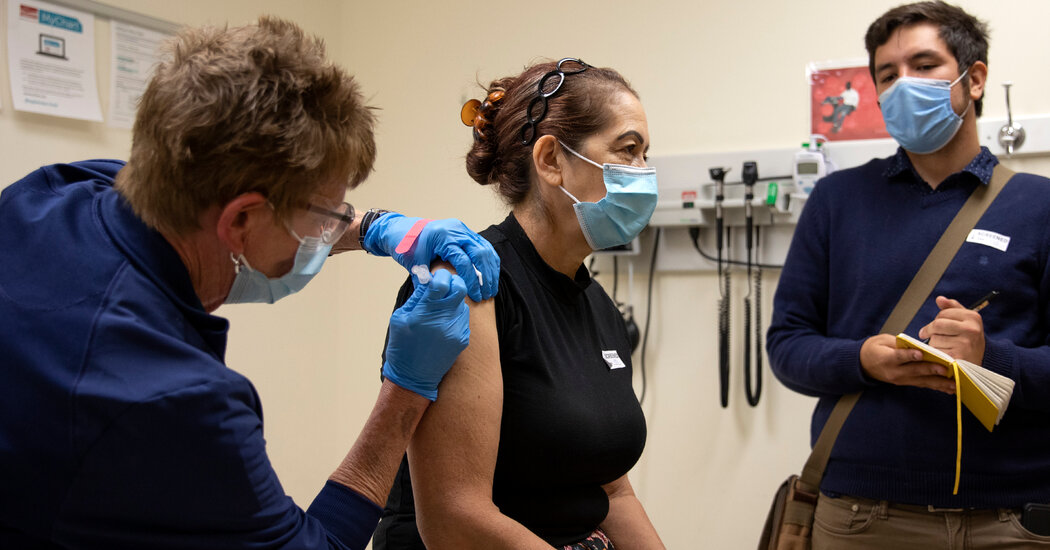
Most Medicare beneficiaries don’t compare plans during open enrollment season, and may be paying more, or accepting more restrictions, than they should.One morning last month, Eunice Korsah, a retired nurse in Burke, Va., spent about half an hour on the phone being guided through the complexities of various plans for Medicare Part D, which covers prescription drugs.Her current drug plan was being discontinued and the insurer wanted to move her into one with sharply higher premiums. “I decided, ‘No way,’” she said. But what to replace it with? She looked at the Medicare website for Part D plans available in Fairfax County and found 23, with monthly premiums ranging from $7.10 to $97.30. “There are so many choices, so I wanted someone to clarify them for me,” she said.Jack Hoadley, a health policy researcher at Georgetown University, was on the other end of the call with Ms. Korsah. He has for two years volunteered with the State Health Insurance Assistance Program, or SHIP, the federally funded, free counseling service that helps Medicare beneficiaries find the coverage that’s best for them.“Some very smart people just don’t know how Medicare works and get confused,” Dr. Hoadley said. For example, “it can make a $1,000-a-year difference if you’re willing to try several different pharmacies.”Ms. Korsah, 74, and her son had already compiled a list of her eight medications — for blood pressure, cholesterol, acid reflux and glaucoma — and their doses. Using the online Medicare Plan Finder, Dr. Hoadley narrowed the field to three suitable selections.With the cheapest plan, from Wellcare, Ms. Korsah’s estimated total yearly drug and premium costs (“the magic number,” he said) would be $301 a year if she used a CVS or Giant pharmacy — but $1,125 if she took the same prescriptions to a Walmart. Conversely, a Humana plan would cost $525 a year through a Walmart pharmacy, but more than twice that at CVS. With a Cigna plan, the best deal involved a mail-order pharmacy.In theory, all beneficiaries who have traditional Medicare with Part D coverage, or who are interested in or enrolled in Medicare Advantage programs (an “all-in-one” alternative offered through private insurers), should be making similar calculations during this annual open enrollment period, from Oct. 15 until Dec. 7. It’s the reason that insurers’ pitches for plans are showing up in their mailboxes and inboxes, and on TV ads featuring Joe Namath and Jimmie “Dyn-o-mite” Walker.“The idea is that consumers can re-evaluate what coverage is best for them,” said Tricia Neuman, the executive director of the Program on Medicare Policy at the Kaiser Family Foundation. Since each year brings changes to Part D and Medicare Advantage — in premiums, benefits, co-payments and provider networks — shopping around makes sense.But that’s not what happens.For 2019, 71 percent of beneficiaries said they didn’t compare plans during the open enrollment period, according to a Kaiser study published last month. The rate was even higher among Black and Hispanic beneficiaries, people over 85 and those with lower income and fewer years of education — precisely the groups most likely to require more medical services and drugs, and least able to pay high costs.Roughly half of respondents had never visited the official Medicare website, used its 1-800-MEDICARE help line or read the “Medicare & You” handbook that annually arrives by mail.Accordingly, “there’s not a lot of switching,” Dr. Neuman said. Kaiser found that in 2019, only eight to 10 percent of beneficiaries voluntarily changed their Medicare Advantage or stand-alone Part D plans.Ms. Korsah’s medications. Because she ended up signing up with the low-cost Medicare Wellcare Part D plan, she will probably pay less for drugs than she did last year.Kenny Holston for The New York TimesSome of that inertia may reflect people’s satisfaction with their coverage; it might also indicate an overwhelming amount of choice. For 2022, beneficiaries face an average of 33 Medicare Advantage plans to select from (but 56 in Philadelphia and 63 in Cincinnati) and 30 stand-alone Part D plans.“It is hopelessly, needlessly complicated and it continues to get more complicated,” said David Lipschutz, associate director of the Center for Medicare Advocacy. “The entire system relies on savvy actors maximizing their choices, and that just does not happen.”Even those who are motivated to comparison shop can have trouble finding reliable information. Most overtures and ads come from brokers or agents with financial incentives, though the offers may mimic official Medicare communications.Moreover, “brokers typically only market a portion of plans,” sometimes excluding the most advantageous, a fact they’re not required to disclose, said Gretchen Jacobson, a vice president of Medicare at the Commonwealth Fund, a foundation which supports health research.The Center for Medicare Advocacy, a nonprofit group, has charged that Medicare itself has shown bias toward private Medicare Advantage plans in its promotional materials, starting in 2017. “They started overplaying some of the benefits and downplaying some of the negatives,” said Mr. Lipschutz. “I think they wanted private health insurers to thrive.”Medicare has since resumed a more neutral stance, but “they still have a way to go,” Mr. Lipschutz said.As for the star ratings that Medicare awards, critics have begun to invoke “the Lake Woebegon” effect (after the radio personality Garrison Keillor’s fictional town where “the children are all above average”). Medicare gave four stars or higher to 68 percent of 2022 Medicare Advantage plans with drug coverage, making the rankings less than useful for comparisons.How much does all this matter? With Part D, choosing the most cost-effective plan goes beyond a financial issue, because skipping unaffordable medications can have health consequences. And choosing between traditional Medicare and Medicare Advantage involves substantial differences in the health care experience.Medicare Advantage plans, so increasingly popular that 42 percent of Medicare beneficiaries are now enrolled in one, offer one-stop shopping. They include a Part D benefit, and don’t require a supplemental Medigap policy to cover co-payments and deductibles.They put a cap on out-of-pocket expenses ($7,550 for in-network coverage in 2021). They also promote “extra benefits” like dental, hearing and vision coverage, and transportation — though “they may not be very generous,” Dr. Jacobson said. However, some services aren’t available to everyone in the plan, and beneficiaries can’t learn if they’ll qualify until after they’ve enrolled.Medicare Advantage also restricts full coverage only to doctors, hospitals and pharmacies within their networks; if patients go outside the network, they face higher costs or may have to pay entirely out of pocket. In-network providers change frequently, and it can be challenging to ascertain which ones a plan includes.Except for emergency or urgent care, Medicare Advantage coverage may not extend outside beneficiaries’ county or state. “If you’re in Albany, you may not be able to get care in New York City,” Dr. Jacobson said. Advantage plans also often require preauthorization from the insurer for services and drugs.With traditional Medicare, “you can see any provider you want to at any time, without getting prior approval,” Dr. Jacobson said. It’s accepted nationally. But factoring in a private Medigap policy and a separate Part D plan sometimes pushes overall costs higher.Still, a recent Commonwealth Fund analysis found that traditional Medicare and Advantage plans (excluding special needs plans) now attract similar populations in terms of demographics and health, with high rates of satisfaction in both groups (though both reported waiting more than a month for a doctor’s appointment).Advantage beneficiaries are more likely to receive some care management services, such as a review of their medications, the study found. But when it comes to patients’ health, “it doesn’t seem to change the outcomes much,” Dr. Jacobson said, because hospitalization and emergency room use were roughly the same for both groups.That raises the question of whether the federal government should continue paying Advantage plans 4 percent more per beneficiary than it pays for those in traditional Medicare. Everyone who pays a Part B premium, which is almost every beneficiary, winds up subsidizing that higher cost.But for now, it’s open enrollment season. SHIP programs in every state, with 12,500 trained team members, represent the best source of unbiased information and work with more than 2.5 million people each year.Ms. Korsah, who opted for traditional Medicare because she wants to be able to choose her doctors, signed up with the low-cost Wellcare Part D plan and will probably pay less for drugs than she did last year.So she appreciated Dr. Hoadley’s counsel. “He was a great help,” she said.

Read more →
Covid-19 origins may never be known, US intelligence agencies say

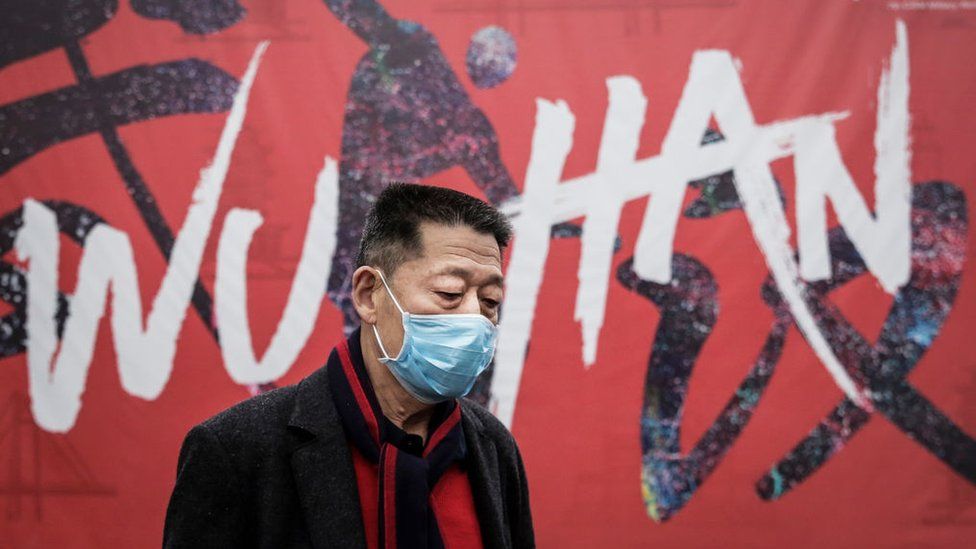
SharecloseShare pageCopy linkAbout sharingImage source, Getty ImagesUS intelligence agencies say they may never be able to identify the origins of Covid-19, but they have concluded it was not created as a biological weapon.In an updated assessment of where the virus began, the Office of the US Director of National Intelligence (ODNI) said an animal-to-human transmission and a lab leak were both plausible hypotheses for how it spread.But there was not enough information to reach a definitive conclusion.China has criticised the report.The findings were published in a declassified report which is an update of a 90-day review that President Joe Biden’s administration released in August.It said the intelligence community remains divided on the most likely origin of the virus. Four agencies assessed with “low confidence” it had originated with an infected animal or a related virus.But one agency said it had “moderate confidence” that the first human infection most likely was the result of a laboratory accident, probably involving experimentation or animal handling by the Wuhan Institute of Virology.The report also said Chinese officials were unaware of the existence of the virus before the initial outbreak of Covid-19 in the city of Wuhan, in late 2019. But it said China was continuing to hinder the global investigation and to resist sharing information.IN CHARTS: Tracking the pandemicCONTEXT: How fast is worldwide progress on vaccines?Chinese authorities linked early Covid-19 cases to a seafood market in Wuhan, leading scientists to theorise that the virus first passed to humans from animals.But earlier this year, US media reports suggested growing evidence the virus could instead have emerged from the Wuhab laboratory, perhaps through an accidental leak.In May, President Biden ordered intelligence officials to investigate the virus’s origins, including the lab leak theory, which is rejected by China.This video can not be playedTo play this video you need to enable JavaScript in your browser.Responding to the intelligence report, the Chinese embassy in Washington said in a statement to Reuters news agency: “The US moves of relying on its intelligence apparatus instead of scientists to trace the origins of Covid-19 is a complete political farce.”We have been supporting science-based efforts on origins tracing, and will continue to stay actively engaged. That said, we firmly oppose attempts to politicise this issue.”Around 240 million cases of Covid-19 have been confirmed around the world, with more than 4.9 million deaths.

Read more →

Origin of Virus May Remain Murky, U.S. Intelligence Agencies Say

A declassified report said a clearer answer would require more information from Beijing or new discoveries and reiterated divisions over natural causes vs. a lab leak.WASHINGTON — American intelligence agencies are unlikely to be able to draw a firm conclusion about the origin of the novel coronavirus without more information from China on the earliest cases or new scientific discoveries about the nature of the virus, said a newly declassified intelligence report released on Friday.President Biden ordered the nation’s intelligence agencies in May to conduct a 90-day inquiry into the origins of the pandemic. When the key findings of that review were released in August, they failed to offer a single answer and instead reaffirmed the longstanding position of the agencies: The theory that the virus occurred naturally and the theory that it was accidentally created in a lab were both plausible.But the report on Friday reiterated that the evidence to support either conclusion was thin, and that U.S. intelligence agencies know far too little about the origin of the virus. The intelligence community has concluded that the virus was not developed as a biological weapon.Analysts “assess that a natural origin and a laboratory associated incident are both plausible hypotheses for how SARS-CoV-2 first infected humans,” the report said. “Analysts, however, disagree on which is more likely, or whether an assessment can be made at all.”Four intelligence agencies, and the National Intelligence Council, consider the natural causes theory more plausible. One agency, the Federal Bureau of Investigation, backs the lab leak theory. But none of those agencies have delivered to the director of national intelligence or the White House a high-confidence assessment, which shows the doubt that continues to swirl around the question.The intelligence community has broadly concluded that the virus causing Covid-19 was not deliberately engineered in a lab. But even that conclusion is made only with low confidence. Some genetic engineering techniques make modifications difficult to identify, particularly given existing gaps in knowledge about the diversity of naturally occurring coronaviruses.“Some genetic engineering techniques may make genetically modified viruses indistinguishable from natural viruses, according to academic journal articles,” the report said.The intelligence report said the Wuhan Institute of Virology had previously made chimeras, or combinations of coronavirus that did not occur in nature. But that record provides little insight on whether the virus that causes Covid was genetically engineered, the report said.Some Republican lawmakers have seized on that so-called gain-of-function work at the institute, arguing it buttresses the lab leak theory. At a House Intelligence Committee hearing this week, Representative Brad Wenstrup, Republican of Ohio and a medical doctor, called for more examination of the institute’s work on creating chimeras.“In this case, that means experimentally combining components from two viruses into one for the sake of making it more infectious to the general public,” said Mr. Wenstrup, who has called for more hearings on the origin of the pandemic. “I can’t be sure that Covid-19 originated from a research-related accident or infection from a sampling trip, but I’m 100 percent sure there was a massive cover-up.”The National Institutes of Health has said the chimera experiments in Wuhan were based on coronaviruses that were not the progenitors of the virus that causes Covid.There is broad agreement in the Biden administration that China has not shared all it can about the origins of the outbreak. The intelligence report released on Friday called for more transparency by China, and said Beijing needed to release information about possible intermediate species that the virus could have infected before leaping to humans, what it knows about the nature of the first human infections and more data about the Wuhan Institute of Virology’s research work.But the report also made clear that on some matters Chinese officials were initially caught off guard. Critically, American intelligence analysts have assessed that Chinese officials did not know about the existence of the novel coronavirus until after Covid was detected in the population and it was isolated by the Wuhan institute.“Accordingly, if the pandemic originated from a laboratory-associated incident, they probably were unaware in the initial months that such an incident had occurred,” the report said.The report also suggested that the Wuhan institute researchers were not aware of the virus until the outbreak was underway, since they quickly pivoted to working on Covid as the outbreak grew worse. The new report relied heavily on the apparent surprise of Chinese officials and the Wuhan institute’s researchers as the pandemic grew worse to buttress the natural causes theory.The wide array of animals susceptible to the virus causing Covid, and the various ways humans in China come in contact with those animals — including trafficking, farming, sale and rescue — make natural transmission possible.While no animal source has been found, “analysts that assess the pandemic was due to natural causes note that in many previous zoonotic outbreaks, the identification of animal sources has taken years, and in some cases, animal sources have not been identified,” the report said.On the flip side, analysts who supported the lab leak theory have also not found a smoking gun. Instead, they have highlighted that previous coronavirus work at the Wuhan institute was conducted under “inadequate biosafety conditions that could have led to opportunities for a laboratory-associated incident.”The report said that some of the closest known relatives to the virus that causes Covid were found in bats from Yunnan Province. Researchers bringing samples to Wuhan could “provide a plausible link between these habitats and the city.”“These analysts note that it is plausible that researchers may have unwittingly exposed themselves to the virus without sequencing it during experiments or sampling activities, possibly resulting in asymptomatic or mild infection,” the report said.However, scientists have estimated that viruses identified in Yunnan diverged 40 years ago from the ancestors of SARS-CoV-2. Other viruses found in Laos bear a much closer similarity in some of their genes, and scientists expect that further investigation will uncover even more closely related coronaviruses in bats.Carl Zimmer

Read more →

CDC Study Suggests Vaccination Offers More Protection Against Covid Than Prior Infection

A new study by the Centers for Disease Control and Prevention suggests that vaccination provides stronger and more reliable protection against the coronavirus than a past infection does, the agency said on Friday.Unvaccinated people who had previously recovered from a coronavirus infection were five times as likely to get Covid as people who had received both shots of the Pfizer-BioNTech or Moderna vaccines, the C.D.C. said.The study’s authors cautioned, however, that certain gaps in patient data and biases in their study participants could have influenced the results.“We now have additional evidence that reaffirms the importance of Covid-19 vaccines, even if you have had prior infection,” said Dr. Rochelle P. Walensky, the C.D.C. director, in a statement accompanying the release of the report.The question of whether people who have had Covid really need a shot has gained traction among some Americans as vaccine mandates take hold across the country. Scientists have urged Covid survivors not to skip the vaccine, noting that the strength and durability of so-called natural immunity depends heavily on people’s age and health, and the severity of an initial infection.The C.D.C. study used a roundabout experimental design. The researchers examined roughly 7,000 people hospitalized this year with Covid-like illness across nine states. They then looked at how many of those hospitalized patients were indeed infected with the coronavirus. The odds of testing positive for the virus were considerably higher among unvaccinated, previously infected patients than they were among vaccinated people.The study comes with several caveats, however. The researchers cautioned that the findings may not translate to non-hospitalized people with different levels of access to medical care, and that some patients in the vaccinated group may unknowingly have also had previous infections.The researchers also noted that separate research in Israel had failed to show that vaccinated people were better protected than those who had only been infected. In general, scientists said, studies on the topic had drawn contradictory conclusions.Still, some patterns have emerged. Two doses of an mRNA vaccine produce more antibodies, and more reliably so, than a coronavirus infection does. But the antibodies from prior infection are more diverse, potentially helping people fend off variants.Whatever the effect, doctors have warned that acquiring natural immunity is perilous and uncertain. Not everyone survives Covid in the first place, and those that do may not be able to count on a vigorous immune response.

Read more →

Vaccination Offers More Protection Against Covid Than Previous Infection

A new study by the Centers for Disease Control and Prevention suggests that vaccination provides stronger and more reliable protection against the coronavirus than a past infection does, the agency said on Friday.Unvaccinated people who had previously recovered from a coronavirus infection were five times as likely to get Covid as people who had received both shots of the Pfizer-BioNTech or Moderna vaccines, the C.D.C. said.The study’s authors cautioned, however, that certain gaps in patient data and biases in their study participants could have influenced the results.“We now have additional evidence that reaffirms the importance of Covid-19 vaccines, even if you have had prior infection,” said Dr. Rochelle P. Walensky, the C.D.C. director, in a statement accompanying the release of the report.The question of whether people who have had Covid really need a shot has gained traction among some Americans as vaccine mandates take hold across the country. Scientists have urged Covid survivors not to skip the vaccine, noting that the strength and durability of so-called natural immunity depends heavily on people’s age and health, and the severity of an initial infection.The C.D.C. study used a roundabout experimental design. The researchers examined roughly 7,000 people hospitalized this year with Covid-like illness across nine states. They then looked at how many of those hospitalized patients were indeed infected with the coronavirus. The odds of testing positive for the virus were considerably higher among unvaccinated, previously infected patients than they were among vaccinated people.The study comes with several caveats, however. The researchers cautioned that the findings may not translate to non-hospitalized people with different levels of access to medical care, and that some patients in the vaccinated group may unknowingly have also had previous infections.The researchers also noted that separate research in Israel had failed to show that vaccinated people were better protected than those who had only been infected. In general, scientists said, studies on the topic had drawn contradictory conclusions.Still, some patterns have emerged. Two doses of an mRNA vaccine produce more antibodies, and more reliably so, than a coronavirus infection does. But the antibodies from prior infection are more diverse, potentially helping people fend off variants.Whatever the effect, doctors have warned that acquiring natural immunity is perilous and uncertain. Not everyone survives Covid in the first place, and those that do may not be able to count on a vigorous immune response.

Read more →

COVID vaccines five times more effective at preventing COVID-related hospitalization than prior infection alone, study finds

A nationwide study from the Centers for Disease Control and Prevention (CDC) shows that mRNA COVID-19 vaccines are associated with significantly more immunity than a prior COVID-19 infection.
Researchers from the CDC’s VISION Network gathered data from more than 201,000 hospitalizations in nine different states. About 7,000 people in that group fit the criteria for this study. The research team analyzed the number of unvaccinated individuals who had a positive COVID-19 test more than three months before being hospitalized for the virus as well as the number of individuals who received the Pfizer or Moderna vaccine and were not diagnosed with COVID prior to being admitted to the hospital. The research team found that overall, unvaccinated adults with a previous COVID-19 infection were about five times more likely to be hospitalized than those who were vaccinated.
“This data provides powerful evidence that vaccinations offer superior protection against COVID-19 than relying on natural immunity alone,” said Shaun Grannis, M.D., M.S., vice president for data and analytics at Regenstrief Institute and professor of family medicine at Indiana University School of Medicine. “Many have been asking if they should get vaccinated if they’ve already been infected — this research shows the answer is yes.” Regenstrief contributes data and expertise to the VISION Network.
The data analysis also found among adults older than 65, overall mRNA vaccines were nearly 20 times more effective at preventing hospitalizations than prior infection alone.
Authors are from 10 states and 14 institutions, including the public sector, research, clinical and academia. Dr. Grannis was the second author of about 50. Other Regenstrief authors include Brian E. Dixon, PhD, MPA, Regenstrief and IU Richard M. Fairbanks School of Public Health; William F. Fadel, PhD, a Regenstrief fellow; Peter J. Embi, M.D., M.S., Regenstrief and IU School of Medicine; and Nimish Ramesh Valvi, DrPH, MBBS, a Regenstrief fellow.
The study findings are consistent with laboratory evidence that mRNA vaccines create high levels of antibodies, whereas those who recover from COVID-19 have varying levels of antibodies, especially if they experienced mild symptoms or were asymptomatic.
The VISION Network, which conducted the study, includes seven organizations that contribute and analyze data from U.S. healthcare systems to learn more about COVID-19. In addition to Regenstrief Institute, other members are Columbia University Irving Medical Center, HealthPartners, Intermountain Healthcare, Kaiser Permanente Northern California, Kaiser Permanente Northwest and University of Colorado.
The paper “Laboratory-Confirmed COVID-19 Among Adults Hospitalized with COVID-19-Like Illness with Infection-Induced or mRNA Vaccine-Induced SARS-CoV-2 Immunity — Nine States, January-September 2021” is published in the CDC’s Morbidity and Mortality Weekly Report.
Other authors on the paper are Catherine H. Bozio, PhD of the CDC COVID-19 Response Team; Allison L. Naleway, PhD of Kaiser Permanente Northwest; Toan C. Ong, PhD of the University of Colorado; Kristen A. Butterfield, MPH of Westat; Malini B. DeSilva, M.D. of HealthPartners Institute; Karthik Natarajan, PhD of Columbia University and New York Presbyterian Hospital; Duck-Hye Yang, PhD of Westat; Suchitra Rao, M.D. of University of Colorado; Nicola P. Klein, M.D., PhD of Kaiser Permanente Northern California; Stephanie A. Irving, MHS of Kaiser Permanente Northwest; Kristin Dascomb, M.D., PhD of Intermountain Healthcare; I-Chai Liao MPH of Texas A&M University College of Medicine; Sue Reynolds, PhD of the CDC COVID-19 Response Team; Charlene McEvoy, M.D. of HealthPartners Institute; Jungmi Han of Columbia University; Sarah E. Reese, PhD of Westat; Ned Lewis, MPH of Kaiser Permanente Northern California; Nancy Grisel, MPP of Intermountain Healthcare; Kempapura Murthy, MBBS of Texas A&M University College of Medicine; Jill Ferdinands, PhD of the CDC COVID-19 Response Team, Anupam B. Kharbanda, M.D. of Children’s Minnesota; Patrick K. Mitchell, ScD of Westat; Kristin Goddard, MPH of Kaiser Permanente Northern California; Julie Arndorfer, MPH of Intermountain Healthcare; Chandni Raiyani MPH of Texas A&M University College of Medicine; Palak Patel, MBBS of the CDC COVID-19 Response Team; Elizabeth A. Rowley, DrPH of Westat; Bruce Fireman, M.A. of Kaiser Permanente Northern California; Eric P. Griggs, MPH of the CDC COVID-19 Response Team; Matthew E. Levy, PhD of Westat; Ousseny Zerbo, PhD of Kaiser Permanente Northern California; Rachael M. Porter, MPH of the CDC COVID-19 Response Team; Rebecca J. Birch, MPH, of Westat; Lenee Blanton, MPH of the CDC COVID-19 Response Team; Sarah W. Ball, ScD of Westat; Andrea Steffens, MPH, Natalie Olson, MPH, Jeremiah Williams, MPH, Monica Dickerson, MPH, Meredith McMorrow, M.D., Stephanie J. Schrag, DPhil, Jennifer R. Verani, M.D., Alicia M. Fry, M.D, and Eduardo Azziz-Baumgartner, M.D. all of the of the CDC COVID-19 Response Team; Michelle Barron, M.D. of University of Colorado; Manjusha Gaglani, MBBS of Texas A&M University College of Medicine; Mark G. Thompson, PhD of the CDC COVID-19 Response Team; and Edward Stenehjem, M.D. of Intermountain Healthcare.

Read more →

Cause of Alzheimer’s progression in the brain

For the first time, researchers have used human data to quantify the speed of different processes that lead to Alzheimer’s disease and found that it develops in a very different way than previously thought. Their results could have important implications for the development of potential treatments.
The international team, led by the University of Cambridge, found that instead of starting from a single point in the brain and initiating a chain reaction which leads to the death of brain cells, Alzheimer’s disease reaches different regions of the brain early. How quickly the disease kills cells in these regions, through the production of toxic protein clusters, limits how quickly the disease progresses overall.
The researchers used post-mortem brain samples from Alzheimer’s patients, as well as PET scans from living patients, who ranged from those with mild cognitive impairment to those with full-blown Alzheimer’s disease, to track the aggregation of tau, one of two key proteins implicated in the condition.
In Alzheimer’s disease, tau and another protein called amyloid-beta build up into tangles and plaques – known collectively as aggregates – causing brain cells to die and the brain to shrink. This results in memory loss, personality changes and difficulty carrying out daily functions.
By combining five different datasets and applying them to the same mathematical model, the researchers observed that the mechanism controlling the rate of progression in Alzheimer’s disease is the replication of aggregates in individual regions of the brain, and not the spread of aggregates from one region to another.
The results, reported in the journal Science Advances, open up new ways of understanding the progress of Alzheimer’s and other neurodegenerative diseases, and new ways that future treatments might be developed.

Read more →

Detector advance could lead to cheaper, easier medical scans

Researchers in the U.S. and Japan have demonstrated the first experimental cross-sectional medical image that doesn’t require tomography, a mathematical process used to reconstruct images in CT and PET scans . The work, published Oct. 14 in Nature Photonics, could lead to cheaper, easier and more accurate medical imaging.
The advance was made possible by development of new, ultrafast photon detectors, said Simon Cherry, professor of biomedical engineering and of radiology at the University of California, Davis and senior author on the paper.
“We’re literally imaging at the speed of light, which is something of a holy grail in our field,” Cherry said.
Experimental work was led by Sun Il Kwon, project scientist in the UC Davis Department of Biomedical Engineering and Ryosuke Ota at Hamamatsu Photonics, Japan, where the new photon detector technology was developed. Other collaborators included research groups led by Professor Yoichi Tamagawa at the University of Fukui, and by Professor Tomoyuki Hasegawa at Kitasato University.
The process of tomography is required to mathematically reconstruct cross-sectional images from the data in imaging that uses X-rays or gamma rays. In PET scans, molecules tagged with trace amounts of a radioactive isotope are injected and taken up by organs and tissues in the body. The isotope, such as fluorine-18, is unstable and emits positrons as it decays.
Ultrafast photon detection
Whenever one of these positrons encounters an electron in the body, they annihilate each other and simultaneously give off two annihilation photons. Tracking the origin and trajectory of these photons theoretically creates an image of the tissues tagged with isotopes. But until now, researchers were unable to do that without the extra step of tomographic reconstruction, because detectors were too slow to precisely determine the arrival times of two photons and thus pinpoint their location based on their time difference.
When the annihilation photons strike the detector, they generate Cherenkov photons that produce the signal. Cherry and his fellow researchers figured out how to detect these Cherenkov photonså with an average timing precision of 32 picoseconds. This meant they could determine where the annihilation photons arose with a spatial precision of 4.8 millimeters. This level of speed and accuracy enabled the research team to produce cross-sectional images of a radioactive isotope directly from the annihilation photons without having to use tomography.
In their paper, the researchers describe various tests they conducted with their new technique, including on a test object that mimics the human brain. They feel confident that this procedure is ultimately scalable to the level needed for clinical diagnostics and has the potential to create higher quality images using a lower radiation dose. Images can also be created more quickly with this method, potentially even in real time during the PET scan, as no after-the-fact reconstruction is needed.
PET scans are currently expensive and are technically limited in some ways, as the full information present in the travel time of the annihilation photons is not captured by current clinical scanners. This new discovery involves a compact equipment setup and could lead to inexpensive, easy and accurate scans of the human body using radioactive isotopes.
Additional coauthors are: Eric Berg at UC Davis; Fumio Hashimoto and Tomohide Omura, Hamamatsu Photonics; Kyohei Nakajima and Izumi Ogawa, University of Fukui.
The study was partly supported by grants from the NIH.
Story Source:
Materials provided by University of California – Davis. Original written by Cristina Deptula. Note: Content may be edited for style and length.

Read more →

Davina McCall hails 'brilliant day for women' as HRT prescription cost cut

TV presenter Davina McCall joined menopause campaigners outside parliament to celebrate news that the cost of Hormone Replacement Therapy (HRT) prescriptions will be cut.Labour MP Carolyn Harris was pushing for a law to make the menopause treatment free in England.The government would not go that far, but said women would only have to pay for the prescription once a year – saving up to £200 annually.

Read more →

F.D.A. Expected to Clear First Coronavirus Vaccine for Young Children

Experts said the shot could bring relief to parents anxious about their children getting sick, though some worry that those most at risk may slip through the cracks.WASHINGTON — The Food and Drug Administration is expected to authorize Pfizer-BioNTech’s coronavirus vaccine for emergency use in children 5 to 11 on Friday, people familiar with the agency’s planning said, a move eagerly anticipated by millions of families looking to protect some of the only remaining Americans left out of the vaccination campaign.About 28 million children in the group would be eligible to receive one-third of the adult dose, with two injections three weeks apart. If the Centers for Disease Control and Prevention signs off, as is expected, they could start getting shots as early as Wednesday.The Biden administration has promised that children’s shots will be easily accessible at pediatrician offices, community health centers, children’s hospitals and pharmacies, with 15 million doses ready to ship immediately. States started ordering doses last week, under a formula based on how many children they have in the age group. While the school year is already well underway, the pediatric dose is arriving in time for the holidays, giving more comfort to families looking to gather older and younger people together for the first time since the early months of 2020.“It’s an incredibly important tool in the return to normalcy,” said Dr. Larry Corey, a virologist at the Fred Hutchinson Cancer Research Center and a leader of the Covid-19 Prevention Network. “To be able to know that your child is protected and not going to get severely ill by going to school is an incredible psychological relief.”In a clinical trial, the vaccine was shown to generate significant protection in children against the virus. But whether it will help substantially to curb the pandemic is unclear. As of this week, 8,300 children ages 5 to 11 have been hospitalized with Covid-19 and at least 94 have died, out of more than 3.2 million hospitalizations and 740,000 deaths overall, according to the C.D.C.The biggest determinant of how much more sickness and death lies ahead is whether the more than 60 million adolescents and adults who are already eligible for shots get vaccinated, said Dr. Jennifer Nuzzo, an epidemiologist at Johns Hopkins Coronavirus Resource Center.Some vaccine experts warn that the same inequities that plagued the vaccine rollout for adults earlier this year could hinder the one for children.“We cannot see what we saw in the earliest stages of rolling out the vaccines for adults, in which advantaged persons and persons of means figure out a way to be first in line,” said Dr. James E.K. Hildreth, the president of Meharry Medical College, a historically Black institution.He said that school nurses, churches and local health officials would be key in reaching some children and families who might not have insurance or access to pediatricians. The vaccinations are free to everyone.While the pandemic has generally hit people of color hardest, the racial disparities are especially stark among children.Black and Hispanic children are less likely to be tested for the virus but more likely to be infected, get hospitalized and die from Covid-19 than white children, according to the Kaiser Family Foundation. Hospitalization rates in the 5 to 11 age group are three times as high for Black, Hispanic and Native American children as for white children, according to the C.D.C.In the 5-11 age group, more than half are children of color and nearly four in 10 come from households with incomes below 200 percent of the federal poverty level, according to Kaiser.At Children’s National Hospital in Washington, officials have devised a plan to make sure families and children at greater risk have immediate access to shots, said Dr. Lee Ann Savio Beers, the hospital’s medical director for community health and advocacy and the president of the American Academy of Pediatrics.Marisol Gerardo, 9, getting a dose of the Pfizer-BioNTech coronavirus vaccine during a clinical trial for children at Duke Health in Durham, N.C., in April.Shawn Rocco/Duke Health, via ReutersThe hospital plans to notify its most at-risk patients, based on medical diagnosis and the neighborhood where they reside, about the shots by directly contacting parents, she said.A survey from the Kaiser Family Foundation released on Thursday found 27 percent of parents of 5- to 11-year-olds were eager to vaccinate their children right away, while a third said they would wait and see how the vaccine rollout went. The uptake among adolescents has been slower than public health experts hoped: Pfizer’s vaccine became available to children 12 to 15 in May, but only roughly 40 percent of that age group is now fully vaccinated, compared to 69 percent of adults.State and local health officials are girding not just for more vaccine hesitancy, but for possible fights over vaccine mandates in schools.“I think the contention we have seen over the mask issue is likely to pale in comparison to what we’re going to see over the idea of a vaccine mandate” for school children, Dr. Jessica Snowden, chief of the infectious disease division at Arkansas Children’s Hospital, said. At a meeting this week of the F.D.A.’s expert advisory panel on vaccines, several members came out strongly against school vaccine mandates..css-1kpebx{margin:0 auto;font-family:nyt-franklin,helvetica,arial,sans-serif;font-weight:700;font-size:1.125rem;line-height:1.3125rem;color:#121212;}#NYT_BELOW_MAIN_CONTENT_REGION .css-1kpebx{font-family:nyt-cheltenham,georgia,’times new roman’,times,serif;font-weight:700;font-size:1.375rem;line-height:1.625rem;}@media (min-width:740px){#NYT_BELOW_MAIN_CONTENT_REGION .css-1kpebx{font-size:1.6875rem;line-height:1.875rem;}}@media (min-width:740px){.css-1kpebx{font-size:1.25rem;line-height:1.4375rem;}}.css-1gtxqqv{margin-bottom:0;}.css-k59gj9{display:-webkit-box;display:-webkit-flex;display:-ms-flexbox;display:flex;-webkit-flex-direction:column;-ms-flex-direction:column;flex-direction:column;width:100%;}.css-1e2usoh{font-family:inherit;display:-webkit-box;display:-webkit-flex;display:-ms-flexbox;display:flex;-webkit-box-pack:justify;-webkit-justify-content:space-between;-ms-flex-pack:justify;justify-content:space-between;border-top:1px solid #ccc;padding:10px 0px 10px 0px;background-color:#fff;}.css-1jz6h6z{font-family:inherit;font-weight:bold;font-size:1rem;line-height:1.5rem;text-align:left;}.css-1t412wb{box-sizing:border-box;margin:8px 15px 0px 15px;cursor:pointer;}.css-hhzar2{-webkit-transition:-webkit-transform ease 0.5s;-webkit-transition:transform ease 0.5s;transition:transform ease 0.5s;}.css-t54hv4{-webkit-transform:rotate(180deg);-ms-transform:rotate(180deg);transform:rotate(180deg);}.css-1r2j9qz{-webkit-transform:rotate(0deg);-ms-transform:rotate(0deg);transform:rotate(0deg);}.css-e1ipqs{font-size:1rem;line-height:1.5rem;padding:0px 30px 0px 0px;}.css-e1ipqs a{color:#326891;-webkit-text-decoration:underline;text-decoration:underline;}.css-e1ipqs a:hover{-webkit-text-decoration:none;text-decoration:none;}.css-1o76pdf{visibility:show;height:100%;padding-bottom:20px;}.css-1sw9s96{visibility:hidden;height:0px;}.css-1in8jot{background-color:white;border:1px solid #e2e2e2;width:calc(100% – 40px);max-width:600px;margin:1.5rem auto 1.9rem;padding:15px;box-sizing:border-box;font-family:’nyt-franklin’,arial,helvetica,sans-serif;text-align:left;}@media (min-width:740px){.css-1in8jot{padding:20px;width:100%;}}.css-1in8jot:focus{outline:1px solid #e2e2e2;}#NYT_BELOW_MAIN_CONTENT_REGION .css-1in8jot{border:none;padding:10px 0 0;border-top:2px solid #121212;}What to Know About Covid-19 Booster ShotsThe F.D.A. has authorized booster shots for millions of recipients of the Pfizer-BioNTech, Moderna and Johnson & Johnson vaccines. Pfizer and Moderna recipients who are eligible for a booster include people 65 and older, and younger adults at high risk of severe Covid-19 because of medical conditions or where they work. Eligible Pfizer and Moderna recipients can get a booster at least six months after their second dose. All Johnson & Johnson recipients will be eligible for a second shot at least two months after the first.Yes. The F.D.A. has updated its authorizations to allow medical providers to boost people with a different vaccine than the one they initially received, a strategy known as “mix and match.” Whether you received Moderna, Johnson & Johnson or Pfizer-BioNTech, you may receive a booster of any other vaccine. Regulators have not recommended any one vaccine over another as a booster. They have also remained silent on whether it is preferable to stick with the same vaccine when possible.The C.D.C. has said the conditions that qualify a person for a booster shot include: hypertension and heart disease; diabetes or obesity; cancer or blood disorders; weakened immune system; chronic lung, kidney or liver disease; dementia and certain disabilities. Pregnant women and current and former smokers are also eligible.The F.D.A. authorized boosters for workers whose jobs put them at high risk of exposure to potentially infectious people. The C.D.C. says that group includes: emergency medical workers; education workers; food and agriculture workers; manufacturing workers; corrections workers; U.S. Postal Service workers; public transit workers; grocery store workers.Yes. The C.D.C. says the Covid vaccine may be administered without regard to the timing of other vaccines, and many pharmacy sites are allowing people to schedule a flu shot at the same time as a booster dose.A C.D.C. study suggests that 42 percent of children aged 5 to 11 have coronavirus antibodies from prior infection, prompting some F.D.A. advisers to ask if one dose would be sufficient for children. Use of that study has been questioned by some scientists. F.D.A. panelists also asked whether only those with high-risk medical conditions, such as obesity, should get the vaccine, since it is clear they are most vulnerable to getting very ill with Covid-19.But C.D.C. officials said it would be hard to narrow eligibility, and the F.D.A.’s advisory panel endorsed offering the pediatric dose to the entire age group by a 17-0 vote, with one abstention.Dr. Snowden said the Delta variant wiped out any notion that children are impervious to the virus. At the height of the most recent surge, she said, the Arkansas Children’s Hospital was treating as many as 30 children a day for Covid, including some with fully vaccinated parents. While that number has shrunk, “it is still not back to where we were before Delta,” she said.Much of the burden of the rollout of children’s shots is expected to fall on pediatricians and family physicians, many of whom are strained by staffing shortages and pent-up demand for care at this point in the pandemic but have deep relationships with parents and children. Dr. Sterling Ransone, the president of the American Academy of Family Physicians and a physician in rural Deltaville, Va., said that he would keep his office open later on weekdays and on Saturdays to accommodate demand for pediatric shots.“We know who to prioritize — asthmatics, those with heart disease, people who are obese,” he said.Dr. Victor Peralta, a pediatrician in the racially diverse neighborhood of Jackson Heights, Queens, said uptake might be a bit slower at first among his patients, most of whom are poor enough to have Medicaid coverage. But he predicted the pediatric dose would catch on and ultimately help slow transmission of the virus. “I have no doubt that this will make a difference beyond just the worried well,” he said.Dr. Kathryn M. Edwards, a professor of pediatrics at Vanderbilt University School of Medicine, said pediatricians will help public health officials monitor side effects, such as myocarditis, or inflammation of the heart muscle. Regulators have been carefully watching the higher incidence of that condition in young males who are vaccinated.“Doctors and pediatricians know myocarditis,” Dr. Edwards said. “We give a lot of vaccines, and know how to report adverse events.”Another challenge will be ensuring that parents have time and transportation to get their children to vaccine providers. Dr. Beers said that the pediatric academy was already consulting with business groups about giving employees, especially those on hourly schedules, paid time off so they do not lose income taking their children to get a shot.In Vermont, which has one of the highest adult vaccination rates in the country, health officials may “barnstorm” rural and more isolated regions of the state that had lower uptake of shots in earlier stages of the vaccination campaign, hoping to get 80 percent of children between 5 and 11 vaccinated, said Kelly Dougherty, the state’s deputy health commissioner.Pediatric vaccines will be incorporated at community sites already doing first and second doses and booster shots, she said. Vaccinations at school-based clinics are set to begin in the state in the second week of November.Kitty Bennett

Read more →