Muriel Lezak, Leading Authority on Brain Injuries, Dies at 94

A neuropsychologist, she wrote a textbook that became an essential guide to describing and evaluating brain damage and dysfunction.Muriel Lezak, a neuropsychologist who wrote a landmark textbook in the early days of her discipline that became an essential guide to the description and evaluation of brain injuries and disorders, died on Oct. 6 in a memory care facility in Portland, Ore. She was 94.Her death was confirmed by her nephew Stephen Lezak.Dr. Lezak began working as a clinical psychologist in the late 1940s. Two decades later, at the Veterans Administration Hospital in Portland, she brought her abiding curiosity about the connection between the brain and behavior to her treatment of soldiers who had suffered neurological damage in World War I, World War II and the Vietnam War.“I was the psychologist for neurology, neurosurgery and rehab,” she said in an oral history interview with Oregon Health & Science University in 2016. “It was like pig heaven, you know?”Dr. Lezak became keenly interested in patients with frontal lobe damage, which affects creativity, reasoning and the ability to relate to people and to plan and organize. As she dealt with interns and other medical personnel, she realized that there was no book in her evolving field that comprehensively reviewed the major disorders caused by brain dysfunction and injury, or the techniques, tests and procedures to evaluate patients.Her book “Neuropsychological Assessment,” published in 1976, filled that gap. It also added tests that she developed to evaluate brain dysfunction, like seeing how a patient drew a bicycle, that could provide insights into motor control and perception. She emphasized a flexible approach, adapting procedures to suit an individual patient’s problems, a departure from the standardized tests that were then common.“There had been nothing at the time that focused on the nuts and bolts of evaluation, and she did a really nice job of looking at the pattern of a broad range of assessments before making a conclusion about a diagnosis,” Kathleen Haaland, a neuropsychologist and professor of psychiatry and behavioral sciences at the University of New Mexico School of Medicine, said in a phone interview.Ida Sue Baron, a neuropsychologist and clinical professor emeritus of pediatrics at George Washington University School of Medicine in Washington, said in an email: “The publication of this book brought the field together coherently for the first time, by integrating the methods and the science for those of us who had no other references, and even for those not in our profession who wished to understand what neuropsychology was really all about.”Dr. Lezak was the sole author of two subsequent editions of the book and one of the writers of the fourth and fifth editions; a sixth edition, likely to be published in 2023, will be renamed “Lezak’s Neuropsychological Assessment.”At the V.A. hospital, where Dr. Lezak worked until 1985, she started a support group to help military wives cope with the altered behavior of their brain-injured husbands.“The people they were married to were no longer there; it was somebody else who was similar, looked pretty much the same, but was no longer the person they were able to love and interact with comfortably,” she said in the oral history.Muriel Elaine Deutsch was born on Aug. 26, 1927, in Chicago, where her father, Lester, was a furrier and her mother, Sylvia (Friedman) Deutsch, was a homemaker who helped with the fur business’s bookkeeping.Muriel’s fascination with medicine began when she wondered why her grandmother, who was in a wheelchair, couldn’t walk. But instead of going to a medical school — which she didn’t think would admit a woman with young children — she pursued psychology.She graduated from the University of Chicago with a bachelor’s degree in general studies in 1947 and a master’s in human development in 1949. That same year she married Sidney Lezak, a lawyer; they soon moved to Portland, where he would serve as the United States attorney in Oregon from 1961 to 1982.She received a doctorate in clinical psychology at the University of Portland in 1960. She later said that she could not have studied for that degree or worked simultaneously as a clinical psychologist without Mr. Lezak.“For me, he was ‘Sweetie,’” she said in an interview in 2016 with Dr. Haaland for the International Neuropsychological Society. “He was supportive from the get-go at a time when many husbands thought the little lady should be home baking cookies and going to the P.T.A. meetings and being nice.”She added, “As my career developed, it was fun; he wore me like a rose in his buttonhole.”Dr. Lezak worked at clinics and taught psychology at Portland State College (now University) and the University of Portland from 1949 until she began her 19-year tenure at the V.A. hospital in 1966. In 1985, she left to teach at the Oregon Health & Science University, where she was a professor of neurology, neurosurgery and psychiatry until 2005. She long had a private practice, and she continued to see patients until a few years ago.As early as 1982, Dr. Lezak sounded an alarm about the impact of head injuries incurred by athletes; in 1999 and 2001, she was an author and researcher of studies that found cognitive impairment in amateur and professional soccer players caused by repeatedly using their heads to hit the ball. She and Erik Matser, a co-author of both studies, warned of second-impact syndrome in which a seemingly harmless blow to the head can cause a serious injury.“I’d say that anybody under the age of 18 should not be heading,’‘ she told The New York Times in 2001. ‘’I think there’s some risks you just don’t take, because if you do have damage to the brain, there will be some residuals, and they won’t go away.”She was also an expert witness in various legal cases, including one in 2011 in which she concluded that Gary Haugen, a twice-convicted murderer who was sitting on death row in Oregon and wanted to be executed, had a “delusional disorder that makes him incompetent to be executed.” Mr. Haugen said he hadn’t given his permission to use the results of Dr. Lezak’s examination as part of his defense lawyers’ effort to block his execution.Dr. Lezak is survived by her daughters, Anne and Miriam Lezak, and nine grandchildren. Her son, David, died in 2014. Her husband died in 2006.In her interview with Dr. Haaland, Dr. Lezak recalled that before her textbook was published, patients with brain disorders and dysfunction were given a battery of standard tests by technicians, who gave the results to a psychologist.“God forbid the psychologist ever really saw the patient!” she said. “My book emphasized focusing on the patient and doing what was appropriate for the patient, not the test purveyor.”

Read more →

Covid-19 deaths pass five million worldwide

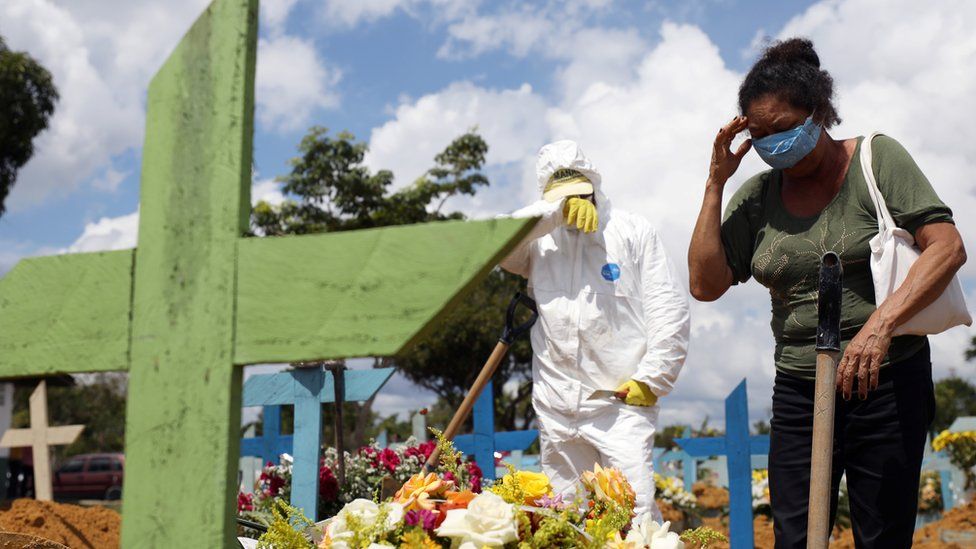
SharecloseShare pageCopy linkAbout sharingMore than five million people are known to have died of Covid-19 worldwide, 19 months since the pandemic began, according to Johns Hopkins University.Vaccines have slowed the death rate, but some health experts say the true toll could be far higher.The milestone comes amid warnings from health officials that cases and deaths in some places are rising for the first time in months.Nearly 250 million cases of the virus have been recorded worldwide.The World Health Organization (WHO) estimates the pandemic’s real global death toll could be two to three times higher than official records.In the US, more than 745,800 people have died, making it the country with the highest number of recorded deaths.COVID MAP: Where are cases the highest? COVID VACCINES: How fast is worldwide progress?BEHIND THE STORY: The Indian newsroom counting the uncounted deathsIt is followed by Brazil, with 607,824 recorded deaths, and India, with 458,437. But health experts believe these numbers are under reported, partly because of deaths at home and those in rural communities.It has taken the world longer to reach the latest one million deaths than the previous two. It took over 110 days to go from four million deaths to five million. That is compared to just under 90 days to rise from three million to four million.While vaccines have helped reduce the fatality rate, the WHO warned last week that the pandemic was “far from over”.Its director general Tedros Adhanom Ghebreyesus pointed to a rise in cases in Europe, where countries with low vaccination rates are seeing soaring infections and deaths.Last week, Russia recorded its highest number of daily cases and deaths since the start of the pandemic. Russia accounts for 10% of the last million deaths recorded globally.

mapped

Confirmed cases around the world

Zoom to

Show

246,743,962 cases

5,000,425 deaths

Read more →

New type of nerve cell discovered in the retina

Scientists at the John A. Moran Eye Center at the University of Utah have discovered a new type of nerve cell, or neuron, in the retina.
In the central nervous system a complex circuitry of neurons communicate with each other to relay sensory and motor information; so-called interneurons serve as intermediaries in the chain of communication. Publishing in the Proceedings of the National Academy of Sciences of the United States of America, a research team led by Ning Tian, PhD, identifies a previously unknown type of interneuron in the mammalian retina.
The discovery marks a notable development for the field as scientists work toward a better understanding of the central nervous system by identifying all classes of neurons and their connections.
“Based on its morphology, physiology, and genetic properties, this cell doesn’t fit into the five classes of retinal neurons first identified more than 100 years ago,” said Tian. “We propose they might belong to a new retinal neuron class by themselves.”
The research team named their discovery the Campana cell after its shape, which resembles a hand bell. Campana cells relay visual signals from both types of light-sensing rod and cone photoreceptors in the retina, but their precise purpose is the subject of ongoing research. Experiments showed Campana cells remain activated for an unusually long time — as long as 30 seconds — in response to a 10 millisecond light flash stimulation.
“In the brain, persistent firing cells are believed to be involved in memory and learning,” said Tian. “Since Campana cells have a similar behavior, we theorize they could play a role in prompting a temporal ‘memory’ of a recent stimulation.”
The published research study is: “An uncommon neuronal class conveys visual signals from rods and cones to retinal ganglion cells.” Authors are: Brent K. Young, Charu Ramakrishnan, Tushar Ganjawala, Ping Wang, Karl Deisseroth, and Ning Tian.
Funding for the research came from National Institutes of Health grants R01EY012345, R01EY031699, T32EY024234, HHMI. This work was supported by NIH Core Grant (EY014800), and an Unrestricted Grant from Research to Prevent Blindness, New York, NY, to the Department of Ophthalmology & Visual Sciences, University of Utah, and the Department of Ophthalmology of Wayne State University School of Medicine. The work was also supported by Ligon Research Center of Vision, Kresge Eye Institute, and the Dryer Foundation.
Story Source:
Materials provided by University of Utah Health. Note: Content may be edited for style and length.

Read more →

The 5:2 diet: A good choice for gestational diabetes

Weight loss after gestational diabetes can prevent the onset of type 2 diabetes. Yet finding the most effective way to lose weight and keep it off can be a challenge, especially for mothers with a new baby.
Now, new research from the University of South Australia suggests that the popular 5:2 or intermittent fasting diet is just as effective as a conventional energy-restricting diet, enabling women greater choice and flexibility when it comes to weight loss.
The 5:2 diet allows five days of normal eating each week while substantially restricting calories over two days a week, as opposed to a typical diet that requires moderate energy restrictions daily.
Globally, one in five pregnancies are affected by gestational diabetes, with these women having a ten-fold risk of developing type 2 diabetes later in life. Women who have had gestational diabetes and are also overweight are at an even higher risk. Type 2 diabetes has lifelong consequences and can lead to other chronic diseases such as heart disease and cancer.
Lead researcher, UniSA’s Dr Kristy Gray, says the finding will be greatly welcomed by women looking to lose weight.
“Gestational diabetes is the fastest growing type of diabetes in Australia, affecting 15 per cent of pregnancies,” Dr Gray says.
“Healthy eating and regular physical activity are recommended to manage gestational diabetes, with continuous energy restriction diets — or diets that cut calories by 25-30 per cent — being the most common strategy for weight loss and diabetes prevention.
“The trouble is, however, that new mums often put themselves last — they’re struggling with fatigue and juggling family responsibilities — so when it comes to weight loss, many find it hard to stick to a low-calorie diet.
“The 5:2 diet may provide a less overwhelming option. As it only cuts calories over two days, some women may find it easier to adopt and adhere to, as opposed to a consistently low-calorie diet requiring constant management.
“Our research shows that the 5:2 diet is just as effective at achieving weight loss as a continuous energy-restricted diet in women who have had gestational diabetes, which is great, because it provides women with greater choice and control.
“Of course, women should seek advice from a health professional before commencing this type of diet, to make sure that it is suitable for them.”
The research investigated the effects of both the 5:2 diet (five days of normal eating and two days of 500 calories) and a continuous energy-restricted diet (1500 calories per day) on weight loss and diabetes risk markers in women with a previous diagnosis of gestational diabetes. Both diets restricted energy by approximately 25 percent each week.
Story Source:
Materials provided by University of South Australia. Note: Content may be edited for style and length.

Read more →

Children, adults equally vulnerable to coronavirus infection, but children less likely to become sick, research finds

New research addresses the misconception that children are less susceptible to infection with the new coronavirus. According to a recent report in JAMA Pediatrics, children and adults have similar risks of becoming infected with SARS-CoV-2, but a much larger proportion of infected children do not show symptoms of COVID-19. When one household member is infected, there is a 52% chance they will transmit it to at least one other person with whom they live.
The findings are based on the Coronavirus Household Evaluation and Respiratory Testing (C-HEaRT) study led by the Centers for Disease Control and Prevention (CDC) in collaboration with investigators at University of Utah Health, Columbia University, Marshfield Virology Laboratory, and Abt Associates.
“Often, it seemed like children weren’t sick because they didn’t have any symptoms,” says Christina Porucznik, Ph.D., professor of public health at U of U Health, who led investigation of 189 families in Utah. “But some were actually infected, and they could still spread COVID-19.”
Early in the pandemic, reports indicated that children accounted for the minority of COVID-19 cases. However, the observation was not able to distinguish between two scenarios. One was that children were less susceptible to infection. Another was that reported case rates in children were artificially low because they did not show symptoms, and therefore were not tested.
To better understand infection dynamics, the C-HEaRT study followed 310 households with one or more children aged 0 to 17 years in Utah and New York City. More than 1,236 study participants submitted samples for weekly molecular testing (PCR) for SARS-CoV-2 infections and completed weekly questionnaires about symptoms. On average, each person was observed for 17 weeks, and the report included a total of 21,465 person-weeks of surveillance time. The results were from September 2020 through April 2021, before the Delta variant emerged in the U.S.
The study showed that: Children and adults 18 years and older had similar rates of infection. Children in different age groups (birth to 4 years; 5 to 11 years; 12 to 17 years) also had similar rates of infection. Infection rates in each group were between 4.4 to 6.3/1,000 person-weeks. About half of the cases in children were symptomatic, compared with 88% of adult cases. In households with one or more infected individuals, the overall average household infection risk was 52%. The mean household infection risk was 40% in Utah and 80% in New York City.More research will need to be done to investigate whether differences in housing density, the timing of emergence of the Delta variant, or other factors contributed to differences in household transmission rates in Utah and New York. Additionally, infection rates and household infection risk may be higher in the general population since study participants could be more likely to carry out COVID-19 prevention behaviors.
This study’s results highlight that many infections in children go undetected, underscoring the need for surveillance testing and for children to continue public health safety measures to protect the people around them, Porucznik says. “We know that until kids can be vaccinated, it’s still important for them to wear masks when they’re in groups and to keep them apart,” she says. “And most of all, when they are sick, keep them home.”
The study published as “Incidence Rates, Household Infection Risk, and Clinical Characteristics of SARS-CoV-2 Infection Among Children and Adults in Utah and New York City, New York” and was funded by the U.S. Centers for Disease Control and Prevention.
Additional co-authors from U of U Health include Joseph Stanford, M.D., professor of family and preventive medicine, and Emily Hacker, a graduate student in public health.
Story Source:
Materials provided by University of Utah Health. Note: Content may be edited for style and length.

Read more →

Noninvasive imaging strategy detects dangerous blood clots in the body

Atrial fibrillation — an irregular and often rapid heart rate — is a common condition that can cause clots to form in the heart that may then dislodge and flow to the brain, potentially leading to a stroke. The standard way to detect these clots requires patients to be sedated and to have a fairly large tube inserted down the throat and esophagus for a transesophageal ultrasound. Investigators at Massachusetts General Hospital (MGH) have now developed and tested a targeted contrast agent to detect and image these clots noninvasively. They verified the potential of this strategy in a study published in JACC: Cardiovascular Imaging.
The agent has a strong affinity for fibrin, a component of blood clots, and is detected with a radioactive copper tag. “The idea behind the technology is that the agent will find and bind to blood clots anywhere in the body — not just in the heart — and make the clots detectable like a bright star in the night sky,” says senior author David Sosnovik, MD, FACC, director of the Program in Cardiovascular Imaging within MGH’s Martinos Center for Biomedical Imaging and an associate professor of Medicine at Harvard Medical School. “In some ways this is analogous to doing a smart search with a search engine such as Google, where the search terms one uses guide the search. We inject the agent into a small peripheral vein and it circulates throughout the human body on its search for clots.” If it doesn’t find any clots, then it’s rapidly excreted from the body; however, if it finds a clot and binds to it, clinicians can detect it with an imaging technique known as positron emission tomography.
Sosnovik and his colleagues first examined how the agent reacts (specifically, its metabolism and pharmacokinetics) in eight healthy volunteers. After injection, the agent was initially stable within the body and then was cleared from tissues within several hours, suggesting that it was safe. Next, the team administered the agent to patients with atrial fibrillation, some with clots in the heart and some without. Imaging tests of the heart revealed bright signals within the clots that were not seen in patients without clots.
“Obviously much more work and many more studies will need to be done before this changes routine clinical practice, but this first-in-human study is an important step,” says Sosnovik. “Importantly, this smart or molecularly targeted agent can be used to detect clots anywhere in the body.”
Sosnovik stressed that the multidisciplinary nature of this project was critical to its success, with vital roles played by diverse scientists, including Peter Caravan, PhD, who invented and developed the study’s agent and is the co-director of MGH’s Institute for Innovation in Imaging. “This probe was invented and optimized in my laboratory by a dedicated team of chemists and biologists through the support of the National Heart Lung and Blood Institute of the National Institutes of Health,” says Caravan. “It is extremely gratifying to see these years of effort come to fruition with a fibrin-specific PET probe with the potential to make a real impact on human health.”
Others playing a major role in the study included David Izquierdo-Garcia, PhD, an assistant in Biomedical Engineering at MGH, and Ciprian Catana, MD, PhD, director of Integrated MR-PET Imaging at MGH’s Martinos Center for Biomedical Imaging. Izquierdo-Garcia, the lead author on the paper, and Catana both stressed the innovative nature of the imaging platform used in the study. “Not only did we use a novel molecular imaging probe in humans for the first time, but also, this is one of the first studies to fully explore the synergies and advantages of integrated PET-MRI scanners,” says Izquierdo-Garcia.
“It is a privilege to work at the Martinos Center for Biomedical Imaging and be part of multidisciplinary teams that collaborate to develop and apply cutting-edge imaging technologies,” adds Catana. “We were the first site in the U.S. to install a fully integrated PET-MRI scanner and have played a major role in the advancement and clinical translation of this technology.”
Additional co-authors include Pauline Désogère, PhD, Anne L. Philip, MPH, Choukri Mekkaoui, PhD, Rory B. Weiner, MD, Onofrio A. Catalano, MD, Yin-Ching Iris Chen, PhD, Doreen DeFaria Yeh, MD, and Moussa Mansour, MD.
Funding for the study was provided by the National Institutes of Health.

Read more →

Study IDs strategies to help recovering alcoholics

A recent qualitative study has identified six strategies that recovering alcoholics use to negotiate social situations and remain sober, depending on how they feel about stigmas associated with drinking and alcoholism.
“There is a stigma in the United States associated with not drinking socially,” says Lynsey Romo, corresponding author of the study and an associate professor of communication at North Carolina State University. “There is also a stigma associated with problem drinking. We did this study because we wanted to understand how people negotiate this double-stigma socially in order to stay sober.
“There really is no clear guidance for people in recovery on how to deal with stigmas associated with drinking and alcohol abuse, and a lot of people in recovery grapple with shame and other issues associated with these stigmas. We’re optimistic that outlining these strategies can serve as something of a tool kit for helping people in recovery navigate these issues.”
For the study, researchers conducted in-depth interviews with 22 U.S. adults who have been sober for at least 10 years.
The researchers identified six strategies for managing stigma. Specifically, the researchers found that the strategies study participants chose depended both on whether they believed there was a societal stigma against alcoholism and whether they felt such a stigma applied to them. In other words, did they feel society was judging them? And did they feel ashamed about being alcoholics, even though they were in recovery?
The six strategies were: Accepting the stigma: In this strategy, participants felt there was a societal stigma and that it applied to them, essentially incorporating the stigma into their identity. Coping behaviors here might include using self-deprecating humor about the subject. Evading responsibility for the stigma: This strategy involved participants accepting that the stigma applied to them, but minimizing their personal responsibility. That means, for example, blaming it on hereditary factors or other factors beyond their control. Reducing offensiveness of stigma: This involved accepting that a stigma applied to them, but focusing on the value and importance of recovery, as well as how they have changed for the better since entering recovery. Avoiding the stigma: In this strategy, participants accepted that the public stigmatizes alcoholism, but did not think the stigma applied to them. This distances the individual from the stigma because they don’t identify with the label of alcoholism. Denying the stigma: This strategy challenges both the public understanding of stigma and whether it applies to them. Essentially, participants utilizing this strategy believe that nobody is perfect and other people don’t have the right to judge them. They also focus on the fact that they’re in recovery, which is an accomplishment in itself. Ignoring/displaying the stigma: This strategy also challenges both the public understanding of stigma and whether it applies to them. Participants using this strategy are open about their experiences and engage in advocacy to educate others and combat stereotypes about alcoholism and recovery.This study is part of a larger body of work that makes clear alcoholism is still stigmatized in society. And other research suggests that the more people buy into these stigmas, the more likely they are to struggle with relapses.
“We think our study is important because understanding and outlining these strategies for managing stigmas can help recovering alcoholics identify techniques for maintaining their sobriety and moving forward with their recovery,” Romo says.
“It’s also important to note that the way recovering alcoholics view themselves and the stigmas related to drinking and alcoholism are not fixed – they will shift over time as people go through the process of recovery. That means that the strategies are also not fixed. In fact, people often adopt more than one strategy at a time.”
Story Source:
Materials provided by North Carolina State University. Original written by Matt Shipman. Note: Content may be edited for style and length.

Read more →

New study shows environmental and social factors contribute to higher rates of pneumonia in children

A new study led by researchers in the Louisiana State University Superfund Research Program demonstrates that children who are exposed to a certain type of environmental air pollution are more likely to contract community acquired pneumonia, or CAP, and to be hospitalized for longer periods of time. Social factors, including race and socioeconomic status, were also found to be associated with living in high-risk areas for CAP.
“This research contributes to the body of evidence linking poor respiratory health to exposure to environmental air pollution, especially combustion-derived particulate matter,” said study co-author Stephania Cormier, who leads the LSU Superfund Research Program.
Research conducted by LSU Superfund Research Program scientists has shown similar patterns for other respiratory diseases including asthma, and recent data suggest implications for COVID-19.
Using data from a Centers for Disease Control surveillance study of pediatric pneumonia and geographic information systems, the investigators identified high- and low-risk areas for CAP in the metropolitan area of Memphis, Tennessee. They collected information including the cause of the child’s pneumonia, such as a bacterial or viral infection, public versus private health insurance, age, race and exposure to particulate matter pollution less than 2.5 micrometers in diameter, or PM2.5. These tiny particles in the air are released by industrial combustion, car exhaust and forest fires. PM2.5 is one of the six air pollutants regulated by the Environmental Protection Agency, or EPA, and is linked to higher rates of respiratory tract infections and a plethora of other health problems, including cardiovascular disease.
When analyzed independently, race, type of insurance and exposure to PM2.5 were all identified as significant risk factors associated with residence in areas with higher-than-expected CAP. However, race was the most significant factor associated with living in a high-risk area. In the Memphis metropolitan area, Hispanic and non-Hispanic Black children were hospitalized for pneumonia at significantly higher rates compared with white children.
Another important finding from this study is that the health risk associated with high PM2.5 occurred at levels below the current regulatory maximum standard set by the EPA.
“The fact that we saw increased risk for pediatric pneumonia at PM2.5 levels lower than what is currently allowed by the EPA is a concern and signals the need for continuous review and policy adjustment based on health effects evidence and exposure or risk information such as this,” Cormier said.
The World Health Organization recently lowered the maximum standards for environmental particulate matter globally to below the EPA’s current maximum level for the U.S.
This change in policy and this new research is especially significant in the context of the global COVID-19 pandemic, which is caused by severe acute respiratory syndrome coronavirus 2, or SARS-CoV-2.
“COVID-19 also causes pneumonia, and our research suggests that PM2.5 may contribute to higher rates of infection and enhanced disease among those who do get sick,” Cormier said.
A unique aspect of this study is that the researchers estimated PM2.5 concentrations using satellite data.
“Through incredible advances in technology, we have access to high-resolution satellite data that accurately capture environmental pollution information anywhere around the world. We were able to use this data to hone in on specific neighborhoods that are experiencing higher than average hospitalization rates for pediatric pneumonia to find out why,” said Tonny J. Oyana, lead author and professor in the Department of Preventive Medicine at the University of Tennessee Health Science Center and principal of the College of Computing and Information Sciences at Makerere University, Uganda.
Story Source:
Materials provided by Louisiana State University. Note: Content may be edited for style and length.

Read more →

How foodborne diseases protect the gut's nervous system

A simple stomach bug could do a lot of damage. There are 100 million neurons scattered along the gastrointestinal tract — directly in the line of fire — that can be stamped out by gut infections, potentially leading to long-term GI disease.
But there may be an upside to enteric infection. A new study finds that mice infected with bacteria or parasites develop a unique form of tolerance quite unlike the textbook immune response. The research, published in Cell, describes how gut macrophages respond to prior insult by shielding enteric neurons, preventing them from dying off when future pathogens strike. These findings may ultimately have clinical implications for conditions such as irritable bowel syndrome, which have been linked to the runaway death of intestinal neurons.
“We’re describing a sort of innate memory that persists after the primary infection is gone,” says Rockefeller’s Daniel Mucida. “This tolerance does not exist to kill future pathogens, but to deal with the damage that infection causes — preserving the number of neurons in the intestine.”
Neuronal cause of death
Known as the body’s “second brain,” the enteric nervous system is houses the largest depot of neurons and glia outside of the brain itself. The GI tract’s own nervous system exists more or less autonomously, without significant input from the brain. It controls the movement of nutrients and waste by fiat, coordinating local fluid exchange and blood flow with authority not seen anywhere else in the peripheral nervous system.
If enough of those neurons die, the GI tract spirals out of control.

Read more →

Covid Shots Are a Go for Children, but Parents Are Reluctant to Consent

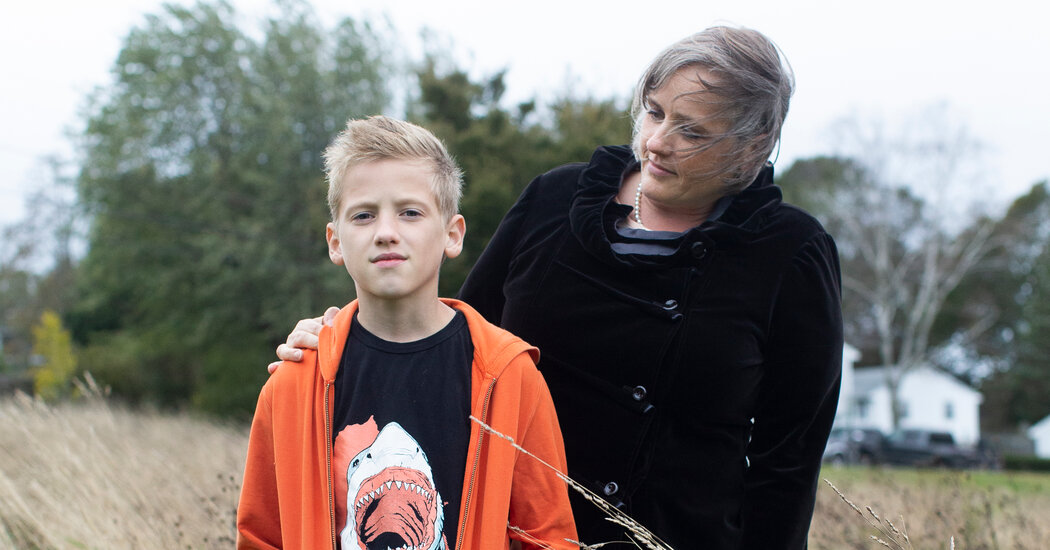
Vaccinating 5- to 11-year-olds could be a big step toward returning to normal life in the U.S., but even parents who got the shot are worried about how it might affect their kids.The Food and Drug Administration’s authorization of a Covid-19 vaccine for ages 5 to 11 on Friday makes 28 million unvaccinated children in the United States suddenly eligible for the shot and offers the country an opportunity to make big inroads in its efforts to achieve broad immunity against the coronavirus.But in a nation that has already struggled mightily with Covid vaccine hesitancy, getting shots into those little arms may present health authorities with the toughest vaccination challenge yet.Even many parents who are themselves vaccinated and approved the shot for their teenagers are churning over whether to give consent for their younger children, questioning if the risk of the unknowns of a brand-new vaccine is worth it when most coronavirus cases in youngsters are mild.In announcing its authorization of a lower-dose shot made by Pfizer and BioNTech for the age group, the F.D.A. said clinical trial data showed the shot was safe and prompted strong immune responses in children. The most common side effects were fatigue, fever and headache. Infectious disease experts say that with approaching holiday travel and family gatherings, widespread vaccination of younger children could be a game-changer: It could help keep classes in person, reduce the likelihood of quarantines and lessen the risk of transmission to older, vulnerable adults — as well as protect the children from what has become the eighth biggest killer in their age group, according to the Centers for Disease Control and Prevention. To date, nearly two million children age 5 to 11 have been infected with the virus and 8,300 have been hospitalized. A third of those hospitalized were admitted to intensive care units, and at least 170 have died.But a report this month from researchers at Northeastern, Harvard, Rutgers and Northwestern Universities found that parental concerns around the Covid vaccination had increased “significantly” from June through September. Chief among them, researchers said, were the newness of the vaccine, whether it has been sufficiently tested, efficacy, side effects and long-term health consequences.According to a survey released Thursday by Kaiser Family Foundation, scarcely one in three parents will permit their children in this newly eligible age group to be vaccinated immediately. Two-thirds were either reluctant or adamantly opposed. An Axios-Ipsos poll found that 42 percent of parents of these children said they were unlikely to have their children vaccinated.Experts say widespread vaccinations among younger children could keep classes in person, reduce the need for face masks and help suppress virus transmission. Michael M. Santiago/Getty ImagesErin Gauch, of Middletown, R.I., got herself and her two older children, ages 14 and 12, vaccinated this summer. But she’s worried about the potential side effects of the shots for her son. One of those side effects is myocarditis, a weakening of the heart muscle, that has been reported in a very small number of teenage boys and young men after getting a Covid shot.“I’m looking at a 9-year-old and if I make a bad decision and he ends up with some debilitating side effects or lifelong adverse reaction, I don’t think I could live with that,” she said.This vaccine dilemma occurs at a turbulent cultural moment for parents of young children, who are often judged harshly on social media for their decisions. The choice can appear freighted with political affiliation. A decision can signify, intentionally or not, compassion or disregard for others and a willingness to follow or ignore advice from their pediatrician.“If we ultimately decide not to get my youngest vaccinated right now, I guess I’ll be subjected to mommy shaming but I’ll just have to deal with it,” Ms. Gauch said.Many parents, like Ms. Gauch, are focusing on some research that suggests the rare possibility that young men and boys will develop pericarditis, a weakening of the lining around the heart, and myocarditis, but the clinical trial data the F.D.A. reviewed showed no cases in the 5 to 11 age group. Many experts say that the conditions usually improve quickly and that Covid presents far greater risk of severe myocarditis.The Biden administration recently announced that the shots would be given predominantly by pediatricians, community health centers and children’s hospitals, plus pharmacies and schools, which will carry the burden of persuading parents.But a Kaiser policy brief noted that schools and pharmacists in regions where Covid vaccination rates are low may be reluctant to participate. Access in rural areas and for working parents will be considerable challenges, the authors said, and they noted that achieving equity will also be a concern: More than half of those newly eligible are children of color.After what is expected to be an initial rush of eager parents (as happened with adults and teenagers), pediatricians say they are bracing for conversations they anticipate to be among the thorniest they have ever had.Ms. Gauch and David with her daughters Claire, 12, left, and Laura, 14, who are both vaccinated.Katherine Taylor for The New York Times“I know parents are probably bombarded with misinformation about vaccines, even within their social circles: ‘My friend said this, my mother-in-law said that,’” said Dr. Katherine Williamson, a pediatrician in Orange County, Calif. “I’m hoping I can make a difference.”The decision is particularly hard for parents to make on behalf of their first child, said Emily Brunson, a medical anthropologist at Texas State University who researches parent vaccination choices. Because vaccine decision-making is so personal and complicated, she said, many parents are likely to put it off.Vic Sandrin, who works for a bicycle company in Vancouver, Wash., supports vaccines but cautiously. He, his wife and their 18-year-old got the Covid vaccine grudgingly, to travel for work and family visits.For his 11-year-old twins, however, he is content to wait: “I’m willing to take a chance on myself, and that made sense, I’m an adult,” Mr. Sandrin said. “But for kids who already have strong immune systems, I don’t know if there’s a reason to get them vaccinated, or at least not just quite yet. ”At heart, the decision is about which unknown—Covid or the vaccine— that parents fear more. They may stack factors such as social routines, older relatives, school protocols and the likelihood of severe illness to confirm their intuitive bias about whether to allow their child to get the shot.Ms. Gauch, a mechanical engineer, calculated each family member’s risk individually. She has asthma, so, for her, the vaccine was a no-brainer. Her 14-year-old daughter got her first job this summer; getting vaccinated meant she wouldn’t have to wear a face mask at work. And her 12-year-old daughter saw that getting vaccinated could open up possibilities of being maskless in public. Done and done.But not only does Ms. Gauch worry about side effects in her 9-year-old son, she says that getting vaccinated won’t release him from following other Covid rules because his school insists on masks and social distancing. “He is much less likely to get Covid if they’re taking all these precautions,” she said. “So I just don’t see the risk payoff of the vaccine.”Parents who were predisposed not to vaccinate their child tended to dismiss the threat of serious illness from Covid as minuscule, saying that children who became seriously ill most likely had underlying conditions..css-1kpebx{margin:0 auto;font-family:nyt-franklin,helvetica,arial,sans-serif;font-weight:700;font-size:1.125rem;line-height:1.3125rem;color:#121212;}#NYT_BELOW_MAIN_CONTENT_REGION .css-1kpebx{font-family:nyt-cheltenham,georgia,’times new roman’,times,serif;font-weight:700;font-size:1.375rem;line-height:1.625rem;}@media (min-width:740px){#NYT_BELOW_MAIN_CONTENT_REGION .css-1kpebx{font-size:1.6875rem;line-height:1.875rem;}}@media (min-width:740px){.css-1kpebx{font-size:1.25rem;line-height:1.4375rem;}}.css-1gtxqqv{margin-bottom:0;}.css-k59gj9{display:-webkit-box;display:-webkit-flex;display:-ms-flexbox;display:flex;-webkit-flex-direction:column;-ms-flex-direction:column;flex-direction:column;width:100%;}.css-1e2usoh{font-family:inherit;display:-webkit-box;display:-webkit-flex;display:-ms-flexbox;display:flex;-webkit-box-pack:justify;-webkit-justify-content:space-between;-ms-flex-pack:justify;justify-content:space-between;border-top:1px solid #ccc;padding:10px 0px 10px 0px;background-color:#fff;}.css-1jz6h6z{font-family:inherit;font-weight:bold;font-size:1rem;line-height:1.5rem;text-align:left;}.css-1t412wb{box-sizing:border-box;margin:8px 15px 0px 15px;cursor:pointer;}.css-hhzar2{-webkit-transition:-webkit-transform ease 0.5s;-webkit-transition:transform ease 0.5s;transition:transform ease 0.5s;}.css-t54hv4{-webkit-transform:rotate(180deg);-ms-transform:rotate(180deg);transform:rotate(180deg);}.css-1r2j9qz{-webkit-transform:rotate(0deg);-ms-transform:rotate(0deg);transform:rotate(0deg);}.css-e1ipqs{font-size:1rem;line-height:1.5rem;padding:0px 30px 0px 0px;}.css-e1ipqs a{color:#326891;-webkit-text-decoration:underline;text-decoration:underline;}.css-e1ipqs a:hover{-webkit-text-decoration:none;text-decoration:none;}.css-1o76pdf{visibility:show;height:100%;padding-bottom:20px;}.css-1sw9s96{visibility:hidden;height:0px;}.css-1in8jot{background-color:white;border:1px solid #e2e2e2;width:calc(100% – 40px);max-width:600px;margin:1.5rem auto 1.9rem;padding:15px;box-sizing:border-box;font-family:’nyt-franklin’,arial,helvetica,sans-serif;text-align:left;}@media (min-width:740px){.css-1in8jot{padding:20px;width:100%;}}.css-1in8jot:focus{outline:1px solid #e2e2e2;}#NYT_BELOW_MAIN_CONTENT_REGION .css-1in8jot{border:none;padding:10px 0 0;border-top:2px solid #121212;}What to Know About Covid-19 Booster ShotsThe F.D.A. has authorized booster shots for millions of recipients of the Pfizer-BioNTech, Moderna and Johnson & Johnson vaccines. Pfizer and Moderna recipients who are eligible for a booster include people 65 and older, and younger adults at high risk of severe Covid-19 because of medical conditions or where they work. Eligible Pfizer and Moderna recipients can get a booster at least six months after their second dose. All Johnson & Johnson recipients will be eligible for a second shot at least two months after the first.Yes. The F.D.A. has updated its authorizations to allow medical providers to boost people with a different vaccine than the one they initially received, a strategy known as “mix and match.” Whether you received Moderna, Johnson & Johnson or Pfizer-BioNTech, you may receive a booster of any other vaccine. Regulators have not recommended any one vaccine over another as a booster. They have also remained silent on whether it is preferable to stick with the same vaccine when possible.The C.D.C. has said the conditions that qualify a person for a booster shot include: hypertension and heart disease; diabetes or obesity; cancer or blood disorders; weakened immune system; chronic lung, kidney or liver disease; dementia and certain disabilities. Pregnant women and current and former smokers are also eligible.The F.D.A. authorized boosters for workers whose jobs put them at high risk of exposure to potentially infectious people. The C.D.C. says that group includes: emergency medical workers; education workers; food and agriculture workers; manufacturing workers; corrections workers; U.S. Postal Service workers; public transit workers; grocery store workers.Yes. The C.D.C. says the Covid vaccine may be administered without regard to the timing of other vaccines, and many pharmacy sites are allowing people to schedule a flu shot at the same time as a booster dose.The argument that vaccinating children contributes to the community’s overall health does not get much traction, either. Parents’ paramount focus is the well-being of their own child. Although health officials contend an important reason to vaccinate is to protect the child, some parents said they believed that their healthy children would be injected with a novel vaccine largely to safeguard older adults, who had already lived full lives.Abby Cooper of Bergen County, N.J., says she has been champing at the bit to have all five of her children — from left, Ilana, 12, Atara, 10, Shira, 2, Noam, 8, and Yair, 5 — vaccinated.Bryan Anselm for The New York TimesIn interviews, some parents said that if the vaccine gained full approval for children (as the adult dose has) and schools required it, they would consider withdrawing their students. Dr. Cynthia Bader, a pediatrician in the Seattle area with an 8-year-old son, said that if her school district issued a vaccine mandate, she would clap her hands with joy but “then cringe at the idea of all the parents who will be coming to me seeking counseling for vaccine exemption forms.”Parents are siloing themselves with like-minded friends, which reinforces their thinking. “It used to be that more people with different opinions would mesh, but now I don’t think that is the case,” said Abby Cooper of Bergen County, N.J., who is eager to get her five children vaccinated.But she has friends who refuse. “Their kids are going to school with my kids and putting them at risk for no reason. It’s very upsetting. So, sadly, I’ve lost friends over this.”Many parents worry that the tension will infect the children themselves. Some foresee having to set boundaries about unvaccinated playmates, especially if exposure to the virus could jeopardize someone else in the home.Many parents will be difficult to persuade. The C.D.C. and the American Academy of Pediatrics have published talking points for pediatricians and other proponents of the Covid vaccine for children.Consensus: First, address the parents’ questions. But if they don’t want to hear The Talk, don’t force it.Consensus: Fear tactics — generalized descriptions of children suffering in Covid wards — don’t work.Consensus: Emphasize the benefits of the Covid vaccine to the child in terms of emotional and physical well-being, including some semblance of pre-Covid social life. Invoke quarantines, remote learning.Kim Cobb hopes that her family’s Covid ordeals will show others the benefits of vaccinating all eligible family members. She, her husband and their two older daughters, 14 and 12, got vaccinated quickly. But in August, her unvaccinated 10-year-old twins came down with Covid. Soon after, Dr. Cobb, a climate scientist at Georgia Tech, and her husband tested positive for breakthrough infections. Their two vaccinated children remained healthy.The parents became miserably ill but did not require hospitalization, which they believe is because they were vaccinated.All recovered, but Dr. Cobb and one twin have lingering respiratory distress.“We’re in the third month post-infection and we have to see pulmonologists, we have inhalers, we’re on medication and we’re still having breathing difficulties,” Dr. Cobb said. “And this is not a kid who ever had respiratory symptoms.”“It was not foreseeable,” she continued. “If you could avoid it, you would.”

Read more →