Upended by Meth, Some Communities Are Paying Users to Quit

Jamie Mains showed up for her checkup so high that there was no point in pretending otherwise. At least she wasn’t shooting fentanyl again; medication was suppressing those cravings. Now it was methamphetamine that manacled her, keeping her from eating, sleeping, thinking straight. Still, she could not stop injecting.“Give me something that’s going to help me with this,” she begged her doctor.“There is nothing,” the doctor replied.Overcoming meth addiction has become one of the biggest challenges of the national drug crisis. Fentanyl deaths have been dropping, in part because of medications that can reverse overdoses and curb the urge to use opioids. But no such prescriptions exist for meth, which works differently on the brain.In recent years, meth, a highly addictive stimulant, has been spreading aggressively across the country, rattling communities and increasingly involved in overdoses. Lacking a medical treatment, a growing number of clinics are trying a startlingly different strategy: To induce patients to stop using meth, they pay them.The approach has been around for decades, but most clinics were uneasy about adopting it because of its bluntly transactional nature. Patients typically come in twice a week for a urine drug screen. If they test negative, they are immediately handed a small reward: a modest store voucher, a prize or debit card cash. The longer they abstain from use, the greater the rewards, with a typical cumulative value of nearly $600. The programs, which usually last three to six months, operate on the principle of positive reinforcement, with incentives intended to encourage repetition of desired behavior — somewhat like a parent who permits a child to stay up late as a reward for good grades.Research shows that the approach, known in addiction treatment as “contingency management,” or CM, produces better outcomes for stimulant addiction than counseling or cognitive behavioral therapy. Follow-up studies of patients a year after they successfully completed programs show that about half remained stimulant-free.We are having trouble retrieving the article content.Please enable JavaScript in your browser settings.Thank you for your patience while we verify access. If you are in Reader mode please exit and log into your Times account, or subscribe for all of The Times.Thank you for your patience while we verify access.Already a subscriber? Log in.Want all of The Times? Subscribe.

Read more →
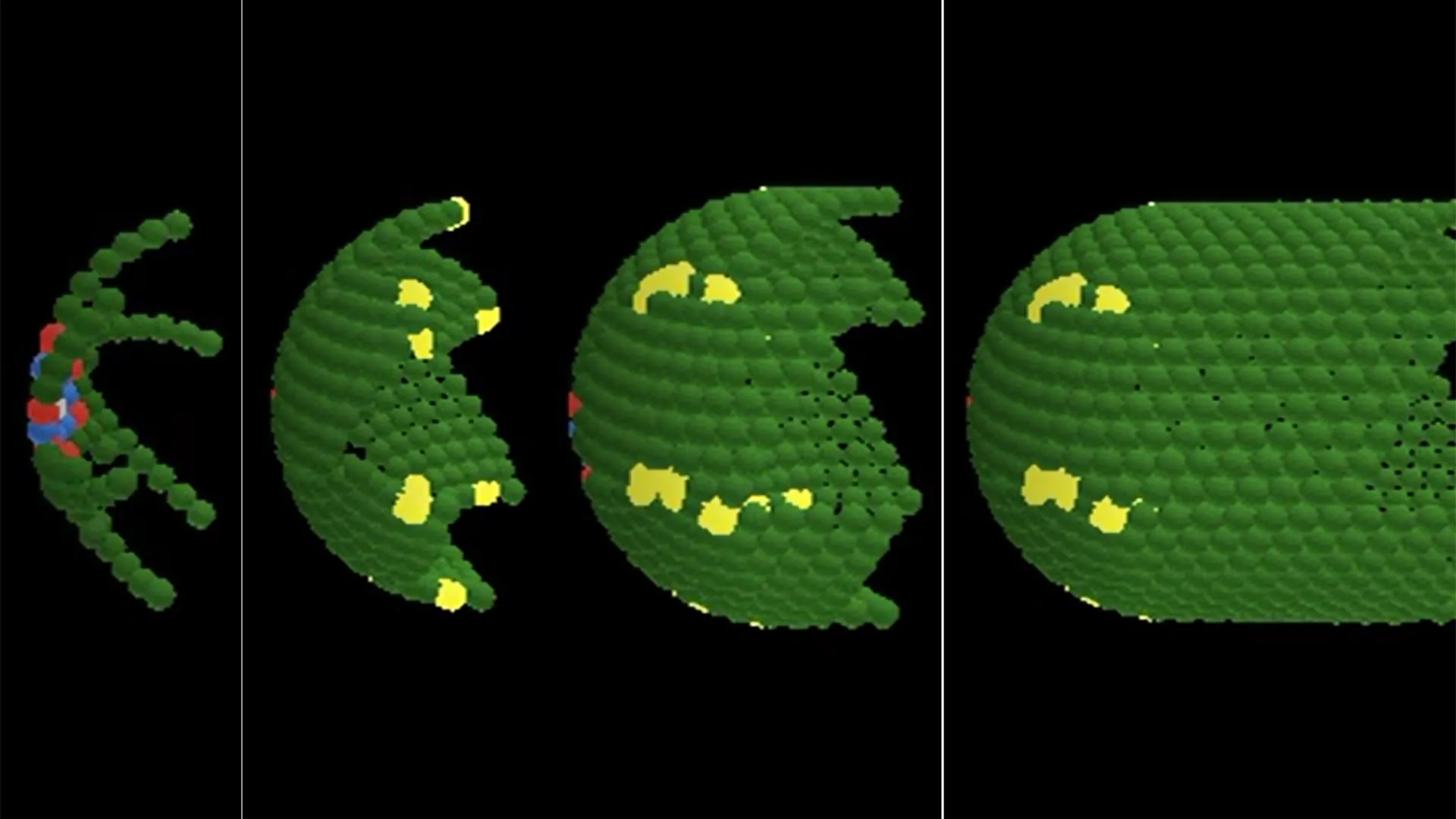

New study cracks the “tissue code” — just five rules shape organs

Every day, your body replaces billions of cells — and yet, your tissues stay perfectly organized. How is that possible?
A team of researchers at ChristianaCare’s Helen F. Graham Cancer Center & Research Institute and the University of Delaware believe they’ve found an answer. In a new study published in the scientific journal Biology of the Cell, they show that just five basic rules may explain how the body maintains the complex structure of tissues like those in the colon, for example, even as its cells are constantly dying and being replaced.
This research is the product of more than 15 years of collaboration between mathematicians and cancer biologists to unlock the rules that govern tissue structure and cellular behavior.
“This may be the biological version of a blueprint,” said Bruce Boman, M.D., Ph.D., senior research scientist at ChristianaCare’s Cawley Center for Translational Cancer Research and faculty member in the departments of Biological Sciences and Mathematical Sciences at the University of Delaware. “Just like we have a genetic code that explains how our genes work, we may also have a ’tissue code’ that explains how our bodies stay so precisely organized over time.”
Math Meets Medicine
The researchers used mathematical modeling — essentially, creating a computer simulation of how cells behave — to see if a small number of rules could account for the highly organized structure of the lining of the colon. That’s an ideal place to study: cells in the colon renew every few days, but the overall shape and structure stays remarkably stable.
After running many simulations and refining their models, the team identified five core biological rules that appear to govern the structure and behavior of cells: Timing of cell division. The order in which cells divide. The direction cells divide and move. How many times cells divide. How long a cell lives before it dies.”These rules work together like choreography,” said Gilberto Schleiniger, Ph.D., professor in the University of Delaware’s Department of Mathematical Sciences. “They control where cells go, when they divide and how long they stick around — and that’s what keeps tissues looking and working the way they should.”

Decoding Human Tissue
The researchers believe these rules may apply not just to the colon, but to many different tissues throughout the body — skin, liver, brain and beyond. If true, this “tissue code” could help scientists better understand how tissues heal after injury, how birth defects happen and how diseases like cancer develop when that code gets disrupted.
Boman explained it this way: “Your tissues don’t just grow and shrink randomly. They know what they’re supposed to look like, and they know how to get back to that state, even after damage. That level of precision needs a set of instructions. What we’ve found is a strong candidate for those instructions.”
This work also has important implications for the Human Cell Atlas, a global scientific collaboration working to map every cell type in the human body. While the Atlas aims to catalog what each cell is and what it’s doing at a given moment, this new research offers a dynamic framework for understanding how those cells stay organized over time. By identifying simple, universal rules that govern cell behavior and tissue structure, the findings could help guide future efforts to not only describe cells, but predict how they behave in health and disease.
Implications for Disease and Discovery
One reason the team turned to mathematical models, rather than traditional biology experiments, is that it’s extremely difficult to observe how every single cell in a tissue behaves in real time. But with computer models, researchers can run simulations that reveal patterns and dynamics hidden from view.

This kind of collaboration between biology and math reflects a broader shift in how scientists approach complex problems. It also aligns with national priorities: the National Science Foundation’s “Rules of Life” initiative challenges researchers to uncover the fundamental principles that govern living systems. This study is a strong step in that direction.
Next steps for the team include testing the model’s predictions experimentally, refining it with additional data and exploring its relevance to cancer biology — especially how disruptions to the tissue code may lead to tumor growth or metastasis.
“This is just the beginning,” said Schleiniger. “Once you can identify the rules, you can begin to ask entirely new questions, and maybe even learn how to fix what’s gone wrong.”
Funding for this project was provided by the National Institutes of Health, the National Science Foundation, The Lisa Dean Moseley Foundation, the Delaware Bioscience Center for Advanced Technology (CAT) and the UNIDEL Graduate Research Fellowship.

Read more →

Six-hour ‘undo’ button: GAI-17 rewinds stroke damage and may beat Alzheimer’s

Stroke is said to be the second leading cause of death worldwide after heart disease. To prevent the death of neurons in the brain, a research group led by Osaka Metropolitan University Associate Professor Hidemitsu Nakajima of the Graduate School of Veterinary Science has developed a drug that inhibits a protein involved in cell death.
The multifunctional protein GAPDH (glyceraldehyde-3-phosphate dehydrogenase) is linked to pathogenesis in many intractable brain and nervous system diseases. The team developed GAI-17, a GAPDH aggregation inhibitor. When this inhibitor was administered to model mice with acute strokes, there was a significantly lower level of brain cell death and paralysis compared to untreated mice.
GAI-17 also showed no side effects of concern, such as adverse effects on the heart or cerebrovascular system. Furthermore, experiments using GAI-17 showed improvement in the mice even when administered six hours after a stroke.
“The GAPDH aggregation inhibitor we have developed is expected to be a single drug that can treat many intractable neurological diseases, including Alzheimer’s disease,” stated Professor Nakajima. “Going forward, we will verify the effectiveness of this approach in disease models other than stroke and promote further practical research toward the realization of a healthy and long-lived society.”
The findings were published in iScience.

Read more →

H.H.S. Finalizes Thousands of Layoffs After Supreme Court Decision

Staff members who were first notified of terminations in April were finally let go late Monday.The Department of Health and Human Services finalized the layoffs of thousands of employees after a Supreme Court ruling cleared the way for the Trump administration to proceed with mass firings across the government.Employees received notice of their termination late Monday, marking a turning point in the reshaping of the nation’s health care work force. Those let go included people who coordinated travel for overseas drug facility inspectors, communications staff members, public records officials and employees who oversaw contracts related to medical research.Health Secretary Robert F. Kennedy Jr. announced 10,000 layoffs late in March, cutting workers across the National Institutes of Health, the Food and Drug Administration, the Centers for Disease Control and Prevention, and other federal health agencies. Some workers who received the initial layoff notices on April 1 found out only when their badge to enter a building did not work.Still, many of them remained on the federal payroll until Monday at 5 p.m., when a message went out citing last week’s Supreme Court decision that allowed Trump officials to significantly slash the size of the federal payroll even as court challenges to the administration’s plans play out.“Thank you for your service to the American people,” the email said.While many of the workers were described by the Trump administration as redundant or duplicative, critics have compared the cuts to leaving only doctors — and no support staff — to operate a hospital.The result is a hobbled work force, said Dr. Ashish Jha, the dean of the Brown University School of Public Health and a former Biden administration health official.We are having trouble retrieving the article content.Please enable JavaScript in your browser settings.Thank you for your patience while we verify access. If you are in Reader mode please exit and log into your Times account, or subscribe for all of The Times.Thank you for your patience while we verify access.Already a subscriber? Log in.Want all of The Times? Subscribe.

Read more →

Trump Official Accused PEPFAR of Funding Abortions in Russia. It Wasn’t True.

PEPFAR, the AIDS relief program, hasn’t operated in Russia since 2012 and does not fund abortions.It was a startling, almost unbelievable, allegation. It turned out to be untrue.On June 25, Russell Vought, the director of the Office of Management and Budget, told a Senate committee that the President’s Emergency Plan for AIDS Relief, known as PEPFAR, had spent $9.3 million “to advise Russian doctors on how to perform abortions and gender analysis.”His statements had immediate consequences for the committee’s vote and had the potential to create long-term damage to PEPFAR, a program that has long had bipartisan support and has been estimated to have saved 26 million lives since President George W. Bush started it in 2003.Mr. Vought was at the Senate Appropriations Committee to defend a package of cuts proposed by the Trump administration to this year’s spending on global health programs and public broadcasting. If the Senate votes to approve the package, global health programs will lose $900 million, including $400 million from PEPFAR for the current fiscal year. PEPFAR and other programs also face huge cuts, even terminations, for the coming fiscal year. The full Senate is expected to vote on the “rescissions bill” by Thursday.At the hearing, Mr. Vought listed funding of abortions in Russia as evidence of PEPFAR’s waste of government funds. The example prompted Senator Lindsey Graham, Republican of South Carolina and a longtime supporter of PEPFAR, to say he would vote in favor of rescinding funds from the program.“You know why I’m going to vote for it? Just as a statement that PEPFAR is important, but it’s not beyond scrutiny,” Mr. Graham said. “There is a consequence to this crap.”PEPFAR has not operated in Russia since 2012, when President Vladimir Putin kicked the United States Agency for International Development out of the country. U.S. law prohibits the use of any federal funds to pay for abortions. Funding abortions through PEPFAR would imply not just waste, but serious crimes or negligence, or both.We are having trouble retrieving the article content.Please enable JavaScript in your browser settings.Thank you for your patience while we verify access. If you are in Reader mode please exit and log into your Times account, or subscribe for all of The Times.Thank you for your patience while we verify access.Already a subscriber? Log in.Want all of The Times? Subscribe.

Read more →

Trump Administration Will Limit Medicare Spending on Pricey Bandages

In an about-face, the administration is cracking down on so-called skin substitutes, overused treatments that cost Medicare more than $10 billion last year.Medicare plans to slash payments for expensive and untested skin bandages that have cost the federal government billions of dollars, the Trump administration announced Monday.The new proposed limit is an about-face for the administration, which twice delayed Biden-era rules to reduce spending on the bandages, known as skin substitutes. President Trump, who previously defended the payments on social media, received a large campaign donation last year from a leading bandage seller.Spending on skin substitutes has increased fortyfold in the past five years, surpassing $10 billion in 2024. That sharp increase is one of the largest examples of Medicare waste in the program’s history, according to data analysts and industry experts.Medicare, the government insurance plan for seniors, spent more last year on the bandages than on ambulance rides or anesthesia, despite limited evidence that they work. The bandages are made from dried bits of placenta and are used on wounds that won’t heal.For years, lax Medicare rules have allowed makers of the bandage to essentially set their own prices. Companies have brought more than 100 new versions to market since 2023, some costing Medicare more than $21,000 per square inch.The new Medicare policy proposes setting a flat payment of $806 per square inch. The lower fee is likely to stamp out a lucrative scheme that The New York Times reported on this year: Doctors can buy the coverings at large discounts and then charge Medicare the full sticker price, pocketing the difference.We are having trouble retrieving the article content.Please enable JavaScript in your browser settings.Thank you for your patience while we verify access. If you are in Reader mode please exit and log into your Times account, or subscribe for all of The Times.Thank you for your patience while we verify access.Already a subscriber? Log in.Want all of The Times? Subscribe.

Read more →

Fasting twice a week could be a game-changer for type 2 diabetes

Intermittent energy restriction, time-restricted eating and continuous energy restriction can all improve blood sugar levels and body weight in people with obesity and type 2 diabetes, according to a study presented at ENDO 2025, the Endocrine Society’s annual meeting in San Francisco, California.
“This study is the first to compare the effects of three different dietary interventions intermittent energy restriction (IER), time-restricted eating (TRE) and continuous energy restriction (CER) in managing type 2 diabetes with obesity,” said Haohao Zhang, Ph.D., chief physician at The First Affiliated Hospital of Zhengzhou University in Zhengzhou, China.
Although researchers identified improved HbA1c levels, and adverse events were similar across the three groups, the IER group showed greater advantages in reducing fasting blood glucose, improving insulin sensitivity, lowering triglycerides, and strengthening adherence to the dietary interventions.
“The research fills a gap in directly comparing 5:2 intermittent energy restriction with a 10-hour time-restricted eating in patients with obesity and type 2 diabetes. The findings provide scientific evidence for clinicians to choose appropriate dietary strategies when treating such patients,” Zhang said.
Zhang and colleagues performed a single-center, randomized, parallel-controlled trial at the First Affiliated Hospital of Zhengzhou University from November 19, 2021 to November 7, 2024.
Ninety patients were randomly assigned in a 1:1:1 ratio to the IER, TRE or CER group, with consistent weekly caloric intake across all groups. A team of nutritionists supervised the 16-week intervention.
Of those enrolled, 63 completed the study. There were 18 females and 45 males, with an average age of 36.8 years, a mean diabetes duration of 1.5 years, a baseline BMI of 31.7 kg/m², and an HbA1c of 7.42%.

At the end of the study, there were no significant differences in HbA1c reduction and weight loss between the IER, TRE and CER groups. However, the absolute decrease in HbA1c and body weight was greatest in the IER group.
Compared to TRE and CER, IER significantly reduced fasting blood glucose and triglycerides and increased the Matsuda index, a measure of whole-body insulin sensitivity. Uric acid and liver enzyme levels exhibited no statistically significant changes from baseline in any study group.
Two patients in the IER group and the TRE group, and three patients in the CER group, experienced mild hypoglycemia.
The IER group had the highest adherence rate (85%), followed by the CER group at 84% and the TRE group at 78%. Both the IER and CER groups showed statistically significant differences compared with the TRE group.
Zhang said these findings highlight the feasibility and effectiveness of dietary interventions for people who have obesity and type 2 diabetes.

Read more →

Semaglutide melts fat—but may quietly strip away your strength

Women and older adults taking the anti-obesity drug semaglutide may be at higher risk for muscle loss, but higher protein intake may help prevent muscle loss in these patients, according to a small study presented at ENDO 2025, the Endocrine Society’s annual meeting in San Francisco, Calif.
Losing muscle (or lean mass) is a common side effect of weight loss in adults with obesity and may negatively affect metabolism and bone health. This is because muscle helps control blood sugar after meals and plays an important role in keeping bones strong, according to study lead researcher Melanie Haines, M.D., of Massachusetts General Hospital and Harvard Medical School in Boston, Mass.
Approximately 40% of the weight lost from taking semaglutide — a type of weight-loss medication known as a GLP-1 — comes from lean mass, including muscle. It is not yet known who is at highest risk for muscle loss or how it affects blood sugar levels, Haines said.
The researchers studied 40 adults with obesity for three months. Of these patients, 23 were prescribed semaglutide, while 17 followed a diet and lifestyle program for weight loss called Healthy Habits for Life (HHL). The researchers evaluated how their muscle mass changed.
Study participants who were prescribed semaglutide lost more weight than those who participated in the diet and lifestyle program, but the percent of weight loss that was lean mass was similar between the two groups.
After accounting for weight loss, the researchers found that in the semaglutide group, being older, female or eating less protein was linked to greater muscle loss. Also in this group, losing more muscle was linked to less improvement in blood sugar (HbA1c levels).
“Older adults and women may be more likely to lose muscle on semaglutide, but eating more protein may help protect against this,” Haines said. “Losing too much muscle may reduce the benefits of semaglutide on blood sugar control. This means preserving muscle during weight loss with semaglutide may be important to reduce insulin resistance and prevent frailty in people with obesity.”
Haines said that more studies are needed to find the best way to lose fat but keep muscle when using GLP-1 medications.

Read more →

How to Find the Right Medical Rehab Services

Specialized hospitals, nursing homes, clinics and home health agencies provide rehab therapy. Insurers may limit the services you can get.Rehabilitation therapy can be a godsend after hospitalization for a stroke, a fall, an accident, a joint replacement, a severe burn, or a spinal cord injury, among other conditions. Physical, occupational and speech therapy are offered in a variety of settings, including at hospitals, nursing homes, clinics and at home. It’s crucial to identify a high-quality, safe option with professionals who are experienced in treating your condition.What kinds of rehab therapy might I need?Physical therapy helps patients improve their strength, stability and movement and reduce pain, usually through targeted exercises. Some physical therapists specialize in neurological, cardiovascular or orthopedic issues. There are also geriatric and pediatric specialists. Occupational therapy focuses on specific activities (referred to as “occupations”), often ones that require fine motor skills, like brushing teeth, cutting food with a knife and getting dressed. Speech and language therapy help people to communicate. Some patients may need respiratory therapy if they have trouble breathing or need to be weaned from a ventilator.Will insurance cover rehab?Medicare, health insurers, workers’ compensation and Medicaid plans in some states cover rehab therapy, but plans may refuse to pay for certain settings and may limit the amount of therapy you receive. Some insurers may require preauthorization, and some may terminate coverage if you’re not improving. Private insurers often place annual limits on outpatient therapy. Traditional Medicare is generally the least restrictive, while private Medicare Advantage plans may monitor progress closely and limit where patients can obtain therapy.Should I seek inpatient rehabilitation?Patients who still need nursing or a doctor’s care but can tolerate three hours of therapy five days a week may qualify for admission to a specialized rehab hospital or to a unit within a general hospital. Patients usually need at least two of the main types of rehab therapy: physical, occupational or speech. Stays average around 12 days.How do I choose?Look for a place that is skilled in treating people with your diagnosis; many inpatient hospitals list specialties on their websites. People with complex or severe medical conditions may want a rehab hospital connected to an academic medical center at the vanguard of new treatments, even if it’s a plane ride away.We are having trouble retrieving the article content.Please enable JavaScript in your browser settings.Thank you for your patience while we verify access. If you are in Reader mode please exit and log into your Times account, or subscribe for all of The Times.Thank you for your patience while we verify access.Already a subscriber? Log in.Want all of The Times? Subscribe.

Read more →

Even Grave Errors at Rehab Hospitals Go Unpenalized and Undisclosed

For-profit hospitals provide most inpatient physical therapy but tend to have worse readmission rates to general hospitals. Medicare doesn’t tell consumers about troubling inspections.Rehab hospitals that help people recover from major surgeries and injuries have become a highly lucrative slice of the health care business. But federal data and inspection reports show that some run by the dominant company, Encompass Health Corporation, and other for-profit corporations have had rare but serious incidents of patient harm and perform below average on two key safety measures tracked by Medicare.Yet even when inspections reveal grave cases of injury, federal health officials do not inform consumers or impose fines the way they do for nursing homes. And Medicare doesn’t provide easy to understand five-star ratings as it does for general hospitals.In the most serious problems documented by regulators, rehab hospital errors involved patient deaths.In Encompass Health’s hospital in Huntington, W.Va., Elizabeth VanBibber, 73, was fatally poisoned by a carbon monoxide leak during construction at the facility.At its hospital in Jackson, Tenn., a patient, 68, was found dead overnight, lying on the floor in a “pool of blood” after an alarm that was supposed to alert nurses that he had gotten out of bed had been turned off.In its hospital in Sioux Falls, S.D., a nurse gave Frederick Roufs, 73, the wrong drug, one of 26 medication errors the hospital made over six months. He died two days later at another hospital.For-profit rehab facilities now treat most patients. Encompass Health is the largest chain.

Source: KFF Health News and The New York TimesBy The New York TimesWe are having trouble retrieving the article content.Please enable JavaScript in your browser settings.Thank you for your patience while we verify access. If you are in Reader mode please exit and log into your Times account, or subscribe for all of The Times.Thank you for your patience while we verify access.Already a subscriber? Log in.Want all of The Times? Subscribe.

Read more →