
Scientists make stunning discovery, find new protein activity in telomeres


Asking patients to take a short survey on a tablet before their appointments may help mental health providers identify young people at risk of psychosis. A UC Davis Health study found that when patients took a 21-question pre-visit survey, more than twice as many were identified at risk of psychosis compared to those who did not complete the survey.
But despite the improvement in detecting individuals at risk, the technology-based screening did not reduce the time between the participants’ first psychotic symptoms and when they received treatment.
The findings are in a new UC Davis Health study published in JAMA Psychiatry.
Previous studies have shown that the longer the time between the first psychotic incident — such as hallucinations or delusions — and receiving treatment, the more severe the course of the disease. According to the National Institute of Mental Health, psychosis often begins when a person is in his or her late teens to mid-twenties. About 100,000 new cases of psychosis are diagnosed each year in the U.S.
“The addition of a brief screener at the initial evaluation can make a dramatic difference in clinical decision-making, helping you to realize that an individual needs specialized care,” said Tara A. Niendam, first author of the study. Niendam is a professor and executive director of the UC Davis Health Early Psychosis Programs.
Methods
Data came from ten community clinics and four school sites. Sites were divided by those that used tablets for screening (“active screening”) and those that screened using clinical judgment (“treatment as usual”).
For the sites with active screening, individuals between the ages of 12 and 30 completed a questionnaire on a tablet before their visit with a mental health care provider.
Known as the PQ-B (Prodromal Questionnaire, Brief Version), questions included “Do familiar surroundings sometimes seem strange, confusing, threatening or unreal to you?” and “Have you seen things that other people can’t see or don’t seem to see?”
If the questionnaire score was 20 or above, the participant was offered a referral to an early psychosis clinic for further evaluation.
Sites not using active screening relied on clinical judgment for further evaluation and referrals to early psychosis clinics.
Results
The researchers evaluated data from 2,432 individuals at the active-screening sites and 2,455 at the treatment-as-usual sites.
Active-screening sites reported a significantly higher detection rate of psychosis spectrum disorders, with 136 cases (5.6%), compared to 65 (2.6%) in the sites that did not use the tablet screening.
The active-screening sites also referred 13 individuals with first-episode psychosis compared to four in the sites that did not use active screening.
But despite the early detection, the data showed no statistically significant difference in the duration of untreated psychosis. The mean for the active screening group was 239 days. The mean was 262.3 for the treatment-as-usual group.
The researchers noted this was likely due to multiple factors leading to delayed access to the mental health system in the U.S.
“On average, our participants experienced untreated psychosis for approximately six months before presenting at one of our participating clinic sites,” said Mark Savill, assistant professor in the Department of Psychiatry and Behavioral Sciences and a co-author of the study. “A multifaceted approach that focuses on supporting individuals to seek help quicker and improving the pathway to appropriate services once they present for care may be necessary to achieve meaningful reductions in the duration of untreated psychosis.”
Young people at risk are not being identified
Twenty-four sites agreed to participate. However, only ten community clinics and four school sites were able to fully implement the screening. Some study sites, such as primary care clinics, faced challenges implementing the screenings and reporting feedback; schools struggled with staffing issues and parent engagement.
The setbacks highlight some of the challenges that might be faced scaling up programs that offer the active screening. But the results highlight how many young people at risk of psychosis are not being identified with the current system.
“Population-based screening for psychosis has not been addressed systematically in the U.S. prior to this study,” said Cameron S. Carter, senior author of the paper. Carter is a distinguished professor of psychiatry and psychology and director of the UC Davis Health Imaging Research Center and the Behavioral Health Center for Excellence.
“Our increased identification of cases using the PQ-B questionnaire is an important finding. More people in this active group are getting into care,” Carter said. “That’s important because we know from previous research that individuals who are identified and receive treatment at the very early stages in their illness are likely to have the best outcomes.”
If you or a loved one think you may be experiencing symptoms of psychosis, the Early Psychosis Programs at UC Davis Health offer a free online screening survey.
Additional authors on the study includeTyler A. Lesh, Daniel Ragland, Khalima Bolden, Haley Skymba, Sarah Gobrial, Monet Meyer, Katherine Pierce, Adi Rosenthal, Taylor Fedechko, Laura Tully, Valerie Tryon, Rosemary Cress and Richard Kravitz from UC Davis; Rachel Loewy and Kevin Delucchi from UCSF; and Howard Goldman from University of Maryland, Baltimore.

Published1 hour agoShareclose panelShare pageCopy linkAbout sharingImage source, AFPBy Imogen JamesBBC News A panel of the Japanese Justice Ministry has proposed raising the age of consent from 13 to 16.It forms part of a wider overhaul of Japan’s laws on sex crimes, after multiple rape acquittals in 2019 caused outcry. The proposal also aims to criminalise the grooming of minors and expand the definition of rape. The statue of limitations for reporting rape will also be increased to 15 from 10 years.Currently, Japan has the lowest age of consent in developed countries, and the lowest in the G7 group. In Germany and Italy the age is 14, in Greece and France it is 15 and in the UK and many US states it is 16. The current law in Japan means victims of rape need to prove that there was “violence and intimidation” used during the rape and that it was “impossible to resist” to secure a conviction. The panel has not changed this wording but instead added other factors including intoxication, drugging, being caught off guard and psychological control into the definition. Justice Ministry official Yusuke Asanuma said that this “isn’t meant to make it easier or harder” for victims to win a rape case but that it should make verdicts “more consistent”. The re-examination of the sex crime laws comes after widespread demonstrations in 2019 following a number of acquittals. One case saw a man go free after being accused of having sex with his teenaged daughter, even though the court agreed that it was against her will. He was later sent to prison after prosecutors appealed. Another saw a man found not guilty of raping a woman who had passed out from drinking because he “misunderstood” that she consented to having sex. The government could pass the law as early as summer. Despite the potential change to the age of consent, an exception will still exist for intercourse between people who are at least 13 and who have an age gap of less than five years. More on this storyWhere an abortion pill will need a partner’s consent31 August 2022Japan was the future but it’s stuck in the past20 JanuaryJournalist wins Japan civil rape case18 December 2019
Read more →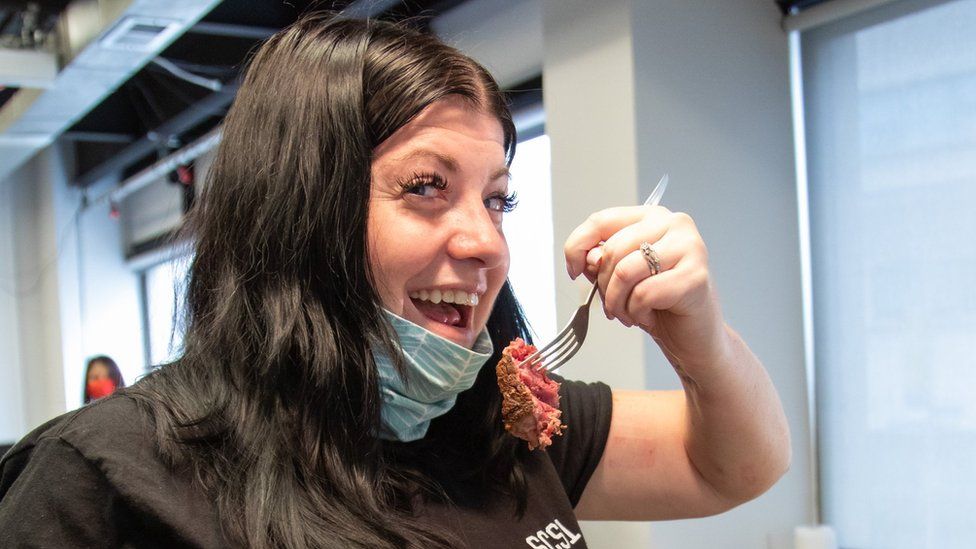
Published11 minutes agoShareclose panelShare pageCopy linkAbout sharingImage source, Tim Betler, University of PittsburghBy James GallagherHealth and science correspondentElectrically stimulating the spinal cord instantly restores some ability to control the arm and hands in people who have had a stroke, US researchers say.Heather Rendulic, from Pittsburgh, was able to cut and eat a steak by herself for the first time in nine years. She said the technology was “nothing short of amazing”.The University of Pittsburgh team say more research is needed to see who can benefit, as the spinal implants have been tested in only two people.Strokes disrupt the blood supply in the brain and lead to brain cells dying. This often leaves those that survive with long-term health problems.People can retain the desire and intent to move but the instructions from the brain become so weak nothing happens.Never recoveredWhen Heather was in her early 20s, she was diagnosed with a cluster of abnormal blood vessels in her brain – a cavernous angioma. It bled multiple times and led to a large stroke. One morning, she woke up unable to move the left side of her body. In the nine years that followed, Heather learned to walk again but control of her left arm and hand never recovered – “something I struggle with every day”. Even the simplest tasks, such as putting on shoes, became a challenge. Before having the procedure, Heather’s goal was “to be able to cut a piece of steak”, as she relied on her husband to do it. Image source, Tim Betler, University of Pittsburgh Heather had electrodes implanted in her neck so parts of her spinal cord could be stimulated. The nervous system communicates with electricity – but after Heather’s stroke, the electrical signals travelling from her brain were too weak to activate the nerves controlling her arm and hand movements. Stimulation excites the nerves so they are already itching to respond – and now, those weak messages are enough to trigger movement. It worked on the first day and Heather was able to open and close her hand for the first time in nine years.’Started crying'”Nobody was expecting it would work that fast,” Dr Marco Capogrosso, from the University of Pittsburgh, told me.”She started crying, the family was there and they started crying and then all of us started crying, so it was a very, very emotional moment.”Heather was “moving my arm and hand in ways I haven’t for almost a decade”.And she got her steak. Image source, Tim Betler, University of PittsburghImage source, Tim Betler, University of PittsburghThe details, published in the journal Nature Medicine, showed the device worked in Heather and one other volunteer. However, the experiment was designed to last for only a month – after which, the electrodes were removed and the beneficial stimulation was gone. But the researchers say the results give a glimpse into the future, where implants could make meaningful differences to people’s lives. Dr Marco Capogrosso told me: “Our patients recover but they don’t become completely normal.”They can recover a lot of independence and a lot of quality of life, just because they can use their arm and hand now, even though they probably cannot play the piano.”The team believe the field could advance quickly as they are using technologies already approved for managing severe pain. But for now, it will take more clinical trials to work out who benefits and how to move the equipment from the laboratory to the home. Dr Rubina Ahmed from the Stroke Association said: “The research is still in the early stages and surgical implants may not be suitable for everyone. Non-invasive stimulation methods are also being tested which could be used by a wider range of people.” Follow James on Twitter.
Read more →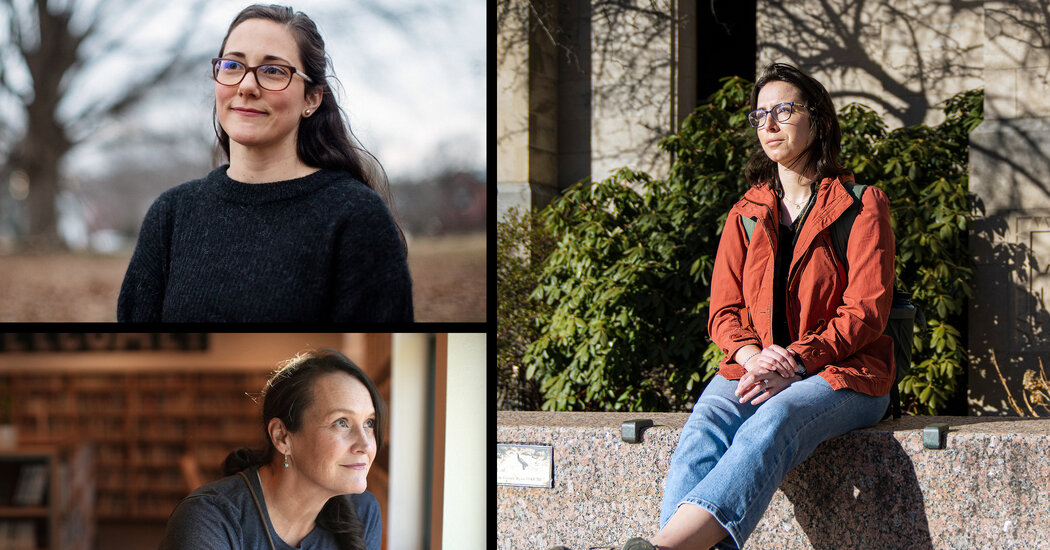
The pandemic has pushed already stressed nurses away from a demanding field. Does the job need to be rethought?Calling It Quits is a series about the current culture of quitting.One morning, in fall 2020, Francesca Camacho drove away from her 12-hour night shift as a critical care nurse at Rush University Medical Center in Chicago and tried to merge onto the highway. The day’s work, in her words, was “just very terrible.” This wasn’t uncommon at the time: The Cook County area was experiencing the highest levels of Covid hospitalization it had ever experienced, surpassed only by the Omicron variant wave the following year.She was on the phone with her parents, a ritual she’d developed as a way to decompress after a shift, when she noticed what appeared to be a teenage driver in front of her.“I remember thinking, What is this girl doing that justifies her not letting me in?” Ms. Camacho, now 27, recalled. “And I just felt this surge of rage.” She hung up the phone and screamed and cried for the rest of the drive home.The next day, she asked her co-workers if anything similar had ever happened to them; they all said yes. Lunchtime therapy sessions with fellow nurses turned into professional therapy sessions. “It really was feelings of anger that I felt, and I think very deep underneath that was just terrible sadness about what I was seeing and what we were all going through,” she said recently.Last August, she quit her job. She is now a first-year law student at Boston University and plans to use her law degree to advocate changes in the medical field.Burnout has always been a part of nursing, an effect of long working hours in physically and often emotionally taxing environments. The Covid pandemic exacerbated those factors and added some of its own: understaffing, a rise in violence and hostility toward health care workers over masking mandates and an increase in deaths, particularly in the early months of the pandemic. In a study from the American Nurses Foundation, released last month, 57 percent of 12,581 surveyed nurses said they had felt “exhausted” over the past two weeks, and 43 percent said they felt “burned out.” Just 20 percent said they felt valued. (Those numbers were largely consistent throughout the pandemic.)“It really was feelings of anger that I felt, and I think very deep underneath that was just terrible sadness about what I was seeing and what we were all going through,” Ms. Camacho said of her time as a nurse during the early days of the pandemic. Vanessa Leroy for The New York Times“Burnout and our current issues have been going on for decades,” said Jennifer Mensik Kennedy, the president of the American Nurses Association. “So what did we learn from the last couple of years? That we need to make sure that we implement programs and processes to decrease the burnout and to improve the work environment. Because Covid is not the last pandemic, or the last major issue to happen.”For some, those well-intentioned changes may not come soon enough: Forty-three percent of those surveyed by the American Nurses Foundation said they were at least thinking about switching jobs. Some, like Ms. Camacho, have left the profession. Others are shifting roles.Kelly Schmidt, 52, spent 25 years working in the newborn I.C.U. at a hospital near her home in San Anselmo, Calif. She was drawn to the job — she credits that to her mother’s work as a midwife and her own “innate sense to want to protect them and heal them” — and found herself doing whatever it took: riding in the back of ambulances, flying in transport planes over the Pacific or in helicopters through the Bay Area fog.More on the Coronavirus PandemicLeaving Millions on the Table: Stop-and-go federal funding floods public health agencies with cash during crises but starves them of funds afterward. In Mississippi, the pandemic showed the pitfalls of that approach.New Drug’s Long Odds: A promising new treatment quashes all Covid variants, but regulatory hurdles and a lack of funding make it unlikely to reach the United States market anytime soon.Dangers Remain for Seniors: For older Americans, the Covid pandemic still poses significant threats. But they are increasingly left to protect themselves as the rest of the country abandons precautions.N.Y.C.’s Mandate: New York City will end its aggressive but contentious vaccine mandate for municipal workers, Mayor Eric Adams announced, signaling a key moment in the city’s long battle against the pandemic.She loved her job, her patients and her co-workers, but over the years other challenges materialized. The transition from physical charts to electronic medical records took her away from her patients’ sides, and, just as the pandemic hit, a transition to a management role tasked her and a co-worker with overseeing more than 90 employees. As nurses themselves began to fall sick and quarantine, the stress grew and the healthy staff ranks thinned, and Ms. Schmidt said she “emotionally started feeling like a robot.”Then, last May, she found herself on the bottom mattress of her daughter’s bunk bed, sick with Covid and quarantined from the rest of her family. She found herself reassessing the two-hour commutes, the emotional labor of the job, the compartmentalization. She saw a job listing for a nearby school nurse position, dusted off and updated her 23-year-old résumé and, on a Sunday night, applied. The district called her on Monday, interviewed her over a video call on Tuesday (“I practically was keeling over by then,” Ms. Schmidt recalled) and offered her the job by the end of the week.“I didn’t want to leave my job hating it,” Ms. Schmidt, now a school nurse, said. “I wanted to leave on a high note. And now I have pictures of the helicopter on my desk and I can chitchat with the little kids and try to figure out if they’re sick or not.”Jim Wilson/The New York Times“I don’t want people to think the job I left was a bad job,” she said. “It was just time for me to go. I’ve had other colleagues say, ‘I don’t want to leave my job hating it,’ so they retire early. I didn’t want to leave my job hating it. I wanted to leave on a high note. And now I have pictures of the helicopter on my desk and I can chitchat with the little kids and try to figure out if they’re sick or not.”Some hospitals recognized there was a problem before the pandemic and tried to fix it. Kathleen Littleton, 35, of Baltimore, not only worked at Johns Hopkins Hospital (and received her master’s degree in nursing science at its university), but served as an instructor in the nursing school as well. The hospital utilized the research of Cynda Hylton Rushton, a clinical ethics professor at the nursing school, specifically “the Mindful Ethical Practice and Resilience Academy,” a program that focuses on mindfulness and meditation to combat burnout, with some success.Then the pandemic hit and, Ms. Littleton recalled, there was, practically speaking, no time to think about mindfulness or meditation.As the Johns Hopkins I.C.U. began to fill in spring 2020, Ms. Littleton’s mental health plummeted. By November she had transferred to the hospital’s labor and delivery wing, thinking it would be less stressful. Instead, she saw a handful of Covid-infected mothers go directly from C-sections to life support.In October 2021, she left Hopkins for a travel-nurse job that paid her three times what she made at her previous role but also put her face-to-face with different tragedies: gunshot wounds, car accidents, stabbings, train crashes. She was regularly disassociating, she said, looking down at her hands and wondering whose they were. In the bath one day she envisioned the light above her falling into the tub and electrocuting her.“Whenever people ask casually — like, ‘How are you doing?’ — nobody really wants to hear the answer,” Ms. Littleton said. “So much of what happens in the hospital, it’s almost impossible to describe to your friends or family members who aren’t involved in health care. And it’s hard to talk about mental health. In nursing, sometimes it’s frowned upon when people say, ‘Oh I feel so burned out.’ It’s almost like a shameful way to approach it.”At her therapist’s suggestion, she checked off the days until her contract ended in May 2022. With the extra money she had saved from the pay bump she took an extended honeymoon through Spain, Portugal and the Netherlands. She now works for an insurance company doing health promotion and engagement.“Now I’m finding myself just randomly making blueberry scones at 9:30 at night, or deciding with my husband to go see our friends play music at this bar spontaneously,” she said. “I’ve become much less … rigid.”That said, she’s also in therapy for post-traumatic stress disorder, and, like every other nurse interviewed for this story, has felt some level of guilt for her decision to leave her job.Ms. Littleton, and her husband, Alex Lacquement, preparing chili for dinner with friends in their Baltimore home. Though things have improved, she is in therapy for post-traumatic stress disorder. Rosem Morton for The New York Times“I feel so guilty that I am not in the hospital still, and I also really mourn the loss of my critical care career,” Ms. Littleton said. “I’m disappointed not in myself — because it’s not fair to blame myself — but I’m really disappointed that I just can’t do it anymore.”One thing that’s not an issue, Dr. Mensik Kennedy of the American Nurses Association said, is interest in the field. Conventional wisdom — and Dr. Mensik Kennedy’s own expectations — would presume that, with these intense levels of stress and burnout, interest in nursing would wane. Yet there were 60,000 qualified nursing applicants turned away from nursing schools this past year, according to the A.N.A.As experienced nurses leave the profession, there are fewer and fewer opportunities for students to get the hands-on, in-hospital training that is necessary for the profession, which in turn leads to nursing schools not producing enough graduates to fill the gap. Fix the burnout and staffing issues, Dr. Mensik Kennedy said, and the infrastructure can once again support the necessary amount of new graduates needed to fill the nursing gap.The most important way to start, she said, is to regularly measure nurses’ stress levels, to take action when they begins to climb and to change the glorification of working without breaks.For Ms. Schmidt, the former N.I.C.U. nurse, that stress has eased with her new role. “It’s still hard work,” she said. “It’s still good work. I still am super busy. But it’s not always life and death.”
Read more →
With loosened rules around remote prescriptions, a psychedelic-like drug has become a popular treatment for mental health conditions. But a boom in at-home use has outpaced evidence of safety.For Greg Rice, ketamine was transformative. The drug, approved decades ago to sedate patients during surgery, was increasingly being used to treat mental health conditions like his depression.Since his teenage years, Mr. Rice had cycled through a long list of medications. Searching for relief, he sometimes abused his prescriptions and experimented with LSD, psychedelic mushrooms and other illicit substances.At a particularly low point following a breakup a few years ago, Mr. Rice, 38, bought ketamine through back channels and injected it nightly for two weeks. The psychedelic-like journeys seemed to loosen the grip of his negative thoughts. “That was probably not the best way of coping,” he acknowledged, “but it got me through a really rough experience.”He continued using the drug periodically, he said, but was left hunting for a supply — until last year, when he discovered the freewheeling world of telemedicine.Mr. Rice went online and made an appointment with a doctor more than 2,500 miles from his California home whom he had never met. After a 30-minute video call, he received a prescription for a month’s supply. “I finally had an avenue to get pure medical-grade ketamine for cheap, sent to me over the mail,” he said.Not long ago, such an arrangement would have been illegal. Access to ketamine was tightly controlled by the Drug Enforcement Administration, which puts its risk of abuse one notch below that of opioids like oxycodone and fentanyl. While prescribing it for depression was allowed, patients needed to first meet in person with a doctor, and treatment was mostly limited to infusions in clinics.But in 2020, at the height of the pandemic, the Trump administration made it easier to treat patients by telemedicine, including remotely prescribing controlled substances. These regulatory changes, which have continued under President Biden, have made all manner of medical care, from management of chronic diseases like diabetes to substance abuse treatment, more accessible and affordable.While many patients have benefited, the rapid growth of remote prescribing and at-home use of various drugs has outpaced the evidence that doing so is safe and effective. As the gap between medical treatment and online shopping has narrowed, already-thorny debates over the proper balance between availability and safety have become increasingly urgent.The ketamine boom is a particularly fraught case study of this new reality because of the drug’s powerful effects and the vulnerable patients drawn to it: typically those with severe depression or other mental health conditions who have not responded to traditional therapies. The shift away from clinics has led many patients to take the drug more frequently and for longer periods of time — multiple times a week, even daily in some cases, and for months or years — despite scant research on safety.To better understand how this is playing out, The Times interviewed more than 40 patients who said their access to the drug was expanded through telehealth, spoke with two dozen doctors and other medical professionals, and reviewed scientific studies, case reports and data from researchers, government agencies and private analytics firms.Many of the patients said ketamine was life-changing, the only drug that had ever relieved their crushing symptoms. But some described serious drawbacks — including addiction and bladder damage — that have been documented for years among recreational users but have been largely played down by the drug’s medical proponents.On a Reddit forum devoted to ketamine therapy, an online community that has grown from fewer than 2,000 members in 2019 to more than 25,000 today, posts about misuse of the drug have appeared often enough that some members have pleaded for discretion, fearing a tightening of telehealth regulations.“I feel like some authority at some point is going to want to crack down and be like, ‘No, we don’t think this is OK,’” said one ketamine patient, Samuel Brooks, in an interview.Covid-19 exacerbated the nation’s mental health crisis and underscored the inadequacy of many existing treatments, accelerating a reconsideration of once-stigmatized psychedelics. Because the Food and Drug Administration approved ketamine as an anesthetic more than 50 years ago, federal rules allow doctors to prescribe it for other conditions as well, and its use for depression, anxiety and post-traumatic stress disorder was growing before the pandemic.With the rule changes in 2020, the at-home ketamine industry appeared practically overnight.Tech start-ups and individual doctors began offering medical services online, and so-called compounding pharmacies, which can make variations of approved drugs, found a market for tablet and lozenge versions of ketamine, normally manufactured as a liquid and distributed in vials.Primed by glowing media coverage and aggressive advertising, many patients interviewed by The Times came to regard the drug — and its remote availability — as akin to a miracle cure with few risks.They can now pursue a treatment course not approved by the F.D.A., taking forms of the drug that are also not approved, produced by companies operating largely outside the agency’s oversight — all without comprehensive monitoring.Some found their way to online physicians like Scott Smith, a family medicine doctor who closed his practice in South Carolina in 2020 to focus full time on online ketamine treatment. In the past three years, Dr. Smith has remotely treated about 3,000 patients in 44 states, and has been featured in The Washington Post and on social media sites like YouTube and Reddit.Others sought out fledgling tech companies like Joyous, which offers rock-bottom pricing and daily dosing adjusted by text message, or a host of more established firms.Studies of recreational users have documented that ketamine — popularly known as K or Special K, with a reputation as a club drug — can be addictive and, when taken chronically in high doses, can cause severe bladder damage that in the worst cases requires surgical reconstruction of the organ. There are indications that abuse may also lead to cognitive impairment.Advocates of increased therapeutic use say those issues are exceedingly rare or nonexistent at the doses and frequencies commonly prescribed. But because treatment is remote and there is little mandatory reporting of side effects, it is nearly impossible to accurately gauge their prevalence.Patients who told The Times they began experiencing problems after starting ketamine included a 50-year-old man who must use a catheter to empty his bladder and a 37-year-old woman who wears adult diapers.More on the Coronavirus PandemicLeaving Millions on the Table: Stop-and-go federal funding floods public health agencies with cash during crises but starves them of funds afterward. In Mississippi, the pandemic showed the pitfalls of that approach.New Drug’s Long Odds: A promising new treatment quashes all Covid variants, but regulatory hurdles and a lack of funding make it unlikely to reach the United States market anytime soon.Dangers Remain for Seniors: For older Americans, the Covid pandemic still poses significant threats. But they are increasingly left to protect themselves as the rest of the country abandons precautions.N.Y.C.’s Mandate: New York City will end its aggressive but contentious vaccine mandate for municipal workers, Mayor Eric Adams announced, signaling a key moment in the city’s long battle against the pandemic.Some said they concealed problems from their telehealth providers for fear of losing access to the only treatment that had ever helped, while others acknowledged abusing their prescriptions, taking too much and in some cases dissolving and injecting the drug.On private online forums for medical professionals, accounts of bladder issues are common enough that some providers are becoming more restrained in their prescriptions, according to multiple people with access to the websites. Some psychiatrists at prominent institutions have published cautionary reports.The approaches of patients like Mr. Rice highlight the underlying tension. He acknowledged his “addictive tendencies” with ketamine, but his top priority in choosing online treatment was clear: “I wanted something hands-off.”Keith NegleyA Trip With RisksMany ketamine patients described the drug as a reset button for the brain. During treatment sessions, they experienced pleasant visualizations, sometimes accompanied by a sense of existing outside themselves and melding with the universe. Afterward, their daily problems seemed less weighty.The considerable hype surrounding ketamine stems in part from the drug’s ability to affect brain receptors that traditional antidepressants do not target. The psychedelic-like trip, many believe, is integral to the drug’s therapeutic effect.But for some patients who spoke to The Times, including a Tennessee cybersecurity manager and a former Pennsylvania factory worker, the profound experiences of their early sessions faded. Chasing the lost high, they sought increased doses, took multiple days’ worth at once or altered the medicine to release more of its payload.For others — a Utah data analyst, a California bartender and a Pennsylvania internet entrepreneur — ketamine treatment eventually meant dealing with a constant urge to urinate, often painfully, as well as other bladder ailments.The experiences of the dozens of patients who shared their stories with The Times encapsulate both the well-publicized promise of ketamine and the lesser-discussed risks.Driving the interest are early-stage studies showing that the drug can rapidly and dramatically relieve symptoms of depression. But there has been little research on how to maintain the improvements and even less on whether prolonged treatment is safe.When discussing the risks, prescribers often insist there is a sharp line between chronic abuse and medical use.“That happens in people that abuse ketamine and use more than a thousand milligrams on a daily basis,” Dr. Smith, the online physician from South Carolina, said of bladder damage. “We’re treating most people with 200 milligrams every three days. We haven’t seen anybody that’s had that problem.”Still, two of Dr. Smith’s former patients said in interviews that they experienced serious issues that required care from a urologist. Both said they did not tell Dr. Smith because they felt addicted to the drug and wanted to continue their prescriptions, which they were misusing.Among the 12 patients who described bladder problems, most saw their symptoms resolve after they stopped taking ketamine. Most said their doctors couldn’t conclusively peg the cause of their problems but identified ketamine as the likely culprit.Three patients said their troubles persisted. One of them, a man living in Utah, recounted the painful daily ritual of using a catheter to empty his bladder but expressed no regrets. Without ketamine, he said, he might have killed himself.For other patients, a similar calculus led them to stay on ketamine despite the harm. All of them spoke on the condition that their full names not be published, for fear of losing access to the drug or affecting their job prospects.Sarah, a 30-year-old Californian, said she had tried more than a dozen psychotropic medications and undergone more than 30 electroconvulsive therapy treatments before finding ketamine. Now, between periodic infusions at a local clinic, she takes tablets at home that she gets through an online service.But she has not told either provider about her worsening bladder issues. Her urologist may soon need to inject Botox into her bladder, a treatment for certain urinary problems.“It’s kind of a lot to admit that you have bladder issues as a 30-year-old, mostly because you’re causing it,” she said.Many ketamine proponents minimize the potential for addiction and abuse. Dr. Smith said that of the thousands of patients he had treated, only two or three had misused the drug, and that he got them help. He said he had reported one patient to the D.E.A. tip line and also stopped treating a handful of patients after learning they were taking more than prescribed.“I have to go through hoops to be licensed to treat people with controlled substances,” he said. “So I comply with all federal and state laws regarding that. And part of my daily job is to look for people that are abusing the medicine or diverting the medicine.”Three of Dr. Smith’s patients told The Times they abused their prescriptions and concealed it from him. Two others described dissolving the tablet or lozenge and administering it rectally, a practice known as boofing that some believe produces a faster and more intense high.Abuse is “absolutely unacceptable,” Dr. Smith said, but “just because there’s a handful of people that don’t follow directions, that does not mean that this medicine is not safe for the rest of the population of competent adults.”Six patients of various medical providers said they came to crave the ketamine trip so much they began to use the drug compulsively. The more they took, some found, the more they needed.“It’s pretty powerful,” said a 59-year-old woman from Philadelphia who sometimes takes more than prescribed, runs out early and tries to buy the drug on the dark web.A 41-year-old man from Nashville who has battled depression since childhood described the drug as his “superpower.” People liked him more, he had more energy and “I got more stuff done.”After undergoing infusions at a clinic, he said, he transitioned during the pandemic to taking small lozenges called troches at home. He started at 100 milligrams a day, then took 200, then 400. His provider would not increase the dose any further, so he now exhausts his monthly prescription early — taking 800 milligrams a day.Speaking on a Tuesday afternoon in December, he said he had just received a performance review at the company where he works in cybersecurity.“My boss was like, ‘You’re not meeting expectations,’” he said.“I’m using it right now,” he continued. “Since the start of this call, I’ve taken 400 milligrams.”Keith NegleyIn the Absence of ScienceWhile proponents of at-home ketamine stress the lack of scientific studies showing that long-term medical use might be harmful, the converse is also true: There are few studies showing that it isn’t. Some urge caution.“We know at a certain point you will get both the neurotoxic and the bladder-toxic effects — we just don’t know at what level,” said Dr. Gerard Sanacora, a psychiatrist and leading ketamine researcher at Yale University.In the absence of data, some medical professionals said they were becoming more conservative in their prescribing because of anecdotes in published case reports or online forums.Professional groups have developed informal guidelines that emphasize catching symptoms early, reducing the dose and spacing out treatments. But some at-home providers are pushing in the opposite direction, viewing ketamine as just another medicine to be taken regularly.“I would be worried about chronic usage” said Dr. Adam Howe, a urologist at Albany Medical Center who advises a group developing treatment guidance. Damage is avoidable with proper safeguards, he said, but “common sense would tell you, if you’re to use this every day for years on end, then at a certain point, you’re going to be damaging your bladder probably.”The literature on addiction and abuse among medical users is also thin and inconclusive. Supporters point to studies indicating that patients on ketamine rarely, if ever, have those issues. Others note a pattern common in drug development: an initial overestimation of benefit, followed by more tempered results and recognition of previously undetected harm.“We really don’t know what sort of addiction we might be causing,” said Dr. Noah Capurso, a Yale psychiatrist who co-wrote a case study of a patient whose at-home, prescribed use rapidly escalated until he was involuntarily admitted to a psychiatric unit.Doctors at the Baylor College of Medicine and the Mayo Clinic have published similar accounts. In one case, after a 52-year-old man who regularly took more than prescribed had to be hospitalized, his family said the drug was “ripping his life apart” and he had “no control over it.”Keith NegleyProduction Is BoomingFor years, mental health clinics have administered the F.D.A.-approved liquid form of ketamine that doctors also use to sedate patients in surgery. But at-home treatment created demand for a version that was less potent and easier to take — something not available from drugmakers.Enter a uniquely positioned industry: compounding pharmacies.These specialized companies operate in a murky regulatory space somewhere between a corner drugstore and a pharmaceutical manufacturer. They can produce variations of approved drugs but do not have to follow the same quality-control rules as drugmakers.Most compounding pharmacies do not have to notify federal regulators when they learn of a patient experiencing a problem, and they are rarely, if ever, inspected by the F.D.A. In many cases, the agency may not even know they exist.The companies were originally granted legal leeway to produce small amounts of drugs for patients with particular needs, such as an allergy to an ingredient in a commercial product or an inability to swallow a pill. But some have dramatically grown their production capacity and reach.Companies that once served primarily local customers now ship their products across the country as the ketamine boom has presented an alluring opportunity.“It’s become the new buzz in this space,” said Jeanine Sinanan-Singh, chief executive of Vitae Industries, which sells a machine that compounding pharmacies can use to produce doses at a faster clip than with other methods.The size of this new market is difficult to gauge. The number of mental health patients prescribed ketamine more than doubled from just under 15,000 in 2016 to nearly 30,000 in 2021, according to data from the analytics company Komodo Health. But the actual numbers are likely to be far higher because the data is drawn from insurance claims, and plans tend not to cover the drug’s off-label uses.Most compounders do not report the amount of ketamine they produce to the F.D.A., and the agency refuses to disclose data from those that do, asserting that it is confidential commercial information. In a statement, the F.D.A. noted its limited authority over most compounding pharmacies and said it “continues to monitor reports of adverse events or other complaints involving compounded ketamine.”Some compounding pharmacies have gone public with stepped-up efforts to attract customers. In social media posts and mailers to doctors, they extol the benefits of ketamine, and some offer to connect patients with prescribers. They promise fast shipping and low prices. Compounders can formulate troches from inexpensive generic ketamine and charge between $50 and $100 for a month’s supply, a fraction of the cost of receiving treatment at a clinic.After a deadly meningitis outbreak was linked to one compounding pharmacy in 2012, the F.D.A. sought to impose greater oversight on companies that mailed drugs to other states in large volumes, but the industry has successfully stalled the restrictions. As a result, most of the largest ketamine compounders can ship across the country with little federal scrutiny.Scott Brunner, chief executive of the Alliance for Pharmacy Compounding, a trade group, said that the F.D.A.’s proposals constituted overreach but that the industry was open to some reporting of interstate shipments and adverse events. “Compounding pharmacists’ concern is always the health and safety of their patients,” he said.Just one of the major at-home ketamine compounders appears to have registered with the F.D.A., and the resulting inspections have turned up serious quality problems, according to agency records.That company, Empower Pharmacy, ships to all 50 states. Three times over the past five years, F.D.A. inspectors have visited its Houston production site and cited violations, including inadequate monitoring for contamination, insufficient investigations of batches that failed quality tests and a failure to properly report adverse events.During a visit last summer, inspectors found that the company had been producing ketamine nasal spray for more than two years without ever conducting potency tests to ensure the product had the correct strength.Empower did not respond to questions from The Times. In a letter to the F.D.A. after last year’s inspection, the company said it had been “steadily improving its management and corporate governance” and “restructuring its manufacturing, quality and compliance departments for greater oversight.”Keith NegleyDaily Doses at Bargain RatesCost concerns led Chad Curl to the telehealth start-up Joyous. After trying seemingly everything — prescription pills, electroconvulsive therapy, an implanted nerve stimulator — he found relief from depression at a clinic administering a closely related drug, esketamine, which is a nasal spray approved by the F.D.A. as a mental health treatment. But it cannot be taken at home, and he could afford only a few sessions.Searching online for alternatives last fall, he found an apparent bargain: $129 a month, ketamine included. He filled out Joyous’s intake questionnaire, had a 20-minute virtual appointment and received a prescription, all in the same night.“I was like, ‘Wow, I didn’t even plan on this today, and here we go,’” he said.Joyous is the new kid on the at-home ketamine block, a reflection of where market forces and scant regulation have taken the fledgling industry. The company has sought to distinguish itself by promoting its tech-driven, customizable treatment plans, but the real draw for many patients is its pricing.“I signed up for Joyous, if we’re being honest, just because of the price,” said Francisco Llauger, who, like Mr. Curl, found in-clinic treatments effective but too expensive.Joyous illustrates a reality of how at-home ketamine has evolved: Patients with some of the most serious and complicated mental health challenges are turning to some of the most hands-off treatment, according to The Times’s interviews.The company has carved out its place with a novel approach: Instead of prescribing higher doses to be taken once or twice a week, Joyous offers lower doses to be taken daily.Melding the argots of Silicon Valley and self-care, Joyous delivers treatment primarily by text message, replete with exclamation points and emojis. Each morning, patients receive a questionnaire on their phones asking about symptoms and side effects, and each evening, they get a text with the next day’s recommended dose.“Our algorithms use all of this information to tailor the protocol exactly to your brain and body’s needs,” Sharon Niv, co-founder and chief of customer experience, says in a video.In written responses to questions from The Times, the company said its general treatment approach “has been adapted and used by providers nationally and internationally” for more than five years and its internal data indicated that “this medicine is highly effective for both anxiety and depression.” It declined to provide details about how its technology works. The company says lower doses translate to lower risk. Yet most of the eight Joyous patients who spoke with The Times said their doses reached the maximum the company would prescribe within weeks. Some providers who generally support at-home treatment expressed concern that taking ketamine every day, even at lower doses, could heighten the risk of tolerance, addiction and bladder problems.“Patient outcomes are our highest priority,” the company said in its written responses. “Joyous takes patient safety and risk mitigation very seriously.”
Read more →