Pharmacists warn drug shortage affecting cancer patients

47 minutes agoShareSaveShareSaveGetty ImagesPharmacists have warned that “one of the worst” examples of medicine shortages is affecting cancer patients.Creon, a pancreatic enzyme replacement therapy (Pert), helps digestion and is required by patients with pancreatic cancer, cystic fibrosis, and chronic pancreatitis. It is thought more than 61,000 patients in the UK need the medicine.Some patients are said to be “skipping meals” to ration their medication due to a shortage of it, according to the National Pharmacy Association (NPA).A Department of Health and Social Care spokesperson said there were “European-wide supply issues” and it was “working closely with industry and the NHS” to mitigate the impact on patients.Without the drug, patients lose weight and strength, which means their ability to cope with treatment such as chemotherapy is reduced.Some experts have predicted shortages continuing until next year.The Department of Health and Social Care has extended a serious shortage protocol for Creon which has already been in place for a year. This indicates concern about shortages of a medicine and allows pharmacists to give patients an alternative – though they argue other drugs are also in short supply.A spokesperson for the department said the “European-wide supply issues” were caused by manufacturing supply constraints.’Extra layer of stress’The National Pharmacy Association said more than three quarters of members covered in a recent survey felt the current arrangements for managing the shortages were inadequate. Some reported that patients were skipping meals and travelling long distances to get hold of the medication, according to the NPA.One said it was the “worst stock shortage” they had ever had to deal with.BBC News highlighted the issue in February after a woman got in touch saying it was impossible for her husband, who has pancreatic cancer, to digest his food without Creon. That month, leading pancreatic clinicians and charities wrote to the prime minister, saying the absence of Pert can have a “devastating impact on people’s lives”.They called for a national strategy to tackle the shortage.Alice from Birmingham was diagnosed with pancreatic cancer in 2023 and initially got 15 boxes of Creon capsules every month to help her tolerate chemotherapy. She can now get only six or seven and is having to skip snacks. The 64-year-old said the shortage had profoundly affected her mental health. She told the BBC: “Each day I’m trying to balance: what shall I eat, shall I have a more substantial meal, shall I take my supplements and that creates an extra layer of stress and worry whilst I’m trying to put my life together again after having this diagnosis.”‘Taking desperate measures’Alfie Bailey-Bearfield of Pancreatic Cancer UK said the charity had been raising concerns with the government and suppliers for more than a year and it was vital that officials intervened to try to boost supply.”Thousands of people affected by pancreatic cancer rely on taking Pert tablets every time they eat simply to digest their food and absorb nutrients – something most of us take for granted,” he said.”It’s totally unacceptable that they are still taking desperate measures which puts their health, wellbeing and their eligibility for treatment at risk,” he added.Dr Leyla Hannbeck, chief executive of the Independent Pharmacies Association said it was very difficult for her members to obtain supplies from the wholesaler.”The shortages with Creon has been ongoing for so long and it seems no effective attempts are being made by officials to make the process easier for pharmacies and patients and to put robust plans in place to prioritise the availability of this product,” she said.”Instead they continue prolonging the current processes.”A Department of Health and Social Care spokesperson said it knew “how frustrating and distressing” medicine supply issues can be for patients and clinicians caring for them.They added: “The European-wide supply issues with Creon are caused by a limited availability of raw ingredients and manufacturing capacity constraints.”We are working closely with industry and the NHS to mitigate the impact on patients and resolve the issues as quickly as possible.”More on this story

Read more →
Streeting urges doctors to vote no in strike ballot

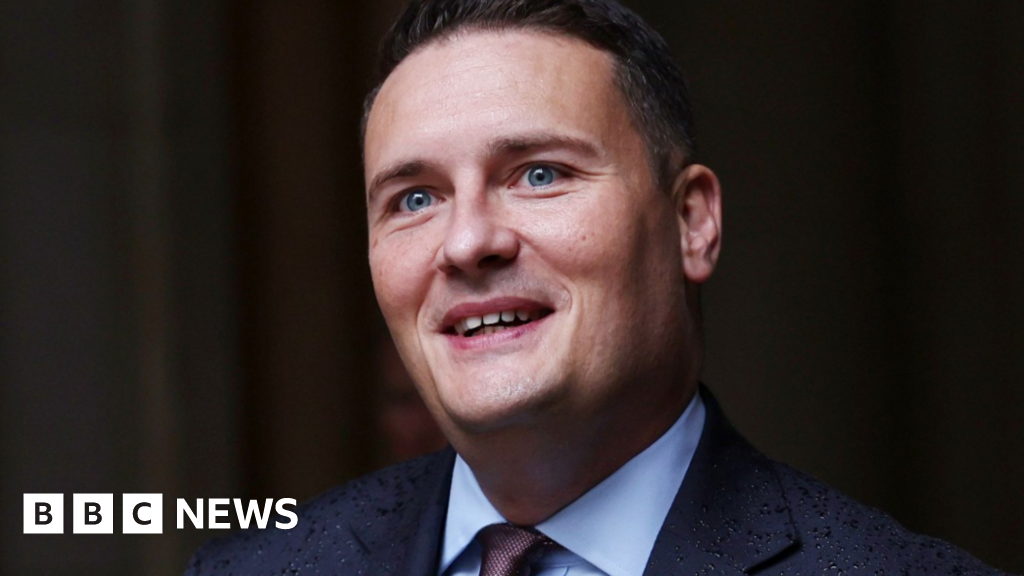
Health Secretary Wes Streeting has urged doctors in England to “vote no” in a ballot on industrial action which gets under way on Tuesday.In a BBC interview, he urged resident doctors, the new name for junior doctors, to “work with the government” and warned strikes risked hampering the progress being made in the NHS.He said it was in no-one’s interests for strikes to take place.Last week it was announced resident doctors would be getting a 5.4% average pay rise this year – more than other doctors, nurses and teachers.But resident doctors, who took part in 11 strikes in 2023 and 2024, said it was not enough to make up for below-inflation pay awards since 2008.The union is urging members to vote for industrial action, with sources saying strikes would be the likely action taken.This year’s pay rise comes after resident doctors were awarded rises worth 22% over the previous two years.Streeting agreed to that deal shortly after coming into office, ending a dispute which had lasted more than a year.Taking account of this year’s pay rise, it means the starting salary for a doctor fresh out of university has risen by £9,500 over the past three years to around £38,800, the government said.But the British Medical Association (BMA) said even after the latest pay rise another 20% was needed to bring wages back to where they were in 2008.Resident doctors’ committee co-chairs Dr Melissa Ryan and Dr Ross Nieuwoudt said: “We are urging doctors to vote yes to strike action. “By voting yes they will be telling the government there is no alternative to fixing pay – this cannot wait for different fiscal circumstances and a healthier NHS. The answer is to fix it today.”The vote on industrial action runs until 7 July.Streeting said his door was always open but added there was no more money to increase salaries above the latest award.And he said a fresh bout of strikes would put attempts to rebuild the NHS at risk.Speaking to the BBC, Streeting said: ” I don’t think strikes are in their interests, in patients interests and I certainly don’t think it’s in the interest of the NHS overall.”Streeting has often cited the deal he reached last year to end the previous round of strikes as evidence of the government’s ability to reform the health service and cut waiting lists. Meanwhile, BMA sources said consultants were likely to start a dispute process over their 4% rise – the first step towards moving to an industrial action ballot.Other staff including nurses, midwives and physios have been given a 3.6% increase. The Royal College of Nursing said it was “grotesque” nurses were getting less than doctors for the second year in a row.The Scottish government has agreed a deal worth 8% over two years with health unions representing all staff apart from doctors and dentists. There have been no strikes by health workers in Scotland.

Read more →

Infected blood victims call for faster compensation

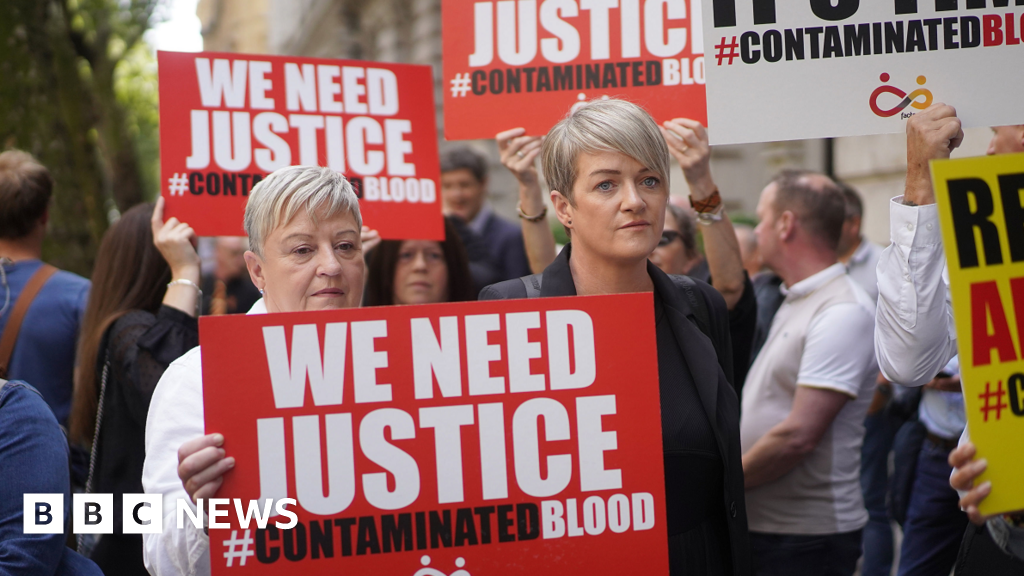
Compensation for infected blood victims needs to be delivered faster, campaigners have said on the first anniversary of a public inquiry report into what has been described as the worst treatment disaster in NHS history.”We are dying at pace, the government needs to be working at pace, not just talking about it,” one campaigner said on Tuesday as a letter calling for action was handed in to the prime minister.Diana Johnson, a minister who for years as a Labour MP supported victims of the scandal, said it was “disappointing” to hear how slow process had been.But Cabinet Office minister Nick Thomas Symonds said the government was “committed to delivering compensation as swiftly as possible”.More than 30,000 people in the UK were infected with HIV or hepatitis C or both after being given contaminated blood products in the 1970s and 1980s. Around 3,000 people have died.In his final report released one year ago, inquiry chair Sir Brian Langstaff said the scandal had been largely avoidable and involved systemic failings.Campaigners had expected rapid compensation, but so far only 100 people have received payouts. They gathered at Westminster on Tuesday to hand in a letter to Sir Keir Starmer, stating their concern at the lack of progress. “Twelve months on from the publication of the Infected Blood Inquiry’s devastating report, there remains deep concern from the contaminated blood community that politics is continuing to fail them,” the letter said.”As the Infected Blood Inquiry heard when it reconvened hearings on 7 May 2025, the community’s voice was absent when the Infected Blood Compensation Scheme was drawn up. The resulting scheme contains fundamental flaws, which could and would have been foreseen.”Speaking exclusively to the BBC, Diana Johnson MP, who is now a Home Office Minister, told BBC News that she appreciated the concerns of campaigners and sympathised with their argument.”It’s disappointing to hear just how slow the process is though, and I fully appreciate the concerns that so many people who are gathered today are making about wanting to get those payments out to people,” she said.”We know on average someone dies every couple of weeks, so this has to be paid. But the money is there.”When asked whether she could use her position as minister to make their case she said she was speaking to the BBC as a constituency MP.Jacqueline Wrixton, who was infected with hepatitis C as the result of a blood transfusion, said: “It’s been a year since the euphoria of the recommendations, and yet, as an infected person… the statistics that roughly two a week are dying, we’ve still not got payment.”We are dying at pace, the government needs to be working at pace, not just talking about it. We need to see the actions.”Cabinet Office minister Thomas–Symonds said: “The victims of this scandal have suffered unspeakably.”After decades of delay, it has fallen to this government to act. We are acting on the inquiry’s 12 recommendations, so that this never happens again, and to get justice for victims.”While no amount of compensation will make up for the suffering people have endured, we are committed to delivering compensation as swiftly as possible.”

Read more →

Child obesity clinics seeing BMIs over 50

Just nowShareSaveShareSaveGetty ImagesA disproportionate number of children referred to NHS excess weight clinics in England are from the most deprived areas, and a significant number are neurodivergent or have other health conditions, a study has found.Some have a body mass index (BMI) over 50, with 40 deemed to be severely obese.Nearly 4,800 under-18s have been referred to the clinics since they were set up in 2021, according to research carried out by Leeds Beckett, Sheffield Hallam, Leeds and Bristol universities and presented at the European Congress on Obesity.The clinics provide mental health support and care for other underlying conditions, as well as dietary advice. Specialist excess weight clinics treat severely obese children in England aged 2-17, who are flagged as needing help by their GP or another doctor.The clinics are run by multi-disciplinary teams including paediatricians, psychologists and dieticians. The new research, which looked at 32 of the clinics, found that over 40% of the children attending them lived in the most deprived neighbourhoods.Based on data from more than 3,000 child patients, many had other health conditions:24% had autism23% a learning disability30% had liver diseasea significant proportion had another health complication”Living with excess weight can cause problems affecting every organ system,” said Professor Simon Kenny, national clinical director at NHS England.”We also know that children living with health problems can have poorer school attendance, which can affect their future employment and life opportunities. “The NHS won’t just sit by and let children and young people become ill adults.”Some of the specialist clinics are using digital technology for weight loss support. For example, children can use ‘smart scales’ at home which do not show their weight. The data is connected to a mobile app to show the trend without the numbers. Only clinicians are able to see the data and provide feedback to the family.In another paper presented to the European Congress on Obesity, presented by Dr Annika Janson from Karolinska University Hospital in Sweden, researchers said giving weight loss jabs to children could be effective. She said that trials of the drugs in children aged 12 and over had shown a loss of 5-16% of body weight after a year, but added it was “difficult to isolate the effect of adding GLP-1 drugs to the plethora of treatments that are already available”. The medicines regulator NICE has not approved weight loss drugs for routine use by children in England, although they can be provided by specialists if there is urgent clinical need.What does BMI mean?Body mass index (BMI) is widely used as a simple way of finding out whether a person is a healthy weight for their height.For adults:a BMI of 18.5 to 24.9 is considered to be a healthy weighta BMI of 25 to 29.9 is considered to be overweighta BMI over 30 is considered to be obeseBut it’s not accurate for everyone because it can’t tell the difference between fat and muscle, and doesn’t take into account ethnic background.Your waist circumference may be a better guide.

Read more →

Urgent care worse than pre-pandemic, think tank says

10 hours agoShareSaveShareSaveEPAA leading health think tank says urgent and emergency care in England is performing “far worse” than before the pandemic.The Health Foundation argues that the NHS was “in distress” this winter with A&E waiting times reaching a record high.The group says it would be wrong just to blame relatively high levels of flu.The government is due to publish an urgent and emergency care plan soon. The Department for Health and Social Care said that hospitals were “feeling the strain” but that it was taking “decisive action” to prevent winter crises.The Health Foundation report on the recent winter says that the number of people waiting 12 hours or more in A&E after a decision to admit to a ward was the highest since modern records began. It topped 60,000 in January, or 11% of emergency admissions.The report says that a familiar problem remains as acute as ever – delays discharging patients from hospital who are fit to leave. This, it says, made bottlenecks worse in A&E and for ambulances trying to hand over patients and that delays for those handovers were worse than in previous winters.The authors acknowledge that flu cases in hospitals were higher than usual but no worse than in the winter of 2022-23 – though the number took longer to fall than in that year.Hospital patients with the winter vomiting bug norovirus were also more numerous than in many winters.But hospital admissions for the respiratory virus RSV were similar to previous winters, and Covid admissions remained relatively low. Overall emergency hospital admissions fell slightly compared to the previous winter, as did the number of people going into major A&E units.The authors argue that the NHS should be prepared for winters like this one and that blaming external factors such as winter bugs risked offering “false comfort” about the state of the health service.Tim Gardner, assistant director at the Health Foundation, said an annual winter crisis did not have to be inevitable and the analysis should be a “wake up call to the government to focus on the underlying issues”.PA MediaA Department for Health and Social Care spokesperson said: “Despite our actions to protect patients during the colder months, including vaccinating more people than last winter, we know hospitals are feeling the strain.”Annual winter pressures should not automatically lead to an annual winter crisis.” It says its “decisive action” included ending the junior doctors’ strikes and rolling out the country’s first RSV vaccine.The Royal College of Emergency Medicine said in response to the report there was a “clear roadmap” and that the urgent and emergency care plan and a 10-year plan for the NHS, which are both due soon, offered “an unmissable opportunity to implement changes that are so desperately needed”.In a separate move the Department of Health and Social Care said a target for increasing the number of hospitals in England allowing patients to view appointments through the NHS app had been exceeded. The target was 85% by March and the outcome was 87%, up from 68% last July, it said.The department also said because more patients could get access to correspondence via the app, 12 million fewer letters had been sent since July. There were 1.5 million fewer missed appointments, it said. Ministers said this was helping cut waiting lists and saving taxpayers money.

Read more →