Nose shape gene inherited from Neanderthals

Humans inherited genetic material from Neanderthals that affects the shape of our noses, finds a new study led by UCL researchers.
The new Communications Biology study finds that a particular gene, which leads to a taller nose (from top to bottom), may have been the product of natural selection as ancient humans adapted to colder climates after leaving Africa.
Co-corresponding author Dr Kaustubh Adhikari (UCL Genetics, Evolution & Environment and The Open University) said: “In the last 15 years, since the Neanderthal genome has been sequenced, we have been able to learn that our own ancestors apparently interbred with Neanderthals, leaving us with little bits of their DNA.
“Here, we find that some DNA inherited from Neanderthals influences the shape of our faces. This could have been helpful to our ancestors, as it has been passed down for thousands of generations.”
The study used data from more than 6,000 volunteers across Latin America, of mixed European, Native American and African ancestry, who are part of the UCL-led CANDELA study, which recruited from Brazil, Colombia, Chile, Mexico and Peru. The researchers compared genetic information from the participants to photographs of their faces — specifically looking at distances between points on their faces, such as the tip of the nose or the edge of the lips — to see how different facial traits were associated with the presence of different genetic markers.
The researchers newly identified 33 genome regions associated with face shape, 26 of which they were able to replicate in comparisons with data from other ethnicities using participants in east Asia, Europe, or Africa.
In one genome region in particular, called ATF3, the researchers found that many people in their study with Native American ancestry (as well as others with east Asian ancestry from another cohort) had genetic material in this gene that was inherited from the Neanderthals, contributing to increased nasal height. They also found that this gene region has signs of natural selection, suggesting that it conferred an advantage for those carrying the genetic material.
First author Dr Qing Li (Fudan University) said: “It has long been speculated that the shape of our noses is determined by natural selection; as our noses can help us to regulate the temperature and humidity of the air we breathe in, different shaped noses may be better suited to different climates that our ancestors lived in. The gene we have identified here may have been inherited from Neanderthals to help humans adapt to colder climates as our ancestors moved out of Africa.”
Co-corresponding author Professor Andres Ruiz-Linares (Fudan University, UCL Genetics, Evolution & Environment, and Aix-Marseille University) added: “Most genetic studies of human diversity have investigated the genes of Europeans; our study’s diverse sample of Latin American participants broadens the reach of genetic study findings, helping us to better understand the genetics of all humans.”
The finding is the second discovery of DNA from archaic humans, distinct from Homo sapiens, affecting our face shape. The same team discovered in a 2021 paper that a gene influencing lip shape was inherited from the ancient Denisovans.*
The study involved researchers based in the UK, China, France, Argentina, Chile, Peru, Colombia, Mexico, Germany, and Brazil.

Read more →

Corporate Giants Buy Up Primary Care Practices at Rapid Pace

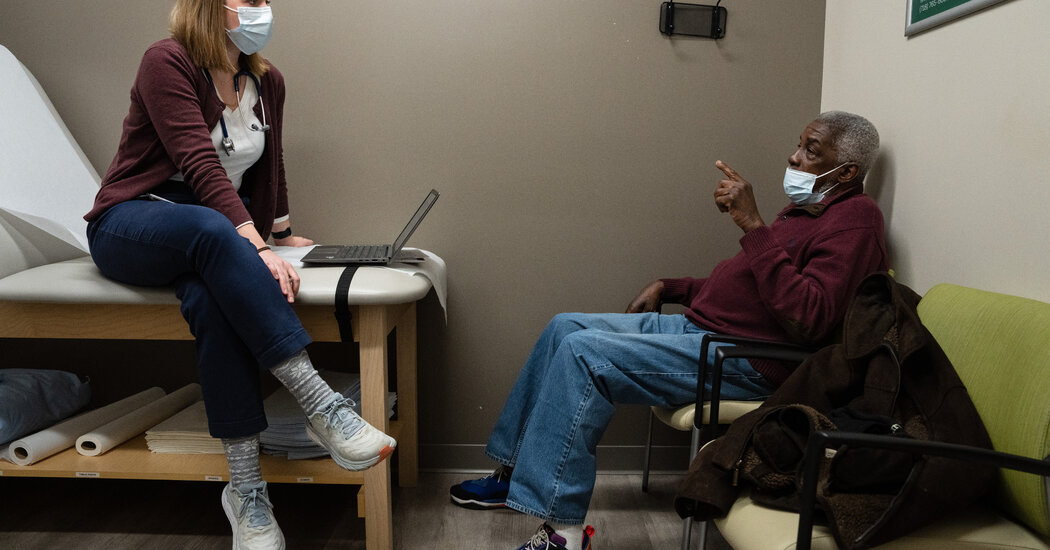
Large health insurers and other companies are especially keen on doctors’ groups that care for patients in private Medicare plans.It’s no surprise that the shortage of primary care doctors — who are critically important to the health of Americans — is getting worse.They practice in one of medicine’s lowest paid, least glamorous fields. Most are overworked, seeing as many as 30 people a day; figuring out when a sore throat is a strep infection, or managing a patient’s chronic diabetes.So why are multibillion-dollar corporations, particularly giant health insurers, gobbling up primary care practices? CVS Health, with its sprawling pharmacy business and ownership of the major insurer Aetna, paid roughly $11 billion to buy Oak Street Health, a fast-growing chain of primary care centers that employs doctors in 21 states. And Amazon’s bold purchase of One Medical, another large doctors’ group, for nearly $4 billion, is another such move.The appeal is simple: Despite their lowly status, primary care doctors oversee vast numbers of patients, who bring business and profits to a hospital system, a health insurer or a pharmacy outfit eyeing expansion.And there’s an added lure: The growing privatization of Medicare, the federal health insurance program for older Americans, means that more than half its 60 million beneficiaries have signed up for policies with private insurers under the Medicare Advantage program. The federal government is now paying those insurers $400 billion a year.“That’s the big pot of money everyone is aiming at,” said Erin C. Fuse Brown, director of the Center for Law, Health & Society at Georgia State University, and an author of a New England Journal of Medicine article about corporate investment in primary care. “It’s a one-stop shop for all your health care dollars,” she said.Many doctors say they are becoming mere employees. “We’ve seen this loss of autonomy,” said Dr. Dan Moore, who recently decided to start his own practice in Henrico, Va., to have more say in caring for his patients. “You don’t become a physician to spend an average of seven minutes with a patient,” he said.The absorption of doctor practices is part of a vast, accelerating consolidation of medical care, leaving patients in the hands of a shrinking number of giant companies or hospital groups. Many already were the patients’ insurers and controlled the distribution of medicines through ownership of drugstore chains or pharmacy benefit managers. But now, nearly seven of 10 of all doctors are either employed by a hospital or a corporation, according to a recent analysis from the Physicians Advocacy Institute.The companies say these new arrangements will bring better, more coordinated care for patients, but some experts warn the consolidation will lead to higher prices and systems driven by the quest for profits, not patients’ welfare.Sara Beth Campos, left, a clinic educator, trained Katie Robertson, a new nurse assistant, at Neighborhood Health Center in Oregon City, Ore.Mason Trinca for The New York TimesInsurers say their purchase of medical practices is a step toward what is called value-based care, with the insurer and doctor paid a flat fee to care for an individual patient. The fixed payment acts as a financial incentive to keep patients healthy, provide more access to early care and reduce hospital admissions and expensive visits to specialists.The companies say they favor the fixed fees over the existing system that pays doctors and hospitals for every test and treatment, encouraging doctors to order too many procedures.Under Medicare Advantage, doctors often share profits with insurers if the doctors take on the financial risk of a patient’s care, earning more if they can save on treatment. Instead of receiving a few hundred dollars for an office visit, primary care doctors can be paid as much as $14,000 a year to manage a single patient.But experts warn these major acquisitions threaten the personal nature of the doctor-patient relationship, especially if the parent company has the authority to dictate limits on services from the first office visit to extended hospital stays. Once enrolled, these new customers can be steered toward chains of related businesses, like a CVS drugstore or Amazon’s online pharmacy.UnitedHealth Group is a sprawling example of consolidated services. It owns the major insurer that has nearly 50 million customers in the United States and oversees its ever-expanding subsidiary, Optum, which has bought up networks of doctors and medical sites. Optum can send patients from one of its roughly 70,000 doctors to one of its urgent care or surgery centers.Senator Elizabeth Warren, Democrat of Massachusetts, is urging the Federal Trade Commission to take a closer look at some of these large deals, which regulators have so far not blocked on antitrust grounds. “I fear that the acquisition of thousands of independent providers by a few massive health care mega-conglomerates could reduce competition on a local or national basis, hurting patients and increasing health care costs,” she wrote to regulators in March.This consolidation of medical care may also run afoul of state laws that prohibit what is called corporate medicine. Such statutes prevent a company that employs doctors from interfering with patient treatment.And experts warn of the potential harm to patients, when corporate management seeks to control costs through byzantine systems requiring prior authorization to receive care.Karen S. Lynch, chief executive of CVS Health, said primary care doctors lower medical costs. “Primary care drives patient engagement and positive clinical outcomes,” she said.Charles Krupa/Associated PressFor example, Kaiser Permanente, the giant nonprofit health plan that also owns physician groups, settled a malpractice case for nearly $2.9 million last year with the family of Ken Flach, a former tennis player who contracted pneumonia and died from sepsis after a Kaiser nurse and doctor would not send him for an in-person visit or to the emergency room, despite the urgent pleading of his wife. Kaiser said medical decisions are made by its providers in consultation with their patients and said its “deepest sympathy remains with the Flach family.”Doctors also chafe at oversight that does not benefit patients. “They are trying to run it like a business, but it’s not a business,” said Dr. Beth Kozak, an internal medicine doctor in Grand Rapids, Mich.Her doctors’ group has teamed up with Agilon Health, an investor-owned company, to work with Medicare Advantage plans. Dr. Kozak said she has to work longer hours, not to provide better care, but to supply additional diagnoses for patients, which increases federal reimbursements under the Medicare Advantage program. “It’s not because I’m giving better patient care,” she said. “It’s all tied to the billing.”The corporate consumption of medical care keeps growing. Walgreens Boots Alliance, one of the largest U.S. pharmacy operations, spent $5 billion for a majority stake in VillageMD, a primary care group, and teamed with Cigna to buy another medical group for nearly $9 billion. And short of an outright purchase, UnitedHealth is partnering with Walmart to offer care to older patients.In promoting the benefits of buying Oak Street clinics to investors, Karen S. Lynch, the chief executive of CVS Health, said primary care doctors lower medical costs. “Primary care drives patient engagement and positive clinical outcomes,” she said.Many of these companies are building chains of clinics. On a recent tour of an Oak Street clinic in Bushwick, one of 16 centers opened since October 2020 in New York City, patients were typically seen from 8 a.m. to 5 p.m., with a nurse available after hours to field questions.Ann Greiner, the chief executive of the Primary Care Collaborative, a nonprofit group, defended the recent forays by private companies into this field of health care, saying they are infusing practices with sorely needed funds and may improve access to care for people in underserved areas.Discussing a patient’s file at Oak Street Health in Bushwick, one of 16 centers opened since October 2020 in New York City.James Estrin/The New York Times“The salaries of the folks in those arrangements are higher,” she said. “They are providing more comprehensive care in many of those arrangements. They are providing more tech and more team-based care. That’s all investment.”But these deals also risk shifting the balance from quality treatment to profits, she said.In recent years, some have invoked the laws banning corporate medicine to challenge these large-scale private operations. Envision Healthcare, a private equity-backed company that employs emergency room doctors, is being sued in California by a unit of the American Academy of Emergency Medicine, a professional group that supports independent practices, accusing it of violating that state’s provisions.“Envision exercises profound and pervasive direct and indirect control and/or influence over physicians practice of medicine, ” according to the lawsuit. The suit maintains that Envision controls the doctors’ billing and establishes medical protocols.While Envision would not comment on the litigation, it said it “follows an operating structure that is common across the health care sector and widely used by nonprofit, privately held and public groups as well as hospitals and insurers.”The big insurers find doctors’ groups particularly attractive, although many have reported sizable losses. The acquisition of Oak Street, which has lost more than $1 billion over the last three years, could help CVS’s Medicare Advantage plans improve their quality or “star” ratings and increase payments for one of its plans.Even small numbers of patients can translate into significant revenue. One Medical, the company Amazon owns, is best known for sleek clinics. The company scooped up a practice specializing in Medicare Advantage. Only about 5 percent of One Medical’s 836,000 members are enrolled in that federal program, but roughly half of its revenue comes from that tiny slice of patients, according to its 2022 financial statements.Regulators are already flagging questionable methods employed by some practices. In November 2021, Oak Street disclosed that the Justice Department was investigating sales ploys like free trips to its clinics and payment of insurance agents for referrals. One doctor at a center described recruiting patients with “gift cards, swag and goody bags,” according to a shareholder lawsuit against Oak Street.“We’re dealing with incredible levels of burnout within the profession,” said Dr. Maxwell Cohen, a doctor at Neighborhood Health Center in Portland, Ore.Mason Trinca for The New York TimesThe lawsuit detailed concerns that doctors were inflating the payments from the federal government by overstating how sick their patients were.Oak Street says it has not been accused of any wrongdoing by the Justice Department and says the lawsuit is “without merit.”These private Medicare Advantage plans have been heavily criticized for racking up enormous profits by inflating costs and exaggerating patients’ illnesses to charge the government more than they should.Under new rules, the Biden administration would eliminate some of the most problematic, overused diagnoses, and doctors and insurers could earn less.But other pathways to profit also explain why corporations covet these deals. Unlike the caps on insurers’ moneymaking, where a Medicare Advantage insurer has to spend at least 85 cents of every dollar on patient care, there are no limits to how much profit these doctor practices and pharmacy chains can make.It may be too soon to determine whether consolidated care will improve patients’ health. “So far, when you look across the industry, the record of these acquisitions has been mixed,” said Dr. Sachin H. Jain, the chief executive of SCAN Group, a nonprofit based in Long Beach, Calif., that offers Medicare Advantage plans.And the investments may not halt the rapid disappearance of the doctor still sought by so many people for ordinary care, including a recent report showingfewer medical school graduates going into the field.“We’re dealing with incredible levels of burnout within the profession,” said Dr. Max Cohen, who practices near Portland, Ore. Since the pandemic, his low-income patients have become much sicker, he said, with the level of illness “through the roof.”

Read more →

Too Many Older Men Are Still Screened for Prostate Cancer

Most have low-risk cancers and rarely benefit from treatment, a new study finds. Actively monitoring the condition is often the best choice.Last summer, Joe Loree made an appointment to see his urologist. He’d occasionally noticed blood in his urine and wanted to have that checked out. His doctor ordered a prostate-specific antigen, or P.S.A., test to measure a protein in his blood that might indicate prostate cancer — or a number of more benign conditions.“It came back somewhat elevated,” said Mr. Loree, 68, an instructional designer who lives in Berkeley, Calif. A biopsy found a few cancer cells, “a minuscule amount,” he recalled.Mr. Loree was at very low risk, but nobody likes hearing the c-word. “It’s unsettling to think there’s cancer growing within me,” he said.But because his brother and a friend had both been diagnosed with prostate cancer and had undergone aggressive treatment that he preferred to avoid, Mr. Loree felt comfortable with a more conservative approach called active surveillance.It typically means periodic P.S.A. assessments and biopsies, often with M.R.I.s and other tests, to watch for signs that the cancer may be progressing. His hasn’t, so now he can get P.S.A. tests every six months instead of every three.Research shows that a growing proportion of men with low-risk prostate cancer are opting for active surveillance, as medical guidelines now recommend.The diagnosis used to lead directly to aggressive treatment. As recently as 2010, about 90 percent of men with low-risk prostate cancer underwent immediate surgery to remove the prostate gland (a prostatectomy) or received radiation treatment, sometimes with hormone therapy.But between 2014 and 2021, the proportion of men at low risk of the cancer who chose active surveillance rose to nearly 60 percent from about 27 percent, according to a study using data from the American Urological Association’s national registry.“Definitely progress but it’s still not where we need to be,” said Dr. Matthew Cooperberg, a urologic oncologist at the University of California, San Francisco, and lead author of the study.Changing medical practice often takes a frustratingly long time. In the study, 40 percent of men with low-risk prostate cancer still had invasive treatment. And approaches vary enormously between urology practices.The proportion of men under active surveillance “ranges from 0 percent to 100 percent, depending on which urologist you happen to see,” Dr. Cooperberg said. “Which is ridiculous.”The latest results of a large British study, recently published in the New England Journal of Medicine, provide additional support for surveillance. Researchers followed more than 1,600 men with localized prostate cancer who, from 1999 to 2009, received what they called active monitoring, a prostatectomy or radiation with hormone therapy.Over an exceptionally long follow-up averaging 15 years, fewer than 3 percent of the men, whose average age at diagnosis was 62, had died of prostate cancer. The differences between the three treatment groups were not statistically significant.Although the cancer in the surveillance group was more likely to metastasize, it didn’t lead to higher mortality. “The benefit of treatment in this population is just not apparent,” said Dr. Oliver Sartor, an oncologist at the Mayo Clinic who specializes in prostate cancer and who wrote an editorial accompanying the study.“It doesn’t help people live longer,” Dr. Sartor said of the treatment, probably because of what is known as competing mortality, the likelihood of dying from something else first.Men whose P.S.A. readings and other test results indicate higher-risk tumors, or who have family histories of prostate cancer deaths, fall into a different category, experts cautioned.“The point of screening is to find the aggressive tumors — a small minority, but they kill more men than any other cancer except lung cancer,” Dr. Cooperberg said.But most prostate cancer grows so slowly, if it grows at all, that other illnesses are likely to prove lethal first, especially among older men. During the British study, one in five men died from other causes, predominantly cardiovascular or respiratory diseases and other cancers.That’s why guidelines from the U.S. Preventive Services Task Force and the American College of Physicians recommend against routine prostate cancer screening for men over 69 or 70, or for men who have less than a 10- to 15-year life expectancy. (Men ages 55 to 69 are advised to discuss the harms and benefits with health care providers before deciding to be screened.)Newly revised guidelines from the American Urological Association recommend shared decision-making after age 69, taking into account age, life expectancy, other risk factors and patients’ preferences.“If you live long enough, prostate cancer is almost a normal feature of aging,” Dr. Cooperberg explained. “By the 70s or 80s, half of all men have some cancer cells in their prostates.”Most of those tumors are deemed “indolent,” meaning that they don’t spread or cause bothersome symptoms.Nevertheless, about half of men over 70 continue P.S.A. screening, according to a new study in JAMA Network Open. Though testing declined with age, “they really shouldn’t be getting screened at this rate,” said the lead author Sandhya Kalavacherla, a medical student at the University of California, San Diego.Even among men over 80, almost 40 percent were still getting routine P.S.A. tests. An elevated P.S.A. reading can prompt a cascade of subsequent tests and treatments, because “‘cancer’ is an emotionally charged term,” Dr. Sartor acknowledged. He still sees patients, he said, whose response to very low-risk cancer is, “I want it out, now.”But treatment involves significant side effects, which often ease after the first year or two but may persist or even intensify. The British data showed, for instance, that six months after treatment, urinary leakage requiring pads affected roughly half of the men who’d had a prostatectomy, compared to 5 percent of those who underwent radiation and 4 percent of those under active surveillance.After six years, 17 percent of the prostatectomy group still needed pads; among those under active surveillance, it was 8 percent, and 4 percent in the radiation group.Similarly, men under active surveillance were more likely to retain the ability to have erections, though all three groups reported decreased sexual function with age. After 12 years, men in the radiation group were twice as likely, at 12 percent, to report fecal leakage as men in the other groups.The financial costs of unnecessary testing and treatment also run high, as an analysis of claims from a large Medicare Advantage program demonstrate. The study, recently published in JAMA Network Open, looked at payments for regular P.S.A. screening and related services for men over 70 with no pre-existing prostate problems.“The initial screening, which is unnecessary, triggers these follow-up services, a series of events catalyzed by anxiety,” said David Kim, a health economist at the University of Chicago and lead author of the study. “The further it progresses, the harder it is to stop.”From 2016 to 2018, each dollar spent on a P.S.A. test on men over 70 generated another $6 spent for additional P.S.A. tests, imaging, radiation and surgery.Extrapolated to traditional Medicare beneficiaries, Medicare could have spent $46 million for P.S.A. tests for men over 70 and $275 million in follow-up care, Dr. Kim said.“We need to change the incentives, how providers get paid,” he said.He suggested that refusing to reimburse them for procedures that receive low recommendations from the U.S. Preventive Services Task Force could mean fewer inappropriate P.S.A. tests and less aggressive treatment in their wake.Some urologists and oncologists have called for a different kind of shift — in nomenclature. “Why are we even calling it ‘cancer’ in the first place?” asked Dr. Sartor, who has argued against using the word for small, low-risk tumors in the prostate.A less frightening label — indolent lesions of epithelial origin, or I.D.L.E., was one suggestion — could leave patients less inclined to see test results as lethal portents and more willing to carefully track a common condition that might never lead to an operating room or a radiation center.

Read more →

Who’s a Good Boy? Ask These Westminster Judges.

For these canine experts, an invitation to pick the winners of the Westminster Dog Show is an honor — and a serious responsibility.On a cold February day more than two decades ago, Ted Eubank, a dog breeder from Texas, stepped into the ring at the Westminster Kennel Club Dog Show for the first time. It was the first year that Cavalier King Charles spaniels — the silky-eared, saucer-eyed dogs that were Mr. Eubank’s specialty — had been allowed to compete in the prestigious dog show, which was then held at Madison Square Garden. The crowd around the ring was 10 people deep, he recalled recently.“Talk about adrenaline, oh, my gosh,” he said.In the years since, Mr. Eubank has become a seasoned Westminster competitor; his Cavaliers, including one indomitable champion named Rocky, have been named the best of their breed several times.But on Monday, Mr. Eubank will be a rookie again when he makes his debut as a Westminster judge. He expects to feel a familiar flutter when he steps into the ring. “I will have butterflies,” he said.More than 2,500 dogs — miniature pinschers, mastiffs and more — will compete in this year’s Westminster Dog Show, the second oldest consistently held sporting event in the United States. Westminster is a show for winners; only dogs who have racked up points at other competitions are eligible.Ted Eubank, a former Westminster competitor and a judge for this year’s competition.Desiree Rios/The New York TimesMr. Eubank and his Cavalier King Charles spaniel, Rocky, in 2007.Barton Silverman/The New York TimesFor a dog show judge, receiving an invitation to assess these canine champions is a prize of its own. “I felt like I won the lottery when the letter came,” said Michael Faulkner, of Center Cross, Va., who first judged at Westminster in 2001. “I actually cried.”When Sharon Redmer, of Whitmore Lake, Mich., received her invitation, she was so excited that she “almost dropped the envelope,” she recalled. And Betty-Anne Stenmark, a judge in California, was not prepared when she was tapped to judge Best in Show in 2018. “I was sorry there was no champagne in the refrigerator,” she said.Picking the best of the best is both a science and an art, Westminster judges said. The task requires applying exacting, rigorous (sometimes arbitrary-seeming) standards, but it also, in the end, often comes down to personal taste.“We all see things differently,” said Cindy Vogels, who will be judging at Westminster for the ninth time this year. “That’s the beauty of it. And that’s what keeps people coming back.”Purebred preparationsA Newfoundland took a break with a friend during the Breed Showcase of the Westminster Kennel Club Dog Show on Saturday.Desiree Rios/The New York TimesWestminster is what is known as a conformation show, and the job of a conformation judge is to assess how well a purebred dog exemplifies its breed: Is that curl-covered dog the Platonic ideal of a poodle? Does that golden retriever look like it can retrieve?“You are looking at the dogs and trying to determine which dog gives you the signal that it could have done its original job description,” said Patricia Craige Trotter, who judged Best in Show in 2021. “What we’re doing is trying to achieve a level of near perfection in creating a working animal.”Conformation judges must have a deep familiarity with the breed standards, which articulate the ideal version of each breed in exquisite detail, specifying everything including the desired pigmentation of the nose and the preferred facial expression.In the United States, becoming an approved judge typically requires more than a decade of participating in dog shows, breeding and raising multiple litters of dogs, producing several champions, completing courses in canine anatomy, passing at least two tests and an interview and attending a judging institute, among other requirements.“It’s harder to become a dog judge than a brain surgeon, to tell you the truth,” Mr. Faulkner said.Kyrra, 5, a standard poodle, during Saturday’s Breed Showcase.Desiree Rios/The New York TimesDonald Sturz, Jr., the president of Westminster Kennel Club, and last year’s Best in Show judge.Desiree Rios/The New York TimesSome judges work just a few shows a year; others work more than 40, traveling to Europe, Asia and Australia for assignments. To earn a spot at Westminster, which sends out invitations as far as two years in advance, a judge must be established and experienced, said Donald Sturz, who judged Best in Show in 2022 and now serves as the president of the Westminster Kennel Club. A Best in Show assignment, in particular, is “the pinnacle for a dog show judge,” he said.Judges might spend months preparing for Westminster. Mr. Eubank, who will judge eight breeds and varieties of toy dogs this year, has been reviewing the official breed standards, watching videos of judging at past shows and reconnecting with some of his mentors, who first helped him master the art of canine assessment.Being a good judge also requires quick, clear analytical thinking, said Britt Jung, of Houston, who will be judging at Westminster for the first time this year. Ms. Jung, a former soccer player, feels a responsibility to be in top form for the dog owners and handlers who have expended so much effort to get to Westminster, so she is preparing for the event like an athlete.“How would I prepare to be ready for a big game?” she said. “I eat well. I make sure I get good sleep. I make sure I stick to a routine.”Canine prime timeA Papillon competes in the Masters Agility Championship preliminaries on Saturday.Desiree Rios/The New York TimesWhen judgment day finally arrives, the occasion can feel momentous. The crowds at Westminster dwarf those at many dog shows. “You could just feel the electricity in the air when you walked out on the carpet to judge,” said Mrs. Vogels, who judged Best in Show in 2012.A television audience raises the stakes. “You hope you don’t fall on your head or catch your heel on something and become famous for all the wrong reasons,” Mrs. Stenmark said.But judges said their nerves calmed and the buzz of the crowd faded as soon as they started doing what they had trained for: sizing up dogs.Because the dogs at Westminster are already seasoned champions, a Westminster title can come down to small details: the condition of the coat, the precision of the haircut or the synchrony between the dog and its handler as they move around the ring. “Was it just pure poetry in motion?” Mr. Faulkner said.Often, it’s the more ineffable qualities that win the day. “It’s that little extra sparkle,” Mrs. Stenmark said. When she judged Best in Show in 2018, she selected the bichon frisé Flynn, a veritable canine cloud, as her winner. “This dog was asking for it,” she said. “Every time I looked at him, he walked out on the end of his lead and wagged his tail at me and cocked his head and said, ‘It will be me, right?’”When Dr. Sturz judged Best in Show, he knew he’d found a winner when a bloodhound named Trumpet — who commanded the spotlight “in his own way, in a way that was befitting of a bloodhound” — gave him goose bumps, he said.Betty-Anne Stenmark, who judged Best in Show in 2018. “You hope you don’t fall on your head or catch your heel on something and become famous for all the wrong reasons,” she said.Desiree Rios/The New York TimesTrumpet, a bloodhound, who won Best in Show in 2022, judged by Dr. Sturz.Hiroko Masuike/The New York TimesOn another night, a different dog might have risen to the top. “You know how great athletes can have an off night? Well, so can great animals,” Mrs. Trotter said.Although the breed standards provide blueprints, judges have their own preferences and priorities. For some judges, Mr. Eubank said, judging a Cavalier King Charles spaniel is primarily about finding a pretty face. (The breed standard calls for a “sweet, gentle, melting expression.”) But for Mr. Eubank, who grew up with uber-athletic sporting dogs, a winning Cavalier must also move beautifully around the ring.The audience, which can be boisterous at Westminster, often has preferences of its own. But if there is wisdom in the crowd, it cannot be trusted by a conformation judge. Audience members “just glom on to something, and they like it,” Mrs. Vogels said. “They don’t have the expertise to know whether it’s great or not.”Dog show judging has its downsides. The travel can be grueling. Dog bites are an occupational hazard. And where there are winners, there are sometimes sore losers. “You’re brilliant if the dog wins, and you’re an idiot if the dog doesn’t,” Mrs. Stenmark said.Still, judges said they couldn’t imagine giving up the pursuit, which they are drawn to for a variety of reasons. “I guess it’s my drug of choice,” said Mrs. Stenmark, who said she got “a thrill” when she saw a superlative new dog step into the ring.For Mr. Faulkner, who is also an artist, judging dogs engages the creative parts of his brain. “I love the whole parts-to-whole gestalt approach to evaluating breeding stock,” he said. “And I love the balance and symmetry.”And then, of course, there are the dogs. Although Mr. Eubank remains a Cavalier man, he adores all of the breeds he’ll be judging on Monday.“I love pugs, I love min pins,” he said, referring to miniature pinschers. “I love Pekingese.”Pomeranians? “They’re the cutest.”Havanese? “Crazy about them,” he said. “I love them all.”Desiree Rios/The New York Times

Read more →

Over-the-Counter Hearing Aids Are Attracting Young Users

Ayla Wing’s middle school students don’t always know what to make of their 26-year-old teacher’s hearing aids. The most common response she hears: “Oh, my grandma has them, too.”But grandma’s hearing aids were never like this: Bluetooth-enabled and connected to her phone, they allow Ms. Wing to toggle with one touch between custom settings. She can shut out the world during a screeching subway ride, hear her friends in noisy bars during a night out and even understand her students better by switching to “mumbly kids.”A raft of new hearing aids have hit the market in recent years, offering greater appeal to a generation of young adults that some experts say is both developing hearing problems earlier in life and — perhaps paradoxically — becoming more comfortable with an expensive piece of technology pumping sound into their ears.Some of the new models, including Ms. Wing’s, are made by traditional prescription brands, which usually require a visit to a specialist. But the Food and Drug Administration opened up the market last year when it allowed the sale of hearing aids over the counter. In response, brand names like Sony and Jabra began releasing their own products, adding to the new wave of designs and features that appeal to young consumers.“These new hearing aids are sexy,” said Pete Bilzerian, a 25-year-old in Richmond, Va., who has worn the devices since he was 7. He describes his early models as distinctly unsexy: “big, funky, tan-colored hearing aids with the molding that goes all around the ear.” But increasingly, those have given way to sleeker, smaller models with more technological capabilities.Nowadays, he said, no one seems to notice the electronics in his ear. “If it ever does come up as a topic, I just brush it off and say, ‘Hey, I got these very expensive AirPods.’”More people in Mr. Bilzerian’s age group might need the equivalent of expensive AirPods, experts say. By the time they turn 30, about a fifth of Americans today have had their hearing damaged by noise, the Centers for Disease Control and Prevention recently estimated. This number adds to the already substantial population of young people with hearing loss tied to genetics or medical conditions.Ayla Wing teaches middle school in New York City. Her hearing aids can help her understand her students better when she toggles the custom settings to “mumbly kids.”Justin Kaneps for The New York TimesThe exact number of young adults who need or use hearing aids is difficult to pinpoint, but both device manufacturers and medical experts say that population is growing. The leading prescription aid manufacturer, Phonak, says the number of Americans between the ages of 22 and 54 who have been fitted with the company’s hearing aids increased by 14 percent more than the increase for users of all other ages between 2017 and 2021.“Anecdotally, we have seen more young people over the past decade pursuing hearing protection. This seems to be much more mainstream, which is great,” said Dr. Catherine V. Palmer, director of Audiology and Hearing Aids at the University of Pittsburgh Medical Center and Children’s Hospital.Experts say there are several reasons that hearing aids are closing the generation gap. Attitudes have changed as technology has advanced, leading more young people to be willing to give them a try. And a growing number of 20-somethings may need them as they navigate an increasingly noise-soaked world; more than a billion young people worldwide risk noise-induced hearing loss, according to the World Health Organization.But there are still significant barriers: Hearing aids are expensive — especially for people who lack good medical insurance — with most costing $1,000 or more. And the options can be confusing and difficult to navigate; many models still have to be prescribed by an audiologist. And while the stigma might be fading, it has not entirely vanished.Data collected in 1989 by MarkeTrak, a consumer research organization that is part of the Hearing Industries of America, suggested that people who wore hearing aids “were perceived to be less competent, less attractive, less youthful and more disabled.” Today, though, the organization said in a recent report, hearing aid users “rarely or never feel embarrassed or rejected.”While the emergence of over-the-counter hearing aids has provided new options, it has also made diving into the market more complicated. There are dozens of brands to choose from, ranging from small, in-ear pods to those that use long metallic arcs around the ear. Most new models have Bluetooth streaming capacities. And some of the over-the-counter options can even be ordered online with free shipping.

.css-p7s86k{margin-top:15px;display:-webkit-box;display:-webkit-flex;display:-ms-flexbox;display:flex;-webkit-box-pack:justify;-webkit-justify-content:space-between;-ms-flex-pack:justify;justify-content:space-between;-webkit-align-items:center;-webkit-box-align:center;-ms-flex-align:center;align-items:center;}.css-ft194h{display:inline-block;width:6px;height:6px;background-color:var(–color-background-quaternary,#C7C7C7);background-clip:content-box;border:3px solid transparent;border-radius:50%;font-size:0;-webkit-transition:-webkit-transform 0.4s;-webkit-transition:transform 0.4s;transition:transform 0.4s;}.css-ubucgd{display:-webkit-box;display:-webkit-flex;display:-ms-flexbox;display:flex;-webkit-box-pack:justify;-webkit-justify-content:space-between;-ms-flex-pack:justify;justify-content:space-between;-webkit-align-items:center;-webkit-box-align:center;-ms-flex-align:center;align-items:center;}@media (max-width:600px){.css-ubucgd{visibility:hidden;}}.css-1gwzf7c{all:unset;cursor:pointer;width:26px;height:26px;border:1px solid var(–color-stroke-quaternary,#DFDFDF);border-radius:50%;-webkit-transition:background-color 0.15s;transition:background-color 0.15s;display:-webkit-box;display:-webkit-flex;display:-ms-flexbox;display:flex;-webkit-align-items:center;-webkit-box-align:center;-ms-flex-align:center;align-items:center;}.css-1gwzf7c:first-of-type{margin-right:10px;}.css-1gwzf7c:hover{background-color:var(–color-stroke-quaternary,#DFDFDF);}.css-1gwzf7c > svg{pointer-events:none;stroke:var(–color-content-primary,#121212);stroke-width:1.5px;fill:none;margin:0 auto;}.css-mwr3l1{width:100%;}@media (min-width:740px){.css-mwr3l1{width:85%;}}.css-r9g2kr{z-index:10;position:absolute;bottom:10px;left:20px;text-align:left;font-family:’nyt-franklin’,Arial,Helvetica,sans-serif;font-weight:500;font-size:0.625rem;line-height:1.2rem;color:#F8F8F8;text-shadow:0px 0px 10px rgb(0 0 0 / 35%),0.5px 0.5px 1px rgb(0 0 0 / 75%);}@media (min-width:740px){.css-r9g2kr{left:15px;font-size:0.56rem;}}.css-s08p0c{width:100%;height:100%;}.css-m2szzv{margin:0;padding:0;max-width:600px;margin:auto;}.css-m2szzv > figure:focus,.css-m2szzv > image:focus,.css-m2szzv > video:focus{outline:none;box-shadow:none;}.css-dat6ua{position:relative;background:black;padding-top:100%;}@media (min-width:601px){.css-dat6ua{padding-top:100%;}}.container-size-small:not(.device-mobile) .css-dat6ua,.container-size-medium:not(.device-mobile) .css-dat6ua{padding-top:100%;}.css-y68rbb{width:100%;position:absolute;top:0;left:0;bottom:0;display:-webkit-box;display:-webkit-flex;display:-ms-flexbox;display:flex;overflow-x:scroll;overflow-y:hidden;-webkit-scroll-behavior:smooth;-moz-scroll-behavior:smooth;-ms-scroll-behavior:smooth;scroll-behavior:smooth;-webkit-scroll-snap-type:x mandatory;-moz-scroll-snap-type:x mandatory;-ms-scroll-snap-type:x mandatory;scroll-snap-type:x mandatory;-ms-overflow-style:none;-webkit-scrollbar-width:none;-moz-scrollbar-width:none;-ms-scrollbar-width:none;scrollbar-width:none;-webkit-scrollbar-color:transparent transparent;-moz-scrollbar-color:transparent transparent;-ms-scrollbar-color:transparent transparent;scrollbar-color:transparent transparent;-webkit-user-select:none;-webkit-user-select:none;-moz-user-select:none;-ms-user-select:none;user-select:none;list-style:none;margin:0;padding:0;}.css-y68rbb::-webkit-scrollbar{width:0;display:none;}.css-y68rbb::-webkit-scrollbar-track{background:transparent;}.css-y68rbb::-webkit-scrollbar-thumb{background:transparent;border:none;}.css-8ryqmc{width:100%;height:100%;position:relative;-webkit-flex:0 0 100%;-ms-flex:0 0 100%;flex:0 0 100%;-webkit-scroll-snap-align:start;-moz-scroll-snap-align:start;-ms-scroll-snap-align:start;scroll-snap-align:start;list-style:none;margin:0;padding:0;}.css-8ryqmc > figure{width:100%;height:100%;display:-webkit-box;display:-webkit-flex;display:-ms-flexbox;display:flex;-webkit-align-items:center;-webkit-box-align:center;-ms-flex-align:center;align-items:center;margin:0;padding:0;position:relative;}.css-8ryqmc > figure > video{cursor:pointer;}.css-9fmg2q{z-index:10;top:0;left:0;right:0;padding-top:15px;padding-left:20px;padding-right:20px;-webkit-letter-spacing:0.01em;-moz-letter-spacing:0.01em;-ms-letter-spacing:0.01em;letter-spacing:0.01em;position:absolute;text-align:left;font-family:’nyt-franklin’,Arial,Helvetica,sans-serif;font-size:1rem;line-height:1.3rem;color:#F8F8F8;text-shadow:0px 0px 10px rgba(0,0,0,0.25),1px 1px 1px rgba(0,0,0,0.35), -1px -1px 1px rgba(0,0,0,0.35);padding-bottom:40px;background:linear-gradient(to top,transparent,rgba(0,0,0,0.35) 40px);text-shadow:0px 0px 4px rgba(0,0,0,0.25);}@media (min-width:740px){.css-9fmg2q{padding-left:15px;padding-right:15px;}}.css-1agnlsp{display:-webkit-box;display:-webkit-flex;display:-ms-flexbox;display:flex;-webkit-box-pack:center;-webkit-justify-content:center;-ms-flex-pack:center;justify-content:center;margin-top:15px;list-style:none;margin:0;padding:0;}.css-1fbd9um{display:inline-block;width:6px;height:6px;background-color:var(–color-background-quaternary,#C7C7C7);background-clip:content-box;border:3px solid transparent;border-radius:50%;font-size:0;-webkit-transition:-webkit-transform 0.4s;-webkit-transition:transform 0.4s;transition:transform 0.4s;background-color:var(–color-background-inversePrimary,#121212);}.css-3mfwfc{all:unset;cursor:pointer;width:26px;height:26px;border:1px solid var(–color-stroke-quaternary,#DFDFDF);border-radius:50%;-webkit-transition:background-color 0.15s;transition:background-color 0.15s;display:-webkit-box;display:-webkit-flex;display:-ms-flexbox;display:flex;-webkit-align-items:center;-webkit-box-align:center;-ms-flex-align:center;align-items:center;}.css-3mfwfc:first-of-type{margin-right:10px;}.css-3mfwfc:hover{background-color:var(–color-stroke-quaternary,#DFDFDF);}.css-3mfwfc > svg{pointer-events:none;stroke:var(–color-content-primary,#121212);stroke-width:1.5px;fill:none;margin:0 auto;}.css-3mfwfc > svg{stroke:var(–color-stroke-quaternary,#DFDFDF);}.css-3mfwfc:hover{background-color:transparent;}A pre-electric metal ear trumpet.Brian Kaiser for The New York TimesAn electric carbon-style Phonak “A” (1927).Brian Kaiser for The New York TimesA jewelry-style garnet necklace (1951).Brian Kaiser for The New York TimesA jewelry-style Beltone Mono-Pac M “Melody” (1958).Brian Kaiser for The New York TimesA jewelry-style Earmaster “Golden” 400 (1963).Brian Kaiser for The New York TimesA modern digital behind-the-ear hearing aid.Brian Kaiser for The New York TimesA modern digital hearing aid that goes in the ear canal.Brian Kaiser for The New York Times

Blake Cadwell created Soundly, a website that allows users to compare hearing aid brands and prices, after trying to navigate the complex market himself.“When I started the process, the main thing I experienced was it’s difficult to know where to start and how to start, just figuring out which way was up,” said Mr. Cadwell, 32, who lives in Los Angeles.Even just getting a diagnosis for hearing loss can be hard. People who are concerned about their hearing might start at an ear, nose and throat specialist, and many are referred to audiologists or hearing clinics, where they face a mix of hearing tests, physical exams or imaging.Juliann Zhou, a 22-year-old international student at New York University, was motivated to get her ears checked after being disturbed by an intense ringing, which was diagnosed as tinnitus from moderate hearing loss. Still, she has not been sold on hearing aids. An audiologist in the United States recommended them, but her parents and their family doctor in China told her they were “only for old people.”“I just don’t know if it’s necessary,” she said.Ms. Zhou says she “probably listened to music too loud,” causing her hearing issues. That’s an increasingly common concern, according to the Hearing Loss Association, which has called noise-induced hearing loss a growing public health crisis.Though long-term tracking data is not available, the association estimates that 12.5 percent of Americans between the ages of 6 and 19 have hearing loss as a result of listening to loud music, particularly through earbuds at unsafe volumes. For those who need them, the new wave of over-the-counter aids can be more affordable than many prescription models. That makes them a good first choice for more young people, said Zina Jawadi, 26, who has used hearing aids since she was 4 and attends medical school at the University of California, Los Angeles.“This is one of the biggest things I’ve seen in a really long time in this space,” she said.Zina Jawadi has worn hearing aids since she was 4 and says the approval of over-the-counter devices has made a big change in the options for those who use them.Lauren Segal for The New York TimesMs. Wing, the middle school teacher, said she decided to buy her new hearing aids just months before she would turn 26 and lose access to her parents’ health insurance plan. Otherwise, the $4,000 prescription hearing aids would have been unaffordable, she said.Ms. Wing worried about the durability and effectiveness of over-the-counter aids, compared with her prescription pair, which she expects to last at least five years.“I wear glasses too, and I can’t just get reading glasses from CVS — I have to get them from the eye doctor,” she said. “It’s the same with my hearing aids.”Ms. Wing said she had many co-workers in their 40s and 50s who could probably benefit from hearing aids but are worried about negative perceptions. She tries to dispel that.“I tell everyone that I know that I have hearing aids,” Ms. Wing said, “just so that the stigma is less.”

Read more →

Unwanted Epidurals, Untreated Pain: Black Women Tell Their Birth Stories

Regardless of income or education, Black mothers have worse birth outcomes.When Afrika Gupton-Jones was on bed rest in the hospital, after developing high blood pressure at 28 weeks of pregnancy, her husband was with her day and night. Yet the nurses often assumed that he was her brother, and that she was a single mother. When the doctors and nurses gave her medications or took her blood, she said, they gave her minimal explanation.“It’s like they didn’t trust me with my own bodily decisions,” she said.In the United States, people who have more money generally receive better health care: More expensive insurance plans usually cover more doctors, and well-off patients can afford the increasingly high out-of-pocket costs that come with medical care. But despite being upper-middle-class and privately insured, Ms. Gupton-Jones and her husband felt they were treated insensitively. Her career in marketing didn’t make a difference in how doctors and nurses saw them, she said, nor did his doctoral degree.Earning more and being well educated generally doesn’t protect Black mothers during childbirth the same way it protects white mothers. A new study of a decade of births in California, published this year, found that the richest Black mothers and their babies were twice as likely to die from childbirth as the richest white mothers and their babies.Missing from mortality statistics are the many stories of mistreatment and negative experiences. In interviews with Black women who responded to a request from The New York Times to share their birth stories, they described having their pain dismissed, concerns ignored and plans disregarded while giving birth. They recalled walking a fine line between speaking up for themselves but feeling nervous to push too hard.Numerous studies suggest that racism, and how it affects Black women’s health throughout their lives, is a primary driver. It starts long before women become pregnant, researchers say. It happens across health care settings, with research showing that even if medical staff is empathetic overall, just one such interaction can have a big effect. It continues through childbirth, when discrimination, unconscious or not, affects Black mothers’ hospital care.“These long-term issues of disparities in maternal outcomes can’t be boiled down to class,” said Tyan Parker Dominguez, who studies race and birth outcomes at the University of Southern California School of Social Work. “Racism doesn’t operate along economic lines, because even when you control for that, it’s still a factor.”“It’s like they didn’t trust me with my own bodily decisions,” Ms. Gupton-Jones said. She and her husband, Sidney Jones Jr., felt they were treated dismissively. Maddie McGarvey for The New York TimesMs. Gupton-Jones’s son Sidney, now 8, was born at 30 weeks, and stayed in the neonatal intensive care unit for six weeks. It was filled with families of color, she said, while the health care professionals at the suburban Ohio hospital were white. They took good care of Sidney, she said, but she and her husband felt they were treated dismissively.Though she was comfortable advocating for herself in her career, she said, she and her husband said nothing at the hospital, because they didn’t want to create conflict with the people taking care of Sidney. “You had to have a blind trust in the overnight shift that they were taking care of your child appropriately,” she said, “so you didn’t want to rock the boat.”‘Racism doesn’t operate along economic lines’Studies show that high levels of income and education generally lead to better birth outcomes, like lower rates of C-sections, preterm births and infant mortality — except when the mother is Black.One reason is that many Black women with more resources probably ascended into their class recently, said Professor Parker Dominguez. Her research has found that the resources that women had growing up have a greater effect on their reproductive health than the socioeconomic status they’ve achieved as adults.“They’re likely to have lived in disadvantage, which doesn’t get undone just because you reach 30 years old and you’re reaching $100,000 in income,” she said.There is also evidence, in her work and that of others, that experiencing racism has long-term effects on health. It can increase incidences of underlying conditions like hypertension and diabetes, and affect birth outcomes. These effects can be passed down through generations.“It’s been maybe a generation or two since we’ve had opportunities for African Americans to move en masse into the middle class,” Professor Parker Dominguez said.Jessica Lewis looking at her ultrasound images with her mother, Patricia Lewis, during a recent appointment with Dr. Donna Adams-Pickett.Audra Melton for The New York TimesStudies find that Black women who plan to deliver without an epidural are more likely to be pressured into using one. C-section rates are lower for white women with advanced degrees, but not for highly educated Black or Hispanic women. When Black women have C-sections, they are twice as likely as white women to receive general anesthesia, which makes them unconscious for their child’s birth.New mothers who are Black are significantly more likely to be tested for drugs than white mothers, even though white mothers are more likely to test positive, a new study conducted in Pennsylvania found.Black women are more likely to be reported to child welfare services after giving birth. In qualitative studies, they have described health care workers who have assumed they are single or have multiple children or low incomes, whether or not those things are true.“Regardless of socioeconomic status, when a Black mother or birthing person presents to a health care system, they are starting out being up against racial stereotypes,” said Jaime Slaughter-Acey, an epidemiologist at the University of Minnesota who studies racism in health care.In pain, but afraid to speak upLia Gardley, 32, had hoped to deliver her son, Jaxson, without an epidural. A construction manager, she thought that if she could make it past seven centimeters dilation, the point at which she had learned the pain peaks, she could make it all the way. Her repeated requests to the nurse to check how far she was dilated, though, were denied.“She kept saying, ‘No, if you’re having so much trouble, you should just get the epidural,’” Ms. Gardley said.Exhausted, and unsure how much labor she had left, she agreed to the epidural. Shortly after, a nurse checked her dilation, only to find she’d already made it past seven centimeters.“It still bothers me when I think about it, because I had such intention and determination, and all I had needed them to do was give me all the information so I could make my informed decision,” Ms. Gardley said.Others described being subject to stereotypes. One woman said a pediatrician assumed her baby was on Medicaid. Another described a nurse referring to her domestic partner, now husband, as a “baby daddy.” A third was accused of inappropriately seeking opioids when she repeatedly returned to the hospital after delivery because she was experiencing intense headaches and dangerously high blood pressure.“The nurse said, ‘What is it you want? This is your third time here, what do you want, Dilaudid?’” a mother and physician in Maryland said. “I just said, ‘No thank you, I guess it’s time for me to go,’ and I didn’t go back, because clearly the nurse thought I was drug seeking. And that didn’t feel good at all.”The physician, who did not want to use her name because of her professional connections in health care, said she and her husband decided not to have another child, in large part because of her experience after the delivery.“I think that historically, Black people’s pain has been dismissed and under-treated,” she said. “There are all these myths. I don’t know that there’s anything sinister — just like with many things with racism and disparities in health care, a lot of it is unconscious, and your own assumptions clouding your judgment.”Dr. Adams-Pickett showing an ultrasound to Adrienne Carter during her second pregnancy. Black newborns have better outcomes with Black doctors, research shows. Audra Melton for The New York TimesMany Black mothers described walking a tightrope: wanting to make providers aware of their knowledge or even their expertise as health care workers themselves, but also to avoid being labeled difficult.Sade Meeks worked in a neonatal intensive care unit while she was pregnant with her daughter Leilani in November 2020, two months before her due date. Ms. Meeks had a difficult, emergency C-section; she recalled fading in and out of consciousness while she was wheeled into the operating room. She was surprised and concerned when the hospital said she was ready for discharge just three days later.“I could barely stand,” she said. “I was in so much pain but I didn’t want to make a scene. If I started yelling or making demands, I know I’d be labeled the ‘angry Black woman.’ They said things to me like, ‘You’re a woman, you’re strong, other women have been through worse.’”In her NICU work, Ms. Meeks had seen how the hospital was more likely to involve child welfare services with Black families, a trend that holds true nationwide. She feared that pushing back too hard could have that consequence, so she reluctantly went home.But the next day, still in terrible pain, Ms. Meeks went to another hospital’s emergency room and was diagnosed with a serious infection. She was admitted, and spent weeks there recovering while her daughter was across town in another hospital’s NICU. She tried shipping breast milk to Leilani, but the logistics proved impossible.“It was traumatic, and I felt like I’d failed not only myself but my child,” Ms. Meeks said. “I wish I’d been more assertive with my concerns, but they kept brushing them off.”‘We can’t change what we don’t name’Dr. Donna Adams-Pickett, a practicing obstetrician in Georgia, said she treats all her Black patients’ pregnancies as high-risk ones because of the well-documented poor outcomes.“There are often excuses for our complaints and our concerns, which are consistently minimized,” she said. “I find myself often having to serve more as an advocate than as a physician.”Even her presence as a Black physician may help protect her patients: Studies find that Black newborns delivered by Black doctors have much better outcomes.But she also finds that bias extends to her as a Black female obstetrician. Dr. Adams-Pickett, who has practiced for decades and delivers hundreds of babies annually, described instances in which white doctors involved in deliveries dismissed her expertise. Once, she said, another doctor questioned her order for an emergency C-section, and she had to point to the fetal tracing monitor and show him the blood between the patient’s legs to convince him.“It bothered me that I had to go through all these steps, and lose valuable time, to prove to him that my patient needed emergent surgery,” she said.The women in these stories survived and so did their babies, so for most of them, their negative experiences were not categorized as poor outcomes. Yet to combat racism in hospital care, said Dr. Karen A. Scott, an obstetrician, it has to be tracked. At her organization, Birthing Cultural Rigor, she developed a survey to measure racism during childbirth.It asks patients about mistreatment, and concerns like whether mothers felt they had open communication with and empathy from health care providers, and how their partners or others were treated at the hospital. It surfaces issues, like Black husbands who are policed in hospital hallways, that would not otherwise be noted.“When we just look at outcomes, we minimize what hurts Black birthing people,” she said. “We can’t change what we don’t name, what we don’t measure and monitor.”

Read more →

Link Between Long Telomeres and Long Life Is a Tall Tale, Study Finds

The longer a person’s telomeres, researchers found, the greater the risk of cancer and other disorders, challenging a popular hypothesis about the chromosomal roots of vitality.The story, as often happens in science, sounded so appealing. Cells have a molecular clock that determines how long they live. If you can just stop the clock, cells can live indefinitely. And the same should go for people, who are, after all, made from cells. Stop the cell clocks and you can remain youthful.The clocks come in the form of caps on the end of chromosomes — the long twisted strings of DNA carrying the cells’ genes. The caps on chromosomes, called telomeres, are chains of short, repeated segments of DNA. Every time a cell divides, its telomeres get a little shorter, until finally they get so short that the cell dies.“Short telomeres were thought to be bad — people with premature aging syndromes had short telomeres — so, by analogy, long telomeres were thought to be good,” said Dr. Mary Armanios, professor of oncology at Johns Hopkins University School of Medicine and director of the Telomere Center at the medical school’s Sidney Kimmel Comprehensive Cancer Center. “And the longer the better.”But, of course, nothing in biology is so simple. And a paper published Thursday in the New England Journal of Medicine, with results of a study that Dr. Armanios led, shows that the telomere story is no exception. While short telomeres do lead to health problems, long telomeres lead to health problems of their own. Far from extending life, long telomeres appear to cause cancer and a blood disorder known as CHIP, a condition that increases the risk of blood cancers and heart disease.Dr. Elizabeth Blackburn, an emerita professor at the University of California, San Francisco, who shared a Nobel Prize for the discovery of an enzyme involved in making telomeres and who was not involved in the study, said it was a “beautiful paper” that went beyond correlations to show a direct link between long telomeres and disease. She added that the research “enlightens this whole trade-off.”For Dr. Armanios, it is the culmination of work she began 20 years ago.When scientists started studying telomeres, they observed that young people had longer ones than older people. When cells are grown in the lab, their telomeres act as sort of a ticking clock, determining how long they have to live.Soon, telomeres were hailed as a secret to aging — companies advertised that they could tell your biological age by measuring the length of your telomeres. Others said that you could extend your life by preserving your telomeres with supplements.But Dr. Armanios and other researchers had noticed that telomere lengths seemed constrained to a narrow range, indicating there is a price to pay for very long or very short telomeres.Population studies by several groups seemed to support that idea. They found correlations — not a cause and effect — with increased disease risks at either end of the normal telomere spectrum.Those with shorter than average telomeres appeared to have an increased risk of immune system problems and a variety of degenerative diseases, as well as pulmonary fibrosis, a lung disease. Those with longer than average telomeres appeared to have a modestly increased risk of cancer.Harriet Brown, one of the study participants, has a number of cancer-related ailments and is tested regularly, but “there is really not much I can do at this point,” she said, because there is no way to prevent more tumors.Andrew Mangum for The New York TimesThere were, though, some puzzlements.“Some organisms have crazy long telomeres, like mice,” said Dr. Benjamin Ebert, chairman of medical oncology at the Dana-Farber Cancer Institute. “And mice don’t live that long.”Dr. Armanios, as a human geneticist, thought the way to get answers was to study humans. “There are things you just can’t infer from studying cells,” she said.She suspected, she said, that “you just can’t elongate telomeres without a price,” and began looking for people with very long telomeres to ask what that price might be.She decided to look for people with a common genetic mutation, POT1, that can result in long telomeres. It was known to increase cancer risk but most researchers thought it was for reasons other than lengthening telomeres.She ended up with 17 people from five families. They ranged in age from 7 to 83 and had extraordinarily long telomeres.They also had tumors, ranging from benign, like goiters and uterine fibroids, to malignant, like those from melanoma and blood cancers. During the two-year study, four patients died of a variety of cancers.Harriet Brown, 73, of Frederick, Md., is one of the study participants with very long telomeres. She has had benign tumors called paragangliomas in her neck and throat, thyroid cancer and two melanomas. She also has CHIP, the blood disorder associated with heart disease and blood cancers.She has frequent scans and exams but, she said, “there is really not much I can do at this point,” because there is no way to prevent more tumors from developing.The effects of long telomeres on people like Ms. Brown make perfect sense, said Dr. Norman Sharpless, professor of cancer policy and innovation at the University of North Carolina School of Medicine and a former director of the National Cancer Institute.“It’s not that long telomeres make cells grow,” he said. “It’s that they don’t have the brakes to make them stop growing.” And because the telomeres of people with POT1 mutations do not grow shorter with each cell division, the cells hang around, dividing regularly. The longer they are dividing in the body, the more time they have to accumulate random mutations, some of which prompt tumor growth.That’s especially true in blood, where cells are constantly being produced. POT1 mutations in some of these blood cells can give them time to accumulate other mutations that give them a selective advantage in growth. Soon some of these mutated blood cells pretty much take over a person’s bone marrow. The result is CHIP.That is a new view of CHIP. The thought had been that because people with CHIP were at increased risk for blood cancer, that CHIP itself was causing cancer.Instead, Dr. Armanios said, it’s that long telomeres are both creating CHIP and, independently, giving cells time to develop cancer-causing mutations.“Aging biology is a lot more complicated than we’d hoped,” Dr. Sharpless said.Or, as Dr. Blackburn observed: Long telomeres are not the secret to eternal youth.“There is no free lunch,” she said.

Read more →

Before Jordan Neely’s Death, Doctors Long Warned About Chokeholds

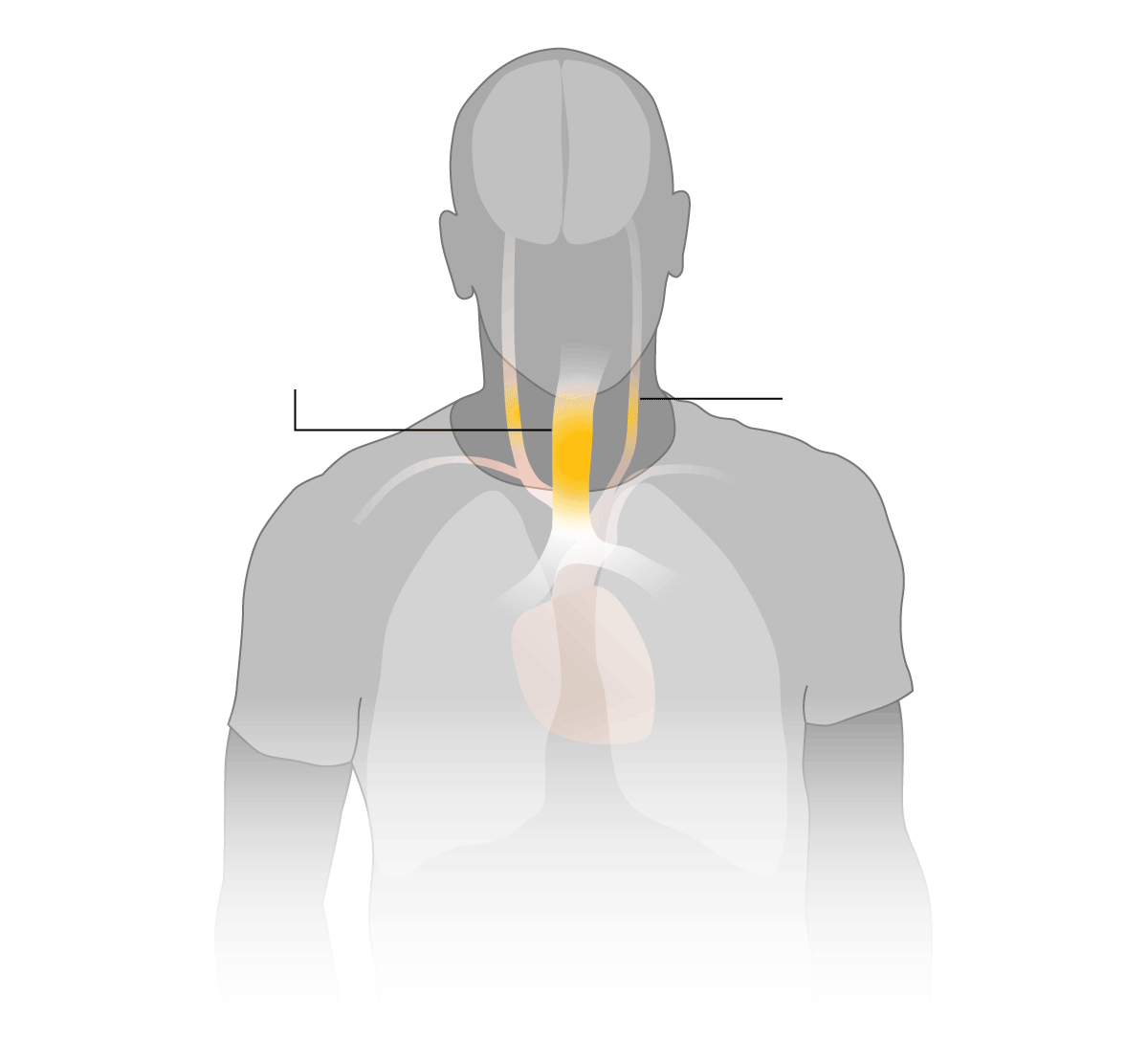
Many police departments prohibit their officers from employing the kind of neck restraints a man used in fatally subduing Jordan Neely in the New York City subway.When a subway rider in New York used a chokehold that ended up killing a 30-year-old homeless man, Jordan Neely, he was employing a technique that many neurologists warn is so dangerous that it should not be allowed in law enforcement.Chokeholds or strangleholds are known also as neck compressions, which involve applying pressure to both sides of the neck. They are allowed in some martial arts competitions, and certain U.S. military personnel in ground-combat units may learn to apply chokeholds, and associated safe releases, in training.But in the past few years, police departments have increasingly banned the use of chokeholds, following events such as the deaths of Eric Garner and George Floyd.There are few data on how often police have used the holds, or what the consequences were. Among the few studies is one reporting that officers in Spokane, Wash., used neck restraints 230 times in the eight years before May 2021, when Washington State banned them.While there were no fatalities recorded in the use of the holds by that department, neurologists say the dangers of neck compression are indisputable.Dr. Altaf Saadi, a neurologist at Massachusetts General Hospital, explained that chokeholds and strangleholds could kill or cause brain injuries in two ways. They can compress the trachea, preventing the person from getting air into the lungs. And they can compress the carotid arteries, which are on either side of the neck, adjacent to the trachea. Seventy percent of the blood going to the brain passes through the carotids, Dr. Saadi said. If that blood flow is cut off in a chokehold or a stranglehold, some people can become unconscious in three to four seconds. If the flow continues to be restricted, a person can die within three to four minutes.

Read more →

Walensky Resigns as C.D.C. Director

In an announcement on Friday, the head of the beleaguered agency said she would step down in June. “We made this world a safer place,” she said.Dr. Rochelle Walensky, the director of the Centers for Disease Control and Prevention, will step down from her position on June 30, she announced on Friday, capping a tumultuous tenure at the nation’s leading public health agency as it struggled to rein in the Covid-19 pandemic, the greatest threat to American well-being in decades.Her departure comes as the administration contends with major vacancies in its Covid-19 response team. Dr. Ashish Jha, the White House’s Covid-19 coordinator, plans to leave his position this month, along with other key officials, including Dr. Nahid Bhadelia, a White House adviser on the global response. A new White House pandemic office has no leader or staffing.The administration plans to end the public health emergency on May 11, closing major programs — like access to free tests — that had helped sustain Americans through the worst days of the pandemic.But the virus has not disappeared. It is still killing roughly 1,000 Americans each week and hospitalizing even more. The leadership vacuum arrives at a precarious time.In an agencywide meeting, Dr. Walensky admitted to having mixed emotions about her decision and broke down in tears, according to people who had been on a conference call with her.“I took on this role with the goal of leaving behind the dark days of the pandemic and moving the C.D.C. — and public health — into a much better and more trusted place,” she said in a subsequent email to the agency’s staff.Dr. Walensky did not respond to a request for comment. Senior administration officials and outside experts have said that Dr. Walensky struggled with an unwieldy leadership structure at the Department of Health and Human Services, of which the C.D.C. is a part. The agency’s relationship with the White House was sometimes tense, as her advice to the public sometimes seemed confusing or contradictory.A person familiar with her thinking said that Dr. Walensky had also wearied of harassment from members of the public who were unhappy with pandemic restrictions and of long commutes between the C.D.C.’s offices in Atlanta and her home in Massachusetts.Andy Slavitt, a key adviser on the White House Covid-19 team in 2021, praised Dr. Walensky’s efforts to do a job “that’s easy to criticize and tough to do.”“You show up in an emergency status with a specific job to do,” he added. “It’s almost like a mission, with a beginning and end. Even though she was running an agency, running an agency during wartime is different than running an agency during peacetime.”Public health experts said the news had come as a surprise, and some expressed disappointment that she was leaving.“I think it is a loss for the C.D.C. and for the nation,” said Dr. Megan Ranney, the deputy dean for Brown University’s School of Public Health. “I know that it has not been easy, not just because of Covid but because of the politicization of science.”Dr. Ranney said that she had received hate mail and personal attacks but that what she had experienced was “only the tip of the iceberg” compared with how Dr. Walensky had been treated.Dr. Celine Gounder, a former adviser to the Biden administration who has known Dr. Walensky since 2004, said, “Her departure signals to me that the C.D.C. is more broken and the federal government’s commitment to public health is even weaker than I’d thought.”Dr. Walensky grew up in Potomac, Md., in a family of respected scientists. She trained in medicine at Johns Hopkins University and, in 2001, joined the faculty at Harvard, where she developed a reputation as a rigorous researcher and a generous mentor.Before her tenure as C.D.C. director, Dr. Walensky led the infectious diseases division at Massachusetts General Hospital, where she saw the pandemic’s devastation firsthand. She was noted for her work on health care policy, particularly in H.I.V.Dr. Walensky with Dr. Anthony Fauci, left, and Dr. David Kessler, a top Covid-19 adviser, in 2021.Amr Alfiky/The New York TimesBut with little experience working in government and leading large institutions, Dr. Walensky was an unexpected choice to guide an agency with a staff of about 11,000 people.Dr. Walensky took the helm of the beleaguered agency in January 2021. She had a near-impossible task ahead of her: restoring the reputation of the once-storied C.D.C. when public trust in the agency, and science more broadly, was fast ebbing.The C.D.C. had been pilloried since the start of the pandemic for missteps in testing, changing advice on masking, and antiquated surveillance and data systems. Trump administration officials hectored the agency’s leaders, rewrote its guidance and meddled with its research reports, undermining the morale of scientists even as the crisis ballooned.“She insisted that people act more promptly and in a more focused way, so she stimulated people to do things perhaps a little bit differently than they had,” said Dr. William Schaffner, an infectious diseases physician at Vanderbilt University who works closely with the agency.“Morale within the C.D.C. distinctly improved under her leadership,” he added.But the pandemic proved to be rough ground even for someone as respected and well-liked as Dr. Walensky. She was roundly criticized by experts for advising people to stop wearing their masks just weeks before the Delta variant of the coronavirus pummeled the nation.And after shortening isolation requirements even as the Omicron variant brought the country to a standstill, she was accused of letting economic interests outweigh scientific caution.Anne Sosin, who studies health equity at Dartmouth, said that Dr. Walensky had sometimes taken the fall for Biden administration decisions, but that she also could have done more to level with the public about the rationales for those decisions.Still, Ms. Sosin added, “From the outside, it has sometimes appeared that Dr. Walensky has lacked the courage to say no to decisions that really undermined public health.”Republicans in Congress repeatedly asked for her resignation and painted the agency as a failed institution in hearings on the pandemic. But some experts felt Dr. Walensky had done her best with an impossible hand.“The public — and even health professionals — wanted consistency in message and messaging that was not possible, because Covid has simply never been a static threat,” said Dr. Jeremy Faust, an emergency medicine physician and health policy expert at Brigham and Women’s Hospital in Boston.Dr. Daniel Pollock, who led Covid surveillance for a few months in 2020 and retired in November 2021 after 37 years at the agency, said: “The timing of this leadership transition is very problematic. I worked at C.D.C. under 10 different directors, and when they leave abruptly, for whatever reason, the ripple effects take a big toll.”It was not immediately clear who would lead the C.D.C. after Dr. Walensky’s departure. Some scientists said Dr. Walensky’s successor should be a public health generalist attuned to social problems and how to run a large federal agency, not a physician-scientist like Dr. Walensky.“This has to be a public health person,” said Katelyn Jetelina, an epidemiologist who writes a popular newsletter and has been advising the C.D.C. for the past year. “We think about treating millions of people at one time, rather than this initial training of one-on-one physician care.”Despite the controversy surrounding her tenure, Dr. Walensky’s email to staff members on Friday suggested that she believed she had improved the agency’s standing.“We collectively moved C.D.C. forward, reorganizing the agency and embarking on the necessary work to orient the enterprise toward public health action and foster accountability, timeliness and transparency in our work,” she said.During her time at the C.D.C., Dr. Walensky noted, the agency administered more than 670 million Covid vaccine doses and provided guidance on immunization, social distancing and masking that “protected the country and the world from the greatest infectious disease threat we have seen in over 100 years.”Dr. Walensky acknowledged the agency’s failings last year and promised to reorganize it, transforming its ability to respond quickly to public health crises. Some organizational changes have been announced, but it is unclear whether any of them have made a material difference in the C.D.C.’s work.Among other changes, Dr. Walensky helped create an office that’s more organized and empowered to work with state and local health developments, said Dr. Joshua Sharfstein, vice dean for public health practice and community engagement at the Johns Hopkins University Bloomberg School of Health.“It puts the agency in a position to have a vision for how the nation’s very convoluted public health system holds together,” he said. “One of the jobs as the director is going to be to take the structure that Dr. Walensky has left and use it.”Under her leadership, Dr. Walensky said in her email to staff members, the agency bolstered its public health infrastructure and secured hundreds of millions of dollars to modernize the country’s data infrastructure.She also declared racism a serious public health threat, she noted, and led the agency in its efforts to contain a multinational mpox outbreak, as well as the spread of Ebola in Uganda.“We made this world a safer place,” Dr. Walensky said. “I have never been prouder of anything I have done in my professional career.”Emily Anthes

Read more →

Smart surgical implant coatings provide early failure warning while preventing infection

Newly developed “smart” coatings for surgical orthopedic implants can monitor strain on the devices to provide early warning of implant failures while killing infection-causing bacteria, University of Illinois Urbana-Champaign researchers report. The coatings integrate flexible sensors with a nanostructured antibacterial surface inspired by the wings of dragonflies and cicadas.
In a new study in the journal Science Advances, a multidisciplinary team of researchers found the coatings prevented infection in live mice and mapped strain in commercial implants applied to sheep spines to warn of various implant or healing failures.
“This is a combination of bio-inspired nanomaterial design with flexible electronics to battle a complicated, long-term biomedical problem,” said study leader Qing Cao, a U. of I. professor of materials science and engineering.
Both infection and device failure are major problems with orthopedic implants, each affecting up to 10% of patients, Cao said. Several approaches to fighting infection have been attempted, but all have severe limitations, he said: Biofilms can still form on water-repelling surfaces, and coatings laden with antibiotic chemicals or drugs run out in a span of months and have toxic effects on the surrounding tissue with little efficacy against drug-resistant strains of bacterial pathogens.
Taking inspiration from the naturally antibacterial wings of cicadas and dragonflies, the Illinois team created a thin foil patterned with nanoscale pillars like those found on the insects’ wings. When a bacterial cell attempts to bind to the foil, the pillars puncture the cell wall, killing it.
“Using a mechanical approach to killing bacteria allowed us to bypass a lot of the problems with chemical approaches, while still giving us the flexibility needed to apply the coating to implant surfaces,” said pathobiology professor Gee Lau, a coauthor of the study.
On the back side of the nanostructured foil, where it contacts the implant device, the researchers integrated arrays of highly sensitive, flexible electronic sensors to monitor strain. This could help physicians watch the healing progress of individual patients, guide their rehabilitation to shorten the recovery time and minimize risks, and repair or replace devices before they hit the point of failure, the researchers said.
The engineering group then teamed up with veterinary clinical medicine professor Annette McCoy to test their prototype devices. They implanted the foils in live mice and monitored them for any sign of infection, even when bacteria were introduced. They also applied the coatings to commercially available spinal implants and monitored strain to the implants in sheep spines under normal load for device failure diagnosis. The coatings performed both functions well.
The prototype electronics required wires, but the researchers next plan to develop wireless power and data communications interfaces for their coatings, a crucial step for clinical application, Cao said. They also are working to develop large-scale production of the nanopillar-textured bacteria-killing foil.
“These types of antibacterial coatings have a lot of potential applications, and since ours uses a mechanical mechanism, it has potential for places where chemicals or heavy metal ions — as are used in commercial antimicrobial coatings now — would be detrimental,” Cao said.
The National Science Foundation and the U.S. Congressionally Directed Medical Research Programs supported this work.

Read more →