Covid Inquiry: Abuse of experts must stop, says Whitty

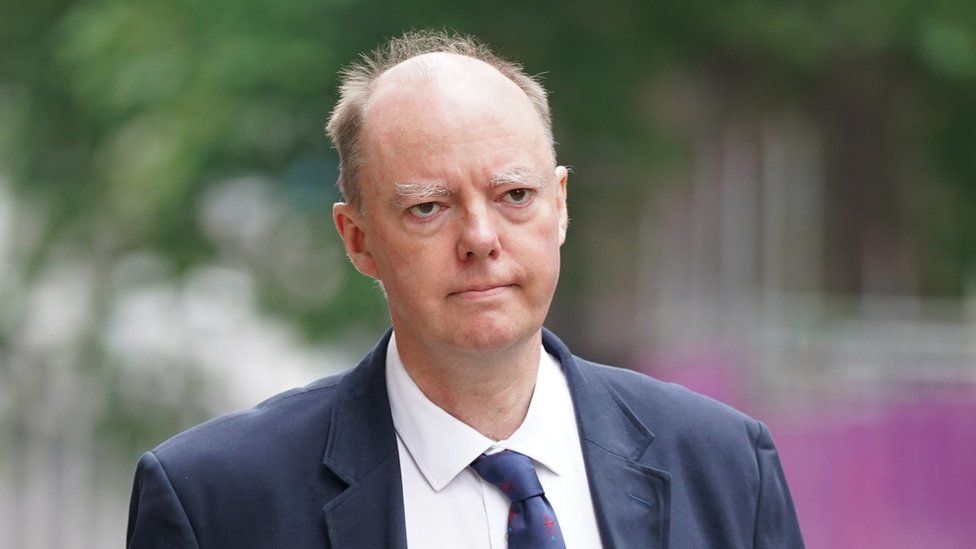
Published22 JuneShareclose panelShare pageCopy linkAbout sharingImage source, PA MediaBy Nick TriggleHealth correspondentThreats to independent experts during the pandemic could undermine responses to disasters in the future, Prof Sir Chris Whitty has warned.Giving evidence to the Covid public inquiry, England’s chief medical officer, Sir Chris, said abuse and threats aimed at experts had been “extremely concerning”.In January 2022, a man was jailed for eight weeks after he accosted Sir Chris in a London park.A second received a suspended sentence.During the hearings into the two men the courts were told how one man, Jonathan Chew, 24, started filming Sir Chris on his phone while another, Lewis Hughes, also 24, grabbed him in a headlock.The footage, lasting about 20 seconds, was widely shared on social media and showed the pair jeering as Sir Chris attempted to break free.England’s chief medical officer was not injured in the attack during the summer of 2021.As well as the incident, Sir Chris and others have reported being abused on social media, as well as being shouted at in public.Sir Chris told the inquiry: “We should be very firm in saying that society very much appreciates the work of these people [experts and scientists], who put in considerable amounts of time.”He said it was often provided without pay and also noted how universities were becoming stricter about releasing their academics.Inquiry chair Baroness Hallett said she was “astonished and sorry” about what had happened.After Sir Chris had finished giving evidence on Thursday into how well prepared the UK was for the pandemic, she said: “It’s wrong for so many reasons, but I do know how distressing it can be.”I hope that people will think twice but of course they never do before committing themselves to distressing acts unnecessarily.”There are so many different ways to express different opinion. Why do we have to have personal abuse?”Ex-medical officer close to tears over Covid deaths Ex-PM Cameron admits mistake over pandemic planningWhat is the UK Covid inquiry and how long will it take?Lockdown ‘had huge ramifications’During the rest of his evidence, Sir Chris said one of the key weaknesses the UK faced was the inability to scale up testing quickly.And he described the national lockdown as the “very big new idea” of the Covid pandemic and “very radical thing to do”.”It was an extraordinarily major, social intervention with huge economic and social ramifications.”Sir Chris also defended the government scientific advisory group Sage, which he co-chaired during the pandemic, after suggestions there was not enough diversity of thought within the group.There were no economic or social experts for example.But Sir Chris said it would have been too “unwieldly” if a range of different experts were added to it.Instead, he said the economic and societal consequences of responding to a pandemic should be done separately through a different mechanism.Meanwhile, Sir Patrick Vallance, who was the government’s chief scientific adviser during the pandemic, said it was a “regret” that during the pandemic it often took a long period of time for Sage research to be published.”I believe that scientific advice should be made public – that’s beneficial for everybody,” he said.He added it should always be open to “scrutiny, comment and challenge”.More on this storyMan charged with assault over Whitty incidentPublished2 July 2021Chris Whitty: The man with our lives in his handsPublished17 March 2020Related Internet LinksCourts and Tribunals ServiceThe BBC is not responsible for the content of external sites.

Read more →

Mosquito-borne diseases becoming increasing risk in Europe

Published26 minutes agoShareclose panelShare pageCopy linkAbout sharingImage source, Getty ImagesBy Smitha MundasadHealth reporter Mosquitoes that carry viruses like dengue and chikungunya have moved into new parts of Europe, increasing the risk of illness, top experts warn.European scientists say more frequent heatwaves and flooding, and longer, warmer summers, have created more favourable conditions for the bugs. They are calling for better measures to control and protect against mosquitoes.Without these, more illness and deaths from mosquito-borne diseases are likely, they say.The report, by the European Centre for Disease Prevention and Control (ECDC), tracks the spread of different species of mosquitoes that can carry and transmit a number different of viruses to humans.These include dengue and Zika – which can cause a range of symptoms such as fevers and muscle aches, and in the worst cases make people extremely ill.Zika may be one mutation away from a new outbreakDengue fever crisis forces Peru minister to resignThe ECDC report suggests this year, the Aedes albopictus mosquito (known to carry dengue and chikungunya) “established” itself in 13 countries in Europe – meaning it has developed a self-sustaining population that is reproducing – compared with eight European countries a decade ago.Meanwhile, last year, Aedes aegypti, which can spread diseases such as yellow fever, Zika and West Nile virus, became established in Cyprus, and scientists warn it may continue to spread to other countries. ‘Invasive species’According to the report, in 2022:there were 1,133 human cases of West Nile virus and 92 deaths, with the majority of cases acquired in Europe – the highest since the peak of about 1,548 cases in 2018cases were reported in Italy, Greece, Romania, Germany, Hungry, Croatia, Austria, France, Spain, Slovakia and Bulgaria71 cases of locally acquired dengue were recorded in mainland Europe – equivalent to the total number reported between 2010 and 2021cases of dengue were seen in France and SpainAndrea Ammon, ECDC director, said: “In recent years we have seen a geographical spread of invasive mosquito species to previously unaffected areas in the EU/EEA.”If this continues, we can expect to see more cases and possibly deaths from diseases such as dengue, chikungunya and West Nile fever. “Efforts need to focus on ways to control mosquito populations, enhancing surveillance and enforcing personal protective measures.”Image source, SPLExperts recommend eliminating standing water sources where mosquitoes breed and using eco-friendly larvicides, alongside increasing awareness of the personal measures people can take to protect themselves.These include:using insecticide-treated bed netssleeping in air-conditioned roomsusing window screenswearing clothes that cover most of the bodyusing mosquito repellent The ECDC says it is “essential” that healthcare workers and the public have a greater awareness of the different diseases transmitted by mosquitoes.Dengue (spread by mosquitoes that bite during the day) can cause a fever, severe headache, pain behind the eyes, muscle and joint pain, and a blotchy rash. The number of cases has grown around the world in recent decades. It is endemic in more than 100 countries in Africa, the Americas, South and South East Asia, and the Western Pacific region.Most cases of West Nile virus do not cause symptoms, but when people fall ill the virus can cause headaches, severe tiredness, muscle aches, vomiting, rashes and eye pain. Older people and people with weakened immune systems are at higher risk of a form of the illness that affects the brain and can be fatal. The most common symptoms of chikungunya virus are fever and joint pain, alongside headaches, muscle pain and rashes. More on this storyRecord dengue outbreak kills over 40 in ArgentinaPublished22 AprilZika may be one mutation away from a new outbreakPublished12 April 2022

Read more →

Beijing heatwave: China capital records hottest June day in 60 years

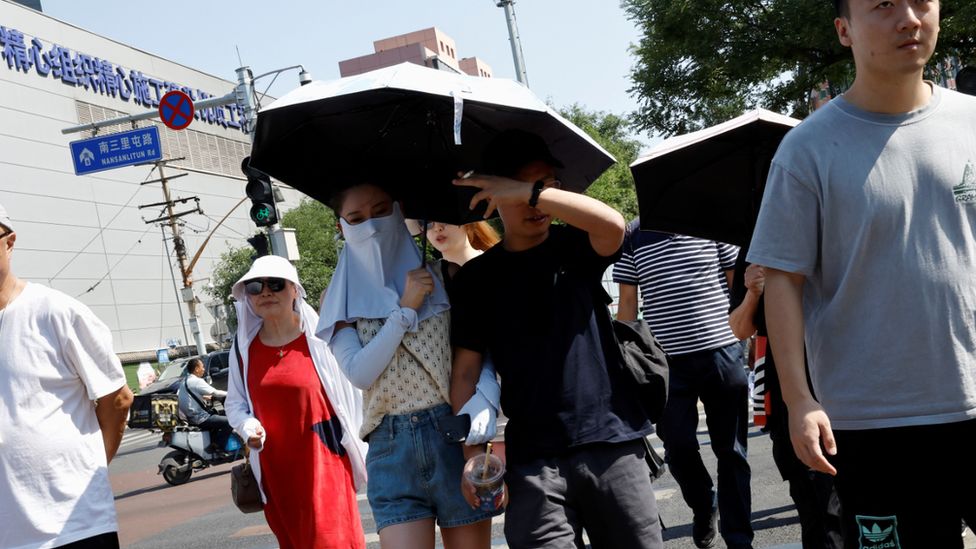
Published1 day agoShareclose panelShare pageCopy linkAbout sharingImage source, REUTERSBy Kelly NgBBC NewsBeijing has recorded its hottest June day in more than 60 years with the mercury touching 41.1C (105.9F), Chinese weather authorities say.The city is experiencing a prolonged heatwave with extreme temperatures to persist until the end of June.On Thursday, officials said it was the hottest June day since record keeping began in 1961.Several monthly heat records have been broken around China this year, prompting fears of an energy crunch.Last month, the country’s largest city Shanghai, with 25 million people living on the east coast, recorded its hottest May day in a century. More than 21 million people live in Beijing, the nation’s capital in the north. On Thursday, a weather station in the city’s north recorded a high of 41.8C.Authorities earlier issued an orange alert, the second-most severe weather warning, saying that temperatures could reach 39C in the days to Saturday.The national weather bureau also issued a heat stroke alert last week – a fortnight earlier than in previous years. Local authorities in Beijing, Tianjin, and other cities in northern and eastern China, advised people to suspend outdoor work during the hottest parts of the day and to get medical help if they show symptoms of a heat stroke.Image source, REUTERSSome have also warned people and businesses to curb their electricity usage. Last week, the National Energy Administration staged its first-ever emergency drill in China’s eastern region, simulating a power surge and outage in the face of any large-scale power outages.The situation was “relatively severe” in regards to power grid security, the agency said.In the port city of Tianjin, an increased demand for air-conditioning has pushed up the power grid’s load 23% relative to last year. Workers from the local utility department were patrolling underground tunnels daily to make sure electric cables were working properly, officials said.Rising temperatures and more frequent heatwaves are the result of global climate change. A study released last month found climate change had made heatwaves 30 times more likely in Asia. It had also raised temperatures by at least 2C in many parts of Asia during an April heatwave. The region has been described by experts as experiencing “the worse heatwave in [its] history”.Thailand, Laos, Bangladesh and India all saw record temperatures of up to 45C in April.The extreme heat caused deaths and hospitalisations in some countries, melted roads and affected other infrastructure. Heatwaves are one of the deadliest natural hazards in the world, causing thousands of related deaths each year.More on this storyClimate change worsened Asia heatwave by 2C – studyPublished18 MayFour ways climate change is affecting the weatherPublished22 MayWorld likely to warm beyond key 1.5C limit by 2027Published17 MayIs India ready to deal with deadly heatwaves?Published18 April

Read more →

Covid: How do UK pandemic death rates compare?

Published17 minutes agoShareclose panelShare pageCopy linkAbout sharingImage source, PA MediaBy Robert Cuffe & Libby RogersBBC NewsThe UK had one of the worst increases in death rates of major European economies during the Covid pandemic, BBC analysis has found. Death rates in the UK were more than 5% higher on average each year of the pandemic than in the years just before it, largely driven by a huge death toll in the first year. That was above the increase seen in France, Spain or Germany, but below Italy and significantly lower than the US. Comparing death rates across countriesBack in April and May 2020, the UK was seeing one of the worst waves of Covid deaths in the world. But Prof Sir Chris Whitty, England’s chief medical officer, warned against international comparisons of Covid deaths too early in the pandemic. Instead, he recommended looking at deaths for any reason, since they do not depend on what a country calls a Covid death. And he said analyses should take account of the age profile of each country, which can explain a lot of differences in death rates. Image source, Getty ImagesWe have built a database of those figures, collecting data for the last eight years from a range of European countries, as well as the US and New Zealand. Now the UK’s long-awaited Covid inquiry is under way and Sir Chris is about to give evidence for the first time.And as the World Health Organization has declared an end to the global health emergency, we have looked back at three years of pandemic deaths, starting in March 2020. We compared countries by measuring how much their death rates rose from those seen in the five years before the pandemic.Over the three years to February 2023, the UK’s death rates went up by more than 5%, which is more than France, Germany and Spain (all up between 3% and 4.5%), but by less than Italy’s (up more than 6%). The US and Eastern European countries like Poland were even harder hit, with death rates more than 10% above their pre-pandemic levels over the three years to February 2023. In contrast, death rates fell in countries like Sweden and Norway and also New Zealand, who contained the virus successfully before its vaccination programme took off. The year-by-year figures tell different stories for each country. For the UK, they point to early losses followed by significant success in 2022. How do the UK’s deaths compare each year? The UK was one of the worst-hit countries in the first year of the pandemic, with death rates running 15% above those before it started. The combination of a terrible first wave and the rapid spread of the alpha (or Kent) variant just as the vaccine rollout was getting going contributed to a huge death toll. Many eastern European countries like Poland avoided the spring 2020 wave but overtook the UK in numbers of deaths in the winter of 2020-21. The US continued to have steadily increasing death rates during the summer of 2020 and by the end of the year, it passed the UK’s total. Death rates fell in many European nations in the second year of the pandemic as vaccine programmes got under way. The UK’s vaccine rollout is regarded as a “global exemplar”, says Prof Devi Sridhar of University of Edinburgh. That is not just number of doses, it was also getting them to the people most at risk. And the UK looked better than any major European economy bar Spain in that second year – with death rates below historical averages. In the third year, death rates rose in many countries as they opened up again.Some of the largest rebounds we found were in countries like Germany, New Zealand and Norway, who had fared better in the first two years of the pandemic (and well overall). Norway had far fewer deaths than Sweden in the first year of the pandemic but over the three years the two countries look more similar. It is hard to read straight across from Scandinavian countries to the UK, cautions Prof Sridhar, arguing “we’d never look like either Sweden or Norway”, and describing them as “healthier, wealthier and more equal” countries that are very different to the UK. Lessons for the UKIt would take many inquiries to tease apart the effect of all the possible reasons behind every nation’s pandemic outcomes: preparedness, population health, lockdown timing and severity, social support, vaccine rollout and health care provision and others. But some argue that there are lessons for the UK that need to be learned even before we think about future pandemics. The UK’s heavy pandemic death toll “built on a decade of lacklustre performance on life expectancy” says Veena Raleigh, of the King’s Fund, a health think tank. She argues that government action to improve population health and turn that around has “never been more urgent”.MethodsWe collected data on deaths in five-year age groups and population estimates/projections from Eurostat, the Office for National Statistics, National Records of Scotland, the Northern Ireland Statistics Research Agency, the Centre for Disease Control, United States Census Bureau and Stats NZ. We calculated the death rate in each age group and combined them to form an age-adjusted death rate using the 2013 European Standard Population. Some nations did not have the full set of age bands. For example, US figures used 10-year age bands between five and 24 and above 55. Broader age bands can exaggerate excess mortality figures like the ones we calculated, in the order of a percentage point.Additional journalism by Callum Thomson, Isabella Worth, Jana Tauschinski, Liana Bravo and Wesley Stephenson

Read more →

She helped kill Roe v Wade – what does she want now?

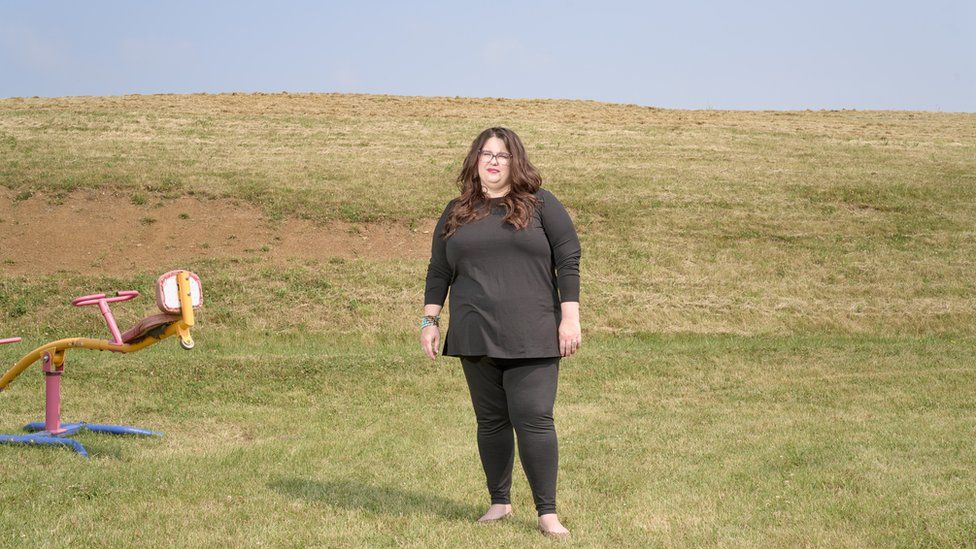
Published17 minutes agoShareclose panelShare pageCopy linkAbout sharingImage source, Ross Mantle/BBCBy Holly Honderichin WashingtonWhen Kristan Hawkins was 23, she started sleeping in her office. It was years before her organisation, Students for Life of America (SFLA), would become one of the largest, most influential anti-abortion groups in the country. And it was more than a decade before she would stand outside the US Supreme Court to announce to her triumphant supporters that the nationwide right to abortion had been undone. But back then, in 2008, the SFLA headquarters were in Arlington, Virginia, and the closest town where Hawkins and her husband could afford to buy a house was 90 minutes away.At first, she tried the commute, leaving home at 5am and returning at 8pm. But the drives became too much, gas too expensive. So she bought a cheap loveseat from Ikea, figuring she could put in 30 hours of work over two days before driving home for a night. She used a nearby Gold’s Gym for showers, the new couch for naps. When Hawkins found the office was also inhabited by cockroaches, she bought an eye mask and started sleeping with the lights on to keep them away. “It was terrible, terrible,” her husband Jonathan said of that period, which was just two years into their marriage.But Kristan Hawkins was relentless. And she had a job to do, she was going to see the end of Roe v Wade, overturning the national right to abortion that had been protected for nearly half a century.Last June, she was successful. Pro-choice advocates say that her activism since then has already helped cut off abortion access for around 20 million women, and pushed the country into a public health crisis. But Hawkins has a new, more ambitious goal: she wants to make abortion unthinkable and unavailable across the US. In the year after Roe was overturned, Hawkins has gone into overdrive, growing the size and reach of SFLA and using that power to push state legislatures to pass increasingly severe bans.”That’s the momentum thing, right? Like, ok, all of America is watching, push the gas pedal down on everything, right now,” she said. “More, more, more, more, more.” Hawkins, now 38, is bolder and more unyielding than her predecessors, reflective of a new generation of activists moving towards their ultimate goal: a federal abortion ban, beginning at conception. “She’s representative of the rightward shift in the movement… and how far the movement can go,” said Mary Ziegler, a law professor at the University of California, Davis, and a leading expert on the US abortion debate. “Kristan is really important to understanding what comes next.”Hawkins’ plans are at odds with public opinion – a majority of Americans support access to legal abortion – and even some Republicans say she is going too far, too fast. But Roe’s reversal, too, was once considered a longshot. And now, one year after its demise, Hawkins believes she will lead the anti-abortion movement to another improbable win. Image source, Getty ImagesMost anti-abortion advocates have an origin story, a moment they say set them on a pro-life mission. Kristan Hawkins’ moment came when she was 15. At home in West Virginia, she started volunteering at a crisis pregnancy centre, the type of facility that dissuades women from having abortions by providing pro-life counselling, ultrasounds and material supplies like diapers and wipes.Before she was allowed to start work, Hawkins had to learn what abortion was, to understand what it looked like. Someone at the clinic gave her a VHS tape of the Silent Scream, a controversial 1984 anti-abortion propaganda film that purported to show a foetus on ultrasound experiencing distress during an abortion at 12 weeks. The film, denounced as a fraud by abortion rights activists, runs counter to findings from leading scientists who say a foetus does not have the capacity to feel pain until at least 24 weeks gestation.But Hawkins was horrified. She was also incredulous. In her view, she had just encountered the greatest human rights atrocity of our time: the routine killing of “preborn babies” – the term she uses to describe foetuses. So why wasn’t everyone trying to stop it?”I remember that first day at the pregnancy centre, walking out and saying ‘Oh my God, how is life going on as normal when this is happening?'” she said during an interview in May. “That changed everything.” After a summer at the clinic, Hawkins started a community anti-abortion group called Teens for Life. She joined the local Right to Life chapter, she joined the local Republican chapter. “I was the youngest one there by like four decades,” she said. By 2006, after college graduation and short stints at the Republican National Committee and the Department of Health and Human Services, Hawkins was recruited to run Students for Life, then a fledgling organisation with groups on 180 campuses. She was 21. Seventeen years later, Hawkins remains obsessive, prone to sending colleagues texts and emails at all hours. Her daily schedule, typed into her iPhone, is a nightmare, more than two dozen meetings and commitments blocked off in overlapping intervals. Her days are, occasionally, interrupted by calls from a health coach. “They’re trying to get me to drink water,” she said. “I always joke that Students for Life is built on Diet Mountain Dew.”She and Jonathan live in an RV with their four children so the entire family can join her on her frequent SFLA excursions. Jonathan, a former teacher, provides homeschooling.”I just go with the flow, that’s all you can do,” Jonathan said during a family outing at the Pittsburgh Zoo last month. “I think you’re sick of the word abortion,” Kristan said to him later that day. “When I say it sometimes, I swear I can see you twitch.”Watching her with followers and donors, Hawkins is sarcastic and often turns to humour, a sometimes unexpected habit from a woman pushing to outlaw abortion entirely. She also swears a lot and fidgets when she talks. She doesn’t have friends, she said, “in the traditional sense”. “Like, I don’t have girlfriends I go for brunch with… what would I talk about besides ending abortion?” Hawkins’ mission, born that day at the pregnancy centre, has proven to be all consuming, something she is well aware of. She has tried to teach her team the principle of DBW – Don’t Be Weird – which is code for: don’t freak people out.”You have to know when to display your passion,” she said. “If you carry around a pocketbook of graphic images of children who’ve been aborted and whip that out at the dinner table, some people are going to be pretty mad at you.” On a swampy June day in Washington, between clusters of teenagers on school trips and tour groups in matching t-shirts, six Students for Life members made their way to Capitol Hill, ready to lobby. They all wore red, half in SFLA branded clothing – “The Pro-Life Generation VOTES” emblazoned on their chests like a cheery warning. One wore a pair of dangly earrings, tiny gold feet meant to match the size of a foetus’s foot at 12 weeks. “It’s a picture into their humanity,” she said. Groups like this can be found at state legislatures and on college campuses across the US on any given week. Under Hawkins, SFLA has grown into more than 1,400 campus groups in 50 states, overseen by 80 paid staff. Since 2006, more than 160,000 anti-abortion activists have completed SFLA training. Experts say Hawkins’ particular power lies in her ability to get people to turn out – SFLA activists are now staples at anti-abortion demonstrations across the country. “We launched SFLA to be this post-Roe generation,” she said. “We were going to have that trained army.” And after Roe’s reversal last year, that army has mobilised, helping to steer dozens of anti-abortion bills through state legislatures. So far, 13 Republican-controlled states have outlawed abortion. Bans in at least six other states are in limbo pending legal challenges. Nearly one-third of American women of reproductive age now live in states where abortion is unavailable or severely restricted, according to the Guttmacher Institute, a pro-choice research group. Over the past year, stories have emerged about the apparent consequences of these bans – a 10-year-old rape victim denied an abortion in her home state of Ohio, 13 women in Texas who say they were denied abortions despite life-threatening pregnancy complications – further galvanising support for abortion access.She was denied an abortion – then she almost died”What SFLA and other anti-abortion groups promote is the worst, most damaging, most criminalising policy,” said Angela Vasquez-Giroux, vice-president at NARAL Pro-Choice America. “She [Kristan] is the embodiment of the extremeness of the movement.” “You’re making it unsafe to be pregnant in the United States,” she said. But where the anti-abortion movement goes now that Roe has been overturned is a matter of debate. Hawkins and most other leaders still share a unifying philosophy: a foetus is a rights-holding person. They share an objective too: a federal abortion ban. But there is disagreement on what that ban would look like and how, exactly, to get there.”The movement is really fragmented,” said University of California’s Mary Ziegler. “There is no consensus.” Image source, Ross Mantle/BBCSFLA has pushed what they call an “early abortion model”, drafting and championing legislation that bans abortion at conception or, at the latest, after early cardiac activity is detected, usually around six weeks of pregnancy. Hawkins’ organisation, in other words, has abandoned the incrementalism that shaped earlier iterations of the anti-abortion movement, a strategy still favoured by some of SFLA’s peers. Susan B Anthony Pro-Life America (SBA) is one such group. A powerful and long-established presence in the anti-abortion lobby, SBA’s leader Marjorie Dannenfelser has said she will oppose any presidential candidate who does not embrace a 15-week national ban, a benchmark supported by 44% of Americans, according to a recent poll.That isn’t good enough for Hawkins. Candidates must pledge support for a federal ban at six weeks if they want SFLA’s support. It’s a tension Hawkins acknowledges. “Marjorie is the insider…and I’m the person who comes in and is like, ‘[Screw] it, we’re just doing what we know is right’,” Hawkins said, using an expletive. “We’re not fighting.”Hawkins is also more outspoken, more outwardly conservative, on other abortion-related issues. She opposes exceptions for rape and incest. And she opposes several forms of birth control, including oral contraceptives, a position another anti-abortion leader privately called “unhelpful”. “What has changed is they are willing to say the quiet part out loud,” said Elisabeth Smith, state policy director at the Center for Reproductive Rights, a pro-choice group. “They are willing to be publicly extreme.” Image source, Getty ImagesHawkins’ uncompromising approach worries some Republicans, too. Politicians have been forced to choose between disappointing Hawkins and her allies and alienating a much more moderate electorate. “Republicans are politically in a much more defensive position than the Democrats because they keep talking about restrictions that are not supported by most Americans,” said John Feehery, a former Republican congressional aide. A predicted red wave at the 2022 midterms seemed to collide with a surge of support for abortion rights, carrying Democrats to unexpected victories in a series of high-profile races. Last year, pro-choice voters swept all six abortion-related ballot measures, including in conservative states like Kansas and Kentucky. “Women are watching Republicans post-Roe, and anything short of a compassionate strategy to win back suburban women and swing voters will severely set back the pro-life movement and the party as a whole,” Nancy Mace, one of the few House Republicans who has publicly called for more flexibility on abortion, told the BBC in a statement. But Hawkins does not see the Republican party as her problem. She has little patience for politicians she deems insufficiently pro-life, threatening primary challenges against Republicans who do not support early bans. Merv Riepe, a Nebraska state senator who voted against a six-week ban this year, “is going to be retired pretty soon”, Hawkins said. The three female Republican senators in South Carolina who opposed an outright ban face the same threat. Two supported a six-week ban, but that was not sufficient for Hawkins. Each of them was sent a plastic infant-size spine from SFLA earlier this year, with a note suggesting they grow a backbone.”I think that’s the difference between us and other pro-life organisations,” Hawkins said. “I don’t really care if so-and-so in Washington, DC, isn’t happy with me. It doesn’t even earn me any points in my demographic.”That approach – aggressive, uncompromising – has fuelled her dominance among anti-abortion activists, now lurching to the right in the absence of Roe. “The movement as a whole is moving towards asking for more extreme bans,” said Zelly Martin, a researcher at University of Texas’ propaganda lab, who specialises in the US abortion debate. “They feel like now that we don’t have Roe protecting abortion why would we pull back? And I think Kristan Hawkins is a big part of that.” Just how far Hawkins will get – how close to abolishing abortion she will come – remains an open question. “I don’t see a point in American history where Americans are going to want an absolute ban on abortion,” Ziegler said. “There is no sign of that.”But Hawkins and others are exploring ways to bypass both public opinion and political resistance, Zieger said. One, perhaps the most feasible, would be to ask the conservative-leaning Supreme Court to recognise foetal personhood under the Constitution. It seems improbable, but those are odds Hawkins is used to. Last month, in Northville, Michigan, Hawkins stood in a small first-floor conference room, neat rows of potential donors sitting in front of her. She began her speech with an anecdote from early in her career. A pro-life mentor had offered Hawkins some unsolicited advice: stop saying “when” Roe v Wade is overturned. By assuming Roe’s demise, he cautioned, she sounded “too immature, too naive”. Hawkins ignored him. She told her staff to double down, boost their messaging that promised to send Roe to the “ash heap of history”. “I always tell our team: winners envision the win.” More on this storyThousands gather for first post-Roe March for LifePublished21 JanuaryHow abortion became ‘winning issue’ in US electionPublished9 November 2022US Supreme Court preserves abortion drug accessPublished22 April

Read more →

RFK Jr wasn't campaigning as an anti-vaxxer – until Rogan controversy

Published32 minutes agoShareclose panelShare pageCopy linkAbout sharingImage source, Getty ImagesBy Mike WendlingBBC NewsRobert F Kennedy Jr has downplayed his anti-vaccine views in his run for the US presidency, but a podcast appearance has put them front and centre once again.Mr Kennedy, who’s seeking the Democratic party nomination for president, is facing controversy after raising his anti-vaccine views on the Joe Rogan podcast. He appeared on the massively popular series – known for its wide-ranging conversations and a range of guests, including a number with controversial or pseudoscientific views – last Thursday. Now he’s facing pushback for repeating several disproven statements that he’s made as head of anti-vaccine charity Children’s Health Defense. Among them was the widely debunked idea that vaccines cause autism.The controversy has focused attention on Mr Kennedy’s anti-vaccine views – something he’s mostly avoided talking about on the campaign trail.Peter Hotez is dean of the National School of Tropical Medicine and a professor at Baylor College of Medicine. He’s also been a guest on Mr Rogan’s podcast, but on Twitter called the interview with Mr Kennedy “just awful”. The doctor says that prompted a wave of abuse. It also spawned offers by Mr Rogan and others to donate large sums of money to charity if Dr Hotez debates Mr Kennedy about vaccines. Mr Kennedy tweeted: “Let’s finally have the respectful, congenial, informative debate that the American people deserve.” Dr Hotez has so far turned down the offers. In interviews he has said he’s willing appear again on Mr Rogan’s show but that he does not want to argue with Mr Kennedy.Mr Kennedy belongs to America’s most famous political family, though he made his own name through legal work for environmental causes. For years he’s also been a major figure in the anti-vaccine movement. In 2005 he published an article in Rolling Stone and Salon, claiming a link between vaccines and autism. It was later withdrawn by both news organisations after criticism and fact-checking.His profile has been on the rise along with the rest of the anti-vaccine movement, which seized on the Covid pandemic to advance its agenda.In 2021, Mr Kennedy was named as one of the main spreaders of anti-vaccine falsehoods – one of a so-called “disinformation dozen” – in a CCDH report. Children’s Health Defense has sued the BBC and other organisations, alleging that violations of US anti-trust laws resulted in censorship of the group’s viewsBiden launches 2024 re-election campaignAnti-vaccine Kennedy to challenge Biden in 2024Despite the heightened profile for his foundation, Mr Kennedy has not put his vaccine views at the centre of his campaign for president. During a nearly two-hour speech to kick off his campaign in April, he criticised Covid lockdowns, government spending, corporate power and Donald Trump. But he only briefly mentioned vaccines and didn’t dwell on his anti-vaccination activism.Likewise, his campaign web site highlights his positions on the environment and civil liberties, rather than the issue that supercharged his popularity on social media and prompted several other Kennedy family members to disavow his campaign.One simple explanation for the omission is that Mr Kennedy’s stances on vaccines are not very popular in his own political party.Imran Ahmed, chief executive of the Center for Countering Digital Hate, a non-profit that works against disinformation, told the BBC that “being an anti-vaxxer is still a minority pursuit in the United States”.”So he’s sticking to a more general anti-establishment schtick,” he says. “He’s working really hard to keep people from knowing he’s a hardcore anti-vaxxer.”Mark Schmitt, a research director at New America, a left-leaning think tank, said Democratic voters “overwhelming say” they are in favour of vaccines, including the Covid jab. Mr Schmitt notes that the picture among Republicans is more mixed, although generally more favourable than not. He credits name recognition with Mr Kennedy’s popularity among Democrats. Mr Kennedy, the 69-year-old son of assassinated Senator Robert F Kennedy, is challenging incumbent Joe Biden. While his campaign is viewed as a long shot, several recent opinion polls suggest he has the support of around 20% of Democratic voters.”He’s saying, I’m someone fresh but recognisable, I’m not from the establishment but you know my family,” says Mr Ahmed. The BBC contacted Spotify, which hosts the podcast, and Mr Kennedy for comment. More on this storyAnti-vaccine Kennedy to challenge Biden in 2024Published6 AprilFour claims from Joe Rogan’s podcast fact-checkedPublished31 January 2022

Read more →

Judge blocks Arkansas ban on gender transition treatment for minors

Published26 minutes agoShareclose panelShare pageCopy linkAbout sharingImage source, Getty ImagesBy Sam CabralBBC News, WashingtonA US federal judge has overturned an Arkansas law that bars doctors from providing gender transition treatment for transgender youth.The southern state was the first in the nation to pass such a law blocking minors’ access to hormonal or surgical treatments. At least 19 other states have imposed similar bans in the two years since.But Tuesday’s ruling found Arkansas had failed to prove its law was about “protecting children”.The state’s leadership has vowed to appeal against the ruling.The decision, by US District Judge Jay Moody, may have implications for similar measures in other Republican-led states.During an eight-day trial over the ban, the judge heard from children, parents and physicians, who said the children’s lives had changed for the better as a result of transitioning treatment. The state meanwhile called four expert witnesses who questioned the safety of such treatment and the reliability of research on gender dysphoria, as well as two adults who had “de-transitioned”.In his ruling, Judge Moody wrote that the state had “failed to provide sufficient evidence that the banned treatments are ineffective or experimental”, while plaintiffs had shown that the care “can relieve the clinically significant distress associated with gender dysphoria in adolescents”.He said banning hormone treatment, puberty blockers or surgery for anyone under 18 violated the rights of transgender children and their families under the US Constitution.Arkansas Attorney General Tim Griffin said the state would appeal, adding: “There is no scientific evidence that any child will benefit from these procedures, while the consequences are harmful and often permanent.” Arkansas Republicans brought in the law in April 2021, overriding a veto by then-Governor Asa Hutchinson, a Republican who criticised it as a “vast government overreach”.Supporters of the bill argued it was necessary to regulate medical decisions with “harmful and often permanent” consequences for young people.Non-profit group the American Civil Liberties Union (ACLU) challenged the law on behalf of four transgender teenagers, their families and two doctors.One plaintiff, 17-year-old Dylan Brandt, who testified at the trial, said he was “so grateful” to the judge.”My mom and I wanted to fight this law not just to protect my healthcare, but also to ensure that transgender people like me can safely and fully live our truths,” he said.Arkansas Governor Sarah Huckabee Sanders said she would challenge the ruling through an appeal.”This is not ‘care’ – it’s activists pushing a political agenda at the expense of our kids and subjecting them to permanent and harmful procedures,” she wrote on Twitter.”Only in the far-Left’s woke vision of America is it not appropriate to protect children.”Tuesday’s court ruling may set the precedent for the ACLU to challenge seven other state bans on hormonal or surgical treatments for transgender minors.Similar laws in Alabama, Florida and Indiana have also been held up in federal courts.”We hope that this sends a message to other states about the vulnerability of these laws and the many harms that come from passing them,” said Chase Strangio, the ACLU’s deputy director for transgender justice.

Read more →

Lab-Grown Meat Approved to Sell for the First Time in the U.S.

The Agriculture Department granted approval to cultivated meat producers for the first time in the United States, representing a watershed moment for the alternative protein industry.The Agriculture Department approved the production and sale of laboratory-grown meat for the first time on Wednesday, clearing the way for two California companies to sell chicken produced from animal cells.It will likely be years before shoppers can buy lab-produced meat in grocery stores. But the government’s decision will eventually allow the sale of lab-produced meat across state lines after passing federal inspections.The decision is a milestone for companies making cell-grown meat, along with consumers looking for alternatives to chickens bred in a factory farm and slaughtered.Supporters of alternative proteins along with the companies that sought federal approval — Upside Foods and Good Meat — celebrated the news as pivotal for the meat industry and the broader food system at a moment of growing concern about the environmental impact of meat production and its treatment of animals.“This approval will fundamentally change how meat makes it to our table,” Dr. Uma Valeti, the chief executive and founder of Upside Foods, said in a statement. “It’s a giant step forward towards a more sustainable future — one that preserves choice and life.”The decision will make the United States the second country in the world, after Singapore, to authorize the production and sale of lab-grown meat. Bruce Friedrich, the president of the Good Food Institute, a nonprofit focused on cell- and plant-based meat, said U.S. approval was a critical step for the industry, adding that “the world does look to the United States’ food safety approval system, and now lots of governments will follow.”Supporters of cultivated meat say the product has better outcomes for the environment, food safety and animal welfare. But skeptics are wary of scientific and safety risks and say the purported environmental benefits are unproven. Difficulties remain over how to increase the product for mass consumption.About 100 companies worldwide, including dozens in the United States, focus on the production of cultivated meat, according to Mr. Friedrich. The industry was valued at about $247 million in 2022, according to the market research firm Grand View Research, and could grow to $25 billion by 2030, the consulting firm McKinsey & Company projected.Lab-grown meat begins with cells taken from an animal. Those cells are then fed water and salt and nutrients like amino acids, vitamins and minerals. The cells then multiply in large tanks called cultivators or bioreactors. When harvested, the product is essentially minced meat, which is then formed into patties, sausage or fillets. The meat contains no bones, feathers, beaks or hooves and does not need to be slaughtered.Upside Foods and Good Meats declined to elaborate on their current production capacity, but Dr. Valeti said last year that the company will eventually grow to “tens of millions of pounds of product.”That’s chicken feed compared with the 350 million tons of meat consumed around the world — a number that is only expected to grow.Both companies will begin selling chicken to American consumers through partner restaurants: Upside Foods at Bar Crenn in San Francisco, and Good Meat at an undisclosed location operated by the chef José Andrés in Washington. The model allows both consumer education and feedback, spokesmen for the companies said.After the initial trial run, both companies also anticipate scaling up production and expanding to other types of meat. (Beef, with its higher fat content and more complex flavor, is harder to replicate.)Still, questions linger over the regulatory framework around cultivated meat and consumer attitudes toward the products.Many cattlemen and agriculture groups have cried foul over calling the lab-grown variety “meat” and have been lobbying legislators to safeguard the word. The Food Safety and Inspection Service, the Agriculture Department agency tasked with inspecting conditions at processing facilities, is still drafting regulations on how food products derived from animal cells should be labeled. For now, the two California companies will call their products “cell cultivated chicken,” a label that the agency approved last week.Semantic and consumer opinion battles aside, Mr. Friedrich warned that the cultivated meat products, when they eventually hit grocery shelves, will be expensive compared with conventional sausages and patties — similar to how renewable energy was initially costlier than oil and gas.Nonetheless, he is confident that “cultivated meat will sell itself.”

Read more →

RSV is a serious heath threat, but the public knows little about it

As the Centers for Disease Control and Prevention (CDC) determines whether to approve a vaccine against RSV for adults 60 and older, a new survey from the Annenberg Public Policy Center finds that the American public is ill-informed about the virus, unfamiliar with its most common symptoms, and more hesitant to recommend the vaccine to pregnant people than to older adults.
Worldwide, RSV is the leading cause of lower respiratory tract infections in babies. Though its symptoms are typically mild, the highly contagious RSV, or respiratory syncytial virus, can cause serious illness, hospitalization, and even death among infants and the elderly. By the age of 2, nearly all children get sick from RSV, which was one of three illnesses — with the flu and Covid-19 — contributing to last winter’s “tripledemic” that overwhelmed some health care facilities. The CDC estimates that 58,000 to 80,000 children under age 5 are hospitalized annually because of it.
After decades of research, scientists have developed vaccines against RSV. In May, the Food and Drug Administration (FDA) approved two RSV vaccines for older adults, and this summer is likely to approve a maternal RSV vaccine for pregnant people to pass antibodies on to fetuses to prevent RSV in infants from birth up to at least six months of age.
The survey of more than 1,600 adults finds that less than half of Americans (49%) were likely to recommend the vaccine against RSV, if approved by the FDA, to a pregnant friend or family member. By contrast, most Americans (63%) would recommend a vaccine against RSV to a friend or family member aged 65 or older. (When the survey was fielded, the FDA had already approved the vaccine for adults 60 and older, although the shots were not yet available.)
“Those who recall the stress that the tripledemic placed on the nation’s hospitals last fall will understand why older individuals and those who are pregnant should discuss the advisability of RSV vaccination with their health care providers,” said Kathleen Hall Jamieson, director of the Annenberg Public Policy Center (APPC) of the University of Pennsylvania and director of the study.
APPC’s Annenberg Science and Public Health Knowledge survey
The survey data come from the 11th wave of a nationally representative panel of 1,601 U.S. adults, first empaneled in April 2021, conducted for the Annenberg Public Policy Center by SSRS, an independent market research company. This wave of the Annenberg Science and Public Health Knowledge (ASAPH) survey was fielded May 31-June 6, 2023, and has a margin of sampling error (MOE) of ± 3.3 percentage points at the 95% confidence level.

Download the topline and the methodology.
Data from earlier waves on Covid-19, society’s “return to normal,” vaccination, monkeypox, the seasonal flu, health misinformation, and related topics can be found here.
Underestimating the prevalence of RSV — but awareness of potential severity
A quarter of the public (27%) expresses worry about contracting or having a family member contract RSV, less than the one-third (33%) who were worried in our January survey, which was conducted during the tripledemic. The decrease in concern is not surprising given that RSV circulates during the fall and winter, and there was media coverage of the surge of cases last winter that, combined with flu and Covid-19 cases, filled some hospitals.
The prevalence of this common illness is vastly underestimated by the public. Only 22% in the current survey say they know children who have had RSV — and among these respondents, over half say they have known just one child or two children who have had it. Asked how many children contract RSV before the age of two, 2% of respondents say, “virtually all.” According to the CDC, “Almost all children will have had an RSV infection by their second birthday.”
But among the people who say they know children who have had RSV, its potential severity is clear. Among these respondents, over half (54%) say the illness was somewhat or very serious. “Most children with cold-like symptoms are not tested for RSV, but when a child becomes severely ill, it’s more likely that child will undergo diagnostic testing,” Jamieson said. While RSV can cause severe illnesses such as bronchiolitis and pneumonia, the CDC says it usually causes mild, cold-like symptoms — like runny nose, coughing, sneezing, fever, wheezing, and decreased appetite — and is often mistaken for cold or flu.

This does not mean, however, that some do not experience serious illness. Among 100 babies under the age of six months who get RSV, 1 to 2 may require hospitalization, the CDC says. Although RSV-associated deaths are “uncommon” in the United States, they nonetheless do occur at an estimated rate of 100 to 500 per year for children under five, according to the CDC. Worldwide deaths of children under 5 years old attributable to RSV exceed 100,000 annually.
Far fewer people say they know older adults who have had RSV. Only 6% of those surveyed say they know someone age 65 or older who has had RSV. Among this group of respondents, most (71%) say they know one or two people who have had it and most (72%) say the infection was somewhat or very serious. The CDC reports that among adults 65 and older, there are 60,000 to 160,000 hospitalizations per year from RSV, and 6,000 to 10,000 deaths.
Great uncertainty about RSV
Only small segments of the American public correctly answer questions about RSV. Most people say they are not sure. The survey found that: Symptoms: Less than 1 in 5 people (18%) know it’s more accurate to say that RSV usually produces mild, cold-like symptoms than serious difficulties in breathing (38%). And 44% say they are not sure. Persistence: Less than 1 in 5 people (17%) know it’s more accurate to say that RSV isable to survive for many hours on hard surfaces such as table or crib rails than to say RSV can’t survive for many hours on these hard surfaces (9%). Most people (75%) say they are not sure. Reoccurrence: Less than 4 in 10 people (38%) know it’s more accurate to say that once a person contracts RSV, they can get it again. Only 2% incorrectly believe it’s more accurate to say that you can’t get RSV again, but 60% say they are not sure. Spreading the virus: Just over 4 in 10 people (42%) know it’s more accurate to say it is possible to have and spread RSV before showing symptoms than to say it is not possible (3%). But over half of those surveyed (54%) are not sure. Vaccine for older adults: Just 13% knew at the time the survey was fielded about the existence of an FDA-approved vaccine against RSV for older adults, while 18% said there was not an FDA-approved vaccine. Nearly 7 in 10 people (69%) said they were not sure. (The FDA approved one RSV vaccine for adults 60 and older on May 3, 2023, and the second one on May 31, the beginning of the survey period. A CDC committee of experts known as ACIP is meeting today on whether the CDC should recommend those vaccines and, if so, for what ages.) Vaccine for pregnant people: Just 1 in 5 people (20%) knew when the survey was fielded that there was not an FDA-approved vaccine against RSV for those who are pregnant to benefit their newborns, while 7% thought there was one. Nearly three-quarters of those surveyed (73%) were not sure. “However,” Jamieson noted, “since an FDA advisory panel had recommended approval at that point, we would expect a high level of uncertainty about whether or not an FDA-approved vaccine existed.” Vaccine for infants and children: About 1 in 5 people (19%) know there is currently not an FDA-approved vaccine against RSV for infants and children in the United States, while 11% say incorrectly that there is one and 70% are not sure.Fewer than half recognize the symptoms of RSV
Fewer than half of those surveyed recognized some of the most common symptoms of RSV (respondents were asked to select all that applied): Wheezing: 46% know this is a symptom Runny nose: 38% know this is a symptom Pauses in breathing: 33% know this is a symptom Decreased activity: 32% know this is a symptom Decreased appetite: 29% know this is a symptomVery few people incorrectly selected non-respiratory symptoms as associated with RSV: Jaundiced skin: 5% incorrectly say this is a symptom of RSV Spontaneous bruising: 2% incorrectly say this is a symptom of RSV Bleeding gums: 2% incorrectly say this is a symptom of RSVThe Annenberg Public Policy Centerwas established in 1993 to educate the public and policy makers about communication’s role in advancing public understanding of political, science, and health issues at the local, state, and federal levels. Read more about our science and health surveys here.

Read more →

Wearable monitor detects stress hormone levels across a full 24-hour day

Early warning signs of diseases caused by dysfunctional levels of stress hormones could be spotted more easily thanks to a new wearable device developed by endocrine researchers.
This is the first time it has been possible to measure changes to people’s stress hormones as they go about normal daily activities, across both day and night. The new collaborative research led by the University of Bristol, University of Birmingham and University of Bergen has the potential to revolutionise how diseases of the stress hormone system are diagnosed and treated.
The technology, funded by an EU Horizon 2020 project grant and published in Science Translational Medicine today [21 June], shows how tracking adrenal steroid levels at high resolution and over an extended time period can provide better information about how hormone levels change across daily (circadian) and faster (ultradian) time periods.
Stress hormones such as the hormone cortisol are crucial for life. Disturbance of their rhythms due to disease and lifestyle factors are related to diseases like depression, heart disease, obesity, diabetes and even critical illness. However, until now scientists haven’t been able to define what normal rhythmicity looks like in healthy daily life.
A major problem has been that understanding the meaning of a hormone test is very difficult or impossible if only a single time point is taken, since this fails to consider hormonal rhythms. This in turn leads to diagnostic delay and missed opportunities for treatment intervention. Previously the only way to build an accurate picture has been to take multiple samples of blood during admission to a hospital or research unit, which is not only time consuming and inconvenient, but also stressful.
U-RHYTHM has been developed by scientists from the University of Bristol, designed by the company Designworks Windsor, and available through the University of Bristol spin out company Dynamic Therapeutics. The wearable device is worn around the waist and painlessly and automatically samples from beneath the skin every 20 minutes, without the need to collect blood. Importantly, the method allows sampling during sleep, work, and other daily life activities for up to 72 hours in a single session.

The study published today demonstrates the potential for the U-RHYTHM device, analysing samples from 214 healthy volunteers over 24 hours. Using data across multiple timepoints in that period, the team were able to create adrenal hormone profiles of healthy people in real life conditions.
Mathematicians from the University of Birmingham’s Centre for Systems Modelling and Quantitative Biomedicine used these data to develop a new class of “dynamic markers” to better understand how a healthy hormonal profile should look like depending on an individual’s sex, age, body mass index, as well as other characteristics.
These findings show what healthy hormonal rhythms look like in the population, in real world settings, and could form a baseline for new, better ways to diagnose endocrine conditions at a much earlier stage.
Dr Thomas Upton, Clinical Research Fellow in Automated Sampling at the University of Bristol and lead endocrinologist in the study, said “Our results represent a paradigm shift in the understanding of how the stress hormone system works in healthy people. The information we have gathered forms an entirely new reference range which has the potential to revolutionise how diseases of the stress hormone system are diagnosed and treated.”
Dr Eder Zavala, Assistant Professor in Mathematics at the University of Birmingham and lead mathematician in the study, added: “This is a fascinating new technology that is enabling us to make new discoveries about how hormonal regulation works, while the mathematical analysis is enabling us to generate new ideas about precision diagnosis and design personalised medicine interventions that better support patients.”
Stafford Lightman, Professor of Medicine at Bristol Medical School: Translational Health Sciences (THS) and a co-author on the study, explained: “Our results provide significant new insights into how the stress hormone system works in healthy people, and emphasises the importance of measuring change, not just sampling at single points. It also highlights the importance of measuring hormones during sleep, which has previously been impossible outside of a hospital.
“The ability to measure the dynamics of hormone secretion across the day and night in patients in their own home will not only improve our ability to accurately diagnose any abnormality in hormone secretion without the need for complex inpatient investigations, but the whole diagnostic procedure can be performed from primary care and linked to newly available diagnostic algorithms. This will not only provide good, personalised medicine, but will also allow the patient to follow their own hormone profiles during diagnosis and therapy and empower better patient: doctor discussions.”

Read more →