Single-cell atlas of the human kidney provides new resources to study kidney disease

What causes certain individuals who experience a sudden decline in kidney function to develop kidney disease while others recover? A new study co-led by bioengineers at the University of California San Diego could provide detailed insight — at the level of individual cells — into the underlying factors contributing to these divergent outcomes.
The researchers constructed the largest single-cell atlas of the human kidney to date that maps healthy and diseased cell states across over 90 patients. The atlas is intended to serve as a foundation to better understand the progression of kidney disease after acute kidney injury, a condition in which the kidneys suddenly lose their ability to filter waste from blood.
“We want to understand that progression at the single-cell level,” said study co-first author Blue Lake, who conducted this research as a project scientist in the Department of Bioengineering at UC San Diego. “By building an atlas of the different types of cells that make up a healthy kidney, as well as injured and diseased kidneys, we can start to figure out which cell types may be contributing to disease progression. We can get an idea of what changes are happening that cause some injured cell types to repair, and in some cases, transition into a state that can no longer be repaired.”
The work, published July 19 in the journal Nature, was jointly led by the lab of former UC San Diego bioengineering professor Kun Zhang, who is now at San Diego Institute of Science, Altos Labs, and researchers at Washington University, Indiana University, and University of Michigan.
To construct their atlas, the researchers analyzed more than 400,000 cells and nuclei from a broad range of kidney samples from individuals with healthy kidneys, acute kidney injury, and chronic kidney disease.
Single-cell and single-nucleus sequencing technologies were used to generate RNA expression and gene expression profiles of the cells. These profiles enabled the researchers to identify 51 different populations of cell types. Using spatial imaging technologies, the researchers were able to map where the different cell types are arranged in the kidney.
“This is the most comprehensive atlas so far of cell types in the human kidney,” said Lake.

Read more →

Researchers map morphing placenta

Early in pregnancy, something strange happens in the uterus: Cells from the fetal side of the developing placenta invade the uterine endometrium and work with the mother’s immune system to remodel the arteries.
“When I first read about it, I thought, ‘This is so bizarre,'” said Stanford Medicine pathologist Michael Angelo, MD, PhD.
Humans’ immune systems usually attack unfamiliar cells, which would theoretically pose a problem for a developing pregnancy. But on the mother’s side of the growing placenta, the arteries incorporate cells that genetically match the embryo, just one of several unusual events in the unique cooperation required to form the only temporary human organ. (That’s right, the placenta is an organ!)
“There is nothing else like this in human biology,” Angelo said.
His curiosity piqued, Angelo decided to study the process. In a paper published July 19 in Nature, his research team gave the most detailed description to date of how the genetically mismatched maternal and fetal cells cooperate to restructure uterine arteries.
The paper is part of a larger research project, the Human Biomolecular Atlas Program, that is building a comprehensive directory of all the cells in the body. Funded by the National Institutes of Health, the project includes research by scientists from dozens of institutions across the United States and Europe.
Studying how the placenta forms is tricky because human placentas are uniquely invasive, growing much more deeply into the uterus than in other mammals. And there is a Goldilocks-like element to the process: Either too much or too little growth of the placenta into the uterine wall is problematic. Knowing the details of “just right” development could help scientists understand what goes wrong in pregnancy complications such as placenta accreta, an overly invasive placenta, which entwines too deeply into the uterus and can cause hemorrhaging at birth; preeclampsia, which is characterized by dangerously high blood pressure in late pregnancy and which researchers think originates from an under-invasive placenta; and miscarriages in which the placenta fails to become properly established in the uterine wall.

Read more →

Casey Johnston Is a ‘Swole Woman’ With a New Outlook

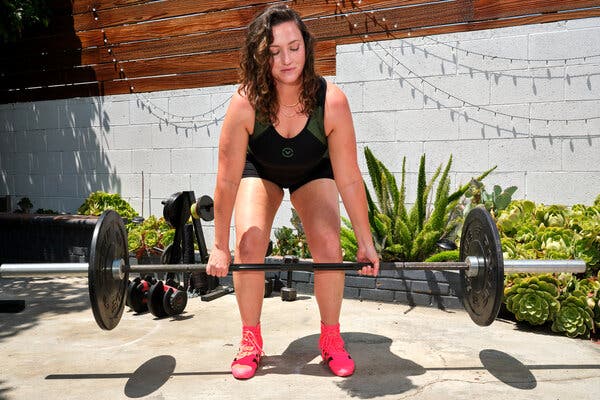
More Than Likes is a series about social media personalities who are trying to do positive things for their communities.The video begins with an instructor and a barbell, like so many others on Instagram. But then, as Casey Johnston, the instructor, dead-lifts the barbell — 45 pounds, plus 160 more pounds’ worth of weights — to her waist, an annotation appears in the corner: “Things we have to pick up regularly that weigh 25+ lbs.” It then lists examples like suitcases, coolers, furniture and so forth.Ms. Johnston, 36, has built an online community around both championing the functional benefits of strength training and demystifying a form of exercise that can be intimidating to those on the outside. For Ms. Johnston, lifting is about taking ownership of one’s body.She does not promise the secret to washboard abs or a slimmer waist, as many fitness influencers do. Ms. Johnston, instead, provides her 34,000-plus Instagram followers and nearly 25,000 subscribers to her She’s a Beast newsletter with the tools to build a body that can more seamlessly move through everyday life. And she writes sharp, incisive takes on modern discourse surrounding fitness, eating and other related subjects.Before she started lifting, Ms. Johnston, here doing a dead lift, focused on running and limiting calories — a pursuit laced with negativity.Michelle Groskopf for The New York Times“It’s often guilt, guilt, guilt. You’re never doing enough,” Ms. Johnston said of the mainstream fitness climate. For her, gym sessions are “not about experiencing the most pain you can tolerate. They’re about building a basic skill that is accessible to everybody.”In Ms. Johnston’s experience, that difference, in turn, can lead to better emotional and mental health. “This becomes a gratifying feedback loop, where it’s like, oh, ‘I can get stronger, and my body doesn’t just exist to either be a meat sack that holds my brain in, or to look attractive to other people’,” she said.Ms. Johnston, who was an editor at Wirecutter, a New York Times Company that reviews products, from 2014 to 2018, began writing her Ask a Swole Woman column for the site Hairpin in 2016 (“swole” means very muscular). She found that her writing resonated with readers hungry for more accessible fitness writing, and after the site shut down in early 2018, her column bounced around before becoming part of the paid version of her newsletter. She has also written an e-book, “LIFTOFF: Couch to Barbell,” which is marketed as a “weight lifting guide for the rest of us” (it has sold more than 10,000 copies), and she has a channel on the social app Discord, where she directly connects with readers.Before she started lifting, Ms. Johnston focused on running and limiting calories as a way to pursue the kind of body that had been glorified when she was growing up in the late 1990s and early 2000s. That pursuit was laced with negativity.After committing to lifting, corralling a large bag of cat litter is no longer a strenuous task for Ms. Johnston.Michelle Groskopf for The New York Times“I think people who are about my age grew up in an extremely difficult time in terms of the way the media acted toward women and ridiculed them for the tiniest flaws,” Ms. Johnston said. “There was such entitlement in the media to police how women looked, or the way they conducted themselves in public. Britney Spears is probably our most canonical example of this, where there were constant headlines about if her weight fluctuated.”In 2013, Ms. Johnston stumbled upon a Reddit post featuring a female bodybuilder that piqued her interest. She was ready for a change: She wasn’t eating much, and her hands and feet were often cold. Through lifting, she realized, she could more smartly balance her food intake and exercise. But she’s not here to judge other approaches.“I’m radically accepting of whatever it is that people want to do. I’m not here to argue with them about what they think works,” Ms. Johnston said of those who prefer other forms of exercise to weight lifting. “My only position is that I think strength training gets a bad rap.”

View this post on Instagram A post shared by Casey Johnston (@swolewoman) The first time she went to the gym — an “intimidating place,” she said — she pushed aside her feelings of insecurity and performed three exercises: squats, benches and rows, three sets each of five “reps,” or repetitions.Then, she said, she made a beeline for the bodega. “I became so hungry,” Ms. Johnston said. “My body is, like, demanding its feast after going to battle.”Ms. Johnston soon began structuring meals around her lifting, eating more protein and carbohydrates. She delighted in her newfound strength. Cooling off after a workout in her home gym. Michelle Groskopf for The New York Times“She’s constantly thinking about her body as this system,” Seamus McKiernan, her partner, said. “What’s going into it? And what you can make it do? And how it can make you feel better and do more?”Her platforms give “people a place where they know they are with other people who are on the same page that they are, where they’re oriented toward more functionality and a sustainable practice,” Ms. Johnston said.Her friend Choire Sicha, an editor-at-large at New York magazine and the former editor of the Styles section at The New York Times, bought Ms. Johnston’s e-book in 2021. After sitting at his desk for long hours during the pandemic, he realized his body was on the verge of “deteriorating” and challenged himself to do something that made him “profoundly uncomfortable,” as Mr. Sicha put it. He became a volunteer firefighter but realized that he needed to build strength.He turned to Ms. Johnston’s guide to lifting and found that the philosophy that undergirded her work resonated.“She knows that we’re not all going to be champion weight lifters, and she knows that we’re not all going to look pretty when we do it,” Mr. Sicha said. “It’s just very anti-Instagram-aesthetic. It’s very pro-human.”

Read more →

Scientists find that a special omega-3 lipid might prevent fatty liver disease

Long-running research by Duke-NUS Medical School into the omega-3 transporter protein Mfsd2a has shown that it plays a key role in a specific mechanism that prevents the liver from storing too much fat from food. Published in the Journal of Clinical Investigation, this latest study by Duke-NUS and collaborators from Singapore General Hospital (SGH) signals the possibility that a dietary supplement could be developed to help prevent non-alcoholic fatty liver disease (NAFLD).
Eating too much fatty food increases the risk of many health problems, including cardiovascular disease, obesity, diabetes and NAFLD. The excess fat that accumulates in the liver during the onset of NAFLD leads to inflammation and progressive deterioration and scarring, called cirrhosis of the liver. The rate of NAFLD is remarkably high in Singapore, affecting around 40 per cent of adults compared to 27 per cent globally.
One typeof fat called phospholipids are essential for making cell membranes and actually protect the liver against the harmful effects of dietary fat.
“For over a decade, the researchers at Duke-NUS have been studying Mfsd2a, which transports the phospholipid lysophosphatidyl choline (LPC) into cells,” said Dr Chin Cheen Fei, first author of the study and Research Fellow with Duke-NUS’ Cardiovascular & Metabolic Disorders (CVMD) Programme. “In this latest work, we set out to determine if LPC transport into the liver by Mfsd2a is an important source for liver phospholipids and a means of protecting the liver against NAFLD.”
The team embarked on studies using preclinical and isolated samples of human liver. They focused on the effect of a variety of measures that altered the activity of Mfsd2a and its uptake of specific lipids.
“Our findings show that LPC lipids, particularly those containing polyunsaturated fatty acids such as omega-3 fatty acid DHA, could become a means of long-term prevention for NAFLD,” said Dr George Goh, Senior Consultant at SGH and one of the collaborators of the study. “Our study is the first to suggest the potential of dietary LPC supplementation in protecting the liver against damage caused by a high-fat diet.”
The researchers noted that the liver has a significant demand for phospholipids in general, which increases when challenged with fatty foods. NAFLD takes years to develop and can progress to non-alcoholic steatohepatitis and cirrhosis, so supplements taken over that period could offer protection.

Read more →

Study sheds light on where conscious experience resides in brain

More than a quarter of all stroke victims develop a bizarre disorder — they lose conscious awareness of half of all that their eyes perceive.
After a stroke in the brain’s right half, for example, a person might eat only what’s on the right side of the plate because they’re unaware of the other half. The person may see only the right half of a photo and ignore a person on their left side.
Surprisingly, though, such stroke victims can emotionally react to the entire photo or scene. Their brains seem to be taking it all in, but these people are consciously aware of only half the world.
This puzzling affliction, called unilateral neglect, highlights a longstanding question in brain science: What’s the difference between perceiving something and being aware or conscious of perceiving it? You may not consciously note that you passed a shoe store while scrolling through your Instagram feed, yet you started searching online for shoe sales. Your brain records things that you don’t consciously take note of.
Neuroscientists from the Hebrew University of Jerusalem and the University of California, Berkeley, now report that they may have found the region of the brain where these sustained visual images are retained during the few seconds we perceive them. They published their findings this month in the journal Cell Reports.
“Consciousness, and in particular, visual experience, is the most fundamental thing that everyone feels from the moment they open their eyes when they wake up in the morning to the moment they go to sleep,” said Hebrew University graduate student Gal Vishne, lead author of the paper. “Our study is about your everyday experience.”
While the findings do not yet explain how we can be unaware of what we perceive, studies like these could have practical applications in the future, perhaps allowing doctors to tell from a coma patient’s brain activity whether the person is still aware of the outside world and potentially able to improve. Understanding consciousness may also help doctors develop treatments for disorders of consciousness.

Read more →

Unraveling the mystery of semi-extractable RNAs from human cell lines

Membraneless organelles (MLOs), also known as “biomolecular condensates,” are formed by the biological process of liquid-liquid phase separation (LLPS). MLOs are highly dynamic bodies containing proteins and nucleic acids. While the role of proteins in LLPS has been extensively investigated, there is a growing interest in the scientific community to understand the role of RNAs — the nucleic acid responsible for innumerable biological functions including coding, decoding, regulation, and expression of genes, and ultimately proteins — in phase separation.
Recent studies have revealed that MLOs are rich in RNAs that are poorly extracted by conventional methods but can be efficiently recovered using improved methods like needle shearing and heating, a property known as semi-extractability. These semi-extractable RNAs can be important biomarkers and drug targets in disease diagnosis and treatment. However, very few studies have succeeded in identifying and characterizing these RNAs.
To address this gap, Dr. Chao Zeng, assistant professor at Waseda University, in collaboration with Dr. Michiaki Hamada from Waseda University, Dr. Takeshi Chujo from Kumamoto University, and Dr. Tetsuro Hirose from Osaka University, have developed a novel bioinformatic pipeline to define semi-extractable RNAs across human cell lines. Their findings were published in the journal Nucleic Acids Research on July 19, 2023.
The team performed cellular RNA extraction and sequencing on five human cell lines, namely, A10, A549, HEK293, HeLa, and HAP1 cells. They further analyzed the RNA sequencing data using various computational methods. Differential expression analysis was performed between samples extracted using the conventional RNA extraction method and the improved extraction method. The researchers identified RNA transcripts that were consistently semi-extractable in all five cell lines. Repeat density and sequence motif analysis were also conducted to explore potential factors influencing semi-extractability. Additionally, the researchers performed k-mer analysis using the SEEKR algorithm to functionally classify semi-extractable RNAs based on their k-mer content.
Sharing the highlight of their study, Chao Zeng explains, “Using the newly developed bioinformatic analysis pipeline, we examined original experimental data from cultured human cell types and successfully identified and characterized 1,074 semi-extractable RNAs potentially involved in the formation of phase-separated membraneless organelles.”
Upon investigating the localization of semi-extractable RNAs in chromatin as well as within the cell, the team found that these RNAs were enriched in repressed and repetitive heterochromatin (darkly staining) regions, especially in Polycomb-repressed areas. Inside the cells, the RNAs were concentrated in the nucleus, including the nucleolus, but disassociated from the chromatin.
Additionally, the researchers postulated that the semi-extractable RNAs could potentially function as a platform for interacting with other RNAs. To verify their hypothesis, they compared semi-extractable RNAs with close to 600 hub RNAs forming protein-mediated RNA-RNA interactions with multiple other RNAs. They found that semi-extractable RNAs indeed acted as hubs and were pivotal in forming RNA-RNA interactions.
Further analysis of semi-extractable RNA revealed a marked preference of RNA-binding proteins in binding to AU-rich regions associated with the RNAs. While messenger RNAs typically exhibit the AU-rich regions at the 3′ end, which regulates RNA stability, semi-extractable RNAs exhibited a concentration of AU regions at the 5′ end, indicating potential involvement in undiscovered functions.
The study provides the first dataset of semi-extractable RNAs across human cell lines, which is a valuable resource for investigating RNA-based phase separations. “Future integration of semi-extractable RNAs with RNA interaction studies will provide insights into the molecular mechanisms underlying RNA-induced phase separation in cells,” concludes Michiaki Hamada enthusiastically.
The study findings provide new perspectives to explore the involvement of RNA in biological processes such as cancer development and progression, viral RNA degradation, and cellular stress responses, and can drive the development of therapeutic strategies for cancer and infectious diseases.

Read more →

How diabetes slows healing in the eye

Investigators from Cedars-Sinai have provided new understanding of how diabetes delays wound healing in the eye, identifying for the first time two related disease-associated changes to the cornea.
The findings, published today in the peer-reviewed journal Diabetologia, also identified three therapeutic pathways that reversed these changes and partially restored wound-healing function to the cornea — a discovery that could ultimately inform new treatments for diabetes.
“We have found that diabetes induces more cellular changes than we were aware of previously,” said Alexander Ljubimov, PhD, director of the Eye Program at Cedars-Sinai’s Board of Governors Regenerative Medicine Institute and senior author of the paper. “The discovery does not affect gene sequence but entails specific DNA modifications altering gene expression — what are known as epigenetic alterations.”
More than 37 million people in the United States — 11% of the population — have diabetes, a systemic disorder that can result in kidney disease, heart disease, amputation, stroke and nerve damage. Most diabetes drugs are designed to increase glucose tolerance or supply depleted insulin, but do not address molecular and cellular changes or their associated complications.
The new research also identifies for the first time an important role of Wnt-5a, a secreted signaling protein investigators found responsible for corneal wound healing and the function of stem cells — cells capable of differentiating into many cell types.
“Current treatments only address symptoms, so there is an urgent need to understand the molecular mechanisms of diabetes-related wound-healing problems,” said Ruchi Shah, PhD, a scientist in Ljubimov’s lab and the study’s first author. “Understanding of this novel epigenetically regulated wound-healing mechanism could lead to therapeutic treatments that could help patients avoid further long-term ocular health issues.”
Though much focus of diabetic eye disease is on the retina, up to 70% of diabetes patients suffer from problems of the cornea, the transparent, protective exterior surface of the eye. In advanced diabetes, corneal stem cells become dysfunctional, and the cornea heals more slowly and less completely following an injury or procedures such as cataract surgery and laser treatment for diabetic retinopathy.

Read more →

Children waiting over a year in pain for NHS tooth removal

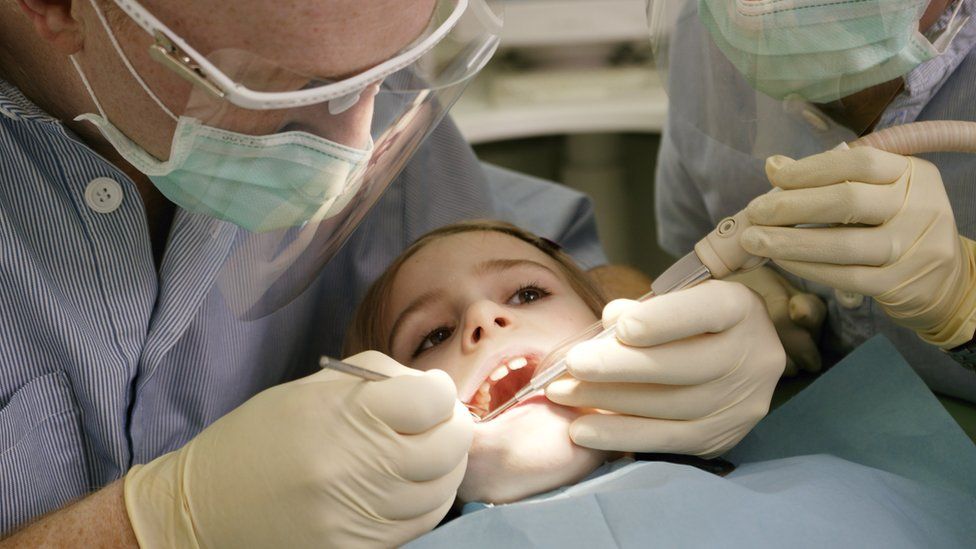
Published6 hours agoShareclose panelShare pageCopy linkAbout sharingImage source, Science Photo LibraryBy Ruth Green, Jonathan Fagg & Dominic HughesBBC NewsChildren in some areas of England are waiting up to 18 months on average for dental general-anaesthetic treatment and teeth extractions, an investigation reveals.Some have been left with prolonged dental pain, according to information shared with BBC News.The parents of one girl who has waited three years for extractions say the pain keeps her up at night. Removing decayed teeth is the most common reason for needing the service.Rotten teethAt the start of this year, more than 12,000 under-18s were on waiting lists for assessment or treatment at community dental service (CDS) providers, data obtained by the Liberal Democrats from the NHS Business Services Authority and shared with BBC News earlier this year reveals.Children are referred to a CDS provider when they have tooth decay too severe to be treated in general practice.They also treat those with physical or learning disabilities when general practice is not a practical option.The longest average wait faced by children for general-anaesthetic treatment at a CDS provider is 80 weeks, at Harrogate and District NHS Foundation Trust.But some providers have much lower average waits – at Mersey Care NHS Foundation Trust, it is just three weeks.Ella Mann, eight, from Dovercourt, Essex, has been waiting three years to have rotten teeth removed.Image source, BBC NewsShe first went to the dentist with a painful milk tooth in December 2019, was given a temporary filling and told it needed to be removed but has still not had the NHS procedure – and now, seven more of her milk teeth need to be removed.Image source, BBC NewsElla’s father, Charlie, says the pain “keeps her up at night”.He says: “It always seems to be in the evening that she suffers the pain. So then obviously we’ve got the problem of overnight and then fatigue because obviously she’s awake most of the night.”She’s started to sort of resent brushing her teeth because it’s giving her pain – and we’re starting to get concerned it’s going to cause further problems.”You’re waiting and waiting and waiting for something to be done about it. They are doing temporary fillings. They’re doing temporary jobs on it.”It’s just not right that children should be waiting.”Decay-related extractionsTooth decay is the most common reason six- to 10-year-olds are admitted to hospital.In England, more than 42,000 teeth were extracted from under-19s in 2021-22, costing the NHS an estimated £81m.Office for Health Improvement and Disparities analysis reveals a gap between regions in England.In the 2021-22 financial year:Yorkshire and the Humber had the highest rate of decay-related extractions for under-19s, 378 per 100,000East Midlands the lowest, 71 per 100,000

Your device may not support this visualisation

Staff at Maybury Primary School, in Hull, are doing their best to help keep pupils’ teeth healthy.Every pupil brushes their teeth after lunch.Image source, BBC NewsChildren struggling to see an NHS dentist’Some six-year-olds have never seen a toothbrush”I pulled out 11 teeth as no dentist was available’How to find an NHS dentistHead teacher Alison Grantham says toothache “has a massive impact on learning because they’re missing lessons”.”And if you’re coming to school and you’re trying to concentrate and trying to learn while you’re in pain, then that’s going to have impact, too,” she says.”Trying to get dental support in this area, it is really hard for parents to sign children up for a dentist. This area that the children come from, there is a high level of tooth decay.”We don’t like to see any of our children suffering or in pain – but a lot of the time, there’s something you can do straightaway that can help that. “But with teeth, it’s far more difficult. There’s no magic solution.”‘Exceptionally high’Dentists from the charity Teeth Team visit children at primary schools across Hull and parts of East Yorkshire. And BBC News joined them at Maybury Primary in May.Among the 169 children given a dental check-up that day, there were 263 decayed teeth.Some of these children will need extractions under general anaesthetic in hospital.Sara Feldt, from Teeth Team, says the needs in the school are “exceptionally high”.’Limiting sugar'”A high proportion of those are in urgent need, which is four or more decays or cavities in the children’s teeth,” she says.”We’ve had two today that have told us that they are in pain. One told us that they’ve got an abscess, so we’re going to deal with that.”It’s disturbing. It’s not very nice to see, because a child’s going under a general anaesthetic for something that’s preventable. It doesn’t have to happen.”Good oral hygiene, regular toothbrushing, limiting sugar, limiting the fizzy drinks. We need a little bit more education out there to prevent this happening.”I like the fact that we’re coming into the schools, because sometimes that’s the only kind of time the children will see a dentist.”We all know that the access to a dentist at the moment is really difficult. So to be able to do that, I think it’s really positive.”It needs to be rolled out nationwide, not just Hull.”A Department of Health and Social Care official said: “We are working to improve access to NHS dental care – investing more than £3bn a year into dentistry – and the number of children seen by NHS dentists rose by 43.6% last year.”We have increased the funding practices receive for urgent care, to encourage dentists to provide more NHS treatments and we’re also taking preventative measures to improve children’s oral health, such as expanding water-fluoridation schemes – which can significantly reduce the number of children experiencing tooth decay. Further reforms are planned for this year.”Are you a parent whose child is experiencing a long wait for dental treatment? You can share your story by emailing haveyoursay@bbc.co.uk.Please include a contact number if you are willing to speak to a BBC journalist. You can also get in touch in the following ways:WhatsApp: +44 7756 165803Tweet: @BBC_HaveYourSayUpload pictures or videoPlease read our terms & conditions and privacy policy

If you are reading this page and can’t see the form you will need to visit the mobile version of the BBC website to submit your question or comment or you can email us at HaveYourSay@bbc.co.uk. Please include your name, age and location with any submission. Sign up for our morning newsletter and get BBC News in your inbox.More on this storyGirl, 8, waiting three years to get tooth removedPublished23 MarchDriving hundreds of miles for dentist ‘unacceptable’Published4 days agoWoman who removed own teeth crowdfunds denturesPublished25 AprilMum’s four-year struggle to find NHS dentistPublished31 March

Read more →

US heatwave sees hospitals use body-bag ice treatment

Published8 hours agoShareclose panelShare pageCopy linkAbout sharingImage source, ReutersBy Sophie Long in Las Vegas & Chelsea BaileyBBC NewsAn unrelenting heatwave continues to scorch much of the southern US, leaving more than 90 million Americans under a heat advisory. In Phoenix, temperatures hit 110F (43C) for the 19th straight day, shattering the city’s previous record. Officials said hospitals were using body bags filled with ice to cool down some patients who have overheated.Temperatures are set to be dangerously high across the US all week.An oppressive heat dome has settled over much of the US South, sending temperatures soaring from Florida to California. More than 12,000 record-high temperatures have been recorded in the US so far this year, according to the National Oceanic and Atmospheric Administration (NOAA). Arizona’s largest utility service said customers broke the record for most electricity used at once, as residents blasted air conditioners to escape the heat. This video can not be playedTo play this video you need to enable JavaScript in your browser.Persistent exposure to extreme heat can lead to heat exhaustion, dizziness, fainting and headaches as blood pressure drops. In Phoenix, 12 people have died after suffering effects due to the current excessive heat, officials said.Doctors at the Valleywise Health Medical Center, told CNN the effects of the unrelenting heat were overwhelming the healthcare system.”The hospital has not been this busy with overflow since a few peaks in the Covid pandemic,” emergency room doctor Frank LoVecchio told the outlet. A hospital official said emergency room doctors are placing patients in body bags filled with ice, in extreme cases, in an attempt to cool them down.In an interview with the health news outlet, Stat News, emergency physician Dr Geoff Comp, who helped develop the life-saving protocol, said body bags were ideal for treating heat stroke victims because they could cool someone twice as quickly as traditional methods. Patients are immersed in the ice-filled bags, which are waterproof and have enough room for doctors to perform some procedures, according to Stat News. Image source, BBC NewsIn Las Vegas, sweltering temperatures have stunned even veteran emergency responders. Las Vegas paramedic David Schilling estimates calls to emergency services have soared by 40% – largely from tourists who are not yet acclimatised to the city.People who are visiting often don’t realise how far they have to walk in the sun on the Las Vegas Strip, Mr Schilling said.”It’s a very long distance and because people get so enamoured with all the large buildings and spectacles in the lights, they don’t realise they’re being dehydrated,” he said. In the weeks before the heat dome settled over the state, Las Vegas had been unusually cool. It recorded more than 260 consecutive days below 100F (38C). But the soaring temperatures returned with a vengeance, with little warning or time for people to acclimatise. “It snuck up on us,” Mr Schilling said. “So we’ve seen people that are feeling dizzy, their hearts are racing, people are passing out people are being really overwhelmed.”What effect do heatwaves have on the body?Meteorologist Trevor Boucher told BBC News one reason the Las Vegas heat feels so relentless is because there is little respite. Instead of heat escaping during the night, Mr Boucher said the ground continues to reflect the heat it absorbed during the day.”Temperatures can struggle to fall below 90F (32C) in some cases. And if you don’t have access to cooling, then you’re stuck in 90 degree temperatures for 24 hours,” he said. And those high temperatures affect the vulnerable the most severely. Patty and Alan Baker are two of several thousand living in Las Vegas without a home. They spoke to BBC News outside a cooling station and shelter in downtown Las Vegas.”We’re surviving, but we’re sweating a lot,” Patty said. “You know, we’re lucky that we have access to shelter. They have fans in there and we get a mat. So that helps a lot.” “We are senior citizens but you know we hang in there,” Alan said. Heatwaves have become more frequent, more intense, and last longer because of human-induced climate change. The world has already warmed by about 1.9F (1.1C) since the industrial era began and temperatures will keep rising unless governments around the world make steep cuts to emissions.This video can not be playedTo play this video you need to enable JavaScript in your browser.More on this storyHeatwave hits homeless people: ‘I cry all the time’ Video, 00:00:55Heatwave hits homeless people: ‘I cry all the time’Published15 hours ago0:55Country music star suffers heat exhaustion mid-performancePublished1 day agoTourists flock to Death Valley for heat recordPublished1 day ago

Read more →

AI-guided brain stimulation aids memory in traumatic brain injury

Traumatic brain injury (TBI) has disabled 1 to 2% of the population, and one of their most common disabilities is problems with short-term memory. Electrical stimulation has emerged as a viable tool to improve brain function in people with other neurological disorders.
Now, a new study in the journal Brain Stimulation shows that targeted electrical stimulation in patients with traumatic brain injury led to an average 19% boost in recalling words.
Led by University of Pennsylvania psychology professor Michael Jacob Kahana, a team of neuroscientists studied TBI patients with implanted electrodes, analyzed neural data as patients studied words, and used a machine learning algorithm to predict momentary memory lapses. Other lead authors included Wesleyan University psychology professor Youssef Ezzyat and Penn research scientist Paul Wanda.
“The last decade has seen tremendous advances in the use of brain stimulation as a therapy for several neurological and psychiatric disorders including epilepsy, Parkinson’s disease, and depression,” Kahana says. “Memory loss, however, represents a huge burden on society. We lack effective therapies for the 27 million Americans suffering.”
Study co-author Ramon Diaz-Arrastia, director of the Traumatic Brain Injury Clinical Research Center at Penn Medicine, says the technology Kahana and his team developed delivers “the right stimulation at the right time, informed by the wiring of the individual’s brain and that individual’s successful memory retrieval.”
He says the top causes of TBI are motor vehicle accidents, which are decreasing, and falls, which are rising because of the aging population. The next most common causes are assaults and head injuries from participation in contact sports.
This new study builds off the previous work of Ezzyat, Kahana, and their collaborators. Publishing their findings in 2017, they showed that stimulation delivered when memory is expected to fail can improve memory, whereas stimulation administered during periods of good functioning worsens memory. The stimulation in that study was open-loop, meaning it was applied by a computer without regard to the state of the brain.

Read more →