Researchers develop 'in vivo' RNA-based gene editing model for blood disorders

In a step forward in the development of genetic medicines, researchers at Children’s Hospital of Philadelphia (CHOP) and the Perelman School of Medicine at the University of Pennsylvania have developed a proof-of-concept model for delivering gene editing tools to treat blood disorders, allowing for the modification of diseased blood cells directly within the body. If translated into the clinic, this approach could expand access and reduce the cost of gene therapies for blood disorders, many of which currently require patients receive chemotherapy and a stem cell transplant. The findings were published today in the journal Science.
“Right now, if you want to treat hematologic diseases like sickle cell disease and beta thalassemia with gene therapy, patients must receive conditioning treatments like chemotherapy to make space for the new, corrected blood cells, which is both expensive and comes with risks,” said co-senior author Stefano Rivella, PhD, Kwame Ohene-Frempong Chair on Sickle Cell Anemia and Professor of Pediatrics at Children’s Hospital of Philadelphia. “In our paper, we have shown that it is possible to replace diseased blood cells with corrected ones directly within the body in a ‘one-and-done’ therapy, eliminating the need for myeloablative conditioning treatments and streamlining the delivery of these potentially life-changing treatments. This is a big step forward in how we think about treating genetic diseases and could expand the access of gene therapies to patients who need them most.”
“Targeted delivery of mRNA-encoded therapeutics to specific tissues and cell types will have an immense impact on the way diseases will be treated with nucleic acids in the future,” said senior author Hamideh Parhiz, PharmD, PhD, a research assistant professor of Infectious Diseases at Penn. “In our study, we are providing a cell-specific targeted lipid nanoparticle encapsulating mRNA therapeutics/editors as a platform technology that can be used for in vivo cellular reprogramming in many diseases in need of a precisely targeted gene therapy modality. Here, we combined the targeted platform with advances in mRNA therapeutics and RNA-based genomic editing tools to provide a new way of controlling hematopoietic stem cell fate and correcting genetic defects. A targeted mRNA-encoded genomic editing methodology could lead to controlled expression, high editing efficacy, and potentially safer in vivo genomic modification compared to currently available technologies.”
Hematopoietic stem cells (HSCs) reside in the bone marrow, where they divide throughout life to produce all cells within the blood and immune system. In patients with non-malignant hematopoietic disorders like sickle cell disease and immunodeficiency disorders, these blood cells don’t function correctly because they carry a genetic mutation.
For these patients, there are currently two avenues for potentially curative treatments, both of which involve a bone marrow transplant: a stem cell transplant with HSCs from a healthy donor, or gene therapy in which the patient’s own HSCs are modified outside of the body and transplanted back in (often referred to as ex vivo gene therapy). The former approach comes with the risk of graft versus host disease, given that the HSCs come from a donor, and both processes involve a conditioning regimen of chemotherapy or radiation to eliminate the patient’s diseased HSCs and prepare them to receive the new cells. These conditioning procedures come with significant toxic side effects, underscoring the need to investigate less-toxic approaches.
One option that would eliminate the need for the above methods would be in vivo gene editing, in which gene editing tools are infused directly into the patient, allowing HSCs to be edited and corrected without the need for conditioning regimens.
To validate this approach, a research team led by Laura Breda, PhD, and Michael P. Triebwasser, MD, PhD at CHOP (presently at the University of Michigan), Tyler E. Papp, BS at Penn, and Drew Weissman, MD, PhD, the Roberts Family Professor in Vaccine Research, the director of the Penn Institute for RNA Innovation, and a pioneer of mRNA-vaccine research, used liquid nanoparticle (LNP) to deliver mRNA gene editing tools. LNP are highly effective at packaging and delivering mRNA to cells and became widely utilized in 2020, due to the LNP-mRNA platform for two leading COVID-19 vaccines.

Read more →

'Swine flu' strain has passed from humans to swine nearly 400 times since 2009

A new study of the strain of influenza A responsible for the 2009 H1N1 pandemic — pdm09 — shows that the virus has passed from humans to swine about 370 times since 2009, and subsequent circulation in swine has resulted in the evolution of pdm09 variants that then jumped from swine to humans. Alexey Markin of the U.S. Department of Agriculture-Agricultural Research Service and colleagues present these findings in the open-access journal PLOS Pathogens.
Influenza A can cause the flu in humans, birds, swine, and some other mammals. In 2009 and 2010, a pandemic caused by pdm09 resulted in thousands of human deaths around the world. Since then, as demonstrated in prior studies, pdm09 has repeatedly passed from humans to swine, and circulation of the virus among swine leads to evolutionary changes in pdm09 that could make it more likely to cross back and infect humans.
To better understand this risk, Markin and colleagues analyzed pdm09 transmission data between 2009 and 2021. They also investigated how these interspecies events may have affected the genetic diversity of the virus in swine and the risk of subsequent human infection.
The analysis showed that, since 2009, pdm09 has crossed from humans to swine about 370 separate times, with most of these events occurring when pdm09 burden was highest among humans. In 2020 and 2021, during the COVID-19 pandemic, pdm09 circulation among humans dropped, but pdm09 circulation persisted in swine as a result of about 150 human-to-swine transmissions between 2018 and 2020.
The researchers found that most human-to-swine transmission events were isolated, but a few led to sustained circulation of different pdm09 genetic lineages among swine in the U.S. These swine-circulating variants appeared to be genetically poor matches for human seasonal vaccines, suggesting that the vaccines would have provided scant protection against them. The analysis also showed that persistent pdm09 circulation among swine was associated with at least five instances of swine-to-human transmission.
These findings add to mounting evidence that managing influenza A infection in people who work with swine can help prevent transmission to pigs, and subsequently reduce the risk of spread back to humans.
The authors add: “”Controlling influenza A virus infection in humans can minimize spillover of viruses into pigs and reduce the diversity of viruses circulating in swine populations. Limiting virus diversity in pigs can minimize the emergence of novel viruses and the potential for swine-to-human transmission of influenza A virus.”

Read more →

New research method determines health impacts of heat and air quality

The planet experienced the hottest day on record earlier this month and climate projections estimate the intensity of heat waves and poor air quality will increase and continue to cause severe impacts. Researchers from the University of Waterloo and Toronto Metropolitan University have refined and expanded a method of data collection to assess their health impacts.
They discovered that even moderate temperature increases, for example night-time temperatures starting at 18.4 degrees Celsius, can lead to increased hospital visits and death for older adults and those with cardiorespiratory conditions.
The new method will help municipalities make a strong case for choosing which mitigation and adaptation measures to pursue to effectively respond to climate changes. The options could include planting more trees for shade, investing in our emergency warning programs, or planning to have more staff available to run ambulances, support hospitals and long-term care homes.
“Heat waves cause more deaths in Canada than any other climate hazard,” said Dr. Mohamed Dardir, postdoctoral researcher in the School of Environment, Enterprise and Development at Waterloo. “We are getting better at being proactive and planning for climate emergencies, but we still aren’t responding to temperatures in the same way we respond to big weather events, such as floods and fires.”
The study analyzed the spring and summer in Mississauga and Brampton, Ontario. By integrating data on air quality and heat, the researchers achieved the most detailed picture of the short-term health risks impacting the vulnerable population on a municipal level. The findings confirm there was an increase in the total deaths and hospital visits in these areas with the highest impact happening on the day of the heat and poor air quality and extending two days after these events.
In the future, the team plans to expand their analysis to include more environmental hazards, such as storms and floods, and factors including ambulatory calls across municipalities in Ontario and other provinces. The researchers say that this work will help civil society and policy makers grasp the magnitude of these climate events and equip decision makers to justify investments in climate resiliency.
“Much of the financial burden to mitigate the impacts of hot temperatures is left to municipalities, but the health system savings are largely experienced by provinces,” said Dr. Jeffrey Wilson, professor in the School of Environment, Enterprise and Development in Waterloo’s Faculty of Environment. “Being able to detail the cost savings and benefits for society to implement these measures will help the two levels of government understand why working together to address heat events is important.”

Read more →

Climate change: July set to be world's warmest month on record

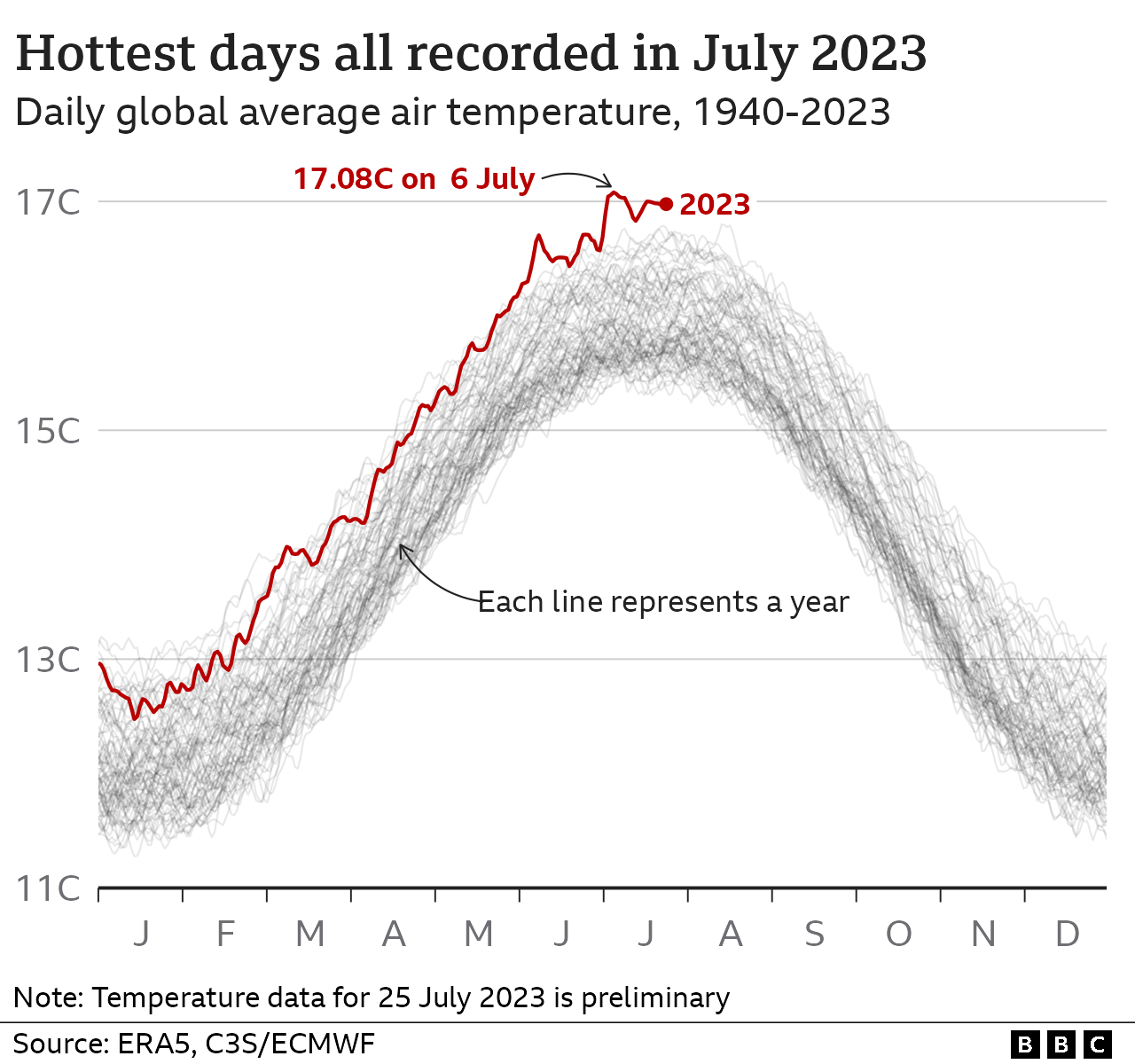
Published13 hours agocommentsCommentsShareclose panelShare pageCopy linkAbout sharingThis video can not be playedTo play this video you need to enable JavaScript in your browser.By Matt McGrath & Mark PoyntingBBC News Climate & ScienceAmid blistering heatwaves, July is “virtually certain” to be the world’s warmest month on record, say scientists. So hot has the month been to date that researchers are confident the 2019 record will be broken, even with several days to go.UN chief Antonio Guterres said the planet is entering an “era of global boiling”. Scientists agree the extra heat is mainly linked to fossil fuel use.US President Joe Biden described climate change as an “existential threat” and that no one “can deny the impact of climate change anymore”.Some experts believe that July might well be the warmest month in the past 120,000 years. Will the Gulf Stream really collapse by 2025?Greta Thunberg fined over Swedish climate protest July heat near ‘impossible’ without climate changeResearchers are not surprised that July is set to break the current record for the warmest month as there have been plenty of indications in recent weeks that the world is seeing far greater levels of heating. The world’s warmest day occurred on July 6, and the hottest 23 days ever recorded were all this month, according to the Copernicus Climate Change Service. Their provisional average temperature for the first 25 days of the month is 16.95C, which is well above the 16.63C figure for the whole of July 2019. Other analysis has come to the same conclusion.Dr Karsten Haustein from the University of Leipzig has calculated that July 2023 will be 1.3C-1.7C above the average July temperatures recorded before the widespread use of fossil fuels. The best guess is around 1.5C. He’s confident that even if the last few days are cooler, the margin of error is enough to make July the hottest yet seen.”Not only will it be the warmest July, but the warmest month ever in terms of absolute global mean temperature,” he said in a statement. “We may have to go back thousands if not tens of thousands of years to find similarly warm conditions on our planet.”Researchers work out the global air temperature by taking readings from weather stations dotted around the world. However there are not enough stations to give a completely accurate global picture so scientists feed all of these readings – plus some measurements from the atmosphere itself – into computer models. These allow scientists to create a “map without gaps”, meaning the global temperature can be reliably estimated.By combining these datasets with global weather forecasts for the next few days, scientists can come up with a reliable estimate of the global temperature even before the end of the month.While July is likely to be the warmest in records dating back around 150 years or so, some researchers believe the final temperature may be the warmest in tens of thousands of years. To work out these ancient figures, scientists use records like the air trapped in polar ice cores, or sediments in the deep ocean. These capture a signal of the climate at the time.From this evidence, while scientists can’t pinpoint specific months going that far back, they say the last time the world was similarly warm was about 120,000 years ago – when sea levels were around 8m higher than today, and hippos were present as far north as Britain.Why are these records happening?Researchers are confident that emissions of fossil fuels from human activities are mostly to blame for the levels of warming we are now seeing. “The extreme weather which has affected many millions of people in July is unfortunately the harsh reality of climate change and a foretaste of the future,” said the World Meteorological Organization’s Secretary-General Prof Petteri Taalas. “The need to reduce greenhouse gas emissions is more urgent than ever before,” he said. “Climate action is not a luxury but a must.”Experts believe that July’s temperature record will not be the last one broken this year. As well as the ongoing impact of greenhouse gases, there’s the growing effect of the El Niño weather system – a natural event where oceans warm in the east Pacific and release heat into the atmosphere. This is likely to push temperatures even higher and may make 2023 or 2024 the warmest year yet recorded, because scientists warn we’re yet to see its full impacts.There are other factors that have might have added to global temperatures. New shipping rules have led to a smaller amount of pollutants being released, and until recently levels of Saharan dust in the atmosphere have been low. These airborne particles, called “aerosols”, typically reflect some of the sun’s energy back into space – although the science is very complicated. It’s thought that having less of these aerosols may have made a small contribution to record North Atlantic heat. The eruption of an underwater volcano in Tonga in 2022 has also added to the amount of water vapour in the atmosphere, which heats the planet like carbon dioxide.What does this mean for the Paris agreement?In 2015, nearly 200 countries signed up to the Paris climate agreement. They pledged to try to keep long-term global temperature rises to 1.5C above the pre-industrial period – before humans started burning fossil fuels at scale.Scientists caution that while the July temperatures are worrying, extreme temperatures in a single month don’t mean that international climate agreements have been broken.”That does not mean we reach or breach the Paris goal or 1.5C because that is understood as the long-term increase in global warming,” explains Dr Friederike Otto, a climate scientist from Imperial College London.Limiting warming to 1.5C is seen as key to avoiding the most dangerous impacts of climate change. But as the recent heatwaves have shown, the consequences of climate change increase with every fraction of a degree of warming.What about the UK?While southern Europe has been experiencing intense heat, the UK has been considerably milder.This is linked to the position of the jet stream, according to weather experts. But the Met Office warned today that the UK can expect to see warmer temperatures in years to come due to the ongoing rise in global temperatures.A really simple guide to climate change

Read more →

Blood of Young Mice Extends Life in the Old

Infusions of youthful blood led older mice to live 6 to 9 percent longer, a new study found.A team of scientists has extended the lives of old mice by connecting their blood vessels to young mice. The infusions of youthful blood led the older animals to live 6 to 9 percent longer, the study found, roughly equivalent to six extra years for an average human.While the study does not point to an anti-aging treatment for people, it does hint that the blood of young mice contains compounds that promote longevity, the researchers said.“I would guess it’s a useful cocktail,” said James White, a cell biologist at the Duke University School of Medicine and an author of the new study.Joining animals together, known as parabiosis, has a long history in science. In the 19th century, French scientists connected the blood vessels of two rats. To prove that the rats shared a circulatory system, they injected belladonna, a compound from the deadly nightshade plant, into one of the animals. The pupils of both rats dilated.In the 1950s, Clive McCay of Cornell University and his colleagues used parabiosis to explore aging. They joined young and old rats, stitching together their flanks so that the capillaries in their skin merged. Later, Dr. McCay and his colleagues examined the cartilage in the old rats and concluded it looked younger.In the early 2000s, parabiosis went through a renaissance. Researchers used 21st century techniques to study what happened when animals of different ages shared the same bloodstream. They found the muscles and brains of old mice were rejuvenated, while younger mice showed signs of accelerated aging.Some doctors jumped on these preliminary results and started offering injections of blood plasma from young people as a way to treat dementia and other diseases of old age. The Food and Drug Administration issued a warning against such treatments in 2019, cautioning that they “have no proven clinical benefits for the uses for which these clinics are advertising them and are potentially harmful.”For several years, Dr. White and his colleagues have been tweaking parabiosis procedures in mice to better understand the anti-aging effects. The scientists joined an old and young mouse together for about three months — twice as long as typical parabiosis experiments — before carefully detaching them. After the animals recovered, the scientists observed the animals to see how much longer they lived.The researchers not only found that the old mice lived longer, but also that the course of their aging appeared to change.After detaching the old mice, the scientists looked at molecular markers in their blood and liver that act like a clock for an animal’s biological age. These clocks seemed to have been paused: Two months later, these molecular markers showed the older animals as “younger” than untreated mice of the same age.“We reset the trajectory of aging,” Dr. White said.The young mice were also affected by the union. “The young mice rapidly become older, and when we separate the mice, it goes back,” said Vadim Gladyshev, an expert on biological clocks at Harvard Medical School and an author of the new study.The study was published on Thursday in the journal Nature Aging.“It’s a beautiful demonstration — it really shows that this effect is not transient,” said Tony Wyss-Coray, a parabiosis expert at Stanford University who was not involved in the study.But Michael Conboy, a research scientist at the University of California, Berkeley, cautioned that a similar experiment published last year by Ukrainian scientists did not show that old mice lived longer after parabiosis.“But at least somebody is doing the experiments, which is brave, because they are not easy,” Dr. Conboy said.Dr. David Glass, the vice president for research on age-related disorders at Regeneron, a pharmaceutical company, noted that the new report used a different strain of mice from the one in last year’s study. “So one should be cautious in generalizing the findings,” Dr. Glass said.Now Dr. White and his colleagues are following up with experiments to understand what might be slowing down aging in the old mice. “We’re hunting the hows and whys,” he said.The long-term effects of the experiment suggest to Dr. White that the cause can’t be pinned only to cells from the young mice rejuvenating the old ones. Once the surgeons separated the mice, the old mice lost their supply of young cells but did not return to their old state.One possibility is that harmful compounds in the old animals get diluted by the blood from the young mice. The young blood may also contain molecules that reprogram cells in the old mice, so that they kept behaving like younger cells after the animals were detached.Dr. Gladyshev did not see the new study as a justification for getting shots of young human serum. For one thing, he and his colleagues have no idea which factors make up the life-extending cocktail for mice, let alone people. For another, injections are a far cry from being joined up to another animal for months.“To me, it’s just very strange to think it could work,” Dr. Gladyshev said.

Read more →

Increased step count linked to better health for people with heart failure

More often, people are turning to consumer wearable devices, such as smartwatches, to monitor their health and physical activity.
Using these wearable devices, a study led by Michigan Medicine and the University of Missouri with Saint Luke’s Mid America Heart Institute finds that taking more daily steps is associated improved health, including fewer symptoms and physical limitations, for people with heart failure. The results are published in JACC: Heart Failure.
Clinicians are increasingly presented with their patients’ wearable device data, though interpretation has been challenging given a lack of normative data in different populations, says first author Jessica R. Golbus, M.D., clinical instructor of internal medicine-cardiology at University of Michigan Medical School.
“This is one of the first studies to provide context to wearable device data from heart failure patients and helps us to understand what physical activity data from a wearable device means at a population level as well as at the individual level,” Golbus said.
As part of a national, randomized clinical trial for heart failure, over 400 patients were given activity monitors to evaluate the relationship between daily step count, floors climbed, and their symptoms and physical limitations over 12 weeks. The CHIEF-HF trial used the Kansas City Cardiomyopathy Questionnaires (KCCQ) to gauge total symptoms and physical limitations.
Baseline step counts between 1,000 and 5,000 steps were associated with significantly improved symptoms and fewer physical limitations reflected by KCCQ scores, with little association seen beyond 5,000 steps.
People who walked 2,000 steps per day had total symptoms scores 3.11 points higher, and physical limitation scores 5.36 points higher, than those who walked 1,000 steps a day.

Read more →

Scientist discover protein required for an effective immune response to invading bacteria

A team led by researchers at Massachusetts General Hospital (MGH) has discovered a protein that plays critical roles in alerting the body to a bacterial infection and initiating an effective immune response to fight back against the invasion.
They found that when certain bacteria are ingested by human immune cells, the protein, called NLRP11, can recognize these bacteria through a portion of their outer coat, filling a previous gap in this recognition pathway.
NLRP11 is present in humans but not in mice, which are the most common laboratory model for human infection. The group’s discovery, which is published in Science Immunology, may therefore help investigators develop improved “humanized” mouse models of infections and diseases involving the immune system.
For the study, the researchers focused on macrophages, which are immune cells that ingest and degrade microorganisms (such as bacteria) and stimulate the action of other immune cells.
A genetic screen revealed that macrophages require the NLRP11 gene to become fully activated after ingesting certain bacteria. Mechanistically, the team found that the NLRP11 protein that’s produced from the gene enables a macrophage to sense the presence of bacterial lipopolysaccharide molecules within its interior.
Upon sensing bacterial lipopolysaccharide molecules, NLRP11 triggers an inflammasome, an intracellular multimeric protein complex that turns on a pathway that activates inflammatory responses to control infection.
In this case, NLRP11 leads to activation of an enzyme called caspase-4 that is a component of this inflammasome.

Read more →

People with increased genetic risk of Alzheimer's may lose sense of smell first

People who carry the gene variant associated with the strongest risk for Alzheimer’s disease may lose their ability to detect odors earlier than people who do not carry the gene variant, which may be an early sign of future memory and thinking problems, according to a study published in the July 26, 2023, online issue of Neurology®, the medical journal of the American Academy of Neurology. The gene variant associated with this increased risk of Alzheimer’s is called APOE e4.
“Testing a person’s ability to detect odors may be a useful way to predict future problems with cognition,” said study author Matthew S. GoodSmith, MD, of the University of Chicago. “While more research is needed to confirm these findings and determine what level of smell loss would predict future risk, these results could be promising, especially in studies aiming to identify people at risk for dementia early in the disease.”
The study involved an at-home survey that included testing the sense of smell of over 865 people — both their ability to detect an odor at all and their ability to identify what odor they were smelling. Tests were given at five-year intervals. People’s thinking and memory skills were also tested twice, five years apart. DNA samples gave researchers information about who carried the gene associated with an increased risk of Alzheimer’s.
For the test to see if people could detect odors, scores ranged from zero to six based on how many of the different concentrations of odors they could smell.
People who carried the gene variant were 37% less likely to have good odor detection than people without the gene at a single timepoint. Researchers accounted for other factors that could affect the results, such as age, sex, and educational level. The gene carriers started experiencing reduced smell detection at age 65 to 69. At that age, the gene carriers could detect an average of about 3.2 of the smells, compared to about 3.9 smells for the people who did not carry the gene.
The people carrying the gene variant did not show a difference in their ability to identify what odor they were smelling until they reached age 75 to 79. Once they started to lose their ability to identify odors, the gene carriers’ ability declined more quickly than those who did not carry the gene.
Thinking and memory skills were similar among the two groups at the start of the study. But as expected, those carrying the gene variant experienced more rapid declines in their thinking skills over time than those without the gene.
“Identifying the mechanisms underlying these relationships will help us understand the role of smell in neurodegeneration,” GoodSmith said.
A limitation of the study is that people with severe dementia were not included.
The study was supported by the National Institutes of Health, National Institute on Aging and National Institute of Diabetes and Digestive and Kidney Diseases.

Read more →

For healthy older people, aspirin could cause more bleeding.

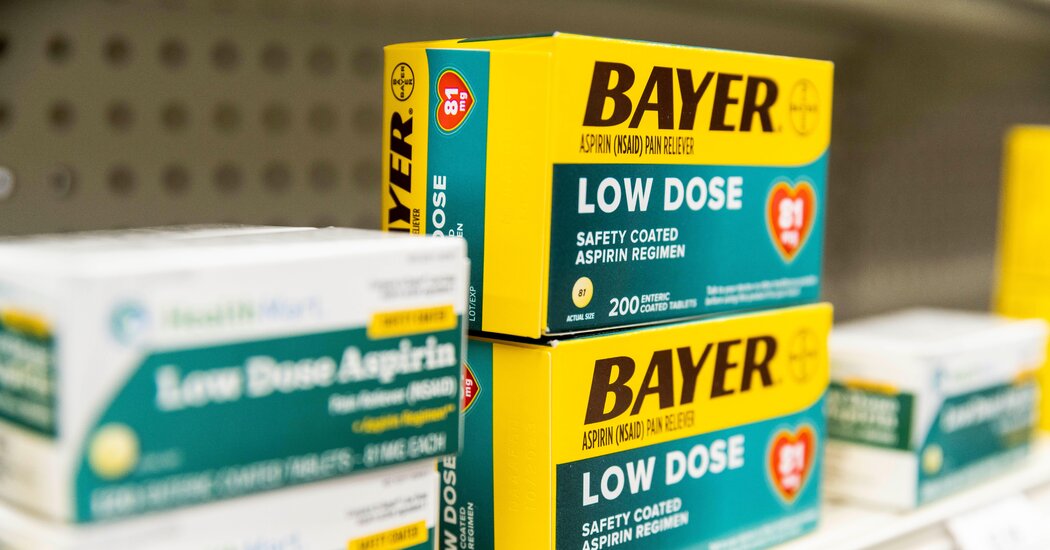
A new analysis of older people who have never had a heart attack or stroke suggests limited protective power of daily low-dose aspirin, and worrisome side effects.A new analysis of data from a large clinical trial of healthy older adults found higher rates of brain bleeding among those who took daily low-dose aspirin, and no significant protection against stroke.The analysis, published Wednesday in the medical journal JAMA, is the latest evidence that low-dose aspirin, which slows the clotting action of platelets, may not be appropriate for people who do not have any history of heart conditions or warning signs of stroke. Older people prone to falls, which can cause brain bleeds, should be particularly cautious about taking aspirin, the findings suggest.The new data supports the recommendation of the U.S. Preventive Services Task Force, finalized last year, that low-dose aspirin should not be prescribed for preventing a first heart attack or stroke in healthy older adults.“We can be very emphatic that healthy people who are not on aspirin and do not have multiple risk factors should not be starting it now,” said Dr. Randall Stafford, a medical professor and epidemiologist at Stanford University who was not involved in the study.He acknowledged, however, that the decision was less clear-cut for people who did not fit that description.“The longer you’ve been on aspirin and the more risk factors you have for heart attacks and strokes, the murkier it gets,” he said.For most people who have already had a heart attack or stroke, daily aspirin should remain an important part of their care, a number of cardiac and stroke experts said in interviews.The new analysis used data from Aspirin in Reducing Events in the Elderly, or ASPREE, a randomized control trial of daily low-dose aspirin among people living in Australia and the United States. The 19,114 participants were adults over 70 who were free of any symptomatic cardiovascular disease. (Any person with a history of stroke or heart attack was excluded from the study.)It aimed to reveal nuances in the data to address the difficult balance that doctors face in preventing clots and bleeds in older patients. The rationale was that the balance of risk and benefits of aspirin might shift as people age. Strokes become more frequent from clots as well as from small blood vessels that become more fragile over time, and older people can experience an increased likelihood of head trauma from falls.The study randomly assigned 9,525 people to take 100 milligram daily doses of aspirin and 9,589 people to take matching placebo pills. Neither of the groups nor the researchers knew who was taking each type of pill. The study followed participants for a median of 4.7 years.Aspirin appeared to reduce the occurrence of ischemic stroke, or a clot in a vessel supplying blood to the brain, though not significantly. Researchers found a significant increase — 38 percent — of intracranial bleeding among the people who took daily aspirin compared with those who took a daily placebo pill.Cardiologists who were not involved in the study lauded its size and rigorous design, in which specialists reviewed medical records and characterized the events manually, rather than relying on outcomes reported by the patients. But they noted that the rate of strokes was low in both groups, making the results difficult to extrapolate. The paper did not include an analysis on heart attacks.They also questioned how the findings would apply to the diverse population of the United States, since a majority of participants were in Australia, and 91 percent of them were white.In the past, some doctors regarded aspirin as something of a wonder drug, capable of protecting healthy patients against a future heart attack or stroke. But recent studies have shown that the powerful drug has limited protective power among people who have not yet had such an event, and it comes with dangerous side effects.The U.S. Preventive Services Task Force recommended last year that most people who have never had a heart attack or stroke not begin taking low-dose aspirin because of the risk of internal bleeding. The American College of Cardiology quickly released a follow-up statement, reiterating that the recommendation “does not apply to patients with a prior history of heart attack, stroke, bypass surgery, or recent stent procedure.”Still, some stroke patients seemed to misinterpret the guidance. In interviews, multiple cardiologists said that patients who clearly needed aspirin had abruptly stopped taking it, only to end up in the emergency room with a second stroke.No one should ever stop taking aspirin without consulting a doctor, they said.“When a study comes out, you have to ask yourself, how well do I fit into this study’s population?” said Dr. Shlee S. Song, the director of the Comprehensive Stroke and Telestroke Programs at Cedars-Sinai. “If you’ve ever had a heart attack or stroke event, this study’s findings do not apply to you.”In an interview last year, Dr. Song, who oversees stroke programs at four hospitals in Los Angeles, urged patients not to abandon the drug. She said this study had not changed her opinion.“There is a lot of noise out there,” she said. “At the end of the day, these things will need to be discussed with a doctor who knows your specific story.”Dr. Joshua Willey, an associate professor of neurology and a stroke specialist at the Columbia University Vagelos College of Physicians and Surgeons, said the risk-benefit calculation would also differ for each patient, depending on how long they had been on aspirin and why their doctor recommended the pill in the first place. For a patient at high risk of another condition, like colorectal cancer, a doctor might conclude that aspirin offers protective power that offsets the patient’s risk of bleeding.For patients who need to remain on aspirin, he said, the study findings have a different significance for doctors: “Check their balance, get them physical therapy, make sure the house is set up properly. Do everything you can in that Medicare age group to mitigate the risk of a fall.”

Read more →

16 People Sick in Salmonella Outbreak Linked to Ground Beef

People who became ill reported eating lean ground beef that was sold at ShopRite locations in New Jersey, New York and Connecticut, the C.D.C. said.A salmonella outbreak linked to lean ground beef sold in ShopRite stores in Connecticut, New Jersey and New York has left 16 people sick, including six who were hospitalized, according to Centers for Disease Control and Prevention.Ground beef that was labeled 80 percent lean was the only common food that the people who became ill in the outbreak reported eating. Investigators are working to identify the source of the ground beef, the agency said in a release. One person also reported salmonella illness in Massachusetts, and the outbreak may not be limited to the states with known cases, the C.D.C. said.Nine of the 16 people who reported being ill purchased ground beef from different ShopRites, and the source of the remaining seven cases has not been determined, ShopRite said in a statement.The illnesses occurred between April 27 and June 16, and no new illnesses have been reported since then. Ground beef is still available at ShopRite, and the U.S. Agriculture Department has not recommended a recall, ShopRite said.It’s not uncommon for ground beef to be associated with salmonella bacteria, which can cause diarrhea, fever and stomach cramps. Salmonella germs live in the intestines of people and animals and can be spread through contaminated water, food and the surfaces where food is prepared.Salmonella is killed when beef is cooked to 160 degrees Fahrenheit, and eating undercooked ground beef can cause make people sick.It’s not just uncooked or undercooked meat that are susceptible to contamination; over the last few years, salmonella outbreaks have also been tied to produce and vegetables.Red onions grown in California were linked to an outbreak affecting more than more than 640 people in 43 states in the United States and Canada. The outbreak was connected to products shipped from May to August of 2020, and cases continued to surface into the fall of 2021.In 2018, a salmonella outbreak was linked to precut melons from a food distributor in Indiana, prompting the recall of products in eight states.

Read more →