Half the population to have a mental health disorder by 75

A global study co-led by researchers from The University of Queensland and Harvard Medical School has found one in two people will develop a mental health disorder in their lifetime.
Professor John McGrath from UQ’s Queensland Brain Institute, Professor Ronald Kessler from Harvard Medical School, and their colleagues from 27 other countries, analysed data from more than 150,000 adults across 29 countries between 2001 and 2022, taken from the largest ever coordinated series of face-to-face interviews — the World Health Organisation’s World Mental Health Survey initiative.
Lead author Professor McGrath said the results demonstrate the high prevalence of mental health disorders, with 50 per cent of the population developing at least one disorder by the age of 75.
“The most common were mood disorders such as major depression or anxiety,” Professor McGrath said.
“We also found the risk of certain mental disorders differed by sex.”
The 3 most common mental health disorders among women: Depression Specific phobia (a disabling anxiety that interferes with daily life) Post-traumatic stress (PTSD)The 3 most common mental health disorders among men: Alcohol abuse Depression Specific phobiaThe research also found mental health disorders typically first emerge in childhood, adolescence or young adulthood.

Read more →

Women and men react differently to strain and stress

Does anyone still remember the initial phase of the Corona pandemic in 2020? When shops, restaurants, cinemas, and theatres remained closed. When meetings with friends and relatives were prohibited. When school lessons had to take place at home in the children’s rooms. When there was no question of traveling.
Presently, most people seem to have long forgotten these times. Yet, the various corona measures taken by politicians are likely to have caused enormous stress for many. The fear for the job, the worry about sick relatives, the nervous strain when parents and children sit together in a small apartment and have to reconcile home office and homeschooling: All this has not remained without effects, as numerous studies show.
The crucial factor is anxiety
How and to what extent have these experiences affected the mental health and quality of life of women and men in the first year of the COVID-19 pandemic? This has been investigated by a research team of the University and the University Hospital Würzburg. In detail, the scientists were interested in the relationship between worries about the workplace and about other people with a person’s own mental health problems such as anxiety and depression and with their quality of life in general, how these are influenced by the support from friends or at work — and whether the results show differences between men and women.
The findings are unambiguous: in this complex of different variables and influencing factors, anxiety plays a central part. There are, however, distinct gender-specific differences: “In men, anxiety increases along with concerns about the job, an effect which does not show in women. On the other hand, we were able to register an increase in anxiety levels in women parallel to an increase in their worries about family and friends,” says Grit Hein. In addition, the study shows that women in such times respond positively to support from friends and family by experiencing enhanced quality of life. In men, this phenomenon did not manifest itself.
Data on the influence of gender were lacking
Grit Hein is Professor of Translational Social Neuroscience at the Clinic and Polyclinic for Psychiatry, Psychosomatics and Psychotherapy at the University Hospital. She and her postdoc Martin Weiß led the study, the results of which have now been published in the journal Scientific Reports.
“In the past, numerous studies have investigated the influence of psychosocial factors such as support from friends and colleagues and financial, professional or personal worries on mental health and the quality of life. Yet, data on whether these correlations are the same for men and women were lacking,” says Grit Hein, explaining the background to the study. Broadening earlier studies, the Würzburg research team has therefore now examined the influence of these factors in relation to gender.

Read more →

Routinely drinking alcohol may raise blood pressure even in adults without hypertension

Even in adults without hypertension, blood pressure readings may climb more steeply over the years as the number of daily alcoholic drinks rise, according to an analysis of seven international research studies published today in Hypertension, an American Heart Association journal.
With the statistical power of seven international research studies, this analysis confirms for the first time there was a continuous increase in blood pressure measures in both participants with low and high alcohol intake. Even low levels of alcohol consumption were associated with detectable increases in blood pressure levels that may lead to a higher risk of cardiovascular events.
“We found no beneficial effects in adults who drank a low level of alcohol compared to those who did not drink alcohol,” said senior study author Marco Vinceti, M.D., Ph.D., a professor of epidemiology and public health in the Medical School of the University of Modena and Reggio Emilia University in Italy and an adjunct professor in the department of epidemiology at Boston University’s School of Public Health. “We were somewhat surprised to see that consuming an already-low level of alcohol was also linked to higher blood pressure changes over time compared to no consumption — although far less than the blood pressure increase seen in heavy drinkers.”
“Our analysis was based on grams of alcohol consumed and not just on the number of drinks to avoid the bias that might arise from the different amount of alcohol contained in ‘standard drinks’ across countries and/or types of beverages,” said study co-author Tommaso Filippini, M.D., Ph.D., an associate professor of epidemiology and public health in the Medical School of the University of Modena and Reggio Emilia in Italy, and affiliate researcher at the University of California Berkeley School of Public Health.
Researchers reviewed the health data for all participants across the seven studies for more than five years. They compared adults who drank alcohol regularly with non-drinkers and found: Systolic (top number) blood pressure rose 1.25 millimeters of mercury (mm Hg) in people who consumed an average of 12 grams of alcohol per day, rising to 4.9 mm Hg in people consuming an average of 48 grams of alcohol per day. (In the U.S., 12 ounces of regular beer, 5 ounces of wine or a 1.5 ounce shot of distilled spirits contains about 14 grams of alcohol. Usual alcohol content differs in alcohol available in other countries.) Diastolic (bottom number) blood pressure rose 1.14 mm Hg in people consuming an average of 12 grams of alcohol per day, rising to 3.1 mm Hg in people consuming an average of 48 grams of alcohol per day. These associations were seen in males but not in females. Diastolic blood pressure measures the force against artery walls between heartbeats and is not as strong a predictor of heart disease risk in comparison to systolic.”Alcohol is certainly not the sole driver of increases in blood pressure; however, our findings confirm it contributes in a meaningful way. Limiting alcohol intake is advised, and avoiding it is even better,” Vinceti said.
Although none of the participants had high blood pressure when they enrolled in the studies, their blood pressure measurements at the beginning did have an impact on the alcohol findings.
“We found participants with higher starting blood pressure readings, had a stronger link between alcohol intake and blood pressure changes over time. This suggests that people with a trend towards increased (although still not “high”) blood pressure may benefit the most from low to no alcohol consumption,” said study co-author Paul K. Whelton, M.D., M.Sc., the Show Chwan Chair in Global Public Health in the department of epidemiology at Tulane University’s School of Public Health and Tropical Medicine in New Orleans and president of the World Hypertension League. Whelton is also the chair of the American Heart Association’s 2017 Hypertension Practice Guidelines and a member of the writing committee for the Association’s 2021 Scientific Statement on Management of Stage 1 Hypertension in Adults.
According to American Heart Association recommendations, if you don’t drink already, don’t start. If you do drink, talk with your doctor about the benefits and risks of consuming alcohol in moderation. The Association also does not recommend drinking any form of alcohol to gain potential health benefits. Instead, follow the Association’s lifestyle and health metrics for optimal cardiovascular health called Life’s Essential 8: eat healthy food, be physically active, don’t smoke, get enough sleep, maintain a healthy weight, and control cholesterol, blood sugar and blood pressure levels.
Study details and background: Researchers analyzed data from seven, large, observational studies involving 19,548 adults (65% men), ranging in age from 20 to their early 70s at the start of the studies. The studies were conducted in the United States, Korea and Japan, and published between 1997 and 2021. None of the participants had previously been diagnosed with high blood pressure or other cardiovascular diseases, diabetes, liver disease, alcoholism or binge drinking. Usual alcoholic beverage intake was recorded at the beginning of each study and the researchers translated this information into a usual number of grams of alcohol consumed daily. The researchers used a new statistical technique that allowed them to combine results from several studies and plot a curve showing the impact of any amount of alcohol typically consumed on changes in blood pressure over time. Systolic blood pressure, the top number in a blood pressure reading, measures the force against the artery walls when the heart contracts. It rises steadily with age and is a strong predictor of cardiovascular disease risk. Effective blood pressure management is vital to reduce, prevent or delay the development of high blood pressure.

Read more →

This disease can be caused by a food allergy and prevent children from eating. A new study may show how to treat it

A new study from Tulane University has identified a new treatment for a chronic immune system disease that can prevent children from eating.
Eosinophilic esophagitis (EoE) is triggered by food allergies or airborne allergens which causes a type of white blood cell, eosinophils, to build up in the lining of the esophagus. This causes the esophagus to shorten and the esophageal wall to thicken, making swallowing difficult and causing food to get stuck in the throat.
The disease occurs in an estimated 1 in 2,000 adults but more frequently affects children (1 in 1,500) where symptoms can be harder to diagnose and pose greater risks as difficulty feeding can lead to malnutrition, weight loss and poor growth.
The new study, published in Nature’s Communications Biology journal, found that the disease is caused by Interleukin-18 (IL-18), a protein involved in the innate immune response that can cause inflammation if produced in excess. When a food allergen enters the body, it activates a pathway responsible for regulating the innate immune system, resulting in the release of proinflammatory proteins like IL-18. This produces the eosinophils which damage the esophagus.
The study found that successfully inhibiting this pathway, called the NLRP3 pathway, and the release of IL-18 prevented the development of EoE from both food and airborne allergens.
“Parents and doctors may not be aware of this, but this is a very prominent and serious disease in the pediatric population, and it is increasing in number because it is directly related to food allergens, which are also on the rise,” said lead author Dr. Anil Mishra, director of the Eosinophilic Disorder Center at the Tulane University School of Medicine. “In this study, we show that after treating the disease in animals, the disease is gone and completely in remission.”
The findings are crucial for a disease that was not identified until the 1990s. For many years, EoE was misdiagnosed as gastrointestinal reflux disease (GERD), despite GERD medication being ineffective for treating EoE. Additionally, this study’s findings replace decades of thinking that Th2 cells play a major role in triggering EoE.
“Given the paucity of mechanistic information and treatment strategies for EoE, we feel the proposed studies are highly relevant and are poised to have a major impact on establishing the significance of NLRP3-IL-18 pathway in the initiation of EoE pathogenesis,” Mishra said.
The study identified one existing drug, VX-765, as an inhibitor that may work as a treatment for humans. Importantly, this inhibitor would only deplete pathogenic eosinophils generated and transformed by IL-18 and not affect white blood cells created by IL-5, a protein important for maintaining innate immunity.
Mishra said a clinical trial would be the next step to determining the treatment’s effectiveness.

Read more →

Researchers identify 'clear changes' in aging brain using novel techniques

Researchers investigating brain activity in older people say the coordination between neuronal activity and the brain’s oxygenation is altered.
The findings are published in Brain Research Bulletin by scientists from Lancaster University, UK and the University Medical Centre in Ljubljana, Slovenia.
The brain requires as much as 20% of the body’s energy consumption so the brain and the cardiovascular system have to work closely together to ensure sufficient energy supply to each part of the brain. This is done by many “neurovascular units” tasked with feeding the neurons.
Non-invasive recording of the function of these neurovascular units in living humans has never been done before, but has now been achieved by using several measurement techniques coupled with novel analysis methods developed at Lancaster University.
The living brain’s blood oxygenation was measured using infrared light, which easily penetrates the skull. The neuronal activity in the brain is associated with electrical activity, which was simultaneously measured on the surface of the scalp.
The body is humming with rhythms, with the best-known rhythm being the heartbeat. Other rhythms include respiration, brain waves, and processes controlling blood pressure and blood flow by changing the diameter of blood vessels.
Simultaneously measuring oxygenation, brain electrical activity, respiration and electric activity of the heart let the researchers capture these rhythms and their imperfect timings. They then studied the strength of these rhythms and their coordination, by computing their “phase coherence.”
The results illustrate that the magnitudes of the oscillations in brain vasculature and the brain waves are altered in the older group. But more dramatic are changes in the coherence between them, indicating that the coordination between the energy supply and demand in the brain is adversely affected by age.

Read more →

Is It an E-Bike, or a Motorcycle for Children?

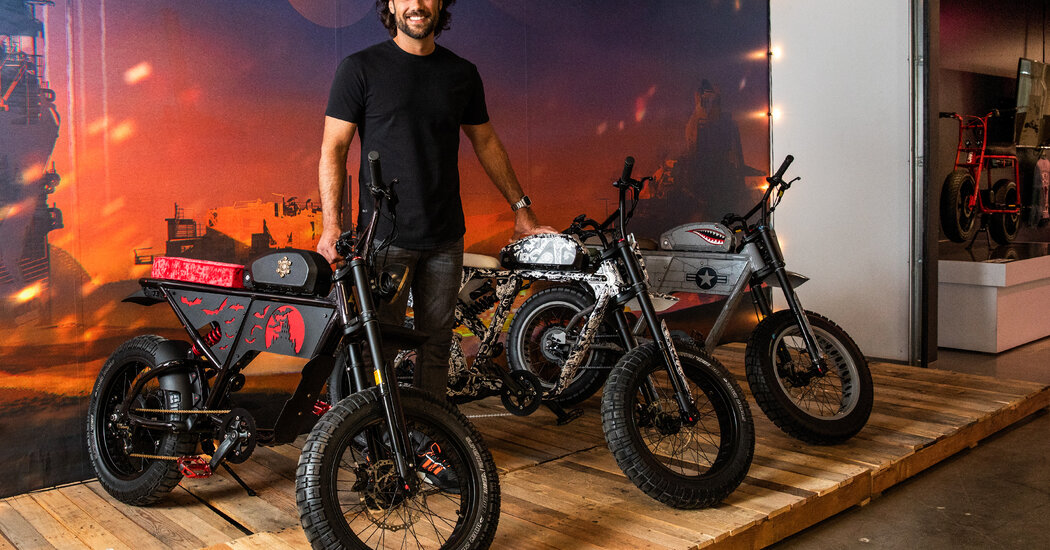
With a throttle and no pedals, Super73’s new “electric balance bike” blurs the lines of regulation and safety. “No license, registration or insurance required,” its marketing promises.LeGrand Crewse, co-founder and chief executive of Super73, recently showed off the company’s latest product, a diminutive motorized bike called the K1D. Aimed at riders 4 years old and up, the vehicle lacks pedals, in the spirit of a training bicycle, and has a throttle. The company calls the K1D an “electric balance bike.”“But you can also call it a motorcycle,” Mr. Crewse said during a tour of the company’s 60,000-square-foot headquarters. In “normal mode” the K1D can go 13 miles per hour. “Then we have a race mode,” Mr. Crewse said — at 15 miles per hour.The e-bike industry is already pushing the boundaries of youth transportation, and Super73 is an early darling among customers. The company aims to sell more than 25,000 units this year, a significant portion of them for teens, Mr. Crewse said. Unlike the K1D, most Super73 e-bikes come with pedals as well as a throttle-powered electric motor. What the company is selling, Mr. Crewse said, is a lifestyle, featuring “cool” products that are not subject to heavy regulation.“Ride without restrictions,” the Super73 website declares, in bold letters. “No license, registration, or insurance required.”Mr. Crewse added: “Actually no helmet requirement even, except for one class of bikes — and even then, specifically around younger age riders.”State and federal laws essentially treat e-bikes as traditional bicycles so long as they don’t exceed speed limitations — although many e-bikes can easily be altered to do so. This laissez-faire oversight, Mr. Crewse said, “dovetails perfectly” with the ethos of the younger generation.“If you think of Gen Z and millennials, if they can’t have instant gratification, they want nothing to do with it,” he said. “They’re not interested in taking time to learn something: ‘I’m not going to get my motorcycle license, I don’t want to go through this course that takes X-amount of hours — it’s too much of a hassle.’”One of the recently released K1D bikes, in pink, on display with the adult models at Super73’s showroom in Irvine, Calif.Alisha Jucevic for The New York TimesSuper73-themed collages, featuring mountain peaks, a disco ball and young people on e-bikes, decorate bathroom stalls at the company’s service center.Alisha Jucevic for The New York TimesBut law-enforcement officials and some safety experts worry that many e-bikes are dangerously unlike traditional bicycles: too fast for sidewalks and not built for the complexity and speed of roads. Some retailers decline to carry Super73 e-bikes or others like them, contending that they tempt young riders, untrained in road safety, to think they are safe mingling with high-speed auto traffic. Several children in their teens have died recently in e-bike accidents. Some e-bikes can travel at speeds that may qualify them as motor vehicles, but federal regulation has not kept up.“There is pressure from the market to sell novel and interesting things that are faster and more fun,” said Christopher Cherry, a civil engineer at the University of Tennessee, Knoxville, who studies e-bike safety.Mr. Crewse entered the nascent e-bike industry more than a decade ago, when he began tinkering with ways to add motors to bicycles. In 2012 he toured China as a wide-eyed entrepreneur. “I booked a trip with no plans,” he recalled. “In that two-week period, I wound up meeting a whole bunch of people, went to a whole bunch of factories — relationships I still have today.”In 2016 he co-founded Super73 with Michael Cannavo and Aaron Wong, with the aim of selling more stylish e-bikes that were not “for the geriatric crowd,” Mr. Crewse said; the typical Super73 model resembles a dirt bike or a minimotorcycle with pedals. “I read somewhere that something like 98 percent of people think they’ll look cool on a motorcycle,” he said. “We bring moto-heritage with youth culture.”A beachgoer rides a Super73 Z-series bike in Newport Beach, Calif.Alisha Jucevic for The New York TimesThe company’s 60,000-square-foot headquarters in Irvine, Calif.Alisha Jucevic for The New York TimesMany retailers initially would not carry the company’s first mass-produced Super73, introduced in 2017. “‘This is not a bike, this is not a bicycle,’” Mr. Crewse recalled being told by retailers. “We got laughed out of every place.”PeopleForBikes, the trade group that represents traditional biking companies and e-bike manufacturers, has taken issue with Super73 and other manufacturers that sell products that can be reprogrammed to effectively become motor vehicles and not e-bikes at all.Most of Super73’s models offer a re-programmable option, including the Z-Miami, which is small, comes in pink and, Mr. Crewse said, is “popular with younger riders.” Parental controls were not possible on existing models, he said, because of “a limitation of the current software.” He added, “That will absolutely happen in future software releases.”He floated the prospect of e-bike training for young riders. “The motorcycle training program I took has literally saved my life,” he said. But he noted that requiring e-bike training could harm an industry that he credited with creating more sustainable transportation. “The question is, how much do we want to force,” he said.A father of five, Mr. Crewse advised parents who buy an e-bike to invest in a high-quality helmet and other safety equipment. “The biggest thing is understanding the risk of a vehicle going 20 miles per hour,” he said. “There are consequences. Things can go wrong.”

Read more →

An Evolutionary Debate on the Risks of Childbirth

Scientists are revisiting an influential theory that the evolution of big brains made human childbirth risky.It’s a question on every new parent’s exhausted mind: Why are babies born so helpless? In 1960, an American anthropologist laid out an influential explanation rooted in human evolution.As our early ancestors began walking upright, Sherwood Washburn argued in 1960, they evolved a narrower pelvis to make walking long distances more efficient. At the same time, those hominins were evolving larger brains. And babies with big heads could get stuck in a tight birth canal during delivery, threatening the lives of mothers and babies alike.According to Dr. Washburn, evolution dealt with this “obstetrical dilemma,” as he called it, by shortening pregnancies, so that women delivered babies before the infant brain was done growing.Dr. Washburn’s theory was hugely influential and became a common lesson in biology classes. “Sapiens: A Brief History of Humankind,” a 2011 best-selling book, presented the obstetrical dilemma as fact. Many researchers still embrace it.But a detailed review of the evidence, slated to be published soon in the journal Evolutionary Anthropology, threw cold water on the idea. In the review, Anna Warrener, a biological anthropologist at the University of Colorado Denver, argued that the evidence to date did not offer strong support for the obstetrical dilemma, and that scientists had not paid enough attention to possible alternatives. What’s more, the scientist said, the idea sends a pernicious message to women that pregnancy is inherently dangerous.“It perpetuates a narrative of bodily incompetence,” Dr. Warrener said.In graduate school, Dr. Warrener did not see any reason to doubt the obstetrical dilemma. For her dissertation, she investigated one of Dr. Washburn’s key assumptions — that women walk less efficiently than men do because their pelvis is wider for childbirth. But in 2015, after studying volunteers walking on treadmills, Dr. Warrener found that having a wider pelvis did not create a bigger demand for oxygen.“The data came in, and I was like, Wait a minute — I may have gotten some of the story wrong,” she recalled.Holly Dunsworth, a biological anthropologist now at the University of Rhode Island, also became disenchanted with the obstetrical dilemma when she took a close look at the evidence. “I was scandalized,” she said.In 2012, she and her colleagues published a study on the length of pregnancies in humans and other primates. They found that, in general, bigger primates tended to have longer pregnancies than smaller ones. For their size, humans don’t have shortened pregnancies. If anything, human pregnancies are longer than one would predict for a primate of their size.Since then, Dr. Dunsworth has become a strong critic of the obstetrical dilemma, arguing that the timing of childbirth is determined by the size of babies’ bodies, not their heads. The birthing process begins when a fetus demands more energy than a mother’s body can provide, she proposes. “We’re giving birth to massive babies,” she said.Other scientists, however, have come to the theory’s defense, while admitting that its original conception was overly simplistic.In a study published last month, a team of researchers argued that the difference between the male and female pelvis shows signs of natural selection acting in different directions. While human males are bigger and taller on average than human females, certain parts of their pelvises are relatively smaller. The biggest differences are in the bones that surround the birth canals in human females.Despite these differences, the female pelvis still creates a tight fit between a baby’s head and the birth canal, sometimes putting both the baby and mother in peril.“So why did natural selection not manage to kind of resolve this situation and make birth a little less risky?” asked Nicole Grunstra, an evolutionary anthropologist at the University of Vienna and one of the study’s authors. “It has evolved to be an evolutionary compromise between competing demands,” she said — in other words, to solve an obstetrical dilemma.But Dr. Grunstra acknowledged flaws in Dr. Washburn’s original version of the theory. She suspected that walking may not have been the most important factor in the evolution of the pelvis. Merely standing upright, she said, might have put pressure on the pelvic floor, preventing the evolution of a more spacious birth canal.The skeptics aren’t convinced by these arguments. In her new review, Dr. Warrener questioned whether babies getting stuck in birth canals have posed a major threat to women’s lives. It is far more common, she noted, for new mothers to die from blood loss or infections.She also criticized the way in which Dr. Grunstra and other defenders of the obstetrical dilemma make the case for their hypothesis. In her view, they assume that every piece of human anatomy has been fine-tuned by natural selection for a specific job.Sometimes, Dr. Warrener said, adaptations are flukes. For example, some of the genes that build the pelvis are also active in the development of other parts of the skeleton. If another bone in our body were to evolve into a new shape, the pelvis might change simply as a byproduct — not because it was evolving for walking or childbirth.“I think sex differences in the pelvis have been somewhat of a red herring,” Dr. Dunsworth said. Like other bones, the pelvis does not have a fixed shape encoded in a genetic blueprint. Its development is influenced by the tissues around it, including the uterus, the ovaries and other organs. The proportions of the female pelvis may result in part from all the organs that grow inside it.Both Dr. Dunsworth and Dr. Warrener worry that the obstetrical dilemma leads to a widespread notion of the female body as inescapably defective.“That just makes us feel like problems that need to be solved by medicine,” Dr. Dunsworth said. That narrative may play a part in the medicalization of childbirth in recent decades, she added.The World Health Organization has warned that doctors are increasingly performing unnecessary medical intervention on mothers, while chronic disorders that can threaten maternal health — such as high blood pressure, obesity and diabetes — get little attention.“The way we live now probably doesn’t lead us to meet the challenge of childbirth as well as our bodies did when they developed differently in the past,” Dr. Dunsworth said.But recognizing the over-medicalization of modern pregnancy doesn’t end the debate about its origins, Dr. Grunstra said. “That does not in itself mean that evolutionary explanations are wrong,” she said.

Read more →

Why it's getting easier to be a single mum in China

Published2 days agoShareclose panelShare pageCopy linkAbout sharingBy Stephen McDonellChina correspondent Until last year it was not really possible for most unmarried women to become mothers in China – practically speaking. But a social change is under way and it is driving shifts in policy too.In her flat on the outskirts of Shanghai, Zhang Meili rocks her baby back and forth. As he gurgles away happily, she tells him that she’s going to head out soon to earn money for him.After his mother goes to work, two-month-old Heng Heng will be looked after by his grandmother – who recently moved to China’s largest city to help her daughter raise her child.That there is no father in Heng Heng’s life would be frowned upon by many in China, especially in more conservative rural and regional areas. The belief that a child should not be brought into this world without a mother and a father is still widely held here.In Zhang Meili’s case, she says she was lucky to have moved to Shanghai to run a business because being a single mother in this mega-city is much more accepted.”I’m grateful for the tolerance of Shanghai,” she says. “I’m from rural Henan, an area which would have a lot of discrimination against me as a single mother.”She became a single mum after her boyfriend’s family rejected his choice of bride. They considered her position in society to be too modest.So he broke up with her – even though she was pregnant with his child.I ask her mother, Mrs Zhao, how she felt when she heard the news that her daughter, who is 25, would keep the baby.”My feelings? I was heartbroken,” she says. “It’s very hard to raise a kid on your own. And, in our hometown, there would be criticism from neighbours.”Have her feelings changed now that she’s a grandmother? “Now I see him, I’m really happy,” she says with a huge smile on her face.Zhang Meili has options that many unmarried women don’t have because she runs her own small business.This gives her more independence and control over her life.Though the little massage shop she runs is still struggling post-Covid, she doesn’t need to clear leave with an employer or battle for social acceptance in a workplace because she has given birth to a son who will be raised without his dad.Of course, it has not been easy for Zhang Meili to keep her business afloat during such a rocky time economically, with the added challenges of giving birth, plus knowing that – while attitudes are changing – there are still those who will look down on her.She says that none of her friends backed her decision to keep her child. They thought it would harm her chances of eventually finding a husband, and that it wasn’t right for the child to grow up without a father.”When I was pregnant, I went to the hospital alone,” she says. “At the time, my shop was struggling to survive and, when I looked around, I did envy the women who went there with their husbands. “But I chose to become a single mum. I chose to have him, and I needed to get over this.”Yet it was not only people’s beliefs which made it very hard to become a single parent.Before 2016, the government effectively prohibited this from happening by stopping officials from issuing birth approval certificates, without seeing proof of marriage for the father and mother.Another problem had been the requirement for both parents’ ID details to be listed in order for a child to get a hukou – the identity document which all Chinese citizens need to, for example, enrol in school.When I first came to China two decades ago, I recall unmarried women telling me that they would have no choice but to have an abortion if they became pregnant accidentally because a child could not survive in this country without all the required paperwork.Even after these rules changed, it remained virtually impossible for most unmarried women to consider having a child until last year because they could not get access to the health insurance needed to pay for the hospital, or to paid maternity leave.These two things have now supposedly changed but, in practice, an employer must apply on behalf of a staff member for the benefits to kick in – and some companies are still refusing to do it.A lawyer working on cases in this field told us she had a client whose boss at a large franchise would not facilitate her getting access to paid maternity leave. Only after she sued the company did they agree to do it.”It really depends on the openness of the company and the awareness of employers regarding the rights of their staff,” the lawyer said, speaking on condition of anonymity. “However local policies are actually vague and sometimes companies are operating in a grey zone here.”Some bosses don’t understand that the regulations have changed, the lawyer added. Others are not keeping their knowledge up to date because they simply don’t want to. They may consider single parenting to be wrong.Prof Yang Juhua from Beijing’s Minzu University says that, under Chinese law, all mothers and their children should enjoy the same rights regardless of marital status. “But, in terms of implementation, it is not smooth,” she says. “Why? Because many people still can’t understand, and are not tolerant towards, single mothers.”Prof Yang, an expert in demography, says the rules were set up without single mothers in mind.”China’s regulations are designed for married couples,” she adds. “Marriage is the pre-condition. Single parents are still a new thing here and represent a way of thinking which is very different to our traditional ethical norms”.One factor driving change for policymakers has been the country’s ageing population.After decades of the one-child policy, the government would now like young couples to have more babies, but many are not answering the call, for financial reasons. They think they don’t have sufficient funds to raise multiple children.Under these circumstances, if single women want to have children, those in positions of authority have decided they should be encouraged to.Visiting a cavernous exhibition centre in the south-eastern city of Hangzhou, we meet Peng Qingqing, among the toys, nappies and mountains of milk formula at a commercial fair focusing on baby products.Peng Qingqing, who runs an online sales platform, is herself heavily pregnant and unmarried, and, like Zhang Meili, she says that being a businesswoman has made this easier.”My mum always told me that women should be more independent, confident, and strong,” she tells us. “I don’t want to marry into another family just because of a child”.The 30-year-old says the time wasn’t right for marriage when she accidentally became pregnant with her much younger boyfriend, but that she wanted to keep her baby.She says that the shifting status of women in China, especially in terms of their financial independence, has meant that choices can now be made which were not possible just a few years ago.”Traditionally women relied on men and the family for support. As we earn more, men and women become more equal. Women can even employ people to help them,” she says.But the vast majority of single women in China are on much lower incomes and remain beholden to the system as it is to support them.The lawyer who’s been working on cases relating to women’s workplace rights explains that pay during maternity leave is linked to salary. “For grassroots single mothers their incomes are low,” she says. “Without proper, paid, maternity leave they could not survive. It’s a very practical issue.”These days, the government is encouraging families to have more babies. Some provinces even have financial rewards. But, for single mothers, such support is not available. It’s highly discriminatory.”Women who give birth outside of marriage can also face other forms of discrimination, she says. For those in the public service, they may not be able to get political clearance from the Communist Party (certifying that someone is a decent, loyal citizen). The absence of such official approval can mean missing out on promotions or even not getting a government job in the first place.But Prof Yang says she thinks that, as society becomes more tolerant towards unmarried mothers, such discrimination will gradually disappear.If the national government, in the future, requires local officials to more strictly enforce regulations allowing single women to become parents this might also help, she says.As for Zhang Meili, she says this should be a choice for the women themselves.I ask her what advice she would give others who find themselves in the same situation as her and she replies: “It depends on their personal situation but, if they love kids, they should have them.”Don’t lose a child because of other people’s voices or because of questions coming at you from the outside.” More on this storyChina’s empty tower blocks highlight economic woesPublished6 JulyWhat China’s baby woes mean for its economyPublished16 MarchNew China child policy sparks tales of ‘trauma’Published1 June 2021Why don’t Chinese women want more babies?Published25 May 2021

Read more →

‘A Dangerous Combination’: Teenagers’ Accidents Expose E-Bike Risks

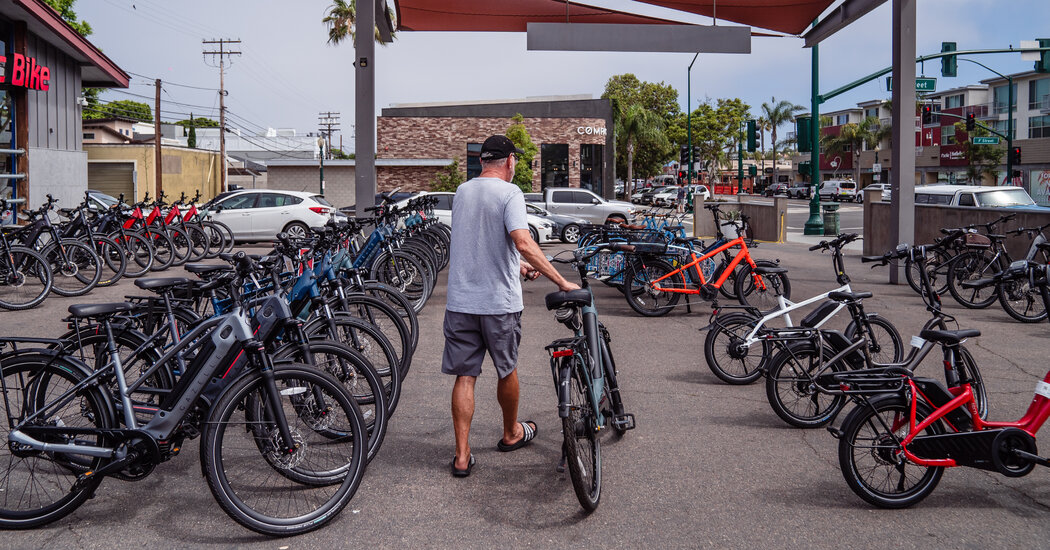
The e-bike industry is booming, but many vehicles are not legal for teenagers, and accidents are on the rise.On a Thursday evening in late June, Clarissa Champlain learned that her 15-year-old son Brodee had been in a terrible crash, the latest teen victim of an e-bike accident.He had been riding from home to shot-putting practice. The e-bike, a model made by Rad Power, had a top speed of 20 miles per hour, but his route took him on a busy road with a 55-mile-per-hour limit. While turning left, he was clipped by a Nissan van and thrown violently.Ms. Champlain rushed to the hospital and was taken to Brodee’s room. She could see the marks left by the chin strap of his bike helmet. “I went to grab his head and kiss him,” she recalled. “But there was no back of his head. It wasn’t the skull, it was just mush.”Three days later, another teenage boy was taken to the same hospital after the e-bike he was riding collided with a car, leaving him sprawled beneath a BMW, hurt but alive. In the days following, the town of Encinitas, where both incidents occurred, declared a state of emergency for e-bike safety.The e-bike industry is booming, but the summer of 2023 has brought sharp questions about how safe e-bikes are, especially for teenagers. Many e-bikes can exceed the 20-mile-per-hour speed limit that is legal for teenagers in most states; some can go 70 miles an hour. But even when ridden at legal speeds, there are risks, especially for young, inexperienced riders merging into traffic with cars.“The speed they are going is too fast for sidewalks, but it’s too slow to be in traffic,” said Jeremy Collis, a sergeant at the North Coastal Station of the San Diego County Sheriff’s Office, which is investigating Brodee’s accident.To some policymakers and law enforcement officials, the technology has far outpaced existing laws, regulations and safety guidelines. Police and industry officials charge that some companies appear to knowingly sell products that can easily evade speed limits and endanger young riders.“It’s not like a bicycle,” Sergeant Collis said. “But the laws are treating it like any bicycle.”Two federal agencies, the Consumer Product Safety Commission, and the National Highway Traffic Safety Administration, said they were evaluating “how best to oversee the safety of e-bikes,” according to a statement provided by the highway safety agency.Brodee’s parents, Clarissa Champlain and Troy Kingman, with their daughter, Violet Champlain Kingman.Ariana Drehsler for The New York TimesMedals that Brodee earned for math, chess and an egg-drop contest; his bedroom; messages written to Brodee at a recent candlelight vigil on display in Ms. Champlain’s home.Ariana Drehsler for The New York TimesCommunities have begun to alert their residents to the dangers of e-bikes. In June, the police department in Bend, Ore., ran a public service campaign acquainting the public with the e-bike laws that were frequently being broken there. Days later, a 15-year-old boy was killed when the e-bike he was riding was struck by a van.Sheila Miller, who is the spokeswoman for the Bend police and helped develop the public service campaign, emphasized that not everything that calls itself an e-bike qualifies as one, or is safe or legal for minors. Under Oregon law, which is more restrictive than those in most states, a person must be at least 16 to ride an e-bike of any kind.“Parents, please don’t buy these bikes for kids when they are not legally allowed to ride them,” Ms. Miller said. “And if you own an e-bike, make sure that everyone who is using them knows the rules of the road.”Booming Industry, Modest RegulationThe typical e-bike has functioning pedals as well as a motor that is recharged with an electrical cord; the pedals and the motor can be used individually or simultaneously. Unlike a combustion engine, an electric motor can accelerate instantly, which makes e-bikes appealing to ride.E-bikes are also seen as vital in shifting the transportation system away from emission-spewing cars and the congestion they create, said Rachel Hultin, the policy and governmental affairs director for Bicycle Colorado, a nonprofit advocacy group for bicycle safety and policy. E-bikes and electric scooters are part of the so-called micromobility movement, propelling commuters and other people short distances across crowded spaces.The number of e-bikes being sold is unclear because, like regular bikes, they do not need to be registered with the government. (Cars, motorcycles and mopeds must be registered through a state’s Department of Motor Vehicles.) Many are sold directly to consumers over the internet, rather than through physical retailers that often track sales. John MacArthur, an e-bike industry expert with the Transportation Research and Education Center at Portland State University, estimated that roughly one million e-bikes would be sold in the United States this year.Ashely Kingsley and her daughter, Scout, at Charlie’s Electric Bike store in Encinitas, where they were renting e-bikes for the day.Ariana Drehsler for The New York TimesLeGrand Crewse, a co-founder and the chief executive of Super73.Alisha Jucevic for The New York TimesThe minimal regulation around e-bikes is a selling point for the industry. Super73, a company in Irvine, Calif., that makes popular models, advertises on its website: “RIDE WITHOUT RESTRICTIONS. No license, registration, or insurance required.”“It’s one of the very unique categories of vehicle that there really isn’t any kind of onerous regulation,” a company co-founder, LeGrand Crewse, said in an interview, noting that helmet requirements were also modest, depending on the state and the rider’s age.Law enforcement officials have begun to express concerns about the minimal training required of teenage e-bike owners, and about their behavior. Car drivers ages 16 to 19 are three times as likely to be killed in a crash as drivers 20 or older, and bicyclists ages 10 to 24 have the highest rate of emergency room visits for crashes, according to the Centers for Disease Control and Prevention. Some states have begun to raise the training requirements for young drivers, including adding graduated license programs that require extended hours of supervised driving, limit night driving or restrict the number or age of passengers.The California Legislature is considering a bill that would prohibit e-bike use by people under 12 and “state the intent of the Legislature to create an e-bike license program with an online written test and a state-issued photo identification for those persons without a valid driver’s license.”“I know the e-bike situation is evolving,” said Sergeant Collis of the San Diego County Sheriff’s Office. “But personally, with all these bikes, you should have at least a permit or a license to ride them at the speed they’re going.”As a transportation solution, e-bikes seem promising. “I’m really bullish about middle and high schoolers being able to use e-bikes,” said Ms. Hultin of Bicycle Colorado. She noted that e-bikes offered children and busy families more transportation options at lower cost. But she worried that the vehicles could lead to an unsafe mix of untrained e-cyclists and unaware car drivers.That problem, Ms. Hultin said, was exacerbated by “an algae bloom of noncompliant e-bikes.” She was referring to products on the market that call themselves e-bikes but are not, either because they can go faster than allowed by law or because, once purchased, they can be modified to do so.An e-bike shop in Encinitas.Ariana Drehsler for The New York TimesAn intersection near the site of Brodee’s accident.Ariana Drehsler for The New York TimesOne vehicle that has drawn attention for its speed is made by Sur-Ron, whose products have been involved in several recent deaths. In June in Cardiff, Wales, two boys on a Sur-ron bike died in a crash while being followed by the police; days earlier, a boy riding a Sur-ron in Greater Manchester had died after colliding with an ambulance.In its marketing materials, Sur-ron describes one model, the Light Bee Electric Bike, as “easy to maneuver like a bicycle, with the torque and power of an off-road motorcycle.” Its operating manual cautions the owner to “please follow the traffic rules and with the safe speed (the top speed for this electric vehicle is 20 km/h).”But the speed restraint — equivalent to about 12 m.p.h. — can be removed by simply clipping a wire, a procedure that is widely shared in online videos, and which law enforcement officials said appeared to be there by design.“There are all kinds of videos on how to jailbreak your Sur-ron,” said Capt. Christopher McDonald of the Sheriff’s Department in Orange County, Calif., where e-bike accidents and injuries are rising. With the speed wire clipped, the vehicle can approach 70 miles per hour, he said. Several requests for comment were sent through the Sur-ron website but did not receive a response.Matt Moore, the general counsel for PeopleForBikes, the main trade group for bicycles and e-bikes, said he worried about products like Sur-ron’s. “Some products are sold as ostensibly compliant but are easily modified by the user with the knowledge and presumably the blessing of the manufacturer,” he said. “Unfortunately, there appears to be a lack of resources at the federal level to investigate and address e-mobility products that may actually be motor vehicles.”Tragedy in EncinitasA memorial for Brodee in Ms. Champlain’s kitchen.Ariana Drehsler for The New York TimesThe day after Brodee entered the hospital, his family sat at his bedside. They played his favorite music, including Kendrick Lamar and early Wu-Tang Clan. “I read to him for hours,” his mother said. “We wanted to wake up his brain.”Three days later, as Brodee clung to life, Niko Sougias, the owner of Charlie’s Electric Bike, a popular e-bike shop in town, was driving in Encinitas on Highway 101 when he saw two teenage boys riding Sur-Rons in the opposite direction.“They were doing wheelies,” Mr. Sougias said. He has grown concerned about the e-bike industry, he said, and does not sell many models that are popular with teenagers.His route that Saturday followed the path of the boys on the Sur-rons. Moments later, after a turn, Mr. Sougias saw that one of the Sur-Ron riders had collided with an S.U.V., had been thrown from his bike and was under a BMW.According to the police, the Sur-ron rider had been seen driving recklessly and was found at fault. “He was lucky to escape with his life,” Mr. Sougias said.Ms. Champlain was at the hospital with Brodee when the boy who had been riding the Sur-ron was brought in. Paramedics stopped by Brodee’s room to check in. “I can’t believe I’m here again for this,” she said one of them had told her; the same paramedic had brought in Brodee by ambulance.Hours later, Brodee was pronounced dead. He was a beloved young man with a bright future ahead of him. He was fluent in Spanish and had a college-level knowledge of Japanese; he could dead-lift 300 pounds and, in 2020, was named student of the year at his high school. “I had so many people call me to tell me they’d lost their best friend,” his mother said.Ms. Champlain said witnesses had told her that her son “did everything right,” including signaling to make a left turn.“There should be more education for drivers with the change that’s happened,” she said. “I’d never seen an e-bike on the road until three years ago. Now I see hundreds.”“They’re treated like bicycles when they’re not. They’re not equal.”

Read more →

What Is an E-Bike, and How Safe Are They?

Surprisingly tricky questions about an increasingly popular vehicle.E-bikes are increasingly visible on roads and bicycle paths, with a growing number of teenagers among the riders. But the recent deaths of several teenage riders has raised concerns about the safety of some types of vehicles, and about whether they legally qualify as e-bikes. Here’s what’s known about e-bikes and their risks.What Is an E-Bike?The Consumer Product Safety Commission, the federal agency responsible for regulating the safety and sale of low-speed electric bicycles, defines an e-bike as a two- or three-wheel vehicle that has pedals and an electric motor.The motor must be rated below 750 watts, which is roughly twice the power that a professional cyclist can generate. The rider can use the pedals or the motor, singly or in combination. With the motor alone, the bike must not be capable of going faster than 20 miles an hour on a level surface. State laws govern where e-bikes can be ridden, the minimum age for riders and other rules about how the vehicles are used.To meet the federal regulations, bicycle manufacturers have developed a three-tier classification system for e-bikes.Class 1: Maximum speed, 20 m.p.h.; the motor may provide power only while the rider is pedaling. (This is known as “pedal assist.”) Age restrictions: None in most states, although some states, such as Oregon, do not permit the use of any class of e-bike by riders younger than 16.Class 2: Maximum speed, 20 m.p.h.; the motor may provide power independently of the pedals. Age restrictions: none in most states. (These e-bikes in particular attract criticism because, by relying solely on the motor, they can achieve immediate bursts of speed.)Class 3: Maximum speed, 28 m.p.h. — but only if the pedals and the motor are used simultaneously. These vehicles are intended for commuters and other riders who are interested in traveling farther than a traditional bicycle would easily allow. Use not permitted by riders younger than 16, in many states.Notably, the federal consumer agency does not recognize the three-class system.What Are the State Rules?According to PeopleForBikes, the trade group that helped craft the three-class system for manufacturers, 42 states have laws that are largely in line with the classification system. In most states, then, riders under 16 can use Class 1 and Class 2 e-bikes, while riders of Class 3 e-bikes must be 16 or older.But enforcing those rules is tricky, according to local and state law enforcement officials. It can be hard to tell by looking if a teenage rider is too young for the e-bike being ridden. And glancing at an e-bike’s motor does not establish whether it can go faster than 20 m.p.h.That has led some jurisdictions, such as Bend, Ore., to design public service campaigns alerting riders and parents to the laws. In Orange County, Calif., officials have impounded some models, like the Sur-ron, that the county considers to be unlicensed and unregistered electric motorcycles.In most states, riders under 16 can ride e-bikes up to 20 miles per hour, while riders on faster e-bikes must be 16 or older.Alisha Jucevic for The New York TimesWhy Is 20 M.P.H. Meaningful?The origins of that parameter are unclear, safety experts said, but it appears to have emerged from legislative wrangling as a way to balance the risks posed by increased speed.“That’s the point at which Congress, the Consumer Product Safety Commission and the Department of Transportation decided the break was between a consumer product and a motor vehicle,” said Chris Cherry, a professor of civil engineering at University of Tennessee who advises the federal government on e-bike safety.By various measures, the risks of serious injury and death rise sharply at around 20 m.p.h., although much of that research involved collisions between cars and pedestrians. For instance, the risk of severe injury to a pedestrian is 25 percent when the car is moving at 16 m.p.h., and it rises to 50 percent at 23 m.p.h., according to the AAA Foundation for Traffic Safety. The risk of fatal injury follows a similar curve. But e-bikes are new, so there is much less data on the relationship between speed and injury risk.Mr. Cherry said that the 28-m.p.h. limit appears to be derived from an effort to match the European standard of 45 kilometers per hour so that e-bike manufacturers could serve both markets.But Don’t Many E-Bikes Go Faster Than 20 M.P.H.?Yes.E-bikes are allowed to go faster than 20 m.p.h., and up to 28 in the case of a Class 3 bike, if the rider is pedaling while also using the motor.But those limitations can, in many cases, be bypassed with little effort. For instance, some e-bikes are sold with speed “governors” that restrict the speed at the point of sale to 20 m.p.h. But that electronic governor can be eliminated by cutting a wire or changing the limitation with a smartphone app. Unrestricted, some models can exceed 55 m.p.h. Law enforcement officials and industry experts have said that e-bike manufacturers who sell these products are aware that the speed governors are regularly removed.“Some products are sold as ostensibly compliant but are easily modified by the user with the knowledge and presumably the blessing of the manufacturer,” said Matt Moore, the general counsel for PeopleForBikes, the trade organization that represents bicycle and e-bike manufacturers. “The real question is what to do about it.”What Is Being Done About This Loophole?Good question, safety experts say.“PeopleForBikes has been pointing out these issues to regulators for some time now,” Mr. Moore said. “Unfortunately, there appears to be a lack of resources at the federal level to investigate and address e-mobility products that may actually be motor vehicles.”The federal government appears not to have a clear answer as to whether some of these products have ceased to be e-bikes — which are regulated by the Consumer Product Safety Commission, or C.P.S.C. — and instead have become motor vehicles, which are regulated by the National Highway Traffic Safety Administration.A spokesperson for the federal consumer protection agency replied in an email that products that go at higher speeds “would be motor vehicles outside of C.P.S.C. jurisdiction” and added that the highway traffic agency “has jurisdiction over motor vehicles.”The highway traffic agency responded to inquiries from The Times with a written statement: “Due to emerging e-bike designs that can vary in speed capability, in how they combine motor power and pedal power, and in other design factors, NHTSA is evaluating, in conjunction, with C.P.S.C., how best to oversee the safety of e-bikes.”

Read more →