Stealth swimmers: The fish that hide behind others to hunt

An experiment on coral reefs provides the first evidence that predators use other animals for motion camouflage to approach their prey without detection.
A new study provides the first experimental evidence that the trumpetfish, Aulostomus maculatus, can conceal itself by swimming closely behind another fish while hunting — and reduce the likelihood of being detected by its prey.
In this ‘shadowing’ behaviour, the long, thin trumpetfish uses a non-threatening species of fish, such as parrotfish, as camouflage to get closer to its dinner.
This is the only known example of one non-human animal using another as a form of concealment.
The research involved hours of diving in the Caribbean Sea, pulling hand-painted model fish along a wire.
“When a trumpetfish swims closely alongside another species of fish, it’s either hidden from its’ prey entirely, or seen but not recognised as a predator because the shape is different,” said Dr Sam Matchette, a researcher in the University of Cambridge’s Department of Zoology and first author of the study.
Damselfish, Stegastes partitus, form colonies on the seafloor and are a common meal for trumpetfish. Working amongst the coral reefs off the Dutch Caribbean island of Curaçao, researchers set up an underwater system to pull 3D-printed models of trumpetfish on nylon lines past colonies of damselfish, and filmed their responses.

Read more →

AI model can help determine where a patient's cancer arose

For a small percentage of cancer patients, doctors are unable to determine where their cancer originated. This makes it much more difficult to choose a treatment for those patients, because many cancer drugs are typically developed for specific cancer types.
A new approach developed by researchers at MIT and Dana-Farber Cancer Institute may make it easier to identify the sites of origin for those enigmatic cancers. Using machine learning, the researchers created a computational model that can analyze the sequence of about 400 genes and use that information to predict where a given tumor originated in the body.
Using this model, the researchers showed that they could accurately classify at least 40 percent of tumors of unknown origin with high confidence, in a dataset of about 900 patients. This approach enabled a 2.2-fold increase in the number of patients who could have been eligible for a genomically guided, targeted treatment, based on where their cancer originated.
“That was the most important finding in our paper, that this model could be potentially used to aid treatment decisions, guiding doctors toward personalized treatments for patients with cancers of unknown primary origin,” says Intae Moon, an MIT graduate student in electrical engineering and computer science who is the lead author of the new study.
Alexander Gusev, an associate professor of medicine at Harvard Medical School and Dana-Farber Cancer Institute, is the senior author of the paper, which appears today in Nature Medicine.
Mysterious origins
In 3 to 5 percent of cancer patients, particularly in cases where tumors have metastasized throughout the body, oncologists don’t have an easy way to determine where the cancer originated. These tumors are classified as cancers of unknown primary (CUP).

Read more →

Pianist Nicolas Hodges Adapts to Life With Parkinson’s

Nicolas Hodges has carried on with his career as an eminent interpreter of avant-garde music. But it hasn’t been without sacrifices.In the fall of 2018, the pianist Nicolas Hodges noticed his body shaking. He brought it up at a routine doctor’s appointment in Tübingen, Germany, where he lives. The doctor said it was probably stress, but recommended that he make an appointment with a neurologist.Hodges didn’t make that appointment right away. But then, in January 2019, the shaking caused him to play a wrong note during a performance.“It became instantly clear that I had to find out what was going on,” he said.Dr. Klaus Schreiber, a neurologist and a classical music lover, observed Hodges performing a few minor physical tasks — walking across a room, undressing and dressing — before he sent him for a series of tests that confirmed Hodges had Parkinson’s disease.Dr. Schreiber estimated that Hodges had been performing with Parkinson’s for three years.Hodges, 53, is a leading interpreter of contemporary classical music. As a soloist and chamber musician, he has premiered and recorded works by many important composers of this century, and the last. Recently, his symptoms have forced him to reduce and prioritize his performing commitments.The worst symptoms, which rarely occur, can leave him feeling, he said, as if he “just couldn’t play the piano.” But the diagnosis has also strengthened his dedication to his artistry and the contemporary repertoire.Physical limits have forced Hodges to make “aesthetic decisions,” he said, to select what music to commission and to perform with greater rigor. The diagnosis has “made me try to focus even more on what multiple contradictory things are most important to me.”Hodges has formidable technique and an ability to make the form of even highly complex pieces clearly audible. His tone color on the piano can shift from vinegary to supple in seconds. He is strikingly adaptable to the widely divergent visions of various contemporary composers. In John Adams’s “China Gates” (1977), Hodges has combined rhythmic propulsion with tiptoe delicacy. In Brian Ferneyhough’s opera “Shadowtime” (2004), he tackled a prismatically virtuosic solo while asking enigmatic questions out loud, like “What is the cube root of a counterfactual?” In Simon Steen-Andersen’s Piano Concerto (2014), he faced off against a video projection of himself at a smashed grand piano.Hodges, front, in Brian Ferneyhough’s “Shadowtime” at the Lincoln Center Festival in 2005.©Stephanie BergerIn 2020, Hodges recorded “A Bag of Bagatelles,” which wove together works by Beethoven and Harrison Birtwistle, a close collaborator. The juxtaposition illuminates the complexity, unpredictability and orchestral scale that animate the music of two composers centuries apart. Looking back, Hodges realized that he had recorded the album with untreated Parkinson’s disease.HODGES WAS BORN in London in 1970. His father was a studio manager at the BBC who later worked in computing, and his mother was a professional opera singer. Hodges began playing the piano at age 6 and composing at 9. Among his early pieces was the first scene of an opera based on the Perseus myth.Hodges attended elementary school at Christ Church Cathedral School in Oxford, where he took lessons on the viola, the oboe, the harpsichord and the organ, in addition to the piano. He sang in the Christ Church Cathedral Choir, performing works like Benjamin Britten’s “War Requiem” at the Royal Festival Hall under Simon Rattle.“We were woken up earlier than the rest of the school to practice,” Hodges said. The students who didn’t play music “got half an hour more sleep than I did the whole of my childhood.”For secondary school, Hodges went to Winchester College, in Hampshire, where Benjamin Morison, a pianist and composer who is now a professor of philosophy at Princeton University, introduced Hodges to contemporary music by playing an LP of music by Birtwistle and Gyorgy Kurtag. Hodges and Morison performed an arrangement of Stravinsky’s “The Rite of Spring” for two pianos and Pierre Boulez’s restless “Structures II” for their teachers and fellow students at Winchester, to bemused reactions.“I remember him being very precise — and encouraging me to be precise — and extremely musical,” Morison said of Hodges in a phone interview. “He was able to make the music speak as music.”In 1986, Hodges took a seminar with the composer Morton Feldman at the Dartington Summer School, where Feldman impressed upon him the seriousness of the experimental avant-garde. Hodges also played in a band that covered songs by the Sex Pistols and the Sisters of Mercy.Hodges has made a career as an avant-garde specialist, eventually working with the composers he idolized during his musical upbringing.Roderick Aichinger for The New York TimesIt was a heady and influential time. “I was improvising; I was listening to weird, dark, funky music, and playing Debussy,” Hodges said.For several years, he considered pursuing composition, to the dismay of his more traditionally minded mother. At age 23, he decided to refocus on the piano. “I just was having more fun as a pianist,” he said. “Composing is too much hard work.”As part of that decision, Hodges began studying with the pianist Sulamita Aronovsky, who had defected to Britain from the Soviet Union. A car crash shortly after the move had ended her career as a performer. “She used to say to me, whenever I would come to her lesson and complain, ‘Mr. Hodges, you have to accept everyone has these problems,’” he recalled. “‘It’s the people who get past these problems who have careers.’”Hodges has since performed as a soloist with orchestras including the New York Philharmonic, the Boston Symphony Orchestra and the London Philharmonic Orchestra — usually in contemporary repertoire and often with pieces written for him. He is a professor of piano at the State University of Music and Performing Arts in Stuttgart, Germany, and almost constantly premieres new work solo and in chamber music formations.“All these composers that we had idolized when we were teenagers, he has subsequently commissioned pieces from,” said Morison, who remains close with Hodges. “It’s an extraordinary thrill to witness that.”WHEN HODGES RECEIVED his diagnosis, the news came with conflicting emotions. The first, Hodges recalled, was a certain cockiness. “I’m going to be a medical miracle,” he thought to himself. “I’m going to carry on whatever happens.”When that phase passed, Hodges felt relief. He had a clear diagnosis, and the dopamine treatments prescribed by Dr. Schreiber helped. “The medication makes it possible for me to sometimes feel and play like I don’t have it,” Hodges said. “When you’re suffering from something like that and you’re untreated, you feel like you’re getting old before your time, you feel like your children have worn you out — and my poor children were blamed for that.”Hodges has had to make painful decisions while prioritizing performing commitments. Since 2012, he has played in Trio Accanto, an ensemble consisting of Hodges, the German percussionist Christian Dierstein and the Swiss saxophonist Marcus Weiss. The group has toured Europe’s major new-music festivals and recorded six albums of contemporary music together.Hodges performed Rebecca Saunders’s “to an utterance” earlier this year, and plans to play a new solo work she is writing for him.Roderick Aichinger for The New York TimesWhen Dierstein and Weiss learned of Hodges’s diagnosis, they were shaken. “We’re scared, and we are as concerned and sad as we were when we first found out,” Dierstein said in a video interview. “But it was always clear to us that we want to continue playing with Nic and that we’ll take the illness into account.”After a period of reflection during the coronavirus pandemic, Hodges decided to withdraw from Trio Accanto. He found the logistics involved in traveling to concerts and dealing with the complex instrumental setups required by many pieces too taxing. The 2024-25 season will be Hodges’s last with the group.Playing with Trio Accanto “was ideal chamber music for me,” Hodges said. But, he added, “Parkinson’s makes it necessary for my life to be simple.”Hodges has also learned to structure the doses of his medication — including a dopamine inhaler, a receptor agonist patch and extended-release pills — in a way that supports his concert roster. This often requires stark sacrifices: He essentially schedules the worst of his symptoms.In February, Hodges performed Rebecca Saunders’s “to an utterance” for piano and orchestra, a work composed for him, at the Elbphilharmonie in Hamburg. A final rehearsal the afternoon of the performance meant he had to take dopamine once at 4 p.m., and again at 8 p.m.“There might be moments when I feel like I’ve taken a bit too much,” Hodges said earlier that day, “but in the situation of playing, that’s way better than having taken too little.”In an email, Saunders said that Hodges still plays with intensity. “His recent performance of the piano concerto ‘to an utterance’ was brilliant, and I found it deeply expressive,” she wrote. She is planning to write him an ambitious new piece she described as “a big, long solo based on the concerto.”Seven other composers are currently at work on new piano concertos for Hodges. This spring, he recorded Betsy Jolas’s complete solo piano works and premiered a new piece by Christian Wolff, “Scraping Up Sand in the Bottom of the Sea.” Hodges also plans to record an album with works by Debussy and contemporary composers, similar to his double portrait of Beethoven and Birtwistle.On rare occasions, Hodges has felt he was treated differently because of his illness. One composer recently “looked straight at my hands as if they would be twisted or bleeding,” he said. But many more of his collaborators have been supportive, helping him adapt without condescension or pity.Hodges says that his goal, now, is to adjust his career “to ensure that I have the best chance to slow the progress of the disease and thus keep playing with any qualities I might have had before Parkinson’s more or less intact.”He knows that might not last forever. “If I should stop playing, then I hope that my friends tell me I should stop playing,” Hodges said. “But, at the moment, it’s working.”

Read more →

AI transformation of medicine: Why doctors are not prepared

As artificial intelligence systems like ChatGPT find their way into everyday use, physicians will start to see these tools incorporated into their clinical practice to help them make important decisions on diagnosis and treatment of common medical conditions. These tools, called clinical decision support (CDS) algorithms, can be enormously helpful in helping guide health care providers in determining, for example, which antibiotics to prescribe or whether to recommend a risky heart surgery.
The success of these new technologies, however, depends largely on how physicians interpret and act upon a tool’s risk predictions — and that requires a unique set of skills that many are currently lacking, according to a new perspective article published today in the New England Journal of Medicine that was written by faculty in the University of Maryland School of Medicine (UMSOM).
CDS algorithms, which make predictions under conditions of clinical uncertainty, can include everything from regression-derived risk calculators to sophisticated machine learning and artificial intelligence-based systems. They can be used to predict which patients are most likely to go into life-threatening sepsis from an uncontrolled infection or which therapy has the highest probability of preventing sudden death in an individual heart disease patient.
“These new technologies have the potential to significantly impact patient care, but doctors need to first learn how machines think and work before they can incorporate algorithms into their medical practice,” said Daniel Morgan, MD, MS, Professor of Epidemiology & Public Health at UMSOM and co-author of the perspective.
While some clinical decision support tools are already incorporated into electronic medical record systems, health care providers often find the current software to be cumbersome and difficult to use. “Doctors don’t need to be math or computer experts, but they do need to have a baseline understanding of what an algorithm does in terms of probability and risk adjustment, but most have never been trained in those skills,” said Katherine Goodman, JD, PhD, Assistant Professor of Epidemiology & Public Health at UMSOM and co-author of the perspective.
To address this gap, medical education and clinical training need to incorporate explicit coverage of probabilistic reasoning tailored specifically to CDS algorithms. Drs. Morgan, Goodman, and their co-author Adam Rodman, MD, MPH, at Beth Israel Deaconess Medical Center in Boston, proposed the following: Improve Probabilistic Skills: Early in medical school, students should learn the fundamental aspects of probability and uncertainty and use visualization techniques to make thinking in terms of probability more intuitive. This training should include interpreting performance measures like sensitivity and specificity to better understand test and algorithm performance. Incorporate Algorithmic Output into Decision Making: Physicians should be taught to critically evaluate and use CDS predictions in their clinical decision-making. This training involves understanding the context in which algorithms operate, recognizing limitations, and considering relevant patient factors that algorithms may have missed. Practice Interpreting CDS Predictions in Applied Learning: Medical students and physicians can engage in practice-based learning by applying algorithms to individual patients and examining how different inputs affect predictions. They should also learn to communicate with patients about CDS-guided decision making.The University of Maryland, Baltimore (UMB), University of Maryland, College Park (UMCP) and University of Maryland Medical System (UMMS) recently launched plans for a new Institute for Health Computing (IHC). The UM-IHC will leverage recent advances in artificial intelligence, network medicine, and other computing methods to create a premier learning health care system that evaluates both de-identified and secure digitized medical health data to enhance disease diagnosis, prevention, and treatment. Dr. Goodman is beginning a position at IHC, which will be a site that is dedicated to educating and training health care providers on the latest technologies. The Institute plans to eventually offer a certification in health data science among other formal educational opportunities in data sciences.
“Probability and risk analysis is foundational to the practice of evidence-based medicine, so improving physicians’ probabilistic skills can provide advantages that extend beyond the use of CDS algorithms,” saidUMSOM Dean Mark T. Gladwin, MD, Vice President for Medical Affairs, University of Maryland, Baltimore, and the John Z. and Akiko K. Bowers Distinguished Professor. “We’re entering a transformative era of medicine where new initiatives like our Institute for Health Computing will integrate vast troves of data into machine learning systems to personalize care for the individual patient.”

Read more →

Continuous-flow manufacturing of essential antibiotic cefazolin: Flexible production while reducing costs

The antibiotic cefazolin is an essential drug according to the World Health Organization (WHO). It is usually produced via batch manufacturing, but this multistep process is time-consuming, wasteful and requires very specialized facilities. Now for the first-time, researchers have manufactured cefazolin using the continuous-flow method. This method is cheaper, quicker, less wasteful and more flexible in terms of how much drug can be produced when it’s needed. Improving access to cefazolin is vital for global health and particularly relevant for countries such as Japan, which experienced a shortage in 2019. This study is published in the Bulletin of the Chemical Society of Japan.
If you’ve ever had a sore strep throat or painful urinary tract infection, then you’ve probably been prescribed antibiotics to help you recover. Antibiotics are one of our greatest weapons against serious bacterial infections and our need for them is increasing. Cefazolin is one such drug, which is so important to human health that it has been designated an essential medicine by the WHO. It is used to cure a broad range of ailments such as urinary tract, respiratory and joint infections, and to prevent infection after surgery.
As with most drugs, cefazolin is made via batch manufacturing, a step-by-step process enabling precise control at each stage. However, it is time-consuming and requires plenty of space in a carefully controlled site to minimize risks such as contamination. Due to the time frame, specially equipped and controlled space, and large amount of waste, production costs are not inexpensive and are particularly high when setting up new facilities.
An alternative to batch manufacturing is continuous-flow manufacturing. This method had not widely been used by drugmakers because it is more challenging to control the reactions taking place. However, researchers at the University of Tokyo have now developed a way to safely create cefazolin through continuous-flow manufacturing
“The method we have developed can cover mass production within compact manufacturing facilities, does not incur huge equipment costs, and can provide a pharmaceutical-grade drug safely and securely,” explained Professor Shu Kobayashi from the Department of Chemistry at the Graduate School of Science.
“Demand for this antibiotic fluctuates wildly and it is a drug that is better to not prepare too far in advance due to its instability,” said Project Professor Haruro Ishitani, also from the Department of Chemistry. “So a big benefit of the continuous-flow method is that it is easy to adjust the production volume as needed.”
As the name implies, continuous-flow manufacturing doesn’t require pauses in between multiple individual steps, unlike the batch method. The team used two connected reactors to produce cefazolin from readily available commercial raw materials. The raw materials and reagents, which facilitate the reaction, were pumped into the first reactor, which looks like a coiled thin metal tube, before moving into a second reactor where another raw material was added. From there flowed the cefazolin. It was a challenge for the team to optimize the environment inside the reactors, i.e., the temperature, transfer speed and mixing ratio of reagents, etc., to be able to obtain a high-purity product at the end, particularly due to the complex structure of cefazolin. According to the researchers, this method was substantially superior to conventional batch manufacturing and could even be optimized further.
Kobayashi and Ishitani were motivated to undertake this research by their concern over Japan’s lack of facilities to domestically manufacture important drugs like cefazolin when needed, instead relying heavily on imports. Their fears were realized in 2019 when Japan experienced a serious shortage of cefazolin, due to contamination of an active ingredient from overseas, causing a crisis. Not only would the continuous-flow method be easier and cheaper to implement on a nationwide level than building more batch-method facilities, but it could also help smaller communities and hospitals manufacture essential drugs as and when they want.
“Many compounds can be synthesized by continuous-flow methods,” said Ishitani. “By adopting this method, we believe that we can contribute to a stable drug supply, respond to rare diseases and disasters, and aid new drug development. In addition to that, we believe that it is possible to contribute to producing other chemicals, such as for agricultural use, and the realization of a low-carbon society, which is another pressing social issue.”

Read more →

How Summer Camps Are Dealing With Mental Health

As the United States grapples with a mental-health crisis, summer camps are looking more closely at the children in their care.Heather Klein was in her cabin at Camp Nah-Jee-Wah, nursing her first iced tea of the morning, when a photograph arrived on her phone and she drew a deep, sudden breath.Ms. Klein, the mental-health coordinator for a network of sleep-away camps, has a morning routine: responding to queries from anxious parents, who have looked at the photographs posted online the night before. Why does my child look sad? they want to know. Where are their friends?This message was from a counselor — and it was serious. A teenage camper had switched from high-tops to Crocs to go to the beach, which allowed her counselor to see a row of cuts the girl had made with a razor.Ms. Klein pulled up the girl’s medical forms, which noted that she had been in therapy for anxiety and depression but made no mention of self-harm. “OK,” she said. “She’s going to have to go home.”In her role at NJY Camps, a network of Jewish overnight camps in Pennsylvania, Ms. Klein spends her days sorting serious risks, ordinary unhappiness and squalls of parental anxiety.All day, as campers move in flocks from the dining hall to swimming, to crafts and archery, to their bunks, Ms. Klein zips around camp in a golf cart, outfitted with a fanny pack and a walkie-talkie.Summer camp has always involved a degree of emotional struggle. Homesickness is overcome; high dives braved; bunk mates won over. When adults in the industry refer to a “successful camper,” they often mean one who sticks it out.But youth mental illness is an urgent problem in this country, a challenge the surgeon general has described as “the defining public health crisis of our time.” Between 2001 and 2019, the suicide rate for Americans aged 10 to 19 jumped by 40 percent, and emergency-room visits for self-harm rose by 88 percent.Ms. Klein, fourth from left, lunching with campers. She is a mental health coordinator at NJY Camps, a network of Jewish overnight camps in Pennsylvania.Ziplining and other adventures at Nah-Jee-Wah. Summer camp has always involved a degree of emotional struggle, but directors say campers have arrived with more severe issues.Basketballs and hula-hoops at Nah-Jee-Wah.During the pandemic summers, many camp directors say, campers arrived with mental issues of a severity they had not seen before, exceeding the capacity of counselors in their teens and 20s.Kelly Rossebo, the director of Camp Eagle Ridge in Mellen, Wis., recalled a single night in 2021 when she and her mental-health specialist “tag-teamed back and forth” for hours, addressing problems that included suicidal ideation, eating disorders and binge drinking.Since then, she said, “I have certainly had to have harder conversations with parents about whether we’re the right fit for their child.”“We’re a leadership camp; we’re not a therapeutic camp,” she added. “I wouldn’t necessarily want to change that demographic. I’m not looking to say, ‘Send us your kids who are struggling, because we’re awesome at it.’”As the pandemic recedes, many camps are adding mental supports. Some have care teams that meet regularly to discuss interpersonal dynamics among bunkmates. Many set aside time and space for therapy via video during the day. And many camps have created new staff positions focused full time on mental health.At the NJY camps, which are affiliated with New Jersey’s Jewish Community Centers, among other partners, that person is Ms. Klein, 51.A familiar face at NJY, where she has served in various capacities for 15 years, she now focuses year-round on mental-health issues for the network, a position funded by the Healthcare Foundation of New Jersey. A day spent in her company, from 7 a.m. to midnight, offers a glimpse into an increasingly complex juggling act.Ms. Klein led a discussion about cleanliness and cooperation at one of the bunks.Counseling a young camper. In 2021, between 35 and 40 campers were sent home from NJY camps because of homesickness or anxiety, which was a record for the camp.“Get messy,” a sign in the ceramics classroom advised.7:23 a.m.: ‘Big love’“Those are fresh wounds,” Ms. Klein said, peering at the photograph the counselor had sent her, showing a row of reddish cuts on a bare ankle. She felt for the girl and her family, but the camp had a policy: Campers engaging in active self-harm would be sent home.“We are not a therapeutic environment,” she said. She keeps an eye out for campers who arrive with the stack of bracelets known as “camp wrist,” which can conceal scars, or who wear pants all the time and may be cutting their legs.The camp’s intake forms now ask a specific question: Has your child demonstrated any unsafe behaviors? But parents, she said, don’t always tell the whole story. They “want their kids to be able to go and do, and don’t realize the importance of us having all the information.”Over the phone, she talked the counselor through the next steps, starting with the pickup by a family member. “Let’s make sure she is safe and watched and with a staff person at all times,” Ms. Klein said. “I’m sending you big love.”Just like that, the teenager’s camp summer was over. And Ms. Klein was needed in Bunk 50.8:12 a.m.: Breakfast medsMuch of Ms. Klein’s day is spent on standard camp fare: In Bunk 15, a camper flushed his bunkmate’s glasses down the toilet. There were dizzying violations of the “no back/no boobs/no butts/no bellies” rule and skirmishes over Jibbitz, the plastic charms that decorate Crocs.Of the 2,200 children and teens who attend NJY camps in the summer, around 20 percent take medication for attention deficit hyperactivity disorder and 15 percent for anxiety and depression, according to the medical staff. Twenty-five to 30 meet remotely with therapists during camp sessions.Outside the dining hall, a nurse called out, “Breakfast meds,” and a line of children formed. This, Ms. Klein said, is simply part of the fabric of childhood. Last month, when an 11-year-old camper began misbehaving, Ms. Klein called a bunk meeting and explained to the other children what had happened: The girl had been on a “medication vacation,” and it wasn’t working out.“I said, ‘Do you know what A.D.H.D. is?’” she said. “They said, ‘Oh, yeah, my mom has that. My therapist told me about that.’ Kids know what is going on.”In recent years, campers have arrived at camp with a sophisticated clinical vocabulary that they have picked up from their peers and TikTok. “They exchange these high-level concepts with each other,” Ms. Klein said.This can cause ordinary moments to escalate. “A kid that is just crying and has lost their breath because of crying, the counselor is like, ‘She’s having a panic attack,’” Ms. Klein said. “No.”This is part of the problem, she added: “They’re all so therapized.”Trading Jibbitz. “They’re like what cigarettes are to prisoners,” Ms. Klein said. “Jibbitz are very important here.”Ms. Klein tells campers that sadness is transient, “that it’s OK to have two feelings at the same time.” When she was a camper, she said, “nobody gave me those words.”Fan art for Ms. Klein.12:39 p.m.: Struggle muscles“She was definitely crying before bed,” Ms. Klein said on the phone to a mother. It was a delicate balance; before drop-off the previous day, the girl’s mother had told her she could come home if she wasn’t happy.Ms. Klein was intent on shoring them up, mother and daughter. “I really don’t think she needs to go home,” she told the mother. “I want her to use those struggle muscles and understand she can do hard things.”Homesickness has always been part of camp, but in recent years it has become more acute and difficult to manage, she said, perhaps because of the habit of constant communication between parents and kids.“We used to work with parents and say, ‘We can get your child through this,’” she said. “Parents used to trust us much more.”In 2021, well into the pandemic, between 35 and 40 children were sent home from NJY camps because of homesickness or anxiety, which was a record for the camp and part of the reason Ms. Klein’s job was created.Ms. Klein was trying to keep the girl at camp. They conferred on her golf cart and on the sidelines at a barbecue. There was a flurry of telephone calls between adults: The camp director and the girl’s mother. The camp director and Ms. Klein.“When you said you can reassess in a few days, that is really giving her the option to not be here,” Ms. Klein told the mother. “If I don’t have your backing on that, I may as well pack her up right now.” Later, the girl’s mother sent a text asking Ms. Klein to keep her distance.She would pick up her daughter the next day.4 p.m.: Blood oxygenIn the infirmary, a curly-haired boy had reported nausea, vomiting and difficulty breathing, and also that when he closed his eyes, he saw the color cyan. He thought it would be a good idea to check his blood oxygen levels.Ms. Klein knew the boy. “Mom says he fabricates,” she said. She checked his temperature and led him back to the golf cart. “I think what you’re feeling is nervousness,” she told him, and then dropped him at the nature center.A call came in from Round Lake Camp, which is for children with learning differences, social communication disorders and A.D.H.D. A camper was curled on a porch, gasping for air and crying out, “I’m vibrating!”Ms. Klein stroked the camper’s leg. “Breathe in like you’re smelling a pizza,” she said. “I want to see your belly moving up and down.”Sunset over the lake at Nah-Jee-Wah.Ms. Klein and Carrie Youngs, the director of Nah-Jee-Wah, taking a call about a camper with diabetes.Ms. Klein spoke with two campers who were upset that their friend was kicked out for having vape products.A report of a suspected eating disorder was, she determined, a false alarm. After dispatching that case, she found an 8-year-old in pigtails sitting cross-legged on the pavement. “I don’t like the feeling of camp,” she said. “It feels weird.”In past years, counselors might have handled these situations, but the counselors themselves are stressed out, she said. “They have lost the ability to use their struggle muscles,” she said. “They just want someone to come in and fix it.”Later, the pigtailed girl refused to leave her bunk, and Ms. Klein took her to the infirmary for a temperature check. “There’s going to be a little placebo effect here,” she said cheerfully, and returned the girl to her bunkmates at the amphitheater.9 p.m.: Emotional support rabbitMs. Klein did not love camp as a child. She remembers sitting, alone and miserable, on the porch of her bunk; if the staff sought her out to comfort her, she has forgotten it.She persuaded her parents to bring her home early, but she felt, for years after that, that she had fallen short.This is what she wants to prevent, she said. “I often tell parents whose kids are struggling, if they quit, they will feel like failures, and we don’t want them to feel that way,” she said.She tries to convey to the children that sadness is transient, that it can exist alongside happiness, “that it’s OK to have two feelings at the same time.” When she was a camper, she said, “nobody gave me those words.”At 9 p.m., insects wheeled in the flood lights above the tennis courts. Senior staff had flopped down on the couch in Ms. Klein’s office, discussing a camper who had been sent home for flashing a gang sign. They were all exhausted.Then word came in that two vapes had been found in a camper’s backpack, one nicotine and another marijuana, a violation of camp rules serious enough to require the attention of the chief executive.“I got to call Michael on this,” Ms. Klein said, but it killed her: This teenager had been at camp two years ago when word came in that her mother had died. Ms. Klein had helped pack her up to go home then, too.The camper headed to the infirmary, dangling a stuffed animal. “Emotional support rabbit,” said a label on its chest.Ms. Klein watched her leave and covered her face with her hands. Then she rested her elbows on the top of a bookshelf and wept.

Read more →

Ransomware Attack Disrupts Health Care in at Least Three States

It was not immediately clear how many locations operated by Prospect Medical Holdings were affected but some sites had to cut back services or close.A ransomware attack this week on a California-based health care system forced some of its locations to close and left others to rely on paper records.The system, Prospect Medical Holdings, which operates 16 hospitals and more than 165 clinics and outpatient centers in Connecticut, Pennsylvania, Rhode Island and Southern California, announced the cyberattack on Thursday.A Prospect Medical spokesman could not estimate on Saturday when services would return to normal. It was not immediately clear how many of the system’s sites were affected.On its website, Eastern Connecticut Health Network, an affiliate of Prospect Medical, listed locations that would be closed until further notice, including a medical imaging center, an urgent care facility and an outpatient blood-draw center, among others.CharterCARE Health Partners, a Rhode Island affiliate, said on Facebook Thursday that it had to reschedule some of its appointments and to revert to paper records. The Philadelphia Inquirer reported that computers were also down at Crozer Health facilities in Delaware County.“Prospect Medical Holdings, Inc. recently experienced a data security incident that has disrupted our operations,” the company said in a statement on Saturday. “Upon learning of this, we took our systems offline to protect them and launched an investigation with the help of third-party cybersecurity specialists.”The company said it was focused on “addressing the pressing needs of our patients as we work diligently to return to normal operations as quickly as possible.”It did not provide details on the nature of the security breach.Waterbury Hospital, in Waterbury, Conn., said on Saturday that it was continuing to have disruptions. It also said that some of its outpatient and diagnostic imaging services had not been available on Friday or Saturday. On Thursday, it said it was relying on paper records.Cyberattacks on hospitals have become more common, said John Riggi, senior cybersecurity adviser to the American Hospital Association.In 2022, One Brooklyn Health, a hospital group that serves low-income neighborhoods in New York, was hit by a cyberattack that also forced staff members to use paper records. Employees said at the time that it was a learning curve, given that most hospitals have been using electronic records since the 1990s and that some diagnostic test results were coming back slower because of the cyberattack.CommonSpirit Health, which has more than 140 hospitals and more than 700 care sites nationwide, was the target of a cyberattack last year that led to postponed surgeries, doctor visits and other delays in care, NBC reported. And in 2020, Russian hackers launched a ransomware attack on United Health Services, which has at least 400 facilities, making it the largest attack of its kind at the time.Cyberattacks are becoming more frequent, in part because the coronavirus pandemic brought many more health care services online, Mr. Rigi said.“We’re relying more on cloud-based services, remote third parties,” Mr. Riggi said. “So all of these things are done with good intention — ultimately to improve patient care and to save lives. But the unintended consequence of this is that it has expanded dramatically our digital attack surface.”Hospitals and clinics typically use third parties to write code and develop the technology for these systems, so it’s imperative these third parties deliver secure technology, he said.

Read more →

US approves postpartum depression pill

Published26 minutes agoShareclose panelShare pageCopy linkAbout sharingImage source, Getty ImagesBy Aoife WalshBBC NewsThe US has approved the first pill for postpartum depression. The Food and Drug Administration (FDA) said zuranolone, sold under the brand name Zurzuvae, has been approved as a once-daily pill taken for two weeks. Until now, treatment for postpartum depression (PPD) was available only as an intravenous injection, the FDA said. Drug manufacturers Sage Therapeutics and Biogen said the pill is expected to be available later this year. No price has yet been announced.Similar to other forms of depression, symptoms of postpartum depression (PPD) can include sadness, loss of energy, suicidal thoughts, decreased ability to feel pleasure, or cognitive impairment, according to the FDA. It is estimated that one in seven women experience symptoms of PPD in the US, research has found.”Postpartum depression is a serious and potentially life-threatening condition in which women experience sadness, guilt, worthlessness—even, in severe cases, thoughts of harming themselves or their child,” said Tiffany Farchione, head of psychiatry in the FDA’s Center for Drug Evaluation and Research.”And, because postpartum depression can disrupt the maternal-infant bond, it can also have consequences for the child’s physical and emotional development.” Access to an oral medication will be beneficial for many women “coping with extreme, and sometimes life-threatening, feelings”, she added. Clinical trials showed the pill helped to significantly reduce depressive symptoms within three days. The effect of the medication was maintained at four weeks after the last dose, the FDA said.It noted that the most common side-effects from taking Zurzuvae can include drowsiness, dizziness, diarrhoea, fatigue, the common cold, and urinary tract infection.The agency said labelling contains a boxed warning noting that Zurzuvae can affect a person’s ability to drive and perform other potentially hazardous activities. It recommends patients should not drive or operate heavy machinery for at least 12 hours after taking it. Sage Therapeutics and Biogen had also sought approval to use zuranolone for major depressive disorder (MDD), or clinical depression. However, the FDA said the medication did not provide substantial evidence of effectiveness and said an additional study or studies would be needed.The companies said they were evaluating their next steps.Sage Therapeutic said it was “highly disappointed for patients, particularly amid the current mental health crisis and millions of people with MDD struggling to find symptom relief.”More on this storyYoung mums ‘most likely’ to get depressionPublished26 June 2018’Being able to bond with my baby saved my life’Published14 July 2022

Read more →

FDA Approves First Pill for Postpartum Depression

Because the pill works faster than other antidepressants and is taken for only two weeks, it may encourage more treatment of the debilitating condition.The Food and Drug Administration on Friday approved the first pill for postpartum depression, a milestone considered likely to increase recognition and treatment of a debilitating condition that afflicts about a half-million women in the United States every year.Clinical trial data show the pill works quickly, beginning to ease depression in as little as three days, significantly faster than general antidepressants, which can take two weeks or longer to have an effect. That — along with the fact that it is taken for just two weeks, not for months — may encourage more patients to accept treatment, maternal mental health experts said.The most significant aspect of the approval may not be the features of the drug, but that it is explicitly designated for postpartum depression. Several doctors and other experts said that while there were other antidepressants that are effective in treating the condition, the availability of one specifically shown to address it could help reduce the stigma of postpartum depression by underscoring that it has biological underpinnings and is not something women should blame themselves for.The hope is that it will encourage more women to seek help and prompt more obstetricians and family doctors to screen for symptoms and suggest counseling or treatment.“This is a patient population that just so often falls through the cracks,” said Dr. Ruta Nunacs, a psychiatrist with the Center for Women’s Mental Health at Massachusetts General Hospital. “When women are told, ‘You have postpartum depression,’ it’s embarrassing, it is demeaning, it makes them feel like a bad mom.”She added, “There’s also a lot of stigma about taking antidepressant medication, so that might make this treatment more appealing because it’s really a treatment specific for postpartum depression.”An estimated 10 to 15 percent of women who give birth in the United States experience depression during pregnancy or in the year afterward. The condition can be accompanied by intense anxiety, shame, guilt, impaired sleep, panic attacks and suicidal thoughts or attempts. And it can make it difficult for mothers to provide their babies with the care, bonding and nurturing that is crucial for healthy development.“Having access to an oral medication will be a beneficial option for many of these women coping with extreme, and sometimes life-threatening, feelings,” Dr. Tiffany R. Farchione, the director of the F.D.A. division responsible for the approval, said in a statement.The pill, zuranolone, which will be marketed under the brand name Zurzuvae, was developed by Sage Therapeutics, a Massachusetts company that produces it in partnership with Biogen. It is expected to be available after the Drug Enforcement Administration completes a 90-day review required for drugs affecting the central nervous system, Sage said. The companies have not announced a price for the pill.The only other drug approved for postpartum depression is brexanolone, also developed by Sage and marketed as Zulresso. But brexanolone, approved in 2019, requires a 60-hour intravenous infusion in a hospital, carries risks of loss of consciousness and costs $34,000. Sage says only about 1,000 patients have received it so far.Taking a pill for two weeks is much easier, not requiring a mother to leave her baby for several days. However, the F.D.A. did require the label to include warnings about possible suicidal thoughts and behavior, sleepiness and confusion. The label will also include a so-called “black box warning” that patients should not drive or operate heavy machinery for at least 12 hours after taking the pill. The pill should be taken in the evening “with a fatty meal,” the agency’s announcement said. Doctors said Zurzuvae would not be appropriate for everyone experiencing postpartum depression. For those with mild to moderate depression, talk therapy can work well. Dr. Kimberly Yonkers, chairwoman of the psychiatry department at University of Massachusetts Chan Medical School, said she would probably not recommend Zurzuvae for patients with longstanding recurrent depression or for “somebody who has a severe episode with a suicidal attempt or hospitalization because you don’t give them a treatment for two weeks and then stop it.”Appropriate patients, she said, might include “people who have not had a complete response to another antidepressant.”Dr. Alison Reminick, director of the women’s reproductive mental health program at the University of California, San Diego, said about 10 percent of her patients would be likely candidates. Those would include women experiencing depression for the first time. Such patients are at higher risk of developing bipolar disorder, she said. Although drugs such as Lexapro, Zoloft and other selective serotonin reuptake inhibitors (S.S.R.I.s) work, they can cause mania in those patients, she said.She would also offer Zurzuvae to women whose depression was accompanied by anxiety or insomnia because studies suggest it may ease those symptoms.“I’m a huge fan of S.S.R.I.s,” Dr. Reminick said, but noted that many patients resisted trying medication. “I think this will be much easier to get them to just try this for two weeks.”Data submitted to the F.D.A. came from two company-funded clinical trials involving about 350 patients. A majority of those receiving Zurzuvae (72 percent in one trial, 57 percent in another) clinically responded to the treatment after the two-week course, meaning that their scores on a standard depression scale improved by 50 percent or more.Depression also improved in women receiving the placebo, a common phenomenon in studies of depression treatments, possibly because interacting with medical teams in a trial is itself helpful. But in the group receiving Zurzuvae, the improvement was consistently greater, by several points, beginning three days after starting the medication. Fifteen days after taking the first pill, Zurzuvae patients were significantly more likely to have a low enough depression score to be considered in remission.The effect continued after the patients stopped taking the medicine, throughout the 45 days that they were monitored in the trials. But several maternal mental health experts said longer-term data was needed to determine if patients relapse.The main side effects of Zurzuvae were sleepiness and dizziness. Importantly, the trials found no evidence of increased suicidality or withdrawal symptoms after patients stopped taking the drug.Amy Bingham, 33, of Gibsonville, N.C., received Zurzuvae in a clinical trial in 2018, about six months after giving birth to her son Benjamin.“I did start to feel calmer — I wasn’t having as many days where I was feeling as tearful,” said Ms. Bingham. Eventually, “I felt that I could enjoy my time with my son.”Kate Medley for The New York TimesMs. Bingham, who works from home for a call center, had experienced depression as a teenager, but her postpartum depression symptoms were different, including panic attacks, tears and shortness of breath.“I was very anxious that I would do something wrong, that Ben would get hurt because of a mistake I would make,” she said, “that I wasn’t able to respond to his needs effectively and that because I wasn’t able to, he would be an unhappy baby.”Sometimes, she said, “I would think I was a terrible mother because I couldn’t soothe my own child.”Her depression scores recorded in the trial improved by the third day on the medicine and reached remission levels by Day 15, according to data shared with The New York Times.Under standard procedure in such trials, Ms. Bingham did not know if the pill she took for two weeks was Zurzuvae or placebo. She said: “I didn’t feel a lot of improvement at first. It did take about a month for me to start feeling some of the benefits.”But gradually, she said, “I did start to feel calmer.”“I wasn’t having as many days where I was feeling as tearful,” she continued. Eventually, “I felt that I could enjoy my time with my son.”Zurzuvae contains a synthetic version of a neurosteroid or brain hormone called allopregnanolone, which is produced by progesterone and helps regulate a mood-related neurotransmitter, said Dr. Samantha Meltzer-Brody, director of the Center for Women’s Mood Disorders at the University of North Carolina at Chapel Hill and a lead investigator for the trials of Zurzuvae for postpartum depression.During pregnancy, “levels of estrogen and progesterone rise many-fold and then they fall precipitously at the time of childbirth,” she said. She added that, for genetic or other reasons, women who develop postpartum depression seem especially sensitive to that surge and drop-off, which also lowers allopregnanolone levels.Typically, “increases in allopregnanolone help deal with acute stress,” said Amy VandenBerg, a psychiatric pharmacist at the University of Michigan. Zurzuvae might address postpartum depression by essentially replenishing depleted allopregnanolone and targeting the same neurotransmitters to stabilize mood, she said.Although many cases of maternal depression begin in pregnancy, the pill is not being recommended until after childbirth because it operates on a hormonal pathway and wasn’t tested in pregnant women, Dr. Meltzer-Brody said. The warning label says the drug could cause harm to a fetus.The pill was not tested in women who were breastfeeding their babies. Several doctors said they would inform patients who were considering taking it that there was little data about the drug’s effect on lactating. Some women might be able to pump milk for the two weeks they plan to take Zurzuvae and resume nursing afterward. Some S.S.R.I.s and other antidepressants have been found to be safe for breastfeeding.About 15 to 20 percent of women in the trials continued taking other antidepressants they had been on for a while. Experts said it was possible that for some patients Zurzuvae would be an adjunct medication or would be used as a bridge to longer-term antidepressants.“It’s not the only treatment that’s helpful for postpartum depression, but the innovation and the excitement about this is that it’s specific, designed to target postpartum depression based on potential biological causes,” said Wendy Davis, executive director of Postpartum Support International, a nonprofit that raises awareness and provides resources for those experiencing maternal mental health issues. “It gives the understanding that there is a biological reason for what you’re feeling right now,” she said, adding “It is not your fault.”The fact that there’s a medication prescribed for a mother’s depression might prompt family members to “give recognition to it and increase how much help they give mom,” Dr. Reminick said.“If it gets more people into treatment, that’s wonderful,” Dr. Nunacs said. “If it doesn’t work, they’re connected with providers and we can try other things. So it opens a door for treatment that has been hard to open in the past.”

Read more →

3 Factors Keeping Americans From Wegovy and Other Weight-Loss Drugs

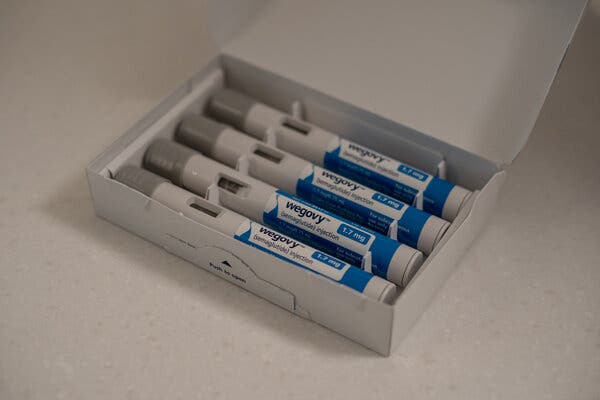
The LatestA national survey released on Friday by KFF, a nonprofit organization focused on health policy, has found that Americans long for safe and effective drugs for weight loss. But the more they learn about new drugs like Wegovy that are transforming obesity treatment, the more their enthusiasm fades.The survey found that 59 percent of people who were trying to lose weight said they were interested in taking a safe and effective drug. But only 23 percent remained interested when asked if they would take such a drug if it had to be injected. And just 16 percent were still interested if their insurance would not pay for the drug. The list price of the drugs is about $1,300 a month.When they heard they would regain their lost weight it they stopped taking the drug, interest declined to 14 percent.“People always want that magic pill,” said Ashley Kirzinger, director of survey methodology at KFF. “There is no magic.”The survey was conducted in July online and by telephone with a representative sample of 1,327 U.S. adults.Cydni Elledge for The New York TimesA Statistic That Sums It Up: 15 percent.That’s the median weight loss experienced by people who take Wegovy, a drug from Novo Nordisk.The new drugs are the first truly effective obesity medicines. They act by stemming people’s appetites and cravings for food. Many patients started by taking Ozempic, a diabetes drug also by Novo Nordisk that led to weight loss as a side effect. But many more patients are asking for Wegovy, which is approved for obesity. Mounjaro, made by Eli Lilly and approved for treating diabetes, is expected to be approved soon for obesity. People taking it lose a median of 20 percent of their body weight.Background: Attitudes about obesity and the drugs are shifting.Obesity is a chronic disease that can result in diabetes and other conditions like high blood pressure, heart disease, sleep apnea and joint problems.But it was so difficult to treat obesity that many doctors and patients had all but given up.Dr. David A. D’Alessio, director of endocrinology at Duke University and a member of Eli Lilly’s scientific advisory board, said he had resisted starting a weight-loss clinic at his university. Patients who are told to diet and exercise “get defeated over and over again,” he said.Now, he said, he has changed his mind.The shifts in attitude about obesity can also be seen in the KFF survey, said Dr. Ania Jastreboff, an endocrinologist and obesity-medicine specialist at Yale University and a consultant for the makers of the new drugs. After decades of hearing that losing weight was just a matter of exerting willpower, most of the public is intensely interested in medical treatments.“Previously,” she said, “that was not the case.”What’s Next: New drugs and methods.Obesity-medicine specialists say new drugs that are even more powerful than Wegovy and Mounjaro are going to change prospects for people with obesity in a way that has eluded researchers for decades.While price and insurance coverage pose problems for patients, health economists expect prices to come down as more drugs are approved and companies face competition. Private insurers are also being pressured to pay; for now, many do not. Medicare is forbidden by law to pay for weight-loss drugs, although there is an intense lobbying effort to change that.While the KFF survey showed that many potential patients resisted injection, the delivery of the drug with a thin, short needle is quick and easy, said Dr. Robert F. Kushner, an obesity-medicine specialist at Northwestern University Feinberg School of Medicine.“In my experience, people find a weekly self-injection OK since it takes less than one minute and is a lot easier than they thought,” said Dr. Kushner, who is on the advisory board for Novo Nordisk.Some companies are also studying an oral version of the medications.

Read more →