Malaria vaccine candidate appears safe and produces promising immune response in a cohort of Tanzanian infants

An experimental malaria vaccine appears safe and promotes an immune response in African infants, one of the groups most vulnerable to severe malaria disease. There is currently only one malaria vaccine, “RTS,S” that is approved by the World Health Organization and offers partial disease protection. However, in the results of the early-stage phase Ib trial conducted in Tanzania and published on August 11th in the journal Med, researchers find that targeting RH5 — a protein that the malaria pathogen Plasmodium falciparum uses to invade red blood cells — can generate a promising immune response that is most pronounced in an infant cohort.
“Anti-sporozoite vaccines such as RTS,S need to be 100% effective in stopping the parasite from invading the liver to prevent disease,” says senior author Angela Minassian, a clinician scientist at the University of Oxford. “Even if just one parasite slips through the net, this will then go on to multiply in the liver, burst out into the bloodstream, and then infect red blood cells where the parasites then grow at an exponential rate. Having a blood-stage vaccine like RH5 on board gives you a second line of defense once the parasite has entered the bloodstream, allowing a second chance to stop malaria before it causes illness.”
A person is infected with malaria when bitten by an infected mosquito, which releases Plasmodium falciparum into the body. RTS,S and many other vaccine candidates teach the immune system how to target the parasite at this sporozoite stage, before it invades the liver. Once the parasite matures and is released from the liver into the bloodstream, Plasmodium falciparum displays RH5 and infects red blood cells, which causes disease. If an anti-sporozoite and an anti-RH5 vaccine were used in combination in the future, individuals could potentially experience more effective protection against malaria for a longer period of time.
“The data in the phase 1b trial reported here confirm, for the first time, that substantial anti-RH5 immune responses can be achieved safely by vaccination in infants from a malaria-endemic area,” say the authors.
The researchers conducted the vaccine trial in Bagamoyo, Tanzania, where the average malaria prevalence throughout the population is 13%. 63 participants aged 6 months to 35 years were enrolled and randomized to receive either the experimental malaria vaccine, called “ChAd63-MVA RH5,” or a control rabies vaccine. The trial was also double-blinded, meaning that neither the participants nor the vaccine administrators knew who received the malaria vaccine or the control. All participants were given the second dose of vaccine two months later and followed for four months after this.
The primary purpose of this study was to evaluate the safety of this vaccine in a population where malaria is endemic. Participants in both the control and treatment group reported pain at the injection site and a mild fever shortly after vaccination, but overall the vaccine was well tolerated and there were no safety concerns.
A secondary outcome of the study was whether the vaccine would promote an immune response. Researchers found that participants who received the malaria vaccine developed antibodies against RH5 in their blood upon follow-up. In the laboratory, these antibodies were able to inhibit the growth of the malaria parasite at high levels that are associated with disease protection. “These data justify onward progression to phase IIb field efficacy trials to determine whether parasite growth-inhibition levels of this magnitude can ultimately protect against clinical malaria.” say the authors.
The authors note that they observed the strongest immune responses in infants under 11 months, followed by children aged 1-6 years, then adults. “Why the infants and young children vaccinated with ChAd63-MVA RH5 induced such high levels of antibody remains to be fully understood,” say the authors. “Given that both anti-sporozoite and blood-stage malaria vaccine strategies necessitate very high levels of antibody to protect against parasite infection, current efforts remain focused on infants and young children.”
The researchers note that this was a small study that followed participants for only four months after receiving their full vaccine schedule. They recommend that additional phase Ia/Ib trials should be conducted to optimize the recommended age range, boosting schedule, and delivery platform for anti-RH5 vaccines. Currently, a phase 1b trial is planned in the Gambia which will look at the effects of combining an anti-RH5 vaccine with an anti-sporozoite vaccine.


Read more →

Synthetic extracellular matrix supports endometrial organoids

Scientists have developed a synthetic extracellular matrix (ECM) that can support the growth of a mini endometrium in a dish for at least two weeks. The endometrium — the mucosal lining of the uterus — has been historically hard to model in the lab, which has limited scientists’ ability to study its role in healthy and diseased states like endometriosis. The matrix, described on August 11 in the journal Med, allows cells to interact in an environment that recapitulates human physiology which could help researchers better simulate the healthy and pathological response to menstrual cycles.
“With this matrix, we can begin to extrapolate and utilize samples from patients that have been diagnosed with certain reproductive diseases,” says first author Juan Gnecco of Tufts University. “We can begin to explore how organoids grown from patients’ cells are behaving differently than those of healthy individuals.”
Until now, scientists have been growing organoids — mini organs in a petri dish — with a type of naturally derived hydrogel called Matrigel. Despite allowing a certain degree of support to organoid growth, Matrigel also contains proteins that can interfere with cell-cell communication. This is particularly important when modeling the endometrium, as it is composed mainly of epithelial glands and stromal cells, and their crosstalk affects how the endometrial tissue changes throughout the menstrual cycle under the influence of sex hormones.
“If the stromal cells try to talk to the epithelial cell, it’s like trying to talk to your friend if you’re standing on the runway at the airport at rush hour,” says senior author Linda Griffith  of the Massachusetts Institute of Technology about endometrium organoids co-cultured with stroma in Matrigel.
Griffith, Gnecco, and their team designed a synthetic ECM using hydrogel and a minimal set of biological signals. Then they cultured endometrial stromal and epithelial organoids from human donors together in the synthetic matrix, and the co-culture remained intact over the experiment period of at least 15 days. In contrast, Matrigel did not support stromal cultures and had partly disintegrated and shrunken by day 15.
The design of the synthetic ECM also allows cells to sequester their own matrix as they grow. “One of the things that can be different between a disease and a normal cell is that they may make slightly different sets of matrix molecules,” says Griffith. “With this ECM, we can create a microenvironment similar to what the cells are experiencing in vivo. That’s something we’re very excited about.”
To test if the matrix could support the growth and functioning of endometrial epithelial and stromal cells, researchers treated the co-cultures with a synthetic progesterone, a sex hormone that plays a key role in the menstrual cycle, to mimic the conditions of part of the menstrual cycle. The hormone caused the epithelial layer of the organoids to become thicker, increased the secretion of a pro-gestational protein, and induced stromal differentiation, the same changes also observed in humans.
The team then exposed the cultures with a type of pro-inflammatory cytokines linked to endometrial diseases in humans including endometriosis, a condition characterized by endometrial tissues growing outside of the uterus. They saw that in co-cultures that contained both epithelial and stromal cells, the cytokine greatly increased epithelial cell proliferation, a characteristic observed in people with endometriosis. The abnormal growth was not observed in mono-culture that contained only epithelial cells.
“It really highlights that cell communication is important, not only for sex hormone signaling but even inflammatory communication between cells,” says Gnecco. “There’s still more about the mechanism that we need to delve into, and now there is a platform that can be used to investigate that in more detail. There’s going to be a huge benefit for other studies downstream from this.”

Read more →

Using the body's 'invisible scalpel' to remove brain cancer

Glioblastoma, the most common and deadly form of brain cancer, grows rapidly to invade and destroy healthy brain tissue. The tumor sends out cancerous tendrils into the brain that make surgical tumor removal extremely difficult or impossible.
Now, Salk scientists have found the immunotherapy treatment anti-CTLA-4 leads to considerably greater survival of mice with glioblastoma. Furthermore, they discovered that this therapy was dependent on immune cells called CD4+ T cells infiltrating the brain and triggering the tumor-destructive activities of other immune cells called microglia, which permanently reside in the brain.
Published in Immunity on August 11, 2023, the findings show the benefit of harnessing the body’s own immune cells to fight brain cancer and could lead to more effective immunotherapies for treating brain cancer in humans.
“There are currently no effective treatments for glioblastoma — a diagnosis today is basically a death sentence,” says Professor Susan Kaech, senior author and director of the NOMIS Center for Immunobiology and Microbial Pathogenesis. “We’re extremely excited to find an immunotherapy regimen that uses the mouse’s own immune cells to fight the brain cancer and leads to considerable shrinkage, and in some cases elimination, of the tumor.”
When standard cancer treatments like surgery, chemotherapy, and radiation cease to be effective, doctors increasingly turn to immunotherapy. Immunotherapy encourages the body’s own immune cells to seek and destroy cancer cells. Though not universal, immunotherapy works on many tumors and has provided many patients with strong, long lasting anti-cancer responses. Kaech wanted to find new ways of harnessing the immune system to develop more safe and durable treatments for brain cancer.
Her team found three cancer-fighting tools that have been somewhat overlooked in brain cancer research that may cooperate and effectively attack glioblastoma: an immunotherapy drug called anti-CTLA-4 and specialized immune cells called CD4+ T cells and microglia.
Anti-CTLA-4 immunotherapy works by blocking cells from making the CTLA-4 protein, which, if not blocked, inhibits T cell activity. It was the first immunotherapy drug designed to stimulate our immune system to fight cancer, but it was quickly followed by another, anti-PD-1, that was less toxic and became more widely used. Whether anti-CTLA-4 is an effective treatment for glioblastoma remains unknown since anti-PD-1 took precedence in clinical trials. Unfortunately, anti-PD-1 was found to be ineffective in multiple clinical trials for glioblastoma — a failure that inspired Kaech to see whether anti-CTLA-4 would be any different.

Read more →

Playing tackle football may increase the risk for Parkinson's disease

Identification of risk factors for Parkinson’s disease (PD) is essential for early diagnosis. Dating back to the 1920s, Parkinson’s disease and parkinsonism — an umbrella term that refers to motor symptoms found in Parkinson’s disease and also other conditions — have long been described in boxers. Repetitive head impacts from tackle football can also have long-term neurological consequences like chronic traumatic encephalopathy (CTE). But research on the association between participation in tackle football and PD is limited.
In the largest study to describe the association between participation in football and the odds for having a reported diagnosis of PD, researchers from the BU CTE Center used a large online data set of people concerned for having PD and found participants with a history of playing organized tackle football had a 61% increased odds of having a reported parkinsonism or PD diagnosis.
In this study, the researchers evaluated 1,875 sport participants — 729 men who played football, predominantly at the amateur level, and 1,146 men who played non-football sports who served as the control group. Participants were enrolled in Fox Insight, a longitudinal online study of people with and without PD sponsored by The Michael J. Fox Foundation for Parkinson’s Research.
Notably, researchers found a link between playing football and increased odds for having a parkinsonism or PD diagnosis even after accounting for known risk factors for PD. Additionally, the data revealed that players who had longer careers and played at higher levels of competition experienced increased odds for having a reported diagnosis of parkinsonism or PD. Football players who played at the college or professional level were at 2.93 increased odds for having a PD diagnosis compared with those who just played at the youth or high school level. Age of first exposure to football was not associated with odds for having a reported parkinsonism or PD diagnosis.
“Playing tackle football could be a contributing risk factor to PD, particularly among people already at risk due to other factors (e.g., family history). However, the reasons for this relationship are not clear and we also know that not everyone who plays tackle football will develop later-life neurological conditions, meaning many other risk factors are at play,” says corresponding author Michael L. Alosco, PhD, associate professor of neurology at Boston University Chobanian & Avedisian School of Medicine.
The researchers also emphasized that they compared the football players to another group of athletes, a noteworthy strength of the study. Furthermore, most of the participants played tackle football only at the amateur level, which is contrast to most of the research to date that has focused on professional athletes.
“Previous research has focused on the association between American football and risk for CTE. However, similar to what has historically been seen in boxers, American football might also affect risk for other neurodegenerative conditions such as PD,” says Hannah Bruce, MSc, first author and research specialist at Boston University Chobanian & Avedisian School of Medicine.
The researchers acknowledge several limitations to their findings and caution that the work is still preliminary. It was a convenience sample of people enriched for having PD who were mostly white, thereby limiting the generalizability of the findings. Diagnosis of PD was also self-reported by participants through online assessments and objective in-person evaluations were not conducted.
This work was in collaboration with The Michael J. Fox Foundation for Parkinson’s Research, the sponsor of Fox Insight. The Fox Insight study was used to collect and aggregate data used in this manuscript. Grant funding was also from NINDS (U54NS115266; K23NS102399).

Read more →

How much do junior doctors really get paid?

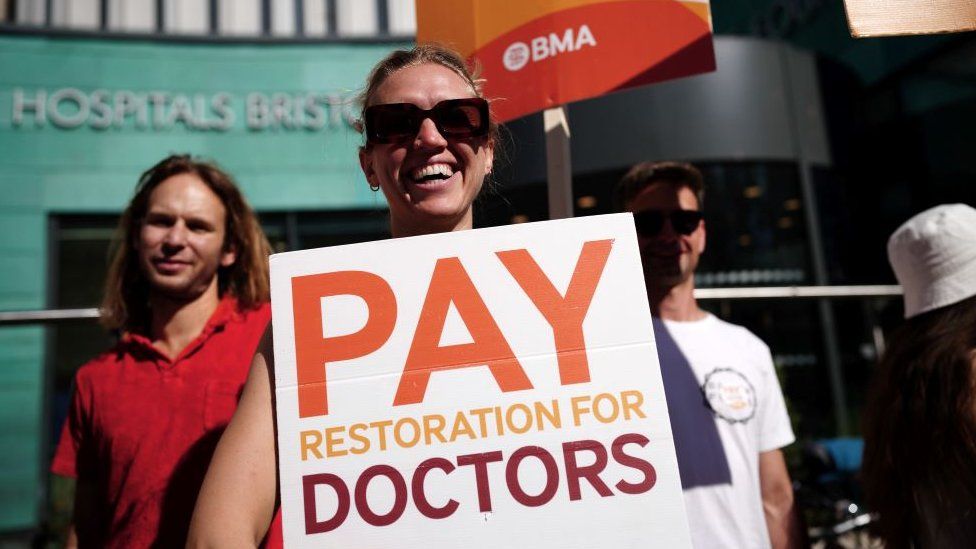
Published11 August 2023Shareclose panelShare pageCopy linkAbout sharingBy Jim ReedHealth reporterJunior doctors in England are starting their fifth round of strike action with no sign of a breakthrough in their bitter pay dispute with the government. The doctors’ union, the BMA, made headlines earlier this year when it said pay had fallen so far behind inflation that its members would be better off serving coffee than treating patients. The government described that as misleading and said the average junior doctor earns between £20 and £30 an hour.In reality, that term – junior doctor – covers someone fresh out of medical school right up to those with a decade or more of experience. And pay is complicated, with salaries varying massively as medics move up grades when they become more skilled and start to specialise.BBC News asked two junior doctors, at different stages of their careers, to show us their wage slips and explain exactly how much they earn.We can’t take any more, says NHS as doctors strike Why talk of a UK doctor exodus is prematureThe new starterDr Robert Gittings graduated from medical school in Liverpool after studying for a master’s in infectious disease biology.Last summer, he started his first, or FY1, year as a junior doctor in London and is currently working on the infectious diseases ward as part of his rotation – where doctors get experience in different types of medicine.”In my hospital, we have a lot of tuberculosis patients, patients with uncontrolled HIV, and we also get pneumonias and, sometimes, we get a tropical infection coming in,” he says.Robert is paid a basic salary before tax of about £2,450 a month for a standard 40-hour week – or just over £14 an hour. Then there are additional roster hours – which are compulsory – taking his average working week to 48 hours. Under what the government calls a “final offer”, his pay will go up in October in two ways: a straight 6% pay rise and £1,250 permanently added to annual salaries – both backdated to April.But that falls well short of the 35% increase for which the BMA has been asking to make up for years of below-inflation rises. For Robert, the latest pay offer would be worth roughly £250 a month before tax.He also receives extra payments each month:Another £1.04 an hour to cover the higher cost of living in LondonAn extra £147 for night shifts – about £5 an hour in June before taxA fixed £122 a month as he has to work one in every five or six weekends”Sometimes night shifts can be really busy,” he says. “There have been times when I’ve had to manage a patient by myself who is deteriorating, and I have to do everything for them, just with advice over text message.”Junior doctors like Robert typically spend five or six years in medical school before starting their jobs.He says he graduated with about £50,000 of debt including tuition fees and – in June – paid back £75 in student loans from his salary.There are other deductions including £257 – or 9.8% of his wages – for a pension, with the NHS contributing 20.6% under the latest career average scheme, more than most private sector pensions.In June, Robert took home a total of £2,164 after tax and deductions. That works out as a total annual salary of roughly £37,000.He says he is now looking to take a year out to work abroad – probably in Australia. “I’m not confident the pay here is going to improve as much as I’d like it to,” he says. “I would really quite strongly consider staying [there].”The speciality registrarDr Kiran Rahim qualified from medical school in 2011 and now treats sick children as a paediatric registrar – one of the most experienced junior doctor grades.”I was at work yesterday and it was really, really busy,” she says. “I was managing A&E – so taking in all the paediatric referrals, all the sick kids who needed to be seen.”And then managing the acute stay ward, making sure the children were getting their treatment, accessing and booking scans for them.”Kiran has taken three years out to have children herself, and is now working part-time while she looks after her young family, meaning her training – and her time as a junior doctor – has been “elongated”.For an average three-day week, she is paid a basic salary before tax of roughly £3,315 a month – or just under £28 an hour – which is the same rate as a full-time doctor. Like Robert, she also receives London weighting.In July, she was paid another £292 for night shifts and £132 for working one weekend in every six or seven.She says the “vast majority” of junior doctors at her level end up working extra unpaid hours before they can go home at the end of the day.”I can’t just leave a sick patient because it’s unsafe, and it’s not fair on the people who are already fighting fire on the next shift,” she adds.As evidenced by her payslip, Kiran did pay more tax than usual in July after she says she worked extra shifts earlier this year to cover staff sickness – that money should be refunded later by HMRC. She has just finished paying off her student loan, although she says – like other junior doctors – there are unavoidable costs which do not show up on her payslip.She pays £433 a year to the GMC to be on the doctors’ register. There are charges to be a member of the Royal College of Paediatrics and Child Health, and she has had to pay thousands of pounds in exam fees.Plus there is the cost of personal indemnity insurance – just under £700 a year – to protect her in case she is sued for medical negligence.In a typical month, Kiran says she takes home around £2,400 after tax and deductions for a 27-hour week. If she was working full-time then she would earn a total annual salary of roughly £69,000.”Pay is important but so are all the other things that make you want to go to work,” she says. “This is not the job I signed up to do 10 years ago and I have seen a decline in morale, in our working environment and in our working conditions.”The government says it has accepted the latest recommendations made by an independent pay review body and its most recent offer represents an 8.8% annual pay rise for the average junior doctor in England.”Our award balances the need to keep inflation in check while recognising the important work they do,” says Health Secretary Steve Barclay.Are you a doctor with a view on the strike? Are you a patient affected? You can get in touch by emailing haveyoursay@bbc.co.uk.Please include a contact number if you are willing to speak to a BBC journalist. You can also get in touch in the following ways:WhatsApp: +44 7756 165803Tweet: @BBC_HaveYourSayUpload pictures or videoPlease read our terms & conditions and privacy policy

If you are reading this page and can’t see the form you will need to visit the mobile version of the BBC website to submit your question or comment or you can email us at HaveYourSay@bbc.co.uk. Please include your name, age and location with any submission. Sign up for our morning newsletter and get BBC News in your inbox.More on this storyNHS consultants in England announce more strikesPublished17 July 2023Sunak pledges more doctors and nurses in NHS planPublished25 June 2023

Read more →

We’re Drinking More Water. How to Hold It: That’s the Question.

Americans are drinking more water. How best to contain it: That’s the burning question.Carrie Frost is well equipped for hydration. A registered nurse and a mother of two from Colorado, she estimates that her family has accumulated “upward of 25 to 30” reusable flasks at home for keeping cold drinks: flasks large and small, of various designs and colors, with a straw and without. But last month, as she sat in 90-degree heat at her son’s travel baseball tournament, she drank from a plastic water bottle that she had purchased for $3 at a local grocery store.“Convenience,” she said, laughing, as she tried to piece together why, once again, she was not using one of her many beverage containers. “I guess we’re just a lazy society.”Americans are drinking a lot of water, but they are on the fence about how best to do it. More than $2 billion in reusable water bottles were sold the United States in 2022, up from around $1.5 billion in 2020, according to Greg Williamson, the president of CamelBak, which is a maker of reusable bottles.And sales of single-serving water bottles have been rising steadily, too, reaching 11.3 billion gallons in 2022, according to the most recent data from the Beverage Marketing Association, which tracks beverage sales.In other words, consumers are spending billions of dollars a year on reusable bottles to stay hydrated and then buying bottled water anyway, even as faucet water remains free.“Faucet?” said Jason Taylor from Georgia, whose son was playing the same Birmingham baseball tournament. “Faucet? I haven’t drunk from the faucet since I was 18.” He had heard stories about tainted water, like in Flint, Mich., and did not trust the faucet water at the hotel, he said, so he filled his reusable flask with ice from the hotel and poured bottled water over it. The hotel ice he trusted; the faucet water there, not so much.Beverage consumption is in a fluid period. Americans are moving away from empty sugar calories but are still hooked on the convenience of a chilled plastic bottle from the corner-store fridge. So we are amassing containers, single-use and reusable, in kitchen cabinets and landfills alike.Sales of reusable water bottles “are absolutely skyrocketing,” said Jessica Heiges, a sustainability consultant based in Berkeley, Calif., where she recently completed a Ph.D. in the creation of waste-free systems. But, she added, people who fill their reusable flasks with water from a bottle have not fully embraced the environmental proposition.“They are not all the way there or are not fully convinced,” Dr. Heiges said. And, she noted, reusable water bottles take resources to make, so having too many isn’t great for the environment, either. “You can find them at every Goodwill and Salvation Army. People are overflowing with them.”Hydro Flask, one of many popular brands on which stores are instituting a “limit one per customer” rule.AlamyAlaina Waldrop, in Birmingham, has around 20 water bottles, as precious to her as purses, she said: “You have a decent water bottle and you get sick of it, or you’re used to seeing it all the time, and find a new one that’s pretty or it’s a new color or it holds more water or fits in a cup holder better.”Ms. Waldrop, 20, works at Dick’s Sporting Goods, about a mile from Birmingham’s baseball fields. The store has multiple displays of reusable flasks, featuring major brands like Yeti and Hydro Flask. A display of Stanley flasks ($45 each) came with a sign: limit four per customer. “They’re so popular,” Ms. Waldrop said. “I bought one for my mom and one for my sister. We’re all water-bottle freaks. We all have this obsession. I wish it made more sense but it doesn’t.”She tends to fill her bottles at home with filtered water but doesn’t trust faucets on the go, so she buys single-serving bottles at the gas station or convenience store and pours that water into her reusable container. “I drink whatever is in the plastic and then I throw the plastic away,” she said with a laugh. Why not simply drink all the water from the plastic bottle she just purchased? “It doesn’t stay cold for as long,” she said.In practice, there may be little difference in quality or safety between bottled water and tap water, said Ronnie Levin, an instructor and expert in American public drinking water at the Harvard T. H. Chan School of Public Health. “It’s often just some random tap filling those water bottles,” Ms. Levin said. “Monitoring of bottled water is somewhere between zero and not routine.”When putting bottled water in the flask, “you’re not necessarily getting anything better, except that you’re now polluting the environment.”In the baking heat at the baseball fields, a line had formed at a snack shack that sold water for $3 and charged $2 for ice in a Styrofoam cup. Steps away was a refillable filtered-water tap that was used by some people but had no line. Maybe that’s because the filtered tap was free.Water has become popular enough that it is often as or more expensive than soda, despite having less substance — in the form of sugar — to offer. At a handful of nearby convenience stores, the prices of water and soda were neck and neck; at Walgreens, bottles of Dr Pepper and other sodas sold at $4 for two, as did bottles of Dasani and Aquafina water.Michael Bellas, the chairman and chief executive of the Beverage Marketing Company, said that bottled water remained far less expensive if purchased in bulk, at Costco, say, or the supermarket. But prices rise sharply for single-serving bottles when the retailer has a thirsty audience on the go, he noted.“The airports just soak you,” Mr. Bellas said.At the Hudson store at the Birmingham airport, 20-ounce bottles of Dasani water and Smartwater (both owned by the Coca-Cola Company) cost $4.29 with tax, while all the 20-ounce sodas (Coca-Cola, Diet Coke, Sprite) cost $4.09.“Everyone has to hydrate, and people think it makes their skin look nice,” Kim Shoemaker, a Hudson employee, said of water. “No sugar, no chemicals, no additives.” Ms. Shoemaker, 60, said she bought cases of water at Costco and kept single-serving bottles in every room of her home, but also owned many reusable flasks. “Oh, my gosh, probably about six,” she said. “I don’t use them. I don’t know why.”Just outside the Hudson store was a water dispenser for reusable containers, its water filtered and free of charge and mostly going unused.Out at the baseball fields, Ms. Frost, who had traveled from Colorado for the tournament, said she had family members who didn’t understand why a person would spend on a reusable water container and single-serving water bottles and not just fill a cup from the tap.“Ask my husband,” she offered. “He thinks it’s the stupidest thing in the world.”To which her husband, Spencer Frost, gruffly added: “Just drink from the hose.”

Read more →

How much do junior doctors really get paid in England?

Published15 minutes agoShareclose panelShare pageCopy linkAbout sharingBy Jim ReedHealth reporterJunior doctors in England are starting their fifth round of strike action with no sign of a breakthrough in their bitter pay dispute with the government. The doctors’ union, the BMA, made headlines earlier this year when it said pay had fallen so far behind inflation that its members would be better off serving coffee than treating patients. The government described that as misleading and said the average junior doctor earns between £20 and £30 an hour.In reality, that term – junior doctor – covers someone fresh out of medical school right up to those with a decade or more of experience. And pay is complicated, with salaries varying massively as medics move up grades when they become more skilled and start to specialise.BBC News asked two junior doctors, at different stages of their careers, to show us their wage slips and explain exactly how much they earn.Junior doctors to strike for four days in AugustWhy talk of a UK doctor exodus is prematureThe new starterDr Robert Gittings graduated from medical school in Liverpool after studying for a master’s in infectious disease biology.Last summer, he started his first, or FY1, year as a junior doctor in London and is currently working on the infectious diseases ward as part of his rotation – where doctors get experience in different types of medicine.”In my hospital, we have a lot of tuberculosis patients, patients with uncontrolled HIV, and we also get pneumonias and, sometimes, we get a tropical infection coming in,” he says.Robert is paid a basic salary before tax of about £2,450 a month for a standard 40-hour week – or just over £14 an hour. Then there are additional roster hours – which are compulsory – taking his average working week to 48 hours. Under what the government calls a “final offer”, his pay will go up in October in two ways: a straight 6% pay rise and £1,250 permanently added to annual salaries – both backdated to April.But that falls well short of the 35% increase for which the BMA has been asking to make up for years of below-inflation rises. For Robert, the latest pay offer would be worth roughly £250 a month before tax.He also receives extra payments each month:Another £1.04 an hour to cover the higher cost of living in LondonAn extra £147 for night shifts – about £5 an hour in June before taxA fixed £122 a month as he has to work one in every five or six weekends”Sometimes night shifts can be really busy,” he says. “There have been times when I’ve had to manage a patient by myself who is deteriorating, and I have to do everything for them, just with advice over text message.”Junior doctors like Robert typically spend five or six years in medical school before starting their jobs.He says he graduated with about £50,000 of debt including tuition fees and – in June – paid back £75 in student loans from his salary.There are other deductions including £257 – or 9.8% of his wages – for a pension, with the NHS contributing 20.7% under the latest career average scheme, more than most private sector pensions.In June, Robert took home a total of £2,164 after tax and deductions. That works out as a total annual salary of roughly £37,000.He says he is now looking to take a year out to work abroad – probably in Australia. “I’m not confident the pay here is going to improve as much as I’d like it to,” he says. “I would really quite strongly consider staying [there].”The speciality registrarDr Kiran Rahim qualified from medical school in 2011 and now treats sick children as a paediatric registrar – one of the most experienced junior doctor grades.”I was at work yesterday and it was really, really busy,” she says. “I was managing A&E – so taking in all the paediatric referrals, all the sick kids who needed to be seen.”And then managing the acute stay ward, making sure the children were getting their treatment, accessing and booking scans for them.”Image source, AFPKiran has taken three years out to have children herself, and is now working part-time while she looks after her young family, meaning her training – and her time as a junior doctor – has been “elongated”.For an average three-day week, she is paid a basic salary before tax of roughly £3,315 a month – or just under £28 an hour – which is the same rate as a full-time doctor. Like Robert, she also receives London weighting.In July, she was paid another £292 for night shifts and £132 for working one weekend in every six or seven.She says the “vast majority” of junior doctors at her level end up working extra unpaid hours before they can go home at the end of the day.”I can’t just leave a sick patient because it’s unsafe, and it’s not fair on the people who are already fighting fire on the next shift,” she adds.Kiran finished paying off her student loan this year, although she says – like other junior doctors – there are unavoidable costs which do not show up on her payslip.She pays £433 a year to the GMC to be on the doctors’ register. There are charges to be a member of the Royal College of Paediatrics and Child Health, and she has had to pay thousands of pounds in exam fees.Plus there is the cost of personal indemnity insurance – just under £700 a year – to protect her in case she is sued for medical negligence.In July, Kiran took home £2,159 after tax and deductions for a 27-hour working week. That would work out as a total annual salary of roughly £69,000 if she was full-time.”Pay is important but so are all the other things that make you want to go to work,” she says. “This is not the job I signed up to do 10 years ago and I have seen a decline in morale, in our working environment and in our working conditions.”The government says it has accepted the latest recommendations made by an independent pay review body and its most recent offer represents an 8.8% annual pay rise for the average junior doctor in England.”Our award balances the need to keep inflation in check while recognising the important work they do,” says Health Secretary Steve Barclay.More on this storyNHS consultants in England announce more strikesPublished17 JulySunak pledges more doctors and nurses in NHS planPublished25 June

Read more →

We can't take any more, says NHS as doctors strike

Published18 minutes agoShareclose panelShare pageCopy linkAbout sharingImage source, PA MediaBy Nick TriggleHealth correspondentJunior doctors are starting a four-day walkout, with health bosses warning the NHS cannot take any more disruption.The strike by members of the British Medical Association (BMA) starts at 07:00 BST and lasts until Tuesday.It is the junior doctors’ fifth strike in the pay dispute in England.NHS Providers said services were at tipping point because covering the junior doctor strikes had cost an estimated £1bn, as well leading to thousands of postponed treatments.Sir Julian Hartley, chief executive of NHS Providers, which represents hospital bosses, said he was very worried about the severe disruption that would be seen during this latest strike and the two-day walkout by consultants planned later in August.”We could be close to a tipping point,” he said, adding: “Trusts and staff are pulling out all the stops but, with no end to strikes in sight, the sheer volume of planned treatment being put back due to industrial action will make it almost impossible for trusts to cut waiting lists as much as the government wants.”The £1bn cost has been accrued from lost productivity, preparing and planning for strikes and paying premium rates to consultants to provide cover.How much do junior doctors really get paid? Why talk of a UK doctor exodus is prematureJunior doctors, who make up nearly half the medical workforce, have been walking out of both emergency and planned care during their strikes.During the strike, patients are advised to contact NHS 111 or the nearest pharmacy for more minor health concerns, although A&E departments remain open if needed.People will be contacted if their appointment has to be rescheduled. GP and community appointments are unlikely to be affected.The BMA has asked for a 35% pay rise to make up for what it says are 15 years of below-inflation wage rises.The government gave junior doctors 6% plus £1,250, which works out at an average of nearly 9%.Ministers have said there will be no more talks as that was the final settlement, pointing out they had agreed to pay what the independent pay review body had recommended.So far, nearly 780,000 hospital appointments have had to be postponed because of strike action by NHS staff since December.NHS England said that was a factor in the rising number of people waiting for treatment.Figures released on Thursday showed the hospital backlog had topped 7.5 million for the first time, meaning nearly one in seven people are on a hospital waiting list.One patient who has been affected is Margaret Gotheridge, 81, from Nottingham, who needs her pacemaker replacing.She had an appointment cancelled because of the consultants’ strike in July and has another arranged for Monday during the junior doctors’ strike. Instead of taking the chance of it being cancelled she decided to pay for it to be done privately.”I couldn’t take the risk,” she said, adding that she appreciated doctors had lost out on pay but described the 35% pay demand as “ridiculous”.Health Secretary Steve Barclay said: “Patients are bearing the brunt of the impact of continuous strikes across the NHS and further action by the BMA will cause more appointments and procedures to be postponed.”My door is always open to discuss how to improve doctors’ working lives but this pay award is final so I urge the BMA to end its strikes immediately.”BMA leader Prof Philip Banfield said blaming doctors for the rising waiting list was a “deliberate case of obfuscation”.He said: “The government was presiding over this problem long before any industrial action – waiting lists were steadily getting worse for the decade leading up to the pandemic arriving.”In fact, it is these waiting lists – and doctors being unable to do their jobs because of underinvestment, workforce shortages and rota gaps – that lie behind the strikes they’re being forced to take now.”He urged the government to get back to the negotiating table and put forward a “credible offer”.More on this storySunak pledges more doctors and nurses in NHS planPublished25 JuneNHS waiting lists hit record high in EnglandPublished13 JulyPublic sector workers offered pay rises of around 6%Published13 July

Read more →

COVID-19 causes mitochondrial dysfunction in heart and other organs, researchers find

Since the beginning of the COVID-19 pandemic caused by the SARS-CoV-2 virus, researchers have been trying to determine why this virus creates such negative long-term effects compared with most coronaviruses. Now, a multi-institutional consortium of researchers led by a team at Children’s Hospital of Philadelphia (CHOP) and the COVID-19 International Research Team (COV-IRT) has found that the genes of the mitochondria, the energy producers of our cells, can be negatively impacted by the virus, leading to dysfunction in multiple organs beyond the lungs. These findings, published online today by the journal Science Translational Medicine, suggest new approaches for treating COVID-19.
Mitochondria are found in every cell in our bodies. The genes responsible for generating mitochondria are dispersed across both the nuclear DNA located in the nucleus of our cells and the mitochondrial DNA (mtDNA) located within each mitochondrion. Prior studies have shown that SARS-CoV-2 proteins can bind to mitochondrial proteins in host cells, potentially leading to mitochondrial dysfunction.
To understand how SARS-CoV-2 impacts mitochondria, researchers from the Center for Mitochondrial and Epigenomic Medicine (CMEM) at CHOP along with their COV-IRT colleagues wanted to analyze mitochondrial gene expression to detect differences caused by the virus. To do this, they analyzed a combination of nasopharyngeal and autopsy tissues from affected patients and animal models.
“The tissue samples from human patients allowed us to look at how mitochondrial gene expression was affected at the onset and end of disease progression, while animal models allowed us to fill in the blanks and look at the progression of gene expression differences over time,” said the study’s first author Joseph Guarnieri, PhD, a postdoctoral research fellow with the CMEM at CHOP.
The study found that in autopsy tissue, mitochondrial gene expression had recovered in the lungs, but mitochondrial function remained suppressed in the heart as well as the kidneys and liver. When studying animal models and measuring the time when the viral load was at its peak in the lungs, mitochondrial gene expression was suppressed in the cerebellum even though no SARS-CoV-2 was observed in the brain. Additional animal models revealed that during the mid-phase of SARS-CoV-2 infection, mitochondrial function in the lungs was beginning to recover.
Taken together, these results reveal that host cells respond to initial infection in a way that involves the lungs, but over time, mitochondrial function in the lungs is restored, while in other organs, particularly the heart, mitochondrial function remains impaired.
“This study provides us with strong evidence that we need to stop looking at COVID-19 as strictly an upper respiratory disease and start viewing it as a systemic disorder that impacts multiple organs,” said co-senior author Douglas C. Wallace, PhD, director of the CMEM at CHOP. “The continued dysfunction we observed in organs other than the lungs suggests that mitochondrial dysfunction could be causing long-term damage to the internal organs of these patients.”
While future studies using this data will study how systemic immune and inflammatory responses may be responsible for more severe disease in some patients, the research team did find a potential therapeutic target in microRNA 2392 (miR-2392), which was shown to regulate mitochondrial function in human tissue samples used in this study.

Read more →

Fat burning during exercise varies widely between individuals

The best heart rate for burning fat differs for each individual and often does not align with the “fat burning zone” on commercial exercise machines, Icahn School of Medicine at Mount Sinai researchers report.
Instead, the researchers said, clinical exercise testing — a diagnostic procedure to measure a person’s physiological response to exercise — may be a more useful tool to help individuals achieve intended fat loss goals. The study, which used a machine learning-based modeling approach, was published online today in Nutrition, Metabolism and Cardiovascular Disease.
“People with a goal of weight or fat loss may be interested in exercising at the intensity which allows for the maximal rate of fat burning. Most commercial exercise machines offer a ‘fat-burning zone’ option, depending upon age, sex, and heart rate,” says lead author Hannah Kittrell, MS, RD, CDN, a PhD candidate at Icahn Mount Sinai in the Augmented Intelligence in Medicine and Science laboratory. “However, the typically recommended fat-burning zone has not been validated, thus individuals may be exercising at intensities that are not aligned with their personalized weight loss goals.”
Ms. Kittrell is also Director of the Mount Sinai Physiolab, a clinical body composition and exercise physiology laboratory at Mount Sinai Morningside.
The term FATmax is sometimes used to represent the exercise intensity and associated heart rate at which the body reaches its highest fat-burning rate during aerobic exercise. At this point, fat is a significant fuel source and therefore this intensity may be of interest to those seeking to optimize fat loss during workouts.
As part of the study, the researchers compared heart rate at FATmax, as measured during a clinical exercise test, to predicted heart rate at percentages of maximal effort within the typically recommended “fat-burning zone.” In a sample of 26 individuals, the researchers found that there was poor agreement between measured and predicted heart rate, with a mean difference of 23 beats per minute between the two measures. This suggests that general recommendations for a “fat-burning zone” may not provide accurate guidance.
Next, the researchers plan to study whether individuals who receive a more personalized exercise prescription demonstrate more weight and fat loss, as well as improvement of metabolic health markers that identify health risks like type 2 diabetes, obesity, and heart disease.
“We hope that this work will inspire more individuals and trainers to utilize clinical exercise testing to prescribe personalized exercise routines tailored to fat loss. It also emphasizes the role that data-driven approaches can have toward precision exercise,” says senior author Girish Nadkarni, MD, MPH, Irene and Dr. Arthur M. Fishberg Professor of Medicine at Icahn Mount Sinai, Director of The Charles Bronfman Institute of Personalized Medicine, and System Chief, Division of Data-Driven and Digital Medicine, Department of Medicine.
The paper is titled “Discrepancy between predicted and measured exercise intensity for eliciting the maximal rate of lipid oxidation.”
The remaining authors are Fred J. DiMenna (The Mount Sinai Hospital), Avigdor D. Arad (Tel Aviv Medical Center), Wonsuk Oh (Icahn Mount Sinai), Ira Hofer (Icahn Mount Sinai), Ryan W. Walker (Icahn Mount Sinai), Ruth J.F. Loos (Icahn Mount Sinai & University of Copenhagen), and Jeanine B. Albu (Icahn Mount Sinai).

Read more →