Bibby Stockholm: No one harmed over discovery of Legionella on barge – health secretary

Published32 minutes agoShareclose panelShare pageCopy linkAbout sharingImage source, PA MediaBy Thomas MackintoshBBC NewsMinisters took “instant action” to move 39 asylum seekers from the Bibby Stockholm barge after Legionella bacteria was found last week, the health secretary said.Steve Barclay was questioned why people were moved in when officials knew tests were being conducted.He told BBC Radio 4’s Today programme that “no-one has been harmed”. Home Office ministers say the presence of bacteria was confirmed to them on Thursday, and they then took action.In an earlier interview with Sky News, Mr Barclay said: “As soon as ministers were notified on Thursday night, there were some concerns with that, they took instant action.””My understanding from colleagues in the Home Office is it was notified to Home Office ministers on Thursday and they then took very quick action as a result.”Legionella bacteria can cause Legionnaires disease, a type of pneumonia, if it is breathed in via tiny droplets of water suspended in the air.Around 5%-10% of cases are fatal. People with underlying health conditions, the over 50s and smokers are at risk of serious illness.The barge had been billed as a cheaper alternative to hotels for asylum seekers awaiting the outcome of their claims. The government eventually plans to house up to 500 men aged 18-65 on the vessel moored in Portland Port while they await the outcome of asylum applications. Mr Barclay added “progress is being made” on his government’s migrant policy. “We recognise there is more to do. The barge is one aspect of that. We need to go further.”Migrants moved off barge over bacteria fearsAsylum seekers describe life on Bibby StockholmInside the Bibby Stockholm asylum seekers bargeDorset Council said it informed Home Office contractors about preliminary test results last Monday.In a statement, the council said: “To be clear, it was not Dorset Council’s responsibility to inform the Home Office – that responsibility sat with CTM and Landry and King, the companies contracted by the Home Office to operate the barge.”The full timeline remains unclear and the council has not yet said whether it told contractors before or after the transfer of migrants on to the barge.A senior Home Office source told the BBC that the department did not receive a formal notification of the presence of Legionella until Wednesday evening.The source said the person notified on Tuesday was a “junior” member of staff who happened to be on a call with contractors.They also said that the department was “led” by the UK Health Security Agency, which did not recommend people were moved off the barge until Thursday night.Prof Dame Jenny Harries, the chief executive of the agency, said that legionella bacteria detected in routine tests would not “necessarily indicate there is a systemic problem”.”Just finding legionella does not necessarily mean there is a significant risk to human health,” she told Today.”It is primarily the responsibility of the operator or the manager of the premises or with the services to ensure that is fully managed before there are people using the services.”The government has been criticised over its handling of the Bibby Stockholm, including from within its own ranks.David Davis, a Conservative MP, said that the “startling incompetence” of the Home Office had been laid bare, while former party chairman Sir Jake Berry described the removals as “farcical”.However, Wales Secretary David TC Davis on Sunday defended the government’s handling of the situation, telling Times Radio that it “actually demonstrates how we’re putting the safety of people first”.Without an engine and now virtually empty, the Bibby Stockholm has come to symbolise the UK’s response to its asylum crisis. A functional deterrent to those who might abuse our generosity, according to ministers. Dead in the water, critics say – a cruel dereliction of Britain’s responsibilities to those fleeing conflict and persecution The arguments about who and when people knew the vessel’s water supply was contaminated with dangerous bacteria will rumble on, but the unfortunate barge is a headline-grabbing distraction from the real problems of an asylum system even the government accepts is broken. The barge comes at a financial cost too, of course, and a number of senior Conservative MPs are now publicly fuming at the political price the party is paying.It will be pointed out the number of migrants who crossed the Channel on Saturday alone would more than fill a barge, but that would miss what lies at the heart of this problem. It’s true, the number of asylum applications has increased in the last couple of years. But, the backlog of people waiting for the Home Office to make a decision on asylum claims has gone up three times as quickly over the same period. The backlog was rising before small boats became an issue. Despite a big increase in caseworkers, it is still at almost record levels. The prime minister’s promise to end the asylum crisis relies on deterring migrants from coming. But change so far appears as sluggish as an engineless barge in Portland Harbour. More on this storyMigrants moved off barge over bacteria fearsPublished2 days agoBarge evacuation shows ‘startling incompetence’Published1 day agoFirst asylum seekers board Bibby Stockholm bargePublished6 days agoInside the Bibby Stockholm asylum seekers bargePublished6 days ago

Read more →

Should Opioid Settlement Money Be Spent on Law Enforcement?

As states and counties spend the first wave of billions of dollars from the pharmaceutical industry, public health groups are challenging how some funds are being used.After years of litigation to hold the pharmaceutical industry accountable for the deadly abuse of prescription painkillers, payments from what could amount to more than $50 billion in court settlements have started to flow to states and communities to address the nation’s continuing opioid crisis.But though the payments come with stacks of guidance outlining core strategies for drug prevention and addiction treatment, the first wave of awards is setting off heated debates over the best use of the money, including the role that law enforcement should play in grappling with a public health disaster.States and local governments are designating millions of dollars for overdose reversal drugs, addiction treatment medication, and wound care vans for people with infections from injecting drugs. But law enforcement departments are receiving opioid settlement money for policing resources like new cruisers, overtime pay for narcotics investigators, phone-hacking equipment, body scanners to detect drugs on inmates and restraint devices.“I have a great deal of ambivalence towards the use of the opioid money for that purpose,” said Chester Cedars, chairman of Louisiana’s advisory opioid task force and president of St. Martin Parish. The state’s directives say only “law enforcement expenditures related to the opioid epidemic,” added Mr. Cedars, a retired prosecutor. “That is wide open as to what that exactly means.”On Monday, 133 addiction medicine specialists, legal aid groups, street outreach groups and other organizations released a list of suggested priorities for the funds. Their recommendations include housing for people in recovery and expanding access to syringe exchange programs, personal use testing strips for fentanyl and xylazine, and medication that treats addiction.They expressly stated that no funds “should be spent on law enforcement personnel, overtime or equipment.”“Law enforcement already gets a lot of funding, and I’m sure they would say it’s never enough,” said Tricia Christensen, an author of the proposed priorities, who is the policy director at Community Education Group, which has been tracking opioid settlement money across Appalachia. But the opioid money, she said, “is really unique.”Law enforcement departments have been receiving opioid settlement money for policing resources like new cruisers, overtime pay, phone-hacking equipment, body scanners and restraint devices.Whitney Curtis for The New York Times Groups that monitor opioid settlements use various criteria to estimate the total payout. But even employing the most conservative tabulation, the final amount could well be north of $50 billion when pending lawsuits are resolved, notably the multibillion-dollar Purdue bankruptcy plan, which the Supreme Court temporarily paused last week. At first glance, that looks like a fabulous trove of money. In reality, it will be parceled out over 18 years and is already dwarfed by the behemoth dimensions of the opioid crisis, now dominated by illicit fentanyl and other drugs.The spectacle of states as well as thousands of cities, counties and towns all struggling to determine the most effective uses of these desperately needed funds is raising many questions.Underlying the wrangling is a push for greater transparency in awarding the money and a determination not to repeat the mistakes of the Big Tobacco settlement 25 years ago. State governments have used most of the $246 billion from tobacco companies to plug budget holes and pay for other projects, and reserved relatively little to redress nicotine-related problems.Now, states and local governments have committees to determine appropriate allocation of the opioid money. Sheriffs and police officials comprise less than a fifth of the members on those task forces, according to a recent analysis by KFF Health News, Johns Hopkins University and Shatterproof, a national nonprofit that focuses on addiction.But public sentiment in many communities favors ridding the streets of drug dealers as a means of abating the crisis.When Samuel Sanguedolce, the district attorney of Luzerne County in Pennsylvania, presented his budget to the County Council in November, he made a pitch for some of the county’s settlement money, about $3.4 million so far.“With 10 more detectives, I could arrest those cases around the clock,” he said, referring to drug dealers. “I think this is a good way to use money that resulted from this opioid crisis to assist those detectives without putting it on the taxpayers.”“And I’ve asked not just for detectives,” he continued. “But hiring people, of course, costs money, in the way that they need guns and vests and computers and cars.”In many areas of the country, the lines between law enforcement and health care can be somewhat blurred: Police and sheriffs’ departments are also emergency responders, trained to administer overdose reversal drugs. Louisiana is dedicating 20 percent of its opioid money to parish sheriffs.OnPoint NYC, an overdose prevention center and safe injection site.Seth Wenig/Associated PressSheriff K.P. Gibson of Acadia Parish, who represents sheriffs on Louisiana’s opioid task force, said that he intended to use the $100,000 his department is set to receive for “medical needs” of people in the jail, including various opioid treatments and counseling. The goal, he said, is to help inmates become “productive citizens within our community,” once they are released.Public health officials and addiction treatment specialists are also concerned about another use of the money: grants for faith-based rehab programs that prohibit federally approved medications like Suboxone and methadone, which blunt cravings for opioids.“I would be open to a faith-based cancer program, but not one that doesn’t let you take effective medicines to treat the cancer,” said Dr. Joshua Sharfstein, a professor at Johns Hopkins Bloomberg School of Public Health, which has released its own guidance principles for the settlement funds.Throughout the years of negotiating opioid settlements, lawyers for states, tribes and local governments and those defending drug distributors, manufacturers and pharmacy chains struggled to avoid the pitfalls that emerged from the Big Tobacco litigation.This time, local governments have struck agreements with state attorneys general over the allocation of the money. Legislatures are largely excluded from most of the funds.Johns Hopkins praised Rock County, Wis., as a jurisdiction that strove to get a full picture of local needs for the money: It put together a working group to review evidence-based literature and conducted surveys and meetings to elicit community suggestions.In North Carolina, county governments receive 85 percent of the funds, which have reached nearly $161 million so far. Having signed onto the core principles worked up with the attorney general, the counties have great discretion in spending their allotments.“When you look at who addresses the issues of the opioid epidemic, it’s addressed locally by E.M.S., social services and jails. Those are all county functions in North Carolina, so that’s why it made sense for them to get the bulk of the resources,” said Josh Stein, the North Carolina attorney general, who helped negotiate the national opioid settlements.Dressing a skin wound in the Kensington neighborhood of Philadelphia.Matt Rourke/Associated PressEach county is establishing its own priorities. Stanly County, he said, is setting up teams to reach people who have just survived overdoses, hoping to connect them with services. Mecklenburg County has directed some of its funding for post-recovery education and job-training programs.Such uses can help to lift a community stricken by addiction, said Ms. Christensen, whose group monitors opioid settlements for 13 states. “I really subscribe to the idea that overdoses are often ‘deaths of despair’ — that the reason many folks spiral into chaotic drug use has a lot to do with what has happened to them and their lack of opportunities,” she said. “So how can we invest in the community to prevent that from happening generation after generation? That’s why I think community input is so important in this process.”The groups that released the new set of priorities cited examples of promising use of the funds. Michigan’s plans include adding rooms in hospitals so that new mothers can stay with infants born with neonatal abstinence syndrome. Kentucky is giving $1 million to four legal aid groups to represent people with opioid-related cases.“I was blown away by that,” said Shameka Parrish-Wright, executive director of VOCAL-KY, a community group that worked on the priorities documents. Ms. Parrish-Wright, a former candidate for Louisville mayor who had been addicted to drugs, homeless and incarcerated, added: “Those legal entities are really helpful in making sure we deal with paraphernalia charges and evictions. People coming out of treatment are sometimes discriminated against because of those charges and can’t get housing or jobs.”VOCAL-KY has not applied for settlement money but works closely with groups that do. Its members attend meetings held by Kentucky’s opioid task force. “Knowing that Black and brown and poor white communities are dealing with it the worst, we pushed them to have another town hall in those communities,” Ms. Parrish-Wright said.With Big Tobacco’s cautionary tale shadowing these debates, the issue of accountability looms. Who ensures that grantees spend their money appropriately? What sanctions will befall those who color outside the lines of their grants?So far, the answers remain to be seen. Christine Minhee, a lawyer who runs the Opioid Settlement Tracker, which analyzes state approaches to spending the funds, noted that on that question, the voluminous legal agreements could be opaque.“But between the lines, the settlement agreements themselves imply that the political process, rather than the courts, will bear the actual enforcement burden,” she said. “This means that the task of enforcing the spirit of the agreement — making sure that settlements are spent in ways that maximize lives saved — is left to the rest of us.”

Read more →

Many cancer waiting time targets set to be dropped in England

Published42 minutes agoShareclose panelShare pageCopy linkAbout sharingImage source, Getty ImagesBy Hugh Pym, health editor & Andre Rhoden-PaulBBC NewsTwo-thirds of NHS cancer waiting time targets are expected to be scrapped in England, in a move the health service says aims to catch cancers earlier.NHS bosses want to reduce the number of targets, most of which have been routinely missed in recent years, from nine to three.They say the plan is backed by leading cancer experts and will simplify the “outdated” standards.But the head of the Radiotherapy UK charity said she is “deeply worried”.Pat Price, who is also an oncologist and visiting professor at Imperial College London, said current performance was “shockingly bad”, and while too many targets could be disruptive, “the clear and simple truth is that we are not investing enough in cancer treatment capacity”.The changes have been under consultation since last year, and an outcome is expected within days. NHS leaders are understood to be keen to press on with the plan as first announced – but it is still subject to final approval by Health Secretary Steve Barclay.Speaking to BBC Breakfast, Mr Barclay said: “What we have is a consultation at the moment with leading clinical figures in the cancer world and with the cancer charities asking whether the checks we have got are driving the right outcomes in terms of cancer survival or whether there are better ways of measuring those. “This is something led by clinicians working in cancer – it is not something being imposed by the government.”Three targets are set to be kept:diagnosis of cancer within 28 days of referralstarting treatment within two months of an urgent referralstarting treatment one month after a decision to treat.Six other targets, such as a two-week wait for a first consultant appointment, will be dropped.An NHS England spokesperson said: “By making sure more patients are diagnosed and treated as early as possible following a referral and replacing the outdated two-week wait target with the faster diagnosis standard already being used across the country, hundreds of patients waiting to have cancer ruled out or diagnosed could receive this news faster.”They added the changes will allow more patients to be referred “straight to test” and enable the wider use of diagnostic technologies like artificial intelligence.Hospital waiting list tops 7.5 million in EnglandKey cancer waiting target set to be missed in EnglandNHS struggling to provide safe cancer care, say doctorsLabour shadow health secretary Wes Streeting accused the Conservatives of creating a cancer care crisis and leaving patients waiting “dangerously long”.”Sunak should focus on cutting waiting times, not cutting standards for patients,” he told the Sunday Times.According to the latest figures, 59.2% of cancer patients in England who had their first treatment in June after an urgent GP referral had waited less than two months.This was up slightly on the previous month, but still well below the target of 85% which was last met in 2015.’Years of underinvestment’Naser Turabi, Cancer Research UK’s director of evidence and implementation, said of the figures last week: “Despite the best efforts of NHS staff, it’s incredibly worrying that cancer waiting times in England are once again amongst the worst on record.”He blamed the missed targets on “years of underinvestment” by the government and called for more cancer staff and a clear strategy.”Without bold action, more people will miss out on lifesaving services,” he said. Prime Minister Rishi Sunak has made cutting waiting lists one of his five priorities. His pledge only refers to waiting lists in England, because Scotland, Wales and Northern Ireland manage their own health systems.However, the overall number of patients waiting for treatment in England rose from 7.47 million in May to 7.57 million in June.FROM DREAMY POP TO POWER-WALKING ANTHEMS: Chris Packham soundtracks your next walkTHE HIDDEN WORLD OF HOSPITALITY: Tom Kerridge lifts the lid on the industry he knows and lovesMore on this storyHospital waiting list tops 7.5 million in EnglandPublished3 days agoKey cancer waiting target set to be missed in EnglandPublished7 MarchNHS struggling to provide safe cancer care, say doctorsPublished8 June

Read more →

Cigarette packs could carry anti-smoking message inserts

Published4 hours agoShareclose panelShare pageCopy linkAbout sharingImage source, Getty ImagesBy Alex KleidermanBBC NewsMessages encouraging UK smokers to quit could be placed inside packets of cigarettes under draft proposals being considered by the government.The inserts would list the health and financial benefits of trying to stop and highlight support available, the Department of Health said.They are already used in other countries including Canada and Israel, According to the NHS, about 76,000 people in the UK die from smoking every year.The numbers of smokers in the UK are at their lowest on record but about six million people, or 13% of the population, are still thought to have the habit, according to a survey carried out for the Office for National Statistics in 2021.The government has pledged to end smoking in England by 2030, equating to reducing smoking rates to 5% or less of the population. Earlier this year experts predicted that target would be missed without further action.Warnings have been printed on the outside of boxes for more than 50 years.The Department of Health said inserts inside cigarette packets could include information about the money that could be saved by giving up smoking as well as the potential improvements to health.It said an evaluation of the impact in Canada found that smokers exposed to the inserts were significantly more likely to try to give up.Free vapes to be handed out in anti-smoking driveWorld-first warnings for each cigarette in CanadaPledge to end smoking in England by 2030Deborah Arnott, chief executive of Action on Smoking and Health said: “It takes smokers on average 30 attempts before they succeed in stopping, so encouraging them to keep on trying is vital. “Pack inserts do this by backing up the grim messages about death and disease on the outside with the best advice about how to quit on the inside.” Health Secretary Steve Barclay said: “Smoking places a huge burden on the NHS, economy and individuals. “By taking action to reduce smoking rates and pursuing our ambition to be smoke free by 2030, we will reduce the pressure on the NHS and help people to live healthier lives.”The consultation runs until October and is seeking views on the government’s proposals.It comes as the Department of Health publishes an initial report on its Major Conditions Strategy, which aims to improve treatment and prevention for six groups of conditions said to account for 60% of all ill-health and early death in England.The conditions include cancer, cardiovascular and chronic respiratory diseases – all of which have been linked to smoking. Dementia, mental health and musculoskeletal disorders are also being targeted.Sign up for our morning newsletter and get BBC News in your inbox.More on this storyFree vapes to be handed out in anti-smoking drivePublished11 AprilPromoting vapes to kids is ridiculous, says PMPublished25 MayWorld-first warnings for each cigarette in CanadaPublished1 AugustPledge to end smoking in England by 2030Published23 July 2019

Read more →

After End of Pandemic Coverage Guarantee, Texas Is Epicenter of Medicaid Losses

Since the end of a pandemic-era policy that barred states from removing people from Medicaid, Texas has dropped over half a million people from the program, more than any other state.Juliette Vasquez gave birth to her daughter in June with the help of Medicaid, which she said had covered the prenatal medications and checkups that kept her pregnancy on track.But as she cradled her daughter, Imani, in southwest Houston one afternoon this month, she described her fear of going without the health insurance that helped her deliver her baby.This month, Ms. Vasquez, 27, joined the growing ranks of Americans whose lives have been disrupted by the unwinding of a policy that barred states from removing people from Medicaid during the coronavirus pandemic in exchange for additional federal funding.Since the policy lifted at the beginning of April, over half a million people in Texas have been dropped from the program, more than any other state has reported removing so far, according to KFF, a health policy research organization. Health experts and state advocacy groups say that many of those in Texas who have lost coverage are young mothers like Ms. Vasquez or children who have few alternatives, if any, for obtaining affordable insurance.Ms. Vasquez said that she needed to stay healthy while breastfeeding and be able to see a doctor if she falls ill. “When you are taking care of someone else, it’s very different,” she said of needing health insurance as a new parent.Enrollment in Medicaid, a joint federal-state health insurance program for low-income people, soared to record levels while the pandemic-era policy was in place, and the nation’s uninsured rate fell to a record low early this year. But since the so-called unwinding began, states have reported dropping more than 4.5 million people from Medicaid, according to KFF.That number will climb in the coming months. The Congressional Budget Office has estimated that more than 15 million people will be dropped from Medicaid over a year and a half and that more than six million of them will end up uninsured.While some people like Ms. Vasquez are losing their coverage because they no longer meet the eligibility criteria, many others are being dropped for procedural reasons, suggesting that some people may be losing their insurance even though they still qualify for it.The upheaval is especially acute in Texas and nine other states that have not adopted the Affordable Care Act’s expansion of Medicaid, all of which have state governments either partly or fully controlled by Republicans. Under the health law, states can expand their Medicaid programs to cover adults who earn up to 138 percent of the federal poverty level, or about $41,000 for a family of four.But in Texas, which had the highest uninsured rate of any state in 2021, the Medicaid program is far more restrictive. Many of those with coverage are children, pregnant women or people with disabilities.Natasha Chapman working at an event this month at the Houston Food Bank at which Texas residents could get help enrolling in Medicaid.Callaghan O’Hare for The New York TimesThe ongoing unwinding has renewed concerns about the so-called coverage gap, in which some people in states that have not expanded Medicaid have incomes that are too high for the program but too low for subsidized coverage through the Affordable Care Act’s marketplaces.“It’s going to lay bare the need for expansion, particularly when we see these very poor parents become uninsured and fall into the coverage gap and have nowhere to go,” said Joan Alker, the executive director of the Georgetown University Center for Children and Families.Texas’ Medicaid program grew substantially during the pandemic when the state was barred from removing people from it. At the start of the unwinding, nearly six million Texans were enrolled in the program, or roughly one in five people in the state, up from nearly four million before the pandemic.Now the program is shrinking significantly. Legacy Community Health, a network of clinics in and around Houston that offer low-cost health care to the uninsured, has been swamped in recent weeks by panicked parents whose children suddenly lost Medicaid coverage, said Adrian Buentello, a Legacy employee who helps patients with their health insurance eligibility forms.“Moms are frantic,” he said. “They’re in distress. They want their child to have immunizations that are required, these annual exams that schools require.”Texans are losing Medicaid for a variety of reasons. Some people now have incomes too high for their children to qualify, or they now earn too much to keep their own coverage. Some young adults have aged out of the program.Some new mothers like Ms. Vasquez are losing coverage because they are two months out from having given birth, a stricter cutoff than in most states. Gov. Greg Abbott, a Republican, recently signed legislation extending postpartum coverage to a year, which would bring Texas in line with most of the country. But the new rule is not expected to go into effect until next year.Perla Brown, the mother of a boy with autism, recently found out that her son had lost Medicaid coverage.Callaghan O’Hare for The New York TimesKayla Montano, who gave birth in March, said she suffered from an umbilical hernia and pelvic pain from her pregnancy and was set to lose coverage at the end of this month, most likely falling into the coverage gap. A mother of three in Mission, Texas, Ms. Montano said she was working only part time so she could take care of her young children, a schedule that had left her ineligible to receive insurance from her employer.“My health will be on hold until I start working full time again,” she said.Health experts are particularly worried about the many Texans who are losing Medicaid coverage for procedural reasons, such as not returning paperwork to confirm their eligibility, even if they may still qualify for the program.Of the 560,000 people whom Texas has reported removing from Medicaid during the first months of eligibility checks, about 450,000, or roughly 80 percent, were dropped for procedural reasons. Nationwide, in states where data is available, three-quarters of those who have lost Medicaid during the unwinding were removed from the program on procedural grounds, according to KFF.In a statement, Tiffany Young, a spokeswoman for the Texas Health and Human Services Commission, which is overseeing the state’s unwinding process, said that Texas had prioritized conducting eligibility checks for those most likely to no longer be eligible for the program. She said the agency was using a range of tactics to try to reach people, including text messages, robocalls and community events.Ms. Young said the first few months of eligibility checks had generally gone as expected, though she said the state was aware of some instances in which people had been wrongly removed from the program. “We’re working to reinstate coverage for those individuals as soon as possible,” she said.Adrienne Lloyd, the health policy manager at the Texas branch of the Children’s Defense Fund, an advocacy group, said that because of its size and rural expanse, Texas was an especially difficult state for outreach to people whose coverage may be at risk.Many rural residents lack steady internet access or nearby health department offices where they can seek help re-enrolling in Medicaid in person, Ms. Lloyd said, while a state hotline could have long wait times. Others, she said, might not be comfortable using technology to renew their coverage or could struggle to fill out paper forms.The work required for those who do not enroll online or over the phone can be challenging. Early this month, Luz Amaya drove roughly 30 minutes to a branch of the Houston Food Bank for help filling out an application to re-enroll her children in Medicaid. Her arthritis had left her hands impaired, making the drive difficult, she said.Luz Amaya grew emotional at the food bank event when she learned that her oldest daughter would soon age out of Medicaid and might no longer be able to get the therapy she needs.Callaghan O’Hare for The New York TimesMs. Amaya was among dozens of parents who visited the food bank for an event sponsored in part by the state that offered help with enrollment.Ms. Amaya grew emotional at the event when she learned that her oldest daughter would soon age out of Medicaid and might no longer be able to get the therapy she needs. Ms. Amaya said she was there in part to confirm coverage for another daughter who needed therapy.Another attendee, Mario Delgado, said he had come to re-enroll in Medicaid after he and his wife suddenly lost coverage around the beginning of the state’s unwinding. Both are disabled and cannot work, he said. With money tight, they have scraped together payments for medications.His wife needs back surgery, he said, and he needs medication to keep up with his diabetes, which makes his hands swollen. “If you cry, the pain stays the same,” he said, describing the resignation they have felt struggling to afford health care.He soon received good news. He and his wife were back on Medicaid. “I’ll sleep better,” he said as he exited the building into the scorching Texas summer heat.Health experts have warned that many of those losing coverage in the unwinding may not realize their fate until they are informed by a health provider or billed for a medical service.Perla Brown, the mother of a boy with autism, came to the food bank event soon after her son’s therapist told her that her child had lost Medicaid, she said. She soon discovered letters in the mail she had missed that had warned her of the imminent loss of his coverage. She said she was worried about paying the bill for the therapy appointment.Ms. Brown said she worried about paying a bill for her son’s therapy.Callaghan O’Hare for The New York TimesMs. Vasquez, the new mother, said that having a child “just opens up your heart in a very different way.” She had learned to enjoy switching out her daughter’s blankets once they accrued too much spit. The way her daughter had learned to play on her stomach, she added, made her happy.But the joy of her parenting, she said, had been dimmed by morbid thoughts about the consequences of losing her Medicaid. Health care, she said, “is always about the cost.”

Read more →

New Zealand's youth vaping crisis clouds smoke-free future

Published18 hours agoShareclose panelShare pageCopy linkAbout sharingBy Shaimaa KhalilBBC News, Auckland “It got more accessible for me, so I got addicted. Everyone around me was vaping at the time.” Coco, whose name has been changed to protect her identity, was 12 when she vaped for the first time. She’s now 15 and trying to quit. “She was angry,” she said, as she smiled at her mother sitting nearby. “My phone was taken away from me.”Coco had never brought the vapes home, but as she grew more used to the habit, she also wanted to vape after school.”What attracted me to it was more the flavours like ‘Peach ice’ or ‘Lychee-grape’. You can find vapes inspired by video games, they come in bright colours and flavours like bubble gum and candy floss,” she said. It’s illegal to sell vapes to under 18s in New Zealand, but Coco said that never stopped her or her friends.”The older kids sell to the younger kids and lots of shops don’t check IDs,” she said. “You can just walk in there and say ‘I want strawberry, raspberry, watermelon’ and they’ll sell it to you. You can even go in your uniform and they just don’t say anything,” she added. New Zealand is on target to becoming smoke-free by 2025. This means being cigarette and tobacco free and that’s where vaping comes in. For long-term adult smokers, it’s seen as a less harmful alternative but the flipside to that is the exponential rise and accessibility of vaping to teenagers and at times younger children. According to data released last year, the number of teenagers in New Zealand who vaped regularly had tripled between 2019 and 2021. The government has defended vaping, arguing that evidence is growing that vaping can help people quit smoking. But at the same time it has acknowledged the sharp rise in youth vaping, and has implemented new rules.The new regulations include banning most disposable vapes, not allowing new vape shops within 300m (900ft) of any schools, and enforcing generic flavour descriptions. There are no rules however to regulate the vast variety of the flavours themselves. Vaughan Couillault, principal of Papatoetoe High School in South Auckland and president of the Secondary Principals’ Association of New Zealand, has a number of confiscated vape pens in his office.”Strawberry ice-cream” reads one of the labels on a disposable vape that looks like red lipstick. “Pineapple ice” was another that looks like a bright yellow lighter. “‘Pineapple ice’ is not targeting a person who’s been smoking for 30 years,” Mr Couillault said. He has witnessed first-hand how schools have become the epicentre of vaping – a lot of which he says is aimed at youngsters. “It’s a lifestyle object. They’ll have a phone in one pocket and a vape on the other. It’s sleek. It looks modern. In terms of a product and marketing perspective, some genius work has been done,” he said. “But it’s not helping young people. It might be helping people get off smoking, but there’s far too many young people who never would’ve picked up or thought about picking up a cigarette who now have two or three vapes,” he added. This is now the habit of choice for millions of young people around the world. “There are probably more teens that do vape than don’t at school, and they pack out the bathrooms,” Coco said. “And when the colourful flavours came out, that just got every kid on it.”Marni Wilton said many vape shops had popped up recently around her Auckland suburb close to her sons’ local schools. “Whichever gates the kids come out of there’s a vape shop,” she said, pointing to a store just 60 metres away from a primary school. Like many mothers, Ms Wilton is worried about how prevalent vaping has become. She co-founded a voluntary group called Vape Free kids with other equally concerned parents. Ms Wilton said the new government regulations fail to address the problem: “This absolutely doesn’t go far enough to help our children.””We have over 7,500 vape shops in New Zealand now. The new laws do nothing to affect the existing stores that are already built. So many are close to our schools, our playgrounds – they’re in those safe spaces,” she added. Neighbouring Australia has taken a hard-line approach, moving to ban recreational vaping and making it prescription only. Ben Youdan, who has worked in tobacco control and campaigning for nearly 20 years both in the UK and New Zealand, said banning vaping only drives it to the black market rather than get young kids off it. “It’s a phenomenon that is happening whether you ban it or not,” he added. Image source, Getty ImagesMr Youdan is now director of Ash NZ, a lobby group campaigning for a smoke free New Zealand. He said when discussing vaping one should not lose sight of the bigger picture. “There’s no doubt that our smoking rates have benefited hugely from tens of thousands of people switching from smoking to vaping. We’ve seen smoking rates here drop by a third in the last two or three years. It really is unprecedented,” he says.Mr Youdan acknowledged that a by-product of that was the “explosion of the vape market”. “We’ve seen a lot of vape shops that are about ‘making money quick’ rather than to responsibly support adult smokers quit smoking. We allowed that to happen by being far too slow to regulate the vaping market,” he said. He added that while a number of youths have become vape-dependent and need to be treated, there’s a large spectrum of teens who are also experimenting. “Not all kids are addicted,” he said. Around the world, it’s become a tough balance to strike: parents and families who want to see fewer youngsters vaping, and governments who want to see fewer adults smoking. One thing is for certain: it may have started as a solution to cigarettes, but vaping has now created its own problem. More on this storyAustralia to ban recreational vapingPublished2 MayDo vaping bans work?Published4 days agoYoung non-smokers told not to take up vapingPublished29 September 2022E-cigarettes have ruined my life, woman saysPublished24 June

Read more →

Mütter Museum in Philadelphia Weighs Dialing Down its ‘Electric Frankness’

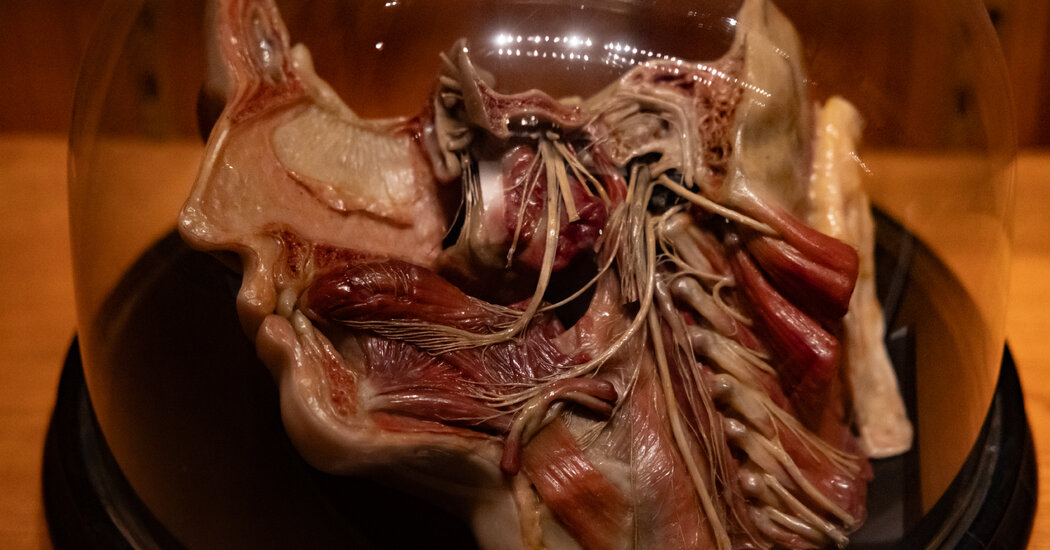
The Mütter Museum, a beloved 19th-century collection of medical curiosities and human remains in Philadelphia, wants to adopt a more “respectful” approach. Some fans won’t have it.The Mütter Museum, a 19th-century repository of medical oddments and arcana at the College of Physicians of Philadelphia, attracts as many as 160,000 visitors a year. Among the anatomical and pathological specimens exhibited are skulls corroded by syphilis; spines twisted by rickets; skeletons deformed by corsets; microcephalic fetuses; a two-headed baby; a bound foot from China; an ovarian cyst the size of a Jack Russell terrier; Grover Cleveland’s jaw tumor; the liver that joined the original “Siamese twins,” Cheng and Eng Bunker; and the pickled corpse of the Soap Lady, whose fatty tissues decomposed into a congealed asphalt-colored substance called adipocere.“People are just intrinsically more interested in the unusual,” said Dean Richardson, a professor of equine surgery at the University of Pennsylvania School of Veterinary Medicine’s New Bolton Center. “Who could look at a two-headed calf without wanting to know how that happened? Biology is a marvel and better understood if you recognize that its complexities must inevitably lead to some ‘errors.’”The celebrity magician Teller, a Philadelphia native, called the Mütter a place of electrifying frankness. “We are permitted to confront real, not simulated, artifacts of human suffering, and are, at a gut level, able to appreciate the epic achievements of medicine,” he said.But, like museums everywhere, the Mütter is reassessing what it has and why it has it. Recently, the institution enlisted a public-relations consultant with expertise in crisis management to contain criticism from within and without.The problems began in February when devoted fans of the Mütter’s website and YouTube channel noticed that all but 12 of the museum’s 450 or so images and videos had been removed. (In one jokey video, staff members pretended to brush the teeth of skulls; in another, they feigned drinking from one.) Rumors quickly circulated, and three months later Kate Quinn, who was hired last September as the Mütter’s executive director, posted an explanation. The clips, which had amassed more than 13 million views, were being re-evaluated, she wrote, “to improve the visitor experience.”Kate Quinn, the executive director of the museum.Hannah Beier for The New York TimesAn autopsy kit on display.Hannah Beier for The New York TimesMs. Quinn had tasked 13 unnamed people — medical historians, bioethicists, disability advocates, members of the community — with providing feedback on the digital collection. “Folks from a wide background,” Ms. Quinn said in an interview. The purpose of what she called the Mütter’s “post-mortem,” set to finish by Labor Day, was to ensure that the online presence of the museum was appropriate and that its 6,500 specimens of human remains on display were being treated respectfully.Blowback to Ms. Quinn’s ethical review was ferocious. An online petition garnered the signatures of nearly 33,000 Mütter enthusiasts who insisted that they loved the museum and its websites as they were. The petition criticized Ms. Quinn and her boss, Dr. Mira Irons, the president and chief executive of the College of Physicians, for decisions predicated on “outright disdain of the museum.” The complaint called for the reinstatement of all web content and urged the college’s board of trustees to fire the two women immediately. (To date, about one-quarter of the videos have been reinstated.)Moreover, in June, The Wall Street Journal ran an opinion piece entitled “Cancel Culture Comes for Philly’s Weirdest Museum,” in which Stanley Goldfarb, a former director of the college, wrote that the museum’s new “woke leaders” appeared eager to cleanse the institution of anything uncomfortable. Robert Hicks, director of the Mütter from 2008 to 2019, voiced similar sentiments this spring when he quit as a museum consultant. His embittered resignation letter, which he released to the press, stated that Dr. Irons “has said before staff that she ‘can’t stand to walk through the museum,’” and it advised the trustees to investigate her and Ms. Quinn, both of whom Dr. Hicks believed held “elitist and exclusionary” views of the Mütter.Neither Dr. Goldfarb nor Dr. Hicks had tried to reach out to Ms. Quinn or Dr. Irons to discuss their concerns directly.Amid the professional grumbling, 13 employees left and panicky rumors surfaced on social media: that Dr. Irons planned to turn the Mütter into a research museum closed to the public; that Ms. Quinn had been quietly removing “permanent” exhibits featuring malformed fetuses; that administrators wanted to deter “freaky Goths” and subvert the organization’s mission, which is to help the public “understand the mysteries and beauty of the human body and to appreciate the history of diagnosis and treatment of disease.”The museum, an arm of the College of Physicians of Philadelphia, was established in 1859 by Thomas Dent Mütter, a surgery professor, as a teaching tool to show doctors-to-be what they might encounter.Hannah Beier for The New York TimesWax faces on display showing various eye injuries.Hannah Beier for The New York TimesIn an email, Dr. Irons insisted that the hearsay was just that. “I categorically deny any intention, as Dr. Hicks asserts, that I hate the museum or that my purpose is anything other than to ensure that the materials we display meet professional standards and serve the mission of the college and the museum,” she wrote. “In my view, much of this controversy is being fueled by resistance to any changes in the status quo to the point where we can’t even engage in a discussion without triggering recriminations and accusations.”The museum was established in 1859 by Thomas Dent Mütter, a surgery professor, as a teaching tool to show doctors-to-be what they might encounter. Dr. Mütter, who was the first surgeon in Philadelphia to use ether anesthesia, endowed the museum with $30,000 and a trove of 1,700 anatomical oddities and medical curiosa that he had used in his classes.The collection expanded by subsequent donations and acquisitions, some of which, such as the saponified corpse of Soap Lady, were obtained through subterfuge and bribes to grave diggers. In an age before medical consent was codified, the unclaimed corpses of inmates, paupers, suicide victims and Native Americans were often made available to medical schools as cadavers for dissection and anatomy lessons.The Mütter opened to the public in 1863 and was initially intended only for “medical practitioners”; by the 1970s it was drawing 5,000 visitors annually. “Many people have their first interest in something because it’s weird or edgy or titillating, but that sometimes leads to investigation of more substantive matters,” Dr. Richardson said. “I’d wager there have been plenty of young people whose first impetus to think about the human body was provided by the Mütter.”In 1986, Gretchen Worden, who was then the curator, had the Mütter renovated in the theatrical aesthetic of a Victorian-era cabinet of curiosities, with red carpets and red velvet drapes. “The displays are jarring reminders of mortality, proof that a human being is truly no more than a sum of its parts,” she said at the time. She increased attendance with a popular if somewhat ghoulish museum calendar and mischievous appearances on “Late Night With David Letterman” in which she menaced the host with lobotomy picks and tonsil guillotines and grossed him out with hairballs and human horns.Dr. Worden’s antics were considered undignified by some trustees and counter to the health-oriented image they wanted to encourage, but she prevailed. Almost one-third of the college’s revenue now derives from the Mütter’s admissions, store and library services.But museums that display human remains increasingly face public reckoning and scrutiny. Some museums have scrapped the term “mummy” to describe preserved corpses from ancient Egypt, deeming it dehumanizing. In 2021, Jo Anderson, a curator at Great North Museum in Newcastle, England, said, “A significant number of visitors question whether mummified people on display are real.”“What was respectful 100 years ago, or even five years ago, may not be so today,” Dr. Irons said. At the Mütter, she said, the challenge is to make visitors see damaged body parts for what they really are — not objects or curiosities, but real humans who were once alive.An iron lung exhibit.Hannah Beier for The New York TimesDr. Mira Irons, the president and chief executive of the College of Physicians.College of Physicians of PhiladelphiaDr. Irons, a physician who treats children with rare genetic diseases, acknowledged that she had difficulty viewing certain exhibits, particularly fetal specimens presented as medical novelties. She wants such displays to provide a fuller picture of the individual, the condition in question and the therapeutic advances that would affect today’s afflicted.Ms. Quinn was hired after a dozen years as director of exhibitions and public programs at the Penn Museum in Philadelphia. “I see my role as getting us back to what we were prior to taking that left-hand turn with regard to the mission,” she said, referring to the era of Dr. Worden. “We’re actively moving away from any possible perception of spectacle, oddities or disrespect for the collections in our care.”On arriving, Ms. Quinn was surprised to learn that the Mütter had no ethics policy, let alone a human-remains policy. What’s more, the museum had only fragmentary data about how many residents — as the staff refers to the human specimens — came to the Mütter or the circumstances of their lives. “We owe it to the remains to learn as much as we can about each individual who’s here,” Ms. Quinn said. “And yes, it matters to a lot of people.”The museum has arranged to return the remains of seven Native Americans to communities in New Jersey and California, as required by federal law. Ms. Quinn is trying to keep ahead of the rapidly changing legal and ethical landscape by conducting the first comprehensive audit of the museum’s objects since the 1940s. She expects this process to take at least four years to complete given the record-keeping and the complexities of the Mütter’s 35,000-object collection, most of which is in storage in the basement.Dr. Hicks remains unhappy with the new perspective. “Dr. Mütter would have been confused at the dictum that the museum should be about health, not death,” he lamented in his resignation letter. “The principle emblazoned at the entrance of many anatomy theaters, ‘This is where the dead serve the living,’ is readily understood by museum visitors without special guidance by Dr. Irons.”Ms. Quinn said: “Robert Hicks? Someone once said, ‘Some people cause happiness wherever they go; others whenever they go.’”

Read more →

Bryan Johnson: Meet the multi-millionaire trying to reverse aging

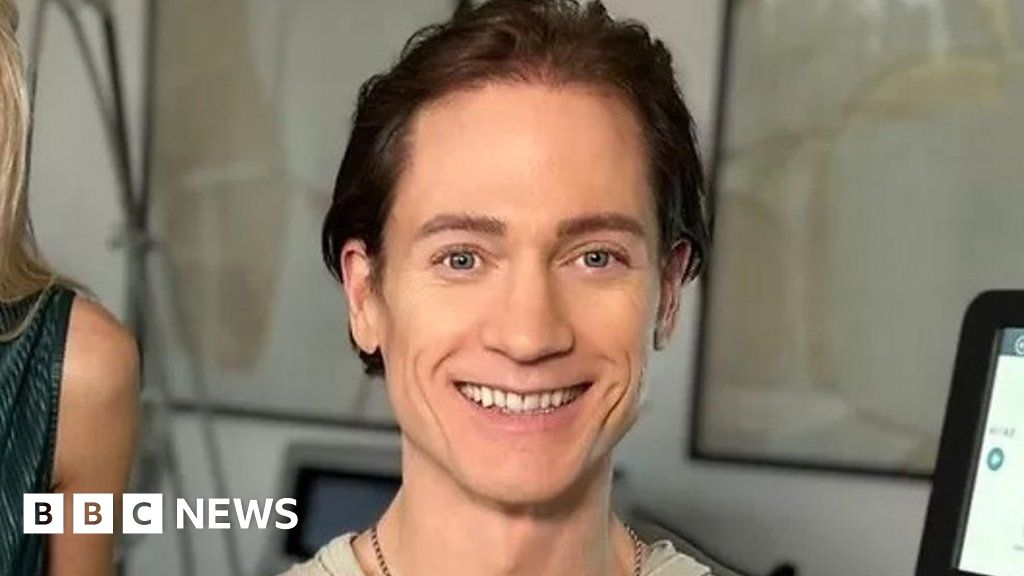
Tech entrepreneur Bryan Johnson is spending millions a year trying to reduce his biological age – how old his body seems, rather than his actual chronological age, which is 45.Supported by a team of 30 scientists, his daily life is dictated by a torturous exercise regime and diet, monitoring and numerous treatments. An all-over skin laser treatment he’s been having has reduced his skin age by 22 years, the greatest age reduction in any part of his body.The BBC’s Lara Lewington went to Mr Johnson’s home and looked at some of the gadgets he uses to try and stay young.You can watch the latest episode of Click on BBC iPlayer here.

Read more →

Raising awareness of Long Covid 'blue legs' symptom

An unusual case of a Long Covid patient’s legs turning blue after 10 minutes of standing highlights the need for greater awareness of this symptom among people with the condition, according to new research published in the Lancet.
The paper, authored by Dr Manoj Sivan at the University of Leeds, focuses on the case of one 33-year man who developed with acrocyanosis — venous pooling of blood in the legs.
A minute after standing, the patient’s legs began to redden and became increasingly blue over time, with veins becoming more prominent. After 10 minutes the colour was much more pronounced, with the patient describing a heavy, itchy sensation in his legs. His original colour returned two minutes after he returned to a non-standing position.
The patient said he had started to experience the discolouration since his COVID-19 infection. He was diagnosed with postural orthostatic tachycardia syndrome (POTS), a condition that causes an abnormal increase in heart rate on standing.
Dr Sivan, Associate Clinical Professor and Honorary Consultant in Rehabilitation Medicine in the University of Leeds’ School of Medicine, said: “This was a striking case of acrocyanosis in a patient who had not experienced it before his COVID-19 infection.
“Patients experiencing this may not be aware that it can be a symptom of Long Covid and dysautonomia and may feel concerned about what they are seeing. Similarly, clinicians may not be aware of the link between acrocyanosis and Long Covid.
“We need to ensure that there is more awareness of dysautonomia in Long Covid so that clinicians have the tools they need to manage patients appropriately.”
Long Covid affects multiple systems in the body and has an array of symptoms, affecting patients’ ability to perform daily activities. The condition also affects the autonomic nervous system, which is responsible for regulating blood pressure and heart rate.

Read more →

New concussion headset shows when it's likely safe to return to play

A new digital headset designed to measure alterations in brain function could change decisions about how quickly an athlete is ready to return to play after a concussion. In an evaluation of the device, UC San Francisco researchers found it revealed brain changes even in athletes whose concussion symptoms had gone away, suggesting they could be playing too soon.
Although not yet approved by the Food and Drug Administration (FDA), the device could fill an important niche among athletes, clinicians, trainers and coaches, who are concerned about the long-term effects of repeated sports-related concussions. These include chronic traumatic encephalopathy, Alzheimer’s and Parkinson’s diseases.
The headset — patented by UCSF and licensed by MindRhythm, a medical technology company — picked up changes in what the researchers call “headpulse,” which are subtle forces exerted on the skull as the heart contracts.
The researchers observed how the device performed on 101 young adults playing Australian Rules Football, who had experienced 44 concussions. Results appeared Aug. 11, 2023, in JAMA Network Open.
On average, the changes detected by the headset lasted 12 days longer than the players’ symptoms.
“We found a mismatch between symptoms and changes in biometrics recorded by the device,” said Cathra Halabi, MD, of the UCSF Department of Neurology and the Weill Institute for Neurosciences, who is the first author of the study. “This raises concern about relying on symptoms for return-to-play decisions. Delays could be recommended for those symptom-free athletes if head pulse abnormalities persist.”
Researchers said the headset should be used in conjunction with medical expertise.

Read more →