Should we be worried about Covid this winter?
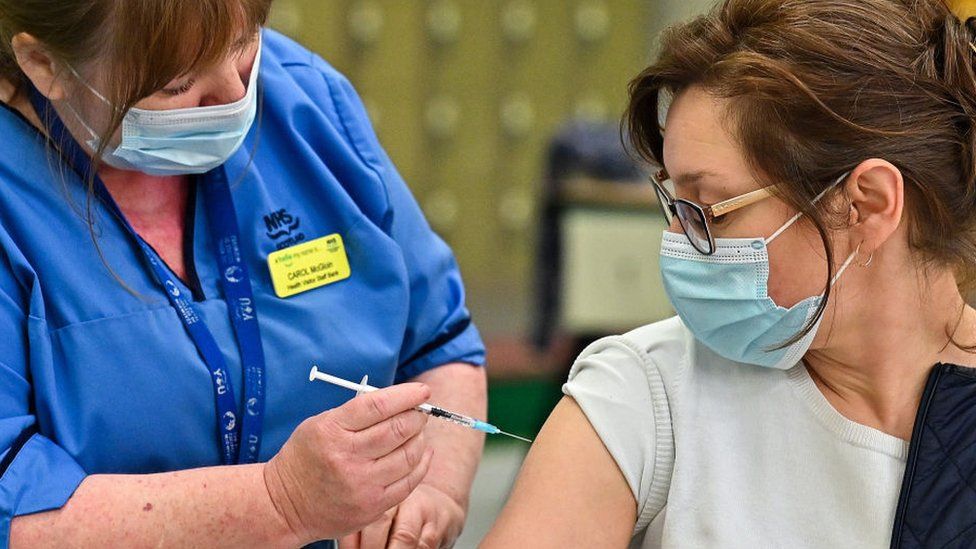
Published3 hours agoShareclose panelShare pageCopy linkAbout sharingImage source, Getty ImagesBy Lisa SummersScotland Health CorrespondentThe nights are drawing in, the schools are going back and a new Covid variant is circulating. It all sounds very familiar.But we are a long way from the autumn of 2020 when the coronavirus dominated our lives and there were different “levels” of lockdown across Scotland.So as we head into this autumn what should we expect?Firstly, the new variant. It’s called EG.5 and is an offshoot of Omicron. The World Health Organization currently classifies it as a variant of interest. The MRC-University of Glasgow Centre for Virus Research has played a key role in monitoring new variants of the disease throughout the pandemic.Prof Massimo Palmarini, who heads the centre, says he is not too worried about what he is seeing but it is important that surveillance continues.”The new variant doesn’t seem to have dramatic differences from the previous one but it doesn’t mean that it is not important,” he says. Pandemic in ‘quieter phase’He says there is a concern that if surveillance is cut back too much it will be hard to predict which variants might emerge and which ones will be more worrying than others.According to Scotland’s national public health body the pandemic is now in a “quieter phase”. That means that from the end of this month, testing will be scaled back. There is to be no more routine testing in hospitals, prisons or care homes. Instead if you have symptoms you will be tested in the same way as other infectious diseases are monitored. Meanwhile, new advice from the Joint Committee on Vaccination and Immunisation (JCVI) means that the Covid vaccine booster programme is also being scaled back. This year it will be offered to people aged 65 and over, as well younger people with underlying health conditions and in groups such as health and social care workers or people who live with those who are immunocompromised. How much Covid is there?Getting accurate data on Covid cases is much harder now. The weekly figures from Public Health Scotland only measure the number of patients in hospital with Covid. It does indicate a slight upward trend since the start of July.But this data does not tell us how much Covid is circulating in the community. That worries Dr Antonia Ho, an infectious diseases consultant and senior clinical lecturer at the MRC – Centre for Virus Research.She says: “We don’t really have a good sense of what’s happening in the community because we don’t have much in the way of community surveillance and largely testing isn’t happening anymore.”That is a worry from a research point of view in terms of being able to look out for potentially more threatening variants. “We are not sequencing anywhere near as much as we were and obviously the more information you have, the better. “And we do need a more complete picture in order to identify potential new variants that might cause problems for us.”Should we treat Covid in the same way as flu?The good news, Dr Ho says, is that because most of the population have hybrid immunity either from vaccination or natural infection then the majority of cases are milder. But she says some people continue to experience complications. There has also been a lot of discussion about considering Covid as a virus that we live with in the same way as flu. Dr Ho is a little wary of that.She says: “In terms of symptoms, they are pretty similar. “It is quite hard to differentiate as a clinician, someone who presents to hospital with flu and someone who presents with Covid. “But there are some important differences. “People with flu are more prone to bad secondary bacterial infections, whereas for Covid, we see a lot more clots like lung and heart clots for example, and long Covid is an important complication. “For example, a recent study in Australia found that in a very highly-vaccinated population infected with Omicron that one in five people described long Covid symptoms. So, long Covid is an important consideration.”Apathy warningThe main warning as we head into winter is not to be too complacent. Vaccine uptake during the spring booster campaign for over 75s dropped significantly. And last autumn only about 50% of health and social care workers came forward for a jag. Dr Ho says getting protected is the best form of defence with the NHS facing another really difficult winter.”Last winter, we experienced major pressure from RSV (Respiratory syncytial virus), flu and Covid and I would anticipate much of the same,” she says. “We often look to Australia’s experience and they’ve had another busy flu season. “This year they’ve seen a lot of influenza B which tends to target children a bit more and 80% of their admissions have been in children so we might see a real pressure on paediatric services for example. “So in an already pressured NHS if we see another big wave with three respiratory viruses that can drive a lot of admissions, albeit they might not be as severe as we saw in the first couple of waves, it may still cause a lot of problems for the NHS.”

Read more →


Pig Kidneys Performing Effectively in Two Brain-Dead Patients

The NewsSurgeons in Birmingham and New York City on Wednesday reported advances in the transplantation of organs obtained from pigs that have been genetically modified to prevent rejection after they are implanted in humans.Researchers at the University of Alabama at Birmingham published a peer-reviewed study showing that modified pig kidneys performed complex life-sustaining functions in a brain-dead patient for a full week.In an apparent response, surgeons at NYU Langone Health announced that a kidney from a genetically modified pig continued to function well after 32 days in a brain-dead patient maintained on a ventilator, the longest period for such an experiment.The patient has shown no signs of rejecting the organ, said Dr. Robert Montgomery, director of the NYU Langone Transplant Institute. But the research has not yet been published in a scientific journal.Pig kidneys in a lab in Eden Prairie, Minn.Andy Clayton-King/Associated PressWhy It Matters: An inadequate supply of donor organs.The research is part of a radical scientific effort to develop an alternative source of transplant organs for Americans whose kidneys, hearts and other organs have failed.The greatest need is for kidneys. More than 800,000 Americans have kidney failure, and over 100,000 are on a waiting list for a transplant. Kidney dialysis can keep patients alive, but the gold standard treatment is an organ transplant.Yet fewer than 25,000 kidney transplants are performed each year because of a scarcity of human donor organs. Thousands of people on the waiting list die each year.“A lot of folks think dialysis is an appropriate alternative, but people die on dialysis,” said Dr. Jayme Locke, director of U.A.B.’s Comprehensive Transplant Institute and a lead author of the new report.A number of studies last year demonstrated that pig kidneys that had been transplanted into brain-dead individuals made urine, an essential function, for short periods of time. But the U.A.B. study is the first to clearly show that the organs also filter creatinine, a byproduct of muscle contractions that must be removed from the blood.“The really new finding here is that these pig kidneys can clear enough creatinine to support an adult human,” Dr. Locke said. The U.A.B. paper was published Wednesday as a research letter in JAMA Surgery.The kidney performs numerous functions, among them balancing the body’s fluids, regulating blood pressure and controlling pH levels. “If you want to have life-sustaining kidney function, the kidneys have to do more than just make urine,” Dr. Locke said.Background: Animal organs may be a solution to the shortage.Xenotransplantation, the transplantation of animal organs into humans, has long been a goal of surgeons. Recent advances in cloning and genetic engineering have led to rapid breakthroughs.In 2021, surgeons at NYU Langone Health announced they had attached a kidney from a genetically modified pig to a brain-dead individual who was maintained on a ventilator. A few months later, researchers at the University of Maryland transplanted a heart from a genetically modified pig into a 57-year-old patient with heart failure. He died two months later, and traces of a virus known to infect pigs were found in the organ.Dr. Locke and her colleagues reported last year that they had for the first time successfully transplanted kidneys from a genetically modified pig into the abdomen of a brain-dead man.The organs used in the experiments in Alabama and New York are slightly different, though both were derived from pigs provided by Revivicor, a subsidiary of United Therapeutics Corporation, a biotech company.The kidneys used at U.A.B. came from pigs that had undergone 10 gene modifications, while the kidneys used at N.Y.U. Langone Health had only one genetic modification. The latter procedure also calls for embedding the pig’s thymus gland, which is responsible for educating the immune system, underneath the outer layer of the new kidney to prevent an immune-system attack.What’s Next: A clinical trial in humans.So far, transplants of genetically modified pig kidneys have been made only to brain-dead patients. Dr. Locke and her colleagues are in discussions with the Food and Drug Administration about launching a first clinical trial in live patients.

Read more →

How long you can use vintage Tupperware

Sign up for CNN’s Adulthood, But Better newsletter series. Our seven-part guide has tips to help you make more informed decisions around personal finance, career, wellness and personal connections.

CNN
 — 

Tupperware, the iconic kitchen brand that’s been a household name for decades, recently received a lifeline from its creditors, but the business still faces extreme challenges. Given the brand’s prospects, you might be wondering how long your stash of its food storage containers is safe to use — especially if it’s vintage.

Figuring out the answer to that question for any type of reusable plastic food storage products — not just Tupperware — often comes down to understanding what they’re made of. Bisphenol A, more commonly known as BPA, is a chemical that, according to the United States Institute of Environmental Health Sciences, has been used for years in the production of certain plastics to make them more durable and shatter-resistant. Unfortunately, BPA can also make them potential health hazards.

In human studies, BPA exposure has been associated with a higher risk of a wide range of health conditions or issues, such as infertility, altered fetal growth of the fetus, attention deficit hyperactivity disorder and aggression among children, polycystic ovarian syndrome, endometriosis, and heart disease, said Laura Vandenberg, a professor of environmental health sciences at the University of Massachusetts Amherst.

Read more →

Several vaccines associated with reduced risk of Alzheimer's disease in adults 65 and older

Prior vaccination against tetanus and diphtheria, with or without pertussis (Tdap/Td); herpes zoster (HZ), better known as shingles; and pneumococcus are all associated with a reduced risk for developing Alzheimer’s disease, according to new research from UTHealth Houston.
A pre-press version of a study was published online recently in the Journal of Alzheimer’s Disease. It was led by co-first authors Kristofer Harris, program manager in the Department of Neurology with McGovern Medical School at UTHealth Houston; Yaobin Ling, graduate research assistant with McWilliams School of Biomedical Informatics at UTHealth Houston; and Avram Bukhbinder, MD, an alumnus of the medical school. Paul E. Schulz, MD, the Rick McCord Professor in Neurology with McGovern Medical School, was senior author of the paper, which will appear in print in the Sept. 12 issue of the journal, Volume (95) Issue (2).
Alzheimer’s disease affects more than 6 million people living in the U.S., with the number of affected individuals growing due to the nation’s aging population.
The new findings come just over a year after Schulz’s team published another study in the journal, which found that people who received at least one influenza vaccine were 40% less likely than their unvaccinated peers to develop Alzheimer’s disease.
“We were wondering whether the influenza finding was specific to the flu vaccine. This data revealed that several additional adult vaccines were also associated with a reduction in the risk of Alzheimer’s,” said Schulz, who is the Umphrey Family Professor in Neurodegenerative Diseases and director of the Neurocognitive Disorders Center at McGovern Medical School. “We and others hypothesize that the immune system is responsible for causing brain cell dysfunction in Alzheimer’s. The findings suggest to us that vaccination is having a more general effect on the immune system that is reducing the risk for developing Alzheimer’s.”
Researchers performed a retrospective cohort study that included patients who were free of dementia during a two-year lookback period and were at least 65 years old by the start of the eight-year follow-up period. They compared two similar groups of patients using propensity score matching, one vaccinated and another unvaccinated, with Tdap/Td, HZ, or pneumococcal vaccine. Ultimately, they calculated the relative risk and absolute risk reduction for developing Alzheimer’s disease.
“This study underscores the pivotal role that large-scale, observational datasets play in biomedical research,” Ling said. “It’s particularly encouraging to observe consistent results across numerous large-scale health care databases.”
“By leveraging modern data analysis models and the very large claims database subscribed by McWilliams School of Biomedical Informatics, we gained valuable insights into which vaccines may protect against Alzheimer’s and potentially develop more effective prevention strategies,” said Xiaoqian Jiang, PhD, a co-author on the study who holds the Christopher Sarofim Family Professorship in Biomedical Informatics and Bioengineering with McWilliams School of Biomedical Informatics.

Read more →

Adherence to a Mediterranean lifestyle associated with lower risk of all-cause and cancer mortality

People who adhere to a Mediterranean lifestyle — which includes a diet rich in fruits, vegetables, and whole grains; healthy eating habits like limiting added salts and sugars; and habits promoting adequate rest, physical activity, and socialization — have a lower risk of all-cause and cancer mortality, according to a new study led by La Universidad Autónoma de Madrid and Harvard T.H. Chan School of Public Health. People who adhered to the lifestyle’s emphasis on rest, exercise, and socializing with friends had a lower risk of cardiovascular disease mortality.
The study will be published on Wednesday, August 16, in Mayo Clinic Proceedings.
While many studies have established the health benefits of a Mediterranean diet and lifestyle, little research has been conducted on the diet outside of its region of origin. “This study suggests that it’s possible for non-Mediterranean populations to adopt the Mediterranean diet using locally available products and to adopt the overall Mediterranean lifestyle within their own cultural contexts,” said lead author Mercedes Sotos Prieto, Ramon y Cajal research fellow at La Universidad Autónoma de Madrid and adjunct assistant professor of environmental health at Harvard Chan School. “We’re seeing the transferability of the lifestyle and its positive effects on health.”
The researchers analyzed the habits of 110,799 members of the UK Biobank cohort, a population-based study across England, Wales, and Scotland using the Mediterranean Lifestyle (MEDLIFE) index, which is derived from a lifestyle questionnaire and diet assessments. Participants, who were between the ages of 40 and 75, provided information about their lifestyle according to the three categories the index measures: “Mediterranean food consumption” (intake of foods part of the Mediterranean diet such as fruits and whole grains); “Mediterranean dietary habits” (adherence to habits and practices around meals, including limiting salt and drinking healthy beverages); and “physical activity, rest, and social habits and conviviality” (adherence to lifestyle habits including taking regular naps, exercising, and spending time with friends). Each item within the three categories was then scored, with higher total scores indicating higher adherence to the Mediterranean lifestyle.
The researchers followed up nine years later to examine participants’ health outcomes. Among the study population, 4,247 died from all causes; 2,401 from cancer; and 731 from cardiovascular disease. Analyzing these results alongside MEDLIFE scores, the researchers observed an inverse association between adherence to the Mediterranean lifestyle and risk of mortality. Participants with higher MEDLIFE scores were found to have a 29% lower risk of all-cause mortality and a 28% lower risk of cancer mortality compared to those with lower MEDLIFE scores. Adherence to each MEDLIFE category independently was associated with lower all-cause and cancer mortality risk. The “physical activity, rest, and social habits and conviviality” category was most strongly associated with these lowered risks, and additionally was associated with a lower risk of cardiovascular disease mortality.
Other Harvard Chan co-authors included Stefanos Kales.
Funding for the study came from the Carlos III Health Institute; the Secretary of R+D+I; the European Regional Development Fund/European Social Fund; the National Plan on Drugs; Fundación Soria Melguizo; Ministry of Science, Innovation and Universities; Universidad Autónoma de Madrid; Cancer Research UK Population Research Fellowship; and World Cancer Research Fund.

Read more →

Bee populations at risk of one-two punch from heat waves, pathogen infection

The historically high heat waves that gripped the southwest United States and southern Europe this summer are causing problems for more than just humans. Extreme heat waves affect pollinators and the pathogens that live on them, creating a mutual imbalance that could have major economic and public health consequences.
A global research team led by Penn State was the first to study how extreme heat waves affect the host-pathogen relationship between two species of solitary bees (Osmia cornifrons and Osmia lignaria) and a protozoan pathogen (Crithidia mellificae). The researchers recently published their findings in the journal Frontiers in Ecology and Evolution.
The researchers found that the one-two punch of extreme heat exposure and prior infection led solitary bees, which account for over 90% of the roughly 4,000 species of bees in North America, to be less likely to forage for food. If bees don’t forage, they don’t eat, and importantly for humans, they don’t pollinate crops that are vital to the global economy and food security.
“We are now experiencing the highest temperatures in recorded history,” said Mitzy Porras, a postdoctoral researcher in Penn State’s College of Agricultural Sciences and lead author of the study. “These heat waves are lasting three, or even four days, which is a long period of heat tolerance for bees. Then, when you combine that with prior infection from a pathogen, we’re looking at two factors that can severely negatively impact pollinator populations.”
The researchers devised an experimental method for testing what she calls “thermal boldness,” the amount of heat a bee can withstand in order to move to a food source. The bees were placed in a tunnel. On one side of the tunnel was a chamber with temperatures akin to what would be experienced in a summer heat wave and on the other side of the hot chamber was a meal of sugar water and pollen. They found that bees, which had previously been infected with a common protozoan pathogen, were far less tolerant of heat and much less likely to take the risk of passing through the chamber to eat.
In general, they found that the heat negatively impacted both the bee host and its pathogen, but the host bore the brunt of it. Exposure to heat decreased the bees’ thermal boldness and their heat tolerance, whereas the pathogen’s growth rate was only slightly negatively affected by heat.
“These asymmetrical relationships between organisms are often overlooked when studying climate impacts, but they are essential if we want to understand what is really going on,” Porras said. “When we looked at the host and pathogen in tandem, we found that infection greatly reduces heat tolerance in the host — a finding we wouldn’t have discovered if we had only been studying bees.”
The researchers found that a healthy bee could tolerate a heat wave of 109.4 degrees Fahrenheit, but after infection its tolerance was reduced to 98.6 degrees Fahrenheit.

Read more →

Scientists reveal how sensory protein changes shape with nanometer resolution

The ability to sense mechanical stimuli, like touch or blood pressure, is essential to physiological processes in humans and across the animal kingdom. In a new study, Scripps Research scientists show how the sensory ion channel PIEZO1 changes shape in response to mechanical stimuli, revealing critical information about how this protein functions.
In the study, published in Nature on August 16, 2023, the researchers characterized the sensor’s shape and conformation when embedded in the cell’s plasma membrane — its natural working environment.
By tagging different regions of the protein with fluorescent molecules and directly measuring the distances between them, the researchers showed that PIEZO1 has an expanded conformation when situated in the plasma membrane, in contrast to the contracted, cup-like conformation predicted by previous cell-free structural models. This structural finding could lead to future drug discovery applications, like screening for effective medicines related to diseases associated with congenital PIEZO1 defects, such as autosomal recessive congenital lymphatic dysplasia and hereditary xerocytosis.
“Our results show how the cellular environment can shape the structure of PIEZO1 and reveal the basic molecular movements underlying channel activation,” says senior author Ardem Patapoutian, PhD, professor in the Dorris Neuroscience Center at Scripps Research and a Howard Hughes Medical Institute investigator. Patapoutian received the 2021 Nobel Prize in Physiology or Medicine for discovering PIEZO1 and PIEZO2, the critical receptors that allow cells to respond to mechanical stimuli.
The team wanted to solve an open question: How do these proteins convert a mechanical stimulus into an electrical signal, which is the currency of the nervous system? Answering this would provide insights into what causes PIEZO receptors to malfunction under different conditions.
PIEZO1 is shaped like a three-bladed propeller, and its blades are thought to be the primary sensors of mechanical force, so understanding their structure is critical to understanding how the sensor functions. However, prior models that were based on electron microscopy lacked information on how the tips of these blades are structured. Furthermore, these prior studies were performed on isolated, membrane-free proteins, which means they had a limited ability to predict PIEZO1’s shape and movement in the actual cellular environment.
To overcome these limitations, Patapoutian’s team used the MINFLUX and iPALM microscopes, which captured nanometer-scale details and allowed the team to visualize individual PIEZO1 molecules in the context of the cell membrane.

Read more →

Schizophrenia genetic risk factor impairs mitochondrial function

Researchers at Rutgers and Emory University are gaining insights into how schizophrenia develops by studying the strongest-known genetic risk factor.
When a small portion of Chromosome 3 is missing — known as 3q29 deletion syndrome — it increases the risk for schizophrenia by about 40 fold. Researchers have now analyzed overlapping patterns of altered gene activity in two models of 3q29 deletion syndrome, including mice where the deletion has been engineered in using CRIPSR, and human brain organoids, or three-dimensional tissue cultures used to study disease. These two systems both exhibit impaired mitochondrial function. This dysfunction can cause energy shortfalls in the brain and result in psychiatric symptoms and disorders.
“Our data give strong support to the hypothesis that mitochondrial dysregulation is a contributor to the development of schizophrenia,” said Jennifer Mulle, associate professor of psychiatry, neuroscience and cell biology at Rutgers Robert Wood Johnson Medical School and a co-senior author of the study published in Science Advances. “The interplay between mitochondrial dynamics and neuronal maturation is an important area for additional detailed and rigorous study.”
Mulle, a member of the Center for Advanced Biotechnology and Medicine at Rutgers, and colleagues first showed that 3q29 deletion was a risk factor for schizophrenia in 2010. The findings converge with work on another genetic risk factor for schizophrenia, 22q11 deletion syndrome (or DiGeorge syndrome), which has also been found to involve disrupted mitochondrial function.
“For genetic variants associated with schizophrenia, we want to understand the primary pathology at the cellular level,” said Ryan Purcell, assistant professor of cell biology at Emory University School of Medicine and co-lead author of the study. “This gives us a foothold, which may help cut through schizophrenia’s polygenic complexity and better understand the neurobiology.”
About one in 30,000 people are born with 3q29 deletion syndrome. In addition to increasing the risk for schizophrenia, 3q29 deletion can include intellectual disability, autism spectrum disorder and congenital heart defects. The effect of 3q29 deletion on schizophrenia risk is more than any single known gene variant, but the contributions of individual genes within the deletion are still being unraveled.
The finding that various schizophrenia-associated chromosomal deletions impair mitochondria runs counter to an expectation in the field that such mutations should alter proteins in the synapses that connect neurons. However, mitochondria are critical for energy-hungry synapses’ function — so these models may not be in conflict.

Read more →

'New' ALS gene destabilizes neuron's structure and chokes off its nucleus

The viral ALS Ice Bucket Challenge a few years ago raised major funding that resulted in the discovery of new genes connected to the disease. One of those genes is NEK1, in which mutations have been linked to as much as 2% of all ALS cases, making it one of the top-known causes of the disease.
But it wasn’t known how the mutated gene disrupts the function of the motor neuron and causes it to degenerate and die.
Northwestern Medicine scientists have discovered for the first time how this mutated gene leads to ALS (amyotrophic lateral sclerosis).
The investigators found the mutation causes two problems in the neuron. The first is that it causes the structures supporting the axon in the neuron to become less stable and susceptible to collapsing. (The axon is the thinner-than-a-human-hair cable leading from the cell that sends electrical messages to other neurons.)
The second problem the scientists discovered is that the mutation disrupts the ability of the neuron to import cargo in the form of RNA or proteins into its nucleus, a process called nuclear import. Without the import of RNA — which carries instructions from the DNA — and critical proteins, the operational role of nucleus for the cell’s function is disrupted.
The paper will be published August 16 in Science Advances.
“By illuminating these two pathways, we’re suggesting these are great therapeutic targets for the disease,” said study lead author Evangelos Kiskinis, assistant professor of neurology and neuroscience at Northwestern University Feinberg School of Medicine.

Read more →

Greater excess mortality after hurricanes more recently and for most socially vulnerable in the U.S.

Over recent decades, there was a large variation in cyclone-related excess deaths by hurricane, state, county, year, and social vulnerability for counties in the United States, with 83 percent of hurricane-related deaths occurring more recently and 94 percent in more socially vulnerable counties. Results of a study by researchers at Columbia University Mailman School of Public Health, Colorado State University, Imperial College London, University of California Irvine, and Harvard T. H. Chan School of Public Health are published in the journal Science Advances.
The study exemplifies how variable the impacts of even the same tropical cyclone have been, driven differences in by demographic, economic, and social factors. Total excess deaths were particularly high in counties the largest proportion of minorities. Until now, there had been a critical knowledge gap about estimating post-cyclone excess deaths with a consistent methodology from a large-scale study covering the entire United States across multiple decades.
The researchers found that the single largest number of excess deaths was in Orleans Parish, LA, after Hurricane Katrina in 2005, with 719 excess deaths. followed by Harris County, TX, after Hurricane Rita in 2005 (309 excess deaths), Broward County, FL, after Hurricane Matthew in 2016 (185 excess deaths), and Nassau County, NY, after Hurricane Sandy in 2012 (178 excess deaths). Full results of the top-20 most impacted counties and associated year and hurricane can be found in the Table below.
The most estimated excess deaths in a single year were during 2005, with 2,163 estimated post-tropical cyclone excess deaths, with 1,491 from Hurricane Katrina in 2005. Where probabilities of excess deaths were high, 83 percent of post-hurricane-force and 70 percent of post-gale-to-violent-storm-force excess deaths occurred more recently (2004 — 2019); and 94 percent were in more socially vulnerable counties.
“In our study, excess death counts after tropical cyclones were higher more recently and for the most socially vulnerable,” said Robbie M. Parks, PhD, assistant professor of Environmental Health Sciences at Columbia Public Health, and first author. “This was likely in part due to lack of access to adequate short-term transportation, as well as inequitable access to financial resources, education, employment opportunities and timely warnings on tropical cyclone proximity, all of which are results of long-term institutional neglect.”
Knowledge of short-term excess deaths — i.e., the difference between the observed number of deaths in the immediate aftermath post-tropical cyclone and the number of deaths had a cyclone not occurred — is essential for understanding the public health burden of climate-related disasters and a key recommended measure for post-disaster mortality assessment, note the authors.
Following a tropical cyclone, deaths can result from several major causes, including deaths from injuries, infectious and parasitic diseases, cardiovascular diseases, neuropsychiatric conditions, and respiratory diseases. In earlier research published In JAMAand Nature Communications, Parks and colleagues detailed the kinds of causes and risks for death which increased after tropical cyclones.

Read more →