Phase I clinical trial shows treatment designed to clear senescent cells in Alzheimer's disease is safe

Alzheimer’s disease is the most common cause of dementia that affects more than 6.5 million Americans, according to the Alzheimer’s Association. To find effective treatments and slow the progression of this debilitating disease, researchers have made much progress in developing new drugs that target beta-amyloid plaques, one of the hallmarks of Alzheimer’s disease.
Beta-amyloid plaques are accumulations of brain protein fragments, which can impact cognition. However, these recent drugs have only yielded modest results.
Now, scientists at Wake Forest University School of Medicine are reporting results from a Phase I trial in another area of promising research — cellular senescence.
The findings appear online today in Nature Medicine.
Senescent cells are old, sick cells that cannot properly repair themselves and don’t die off when they should. Instead, they function abnormally and release substances that kill surrounding healthy cells and cause inflammation. Over time, they continue to build up in tissues throughout the body contributing to the aging process, neurocognitive decline and cancer.
“In 2018, we found evidence of senescent cells in human Alzheimer’s disease,” said Miranda Orr, Ph.D., associate professor of gerontology and geriatric medicine at Wake Forest University School of Medicine. “In mouse models, we also found that they contribute to brain cell loss, inflammation and memory impairment.”
Researchers repurposed a U.S. Food and Drug Administration-approved drug designed to clear cancer cells (dasatinib) in combination with a flavonoid, a plant-derived antioxidant (quercetin).

Read more →

Engineers design more powerful RNA vaccines

RNA vaccines against Covid-19 have proven effective at reducing the severity of disease. However, a team of researchers at MIT is working on making them even better. By tweaking the design of the vaccines, the researchers showed that they could generate Covid-19 RNA vaccines that produce a stronger immune response, at a lower dose, in mice.
Adjuvants are molecules commonly used to increase the immune response to vaccines, but they haven’t yet been used in RNA vaccines. In this study, the MIT researchers engineered both the nanoparticles used to deliver the Covid-19 antigen, and the antigen itself, to boost the immune response, without the need for a separate adjuvant.
If further developed for use in humans, this type of RNA vaccine could help to reduce costs, reduce the dosage needed, and potentially lead to longer-lasting immunity. The researchers’ tests also showed that when delivered intranasally, the vaccine induced a strong immune response when compared to the response elicited by traditional, intramuscular vaccination.
“With intranasal vaccination, you might be able to kill Covid at the mucus membrane, before it gets into your body,” says Daniel Anderson, a professor in MIT’s Department of Chemical Engineering, a member of MIT’s Koch Institute for Integrative Cancer Research and Institute for Medical Engineering and Science (IMES), and the senior author of the study. “Intranasal vaccines may also be easier to administer to many people, since they don’t require an injection.”
The researchers believe that the effectiveness of other types of RNA vaccines that are now in development, including vaccines for cancer, could be improved by incorporating similar immune-stimulating properties.
Former MIT postdoc Bowen Li, who is now an assistant professor at the University of Toronto; graduate student Allen Jiang; and former MIT postdoc Idris Raji, who was a research fellow at Boston Children’s Hospital, are the lead authors of the new study, which appears today in Nature Biomedical Engineering. The research team also includes Robert Langer, the David H. Koch Institute Professor at MIT and a member of the Koch Institute, and several other MIT researchers.
Boosting immunity
RNA vaccines consist of a strand of RNA that encodes a viral or bacterial protein, also called an antigen. In the case of Covid-19 vaccines, this RNA codes for a segment of the virus’s spike protein. That RNA strand is packaged in a lipid nanoparticle carrier, which protects the RNA from being broken down in the body and helps it get into cells.

Read more →

Genetic study of blood glucose levels calls for stratified treatment with GLP-1R agonists in type 2 diabetes

Groundbreaking research published today in Nature Genetics describes the largest-ever study into the genetics of random “round-the-clock” blood glucose levels. The study, involving almost half a million people of diverse backgrounds, describes new DNA variants influencing blood sugar levels measured “at random.” The team of researchers, led by Professor Inga Prokopenko at the University of Surrey on behalf of the Meta-Analysis of Glucose and Insulin-related Traits Consortium (MAGIC), analysed data from 17 major studies, including the UK Biobank.
This research highlighted that individual responses to drugs from the popular class of GLP-1R agonists, used to treat type 2 diabetes and obesity, can depend on DNA variants in the target gene, GLP1R.
Scientists also revealed, for the first time, that type 2 diabetes can directly cause lung complications. In the largest-ever genetic study exploring how genes affect blood sugar levels and health outcomes, researchers concluded that lung disorders should now be considered a complication of type 2 diabetes.
The study combining genetic and expression data shed light on the importance of the gastrointestinal tract, where the small intestine, ileum, and colon play important roles in the regulation of blood glucose levels, in addition to the well-established role of the pancreas.
Professor Inga Prokopenko, Professor of e-One Health and Head of Statistical Multi-Omics from the University of Surrey, said:
“This hugely important study, involving over a hundred scientists from around the globe, gives us new insights into the genetics of blood glucose levels and type 2 diabetes. Already now, we can act on better prevention from type 2 diabetes complications, including lung disease. We should improve treatment strategies for people with this condition, by studying individual DNA variants in relation to GLP-1R agonist response.”
Individual genetic background affects GLP-1R agonist susceptibility.
GLP-1R agonists are used to treat individuals with type 2 diabetes to improve their glycaemic control, meaning their ability to keep blood sugar levels within a normal range. Additionally, GLP-1R agonists have become very popular in helping individuals with type 2 diabetes lose weight, which can also improve their health and quality of life. The scientists conducted functional and structural characterisation of coding DNA variants in the GLP1R (GLP-1 receptor) gene. The authors highlight that the effect on GLP-1 receptor function and response to GLP-1R agonist drugs might differ from one individual to another depending on the GLP1R gene coding DNA variants they carry.

Read more →

A secret passage for mutant protein to invade the brain

In many neurodegenerative disorders, abnormal proteins progressively aggregate and propagate in the brain. But what comes first, aggregation or propagation? Researchers from Japan share some new insights about the mechanism involved in Parkinson’s disease.
In a study published recently in Cell Reports, researchers from Tokyo Medical and Dental University (TMDU) have shown that a mutated version of a protein called α-synuclein propagates to various cerebral regions through the lymphatic system and then aggregates.
Although the function of α-synuclein is not fully understood, it participates in neurotransmission. However, in some neurodegenerative diseases including Parkinson’s disease, α-synuclein changes shape and forms pathological clumps.
“Most experiments conducted so far only used fibrils, which are the clumps formed when monomeric α-synuclein aggregates. The fibrils are transmitted from neurons to neurons, but it remains unclear whether monomers act in the same way,” explains Kyota Fujita, an author of the study.
To further investigate how monomers and fibrils of α-synuclein move around in the brain, the researchers injected small amounts of viral particles into the orbital cortex of mice to produce fluorescent monomeric mutant α-synuclein. Because any cell type can contribute to α-synuclein propagation, they used viral particles to enable the synthesis of α-synuclein monomers in all cell types present in the injection area. This method ensured that all modes of propagation were accounted for.
Twelve months after the injection, although the fluorescent signal was lower in the injected region, signals were detected in other brain areas. Interestingly, fluorescent α-synuclein was detected in remote regions two weeks after injection, indicating an early spreading of mutant α-synuclein in the brain.
But how did α-synuclein propagate? The team followed the three-dimensional distribution of α-synuclein in the brain and found fluorescent α-synuclein in the glymphatic system, which is the lymphatic system of the brain. The glymphatic system is involved in draining and renewing fluid from the brain and eliminating toxins, but it could also distribute toxic substances throughout the brain. The team also observed the presence of fluorescent α-synuclein in the matrix surrounding neurons and in the cytosol of neurons. This finding suggested that fluorescent α-synuclein was taken up by the extracellular matrix and, subsequently, by neurons.
The researchers also investigated the aggregation state of α-synuclein in the remote brain regions. “Fibrils of α-synuclein formed after the monomers had propagated,” says Professor Hitoshi Okazawa, the research group leader. “Specifically, we observed α-synuclein monomer in the glymphatic system and remote regions as early as two weeks after injection, while we found α-synuclein fibrils 12 months after injection!”
The amount of α-synuclein aggregated and the time at which they formed after injection varied among regions and was not proportional to the distance from the injection site. This observation is consistent with the known vulnerability of some regions to pathological α-synuclein.
This study shows how monomeric α-synuclein propagates through the glymphatic system in a different way from the fibrils (Fig 2). Thus, targeting these early events, α-synuclein monomer and brain lymphatic system, may limit the progression of Parkinson’s disease.

Read more →

'Monstrous births' and the making of race in the nineteenth-century United States

From the Middle Ages to the Enlightenment, “monstrous births” — malformed or anomalous fetuses — were, to Western medicine, an object of superstition. In 19th-century America, they became instead an object of the “modern scientific study of monstrosity,” a field formalized by French scientist Isidore Geoffroy Saint-Hilaire. This clinical turn was positioned against the backdrop of social, political, and economic activity that codified laws governing slavery, citizenship, immigration, family, wealth, and access to resources. In a new article published in Isis: A Journal of the History of Science Society, “Monstrosity in Medical Science: Race-Making and Teratology in the Nineteenth-Century United States,” Miriam Rich demonstrates how scientific interest in monstrous births served as a mechanism for stabilizing notions of race and racial hierarchy, and shaped modern medical discourse into a project of making race.
Rich presents three frameworks, or “logics of race,” that structured the study of monstrous birth, beginning with the schema of development in the field of teratology. Teratology, informed by the theory of epigenesis, proposed that monstrosity was caused by an arrest in the development of a fetus before it could reach its final, more perfect form. This model was predicated on a belief in both teleological progress and a hierarchy of being. It overlapped with taxonomies of race that placed white Europeans at the top, and therefore implied a correlation between infant “monsters” and the racialized subjects who fell farther down the continuum of species. As Rich writes, “Through the scientific framework of teratological development, monstrosity gained specificity as a way to articulate the nature of racial difference — as hierarchical, temporalized, and biologically embodied.”
The second logic of race articulated by Rich is that of the monster as “a race apart.” The “race apart” framework proposed that monstrous births comprised their own species, distinct even from human race categories, and was supported by the fact that monsters could be born to women of any race. Rich draws upon the examples of an enslaved Black woman in Georgia and a white English woman in Philadelphia, both of whom gave birth to infants with anencephaly. As she notes, “Within a leading taxonomic cosmology of the era’s medical science…the two women in these cases did not belong to the same species as one another — but, remarkably, their monstrous infants did.” Rich suggests that despite the departure this theory represents from contemporary notions of race as congenital and immanent, the “race apart” thesis was ultimately used to legitimize a system of racial hierarchy.
The third and final logic of race examined in this article is that of “monstrosity as racial degeneracy.” In the aftermath of Emancipation, fears on the part of white hegemony regarding the destabilized racial categories that slavery had once upheld were transmuted into fears regarding social and evolutionary decline. Since the favored model of Darwinian evolution at this time was one of progress, and the theory of teratology had conflated fetal developmental progress with whiteness, monstrous births in this period were seen as signs of atavism, and thus of regression into non-whiteness. In addition to reinforcing the racial boundaries of the late 19th-century, Rich writes, this schema of monstrosity would also pave the way for early 20th-century eugenics.
In this article, Rich argues that the interpretation of monstrosity used by 19th-century scientists had significant implications for the racial caste system in the United States and for medicine as a discipline. The study of monstrous births shaped human reproduction into a site of the inscription of fixed racial difference, and embedded within modern medical discourse a practice of racial hierarchy.

Read more →

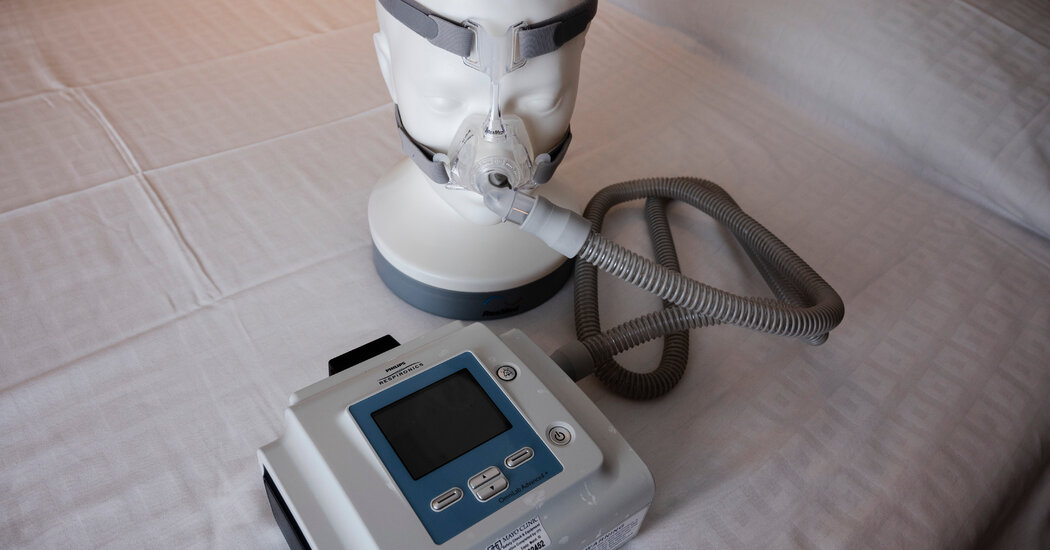
CPAP Maker Agrees to $479 Million Settlement Over Defects

The manufacturer, Philips Respironics, said it would compensate users of CPAP machines and other flawed devices that were recalled after they blew bits of foam into consumers’ mouths and lungs.Philips Respironics has agreed to a $479 million partial settlement on claims over flaws in the company’s breathing machines that spewed gases and flecks of foam into the airways of consumers and that spawned recalls involving millions of the devices, lawyers for plaintiffs in the lawsuit announced on Thursday.As one segment of continuing class-action lawsuits over the devices, the agreement covers only monetary reimbursements to users of the devices and vendors who might have financed replacements for consumers, according to the lawyers. The economic claims amount is uncapped, which will permit other device users to apply for compensation.This tentative settlement, which is subject to federal court approval, does not address other significant claims in the plaintiffs’ cases involving personal injury or the cost of medical care related to use of the breathing machines. Philips did not admit wrongdoing or liability as part of the proposed deal.The company has faced a multiyear setback, after beginning recalls in the United States of about five million of its breathing machines, which are intended for people with sleep apnea and other maladies. The lawsuits have claimed that flaking foam and gasses emitted from the machines were linked to health issues including respiratory illnesses, lung cancer and death. The foam was used in the machines to reduce noise and vibration.In June 2021, the Food and Drug Administration announced a recall of Philips machines that also included BiPAP devices and ventilators made since 2009, warning that foam deterioration in the products could cause “serious injury” to users. Philips initially released a memo to doctors saying the foam breakdown posed risks of “toxic carcinogenic effects,” but the company has since released updates reporting a far lower level of concern.“We are confident in these claims and we look forward to holding Philips accountable for the physical harms they caused patients,” the plaintiffs’ lawyers said in a statement.Millions of people suffer from sleep apnea, a condition associated with interrupted breathing that carries a number of risks, including strokes, heart attacks and possible cognitive decline from decreased oxygen supply.The spate of recalls in the last few years frustrated doctors and device users, who anguished over whether to continue using the machines and face potential health hazards, or forgo any treatment. Rival companies were hard-pressed to fill orders from those seeking replacements, leaving many consumers with no options.The agreement announced on Thursday would provide compensation ranging from about $50 to $1,500 to each consumer, in addition to $100 for each device returned to Philips. The company said it replaced and delivered nearly 2.5 million devices for U.S. consumers and suppliers.“Patient safety and quality are our top priorities, and we want patients to feel confident when using their Philips Respironics devices,” the company said in a statement.The F.D.A. and some experts have criticized Philips for not notifying consumers when it first learned of potential flaws with some of its devices. Agency and court records show that concerns at Philips emerged in 2015. More than 105,000 injuries and 385 reports of deaths that were possibly related to the foam breakdown in Philips machines have been reported to the F.D.A.The U.S. Department of Justice has been in touch with Philips about a possible consent decree to address problems related with the recall process, the company said in an earnings disclosure in July. Under a subpoena issued in April 2022 as part of another investigation into the events leading up to the recall, Philips continued to supply information, the July report said.

Read more →

Fifty Years Later, the Orphans of Flight 723 Return to the Scene

At the age of 58, stuck in her house through the long nights of the coronavirus pandemic, Michelle Brennen started to spend more and more of her time thinking about the worst thing that had ever happened to her.She was 10, on summer vacation. She had been playing in the yard in Essex Junction, Vt., and when she came inside, she found her mother standing in the archway between the kitchen and the living room, crying.“Daddy’s plane crashed,” said one of her five siblings — she has never known which one. The information did not register; she thought they meant one of her father’s model airplanes. No big deal, she thought. Just glue it back together.It was 1973, a time when adults didn’t talk to children about death. That afternoon, a neighbor took the children to the beach so they wouldn’t see news coverage of the crash, among the deadliest in New England’s history.The following week, when their father was buried, they weren’t allowed to attend the funeral. When school started, a guidance counselor called her in and asked her how she was doing. Michelle said, “Fine,” and that was that.Maybe that’s why, all these years later, something kept steering Michelle’s mind back to the plane crash.Clearing out her mother’s basement after she died in 2021, Michelle found a cardboard box where her mother had stored everything related to the flight, Delta 723 — newspaper clippings, correspondence with lawyers, journal entries.Once she began reading, Michelle found that she could not stop. She was especially drawn by the dog-eared passenger manifest, 89 names on a battered sheet of paper. How many of them had left children like her behind? Where were those children now? How had their lives turned out?And so, planting herself in front of an iPad at the dining room table, she tracked them down one by one. She popped up in their DMs. She called their landlines. She invited them to exchange stories on a Facebook page. She hoped she didn’t sound like a kook.In her own way, she was exploring questions that have preoccupied the field of mental health. How does traumatic loss alter the course of a person’s life? Does grief subside more fully when left in a box, or when it is shared? Does it subside at all?These questions hung in the air on a Sunday morning in July, when Michelle, now 60, awaited the arrival of around 200 people, nearly all of them strangers. Over two years, she had managed to track down survivors for all but four of the 89 people who had been aboard the plane, and persuade them to gather in person on the 50th anniversary of the crash.She had chosen for the location of their one and only meeting an obvious and terrible place — Logan Airport, not far from the runway where Flight 723 had burst into flames.A ‘large, long flame’A rescue worker examines the charred fuselage of the Flight 723 jet on July 31, 1973.Charles Dixon/The Boston Globe, via Getty ImagesThe plane was descending through dense clouds surrounding Boston when something seemed to go wrong in the cockpit. “Going like a son of a bitch,” said the pilot, John Streil, to his co-pilot, Sidney Burrill, who was trying to line up the jet to approach the runway properly.Thick fog in Boston had caused many flights to be diverted, so Flight 723, from Burlington, Vt., had made an unscheduled stop in Manchester, N.H., to pick up stranded passengers. Most of them were probably looking at their watches, worried about making connecting flights.On the instructions of air traffic control, the crew had made a series of turns intended to align the aircraft with a localizer beam, which demarcates the centerline of the runway and acts as a guide for pilots in low visibility.But they were moving too fast — 237 miles per hour — and they were too high. They overshot the localizer, and then scrambled to correct course, descending too quickly.The crew had been told that the cloud cover was at 400 feet, and peered into the whiteness, expecting to break through at any moment. But a thick bank of sea fog was moving across the airport. They saw nothing.“OK, just fly the airplane,” the pilot said, according to cockpit voice recordings. Two seconds later, Mr. Streil understood that the plane’s flight director was malfunctioning, and he said: “You better go to raw data. I don’t trust that thing.”For the first time, his voice betrayed strain. “Let’s get back on course if you can,” he barked at his co-pilot. The plane was traveling at around 150 m.p.h. when it hit the concrete sea wall that separates the airport from Boston Harbor.Relief workers sift through the wreckage at Logan Airport in Boston. The crash of flight 723 was one of the deadliest in New England history.Joe Runci/The Boston Globe, via Getty ImagesThe impact shattered the plane, and pieces of the cabin rocketed forward onto the runway. A construction worker nearby described a “large, long flame” appearing on the runway, rising “as if it were a curtain.”When rescue workers arrived, they found fragments of the plane and its passengers scattered down the runway, covering an area the size of three football fields. There were blue and red seats, some with passengers still strapped in.The remainder of the aircraft had broken with such force that, a spokesman with the National Transportation Safety Board later said, “you could pick up almost any of the pieces in your hands.”Many things went wrong simultaneously during the landing, Paul Houle, a former U.S. Army accident investigator, concluded in his 2021 book on the disaster. The plane’s flight director was faulty; the air traffic controller was distracted; the crew had been misinformed about the weather. Each of these factors, he said, carried equal weight.But at the time, the public was offered only one explanation: pilot error. Aviation officials “would only say that the pilot, Captain John N. Streil Jr., was flying the jetliner 230 feet too low and 3,500 feet short of the usual touchdown point,” The Associated Press reported.Fishermen told The Boston Globe that the fog had been so thick that they hadn’t been able to see their hooks hit the water. “The goddamn fools, flying in this weather,” one of them said.The boxClearing out her mother’s basement after she died, Michelle found a box where her mother had stored every document related to the flight.On the day of her father’s funeral, Michelle watched the adults leave in their church clothes.She had shouted at her mother — she thought she was old enough to go — but now the fight had drained out of her, and she sat on a cement floor in an unfinished part of the house, behind a piece of lumber, where they couldn’t see her cry.To comfort her, an aunt promised to bring her a gift: a bottle of Shower to Shower baby powder. But nothing could comfort her.She came to understand her role in the family tragedy. “You knew something big was going down, and you didn’t make any waves,” she said. Her mother was “constantly trying to get us to go outside and play — go outside and play.”In all that silence, terrible thoughts snagged in her mind. The night before the crash, she had gotten into an argument with her father, and, “in my 10-year-old, very stubborn and bossy way,” muttered to herself: “I wish you would die.” This ate at her, this unforgivable thing, but she never told. Whom would she tell?And somehow it transpired that she did not quite take in her father’s death. Years later, she still sometimes thought she spotted him in crowds. She would look for him in Barre, Vt., where he had grown up. Her sister Denise, who was 8 when their father died, felt the same way. “I kept thinking for years that he was coming back,” she said.Her father, Michael Longchamp, was 39 that summer, working as a draftsman at an architectural firm. He was an outdoorsman and a former Air Force tail gunner. By temperament, he was preternaturally even-keeled. At home, he would lie back in an armchair and let his six children crawl over him like puppies.That summer was a perforated line, separating life with their father from life without him: Tear here.Michael Longchamp with his family.via Michelle BrennenPatricia Longchamp with her children one month after the crash. Michelle is third from left.via Michelle BrennenThe extended family closed ranks; their aunt moved her family back to Vermont so she could be near. Michelle remembers her mother, Patricia, as always busy in the years that followed. Chris was 9; Denise was 8; Anthony was 6; Renee was 5; and Joseph was 2. “It wasn’t like she could sit and cry over it with nobody around,” she said. “She had stuff to do.”In that sense, they coped well. They moved on. “My family did a fabulous job of making sure that we didn’t feel any repercussions over it,” she said. “You know, we didn’t dwell on it.” But something was off-kilter, like a bone that had not been set properly. Even today, she wonders: Who would they have been if their father had not died?After graduating from high school, she got a job at a flower shop and married her high school boyfriend, more or less to get out of the house.She is sure that would not have happened if her father had been alive. He would have insisted that she go to college. Maybe she would have followed her father into the military. At the least, she would have left Vermont. “I think about that every day,” she said.It was worse for her brothers, though. “You’re the man of the house now,” one of the grown-ups told Chris.“I think my mother, to her deathbed, would say that just crushed him,” Michelle said.When Michelle found the box in her mother’s basement, she realized how much her mother had carried alone. There were her father’s death certificate — “two broken legs and generalized thermal burns” — and her mother’s handwritten journals.“Anthony asked tonight to see a picture of his daddy, because he had forgotten what he looked like,” read one of the entries. “I showed everyone a picture and Joseph laughed right out loud and said, ‘That my daddy.’ It hurts so much sometimes I don’t think I can make it.”“In 48 years, we never knew that side of her, the pain she was going through,” Michelle said. She wondered if the box was a form of communication, whether she was meant to look inside.“My mother had saved that whole box of stuff,” she said. “And I’m thinking that maybe, I did it for her, too. Like, maybe in the back of her mind, she thought this was important.”On the phoneAl Holzscheiter, a building contractor from Texas, said the crash had “totally changed and rewired who I probably would be.”Tracking down the other families felt satisfying. When she finally did get her bachelor’s degree, racking up one or two credits each semester while working two jobs, she had majored in psychology. Now she rolled up her sleeves and began collecting data.There were, as a social scientist might put it, correlations. Many of the passengers’ children recalled feeling completely alone in their grief, excluded from the rituals of mourning. Douglas Watts, an IT manager in Portland, Maine, was 8 when his mother, Sandy, died in the crash. “It was basically: She died, we had a service, it was done,” he said. His job, he understood, was “to never do anything that brought pain or emotion to anybody.” So he did not cry, not once.Many shared the feeling that the crash had radically changed the circumstances of their lives, setting them on a new path. Albert Holzscheiter, a building contractor in Fredericksburg, Texas, was 3 when his father died in the crash. His mother moved the family to Key West, Fla., as far as she could get from the extended family in Vermont.“It has totally changed and rewired who I probably would be,” he said. “I do not know if I would recognize the person that I would have been.”Even their memories of the day itself lined up with hers. Cornelia Prevost, who was 12 when her father, Count Laszlo Hadik, died in the crash, had written a poem that made Michelle cry when she read it, it was so close to her own recollection.“A glorious, simple / summer day tripped / into slow motion,” it read in part. “Expectant, heavy calm / an approaching thunderhead / and sibilant grownups roboted. / We knew not to be boisterous.”But not everyone understood what she was trying to do. “I’m barely getting people to tell me who they are,” she complained a year into the effort. It was too painful, some of them told her. “You know, my family was ripped apart, and I can’t even talk about it,” she recalled some saying.Cindy Provost Long, 66, a nurse in Bennington, Vt., felt that way. She was 16 when the plane crashed; her grandmother, two cousins and her 14-year-old brother, Michael, were on board. She remembers a doctor coming “and giving my mother some kind of injection to calm her down.” After that, her mother “had, essentially, a nervous breakdown.”She never really got better. Ms. Long used to wait for the mail so she could throw out her brother’s Mad magazine, to spare her mother the pang of seeing it. When dementia clouded her mother’s memories, she said, it was a blessing.John N. Streil, the pilot of Delta Flight 723, shown in a family photograph.Jillian StreilFor Ms. Long, discussing the loss on Facebook was not therapeutic. The scab that had formed in her mind, slowly, over decades, was prized off, and she started having bad dreams again, lying awake at night, “asking what-ifs.” Michelle’s whole outreach project, she said, was “an intrusive act.”“It’s too late, and it’s still too personal,” she said. And as for getting together at Logan Airport? No, thank you. “I don’t understand how this could be, like, a celebration,” she said. “Is it the airport asking forgiveness? Is it Delta that is doing this? I don’t even know what it is.”Michelle didn’t argue when she got that kind of response. But there were a few families she kept going back to, because their story troubled her so deeply: the families of the men in the cockpit. Early in her research, she learned something she found wrenching. As New Englanders mourned the dead of Flight 723, some had turned their anger on the pilots’ families.“They got death threats over the phone. They got death threats in the mail,” said Hollie Streil, who married the pilot’s son, John Randolph Streil. The experience, she said, “turned his mother into an alcoholic.”Mr. Streil, who was 12 at the time of the crash, began drinking heavily in his teens, and struggled with addiction throughout his life. “He, his family, bore the brunt of everyone’s anger,” Ms. Streil said. “I just remember my husband just sitting and crying and saying they blamed him.”She and Mr. Streil divorced in 2013 but lived together until he died of a heart attack in 2015. Her feelings about the crash and its aftermath were complicated and dark. But Michelle kept reaching out to her, and Ms. Streil became convinced that her intentions were good.So she arranged to attend, with three children and two grandchildren.She was dreading it, she confessed. “This has been buried under the rug for so long. All of a sudden people are going to rip up the pieces,” she said.“I will be glad when it is over,” she said. “I don’t think I will ever go back into Boston.”In the ballroomThe night before the memorial, Michelle decorated the ballroom where the families would gather.On the night before the big gathering, Michelle was frazzled and anxious. She had developed a sinus infection, and was so hoarse she could barely speak. Also, she was acutely aware of the things that might go wrong.Culpability was litigated, slowly and painfully, for nine years after the crash. Passengers’ families sued Delta; Delta argued that the air traffic controllers were responsible; the pilots’ families sued the manufacturer of the faulty flight director.But none of it, not the settlements or the court decisions, fully put to rest the question of blame. Two years of research had given Michelle a sense of the anger that some families still harbored, burning as steadily as a pilot light.Now, at her request, they would all be in the same room, with an open microphone. This was a minefield. Delta had donated money for the buffet lunch. Then there were the Streils, whom she had coaxed into attending. What was she thinking?It was true, she had shaken things loose. Mr. Holzscheiter, who had driven 30 hours from Texas, felt a wave of sickening panic after he checked into his hotel; he wasn’t sure he could go through with it. His wife, Ginger, compared the gathering to the story of Pandora’s box from Greek mythology, releasing all manner of phantoms.On her way to the ballroom, Liz Axness, who lost her mother in the crash, found herself in an elevator with a group that appeared to be headed to the event. When she asked, “Who was your loved one?” one of them replied — meekly, she thought — that they were from Delta.“I’m like, What do you think I’m going to do, kick you in the tummy or something?” she said. “You weren’t even born.”The night before, Jim Fuller, a sportswriter who lost his mother and father in the crash, had met the Streils. It had been a pleasant interaction; they had participated in a memorial blood drive he had set up.He had nothing but compassion for the Streils; their family, he said, “had been through more than any of us.” He would never assign blame. But a question had gnawed at him since he was 8, and he could not help asking it aloud now.“Why,” he said, “would you try to land a plane if you can’t see the runway?”Dozens of family members attended in memory of Jim and Peg Fuller, who died in the 1973 plane crash.Coming to termsOne thing that has changed in this country since 1973 is the way we respond to traumatic losses.When a child dies in a car accident, grief counselors are on hand at schools, to help students process their feelings. Police officers attend debriefings. Bereaved people send out flares of raw grief on social media. This is viewed as healthy. With luck, it gives us closure.But researchers trying to pin down this phenomenon have been left with doubts. Two years after the terrorist attacks of Sept. 11, Roxane Cohen Silver, a social psychologist at the University of California, Irvine, and a team of researchers looked at a group of people who had been asked to describe their emotions on the day of the attacks.What they discovered, she said, was that “those who emoted most, wrote the most words, actually did the worst over time.” It wasn’t that emoting was bad, Dr. Silver said. More likely, those who emoted more were simply in more distress.Her research has also called into question a much larger assumption: that people who suffer terrible losses eventually come to peace with them. In a 1989 study, she and Rosemary Tait interviewed 45 older men and women — the mean age was 76 — about the worst thing that had ever happened to them. For most, it was the death of a spouse or a close family member.These were old losses; the average elapsed time was almost 23 years. What the researchers found was that the pain had not gone away. Seventy-one percent said they still experienced mental images or memories of the loss, and 96 percent said they sometimes ruminated about it. Thirty-seven percent said they were still searching for meaning in it.“There are some for whom resolution never happens,” Dr. Silver said. “And there is some acknowledgment that, for some people, they will never resolve their sudden tragic loss, and they will probably function well. It’s not that they will not be able to get out of bed. But they will not, quote, get over it.”Still, something seemed to be happening that morning in the lobby of the airport Hilton, as those who had come recognized one another. They embraced each other, squeezed each other’s hands. They ran their fingers over a memorial plaque of Vermont granite that had been mounted in the airport’s chapel.Michelle was anxious before the gathering, in a hotel ballroom at Logan Airport, not far from the runway where the plane crashed.It was a comfort. There were so many of them. “My mother was on the plane,” a woman in dreadlocks told a man in Bermuda shorts. “My father was on the plane,” he responded.Finally, they took their seats in a ballroom, where photographs of the dead were projected onto a screen. Michelle’s sister sang with her barbershop quartet. Someone read a poem by Robert Frost. Michelle said she hoped they could set aside whatever anger and bitterness remained, to honor the dead.Then Jillian Streil, the pilot’s granddaughter, made her way to the microphone. She was 37, a waitress in Manchester, N.H., with blond bangs and cat’s-eye glasses.She never met her grandfather, but when she searched online for information about the crash, the phrase that came up was “pilot error.” She had read through the passenger manifest many, many times. “I almost feel like it’s my responsibility,” she said.Standing before the passengers’ siblings and spouses, their children and grandchildren, she held up a piece of paper on which she had written down what she wanted to say.“He deserved to be remembered for more than this awful tragedy,” she said. So she said a few words about him. That he had been a devoted son. That he had loved to fly. That when he died, he had a son who was about to turn 13. That as his wife and son mourned, they absorbed the hatred of those who blamed him.“They are no longer with us, and that’s why I am here today, to speak for them,” she said.Standing up there, she set aside passages of the speech — things she had been thinking about for 20 years — because she couldn’t get through them.“From the Streil family, thank you all,” she said.She returned to her seat, looking pale.And then a row of people were lined up to put their arms around the young woman.The son of Bette Vincent, who died in the crash, hugged her.The son of Sandy Watts, who died in the crash, hugged her.The son of Al Holzscheiter, who died in the crash, hugged her.The sister-in-law of Michael Longchamp, who died in the crash, hugged her.The sister-in-law of Maria Abrams, who died in the crash, hugged her.Michelle hugged her. And, for the first time that day, she wept.A long line of people waited to embrace Jillian Streil, the pilot’s granddaughter.Closing the boxThen it was done. The families dispersed quickly, stopping by a desk outside to validate their parking tickets, vanishing into the hubbub of the airport.On the long drive back to Texas, Mr. Holzscheiter had time to consider something that had been proposed at the gathering: that this group reconvene every ten years. “I think the word ‘generations’ was used,” he said.He disagreed; his children didn’t have strong feelings about the crash, and he thought that was as it should be. “Daddy’s memory will die when I die,” he said. “My generation, and my mother’s generation, remembers them, and I think it should probably pass on.”Michelle returned to Vermont the same day, loading up her S.U.V. with tote bags and centerpieces. All morning, people had been praising her, thanking her for bringing them together, and this made her uncomfortable; she shook it off reflexively, the way a dog shakes off water.She was now finished with the memorial, a moment her friends and family had long pondered. What would she do without her project? The next day, she spent some time with her chickens. She went to see “Barbie” with her girlfriends.But it didn’t take long before she started thinking about the crash again. Strangers were reaching out through the Facebook page. She still had questions; she had never known what meetings her father had been headed to in Boston that day, and it bothered her.So her mother’s box of documents stayed in its spot at the dinner table, and before long, she was back at her iPad, looking for those four families she had never been able to reach.“I truly believe there is thin veil between heaven and earth,” said the priest at a memorial mass that morning.

Read more →

Nanobody may lead to treatment for Retinitis Pigmentosa

A team of scientists from the University of California, Irvine, believe they have discovered a special antibody which may lead to a treatment for Retinitis Pigmentosa, a condition that causes loss of central vision, as well as night and color vision.
The study, Structural basis for the allosteric modulation of rhodopsin by nanobody binding to its extracellular domain, was published in Nature Communications. Authors of the study were Arum Wu, PhD, David Salom, PhD, John D. Hong, Aleksander Tworak, PhD, Philip D. Kiser, PharmD, PhD, and Krzysztof Palczewski, PhD, in the Department of Ophthalmology, Gavin Herbert Eye Institute, at the University of California, Irvine. Research was conducted in collaboration with Jan Steyaert, PhD, at the Vrije Universiteit Brussel (VUB).
Retinitis Pigmentosa (RP) is a group of inherited eye diseases that affect the retina in the back of the eye. It is caused by the death of cells that detect light signals, known as photoreceptor cells. There is no known cure for RP, and the development of new treatments for this condition relies on cell and gene therapies.
UCI researchers have targeted their study on a specific molecule which they believe will provide a treatment for Rhodopsin-associated autosomal dominant RP (adRP). The molecule, Rhodopsin, is a key light-sensing molecule in the human retina. It is found in rod photoreceptor cells, and mutations in the Rhodopsin gene are a primary cause of adRP.
“More than 150 mutations in rhodopsin can cause Retinitis Pigmentosa, making it challenging to develop targeted gene therapies,” said Krzysztof Palczewski, PhD, Donald Bren Professor, UCI School of Medicine. “However due to the high prevalence of RP, there has been significant investment in research and development efforts to find novel treatments.” Although Rhodopsin has been studied for over a century, key details of its mechanism for converting light into a cellular signal have been difficult to experimentally address.
For this study, researchers used a special type of llama-derived antibody, known as a nanobody, that can halt the process of Rhodopsin photoactivation, allowing it to be investigated at high resolution.
“Our team has developed nanobodies that work through a novel mechanism of action. These nanobodies have high specificity and can recognize the target rhodopsin extracellularly,” said David Salom , PhD, researcher and project scientist, UCI School of Medicine. “This enables us to lock this GPCR in a non-signaling state.”
Scientists discovered that these nanobodies target an unexpected site on the Rhodopsin molecule, near the location where retinaldehyde binds. They also found that the stabilizing effect of these nanobodies can also be applied to Rhodopsin mutants that are associated with retinal disease, suggesting their use as therapeutics.
“In the future, we hope to involve the in vitro evolution of these initial set of nanobodies,” said Arum Wu, PhD, researcher and project scientist, UCI School of Medicine. “We will also evaluate the safety and effectiveness of a future nanobody gene therapy for RP.”
Researchers hope to improve nanobodies’ ability to recognize Rhodopsin from other species including mice, for which several pre-clinical models of adRP are available. They also have plans to use these nanobodies to address a long-term goal in the field of structurally resolving the key intermediate states of Rhodopsin from the inactive state to the fully ligand-activated state.

Read more →

Older people may have glaucoma without realizing it

It can be hard to know that you have glaucoma. In a study carried out at the University of Gothenburg, almost five percent of 70-year-olds were found to have glaucoma, and half of those diagnosed were unaware that they had the disease.
Glaucoma is a common eye disease that damages the optic nerve and thereby the field of vision. In the most serious cases, glaucoma can lead to blindness.
The research was carried out by Lena Havstam Johansson, a PhD student at the University of Gothenburg and a specialist nurse at Sahlgrenska University Hospital. The study shows that 4.8% of the 560 study participants examined by eye specialists had glaucoma.
“Of those who were diagnosed with glaucoma via the study, 15 people — or 2.7% of all participants — were unaware that they had the disease before being examined,” says Lena Havstam Johansson. “So half of those who turned out to have glaucoma were diagnosed because they took part in the study.”
For those who were newly diagnosed, the discovery of the disease meant they could start treatment with daily eye drops that lower the pressure in the eye and slowing down the damage to the optic nerve.
Reduced vision affects daily life
Compared to people without the disease those with glaucoma had similar levels of physical activity and did not smoke more, or drink more alcohol. They rated their overall quality of life as being just as good as others, they were not more tired or more depressed.

Read more →

Elucidating the mechanism of aripiprazole action in treating circadian rhythm sleep disorders

While aripiprazole has long been a standard treatment for psychiatric disorders, such as schizophrenia and bipolar disorder, recent studies indicate that it is effective in treating circadian rhythm sleep disorders, including delayed sleep-phase syndrome. This condition causes patients to sleep and wake extremely late at times. However, the precise mechanism through which aripiprazole addresses these sleep disorder symptoms remains elusive.
Researchers from the University of Tsukuba have discovered that aripiprazole can directly affect the mammalian central circadian clock; specifically, it can modulate the photic entrainment in mice. Located in the hypothalamic suprachiasmatic nucleus (SCN), the central circadian clock comprises clock neurons that synchronize with each other, maintaining a rhythm of approximately 24 h. Simultaneously, SCN is receptive to external inputs like light, aligning itself with the environmental light-dark cycle. The researchers have found that aripiprazole disrupts the synchronization among the clock neurons in the SCN, heightening the responsiveness of these neurons to light stimuli in mice. Additionally, aripiprazole influences intracellular signaling within the SCN by targeting the serotonin 1A receptor, a prominent receptor in the SCN.
These findings suggest that the efficacy of aripiprazole in alleviating circadian rhythm sleep disorder symptoms in psychiatric patients might be attributed to the modulation of the circadian clock by the drug. This study expands the potential clinical usage of aripiprazole as a treatment for circadian rhythm sleep disorders.
This work was supported by Japan Agency for Medical Research and Development (AMED) (grant numbers JP19dm0908001, JP20dm0107162, and JP21zf0127005 to TK; grant number JP21zf0127005 to TS; and grant numbers JP21zf0127003 and JP22gm6410030 to AH), Japan Society for the Promotion of Science (JSPS) KAKENHI (grant number JP19K22465 to TS), Japan Science and Technology Agency (JST) CREST (grant number JPMJCR1655 to TS), JSPS KAKENHI Grant-in- Aid for Scientific Research [(C):19 K08037 and 22K07571 to TK], The Naito Foundation (AH), TMFC Japan Foundation for applied Enzymology (AH), and JSPS Grant-in-Aid for JSPS Fellows (grant number 21 J20226 to RL).

Read more →