Women given new insight into blood clot risk

New research from Queen Mary University of London, published in iScience, shows an increased risk of blood clots in women who have any combination of a particular gene mutation, oestrogen use, or common medical conditions — specifically: obesity, high blood pressure, high cholesterol, and kidney disease.
Women with the Factor V Leiden (FVL) gene mutation who had been prescribed oestrogen had more than double the risk of blood clotting compared to women who did not have this mutation. And almost 20% of the women who carry FVL, were prescribed oestrogen and had two medical conditions suffered a blood clot. The presence of the FVL gene made a substantial difference to risk, with only around 5% of women taking oestrogen and having two conditions suffering a clotting event.
The study also found that a woman with obesity, high blood pressure, high cholesterol, and kidney disease — which is not uncommon in a clinical setting — had an 8 times greater chance of blood clotting compared to a woman with none of these conditions. This amounted to roughly one in every six women with the four conditions in the study suffering a blood clot. Three medical conditions meant a five times greater chance of blood clotting, and two medical conditions meant a two times greater chance.
One in three women who had the FVL gene mutation and three of the medical conditions examined also suffered a blood clotting event.
The researchers examined the health data of 20,048 British-Bangladeshi and British-Pakistani women from the Genes & Health project, a large community-based genetics study. While oestrogen use, FVL, and common medical conditions are all known risk factors of blood clots, studies have not looked at the combined risk of these factors together on blood clot prevalence.
Women are commonly prescribed oestrogen, both through oral contraception containing the hormone and as part of hormone replacement therapy to replace the oestrogen that their body stops making during menopause.
Dr Emma Magavern, lead author from Queen Mary University of London, said: “Many women will take oestrogen at some point in their lifetime. Overall, this is very safe and there are far more positives to taking it than negatives when it’s prescribed. But these women may not be aware of the combined risk of their genetics and overall health and how it affects their risk of developing a blood clot, which could be life-threatening for some individuals.

Read more →

What to do if you have Covid: Symptoms, tests and can you go to work or school?

Published19 SeptemberShareclose panelShare pageCopy linkAbout sharingImage source, Getty ImagesThe latest Covid booster campaign is under way across the UK and those who qualify are urged to get jabbed as soon as possible. No Covid restrictions are in place across the UK but guidance recommends people who catch the virus “should try to stay at home”.What are the Covid symptoms?Many of the symptoms are similar to those for colds and flu and include: high temperature, fever or chillscontinuous coughloss of, or change in, your normal sense of taste or smellshortness of breathfeeling tired or exhaustedaching bodyheadachesore throatblocked or runny noseloss of appetitediarrhoeafeeling sick or being sickMost people feel better within a few days or weeks – but for some, it can be more serious. Those concerned their or their child’s symptoms are worsening should request an urgent GP appointment or help from NHS 111. More on Covid and the Covid InquiryLIVE: Follow the latest updates from the Covid inquiryWhat is the UK Covid inquiry and how long will it take?How inquiry is exposing deep flaws in Covid decision-makingRead the private WhatsApp messages from inside Downing StreetWhat you need to know about Covid as new variant risesWhat about long Covid?Between 2% and 20% of people catching Covid go on to have longer-term symptoms, “long Covid”, research suggests.In March, the Office for National Statistics (ONS) estimated 1.9 million people in the UK (2.9% of the population) still had symptoms more than four weeks after their initial infection. There is no simple test for long Covid, and people report a variety of symptoms, including: extreme tirednessshortness of breathmuscle aches memory and concentration problems (“brain fog”)Some people have developed long Covid after an initial mild infection. What are the symptoms of long Covid?Get NHS help with Covid recoveryWhere can you get a Covid test?Routine Covid testing is not recommended, and most people can’t get free tests via the NHS. You may still be able to get free NHS tests if you:have a health condition that makes you eligible for treatment if you test positivework in healthcare or a hospiceYou can buy a test for about £2 from High Street and online chemists. But you cannot report these test results to the NHS.Do you have to isolate after testing positive?People are largely advised to treat Covid like any other respiratory disease. You no longer have to self-isolate after testing positive.Image source, Getty ImagesHowever, the government recommends trying to stay home for five days – or three for under-18s, as younger people tend to be infectious for a shorter period. People at higher risk of becoming seriously ill with Covid who have been told they are entitled to treatments if they catch it must report their test result so the NHS can contact them about their options.How to look after yourself if you get CovidHow long are you contagious?Some people are infectious for about five days but others may be contagious for up to 10. Those who have a high temperature or still feel unwell after five days are advised to stay home if they can until they:feel well enough for your normal activitiesno longer have a high temperatureCan you go to work with Covid?You don’t have to tell your employer you have Covid. However, you are asked to avoid contact with others for five days, which means you should work from home if you can, especially if you have a high temperature. The specific schemes offering financial support to those isolating during the pandemic have ended. But you may be entitled to Statutory Sick Pay – worth £109.40 a week.Image source, ThinkstockCan children go to school with Covid?Under-18s who test positive for Covid are advised to stay at home for three days. NHS guidance says if a child has mild symptoms such as a runny nose, sore throat or mild cough – and they feel well enough – they can go to school or childcare. Who can have a Covid jab?In the UK, you can have the Covid vaccine via the NHS only if you meet certain criteria.For most people, vaccinations are now available only as part of a seasonal rollout. You cannot buy them privately in the UK.The 2023 autumn booster campaign is targeting:residents in care homes for older adultsover-65speople aged six months to 64 years in a clinical risk groupfront-line health and social-care workers12-64-year-olds who are household contacts of people with weakened immune systems16-64-year-olds who are carers or work in care homes for older adultspregnant womenThe NHS is contacting eligible people. Those in England who qualify can also book their jabs through the NHS website, the NHS app or by calling 119.Who can get another Covid jab this autumn?How long after having Covid can you have a jab?Wait at least four weeks after a positive test, even if you had no symptoms.Do not have a jab if you have a severe illness or high fever.The vaccines do not infect people with Covid and cannot cause positive test results.

Read more →

Full-Body MRI Scans Like Prenuvo Have Become a Status Symbol. Do They Work?

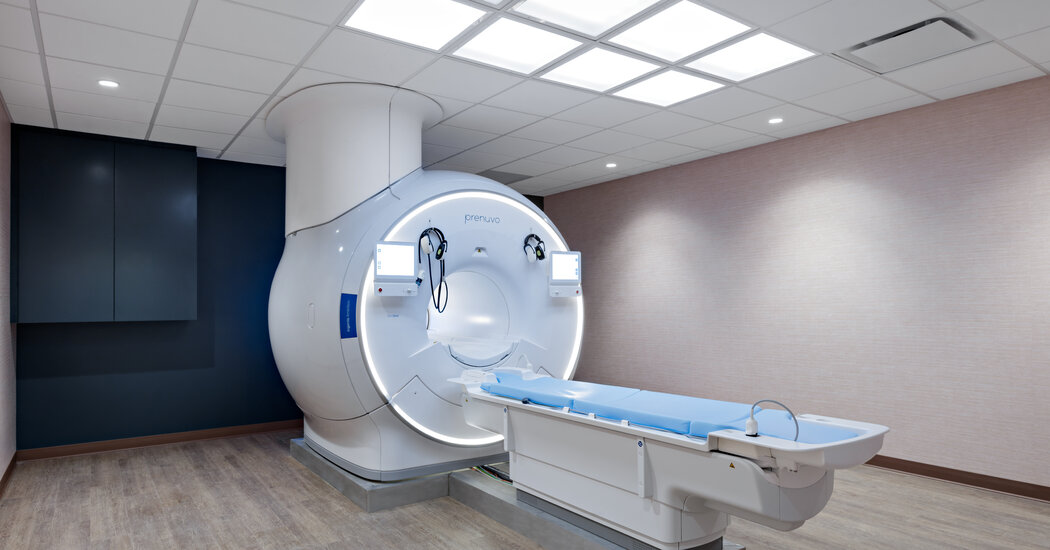
Companies like the celebrity-endorsed Prenuvo claim they can revolutionize preventive health care. Experts warn this might not be the right approach.For $2,499, Prenuvo will try to predict your future. The company offers a roughly hourlong session of magnetic resonance imaging, or M.R.I., that scans your entire body, searching for early signs of cancer, aneurysms, liver diseases and even multiple sclerosis.In recent months, images of celebrities and influencers posing in branded scrubs in front of a glossy, cylindrical M.R.I. machine have begun to pop up on social media with notable frequency. Kim Kardashian wore slippers in the post she shared with her 364 million followers last month, writing in the caption that Prenuvo “has really saved some of my friends lives.” In May, the television host Maria Menounos said that a Prenuvo scan had alerted her to a mass that turned out to be Stage 2 pancreatic cancer.Prenuvo does not pay anyone to promote its products, according to the company’s founder and chief executive, Andrew Lacy, but it does offer free scans to influencers and prominent figures in the wellness industry “in exchange for an honest review if they feel like it,” he said. Some people also receive discount codes they can share on social media, offering their followers hundreds of dollars off the cost of a scan.The company has sought a glamorous crowd. During New York Fashion Week in early September, it coordinated with the fashion public relations agency Lucien Pagès to set up appointments for “a few” influential people in the fashion world, according to the agency. They included the French fashion editor Olivier Zahm, who wrote on Instagram on Wednesday that he went to get his scan between runway shows. The designer Zac Posen, the model Lily Aldridge and the Vogue editor Gabriella Karefa-Johnson have also posted about the scans.Many celebrities talk about their health on social media, for example, sharing post-mammogram photos or promoting dubious procedures like colonics and IV drips. But the ones documenting their body scans — complete with nearly identical photo ops — have taken the celebrity health endorsement to new heights in terms of cost.High-profile proponents have made Prenuvo perhaps the most prominent in a crop of companies offering whole-body scans that are generally not covered by insurance. There’s also Ezra, simonONE and the Stockholm-based Neko Health. “It’s completely understandable why you’d want to find cancer early,” said Dr. Rebecca Smith-Bindman, director of the Radiology Outcomes Research Laboratory at the University of California, San Francisco. “It would absolutely give you that sense of control over it.”Courtesy of PrenuvoMost cancers can be treated if they are detected early, she said. But those are largely detectable via other means, like the cancer screening schedule your doctor recommends for you — which is typically covered by insurance.And considerable harms can come from screening, she and other experts said. In April, the American College of Radiology released a statement saying that there was “no documented evidence that total body screening is cost-efficient or effective in prolonging life,” and expressing concern that scans could lead to “nonspecific findings” that require extensive, expensive follow-up.Dr. Larry Norton, a breast oncologist and the medical director of the Evelyn H. Lauder Breast Center at Memorial Sloan Kettering Cancer Center, said that “there’s just no evidence to support” healthy people undergoing full-body M.R.I. screening, even for people who have a family history of cancer. Dr. Smith-Bindman herself has a family history of cancer, she said, and she would not consider getting a full-body scan like Prenuvo’s.A 2019 meta-analysis looked at 12 studies encompassing over 5,000 people who did not have any symptoms of diseases like cancer but had undergone whole-body M.R.I. scans. Among the six studies that had complete data, the researchers found that 16 percent of people who were scanned ended up having false positives. Only one study observed false negatives — meaning the scan missed something — which occurred in about 2 percent of people. Roughly 32 percent of people had an M.R.I that detected an abnormality that could potentially be clinically relevant, but it’s not clear whether those abnormalities would have led to disease or death.“If you scan more, we see more,” said Dr. Thomas C. Kwee, a radiologist at the University Medical Center Groningen in the Netherlands and an author on the meta-analysis.“You wonder, is this really good that you’re doing for the patient?” Dr. Kwee said.Prenuvo’s visibility on social media is unusual, said Joshua Cohen, a health economist. Other diagnostic scans, such as X-rays for broken bones and PET scans for Alzheimer’s disease, are prescribed by doctors after evaluation, not spread by word of mouth on Instagram.That visibility has driven some people to book the scans despite feeling perfectly healthy. One of them is Jennifer Jones, a 44-year-old woman in St. Louis, who first heard about Prenuvo on social media. She said she wanted to get a scan in part because her sister has lung cancer.Ms. Jones said she was aware that many doctors are skeptical of the scans for healthy people, but she had “no doubts that it’s legit.” To her, the price is well worth it compared with the potential costs, financial and otherwise, of future illness. “I would literally do anything to have preventive options,” she said.The Risk of False PositivesOur bodies commonly contain abnormalities, like lumps and masses and scars on organs, that can be detected by M.R.I. Dr. Smith-Bindman compared these to moles on our skin.An M.R.I. alone can’t always tell you whether a finding is benign or troubling, said Dr. Dushyant Sahani, chair of radiology at the University of Washington, and patients often have to undergo additional testing. A representative from Prenuvo said that 5 percent of people who get a Prenuvo scan are alerted to “potentially life-saving findings.”Mr. Lacy, the Prenuvo founder, said the theoretical risks around false positives don’t reflect Prenuvo’s technology, which he says is more precise than the CT scans at the center of much of the screening research.But according to Dr. Smith-Bindman, “the problem has nothing to do with the technology.”“The problem has to do with the profound, normal variation in our bodies,” she said, and the likelihood of nodules and abnormalities that a very sensitive machine will find.Preventive screenings will likely find early cancers, but not every instance of cancer develops into devastating disease, Dr. Smith-Bindman said. And once any abnormality is detected, doctors will pursue it. This can result in “major surgery and radiation and chemotherapy,” she said, for an early cancer that might never have developed into a true health risk.For a small number of patients, detecting and treating an early cancer will have a profound benefit, but “the number of benign tumors so outnumbers the number of aggressive tumors,” she said.Additional tests can bring new complications and potentially unnecessary exposure to radiation through tests like pet CT scans. “You don’t want to just willy-nilly bomb everybody with X-rays,” said Dr. Michael Pignone, chair of internal medicine at Dell Medical School at the University of Texas at Austin and a former member of the U.S. Preventive Services Task Force. Intervention can also be invasive and expensive, he said.“How many cancers will we cause from the radiation that comes from the PET/CT after doing the full body M.R.I.?” Dr. Smith-Bindman said.Dr. Pignone said he worried about what he called the “opportunity cost” — the effort people invest in follow-up imaging for M.R.I. findings, instead of in following the recommended schedule for health screenings or focusing on other facets of preventive medicine. A wealth of research has gone into determining which screening tests are most effective, he said, and those are recommended for the general population.

Read more →

Japan population: One in 10 people now aged 80 or older

Published3 hours agoShareclose panelShare pageCopy linkAbout sharingImage source, Getty ImagesBy Kelly NgBBC News, SingaporeFor the first time ever, more than one in 10 people in Japan are now aged 80 or older.National data also shows 29.1% of the 125 million population is aged 65 or older- a record.Japan has one of the lowest birth-rates in the world and has long struggled with how to provide for its ageing population. It has the world’s oldest population, measured by the proportion of people aged 65 or up, the United Nations says. That proportion stands at 24.5% in Italy and 23.6% in Finland, which rank second and third respectively.In Japan, those aged over 65 are expected to account for 34.8% of the population by 2040, according to the National Institute of Population and Social Security Research.Who will look after Japan’s elderly?Japan was the future but it’s stuck in the pastThe country’s elderly employment rate is among the highest across major economies – workers aged 65 or more make up more than 13% of the national workforce. But this has done little to relieve the burden on the country’s social security spending.Japan has approved a record budget for the next fiscal year, in part due to rising social security costs.Efforts to boost its birth rates have also met with little success amid the growing cost of living, and notoriously long working hours.Birth rates are slowing in many countries, including Japan’s neighbours, but the problem is particularly acute in Japan.The country was estimated to have had fewer than 800,000 babies born last year – the lowest number since records began in the 19th century. In the 1970s, that figure was more than two million.Prime Minister Fumio Kishida said in January that his country is on the brink of not being able to function as a society because of its declining birth rate.However authorities remain hesitant about accepting migrant workers as a solution to falling fertility. Other countries in Asia are facing similar demographic challenges.Last year, China’s population fell for the first time since 1961, while South Korea has reported the lowest fertility rate in the world.More on this storyJapan on the brink due to falling birth rate – PMPublished23 JanuaryWhy adults in Japan are getting youngerPublished13 June 2018Who will look after Japan’s elderly?Published16 March 2015

Read more →

Almonds as part of a healthy weight loss diet

When it comes to weight loss, nuts can get a bad rap — while they’re high in protein, they’re also high in fats, and this often deters those looking to shed a few kilos. But new research from the University of South Australia shows that you can eat almonds and lose weight too.
In the largest study of its kind, researchers found that including almonds in an energy restricted diet not only helped people to lose weight, but also improved their cardiometabolic health.
Examining the effects of energy restricted diets supplemented with Californian almonds or with carbohydrate- rich snacks, researchers found that both diets successfully reduced body weight by about 7kg.
Globally, more than 1.9 billion adults are overweight (650 million with obesity). In Australia, two in three people (approximately 12.5 million adults) are overweight or have obesity.
UniSA researcher Dr Sharayah Carter says the study demonstrates how nuts can support a healthy diet for weight management and cardiometabolic health.
“Nuts, like almonds, are a great snack. They’re high in protein, fibre, and packed with vitamins and minerals, but they also have a high fat content which people can associate with increased body weight,” Dr Carter says.
“Nuts contain unsaturated fats — or healthy fats — which can improve blood cholesterol levels, ease inflammation, and contribute to a healthy heart.

Read more →

New blood marker can identify Parkinsonian diseases

Is it possible that a single biomarker can detect all types of diseases related to dopamine deficiency in the brain? Yes, that’s what a research group in Lund is discovering. “We have observed that an enzyme in cerebrospinal fluid and in blood is a useful marker for identifying all types of Parkinson’s-related diseases with high accuracy,” says Oskar Hansson, who led the study.
Researchers at Lund University are publishing their findings in the journal Nature Aging.
The marker in question is called DOPA decarboxylase (DCC). In the current study, DCC was found to be elevated in individuals with Parkinson’s disease as well as in people with other diseases that result in dopamine deficiency in the brain. However, the marker was normal in other brain diseases such as Alzheimer’s disease. The researchers even noticed that DCC was elevated in individuals with Parkinson’s many years before they developed any symptoms.
“We have used advanced techniques that allow us to measure thousands of proteins simultaneously in a small amount of sample. We conducted this in 428 individuals to identify biomarkers that can indicate whether a patient with motor disturbances or cognitive difficulties has damage to the dopamine system in the brain. We found that if a patient has a disorder in the dopamine system, the levels of the biomarker DDC increase, regardless of where they are in the course of the disease. An important discovery is that this biomarker can be measured in blood, where it is significantly increased, especially in Parkinson’s disease,” says Oskar Hansson, a professor of neurology at Lund University and a consultant at Skåne University Hospital.
The researchers’ findings were verified in an additional group of 152 individuals. Furthermore, they demonstrated that the new biomarker is also significantly increased in blood by analyzing blood plasma samples from 174 individuals. Damage to the dopamine system in the brain can also be detected through PET camera examinations. However, this is a very costly and complicated method that is only available at specialized memory clinics.
“Since the symptoms of various neurodegenerative brain diseases resemble each other, there is a significant risk of misdiagnosis and thus improper treatment. Therefore, it is crucial to find safer diagnostic tools and methods, and we are focusing on that in our research. Moreover, I believe that in the future, different brain diseases will be treated even before the symptoms become apparent, and blood markers will be essential in identifying the right individuals in a simple and cost-effective manner.”

Read more →

Adaptive, efficient multi-arm phase 2 clinical trial for glioblastoma

An innovative phase 2 clinical trial led by Dana-Farber Cancer Institute in collaboration with 10 major brain tumor centers around the country and designed to find new potential treatments for glioblastoma has reported initial results in the Journal of Clinical Oncology. While none of the three therapeutics tested so far improved overall survival of patients, this adaptive platform trial, the first of its kind in neuro-oncology, has the potential to rapidly and efficiently identify therapies that benefit patients.
The trial, called INSIGhT, is still underway testing additional therapies.
“There have been many failed attempts to find better therapies for glioblastoma,” says co-first author Rifaquat Rahman, MD, a radiation oncologist at Dana-Farber. “This new trial design meets a need for a more efficient and smarter way to find new therapies.”
Patients with glioblastoma, the most common primary brain tumor, have few effective treatment options. Those with a form of the disease called MGMT unmethylated glioblastoma fare the worst and rarely respond to the standard therapy of radiation plus chemotherapy.
Traditionally, investigational therapies for glioblastoma are tested either head-to-head against standard therapy, or on their own in a single-arm trial with no control arm.
In contrast, INSIGhT (Individualized Screening Trial of Innovative Glioblastoma Therapy) uses a shared control arm to test multiple investigational therapies at one time. So far, INSIGhT has tested a control arm of standard therapy against abemaciclib (a CDK4/6 inhibitor), neratinib (an EGFR/HER2 inhibitor), and CC-115 (a DNA-PK/mTOR inhibitor).
“This design is more economical and faster than the alternative of three separate randomized phase 2 trials, which would require many more patients and a lot more resources,” says co-senior author and principal investigator Patrick Wen, MD, Director of the Center for Neuro-Oncology at Dana-Farber.

Read more →

The missing link to make easy protein sequencing possible?

There has been a real race among scientists to create a technology that enables easy protein sequencing. Professor of Chemical Biology Giovanni Maglia of the University of Groningen has now found the missing piece in the puzzle: a way to transport a protein through a nanopore, which allows sequencing of proteins in a simple, handheld device.
DNA sequencing has been a revolution in how we understand life, and sequencing proteins is the next holy grail. Maglia explains: ‘DNA is mostly static. The processes in our cells are executed by proteins: they do the actual work. And by understanding proteins, we will understand even more about how our bodies work.’
The problem of pulling proteins through a hole
There are currently handheld devices on the market that can sequence DNA. These devices use nanopore technology: a single strand of DNA is pulled through a tiny hole (a nanopore) in a membrane, and as they pass through, the sequence of building blocks in the DNA strand can be ‘read’.
There have been steps towards applying the same nanopore technology to proteins, but it was not yet possible to transport a long protein through the tiny hole in the same way as a DNA strand. ‘It’s like cooked spaghetti,’ Maglia explains. ‘These long strands want to be disorganized, they do not want to be pushed through this tiny hole.’
Single-stranded DNA is also a bit like cooked spaghetti, but it can be pulled through with an electric field because DNA itself is electrically charged. But proteins have a weaker charge, and can carry either positive or negative charge. ‘Proteins and DNA are different,’ Maglia explains, ‘so the technology needs to be adapted.’
Going with the flow
To transport a protein through a nanopore, Maglia used a solution of electrically charged particles (ions), which can be pulled through the nanopore with an electric field. When this happens, they drag along the protein. It was not at all trivial to make this work, Maglia explains: ‘we didn’t know whether the flow would be strong enough. Furthermore, these ions want to move both ways, but by attaching a lot of charge on the nanopore itself, we were able to make it directional.’

Read more →

A suit of armor for cancer-fighting cells

In recent years, cancer researchers have hailed the arrival of chimeric antigen receptor T cell (CAR T) therapy, which has delivered promising results, transforming the fight against various forms of cancer. The process involves modifying patients’ T-cells to target cancer cells, resulting in remarkable success rates for previously intractable forms of cancer.
Six CAR T cell therapies have secured FDA approval, and several more are in the pipeline. However, these therapies come with severe and potentially lethal side effects, namely cytokine release syndrome (CRS) and neurotoxicity. These drawbacks manifest as a range of symptoms — from high fever and vomiting to multiple organ failure and patient death — posing significant challenges to broader clinical application.
Now, a research team led by Michael Mitchell, associate professor in the School of Engineering and Applied Science at the University of Pennsylvania, has found a solution that could help CAR T therapies reach their full potential while minimizing severe side effects. Their findings are published in the journal Nature Materials.
“Addressing CRS and neurotoxicity without compromising the therapeutic effectiveness of CAR T cells has been a complex challenge,” says Mitchell.
He says that unwanted interactions between CAR T and immune cells called macrophages drive the overactivation of macrophages, which in turn result in the release of toxic cytokines that lead to CRS and neurotoxicity.
“Controlling CAR T-macrophage interactions in vivo is difficult,” Mitchell says. “So, our study introduces a materials engineering-based strategy that involves incorporating a sugar molecule onto the surface of CAR T cells. These sugars are then used as a reactive handle to create a biomaterial coating around these cells directly in the body, which acts as a ‘suit of armor,’ preventing dangerous interactions with macrophages.”
First author Ningqiang Gong, a postdoctoral researcher in the Mitchell Lab, elaborates on the technique, “We attached this sugar molecule to the CAR T cells using metabolic labeling. This modification enables the CAR T cells to attack cancer cells without any hindrance.”
“When symptoms of CRS begin to manifest, we introduce another molecule — polyethylene glycol (PEG) — to create the suit of armor, which effectively blocks dangerous interactions between these engineered T cells, macrophages, and the tumor cells themselves,” Gong says.

Read more →

Possible new treatment for triple-negative breast cancer

Zachary Schug, Ph.D., assistant professor in the Molecular and Cellular Oncogenesis Program of the Ellen and Ronald Caplan Cancer Center at The Wistar Institute, has published a new paper in the journal Nature Cancer. Schug’s paper — titled, “Acetate acts as a metabolic immunomodulator by bolstering T-cell effector function and potentiating antitumor immunity in breast cancer” — demonstrates a double-acting mechanism for fighting a particularly aggressive, difficult-to-treat form of breast cancer. Schug’s research shows how silencing a certain gene, ACSS2, may improve existing treatments for patients.
Triple-negative breast cancer, or TNBC, affects 10-15% of patients with breast cancer in the US. TNBC is called “triple-negative” because the cancer lacks an estrogen receptor, a progesterone receptor, and a HER2 (human epidermal growth factor) receptor. The absence of any of these receptors — receptors that, when present in other forms of breast cancer, can be effectively targeted during treatment — makes treating TNBC quite difficult, and patients with TNBC have limited treatment options. TNBC’s notorious aggression makes the technical challenge of finding a reliably effective treatment target all the more serious: compared to other breast cancers, TNBC grows faster and resists treatment more stubbornly. All these factors contribute to the fact that TNBC patients suffer from worse prognoses.
But Zachary Schug, Ph.D., and co-authors have demonstrated the efficacy of a double-acting concept: silencing the gene ACSS2 impairs TNBC metabolism while simultaneously boosting the immune system’s ability to fight it. ACSS2 regulates acetate, a nutrient that cancer cells — and TNBC cells in particular — take advantage of to grow and spread. Schug and his team used two methods to de-activate ACSS2: CRISPR-Cas9 gene editing, and the compound VY-3-135, a potent ACSS2 inhibitor identified by Schug and his colleagues in 2021.
The researchers found that targeting ACSS2 in this preclinical study not only hampered this aggressive cancer’s ability to metabolize acetate and grow — it also triggered the immune system to recognize and attack the cancer. Because cancer cells with inhibited ACSS2 can’t process acetate very well, the tumor region becomes bathed in acetate, which alerts the immune system of something amiss.
This process of guiding the immune system to the cancer — called “immunosensitization” — has confounded other TNBC researchers. But Schug’s approach showed that ACSS2 inhibition immunosensitized against TNBC so well that tumor growth was drastically reduced, even to the point of wiping out the cancer completely in some experiments.
“Basically, we’ve proved that the immune system can take advantage of acetate that the tumor can’t process. It kicks the cancer while it’s down,” said Schug. “In fact, the immune system does this so well that it remembers how to attack TNBC in the future — even if that tumor’s ACSS2 gene is still active.”
Another group’s different ACSS2-inhibiting approach is in human clinical trials, and Schug’s research shows how ACSS2-inhibiting treatment might be able to improve outcomes for patients diagnosed with the infamous TNBC. By testing ACSS2 inhibitors alongside standard anti-breast-cancer chemotherapy, Schug et al. found that ACSS2 inhibition enhanced the treatment’s effectiveness.
“We knew that ACSS2 was a promising target for TNBC. Our research shows us how the immune effects of ACSS2 inhibition could eventually be used in for TNBC patients with limited treatment options,” said Schug. “More research is needed, but by combining this approach with other cancer therapies, we expect to see big improvements in treating TNBC.”
Co-authors: Katelyn D. Miller, Seamus O’Connor, Katherine A. Pniewski, Toshitha Kannan, Reyes Acosta, Gauri Mirji, Sara Papp, Michael Hulse, Fabrizio Bertolazzi, Yellamelli V. V. Srikanth, Rahul S. Shinde, Daniel T. Claiborne, Andrew Kossenkov, Joseph M. Salvino and Zachary T. Schug of The Wistar Institute; Fabrizio Bertolazzi of the University of Bologna; and Steven Zhao and Kathryn E. Wellen of the University of Pennsylvania.
Work supported by: This work was supported by grants from the National Institutes of Health (NIH) National Cancer Institute (NCI) DP2 CA249950-01, NIH NCI P01 CA114046, NIH R21 CA259240-01, the W.W. Smith Charitable Trust, Susan G. Komen CCR19608782 and the V Foundation for Cancer Research. This research and project is funded, in part, by a contract with the Pennsylvania Breast Cancer Coalition. The PBCC takes no part in and is in no way responsible for any analyses, interpretations or conclusions contained herein. We acknowledge funding from the NIH NCI T32 CA009171 and the American Cancer Society Rena and Victor Damone Postdoctoral Fellowship PF-20-1225-01-CCG. The Wistar Molecular Screening Facility and Genomics Facility are supported by NIH grant P30 CA010815. The Wistar Proteomic and Metabolomic Facility is supported, in part, by NIH grants R50 CA221838 and S10OD023586. The HIC is supported, in part, by NIH P30 AI045008 and P30 CA016520.

Read more →