Peace Corps Sued Over Mental Health Policy

Applicants have challenged the Peace Corps practice of rescinding invitations to applicants on the basis of mental health conditions.Lea Iodice was thrilled to hear that the Peace Corps had accepted her application and was sending her to Senegal as a community health care worker. She shared the good news with her roommates, her family and her favorite professor and daydreamed about her last day at her job, managing a gym called SnapFitness.She was crushed, about a month later, to receive a letter from the Peace Corps Office of Medical Services saying that her offer was being rescinded because she was in treatment for anxiety. Though she had been in therapy to manage occasional panic attacks, she had never taken any psychiatric medication, been hospitalized or engaged in any kind of self-harm.“The reason for medical nonclearance is that you are currently diagnosed with an unspecified anxiety disorder,” read the letter, which appeared in her online application portal. “You indicated that your anxiety symptoms of increased heart rate and queasiness recur during periods of stress, which is likely to occur during service.”Searching online, Ms. Iodice discovered that her experience was not uncommon. For years, comparing notes under anonymous screen names, Peace Corps applicants have shared stories about being disqualified because of mental health history, including common disorders like depression and anxiety.The practice is the subject of a lawsuit filed this week in federal court, accusing the Peace Corps of discriminating against applicants with disabilities in violation of the Rehabilitation Act, which prohibits discrimination in programs receiving federal funds.The lawsuit, which is seeking class-action status from the U.S. District Court for the District of Columbia, includes accounts from nine people whose Peace Corps invitations were rescinded for mental health reasons. The suit alleges that those decisions were made without considering reasonable accommodations or making individualized assessments based on current medical knowledge.In a statement, a Peace Corps official said he could not comment on pending litigation, but added that “the health, safety and security of Volunteers are the Peace Corps’s top priority.”“The agency has a statutory responsibility to provide necessary and appropriate medical care for Volunteers during service,” said Jim Golden, acting associate director of the Office of Health Services, in a statement. “Many health conditions — including mental health care — that are easily managed in the U.S. may not be able to be addressed in the areas where Peace Corps Volunteers are assigned.”He said each candidate’s medical history is assessed individually to determine whether the agency can support the individual’s needs. The three plaintiffs in the lawsuit are not identified by name in the court filings. But other Peace Corps applicants described rescinded offers as a major blow at a vulnerable time in their lives, throwing post-college plans into doubt and forcing them to explain to family, friends and supporters that they had been rejected because of a mental health condition.“It was really heartbreaking to be dismissed like that,” said Ms. Iodice, now 26, who is not a party to the lawsuit. “It took a lot of processing to get over the initial feeling of unworthiness.”The Peace Corps medically screens accepted applicants before sending them overseas to ensure that they do not face health crises when they are in locations where specialized care may not be available. Similar screenings are used in the State Department and the military.But those policies are coming under pressure from legal activists. Early this year, the State Department agreed to pay $37.5 million to settle a class-action lawsuit, filed 16 years ago, challenging a hiring requirement that an applicant should be able to work in any State Department overseas post without the need for ongoing medical treatment.In recent years, the Peace Corps has deployed around 7,000 volunteers to more than 60 nations, according to recent figures from the Congressional Research Service. A review of the medical clearance system found that, in 2006, around 450 applicants were medically disqualified from serving.Carol Spahn, director of the Peace Corps.Michael Brochstein/Sipa USA, via Alamy Live News“I was shocked, at first, at how broad and antiquated some of these policies seem,” said Megan Schuller, legal director of the Bazelon Center for Mental Health Law, which, along with Bryan Schwartz Law, is representing the plaintiffs.One party to the lawsuit filed on Tuesday, Teresa, 22, who asked to be identified by her middle name out of concern that stigma would damage her employment prospects, had been accepted this past January for a volunteer position in Mexico working on climate change awareness.In March, before her planned departure, she was told that she had failed her medical clearance because of her history of treatment for anxiety and depression. She appealed the decision but was denied.Like many undergraduates, she had struggled during the isolation of the pandemic and attended therapy and took an antidepressant medication in 2020, never considering that these treatments might disqualify her from serving in the Peace Corps, she said.“There was part of me that thought, This can’t happen,” she said. “I do not know a single person throughout my whole college experience who didn’t struggle with their mental health.”The letter informing her of her nonclearance cited “active symptoms of anxiety, increased heart rate, inability to sit still, inability to say no,” all symptoms noted down by her therapist in 2021, she said. She spent the weeks around college graduation explaining, again and again, that she wouldn’t be going to Mexico after all.“It’s really humiliating to tell people that you got in and were then rejected because of your mental health,” said Teresa, who is now training to be a paralegal.Another party to the case, Anne, 34, who also asked to be identified by her middle name out of concern for stigma, was offered a Peace Corps position in Mongolia teaching at the university level.On her medical clearance forms, she shared that she had made two suicide attempts at age 15 and was hospitalized at the time, she said in an interview. Since then, however, she had lived abroad as an exchange student and worked for more than a decade as a public school English teacher with no recurrence of suicidal behavior.Her rejection letter, which arrived in November, said that she was assessed as a high risk for a recurrence of suicidal behavior. She scrambled to appeal the decision but was denied. “When you get a denial based on something from half your life ago, it feels like a punishment for being honest, and it feels like part of your past that you can’t escape,” said Anne, who teaches at a high school. “I was very upset. I was confused and trying to figure out how to do it — to save this dream.”Complaints over the policy have simmered for years in online forums and were the subject of a Change.org petition in 2019 and coverage this year in Worldview magazine, a news site for the National Peace Corps Association.Applicants are increasingly forthcoming in discussing their experiences with medical clearance, said Jade Fletcher-Getzlaff, 33, who outlined her own denial and successful appeal in a YouTube video in 2019. With each wave of deployments, she said, she receives between five and 10 inquiries from applicants who have been disqualified because of mental health conditions.“As more people are seeking therapy, and more openly talking about these issues, I think it may be coming up more often,” she said in an interview from Japan, where she now teaches, after serving as a Peace Corps volunteer in Cambodia.Rates of anxiety and depression among young U.S. adults have risen sharply in recent years. In 2020, a Centers for Disease Control and Prevention study found that 63 percent of adults aged 18 to 24 years reported mental health symptoms, compared with 31 percent of all adults. Young adults also expressed greater need for mental health treatment, with 41 percent of adults aged 19 to 25 reporting unmet needs, compared with 26 percent of all adults.Kirstine Schatz, 24, who is currently serving as a Peace Corps volunteer in Morocco, said she was initially denied a medical clearance because she took sertraline, a common antidepressant, for six months on the recommendation of her primary care physician. She discontinued the medication seven months before applying and never received any mental health diagnosis, she said, but she was informed that she was denied medical clearance because the stressful environment of the Peace Corps might trigger a relapse. Ms. Schatz appealed the decision, emphasizing that she had been off the medication and stable for six months, and the decision was overturned. She urged the agency to change its screening policy. “They are missing out on so many amazing people because of this archaic mind-set they have on mental health,” she said. “It’s 2023. They need to figure it out.”As for Ms. Iodice, she never appealed her initial rejection and is still at SnapFitness, where she is the general manager. She said she had no regrets about receiving therapy, even though it might have kept her from serving with the Peace Corps in Senegal.“If I had applied before I went to therapy, I could have gotten there, but I would have been a way worse worker, in my opinion,” she said. “In my perspective, I am a stronger person. I know myself better. I know how to cope.”

Read more →
Experimental nasal spray may offer quick, easy remedy for treating rapid heartbeat

A fast-acting medication delivered as a nasal spray may someday allow patients with intermittent rapid heartbeats to treat it themselves as soon as they develop symptoms, according to new research published today in the Journal of the American Heart Association, an open access, peer-reviewed journal of the American Heart Association. This new medication is still waiting on approval from the U.S. Food and Drug Administration.
“This is a potential new and exciting option for patients to safely self-treat their rapid heartbeat without direct medical supervision to avoid emergency room visits and medical interventions,” said James E. Ip, M.D., lead author of the study and an associate professor of clinical medicine at Weill Cornell Medicine at New York-Presbyterian Hospital in New York City.
About 1 in 300 people in the United States experience intermittent periods of rapid heartbeat (more than 100 beats per minute, and more typically 150-200 beats per minute) in the lower chambers of the heart, a condition called paroxysmal supraventricular tachycardia.
The standard treatment during an episode is to slow your heart rate by performing physical actions called vagal maneuvers, one of which is done by trying to bear down, achieved by breathing out with your stomach muscles but you don’t let air out of your nose or mouth. These types of actions can make your vagus nerve slow electrical conduction through the atrioventricular (AV) node, which regulates the timing of the electrical pulses to the lower portion of the heart. If the self-administered vagal maneuvers are not effective (which happens about 20-40% of the time), the person should seek immediate treatment of intravenous medication at an emergency room to return the heart rate to normal. In the United States, about 50,000 emergency room visits a year are for paroxysmal supraventricular tachycardia, Ip said.
In a previous study, people with the disorder treated themselves with either etripamil or a placebo nasal spray for a single episode of rapid heartbeat. Participants applied an electrocardiogram (ECG) patch at the onset of symptoms, did a vagal maneuver and self-administered the nasal spray if the rapid heartbeat continued — keeping the ECG patch on for at least five hours. In that study, the first time that etripamil was used without direct supervision, normal heart rhythms were restored within 30 minutes in 54% of patients, compared to 35% with placebo, and the medication was found to be safe and well tolerated. The ECG patch is a wearable heart monitor that has a small device with an adhesive that sticks on the chest skin surface and is wirelessly connected to a cell phone to transmit the ECG data.
All people in that randomized trial were invited to participate in the current open-label study that allowed patients to self-treat with etripamil during multiple episodes of paroxysmal supraventricular tachycardia (PSVT). Of the 169 patients enrolled, 105 self-administered at least one dose of etripamil (70 mg) during the median 232-day study period.
The new study found: Etripamil restored heart rate to normal within 30 minutes in 60.2% of the 188 verified PSVT episodes, and within an hour in 75.1% of the episodes. Of the 40 participants who self-treated two episodes, 63.2% responded to the medication within 30 minutes. Nine people (23%) did not convert to a normal heart rate on either episode, and 21 (53%) converted to normal heart rate on both episodes. Safety was assessed regardless of whether the episode was confirmed by ECG. Thirty-four participants (32.4%) reported one or more side effects from the medication, most commonly mild-to-moderate nasal congestion or discomfort, or a runny nose. There were no serious heart-related adverse events.”There are no great options for patients to self-treat paroxysmal supraventricular tachycardia, and this condition can cause significant distress and anxiety,” Ip said. “Similar to an albuterol inhaler for asthma patients or an epinephrine pen for patients that have severe allergies or anaphylaxis, etripamil nasal spray may be a great option for people who have paroxysmal supraventricular tachycardia.”
Study details and background: The study began in Dec. 2018 and ended in Oct. 2020. Participants were an average age of 58 years old, 62% were women and about 83% were white adults, 8% African American adults, 3% Asian adults, 2% native Hawaiian or Pacific Islander adults and 5% other races. All participants had been diagnosed with paroxysmal supraventricular tachycardia and had experienced, on average, 9.7 episodes in the previous year. Most were taking long-acting medications to prevent rapid heartbeats. People were excluded from the study if they had certain other heart conditions such as atrial fibrillation. Participants were good at detecting when they were having rapid heart rhythms, with 92 (87.6%) of them having one or more episodes confirmed by ECG. Verified episodes were used to evaluate the medication’s effectiveness. For people with atrial fibrillation (rapid and irregular heartbeats from the upper chambers of the heart), etripamil is being investigated for quickly slowing the heart rate down.Unlike previous studies comparing etripamil to a placebo, this open-label, follow-up study was limited by not having a control group (no one taking a placebo). The study is also limited by only including adults. Etripamil treatment of children ages 6-17 with paroxysmal supraventricular tachycardia is being evaluated in a separate study starting this year. Although the majority of participants in the current study self-identified as white, the researchers expect the results to be generalizable to people in other racial/ethnic groups because previous studies have shown that etripamil’s metabolism and impact on the AV node are similar regardless of race/ethnicity.

Read more →

New information on the most important early stage of embryonic development

When the zygote, or the fertilised egg, starts to develop, the soon forming inner cell mass, a cluster of cells that will eventually develop into the individual, retains its pluripotent stem cell potential for the first few weeks. In other words, every cell in this cluster has the ability to form an entire new individual and all of the hundreds of different cell types that the human body needs. The potential of stem cell therapies is based on this pluripotency of early embryonic stem cells.
Gastrulation is a crucial stage in embryonic development where this pluripotency is lost when the germ layers of the embryo (ectoderm, mesoderm and endoderm) and the three body axes of the developing body (anterior and posterior, dorsal and ventral, left and right) are formed. In fact, gastrulation is often referred to as the most important stage of life, with a large share of early miscarriages resulting from unsuccessful gastrulation.
Researchers from the University of Helsinki and the National Institutes of Health (NIH) in the United States found that the ectoderm, one of the germ layers, does not lose its pluripotency in gastrulation after all. It also answers the long-standing question posed by developmental biologists on how the neural crest, which originates from the ectoderm during embryonic development, has such an exceptionally high stem cell potential.
Following gastrulation, the neural crest develops into a large number of cells that form various parts of the body. To name a few, tissues derived from the neural crest include pigment cells in the skin, the entire peripheral nervous system, the bones of the face and neck, parts of the heart, and several hormone-producing cell types — in practice, cell types whose differentiation from a single germ layer should be impossible.
“Our findings shed new light on the chain of events in early embryonic development. The findings indicate that the expression stage of stem cell genes needed for the production of pluripotent stem cells continues throughout the ectoderm almost until the completion of the neural tube, a precursor to the central nervous system. The findings also indicate a much higher plasticity in the cell fate determination process that occurs in the ectoderm than previously thought,” says Dr. Laura Kerosuo, principal investigator of the research group, a former Academy researcher at the University of Helsinki, and currently the Chief of the Neural Crest Development and Disease Unit at the NIH.
An imaging technique developed by researchers behind the discovery
A high-resolution imaging technique, capable of analysing individual cells, helped the researchers uncover the findings.

Read more →

How the heart starts beating

Becoming a full-fledged organism out of a handful of cells, complete with functioning tissues and organs, is a messy yet highly synchronized process that requires cells to organize themselves in a precise manner and begin working together.
This process is especially dramatic in the heart, where static cells must start beating in perfect unison.
Now, a cross-school collaboration led by researchers at Harvard Medical School and Harvard University has provided a glimpse into exactly how cells in the heart start beating.
In a study conducted in zebrafish, the team discovered that heart cells start beating suddenly and all at once as calcium levels and electrical signals increase. Moreover, each heart cell has the ability to beat on its own, without a pacemaker, and the heartbeat can start in different places, the researchers discovered. The findings are published Sep. 27 in Nature.
“People place such importance on the heart beating that it’s been a focal point of investigations for a long time, but this is the first time we’ve been able to look at it in depth with so much resolution,” said co-senior author Sean Megason, professor of systems biology in the Blavatnik Institute at HMS.
Learning about the fundamental mechanisms underlying the heartbeat may be inherently interesting for the curious biologist, but it is also critical for understanding what is happening in situations where the cardiac system that regulates the heartbeat doesn’t develop properly, or begins to malfunction.
“The heart beats about 3 billion times in a typical human lifetime, and it must never take a break,” said co-senior author Adam Cohen, professor of chemistry and chemical biology and of physics at Harvard. “We wanted to see how this incredible machine first turns on.”
Straight to the heart

Read more →

Decreasing biodiversity may promote spread of viruses

How are environmental changes, loss of biodiversity, and the spread of pathogens connected? The answer is a puzzle. Researchers from Charité — Universitätsmedizin Berlin have now described one piece of that puzzle in the journal eLife, showing that the destruction of tropical rainforests harms the diversity of mosquito species. At the same time, more resilient species of mosquitoes become more prevalent — which also means the viruses they carry are more abundant. If there are many individuals of a given species, those viruses can spread quickly.
For their study, researchers from Charitéteamed up with the Leibniz Institute for Zoo and Wildlife Research (IZW) to investigate how clearing rainforests to make way for coffee or cacao plantations or human settlements affects the prevalence and biodiversity of mosquitoes and the viruses they carry. The study, which brings together the fields of virology and biodiversity research, was led by Prof. Sandra Junglen, head of the Ecology and Evolution of Arboviruses research group at the Institute of Virology at Charité.
For their research work, the team first caught mosquitoes around Taï National Park in the West African country of Côte d’Ivoire. There is a broad range of land uses there, from pristine rainforest to secondary forest, cacao and coffee plantations, and villages. “We identified the species of mosquitoes we had caught and tested them for viral infections,” explains Kyra Hermanns of the Institute of Virology at Charité, the first author of the study. “Then we looked at how the composition of mosquito species differs across the different land use types, where certain viruses are present, and how prevalent they are.”
Resilient mosquito species prevail over others
There are many different viruses in a healthy ecosystem such as a pristine rainforest. The main reason is that there is a broad range of animal species living there that can carry the virus, acting as hosts. This is because viruses are always tied to their hosts.
If there is a change in the ecosystem, it affects the viruses as well, Junglen explains: “We discovered 49 virus species, with the greatest diversity of hosts and viruses observed in untouched or minimally disturbed habitats.” Most of the 49 different virus species were relatively rare in the areas studied. However, nine of them were commonly found in multiple habitats, with the prevalence of five virus species increasing in habitats that had been disturbed and reaching the highest figures in human settlements.
“This means that the clearing of tropical rainforests causes a decrease in biodiversity across mosquito species, which changes the composition of host types. Some resilient mosquito species have multiplied very successfully in the cleared areas, bringing their viruses with them,” Junglen explains. The composition of a given community of species thus has a direct effect on the prevalence of viruses: “If one host species is very abundant, it is easier for viruses to spread,” the virologist notes. “All of the viruses we found to be more common were demonstrated to be present in a certain mosquito species. The viruses belong to different families and have different properties. That means we were able to show for the first time that the spread of the viruses is attributable not to a close genetic relationship, but to the characteristics of their hosts — especially those mosquito species that adapt well to changing environmental conditions in habitats that have been disturbed.”
New insight into the dynamics of infectious disease
The viruses the researchers found only infect mosquitoes and, as things currently stand, cannot be transmitted to humans. Still, they are a valuable model for understanding how changes in the diversity of a community of species affect the presence and prevalence of viruses. “Our study makes clear just how important biodiversity is, and that decreasing biodiversity makes it easier for certain viruses to thrive because it causes their hosts to become more abundant,” Junglen notes.
“Previously, these kinds of processes were studied almost exclusively using individual pathogens and individual hosts. Now we have a more complete picture that we can use for further research,” she explains. As their next step, the researchers plan to study additional habitats in other countries, with one goal being to pinpoint the exact factors that affect the diversity of mosquito species under land-use change, and the characteristics that viruses need to have in order to spread with their hosts.

Read more →

One-hour training is all you need to control a third robotic arm, study finds

One-hour training is enough for people to carry a task alone with their supernumerary robotic arms as effectively as with a partner, study finds.
A new study by researchers at Queen Mary University of London, Imperial College London and The University of Melbourne has found that people can learn to use supernumerary robotic arms as effectively as working with a partner in just one hour of training.
The study, published in the journal IEEE Open Journal of Engineering in Medicine and Biology, investigated the potential of supernumerary robotic arms to help people perform tasks that require more than two hands. The idea of human augmentation with additional artificial limbs has long been in science fiction, like in Doctor Octopus in The Amazing Spider-Man (1963).
“Many tasks in daily life, such as opening a door while carrying a big package, require more than two hands,” said Dr Ekaterina Ivanova, lead author of the study from Queen Mary University of London. “Supernumerary robotic arms have been proposed as a way to allow people to do these tasks more easily, but until now, it was not clear how easy they would be to use.”
The study involved 24 participants who were asked to perform a variety of tasks with a supernumerary robotic arm. The participants were either given one hour of training in how to use the arm, or they were asked to work with a partner.
The results showed that the participants who had received training on the supernumerary arm performed the tasks just as well as the participants who were working with a partner. This suggests that supernumerary robotic arms can be a viable alternative to working with a partner, and that they can be learned to use effectively in a relatively short amount of time.
“Our findings are promising for the development of supernumerary robotic arms,” said Dr Ivanova. “They suggest that these arms could be used to help people with a variety of tasks, such as surgery, industrial work, or rehabilitation.”
The study was funded by the EU H2020 NIMA (FETOPEN 899626), TRIMANUAL (MSCA 843408) and CONBOTS (ICT 871803) grants.

Read more →

Increasing steps by 3,000 per day can lower blood pressure in older adults, study finds

An estimated 80% of older adults in the U.S. have high blood pressure. Maintaining healthy blood pressure can protect against serious conditions like heart failure, heart attacks, and strokes.
A new study including Linda Pescatello, distinguished professor of kinesiology in UConn’s College of Agriculture, Health and Natural Resources, found that adding a relatively minimal amount of movement, about 3,000 steps per day, can significantly reduce high blood pressure in older adults.
Pescatello worked with Elizabeth Lefferts, the lead author of the paper, Duck-chun Lee, and others in Lee’s lab at Iowa State University. They published their findings in a recent issue of the Journal of Cardiovascular Development and Disease.
“We’ll all get high blood pressure if we live long enough, at least in this country,” Pescatello says. “That’s how prevalent it is.”
Pescatello is an expert on hypertension (the clinical term for high blood pressure) and exercise. Her previous research has demonstrated that exercise can have a significant immediate and long-lasting impact on lowering blood pressure in hypertensive adults.
This study sought to determine if older adults with hypertension could receive these benefits by moderately increasing their daily walking, which is one of the easiest and most popular forms of physical activity for this population.
“It’s easy to do, they don’t need any equipment, they can do it anywhere at almost any time,” Lee says.

Read more →

Vapes '95% safer' than cigarettes messaging backfired

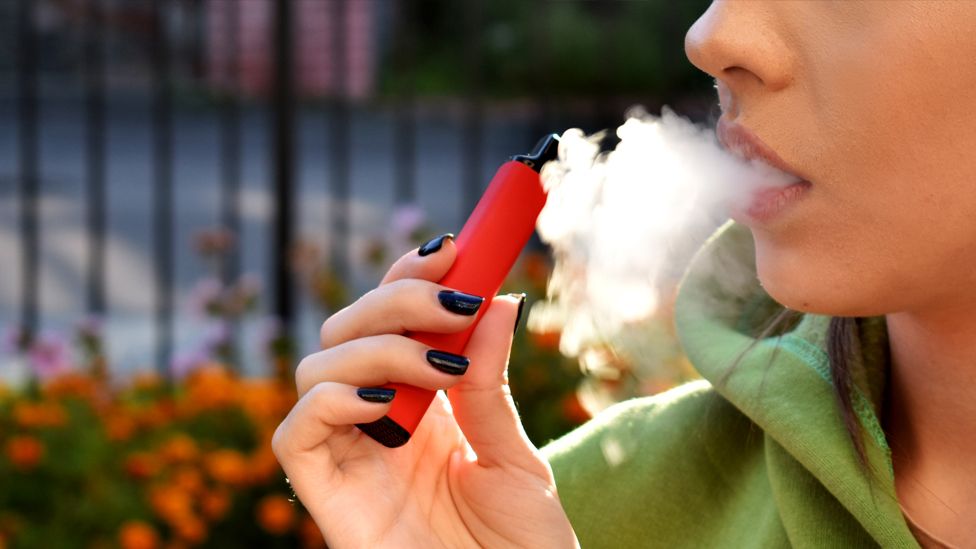
Published22 minutes agoShareclose panelShare pageCopy linkAbout sharingImage source, Getty ImagesBy Hugh Pym and Lucy WatkinsonBBC NewsThe message that vaping is 95% safer than smoking has backfired, encouraging some children to vape, says a top health expert. Dr Mike McKean treats children with lung conditions and is vice-president for policy at the Royal College of Paediatrics and Child Health.He says the 2015 public messaging should have been clearer – vapes are only for adults addicted to cigarettes. Evidence on the possible health risks of vaping is still being gathered.In an exclusive interview with the BBC, Dr McKean said: “Vaping is not for children and young people. In fact it could be very bad for you,” although he stresses that it is not making lots of children very sick, and serious complications are rare. “Vaping is only a tool for adults who are addicted to cigarettes.”He says the 95% safe messaging was “a very unwise thing to have done and it’s opened the door to significant chaos”. The “switch to vape” message has had an unintended consequence of driving children to take up e-cigs, he says.”There are many children, young people who have taken up vaping who never intended to smoke and are now likely addicted to vaping. And I think it’s absolutely shocking that we’ve allowed that to happen.”It feels like we have put all our eggs in one basket and said ‘this is the way to tackle cigarette smoking’ and I feel we have neglected children and young people, by sort of embracing something almost too much without the real proper thought.”Prof Ann McNeil was one of the co-authors of the original 2015 report and told the BBC that the advice was based on the literature at the time and what was known about what the products contained.”It was never intended to communicate that they’re safe – it was intended to say there is a big difference in the harms.”She says vaping is less risky than smoking, but children should not be doing it.The 95% safer figure is still used today by the vaping industry to promote its products. Doctors, public health experts, cancer charities and governments in the UK all agree that – based on the current evidence – e-cigarettes carry a fraction of the risk of cigarettes.The latest UK update on vaping and health published in 2022 says: in the short and medium term, vaping poses “a small fraction” of the risks of smokingvaping is not risk-free, particularly for people who have never smokedlong-term effects or risks of vaping are unknown and need studyingthere is a lack of evidence on whether flavourings affect health risksthe risk and severity of nicotine dependency from vaping is lower than for smoking but varies by productLike smoking, vaping is illegal for under-18s, but data suggests a growing number of young people are doing it. More than one in 10 people aged 16-24 said they were daily or occasional users in 2022, according to a survey carried out by the Office for National Statistics.Although vapes don’t contain the same dangerous toxins as cigarettes, they do deliver a hit of addictive nicotine. Some teenage users say they are hooked. The BBC has been investigating youth vaping – recent tests on illegal vapes confiscated from a school found unsafe amounts of metals that could be inhaled into children lungs.Teen vaping: ‘I’ll have puffs as I’m falling asleep’Vaping – is it a risk-free option?High lead and nickel found in illegal vapesThere is concern that young people are taking up vaping because they see it as completely risk-free.Ian says he found his 13-year-old son smoking vapes and was horrified. “He’s addicted to vaping and the more I looked into it the more I realised he is not alone. “I asked him why he does it and he says because it gives him a buzz, and that’s how these addictions start.”Prime Minister Rishi Sunak recently said it was “ridiculous” that vapes were designed and promoted to appeal to children when they were supposed to be used by adults giving up smoking.In Australia, vapes are only available on prescription. Smoking rates in the UK have been steadily falling in adults and children, both before and after vapes were introduced. Vaping can help smokers quit cigarettes. Mr Sunak is expected to announce measures soon aimed at cracking down on youth vaping in England. The Scottish and Welsh governments have already called for a ban on disposable vapes.More on this storyFive million vapes thrown away every week – researchPublished8 SeptemberVaping – is it a risk-free option?Published24 June 2022Related Internet LinksRCPCH – The Royal College of Paediatrics and Child HealthThe BBC is not responsible for the content of external sites.

Read more →

For ‘The Golden Bachelor’ and Others, What Dating After 60 Looks Like

For ‘The Golden Bachelor’ and other singles of a certain age, there may be bad dates and false starts. But romance can be infinitely better after decades of life experience.When Janet Ha, 65, first tried online dating in February, she found it “confusing and weird.”Her son’s 20-something ex helped her make a profile on Bumble, but all of her initial matches were focused on hooking up.“I had checked ‘something casual’ — because I didn’t think I was looking for a relationship — but I didn’t realize what that meant on Bumble,” Ms. Ha said, laughing.She quickly learned to navigate the app, but still wasn’t sure what she wanted. Her nearly 30-year marriage had ended in divorce, and her children were grown. “I just did not want to have to take care of anybody anymore,” said Ms. Ha, a teacher from Minnesota who plans to retire in the spring of 2024.Dating among older Americans is in the spotlight thanks to the upcoming premiere of “The Golden Bachelor,” which follows Gerry Turner, a 72-year-old widower, on his quest to find a partner in a “Bachelor” spinoff show featuring singles age 60 and older. (Ideally, Mr. Turner has said, a “high-energy” partner who might like pickleball or golf.)Though reality TV is unlikely to reflect the typical experiences of older single people, millions of them are looking for love — and their stories are often overlooked. Older daters face all of the challenges their younger counterparts do — burnout, ghosting, gaslighting — but many of them have found that dating can be infinitely better when you don’t have as much to prove.The prevailing narrative surrounding the growing number of unmarried older adults tends to focus on the risks of isolation and loneliness. But Sindy Oh, a licensed clinical psychologist in Los Angeles, said she was struck by how different dating can be for her older clients because they have a much stronger sense of self. “They have accepted who they are, and they are presenting themselves as is,” she said.‘Mind-blowing Sex’Though Ms. Ha’s introduction to online dating was inauspicious, four months ago she swiped right on Mike Ecker, 64, a divorced electrician from Wisconsin.Marta Blue for The New York TimesHad they met when they were in their 20s, Ms. Ha said, “I don’t think I would have been attracted to him, and I don’t think he would have been attracted to me,” describing herself as a “city girl” and Mr. Ecker as a “rural guy.” But their rapport formed easily and instantaneously. Whenever Ms. Ha matched with someone, she asked what song the person was “vibing to.” Mr. Ecker sent “Invisible” by Trey Anastasio. It felt like a sign, as Ms. Ha had been thinking a lot about the invisibility of older women.On their third date, Ms. Ha drove three hours from her home to his so they could spend the weekend together. They have spent nearly every weekend together since, playing Yahtzee and cribbage, cooking and having what Ms. Ha described as “mind-blowing” sex. (The secret, she said, is good communication.)“We are really open to talking about everything in a way that I have never experienced before,” Ms. Ha said. “I used to be afraid to show who I really was in a relationship before, because they might leave. And I don’t have that at all anymore.”‘Shot Out of a Cannon’One in three baby boomers is single, said Susan Brown, a distinguished professor of sociology at Bowling Green State University who studies demographic shifts in marriage and divorce, and an estimated 14 percent of single people between the ages of 57 and 85 are in a “dating relationship.”David, 61, described feeling like he was “shot out of a cannon” when he began dating after his marriage of 25 years ended in divorce. He said he had found the “loneliness of a cold marriage even lonelier than being alone,” and is now experimenting with polyamory and nonmonogamy. He’d had inklings of these things during his largely sexless marriage, but never felt like he could explore those sides of himself, and described the confidence he now feels as “a remarkable feature of mid-life dating.” (David asked that only his first name be used out of respect for his ex-wife’s privacy.)“One thing I quickly discovered is ‘Wow, you really don’t have to play any games at this point in life,’” said David, who lives in California. “I don’t have to tell any story that’s not true about me. And neither do they.”Kathy Denton, 64, said she felt “bolder” now, in part because she no longer experiences the pressure she once did to settle down. She has been able to find fun with some of the men she has met through dating sites, even if none have been a long-term match. One “delightful man” cooked her “the best soups and breakfasts”; another swept her off to his condo in Florida and showed her “how to have fun again.”Ms. Denton would like to fall in love again, but she has also “fallen in love” with herself, she said, and realizes that she is the only company she needs. She goes to the beach, spends time with friends and plans to enroll in a stained glass-making class. “If I had to spend the rest of my life alone, I’d be fine with it now,” said Ms. Denton, who lives in Michigan. “I love my life.”‘We Need a Lot of Patience’Dating after 60 isn’t all roses. Several people interviewed for this article mentioned how frustrating it is to meet people whose toxic behaviors have calcified over decades.“We need a lot of patience with each other to undo some of this crap we’ve been through,” said Ms. Denton, who added that she had dated men who turned out to be compulsive liars, or who she suspected had alcohol issues. She has interacted with men who clearly did not bother to read her profile, she said, and others who sent naked photos. Some daters also brought up sexual dysfunction, the shrinking dating pool for older women and the threat of being scammed.But for Ms. Ha and Mr. Ecker, opening themselves up to each other has brought them both surprising happiness at this stage in their lives. Mr. Ecker had been dating off and on for 10 years before he met Ms. Ha, and was coming out of a particularly difficult stretch when they connected. His mother and his beloved dog had both died, he had ended a three-year relationship and he had lost a chunk of his savings to stock market volatility, just as he was preparing to retire.Now, he and Ms. Ha are planning the next stage of their lives together, thinking about what they want retirement to look like. They feel lucky to have found one another. “Ever since that first message she sent me,” he said. “I have felt that this thing has been guided and out of our control.”

Read more →

How Much Coffee Is Too Much Coffee?

Q: I routinely drink three or four cups of coffee per day, but often wonder if this is too much. Should I consider cutting back?Coffee can be many things: a morning ritual, a cultural tradition, a productivity hack and even a health drink. Studies suggest, for instance, that coffee drinkers live longer and have lower risks of Type 2 diabetes, Parkinson’s disease, cardiovascular conditions and some cancers.“Overall, coffee does more good than bad,” said Rob van Dam, a professor of exercise and nutrition sciences at the Milken Institute School of Public Health at George Washington University.But between your breakfast brew, lunchtime latte and afternoon espresso, is it possible to have too much? And if so, how can you tell?We asked experts to give us the unfiltered truth.The consequences of overdoing itCoffee contains thousands of chemical compounds, many of which may influence health, said Marilyn Cornelis, an associate professor of preventive medicine at Northwestern University Feinberg School of Medicine.But coffee is also the largest source of caffeine for people in the United States, and that’s where most of the risks associated with coffee consumption come from, she said.Having too much caffeine can cause a racing heart, jitteriness, anxiousness, nausea or trouble sleeping, said Jennifer Temple, a professor of exercise and nutrition sciences at the University at Buffalo.It can also lead to headaches, acid reflux and, at high enough doses, even tremors or vomiting, said Dr. Adrienne Hughes, a medical toxicologist and an assistant professor of emergency medicine at Oregon Health and Science University.But “most people are kind of well tuned with their response to caffeine,” Dr. Cornelis said, and when they begin to experience even mild symptoms of having too much, they cut back.As such, it’s rare to experience dangerous side effects from drinking coffee, Dr. Hughes said. Caffeine overdoses typically result from taking in too much caffeine from concentrated forms, such as powders or supplements, in a short period of time, she said. And in most cases, you would need to consume at least 10,000 milligrams of caffeine — or the equivalent of about 50 to 100 cups of coffee, depending on the strength — for it to be potentially fatal, Dr. Hughes said.Caffeine can cause a short-term increase in your blood pressure and heart rate, particularly if you don’t consume it regularly, she said. But this isn’t usually harmful. Studies show that habitual coffee drinking does not seem to raise blood pressure or the risk of an abnormal heart rhythm in the long run.That said, if you’re prone to abnormal heart rhythms, or if you notice palpitations after having caffeine, you may be more sensitive to its effects and should not consume more than you’re used to, or ingest large doses from concentrated sources, like supplements or energy shots, Dr. Hughes said.And having too much caffeine while pregnant is associated with an increased risk of miscarriage, Dr. van Dam said.Know your limitsMost adults can safely consume 400 milligrams of caffeine — or the amount in about four eight-ounce cups of brewed coffee or six espresso shots — per day, according to the Food and Drug Administration. If you’re pregnant, the American College of Obstetricians and Gynecologists recommends no more than 200 milligrams.Keep in mind that cup sizes and coffee strengths can vary. A typical eight-ounce cup has about 80 to 100 milligrams, according to the F.D.A. But at Starbucks, a “tall” (12 ounce) medium-roast brew contains around 235 milligrams of caffeine — about the same amount as a triple shot of espresso.Caffeine can also be found in certain teas, sodas, dark chocolates, headache medications and some energy and sport supplements.That being said, the 400 milligram guideline is reasonable for most adults, Dr. van Dam said. It also fits in with the research on how much you should consume to reap the health benefits while avoiding unpleasant side effects. Two to four cups per day is “kind of a sweet spot,” he said.But people break down caffeine at different rates, Dr. van Dam said; 400 milligrams may feel like way too much for some, while others can routinely have more without any side effects. Depending on your genetics, Dr. Cornelis said, it could take anywhere from two to 10 hours to clear half of a dose of caffeine from your blood. If you fall on the longer end of that spectrum, a midafternoon espresso may lead to trouble sleeping, whereas if you metabolize caffeine faster, you may not be bothered.Smoking tobacco can also speed up your rate of caffeine metabolism significantly, which is why those who smoke may need to consume more caffeine to feel alert. And being pregnant or taking oral contraceptives can slow it down, Dr. van Dam said.At the end of the day, “you just kind of have to listen to your body,” Dr. Temple said. “If you’re starting to feel nauseous or jittery or anxious, maybe cut back,” she said. “If it’s affecting your sleep, cut back.”

Read more →