Plastic use in agriculture must be reduced, according to new research

Plastic use in agriculture must be reduced in order to mitigate pollution and prevent toxic chemicals from leaching into the soil and adversely affecting human health, according to a recently published study.
“Emerging data on leaching of toxic additives and tiny fragments from plastics called micro-nanoplastics into the water, ground, and air show impact on human health,” says Philip Demokritou, Henry Rutgers Chair and Professor at the Rutgers School of Public Health. “Petroleum-based plastics are not biodegradable and persist in the environment, with residues accumulating in the soil and can also be taken up by plants as they break into tiny plastic particles and enter our food chain via trophic transfer.”
In an article published in Nature Communications Earth & Environment, Demokritou outlines the benefits and risks of using plastics in agriculture and identifies sustainable solutions that can be used to protect the environment and safeguard public health.
He and an international team of authors found that it is essential to adopt a strategic approach that includes responsible usage, reduction, efficient collection, reuse and the implementation of innovative recycling methods, which are vital in mitigating plastic pollution stemming from plastic use in agriculture.
Demokritou said researchers suggest more sustainable approaches to using plastics in agriculture, like collecting, reusing and recycling plastics. When it is not possible to take this approach, “biodegradable and nontoxic bioplastics rather than petroleum-based plastics should be used to ensure complete biodegradation.”
While plastics play a crucial role in modern agricultural practices, serving various functions such as mulch films, nets, storage bins, and helping to increase the amount of food that is produced while decreasing the ecological resources used by controlling weeds and pests, preserving soil moisture, regulating temperature and improving nutrient uptake and plant growth, their extensive use has led to significant waste. The consequences on human and environmental health are also poorly understood.
Environmentally benign additives should be mandated to reduce toxicity, researchers insist. More than 10,000 chemicals are used to produce plastics, many of which have been outlawed because of their impact on human and environmental health. Demokritou says a shift towards the sustainable use of plastics will require that these materials are safe and also information regarding the chemicals used is accessible.

Read more →

Study clearly identifies nutrients as a driver of the Great Atlantic Sargassum Belt

Under normal conditions, the floating macroalgae Sargassum spp. provide habitat for hundreds of types of organisms. However, the Great Atlantic Sargassum Belt (GASB) that emerged in 2011 has since then caused unprecedented inundations of this brown seaweed on Caribbean coastlines, with harmful effects on ecosystems while posing challenges to regional economies and tourism, and concerns for respiratory and other human health issues.
Researchers looking into the question of what is the nutrient supply for the GASB say that they have now clearly identified that the nutrient content of Sargassum tissue could help determine the enrichment sources and potentially improve predictions and Sargassum management efforts.
“We show clearly for the first time that Sargassum in the GASB is enhanced in both nitrogen and phosphorus, indicative of a healthy and thriving population,” according to the journal article “Nutrient and arsenic biogeochemistry of Sargassum in the western Atlantic,” published in Nature Communications.
“Stable nitrogen isotope values point to riverine sources in some circumstances and are more equivocal in others. Distinguishing the various nutrient sources sustaining the GASB will require systematic snapshots of nutrient content and isotopic composition across its entire breadth,” according to the paper. “Presumably, the closer one gets to the source, the higher the nitrogen and / or phosphorus content of Sargassum should be. In that sense, basin-wide patterns in nitrogen and phosphorus elemental composition could provide the fingerprinting necessary to unequivocally determine the sources.”
The paper notes that a variety of nutrient sources for the GASB blooms have been suggested, including upwelling, vertical mixing, discharge from the Amazon and Congo rivers, and atmospheric deposition. Though, the paper states that the causes of the GASB and the mechanisms controlling its variability remain unknown.
The paper also indicates that the nutritional status of Sargassum in the GASB is enriched, with higher nitrogen and phosphorus content than are populations of Sargassum that reside in its Sargasso Sea habitat.
“In its traditional environment, Sargassum is a great ecological benefit. However, the proliferation of biomass in the tropical Atlantic has proven the old adage that too much of a good thing can be bad,” said journal article lead author Dennis McGillicuddy, Jr., senior scientist in the Applied Ocean Physics and Engineering Department at the Woods Hole Oceanographic Institution (WHOI).

Read more →

Certain navigational mistakes could be early signs of Alzheimer's disease

People with early Alzheimer’s disease have difficulty turning when walking, according to a new study using virtual reality led by UCL researchers.
The study, published in Current Biology, used a computational model to further explore the intricacies of navigational errors previously observed in Alzheimer’s disease.
Researchers, led by Professor Neil Burgess and colleagues in the Space and Memory group* at the UCL Institute of Cognitive Neuroscience, grouped participants into three categories: healthy younger participants (31 total), healthy elderly participants (36 total) and patients with mild cognitive impairment (43 total). They then asked them to complete a task while wearing virtual reality goggles, which allowed them to make real movements.
In the trial, participants walked an outbound route guided by numbered cones, consisting of two straight legs connected by a turn. They then had to return to their starting position unguided.
The task was performed under three different environmental conditions aimed at stressing the participant’s navigational skills: an unchanged virtual environment, the ground details being replaced by a plain texture, and the temporary removal of all landmarks from the virtual reality world.
The researchers found that people with early Alzheimer’s consistently overestimated the turns on the route and showed increased variability in their sense of direction. However, these specific impairments were not observed in the healthy older participants or people with mild cognitive impairment, who did not show underlying signs of Alzheimer’s.
This suggests that these navigational errors are specific to Alzheimer’s disease — rather than an extension of healthy ageing or general cognitive decline — and could help with diagnosis.

Read more →

An AI tool that can help forecast viral outbreaks

The COVID-19 pandemic seemed like a never-ending parade of SARS-CoV-2 variants, each equipped with new ways to evade the immune system, leaving the world bracing for what would come next.
But what if there were a way to make predictions about new viral variants before they actually emerge?
A new artificial intelligence tool named EVEscape, developed by researchers at Harvard Medical School and the University of Oxford, can do just that.
The tool has two elements: A model of evolutionary sequences that predicts changes that can occur to a virus, and detailed biological and structural information about the virus. Together, they allow EVEscape to make predictions about the variants most likely to occur as the virus evolves.
In a study published Oct. 11 in Nature, the researchers show that had it been deployed at the start of the COVID-19 pandemic, EVEscape would have predicted the most frequent mutations and identified the most concerning variants for SARS-CoV-2. The tool also made accurate predictions about other viruses, including HIV and influenza.
The researchers are now using EVEscape to look ahead at SARS-CoV-2 and predict future variants of concern; every two weeks, they release a ranking of new variants. Eventually, this information could help scientists develop more effective vaccines and therapies. The team is also broadening the work to include more viruses.
“We want to know if we can anticipate the variation in viruses and forecast new variants — because if we can, that’s going to be extremely important for designing vaccines and therapies,” said senior author Debora Marks, associate professor of systems biology in the Blavatnik Institute at HMS.

Read more →

Doubling down on known protein families

Imagine researchers exploring a dark room with a flashlight, only able to clearly identify what falls within that single beam. When it comes to microbial communities, scientists have historically been unable to see beyond the beam — worse, they didn’t even know how big the room is.
A new study published online October 11, 2023 in Nature highlights the vast array of functional diversity of microbes through a novel approach to better understand microbial communities by looking at protein function within them. The work was led by a team of scientists at the U.S. Department of Energy (DOE) Joint Genome Institute (JGI), a DOE Office of Science User Facility located at Lawrence Berkeley National Laboratory (Berkeley Lab), and collaborators across multiple other research centers around the world.
“We’ve more than doubled the number of protein families known up until now, and identified many novel structure predictions,” said lead author on the paper Georgios Pavlopoulos, now a research director at the Biomedical Sciences Research Center Alexander Fleming. “This was a massive analysis of 1.3 billion proteins with massively parallel computations.”
Guided by JGI scientists, the team embarked on a mission to unveil the mysteries concealed within the “dark” functional realm. Their focus sharpened on deciphering the intricate world of protein functional diversity: the novel protein families and novel functions in as-yet unveiled microbes. Harnessing the collective power of more than 26,000 microbiome datasets, all accessible through the publicly available Integrated Microbial Genomes & Microbiomes (IMG/M) database, they successfully crafted the Novel Metagenome Protein Families (NMPF) Catalog.
“We can now analyze new datasets by comparing against these protein families, or further analyze the protein families in order to predict new functions,” said Nikos Kyrpides, senior author of the study and head of the JGI’s Microbiome Data Science group.
Shining a Light on Functional “Dark Matter”
Microbial communities living everywhere from soils and stomachs to the deep sea are capable of doing a lot of unique things when it comes to energy cycles — turning biomass into things like ethanol or hydrogen, or solar energy into hydrogen.

Read more →

Drug-filled nanocapsule helps make immunotherapy more effective in mice

UCLA researchers have developed a new treatment method using a tiny nanocapsule to help boost the immune response, making it easier for the immune system to fight and kill solid tumors.
The investigators found the approach, described in the journal Science Translational Medicine, increased the number and activity of immune cells that attack the cancer, making cancer immunotherapies work better.
“Cancer immunotherapy has reshaped the landscape of cancer treatment,” said senior author of the study Jing Wen, assistant adjunct professor of microbiology, immunology, & molecular genetics at the David Geffen School of Medicine at UCLA and a scientist at the UCLA Jonsson Comprehensive Cancer Center. “However, not all patients with solid tumors respond well to immunotherapy, and the reason seems to be related to the way the cancer cells affect their surroundings.”
Cancer cells produce a lot of lactate, Wen explained, which creates an environment around the solid tumor that makes it difficult for the immune system to work effectively against the cancer.
Although there have been efforts to reduce the levels of lactate with different drug inhibitors, these methods tend to also disrupt the metabolism of healthy cells, which can cause severe side effects.
To find a way to alleviate immune dysfunction around the tumor without hurting healthy cells, Wen and the team looked to create a tool to deliver drug inhibitors directly, to degrade lactate around and within solid tumors.
To achieve that goal, the team developed a treatment encapsulating an enzyme called lactate oxidase into a tiny nanocapsule that reduces lactate levels and releases hydrogen peroxide in the tumor.

Read more →

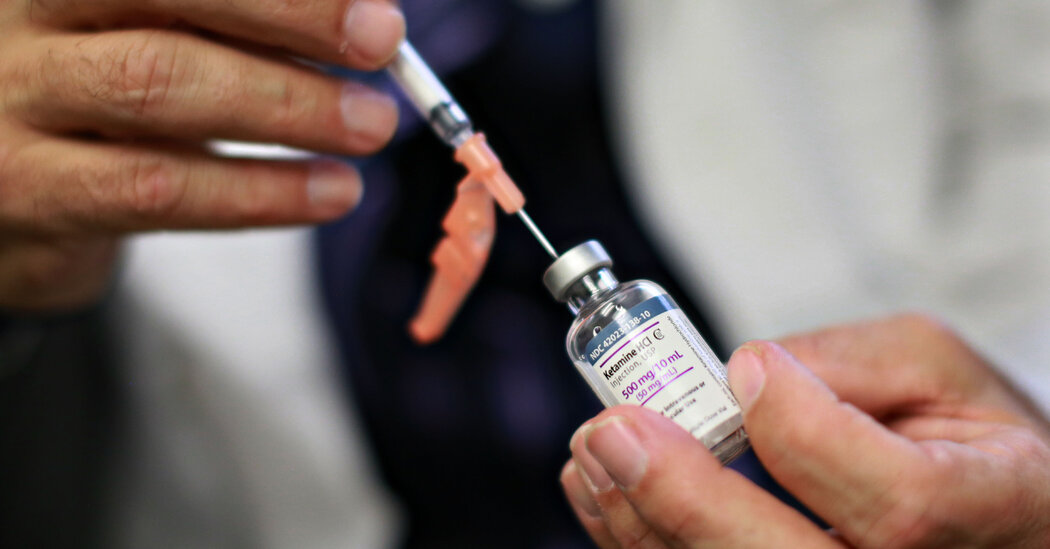
FDA Issues Warning Over Misuse of Ketamine Therapy

Unsupervised treatment — fueled by telemedicine prescriptions — for various psychiatric problems poses a number of health risks, the agency said.The Food and Drug Administration issued an alert on Tuesday about the dangers of treating psychiatric disorders with compounded versions of ketamine, a powerful anesthetic that has become increasingly popular among those seeking alternative therapies for depression, anxiety, post-traumatic stress disorder and other difficult-to-treat mental health problems.Compounded drugs are those that have been modified or tailored in a lab for the specific needs of an individual patient.The agency, citing reports it had received of adverse incidents, warned that the unsupervised use of compounded ketamine heightened the risk of dangerous psychiatric reactions and health problems like increased blood pressure, respiratory depression and urinary tract issues that can lead to incontinence.The warning sought to differentiate between the supervised use of ketamine as a psychiatric therapy administered at clinics and “wellness centers,” and online marketers who prescribe the drug via telemedicine so that buyers can take the drug at home.“Patients who receive compounded ketamine products from compounders and telemedicine platforms for the treatment of psychiatric disorders may not receive important information about the potential risks associated with the product,” the F.D.A. said in its warning.With the exception of esketamine, a federally approved ketamine nasal spray for treatment-resistant depression, the psychiatric use of ketamine is unapproved and unregulated, though so-called off-label use of ketamine is not illegal.Since it was first approved as a battlefield anesthetic in 1970, ketamine has also gained popularity as Special K, a club drug that is usually snorted. More recently, there has been an explosion in injected ketamine-assisted therapy, much of it fueled by a small but growing body of research reporting breakthroughs among patients with hard-to-treat mental health problems.But the regulatory vacuum has also opened the door to mounting abuse. Ketamine can be addictive, and heavy, long-term use can lead to significant health problems, including irreversible urinary tract damage.The pandemic-related boom in telehealth has given rise to a legion of online prescribers that dispense inexpensive ketamine lozenges, tablets or nasal sprays following a brief video interview. Some companies provide as many as 30 doses after one session, which experts say can lead to misuse.“Whenever you have something new, there may be people who run ahead with it. And there will be people who do things based on less evidence rather than more,” said Dr. Joshua Berman, medical director for interventional psychiatry at Columbia University, who helped develop the department’s ketamine program.Executives in the pharmaceutical compounding industry said they welcomed government oversight but expressed concern that a lack of nuance in the F.D.A.’s guidance could lead to overzealous crackdowns by state regulators, who have jurisdiction over the nation’s compounding facilities.“Our concern is that these online sellers are going to ruin it for everybody,” said Peter Koshland, who runs a compounding pharmacy in San Francisco. “Our fear is that regulators, if they perceive a threat to public health, will move to take this amazing medicine away and leave patients at risk.”The F.D.A. alert did not include data about adverse reactions among ketamine users. It cited a single case from April of a patient with post-traumatic stress disorder who experienced respiratory depression after taking compounded oral ketamine outside of a health care setting. The patient’s ketamine blood level, the agency said, was twice the amount typically used in anesthesia.The F.D.A. declined to make an official available for an interview.Dr. Steven Radowitz, chief medical officer at Nushama, a ketamine clinic in New York City that administers the drug via injection, said he hoped the alert would help patients differentiate between companies that sell the drug online and those whose treatments are accompanied by strict supervision. At Nushama, he said, the treatment protocol includes six ketamine treatments over the course of three weeks, and an in-house staff that includes doctors, nurse practitioners and therapists.“No one goes home with ketamine,” Dr. Radowitz said. “And that’s the way it should be.”

Read more →

New A.I. Tool Diagnoses Brain Tumors on the Operating Table

A new study describes a method for faster and more precise diagnoses, which can help surgeons decide how aggressively to operate.Once their scalpels reach the edge of a brain tumor, surgeons are faced with an agonizing decision: cut away some healthy brain tissue to ensure the entire tumor is removed, or give the healthy tissue a wide berth and risk leaving some of the menacing cells behind.Now scientists in the Netherlands report using artificial intelligence to arm surgeons with knowledge about the tumor that may help them make that choice.The method, described in a study published on Wednesday in the journal Nature, involves a computer scanning segments of a tumor’s DNA and alighting on certain chemical modifications that can yield a detailed diagnosis of the type and even subtype of the brain tumor.That diagnosis, generated during the early stages of an hourslong surgery, can help surgeons decide how aggressively to operate, the researchers said. In the future, the method may also help steer doctors toward treatments tailored for a specific subtype of tumor.“It’s imperative that the tumor subtype is known at the time of surgery,” said Jeroen de Ridder, an associate professor in the Center for Molecular Medicine at UMC Utrecht, a Dutch hospital, who helped lead the study. “What we have now uniquely enabled is to allow this very fine-grained, robust, detailed diagnosis to be performed already during the surgery.”Their deep learning system, called Sturgeon, was first tested on frozen tumor samples from previous brain cancer operations. It accurately diagnosed 45 of 50 cases within 40 minutes of starting genetic sequencing. In the other five cases, it refrained from offering a diagnosis because the information was unclear.The system was then tested during 25 live brain surgeries, most of them on children, alongside the standard method of examining tumor samples under a microscope. The new approach delivered 18 correct diagnoses and failed to reach the needed confidence threshold in the other seven cases. It turned around its diagnoses in less than 90 minutes, the study reported — short enough for it to inform decisions during an operation.Currently, in addition to examining brain tumor samples under a microscope, doctors can send them for more thorough genetic sequencing.But not every hospital has access to that technology. And even for those that do, it can take several weeks to receive results, said Dr. Alan Cohen, the director of the Johns Hopkins Division of Pediatric Neurosurgery and a cancer specialist.“We have to start treatment without knowing what we’re treating,” Dr. Cohen said.The new method uses a faster genetic sequencing technique and applies it only to a small slice of the cellular genome, allowing it to return results before a surgeon has started operating on the edges of a tumor.Dr. de Ridder said that the model was powerful enough to deliver a diagnosis with sparse genetic data, akin to someone recognizing an image based on only one percent of its pixels, and from an unknown portion of the image.“It can figure out itself what it’s looking at and make a robust classification,” said Dr. de Ridder, who is also a principal investigator at Oncode Institute, a cancer research center in the Netherlands.But some tumors are still difficult to diagnose. The samples taken during surgery are about the size of a kernel of corn, and if they include some healthy brain tissue, the deep learning system may struggle to pick out enough tumor-specific markers.In the study, doctors dealt with that by asking the pathologists examining samples under a microscope to flag the ones with the most tumor for sequencing, said Marc Pagès-Gallego, a bioinformatician at UMC Utrecht and a co-author of the study.There can also be differences within a single patient’s tumor cells, meaning that the small segment being sequenced may not be representative of the entire tumor. Some less common tumors may not correspond to those that have previously been classified. And some tumor types are easier to classify than others.Other medical centers have already started applying the new method to surgical samples, the study’s authors said, suggesting that it can work in other people’s hands.But Dr. Sebastian Brandner, a professor of neuropathology at University College London, said that sequencing and classifying tumor cells often still required significant expertise in bioinformatics as well as workers who are able to run, troubleshoot and repair the technology.“Implementation itself is less straightforward than often suggested,” he said.Brain tumors are also the most well-suited to being classified by the chemical modifications that the new method analyzes; not all cancers can be diagnosed that way.The new method is part of a broad movement toward bringing molecular precision to diagnosing tumors, potentially allowing scientists to develop targeted treatments that are less damaging to the nervous system. But translating a deeper knowledge of tumors to new therapies has proved difficult.“We’ve made some gains,” Dr. Cohen said, “but not as many in the treatment as in the understanding of the molecular profile of the tumors.”

Read more →

NHS must modernise or die – Streeting tells Labour conference

The shadow health secretary said it was up to Labour to “rescue, rebuild and renew” the NHS.Wes Streeting described it as an “analogue system in a digital age” and it was no longer the envy of the world it once was.And he warned his party conference it was not safe in Conservative hands, claiming the Tories were moving further to the right.Labour prepared to ignore local opposition to build homes – Starmer

Read more →

Discovery reveals fragile X syndrome begins developing even before birth

Fragile X syndrome, the most common form of inherited intellectual disability, may be unfolding in brain cells even before birth, despite typically going undiagnosed until age 3 or later.
A new study published today in the journal Neuron by researchers at the University of Wisconsin-Madison showed that FMRP, a protein deficient in individuals with fragile X syndrome, has a role in the function of mitochondria, part of a cell that produces energy, during prenatal development. Their results fundamentally change how scientists understand the developmental origins of fragile X syndrome and suggest a potential treatment for brain cells damaged by the dysfunction.
The study, led by four postdoctoral fellows — Minjie Shen, Carissa Sirois, Yu (Kristy) Guo and Meng Li — working in the lab of the lab of Xinyu Zhao, neuroscience professor and neurodevelopmental diseases researcher a UW-Madison’s Waisman Center, found FMRP regulating a gene called RACK1 to promote mitochondrial function. Using a drug to enhance mitochondrial function, they were able to rescue brain cells damaged by lack of FMRP.
Individuals with FXS may present developmental delays — not sitting, walking or talking at expected ages — as well as mild to severe intellectual disability, learning disabilities and social and behavioral problems. About half are also diagnosed with autism spectrum disorder.
In previous research, Zhao found that mitochondria in mice with an FMRP deficiency that imitates FXS were smaller and unhealthy. Diving deeper, they also discovered that FMRP regulates genes involved in mitochondria fission-fusion, a process into which mitochondria fuse into a bigger shape in order to produce more energy for the cell.
For the study, researchers grew brain cells called neurons grown from induced pluripotent stem cells. Because the stem cells came from people with FXS, the researchers could study the development of the disorder at a cellular level, determining whether mitochondria in human cells experienced issues similar to those in mice.
“And indeed, we found that human neurons also have fragmented (smaller) mitochondria,” Zhao says. They also found fewer mitochondria in neurons derived from FXS patients, which they did not see in the neurons of the mice modeling FXS.

Read more →