Peering inside cells to see how they respond to stress

Imagine the life of a yeast cell, floating around the kitchen in a spore that eventually lands on a bowl of grapes. Life is good: food for days, at least until someone notices the rotting fruit and throws them out. But then the sun shines through a window, the section of the counter where the bowl is sitting heats up, and suddenly life gets uncomfortable for the humble yeast. When temperatures get too high, the cells shut down their normal processes to ride out the stressful conditions and live to feast on grapes on another, cooler day.
This “heat shock response” of cells is a classic model of biological adaptation, part of the fundamental processes of life — conserved in creatures from single-celled yeast to humans — that allow our cells to adjust to changing conditions in their environment. For years, scientists have focused on how different genes respond to heat stress to understand this survival technique. Now, thanks to the innovative use of advanced imaging techniques, researchers at the University of Chicago are getting an unprecedented look at the inner machinery of cells to see how they respond to heat stress.
“Adaptation is a hidden superpower of the cells,” said Asif Ali, PhD, a postdoctoral researcher at UChicago who specializes in capturing images of cellular processes. “They don’t have to use this superpower all the time, but once they’re stuck in a harsh condition, suddenly, there’s no way out. So, they employ this as a survival strategy.”
Ali works in the lab of David Pincus, PhD, Assistant Professor of Molecular Genetics and Cell Biology at UChicago, where their team studies study how cells adapt to stressful and complex environments, including the heat shock response. In the new study, published October 16, 2023, in Nature Cell Biology, they combined several new imaging techniques to show that in response to heat shock, cells employ a protective mechanism for their orphan ribosomal proteins — critical proteins for growth that are highly vulnerable to aggregation when normal cell processing shuts down — by preserving them within liquid-like condensates.
Once the heat shock subsides, these condensates get dispersed with the help of molecular chaperone proteins, facilitating integration of the orphaned proteins into functional mature ribosomes that can start churning out proteins again. This rapid restart of ribosome production allows the cell to pick back up where it left off without wasting energy. The study also shows that cells unable to maintain the liquid state of these condensates don’t recover as quickly, falling behind by ten generations while they try to reproduce the lost proteins.
“Asif developed an entirely new cell biological technique that lets us visualize orphaned ribosomal proteins in cells in real time, for the first time,” Pincus said. “Like many innovations, it took a technological breakthrough to enable us to see a whole new biology that was invisible to us before but has always been going on in cells that we’ve been studying for years.”
Loosely affiliated biomolecular goo
Ribosomes are crucial machines inside the cytoplasm of all cells that read the genetic instructions on messenger RNA and build chains of amino acids that fold into proteins. Producing ribosomes to perform this process is energy intensive, so under conditions of stress like heat shock, it’s one of the first things a cell shuts down to conserve energy. At any given time though, 50% of newly synthesized proteins inside a cell are ribosomal proteins that haven’t been completely translated yet. Up to a million ribosomal proteins are produced per minute in a cell, so if ribosome production shuts down, these millions of proteins could be left floating around unattended, prone to clumping together or folding improperly, which can cause problems down the line.

Read more →

Researchers develop innovative technique for distinguishing tumor from normal tissue

Removing a patient’s tumor while sparing healthy tissue requires exquisite precision, but often surgeons must rely on their eyes and hands to determine where to cut. A team led by researchers from Mass General Brigham has developed a visualization tool that combines high-speed cameras and fluorescent injection to distinguish tumor tissue from normal tissue across cancer types. The team evaluated the new imaging technology, known as fluorescence lifetime (FLT) imaging, using specimens from more than 60 patients that underwent surgery of various cancers. In a paper published in Nature Biomedical Engineering, the team reported that the technique was over 97 percent accurate across tumor types, with the potential to improve the accuracy of cancer surgeries.
“This collaboration has been thrilling,” said corresponding author Anand Kumar, PhD, of the Athinoula A. Martinos Center for Biomedical Imaging at Massachusetts General Hospital (MGH). “Our lab has been studying fluorescence lifetime imaging since 2002, but this is the first time that anyone has combined it with tumor imaging and injectable dyes in humans. By doing so, we’ve developed a technique for accurately distinguishing tumor tissue from healthy tissue across cancer types.”
Kumar worked closely with colleagues at Mass Eye and Ear, another member of the Mass General Brigham healthcare system, where patients are treated for head and neck cancer.
“This technology has taken us to the brink of a revolution in solid tumor surgery,” said Mark Varvares, MD, chief of Otolaryngology-Head and Neck Surgery at Mass Eye and Ear. “By using the advanced imaging techniques combined with the dye, surgeons in the near future will have the ability to more completely remove all malignant cells during tumor surgery while at the same time, with confidence, spare normal tissue, enhancing postoperative function and in some cases, the patient’s appearance.”
Mass General Brigham brings together 16 member institutions, including academic medical centers, top-tier specialty hospitals, community hospitals, a rehabilitation network and more. Research that spans more than one of these entities is more than the sum of its parts, helping to provide insights and unique perspectives from multiple settings and areas of expertise.
Many technologies have been pursued to improve visualization of tumors during surgery, including fluorescence imaging and advanced microscopy, but such technologies have not yet been widely adopted and most are restricted to specific types or subtypes of cancer. Fluorescence imaging can use dyes to target cancer-specific molecules, but standard imaging techniques can have limited accuracy for detecting tumor margins — or the edges of normal tissue that surround a tumor — since the expression of these molecules can vary widely within and across tumor types.
The technique used by Kumar and colleagues, known as FLT imaging, takes a different tact. Instead of relying on dyes only for targeting cancer, the technique uses high-speed cameras to detect changes in the property of the light emitted by tissue. In previous studies in preclinical models, Kumar and colleagues found that tumors in mice injected with a dye known as indocyanine green (ICG) had a longer fluorescence lifetime compared to normal tissue. This difference allowed the researchers to accurately distinguish between tumor tissue and normal tissue.

Read more →

Early behavioral health problems need earlier interventions

A six-year study that analyzed data from a 25-question screening tool found alarming evidence of unhealthy behavioral trajectories starting as early as age 2 among families affected by low income and other social stressors.
Findings from the study led by Robert Ammerman, PhD, and colleagues at Cincinnati Children’s were published Oct. 16, 2023, in JAMA Pediatrics.
Experts may not be surprised by another study reporting an association between family stress and child behavioral problems. However, the early ages of onset and severity of behavioral problems were unexpected. Importantly, the ability of a 10-minute screening test to detect higher-risk groups of children suggests that practical tools may already be available to help experts target limited intervention resources toward those most in need.
“The elevated results we saw reflect significant behavioral problems starting at very early ages,” Ammerman says. “The findings suggest that we cannot afford to wait until children enter school or reach their teen years to intervene. Our field needs to focus much more intently on prevention.”
Rx: population-level action PLUS earlier individual care
The research team administered a well-established screening tool called the Strengths and Difficulties Questionnaire (SDQ) to 15,218 children during annual well-child visits that occurred at three primary care offices and three school-based care clinics.
The questions were answered by the caregivers, mostly mothers, who reported whether their children were more likely than others to exhibit various behaviors. Questions addressed fighting, temper tantrums, fearfulness, excessive fidgeting, willingness to help others, avoiding other children, and more.

Read more →

Fight Over Covid Lab Leak Stalls Virology Research

Scientists doing “gain-of-function” research said that heightened fears of lab leaks are stalling studies that could thwart the next pandemic virus.Questions about whether Covid leaked from a Chinese laboratory have cast a chill over American virus research, drying up funding for scientists who collect or alter dangerous pathogens and intensifying a debate over those practices.The pullback has transformed one of the most highly charged fields of medical science. While some believe such experiments could fend off the next pandemic, others worry that they are more likely to start one.At Pennsylvania State University, a proposal to infect ferrets with a mutant bird flu virus passed the federal government’s most rigorous biosafety review only to be rebuffed by the National Institutes of Health. Troy Sutton, the scientist behind the studies, said that health officials referred to the public controversy over the lab leak theory in advising him to pursue different experiments.In Washington, international development officials pulled the plug this summer on a $125 million program to collect animal viruses on several continents after two senior Republican senators demanded that they end the project.And elsewhere in the United States, nearly two dozen virologists, some of whom spoke anonymously for fear of jeopardizing funding or career prospects, described a professionwide retreat from sensitive experiments. Some said that they had stopped proposing such work because research plans were languishing in long and opaque government reviews. One virologist said that university administrators had asked him to remove his name from a study done with colleagues in China.The Wuhan Institute of Virology in 2021.Thomas Peter/ReutersSome of the affected experiments constitute gain-of-function research, in which scientists genetically alter a virus to see whether that makes the pathogen deadlier or more contagious.To proponents of such work, there is no better way to home in on what mutations make a virus dangerous. Those findings, in turn, can help researchers spot the most worrisome of the new pathogens constantly jumping from animals to humans or prepare vaccines to target pandemic-ready viruses.“The next flu pandemic is brewing in nature, but we have very little means of stopping it, very little means of identifying what the most dangerous viruses are,” said Dr. Sutton, the Penn State virologist. “This freight train is coming, and we need to do anything we can do to get ahead of that.”But critics say that fiddling with deadly viruses poses intolerable risks for the sake of only hazy public health benefits. Lab mishaps have happened, including in the United States. However small the odds of a lab-generated outbreak, a leak could be catastrophic. If political concerns are intensifying scrutiny of gain-of-function studies, those scientists say, the result is still a much-needed recalibration of the risks and benefits of such work.“I think there’s lots of good reason to try to remove politics from science, but I can’t complain when what I regard as legitimate political criticism of certain kinds of science affects the judgment of funding agencies,” said Marc Lipsitch, an epidemiologist at Harvard who has long questioned the benefits of disease-enhancing experiments. “Ultimately, they are spending tax dollars.”In the Covid pandemic, both sides of the debate have found powerful grist.The possibility that Covid emerged from a lab fueled appeals from biosafety proponents for a clampdown on experiments with even a remote chance of triggering a similar outcome. At the same time, studies suggesting that Covid spilled instead from an illegal animal market reinforced scientists’ fears of the dangerous mutations that viruses pick up in nature — and the need to prepare for them with safer studies in a lab.The next threat may not be far off: A new bird flu variant known as H5N1 has felled many millions of birds globally, sporadically jumping into their handlers as it spreads.New RulesChicken culling in Hong Kong in 2011.Aaron Tam/Agence France-Presse — Getty ImagesDr. Sutton was apprenticing in a leading bird flu lab when, in 2011, a firestorm erupted in his field.Two groups — one in the United States and one in the Netherlands — tweaked the genes of bird flu viruses to make them more transmissible, showing that such viruses could evolve to trigger human pandemics.To critics, the studies became a byword for reckless experiments that risked kindling horrific outbreaks for only modest scientific knowledge. Lab leaks were responsible for the last cases of smallpox, in 1978, and for infections among scientists in Asia with an earlier coronavirus, SARS-CoV-1, in 2003 and 2004.But other researchers saw the bird flu studies as critical for mapping the virus’s evolutionary potential. Because of those studies, scientists said, they now know what to look for when sequencing the viruses that are decimating bird colonies. Similar experiments have helped researchers pick viruses to target with prepandemic vaccines.With those debates flaring, and the discovery in 2014 of forgotten vials of smallpox on the N.I.H. campus, the Obama administration temporarily suspended funding that year for gain-of-function work. Dr. Sutton had just completed bird flu studies at the University of Maryland that underwent layers of special government review and drew criticism from some scientists.He told his wife it might be time to leave academic research.But the Trump administration lifted the pause and implemented new oversight rules in 2017 — the same year that Dr. Sutton opened his Penn State lab. Under the new rules, a specialized government committee would review certain gain-of-function proposals, another step in a vetting process that includes lab inspections and university biosafety reviews.The committee keeps secret its membership as well as details about deliberations. Its oversight is limited to government-funded research. And it has vetted only three projects — partly because some scientists, fearing prolonged reviews, started shelving proposals that could trigger them.Dr. Sutton, though, was not discouraged. He trained in virology at the same hospital in Vancouver where, when he was 12, his mother died of cancer. He felt that science had fallen short. To protect people’s health, researchers needed to investigate new frontiers of disease.The third project that the gain-of-function committee reviewed was his.‘They Weren’t Comfortable’The Eva J. Pell Laboratory at Penn State is the second-most secure type of biosafety lab in the United States.Haiyun Jiang for The New York TimesPenn State’s high-security lab, tucked on a remote corner of campus behind tall fencing, operates like a vacuum: Outdoor air flows in before being sucked back out through filters that clean the exhaust by removing contaminated particles. Before handling viruses, scientists strap on battery-powered filtration hoods. They exchange their street clothes for protective gear while they work and shower on the way out.There, in 2018, Dr. Sutton proposed conducting bird flu studies.Dr. Sutton was preoccupied with the H7N9 strain of the virus, which at the time had been spreading in poultry and occasionally jumping to people, killing 40 percent of patients. Fears that the virus could mutate, allowing it to spread easily from person to person, prompted American health officials to classify it as “having the greatest potential to cause a pandemic.”He wanted to know how close that scenario was to becoming reality.In earlier studies, Dr. Sutton had discovered an alarming clue. The virus, which transmitted poorly among people, should also have struggled to spread among ferrets, mammals used as experimental stand-ins for humans. But to his surprise, the virus sometimes jumped from one ferret to another, picking up genetic mutations.Did those mutations appear at random? Or were they endowing the virus with just what it needed to spread, offering a preview of how the wild virus could evolve to start a pandemic?His 2018 proposal suggested addressing that question by creating versions of the virus with those mutations and infecting ferrets with them.Inside a High-Security Virus LabHigh-security labs, like this one at Penn State, are at the center of a debate over research that alters viruses to make them more dangerous.At the N.I.H., the experiments passed their first test: An influential panel of expert scientists recommended them for funding. Then came the gain-of-function committee.The committee pored over his study, Dr. Sutton said, asking about trainings, equipment and worker screenings. In February 2020, he said, the panel reported being satisfied that the project could proceed with a few clarifications. It just needed approval from N.I.H. leaders.Dr. Sutton made the requested clarifications, he said, and resubmitted his plans in the summer of 2020. By then, Covid had arrived — and with it, questions that would drastically alter the political climate around virology research.Some scientists suggested that the virus had leaked out of the Wuhan Institute of Virology, a Chinese coronavirus lab that had received research funding from the N.I.H. No public evidence indicates that the institute was storing any pathogen that could have become the coronavirus. Still, President Donald J. Trump and Republicans on Capitol Hill amplified the concerns.Inside the N.I.H., the political feud took a toll, raising the cost to the agency of becoming embroiled in additional controversies. A flurry of Congressional requests soon piled up, as did more public records requests than usual.The scrutiny seemed to make government scientists skittish. Dr. Sutton said his primary contact at the N.I.H. told him by phone in the summer of 2020 that the agency would not fund his ferret transmission studies and encouraged him to find other ways of studying the virus.“They just said, ‘You know, there’s a lot of controversy about this kind of work in the news right now,’” Dr. Sutton recalled. “They weren’t comfortable funding it.”In a statement, Dr. Emily Erbelding, an N.I.H. official, said the agency had needed to do additional reviews of the proposal. Dr. Sutton’s updated submission arrived near the busy end of a fiscal year, she said, and officials had limited time to decide whether to fund it.A year later, in September 2021, the agency instead gave Dr. Sutton money for modified experiments that added the mutations only to a weakened virus. He would also examine them in a petri dish rather than in live animals. The work, undertaken in the same high-security lab, was less risky, he said, but also less informative.Some scientists said that the experiments as originally planned may not have produced enough insights to justify the risk. Viruses behave differently in ferrets than in humans, and mutations that may enhance one variant can have different effects on another.But other researchers said that only the animal studies could have revealed what viral traits would turn that bird flu into a pandemic threat, informing decisions down the road about whether to ramp up testing, make vaccines or isolate cases if similar traits were to emerge in real-world pathogens.Senator PushbackSenator Lindsey Graham of South Carolina, left, and Senator Jim Risch of Idaho, powerful Republicans who oversee U.S.A.I.D.Evan Vucci/Associated PressBy the fall of 2021, when Dr. Sutton started running the tamer version of his studies, the debate over Covid’s origins had intensified. In hearings, Republican senators were hammering health officials over funding virus research abroad.Nevertheless, the United States Agency for International Development made a big announcement: It would spend $125 million to partner with labs around the world to collect unknown animal viruses and prepare for those that could trigger a pandemic.The scientists chosen for the project, known as DEEP VZN, tried to insulate the work from political blowback, four researchers involved with the effort said. They did not propose gain-of-function experiments. They would not work in China.Their biosafety plan, which was reviewed by The Times and approved by the aid agency, included medical screenings of field workers, as well as spot checks and audits by biosafety specialists.But the project soon ran into trouble on Capitol Hill. In November 2021, two Republicans with powerful roles on committees that oversee the agency and its funding — Senator Jim Risch of Idaho and Senator Lindsey Graham of South Carolina — sent a letter demanding details about the effort, citing concerns about previous federal funding for research in China.The agency solicited input from health and security officials, including in the White House, according to a U.S.A.I.D. official who was not authorized to speak publicly. Some supported the program, which aimed to train scientists in poorer nations to safely identify viruses. Others worried that field researchers risked becoming infected by pathogens that might never have jumped into people otherwise.Troy Sutton, in green lab scrubs, pointing toward a workroom in the Penn State lab.Haiyun Jiang for The New York TimesEric S. Lander, then President Biden’s science adviser, publicly doubted scientists’ ability to identify future pandemic viruses. Jason Matheny, then a technology and national security expert at the National Security Council, worried that identifying new viruses would assist bioweapons creators.But if federal officials delivered mixed reviews, Republican senators intensified their objections. In a February 2022 letter, Senators Risch and Graham demanded that U.S.A.I.D. “immediately cease all work” on the project, a request that got the aid agency’s attention, the official said.Scientists on the project, led by a Washington State University group, received word that they needed to assuage the senators, the four researchers said.They confined the project to fewer countries. They agreed to inactivate any viruses in the field, a move that would protect workers handling the samples back at the lab — though at the expense of any insights gleaned from growing live viruses. And they focused on plans to sample domestic animals that already had contact with people.The aid agency held five briefings with Senate staff members. But the precautions were not enough — for the project’s detractors on Capitol Hill or for the scientists who remained unconvinced that such work was safe or likely to ever help anticipate a pandemic.This summer, before field work had begun, U.S.A.I.D. privately told scientists that it was canceling their funding. The BMJ, a medical journal, first reported on the decision and opposition to the program.In poorer nations that had been promised funding, the project’s undoing damaged efforts to train workers to safely identify not only animal viruses but also human outbreaks.Pablo Tsukayama, a Peruvian microbiologist, said he was forced to fire four scientists who planned to study viral samples. He also shelved plans to purchase biocontainment hoods and ventilation systems.“We were planning to bring these labs up to the highest safety standards,” he said. “That’s why the U.S. funding was key.”Abandoning Studies“This freight train is coming, and we need to do anything we can do to get ahead of that,” Dr. Sutton said.Haiyun Jiang for The New York TimesVirologists and biosafety experts largely agree on one point: The federal government’s vetting process is too opaque and too slow.One scientist, a longtime recipient of N.I.H. funding, said that a proposal of his, aimed at understanding super-contagious coronavirus variants, languished with health officials for more than a year.The proposal suggested adding a mutation from the variants to a weakened version of the original coronavirus from 2020, work intended to identify targets for surveillance or new drugs. The mutation is already in viruses sickening thousands of people every day.In an email, reviewed by The Times, health officials told him the proposal needed further review because it might constitute gain-of-function research. But he said that he knew little about how long the evaluation would take, who was conducting it or what safety measures he could introduce to assuage concerns.“There are ways to do these things safely,” he said. “But the delay in responding means you’re functionally stopping this research.”Dr. Erbelding, of the N.I.H., said that the gain-of-function vetting process had not changed since its introduction in 2017. An increase in virology proposals because of the pandemic, she said, may have contributed to the perception that reviews have slowed.The White House is reviewing gain-of-function oversight policies after an expert panel this year endorsed sweeping reforms. Without clearer guidance, though, some virologists said they were ditching projects for fear of finding themselves in the cross hairs of a congressional inquiry or a yearslong biosafety review.“Scientists are backing away from certain lines of research just in anticipation of the delays and paperwork,” Anice Lowen, an influenza virologist at Emory University, said. “A lot of parties are becoming more conservative.”For biosafety proponents, the extra scrutiny has filled a void left by an absence of new regulations. But other scientists said that studies were being stifled even before health officials could assess them, driving research to nations with weaker biosafety practices and leaving basic questions about the coronavirus unanswered.Dr. Sutton himself has stopped proposing gain-of-function experiments. He said he welcomed oversight and had even worked to ensure that his project was subject to a second government review that it could technically have avoided. But the long and unpredictable biosafety process, he said, was making it difficult to keep his lab running.“The cost of dealing with the regulations is too high,” he said. “I stopped dreaming up those kinds of experiments.”

Read more →

Harvard Cozies Up to #MentalHealth TikTok

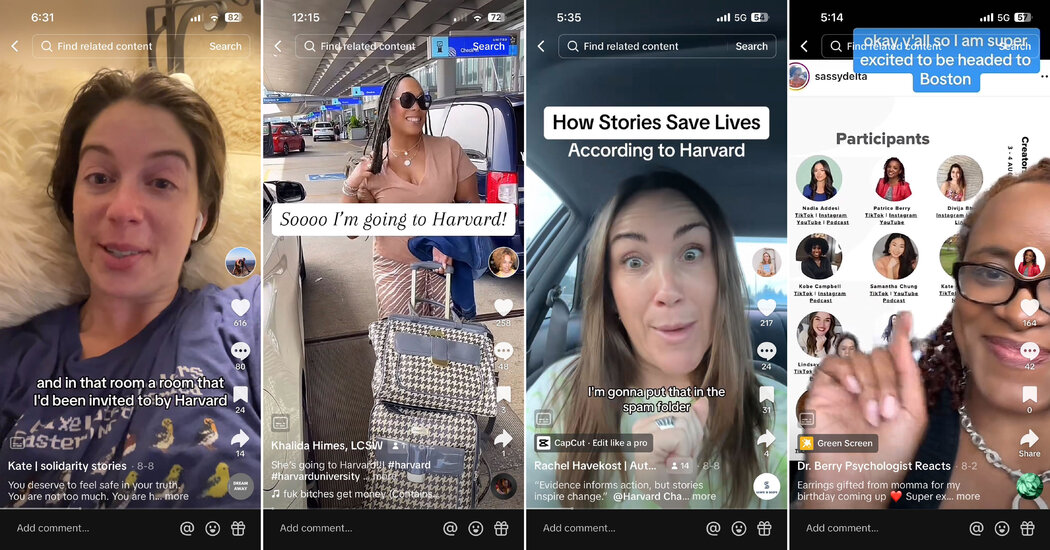
As young Americans turn to TikTok for information on mental health, the T.H. Chan School of Public Health at Harvard is building its own team of influencers.One day in February, an invitation from Harvard University arrived in the inbox of Rachel Havekost, a TikTok mental health influencer and part-time bartender in Seattle who likes to joke that her main qualification is 19 years of therapy.The same email arrived for Trey Tucker, a.k.a. @ruggedcounseling, a therapist from Chattanooga, Tenn., who discusses attachment styles on his TikTok account, sometimes while loading bales of hay onto the bed of a pickup truck.The invitations also made their way to Bryce Spencer-Jones, who talks his viewers through breakups while gazing tenderly into the camera, and to Kate Speer, who narrates her bouts of depression with wry humor, confiding that she has not brushed her teeth for days.Twenty-five recipients glanced over the emails, which invited them to collaborate with social scientists at the T.H. Chan School of Public Health at Harvard. They were not accustomed to being treated with respect by academia; several concluded that the letters were pranks or phishing attempts and deleted them.They did not know — how could they? — that a team of researchers had been observing them for weeks, winnowing down an army of mental health influencers into a few dozen heavyweights selected for their reach and quality.The surgeon general has described the mental health of young people in America as “the defining public health crisis of our time.” For this vulnerable, hard-to-reach population, social media serves as a primary source of information. And so, for a few months this spring, the influencers became part of a field experiment, in which social scientists attempted to inject evidence-based content into their feeds.

@kate__speer Calling all people pleasers! 🙃💁🏻♀️ #anxiety #peoplepleasingrecovery #peoplepleaser #peoplepleasing #peoplepleasingendsnow #recovery #mentalhealthhack #mentalhealthlifehack #ocd #exposuretherapy ♬ Good Vibes (Instrumental) – Ellen Once Again “People are looking for information, and the things that they are watching are TikTok and Instagram and YouTube,” said Amanda Yarnell, senior director of the Chan School’s Center for Health Communication. “Who are the media gatekeepers in those areas? Those are these creators. So we were looking at, how do we map onto that new reality?”The answer to that question became clear in August, when a van carrying a dozen influencers pulled up beside the campus of Harvard Medical School. Everything about the space, its Ionic columns and Latin mottos carved in granite, told the visitors that they had arrived at the high temple of the medical establishment.Each of the visitors resembled their audience: tattooed, in baseball caps or cowboy boots or chunky earrings that spelled the word LOVE. Some were psychologists or psychiatrists whose TikToks were a side gig. Others had built franchises by talking frankly about their own experiences with mental illness, describing eating disorders, selective mutism and suicide attempts.On the velvety Quad of the medical school, they looked like tourists or day-trippers. But together, across platforms, they commanded an audience of 10 million users.Step 1: The subjectsFrom left, screenshots of the TikTok feeds of Ms. Speer, Khalida Himes, Rachel Havekost and Dr. Patrice Berry.Samantha Chung, 30, who posts under the handle @simplifying.sam, could never explain to her mother what she did for a living.She is not a mental health clinician — until recently, she worked as a real estate agent. But two years ago, a TikTok video she made on “manifesting,” or using the mind to bring about desired change, attracted so much attention that she realized she could charge money for one-on-one coaching, and quit her day job.At first, Ms. Chung booked one-hour appointments for $90, but demand remained so high that she now offers counseling in three- and six-month “containers.” She sees no need to go to graduate school or get a license; her approach, as she puts it, “helps clients feel empowered rather than diagnosed.” She has a podcast, a book project and 813,000 followers on TikTok.This accomplishment, however, meant little to her parents, immigrants from Korea who had hoped she would become a doctor. “I really just thought of myself as someone who makes videos in their apartment,” Ms. Chung said.The work of an influencer can be isolating and draining, far from the sunlit glamour that many imagine. Ms. Havekost, 34, was struggling with whether she could even continue. After years of battling an eating disorder, she was feeling stable, which did not generate mental health content; that was one problem.

@rachelhavekost this is your sign🦋🥰. “dance it out” merch is now up on my website🌈💃🏼boogie over the 🔗in my bio or type rachelhavekost.com/merch in your browser🎯🍟! I love you all SO MUCH!!! #dancetoheal #danceitout #somatichealing #somaticshaking ♬ ILYAF (I love you always forever) – Donna Lewis & Digital Farm Animals The other problem was money. She is fastidious about endorsement deals, and still has to tend bar part time to make ends meet. “I’ve turned down an ice cream brand that wanted to pay me a lot of money to post a TikTok saying it was low sugar,” Ms. Havekost said. “That sucked, because I had to turn down my rent.”At Harvard, the influencers were treated like dignitaries, provided with branded merchandise and buffet lunches as they listened to lectures on air quality and health communication. From time to time, the lecturers broke into jargon, referring to multivariate regression models and the Bronfenbrenner model of behavior theory.During a break, Jaime Mahler, a licensed counselor from New York, remarked on this. In her videos, she prides herself on distilling complex clinical ideas into digestible nuggets. In this respect, she said, Harvard could learn a lot from TikTok.“She kept using the word ‘heuristics,’ and that was actually a genuine distraction for me,” Ms. Mahler said of one lecturer. “I remembered her telling me what it was in the beginning, and I didn’t want to Google it, and I kept getting distracted. I was like, Oh, she used it again.”But the main thing the guests wanted to express was gratitude. “I spent my 20s in a psychiatric ward trying to graduate from college,” said Ms. Speer, 36. “Walking into these rooms at Harvard and being held lovingly — honestly, it is nothing more than miraculous.”Ms. Chung was so inspired that she told the assembled crowd that she would now post as an activist. “I am walking out of this knowing the truth, which is that I am a public health leader,” she said. When Meng Meng Xu, one of the researchers on the Harvard team, heard that, she got goose bumps. This was exactly what she had been hoping for.Step 2: The field experimentAmanda Yarnell, senior director of the Chan School’s Center for Health Communication. “People are looking for information, and the things that they are watching are TikTok and Instagram and YouTube,” she said.Sarah Blesener for The New York TimesMany academics take a dim view of mental health TikTok, viewing it as a Wild West of unscientific advice and overgeneralization. Social media, researchers have found, often undermines established medical guidelines, warning viewers off evidence-based treatments like cognitive behavioral therapy or antidepressants, while boosting interest in risky, untested approaches like semen retention.TikTok, which has grappled with how to moderate such content, said recently that it would direct users searching for a range of conditions like depression or anxiety to information from the National Institute of Mental Health and the Cleveland Clinic.At their worst, researchers said, social media feeds can serve as a dark echo chamber, barraging vulnerable young people with messages about self-harm or eating disorders.“Your heart just sinks,” said Corey H. Basch, a professor of public health from William Paterson University who led a 2022 study analyzing 100 TikTok videos with the hashtag #mentalhealth.“If you’re feeling low and you have a dismal outlook, and for some reason that’s what you are drawn to, you will go down this rabbit hole,” she said. “And you could just sit there for hours watching videos of people who just want to die.”Ms. Basch doubted that content creators could prove to be useful partners for public health. “Influencers are in the business of making money for their content,” she said.Ms. Yarnell does not share this opinion. A chemist who pivoted to journalism, she found TikTok “a rich and exciting place” for scientists. She views influencers — she prefers the more respectful term “creators” — not as click-hungry amateurs but as independent media companies, making careful choices about partnerships and, at times, being motivated by altruism.In addition, she said, they are good at what they do. “They understand what their audience needs,” Ms. Yarnell said. “They’ve done a huge amount of storytelling that has allowed stigma to fall away. They have been a huge part of convincing people to talk about different mental health concerns. They are a perfect translation partner.”This is not the first time that Harvard’s public health experts have tried to hitch a ride with popular culture. In 1988, as part of a campaign to prevent traffic fatalities, researchers asked writers for prime-time television programs like “Cheers” and “L.A. Law” to write in references to “designated drivers,” a concept that was, at the time, entirely new to Americans. That effort was famously successful; by 1991, the phrase was so common that it appeared in Webster’s dictionary.

@latinxtherapy Insurances can be so unfair (at least in california) to #mentalhealth providers #latinxtherapy #directory ♬ original sound – shawty bae 🥥🫦 Inspired by this effort, Ms. Yarnell designed an experiment to determine whether influencers could be persuaded to disseminate more evidence-based information. First, her team developed a pool of 105 influencers who were both prominent and responsible: no diet-pill endorsements, no “five signs you have A.D.H.D.”The influencers would not be paid but, ideally, would be won over to the cause. Forty-two of them agreed to be part of the study and received digital tool kits organized into five “core themes”: difficulty accessing care, intergenerational trauma, mind-body links, the effect of racism on mental health and climate anxiety.A smaller group of 25 influencers also received lavish, in-person attention. They were invited to hourlong virtual forums, united on a group Slack channel and, finally, hosted at Harvard. But the core themes were what the researchers were watching. They would keep an eye on the influencers’ feeds and measure how much of Harvard’s material had ended up online.Step 3: This study is not without limitationsA month after the gathering, Ms. Havekost was once again feeling depleted. It wasn’t that she didn’t care about her duty as a public health leader — on the contrary, she said, “every time I post something now, I think about Harvard.”But she saw no simple way to integrate public health messages into her videos, which frequently feature her dancing uninhibitedly, or gazing at the viewer with an expression of unconditional love while text scrolls past. Her audience knows her communication style, she said; study citations wouldn’t feel any more authentic than cleavage enhancement.Mr. Tucker, back in Chattanooga, reached a similar conclusion. He has 1.1 million TikTok followers, so he knows which themes attract viewers. Trauma, anxiety, toxic relationships, narcissistic personalities, “those are the catnip, so to speak,” he said. “Basically, stuff that feeds the victim mentality.”He had tried a couple of videos based on Harvard research — for example, on the way the brain responds to the sound of water — but they had performed poorly with his audience, something he thought might be a function of the platform’s algorithm.“They are not really trying to help spread good research,” Mr. Tucker said. “They are trying to keep eyeballs engaged so they can keep watch times as long as possible and pass that onto advertisers.”It was different for Ms. Speer. After returning from Harvard, she received an email from S. Bryn Austin, a professor of social and behavioral sciences and a specialist in eating disorders, proposing that they collaborate on a campaign to prohibit the sale of weight-loss pills to minors in New York State.Ms. Speer was elated. She got to work putting together a sizzle reel and a grant proposal. As summer turned to fall, her life seemed to have turned a corner. “That’s what I want to do,” she said. “I want to do it for good, instead of, you know, for lip gloss.”Step 4: System-level effectsDr. Sasha Hamdani, a psychiatrist and TikTok creator, center, with Ifelola Ojuri, of YouTube Health, right, and Ms. Speer during a panel discussion in New York City.Sarah Blesener for The New York TimesLast week, in a conference room overlooking the Hudson River, Ms. Yarnell and one of her co-authors, Matt Motta, of Boston University, presented the results of the experiment.It had worked, they announced. The 42 influencers who received Harvard’s talking points were 3 percent more likely to post content on the core themes researchers had fed them. Although that may seem like a small effect, Dr. Motta said, each influencer had such a large audience that the additional content was viewed 800,000 times.These successes bore little resemblance to peer-reviewed studies. They looked like @drkojosarfo, a psychiatric nurse practitioner with 2.4 million followers, dancing in a galley kitchen alongside text on the mind-body link, or the user @latinxtherapy throwing shade on insurance companies while lip-syncing to the influencer Shawty Bae.The uptake seemed to be driven by the distribution of written materials, with no additional effect among subjects who had deep interactions with Harvard faculty. That was unexpected, Ms. Yarnell said, but it was good news, since digital tool kits are cheap and easy to scale.“It’s simpler than we thought,” she said. “These written materials are useful to creators.”But the biggest effect was something that did not show up in the data: the formation of new relationships. Seated beside Ms. Yarnell as she presented the experiment’s results were two of its subjects: Ms. Speer, with her service dog, Waffle, who is trained to paw at her when he smells elevated cortisol in her sweat, and Dr. Sasha Hamdani, a psychiatrist in Kansas who presents information on A.D.H.D. to the accompaniment of sea shanties.Contact had been made. In the audience, the Brooklyn-dad influencer Timm Chiusano was wondering about how to build his own partnership with Harvard’s School of Public Health. “I’m going to 1,000 percent download that tool kit as soon as I can,” he said.But who was boosting who? Ms. Mahler, who was promoting a new book on toxic relationships, sounded a little sad when she considered her partners in academia. “Harvard has this abundant knowledge base,” she said, “if they can just find a way of connecting to the people doing the digesting.”She had learned a great deal about scientists. In some cases, Ms. Mahler said, they spend 10 years on a research project, publish an article, “and maybe it gets picked up, but sometimes it never reaches the general public in a way that really changes the conversation.”“My heart kind of breaks for those people,” she said.

Read more →

Lab Leak Fight Casts Chill Over Virology Research

Scientists doing “gain-of-function” research said that heightened fears of lab leaks are stalling studies that could thwart the next pandemic virus.Questions about whether Covid leaked from a Chinese laboratory have cast a chill over American virus research, drying up funding for scientists who collect or alter dangerous pathogens and intensifying a debate over those practices.The pullback has transformed one of the most highly charged fields of medical science. While some believe such experiments could fend off the next pandemic, others worry that they are more likely to start one.At Pennsylvania State University, a proposal to infect ferrets with a mutant bird flu virus passed the federal government’s most rigorous biosafety review only to be rebuffed by the National Institutes of Health. Troy Sutton, the scientist behind the studies, said that health officials referred to the public controversy over the lab leak theory in advising him to pursue different experiments.In Washington, international development officials pulled the plug this summer on a $125 million program to collect animal viruses on several continents after two senior Republican senators demanded that they end the project.And elsewhere in the United States, nearly two dozen virologists, some of whom spoke anonymously for fear of jeopardizing funding or career prospects, described a professionwide retreat from sensitive experiments. Some said that they had stopped proposing such work because research plans were languishing in long and opaque government reviews. One virologist said that university administrators had asked him to remove his name from a study done with colleagues in China.The Wuhan Institute of Virology in 2021.Thomas Peter/ReutersSome of the affected experiments constitute gain-of-function research, in which scientists genetically alter a virus to see whether that makes the pathogen deadlier or more contagious.To proponents of such work, there is no better way to home in on what mutations make a virus dangerous. Those findings, in turn, can help researchers spot the most worrisome of the new pathogens constantly jumping from animals to humans or prepare vaccines to target pandemic-ready viruses.“The next flu pandemic is brewing in nature, but we have very little means of stopping it, very little means of identifying what the most dangerous viruses are,” said Dr. Sutton, the Penn State virologist. “This freight train is coming, and we need to do anything we can do to get ahead of that.”But critics say that fiddling with deadly viruses poses intolerable risks for the sake of only hazy public health benefits. Lab mishaps have happened, including in the United States. However small the odds of a lab-generated outbreak, a leak could be catastrophic. If political concerns are intensifying scrutiny of gain-of-function studies, those scientists say, the result is still a much-needed recalibration of the risks and benefits of such work.“I think there’s lots of good reason to try to remove politics from science, but I can’t complain when what I regard as legitimate political criticism of certain kinds of science affects the judgment of funding agencies,” said Marc Lipsitch, an epidemiologist at Harvard who has long questioned the benefits of disease-enhancing experiments. “Ultimately, they are spending tax dollars.”In the Covid pandemic, both sides of the debate have found powerful grist.The possibility that Covid emerged from a lab fueled appeals from biosafety proponents for a clampdown on experiments with even a remote chance of triggering a similar outcome. At the same time, studies suggesting that Covid spilled instead from an illegal animal market reinforced scientists’ fears of the dangerous mutations that viruses pick up in nature — and the need to prepare for them with safer studies in a lab.The next threat may not be far off: A new bird flu variant known as H5N1 has felled many millions of birds globally, sporadically jumping into their handlers as it spreads.New RulesChicken culling in Hong Kong in 2011.Aaron Tam/Agence France-Presse — Getty ImagesDr. Sutton was apprenticing in a leading bird flu lab when, in 2011, a firestorm erupted in his field.Two groups — one in the United States and one in the Netherlands — tweaked the genes of bird flu viruses to make them more transmissible, showing that such viruses could evolve to trigger human pandemics.To critics, the studies became a byword for reckless experiments that risked kindling horrific outbreaks for only modest scientific knowledge. Lab leaks were responsible for the last cases of smallpox, in 1978, and for infections among scientists in Asia with an earlier coronavirus, SARS-CoV-1, in 2003 and 2004.But other researchers saw the bird flu studies as critical for mapping the virus’s evolutionary potential. Because of those studies, scientists said, they now know what to look for when sequencing the viruses that are decimating bird colonies. Similar experiments have helped researchers pick viruses to target with prepandemic vaccines.With those debates flaring, and the discovery in 2014 of forgotten vials of smallpox on the N.I.H. campus, the Obama administration temporarily suspended funding that year for gain-of-function work. Dr. Sutton had just completed bird flu studies at the University of Maryland that underwent layers of special government review and drew criticism from some scientists.He told his wife it might be time to leave academic research.But the Trump administration lifted the pause and implemented new oversight rules in 2017 — the same year that Dr. Sutton opened his Penn State lab. Under the new rules, a specialized government committee would review certain gain-of-function proposals, another step in a vetting process that includes lab inspections and university biosafety reviews.The committee keeps secret its membership as well as details about deliberations. Its oversight is limited to government-funded research. And it has vetted only three projects — partly because some scientists, fearing prolonged reviews, started shelving proposals that could trigger them.Dr. Sutton, though, was not discouraged. He trained in virology at the same hospital in Vancouver where, when he was 12, his mother died of cancer. He felt that science had fallen short. To protect people’s health, researchers needed to investigate new frontiers of disease.The third project that the gain-of-function committee reviewed was his.‘They Weren’t Comfortable’The Eva J. Pell Laboratory at Penn State is the second-most secure type of biosafety lab in the United States.Haiyun Jiang for The New York TimesPenn State’s high-security lab, tucked on a remote corner of campus behind tall fencing, operates like a vacuum: Outdoor air flows in before being sucked back out through filters that clean the exhaust by removing contaminated particles. Before handling viruses, scientists strap on battery-powered filtration hoods. They exchange their street clothes for protective gear while they work and shower on the way out.There, in 2018, Dr. Sutton proposed conducting bird flu studies.Dr. Sutton was preoccupied with the H7N9 strain of the virus, which at the time had been spreading in poultry and occasionally jumping to people, killing 40 percent of patients. Fears that the virus could mutate, allowing it to spread easily from person to person, prompted American health officials to classify it as “having the greatest potential to cause a pandemic.”He wanted to know how close that scenario was to becoming reality.In earlier studies, Dr. Sutton had discovered an alarming clue. The virus, which transmitted poorly among people, should also have struggled to spread among ferrets, mammals used as experimental stand-ins for humans. But to his surprise, the virus sometimes jumped from one ferret to another, picking up genetic mutations.Did those mutations appear at random? Or were they endowing the virus with just what it needed to spread, offering a preview of how the wild virus could evolve to start a pandemic?His 2018 proposal suggested addressing that question by creating versions of the virus with those mutations and infecting ferrets with them.Inside a High-Security Virus LabHigh-security labs, like this one at Penn State, are at the center of a debate over research that alters viruses to make them more dangerous.At the N.I.H., the experiments passed their first test: An influential panel of expert scientists recommended them for funding. Then came the gain-of-function committee.The committee pored over his study, Dr. Sutton said, asking about trainings, equipment and worker screenings. In February 2020, he said, the panel reported being satisfied that the project could proceed with a few clarifications. It just needed approval from N.I.H. leaders.Dr. Sutton made the requested clarifications, he said, and resubmitted his plans in the summer of 2020. By then, Covid had arrived — and with it, questions that would drastically alter the political climate around virology research.Some scientists suggested that the virus had leaked out of the Wuhan Institute of Virology, a Chinese coronavirus lab that had received research funding from the N.I.H. No public evidence indicates that the institute was storing any pathogen that could have become the coronavirus. Still, President Donald J. Trump and Republicans on Capitol Hill amplified the concerns.Inside the N.I.H., the political feud took a toll, raising the cost to the agency of becoming embroiled in additional controversies. A flurry of Congressional requests soon piled up, as did more public records requests than usual.The scrutiny seemed to make government scientists skittish. Dr. Sutton said his primary contact at the N.I.H. told him by phone in the summer of 2020 that the agency would not fund his ferret transmission studies and encouraged him to find other ways of studying the virus.“They just said, ‘You know, there’s a lot of controversy about this kind of work in the news right now,’” Dr. Sutton recalled. “They weren’t comfortable funding it.”In a statement, Dr. Emily Erbelding, an N.I.H. official, said the agency had needed to do additional reviews of the proposal. Dr. Sutton’s updated submission arrived near the busy end of a fiscal year, she said, and officials had limited time to decide whether to fund it.A year later, in September 2021, the agency instead gave Dr. Sutton money for modified experiments that added the mutations only to a weakened virus. He would also examine them in a petri dish rather than in live animals. The work, undertaken in the same high-security lab, was less risky, he said, but also less informative.Some scientists said that the experiments as originally planned may not have produced enough insights to justify the risk. Viruses behave differently in ferrets than in humans, and mutations that may enhance one variant can have different effects on another.But other researchers said that only the animal studies could have revealed what viral traits would turn that bird flu into a pandemic threat, informing decisions down the road about whether to ramp up testing, make vaccines or isolate cases if similar traits were to emerge in real-world pathogens.Senator PushbackSenator Lindsey Graham of South Carolina, left, and Senator Jim Risch of Idaho, powerful Republicans who oversee U.S.A.I.D.Evan Vucci/Associated PressBy the fall of 2021, when Dr. Sutton started running the tamer version of his studies, the debate over Covid’s origins had intensified. In hearings, Republican senators were hammering health officials over funding virus research abroad.Nevertheless, the United States Agency for International Development made a big announcement: It would spend $125 million to partner with labs around the world to collect unknown animal viruses and prepare for those that could trigger a pandemic.The scientists chosen for the project, known as DEEP VZN, tried to insulate the work from political blowback, four researchers involved with the effort said. They did not propose gain-of-function experiments. They would not work in China.Their biosafety plan, which was reviewed by The Times and approved by the aid agency, included medical screenings of field workers, as well as spot checks and audits by biosafety specialists.But the project soon ran into trouble on Capitol Hill. In November 2021, two Republicans with powerful roles on committees that oversee the agency and its funding — Senator Jim Risch of Idaho and Senator Lindsey Graham of South Carolina — sent a letter demanding details about the effort, citing concerns about previous federal funding for research in China.The agency solicited input from health and security officials, including in the White House, according to a U.S.A.I.D. official who was not authorized to speak publicly. Some supported the program, which aimed to train scientists in poorer nations to safely identify viruses. Others worried that field researchers risked becoming infected by pathogens that might never have jumped into people otherwise.Troy Sutton, in green lab scrubs, pointing toward a workroom in the Penn State lab.Haiyun Jiang for The New York TimesEric S. Lander, then President Biden’s science adviser, publicly doubted scientists’ ability to identify future pandemic viruses. Jason Matheny, then a technology and national security expert at the National Security Council, worried that identifying new viruses would assist bioweapons creators.But if federal officials delivered mixed reviews, Republican senators intensified their objections. In a February 2022 letter, Senators Risch and Graham demanded that U.S.A.I.D. “immediately cease all work” on the project, a request that got the aid agency’s attention, the official said.Scientists on the project, led by a Washington State University group, received word that they needed to assuage the senators, the four researchers said.They confined the project to fewer countries. They agreed to inactivate any viruses in the field, a move that would protect workers handling the samples back at the lab — though at the expense of any insights gleaned from growing live viruses. And they focused on plans to sample domestic animals that already had contact with people.The aid agency held five briefings with Senate staff members. But the precautions were not enough — for the project’s detractors on Capitol Hill or for the scientists who remained unconvinced that such work was safe or likely to ever help anticipate a pandemic.This summer, before field work had begun, U.S.A.I.D. privately told scientists that it was canceling their funding. The BMJ, a medical journal, first reported on the decision and opposition to the program.In poorer nations that had been promised funding, the project’s undoing damaged efforts to train workers to safely identify not only animal viruses but also human outbreaks.Pablo Tsukayama, a Peruvian microbiologist, said he was forced to fire four scientists who planned to study viral samples. He also shelved plans to purchase biocontainment hoods and ventilation systems.“We were planning to bring these labs up to the highest safety standards,” he said. “That’s why the U.S. funding was key.”Abandoning Studies“This freight train is coming, and we need to do anything we can do to get ahead of that,” Dr. Sutton said.Haiyun Jiang for The New York TimesVirologists and biosafety experts largely agree on one point: The federal government’s vetting process is too opaque and too slow.One scientist, a longtime recipient of N.I.H. funding, said that a proposal of his, aimed at understanding super-contagious coronavirus variants, languished with health officials for more than a year.The proposal suggested adding a mutation from the variants to a weakened version of the original coronavirus from 2020, work intended to identify targets for surveillance or new drugs. The mutation is already in viruses sickening thousands of people every day.In an email, reviewed by The Times, health officials told him the proposal needed further review because it might constitute gain-of-function research. But he said that he knew little about how long the evaluation would take, who was conducting it or what safety measures he could introduce to assuage concerns.“There are ways to do these things safely,” he said. “But the delay in responding means you’re functionally stopping this research.”Dr. Erbelding, of the N.I.H., said that the gain-of-function vetting process had not changed since its introduction in 2017. An increase in virology proposals because of the pandemic, she said, may have contributed to the perception that reviews have slowed.The White House is reviewing gain-of-function oversight policies after an expert panel this year endorsed sweeping reforms. Without clearer guidance, though, some virologists said they were ditching projects for fear of finding themselves in the cross hairs of a congressional inquiry or a yearslong biosafety review.“Scientists are backing away from certain lines of research just in anticipation of the delays and paperwork,” Anice Lowen, an influenza virologist at Emory University, said. “A lot of parties are becoming more conservative.”For biosafety proponents, the extra scrutiny has filled a void left by an absence of new regulations. But other scientists said that studies were being stifled even before health officials could assess them, driving research to nations with weaker biosafety practices and leaving basic questions about the coronavirus unanswered.Dr. Sutton himself has stopped proposing gain-of-function experiments. He said he welcomed oversight and had even worked to ensure that his project was subject to a second government review that it could technically have avoided. But the long and unpredictable biosafety process, he said, was making it difficult to keep his lab running.“The cost of dealing with the regulations is too high,” he said. “I stopped dreaming up those kinds of experiments.”

Read more →

Robert Sapolsky Doesn’t Believe in Free Will. (But Feel Free to Disagree.)

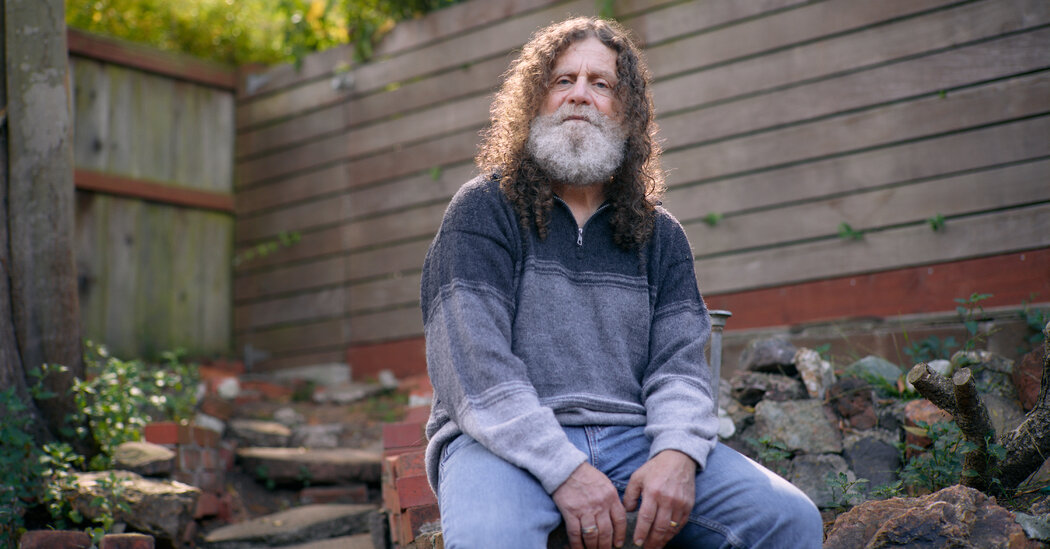
There is no free will, according to Robert Sapolsky, a biologist and neurologist at Stanford University and a recipient of the MacArthur Foundation “genius” grant. Dr. Sapolsky worked for decades as a field primatologist before turning to neuroscience, and he has spent his career investigating behavior across the animal kingdom and writing about it in books including “Behave: The Biology of Humans at Our Best and Worst” and “Monkeyluv, and Other Essays on Our Lives as Animals.”In his latest book, “Determined: A Science of Life Without Free Will,” Dr. Sapolsky confronts and refutes the biological and philosophical arguments for free will. He contends that we are not free agents, but that biology, hormones, childhood and life circumstances coalesce to produce actions that we merely feel were ours to choose.It’s a provocative claim, he concedes, but he would be content if readers simply began to question the belief, which is embedded in our cultural conversation. Getting rid of free will “completely strikes at our sense of identity and autonomy and where we get meaning from,” Dr. Sapolsky said, and this makes the idea particularly hard to shake.There are major implications, he notes: Absent free will, no one should be held responsible for their behavior, good or bad. Dr. Sapolsky sees this as “liberating” for most people, for whom “life has been about being blamed and punished and deprived and ignored for things they have no control over.”He spoke in a series of interviews about the challenges that free will presents and how he stays motivated without it. These conversations were edited and condensed for clarityTo most people, free will means being in charge of our actions. What’s wrong with that outlook?It’s a completely useless definition. When most people think they’re discerning free will, what they mean is somebody intended to do what they did: Something has just happened; somebody pulled the trigger. They understood the consequences and knew that alternative behaviors were available.But that doesn’t remotely begin to touch it, because you’ve got to ask: Where did that intent come from? That’s what happened a minute before, in the years before, and everything in between.For that sort of free will to exist, it would have to function on a biological level completely independently of the history of that organism. You would be able to identify the neurons that caused a particular behavior, and it wouldn’t matter what any other neuron in the brain was doing, what the environment was, what the person’s hormone levels were, what culture they were brought up in. Show me that those neurons would do the exact same thing with all these other things changed, and you’ve proven free will to me.So, whether I wore a red or blue shirt today — are you saying I didn’t really choose that?Absolutely. It can play out in the seconds before. Studies show that if you’re sitting in a room with a terrible smell, people become more socially conservative. Some of that has to do with genetics: What’s the makeup of their olfactory receptors? With childhood: What conditioning did they have to particular smells? All of that affects the outcome.What about something bigger, like choosing where to go to college?You ask, “Why did you pick this one?” And the person says, “I’ve learned that I do better in smaller classes.” Or, “They have an amazing party scene.” At any meaningful juncture, we’re making decisions based on our tastes and predilections and values and character. And you have to ask: Where did they come from?Neuroscience is getting really good at two levels of stuff. One is understanding what a particular part of the brain does, based on techniques like neuroimaging and transcranial magnetic stimulation.The other is at the level of tiny, reductive stuff: This variant of this gene interacts with this enzyme differently. So, we kind of understand what happens in one neuron. But how do 30 billion of them collectively make this a human cortex instead of a primate cortex? How do you scale up from understanding little component parts and getting some sense of the big, emergent thing?Say we figured that out. Have X happen 4,000 times per second in Y part of the brain, countered — as an opposing, inhibitory thing — 2,123 times a second when the hormone levels are doing such-and-such. How does this big thing called a “behavior” or a “personality” or a “thought” or a “mistake” pop out at the macro level? We’re beginning to understand how you get from one level to the other, but it’s unbelievably difficult.If we’re not responsible for our actions, can we take ownership of them?Well, we can take ownership in a purely mechanical sense. My molecules knocked into the molecules making up that vase of flowers and knocked it over and broke it — that’s true. And we can keep ourselves going with myths of agency when it really doesn’t make a difference. If you want to believe that you freely chose to floss your upper teeth before your bottom teeth today, that’s a benign myth to operate with.But you’re saying that the myth isn’t always benign?Fundamentally injurious things about our universe run on the notion that people get stuff that they didn’t earn or they didn’t deserve, and a huge amount of humanity’s misery is due to myths of free will.Most of the time, I get by without having to pay any attention whatsoever to how I think things work. Recognize how hard it is to do otherwise. Save that recognition for when it matters: when you’re on a jury; when you’re a schoolteacher, assessing students. If you have myths about free will, keep it to how you’re flossing your teeth.I want to wean people off the knee-jerk reaction to the notion that without free will, we will run amok because we can’t be held responsible for things. That we have no societal mechanisms for having dangerous people not be dangerous, or for having gifted people do the things society needs to function. It’s not the case that in a deterministic world, nothing can change.How should privileged people think about their accomplishments?Every living organism is just a biological machine. But we’re the only ones that know that we’re biological machines; we are trying to make sense of the fact that we feel as if our feelings are real.At some point, it doesn’t make a difference whether your feelings are real or whether your feeling of feelings being real is the case. We still find things aversive enough as biological machines that it’s useful to call stuff like that “pain” or “sadness” or “unhappiness.” And even though it’s completely absurd to think that something good can happen to a machine, it’s good when the feeling of feeling pain is lessened.That’s a level on which we have to function. Meaning feels real. Purpose feels real. Every now and then, our knowledge of the machine-ness should not get in the way of the fact that this is a weird machine that feels as if feelings are real.Do we lose love, too, if we lose free will?Yeah. Like: “Wow! Why? Why did this person turn out to love me? Where did that come from? And how much of that has to do with how my parents raised me, or was sort of olfactory receptor genes I have in my nose and how much I like their scent?” At some point you get to that existential crisis of, “Oh God, that’s what’s underlying all this stuff!” That’s where the machine-ness becomes something we should be willing to ignore.But it’s not OK for you to decide, with the same denial of reality, that you truly deserve a better salary than the average human on this planet.Do it for where it’s needed. I sure can’t do it more than a tiny percent of the time. Like once every three and a half weeks or so. It’s a confusing, recursive challenge to watch yourself watching yourself, and to decide that what you’re feeling feels real.

Read more →

Wearables Track Parkinson’s Better Than Human Observation, Study Finds

The NewsAn Oxford University researcher and her team showed that digital wearable devices can track the progression of Parkinson’s disease in an individual more effectively than human clinical observation can, according to a newly published paper.By tracking more than 100 metrics picked up by the devices, researchers were able to discern subtle changes in the movements of subjects with Parkinson’s, a neurodegenerative disease that afflicts 10 million people worldwide.The lead researcher emphasized that the latest findings were not a treatment for Parkinson’s. Rather, they are a means of helping scientists gauge whether novel drugs and other therapies for Parkinson’s are slowing the progression of the disease.Quotable QuotesThe sensors — six per subject, worn on the chest, at the base of the spine and one on each wrist and foot — tracked 122 physiological metrics. Several dozen metrics stood out as closely indicating the disease’s progression, including the direction a toe moved during a step and the length and regularity of strides.“We have the biomarker,” said Chrystalina Antoniades, a neuroscientist at the University of Oxford and the lead researcher on the paper, which was published earlier this month in the journal npj Parkinson’s Disease. “It’s super exciting. Now we hope to be able to tell you: Is a drug working?”Until now, Dr. Antoniades said, drug trials for Parkinson’s had relied on clinical assessment of whether a treatment was slowing the progression of the disease. But clinical observation can miss changes that happen day to day or that might not show up clearly in periodic visits to a doctor, she added.In the paper, the study’s authors concluded that the sensors proved more effective at tracking the disease progression “than the conventionally used clinical rating scales.”What It Looks LikeTo capture the wearer’s various movements, the sensors employed technologies, including accelerometers and gyroscopes, that have become increasingly common in digital watches and smartphones. Together, these devices can measure a person’s direction, gait, regularity of movement and more.After the results were published, Dr. Antoniades and her team were flooded with messages from colleagues and media outlets asking whether they had found a cure for Parkinson’s. She said she wanted to be clear that the advance, while important, was a tool that could hasten the development of treatments for the disease, but that it was not the answer to it.What’s NextDr. Antoniades said she was optimistic about the possibility of using such sensors to track other illnesses, perhaps even Alzheimer’s — a “plethora of diseases that bring together bioengineering, clinical science and movement science.”Human doctors will remain a vital part of the process, she added, with sensors complementing the observations of clinicians. The hope, Dr. Antoniades said, “is this will enhance the ability of your doctor to get it right.”

Read more →

Scientists Investigating Alzheimer’s Drug Faulted in Leaked Report

A professor at the City College of New York engaged in “significant research misconduct,” an expert committee concluded.A neuroscientist whose studies undergird an experimental Alzheimer’s drug was “reckless” in his failure to keep or provide original data, an offense that “amounts to significant research misconduct,” an investigation by his university has concluded.The drug, simufilam, is made by Cassava Sciences, a pharmaceutical company based in Texas, and is in advanced clinical trials. The neuroscientist, Hoau-Yan Wang, a professor at the City College of New York, frequently collaborated with Lindsay H. Burns, the company’s chief scientist, on studies that outside experts and journals have called into question.A committee was convened by the City University of New York, of which the college is a part, to investigate the work, and it concluded in a report that Dr. Burns was responsible for errors in some of the papers. But the investigators reserved their sharpest criticism for Dr. Wang, reproaching him for “long-standing and egregious misconduct in data management and record keeping.”The report was obtained and made public by the journal Science on Thursday. Dee Dee Mozeleski, a spokeswoman for City College, declined to comment on the document but said that the school would formally release the report later this month.Dr. Wang did not respond to a request for comment. Remi Barbier, the founder and chief executive of Cassava, said in a statement that the company would continue its clinical trials. “We remain confident in the underlying science for simufilam, our lead drug candidate,” he said.Alzheimer’s disease affects roughly six million Americans. Simufilam has been eagerly anticipated by patients and families, and fervidly supported by a group of investors. Cassava’s stock soared after each round of reported results from its trials — at one point by more than 1,500 percent.But some scientists have been skeptical of the drug’s hypothesized mode of action and of claims of improvements among patients in Cassava’s clinical trials. A few accused the company and Dr. Wang of manipulating the results.In August 2021, two scientists filed a citizen’s petition with the Food and Drug Administration in which they described “grave concerns about the quality and integrity” of the research that supported simufilam’s purported efficacy.Mr. Barbier has called the two scientists “bad actors” because they held a short position in Cassava’s stock and profited from its decline.The release of the new report was preceded by a 40 percent increase in short selling of Cassava stocks, according to the company’s statement. Cassava was once valued at nearly $5 billion, but it was worth about $624 million as of Friday.Other scientists, including some experts on Alzheimer’s disease, also pointed out what they said were irregularities in the results published by Dr. Wang and Dr. Burns, particularly in images. The Securities and Exchange Commission and the National Institutes of Health began investigating Cassava’s research in 2021 as well.Some scientific journals that published Dr. Wang’s papers have made their own inquiries. Two of them published “expressions of concern” questioning the integrity and accuracy of the results. Another journal, PLOS One, retracted five papers by Dr. Wang after a five-month investigation.The committee convened by CUNY also began investigating Dr. Wang’s work and his lab’s funding and spending over nearly 20 years. The group examined 31 allegations described by the Office of Research Integrity, the federal agency that helps universities handle scientific misconduct.The committee members struggled for months to obtain access to Dr. Wang’s files, and did not succeed until they involved the college’s president. Even so, the report said, they were “unable to objectively assess” the merits of most of the allegations because Dr. Wang had not provided primary data, original images, research notebooks or other records of the experiments.What the committee did find was “highly suggestive of deliberate scientific misconduct by Dr. Wang for 14 of the 31 allegations,” according to the report.Cassava’s statement noted that the report faulted only internal record-keeping failures and did not find proof of data manipulation, and said that CUNY turned down all requests for information and offers of assistance and did not interview any of its employees.Ms. Mozeleski said that CUNY would not comment on those allegations.According to the report, Dr. Wang said some of his research records were missing because boxes containing them had been discarded during the coronavirus pandemic in response to a request from the college.“The college did not require any member of our faculty or staff to throw out any items during the pandemic,” Ms. Mozeleski said in an email.

Read more →