Infected Blood Scandal: PM risks ending on 'wrong side of history'

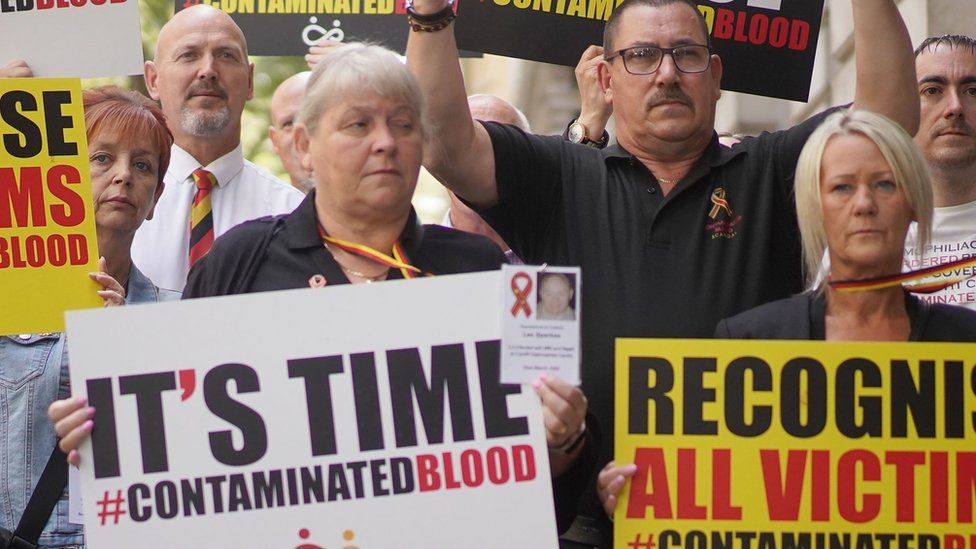
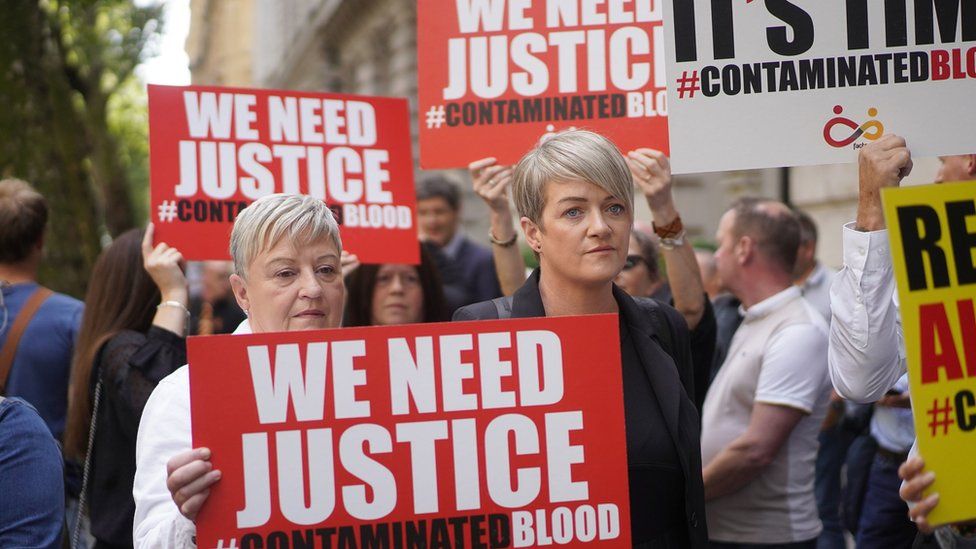
Published4 hours agoShareclose panelShare pageCopy linkAbout sharingImage source, PA MediaBy Sam FrancisPolitical reporter, BBC NewsCampaigners warn that the government will be “on the wrong side of history” if it rejects a new compensation scheme for NHS infected blood scandal victims.Thousands died after being treated with contaminated blood products in the 1970s and 1980s.MPs backed plans to set up a new compensation scheme, following a rebellion on Monday by Tory MPs.The Haemophilia Society said a new scheme can be ready by the end of the year if there was the “political will”.How 175 British children were infected with HIV Ministers lose infected blood vote in Tory revoltChairman of the Haemophilia Society, Clive Smith, said campaigners have received only “warm words” while the government worked “at a snail’s pace” to compensate victims of the scandal.Speaking on the BBC Radio 4’s Today programme, Mr Smith said: “This has never been about politics. This has always been about justice and doing the right thing, and no government should hold out on this.”They have had to be dragged kicking and screaming to do this, and Rishi Sunak and the Tory Party, I’m afraid, will be on the wrong side of history and future because it shouldn’t have needed to come to this.”Downing Street said it was considering options after the vote in the Commons on Monday night, and will clarify its compensation plans in the coming weeks.The prime minister’s official spokesman said: “First and foremost, we have accepted the moral case for compensation and acknowledge justice needs to be delivered for victims.”This was an appalling tragedy. We certainly understand the strength of feeling.” Up to 30,000 people were given contaminated blood products in the 1970s and 80s, leading to the deaths of more than 3,000 people after contracting HIV or hepatitis C.The government has said there is a moral case for compensating victims of the scandal, and has made the first interim payments of £100,000 each to 4,000 surviving victims and bereaved partners.Under the initial scheme only victims themselves or bereaved partners can receive an interim payment.The government had said it wanted to wait for the infected blood inquiry to conclude before setting up a full scheme.’Long overdue’Earlier this year, Sir Brian Langstaff, who is chairing the inquiry, called for a full compensation scheme to be set up immediately. He also said it should be widened to include orphaned children and parents who lost children.Sir Brian’s inquiry had been due to publish a final report in November, but this has been pushed back to March 2024.In an attempt to speed up efforts to compensate victims, Labour’s Dame Diana Johnson – who leads the All-Party Parliamentary group on Haemophilia and Contaminated Blood – put forward an amendment to the Victims and Prisoners Bill.The amendment forces the government to create a new body to distribute compensation for the scheme within three months of the bill becoming law.Rebel Tory MPs backed Dame Diana’s amendment, delivering Rishi Sunak his first defeat as prime minister. The legislation now needs to be approved by the House of Lords before becoming law.Des Collins, senior partner of Collins Solicitors, which represents some 1,500 victims and their families, added: “The government has finally been forced to agree to act – both to deliver on establishing a body to oversee proper compensation for victims and their families and to respond swiftly to the much-anticipated final report due from Sir Brian Langstaff’s inquiry next March.”On the face of it the government is now committed to meeting its long-overdue responsibilities.”Let’s only hope there is no more obfuscation or creative delay tactics when the government announces its promised next steps.”More on this storyWhy the NHS gave thousands HIV-contaminated bloodPublished27 July 2021How 175 British children were infected with HIVPublished6 October 2022

Read more →

Ministers lose infected blood vote after Tory MPs revolt

Published1 day agoShareclose panelShare pageCopy linkAbout sharingImage source, PA MediaBy Joshua Nevett & Andre Rhoden-PaulBBC NewsMPs have backed a move to speed up compensation for victims of the NHS infected blood scandal, delivering the prime minister his first Commons defeat.Ministers will now have to set up a body to run the scheme within three months of a new bill becoming law.The vote was passed by 246 votes to 242 after 22 Conservatives rebelled.The Haemophilia Society said Rishi Sunak “should be ashamed” he had been forced “to do the right thing”.The society’s chairman Clive Smith said it was an “incredibly emotional” moment for campaigners. “Parliament last night drew a line in the sand and said: no more, no longer, will you need to fight, no longer will you need to wait, justice will finally be delivered to those who’ve waited for so long,” he told BBC Radio 4’s Today programme. The vote – an amendment to the Victims and Prisoners Bill – was the government’s first defeat in the Commons on a whipped vote since the general election in 2019.The legislation now needs to be approved by the House of Lords before becoming law.The government has said there is a moral case for compensating victims of the scandal, and has made the first interim payments of £100,000 each to 4,000 surviving victims and bereaved partners. However, it said it wanted to wait for the infected blood inquiry to conclude before setting up a full scheme.Earlier this year, Sir Brian Langstaff, who is chairing the inquiry, called for a full compensation scheme to be set up immediately. He also said it should be widened to include orphaned children and parents who lost children.Throughout the 1970s and 1980s, up to 30,000 people were given contaminated blood products.More than 3,000 people died after contracting HIV or hepatitis C after receiving a blood transfusion on the NHS or a treatment made from contaminated blood.Campaigners say the speed compensation is administered is key. It has been estimated that one person affected by the scandal dies every four days. Justine Gordon-Smith, whose dad died after being given infected blood, told BBC Newsnight she was “stunned” by the result but was concerned what the government “might try to do to limit things now”. Her father Randolph Peter Gordon-Smith, who had haemophilia, learned in 1994 that he had been infected with hepatitis C. He later died in 2018. “When he was infected – he lost everything,” she said. “He lost his home, his job, his wife, his health – everything – and he became a recluse.” She said compensation was not just about recognition, but “repairing the damage that’s done to your life”.”The huge hole, the entire career, everything that our dad lost – that’s the big issue. Then there’s all the time and years of life we’ve lost,” she added.What is the contaminated blood inquiry?How 175 children were infected with HIVHunt says compensation bill may be very largeSir Brian’s inquiry had been due to publish a final report in November, but this has been pushed back to March 2024.In an attempt to speed up efforts to compensate victims, Dame Diana Johnson – who leads the All-Party Parliamentary group on Haemophilia and Contaminated Blood – put forward the amendment.She told MPs that Sir Brian had already made clear his inquiry’s recommendations on compensation and that the government did not need to wait for his final conclusions before setting up a scheme. The Kingston Upon Hull North MP also noted that victims of the Post Office Horizon scandal had been awarded compensation before the inquiry’s final report had been published, and argued the same should apply to those affected by infected blood. Her amendment was backed by her own party, with shadow minister Kevin Brennan saying there was “no reason for the government not to move forward on this issue”.Conservative MP Rehman Chishti was among those who gave his support, saying: “Justice delayed is justice denied – we should not delay any further.”The voting list showed Mr Chishti was joined by a number of former Tory ministers, including Sir Robert Buckland, Damian Green, Dame Andrea Jenkyns and Chloe Smith.The defeat came despite a last-ditch attempt by the government to offer concessions in an attempt to placate MPs.Justice Minister Edward Argar had said the government would try to amend the bill in the Lords to clarify when the body to provide compensation to infected blood victims would be delivered.Andrew Evans, chairman of Tainted Blood, a campaign group which represents contaminated blood victims, said the government had promised “a future amendment to buy off Tory MPs, a move which thankfully has failed”.Mr Evans said any attempts to reverse the amendment when the bill goes to the Lords “would heap yet more misery on those who have already suffered so much for four decades”.More on this storyWhy the NHS gave thousands HIV-contaminated bloodPublished27 July 2021How 175 British children were infected with HIVPublished6 October 2022

Read more →

A farsighted approach to tackle nearsightedness

Modern living may be contributing to an epidemic of nearsighted vision and related blindness. By 2050, it is estimated that half the world’s population will suffer from low vision due to myopia, a condition where the eye grows too large and can no longer focus on objects in the distance. Human eyes, honed by evolution to survive in the wild, are ill-adapted to city living, contributing to increased cases of myopia, among other factors.
For decades, researcher Sally McFadden from the University of Newcastle has investigated eyes and eyesight in humans and animals. She will present her work and the importance of acoustical imaging Dec. 5 at 10:40 a.m. Australian Eastern Daylight Time, as part of Acoustics 2023 Sydney, running Dec. 4-8 at the International Convention Centre Sydney.
As humans age, our eyes adjust based on how we use them, growing or shortening to focus where needed. We now know that blurred input to the eye while the eye is growing causes myopia. It is so specific that the eye grows exactly to compensate for the amount and the direction of blur. For example, if you put the focus behind the retina, the eye grows longer, while if you put the focus in front of the retina, the eye slows its growth and becomes shorter. If the eye grows too long, it becomes myopic or nearsighted. In extreme cases, high myopia is associated with glaucoma, and can increase the risk of retinal detachment and abnormal pathologies around the optic nerve which lead to profound blindness.
“Babies are generally born longsighted, and the changes in the optics of the eye have to coordinate with the eye growth to get to the perfect length for focused vision,” said McFadden. “The problem is that the human eye evolved to suit a hunter-gatherer lifestyle and is not adapted for modern living.”
McFadden and her team built a high-frequency ultrasonography system to measure eye size and how quickly eyes grow to better understand myopia and its contributing factors.
“Education level (amount of study) and the type of light stimulation to the eye all correlate with the amount of myopia you develop,” McFadden said. “Time spent outdoors is protective. Myopia is greater in cities than in rural populations, and even correlates with those that live in small homes.”
Currently, vision-correcting gear like glasses and contacts are the only solution for myopia. However, eyedrops for children with myopia are in development and could halt the vision from worsening. Teams from around the world are collaborating to develop treatments for high myopia to preserve our vision.

Read more →

Wildfires have erased two decades' worth of air quality gains in western United States

You need only to remember last summer’s wildfires in the United States and Canada, which fouled the air from coast to coast, to know the effects these blazes can have on the environment and human health.
A new study has tabulated the toll from two decades of wildfires on air quality and human health in the continental U.S. The authors report that from 2000 to 2020, the air has worsened in the western U.S., mainly due to the increase in frequency and ferocity of wildfires causing an increase of 670 premature deaths per year in the region during that time period. Overall, the study’s authors report fires have undercut successful federal efforts to improve air quality primarily through reductions in automobile emissions.
“Our air is supposed to be cleaner and cleaner due mostly to EPA regulations on emissions, but the fires have limited or erased these air-quality gains,” says Jun Wang, James E. Ashton professor and chair in the Department of Chemical and Biochemical Engineering, assistant director of the Iowa Technology Institute at the University of Iowa, and the lead corresponding author on the study. “In other words, all the efforts for the past 20 years by the EPA to make our air cleaner basically have been lost in fire-prone areas and downwind regions. We are losing ground.”
The researchers calculated the concentration of black carbon, a fine-particle air pollutant that has been linked to respiratory and heart disease, on a kilometer-by-kilometer (0.6 miles) grid for the continental U.S.
In the western U.S., the researchers report black carbon concentrations have risen 55%, on an annual basis, mostly due to wildfires.
Not surprisingly, the highest premature mortality rates were in the western U.S., the region where the wildfires originated or that was most affected by smoke from wildfires in Canada. The authors say the increase of 670 premature deaths per year is a conservative estimate, as black carbon’s effects on human health are not fully understood.
“Wildfires have become increasingly intensive and frequent in the western U.S., resulting in a significant increase in smoke-related emissions in populated areas,” Wang and his team write. “This has likely contributed to a decline in air quality and an increase in attributable mortality.”
The fires also have affected the Midwest. Smoke transported in the atmosphere affects air quality, though direct effects on health appear, for now, to be minimal. But, Wang says, “we are on the borderline. If fires increase or become more frequent, our air quality will get worse.”

The eastern U.S. had no major declines in air quality during the 2000-20 time period.
The researchers derived black carbon concentrations and premature deaths estimates from satellite data and 500 ground-based stations that monitor air quality. The data from surface stations can be extensive, but it does not give complete spatial coverage and can be lacking in rural areas. So, the researchers employed “deep learning,” which enables computer systems to cluster data and produce accurate predictions, to calculate the black carbon concentrations. They calculated premature deaths through a formula that incorporated average life span, black carbon exposure, and population density.
“This is the first time to look at black carbon concentrations everywhere, and at one-kilometer resolution,” Wang says.
Jing Wei, the study’s lead author, led the collection of satellite data of fine particulates and the analysis of these pollutants on public health when he was a postdoctoral research scholar in Wang’s research group at Iowa.
“The increasing number and intensity of wildfires in the U.S. counteract or even overshadow the reduction in anthropogenic emissions, exacerbating air pollution and heightening the risks of both morbidity and mortality,” says Wei, now assistant research scientist at the University of Maryland’s Earth System Science Interdisciplinary Center.

Read more →

Powerful financial giants could play vital role in preventing the next pandemic

Many emerging and re-emerging infectious diseases, especially zoonotic diseases such as ebola or new coronaviruses, emerge as the result of intensified human activities such as deforestation, expansion of agricultural land, and increased hunting and trading of wildlife.
In a new study, published in the scientific journal Lancet Planetary Health, researchers identified public and private companies operating in economic sectors associated with increased risks of emerging and re-emerging infectious diseases.
Where data was available, the researchers analyzed the financial entities with equity ownership in 99 identified public companies. They found that a handful of largely US-based financial entities, including Vanguard, State Street, BlackRock, and T Rowe Price, have substantial investments in these companies. But even public investors such as the state of California, Norway through its Sovereign Wealth Fund, and Sweden through its pension funds, hold shares in companies that operate in known regional hotspots for emerging infectious diseases.
“Financial actors have an important, but often ignored, role to help prevent the emergence of infectious diseases. Their investments enable economic activities in known zoonotic disease hotspots globally. Large investors hold potential influence over companies operating in these hotspots, and this influence could be leveraged to mitigate risks of new pandemics,” says Victor Galaz, lead author of the study and senior researcher at the Stockholm Resilience Centre at Stockholm University.
In the article, the researchers list a number of policies and practices which investors could push for, including ecological restoration measures, the creation of pathogen surveillance systems, and improvements in the health and economic security of communities living in geographical hotspots of emerging and re-emerging infectious diseases.
“Corporate policies that focus only on deforestation and land-use change are not enough to mitigate the risk of emerging and re-emerging infectious diseases. They fail to consider how agricultural expansion and deforestation increase the risk of pathogen spillover from reservoir to hosts. There is a need for policies to reduce the edge effect, create pathogen surveillance systems and improve the health care systems of communities living in areas that are emerging infectious hotspots,” explains Paula A. Sánchez, researcher at the Stockholm Resilience Centre and co-author of the study.
The study even identifies countries that either invest themselves or host headquarters of companies with investments in hotspots for emerging infectious diseases. These countries, including France, the USA, Portugal, Norway, and Sweden, could work together to use financial influence to address the risks of outbreaks and pandemics, according to the study’s authors.

“Among many other devastating effects of the COVID-19 pandemic, it has shown what enormous economic costs infectious diseases can have. Investing in sectors that could lead to new outbreaks therefore also carries significant financial risks that investors and governments need to proactively address,” explains Victor Galaz.
He continues: “Such efforts have to go beyond current environmental, social, and governance metrics which have proven to be insufficient to show real-world ecological effects.”
Data availability continues to be a limitation for the identification of potential alliances among investors and corporate actors.
“As emerging and re-emerging infectious diseases present a global risk to the economic and financial systems, there is a need to ensure standardized reporting of corporate and investment activities in infectious hotspots to reduce the risk of outbreaks at a global scale,” says Paula A. Sánchez.
Peter Søgaard Jørgensen, another co-author associated with the Stockholm Resilience Centre comments:
“Climate change will increase the risks of new zoonotic outbreaks. Financial actors should make sure that their investments help to mitigate and adapt to those risks.”

Read more →

Humiliated Covid whistleblower says boss tried to 'break' her

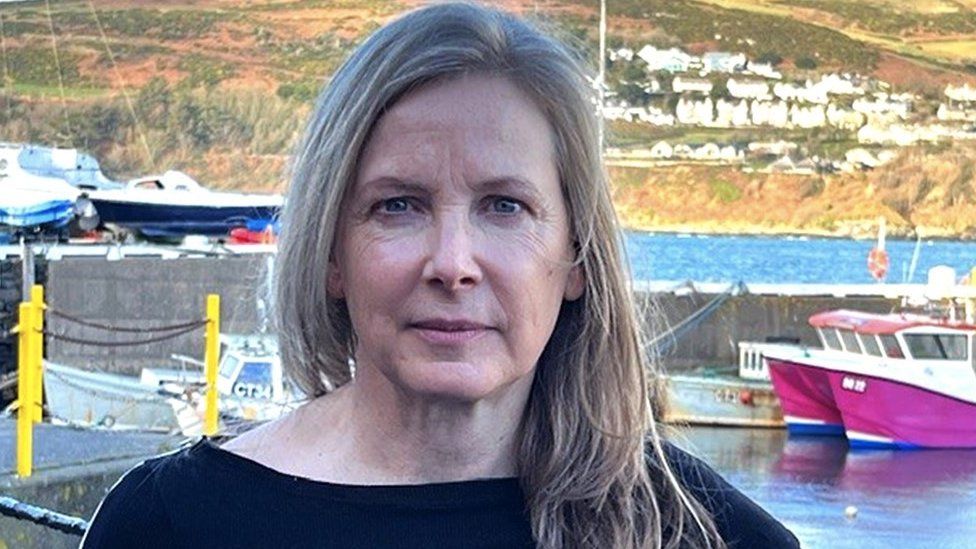
Published1 day agoShareclose panelShare pageCopy linkAbout sharingBy Michael Buchanan & Katie LangtonBBC File on 4A senior doctor who won a record £3.2m payout says her boss tried to “break” her after she raised concerns about how Covid was being handled. Rosalind Ranson, medical director on the Isle of Man during the pandemic, experienced months of humiliation, an employment tribunal found.BBC News has discovered her former boss Kathryn Magson, who was criticised by judges, now works in the NHS. Miss Magson strongly disputes the tribunal findings.Dr Ranson has given BBC News her first interview since the hearing.Moving from London to the Isle of Man in January 2020 for what she called the job of her dreams as medical director was an exciting time for Dr Rosalind Ranson. But she could not have imagined the situation she would find herself in – after being plunged almost immediately into dealing with the threat of Covid.As a tribunal would conclude, she was treated in a way that was “demeaning” and “unjustifiable”, including eventually being moved from her office and given a room with a broken chair. It all started with a crucial email she sent in March 2020.’Wave of a tsunami’Dr Ranson and her clinical colleagues had met earlier that month and decided that the borders of the Isle of Man – with a population of 85,000 and one main hospital – needed to be closed. “I was saying… it’s a wave of a tsunami, we can see this coming,” she now tells the BBC. “We were going to have insufficient beds, insufficient ventilators. We were going to rapidly overwhelm our health system.”She prepared a presentation for the Manx government, advising urgent action was needed. Some days later, on 24 March 2020, when she got home after working late she saw a clip of the Isle of Man’s chief minister answering a journalist’s question on why the borders had not been closed. “We take advice from our medical experts,” she heard him say, and “we are waiting for that advice”.”I was thinking, either the chief minister’s misleading the public,” Dr Ranson tells the BBC’s File on 4, “or they didn’t get the presentation.”She decided to compose an email to her boss, the chief executive of the Isle of Man’s Department of Health.”At 01:46 that morning, I wrote to Miss Magson. I said, ‘Can you tell me did you pass on all of this, these presentations, this information?'”And she never responded to that email.”

Read more →

HIV and forced sterilisations: How four Kenyan women found justice

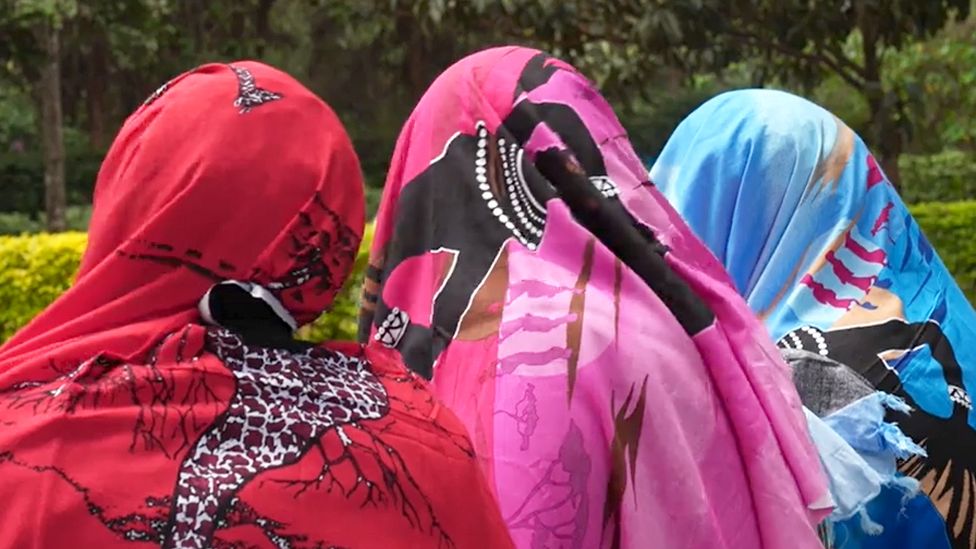
Published31 minutes agoShareclose panelShare pageCopy linkAbout sharingBy Dorcas WangiraAfrica health correspondent, BBC News, NairobiFour women living with HIV in Kenya have each been awarded $20,000 (£16,000) in damages for being sterilised without their informed consent. They have spoken to the BBC about their experiences.The women fought a nine-year legal battle – and their names have been changed to protect their identities, which were not revealed during the case at the High Court.”It has ruined my life,” Penda told the BBC about the surgery she underwent shortly after having twins at the state-owned Pumwani Maternity Hospital in the capital, Nairobi.The procedure is called a bilateral tubal ligation (BTL) – when a woman’s fallopian tubes are cut, tied, burned, clipped or partly removed, closing them and preventing future pregnancies.The father of her twins left before they were born. Her husband had died a few years earlier of HIV-related complications. She is distressed that she will never find another partner: “Who will marry me if they know I can’t give birth?”Penda knew she was HIV-positive when she became pregnant so had sought medical advice. At the time, pregnant women with HIV were encouraged to give birth by caesarean section and to not breastfeed their babies to prevent mother-to-child transmission of the virus. These are expensive routes to go down for many from poorer backgrounds. Nowadays most maternity care in Kenya is free. But it has not always been the case. After giving birth, Penda says she was told to exclusively use formula milk. She says she was assured she was entitled to get free food for herself and the babies, but only if she showed proof that she was using family planning.”As a single mother, that shocked me. I was already struggling with stigma. I didn’t know what else to do,” she says.To help Penda obtain this proof, the hospital nutritionist referred her to a community health worker who told her to report to a clinic where personnel from Marie Stopes, Kenya’s largest and most-specialised sexual reproductive health organisation, ran a family planning programme.Here Penda was given a form, which she signed, to have a BTL. As she cannot read, she says she did not know she had given her consent to be sterilised.Image source, Getty ImagesNeema related a similar experience at the Pumwani, which is Kenya’s largest public maternity hospital.She already knew her positive HIV status by the time she was expecting her fourth child. She was worried about infecting her unborn baby.She says she was told by a nutritionist there that if she did not agree to undergo a BTL after giving birth, she would not qualify to receive portions of cooking oil porridge and maize-meal flour, and that her maternity health bill would not be paid.On the day of her delivery, before being taken to theatre, Neema said the nurse on duty advised her of the need to plan her family since she already had three children. The nurse told her to undergo a BTL and she was given a piece of paper to sign agreeing to both a caesarean and the tubal ligation.”I didn’t know what it meant. I thought it was ordinary family planning,” Neema told the BBC.”If they had explained the procedure properly to me, I wouldn’t have signed that paper.”In Furaha’s case she remembers no discussion about family planning before she had her third child at the Pumwani Maternity Hospital.She only recalls consenting to a caesarean section to prevent her from infecting her newborn with HIV – and then waking up in unbearable pain.A nurse explained that she had also undergone the sterilisation procedure.”I was too afraid to tell my husband what happened. I kept it to myself,” she told the BBC.”When he found out, he became a total drunkard. He died after he was hit by a moving vehicle. These organisations destroyed my home.”A fourth woman, Faraja, told the BBC she caved into pressure to undergo the BTL two months after delivering her third child.As she was HIV-positive, she had been cautioned against breastfeeding her newborn. But without proof that she was using family planning – in particular a BTL – she was not able to receive free baby formula milk.”I was desperate. My husband had left. My rent was due. What could I have done?” she asks.Faraja told the Kenyan High Court that she attended a clinic where she underwent the procedure. She was given a form to sign, but says that because she cannot read, she did not understand what she was signing. No-one explained to her that she had agreed to be sterilised, and she says she was not offered alternative family planning.Image source, Getty ImagesIt is because health professionals did not explicitly explain what these women had agreed to that they won their case.The High Court of Kenya ruled in September that this use of BTL without informed consent was a violation of the women’s fundamental rights, including the right to establish a family. The damages they are to receive will be paid jointly by Marie Stopes International and the Pumwani Maternity Hospital as well as the medical charity Médecins Sans Frontières (MSF), which gave family planning advice.Allan Maleche, executive director of Kelin Kenya, an HIV-rights group that represented them, says the judgement is very significant for HIV-positive women in Africa who have experienced pressure to undergo sterilisation.”For a very long time, cases that were filed in South Africa, in Namibia, had the difficulty making the link between the tubal ligation and the HIV status. The significance of this case is that it reaffirmed the fact that it is wrong,” he told the BBC.A Marie Stopes spokesperson in Kenya told the BBC by email that the case had been a long and difficult ordeal for all those involved.”We welcome a resolution after nearly a decade. Informed consent has always been integral to everything we do.”As a member of the global reproductive rights community, we understand the stigma that people living with HIV continue to face. We will continue to undertake rigorous training and monitoring to ensure that the highest standards are adhered to, and we will never be complacent about the care we deliver.”BBCWe acknowledge the part of the responsibility for what happened to the women and restate as a medical organisation, our commitment to the patient informed consent process”Dr Hajir ElyasMSF’s project co-ordinator in KenyaMSF France maintains that it never performed, nor is it currently performing, medical sterilisations in Kenya. It says if the patient opts to undergo a BTL, its role is to counsel, to inform and refer them to selected facilities. “We acknowledge the part of the responsibility for what happened to the women and restate as a medical organisation, our commitment to the patient informed consent process,” Dr Hajir Elyas, MSF’s project co-ordinator in Kenya, told the BBC.The Pumwani Maternity Hospital did not respond to the BBC’s invitation to comment.There is no accurate data about how many women living with HIV in Kenya have been sterilised without their informed consent. However, a 2012 study carried out by the African Gender and Media Initiative – Robbed of Choice – documented the experiences of 40 women who had been coerced into sterilisation. Of these, only five successfully filed a constitutional petition.Mr Maleche says the women chose to file constitutional petitions, rather than criminal cases, because this type of litigation has a bigger impact.”A criminal case would only either lead to imprisonment, a payment of fines. There would be no benefits that would go to the women in terms of monetary compensation,” he says.But the women say their case was not just about compensation. They say the High Court judgment has validated their demand for justice.Their lawyer, Nyokabi Njogu, agrees: “How do you compensate for a compounding violation?”They just wanted an acknowledgement that this happened. They don’t want women who have suffered like them to continue in that suffering.” You may also be interested in:Kenyans seek unsafe abortions amid legal ambiguity’My mother died without telling me I had HIV’Caring for Kenya’s HIV orphans’They removed my uterus and I had no idea for 11 years’Baby stealer convicted after BBC Kenya exposeAround the BBCFocus on Africa podcasts

Read more →

Leukemia cells activate cellular recycling program

In a recent study, scientists led by Professor Stefan Müller from Goethe University’s Institute of Biochemistry II investigated a specific form of blood cancer known as acute myeloid leukemia, or AML. The disease mainly occurs in adulthood and often ends up being fatal for older patients. In about a third of AML patients, the cancer cells’ genetic material has a characteristic mutation that affects the so-called NPM1 gene, which contains the building instructions for a protein of the same name.
While it was already known that the mutated NPM1 variant (abbreviated as NPM1c) is an important factor in the development of leukemia, “together with an interdisciplinary team consisting of various Goethe University research groups, we have now discovered a new way in which the NPM1c gene variant does this,” Müller explains. According to this, the altered protein intervenes in autophagy, an important cell process that consists of a metabolic pathway through which the cell recycles its own structures. On the one hand, this “self-digestion” serves to remove defective molecules. “On the other, it also enables the cell to meet its need for important building blocks, including in the event of a nutrient deficiency or increased cell proliferation, which is characteristic of cancer cells,” explains PhD student Hannah Mende, the study’s first author.
During autophagy, the cell initially produces a kind of waste bag, the autophagosome, into which it packs those cellular components that are to be broken down and recycled if necessary. This waste bag is then transported to the cell’s recycling center, the so-called lysosome, where its contents are broken down with the help of acid and enzymes. From here, the building blocks are then released into the cell, where they can be reused. “We have now been able to show that NPM1c promotes the production of both autophagosomes as well as lysosomes,” says Müller.
The researchers have also provided an answer to the question of how NPM1c imparts these effects: It binds to a central regulator of the autophagosome-lysosome system called GABARAP, and thereby activates it. “Using computer simulations, we have shown that this binding of NPM1c and GABARAP has an atypical structure,” explains study co-author Dr. Ramachandra M. Bhaskara, head of the Institute of Biochemistry II’s computational cell biology working group. Experimental structural biology data confirm the simulation’s results, based on which it may now be possible to develop active substances that specifically influence the binding of NPM1c to GABARAP and thus combat the growth of leukemia cells.

Read more →

Care sector fears migration changes are a step back

Published13 hours agoShareclose panelShare pageCopy linkAbout sharingBy Alison HoltSocial affairs editorIt’s less than two years since skilled worker visas were opened up to overseas care workers to tackle record staff shortages in the UK. In the minds of many working in social care, staff recruited from abroad “saved” the system from collapse.That’s important context when you look at the reaction to today’s announcement that care workers will no longer be able to bring their families. Care companies fear the ban on dependents will put potential recruits off moving to the UK.Home Office figures suggest that nearly 144,000 care workers, who arrived in the UK in the year up to September 2023, brought almost 174,000 family members with them.In a sector where pay is low, finding a better life for their families can be a major motivation for overseas staff to sign up to work in care homes or home care.Mike Padgham runs five care homes in North Yorkshire. Out of his 225 staff, 32 have been recruited from abroad.He said he was worried that staff already here, who are waiting to bring family over, may leave and other potential recruits may not accept jobs after Home Secretary James Cleverly’s announcement. “I think we are going to find more businesses failing and care homes closing,” he added.Ministers promise biggest ever cut in migrationChris Mason: Ministers in new bid to reduce immigrationNet migration in 2022 revised up to record 745,000When care work was made a shortage occupation in February 2022, there were 165,000 vacancies in this vital sector in England. The number of empty posts has fallen to about 150,000. Still very high, but care providers say overseas recruitment has helped some of them survive.Caroline Abraham, from the Care and Support Alliance, which represents more than 60 charities supporting older and disabled people, said she was worried that people needing care would “pay a heavy price” for the changes to the migration system. “It is an open secret that inward migration effectively ‘saved’ the social care workforce last year,” she said, adding: “Anything that undermines that source of support must be a real concern.”Low pay and cost-of-living pressures have put many already living in the UK off working in care.Care providers will often comment that when a supermarket opens nearby it is even more difficult to recruit and keep staff because they will get paid more stacking shelves or working on checkouts. Councils pay for most social care and they are under huge financial pressures, with one in 10 local authorities in England warning they could face effective bankruptcy. Nadra Ahmed, of the National Care Association, which represents residential and nursing homes in England, said international recruitment was “a last resort for providers when they cannot recruit from the domestic workforce”.She argued that there needs to be” investment in social care to enable providers to recognise the skills of our teams”.The government has put additional money into adult social care but its plans for reforming how the care system is funded have been pushed back to beyond the next election. On Monday, the government also announced all care firms will have to register with the Care Quality Commission (CQC) regulator to get the sponsorship licences which allow them to recruit abroad. The majority of firms with licences are already CQC registered, with only home helps, day centres and some live-in carers falling outside this existing requirement.There will be questions about whether this does enough to tackle growing concern that some unethical care providers are exploiting overseas staff.This includes claims that some care workers are paying employers or agents thousands of pounds for their visas. It is also alleged they are expected to work long hours for little pay or arrive to find there is no work waiting for them. More on this storyTougher visa rules unveiled in plan to cut migrationPublished4 hours agoMinisters in new bid to reduce immigrationPublished22 hours agoNet migration in 2022 revised up to record 745,000Published23 NovemberJenrick pledges ‘serious reforms’ to curb migrationPublished6 days ago

Read more →

Survey finds Americans struggle to maintain healthy habits during the holiday season

The holiday season is a time for joy and celebration but many Americans admit the endless flurry of activities make it difficult to eat healthy, exercise and get adequate rest, according to a new survey from The Ohio State University Wexner Medical Center.
Two-thirds of those surveyed said they overindulge in food, nearly 45% said they take a break from exercise and more than half report feeling tired and have less time for themselves. Plus, a third admit they drink more alcohol during the holidays.
“Holiday travel, activities with friends and family, and trying to get a bunch of things done can cause people to lose track of their healthy habits,” said Barbara Bawer, M.D., family medicine physician at Ohio State Wexner Medical Center and clinical assistant professor of family and community medicine at The Ohio State University College of Medicine. “If one healthy habit drops off, it can affect other areas very quickly.”
To make it through the holiday season with healthy habits intact, Bawer suggests trying to stick to a normal routine as much as possible while giving yourself some grace.
“Once you’re out of a routine, which typically happens around the holidays, it’s really hard to get back on track partly because the motivation is no longer there,” said Bawer.
When the invitations start to pile up and decadent menus feels tempting, Bawer offers this advice, “Remember that it’s OK to say no.”
To keep healthy habits in check, try the following:
Diet: When it comes to sustaining healthy eating habits, it’s important to plan ahead. If you have an evening event, don’t starve yourself all day. Eat a high protein, low carb meal earlier in the day so you don’t overeat. You can indulge with a favorite dish or dessert but it’s OK to say no to sampling every entrée or treat so you’re not eating excess calories at each event.

Exercise: Try to keep the same exercise schedule. If an obligation prevents you from going to a fitness center or going for a run, be flexible. It’s OK to say no to the gym and consider doing an activity with family and friends that keeps you moving like going for a walk or playing a game of basketball.
Sleep: Go to sleep and wake up at your normal times, even when traveling. Limit the use of supplements like melatonin, as long-term use can disrupt healthy sleep-wake cycles. It’s OK to say no to some invitations if you feel like you’re going to overextend yourself.
Alcohol: People may drink more during the holidays but binge drinking is never a healthy choice. Binge drinking is when a man consumes five drinks or a woman consume four drinks in one setting. It’s OK to say no to excessive drinking. If you do drink, try to stick to the recommended two drinks for men or one drink for women. Avoid drinking on an empty stomach and drink plenty of water.
“Small, consistent changes and slowly adding to them can help you reach your health goals,” Bawer said.
Survey results and methodology This survey was conducted on behalf of The Ohio State University Wexner Medical Center by SSRS on its Opinion Panel Omnibus platform. The SSRS Opinion Panel Omnibus is a national, twice-per-month, probability-based survey. Data collection was conducted from Oct. 20-23 among a sample of 1,007 respondents. The survey was conducted via web (n=977) and telephone (n=30) and administered in English. The margin of error for total respondents is +/-3.6 percentage points at the 95% confidence level. All SSRS Opinion Panel Omnibus data are weighted to represent the target population of U.S. adults ages 18 or older.

Read more →