Cocoa extract supplement may benefit cognition among older adults with lower diet quality

Cocoa extract has shown a potential protective effect on cognition but randomized clinical trials in older adults have had inconsistent results. A new study of cognition in a randomized trial, known as the Cocoa Supplement and Multivitamin Outcomes Study (COSMOS), suggests that taking cocoa extract supplements containing 500 mg per day of cocoa flavanols had cognitive benefits for older adults who had lower habitual diet quality at the time of enrollment in the study. However, cognitive benefits were not found among participants who already had healthy dietary patterns at the start of the study. The study, conducted by researchers at Mass General Brigham, included 573 older adults who underwent detailed, in-person cognitive testing and is published online in The American Journal of Clinical Nutrition.
Results from detailed neuropsychological assessments given over two years showed that daily cocoa extract supplementation, compared to placebo, had no overall benefits for global or domain-specific cognitive function. However, secondary analyses showed that participants with poor diet quality had cognitive benefits from taking the cocoa extract supplement.
The findings from this study — which was done among COSMOS participants who presented in-person for detailed cognitive testing — are consistent with the results from an earlier study that used a web-based cognitive assessment given over the internet to a separately recruited set of COSMOS participants.
COSMOS is an investigator-initiated large-scale, long-term clinical trial led by Brigham and Women’s Hospital. More than 21,000 older women and men were enrolled across the United States to participate in this randomized, double-blinded, placebo-controlled study to test whether taking daily supplements of a cocoa extract or a common multivitamin reduces the risk for developing heart disease, stroke, cancer, and other important health outcomes. Analyses of the data from COSMOS continue to yield insights about the connections between supplements and human health.
Funding statement: The COcoa Supplement and Multivitamin Outcomes Study (COSMOS) is supported by an investigator-initiated grant from Mars Edge, a segment of Mars dedicated to nutrition research and products, which included infrastructure support and the donation of study pills and packaging. Pfizer Consumer Healthcare (now Haleon) provided support through the partial provision of study pills and packaging. COSMOS is also supported in part by grants AG050657, AG071611, EY025623, and HL157665 from the National Institutes of Health, Bethesda, MD. The Women’s Health Initiative (WHI) program is funded by the National Heart, Lung, and Blood Institute, National Institutes of Health, U.S. Department of Health and Human Services through contracts 75N92021D00001, 75N92021D00002, 75N92021D00003, 75N92021D00004, 75N92021D00005. Neither Mars Edge nor Pfizer Consumer Healthcare provided input regarding data analyses, interpretation of results, or manuscript development.

Read more →

New target found for treatment of spinal muscular atrophy

The lab of Yongchao C. Ma, PhD, at Stanley Manne Children’s Research Institute at Ann & Robert H. Lurie Children’s Hospital of Chicago uncovered a novel mechanism that leads to motor neuron degeneration in spinal muscular atrophy (SMA). This discovery offers a new target for treatment that overcomes important limitations of gene therapy and other current therapies for SMA.
SMA is a genetic disease that disrupts the nerve cells that control voluntary muscle movement. Symptoms of motor neuron degeneration could start at as early as 3 months of age and lead to muscle atrophy, paralysis and death, often before the child’s second birthday. Gene therapy has revolutionized SMA treatment, but it only works for a subgroup of patients and it can be too toxic.
Dr. Ma and team found that in SMA, increased activity of a type of enzyme called cyclin-dependent kinase 5 (Cdk5) causes defective function of mitochondria, which is a powerhouse of the cell and serves as a signaling center for many cell processes. In SMA, the mitochondrial dysfunction contributes to cell death or degeneration of motor neurons, and this occurs before symptoms develop.
The researchers also demonstrated in mouse models and human induced pluripotent stem cell (iPSC) models of SMA that the mitochondrial dysfunction and motor neuron degeneration can be stopped by a Cdk5 inhibitor. After reducing Cdk5 activity, the mice showed significant improvement in SMA symptoms. Findings were published in the Proceedings of the National Academy of Sciences (PNAS).
“We are excited to offer promise of a brand new treatment for children with SMA,” said senior author Dr. Ma, who holds the Children’s Research Fund Endowed Professorship in Neurobiology at Lurie Children’s and is Associate Professor of Pediatrics, Neurology, and Neuroscience at Northwestern University Feinberg School of Medicine. “In our previous research, we established that all patients with SMA have the mitochondrial defect. This means that inhibiting Cdk5 could treat all patients, including children whose SMA subtype makes them ineligible for gene therapy. This new approach also could potentially be used in combination with gene therapy. The currently available Cdk5 inhibitor is too toxic, so we want to develop a better inhibitor that is safer and more effective.”
Once a better inhibitor is developed, treatment could start as soon as SMA is diagnosed through newborn screening, before symptoms appear, explains Dr. Ma.
The study was supported by National Institutes of Health grants R01NS094564, R21NS106307, and RF1AG077451, as well as grants from the Hartwell Foundation, Cure SMA, and the Agape Foundation.
Research at Ann & Robert H. Lurie Children’s Hospital of Chicago is conducted through Stanley Manne Children’s Research Institute, which is focused on improving child health, transforming pediatric medicine and ensuring healthier futures through the relentless pursuit of knowledge. Lurie Children’s is a nonprofit organization committed to providing access to exceptional care for every child. It is ranked as one of the nation’s top children’s hospitals by U.S. News & World Report. Lurie Children’s is the pediatric training ground for Northwestern University Feinberg School of Medicine.

Read more →

Five takeaways from Johnson at the Covid inquiry

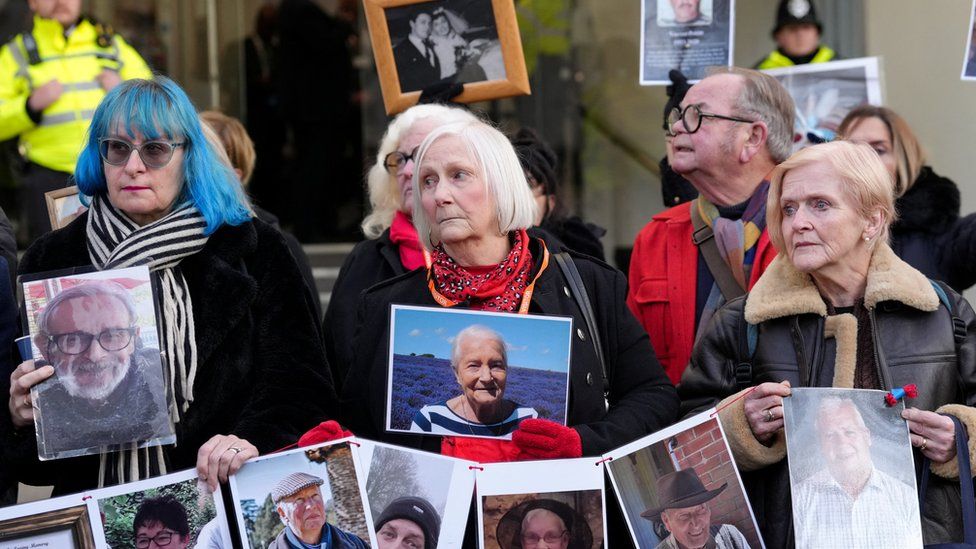
Published7 December 2023Shareclose panelShare pageCopy linkAbout sharingThis video can not be playedTo play this video you need to enable JavaScript in your browser.Boris Johnson has finished giving evidence at the public inquiry looking into how his government handled the Covid crisis.Over two days at the hearing, the former prime minster admitted some mistakes were made but defended his overall approach.Here are key points that emerged from around 10 hours of questioning.A disciplined performance Mr Johnson was highly combative during his grilling by a committee of MPs over Partygate in March, a tactic that did not stop them ultimately concluding he misled Parliament over the scandal.This time, Mr Johnson – who reportedly spent hours with his publicly-funded lawyers preparing for his appearance at the inquiry – took a more measured approach.Boris Johnson hat ‘brings Grimsby into disrepute’There were occasional theatrics, however, such as when he accused the lead inquiry lawyer of saying he had “his feet up” at his country retreat in February 2020 – before Mr Johnson admitted he had confused the comment with someone else.And he choked up when he described the return of the virus after the first national lockdown, describing 2020 as a “tragic, tragic year”.He also drew on his own experience of being moved into intensive care with the virus to insist he “did care” about the fate of those who suffered with Covid, and he understood “what an appalling disease this is”.Protests and interruptions He opened his testimony by saying he was sorry for the “pain and the loss and the suffering” people experienced during the pandemic.But his comments were interrupted by protesters, who were ordered to leave the inquiry room. Some members of bereaved families stood up holding pieces of paper, spelling out the message: “The dead can’t hear your apologies.”There were also protests outside the inquiry building during his evidence, and his departure from the venue on both days was greeting with jeers and boos.Image source, ReutersHe made some concessions The main point he wanted to get across was that ministers did their “level best” to respond to the virus, in difficult circumstances.However, he admitted he – along with scientists and advisers – should have “twigged” the seriousness posed by the disease earlier than he did.He also said his Downing Street operation had a problem with gender balance, adding that “too many meetings were male-dominated”.He conceded that, as a “symbol of government earnestness”, mass gatherings should perhaps have been banned earlier than they were in 2020.And he also apologised for describing long Covid as “bollocks” in a previously-published handwritten note from October 2020.His view of ‘normal politics’ He was more relaxed, however, about some of the foul language revealed in WhatsApp messages disclosed during the course of the inquiry so far.He denied his No 10 had been a toxic place to work, and said bad-tempered exchanges between advisers showed “naturally self-critical” people anxious to do their best, even adding it was “creatively useful”. And he shrugged off messages in which he was urged to sack Matt Hancock as health secretary, saying that as prime minister he was “constantly being lobbied by somebody to sack somebody else”.”It’s just what, I’m afraid, happens, and it’s part of life,” he told the inquiry.He did reveal, however, he had apologised to Helen MacNamara, the former official who accused him of failing to tackle “misogynistic language” used about her in a WhatsApp group by his former top adviser Dominic Cummings. Devolution difficultiesHe said that, whilst understandable, the different messages in different parts of the UK – where there were different Covid rules – risked being “confusing” for the public. He insisted that he had always enjoyed a “friendly” relationship with then-Scottish first minister Nicola Sturgeon, despite suggestions earlier in the inquiry that No 10 was reluctant for them to hold meetings.In England, he said the tier system was “divisive and difficult to implement” involving “laborious” negotiation over local financial support.One eye-catching revelation during Mr Johnson’s testimony came over diary extracts from Sir Patrick Vallance, his chief scientific adviser at the time.According to one entry, the former prime minister blamed high infection rates in Wales during the pandemic on “the singing and the obesity”.However, he was not asked about that alleged remark about Wales, which appeared in a diary extract dated 11 September 2020.Instead, the inquiry lawyer quizzed him on a different part of the entry.More on this storyContrite, shorn of theatrics – Johnson’s first day at inquiryPublished6 December 2023’Moronic’: Vicious Covid WhatsApps reveal No 10 battlesPublished31 October 2023

Read more →

Covid inquiry: I did not back a 'let it rip' policy, says Boris Johnson

Published14 minutes agoShareclose panelShare pageCopy linkAbout sharingThis video can not be playedTo play this video you need to enable JavaScript in your browser.Boris Johnson has insisted he did not pursue a “let it rip” strategy during the coronavirus pandemic. Giving evidence to the Covid inquiry, he said he did offer counter arguments in order to challenge the consensus in meetings.He argued his actions proved he worked to curb the virus, rather than allowing it to spread through the population.He also rejected the idea that he was slow to act when cases began rising again in the autumn of 2020. This was Mr Johnson’s second day of giving evidence to the public inquiry.During the session, he was pressed on decisions he made ahead of the second wave of Covid.More on Covid and the Covid InquiryWhat is the UK Covid inquiry and how long will it take?How inquiry is exposing deep flaws in Covid decision-makingThe private WhatsApp messages from inside Downing StreetWhat to do if you have Covid: Can you go to work or school?In summer 2020, the government, in a bid to boost the hospitality sector, launched the Eat Out to Help Out scheme, where diners were given discounts on their restaurant meals.Mr Johnson said the measure was not seen as a “gamble” when introduced and that he had not subsequently seen evidence that proved it “made a big difference” to the infection rate.There has been conflicting evidence as to whether the scheme did propel the virus, and a surge of cases in the UK mirrored rises in other European countries, which did not have the scheme. In previous hearings, the inquiry has been told that neither senior scientific advisers nor Matt Hancock, health secretary at the time, were told about the scheme before it was announced. Mr Johnson said he was “perplexed” at the suggestion top advisers had been unaware of the plan, adding that it was not a secret and had been “discussed several times in meetings in which I believe they must have been present”.The former prime minister also told the inquiry:He “agonised” over whether to introduce a circuit breaker in autumn 2020 but decided a regional approach – or tier system – was “worth a try”The tier system was “divisive and difficult to implement” involving “laborious” negotiation over local financial supportBy October the approach was “running out of road” and abandoned in favour of national lockdownsHe was “desperate” to keep schools open in January 2021 but “it just wasn’t a runner” given schools were “terrific reservoirs” of the virusMedia representations of Partygate – rule breaking events in Downing Street – were “a travesty of the truth” and “a million miles from reality”The controversy over Dominic Cummings’ journey to Barnard Castle was “a bad moment”Social distancing guidance was “logistically impossible” to follow at all times in No 10 given the number of meetings being held during the pandemicThe world still needed answers about “the real origins of Covid”.The inquiry was shown extracts from the diary of Sir Patrick Vallance, the government’s chief scientific adviser during Covid, in which he says Mr Johnson “argues that we should let it rip a bit”.Asked by the inquiry’s counsel if this stance prevented him from introducing a national lockdown until “the last possible moment”, Mr Johnson replied: “No, the implication that you’re you’re trying to draw from those conversations is completely wrong.”My position was that we had to save human life at all ages.”If you look at what we actually did, never mind the accounts that you have culled from people’s jottings from meetings… if you look at what we actually did, we went into lockdown as soon as we could.”I had to challenge the consensus in the meeting.”The inquiry also saw extracts from Sir Patrick’s diaries which included the line: “Wales very high – PM says ‘it is the singing and the obesity…I never said that’.”Mr Johnson was not asked about the alleged remark about Wales, which appeared in a entry dated 11 September 2020.The former prime minister was largely measured during the hearing but robustly defended himself against accusations he did not care about people’s suffering during the pandemic. Becoming emotional, he recalled his time in intensive care after contracting Covid. “I saw around me a lot of people who were not actually elderly – in fact, they were middle aged men and they were quite like me.”And some of us were going to make it and some of us weren’t.”I knew from that experience what an appalling disease this is… To say that I didn’t care about the suffering that was being inflicted on the country is simply not right.”Mr Johnson’s successor Prime Minister Rishi Sunak is due to give evidence to the inquiry on Monday. Becky Kummer, spokesperson for Covid-19 Bereaved Families for Justice UK, said Mr Johnson’s evidence showed he “failed to take the pandemic seriously in early 2020 leaving us brutally unprepared, and failed to learn from his mistakes meaning that the second wave had an even higher death toll than the first”.”He delayed for fear of how it might impact his reputation with certain sections of the press…. there are many lessons from the pandemic that might save lives in the future, but one of them is undoubtedly that someone as self-serving as Boris Johnson is not fit for power.”

Read more →

Bellevue Hospital Rushes Patients Into Weight-Loss Surgery

In the windowless basement of a Manhattan church last month, Bellevue Hospital hosted a fashion show.Dozens of weight-loss surgery patients, some in evening gowns, strutted down a red carpet. While their “before” photos were projected on a screen, an M.C. read testimonials about how the operations had remade their lives.Addressing the cheering crowd, Bellevue’s chief medical officer boasted about a remarkable number. The overwhelmed public hospital, which routinely treats gunshot and stabbing wounds, was on track to perform a record 3,000 weight-loss surgeries this year.“We have a lot to be proud of,” the executive, Dr. Nathan Link, said.Bariatric surgery is a major operation that, for the right patients, can ward off heart disease, diabetes and strokes. Bellevue, which serves a disproportionately poor and obese population, says the operations have saved many lives.But a New York Times investigation found that the bariatric program, led by surgeons with financial incentives to perform more operations, has become a high-speed assembly line that has endangered some patients and compromised urgent care for others. And because most of the hospital’s patients are on Medicaid or uninsured, taxpayers foot the bill.The surgery shrinks patients’ stomachs and requires them to radically change how and what they eat. Even some successful operations can lead to a lifetime of stomach cramps and debilitating acid reflux.For that reason, hospitals often require surgical candidates to try to lose weight on their own and go through months of screening and preparation for the procedure and its aftermath.Bellevue, however, frequently cuts corners as it hustles patients through the process, according to the Times investigation, which is based on interviews with 70 Bellevue employees, patients and executives from New York City’s hospital and correctional systems, as well as internal hospital documents, court filings and medical records.Prospective patients often receive tentative surgery dates after attending a single informational session, filling out a worksheet and speaking briefly with a doctor. Meetings to assess patients’ mental health sometimes last just 10 minutes. Many patients said in interviews that they had agreed to surgeries without fully grasping the risks.In its zeal to increase volume, the hospital has operated on people whose body mass indexes were too low for them to qualify for surgery under standard medical guidelines, according to eight doctors and nurses involved in the operations. It has recruited patients from New York City’s Rikers Island jail complex who have virtually no chance of maintaining the required diets after surgery. Two prisoners told The Times that they had become malnourished and regretted having the operation.Bellevue’s celebration for patients to show off their newly slim bodies.Maansi Srivastava/The New York TimesTwo of Bellevue’s bariatric surgeons often race each other to see how many operations they can perform in a day, at times even relying on unlicensed equipment technicians to assist them, The Times found. Anesthesiologists sometimes reduce doses of pain medication so that patients wake up sooner and operating rooms can be cleared faster. This year, as the volume of operations surged, doctors accidentally operated on a pregnant woman after medical staff neglected to check her test results.The bariatric department has an incentive to move fast. The hospital receives at least $11,000, and sometimes much more, for most weight-loss surgeries. And unlike many doctors at Bellevue, who get paid flat salaries, the bariatric surgeons earn more money when they perform more operations.“It’s all about the numbers,” said Dr. Carmen Kloer, who worked with Bellevue’s bariatric department as a medical resident before quitting in October. “They are just churning through cases.”Since 2008, Bellevue has performed more than 17,000 weight-loss procedures. In the first year of the pandemic, nearly 1,200 patients underwent bariatric surgery, nearly as many as the roughly 1,400 who were hospitalized for Covid — even though the hospital halted elective operations for three months of the year. Weight-loss surgeries now account for one of every five operations at Bellevue.Some bariatric patients have contracted life-threatening infections. One spent a month in a coma after her surgeon accidentally nicked her spleen. Another died.Bellevue publicly reports rates of complications from bariatric surgery that are on a par with the national average. But those figures capture only certain serious problems in the month after surgery. They don’t include longer-term problems like ulcers, hernias and weight gain.Nor does Bellevue’s complication data cover surgeries this year, when volumes soared to what some doctors and other medical staff regarded as dangerously high levels.The booming bariatric practice has also crowded out other services, with the hospital repeatedly delaying urgent surgeries for patients with stab wounds and broken bones, The Times found.Christopher Miller, a spokesman for Bellevue, said the bariatric program was a much-needed service for patients who often struggle to get medical care.“There’s an incredible need and demand for this surgery,” he said. He cited a report this year from the American College of Surgeons that praised Bellevue for running “a very high-volume program without sacrificing quality.” The review, based largely on data provided by Bellevue, was part of a routine accreditation process.Mr. Miller denied that Bellevue operated on unqualified patients or that it rushed them through screening and approval. He said the hospital prided itself on having made its surgical processes more organized and efficient.Mr. Miller accused The Times of cherry-picking negative examples and painting an inaccurate picture of a successful public health program. “We are saving lives in large numbers” and improving patients’ quality of life, he said. “To frame this any other way is wrong and a disservice to our patients, our employees and New Yorkers.”Always Hitting TargetsMost of Bellevue’s patients are uninsured or on Medicaid, which pays at least $11,000 for most weight-loss surgeries.Maansi Srivastava/The New York TimesIn 2007, Bellevue recruited a young surgeon named Manish Parikh to help the hospital open a new department.Until then, Bellevue’s doctors had referred potential bariatric surgery patients to the city’s private hospitals. Now executives wanted Bellevue to treat those patients. Because of the large amounts that Medicaid pays for bariatric surgeries, the program might even turn a profit for the chronically underfunded hospital.To get the program off the ground, Bellevue enlisted Dr. Parikh, who had recently finished his medical residency at New York University. N.Y.U. already ran a bustling weight-loss surgery program.After surgeries began in 2008, Bellevue agreed to pay Dr. Parikh in part based on volume.Aaron Cohen, the hospital’s chief financial officer from 1995 to 2015, recalled being impressed that Dr. Parikh continuously set and then met higher targets for how many surgeries he could do.“If he committed to doing 100 cases, he hit 100 cases,” Mr. Cohen said. “The whole time I was there, he never missed a target.”In 2020, the team performed 1,192 procedures. The next year there were 2,071. This year Bellevue is on track for 3,000.Dr. Parikh did not respond to requests for comment. Mr. Miller said that paying doctors based on volume was “extremely common” and that Bellevue operated only on medically appropriate patients.Bariatric surgery has been gaining popularity nationwide, increasing by 66 percent from 2011 to 2021, according to the American Society for Metabolic and Bariatric Surgery — though not nearly at the pace of Bellevue.Dr. Manish Parikh, second from left, at the fashion show.Maansi Srivastava/The New York TimesDr. John Morton, who heads the bariatric surgery program at Yale and was a former president of the society, said Bellevue’s volume was “exceptional.” He was unaware of any other hospital performing so many weight-loss operations.Bellevue doesn’t publicly disclose how much money it brings in from bariatric surgeries. Based on Medicaid reimbursement rates, The Times conservatively estimated that Bellevue stands to earn at least $34 million this year.At this year’s celebration of its bariatric program, Bellevue set up a gala-style backdrop for newly slim patients to take photographs that would later appear on the hospital’s social media pages. Some patients held signs with phrases like “I Feel Bari Good Today.”Alvaro Macias-Rodriguez walked the runway wearing tight black pants and a big smile. He said that before surgery last year, he had weighed 330 pounds, putting him at heightened risk of liver cancer. Since the operation, he said, he has lost nearly 100 pounds.“I don’t know where I would be without it,” Mr. Macias-Rodriguez said as pop music blared.He praised what he said was Bellevue’s swift approval process, saying it was much faster than the yearlong wait he had faced at another Manhattan hospital.A Rushed ProcessMelody Vargas’s mother encouraged her to look into bariatric surgery, which she had in 2016. Ms. Vargas described the process as “crowded and rushed.”via Melody VargasBariatric surgery is a serious undertaking. Patients must severely restrict their diets for the rest of their lives.Before surgery, many hospitals require that patients spend months trying to lose weight through exercise and diet. The theory is that if they can’t adopt a healthy lifestyle before surgery, their odds of doing so afterward are low. Patients must go through a lengthy approval process, including counseling and visits with nutritionists.At Bellevue, the process is often compressed. More than a dozen patients said it took about three months from their first appointment to their operation. That speed has caused some doctors to worry that the hospital is not doing enough to prepare patients.“Some people benefit from surgery, but the amount that have no idea what they’re getting into is huge,” said Dr. Kloer, the former Bellevue surgeon.Medical guidelines published last year by the professional society for bariatric surgeons recommend the operation only for severely obese patients. They should have a body mass index, which is based on a combination of weight and height, of at least 35 or, if the patients have certain other medical conditions, at least 30.But eight doctors and nurses said they participated in surgeries on patients whose medical charts showed that their B.M.I.s were below 30.And 15 current and former Bellevue employees questioned whether patients were being adequately informed about the risks of bariatric surgery. Some patients said they weren’t even sure what type of surgery they had undergone.After bariatric surgery, Ms. Vargas said she faced months of complications that required multiple I.C.U. stays at Bellevue.via Melody VargasMelody Vargas said she didn’t recall being told about any risks before her 2016 operation. She was 28 and weighed more than 400 pounds when her mother encouraged her to look into the surgery. She described the preparation process as “crowded and rushed,” starting with the first time she talked to a doctor, at an information session packed with at least 60 people.“It was like you’re at a McDonald’s, and you choose what food you want,” Ms. Vargas said. “They make it seem like the operation is really nothing serious.”Days after her operation, she said, she was in the intensive care unit with a life-threatening infection that required emergency surgery. For six months, she relied on feeding tubes for nutrition.Mr. Miller said patients signed forms acknowledging the risks of bariatric surgery. “The information is discussed at several points,” he said, during a screening process that typically lasts three to six months. He said that the time frame was consistent with other hospitals’ and that all patients meet eligibility guidelines set by the American Society for Metabolic and Bariatric Surgery.Yet employees sometimes ignore signs that a patient might not be ready for surgery. When Bernadette arrived for surgery in 2020, she was asked if she had followed doctors’ orders to stick to a two-week liquid diet. No, she recalled replying. In fact, she had eaten Chinese food the night before.The operation went forward anyway, said Bernadette, who asked that her last name be withheld for privacy reasons. Mr. Miller said he could not comment on specific patients.An Egregious ErrorBellevue employees said some surgeons squeeze up to six or seven bariatric operations into a single day.Maansi Srivastava/The New York TimesThe overriding principle of the bariatric department, according to more than two dozen Bellevue employees, is to operate on as many patients as possible as quickly as possible.“Two female bariatric surgeons involve their residents in a well-known daily ‘race,’” a manager wrote in 2021 to Bellevue leadership, outlining a variety of concerns about the hospital’s operating rooms. Six other employees said they knew about the race.Mr. Miller said Bellevue’s bariatric surgeries were only slightly faster — about 10 minutes quicker on a roughly hourlong procedure — than the national average.Doctors, nurses and other hospital staff described a hurried process to get patients into surgery and swiftly turn over rooms. That allows surgeons to squeeze up to six or seven patients into a single day.When they have been short on assistants, bariatric surgeons at times have asked equipment technicians, who were not hospital employees or licensed to treat patients, to scrub in and participate in surgeries, two Bellevue doctors said.Mr. Miller did not dispute the doctors’ accounts.Earlier this year, Bellevue’s staff forgot to check a patient’s pregnancy test before surgery, four employees said. It was positive. After the procedure, doctors counseled her about potentially terminating the pregnancy because her body might not be able to absorb enough nutrients to support the growing fetus.Dr. Anthony Petrick, who leads a committee that accredits Bellevue’s bariatric program, said operating on a pregnant patient was an egregious error. “This should never happen,” he said.Mr. Miller declined to comment on the patient’s case.In another case this fall, bariatric surgeons realized before surgery that they had the wrong patient in the operating room, according to four Bellevue employees.Three anesthesiologists said surgeons chastised them when patients took too long to wake up. So they lowered the doses of pain medication, giving just enough to carry patients through the surgery. Some patients woke up in intense pain.Mr. Miller denied that surgeons pressured anesthesiologists.On other occasions, five doctors said, they saw Dr. Julia Park, a weight-loss surgeon, pinch and slap patients’ bellies to rouse them from anesthesia.“We have no knowledge of this,” Mr. Miller said. Dr. Park did not respond to requests for comment.In 2015 Bellevue promoted Dr. Parikh, giving him control over all of the hospital’s operating rooms. While life-threatening emergencies always got priority, patients with minor stab wounds, broken bones and detached fingers regularly waited hours for surgery because bariatric surgeons were occupying so many operating rooms, according to more than a dozen doctors and other employees.One day in October, for example, a patient arrived at Bellevue with shattered ribs but could not be operated on because bariatric surgeons were occupying multiple rooms, according to an employee who was there. (That day, bariatric surgeons performed 16 weight-loss surgeries, according to surgical schedules reviewed by The Times.) The rib surgery was pushed to the next day, the employee said.Mr. Miller said the hospital had dedicated operating rooms for emergencies. “The bariatric surgery program never blocks an emergency surgery from proceeding,” he said.Operating on PrisonersDetainees at Rikers often struggle to get even rudimentary medical care, but 11 were taken to Bellevue for elective bariatric surgery.José A. Alvarado Jr. for The New York TimesEarly one morning in February, a guard clanged on the door of David Mustiga’s jail cell on Rikers Island. Soon, the 43-year-old was shackled and put on a bus to Bellevue.Rikers detainees often struggle to get even rudimentary medical care. But Mr. Mustiga and 10 other prisoners have undergone elective bariatric surgery at Bellevue, often spending weeks in the hospital.Even in the best conditions, recovering from bariatric surgery is tough. Trying to recuperate in jail, where detainees have little control over what they eat or how fast they eat it, is especially difficult.Mr. Miller said patients from Rikers were “screened and assessed like all others” and were kept at Bellevue until they were ready to eat the types of food that were available at the jail.Mr. Mustiga, who was later convicted of drug trafficking, weighed more than 300 pounds and had high blood pressure. He had been excited months earlier when a staff member at the Rikers medical clinic first told him about the benefits of bariatric surgery. He said no one had warned him about the challenges of recovering while incarcerated.Mr. Mustiga received a pamphlet from Bellevue advised him to try a Zumba dance class.via David MustigaWhen Mr. Mustiga boarded the bus to Bellevue, he thought it was for a brief visit to get bloodwork in preparation for surgery. Instead, he was admitted to the hospital’s locked prison ward and placed on a liquid diet.There, he met another patient waiting for bariatric surgery, Luis Perez. The men bonded over their dieting ordeals and teamed up to steal scraps from their neighbors’ hospital trays.Mr. Perez, who was awaiting sentencing for drug possession, had surgery first. Afterward, he told Mr. Mustiga that the pain was worse than when he had been hit by a car and lost his arm above the elbow.Mr. Mustiga panicked. He said he had tried to back out of the surgery, but a doctor told him that this was his only shot at getting the procedure and that if he didn’t follow through, he would be sent back to the jail immediately.Mr. Mustiga said he often used the same pressure tactics on his drug customers. “Tell someone it’s their last shot, and they find their wallet pretty quickly,” Mr. Mustiga said.He decided to have the operation.After surgery, patients are supposed to consume small, protein-rich meals.Luis Perez said he suffered complications after his surgery.via Annette MartínezBack at Rikers, Mr. Mustiga bartered cigarettes for protein powder. He reviewed a Bellevue pamphlet outlining dos and don’ts after surgery. It suggested that he eat nonfat Greek yogurt or drink eight cups of Crystal Light. Exercise tips included trying a Zumba dance class.Mr. Mustiga wasn’t getting proper nutrition. He said he lost more than 100 pounds in less than six months — a rate of weight loss that can be dangerous. His hair fell out in clumps, and his medical records show he was receiving iron supplements for anemia.This summer, Mr. Perez was transferred to Franklin Correctional, a prison near the Canadian border, to serve a four-year sentence.During a visit in August with two Times reporters, Mr. Perez’s skin was sallow. He said he was not getting enough protein and could not eat without vomiting. He worried the surgery had made him a target in prison, where size matters for protection.Two months later, Mr. Perez was badly beaten. He said his attackers stole the protein powder he had been saving up.The Blood-Filled StomachJasmine Nieves said she called Bellevue to complain about her pain but that no one responded.Maansi Srivastava/The New York TimesMs. Nieves spent a year in and out of hospitals after her surgery.Maansi Srivastava/The New York TimesIn 2022, Bellevue reported that 3 percent of bariatric patients were readmitted to the hospital within a month of their operation. Experts said that rate appeared to be consistent with other high-quality programs, although it didn’t account for longer-term problems associated with the surgery.After her operation in 2015, Jasmine Nieves was in agony. The 30-year-old repeatedly called Bellevue’s bariatric clinic to report her pain, but she said nobody answered.A few months later, her sister discovered Ms. Nieves passed out on a couch. At a hospital in Brooklyn, a CT scan revealed that the operation had caused fluid to pool in her abdomen, requiring emergency surgery, according to her medical records.She spent the next year in and out of hospitals, at one point needing a feeding tube because she could no longer eat solids.Ms. Nieves filed a malpractice lawsuit against Bellevue, which was dismissed after she missed multiple court dates. Her claims were never adjudicated.Mr. Miller declined to comment, citing privacy restrictions.In 2021, Magaly Rojas, then 43, ended up in a monthlong medically induced coma after her bariatric surgeon, Dr. Park, punctured her spleen, according to a malpractice lawsuit she later filed.She was in the hospital for 75 days. By the time she returned home, her 1-year-old daughter didn’t recognize her. She was about 109 pounds, down from 236, according to her brother.Ms. Rojas couldn’t go back to work because she could not control her bowels. She and her three young children are at risk of losing their apartment.Ms. Rojas’s lawsuit is pending. Bellevue disputes her claims.Soraya de Oliveira, 53, underwent bariatric surgery in 2018. Shortly afterward, staff discovered her stomach was filling with blood.Doctors performed two emergency surgeries, but she died days later. Her family filed a wrongful-death lawsuit. Bellevue settled.Mr. Miller said the hospital’s number of deaths associated with bariatric surgery was below the national average. Only two patients had died, he said.Susan Beachy

Read more →

Peterborough father's brain tumour shock after new baby born

Published5 hours agoShareclose panelShare pageCopy linkAbout sharingImage source, Bravo HibberdBy Mariam IssimdarBBC News, PeterboroughA woman has spoken of her shock after learning her husband had brain cancer weeks after their daughter was born. Mauricee Bravo-Hibberd’s husband Sam, 34, from Peterborough, was diagnosed with an inoperable glioblastoma (GBM) in September.She said: “We had a normal, comfortable, albeit somewhat-hectic family life until suddenly we didn’t.”The father-of-three was told he had eight to 12 weeks to live and was referred to palliative care. Image source, Bravo-HibberdMr Bravo-Hibberd had experienced personality changes for at least a year and suffered from headaches, taste auras and confusion for about two weeks prior to his diagnosis.He underwent an open biopsy, where some 30% of his tumour was removed and is now undergoing radiotherapy.Mrs Bravo-Hibberd, 37, is attempting to buy him more time by working with charity Brain Tumour Research to source alternative treatments such as immunotherapy and tumour treating fields.She has turned to crowdfunding as they are not yet available on the NHS and cost from £17,000 per month to £250,000.She said people had already “been very generous and we are so grateful”.Image source, Bravo-Hibberd”I really miss that now, the blissful chaos, manic mornings prepping for work, school and nursery, and Sam and our boys playing football in the garden as I watched from the kitchen,” she added.”Sam used to do most of the running around because he worked locally in recruitment, whereas I have a substantial role in healthcare about an hour away and work longer hours.”I’m currently on maternity leave, having had our daughter three months ago and am now also Sam’s full-time carer. Our lives feel like a living nightmare.”Charlie Allsebrook, community development manager for Brain Tumour Research, said: “Sam’s heartbreaking story is a stark reminder of the indiscriminate nature of brain tumours, which can affect anyone at any time. “They kill more children and adults under the age of 40 than any other cancer, yet just 1% of the national spend on cancer research has been allocated to this devastating disease since records began in 2002.”If you have been affected by any of the issues in this story, the BBC Action Line has links to organisations which can offer support and advice.Follow East of England news on Facebook, Instagram and X. Got a story? Email eastofenglandnews@bbc.co.uk or WhatsApp on 0800 169 1830More on this storyWoman with brain tumour raises £8k to help researchPublished23 NovemberParty in memory of boy who died from brain tumourPublished10 NovemberRelated Internet LinksBrain Tumour ResearchThe BBC is not responsible for the content of external sites.

Read more →

Why was a man who took a wee in a layby fined for littering?

Published2 hours agoShareclose panelShare pageCopy linkAbout sharingImage source, Michael MasonBy Laurence CawleyBBC News, HertfordshireWhen a 69-year-old with a weakened prostate parked in a layby to have a “discreet” wee he ended up being handed an £88 fine for “littering”. While many might consider urinating in public – however discreet – unpleasant or antisocial, is it actually littering?Michael Mason has a weakened prostate and was 45 minutes into a two-hour journey when he needed a wee.He was on the A41 near King’s Langley, Hertfordshire, and stopped at the last layby before joining the M25.”I managed to make it to the layby,” Mr Mason, of Winslow in Buckinghamshire, says. “I made sure nobody could see me and was very, very discreet.”An officer from District Enforcement, the firm contracted by Dacorum Borough Council to deal with what it calls “enviro-crimes”, was said to have tapped on his window and told him he had been “caught littering”.Accounts of the conversation that followed differ.Mr Mason says he apologised, explained it was an emergency and told the officer he had a prostate issue. The council says it understands from its contractor that no mitigating circumstances were raised.Mr Mason went to his GP and paid £30 for a letter about his medical condition. This was sent to the council, which then cancelled the fixed penalty notice.But why was the fine handed out in the first place?The council says Mr Mason, who contacted the JVS Show on BBC Three Counties Radio to highlight the issue, was in breach of Section 78 of the Environmental Protection Act 1990.It cited a paragraph that states: “If any person throws down, drops or otherwise deposits in, into or from any place to which this section applies, and leaves, any thing whatsoever in such circumstances as to cause, or contribute to, or tend to lead to, the defacement by litter of any place to which this section applies.”In its initial response to the BBC, Dacorum claimed that “urination is classified as litter by the Environmental Protection Act 1990″.But Nick Freeman, a lawyer popularly known as Mr Loophole, disagrees and says nowhere does the act classify urine as litter.Image source, PA”We could argue about whether urinating actually causes ‘defacement’,” Mr Freeman says. “But what we need to do is look at what Parliament intended to achieve when it passed this legislation. What was the spirit of this legislation?”He says Section 98 goes some way to defining litter when it states litter includes “discarded ends of cigarettes, cigars and like products” and “discarded chewing-gum and the discarded remains of other products designed for chewing”.”I think most people have a good grasp of what litter is,” says Mr Freeman. “I would argue as a lawyer that the very fact it does not mention urine clearly indicates that urine is not a piece of litter, it is not in any way any form of litter.”I would say their interpretation of what litter is, is contrary to the legislation and it is contrary to its everyday meaning and therefore, in my view, legally, they are wrong.”It isn’t litter and I think if it was argued in court, in my view they would lose.”Most people have wild wees, and it is not just men,” Mr Freeman adds. The BBC asked District Enforcement about how it collects evidence of public urination and whether it varies its approach depending on the suspect’s gender. It also asked whether it had targeted this particular layby to catch people spending a penny before joining the M25.It did not respond to the BBC’s questions.The BBC asked the council whether it accepted urine was not mentioned or classified as urine under Section 78 of the Environmental Protection Act. It did not answer.The BBC also asked Dacorum how many fines for public urination had been issued in the past financial year. It did not provide a figure.Image source, GoogleHowever, according to a council assessment of its contract with District Environment, 10 penalties were issued to people in the borough for urinating or defecating during a 10-month trial period in 2021-2022.The same document shows how, under its contract with District Enforcement, the council takes 22% of penalty income. Dacorum Borough Council is far from the only local authority to treat urinating in public as a littering offence. Many councils, including Richmond, Bedford and Lambeth do.Kirklees in west Yorkshire, however, recently issued an order that treats public urination not as littering, but as an anti-social act under the Section 59 of the Anti-social Behaviour, Crime and Policing Act 2014. Will washed up wrappers ever be a thing of the past?Fines to increase by up to 230% in litter crackdownAsked whether public urination was littering, the Department for the Environment, Food and Rural Affairs (Defra) said local authorities had powers to “put Public Space Protection Orders (PSPOs) in place for the purpose of tackling antisocial behaviour such as public urination” but added it was “for the courts to decide whether a council has used the correct powers”.In a statement, Dacorum Borough Council said it contracted District Enforcement following a “tender process” to provide “enforcement for littering and public space protection orders”. “[It] also supports the council with proactive initiatives such as hot spot monitoring, responsible dog ownership advice, leafleting in areas where there have been known problems, handing out stubby cases for cigarette ends and acting as a visual deterrent for those considering environmental crimes,” the council said. “Prior to implementing this initiative, the council sought expert legal advice from specialists in all aspects of local authority regulation and enforcement from enviro-crime and anti-social behaviour through to planning enforcement, licensing, food and health and safety. This included advice on urination.”The council added: “The council recognises that there may be circumstances where representations are made against fixed penalty notices, with the first stage heard by District Enforcement and the second stage by council officers. “In the case of urination, if medical evidence is provided, the fixed penalty notices are withdrawn, as was the case with Mr Mason.”Follow East of England news on Facebook, Instagram and X. Got a story? Email eastofenglandnews@bbc.co.uk or WhatsApp 0800 169 1830Sign up for our morning newsletter and get BBC News in your inbox.More on this storyMan who urinated in layby has fine cancelledPublished2 days agoDriver’s littering fine after urinating in laybyPublished6 days agoRelated Internet LinksDacorum Borough CouncilDistrict EnforcementDefraThe BBC is not responsible for the content of external sites.

Read more →

New test to prevent hearing loss in newborns

Image source, Getty ImagesMark NormanBBC South East Health Correspondent Published3 hours agoA new genetic test has been made available in Brighton to help prevent hearing loss in vulnerable newborns. The Royal Sussex County Hospital says the test will help identify newborn babies at risk from hearing loss if treated with a common antibiotic. For some babies a single dose of the antibiotic gentamicin can sometimes cause severe irreversible hearing loss. The National Institute for Health and Care Excellence (NICE) recommends gentamicin as the first-choice antibiotic treatment for neonatal infections.The test, which involves taking a gentle cheek swab, can determine whether a critically ill baby has a single gene change that could cause permanent hearing loss if they are treated with gentamicin.Neonatal registrar Dr Jodie Nguyen said the hospital admits around 450 new-born babies each year. “Many will be unwell and require antibiotics. For those carrying this genetic variation, even a single dose of gentamicin can sometimes cause severe irreversible hearing loss,” she said. “Until now, we have not been able to test for this gene prior to administering antibiotics because genetic testing takes at least a few days, and we must give antibiotics quickly – within one hour – in order for them to be the most effective against infection.”Dr Cassie Lawn, consultant neonatologist and clinical lead at the trust, said: “These results can also provide important information for the rest of the family too as the gene is inherited down the maternal line. “So, if it is detected in the baby, the mother and any siblings from the maternal side are also likely to carry the gene change and should also avoid gentamicin.”Follow BBC South East on Facebook,

Read more →

Blood test shows if organs are ageing fast or slowly

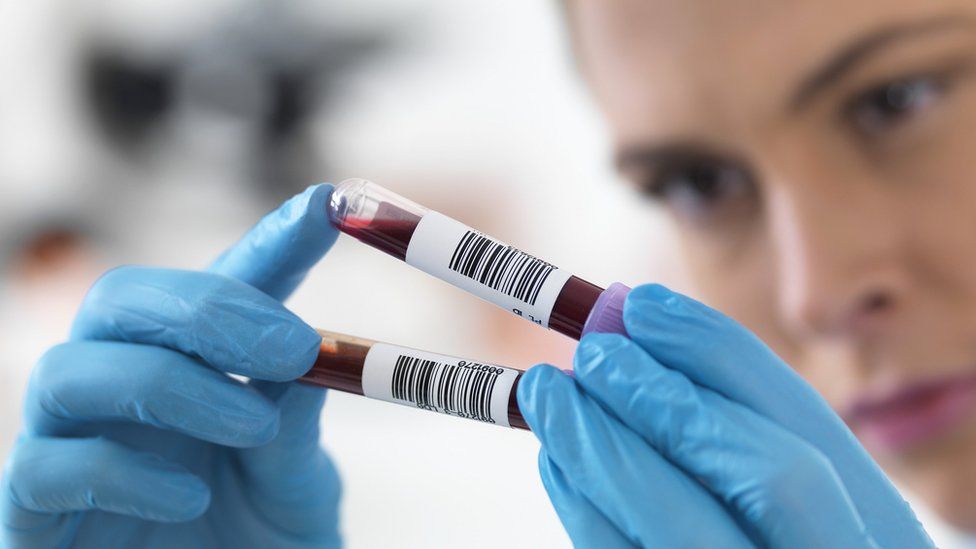
Published34 minutes agoShareclose panelShare pageCopy linkAbout sharingImage source, Getty ImagesBy Michelle RobertsDigital health editorSimilar to doing an MOT on a car, scientists believe they can run a blood test to check how fast a person’s internal organs are ageing, and even predict which ones might soon fail. The Stanford University team say they can monitor 11 major body parts, including the heart, brain and lungs. They tried it on thousands of adults, mostly middle-aged or older.One in five reasonably healthy adults aged 50-plus might have at least one fast-ageing organ, the results suggest. And one to two in every 100 might have several organs that test older than their birthday years. While the idea of the check-up might be scary, it could be an opportunity to intervene and change course, the researchers say. Image source, Getty ImagesKnowing which organs are in rapid decline could help reveal what health issues may be looming, the researchers say in the journal Nature.Organ age gapFor example, an “old-for-its-time” heart increases the risk of heart failure, while a rapidly ageing brain might be more prone to dementia. In the study, having one or more organs ageing fast was linked with a higher risk of certain diseases and death over the next 15 years.The body parts they checked include:BrainHeartLiverLungIntestineKidneyFatBlood vessels (arteries)Immune tissueMusclePancreasThe blood test looks for levels of thousands of proteins to give clues on which organs are ageing at different rates. The pattern of proteins detected appeared to be specific to particular organs. Researchers trained a machine-learning algorithm to make the predictions using lots of blood test results and patient data. One of the investigators, Dr Tony Wyss-Coray, explained: “When we compared each of these organs’ biological age for each individual with its counterparts among a large group of people without obvious severe diseases, we found that 18.4% of those aged 50 or older had at least one organ aging significantly more rapidly than the average. “And we found that these individuals are at heightened risk for disease in that particular organ in the next 15 years.”The university has now submitted the paperwork to patent the test, in case it can be used and sold in the future. More studies are needed to check how good it really is at predicting organ age and health before that though. Some of Dr Wyss-Coray’s earlier work suggests the biological ageing process is not steady but comes in bursts, with some rapid accelerations in people’s mid-30s, early-60s and late-70s. Prof James Timmons, an expert in age-related health and diseases at Queen Mary University of London, has also been studying blood markers of biological age. His work focuses on detectable gene changes, rather than proteins. He said the latest findings by Dr Wyss-Coray were impressive, but needed validating in more people, particularly younger ones from diverse ethnic backgrounds. “Is this ageing or a new way to detect early age-related disease biomarkers? The authors favour the former, I don’t think the latter is ruled out,” he said.Dr Wyss-Coray said: “If we can reproduce this finding in 50,000 or 100,000 individuals it will mean that by monitoring the health of individual organs in apparently healthy people, we might be able to find organs that are undergoing accelerated ageing in people’s bodies, and we might be able to treat people before they get sick.” Prof Paul Sheils, an expert in the biology of ageing at Glasgow University, said it was still important to look at the whole body, not just individual organs, to build the most accurate picture of a person’s health. Caroline Abrahams from the charity Age UK said it while it was great that science was exploring earlier detection of serious age-related diseases, consideration was needed about how people might feel living with the knowledge. Should it become a reality, she said people would want emotional and clinical support alongside the test results and that the NHS would need to be ready for that – and have the funding to provide it. More on this storyTest shows how old your body really isPublished7 September 2015Related Internet LinksNature journalThe BBC is not responsible for the content of external sites.

Read more →

Kidney transplant: Three-year-old is smallest patient

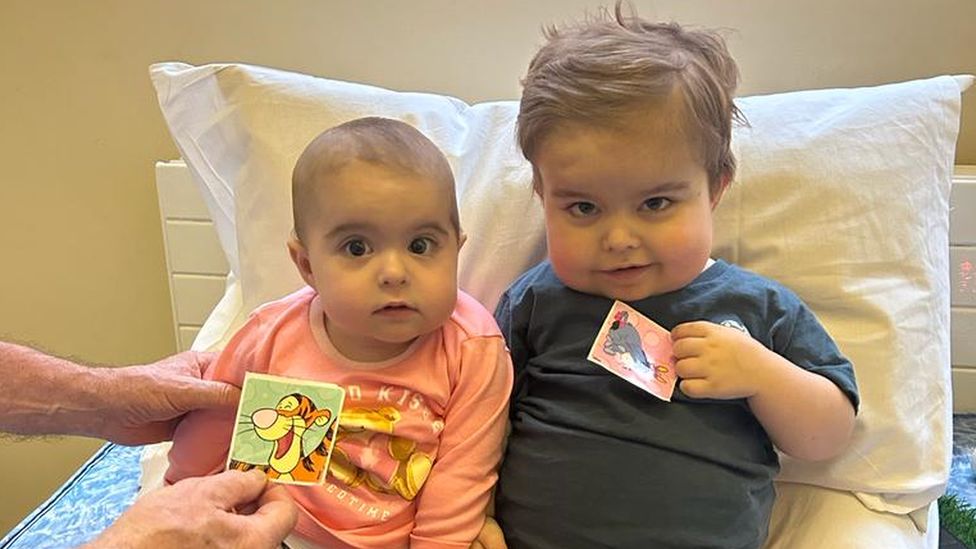
Published9 hours agoShareclose panelShare pageCopy linkAbout sharingImage source, cartmill familyBy Stephen WatsonBBC News NIA three-year-old boy has become the smallest – and one of the youngest – recipients of a kidney transplant in Northern Ireland. Olly Cartmill was just 13kg (29lbs) when he underwent the life-saving operation, receiving a live donation from his grandmother Michelle.Olly was born with an extremely rare condition known as TTC21B. His one-year-old sister Etta has the same condition and will require a transplant when she is older. Before his successful transplant Olly, from Bessbrook, County Armagh, was continually fatigued and underwent up to 14 hours of dialysis every night while on a strict fluid intake restriction.”We always knew Olly was sick,” said his mum Dionne. “If we hadn’t have taken him to Daisy Hill Hospital for a blood test they told us he wouldn’t be here, which is a scary thought.”He cried from morning to night. Image source, CARTMILL FAMILY”If he got about 15 minutes [sleep] that was it. There’s nothing you could do to settle him. “He cried, he was sore all over and dying of thirst but was only allowed 100ml of water every day. “He didn’t want to interact with other children, and was in a really bad way. Looking back now I think: ‘How did we get through that?'”The previous two Christmases he was on dialysis and he was tired and fed up. Now he’s getting so much enjoyment out of all the toys and I can’t wait to see his face this Christmas morning.”Record number of kidney transplants in NI in 2020’My kidney transplant was saved by blue-light taxi’Olly’s surgery was performed in Belfast City Hospital by surgeon Tim Brown, who admitted the operation was complicated.”We’re using an adult kidney and obviously that’s a fair size compared to a child’s tummy,” he said.”Finding somewhere to put it… the size of the vessels that we have to stitch the kidney onto are so much smaller, so it’s always more stressful to get it right.”But it’s a real privilege to be able to take part in this family’s journey.”Kidney disease makes such a huge impact on children’s growth, their development, their ability to eat and even attendance at school – so this is a winning lottery ticket for young Olly. “It’s the smallest transplant we have attempted in Belfast, it’s early days yet but so far everything seems to be doing ok for him.”Image source, CARTMILL FAMILYEarlier this year, the Cartmill family issued a public appeal on Facebook for a new kidney for Olly, and were inundated with offers of help. The volume of calls overwhelmed the Belfast City Hospital phone lines, causing the system to crash. Eventually Olly’s grandmother Michelle was found to be a suitable donor.”I got a phone call to say I was a match and I couldn’t believe it,” said Michelle.”I was delighted I could do that for my grandson, so it’s an amazing feeling. “It was really hard to watch him and not be able to do the things other three-year-old children would do, so to see the difference in him now is unbelievable.”Image source, CARTMILL FAMILYOlly and Etta are the only two children in the UK who are known to have TTC21B, a rare condition which causes kidney failure. Etta will need a new kidney but is not big enough yet for surgery. “We actually were in hospital when we found out Etta had stage five chronic kidney disease as well,” said their dad Neil.”It’s a full time job for the two of us looking after the two of them. We are in the hospital at least two or three times a week. “We have one sorted out but now have a while to wait to get Etta sorted as well but hopefully we will get there.”We are confident she will have a kidney transplant too.”Sign up for our morning newsletter and get BBC News in your inbox.More on this storyAlmost 30 kidney transplants performed amid crisisPublished6 May 2020Record number of kidney transplants in NI in 2020Published9 September 2020’My kidney transplant was saved by blue-light taxi’Published15 January 2022

Read more →