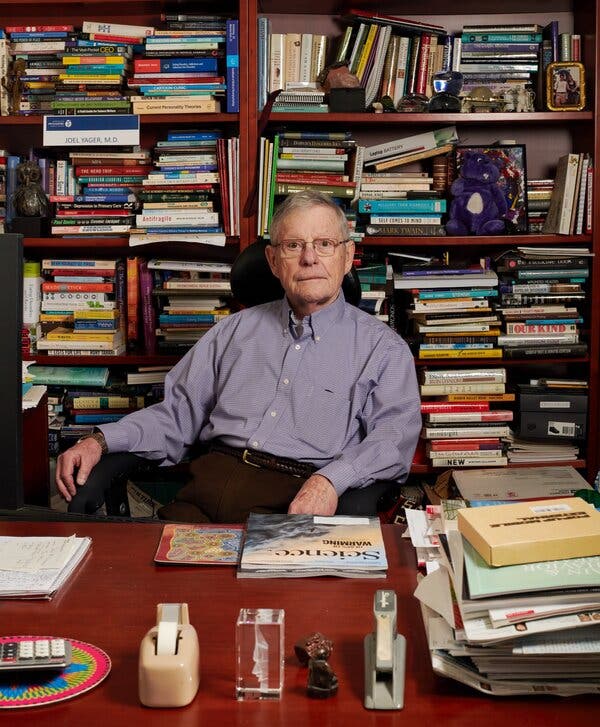
The doctors told Naomi that she could not leave the hospital. She was lying in a narrow bed at Denver Health Medical Center. Someone said something about a judge and a court order. Someone used the phrase “gravely disabled.” Naomi did not think she was gravely disabled. Still, she decided not to fight it. She could deny that she was mentally incompetent — but this would probably just be taken as proof of her mental incompetence. Of her lack of insight. She would, instead, “succumb to it.”Listen to This ArticleOpen this article in the New York Times Audio app on iOS.It was early 2018. She had come to the hospital voluntarily, because she was getting so thin. In the days before, she had felt her electrolyte levels dip toward the danger zone — and she had decided that, even after everything, she did not want to be dead. By then, Naomi was 37 and had been starving herself for 26 years, and she was exquisitely attuned to her body’s corrupted chemistry. At the hospital, she was admitted to the ACUTE Center for Eating Disorders & Severe Malnutrition for medical stabilization. There, doctors began what was once called refeeding but is now more commonly called nutritional rehabilitation, using an intravenous line that fed into her neck. Reintroducing food to an emaciated body can be dangerous and even lethal if done too quickly. Physicians identified this phenomenon in the aftermath of World War II, when they observed skeletal concentration-camp survivors and longtime prisoners of war eat high-caloric foods and then drop dead of cardiac failure.“Well, here I am,” Naomi said in a video message that she recorded for her parents. “I am alive, but am I happy? I don’t know. … It’s pretty pathetic. I don’t know how I feel about the fact that I would have died had I not come.” In the video, she was wearing a hot pink tank top, even though it was cool in the hospital room, because she wanted to shiver, because shivering burned calories.A few days later, when she was not imminently dying anymore, Naomi announced that she was going home — and the hospital responded by placing her on a 72-hour mental-health hold. Clinicians then obtained what Colorado calls a short-term certification, which required, by judicial order, that Naomi be detained and treated, in her case until she reached what physicians determined to be 80 percent of her “ideal body weight.” In Colorado, as in most states, a patient can be treated against her will if she is mentally ill and found incapable of making informed decisions. That day, Naomi was transferred to a residential program at Denver’s Eating Recovery Center (E.R.C.). “I’m so mad, I’m so mad,” Naomi said in another video message, her voice dull and impassive. “I was completely disrespected. I was tricked.” Naomi could feel that her mind was diminished — it was too slow, too slack — but she found that she could think in a straight line. She could reason. So why did the doctors claim otherwise? By then, she had been in and out of hospitals and psychiatric wards and eating-disorder programs, including the E.R.C., more times than she could recall. Was it really so irrational for her to assume that trying the same treatment for the hundredth time would be futile?When she was a teenager, Naomi believed that treatment programs might save her. She ate supervised meals and attended group-therapy sessions where, among other things, patients discussed the origins and possible psychic functions of their eating disorders. Sometimes Naomi told the story of how she stopped eating because she thought it would make her a faster swimmer. Or the one about how she just wanted to be special, like her eldest brother was special because he was so smart. Other times, she told the story about the day her grandfather died and the whole family went to eat at a restaurant. Naomi was revolted watching everyone nourish their bodies with something as carnal as food when they should have been awash in grief. Years later, it was hard to tell if any of these origin stories mattered. With each inpatient admission, Naomi gained weight. Each time, the extra weight felt unbearable, and she lost it soon after discharge.As the years passed, Naomi found it harder to be “compliant” with standard treatment. She refused to participate in group sessions. Or she disengaged during therapy, which she found infantile and pointless. She sometimes tampered with her intravenous lines, because it was too awful to watch those plastic bags of liquid calories empty into her body. During some admissions, Naomi forced herself to gain weight so that she could be discharged. Other times, she signed herself out against medical advice. Later, Naomi started bingeing and purging. She would excuse herself after meals and step into the backyard to vomit into plastic bags that she would throw into the neighbor’s yard, so that nobody would see. She vomited and vomited until stomach acid burned through the enamel of her teeth and she had to spend $22,000 to replace them. In between treatment programs and emergency hospitalizations, Naomi, at 18, went to college. She wanted to study psychology, but all she could really do was exercise for hours a day after eating almost nothing, maybe an apple. In her final year, she dropped out. Later she found jobs that she cared about — a certified nursing assistant who did home health assessments, a patient coordinator at a hospital — but they were often interrupted by yet another medical admission. As she moved through adulthood, Naomi acquired new diagnoses: anorexia binge-purge type, osteoporosis, hypotension, gastroparesis, superior mesenteric artery syndrome, obsessive-compulsive disorder, post-traumatic stress disorder, bipolar disorder. She took mood stabilizers and antidepressants and antipsychotics. Her bipolar manic periods felt like an ecstatic embrace of the world. The depressed periods made her want to kill herself, and sometimes try to. She collapsed into her 30s. She had no hobbies and no friends. She had become a kind of professional patient: her whole life whittled down to the airless world of her diseases, the logistical management of her self-denial. Everything was epic drama, but also staggeringly boring. To Naomi, her doomed attempts to get well had started to feel less tragic and more ridiculous. It wasn’t so much that she wanted to be dead, at least most of the time. It was that she could no longer stand anyone trying to cure her — especially because the “cures” were always the same and never worked. “I’ll either die of anorexia or I’ll die of suicide,” Naomi told me when we first spoke. “I’ve accepted that.”After her admission to the Eating Recovery Center, Naomi spent a few days lying in bed, being fed by a nasogastric tube, which pushed fluids and nutrients down her throat and into her stomach. Some days, she put plastic flowers in her hair and took selfies, just frowning at the camera. She made conversation with her roommate, who was very nice but sometimes threw up on the floor between their beds. After a few weeks, Naomi gained enough weight that she could be discharged into an outpatient program. It was there, she says, that a therapist asked her if she had ever heard of palliative care. The field of palliative care was developed in the 1960s and ’70s, as a way to minister to dying cancer patients. Palliative care offered “comfort measures,” like symptom management and spiritual guidance, as opposed to curative treatment, for people who were in pain and would never get better. Later, the field expanded beyond oncology and end-of-life care — to reach patients with serious medical illnesses like heart disease, H.I.V. and AIDS, kidney failure, A.L.S. and dementia. Some people who receive palliative care are still fighting their diseases; in these cases, the treatment works to mitigate their suffering. Other patients are actively dying or in hospice care. These patients are made “comfortable,” or as comfortable as possible, until the end.Naomi’s therapist had printed out an article for her to read. It was called “Medical Futility and Psychiatry: Palliative Care and Hospice Care as a Last Resort in the Treatment of Refractory Anorexia Nervosa,” published in 2010 in The International Journal of Eating Disorders. The paper’s authors argued that psychiatry needed its own subfield of palliative care: specifically for the 15 to 20 percent of patients whose anorexia developed a “chronic course” and did not respond to standard treatment — and for the fraction of those patients who did not want to keep trying to get better. These patients, the paper proposed, should not be coerced into treatment but offered an approach that aimed to palliate their psychological pain — until, maybe, they died of their eating disorders. The authors acknowledged that the idea of letting a mentally ill person withdraw from treatment was uncomfortable, even radical — even though the rest of medicine already recognized a patient’s right to stop fighting her disease and risk dying. A patient with advanced kidney failure, for instance, might become exhausted and decide to quit dialysis treatments. “It has been argued that patients with anorexia nervosa should have similar rights to discontinue treatment, despite the fact that in their case food refusal might seem irrational,” they wrote. “Although patients with anorexia nervosa may irrationally choose not to eat, they are often competent to make decisions in all other areas of their lives.”When Naomi looked up the paper’s authors, she was surprised to find that one of them, Dr. Joel Yager, was based in Denver. He was a psychiatrist at UCHealth University of Colorado Hospital and had been working with anorexia nervosa patients since the 1970s. Back then, psychiatrists were just beginning to understand anorexia as a mental illness, one with neurological and metabolic components. Nevertheless, there was reason to be optimistic; with early and aggressive treatment, a vast majority of the starving patients got better.Dr. Joel Yager, who has been treating patients with anorexia since the 1970s. “I developed this phrase of ‘compassionate witnessing,’” he says.Hannah Whitaker for The New York TimesOf course, there were the ones who didn’t. Within the treatment community, anorexia had always been described as an acute condition, something with an adolescent onset and relatively short duration. It was only in the mid-1980s that a small number of academic articles began to refer to a “protracted” or “long-term course” of the disorder, and then eventually to “severe and enduring” anorexia. It was this kind of patient, typically a woman with a decade of failed treatments behind her — “kind of hobbling along in life,” Yager said — who found her way to him.Yet when Yager, who was then working at the University of California, Los Angeles, looked for guidance on what to do for such a person, he found almost nothing. All he could see were articles instructing him on how to exert his will over recalcitrant patients, how to give them more standard treatment aimed at full weight restoration. And sometimes, because that was all he had to offer, his patients would simply stop coming to appointments. Yager would discover, later, that they had gone home and died alone on their sofas. Maybe by starvation, maybe by suicide. Maybe in pain. “I felt like a failure,” Yager told me. “They fired me, basically, at the end, knowing that I wasn’t able to help them anymore and wasn’t eager to just see them through the end.” In a desperate attempt to not abandon them, he had abandoned them. Bludgeoned them with care. Rescued them to death. He came to think that he had been impelled by a kind of professional hubris — a hubris particular to psychiatrists, who never seemed to acknowledge that some patients just could not get better. That psychiatry had actual therapeutic limits. Yager wanted to find a different path. In academic journals, he came across a small body of literature, mostly theoretical, on the idea of palliative psychiatry. The approach offered a way for him to be with patients without trying to make them better: to not abandon the people who couldn’t seem to be fixed. “I developed this phrase of ‘compassionate witnessing,’” he told me. “That’s what priests did. That’s what physicians did 150 years ago when they didn’t have any tools. They would just sit at the bedside and be with somebody.” Yager believed that a certain kind of patient — maybe 1 or 2 percent of them — would benefit from entirely letting go of standard recovery-oriented care. Yager would want to know that such a patient had insight into her condition and her options. He would want to know that she had been in treatment in the past, not just once but several times. Still, he would not require her to have tried anything and everything before he brought her into palliative care. Even a very mentally ill person, he thought, was allowed to have ideas about what she could and could not tolerate. If the patient had a comorbidity, like depression, Yager would want to know that it was being treated. Maybe, for some patients, treating their depression would be enough to let them keep fighting. But he wouldn’t insist that a person be depression-free before she left standard treatment. Not all depression can be cured, and many people are depressed and make decisions for themselves every day. It would be Yager’s job to tease out whether what the patient said she wanted was what she authentically desired, or was instead an expression of pathological despair. Or more: a suicidal yearning. Or something different: a cry for help. That was always part of the job: to root around for authenticity in the morass of a disease. Most of the patients who asked for palliative care, Yager thought, probably wouldn’t want to die but would be open to dying if it meant that they could stop trying to get better in the same old ways. Yager imagined that his practice would, in large part, be defined by absence. No coercive care. No obligatory weekly weigh-ins. No heroic measures. A palliative approach might even mean de-prescribing drugs that helped keep a mental illness at bay but made the patient feel bad in other ways: prioritizing comfort over life extension or symptom reduction. The care would be shaped by what the patient wanted, in the moment. From Denver, Yager started publishing papers about his ideas, and other doctors started contacting him, clinicians who had, in the quiet context of their own practices, invented a kind of palliative psychiatry of their own. Once in a while, Yager heard directly from a patient.“Dear Dr. Yager,” Naomi wrote in an email in February 2018. “After 20 years of trying the same thing over and over again and expecting different results, I am tired of fighting the system.” After he read Naomi’s email, Yager called her. “Come in,” he said. “Let’s see.” With her tangle of disorders, Naomi presented as a complex patient — but only in the way that many other patients were complex. She was depressed and bipolar, but both conditions were being managed with drugs. Naomi told Yager that her current outpatient providers would continue treating her only if she strove for and ultimately maintained 80 percent of her ideal body weight — but that she couldn’t meet their condition because she couldn’t bear to be so heavy. “I’ve been there, I’ve done that,” Yager remembers her saying. “I have these obsessions. They won’t let go of me. Nothing they have ever given me in therapy has ever changed those internal, infernal thoughts.” Yager agreed to help Naomi put together a palliative-care team at UCHealth and to oversee her psychiatric care. It was obvious that, in many ways, Naomi’s thinking was deeply distorted — but when she expressed her desire to stop fighting, Yager thought she seemed “as clear as a bell.” Contrary to what medicine had recognized for most of its history, Yager knew that a substantial number of patients with psychiatric disorders were, in fact, medically and legally capable of making decisions on their own. When given a standard “capacity test” — which measures a patient’s ability to understand information related to a specific decision, appreciate benefits and harms, reason and express a choice — many passed. In one study of 70 adult women with severe anorexia, 46 were found to have “full mental capacity.” If a patient is found capable, her physician is meant to respect her choice, whether or not it seems rational or circumspect. The test is always whether a person is able to reason, not whether she seems reasonable to her doctors. After their initial meeting, Naomi was told that she could set the rules. Point 1: no more residential programs, ever. “It only accelerates the suffering,” she said. “And I refuse to encounter it ever again.” Point 2: no involuntary heroic measures from her doctors, no mandatory weigh-ins, no behavioral therapy. Naomi was willing to play around with new psychiatric medications — because, she said, a better drug might make her remaining days more tolerable — but she no longer wanted to analyze the root causes of anything. She was tired of telling her life story, tired of trying to interpret things. Naomi in 2018 at the ACUTE Center for Eating Disorders & Severe Malnutrition in Denver, where she was admitted for medical stabilization. She was 37 at the time. From the subjectNaomi told her new palliative-care physician, Jonathan Treem, that she could not increase her weight, at least not without something bad happening. She believed that whenever she relaxed a bit on the anorexia front, her bipolar disorder got worse; whenever she gained a few pounds, it threw her mood way off kilter — and that was worse than starving. She needed to appease both demons. Naomi was willing to accept the odd temporary measure, like an infusion of electrolytes to lift her energy, but she wouldn’t treat her underlying physical disorders: her osteoporosis or her gastrointestinal issues or whatever else set in. Fixing those things would do nothing for her mood. Besides, at some point her body would fail and it would be inevitable, and she would let it happen. “If my heart decides that it’s done beating,” she said, “then I will not stop it.”When Treem sat with Naomi, he could feel “an incredible agony that was internalized and unremitting and, to a certain degree, barely endurable” — a depression that was “likely perennial and unlikely to be subject to change.” In Treem’s view, Naomi’s anorexia was both a cause of pain and a symptom of a larger hurt. “She’s actually used her body as a communication tool for a long time. ‘I want to look so grotesque that people cannot look away.’” Treem was an internal-medicine doctor by training, and most of his work involved palliating patients who were dying of typical somatic ailments: cancer, heart failure. Working with Naomi, he found, required him to undertake some “philosophical groundwork.” He thought about how he might protect his patient from her most self-destructive impulses, but also refrain from bulldozing over what she wanted. Treem talked with Naomi about how choosing to die from the natural progression of a disease was not the same thing as suicide. To Treem, it felt as if Naomi was asking for something more than his nonintervention; she wanted his mercy. His permission to let go, his compassion. It made him think about the other doctors who had treated her. “This is where it gets into a passionate discussion,” he told me. “If you are going to accept responsibility for the people you save, and you’re going to elevate them as examples of why everyone should undergo compulsory treatment, you had better recognize the blood on your hands. That, on some level, in order to ‘save everyone,’ you are perpetuating suffering in others.”Yet Treem had his limits. He told Naomi that he could not look away if she was actively suicidal. Several times, after an especially unsettling appointment, Treem walked her down to the emergency room, where she was put on a 72-hour mental-health hold.Naomi also met regularly with Yager, who sometimes wondered whether, paradoxically, giving up recovery-focused treatment could steer his patient back to health. Palliative care, Yager reasoned, might give Naomi the cognitive space to reset. It would eliminate the classic power struggle between flailing eating-disorder patient and exacting psychiatrist and, perhaps, let her sense of fight turn inward. But Yager knew he had to be restrained in this thinking. If he approached Naomi’s palliative care as a means to a cure, then it wasn’t really palliative care at all — just a stealthy treatment program. This required a sort of intellectual sleight of hand. Yager had to be equally accepting of either outcome: that Naomi lived or that she didn’t. Besides, what did the alternative look like? Would he be better off to declare Naomi incompetent? Sedate her? Restrain her physically or chemically? Get court orders for involuntary medications and involuntary tube feeds — which wouldn’t “cure” her anyway but would keep her alive for more treatment? Lock her on a ward? Try to keep her there? Hope she comes around? “Are you going to do it forever?” Yager asked.Yager had always been suspicious of psychiatry’s affinity for hope, of the hopefulness that many doctors deliberately exhibited for their patients. “I’m full of hope,” he told me. “I’m one of the most hopeful guys you’re going to find. But I’m also a realist.”Many psychiatrists, Yager knew, believed that they must hold hope for their hopeless patients, that a projection of hope, by a clinician, mattered — that it was even essential — because the hope could be absorbed by a patient and, in turn, change the course or constitution of her disease. In this way, psychiatry was fundamentally different from other kinds of medicine. In oncology, for instance, a doctor’s professed hope for a patient could not shrink a tumor or lower a blood-cell count. But maybe, in psychiatry, there was a more porous boundary between physician and patient, between an illness and a patient’s ideas about it. Maryrose Bauschka, a psychiatrist at the Eating Recovery Center, told me, “I think there’s often a lot of fear that if we’re transmitting anything less than a message of hope — or anything less than, like, a full-court press — that we’re not going to help them get better.”But couldn’t a doctor’s hope also be a kind of harm? Yager could see that some of his patients benefited from his cheerleading. Others, though, were propelled into unwanted treatment by somebody else’s hope for them — and then left to feel defeated when it didn’t work. So couldn’t it also be argued that a doctor had a moral obligation not to provide hope that was unjustified, and maybe even to expose false hope where it lay? “We thus find ourselves in a paradox,” wrote Justine Dembo, a psychiatrist and assistant professor at the University of Toronto, “in which hope is vital for recovery but may also lengthen lives of unbearable mental anguish. What is an ethical therapist to do?”Yager knew that the evidence base for many recovery-oriented therapies — some of which had been in existence for decades — was weak. For instance, he had never found a single randomized control study proving, with any certainty, that the by-then-ubiquitous residential eating-disorder program worked better than other kinds of care. Many of the country’s largest treatment facilities were owned by private companies that did not, as a practice, invite third-party researchers to study their approaches or track their long-term patient outcomes. Yager worried that the many doctors pushing residential programs were compromised, if not financially then at least intellectually. They had become, as he put it, “zealots for the model.”And there was certainly no evidence at all that a fourth, or fifth or 10th attempt at the same kind of program was likely to be helpful, especially if the patient didn’t want it. The same was true of involuntary care. There was some evidence that forced treatment could be life-sustaining in the short term, but its long-term effects were more uncertain. In his own academic articles, Yager wrote about the “willfully blind Pollyannish therapeutic attitudes” of psychiatrists throughout history, and of their “excessive hyperinterventionism.” Within the rest of medicine, “medical futility” had become a subject of contention in the 1980s, after relatively new interventions like cardiac life support and mechanical ventilation allowed the nearly dead to be resuscitated and sustained. Sometimes, patients’ families demanded that their loved ones be treated aggressively and kept alive, hearts beating and lungs pumping, when there was no realistic prospect for recovery. Or alternatively, families pushed back against a physician’s aggressive, almost knee-jerk use of technology to sustain a flailing life. Eventually, those doctors grew accustomed to admitting defeat, to acknowledging that yet another week of life support or another round of chemotherapy or another aggressive surgery would serve no therapeutic purpose. But the idea of futility remained “relatively unknown in the world of psychiatry,” according to a 2023 paper in Frontiers in Psychiatry. When I asked a psychiatrist with expertise in severe and persistent mental illness how much time had been devoted, during her more than a decade of medical training and residency, to learning about futility, she laughed. “Zerooooo.” After all, in psychiatry, there were always more drugs and drug combinations to try. More behavioral interventions and therapeutic modalities to employ. More clinicians who believed that they alone had the special therapeutic touch. It seemed to Yager that despite what every honest psychiatrist should know, psychiatrists were never really allowed to acknowledge futility — and so never allowed to stop treating. In turn, their patients were never “allowed” to say no. Never allowed to decline care. Certainly never allowed to die.Dr. Jonathan Treem, who has been Naomi’s palliative-care physician for the last four years.Hannah Whitaker for The New York TimesIn one 2023 study, published in The American Journal of Bioethics Neuroscience, 174 U.S. psychiatrists completed a survey on “their attitudes about the management of suicidal ideation in patients with severely treatment-refractory illness.” The doctors were given one of two case studies: the first, about a patient with borderline personality disorder; the other, about a patient with major depressive disorder. They were told that the patients had already received every treatment that might reasonably be expected to work and that, despite this, they remained sick. The psychiatrists were then asked to rate the expected helpfulness of further treatments — and the likelihood that they, personally, would prescribe them. The conclusion of the study was stunning: “Sizable minorities of participants said they were likely to recommend interventions they thought were unhelpful.” The authors identified several potential reasons. Perhaps the doctors were trying to meet expectations: the patient’s, her family’s, their colleagues’, the system’s. Perhaps they worried about legal liability. But maybe there was another explanation. Maybe this was just the logic of a profession that saw death as the absolute worst outcome, regardless of what living might look like.Some physicians in the field had heard the emerging calls for palliative psychiatry with alarm. The idea that certain patients would be better off if they gave up on cure-focused treatment was, as Dr. Agnes Ayton of Britain’s Royal College of Psychiatry told me, “dangerous nonsense.” For many of these doctors, Yager’s writings about palliative psychiatry were not just ill defined but threatening to the profession, particularly because they were so underdeveloped and so contentious and because, nevertheless, Yager and others were already deploying them.Some physicians had doubts about the premise — core to Yager’s thinking — that patients who were very sick could still have the mental capacity to make decisions as grave as the one to stop recovery-oriented care. A typical anorexic patient had cognitive distortions and pathological values. She was intransigent, fearful, cognitively inflexible. She could be emotionally anesthetized too, so apathetic that she didn’t care very much what happened to her. Her brain was literally starving. How could such a patient be taken at her word when she said she was prepared to die — that it was what she “wanted”? Any experienced physician should know that what the anorexic patient “wanted” was perverted by her disease. He should see through the ruse — even if, like many people with anorexia, his patient spoke well and dressed well, was not in the depths of psychosis and could clearly articulate the potential medical benefits and drawbacks of various treatments. This was not mental lucidity, but instead a pantomime of reasoned thought.Other psychiatrists took issue with the way Yager conceptualized futility. With anorexia nervosa, it was almost always impossible to say that a given treatment would be physiologically futile, because there was virtually no point at which an eating disorder became physically resistant to healing. If a patient ate, nearly all of her medical conditions could be reversed. It was even hard to make educated guesses based on how other patients had fared in similar situations, because there was so much variability between treatment programs and because nobody was collecting large databases of patient outcomes. For the anorexic patient, any conclusions about “futility” would have to be based on fuzzier judgments about how a treatment might affect her quality of life. To critics, this was insufficiently rigorous. “Medical futility,” the psychiatrist Cynthia Geppert warned in a 2019 handbook, “can only be tentatively and tenuously translated into psychological constructs.” In Yager’s model, decisions about futility seemed to rest a lot on what the patient believed the effect of a treatment would be. But many people with chronic mental illness are ambivalent about recovery and resistant to treatment. They “know” that they will never get better. They “know” that a treatment will fail. These feelings are literally products of a pathology. This pathological despair must be challenged, not interpreted as an expression of enlightened thought and then honored in the name of patient rights. “What many in the profession would say,” Thomas Strouse, a psychiatrist and palliative-care physician at U.C.L.A., explained, “is that anorexia leading to death is a form of protracted suicide.” In this view (which Strouse does not endorse), accepting a patient’s slow death by starvation and choosing not to medically intervene, with force if necessary, was akin to collaborating in a suicidal act. At the least, it was colluding with a person’s mental illness. Already, research showed that some patients with eating disorders who were involuntarily treated did well. In the short term, their rate of weight restoration was the same as that of voluntarily treated patients. One paper noted that among those admitted to hospital, “nearly half of patients with eating disorders who denied a need for treatment on admission converted to acknowledging that they needed to be admitted within two weeks of hospitalization.” The food, in other words, brought the insight. Other physicians emphasized the current inadequacies in American mental-health care as a reason any futility judgment would be ethically tenuous. A decision that further treatment was “futile,” they argued, would be meaningless if the patient had never received high-quality care in the past. In the case of eating disorders, many people can’t access evidence-based treatment or experienced providers, because they don’t have private insurance to cover it. Others do have insurance but discover that their providers’ patience is limited. Patients are discharged from programs because their insurance companies do not believe that they are progressing quickly enough. Or because they seem to progress too quickly. These patients are released as soon as they have gained sufficient weight (as defined by the insurance company) but before their weight is fully restored. They then go home and get sick again. Can a person’s decision to decline treatment, made in the context of resource scarcity, really be described as a free choice? And the sickest of patients can still get better — even after decades of failed treatment. One study of adult patients with anorexia, published in The Journal of Clinical Psychiatry in 2017, found that nine years after the start of their illness, only 31.4 percent had recovered — but that by 22 years, the recovery rate had doubled to 62.8 percent. “These findings,” the study’s authors wrote, “should give patients and clinicians hope that recovery is possible, even after long-term illness, suggesting that even brief periods of weight restoration and symptom remission from anorexia nervosa are meaningful and may be the harbingers of more durable gains to be made ahead.”Angela Guarda, a professor of psychiatry and behavioral sciences at the Johns Hopkins School of Medicine, told me that palliative measures can sometimes be useful — but only alongside curative care and never instead of it. Guarda said she has treated several thousand patients with anorexia and still “cannot predict who will get better and who will not.” Patients sometimes surprised her. So “how do I decide which patients of mine I should instill hope in, and which patients of mine I should decide to help die?”In this way, critics argued, psychiatry was being mischaracterized by Yager’s views. It wasn’t that psychiatrists were bludgeoning chronically ill patients because they couldn’t acknowledge their own shortcomings, or couldn’t respect an anorexic person’s wishes, or didn’t have the empathetic imagination required to take pity on their patients. Doctors who refused to give up on treatment did not lack humility; they kept trying precisely because they had it. Naomi’s parents, Evelyn and Hal, first heard about palliative care in a hospital conference room, where different members of the medical team told them what they did and what was going to happen to their daughter. At first, Evelyn was just confused. She told Naomi that if something had a chance of working, then it was worth trying, “even though you might not want to do it, but come on. Let’s try again.” Maybe Naomi was just the unfortunate patient who took 30 years to figure out how to help herself. The thing was, there were things Naomi hadn’t tried. Her parents wondered if meditation or yoga might bring her some peace, but Naomi always said that none of that stuff worked for her. She didn’t like to journal. She didn’t believe in acupuncture. For a while, she took oral ketamine, which can have a rapid antidepressant effect in some patients, but it destabilized her moods. She was too afraid to try psilocybin. Hal, an engineer, often spoke of “coping mechanisms.” He didn’t think his daughter would ever be cured, but he thought she could develop “not just one mechanism, but maybe multiple mechanisms that she’d have in her little toolbox … so hopefully she could pull herself out of a tailspin.”“But that’s never really been the case,” Evelyn said. “She’s never been able to pull herself out.” Benjamin, one of Naomi’s brothers, mostly felt bad for his parents: two elderly people who were left alone to absorb Naomi’s chaos when they were supposed to be living out their golden years. But he also wondered if his parents had enabled their daughter with all the emotional and financial cushioning that, in the end, had done nothing more than just barely keep her alive. At times, Benjamin urged his parents to seek legal guardianship over his sister so they could force her into treatment. But the whole process had seemed daunting. In Colorado, a court-appointed guardian can have a patient forcibly tube-fed — but only through a special court order and only until the patient is medically stable and no longer at imminent risk of dying. And while guardians can order short-term measures, they can never compel a ward into long-term psychiatric treatment. After starting palliative care in 2019, Naomi quit her job as patient coordinator at a hospital. She went on Medicare and Medicaid for disability and moved back into her parents’ small house in the Denver suburbs. Naomi knew that her parents didn’t accept the palliative approach. How could they? “They hold out hope,” she said, “and they are hopeful that something will click in my head.” Naomi’s room at her parents’ house was tiny. It had three of Evelyn’s quilts hanging on the walls, patchworks of black and white and red, and a TV by the doorway. There were piles of stuffed animals on the floor. There was no bed. Naomi preferred to sleep in a brown recliner, elevated, to keep the stomach acid down after purging. Sometimes Naomi sat in the recliner and read through her electronic medical notes. Because she was on palliative care, Naomi’s doctors were prompted to indicate, after appointments, whether they expected her to live longer than six months. Sometimes they did, and sometimes they didn’t.Naomi in her bedroom at her parents’ home in Colorado in November. She sleeps in a recliner to keep her stomach acid down after purging.Hannah Whitaker for The New York TimesFrom there, she spent a year cycling in and out of the hospital, not eating for long enough that she might come close to dying and then agreeing to go to the hospital for emergency intravenous nutrition — but then, often, discharging herself after just a few days. Sometimes, during those admissions, Treem said, he was chastised by the attending physicians. They wanted to know why Naomi was at the hospital all the time. Why her nutrition wasn’t being managed. “Why are we allowing her to continue to flounder?”Then came the winter of 2022, which was a very bad winter. Within a six-week stretch, Naomi was hospitalized four times for suicide attempts. Then there were more. Sometimes someone would call her an ambulance. Other times, she would get scared and call one herself. The episodes involved different things: weed killer, benzos, batteries. “For some reason, I’m really obsessed with swallowing things,” she said. Once, she poured bleach in her eyes. She didn’t think it would kill her, but she liked the idea of going blind and not having to look at herself anymore. She did not go blind.The attempts were never planned in advance, and later, Naomi could never quite reconstruct her thinking. In February, she ended up in the intensive-care unit on a ventilator. That winter, the bipolar disorder seemed to eclipse the anorexia. “I’m at the end stage with the bipolar,” Naomi told me. “Like, I’m at the end. I mean, I’m just there.” She had come to terms with the fact that she would probably die of starvation; now she thought she would kill herself instead. Part of the problem was that the eating disorder had turned on her. At some point, Naomi had lost the ability to purge. She would try and try, but the vomit would not come. Her doctors explained that this happened sometimes with chronic patients. Unable to purge, a kind of mental pressure built up inside her. Her moods dipped. Her parents weren’t sure what to make of the suicide attempts. “They’ve been feeble,” Hal told me. “In other words, she hasn’t thrown herself off a thousand-foot cliff, jumped out of an airplane without a parachute.” Then again, he said, “they’re serious attempts.” Some caused damage. Some didn’t work but theoretically might have. Yager agreed that, at times, it seemed as though Naomi was trying to “play Russian roulette” with her life. “There are some patients who are fatalistic and throw it up to God,” he told me. “That’s the grayness,” Treem said. “How do we know when Naomi has made a rational decision about being in line with her values versus when she is reacting to a torment in herself?” At home, Naomi talked about “a decline in cognitive functioning.” She spoke of being “flat” and “cloudy.” She did not think that she was irrational, but as the terrible winter turned to spring, she had started to feel a little blurry. What she really couldn’t stand was how pointless it all felt. If there were at least a point to her suffering, then maybe she could bear it. But Naomi did not believe in salvation through struggle. She did not believe that her misery would lead her to some other, better place — or even to an enlightened understanding of things. She had no consoling story to tell about it. In fact, she had no story to tell at all, because a story needed a plot, and her entire life had just been the same awful thing.In February 2022, Yager co-published a new paper titled “Terminal Anorexia Nervosa.” The article, whose lead author was Jennifer Gaudiani, an internal-medicine physician who founded an outpatient eating-disorders clinic in Denver, proposed that psychiatry recognize a new clinical disorder, terminal anorexia, which would apply to the small fraction of patients for whom “recovery remains elusive” and palliative measures were not enough. The paper offered several criteria for determining terminality: that a patient have a diagnosis of severe and enduring anorexia nervosa; that she be at least 30 years old; that she have previously attempted “high-quality” eating-disorder care; that she have consistent decision-making capacity and be prepared to die; and that she “understand further treatment to be futile.” The label was important, the authors reasoned, because it would grant sick patients a formal diagnostic acknowledgment that they were dying, making it easier for them to access hospice care — and even, should they want it, and should they live in a state where it is legal for terminally ill patients, and should their physicians be willing, a physician-assisted death. (A year earlier, Canada revised its national medical-assistance-in-dying law, expanding the eligibility criteria to include people whose only condition is mental illness. The law will take effect in March.) The paper presented three case studies: all deceased patients of Gaudiani’s. One was a 36-year-old woman named Jessica, whose eating disorder began in her junior year of high school, when she tried to lose weight for a vacation. Jessica had anorexia and obsessive-compulsive disorder, and she abused laxatives, sometimes taking 100 tablets in a single day. In her 20s and 30s, she tried several treatment programs but usually left them early and against medical advice. She grew despairing and suicidal, once buying a gun and driving to a bridge where she contemplated jumping. “Fearful of suffering a long, drawn-out death from starvation,” Jessica met with Gaudiani to ask for an assisted death. Gaudiani and a palliative-care physician agreed that forced treatment was likely to be futile and that Jessica would most likely die of the physical effects of her eating disorder within six months. Gaudiani signed the paperwork for Jessica’s death. Jessica took weeks to fill her prescription for lethal drugs and many more weeks to take them — lying in bed, holding her parents’ hands. Even in the final month of her life, she forced herself to walk for hours a day to stay thin. Yager and Gaudiani acknowledged that there were no explicit physiological markers of terminality in anorexia, no set point at which a patient could not possibly recover. For them, this fact did not preclude the possibility of a “terminal” diagnosis. But for many readers, the paper had a warped logic. In its formulation, it was the patient’s perspective of her illness, rather than the illness itself, that mattered. A mentally ill person was terminal, in large part, if she said she was.Some of Yager’s colleagues moved quickly to denounce the paper. Several journals published counterarticles: “Terminal Anorexia Is a Dangerous Justification for Aid in Dying,” “Terminal Anorexia Nervosa Is a Dangerous Term.” Everything that made Yager’s model of palliative care alarming was in that paper — but made worse because the sick patients were bestowed with a medical label that validated their most deranged belief: that they were literally impossible to heal. Patricia Westmoreland, a Denver-based forensic psychiatrist who focuses on the ethical dilemmas around eating-disorder care, told me that the ideas in the paper were “absolutely unconscionable.” Most of the criticism focused on the case-study patients who were approved for assisted death. Everyone wanted to know how this could have possibly happened because, as of yet, there were no professional standards governing when, if ever, an anorexic person should qualify for assisted dying. And American psychiatrists had barely even broached the subject in theoretical terms — because, among other things, was it even legal? In states with legal “medical aid in dying,” a person had to be terminally ill and within six months of a natural death to qualify. But these patients’ doctors had gone ahead — gone rogue — and proceeded anyway, after first inventing a medical term, “terminal anorexia,” to cover their backs. Critics wondered what the follow-on effects would be: Would schizophrenic and depressed people eventually receive a doctor’s help to die? Some noted that the case-study patients did not receive very thorough treatment before being declared “terminal.” One had never completed a residential program. Philip Mehler, the founder and medical director of ACUTE, the hospital unit where Naomi was admitted for medical stabilization in 2018, was one of the detractors, though he told me that he has “a lot of respect for Joel Yager,” who is “a very thoughtful guy.” For several years, Mehler has watched the debate about palliative psychiatry bleed out of academia and into the patient population. Patients with anorexia, he said, are often keen students of their disorder; they read the academic literature about it. As a result, for the first time in his career, he has had patients in their 20s ask about palliative care and assisted deaths. “So I think this has had a bit of a contagion effect,” he said. Other critics worried that the terminal diagnosis would exert a kind of downward pressure, that once labeled terminal, a patient would feel a certain obligation to become the thing she was described as being. Guarda, the Johns Hopkins professor, said she fears a future in which “patients actually become invested in acquiring the diagnosis.” In which being terminal is an aspiration, and patients do whatever it takes to earn the title. Guarda can imagine those patients showing up at her office, waving a copy of the terminal-anorexia paper in hand. “See?” Yager had little patience for the frenzy. He was particularly bothered by criticism that “terminal anorexia” was too hazy a definition and too unmathematical to be operationalized. That was literally every diagnosis in psychiatry. “Anorexia nervosa” was once a contested term, too — there were long arguments about how its borders should be defined — and it had shifted over time. Even beyond psychiatry, medical diagnoses were always socially mediated in some way; every diagnostic label came from imperfect humans with imperfect evidence. Yager gave me the example of hypertension. “There are working groups of experts who are cardiovascular people, trying to define when it is that you have ‘high blood pressure,’” he said. “The arguments are intense in R.&D., because drug companies make money depending on how these criteria are defined.” In somatic medicine too, a patient’s decisions and beliefs could affect whether his condition was considered terminal. When a patient in renal failure decided to stop using dialysis machines, for instance, it was his choice that rendered him “dying” and “terminal.”What’s more, in somatic medicine, a patient didn’t need to have a good reason for stopping care. She didn’t even have to try getting better in the first place. A cancer patient could decline chemotherapy that would very likely save her life. Because she didn’t think the benefit was worth the pain. Because she wanted to go home to her children. Because she preferred to be treated by a homeopath. She could do what she wanted, just because she wanted to. Why should patients with mental illnesses be held to a different standard?Yager was also frustrated by critiques that referred to larger problems with the mental-health-care system. Colleagues kept telling him that eating-disorder care wasn’t good enough or accessible enough to allow for a terminal diagnosis — but what were they proposing in the meantime? That patients be made to suffer because the rest of us haven’t done enough to help them yet? And anyway, an oncologist would never deny end-of-life care to a lung-cancer patient who wanted to stop chemotherapy, on the grounds that, say, the patient didn’t previously have access to high-quality smoking-cessation programs.Jennifer Gaudiani, Yager’s co-author, told me that she has asked her critics directly: What would you have done differently with those patients? “And it can’t be, ‘I would change the eating-disorder system to be more inclusive and accessible.’ Nope. We’ve got a patient in front of you, right now.” Should she be abandoned in the name of ideological purity? Gaudiani believes that the paper’s detractors demonstrate “an important flaw” in their logic: If a patient elects, willingly, to go into standard eating-disorder treatment, her decision is never scrutinized and her capacity is never questioned. But if, instead, the patient’s decision is “incongruent with lifesaving, then we question,” she said. “That’s not ethical.”“It doesn’t make sense,” Yager agreed. “They’re ‘incompetent’ unless they want treatment?” His critics, he said, had no data at all to back up their claim of universal incapacity among anorexic people. Existing studies showed the opposite. Yager thought his critics were suffering from “positive outcome bias”; they remembered the patients who were saved and were grateful for it, but not the ones who died slowly and suffered all the while.By late 2023, though, amid all the furor, even Gaudiani was walking back parts of the paper. Her own criteria for terminality, she told me, were “too inclusive” — and the phrase “terminal anorexia” was so controversial that it had, itself, become “harmful.” (Gaudiani still believes that some patients with eating disorders should have access to physician-assisted death.) Yager told me that he does not regret what he wrote. “The main point is that some people die from the disease,” he explained. “We have to be caring and attentive to them to the end.”Already, Yager could feel some of the paper’s ideas burrowing their way into psychiatry. At the 2022 annual meeting of the American Psychiatric Association, there was a session on palliative psychiatry for severe and persistent mental illness. At the 2023 Royal College of Psychiatrists Conference in London and the Australia and New Zealand Academy for Eating Disorders gathering in Queensland, participants discussed, respectively, “the controversy on terminal anorexia nervosa” and palliative models for “end stage” eating disorders. That same year, the American Psychiatric Association’s annual conference held a panel discussion titled “Physician Aid in Dying Based on a Mental Disorder.” In July, a professional gathering on palliative psychiatry was held in Toronto. Sarah Levitt, a psychiatrist at Toronto’s University Health Network and one of the organizers, told me that the process of framing “palliative psychiatry” might pose a broader challenge to the profession. “There is maybe some interest in bringing conversations of death and dying into psychiatry,” she said. “How might we do that?” “I just feel like there’s so many things going on. And all I can think about right now is the fact that, since I was last here, I’ve lost six pounds.”In September, four years after starting palliative treatment, Naomi was seated in a small hospital meeting room, across from Treem and a chaplain named Beth Patterson. The room was unadorned, apart from a single framed photograph of the Colorado mountains in winter. Treem and Patterson looked at Naomi, who looked down at her hands: red and cold from her low metabolic rate. She wore black shorts and had purple plastic flowers in her hair. When Naomi arrived at the hospital, an intake nurse asked her if she had felt down or depressed over the last few weeks. Naomi said no, because whenever she answered yes, she had to fill out a questionnaire.She did feel depressed, though. The drugs for her bipolar disorder couldn’t seem to lift her up, though they did flatten out the periods of mania. For several months, she hadn’t been able to shower, because she couldn’t stand to undress in the bathroom, which had mirrors in it. She was angry too. (“Bipolar rage,” she said.) And tired. Naomi had started purging again — had, out of nowhere, regained the ability to purge. Slowly, she started losing weight. She wondered if she would lose more. In her case, she said, the bulimia looked nothing like the way it did in movies: some delicate woman excusing herself from the dinner table for a quick, discreet regurgitation. Naomi’s episodes involved vomiting for hours until there was nothing but bile, and then vomiting that up too. Sometimes she saw blood in the toilet. “My esophagus is becoming what they call ‘flappy,’” she told me. It was hard to swallow. At the appointment, Naomi mostly wanted to talk about her parents: how there was something the matter with her dad’s heart, how her mother was growing frailer. Naomi had started doing more around the house to help them. She cleaned and took care of the yard. She cooked them dinner — sometimes complicated recipes, from pictures she found online. She never ate any of what she cooked. “This is a bit of a precipice,” Treem said. “I don’t know which way it moves.” He wondered aloud whether the needs of Naomi’s parents could compete, in some useful way, with her eating disorder. Could Naomi’s transition from sick patient to caregiver be elevating for her? Could it be the resolution of her story — or maybe even the point of it? Or would the whole situation just break her? “We have been looking for a long time for meaning in your suffering, right?” he said. “Your suffering exists. It’s not going to change. It’s a part of this disease, and the disease doesn’t change. So the agony of suffering, the pain, is permanent. And living with that, without meaning or purpose to it, is demoralizing, corrosive. You get to this place where you’re like, ‘I can’t do this anymore.’ And you want to die and try to kill yourself, right? That’s the dynamic. That’s a part of this. So the question has always been: Is there a reason in this suffering? So that it can feel justified in some way.” “We have talked a lot about the crisis of dying,” Treem continued. “We haven’t really talked about the crisis of survival. How that might be really painful, and really difficult. Maybe even more so.”“Yes,” Naomi said softly.“Yes,” the chaplain agreed, leaning in. “Yet here you are.”On some days, Naomi thought about assisted dying and whether she might qualify for it one day. It would be better to die that way than the other ways she had tried. An assisted death, at least, would be clean and painless. It would mean that someone had given her permission. Naomi did not believe in salvation through struggle. She had no consoling story to tell about it.Hannah Whitaker for The New York TimesNaomi had read Yager’s paper about terminal anorexia. She liked parts of it but thought it was incomplete. The paper proposed all these criteria for terminality, but it didn’t include suffering. The assisted-dying law in Colorado didn’t mention it, either. “That’s completely ridiculous,” she told me. Naomi knew that she was no longer starved to the point of bodily collapse, like the case-study patients in the paper — but still she suffered terribly, and shouldn’t that matter just as much? And really, shouldn’t it matter as much as having an inoperable tumor or a failing heart? Shouldn’t it matter the most? “Let’s presume you don’t die,” Treem said toward the end of the hourlong appointment. He asked Naomi if she could imagine looking back, 10 years from now, and being able to say, “That was a good life.”Naomi looked so startled by the question that everyone laughed a little. But, no. She couldn’t imagine that. “I can’t,” she said. “I can’t imagine continuing on.”
Read more →