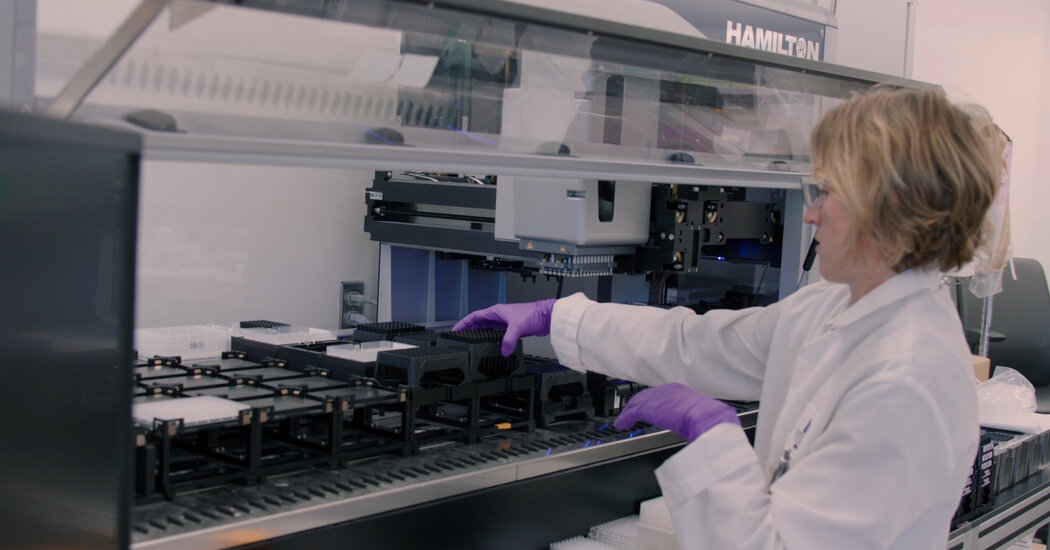
How HIV smuggles its genetic material into the cell nucleus

Around one million individuals worldwide become infected with HIV, the virus that causes AIDS, each year. To replicate and spread the infection, the virus must smuggle its genetic material into the cell nucleus and integrate it into a chromosome. Research teams led by Dirk Görlich at the Max Planck Institute for Multidisciplinary Science and Thomas Schwartz at the Massachusetts Institute of Technology (MIT) have now discovered that its capsid has evolved into a molecular transporter. As such, it can directly breach a crucial barrier, which normally protects the cell nucleus against viral invaders. This way of smuggling keeps the viral genome invisible to anti-viral sensors in the cytoplasm.
Forty years after the human immunodeficiency virus (HIV) was discovered as the cause of AIDS, we have therapies that effectively keep the pathogen under control, but there is still no cure. The virus infects certain immune cells and hijacks their genetic program in order to multiply and replicate its own genetic material. The infected cells then produce the next generation of viruses until they are finally destroyed. The immunodeficiency symptoms of AIDS result from the massive loss of immune cells that normally fight viruses and other pathogens.
To use the host cell’s resources, HIV must smuggle its genetic material through cellular defense lines into the cell nucleus. The nucleus, however, is closely guarded. Its nuclear envelope prevents unwanted proteins or harmful viruses from entering the nucleus and macromolecules from an uncontrolled escape. Yet, selected proteins can pass because the barrier is not hermetically sealed.
Thousands of tiny nuclear pores in the nuclear envelope provide a passageway. They control these transport processes with the help of importins and exportins — molecular transporters that capture cargoes with valid molecular “passcodes” and deliver them through the nuclear pore channel. A ‘smart’ material turns these pores into one of nature’s most efficient sorting and transport machines.
“Smart” sorting in the nuclear pore
This “smart” material, called FG phase, is jelly-like and impenetrable for most macromolecules. It fills and blocks the nuclear pore channel. Importins and exportins, however, can pass through because their surfaces are optimized for sliding through an FG phase.
The cell’s border control in the FG phase happens extremely fast — within milliseconds. Likewise, its transport capacity is enormous: a single nuclear pore can transfer up to 1,000 transporters per second through its channel. Even with such a high traffic density, the barrier of nuclear pores remains intact and keeps suppressing unwanted border crossings. HIV, however, subverts this control.

Smuggled genetic material
“HIV packages its genome into a capsid. Recent evidence suggests that the genome stays inside the capsid until it reaches the nucleus, and thus also when passing the nuclear pore. But there is a size problem,” Thomas Schwartz of MIT explains. The central pore channel is 40 to 60 nanometers wide. The capsid has a width of about 60 nanometers and could just squeeze through the pore. However, a normal cellular cargo would still be covered by a transporter layer that adds at least another ten nanometers. The HIV capsid would then be 70 nanometers wide — too big for a nuclear pore. “Nevertheless, cryo-electron tomography has shown that the HIV capsid gets into the nuclear pore. But how this happens has been so far a mystery in HIV infection,” says Max Planck Director Görlich.
Camouflage as a molecular transporter
Together with Schwartz, he has now discovered how the virus overcomes its size problem, namely by a sophisticated molecular adaptation. “The HIV capsid has evolved into a transporter with an importin-like surface. This way, it can slide through the FG phase of the nuclear pore. The HIV capsid can thus enter the nuclear pore without helping transporters and bypass the protective mechanism that otherwise prevents viruses from invading the cell nucleus,” the biochemist explains.
His team has succeeded in reproducing FG phases in the laboratory. “Under the microscope, FG phases appear as micrometer-sized spheres that completely exclude normal proteins, but virtually suck up the HIV capsid with its enclosed contents,” reports Liran Fu, one of the first authors of the study now published in the journal Nature. “Similarly, the capsid is sucked up into the nuclear pore channel. This happens even after all cellular transporters have been removed.”
In one respect the HIV capsid differs fundamentally from previously studied transporters that pass nuclear pores: It encapsulates its cargo completely and thus conceals its genomic payload from anti-viral sensors in the cytoplasm. Employing this trick, the viral genetic material can be smuggled through the cellular virus defense system without being recognized and destroyed. “This makes it another class of molecular transporters alongside importins and exportins,” Görlich emphasizes.
There are still many unanswered questions, such as where and how the capsid disintegrates to release its contents. However, the observation that the capsid is an importin-like transporter might one day be exploited for better AIDS therapies.

Read more →

Study could pave the way for better diagnosis of rare genetic diseases

There are over 7,000 different rare genetic diseases, and often it can be a significant challenge and take a long time to receive a correct diagnosis.
However, a new Danish study may be a step towards faster and more efficient diagnosis of these diseases, which can affect all parts of the body.
In the study, published in The American Journal of Human Genetics, researchers have used so-called CRISPR technology to activate genes in easily accessible cells such as skin or blood to measure whether messenger RNA is correctly assembled in a biological process known as splicing.
And this is an important advance, as 19 percent of disease-associated genes are “inactive” in readily accessible tissues such as skin cells and blood cells.
“This means that until now, we have not been able to properly investigate the genes because they are only active in specific tissues, such as the nervous system, and this is a major obstacle when it comes to understanding whether a particular gene variant is the cause of a patient’s disease,” explains Uffe Birk Jensen, Clinical Professor, Chair and consultant at the Department of Clinical Medicine at Aarhus University and Aarhus University Hospital..
Activating inactive genes
This is where so-called CRISPR activation comes into the picture as a potentially revolutionary solution.

This technique allows researchers to “turn on” genes that are normally inactive in easily accessible cells like skin and blood.
In collaboration with Associate Professor Rasmus O. Bak at the Department of Biomedicine, it was possible to activate the MPZ gene, which is normally only active in the insulating layer of nerve pathways. The researchers behind the current study have thus shown how this gene can be activated in skin cells, and this can provide new opportunities to analyze, diagnose, and understand genetic diseases.
“With CRISPR activation, the gene can be turned on in a natural environment. There’s no need for gene modification in cell models; one can simply take a sample from the patient. The same method can be used for different patients and easily adapted to other genes, and the advantage is that it’s very fast with the possibility of results within a few weeks,” explains Uffe Birk Jensen.
Difficulty in identifying the cause of symptoms
One of the major challenges in diagnosing rare genetic diseases lies in their complex and often hidden nature.
These diseases can be caused by a wide range of genetic variants, many of which are rare or unique to the individual patient.

This makes it difficult to identify the specific cause of a patient’s symptoms, and until now, the process has required extensive genetic analyses and time to compare the patient’s genetic makeup with known disease patterns.
Moreover, many of the affected genes are not active in common test tissues like blood and skin, making it even harder to get a clear picture of the genetic basis of diseases.
This situation prolongs diagnostic processes, extends the uncertainty of patients and families, and delays the start of appropriate treatment.
Exploring broader application of the technique
With the new method, researchers hope to pave the way for more effective, accurate, and accessible diagnosis of genetic diseases.
“We are already working on introducing the new technology as a diagnostic method in the clinic. In this way, the technology can contribute to making the right diagnosis when we find possible splicing variants,” says Thorkild Terkelsen, postdoc at the Department of BIomedicine and co-author of the study. He adds that the research team is already exploring the broader potential of the method.
“We will, among other things, validate a larger panel of genes to see how the technique can be expanded and make adjustments so the technique becomes even easier to use in the clinic.”

Read more →

Women exposed to toxic metals may experience earlier aging of their ovaries

Middle-aged women who are exposed to toxic metals may have fewer eggs in their ovaries as they approach menopause, according to new research published in The Journal of Clinical Endocrinology & Metabolism.
Diminished ovarian reserve is when women have fewer eggs compared to others their age. The condition may be linked to health problems such as hot flashes, weak bones and a higher chance of heart disease.
Menopause is a normal part of the aging process a woman goes through that causes her monthly periods to end. The menopausal transition includes the years leading up to that point, when women may experience symptoms such as changes in their monthly cycles, hot flashes or night sweats. The menopausal transition most often begins between the ages 45 and 55 and usually lasts about seven years.
Studies have linked heavy metals measured in urine with women’s reproductive aging and diminished ovarian reserve. Heavy metals such as arsenic, cadmium, mercury and lead are commonly found in our drinking water, air pollution and food contamination and are considered endocrine-disrupting chemicals.
“Widespread exposure to toxins in heavy metals may have a big impact on health problems linked to earlier aging of the ovaries in middle-aged women, such as hot flashes, bone weakening and osteoporosis, higher chances of heart disease and cognitive decline,” said study author Sung Kyun Park, Sc.D., M.P.H., Associate Professor of Epidemiology and Environmental Health Sciences, School of Public Health, the University of Michigan in Ann Arbor, Mich. “Our study linked heavy metal exposure to lower levels of Anti-Müllerian hormone (AMH) in middle-aged women. AMH tells us roughly how many eggs are left in a woman’s ovaries-it’s like a biological clock for the ovaries that can hint at health risks in middle age and later in life.”
The researchers studied 549 middle-aged women from the Study of Women’s Health Across the Nation (SWAN) who were transitioning to menopause and had evidence of heavy metals — including arsenic, cadmium, mercury or lead — in their urine samples. They analyzed data from AMH blood tests from up to 10 years before the women’s final menstrual periods.
They found women with higher levels of metal in their urine were more likely to have lower AMH levels, an indicator of diminished ovarian reserve.
“Metals, including arsenic and cadmium, possess endocrine disrupting characteristics and may be potentially toxic to the ovaries,” Park said. “We need to study the younger population as well to fully understand the role of chemicals in diminished ovarian reserve and infertility.”
Other study authors: Ning Ding, Xin Wang, Siobán Harlow and John Randolph Jr. of the University of Michigan; and Ellen Gold of the University of California Davis School of Medicine in Davis, Calif.
The study was funded by the National Institute of Nursing Research, National Institute on Aging, National Center for Advancing Translational Sciences, National Institute of Environmental Health Sciences and National Institute for Occupational Safety and Health.

Read more →

Can practicing self-compassion help people achieve weight loss goals?

Losing weight is extremely difficult because high-calorie, delicious food is very accessible. Despite best intentions, it’s common to wind up overeating. These setbacks can be frustrating and demoralizing and often lead people to abandon their goals. A new study from the Center for Weight, Eating and Lifestyle Sciences (WELL Center) in Drexel University’s College of Arts and Sciences explored whether practicing self-compassion — or treating oneself with the same care and kindness that people typically offer to their loved ones — helps people become more resilient to these overeating setbacks.
Recently published in Appetite, researchers found that when study participants had more self-compassionate responses to their lapse, they reported better mood and self-control over their eating and exercise behavior in the hours following the lapse. The findings suggest that self-compassion can help people engage in healthier weight loss behavior by helping them become less demoralized by setbacks.
“Many people worry that self-compassion will cause complacency and lead them to settle for inadequacy, but this study is a great example of how self-compassion can help people be more successful in meeting their goals,” said Charlotte Hagerman, PhD, an assistant research professor in the College and lead author. “The road to achieving difficult goals — especially weight loss — is paved with setbacks. Practicing self-compassion helps people cope with self-defeating thoughts and feelings in response to setbacks, so that they are less debilitated by them. In turn, they can more quickly resume pursuing their goals.”
Hagerman and colleagues collected data from a group of 140 participants who were trying to lose weight through a group-based lifestyle modification program. Participants responded to surveys on their smartphones multiple times a day to report whether they had experienced a dietary lapse — eating more than they intended, a food they didn’t intend, or at a time they didn’t intend — and the extent to which they were responding to that lapse with self-compassion. The researchers also asked about participants’ moods and how well they had been able to practice self-control over their eating and exercise behavior since the last survey they responded to.
Hagerman noted that weight loss and maintenance are extremely difficult, and people typically blame themselves for a lack of willpower.
“In reality, we live in a food environment that has set everyone up to fail. Practicing self-compassion rather than self-criticism is a key strategy for fostering resilience during the difficult process of weight loss,” said Hagerman. “The next time you feel the urge to criticize yourself for your eating behavior, instead try speaking to yourself with the kindness that you would speak to a friend or loved one.”
For example, instead of a person saying to his or herself, “You have no willpower,” reframe it to a kinder — and truer — statement: “You’re trying your best in a world that makes it very difficult to lose weight.” Hagerman added that this isn’t letting yourself “off the hook” but giving yourself grace to move forward in a highly challenging process.
The research team hopes this will lead more effective interventions that teach people how to practice self-compassion in the moments that they experience setbacks, such as overeating or weight gain. They also hope to study the best strategies to teach people how to practice true self-compassion, reducing self-blame and criticism, while also holding themselves accountable to their personal standards and goals.
“It can be easy for the message of self-compassion to get muddied, such that people practice total self-forgiveness and dismiss the goals they set for themselves,” said Hagerman. “But we’ve shown that self-compassion and accountability can work together.”

Read more →

Simulations show how HIV sneaks into the nucleus of the cell

Because viruses have to hijack someone else’s cell to replicate, they’ve gotten very good at it — inventing all sorts of tricks.
A new study from two University of Chicago scientists has revealed how HIV squirms its way into the nucleus as it invades a cell.
According to their models, the HIV capsid, which is cone-shaped, points its smaller end into the pores of the nucleus and then ratchets itself in. Once the pore is open enough, the capsid is elastic enough to squeeze through. Importantly, the scientists said, both the structural flexibility of the capsid and the pore itself play a role in the infiltration process.
The finding, created by a simulation of thousands of proteins interacting, will point the way to a better understanding of HIV as well as suggest new targets for therapeutic drugs. “For example, you could try to make the HIV capsid less elastic, which our data suggests would hamper its ability to get inside the nucleus,” said Arpa Hudait, a research scientist at UChicago and first author of the paper.
The study also provides the most extensive simulation yet of the nuclear pore itself, which is important in many biological processes.
Capsid vs. cell
Hudait is a member of the laboratory of Gregory Voth, the Haig P. Papazian Distinguished Service Professor of Chemistry, which specializes in simulations to unravel the complex biological processes that occur as viruses attack a cell.

In this case, Voth and Hudait focused on what’s known as the HIV capsid — the capsule containing HIV’s genetic material, which enters a host cell’s nucleus and forces the cell to make copies of the key HIV components.
The capsid is a complex piece of machinery, made of more than a thousand proteins assembled into a cone-like shape, with a smaller and larger end. To get into the host cell’s nucleus, it must sneak in. But scientists didn’t know exactly how this happens. “This part has been a mystery for years,” said Voth, the senior author on the paper. “For a long time, no one was sure whether the capsid broke apart before entering the pore or afterwards, for example.”
Recent imaging studies had suggested the capsid stays intact wriggling through the nuclear pore complex. This is essentially the mail slot where the nucleus sends and receives deliveries.
“The pore complex is an incredible piece of machinery; it can’t let just anything into the nucleus of your cell, or you’d be in real trouble, but it’s got to let quite a bit of stuff in. And somehow, the HIV capsid has figured out how to sneak in,” Voth said. “The problem is, we can’t watch it live. You have to go to heroic experimental efforts to even get a single, moment-in-time snapshot.”
To fill in the gaps, Hudait built a painstaking computer simulation of both the HIV capsid and the nuclear pore complex — accounting for thousands of proteins working together.
Running the simulations, the scientists saw that it was much easier for the capsid to get into the pore by wedging its smallest end in first, and then gradually ratcheting itself in. “It doesn’t need active work to do it, it’s just physics — what we call an electrostatic ratchet,” said Voth. “It’s kind of like if you’ve ever had a seatbelt tighten up on you, where it just keeps getting tighter and tighter.”
They also found both the pore and the capsid deform as it goes. Interestingly, the lattice of molecules that make up the capsid structure develops little regions of less order to accommodate the stress of the pressure. “It’s not like a solid compressing or expanding, as one might have expected,” said Hudait.

The finding may help explain why capsids are cone-shaped, rather than a shape like a cylinder, which might seem at first easier to slip through a pore.
The scientists said that each detail in HIV’s journey through the body is an opportunity to find vulnerabilities where drugs could be developed to target. It’s also a look in the broader sense at a fundamental aspect of biology.
“I think this modeling also gives us a new way to understand how many things get into the nucleus, not just HIV,” said Voth.
The simulations were performed at the Texas Advanced Computing Center at the University of Texas at Austin and the Research Computing Center at UChicago.

Read more →

Nitrogen Hypoxia: What to Know About This New Method of Execution

Alabama will be the first state to use nitrogen in an execution. If it goes smoothly, other states are likely to follow.The planned execution of a death row inmate by the state of Alabama on Thursday evening will be carried out by a procedure that has never been used for capital punishment in the United States. The inmate, Kenneth Smith, who was convicted in a 1988 stabbing murder, will be put to death by inhaling nitrogen gas, a method known as nitrogen hypoxia.Supporters of the method say it is fast and painless. But earlier this month, the United Nations Human Rights Office urged Alabama to stop the execution, saying it could amount to torture and be in violation of human rights treaties that the United States has agreed to.Alabama would be the first state to use nitrogen hypoxia, but other states are interested in employing the method.What is nitrogen hypoxia?Hypoxia is a medical term for a state of insufficient oxygen in the body. Nitrogen, a colorless, odorless gas, makes up about 78 percent of the air inhaled by humans. But under the method of nitrogen hypoxia, the person breathes in only nitrogen, leading within minutes to unconsciousness and then death from lack of oxygen.How will the nitrogen be administered?According to the protocol released by Alabama prison officials, members of the “execution team” will strap Mr. Smith to a gurney in the state’s execution chamber in Atmore. A mask will be placed on his head and nitrogen will be released into it, depriving him of oxygen. Many experts compare this process to putting a plastic bag over someone’s head, although in that situation, the person would be inhaling carbon dioxide rather than nitrogen.Why is this method being used now?The standard method of execution since the 1980s has been lethal injection of drugs that stop the heart. But states have had problems with lethal injections for years.Some states have had trouble obtaining sufficient quantities of drugs for lethal injections.Even when they have the proper dosage, many executions have been botched because the team that administers the injection has been unable to locate appropriate veins.This is what happened to Mr. Smith in Alabama. He was to be executed by lethal injection in November 2022, but a team of people repeatedly failed to properly insert an intravenous line.This problem often occurs because medical ethics rules prohibit doctors and other health care professionals from assisting in an execution. So the injections are usually administered by inexperienced prison workers, said Dr. Joel Zivot, an associate professor of anesthesiology at Emory School of Medicine and an expert on physician participation in lethal injection.Lethal injection also involves drugs that, if given incorrectly, can result in significant pain and suffering.Supporters of using nitrogen hypoxia believe it is an easier and more humane alternative because it does not require an injection and is swift and painless.Has nitrogen hypoxia been used in other situations?Several years ago, Dr. Philip Nitschke, an Australian doctor and founder of Exit International, which advocates medically assisted suicide, developed a pod in which a patient could flip a switch and release the flow of nitrogen. He recently told The New York Times that he had witnessed about 50 deaths due to nitrogen hypoxia.Is there research on the impact of nitrogen on humans?Very little, which is why some people feel it should not be used in state executions. Most of the reports in medical journals are about nitrogen exposure in leaks and industrial accidents that killed workers, and in suicide attempts.In a 1963 experiment to study the effect of brief hypoxia on three healthy volunteers, “most of them had seizures within 15 to 20 seconds of breathing pure nitrogen,” Dr. Zivot said.What are the drawbacks to this method?Doctors say that the prisoner could vomit in his mask, not only causing him to choke but also loosening the seal, which would allow oxygen to rush in, diluting the nitrogen.Mr. Smith’s lawyers have argued that this is a likely scenario for Mr. Smith, who, they said, has been vomiting continuously in recent days, which they associate with the PTSD he has suffered after the 2022 botched execution.Alabama corrections officials said that Mr. Smith would not be given food within 20 hours of the execution, to reduce the likelihood of vomiting.Mr. Smith’s head and body will be tightly bound to the gurney, to prevent thrashing and a displacement of the mask. It is not known whether he will be given a sedative before the execution, which would further reduce the likelihood of thrashing. But Dr. Zivot noted that sedating a patient is a medical procedure and would typically require a physician’s involvement.Veterinarians have generally stopped using nitrogen to euthanize animals, who showed severe signs of distress. Critics and supporters of the method strongly disagree over whether a human would feel distress with nitrogen.“Nobody really knows what’s going to happen,” said Dr. Jeffrey Keller, president of the American College of Correctional Physicians. “So will he choke? Will he vomit? Will the mask fit or will the nitrogen leak out? Will that nitrogen harm anybody else who is standing nearby? Nobody knows any of this. It’s an experiment.”

Read more →

It’s Boom Times for Obamacare. Will They Last?

A record 21 million people signed up for marketplace plans for 2024, drawn in part by more generous federal subsidies. But the expanded subsidies are set to expire after next year.Carley Calvi came to the second floor of a public library in suburban Milwaukee one morning this month without health insurance to cover the vertigo medication she needed. Worse, she said, was not having a doctor she trusted.“I want somebody to value me as the person I am,” said Ms. Calvi, a 35-year-old woodworker.With roughly 110 options and the help of a health insurance navigator, she selected a plan with a steeply discounted $221 monthly premium, placing her among the 21.3 million people who have signed up for coverage on the Affordable Care Act’s marketplaces for 2024. The sign-up total, announced by the Biden administration on Wednesday, set a record for the third year in a row and amounted to almost double the number of sign-ups from 2020.Driving the surge in enrollment has been the continuation of more generous federal subsidies that date to the coronavirus pandemic.President Biden and Democrats in Congress expanded the subsidies for two years as part of a pandemic relief package in 2021, and they later enacted a three-year extension that runs through 2025, meaning that Americans will be able to take advantage of the beefed-up assistance for one more annual open enrollment period.But what happens after that will depend on the outcome of November’s elections and the political environment that results.President Biden and Democrats in Congress expanded subsidies for people buying insurance on the Affordable Care Act’s marketplaces.Pete Marovich for The New York TimesWe are having trouble retrieving the article content.Please enable JavaScript in your browser settings.Thank you for your patience while we verify access. If you are in Reader mode please exit and log into your Times account, or subscribe for all of The Times.Thank you for your patience while we verify access.Already a subscriber? 

Read more →

NHS consultants reject offer of double pay rise

Published4 minutes agoShareclose panelShare pageCopy linkAbout sharingImage source, PA MediaBy Nick TriggleHealth correspondentConsultants have rejected the new pay offer made by the government in England by the narrowest of margins.Some 51% of members voted against it, prompting the British Medical Association to urge the government to better their offer.The deal put forward was worth an extra 4.95% on average in basic pay from this month – and would have come on top of a 6% pay rise they got in April.Members of the BMA were asked to vote on it after the offer was made last month.Consultants took part in four walkouts last year and they have a strike mandate until June, but have not announced any more walkouts.The amount individual doctors were to get on top of the 6% rise they have already received would have varied from zero to nearly 13% as part of an overhaul of their contracts.Consultants at the much smaller Hospital Consultants and Specialists Union have also rejected the deal.BMA consultants leader Dr Vishal Sharma said: “The vote has shown that consultants do not feel the current offer goes far enough to end the current dispute and offer a long-term solution.”It backs up conversations we’ve had with colleagues in recent weeks, who felt the changes were insufficient and did not give them confidence that pay erosion would be addressed over the coming years. “In addition, they were concerned about the fairness of the offer and how it impacted different groups of doctors. There were also clear concerns about changes to professional development time, and time dedicated to teaching and research. “However, with the result so close, the consultants committee is giving the government a chance to improve the offer.” How consultant pay compares globallyHow double pay rise for senior doctors is backfiring on governmentWhy talk of a UK doctor exodus is prematureThe pay rise was linked to pretty significant changes in the consultants contract. This including ending one of the merit awards systems consultants can get to top up basic pay. This meant the increase in basic pay would have only cost the government 3.45%. This move affected younger consultants mostly.The system of banding doctors was also to be streamlined.The change was designed to ensure consultants spend less time on the bottom band and rise to the top more quickly, which it is hoped will help women who have taken time out to have, and care for, children.The BMA has also agreed to stop pushing for premium rates of up to £269-an-hour for consultants to do overtime.The union’s leadership did not go so far as to recommend the deal to members. It says the merits of the deal vary so much depending on what stage of their career a doctor is at, making it impossible to give a blanket recommendation.Consultants had originally asked for an above-inflation pay rise this year – a figure in excess of 11% had been floated – and a commitment to start restoring pay in future years.The BMA had argued that since 2008, pay levels had fallen significantly once inflation was taken into account.

Read more →

Swansea Bay waiting list error left people with five-year op wait

Published6 hours agoShareclose panelShare pageCopy linkAbout sharingImage source, Getty ImagesBy Owain ClarkeBBC Wales health correspondentPatients waited more than five years for surgery after health board mistakes saw them lose their places on waiting lists, a new report has said.The Public Services Ombudsman for Wales said Swansea Bay health board treated patients unfairly due to serious mistakes with waiting lists for things such as knee and hip surgery.The watchdog investigated after three people were taken off lists in error.The health board apologised and has accepted all recommendations.Some of its services are already under the second highest level of Welsh government oversight because of concerns about bringing down waiting times.Ombudsman Michelle Morris said the three cases investigated demonstrated “clear injustice to the patients” and called into question the health board’s management of its entire waiting list.”While patients are waiting for surgery on the list, they should be treated fairly in relation to the management of their place on that list,” she said.One patient, referred to as Mrs B in the report, experienced “severe pain” while waiting since 2018 to receive treatment.Despite needing surgery for both hips she was removed from the waiting list for her right side after the left was treated – meaning she waited more than five years before both of her hips were operated on.A patient named as Mr C waited three years and seven months for surgery to his left hip – despite it being assessed as needing to be done within one month – after his place on the waiting list was reset and then removed altogether.And a Mr D was incorrectly taken off a waiting list for shoulder surgery when he missed surgical appointments – because he was already in hospital undergoing treatment for another illness.He eventually received his treatment to his shoulder more than five years after first being put on the list, but 65 months of waiting in pain was said to have affected his “wellbeing significantly”.How long is the wait for hip or knee ops near you?Three health boards placed under more scrutinyIn all cases the ombudsman found that the patients had their hopes “falsely” raised they would be treated sooner by the health board.The investigation also found long delays for all patients waiting for orthopaedic surgery – caused by issues such as staff-shortages, a lack of operating spaces and unclear management arrangements.It recommended the health board review its decisions and audit all waiting lists to find out whether similar errors had occurred with other patients.Swansea Bay health board said it was implementing the recommendations in full.Image source, Alan Hughes / GeographThe health board said in a statement: “We sincerely apologise to the three patients whose orthopaedic surgery was delayed because of failings in the way their appointments were managed.”We can confirm that all three patients have now received their operations.”We are checking our orthopaedic waiting lists to ensure there are no other similar cases, and if there are, we will again urgently expedite their care.”It said orthopaedic services were currently under huge pressure, but it anticipated “by the end of March” no patients would have waited more than three years.Swansea Bay was put into targeted intervention for performance and results on Tuesday by Health Minister Eluned Morgan, in part due to insufficient progress on bringing down waiting times for patients.Are you experiencing a long wait for an operation? Share your story by emailing haveyoursay@bbc.co.uk.Please include a contact number if you are willing to speak to a BBC journalist. You can also get in touch in the following ways:WhatsApp: +44 7756 165803Tweet: @BBC_HaveYourSayUpload pictures or videoPlease read our terms & conditions and privacy policy

If you are reading this page and can’t see the form you will need to visit the mobile version of the BBC website to submit your question or comment or you can email us at HaveYourSay@bbc.co.uk. Please include your name, age and location with any submission. More on this storyHow long is the wait for hip or knee ops near you?Published15 June 2023Three health boards placed under more scrutinyPublished1 day agoHospital waiting times fall after record highsPublished6 days ago

Read more →

A study of how Americans die may improve their end of life

A Rutgers Health analysis of millions of Medicare records has laid the groundwork for improving end-of-life care by demonstrating that nearly all older Americans follow one of nine trajectories in their last three years of life.
“Identifying which paths people actually take is a necessary precursor to identifying which factors send different people down different paths and designing interventions that send more people down whatever path is right for them,” said Olga Jarrín, the Hunterdon Professor of Nursing Research at Rutgers and corresponding author of the study published in BMC Geriatrics.
The team pulled the final three years of clinical records from a randomly selected 10 percent of all 2 million Medicare beneficiaries who died in 2018. Analysis of how much personal care each patient received and where they received care revealed three major care clusters — home, skilled home care and institutional care. Each cluster contains three distinct trajectories.
Roughly 59 percent of patients fell into the “home” cluster, meaning they spent most of their last three years at home while friends and family helped them with any tasks they couldn’t do for themselves. Such patients typically received little professional care, either in their own homes or in nursing homes, until the last year of life.
Another 27 percent of patients fell into the “skilled home care” cluster, meaning nurses and other skilled professionals helped friends and family care for them inside their own homes for most of their final three years.
The final 14 percent of patients fell in the “institutional care” cluster and spent most of their final three years either in hospitals or (more commonly) nursing homes, receiving nearly all necessary care from paid professionals.
The researchers used a group-based trajectory modeling approach, evaluating associations between care trajectories and both sociodemographic and health-related metrics. Patients in both the skilled home care and institutional care clusters were more likely than patients in the home cluster to be female, Black, enrolled in Medicaid or suffering from dementia. Extensive use of skilled home care was more prevalent in Southern states, while extensive use of institutional care was more common in Midwestern states.

“Our study not only identifies different patterns of care but also sheds light on the clinical and policy factors that dictate where and when patients receive care,” said Haiqun Lin, lead author of the study and a professor of biostatistics who is also co-director of the Center for Health Equity and Systems Research within Rutgers School of Nursing. “Understanding these patterns is crucial for advance care planning, and ultimately, for achieving the triple aim of improving care experiences, reducing care costs, and improving care quality.”
The study is the first of several the researchers plan to base on their analysis of the Medicare data. Now that they have identified the trajectories that people actually follow in their last years of life, they will look for the key factors that direct people down each path and interventions that will help more people stick to the path they prefer.
For most but not all people, that means one of the paths in the home cluster.
“Most people want to stay at home with minimal professional help,” said Jarrín, who also is the director of the Community Health and Aging Outcomes Laboratory within Rutgers Institute for Health, Health Care Policy, and Aging Research. “However, the goal for a significant minority of people is to avoid being a burden to family and friends, and such people tend to want professional care.”
Jarrín added: “Our goal isn’t forcing people toward any particular type of care. It’s helping them to plan for and get the care that’s right for them.”
This research was supported by the National Institutes of Health’s National Institute on Aging, grants R33AG068931 and R01AG066139.

Read more →