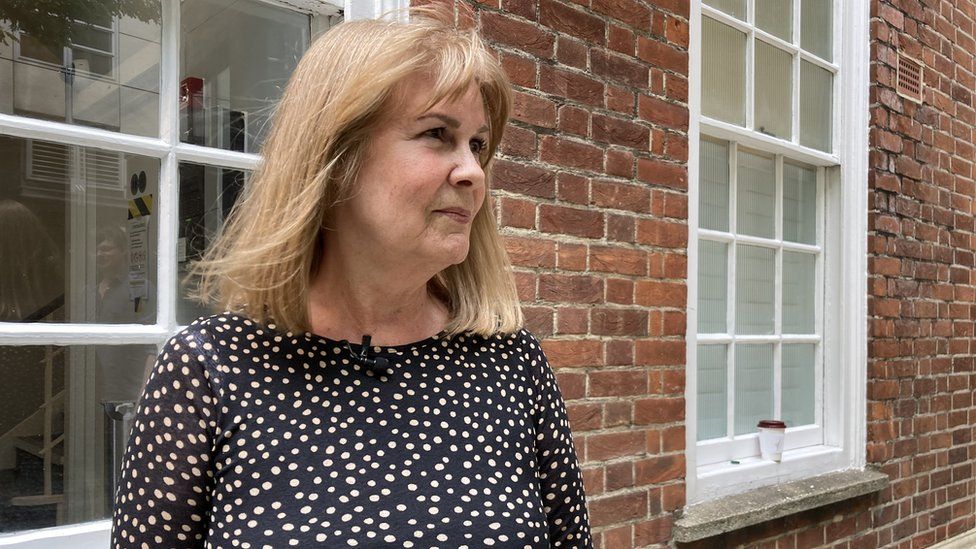
Man told NHS will not fund £40k a time treatment

Published2 hours agoShareclose panelShare pageCopy linkAbout sharingBy Gill DummiganBBC News, GlossopA man with a rare eye cancer has been told he has to pay for his treatment, even though the medicines watchdog said it could be used with safeguards.Glossop’s Craig Shore, whose ocular uveal melanoma has mutated to his liver, has been informed the NHS cannot provide chemosaturation.The 52-year-old said he may need to raise at least £120,000 to pay for the treatment as a private patient.NHS England said there was “not enough evidence” to demonstrate its benefits.Mr Shore said he was initially successfully treated for the cancer in 2021, but in October 2023, his consultant told him it had reappeared in his liver.He said the diagnosis was “like a bolt from the blue”.”I pushed him on the phone to say what was the worst case scenario,” he said.”He told me that if it was untreated, we were looking at somewhere between 11 to 16 months.”‘Changed people’s lives’Few treatments are currently available for his cancer, but one which has appeared to show promising results is chemosaturation.The treatment uses a device to temporarily isolate the liver and then deliver chemotherapy drugs straight into it, removing them 30 minutes later, which allows a stronger dose to be given.In 2021, it was reviewed by NICE, the government organisation which decides whether the NHS should fund medicines and treatments.It judged that there was some evidence the procedure worked, but because there were serious risks associated with it, those needed explaining to the patient.It also stated that medical staff should collect data to help in the future and asked for a further review in April 2024.That means that in theory, it can be funded.Image source, Gerald England/GeographHowever, NHS England said it was not the best use of health service resources and will not pay for it.Due to chemosaturation being a procedure, rather than a drug, NHS England does not have to follow the NICE guidance in the usual way.Chemosaturation sessions cost £40,000 each and patients need between two and six of them, which means a patient could face a bill of up to £240,000.Jo Gumbs, the chief executive of ocular melanoma charity OcuMel UK, said the treatment does not always work but she has seen people’s lives transformed by it.”We now know people who have no evidence of this disease in their liver thanks to this treatment,” she said.”It’s been absolutely fantastic in how it’s changed people’s lives.”The charity’s website has dozens of appeals on it from members trying to raise money for the procedure.Ms Gumbs said the charity had seen people “selling their houses, crowdfunding, going to huge extremes of fundraising and it’s just another pressure that patients with this cancer really shouldn’t be needing”.”It’s a huge amount of money,” she added.If you’re affected by the issues in this piece, you can find support from BBC Action Line.Mr Shore and his family have raised tens of thousands of pounds with charity events and crowdfunding and have also cashed in their life insurance so that he can have the treatment.He will start it later in February at the Christie in Manchester. The hospital is one of a handful of places able to offer the procedure, but it is not allowed to provide it on the NHS.He has been told he will probably need two or three sessions, but it could be more.Mr Shore’s wife Michelle said he could “need up to six treatments”.”We’ll be selling the house,” she said.”It’s ridiculous and unfair.” You don’t sleep, it’s stressful.”An NHS representative said a review of chemosaturation found there was “not enough evidence to demonstrate that it would benefit patients or represent the best use of health service resources”.”NICE says that chemosaturation has serious complications and advises caution, and its guidance does not ask for it be made available on the NHS,” they said.”If a clinician feels that the level of evidence for this treatment has changed, they should inform us, so we can conduct further reviews.”Follow BBC East Midlands on Facebook, on X, or on Instagram. Send your story ideas to eastmidsnews@bbc.co.uk.Related Internet LinksNHS EnglandNICE – The National Institute for Health and Care ExcellenceThe Christie NHS Foundation TrustThe BBC is not responsible for the content of external sites.

Read more →

Parents of sudden-death children 'let down by NHS'

Published30 minutes agoShareclose panelShare pageCopy linkAbout sharingImage source, Stephen Fildes/BBCBy Claire Kendall & Richard BiltonBBC NewsThe NHS is failing some parents whose children die unexpectedly, a leading paediatrician has told BBC Panorama.About 50 children’s deaths in the UK every year are termed as “sudden unexplained death in childhood” (SUDC). Little is known about what causes them.Some bereaved families get none of the support they’re entitled to, setting them up for “a lifetime of misery”, says Dr Joanna Garstang. The NHS says it “offers bereaved families a range of support”.Over recent years, awareness has grown among the public and medical community about Sudden Infant Death Syndrome (Sids). Formerly known as “cot death”, SIDS impacts children under one. There is much less awareness about SUDC – the medical term for the unexplained death of a child between the ages of one and 17. Gavin and Jodie’s two-year-old son Addy died unexpectedly in November 2022. “He was just such an easy, happy baby,” says Jodie. The couple – who could not have children of their own – adopted Addy at eight months old.”The most precious thing has been taken from us, and nobody knows why,” says Jodie. BBC Panorama followed the parents over nine months as they searched for answers to why their son died – and whether it could have been prevented.Image source, Dacres familyEven after a forensic post-mortem examination, no-one could work out why the little boy went to sleep and never woke up, so his death was categorised as SUDC. When a child dies unexpectedly, a review is held to gather information about what happened. The NHS is required to assign a key worker to help bereaved parents to navigate this process, and provide emotional support. The role of key worker can be taken by a range of practitioners and is often a specialist nurse. However, even though it is a mandatory requirement, a survey carried out by the Association of Child Death Review Professionals (ACDP) found that more than half of NHS areas in England do not have a specialist nurse to visit parents after an unexpected death.”It makes me really angry,” says paediatrician Dr Joanna Garstang, the chair of the ACDP, who runs one of the few teams in England that support parents.”Bereaved families after the sudden death of a child are the most vulnerable people. And if we don’t put in early support… we’re setting these parents up for a lifetime of misery.” If you have been affected by the issues raised in this story, help and support is available via the BBC Action LineGavin and Jodie feel they were left to cope with their grief while also navigating a daunting death review process, with no regular support from a key worker. They say there were a few home visits by a nurse and doctors after Addy died, but then they were left to look for answers on their own. Both parents arranged their own private grief counselling because they were told it would be a six-month wait on the NHS. Since Addy’s death, both Gavin and Jodie have been haunted by the thought that they could have done something to save him.SUDC v SidsThe number of babies who die from Sids has been cut by 80% in the past 30 years, thanks to research and awareness campaigns. There has been far less research into the unexplained deaths of children.The most significant work on SUDC is currently taking place at New York University. The team there has a database of more than 300 SUDC deaths and has recently analysed video monitor footage of five children who died unexpectedly in their sleep. In each of the five cases the children showed signs of seizures. A seizure is a fit that can happen when a child has a fever or illness. Most children are fine after a seizure but the researchers want to work out why a small number of children die.They’re now building a world SUDC database to look for patterns and more evidence.This is the first time a link between SUDC and seizures has been captured on camera. It’s only a small sample, but researchers say the results, part-funded by the charity SUDC, are significant.”I think it’s a huge breakthrough,” says lead researcher Laura Gould, who lost her daughter Maria to SUDC 25 years ago. “Now we’re finding actual clues.”Sudden Child Deaths: The Search for AnswersRichard Bilton investigates sudden unexplained deaths in children and looks at the research trying to find out why they happen.Watch now on BBC iPlayer (UK Only) or watch on BBC One at 20:00 on Monday 5 February (20:30 in Northern Ireland and 22:40 in Wales)Not knowing why a child has died has led to some parents being wrongly suspected of causing their children harm.In 2021, Tom and Lucy’s son died without warning during the night. The tragedy was immediately treated as a crime by police. We are using pseudonyms to protect their identities. Tom and Lucy were taken to a police station and their other children were taken into care. For months they were only able to see them on supervised visits. It took nearly a year for Tom and Lucy to be cleared – when the coroner confirmed that their son’s death was from unidentified natural causes. The police have apologised to the family and say they have learned from what happened.The family say they were also let down by the NHS because they didn’t have any support.Image source, Stephen Fildes/BBCSome places in England do have a trained nurse to help families who have experienced the sudden death of a child. In Worcestershire, nurse Donna Steward supports parents like John and Laura, whose two-year-old son Benjamin died in 2022. “I think parents can feel really lost,” she says. Donna is there for home visits and phone calls with the bereaved family for as long as they need her to be. “I always make it clear to parents, I can’t make this better for them, but anything that I can do for that family to make it easier, I absolutely will.” Benjamin’s parents felt Donna was their “voice” from early on and helped them to understand the “medical jargon” that came with the review into their son’s death. “Having somebody advocate for you when you’re going through something that hard, it means a lot,” says Laura, who describes Benjamin as a “happy, robust, energetic, lively little boy”.In contrast to John and Laura, Addy’s parents did not feel they had anyone to help ahead of their son’s inquest in January 2024. The coroner provided the parents with medical documents which they found hard to understand.Image source, Dacres familyThey say the first bit of reassurance they received came a few days before the inquest, from a paediatric pathologist who had examined him at Sheffield Children’s Hospital.In the months before Addy died, he had suffered a few colds, some problems breathing and some eczema. His parents worried that this might have been significant. “I want you to think that this is not your fault… that he didn’t suffer,” pathologist Professor Marta Cohen told them.”There is nothing you could have done to avoid it,” she said as she hugged Jodie. “The reality is, I don’t have any answers for you today. He was a beautiful, well-looked-after child.”Jodie says she cried, but adds that it was what she needed to hear. Sheffield Children’s NHS Trust was responsible for supporting Gavin and Jodie and says it recognises there are areas for improvement in bereavement support, and it has undertaken a thorough review to do this. The NHS says it offers bereaved families a range of support, and that all health trusts are responsible for identifying a key worker for families when they have lost a child. It adds that the number of these roles is set to expand. The family says it is relieved the inquiry is over. But they are still searching for answers. The coroner at Addy’s inquest recorded a verdict of natural death caused by SUDC. It means that still nobody knows why he died.SUDC is a category and not a cause, says Jodie, and more needs to be done to understand it.”Nobody dies for no reason. Something happens to these children.”More on this story’No-one can tell me why my son died in his sleep’Published20 June 2022

Read more →

How Psychiatry Broke the Top 40

Skip to contentSkip to site indexHealthToday’s PaperAdvertisementSKIP ADVERTISEMENTSite IndexSite Information Navigation© 2024 The New York Times CompanyNYTCoContact UsAccessibilityWork with usAdvertiseT Brand StudioYour Ad ChoicesPrivacy PolicyTerms of ServiceTerms of SaleSite MapCanadaInternationalHelpSubscriptionsManage Privacy Preferences

Read more →

Can Musk's Neuralink brain chip really change the world?

Published20 minutes agoShareclose panelShare pageCopy linkAbout sharingImage source, Getty ImagesBy Jim Reed and Joe McFaddenHealth reporters Elon Musk is no stranger to bold claims – from his plans to colonise Mars to his dreams of building transport links underneath our biggest cities. This week the world’s richest man said his Neuralink division had successfully implanted its first wireless brain chip into a human.Is he right when he says this technology could – in the long term – save the human race itself? Sticking electrodes into brain tissue is really nothing new. In the 1960s and 70s electrical stimulation was used to trigger or suppress aggressive behaviour in cats. By the early 2000s monkeys were being trained to move a cursor around a computer screen using just their thoughts.”It’s nothing novel, but implantable technology takes a long time to mature, and reach a stage where companies have all the pieces of the puzzle, and can really start to put them together,” says Anne Vanhoestenberghe, professor of active implantable medical devices, at King’s College London.Image source, NeuralinkNeuralink is one of a growing number of companies and university departments attempting to refine and ultimately commercialise this technology. The focus, at least to start with, is on paralysis and the treatment of complex neurological conditions.The human brain is home to around 86 billion neurons, nerve cells connected to one another by synapses. Every time we want to move, feel or think, a tiny electrical impulse is generated and sent incredibly quickly from one neuron to another.Scientists have developed devices which can detect some of those signals – either using a non-invasive cap placed on the head or wires implanted into the brain itself. The technology – known as a brain-computer interface (BCI) – is where many millions of dollars of research funding appears to be heading at the moment. Neuralink’s device, about the size of a coin, is inserted in the skull, with microscopic wires which can read neuron activity and beam back a wireless signal to a receiving unit. The company has run trials in pigs and claimed that monkeys can play a basic version of the video game Pong.It received approval from the US Food and Drug Administration for human trials in May 2023. We now know that the first patient has received their implant – but details are thin on the ground. Musk has only said the person is “recovering well” and initial results show “promising neuron spike detection”. It might all sound very science fiction, but in some ways Neuralink is playing catch-up. One of its main rivals, a start-up called Synchron backed by funding from investment firms controlled by Bill Gates and Jeff Bezos, has already implanted its stent-like device into 10 patients. Back in December 2021, Philip O’Keefe, a 62-year old Australian who lives with a form of motor neurone disease, composed the first tweet using just his thoughts to control a cursor. This Twitter post cannot be displayed in your browser. Please enable Javascript or try a different browser.View original content on TwitterThe BBC is not responsible for the content of external sites.Skip twitter post by Thomas OxleyAllow Twitter content?This article contains content provided by Twitter. We ask for your permission before anything is loaded, as they may be using cookies and other technologies. You may want to read Twitter’s cookie policy,

Read more →

Did bodybuilding bring on my early perimenopause?

Published1 hour agoShareclose panelShare pageCopy linkAbout sharingImage source, Adele JohnstonBy Angie BrownBBC Scotland, Edinburgh and East reporterWhen Adele Johnston was a bodybuilder she was on gruelling diets and fitness regimes that left her hungry and exhausted all the time.The Scottish double gold bodybuilding champion’s hair began to fall out, she had bleeding gums, heart palpitations, itchy skin and painfully swollen genitals.After years of scans and painful tests it was discovered these were symptoms of early perimenopause – the stage before a woman’s period stops.On average, it starts when women are 46 years old. Adele, a mother-of-two from Fife, was in her early 30s.”For years and years I was pushing my body beyond its limits physically and mentally. Bodybuilding is an extreme sport and I wasn’t healthy,” she told BBC Scotland News. “You could see my ribs and my bone structure, I was emaciated. How my body looked was not nice and healthy and I went against my intelligence and knowledge to put myself through those gruelling diets.”I was always hungry and was never satiated.”Image source, Adele JohnstonAt 5ft 8ins (1.7m), Adele was only 8stones 3lbs (53kg) as a bodybuilder – two stones lighter than she is now.”I’ve started to question why I went into an early perimenopause and have asked many doctors if it was due to my bodybuilding and they said ‘It is possible but we don’t have the research,” she said. Dr Heather Currie, a specialist gynaecologist at NHS Dumfries and Galloway, suggested the extreme bodybuilding could have caused Adele’s menstrual cycle to “stall”. “Anything in extreme you have to question if that is going to have other effects and what I often talk about is everything in moderation,” she said. “Any over excess or excess of not enough of something is not going to be good overall.”If the whole cycle is able to stall then you could see why some people might have symptoms [of perimenopause].”Dr Currie, who advises the Scottish government on the menopause and women’s health, suggested the ovaries could “return to normal” once Adele stopped bodybuilding. “Bodybuilding could have influenced it but she will never know,” she added. Image source, Adele JohnstonAdele has now given up bodybuilding – but she has also been put on HRT and a Mirena coil, which completely stops her monthly periods, to help her perimenopausal symptoms. The 40-year-old is finally feeling better and is not prepared to come off the medication to check whether her cycle has recovered. “I suffered from horrific perimenopause symptoms,” she said. “I had heart palpitations and thought I was having a heart attack, I couldn’t sleep at night so was exhausted, I had cold sweats and I was itchy all over my body.”I had so much pain in my vulva I had to stand at my desk at work. I had abdominal bloating and bleeding gums and was losing my hair. It was very traumatic.”Because I have the Mirena coil and my hormones feel stable, I’m not prepared to remove it to check if I’m having a bleed.”What is the perimenopause? Image source, Dr Paula Briggs, Fast facts for MenopauseThe menopause is when women’s periods stop, which normally happens around the age of 51.The lead-up to this happening, when periods become irregular, is known as the peri-menopause. It starts, on average, at 46.This is when many women notice their periods becoming unpredictable or heavy, and have feelings or physical problems they haven’t experienced before.When periods haven’t happened for 12 months, you have reached menopause.What is the menopause and what are the signs?Vicky McCann, the chairwoman of the British Natural Bodybuilding Federation, said any potential link between bodybuilding and the early perimenopause was a “very interesting subject”.The 54-year-old said: “I have been competing for 30 years and have only had signs of menopause in the last three years.”I had no issues up until then and I have dieted and trained all my life. I can think of about three other people my age who have also had no problems.”However, the thing is people are all unique, it’s an interesting subject.”Jessica Watson, co-founder of menopause education organisation, Gloriah, said she had encountered many stories like Adele’s. “There is an urgent need for greater recognition of, and research into, the causes of early menopause – which is at the heart of what we are campaigning for,” she added. ‘I could barely function’Adele is now a menopause coach after resigning from her job as an operational resilience manager in an investment bank.”My debilitating symptoms eventually forced me to leave my job,” she said. “The company I worked for couldn’t support me in my needs when I was going through perimenopause.”I’d asked for six weeks of reduced hours while I adjusted to being on HRT and they refused.”I was so unwell I could barely function. So my husband Sean said leave and we would work it out.”Adele said she was nervous leaving her job.”It was petrifying to say goodbye to my salary, pension, benefits and career path, but I saw it as an opportunity to retrain as a menopause coach, using what I’d been through to help others.”She added: “Bodybuilding is a glitzy and glamourous sport but behind the stage we have to be mindful of the health implications.”More on this storyWhat is the menopause and what are the signs?Published23 March 2023HRT medicine to be sold over counter for first timePublished8 September 2022Related Internet LinksAdele Johnston CoachingGloriahBritish Natural Bodybuilding Federation official websiteThe BBC is not responsible for the content of external sites.

Read more →

When a Spouse Goes to the Nursing Home

The move to a long-term care facility is often difficult but necessary for frail patients. For their partners, it can mean a new set of challenges.Even as the signals of approaching dementia became impossible to ignore, Joseph Drolet dreaded the prospect of moving his partner into a long-term care facility.Mr. Drolet, 79, and his beloved Rebecca, 71, both retired lawyers and prosecutors in Atlanta, had been a couple for 33 years, though they retained separate homes. In 2019, she began getting lost while driving, mishandling her finances and struggling with the television remote. The diagnosis — Alzheimer’s disease — came in 2021.Over time, Mr. Drolet moved Rebecca (whose surname he asked to withhold to protect her privacy) into his home. But serving as her round-the-clock caregiver, as she needed help with every daily task, became exhausting and untenable. Rebecca began wandering their neighborhood and “getting dressed in the middle of the night, preparing for trips that weren’t happening,” Mr. Drolet recalled.Last year, when he determined that Rebecca no longer really knew where she was, he felt it was time to move her to a nearby memory-care residence.Putting a spouse or partner in a nursing home, for any reason, represents a fraught transition for any couple, one that can mean release from the sometimes crushing burden of caregiving, but can also be accompanied by lingering depression, anxiety and guilt, studies have shown.“That everything was on my shoulders for the care of a very vulnerable person — that stress left,” Mr. Drolet said. After Rebecca left, “the 24-hour duties could be taken by somebody else.” His constant fear of what would happen to Rebecca if he died or became disabled also abated.We are having trouble retrieving the article content.Please enable JavaScript in your browser settings.Thank you for your patience while we verify access. If you are in Reader mode please exit and log into your Times account, or subscribe for all of The Times.Thank you for your patience while we verify access.Already a subscriber? Log in.Want all of The Times? Subscribe.

Read more →

Common food preservative has unexpected effects on the gut microbiome

Food manufacturers often add preservatives to food products to keep them fresh. A primary purpose of these preservatives is to kill microbes that could break down and otherwise spoil the food. Common additives like sugar, salt, vinegar and alcohol have been used as preservatives for centuries, but modern-day food labels now reveal more unfamiliar ingredients such as sodium benzoate, calcium propionate, and potassium sorbate.
Bacteria produce chemicals called bacteriocins to kill microbial competitors. These chemicals can serve as natural preservatives by killing potentially dangerous pathogens in food. Lanthipeptides, a class of bacteriocins with especially potent antimicrobial properties, are widely used by the food industry and have become known as “lantibiotics” (a scientific portmanteau of lanthipeptide and antibiotics).
Despite their widespread use, however, little is known about how these lantibiotics affect the gut microbiomes of people who consume them in food. Microbes in the gut live in a delicate balance, and commensal bacteria provide important benefits to the body by breaking down nutrients, producing metabolites, and — importantly — protecting against pathogens. If too many commensals are indiscriminately killed off by antimicrobial food preservatives, opportunistic pathogenic bacteria might take their place and wreak havoc — a result no better than eating contaminated food in the first place.
Effects on good and bad bacteria
A new study published in ACS Chemical Biology by scientists from the University of Chicago found that one of the most common classes of lantibiotics has potent effects both against pathogens and against the commensal gut bacteria that keep us healthy.
Nisin is a popular lantibiotic used in everything from beer and sausage to cheese and dipping sauces. It is produced by bacteria that live in the mammary glands of cows, but microbes in the human gut produce similar lantibiotics too. Zhenrun “Jerry” Zhang, PhD, a postdoctoral scholar in the lab of Eric Pamer, MD, the Donald F. Steiner Professor of Medicine and Director of the Duchossois Family Institute at UChicago, wanted to study the impact of such naturally-produced lantibiotics on commensal gut bacteria.
“Nisin is, in essence, an antibiotic that has been added to our food for a long time, but how it might impact our gut microbes is not well studied,” Zhang said. “Even though it might be very effective in preventing food contamination, it might also have a greater impact on our human gut microbes.”
He and his colleagues mined a public database of human gut bacteria genomes and identified genes for producing six different gut-derived lantibiotics that closely resemble nisin, four of which were new. Then, in collaboration with Wilfred A. van der Donk, PhD, the Richard E. Heckert Endowed Chair in Chemistry at the University of Illinois Urbana-Champaign, they produced versions of these lantibiotics to test their effects on both pathogens and commensal gut bacteria. The researchers found that while the different lantibiotics had varying effects, they killed pathogens and commensal bacteria alike.

“This study is one of the first to show that gut commensals are susceptible to lantibiotics, and are sometimes more sensitive than pathogens,” Zhang said. “With the levels of lantibiotics currently present in food, it’s very probable that they might impact our gut health as well.”
Harnessing the power of lantibiotics
Zhang and his team also studied the structure of peptides in the lantibiotics to better understand their activity, in the interest of learning how to use their antimicrobial properties for good. For example, in another study, the Pamer lab showed that a consortium of four microbes, including one that produces lantibiotics, help protect mice against antibiotic-resistant Enterococcus infections. They are also studying the prevalence of lantibiotic-resistant genes across different populations of people to better understand how such bacteria can colonize the gut under different conditions and diets.
“It seems that lantibiotics and lantibiotic-producing bacteria are not always good for health, so we are looking for ways to counter the potential bad influence while taking advantage of their more beneficial antimicrobial properties,” Zhang said.
The study, “Activity of Gut-derived Nisin-like Lantibiotics Against Human Gut Pathogens and Commensals,” was supported by the GI Research Foundation, the Howard Hughes Medical Institute, the National Institutes of Health (grants R01AI095706, P01 CA023766, U01 AI124275, and R01 AI042135) and the Duchossois Family Institute at UChicago. Additional authors include Chunyu Wu, Ryan Moreira, and Darian Dorantes from the Univeristy of Illinois Urbana-Champaign, and Téa Pappas, Anitha Sundararajan, and Huaiying Lin from UChicago.

Read more →

The cancer doctor trying to stop his brain tumour killing him

Published1 hour agoShareclose panelShare pageCopy linkAbout sharingImage source, Tim Bauer PhotoBy Tiffanie TurnbullBBC News, SydneyOn opposite sides of the world, Richard Scolyer and Georgina Long each took one look at a scan and their hearts sank.In front of them was, to the untrained eye, an innocuous-looking brain.But these long-time friends – both leading skin cancer doctors – feared it held a ticking time bomb. Nestled in the top right corner of Prof Scolyer’s skull was a section of matter lighter and cloudier than the rest.”I’m no expert in radiology, but… in my heart I knew it was a tumour,” he tells the BBC.Neurosurgeons soon confirmed it wasn’t just any brain tumour, but “the worst of the worst” – a subtype of glioblastoma so aggressive most patients survive less than a year.Devastated but determined, he and Dr Long set out to do the impossible: to save his life by finding a cure.And it may sound crazy, but the Australian researchers have done it before, with melanoma.”It didn’t sit right with me… to just accept certain death without trying something,” Prof Scolyer says.”It’s an incurable cancer? Well bugger that!” National treasuresThirty years ago, when Prof Scolyer and Dr Long met as bright, young doctors, advanced melanoma was a death sentence.But that’s exactly what drew them to it.Australia has long had the highest rate of the skin cancer on the planet and where many saw a daunting challenge, they saw potential.”[Back] when I was doing the cancer block the most challenging patients to see were the ones with advanced melanoma. It was heartbreaking,” Dr Long says.”I wanted to make a difference.”Today, it’s near impossible to overstate their impact on the field. Anyone who gets a diagnosis or treatment for melanoma worldwide does so because of the work pioneered by the Melanoma Institute that they now lead.Image source, NADC/Salty DingoOver the past decade, their team’s research on immunotherapy, which uses the body’s immune system to attack cancer cells, has dramatically improved outcomes for advanced melanoma patients around the world. Half are now essentially cured, up from less than 10%.That breakthrough – or as Dr Long calls it, “penicillin moment” – is now being applied to many other cancers, saving even more lives.It has made the duo national treasures. Almost every Australian would know someone impacted by their work and this year they’ve been jointly named as the Australians of the Year.But as they were transforming the field, they were also leaving their mark on each other.They bonded over frustration at the cases they couldn’t crack, the highs of life-changing discoveries, a love of exercise, and a lofty ambition of reaching zero melanoma deaths in Australia.”We’re very different but very similar in that sort of… roll up your sleeves, get things done way,” Dr Long says.Image source, Melanoma Institute AustraliaEyes shining, the medical oncologist rattles off a list of qualities – brave, honest, upbeat, driven – which make Prof Scolyer the dream colleague and friend.”He’s a delight,” she surmises. And so, after she received that fateful call from Poland last June – where Prof Scolyer was on holiday when a seizure triggered his diagnosis – she spent the night crying. “I’m grieving… I’m thinking my friend is going to be gone in 12 months.”But then she spent the morning plotting – poring over textbooks, researching clinical trials, and firing off emails to colleagues globally.Glioblastomas, found in the brain’s connective tissue, are notoriously aggressive and the general protocol for treating them – immediate excision then radiotherapy and chemotherapy – has changed little in two decades.Survival rates have fared similarly. Still, only 5% of all patients live beyond five years.Desperate, Dr Long formulated a radical plan to treat Prof Scolyer based on what had worked in melanoma, but which had never been tested in brain cancer.Risk vs rewardIn melanoma, Dr Long and her team discovered that immunotherapy works better when a combination of drugs are used, and when they are administered before any surgery to remove a tumour.It’s like training a sniffer dog, she explains: you give it a smell of the contraband, in this analogy the cancer cells, for it to be able to hunt them down later.Prof Scolyer jokes that trying the treatment was a “no brainer”.But it comes with huge risks.Some oncologists were sceptical that the drugs would reach his brain at all, and even if they did, that his immune system would respond.And they worried the experiment could kill him faster.Many brain cancers grow so rapidly that even a two-week delay to surgery could mean it’s too late to operate, they said. Immunotherapy drugs are quite toxic, especially when mixed, so he could be poisoned. And if either of those things caused the brain to swell, he could die instantly.At home colleagues quietly shared fears Dr Long’s emotional ties were clouding her judgement.”They were saying… ‘Just let the neuro-oncology experts do their thing and be his friend’,” she says.”[But] he needs us… We have all this depth of knowledge, it’s our duty.”Image source, Melanoma Institute AustraliaAnd so, under the care of Dr Long and a team of experts, Prof Scolyer became the first brain cancer patient to ever have combination, pre-surgery immunotherapy. He is also the first to be administered a vaccine personalised to his tumour markers, which boosts the cancer-detecting powers of the drugs.’A glimmer of hope’Weeks after that initial scan sent their lives into a tailspin, Prof Scolyer and Dr Long looked at another test result.It was an analysis of the tumour that had been carefully plucked from Prof Scolyer’s skull.”I was blown away. In a millisecond,” he says.”It was bloody obvious that it is doing something.”Not only were there traces of the drugs in the tumour – proving the medication had reached his brain – there was an explosion of immune cells. And they were “activated”, giving the team hope they would be attacking his cancers cells at that very moment.The average time for a glioblastoma cancer to return is six months post-surgery. But eight months on, after continued immunotherapy, Prof Scolyer is showing no signs of active cancer.Just last week, another scan came back clean and Dr Long says his brain is “normalising”.The results so far have generated huge excitement.There’s creeping hope that this could prolong Prof Scolyer’s life. But there’s also optimism that the duo may be on the cusp of a discovery which could help the 300,000 people diagnosed with brain cancer globally each year.This kind of research would usually take years – even decades – but what Prof Scolyer and Dr Long have achieved in mere months has already attracted interest from pharmaceutical companies and generated talk of clinical trials.Image source, Melanoma Institute AustraliaRoger Stupp, though, is more tempered.The doctor – after whom the current protocol for treating glioblastomas is named – says Prof Scolyer’s prognosis is “grim”, and that it’s too early to tell if this treatment is working.”Promising is a difficult word… Encouraging, I would call it,” he tells the BBC from Chicago.”It’s not a revolution, but it is still a step forward.”He wants to see Prof Scolyer reach 12 months, even 18, without recurrence before he’ll be persuaded.But Dr Stupp says he is “absolutely” confident that immunotherapy can change the treatment of brain cancer – the science just hasn’t been cracked yet.”We need to get out of our silos and look at what worked in other tumour types,” he says.Prof Scolyer and Dr Long are also trying to resist being swept up in the buzz.The best-case scenario is that Prof Scolyer is cured, but they call the odds of that “miniscule”.”A miracle could happen,” Prof Scolyer says.As for the worst-case scenario, he tells the BBC he’s already beaten it: “I would have died before now.”Instead, he celebrated his 57th birthday in December, and another Christmas with his family – wife Katie, and his teenage children Emily, Matthew, and Lucy.Image source, Melanoma Institute AustraliaBut with the gratitude for each additional milestone, every clear scan, is the fear it’s his last.”It’s tough,” Dr Long says of treating her friend. They’ve had discussions about death and funerals. “He’s extraordinarily resilient,” she adds.But sitting in his office – surrounded by pictures of his children, tasks scribbled on a whiteboard and shelves filled with framed accolades – Prof Scolyer tears up.For all his outward positivity, he admits he’s also scared and soul-crushingly sad.”I love my family. I love my wife… I like my work,” he says with a grimace.”I’m pissed off. I’m devastated… I don’t want to die.”But giving him comfort is the idea that this research could bring meaning, some purpose, to his diagnosis.”The data that we’ve generated – I know it’s changing the field, and if I die tomorrow with that, I’m very proud.”More on this storyBiggest cervical cancer advance in 20 years hailedPublished23 October 2023Hugh Jackman has new skin cancer scarePublished4 April 2023Olivia Newton-John’s cancer-research legacyPublished9 August 2022

Read more →

Scientists see an ultra-fast movement on surface of HIV virus

As the HIV virus glides up outside a human cell to dock and possibly inject its deadly cargo of genetic code, there’s a spectacularly brief moment in which a tiny piece of its surface snaps open to begin the process of infection.
Seeing that structure snap open and shut in mere millionths of a second is giving Duke Human Vaccine Institute (DHVI) investigators a new handle on the surface of the virus that could lead to broadly neutralizing antibodies for an AIDS vaccine. Their findings appear Feb. 2 in Science Advances.
Being able to attach an antibody specifically to this little structure that would prevent it from popping open would be key. Their findings appear Feb. 2 in Science Advances.
The moving part is a structure called envelope glycoprotein, and AIDS researchers have been trying to figure it out for years because it is a key part of the virus’ ability to dock on a T-cell receptor known as CD4. Many parts of the envelope are constantly moving to evade the immune system, but vaccine immunogens are designed to stay relatively stable.
“Everything that everybody’s done to try to stabilize this (structure) won’t work, because of what we learned,” said lead author Rory Henderson, a structural biologist who is an associate professor of medicine in DHVI. “It’s not that they did something wrong; it’s just that we didn’t know it moves this way.”
Postdoctoral researcher and study co-author Ashley Bennett offers a play-by-play: As the virus feels for its best attachment point on a human T-cell, the host cell’s CD4 receptor is the first thing it latches onto. That connection is what then triggers the envelope structure to pop open, which in turn, exposes a co-receptor binding site “and that’s the event that actually matters.”
Once both molecules of the virus are bound to the cell membrane, the process of injecting viral RNA can begin. “If it gets inside the cell, your infection is now permanent,” Henderson said.

“If you get infected, you’ve already lost the game because it’s a retrovirus,” Bennett agrees.
The moving structure they found protects the sensitive co-receptor binding site on the virus. “It’s also a latch to keep it from springing until it’s ready to spring,” Henderson said. Keeping it latched with a specific antibody would stop the process of infection.
To see the viral parts in various states of open, closed and in-between, Bennett and Henderson used an electron accelerator at the Argonne National Laboratory outside Chicago that produces X-rays in wavelengths that can resolve something as small as a single atom. But this expensive, shared equipment is in high demand. The AIDS researchers were awarded three 120-hour blocks of time with the synchrotron to try to get as much data as they could in marathon sessions. “Basically, you just go until you can’t anymore,” Bennett said.
Earlier research elsewhere had argued that antibodies were being designed for the wrong shapes on the virus and this work shows that was probably correct.
“The question has been ‘why, when we immunize, are we getting antibodies to places that are supposed to be blocked?'” Henderson said. Part of the answer should lie in this particular structure and its shape-shifting.
“It’s the interplay between the antibody binding and what this shape is that’s really critical about the work that we did,” Henderson said. “And that led us to design an immunogen the day we got back from the first experiment. We think we know how this works.”
This research was supported by the National Institutes of Health (UM1AI14437, R01AI145687, U54AI170752, P30 GM124169, S10OD018483), the Department of Energy (DE-AC02-06CH11357) and the DOE Office of Biological and Environmental Research.

Read more →

Alternative Therapies Like Meditation and Acupuncture Are on the Rise

More than one-third of American adults now supplement or substitute mainstream medical care with treatments long considered alternative.The doctor is in. So is the yogi.A sharp shift in health care is taking place as more than one-third of American adults now supplement or substitute mainstream medical care with acupuncture, meditation, yoga and other therapies long considered alternative.In 2022, 37 percent of adult pain patients used nontraditional medical care, a marked rise from 19 percent in 2002, according to research published this week in JAMA. The change has been propelled by growing insurance reimbursement for clinical alternatives, more scientific evidence of their effectiveness and an increasing acceptance among patients.“It’s become part of the culture of the United States,” said Richard Nahin, the paper’s lead author and an epidemiologist at the National Center of Complementary and Integrative Health, a division of the National Institutes of Health. “We’re talking about the use for general wellness, stress management use, sleep, energy, immune health.”And for pain management. The use of yoga to manage pain rose to 29 percent in 2022 from 11 percent in 2002, an increase that Dr. Nahin said reflected in part efforts by patients to find alternatives to opiates, and the influence of media and social media.“It’s in the public domain so much,” he said. “People hear acupuncture, meditation, yoga. They start to learn.”The change is impacting medical practitioners as well. Dr. Sean Mackey, chief of the pain medicine division at Stanford Medicine, said that a growing number of studies have validated alternative therapies, providing even traditional clinics like Stanford’s with more mind-body therapies and other nonpharmaceutical tools. He said the acceptance of those ideas has grown among younger people in particular, whereas patients of earlier generations may have seen these options as too out there.We are having trouble retrieving the article content.Please enable JavaScript in your browser settings.Thank you for your patience while we verify access. If you are in Reader mode please exit and log into your Times account, or subscribe for all of The Times.Thank you for your patience while we verify access.Already a subscriber? Log in.Want all of The Times? Subscribe.

Read more →