New study suggests target steps per day for reduced risk of heart failure

The science is clear that movement is good for our bodies as we age. But just how much physical activity is beneficial for people over 60? A new study from the University at Buffalo provides an answer, and it’s not 10,000 steps per day.
In fact, the study — published Feb. 21 in JAMA Cardiology — of nearly 6,000 U.S. women aged 63-99 reports that, on average, 3,600 steps per day at a normal pace was associated with a 26% lower risk of developing heart failure.
The observational study from the Women’s Health Initiative specifically looked at accelerometer-measured physical activity, sedentary time and heart failure risk. There were 407 heart failure cases — confirmed by physicians — identified during a mean follow-up of 7.5 years.
The risk of developing heart failure was, on average, 12% and 16% lower for each 70 minutes per day spent in light intensity activities and each 30 minutes per day spent in moderate-to-vigorous intensity, respectively. To the contrary, each hour-and-a-half of sedentary time was associated, on average, with a 17% higher risk of experiencing heart failure.
“In ambulatory older women, higher amounts of usual daily light and moderate intensity activities were associated with lower risk of developing heart failure with preserved ejection fraction independent of demographic and clinical factors associated with heart failure risk,” says the study’s lead author Michael J. LaMonte, PhD, research professor of epidemiology and environmental health in UB’s School of Public Health and Health Professions. “Accumulating 3,000 steps per day might be a reasonable target that would be consistent with the amount of daily activity performed by women in this study.”
Study participants wore an accelerometer on their hip for up to seven consecutive days, except for when in water. Light physical activity included usual daily activities like self-care, chores around the house and caregiving, while moderate to vigorous activity involved walking at a normal pace, climbing the stairs or doing yard work.
The study is unique in that it looked at two subtypes of heart failure, the most common of which is heart failure with preserved ejection fraction, often abbreviated as HFpEF. A similar pattern of lower risk with more light and moderate intensity daily activity, and higher risk with prolonged sedentary time, was seen for HFpEF.

“This is a major, unique finding of our study because there is very little published data on physical activity and HFpEF, so we are providing new information upon which other studies can build,” LaMonte says.
“More importantly, HFpEF is the most common form of heart failure seen in older women and among racial and ethnic minority groups, and at present there are few established treatment options, which makes primary prevention all the more relevant for HFpEF. The potential for light intensity activities of daily life to contribute to the prevention of HFpEF in older women is an exciting and promising result for future studies to evaluate in other groups, including older men,” LaMonte adds.
The team’s evaluation of the number of steps per day as an approach to quantifying and translating the favorable results for physical activity was also novel, says LaMonte.
Encouraging older adults to be more active as part of healthy aging is sound advice well-supported by scientific evidence.
“However, conveying how much activity is always a challenge to incorporate as part of clinical and public health recommendations,” says LaMonte. “Steps per day is easily understood and can be measured by a variety of consumer-level wearable devices to help people monitor their physical activity levels.”
In this study, the risk of heart failure, including HFpEF, became significantly lower at around 2,500 steps per day. When standardized to 3,600 steps per day (1 standard deviation unit), there was a 25-30% lower risk of heart failure and HFpEF.

The study’s findings come at a time when the U.S. government is examining its physical activity guidelines for older adults, particularly a target number of steps per day. The steps per day associated with lower heart failure risk cited in the study are far fewer than the often recommended 10,000 steps for health and wellness.
For perspective, the average number of steps per day among women in the study was 3,588. The average among U.S. women of similar age is 2,340.
“It appeared that intensity of stepping did not influence the lower risk of heart failure as results were comparable for light intensity steps and for more vigorous steps,” says LaMonte.
“Our results showing heart failure prevention in older women might be enhanced through walking around 3,000 steps or so per day at usual pace is very relevant given the current emphasis at the federal level on identifying an amount of daily physical activity that can be referenced against steps per day for cardiovascular health and resilience to incorporate in future public health guidelines.”
Researchers from the University of California San Diego, University of North Carolina at Chapel Hill, Fred Hutchinson Cancer Center, Stanford University, and Brown University contributed to the study.

Read more →

Possible trigger for autoimmune diseases discovered : B cells teach T cells which targets must not be attacked

Immune cells must learn not to attack the body itself. A team of researchers from the Technical University of Munich (TUM) and the Ludwig Maximilian University of Munich (LMU) has discovered a previously unknown mechanism behind this: other immune cells, the B cells, contribute to the “training” of the T cells in the thymus gland. If this process fails, autoimmune diseases can develop. The study confirms this for Neuromyelitis optica, a disease similar to Multiple Sclerosis. Other autoimmune diseases may be linked to the failure of this new mechanism as well.
In children and adolescents, the thymus gland functions as a “school for T cells.” The organ in our chest is where the precursors of those T cells that would later attack the body’s own cells are discarded. Epithelial cells in the thymus present a large number of molecules that occur in the body to the future T cells. If any of them reacts to one of these molecules, a self-destruction program is triggered. T cells that attack the body’s own molecules remaining intact and multiplying, on the other hand, can cause autoimmune diseases.
New mechanism discovered
In Nature, the team led by Thomas Korn, Professor of Experimental Neuroimmunology at TUM and a Principal Investigator in the SyNergy Cluster of Excellence, and Ludger Klein, Professor of Immunology at LMU’s Biomedical Center (BMC), describe another previously unknown mechanism behind this.
In addition to the precursors of T cells, the thymus gland also contains other immune cells, the B cells. They develop in the bone marrow but migrate to the thymus in early childhood. “The function of B cells in the thymus gland has been a mystery that has puzzled immunologists for many years,” says Thomas Korn. The researchers have now been able to show for the first time that B cells play an active role in teaching T cells which targets not to attack.
MS-like disease due to malfunction in tolerance formation
Neuromyelitis optica is an autoimmune disease similar to multiple sclerosis (MS). While it is not yet known which molecules are attacked in MS, it is well-established that T cells respond to the protein AQP4 in neuromyelitis optica. AQP4 is most prominently expressed in cells of the nervous tissue, which then becomes the target of the autoimmune reaction. Frequently, the optic nerve is affected.

The researchers were able to show that in the thymus gland of humans and mice not only the epithelial cells but also B cells express and present AQP4 to the T cell precursors. If the B cells were prevented from doing so in animal experiments, AQP4-reactive T cell precursors were not eliminated and the autoimmune disease developed. This was also the case when the epithelial cells still presented the molecule. The team concludes from this that B cells in the thymus are a necessary condition for immune tolerance regarding AQP4.
Protection against subsequent interactions between T cells and B cells
“We suspect that this previously unknown process has evolved particularly to prevent dangerous interactions between autoreactive T and B cells in the lymph nodes and spleen, the so-called peripheral immune compartment,” says Ludger Klein. Once the immune system is developed, B and T cells can communicate and thus trigger highly effective immune reactions. This is useful when it comes to fighting pathogens quickly. On occasion, however, B cells may accidentally present the body’s own proteins, such as AQP4. If the T cells that react to AQP4 had not been sorted out in the thymus, this could lead to a sudden and violent large-scale attack on the body.
Possible cause of other immune disorders
“We assume that problems with the training of T cells by the B cells in the thymus can cause other autoimmune diseases as well,” says Thomas Korn. “After all, the B cells in the thymus present a whole range of the body’s own proteins. The corresponding interactions must be investigated in further studies.”
According to the researchers, likely suspects include antiphospholipid syndrome (APS) and certain forms of cerebral amyloid angiopathy. “Looking further into the future, this interaction in the thymus might be exploited to treat existing autoimmune diseases in a very targeted manner,” says Thomas Korn.

Read more →

How AI can help spot early risk factors for Alzheimer’s disease

UC San Francisco scientists have found a way to predict Alzheimer’s Disease up to seven years before symptoms appear by analyzing patient records with machine learning.
The conditions that most influenced prediction of Alzheimer’s were high cholesterol and, for women, the bone-weakening disease osteoporosis.
The work demonstrates the promise of using artificial intelligence (AI) to spot patterns in clinical data that can then be used to scour large genetic databases to determine what is driving that risk. The researchers hope that one day it will hasten the diagnosis and treatment of Alzheimer’s and other complex diseases.
“This is a first step towards using AI on routine clinical data, not only to identify risk as early as possible, but also to understand the biology behind it,” said the study’s lead author, Alice Tang, an MD/PhD student in the Sirota Lab at UCSF. “The power of this AI approach comes from identifying risk based on combinations of diseases.”
The findings appear Feb. 21, 2024, in Nature Aging.
Clinical data and the power of prediction
Scientists have long sought to discover the biological drivers and early predictors of Alzheimer’s Disease, a progressive and ultimately fatal form of dementia that destroys memory. Alzheimer’s affects some 6.7 million Americans, nearly two-thirds of whom are women. The risk of getting the disease increases with age, and women tend to live longer than men, but that does not fully explain why more women than men have it.

The researchers used UCSF’s clinical database of more than 5 million patients to look for co-occurring conditions in patients who had been diagnosed with Alzheimer’s at UCSF’s Memory and Aging Center in comparison to individuals without AD and found they could identify with 72% predictive power who would develop the disease up to seven years prior.
Several factors, including hypertension, high cholesterol and vitamin D deficiency, were predictive in both men and women. Erectile dysfunction and an enlarged prostate were also predictive for men. But for women, osteoporosis was a particularly important predictor.
This does not mean that everyone with the bone disease, which is common among older women, will get Alzheimer’s.
“It is the combination of diseases that allows our model to predict AD onset,” said Tang, “Our finding that osteoporosis is one predictive factor for females highlights the biological interplay between bone health and dementia risk.”
A precision medicine approach
To understand the biology underlying the model’s predictive power, the researchers turned to public molecular databases and a specialized tool developed at UCSF called SPOKE (Scalable Precision Medicine Oriented Knowledge Engine), which was developed in the lab of Sergio Baranzini, PhD, a professor of neurology and a member of the UCSF Weill Institute for Neurosciences.
SPOKE is essentially a database of databases that researchers can use to identify patterns and potential molecular targets for therapy. It picked up the well-known association between Alzheimer’s and high cholesterol, through a variant form of the apolipoprotein E gene, APOE4. But, when combined with genetic databases, it also identified a link between osteoporosis and Alzheimer’s in women, through a variant in a lesser-known gene, called MS4A6A.
Ultimately, the researchers hope the approach can be used with other hard-to-diagnose diseases like lupus and endometriosis.
“This is a great example of how we can leverage patient data with machine learning to predict which patients are more likely to develop Alzheimer’s, and also to understand the reasons why that is so,” said the study’s senior author, Marina Sirota, PhD, associate professor at the Bakar Computational Health Sciences Institute at UCSF.

Read more →

Detecting pathogens faster and more accurately by melting DNA

A new analysis method can detect pathogens in blood samples faster and more accurately than blood cultures, which are the current state of the art for infection diagnosis. The new method, called digital DNA melting analysis, can produce results in under six hours, whereas culture typically requires 15 hours to several days, depending on the pathogen.
Not only is this method faster than blood cultures, it’s also significantly less likely to generate false positives compared to other emerging DNA detection-based technologies such as Next Generation Sequencing.
Why does it matter?
It’s an experience most parents have had: you take your child to the doctor, because they’re running a fever, maybe coughing or sneezing. Your child has an infection, the doctor says, but it’s unclear if it’s bacterial or viral. Sometimes, the doctor will prescribe antibiotics “just in case.” Sometimes, they’ll order a blood draw to see if bacteria are present. Sometimes, the result will come back negative two to three days later, at which point you’ll be asked to keep giving the antibiotics to your child so they won’t start culturing antibiotic-resistant bacteria in their body.
This same scenario plays out in pediatric ICUs and emergency rooms, with higher stakes, when a child presents symptoms of sepsis. In this case, up to 30% of patients receive the wrong treatment, which actually puts them at higher risk of dying. With sepsis, speed is even more of the essence, since the mortality risk increases by 4% every hour that the infection goes undiagnosed or inaccurately treated.
Researchers conducted a pilot clinical study of blood samples from pediatric patients and showed that the results from their method exactly matched blood culture results in detecting sepsis. But their method detected pathogens 7.5 hours to about 3 days faster than clinical blood culture. The tests also go beyond a simple positive or negative result to quantify how much of the pathogen is present in samples.
The method relies on universal digital high-resolution DNA melting, where DNA is heated until it comes apart. Each sequence of DNA has a specific signature during melting. As the melting process is imaged and analyzed, machine learning algorithms determine which types of DNA are present in the samples and identify pathogens.

The research team presents their findings in the Feb. 21 issue of The Journal of Molecular Diagnostics.
“This is the first time this method has been tested on whole blood from patients suspected of having sepsis. So this study is a more realistic preview of how the technology could perform in real clinical scenarios,” said Stephanie Fraley, the paper’s senior author and a professor in the Shu Chien-Gene Lay Department of Bioengineering at the University of California San Diego.
An estimated one out of every five deaths worldwide is due to sepsis-related complications. And 41% of these deaths occur in children. Early detection is critical for sepsis survival, as mortality risk rises by 4% for every hour the infection goes undiagnosed or inaccurately treated.
Typically, physicians put sepsis patients on antibiotics while awaiting results from blood cultures. This can lead to antibiotic resistance down the line.
“The bottom line is, we’re not treating based on evidence,” Fraley said. “And the more we treat without evidence, the more we can cause unintended problems. Sometimes, we’re treating patients who have fungal or viral infections with antibacterials. This can cause antibiotic resistance and alter the patient’s microbiome in a significant way.”
How the method works
It all started with one milliliter of blood from each sample from 17 patients in the pilot clinical study. The samples were collected at the same time as samples for blood cultures from infants and toddlers.

Researchers perfected DNA isolation and machine learning methods to reduce or eliminate signals from human DNA compared to pathogen DNA in the samples.”Since human DNA significantly outnumbers pathogen DNA, this allows us to better detect the ‘needle in the haystack’ that is the pathogen,” Fraley said.
Mridu Sinha, one of Fraley’s former Ph.D. students and now CEO of Melio, the startup company they cofounded, optimized a machine learning algorithm to reliably detect the difference between melt curves from the pathogens and background noise. The algorithm matches the curves to a database of known DNA melt curves. It’s also able to detect curves created by organisms that are not in this database, which could show up in a sample if it contains rare or emerging pathogens.
The results not only matched exactly the results from blood cultures from the same blood samples; they also did not produce any false positives. By contrast, other types of tests relying on nucleic acid amplification and next-generation DNA sequencing databases will amplify any DNA present, leading to false positives. Often, DNA gets into the s ample from the environment, test tubes, reagents, skin and more. Sample contamination can cause issues with knowing how to interpret the test results.
“Our test has incorporated sample preparation processes, assay design techniques, and algorithms that ensure we only detect DNA from intact organisms, which is clinically relevant,” Sinha said.
Next steps include conducting a broader clinical study, as well as expanding the method to adult patients.
Fraley and Sinha licensed the technology from UC San Diego and cofounded startup Melio to commercialize their method.
“We want to give doctors the ability to treat their patients based not on aggregate data, but with precise, accurate individual data, enabling truly personalized medicine,” Fraley said.
What is DNA melting?
The DNA in the blood samples is heated causing it to melt at temperatures between 50 to 90 degrees Celsius-about 120 to 190 degrees Fahrenheit.
As the DNA double-helix melts, the bonds holding together the DNA strands break. Depending on the DNA’s sequence, the bonds have different strengths, and that changes the way the strands unwind from each other. This creates a unique sequence-dependent fingerprint, which researchers can detect using a special dye. The dye causes the unwinding process to give off fluorescent light, creating what researchers call a melting curve — a unique signature for each type of pathogen.
In the past, DNA melting has produced simple curves that were used primarily to confirm that a PCR reaction worked, but this new approach advances melting to generate complex melt curve signatures that are unique to gene sequences.
The work was funded by the National Institute of Allergy and Infectious Diseases of the National Institutes of Health (award number R01AI134982 to S.I.F), a Burroughs Wellcome Fund Career Award at the Scientific Interface (award number 1012027 to S.I.F.), and UCSD Clinical Translational Research Institute and UCSD Accelerating Innovations to Market pilot grants.
Quote from Dr. Karen Mestan, Chief of the Division of Neonatology at Rady Children’s Hospital and the UC San Diego Department of Pediatrics: “The findings of this study fill an important need in pediatrics, especially for critically ill infants and small children in which clinical signs of bacteremia are extremely difficult to decipher. In settings of early subclinical sepsis, and also overwhelming septic shock, the bacterial pathogen is often challenging to identify accurately and in a timely manner. A test that provides higher reliability and shorter turnaround than current practice is urgently needed. Eventual clinical application of U-dHRM will lead to a reduction in unnecessary antibiotic exposure, prevention of untoward side effects and global antibiotic resistance, better antibiotic stewardship, improved and faster diagnostic accuracy, and overall improved pediatric outcomes. In cases of serious bloodstream infection, it could save lives.”

Read more →

Duke Shuts Down Huge Plant Collection, Causing Scientific Uproar

University officials say they cannot afford to maintain one of the largest herbariums in the United States. Researchers are urging Duke to reconsider.Duke University has decided to close its herbarium, a collection of 825,000 specimens of plants, fungi and algae that was established more than a century ago. The collection, one of the largest and most diverse in the country, has helped scientists map the diversity of plant life and chronicle the impact of humans on the environment.The university’s decision has left researchers reeling. “This is such a devastating blow for biodiversity science,” said Erika Edwards, the curator of the Yale Herbarium. “The entire community is simultaneously shocked and outraged.”Scientific societies have also protested the move. “Duke’s decision to forgo responsibility of their herbarium specimens sets a terrible precedent,” the Natural Science Collections Alliance wrote in a letter to the university last Friday.The alliance, along with six other scientific societies, endorsed a petition asking Duke to reconsider closing the herbarium. As of Wednesday, it had gained over 11,000 signatures. “It is very shocking that such a large collection at a wealthy university would be deemed dispensable,” said Regina Baucom, a plant geneticist at the University of Michigan.In an email sent last week to the herbarium’s staff, Susan Alberts, the dean of natural sciences at Duke, said that the university had decided that the collection should be moved elsewhere in the next two to three years.We are having trouble retrieving the article content.Please enable JavaScript in your browser settings.Thank you for your patience while we verify access. If you are in Reader mode please exit and log into your Times account, or subscribe for all of The Times.Thank you for your patience while we verify access.Already a subscriber? Log in.Want all of The Times? Subscribe.

Read more →

War and Illness Could Kill 85,000 Gazans in the Next 6 Months, Study Finds

An escalation of the war in Gaza could lead to the deaths of 85,000 Palestinians from injuries and disease over the next six months, in the worst of three scenarios that prominent epidemiologists have modeled in an effort to understand the potential future death toll of the conflict.These fatalities would be in addition to the more than 29,000 deaths in Gaza that local authorities have attributed to the conflict since it began in October. The estimate represents “excess deaths,” above what would have been expected had there been no war.In a second scenario, assuming no change in the current level of fighting or humanitarian access, there could be an additional 58,260 deaths in the enclave over the next six months, according to the researchers, from Johns Hopkins University and the London School of Hygiene and Tropical Medicine.That figure could climb to 66,720 if there were outbreaks of infectious disease such as cholera, their analysis found.Even in the best of the three possibilities that the research team described — an immediate and sustained cease-fire with no outbreak of infectious disease — another 6,500 Gazans could die over the next six months as a direct result of the war, the analysis found.The population of the Gaza Strip before the war was roughly 2.2 million.“This is not a political message or advocacy,” said Dr. Francesco Checchi, professor of epidemiology and international health at the London School of Hygiene and Tropical Medicine.We are having trouble retrieving the article content.Please enable JavaScript in your browser settings.Thank you for your patience while we verify access. If you are in Reader mode please exit and log into your Times account, or subscribe for all of The Times.Thank you for your patience while we verify access.Already a subscriber? Log in.Want all of The Times? Subscribe.

Read more →

These Whales Still Use Their Vocal Cords. But How?

Unusual experiments on organs recovered from three carcasses suggest how baleen whales call out at sea.People have told stories of strange underwater sounds for thousands of years, but it took until the mid-20th century for scientists to pinpoint one of the causes: whales, singing and whistling and squeaking in the blue.The means by which some whales make these sounds has remained a mystery. A study published Wednesday in the journal Nature puts forth a new explanation, discovered thanks to a contraption that forced air through the voice boxes of three dead whales.The voice box, or larynx, is an ancient organ. “It evolved when fish crawled out of the sea and animals needed a way to separate the air they’re breathing from the food they’re taking in,” said Coen Elemans, an author of the study and a professor of biology at the University of Southern Denmark.The larynx functions like an antechamber to the windpipe, or trachea, with a flap of tissue called the epiglottis keeping food and drink from falling down the windpipe. A bit below the epiglottis, mammals have evolved additional folds of tissue, called vocal cords or vocal folds, which produce sounds when air exhaled from the lungs causes them to vibrate.When the land-dwelling ancestors of whales returned to life in the sea, “they basically had to change the larynx, because when these animals are breathing on the surface, they need to expel lots of air really fast,” Dr. Elemans said. Vocal folds like those of land mammals could get in the way.A view into the larynx of a humpback whale during the experiments. In the circle at left, the fatty cushion is at top, and at right and left are the vocal folds. Air forced between the folds and the cushion can produce sound.Coen P.H. Elemans, University of Southern DenmarkWe are having trouble retrieving the article content.Please enable JavaScript in your browser settings.Thank you for your patience while we verify access. If you are in Reader mode please exit and log into your Times account, or subscribe for all of The Times.Thank you for your patience while we verify access.Already a subscriber? Log in.Want all of The Times? Subscribe.

Read more →

Study of Patients With a Chronic Fatigue Condition May Offer Clues to Long Covid

N.I.H. researchers found notable differences between the immune systems and other physiological functions of patients with ME/CFS and those of healthy patients.Jennifer Caldwell was active and energetic, working two jobs and taking care of her daughter and her parents, when she developed a bacterial infection that was followed by intense lightheadedness, fatigue and memory problems.That was nearly a decade ago, and she has since struggled with the condition known as myalgic encephalomyelitis/chronic fatigue syndrome, or ME/CFS. Ms. Caldwell, 56, of Hillsborough, N.C., said she went from being able to ski, dance and work two jobs as a clinical research coordinator and a caterer to needing to stay in bed most of every day.“I haven’t been right since, and I haven’t worked a day since,” said Ms. Caldwell, whose symptoms include severe dizziness whenever her legs are not elevated.The condition has also “messed me up cognitively,” she said. “I can’t read something and comprehend it very well at all, I can’t remember new things. It’s kind of like being in a limbo state. That’s how I describe it, lost in limbo.”Seven years ago, the National Institutes of Health began a study of patients with ME/CFS, and Ms. Caldwell became one of 17 participants who engaged in a series of tests and evaluations of their blood, bodies and brains.Findings from the study, which was published on Wednesday in the journal Nature Communications, showed notable physiological differences in the immune system, cardio-respiratory function, gut microbiome and brain activity of the ME/CFS patients compared with a group of 21 healthy study participants.We are having trouble retrieving the article content.Please enable JavaScript in your browser settings.Thank you for your patience while we verify access. If you are in Reader mode please exit and log into your Times account, or subscribe for all of The Times.Thank you for your patience while we verify access.Already a subscriber? Log in.Want all of The Times? Subscribe.

Read more →

Why Some Seniors Are Giving Up on Romance

Why some older people who have given up looking for romantic love say they feel self-assured and satisfied on their own.Joy Lorton, 80, has been married and divorced four times.“I grew up in the 1950s and ’60s, when everybody was supposed to get married and have kids, so I did that,” said Ms. Lorton, who lives in Olympia, Wash., and has three daughters, seven grandchildren and a gaggle of great-grandchildren.But each of her marriages was marred by a different flavor of dysfunction, and since her last divorce in 2001, she has been devoutly and joyfully single. “It all goes back to the same word: freedom,” Ms. Lorton said.Now, she chooses whom she wants to spend time with. And that could mean no one at all: “I really like my own company,” Ms. Lorton said.Around 30 percent of adults in the United States over the age of 50 are single, according to a 2022 Pew survey, and despite the stigma that tends to surround both singleness and advanced age, many relish being on their own. Older singles were less likely than their younger counterparts to say they wanted to date or find a romantic relationship, and research suggests people’s satisfaction with being single tends to jump in middle age.“People in their 60s and beyond who are single and flourishing is an untold story,” said Bella DePaulo, a social scientist who studies single life (and is a single 70-year-old herself). “And it’s a feel good story that shatters all of our stereotypes.”Getting to know you.Dr. DePaulo said that one major difference between being single in one’s 60s or beyond and being single when younger is the self-awareness and self-assurance that come with age. There is research to suggest that self-confidence peaks between the ages of 60 and 70.We are having trouble retrieving the article content.Please enable JavaScript in your browser settings.Thank you for your patience while we verify access. If you are in Reader mode please exit and log into your Times account, or subscribe for all of The Times.Thank you for your patience while we verify access.Already a subscriber? Log in.Want all of The Times? Subscribe.

Read more →

A State Court Ruling on I.V.F. Echoes Far Beyond Alabama

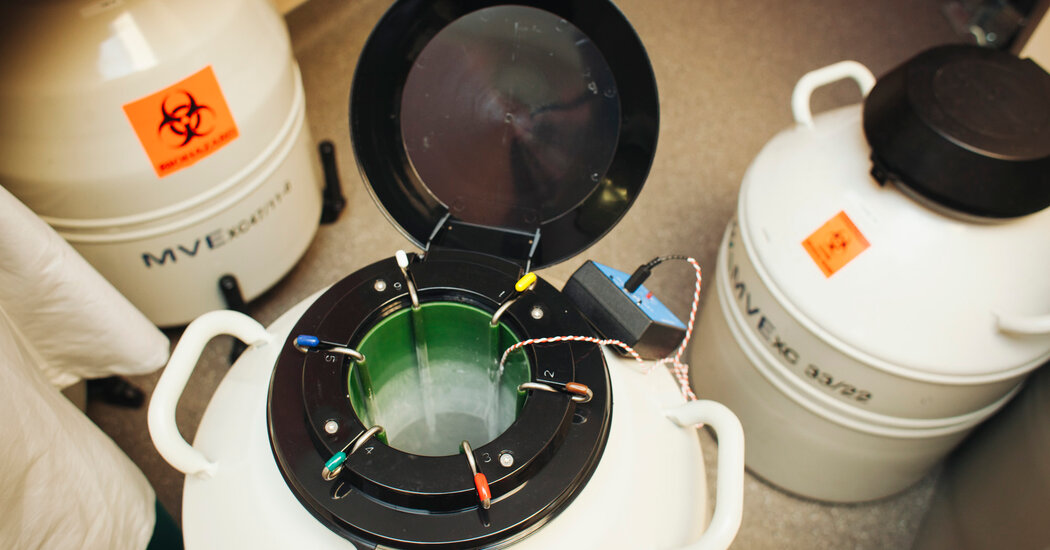
Frozen embryos in test tubes must be considered children, judges ruled. The White House called it a predictable consequence of the overturn of Roe v. Wade.An Alabama Supreme Court’s ruling that frozen embryos in test tubes should be considered children has sent shock waves through the world of reproductive medicine, casting doubt over fertility care for would-be parents in the state and raising complex legal questions with implications extending far beyond Alabama.On Tuesday, Karine Jean-Pierre, the White House press secretary, said the ruling would cause “exactly the type of chaos that we expected when the Supreme Court overturned Roe v. Wade and paved the way for politicians to dictate some of the most personal decisions families can make.”Speaking to reporters aboard Air Force One as President Biden traveled to California, Ms. Jean-Pierre reiterated the Biden administration’s call for Congress to codify the protections of Roe v. Wade into federal law.“As a reminder, this is the same state whose attorney general threatened to prosecute people who help women travel out of state to seek the care they need,” she said, referring to Alabama, which began enforcing a total abortion ban in June 2022.The judges issued the ruling on Friday in appeals cases brought by couples whose embryos were destroyed in 2020, when a hospital patient removed frozen embryos from tanks of liquid nitrogen in Mobile and dropped them on the floor.Referencing antiabortion language in the state constitution, the judges’ majority opinion said that an 1872 statute allowing parents to sue over the wrongful death of a minor child applies to unborn children, with no exception for “extrauterine children.”We are having trouble retrieving the article content.Please enable JavaScript in your browser settings.Thank you for your patience while we verify access. If you are in Reader mode please exit and log into your Times account, or subscribe for all of The Times.Thank you for your patience while we verify access.Already a subscriber? Log in.Want all of The Times? Subscribe.

Read more →