Boris Johnson left Inquiry in a hurry – he’ll be pleased not to come back

21 October 2025ShareSaveVanessa ClarkeEducation reporterShareSavePapers in hand, Boris Johnson arrived at the Covid Inquiry before the sun came up.He was there to answer questions on decisions he made during the pandemic that directly impacted children.And what an impact they had.School attendance, behaviour, screen time, speech and language – we now know the pandemic had an enduring effect on all of these issues for children.Demand for speech and language support increased markedly after the pandemic. The number of children who are persistently absent from school is still stubbornly high. And school suspensions and exclusions have hit record levels.Each of these issues can be traced back to a part of the pandemic which has been central to this session of the inquiry: the closure of schools. The decision to shut schools was one described by Boris Johnson on Tuesday as a “personal horror” for him, a “nightmare idea”, but one which he also said seemed like the only option at the time. We know that, in March 2020, the government was still maintaining an almost total focus on efforts to keep schools open.But last week the former education secretary Gavin Williamson told the inquiry ministers should have “bitten the bullet” and done more to prepare for school closures.We heard in earlier evidence given to the inquiry that there wasn’t even a plan for the closure of schools until the day before it was announced on 18 March 2020.This was described as an “extraordinary dereliction of duty” in the evidence of Sir Jon Coles, chief executive of the United Learning trust.But on Tuesday, the former PM pushed back on that claim. Getty Images”If you look at the sequence from February onwards, it’s clear that Sage (Scientific Advisory Group for Emergencies) is talking about the possibility, the Cabinet is discussing it in March. Certainly I remember the subject coming up repeatedly,” he said.It is right to say Sage had referenced the prospect of “mass school closures” in February 2020. But the top civil servant at the Department for Education (DfE) at the time, Jonathan Slater, wrote in his evidence submitted to the inquiry that “DfE’s contingency plans were premised on the assumption that schools (and other education settings) would remain open”.And Williamson told the inquiry last week that his ability to plan for closures was impeded by Downing Street.It all points to the chaos of the decision-making processes at the heart of government at the time – something explicitly referenced in earlier evidence by the former children’s commissioner Anne Longfield.It wasn’t clear who had responsibility for planning for children at the time, she said.What is now clear is that there was no love lost between Johnson and Williamson, the people with the highest responsibility for children’s welfare at the time of the pandemic.Last week, we saw the expletive-laden rant Williamson texted to his former boss in which he lamented the “abuse” he had received for the government’s decision to shut schools the day after reopening them in January 2021.And on Tuesday, Johnson was confronted with his own leaked messages to his advisers, in which he suggested he wanted to fire those in the DfE after the exam results fiasco of August 2020.He now says the DfE did a “heroic” job of trying to cope with the pandemic. This was described as an “insult” by the Liberal Democrats “to the true heroes of the Covid pandemic: the teachers and doctors, nurses and key workers who put their lives on the line to keep crucial public services going”.Johnson now concedes that the lockdowns and social-distancing rules “probably went too far” – and there could have been a way to make children exempt.These are all points that Baroness Heather Hallett, chairman of the inquiry, will be paying particular attention to when it comes to her final report, and the question of what could be done differently if it were ever to happen again.In the inquiry room itself, no technology is allowed, no mobile phones or laptops, and so many of the journalists were in the press room upstairs watching the live feed.Tuesday was busier than it has been over the last few weeks, and downstairs the public gallery was full. There was a reminder before proceedings began that hecklers were not allowed – a nod to the previous time Boris Johnson appeared, when protesters had to be escorted out of the building.Campaigners from various groups, including Long Covid Kids and Clinically Vulnerable Families have been a noticeable presence outside the front door – trying to get their voices heard with placards and banners.Boris Johnson is used to speaking to large crowds and at formal events like this, but at the end of the inquiry, when Baroness Hallett turned to thank him for his evidence, he was already trying to get out of his seat – clearly keen to finish up for the day.He will likely be pleased not to be coming back.

Read more →


Scientists discover how a high-fat keto diet could keep your brain young

Protecting your brain’s energy and keeping your mind sharp might start with what’s on your plate. Foods such as fish and seafood, meat, non-starchy vegetables, berries, nuts, seeds, eggs, and even full-fat dairy may play a key role in maintaining cognitive health.
Exploring the Power of the Ketogenic Diet
At the University of Missouri, researchers are exploring how these foods influence brain function. Their work focuses on a high-fat, low-carbohydrate eating plan known as the ketogenic diet. Early results suggest that this approach could not only support long-term brain health but also slow or even prevent cognitive decline, especially among individuals who face a higher genetic risk of developing Alzheimer’s disease.
Inside the Roy Blunt NextGen Precision Health building, Ai-Ling Lin, a professor in the School of Medicine, and doctoral student Kira Ivanich are examining how the ketogenic diet may benefit people with the APOE4 gene, which is the strongest known genetic risk factor for late-onset Alzheimer’s disease.
In their recent study using mice, Lin and Ivanich found that females with the APOE4 gene developed healthier gut bacteria and showed higher brain energy levels when following a ketogenic diet compared to those on a high-carbohydrate diet. Males did not show the same improvement, suggesting that gender may influence who benefits most from this dietary approach.
How the Brain Uses Fuel
The key lies in how the brain produces its energy.

“When we eat carbs, our brains convert the glucose into fuel for our brains, but those with the APOE4 gene — particularly females — struggle to convert the glucose into brain energy, and this can lead to cognitive decline down the road,” Ivanich said. “By switching to a keto diet, ketones are produced and used as an alternative fuel source. This may decrease the chance of developing Alzheimer’s by preserving the health of brain cells.”
These findings highlight the potential of “precision nutrition,” an approach that adapts diets and interventions to fit a person’s unique biology.
“Instead of expecting one solution to work for everyone, it might be better to consider a variety of factors, including someone’s genotype, gut microbiome, gender and age,” Lin said. “Since the symptoms of Alzheimer’s — which tend to be irreversible once they start — usually appear after age 65, the time to be thinking about preserving brain health is well before then, so hopefully our research can offer hope to many people through early interventions.”
Advancing Research Through Collaboration
Lin joined Mizzou in part for its collaborative environment and advanced imaging facilities located in the NextGen Precision Health building and at the University of Missouri Research Reactor.
“We can do a lot of things in-house here that at other places we would have to outsource,” Lin said. “This is team science. The impact we make will be much better when we work together than by ourselves.”
With cutting-edge imaging equipment and both research and clinical spaces under the same roof, the NextGen Precision Health building allows Mizzou to move quickly from preclinical models to human trials.

For Ivanich, that real-world impact is personal.
“When my grandmother got Alzheimer’s, that sparked my interest in this topic, so being able to make an impact to help people preserve their brain health is very rewarding,” she said. “With Mizzou being a leading research university and having a tight-knit community feel, I know I’m at the right place.”
“Ketogenic diet modulates gut microbiota-brain metabolite axis in a sex-and genotype-specific manner in APOE4 mice” was published in the Journal of Neurochemistry.

Read more →

This simple innovation could change blood pressure testing forever

A newly developed method that improves the accuracy of ankle blood pressure measurements could transform care for people who are unable to have their blood pressure taken from the arm.
Researchers from the University of Exeter Medical School, in a study published in BMJ Open and funded by the National Institute for Health and Care Research (NIHR), analyzed data from more than 33,000 individuals to create a personalized predictive model. This model enables healthcare professionals to estimate arm blood pressure more precisely using ankle readings (when compared with earlier approaches). To make the process easier to use, the team has also launched an online calculator that helps both clinicians and patients interpret ankle-based results.
Why Accuracy in Blood Pressure Measurement Matters
More than one billion people worldwide live with high blood pressure, a major risk factor for heart disease, stroke, and kidney problems. Reliable measurements are crucial for diagnosing and managing the condition effectively.
Although blood pressure is typically measured on the upper arm, some people cannot have it taken there due to disability, limb loss, or conditions such as stroke. In such cases, readings are taken from the ankle. However, ankle measurements are usually higher than arm readings, and because treatment guidelines are based on arm data, this difference can lead to inaccurate diagnoses and inappropriate treatment decisions.
Improving Accuracy and Reducing Misdiagnoses
Professor Chris Clark, who led the research, explained: “Our new method will give a more accurate blood pressure reading for around two percent more people. This doesn’t sound a big number but remember, around a third of adults have high blood pressure and once you get into your 60s it’s more than half of the adults. The NHS Health Check Programme diagnoses 38,000 new cases annually in England alone, so two percent equates to 750 fewer potential misdiagnoses per year in England, and tens of thousands globally.”
To achieve this, the researchers used statistical modeling on data from 33,710 people (mean age 58 years, 45 per cent female) across multiple countries. The analysis explored the relationship between arm and ankle blood pressures, developed a predictive equation for estimating arm values from ankle readings, and examined how ankle readings relate to important health outcomes (such as heart attack risk).

This advancement could help close a significant health gap by providing accurate and personalized blood pressure results for people who have been excluded from standard monitoring. It is estimated that up to 10,000 adults in the UK live with upper limb loss, while 75 per cent of the country’s 1.3 million stroke survivors experience upper limb difficulties that can make arm-based measurements challenging or impossible.
The project received support from the Stroke Association and the Thalidomide Trust, two organizations advocating for people affected by these conditions.
Expert Reactions and Public Health Impact
Juliet Bouverie OBE, CEO of the Stroke Association, said: “Someone in the UK has a stroke every five minutes, with high blood pressure accounting for around half of those. Around two-thirds of stroke survivors will leave hospital with some form of disability, including paralysis in an arm, which can prevent getting accurate blood pressure readings from the affected limb. Many stroke survivors feel anxious about having another stroke, so receiving an accurate blood pressure reading in the ankle will not only provide benefits in the primary prevention of stroke, but importantly in easing the minds of stroke survivors who are already dealing with the devastating impact of stroke.”
Professor Kevin Munro, Director of NIHR’s Research for Patient Benefit Programme, said: “This research has identified an ingenious solution to an important problem — finding a way to measure blood pressure for people who cannot have it monitored via the upper arm. Keeping track of blood pressure is a vital tool to help keep people healthy and this NIHR-funded research will help to spot high blood pressure and treat it even more widely.”
The paper titled “Arm Based on LEg blood pressures (ABLE-BP): Can systolic ankle blood pressure measurements predict systolic arm blood pressure? An individual participant data meta-analysis from the INTERPRESS-IPD Collaboration” is published in BMJ Open.

The online calculator is available at: ABLE-BP Tool — https://ablebp.research.exeter.ac.uk/
“Why should I not be able to have my blood pressure taken?”
TV presenter Sue Kent, 62 from Swansea, has an upper limb disability caused by the drug Thalidomide, which was prescribed to her mother during pregnancy. She has eight-inch arms which aren’t big enough for blood pressure to be taken.
Sue said: “I rarely had my blood pressure taken when I was younger, but when I did, I used to have a really big cuff they would put around my thigh and take the blood pressure there. Whether it was accurate or not nobody worried, but I didn’t seem to have blood pressure problems.
“But then I had a cataract operation, and somebody took my blood pressure from my ankle, and it was very high. They did it three times and every time it was high, and it made me very worried. They (medical staff) weren’t worried and carried on and did the cataract operation, but I was quite distressed.”
Sue was diagnosed with Meniere’s disease in 2017, which is a rare inner ear condition which has left her partially deaf.
She said: “I was worried I was going to have a stroke because Meniere’s can be an indicator the blood flow isn’t going to the brain. I knew I couldn’t have my blood pressure taken accurately, so I went privately to have dye injected to check everything was OK.
“As you get older blood pressure is an important indicator of so many things, including things that could be seriously wrong. Prodding about in the dark and guessing isn’t really a safe thing to do. You need the right information about your blood pressure.”
Sue hopes this new method could potentially help her and thousands of others like her have something most of us take for granted — an accurate blood pressure reading.
She said: “Why should I not be able to have my blood pressure taken when it’s available to most people and is a relatively simple thing to do?
“When you’re disabled, you’re more likely to die younger for a variety of reasons, so this resource tips the scales a bit more in our favor. This could put us on a level playing field with everybody else when it comes to blood pressure. It means reassurance and maybe an early diagnosis if something is wrong.”

Read more →

Eight countries added to methanol poisoning warning list

Just nowShareSaveAlex KleidermanShareSaveGetty ImagesEight countries have been added to a UK Foreign Office list warning of the risks of methanol poisoning from counterfeit or tainted alcoholic drinks.Ecuador, Japan, Kenya, Mexico, Nigeria, Peru, Russia and Uganda are included in the updated travel guidance following incidents involving Britons in those countries. The advice previously covered Thailand, Laos and Vietnam, Cambodia, Indonesia, Turkey, Costa Rica and Fiji and follows a number of high-profile incidents including the death of six tourists in Laos last year.Travellers are advised to watch out for signs of methanol poisoning such as blurry vision and confusion, which can lead to serious illness and death.Methanol is an industrial chemical found in antifreeze and windscreen washer fluid. It is not meant for human consumption and is highly toxic. But there have been instances of unscrupulous backyard brewers adding methanol to drinks to make them go further, and some bars and street sellers mixing it with spirit-based drinks and cocktails to cut costs.The Foreign Office has begun a new advertising campaign and updated its travel advice pages to include information on recognising symptoms and reducing risks of methanol poisoning.British nationals going abroad are advised to purchase sealed drinks from licensed establishments, avoid homemade alcohol and pre-mixed spirits, cocktails and drinks served in buckets or jugs.Travellers are advised to watch out for warning signs of poisoning, which include nausea, vomiting, dizziness and confusion. Experts say methanol poisoning in the early stages can resemble alcohol poisoning, but distinctive symptoms, such as vision issues, can develop between 12-48 hours after consumption. People with signs of methanol poisoning should seek urgent medical attention immediately.PA MediaLast month campaigners and the families of some of the Britons who have died or been injured from methanol poisoning abroad met members of the travel industry and MPs in parliament.Among them was Amanda Dennis who represents the family of Simone White, a 28-year-old lawyer from Orpington who was one of six backpackers who died in 2024 after consuming free shots at a hostel in Laos. She said the Foreign Office should go further with its latest warning.”The advice should be do not buy spirits in these countries, including licensed places,” she said. “If people want to drink spirits in these countries, they should buy spirits at duty free in the UK.”She also suggested the Foreign Office should place posters highlighting the issue of methanol poisoning at UK airports.Calum Macdonald had been backpacking in Laos when he fell victim to methanol poisoning in Vang Vieng and went blind.The 23-year-old from Sunbury-on-Thames said: “I think it’s important that people know, obviously, because it’s quite a simple bit of information you can get that can really save you a lot of pain.”I certainly think if I’d been aware of the risks I wouldn’t be here today without my vision.”Hamish Falconer, the Foreign Office minister responsible for consular and crisis, said: “Methanol poisoning can kill. It can be difficult to detect when drinking and early symptoms mirror ordinary alcohol poisoning. By the time travellers realise the danger, it can be too late.”He added: “No family should endure what the campaigners’ families have suffered. Their determination to prevent others facing the same tragedy has been instrumental in driving forward these vital updates to our travel advice.”

Read more →

Brain fog during menopause? Here’s what’s really going on

Many women going through menopause report experiencing what they describe as “brain fog,” a mix of forgetfulness, reduced focus, and mental fatigue. These symptoms are thought to stem in part from hormonal fluctuations that occur during this transition. To better understand the connection, researchers conducted a review of existing studies examining how menopause affects brain structure and its links to cognitive, emotional, and physical health. The findings from this review will be presented at the 2025 Annual Meeting of The Menopause Society, scheduled for October 21-25 in Orlando.
How Menopause Alters Brain Structure
Research has shown that menopause is accompanied by measurable structural changes in the brain. Several studies have identified decreases in gray matter volume in key regions such as the frontal and temporal cortices and the hippocampus, which play major roles in memory and decision-making. These reductions have been associated with declines in certain types of memory performance, including verbal and visuospatial abilities.
Other research has found that white matter hyperintensities — bright spots visible on MRI scans that often indicate tissue damage — are more common during menopause, particularly in women who experience early menopause or frequent hot flashes. These changes may result from reduced blood flow to the brain’s white matter. The lesions are linked to a higher risk of neurological symptoms such as cognitive decline, balance problems, mood changes, and an increased likelihood of stroke and dementia.
Evidence of Brain Recovery and Hormonal Adaptation
Interestingly, some findings suggest that gray matter volume may partially recover after menopause, hinting at the brain’s ability to adapt through neuroplasticity. Scientists have also observed higher estrogen receptor density during the menopause transition, which may reflect the brain’s attempt to compensate for falling hormone levels. However, this increase has also been tied to weaker memory performance in some cases. Changes in blood vessel reactivity and energy metabolism within the brain further illustrate how menopause affects neural health and resilience.
Some evidence suggests a partial recovery of gray matter volume postmenopause, potentially reflecting compensatory neuroplastic processes. Additionally, elevated estrogen receptor density during the menopause transition may represent an adaptive response to declining hormone levels, although it has also been associated with poorer memory outcomes Alterations in cerebrovascular reactivity and brain energy metabolism further underscore the impact of menopause on neural integrity and functional resilience.

As part of a project carried out at the BRAVE Lab of the School of Behavioral and Brain Sciences at Ponce Health Sciences University (Puerto Rico), PhD-PSY students Angélica Rodríguez and Andrea Pereira conducted a bibliographical review under the supervision of Dr. Bárbara Barros and Dr. Karla Martínez. Their work analyzed relevant scientific literature on menopause-related brain structural changes and how these alterations may contribute to menopause symptoms. More detailed results will be discussed at the 2025 Annual Meeting of The Menopause Society as part of the poster presentation entitled “Menopause and Brain Structural Changes: A bibliographic revision.” Rodríguez, first author, will be presenting the poster at the meeting.
“This type of work highlights the need to continue exploring the relationship between the brain and menopause, particularly their connection with the cognitive, emotional, and behavioral symptoms women experience during this stage,” says Angélica Rodríguez, PhD student in Psychology at Ponce Health Sciences University in Puerto Rico.
Building Toward Better Understanding and Treatment
“This study represents the cumulative body of scientific knowledge relative to structural changes that take place in the brain during menopause,” says Dr. Stephanie Faubion, medical director for The Menopause Society. “These data will hopefully lead to a better understanding of the factors underlying some of the cognitive concerns experienced by women during the menopause transition so that we can ultimately identify effective therapies.”

Read more →

Children paid ‘huge price’ in Covid pandemic, Johnson tells inquiry

Children paid a “huge price” to protect others during the Covid pandemic, Boris Johnson has told the inquiry looking at the impact on young people.The former prime minister repeated an apology made previously for things the government got wrong, but said he was proud of what teachers and schools did to cope with the “unbelievably difficult” circumstances.He pushed back on earlier suggestions that there had been no plans in place for closing schools in early 2020, saying he had assumed a “great deal of thought and care” was already going into those decisions by then.But he said he had also hoped schools could remain open, calling it a “nightmare idea” and “personal horror” to close them.Former education secretary Gavin Williamson gave his own evidence to the inquiry last week, in which he said the government had made an error in “sticking to the plan” of trying to keep schools open in March 2020.The inquiry was told a plan was only made on 17 March 2020 – the day before an announcement that schools were closing. Johnson told the inquiry on Tuesday that he accepted the criticism around the lack of planning, but added that making changes to schools would have required a “much greater state of knowledge about Covid and what was likely to happen”.”The speed at which the disease was progressing” made it harder to plan around, he added, saying the key focus was on trying to avoid an “appalling public health crisis”.The inquiry has also heard previously about several disagreements between Williamson and Johnson, including over the decision to close schools again in 2021.Last week, Williamson was confronted with an expletive-laden message he had sent to the then-prime minister in February 2021, in which he said he had taken “abuse” for the government’s decision to shut schools one day after they reopened.On Tuesday, Johnson told the inquiry he had wanted to see “mass testing” in schools as a way of keeping them open.But that was “never going to be a runner” because of the new alpha variant which arrived at the same time and accelerated the spread of the disease, he said.One of the biggest issues of the pandemic for both Johnson and Williamson came in the exam results fiasco of August 2020.The Department for Education (DfE) had been forced to go back on its use of an algorithm to award results, which was designed to prevent inflated grades but which instead saw 40% of predicted results downgraded.The public outcry led to a U-turn which meant pupils were ultimately awarded the grades they had been predicted by their teachers, after GCSE and A-level exams were scrapped earlier in the year.Johnson was confronted with his own leaked messages at the inquiry on Tuesday, in which he had told advisers Dominic Cummings and Lee Cain at the time that the DfE needed “better ministers”.”We can’t go on like this. I am thinking of going into Number 10 and firing people,” he had said.Johnson said he had been in a “thoroughly homicidal mood” at the time.Referencing the exams fiasco, counsel to the inquiry Clair Dobbin KC suggested to Johnson that “the whole thing was a disaster”.”If you mean was Covid a disaster? Yes. Was the loss of education a disaster? Yes. Was the loss of exams a disaster? Yes. Was the disappointment, anger, frustration of a large number of kids – the additional frustration – a disaster? Yes it was,” Johnson said.”But it has to be seen in the context of us trying to deal with a much, much bigger disaster,” he added, referencing the loss of learning and exams.”On the whole”, he said the DfE had done a pretty “heroic job” of trying to cope with the pandemic.Later in Tuesday’s evidence, Johnson said the lockdown and social distancing rules “probably did go too far”, and that children could have been exempted from them.While “hopefully this thing never happens again”, he said in any future pandemic the closure of schools “really should be a measure of last resort”.This session of the Covid inquiry, looking at the impact of the pandemic on children and young people, is due to end later this week.You can listen to the latest episode of the Covid Inquiry Podcast on BBC Sounds

Read more →

Reaching 100: ‘I never thought I’d make it to this age’

3 hours agoShareSaveThea KellockShareSaveBBC”I never thought I’d make it to this age,” says 100-year-old May O’Shea. “I thought I would have died by now.”May’s milestone is still one very few people achieve despite the number of centenarians in the UK doubling over the past 20 years.The latest figures from the Office of National Statistics (ONS) show there were an estimated 16,650 people aged 100 or above living in the UK in 2024, a record high.In Scotland, where May lives, there are 1,000 centenarians for the first time but it is still an age only reached by one person in every 5,000.May, who was born in Port Glasgow in 1925, says: “I don’t feel 100, I feel much younger. I look at my hands and I’m shocked.”Looking back on her long life, she remembers surviving a German blitz on Port Glasgow during World War 2, which destroyed her neighbours’ homes.”You could see all the flames in the sky, it looked like a sunset,” she recalls.May moved to London after the war and became a cleaner, at one time spending three years working for the iconic 80s band, Depeche Mode.She had her son Jim, who is now 70 , before moving back to Scotland in later life where she became a grandmother to her three grandchildren and seven great-grandchildren. The 100-year-old says she reads two newspapers everyday, which are delivered by Jim, who she credits for keeping her sharp. When asked if there’s a secret to such a long life, she cites the fact she’s “never smoked and never drank”, and advises people who want to follow in her footsteps to “just take care of themselves and don’t overdo it!”Paul Shiels, a professor of geroscience at the University of Glasgow, says that the rise in people living to 100 can be explained by improved living conditions, better nutrition and a general improvement in public health.He said : “Over the last century, we’ve seen advances in medicine, better detection of disease, better disease treatment, more widespread use of vaccinations and the appearance of antibiotics.”These are really enabling people who would’ve died at a younger age to live longer.”The ONS stats show that women make up more than 80% of those who make it to 100.However, the number of men living to a very old age is rising quickly.Twenty years ago men accounted for 10.9% of people aged 100 and over but this is now 18.4%, nearly one in five.”Women age better than men,” says Prof Shiels.”They handle psychosocial stress a lot better and tend to be more social.”There’s no clear answer as to why the rate of men reaching 100 is increasing faster than women, I think that it could be the case that the number of women has reached a plateau, and men are catching up.”It may be that we’ll see a further small increase in the number of people reaching 100 over the next few decades, but I don’t think it will be dramatic.”Murrayfield Care HomeFor 104-year-old Mary Smith, good genes are the key to a long life.Mary was born in Korea in 1921 to British parents, before travelling the world with the Navy.She was 23 years old when WW2 ended, a day she still describes as her “favourite memory”.”I had been posted to America when it was announced that the war in Europe had ended,” she recalls.”I was in a ship, halfway across the Atlantic ocean, and we were able to turn the lights on for the first time.”During her time in Washington DC she married her husband, a British Army officer, and had two sons.She credits her longevity to her “tough ancestors”.”My ancestors have always remained spry, both mentally and physically, and all remained very active right into their old age,” she says.Her carers at Murrayfield Care Home in Edinburgh also add that she “never misses a gym class”.”They keep me fit and keep me moving, stop me stiffening up – I’m very determined, I won’t give up,” she says.The best ways to reach 100Prof Shiels says that, although genes play a role in living a long life, they are not the main factor which determine whether you’ll live to be 100.He says: “We’re still finding out lots more about what really causes how we age, and the big surprise is that your environment is probably more of an influence on your age and age-related health than your genetics.”Instead, he says, environmental stressors such as whether or not you have a balanced diet; whether you smoke or drink alcohol; oral health and the amount of exercise you get play the biggest role.”There’s unique aspects of ageing, but the general picture is relatively uniform,” Prof Shiels says.”If more of us want to live to 100 we have to change our environment and we have to modify our lifestyle.”There’s a lot of scientific influencers now saying they can rejuvenate you, but I’m very sceptical of that.”In the real world you need balance. Cutting stress, doing things in moderation and being social – these are the best ways to get near 100.”Stephanie BellJean Aitken, an ex-teacher also from Port Glasgow, has some additional tips that she thinks has helped her reach her 100th year.”Everybody always wants to know the secret.” she says.”I’ve never been sporty, but all my life I’ve always done a lot of Scottish country dancing,” she says.”Another thing is I don’t drink milk and never have done – I’ve never liked it.”Jean lived with her twin sister Margaret, who passed away at 92, before moving into a nursing home at age 99.She has taken courses on how to use an iPad, which she uses to order her shopping and to share pictures and videos with her family.Her great-niece, Stephanie Bell, described her as a greatly positive person who is “always living life to the full”.For Jean, the advice for living into your hundreds is simple.She says: “You just keep going, you’ve just got to keep going.”

Read more →

Woman ‘threatened’ by NHS ward staff, inquiry told

36 minutes agoShareSaveRachael McMenemyShareSaveContributedA woman who took her own life while on a mental health ward had been threatened and bullied by staff, her family told a public inquiry.Iris Scott, 73, was a patient at the Crystal Centre in Chelmsford, run by the Essex Partnership University NHS Foundation Trust (EPUT) mental health services provider, when she died there in her bathroom on 1 March 2014.Her children gave evidence to the Lampard Inquiry, which is examining more than 2,000 deaths at NHS-run inpatient units in Essex between 2000 and 2023.They told the inquiry they had “grave safety concerns” about her treatment. EPUT said it would “build on the improvements that have already been made over the last 24 years”.On one occasion their mother told them a staff member threatened to keep the lights on to prevent her sleeping if she did not “stop complaining” and another deliberately blocked her path in corridors.Mrs Scott initially agreed to a three-week “quick fix” inpatient stay in August 2013 after suffering from “unmanageable anxiety”, her children said.However, her condition worsened during six months on the ward and her family told the inquiry of what they considered to be “failings” regarding her care plan, treatment by staff, the ward and risk management, which they believed contributed to her death. Her son, Craig Scott, said there had been “zero accountability”. ContributedHer daughter Dawn Johnson said when she raised concerns that her mum had voiced wanting to end her life in November 2013, the ward manager had been dismissive.”She just said I was being a paranoid daughter and nothing was going to happen on that ward,” Ms Johnson told the inquiry, being held at Arundel House in London.”She went so far as to say if you didn’t calm down you’d end up on the ward as well,” added Rachel Troup, counsel to the inquiry.Due to ongoing issues, Ms Johnson and her mother began keeping diaries of incidents and interactions with staff, which she believed showed her mother’s fear.ContributedOn 14 January 2014, Mrs Scott tried to take her own life, resulting in “significant” bruising around her face, her children said.Her family were not informed and were told she had a fall when they questioned staff about her injuries.Ms Johnson said her mother confided she had been trying to take her own life but this was rejected by staff who said Mrs Scott was “attention seeking”.They insisted she had a fall, but said they were increasing observations, the inquiry heard.Two days later, Ms Johnson’s children found her setting up a ligature in her room in the same way she had reported.Despite being placed on a higher level of observation and a search of her room, her daughter found items for a ligature in her wardrobe, which she said prompted more concerns from the family about the competency of staff.In response to the attempt to take her life, Mrs Scott reported that the ward manager told her she had “overstepped boundaries” and “gone too far”, according to her family.Ms Johnson said her mum had been “blackmailed” by staff who threatened to “reveal something about her” if she did not change her story about the events on 14 January.”Mum said she felt pressure to change her story,” Ms Johnson said.”She was frightened.” Mrs Scott’s observation level was reduced in late February, and she died on 1 March after using a ligature in her bathroom at the unit.Asked what she felt should have been done differently regarding her mother’s care, Ms Johnson replied “everything”. Mrs Scott’s family added they hoped any recommendations for change were checked thoroughly to ensure they were complied with. “Had they [ligature points] been removed after mum’s death maybe people who died the following year might still be here,” Ms Johnson said.”Mental health has become more in focus since mum’s death but is there a real desire to take these recommendations and others more seriously?” Iris’s son Craig Scott added.Paul Scott, chief executive of the mental health trust, said: “My thoughts are with Iris’s family and loved ones and I send my condolences both personally and on behalf of the trust.”As the inquiry progresses there will be many accounts of people who were much loved and missed over the past 24 years and I want to say how sorry I am for their loss.”All of us across healthcare have a responsibility to work together to improve care and treatment for all and to build on the improvements that have already been made over the last 24 years.”If you’ve been affected by the issues in this story, help and support is available via the BBC Action LineRelated internet links

Read more →

Bird flu hiding in cheese? The surprising new discovery

Cheese made from contaminated raw milk was found to contain infectious avian influenza virus, raising potential health concerns for consumers, according to new research. The study also found that no virus was detected in samples of raw milk cheese with high acidity. Feta cheese, which is naturally more acidic, served as an example of this safer variety.
The findings were published on October 8 in Nature Medicine.
Tracking How the H5N1 Virus Behaves in Cheese
“In this study, we were specifically looking at the stability or persistence of highly pathogenic avian influenza H5N1 in raw milk cheese products,” said senior author Diego Diel, professor of virology in the Department of Population Medicine and Diagnostic Sciences and director of the Virology Laboratory at the Animal Health Diagnostic Center (AHDC), all in the College of Veterinary Medicine (CVM).
“This research was initiated due to previous work demonstrating high levels of virus shedding in milk from infected cows and the fact that we have previously shown that the virus survives in refrigerated raw milk for extended periods of time,” he said.
Virus Survived Twice as Long as Expected
Under Food and Drug Administration guidelines, raw milk cheese must be aged for at least 60 days at or above 35 degrees Fahrenheit. This process helps reduce moisture and destroy harmful bacteria that may be present in unpasteurized milk. However, the researchers detected infectious H5N1 virus after 120 days of aging at 39 degrees Fahrenheit, suggesting that the standard aging period may not fully eliminate viral contamination.

Acidity Plays a Key Role in Cheese Safety
A pH level below 7 is considered acidic. Most cheeses have a pH between 5.4 (as in cheddar) and 7 (as in camembert). Some, like feta, can be as low as 4.6 or even lower.
When the pH of raw milk cheese was between 5.8 and 6.6, the virus remained viable. No virus was detected in cheeses with a pH of 5 or below. The results highlight acidity as a key factor in inactivating the pathogen during cheesemaking.
Reducing Contamination Risks
According to Diel, steps to prevent contamination could include testing milk before cheesemaking and using only virus-free milk. Another option is to heat milk to sub-pasteurization temperatures, which could inactivate the virus while maintaining the raw milk cheese characteristics valued by artisanal producers.
Nicole Martin, study co-author and assistant research professor in dairy foods microbiology, emphasized the importance of this work: “The work we’ve done on H5N1 is critical to providing practical, timely, data-driven knowledge and recommendations to the dairy industry in the face of this outbreak that has affected a large proportion of the milk supply in the U.S., and it allows raw milk cheese makers to reduce risk.”
Animal Tests Shed Light on Transmission

The study also included an animal experiment using ferrets, which are highly susceptible to H5N1. The animals were fed contaminated raw milk and raw milk cheese from the study. Some ferrets that drank the raw milk became infected, but those that ate the raw milk cheese did not.
Diel suggested that the difference may relate to how the virus interacts with the body. The fluid consistency of milk may allow the virus to make greater contact with mucous membranes in the throat, while cheese likely provides less exposure time for infection to begin.
Testing Cheese Samples for the Virus
To further examine virus stability, the team created small 5-gram experimental cheeses in the lab using raw milk spiked with H5N1. They also analyzed commercial cheese samples submitted to Cornell by FDA officials who suspected contamination.
“All four samples of company-made cheddar that we received tested positive for H5N1,” Diel said.
Understanding How Acidity Is Created
Cheese becomes acidic either through direct acidification or by adding lactic acid-producing bacteria that convert milk sugars into lactic acid. “This acid drops the pH of the milk and depending on how far this fermentation is allowed to proceed determines how low the pH goes,” Martin said.
The researchers used direct acidification in their experiments, adding lactic acid to H5N1-spiked milk to produce cheeses with varying levels of acidity for testing.
Research Collaboration and Support
Mohammed Nooruzzaman, an assistant research professor in the Department of Population Medicine and Diagnostic Sciences (CVM), is the paper’s first author. Co-authors include postdoctoral associate Pablo Sebastian Britto de Oliveira; research associate Salman Butt; Samuel D. Alcaine, associate professor of food science (CALS); and Stephen Walker at the FDA’s Office of Dairy and Seafood Safety.
The study was supported by the FDA and the New York State Department of Agriculture and Markets.

Read more →

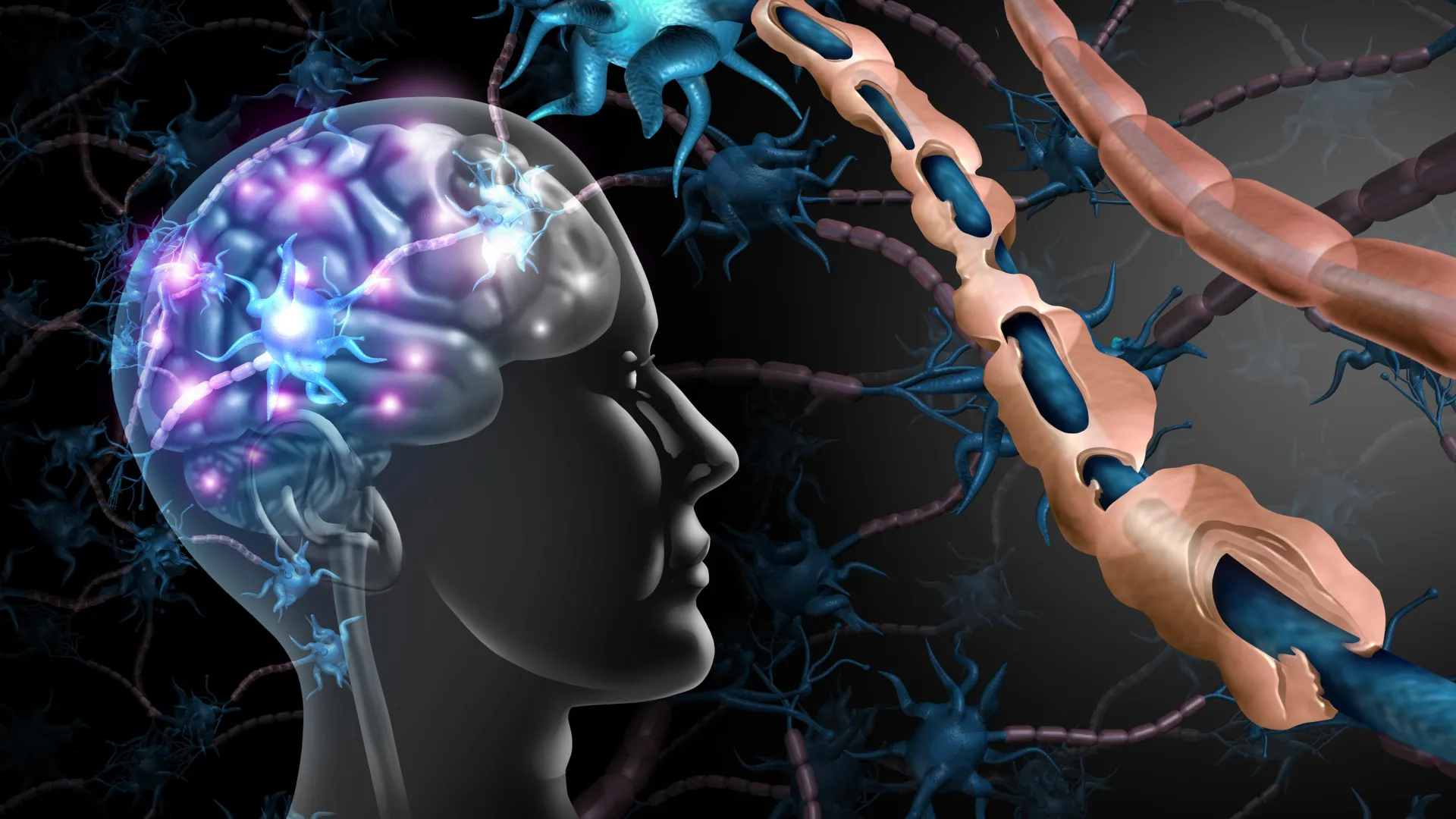
Scientists detect hidden brain damage years before MS symptoms

By the time most people begin seeking help for multiple sclerosis (MS), the disease has already been quietly injuring the brain for years. Until recently, scientists were uncertain which cells were affected first or when the damage actually started.
Tracking the Disease’s Earliest Attacks
Researchers at UC San Francisco have now provided the most detailed timeline yet by analyzing thousands of proteins circulating in the blood. Their findings show that the immune system begins attacking the brain’s protective myelin sheath — the fatty covering that insulates nerve fibers — much earlier than scientists once believed.
The team measured fragments of myelin and other molecules left behind by immune attacks, along with the chemical signals that drive the immune system’s response. This work allowed them to outline, for the first time, the chain of biological events that ultimately leads to the onset of MS.
The discovery opens the door to earlier diagnosis and, in the future, may make prevention possible.
The Body’s Early Warning Signs
The research showed that MS first targets the myelin sheath. About a year later, evidence of damage to the underlying nerve fibers themselves begins to appear.

Among the immune-related proteins that rose during this initial stage, one stood out: IL-3. This molecule plays a central role in the early disease phase, when the central nervous system is already taking significant damage even though patients do not yet experience symptoms. IL-3 helps recruit immune cells into the brain and spinal cord, where they begin attacking nerve tissue.
“We think our work opens numerous opportunities for diagnosing, monitoring, and possibility treating MS,” said Ahmed Abdelhak, MD, assistant professor of Neurology at UCSF, and the first and co-lead author of the paper, which was published in Nature Medicine on Oct. 20. “It could be a gamechanger for how we understand and manage this disease.”
Following Blood Clues Years Before Diagnosis
The researchers analyzed more than 5,000 different proteins in blood samples from 134 individuals who eventually developed MS. These samples came from the U.S. Department of Defense Serum Repository, which stores blood from military applicants. Because the repository holds samples for decades, scientists were able to examine blood drawn years before these individuals were diagnosed.
Seven years prior to diagnosis, the researchers detected a spike in a protein known as MOG (myelin oligodendrocyte glycoprotein), which signals damage to the myelin insulation around nerve fibers. Roughly a year later, they observed a rise in neurofilament light chain, a marker of injury to the nerve fibers themselves.
During this same window, IL-3 and several related immune proteins appeared in the bloodstream, indicating that an immune assault was already underway.

Building the Foundation for a Predictive Blood Test
In total, the team identified about 50 proteins that could serve as early indicators of MS. They have since filed a patent application for a diagnostic blood test based on the 21 most reliable markers.
Ari Green, MD, chief of the Division of Neuroimmunology and Glial Biology in the UCSF Department of Neurology and senior author of the study, said the findings could reshape how doctors approach prevention and treatment.
“We now know that MS starts way earlier than the clinical onset, creating the real possibility that we could someday prevent MS — or at least use our understanding to protect people from further injury.”
Authors: Other UCSF authors are Gabriel Cerono, MD, Kiarra Ning, John Boscardin, PhD, The UCSF ORIGINS Study, Christian Cordano, MD, PhD, Asritha Tubati, Camille Fouassier, Eric D. Chow, PhD, Refujia Gomez, Adam Santaniello, Kelsey C. Zorn, MHS, Jill A. Hollenbach, PhD, MPH, Jorge R. Oksenberg, PhD, Bruce A.C. Cree, MD, PhD, MAS, Stephen L. Hauser, MD, Jonah R. Chan, PhD, Sergio E. Baranzini, PhD, Michael R. Wilson, MD, and Ari J. Green, MD. For all authors, see the paper.
Funding: This work was funded in part by the Department of Defense (HT94252310499), the National Institutes of Health (R01 NS105741 R01AG062562 R01AG038791, 1S10OD028511-01, R35NS111644, the Valhalla Foundation, the National MS Society, the Westridge Foundation, the National Multiple Sclerosis Society (RFA-2104-37504, SI-2001-35751), the Water Cove Charitable Foundation, Tim and Laura O’Shaughnessy, and the Littera Family. For all funding and disclosures, see the paper.

Read more →