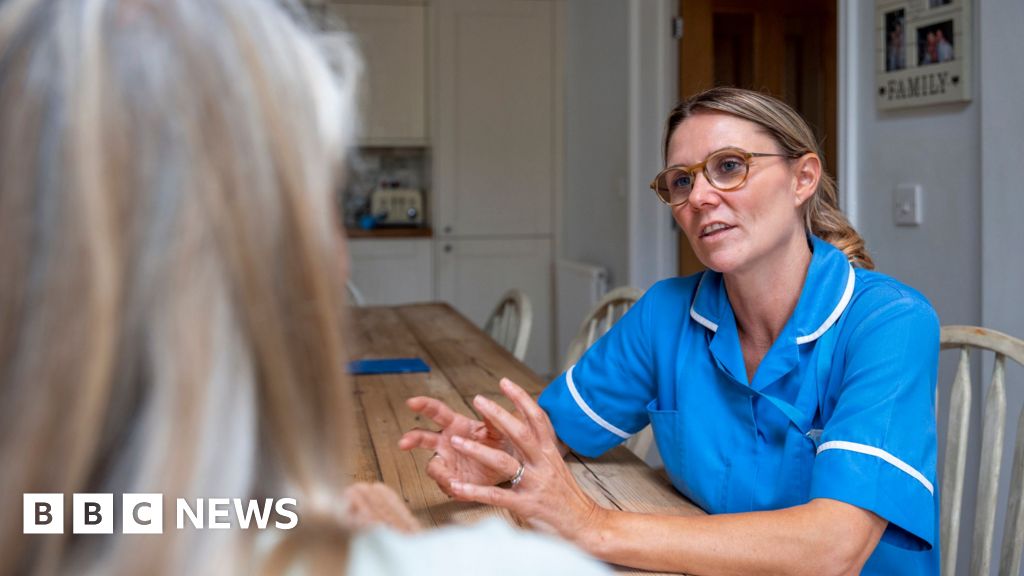
Mum is first UK patient to trial new MS treatment

Just nowShareSaveLouise ParryShareSaveLucy North/PA MediaA biology teacher and mother-of-two has become the first UK patient to receive a “gamechanger” therapy to treat multiple sclerosis (MS).Emily Henders, 37, from Bushey, Hertfordshire, was treated at University College London Hospital (UCLH) as part of a global clinical trial.Mrs Henders had experienced “really scary” relapse episodes since being diagnosed in December 2021 during which, she said: “My legs don’t work, I can’t walk.”Experts believe the targeted immunotherapy treatment could “transform” lives by slowing or even halting progression of the disease.”I hope taking part in the trial means I will never have to experience another relapse and that my MS symptoms will not progress,” Mrs Henders said.”I know it is still experimental but it offers a scientific rationale which, as a biology teacher, makes sense to me.”Family handout/PA MediaMultiple sclerosis is an “autoimmune” disease, which happens when the immune system attacks nerves in the brain and spinal cord by mistake.The experimental treatment, known as CAR T cell therapy, aims to reset the immune system.It works by depleting B cells, which are thought to drive the autoimmune attack in MS.The patient’s own T cells, which hunt out infected or damaged cells, are genetically engineered and fed back into the patient via an infusion to “re-set” the immune system.Mrs Henders, who has sons aged six and four, told the PA news agency she was feeling well after receiving the infusion in a three-minute procedure.”I’m actually feeling really good. I’m feeling normal and I’ve got energy back.”I don’t have any nausea, I’ve had no fevers. I’m feeling pretty relaxed,” she said.Lucy North/PA MediaMrs Henders, whose father also has MS, was diagnosed on Christmas Eve after suffering tingling in her hands.”Physically, my symptoms have progressively got worse,” she said.”I notice sometimes my foot hits the pavement in a funny way. Or when I’m teaching and my hands are shaking.”Mrs Henders will “never forget” her first major relapse when her children saw her taken away by ambulance.”I was getting out of bed and I couldn’t stand up – it was very scary,” she said.”I’ll never forget my children’s faces as the medics were rushing in and strapping me to a chair.”Emotionally, I worry for them and how they’re dealing with it.”I worry that this might be passed on to them. It’s very scary for the future, not knowing what the next relapse would bring.”Lucy North/PA MediaMrs Henders hopes the treatment will avoid the decline typical in MS patients, who often require a wheelchair.”It would mean I’ll be able to chase my children around, and I’ll still be able to work,” she said.”I wouldn’t be able to be a science teacher in a wheelchair or even on crutches.”It’s too much of a health and safety hazard, so that would have a real impact on my job.”A spokesperson for the MS Society said: “It’s early days but, if trial results prove successful, CAR T-cell therapy could be a gamechanger for how we treat the condition.”UCLH consultant haematologist Claire Roddie said the team was “excited” about the trial.”We are taking a treatment developed to treat cancers and re-purposing it for a whole new spectrum of conditions,” she said.”We give CAR T-cell therapy – bang, you’re in, you get the treatment, and that’s it.”Hopefully you don’t need any more drugs beyond that point.”If we could achieve that in MS, it would transform so many people’s lives.”Related storiesRelated links

Read more →

Local health hubs at risk as community services under strain

The government’s goal of moving care from hospitals into neighbourhood health hubs is at risk because community services are under too much strain, the health and care regulator says.In its annual report, the Care Quality Commission said waiting times were too long and staffing too stretched in areas such as mental health, GP care and social care.The regulator said there was a real risk patients would suffer because these services would not able to cope with the extra demands.But the government said investment was being made to address the pressures.The 10-year NHS plan published in July set out a vision for a neighbourhood health service through the creation of clinics integrating different elements of GP care and hospital services with wider community support.Such a system is seen as crucial way of coping with the ageing population and growing numbers with long-term conditions such as heart disease, diabetes and dementia.The CQC used its own inspection reports and published data to draw up its annual analysis.It raised a number of concerns about the current state of community services, including:Long waits for mental health – with a third of adult patients reporting wiats of three months or more between first assessment and treatment, plus signs that waits for children are even worseContinued problems accessing GP services – with only half of patients finding it easy to get through on the phoneA dramatic drop in district nurse numbers – with 50% fewer per person over 65 than there was 14 years agoThe struggle to get state-funded social care – with the proportion of older people getting help from councils dropping to 3.6%, compared to over 8% 20 years agoCQC interim chief executive Dr Arun Chopra said: “The 10-year plan is a real chance to improve care by putting people’s needs first. But for the plan to succeed, community health and care services need more support.””Without this, there’s a risk fewer people will be able to access good care, with vulnerable groups hit hardest.”He said older people, those with dementia, learning disabilities and complex mental health needs were most at risk as he called for more investment in services outside of hospital.The report also included patient stories. In one, Arjun set out his experience trying to get support for depression and anxiety. He did not want to take medication and it took him six months to convince his GP to put him forward for talking therapy. He then faced a further nine-month wait for treatment.His mental health got worse and he started having suicidal thoughts.Warnings were also made about hospital care, with the CQC saying there were ongoing concerns about staffing in maternity units in particular.But it said there were some excellent examples of good practice and innovation too.It highlighted a scheme in Haringey, north London, where GPs, community services, hospital staff and social workers had come together to identify and support local people with complex health conditions.By providing extra tailored support, it managed to reduced emergency attendances and admissions in this group by 30%.A Department of Health and Social Care spokeswoman said: “This report lays bare the scale of the challenge we inherited after years of neglect and underfunding.”But she said the government was getting the NHS “back on its feet”, with extra investment beginning to help recruit more staff to key areas, such as GP services and mental health.”We know there is much more to do – we are working at pace to fundamentally reform services through our 10-year plan to build an NHS fit for the future,” she added.But Dr Hugh Alderwick, of the Health Foundation, said the CQC was right to raise concerns. “Over a year into the new Labour government, health and care services are still under massive strain.”He said the think-tank’s own analysis suggested the government was still far from having a coherent policy agenda to make their promises a reality.”A more concrete plan is now needed – including for rapidly testing and evaluating innovations that could improve local services.”

Read more →

Home fined after two disabled residents drowned

59 minutes agoShareSaveJonathan MorrisSouth WestShareSaveDevon and Cornwall PoliceA care home has been ordered to pay more than £200,000 after two wheelchair users drowned and a third was seriously hurt when a leaking boat capsized during a day trip.Exeter Magistrates’ Court heard Burdon Grange Care Home, near Beaworthy in Devon, failed to carry out basic safety checks before taking six residents to Roadford Lake, near Launceston, Cornwall, in June 2022. The group hired a “wheelyboat” designed for wheelchair users but it took on water and flipped, trapping the victims in their heavy electric wheelchairs, the court heard.Former rugby player Alex Wood, 43, and Alison Tilsley, 63, died and their bodies were recovered two days later. Kate Dart survived with serious injuries.MAIBThe court heard that Ms Dart, who is in her 50s, was found face down in the water.District Judge Stuart Smith called the case “devastating, harrowing and absolutely tragic”.He highlighted the home’s “complacency about risk” and “false sense of security” in relying on the boat hirers to carry out safety checks.The court heard the victims were strapped into wheelchairs with no way to escape. The judge heard no lifejacket could have supported the weight of Mr Wood in the chair he was unable to be released from.One staff member who could not swim became trapped under the boat for 15 minutes. Mr Wood, a father of four, moved to the care home after he was injured in a rugby accident in France in 2011.His wife Tamsin broke down in court, saying: “Alex’s death has broken me.”I feel cheated. I wanted to make Alex better and bring him home.”That has been taken away. I loved Alex so much.”His father Peter said the family was “deeply troubled and hurt that his death could have been avoided”.The Marine Accident Investigation Branch later found the boat had not been properly maintained, allowing water to leak in and destabilise it.Burdon Grange Care Home Ltd admitted three charges of failing to provide safe care under health and social care laws. It was fined £180,000, with £20,000 costs and a £190 victim surcharge. Catherine Campbell, deputy director of the Care Quality Commission in Devon, said after the case: “The failure of the provider, management and staff to identify and address clear dangers was unacceptable and placed highly vulnerable people at serious risk of harm.”Burdon Grange said in a statement after the case: “We recognise the pain and distress this boating tragedy has caused the families, relatives and friends of Alex and Ali whose losses are still profoundly felt by our community.”Our priority now is to move forward and consistently deliver the high-quality care and support our residents and their families rightfully expect.”More on this storyRelated internet links

Read more →

‘Getting financial help through my GP has improved my health’

5 hours agoShareSaveGem O’ReillyLondonShareSavegettyGP surgeries in south London are giving financial advice to help patients manage debt and handle benefits claims – and the results are striking. In the 34 practices running the Back on Track scheme in Lambeth and Southwark, one in three patients visited their GP less often after receiving advice, and more than 1,100 people have secured benefits, cleared debts or seen reduced stress levels.One of the people who have benefited from the project is 62-year-old Ife, from Stockwell.She has chronic pain from arthritis and had fallen into energy debt after being forced to give up her job due to mobility issues, while awaiting knee replacement surgery.Her Capability Benefit claim was turned down, despite her limited ability to stand up for long or get around, and financial worries left her very down.But when Ife found out about the programme through her local GP surgery, a financial support link worker helped her to appeal successfully against the UC decision, and to secure disability benefits. Ife was also helped with her energy and water debts through an affordable payment plan.She said: “When the doctors’ surgery told me about Back on Track it was such a relief. The complex PIP (Personal Independence Payment) and UC claims forms were very stressful – I really wouldn’t have managed financially without my link worker’s support.”I’m so happy now, I referred a couple of friends in similar situations. I still see my GP occasionally, but hardly anything compared to before.”The Financial Shield, led by a foundation called Impact on Urban Health, is behind this project, which aims to free up time for GPs and demonstrate how tackling patients’ financial stress can improve their health.Impact on Urban Health said that more than half of the participants had reported improvements in their health after receiving tailored support, such as help to secure benefits, obtain debt write-offs or negotiate with creditors.’Break the cycle’Vikesh Sharma, a south London GP who took part in the scheme, said: “Over six months, a woman in her 40s saw us several times for heart palpitations. She wasn’t sleeping, had lost confidence in physical activity and was struggling to find work.”We ran multiple blood and cardiac tests as she sought reassurance. Over time it became clear her symptoms were linked to severe stress, driven by rent worries and debt. Being able to name this as a possible cause and immediately offer support transformed the consultation.”Without that offer [of specialist help], how could I have centred financial health in her care, or expected her to accept it as the root issue with no solution?”Six months later she returned once, reflecting on how stress had affected her health and [how she was] taking steps to improve it.”Michael Parsons, head of the Financial Foundations Programme at Impact on Urban Health, told BBC London: “What we see over and over again is that people’s health is determined by their finances and when they get into money trouble, it makes their health worse.”People in poor health are more likely to get into financial trouble. It becomes a cycle and you need to find ways of trying to break the cycle by helping people with their money.”We see most people that go through the scheme say their health is better, they feel better in their mental and physical health. “We also see a reduction in the number of times people need to go to the GP surgery, which shows that the financial situation is linked.”The Financial Shield is about freeing up GPs to focus on underlying conditions. By embedding financial support in surgeries, people can deal with the root causes of stress, while doctors focus on treatment. This is good for GPs, cost effective, and preventative.”The NHS said in a statement: “Decisions on that service would be taken locally in each system, and information on the expected impact would have been looked at locally in Lambeth and Southwark. On the question of being rolled out wider, it would be for each integrated care board to comment on.”The government’s 10 Year Health Plan aims to integrate debt support into new neighbourhood health services.The Financial Shield model builds on the London Health Board’s aim to make welfare advice available to all Londoners who need it, Impact on Urban Health said.

Read more →

Reports of OCD among under-25s triple in 10 years

4 hours agoShareSaveNat Wright,health producer and Sophie Hutchinson,health correspondent ShareSaveBBCThe number of 16-24 year olds in England reporting symptoms of obsessive compulsive disorder, or OCD, has more than tripled in a decade, BBC analysis of NHS data has found.The condition is now the second-most widespread mental health disorder for young adults, according to statistics from a major NHS England survey.”OCD, I like to think of it as a bully, it attacks everything, everything you care about, everything you love,” says Sophie Ashcroft.”A lot of people do associate OCD with cleanliness, and being clean, and getting all your socks in a certain order. It’s so much more than that.”The 22-year-old is one of a number of young people and their families to have contacted us through Your Voice, Your BBC News explaining how they can’t access NHS treatment for their symptoms.Those who could get seen spoke of a shortage of expert staff and effective treatments.The average referral time figure for young people to be seen at a national OCD centre in London was 41 weeks last year, nearly three times as long as it was five years previously.The government told us it was “turning services around”, hiring 8,500 extra mental health workers, delivering more talking therapies and providing better access to help through the NHS App. It also said it was expanding the rollout of mental health support teams in schools.Sophie sometimes struggles to leave her home because she feels compelled to repeat small tasks – such as getting into the shower or cleaning her teeth – to dispel intrusive or distressing thoughts.”If I had a bad thought during the day, it would ruin the rest of my day. I’d think something bad was gonna happen,” she tells us.’Behind closed doors it’s sheer panic’The people who have contacted BBC News say lives have been devastated, with some families who haven’t been able to get NHS help telling us they have spent hundreds of thousands of pounds on private care.Charities insist there is an OCD crisis and say the figures should be a wake-up call for the government.OCD symptoms can affect adults and children, and can begin as early as six years old – but they are often triggered during puberty and early adulthood.Sophie’s symptoms first appeared when she was aged nine, she says, but it was a decade later, when a close friend died, that things became a lot worse.To dispel troubling thoughts, she says it led her to repeat actions again and again – things most people would consider mundane and would do without a second thought.”It’s something telling me you have to do that again, you have to hug that person again, and it just takes over,” says Sophie. “It’s such an awful, awful feeling.”Despite all this, Sophie has just finished drama school. “I’m really, really good at hiding it, but behind closed doors it’s sheer panic,” she explains.Getty ImagesAbout 370,000 young people in England reported OCD symptoms in the financial year 2023/24, our analysis of the latest NHS Adult Psychiatric Morbidity Survey (June 2025) has found.That is more than three times the number from 2014, when the figure stood at around 113,000.It means OCD is now second in the list of named mental health disorders – placing it and other anxiety disorders well ahead of depression:Generalised anxiety disorder (GAD) 7.6%Obsessive compulsive disorder (OCD) 5.7%Phobias 4.8%Depressive episodes 3.8 %Why is OCD on the rise among young people?Improved awareness of the condition has likely contributed to people seeking help, say experts – but, according to charities and many of those with OCD, societal problems, combined with the pressure of social media, are the main driver for the reported rise.Leigh Wallbank, chief executive of charity OCD Action, describes many young people’s lives as a “pressure pot”.”They’re facing financial issues, educational issues, global issues – the environment is such a big issue,” she tells us. “I think of them living in this pressure pot, and then underneath that, giving heat to this pressure pot, is social media.”The Covid-19 pandemic also played a part, says Minesh Patel, associate director of policy and influencing at the mental health charity, Mind.The pandemic put a “particular and unique strain” on people with OCD, with disruption to routine, an inversion of social norms and a hyperfocus on hygiene, he says.”Barriers to social interaction, including treatment and support services, meant that many coping mechanisms were disrupted or unavailable for an extended period of time,” he adds.NHS help for OCD patients includes specialist talking therapy called Cognitive Behavioural Therapy (CBT) – which can include Exposure and Response Prevention (ERP).Through ERP patients are helped to manage their anxiety by gradually being exposed to their fears, while preventing them from performing their usual compulsive behaviours.Medication is also offered – usually a type of antidepressant.Getty ImagesBut not everyone can access these treatments.Sophie was told by her GP that it is likely she does have OCD – but, two years on, she still hasn’t received an appointment to see a specialist for a formal diagnosis.In the meantime, her GP has referred her for a limited course of CBT which comes to an end soon. Sophie says she is “absolutely petrified” of what the future holds.Leigh Wallbank from OCD Action is critical of the government for failing to collect regular quarterly data on obsessive compulsive disorder, and outcomes for patients who have it, as it does for many other conditions.Without data, says the charity, the NHS is blind to the real scale of OCD, the success of treatments and who is being left behind.We asked health officials in Scotland, Wales and Northern Ireland if they knew the number of young people with OCD symptoms, but they all said they do not collect that information.’The system could not, or would not, provide help’A mum from the south of England, who wants to remain anonymous, told us her autistic daughter first showed signs of OCD when she was 10 years old. Her daughter is now 17 and the OCD is severe, she says.”My daughter has gone from being a scholarship-winning student, to being sectioned multiple times.”Some specialist treatment has been offered to the teenager, but her mum tells us her daughter is often too unwell to leave the house to attend appointments, or even take her medication.”The impact on [all] our children, and us, is devastating. Our lives have been decimated not just by the illness, but by a system that could not, or would not, provide the help she needed, when she needed it.”The mother says the UK is failing in its treatment of young people with severe OCD. There are not enough specialists, beds or treatment options, she believes.Children and adolescents with OCD across England can receive treatment at a national centre at the Maudsley Hospital in London.However, the average wait time for a referral to the service rose from 15 weeks in 2020, to 41 weeks in 2024, according to a response to the BBC’s Freedom of Information Act request. But the hospital trust says that wait time is being cut.Ade Odunlade, chief operating officer for South London and Maudsley NHS Foundation Trust said: “We have worked incredibly hard to reduce delays and have lowered the average wait for assessments to around 20 weeks.”We empathise with anyone who has had to wait for their assessment as we know how difficult that is.”The trust says it has now been able to secure additional funding which will allow them to employ further staff and drive down the waiting list even further.It expects an approximate wait for assessment of about 12-16 weeks by early Spring 2026, it told us.Marie FullerBut even when people can access all the available help, it is sometimes not enough.Graham and Marie Fuller, from Norwich, contacted the BBC to say their daughter had been hospitalised with OCD aged 12.They described a revolving-door pattern of going backwards and forwards between NHS services for different treatments, with their daughter improving and then repeatedly relapsing.After years of their daughter struggling with the condition, the family then decided to go to Texas to try a rare and radical procedure.Their daughter, who is now 20, underwent deep brain stimulation (DBS) surgery – where electrodes are implanted in the brain to deliver electrical impulses to help manage OCD symptoms.The treatment is approved by US regulators, but in the UK the National Institute for Health and Care Excellence (NICE) says DBS can only be used for research studies, because there is not enough evidence on how safe or effective the practice is for OCD.Having a loved one with OCD “has taken its toll on all of us, but we had to do all we could to help”, says Marie, explaining how, before undergoing DBS, her daughter had discussed going to Switzerland to end her life.Marie says her daughter is now back at university, though she concedes it is still early days in terms of the success of the treatment.The UK’s health guidelines for obsessive compulsive disorder are 20 years old – they are currently being reviewed by NICE. In 2019, it was agreed that policy around OCD treatment needed to reflect updated technologies and possible new drugs.But for Leigh Wallbank from OCD Action she says better funding is imperative if young people are to get the help they need.”Policymakers and the government need to invest in OCD services. [OCD] is preventable and it is a crisis that can be changed.”A spokesperson for the Department of Health and Social Care said the government had inherited a broken NHS with mental health services suffering following years of neglect – adding that funding was now being boosted by £688m.But people with OCD such as Sophie are scared about what the future holds. The limited course of CBT that she’s been prescribed is coming to an end and she fears a return of her symptoms.”What am I going to do? What if it happens again?”

Read more →

How strong is your weed, really? Scientists say labels often mislead

Nearly half of cannabis flower products sold in Colorado are inaccurately labeled for THC potency, with most overstating how strong they really are. In contrast, cannabis concentrates such as oils and waxes were found to be largely accurate, with 96% matching their listed THC content.
These findings come from a large-scale analysis of cannabis products purchased from licensed dispensaries across Colorado, the first state to legalize recreational marijuana. Published in Scientific Reports, the study represents the most detailed audit yet of legal-market cannabis labeling. It offers new insight into how potent today’s cannabis has become, what testing and labeling practices are working, and where the system still falls short.
“Cannabis use has complex and wide-ranging effects, and we are working hard to better understand them,” said senior author Cinnamon Bidwell, associate professor of psychology and neuroscience at CU Boulder and co-director of the Center for Health and Neuroscience, Genes and Environment (CU Change). “While that research plays out, we should, at the very least, be providing accurate information about the amount of THC in these products.”
The project was funded by the Institute of Cannabis Research, Colorado’s official state research institute, and carried out in partnership with MedPharm Research, LLC, a licensed testing facility, manufacturer, and retailer.
“We want to instill and foster trust in products, and the only way to do that is to continually evaluate and correct any issues that might be discovered,” said Duncan Mackie, director of pharmacology at MedPharm and a co-author on the paper.
How the Research Was Conducted
Because federal law prevents university scientists from directly purchasing or handling cannabis from the legal market, industry collaboration was essential, explained first author Gregory Giordano, a professional research assistant in CU Boulder’s Department of Psychology and Neuroscience.

A MedPharm “secret shopper” traveled throughout the state to collect 277 cannabis products from 52 dispensaries across 19 counties. The sample set included 178 flower products (loose flower and pre-rolled joints) and 99 smokable concentrates ranging from distilled liquids to Moroccan hash and waxy “sugar.” Edibles were not part of this phase of research.
Photographs of each label were provided to Bidwell’s team. The samples, identified only by number, were then tested by MedPharm chemists who did not see the original labels to ensure objectivity.
What the Tests Revealed
On average, cannabis flower products contained about 21% THC, or tetrahydrocannabinol, the main psychoactive compound in marijuana. Concentrates averaged 71% THC, with some reaching as high as 84%. By comparison, marijuana in the 1980s typically contained around 8% THC.
“THC content has increased significantly, and we know that greater THC exposure is likely associated with greater risks, including risk of cannabis use disorder and some mental health issues,” notes Bidwell.
Products were considered “accurately labeled” if they contained within 15% of the THC amount shown on the label — the same threshold the state uses.

About 44% percent of flower products failed to meet that standard, with 54 of those products inflating their THC content on the label and 23 containing more THC than the label indicated.
Either is concerning, the researchers say.
For those using cannabis medically, adequate dosing can be critical. For those using cannabis recreationally, taking more than expected can be dangerous.
Some discrepancies were large — one flower product was labeled as having 24% THC but had only 16%. But on average, the difference between labeled and observed THC was about 2%.
Only four concentrate products were labeled inaccurately.
“When it comes to concentrates, I would say Colorado gets a good grade for labeling accuracy, but there are some real issues with flower,” said Bidwell.
Why Potency Labels Can Differ
Previous research in other states has shown that third-party testing labs often inflate THC potency, possibly to gain the business of marketers wanting to attract consumers seeking stronger products.
However, there are other potential explanations for the discrepancy: Concentrates are often made from homogenous oils that are easier to analyze, whereas plants are inherently heterogenous and harder to test.
Small changes in testing protocols could reduce mislabeling, the researchers said.
Beyond THC: Other Cannabinoids Matter Too
The study also looked at several other cannabinoids (active compounds found in the Cannabis sativa plant), including cannabidiol (CBD), cannabigerol (CBG), and cannabigerolic acid (CBGA). Colorado law requires that companies put CBD levels on the label, a standard that 80% to 85% of products met.
But only 16% of products featured any information at all about other lesser-known cannabinoids.
Notably, CBG and CBGA, which have been associated with anti-inflammatory and anti-anxiety properties, was more abundant than CBD in products across categories.
“Focusing on THC on the label can actually do a disservice for consumers, because it creates an environment in which people buy based solely on THC content,” said Bidwell. “Our data suggests that multiple other cannabinoids should also be reported on there.”
Looking Ahead: Improving Cannabis Labeling
With continued support from the Institute of Cannabis Research, Bidwell and Mackie plan to expand their work to include edible cannabis products. As more states legalize marijuana for both medical and recreational purposes, they hope their research will help guide better regulatory standards.
“We all want the same thing,” said Mackie, “a strong, successful industry that regulators can feel good about, businesses can thrive in, and customers can trust.”

Read more →

Midwife open to leading other maternity inquiries

18 hours agoShareSaveGeorge Torr,East Midlands and Rob Sissons,East Midlands health correspondentShareSaveBBCHundreds of babies have died or been injured while under the care of Nottingham University Hospitals (NUH) NHS Trust, which runs maternity departments at City Hospital and the Queen’s Medical Centre.The units, which are currently rated by the health watchdog as requires improvement, remain the focus of the largest inquiry of its kind with about 2,500 cases being examined.In June, Streeting announced a national investigation into maternity care in England, with victims of scandals such as Nottingham set to be involved.Ms Ockenden said she had discussed the issue with bereaved families in Nottingham and said she “felt confident” there was a way that she could take on more without impacting the work she has done so far.She said she would be willing to chair the inquiry in Leeds and a maternity review at University Hospitals Sussex NHS Trust, describing it as an “honour” to be considered.PA MediaThe BBC has been told families in Nottingham are supportive of Ms Ockenden leading other reviews.”We have to learn in this country that families shouldn’t have to fight as hard to get the answers that they deserve,” she said.”We saw that at the start of the Nottingham review and we saw it in Shrewsbury and Telford, it’s not good enough. “It’s always an honour and a privilege when families trust in me and say they want me but it is not my decision, it’s for the secretary of state.”She said nine families had been in contact with Streeting and asked for her to take on a review of University Hospitals Sussex NHS Foundation Trust – which has maternity units in Brighton, Chichester, Haywards Heath and Worthing. Asked about calls for her to take on this work, she said: “Again the sentiments are the same, it’s an honour to be trusted by families, it is not my decision but there are ways it can be made to work.”My promise, and I’ve discussed this in-depth with Nottingham families and MPs, is it will not impact the quality or timeline for their review.”PA MediaStreeting said he was aware families in Leeds had told him recently it was “Donna or bust”.”She won’t be leading the Leeds inquiry, not least because she’s leading the work in Nottingham, Shrewsbury and Telford,” he said.”If I could clone her, I would but because Donna has earned the trust of the families she is working with, everyone wants Donna, I understand that and I have huge respect for her. “But I’ve got to make sure to protect the work Donna is already doing but I’ve also got to build a wider team of people who can support the government, support the NHS when trouble arises.”Streeting said the government was “drawing up a potential list” of candidates to chair the review in Leeds. More on this story

Read more →

Scientists reversed brain aging and memory loss in mice

Scientists at Cedars-Sinai have developed “young” immune cells from human stem cells that reversed signs of aging and Alzheimer’s disease in the brains of laboratory mice, according to findings published in Advanced Science. The breakthrough suggests these cells could eventually lead to new treatments for age-related and neurodegenerative conditions in people.
Clive Svendsen, PhD, executive director of the Board of Governors Regenerative Medicine Institute and senior author of the study, explained the team’s innovative approach. “Previous studies have shown that transfusions of blood or plasma from young mice improved cognitive decline in older mice, but that is difficult to translate into a therapy,” Svendsen said. “Our approach was to use young immune cells that we can manufacture in the lab — and we found that they have beneficial effects in both aging mice and mouse models of Alzheimer’s disease.”
Creating Youthful Immune Cells From Stem Cells
The cells, known as mononuclear phagocytes, normally circulate through the body to clear harmful substances. However, their function diminishes as organisms age. To produce youthful versions, researchers used human induced pluripotent stem cells — adult cells reprogrammed to an early embryonic-like state — to generate new, young mononuclear phagocytes.
When these lab-grown immune cells were infused into aging mice and mouse models of Alzheimer’s disease, the scientists observed remarkable improvements in brain function and structure.
Improved Memory and Brain Cell Health
Mice that received the young immune cells outperformed untreated mice on memory tests. Their brains also contained more “mossy cells” within the hippocampus, a region essential for learning and memory.

“The numbers of mossy cells decline with aging and Alzheimer’s disease,” said Alexendra Moser, PhD, a project scientist in the Svendsen Lab and lead author of the study. “We did not see that decline in mice receiving young mononuclear phagocytes, and we believe this may be responsible for some of the memory improvements that we observed.”
In addition, the treated mice had healthier microglia — specialized immune cells in the brain responsible for detecting and clearing damaged tissue. Normally, microglia lose their long, thin branches as the brain ages or in Alzheimer’s disease, but in treated mice, these branches remained extended and active, suggesting preserved immune and cognitive function.
How the Treatment Might Work
The exact mechanism behind these benefits is not yet clear. Because the young mononuclear phagocytes did not appear to cross into the brain, researchers believe they may influence brain health indirectly.
The team proposes several possibilities: the cells could release antiaging proteins or tiny extracellular vesicles capable of entering the brain, or they might remove pro-aging factors from the bloodstream, protecting the brain from harmful effects. Ongoing studies aim to identify the precise mechanism and determine how best to translate these findings into human therapies.
Toward Personalized Anti-Aging Therapies
“Because these young immune cells are created from stem cells, they could be used as personalized therapy with unlimited availability,” said Jeffrey A. Golden, MD, executive vice dean for Education and Research. “These findings show that short-term treatment improved cognition and brain health, making them a promising candidate to address age- and Alzheimer’s disease-related cognitive decline.”
Additional authors include Luz Jovita Dimas-Harms, Rachel M. Lipman, Jake Inzalaco, Shaughn Bell, Michelle Alcantara, Erikha Valenzuela, George Lawless, Simion Kreimer, Sarah J. Parker,andHelen S. Goodridge.
Funding: This work was supported by the Universal Sunlight Foundation, the Cedars-Sinai Center for Translational Geroscience, and the Cedars-Sinai Board of Governors Regenerative Medicine Institute.

Read more →

Doctors announce five-day strike in November

The British Medical Association has announced a fresh round of strikes in England after talks broke down again with the government.The union and government have been in dialogue throughout the summer and early autumn since the last walkout at the end of July.But the BMA said with no progress being made there would be a five-day walkout starting on Friday 14 November.This will be the 13th strike in the long-running pay dispute since March 2023.Health Secretary West Streeting has maintained throughout this year that he would not negotiate on pay after resident doctors, the new name for junior doctors, had received pay rises totalling nearly 30% in the past three years.The talks, therefore, had centred on career progression, working conditions and out-of-pocket expenses like exam fees.The union argues that, despite the pay rises, resident doctors’ pay is still a fifth lower than it was in 2008, once inflation is taken into account.They have also said they wanted the government to address what they say is a shortage of jobs after the second year of training when resident doctors move into specialty training.This year there were more than 30,000 applicants for 10,000 jobs at this stage, although some will have been doctors from abroad.Alongside having a mandate to strike over pay, newly-qualified doctors in their first year of practice in England have also voted in favour of strike action over this shortage of jobs.Resident doctors represent nearly half the medical workforce and range from doctors fresh out of university through to those with up to a decade of experience.

Read more →

MIT discovers amino acid that helps the gut heal itself

A new study from MIT suggests that eating foods rich in the amino acid cysteine could help the small intestine renew and repair itself. Researchers found that cysteine can activate an immune signaling process that encourages stem cells to grow new intestinal tissue.
This enhanced ability to regenerate could help the body heal damage caused by radiation, which is a common side effect of cancer treatments. Although the study was conducted in mice, scientists say that if similar results are seen in humans, cysteine from food or supplements might offer a new way to help the intestine recover faster after injury.
“The study suggests that if we give these patients a cysteine-rich diet or cysteine supplementation, perhaps we can dampen some of the chemotherapy or radiation-induced injury,” says Omer Yilmaz, director of the MIT Stem Cell Initiative, an associate professor of biology at MIT, and a member of MIT’s Koch Institute for Integrative Cancer Research. “The beauty here is we’re not using a synthetic molecule; we’re exploiting a natural dietary compound.”
Earlier studies have shown that specific types of diets, including calorie restriction, can enhance the function of intestinal stem cells. However, this research is the first to pinpoint a single nutrient that directly boosts the gut’s regenerative capacity.
Yilmaz is the senior author of the study, which was recently published in Nature. The paper’s lead author is Koch Institute postdoctoral researcher Fangtao Chi.
Diet and Regeneration
It is well known that diet plays a major role in health. High-fat diets can contribute to obesity, diabetes, and other chronic conditions, while low-calorie diets have been linked to longer lifespans in many species. Yilmaz’s lab has long studied how different dietary patterns influence stem cell regeneration and has previously shown that both high-fat diets and short-term fasting can boost stem cell activity in distinct ways.

“We know that macro diets such as high-sugar diets, high-fat diets, and low-calorie diets have a clear impact on health. But at the granular level, we know much less about how individual nutrients impact stem cell fate decisions, as well as tissue function and overall tissue health,” Yilmaz says.
In their latest work, the MIT team fed mice diets high in one of 20 amino acids, which are the building blocks of proteins. They then analyzed how each amino acid affected stem cell growth in the intestine. Cysteine produced the strongest impact, greatly increasing both stem cells and progenitor cells (immature cells that develop into adult intestinal cells).
Further experiments revealed that cysteine sets off a chain reaction that activates immune cells known as CD8 T cells. When intestinal cells absorb cysteine from food, they convert it into CoA, a cofactor that moves into the mucosal lining of the intestine. There, CD8 T cells take up CoA, which triggers them to multiply and release a signaling molecule called IL-22.
IL-22 plays a key role in regulating intestinal stem cell regeneration, but until now, scientists did not know that CD8 T cells could produce it. Once activated, these IL-22-releasing T cells help protect and repair the intestinal lining whenever it is injured.
“What’s really exciting here is that feeding mice a cysteine-rich diet leads to the expansion of an immune cell population that we typically don’t associate with IL-22 production and the regulation of intestinal stemness,” Yilmaz says. “What happens in a cysteine-rich diet is that the pool of cells that make IL-22 increases, particularly the CD8 T-cell fraction.”
These T cells tend to cluster in the intestinal lining, placing them in the right location to respond quickly to damage. The researchers observed that the activation of CD8 T cells occurred mainly in the small intestine, not elsewhere in the digestive tract, likely because most dietary protein is absorbed there.

Repairing Radiation and Chemotherapy Damage
In the study, mice on a cysteine-rich diet showed improved repair of radiation damage to the intestinal lining. In additional, unpublished work, the team found that the same diet helped regeneration after treatment with 5-fluorouracil, a chemotherapy drug commonly used for colon and pancreatic cancers that can also harm intestinal tissue.
Cysteine occurs naturally in many protein-rich foods, including meat, dairy, legumes, and nuts. The body can also make cysteine by converting another amino acid, methionine, in the liver. However, the cysteine produced internally circulates throughout the body rather than concentrating in the intestine the way dietary cysteine does.
“With our high-cysteine diet, the gut is the first place that sees a high amount of cysteine,” Chi says.
Beyond Antioxidants
Cysteine has long been known for its antioxidant properties, but this study is the first to show that it also helps intestinal stem cells regenerate. The researchers are now exploring whether cysteine can stimulate regeneration in other tissues as well. One ongoing project is testing whether cysteine can promote hair follicle regrowth.
They also plan to continue investigating other amino acids that may influence stem cell renewal and gut health.
“I think we’re going to uncover multiple new mechanisms for how these amino acids regulate cell fate decisions and gut health in the small intestine and colon,” Yilmaz says.
This research was supported by the National Institutes of Health, the V Foundation, the Kathy and Curt Marble Cancer Research Award, the Koch Institute-Dana-Farber/Harvard Cancer Center Bridge Project, the American Federation for Aging Research, the MIT Stem Cell Initiative, and the Koch Institute Support (core) Grant from the National Cancer Institute.

Read more →