
Indefinite ban on puberty blockers to be introduced

The ban on giving puberty blockers to under-18s questioning their gender identify is to be made permanent, Health Secretary Wes Streeting says.
Read more →
The ban on giving puberty blockers to under-18s questioning their gender identify is to be made permanent, Health Secretary Wes Streeting says.
Read more →
Science Photo LibraryEight women whose smear tests were misread by screeners went on to develop cancer, a major review into cervical screening at the Southern Health Trust has found.
Read more →
Getty ImagesWomen experiencing painful health conditions, including heavy periods, endometriosis and adenomyosis, are being dismissed when they ask for help, an MPs’ report has warned.
Read more →
Louisa, Ky., is a small town of about 2,600 on the border of West Virginia with a single pair of railroad tracks running through it. If you follow these tracks south, against the flow of the Big Sandy River, you’ll go between the public library and the Main Street Park and over Lick Creek, one of the manifold creeks that web eastern Kentucky like capillaries. Follow Lick Creek past a baseball diamond and a pawnshop and you’ll arrive behind an ordinary gray mobile home in a small lot of grass where Ingrid Jackson was living in the fall of 2023. The days were still long and the afternoon sun settled gently on nearby mountains, turning leaves a lambent red. Reedy gospel music played from inside the trailer, announcing Jackson’s presence as she opened the door. Her hair, normally figured in light brown curls, was packed into a shower cap. She smiled from the entryway. It was a smile difficult not to smile back at.Listen to this article, read by Eric Jason MartinJackson had never lived in a trailer before, or a small town. She was born in Louisville, the daughter of a man with schizophrenia who, in 1983, decapitated a 76-year-old woman. Jackson was 1 at the time. In 2010, at 27, she was in a car accident and was prescribed pain pills. Not long after that, she began using heroin. Over the next decade she went through nine rounds of addiction rehab. Each ended in relapse. Her most recent one came in 2022 after her son was sentenced to life in prison for murder; he was 21. In Louisville on Christmas Day she called a residential rehab company named Addiction Recovery Care, which has its headquarters in Louisa. So now she was here, in Appalachian coal country, in a trailer along Lick Creek, in a town a tiny fraction the size of her home city, working as a nursing assistant in a nearby nursing home, sharing a trailer with Latasha Kidd, a local woman 12 years her junior with a mountain accent, a fade and blood-orange bangs. “This is culture shock,” Jackson said. “I’m a city girl, and there’s not a lot of us around, and I’m like: Mama!”Louisa, a town of about 2,600 on the border of West Virginia, suffered with the contraction of the coal industry, but ARC, in addition to its treatment centers, has opened a cafe, a bakery, a small gallery, an old theater that the company renovated and other businesses where clients in its recovery programs work.Stacy Kranitz for The New York TimesJackson and Kidd were about as different as you could make them. Jackson was Black, Kidd white; Jackson outgoing, Kidd reserved; Jackson neat, Kidd messy; Jackson devout, Kidd agnostic; Jackson straight, Kidd queer. Still, they became fast friends in rehab and now, five months out, inhabited a somewhat fragile existence together, in the period of addiction recovery that many people in long-term recovery say is the most difficult: the space between leaving rehab and getting back on your feet. More than a million people in the United States are arrested every year on drug-related charges, and for them, finding a steady job, consistent housing and reliable transportation can be even more difficult than the tremors, hallucinations and nausea of detox. Studies have shown that relapse rates for people in recovery may be as high as 85 percent within the first year. Another woman with whom Kidd and Jackson went through recovery, who was supposed to live with them, relapsed and overdosed the day before moving in.Jackson often worried that something similar might happen to Kidd, who had struggled with addiction so long that, until recently, she didn’t know how to pay her bills. At 29, Kidd hadn’t yet held a full-time job. “So I have to push her sometimes,” Jackson said. “ ’Cause when I want to go in my own direction, I don’t want Tasha to be left upside-down.”We are having trouble retrieving the article content.Please enable JavaScript in your browser settings.Thank you for your patience while we verify access. If you are in Reader mode please exit and log into your Times account, or subscribe for all of The Times.Thank you for your patience while we verify access.Already a subscriber? Log in.Want all of The Times? Subscribe.
Read more →
Government departments have recommended a pay rise of 2.8% for millions of public sector workers including teachers, NHS staff and senior civil servants next year.
Read more →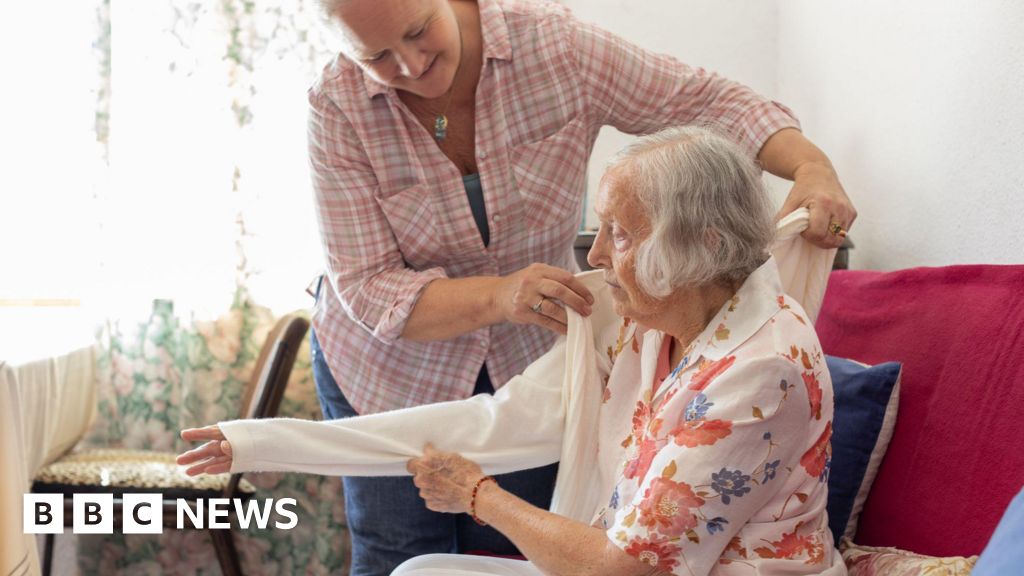
Outstanding debt from Carer’s Allowance overpayments rose to more than £250m last year, according to the government’s spending watchdog.
Read more →
Luke Orton was playing in a rugby tournament on the Isle of Wight in July 2023 when his life changed forever.
Read more →
BBCA leading charity that supports people with learning disabilities says it may be forced to stop running at least 60 of its services as a result of increasing National Insurance costs.
Read more →
Starting at 30, women can collect their own vaginal samples for HPV testing at a doctor’s office.Doctors routinely advise that women undergoing screening for cervical cancer receive Pap smears every three years beginning at age 21. Now, beginning at 30, women have a new option.Instead of undergoing a pelvic exam, these patients may go to a doctor’s office and collect their own vaginal sample to be tested for human papillomavirus, the infection that causes most cases of cervical cancer, according to new guidelines issued on Tuesday by a national health services panel.Self-collection of the sample was approved in May by the Food and Drug Administration. The HPV test should be repeated every five years from age 30 until 65, when most women can stop screening, the U.S. Preventive Services Task Force said.Other screening options for those 30 and older include continuing with Pap tests every three years, or a combined Pap smear and HPV test every five years, the task force said. But an HPV test every five years is the ideal screening method, providing the best balance of risks to benefits.The new recommendations apply to women and anyone who was assigned female at birth and still has a cervix, regardless of whether they have been vaccinated against HPV.The advice was issued amid growing concern about a falloff in cancer screenings, and confusion resulting from changes over time in screening regimens and tests used for early detection and prevention of cervical cancer.We are having trouble retrieving the article content.Please enable JavaScript in your browser settings.Thank you for your patience while we verify access. If you are in Reader mode please exit and log into your Times account, or subscribe for all of The Times.Thank you for your patience while we verify access.Already a subscriber? Log in.Want all of The Times? Subscribe.
Read more →
Nottinghamshire PoliceNHS England says the mental health trust that treated the killer who carried out the Nottingham attacks must attend monthly progress meetings to discuss improvements or face losing its licence.
Read more →