You May Be Able to Have Grapefruit Again Someday

Scientists have identified a gene that causes production of a substance in some citrus that interferes with many medications.You may be among the millions of people who have seen a surprisingly specific warning like this on the labels of drugs you take:Avoid eating grapefruit or drinking grapefruit juice while using this medication.Such warnings are issued for dozens of substances, including docetaxel, a cancer drug; erythromycin, an antibiotic; and some statins, the cholesterol-lowering drugs prescribed to more than a third of American adults over 40.The problem is a set of molecules, furanocoumarins. High levels of furanocoumarins interfere with human liver enzymes, among other processes. In their presence, medications can build up to unhealthy levels in the body. And grapefruits and some related citrus fruits are full of them.But there is no such warning for other kinds of citrus, such as mandarins and other oranges. Citrus researchers at the Volcani Center in Israel reported Wednesday in the journal The New Phytologist that, by crossing mandarins and grapefruit, they’ve uncovered genes that produce furanocoumarins in some citrus fruits. It’s a finding that opens the possibility of creating grapefruit that doesn’t require a warning label.Scientists had worked out the compounds’ structures and pieced together a basic flowchart of how they are made years ago, said Yoram Eyal, a professor at the Volcani Center. But the precise identities of enzymes catalyzing the process — the proteins that snip off a branch here, or add a piece there — remained mysterious. He and his colleagues knew that one way to identify them was to breed citrus high in furanocoumarins with those without. If the offspring of such a cross had varying levels of the substances, it should be possible, by digging into their genetics, to pinpoint the genes for the proteins.“We were afraid to approach it, because it’s very time-consuming and it takes many years,” he said, noting how involved it can be to grow new trees from seeds and assess their genetics. “But finally, we decided we have to dive in.”When they examined the offspring of a mandarin and a grapefruit, the researchers saw something remarkable. Fifty percent of the young plants had high levels of furanocourmains, and 50 percent had none. That particular signature meant something very specific, in terms of how the ability to make these substances is inherited.We are having trouble retrieving the article content.Please enable JavaScript in your browser settings.Thank you for your patience while we verify access. If you are in Reader mode please exit and log into your Times account, or subscribe for all of The Times.Thank you for your patience while we verify access.Already a subscriber? Log in.Want all of The Times? Subscribe.

Read more →


Richard M. Cohen, News Producer Who Faced a Rare Challenge, Dies at 76

When he was 25, he learned that he had multiple sclerosis. He coped with the disease throughout a long career at several networks.Richard M. Cohen, an outspoken and award-winning television news producer whose career was eventually derailed by the ravages of multiple sclerosis, which he wrote about in a best-selling memoir, died on Dec. 24 in Sleepy Hollow, N.Y., a village in Westchester County. He was 76.His wife, the former “Today” show host Meredith Vieira, said his death, in a hospital, was caused by acute respiratory failure.Mr. Cohen spent more than 20 years in the news business, working with luminaries like Ted Koppel at ABC and Walter Cronkite and Dan Rather at CBS. But he tackled a different subject when he wrote a memoir — and articles for HuffPost, The New York Times and other outlets — about dealing with M.S., a degenerative disease of the central nervous system.Mr. Cohen was diagnosed with M.S. in 1973, when he was 25 and helping to create a documentary for PBS about the politics of disability.Despite diminishing eyesight, which turned into legal blindness, and worsening balance, which caused falls that made him appear inebriated to the uninformed, he worked into the mid-1990s as a producer for CBS News, CNN, PBS (again) and FX.“Richard was a man of vibrant good humor and sparkling intelligence,” Mr. Koppel wrote in an email. “I am sure that his many illnesses caused him more than the occasional bout of despair, but he never shared that with me.”We are having trouble retrieving the article content.Please enable JavaScript in your browser settings.Thank you for your patience while we verify access. If you are in Reader mode please exit and log into your Times account, or subscribe for all of The Times.Thank you for your patience while we verify access.Already a subscriber? Log in.Want all of The Times? Subscribe.

Read more →
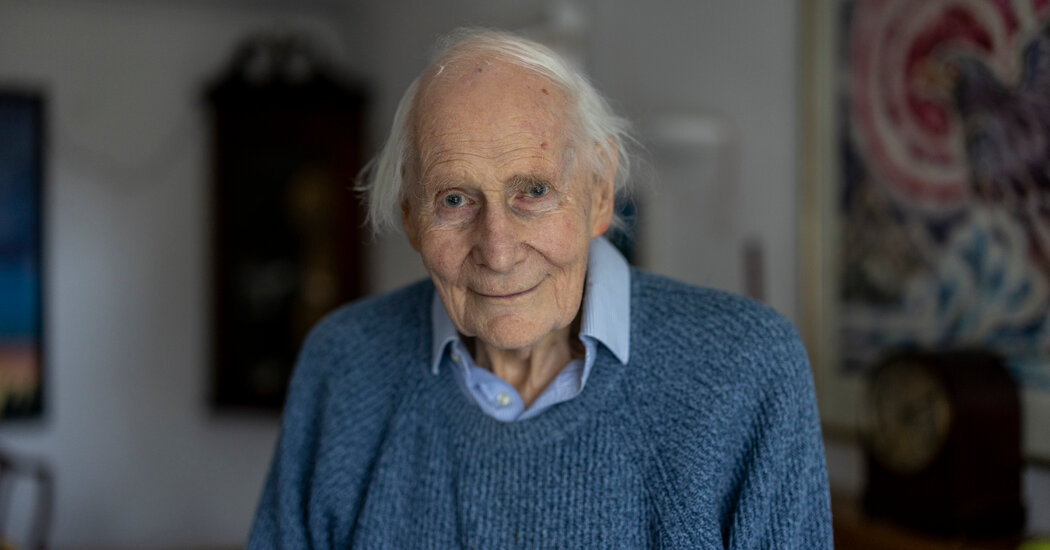
Peter Fenwick, Leading Expert on Near-Death Experiences, Dies at 89

He was a neuropsychiatrist who was studying consciousness when a patient explained what had happened to him, and he realized the phenomenon was real.In early 1988, the British neuropsychiatrist Peter Fenwick found himself drowning in letters from people who believed they had survived an encounter with death.“I slowly floated down a tunnel, not afraid in any way but looking forward to something,” one man wrote to him. “When it came I was absolutely at peace and going towards the most wonderful light. Believe me, it was great. No worries, problems or anything, just wonderful.”In another letter, a woman described walking down a country lane and coming upon golden gates.“Inside was the most beautiful garden, no lawn, path or anything else, but flowers of every kind,” she wrote. “Those that attracted me most were Madonna lilies, delphiniums and roses, but there were many, many more.”The letters were among more than 2,000 that Dr. Fenwick received shortly after he appeared in a BBC documentary, “Glimpses of Death,” in which he commented on the near-death visions of people who had apparently briefly died, or nearly died, and then come back to life.“These letters were written by people who had never, ever before told anyone about their experiences,” Dr. Fenwick said in a 2012 lecture at TEDxBerlin. “Why? Because they’re too frightened. They told it to their wives or their husbands; they said they weren’t interested. They told it to their friends; they said, ‘You’re mad.’”We are having trouble retrieving the article content.Please enable JavaScript in your browser settings.Thank you for your patience while we verify access. If you are in Reader mode please exit and log into your Times account, or subscribe for all of The Times.Thank you for your patience while we verify access.Already a subscriber? Log in.Want all of The Times? Subscribe.

Read more →

‘Approaching the Light’: Peter Fenwick and Stories of Near-Death Experiences

Dr. Fenwick, a neuropsychiatrist, assembled anecdotes from more than 300 people in his book “The Truth in the Light.” Here are some of them.I didn’t fully understand the limits of my body until this past June, when I fell down my fire escape and floated outside myself in a near-death experience, much like the ones Peter Fenwick — a psychiatrist who researched end-of-life phenomena — documented over the course of his career. (Dr. Fenwick died on Nov. 22 at 89.)I was at my own housewarming party, standing on the fire escape with two friends, when I fell, tumbling around 12 feet and hitting my head. I lost consciousness for several minutes.As my friends tell it, the paramedics arrived quickly, detached the screen from a window on the second floor and hauled me downstairs in a stretcher. As they loaded me into the ambulance, I rose above myself and watched the fanfare: the concerned neighbors stepping into the street; the pale pink of sunset; my own body, small and far away in the stretcher as my roommate held my palm and my friend held my ankle. Their touch snapped me back into consciousness. I immediately felt pain and begged for water.It wasn’t the first time I’d had what felt like an out-of-body experience. When I was a teenager, I became fascinated by astral projection — intentional out-of-body travel — and began to put it into practice at night. One evening, I hurtled toward the ceiling and watched myself sleep. A line tugged out from my sternum to my belly button. It resembled an umbilical cord: silver and long as a rope.I had a similar sensation after my fall, albeit without the cord. The doctors diagnosed a severe concussion, and I spent the next three weeks recovering in my new home. At first, I struggled to derive meaning from my sudden proximity to death. Then I thought about fragility — and the thousands of minute ways humans evade death every day without knowing it — and my experience concretized into a newfound appreciation of our bodies’ capacity for self-preservation and a diminished fear of death.I was reminded of my near-death experience when I learned that The New York Times, where I work, would be publishing Dr. Fenwick’s obituary.We are having trouble retrieving the article content.Please enable JavaScript in your browser settings.Thank you for your patience while we verify access. If you are in Reader mode please exit and log into your Times account, or subscribe for all of The Times.Thank you for your patience while we verify access.Already a subscriber? Log in.Want all of The Times? Subscribe.

Read more →