Helen Murray Free Dies at 98; Chemist Developed Diabetes Test
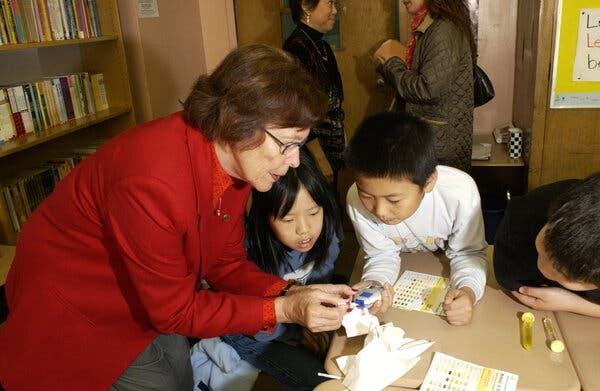
She and her husband invented a dip-and-read paper strip that greatly simplified the diagnosis of the disease and paved the way for home test kits.Helen Murray Free, a chemist who ushered in a revolution in diagnostic testing when she co-developed the dip-and-read diabetes test, a paper strip that detected glucose in urine, died on Saturday at a hospice facility in Elkhart, Ind. She was 98.The cause was complications of a stroke, her son Eric said.Before the invention of the dip-and-read test in 1956, technicians added chemicals to urine and then heated the mixture over a Bunsen burner. The test was inconvenient, and, because it could not distinguish glucose from other sugars, results were not very precise.Working with her husband, who was also a chemist, Ms. Free figured out how to impregnate strips of filter paper with chemicals that turned blue when glucose was present. The test made it easier for clinicians to diagnose diabetes and cleared the way for home test kits, which enabled patients to monitor glucose on their own.People with diabetes now use blood sugar meters to monitor their glucose levels, but the dip-and-read tests are ubiquitous in clinical laboratories worldwide.Helen Murray was born on Feb. 20, 1923, in Pittsburgh to James and Daisy (Piper) Murray. Her father was a coal company salesman; her mother died of influenza when Helen was 6.She entered the College of Wooster in Ohio in 1941, intent on becoming an English or Latin teacher. But she changed her major to chemistry on the advice of her housemother; World War II was creating new opportunities for women in a field that had been a male preserve.“I think that was the most terrific thing that ever happened, because I certainly wouldn’t have done the things I have done in my lifetime,” Ms. Free recalled in a commemorative booklet produced by the American Chemical Society in 2010.She received her bachelor’s degree in 1944 and went to work for Miles Laboratories in Elkhart, first in quality control and then in the biochemistry division, which worked on diagnostic tests and was led by her future husband, Alfred Free. They married in 1947.Ms. Free during the 2000s performing glucose-testing experiments with schoolchildren. via National Inventors Hall of FameHe provided the ideas; she was the technician “who had the advantage of picking his brain 24 hours a day,” Ms. Free recalled in an interview for this obituary in 2011. They soon set their sights on developing a more convenient glucose test “so no one would have to wash out test tubes and mess around with droppers,” she said. When her husband suggested chemically treated paper strips, “it was like a light bulb went off,” she said.They faced two challenges. First, they needed to refine the test so that it would detect only glucose, the form of sugar that is found in the urine of people with diabetes. Second, the chemicals they needed to use were inherently unstable, so they had to find a way to keep them from reacting to light, temperature and air.The first problem was easily solved with the use of a recently developed enzyme that reacted only to glucose. To stabilize the chemicals, the Frees experimented with rubber cement, potato starch, varnish, plaster of Paris and egg albumin before settling on gelatin, which appeared to work best.With her husband, Ms. Free wrote two books on urinalysis. Later in her career she returned to school, earning a master’s in clinical laboratory management from Central Michigan University in 1978 at age 55. She held several patents and published more than 200 scientific papers.At Miles, she rose to director of clinical laboratory reagents and later to director of marketing services in the research division before retiring in 1982; by then the company had been acquired by Bayer. She was elected president of the American Chemical Society in 1993. In 2009, she was awarded a National Medal of Technology and Innovation by President Barack Obama, and in 2011 she was inducted into the National Women’s Hall of Fame in Seneca Falls, N.Y., for her role in developing the dip-and-read test.Ms. Free receiving the National Medal of Technology and Innovation from President Barack Obama in 2011 in a White House ceremony. She was also inducted into the National Women’s Hall of Fame.J. Scott Applewhite/Associated PressAlfred Free died in 2000. In addition to her son Eric, Ms. Free is survived by two other sons, Kurt and Jake; three daughters, Bonnie Grisz, Nina Lovejoy and Penny Maloney; a stepson, Charles; two stepdaughters, Barbara Free and Jane Linderman; 17 grandchildren; and nine great-grandchildren.Miles Laboratories followed the introduction of the dip-and-read glucose test with a host of other tests designed to detect proteins, blood and other indicators of metabolic, kidney and liver disorders. “They sure went hog wild on diagnostics, and that’s all Al’s fault,” Ms. Free said in the commemorative booklet. “He was the one who pushed diagnostics.”It wasn’t all smooth sailing. Several years after the introduction of the dip-and-read test, Miles moved Ms. Free to another division, citing an anti-nepotism policy. But two years later, after a change in management, she was transferred back to her husband’s division.“They realized that breaking up a team like this was interfering with productivity in the lab,” Ms. Free said.

Read more →
Human organ chips enable COVID-19 drug repurposing

A Wyss Institute-led collaboration spanning four research labs and hundreds of miles has used the Institute’s organ-on-a-chip (Organ Chip) technology to identify the antimalarial drug amodiaquine as a potent inhibitor of infection with SARS-CoV-2, the virus that causes COVID-19.
The Organ Chip-based drug testing ecosystem established by the collaboration greatly streamlines the process of evaluating the safety and efficacy of existing drugs for new medical applications, and provides a proof-of-concept for the use of Organ Chips to rapidly repurpose existing drugs for new medical applications, including future pandemics. The research is reported in Nature Biomedical Engineering.
While many groups around the world have been testing existing drugs for efficacy against COVID-19 using cultured cells, it is well known that cells grown in a dish do not behave like the cells in a living human body, and many drugs that appear effective in lab studies do not work in patients. The Wyss team examined eight existing drugs, including hydroxychloroquine and chloroquine, that they and others had found were active against SARS-CoV-2 in conventional cell culture assays.
When tested in their more sophisticated microfluidic Lung Airway Chip, which had been infected with a pseudotyped SARS-CoV-2 virus, they found that most of these drugs, including hydroxychloroquine and chloroquine, were not effective. However, another antimalarial drug, amodiaquine, was highly effective at preventing viral entry. These results were then validated in cultured cells and in a small animal model of COVID-19 using infectious SARS-CoV-2 virus. Amodiaquine is now in clinical trials for COVID-19 at multiple sites in Africa, where this drug is inexpensive and widely available.
“The speed with which this team assembled, pivoted to COVID-19, and produced clinically significant results is astonishing,” said senior author and Wyss Institute Founding Director Don Ingber, M.D., Ph.D. “We started testing these compounds in February 2020, had data by March, and published a preprint in April. Thanks to the openness and collaboration that the pandemic has sparked within the scientific community, our lead drug is now being tested in humans. It’s a powerful testament to Organ Chips’ ability to accelerate preclinical testing.”
From mysterious disease to lead compound in months
In the early months of the COVID-19 pandemic when little was known about the novel SARS-CoV-2 virus, efforts were made around the globe to identify existing drugs that could be repurposed to treat patients who were falling ill. While early data performed on cells grown in lab dishes seemed to suggest that the antimalarial drugs chloroquine and hydroxychloroquine could treat the disease, later studies showed that they aren’t active against SARS-CoV-2 in animals or patients, and the quest for an effective oral therapeutic that can both treat and prevent COVID-19 continues.

Read more →

Flexible, easy-to-scale nanoribbons move graphene toward use in tech applications

From radio to television to the internet, telecommunications transmissions are simply information carried on light waves and converted to electrical signals.
Silicon-based fiber optics are currently the best structures for high-speed, long distance transmissions, but graphene — an all-carbon, ultra-thin and adaptable material — could improve performance even more.
In a study published April 16 in ACS Photonics, University of Wisconsin-Madison researchers fabricated graphene into the smallest ribbon structures to date using a method that makes scaling-up simple. In tests with these tiny ribbons, the scientists discovered they were closing in on the properties they needed to move graphene toward usefulness in telecommunications equipment.
“Previous research suggested that to be viable for telecommunication technologies, graphene would need to be structured prohibitively small over large areas, (which is) a fabrication nightmare,” says Joel Siegel, a UW-Madison graduate student in physics professor Victor Brar’s group and co-lead author of the study. “In our study, we created a scalable fabrication technique to make the smallest graphene ribbon structures yet and found that with modest further reductions in ribbon width, we can start getting to telecommunications range.”
Graphene is hailed as a wonder-material for technologies like telecommunications or solar cells because it is easy to work with, is relatively inexpensive, and has unique physical properties such as being both an insulator and conductor of electricity.
If modified to interact with higher energy light, graphene could be used to modulate telecommunications signals at lightning-quick speeds. For example, it could be used to block unwanted communications frequencies.

Read more →

Covid: French lockdown eased to help schools and travel

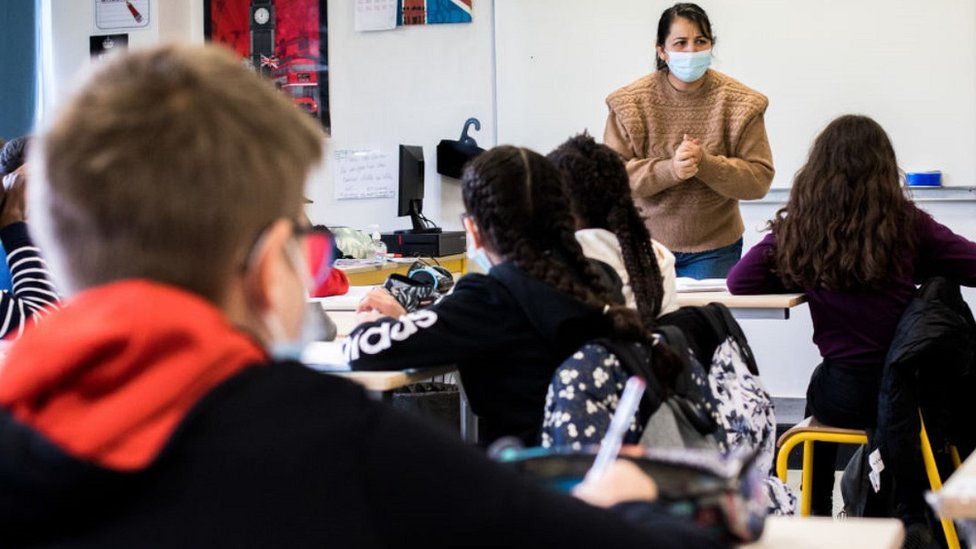
SharecloseShare pageCopy linkAbout sharingimage copyrightGetty ImagesFrench children have returned to classes in schools across the country and a domestic travel ban has been lifted, as the government eases its third Covid lockdown.Citizens can now travel further than 10km (six miles) from home and can go anywhere in France. And they no longer have to carry a form giving a valid reason for travelling.The third lockdown, lighter than the previous two, took effect in March.A night-time curfew remains in force.That curfew runs from 19:00 (17:00 GMT) to 06:00 nationwide and any breach incurs a fine of €135 (£117; $163).Under the government’s plan, the next phase of easing will start on 19 May, when the curfew will be pushed back to 21:00, outdoor service will be permitted at cafes and restaurants, and spectators will be allowed to return to sports venues. Along with eating places, France is keeping non-essential businesses, shopping centres and leisure facilities shut.What is happening with the EU vaccine rollout?EU unveils plans for overseas tourists to returnIs Europe lifting lockdown restrictions?France is currently registering around 25,000 new coronavirus infections a day and the number of intensive care patients with Covid-19 has dropped below 5,600.The French channel BFMTV says the total for Covid patients in hospital was 28,818 on Sunday – a week ago it was over 30,000. France’s total of Covid deaths is now above 104,800.Caution in schoolsWhile the youngest children have been able to attend school classes, secondary pupils have been kept at home, relying on remote learning.Most secondary pupils were able to return to school on Monday. However, the lycée students – ages 15 to 18 – are subject to social distancing, meaning classes are only half-full.Those aged 11 and 12 all went back to school on Monday. But in the 13 to 15 age group the numbers were restricted in the 15 French districts with the highest infection rates. Paris and areas around the capital are among the worst-hit by Covid.France has vaccinated 12.4% of its adult population against Covid, BFMTV reports. Elsewhere in Europe:Denmark’s health authority has dropped the Johnson & Johnson vaccine – also known as the Janssen vaccine – from the country’s vaccination programme, because of a possible link to rare blood clots. Last month Denmark also dropped the AstraZeneca vaccine for the same reason, yet both have been approved by the EU’s medicines regulatorGermany has cancelled the Munich Oktoberfest – the world’s most famous beer festival – for the second year running because of the infection riskBars and restaurants are reopening in Greece for the first time since a lockdown began in November. Customer numbers will be limited but the country’s overnight curfew has been shortened by an hour to accommodate evening dinersOn Saturday, Portugal ended its state of emergency, to allow the reopening of land borders with Spain and extended opening hours in shops and restaurants. However, the government has extended travel restrictions for countries with high levels of infections until 16 MayIn the Netherlands the government has postponed a planned easing of the lockdown until 18 May at the earliest, as Covid infections have not dropped as much as had been hoped. Last week a night curfew was lifted and limited outdoor service resumed at eating places. But gyms, zoos and other leisure facilities remain shut for now.

Read more →

Why Nearsightedness Is on the Rise in Children

Decreased exposure to outdoor light appears to be a major factor in rising rates of myopia in young people around the world.Look and you shall see: A generation of the real-life nearsighted Mr. Magoos is growing up before your eyes. A largely unrecognized epidemic of nearsightedness, or myopia, is afflicting the eyes of children.People with myopia can see close-up objects clearly, like the words on a page. But their distance vision is blurry, and correction with glasses or contact lenses is likely to be needed for activities like seeing the blackboard clearly, cycling, driving or recognizing faces down the block.The growing incidence of myopia is related to changes in children’s behavior, especially how little time they spend outdoors, often staring at screens indoors instead of enjoying activities illuminated by daylight. Gone are the days when most children played outside between the end of the school day and suppertime. And the devastating pandemic of the past year may be making matters worse.Susceptibility to myopia is determined by genetics and environment. Children with one or both nearsighted parents are more likely to become myopic. However, while genes take many centuries to change, the prevalence of myopia in the United States increased from 25 percent in the early 1970s to nearly 42 percent just three decades later. And the rise in myopia is not limited to highly developed countries. The World Health Organization estimates that half the world’s population may be myopic by 2050.Given that genes don’t change that quickly, environmental factors, especially children’s decreased exposure to outdoor light, are the likely cause of this rise in myopia, experts believe. Consider, for example, factors that keep modern children indoors: an emphasis on academic studies and their accompanying homework, the irresistible attraction of electronic devices and safety concerns that demand adult supervision during outdoor play. All of these things drastically limit the time youngsters now spend outside in daylight, to the likely detriment of the clarity of their distance vision.Recent research suggests that months of Covid-induced confinement may be hastening myopia’s silent progression among young children. A Canadian study that examined children’s physical activity, outdoor time, screen time and social media use during the Covid lockdown in early 2020 found that 8-year-olds spent an average of more than five hours a day on screens for leisure, in addition to screen time needed for schoolwork.This report and a new study of school-aged children in China after five months of Covid-19 home confinement informed the title of an editorial, “2020 as the Year of Quarantine Myopia,” in the Jan. 14 issue of JAMA Ophthalmology. Researchers from Emory University in Atlanta, the University of Michigan in Ann Arbor and Tianjin Medical University Eye Hospital in Tianjin, China, described a substantial decline in the visual acuity among 123,535 elementary school children following school closures last year from January until June.Compared to the results of previous annual screenings, the ability to see distant objects clearly had fallen precipitously, especially among those ages 6 to 8. The children became far more myopic than expected, based on changes in acuity that were measured at the start of the school years 2015 through 2019. But a similarly dramatic drop in acuity among older children was not found.“Given the fact that the younger children were assigned fewer online learning tasks than the older ones, it is unlikely that rapidly progressing myopia in younger children was caused by more intense screen time or near work,” like reading, typing, doing homework or playing video games, the research team wrote in JAMA Ophthalmology. Rather, a lack of exposure to outdoor light is the more likely explanation.As the editorial writers from Erasmus University Medical Center in the Netherlands suggested, “young children may be more sensitive to myopic triggers from the environment.” An earlier eye study among children in Sydney, Australia, also found that only the younger ones who became myopic had spent more time on near work rather than being out in daylight.Although many people have long believed that excessive reading fosters nearsightedness in children, current thinking is that too much time spent indoors has the greater effect and likely accounts for any apparent association between close work or screen time and myopia.Dr. Neil M. Bressler, an ophthalmologist affiliated with Johns Hopkins Medical Institutions, said that the high intensity of outdoor light has an important influence on the shape of the eye, which in turn affects whether images are seen clearly.To be in focus, light rays from an image have to converge on the retina. In myopic eyes, the convergence occurs in front of the retina, and a corrective lens is needed to redirect incoming rays so that distant objects are in focus.Most children are born slightly farsighted. Their eyes are shaped like partly deflated balls, causing images to converge behind the retina. But as they get older, their eyes elongate to form a sphere, permitting images to converge directly on the retina. However, if elongation fails to stop at some point, the eyes become more oval and images then converge in front of the retina, the definition of myopia. Outdoor light stimulates the release of dopamine that may slow elongation of the eye, Dr. Bressler said.Although the rise of myopia is happening worldwide, the epidemic is raging in east and Southeast Asia, where 80 percent to 90 percent of high school children are now myopic.Concern over the increasing prevalence of myopia goes beyond a growing need for glasses, contact lenses or, for those so inclined and who can afford it, laser treatment to redirect images by changing the shape of the cornea. In general, people with myopia are more likely to develop sight-threatening complications later in life like cataracts, glaucoma and degeneration of the macula, the center of the retina.If the condition becomes extreme, Dr. Bressler said, “it can be tough to correct.” The eye becomes stretched, the retina can spread and form scar tissue and the gel in the center of the eye can become stuck to the sides of the eye, causing retinal tears or detachment, he explained.Such risks are stimulating studies of treatments that might prevent myopia from becoming pathological. One method under study is the use of multifocal contact lenses with high magnifying power to try to slow progression of myopia in children. Another approach, currently considered more promising, is the use of atropine eye drops to minimize undue elongation of the eye. A third approach, called orthokeratology, involves wearing contact lenses at night to change the shape of the cornea, make the edges of the eye more farsighted and perhaps slow the eye’s elongation.“The pandemic has put fuel on the fire,” Dr. Bressler said, “but we don’t have a treatment yet.” Currently, the most effective preventive may be for young children to spend less time on screens and a lot more time outdoors.

Read more →

Genetics, not the intrauterine environment, controls abnormal development

Yale researchers have shown that developmental abnormalities, including those that lead to pregnancy loss and autism, are controlled by the genetics of the fetus and placenta — and not the mother’s intrauterine environment.
The findings are reported in the April 28 online edition of the journal Placenta.
One out of every 33 children is diagnosed with a birth defect each year in the United States, according to the Centers for Disease Control and Prevention (CDC). This translates into one baby born every 4 ½ minutes — or 120,000 per year.
“Mothers often feel that they are responsible for these defects. But it’s not their fault,” said senior author Dr. Harvey Kliman, a research scientist in the Department of Obstetrics, Gynecology & Reproductive Services at the Yale School of Medicine. “This new research points to the genetics of these children as being the most important cause.”
For the study, Kliman’s team examined placental data for nearly 50 sets of identical and non-identical twins. The researchers found that abnormal cell growths called trophoblast inclusions (TIs) which are markers for many developmental abnormalities, occurred with similar frequency in identical twins, while non-identical twins showed a markedly different TI count.
Identical twins share the same DNA sequence; non-identical twins share half of their DNA sequence. The researchers found that identical twins often had the same number of TIs or were within one of having the same TI count. Non-identical twins had TI counts that were, on average, different by four or five.

Read more →

200-year old feces shows rural elites in New England had parasitic infections

In the early 19th century in North America, parasitic infections were quite common in urban areas due in part to population growth and urbanization. Prior research has found that poor sanitation, unsanitary privy (outhouse) conditions, and increased contact with domestic animals, contributed to the prevalence of parasitic disease in urban areas. A new study examining fecal samples from a privy on Dartmouth’s campus illustrates how rural wealthy elites in New England also had intestinal parasitic infections. The findings are published in the Journal of Archeological Science: Reports.
“Our study is one of the first to demonstrate evidence of parasitic infection in an affluent rural household in the Northeast,” says co-author Theresa Gildner, who was formerly the Robert A. 1925 and Catherine L. McKennan postdoctoral fellow in anthropology at Dartmouth and is currently an assistant professor of biological anthropology at Washington University in St. Louis. “Until now, there has not been a lot of evidence that parasitic disease was anywhere else other than urban areas in the early 19th century.”
In June 2019, a team of Dartmouth researchers led by Jesse Casana, a professor and chair of the department of anthropology at Dartmouth, excavated a privy in front of Dartmouth’s Baker-Berry Library. Earlier, an archaeological survey using ground penetrating radar instruments had identified the location as an area of particular interest. The site was home to where the Choate House once stood. Based on historical records from Rauner Special Collections Library on campus and other sources, the researchers report that the Choate House was constructed in 1786 by Sylvanus Ripley, one of the first four graduates of Dartmouth who would become a professor of divinity and a trustee at Dartmouth. In 1801, Mill Olcott, a Dartmouth graduate who became a wealthy businessman, politician and trustee, purchased the house. For several decades, Olcott and his wife and nine children lived in the house. As the study explains, the Olcotts “would have been among the wealthiest and most educated people in New England” during that time. Nearly one century later, to make space for the library in the 1920s, the Choate House was relocated to another area of Dartmouth’s campus.
The Dartmouth dig revealed that the privy and its interior stone walls and contents had been well-preserved. A privy functioned not only as a toilet but also as a garbage, a place to discard food and other unwanted items. In the soil levels of the privy, the researchers found stratified deposits containing numerous artifacts from over the years, including: imported fine ceramics; peanut and coffee remains, which were considered exotic items at the time; and three fecal samples. In addition, 12 Hazard and Caswell bottles marketed to cure digestive ailments were found at the same soil level as the fecal samples, along with eight bottles of Congress & Empire Spring Co. mineral water from Saratoga Springs, N.Y., in a later soil level.
“The state of medical care during this time period was pretty terrible,” explains Casana. “A lot of people probably experienced symptoms of parasitic infections but wouldn’t know what was causing them. Privies would have been getting a lot of use at this time,” he adds. “If people had the means, they would order special medicines to treat an upset stomach, which were really just tinctured alcohol that offered no medicinal benefits.”
Gildner, whose research focuses on parasites, was out of town doing other fieldwork during the Dartmouth dig but had asked Casana to let her know if the team finds anything that resembles fecal material. To her surprise, Gildner learned that three fecal samples has been unearthed. “In studying intestinal parasites, I am used to working with fresh material — not fecal samples that are almost 200 years old and practically dirt,” says Gildner, who researched how to work with the centuries-old samples.
After rehydrating the fecal samples, Gildner ran them through a series of mesh sieves, from large to small, to filter out the bigger particulates and trap the small parasite eggs. The material was washed and centrifuged and slides were then prepared from each of the samples. Using a light microscope, the slides revealed that tapeworm eggs (Taenia spp.) and whipworm eggs (Trichuris trichiura) were present in each of the specimens. While the number of eggs was considered low by research standards, the parasite eggs were consistent across the three samples.
The co-authors explain that their findings are especially striking given that parasites typically prefer “warm, tropical regions” rather than the cold, snowy weather that is characteristic of New Hampshire winters, conditions which are typically thought of as inhospitable to parasite eggs.
Tapeworms are parasites that are transmitted between humans and livestock (e.g., pigs and cows). The animals consume vegetation contaminated with parasite eggs, the eggs hatch and the parasites travel to these animals’ muscles. The consumption of raw or undercooked meat then leads to infection in humans. Adult tapeworms living in the intestine of the human host then lay eggs, which are passed into the environment with fecal material, starting the cycle again. Like tapeworm, whipworm eggs are passed in feces. These microscopic eggs then infect new human hosts through fecal-oral transmission (e.g., the ingestion of fecal contaminated food or water), generally due to unwashed hands and an inability to properly clean food items.
While the researchers are unable to determine if the fecal samples came from an Olcott family member, it’s quite likely that all members of their household were exposed to tapeworm and whipworm. The findings demonstrate that parasite infection did not just affect urban and lower income areas, demographics which have been highlighted in previous research.
Casana says that, “I think that we take a lot of our health and infrastructure that we have today for granted. Our results show that even wealth could not protect you from these parasitic infections 200 years ago.”
“Tapeworm and whipworm are still really common today in various parts of the world and can lead to nutritional deficiencies, digestive problems, and poor growth,” says Gildner. “Although these infections are preventable and treatable, there’s still more to be done to help prevent these infections. Access to clean water, which is essential to good hand hygiene, and sanitation are two things that many people still do not have today.”

Read more →

Research with neutrons for better mRNA medicines

If not before, then certainly since the first messenger RNA (mRNA) vaccines to combat the SARS CoV2 virus were approved in Germany, mRNA has become a recognized term even outside scientific circles. What is less well known is that mRNA can be used to produce much more than just vaccines. Around 50 different procedures for the treatment of diseases including cancer are already being studied in clinical trials. Scientists from the pharmaceutical company AstraZeneca, with the support of neutron researchers from Forschungszentrum Jülich, have now discovered how the subcutaneous administration of mRNA can be improved. The goal is for chronically ill patients to be able to self-administer the medication on a regular basis.
mRNA serves as a blueprint in our cells for the production of protein molecules. mRNA drugs could therefore create proteins directly in the patient’s body, targeted at the site where they are needed. Besides cancer, many other diseases are potentially treatable: haemophilia, for example, where the formation of a clotting factor is disrupted, can be treated by administering the blueprint for this very factor. After heart attacks or strokes, injecting mRNA could enable the formation of proteins that allow new blood vessels to grow.
Compared to current therapeutics, producing mRNA is faster and more flexible, as mRNA can be easily manufactured and the process is independent of the mRNA sequence. In addition, the technology enables personalized drugs to be developed quickly and proteins can be produced in the body over an extended period of time and with modifications otherwise difficult to achieve.
mRNA is rapidly degraded in the body by ubiquitous enzymes. It is important to prevent this from happening before the mRNA reaches the cells where the protein synthesis takes place. In addition, it must be ensured that the messenger reaches the right cells and in sufficient quantities. Even though there are procedures in which the “naked” mRNA is administered, using secure packaging and some kind of “address label” is far more efficient.
An advanced packaging system is exemplified in so-called lipid nanoparticles (LNP), tiny vesicles made of a mixture of fat-like substances. Each of them fulfils a specific task, such as stabilising the construct or delivering it into the cell.
When administered intravenously or intramuscularly, the LNPs already fulfil their objectives sufficiently, but when administered subcutaneously, the LNP trigger significant inflammation. Subcutaneous application would be essential to enable patients to inject themselves with the drug, just as diabetes patients do with insulin. Particularly in chronic diseases that require regular doses of a drug, this would offer a great advantage.

Read more →

Tailor-made therapy of multi-resistant tuberculosis

Globally, tuberculosis is the most common bacterial infectious disease leading to death. The pathogen causing tuberculosis, Mycobacterium tuberculosis, has a number of peculiarities. One is that it is growing very slowly. While other typical pathogens, such as pneumococcal and pseudomonads, can already be identified by their growth in the microbiological laboratory in the first 72 hours, several weeks usually pass before tuberculosis bacteria grow in the lab. Thus it often takes one to two months before the efficacy of individual medicines can be tested.
However, these efficacy tests are essential for the effective treatment of multidrug-resistant tuberculosis (MDR-TB), which is becoming increasingly common. In these cases, the pathogen has become resistant, i.e. insensitive, to the best tuberculosis drugs, rifampicin and isoniazid. This is due to changes in the genome, so-called mutations, which almost always occur at the same points in the genome. Treatment of MDR-TB is protracted, costly and frequently associated with side effects.
For the selection of antibiotics in a combination therapy, doctors have so far depended on the results of the drug test after cultivation. “Currently, 15 drugs are available for second-line therapy, of which at least four are used in combination,” explains Prof. Christoph Lange, coordinator of the clinical study at the Research Center Borstel.
In order to accelerate the choice of the most effective antibiotics, DZIF scientists at the Research Center Borstel, led by Prof. Stefan Niemann, have created a catalogue of mutations in the genetic material of tuberculosis bacteria that permits prediction of antibiotic resistances of the bacteria against all drugs. Unlike many other bacteria, the genetic material of the tuberculosis bacteria hardly changes over time. The genome of tuberculosis bacteria carries roughly 4.4 millions of building blocks (base pairs) that store the information for about 4,000 genes.
Hans-Peter Grobbel, medical student and predoctoral DZIF fellow in Christoph Lange’s team, supported by his fellow student Niklas Köhler, Professor Matthias Merker, Dr Sönke Andres and Dr Harald Hoffmans, has examined the results of antibiotic resistance predictions through overall genome analyses. Using tuberculosis bacteria from70 patients with MDR-TB treated at the Borstel Department of Medicine, researchers compared the molecular prediction of antibiotic resistance with actual cultural test results. They were contributed by Prof. Florian Maurer, Head of the National Reference Laboratory for Tuberculosis Bacteria in Borstel. The scientists also examined whether reliable combinations of drugs for the treatment of MDR-TB could be compiled based on the prediction of the bacteria´s genetic material.
“Ninety-nine per cent of all drugs in combination therapies that we have assembled based on the results of molecular predictions from the genetic material of tuberculosis bacteria are also effective according to traditional microbiological antibiotic resistance testing,” Grobbel explains. By now, the molecular methods are both cheap and fast. Ideally, patients can already receive tailored MDR-TB treatment in the first week of their tuberculosis diagnosis.
Story Source:
Materials provided by German Center for Infection Research. Note: Content may be edited for style and length.

Read more →

Cube-shaped iron-sulfur clusters support multiple bond between iron and nitrogen

In a number of biological processes, iron-sulfur clusters play a vital role, where they act as cofactors to enzymes. Research published in Angewandte Chemie now shows that cubic clusters can support unusual bonding states. This study shows that the cluster copes well with a multiple bond between iron and nitrogen — a structural motif that may be involved in biological nitrogen fixation.
Clusters made of iron and sulfur atoms are essential cofactors for a number of enzymes, especially in biological processes involving electron transfer. As an example, nitrogen-fixing bacteria use iron-sulfur clusters to convert nitrogen from the air into useful nitrogen compounds. To understand this important biological process, scientists dig deep into the bonding relationships possible between nitrogen and iron atoms in such clusters.
Daniel Suess and colleagues, from Massachusetts Institute of Technology in Cambridge, USA, have now investigated the cluster’s capability to form unusual bonds between iron and nitrogen. A double bond, which is part of a chemical group called an imide, may play a role in nitrogen fixation.
To construct the imide, the team began by producing a cube-shaped iron-sulfur cluster. The eight corners of the cube are occupied by alternating iron and sulfur atoms; three of the iron atoms are protected by chemical species serving as ligands. These ligands do not bond directly to the atoms, and just shield them instead. The remaining unshielded iron atom of the cluster was bound to a replaceable chloride ligand. Careful selection of the reagents enabled the team to swap out the chloride ion and then, by oxidation with a nitrogen-containing reagent, the tricky double bond between the unique iron atom and the nitrogen atom — and thus the imide group — was formed.
The researchers expected that the iron-nitrogen double bond could strongly distort the cluster’s structure. Instead, to their surprise, they observed only minor structural changes. The authors’ spectroscopic studies explain this finding: the electron-rich imide pushes away electron density from the neighboring sulfur and iron atoms, and the totality of these minor effects is what allows the cluster to accommodate the imide bond. “These findings demonstrate a dynamic interplay between iron-nitrogen, iron-sulfur, and iron-iron bonding,” state the authors.
The new imido-bound cluster was able to cleave weak carbon-hydrogen bonds from organic reagents. The authors intend to use these studies as a starting point for further investigation of the reactivity of imide-bound iron-sulfur clusters. “This highlights the promise of exploiting the synergy between the structural robustness and electronic flexibility of these fundamental cofactors,” Suess says.
Story Source:
Materials provided by Wiley. Note: Content may be edited for style and length.

Read more →