From the Wastewater Drain, Solid Pandemic Data
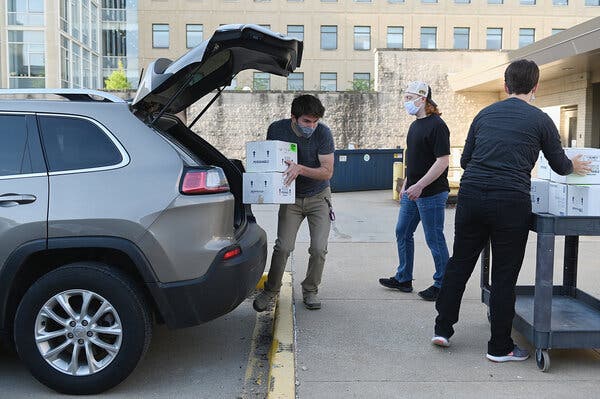
The coronavirus could turn sewage surveillance into a mainstream public health practice.Marc Johnson saw trouble in the water.Dr. Johnson, a virologist at the University of Missouri, had spent much of 2020 studying sewage, collecting wastewater from all over the state and analyzing it for fragments of the coronavirus. People with Covid-19 shed the virus in their stool, and as the coronavirus spread throughout Missouri, more and more of it began to appear in the state’s wastewater.In January, Dr. Johnson spotted something new in his water samples: traces of B.1.1.7, a more contagious variant that was first detected in Britain. Officially, the state had no confirmed cases of B.1.1.7, but the wastewater suggested that the variant had arrived. By the end of the month, the B.1.1.7 levels in Dr. Johnson’s water samples had risen sharply, and in early February, the state finally found its first case. It has since found hundreds more.Using some samples of sewage, Dr. Johnson had been able to peer into Missouri’s coronavirus future. “I can’t believe how well it works,” he said. “I feel like an oracle.”Dr. Johnson is one of many scientists who have been drawn into the once niche field of wastewater epidemiology in the past year. Researchers in 54 countries are now tracking the coronavirus in sewage, according to the Covid19Poops Dashboard, a global directory of the projects.Their work has validated the idea that wastewater surveillance can be a useful way to track infectious disease across entire communities, revealing epidemiological blind spots and yielding actionable public health information.It has also helped push wastewater epidemiology into the mainstream. In March, the European Commission recommended that member states establish systems to monitor sewage for the coronavirus. And last fall, the Centers for Disease Control and Prevention and the Department of Health and Human Services established the National Wastewater Surveillance System to help local officials respond to Covid-19. It is the first system of its kind in the United States.“Wastewater surveillance is not a new idea,” said Amy Kirby, the program lead for the surveillance system. It has been used in low- and middle-income countries in the fight to eradicate polio, for instance, and has been proposed as a way to keep tabs on noroviruses, a common cause of stomach bugs. “But really, the return on investment to build this large new infrastructure was never enough to warrant building the system for any of those other diseases,” Dr. Kirby said. “But Covid and the pandemic really changed the calculus.”The system, and others like it now emerging around the world, could ultimately usher in a new age of wastewater epidemiology, helping officials track not just the coronavirus, but also other outbreaks and diseases. “I think this is really going to be the beginning of a whole new type of data collection for public health disease surveillance,” Dr. Kirby said.Getting their feet wetWastewater samples for processing were unloaded at the Lab Science Center at the University of Missouri.Michael B. Thomas for The New York TimesAlthough Covid-19 is primarily a respiratory disease, research conducted early in the pandemic revealed that people infected with the coronavirus often shed it in their stool. This finding, combined with the scale and urgency of the crisis, spurred immediate interest in tracking the virus by sampling wastewater.By searching for, and then counting, certain coronavirus genes in sewage, researchers hoped to determine whether the virus was present in a particular region and how widespread it was. Before long, wastewater surveillance projects were popping up everywhere from Kansas City, Mo., to Kathmandu, Nepal.The resulting data, now appearing in a flood of scientific papers and preprints, have provided powerful proof of principle. Scientists have detected the virus in all kinds of environments: in treated and untreated water, in sludge and settled solids, in sewers and septic tanks, in pit latrines and open drainage systems. They found it in water flowing into enormous treatment plants and out of schools, dormitories and nursing homes. “It’s just fascinating how robust this tool has become,” said Peter Grevatt, chief executive of the Water Research Foundation.Teams all over the globe — in the United States, France, Portugal, India, Iran, Brazil, Canada and elsewhere — also found that the wastewater data seemed to be an accurate indicator of what was happening in the real world. When the number of diagnosed Covid-19 cases in an area increased, more coronavirus appeared in the wastewater. Levels of the virus fell when areas instituted lockdowns and surged when they reopened.Multiple teams have also confirmed that sewage can serve as an early warning system; Wastewater viral levels often peaked days before doctors saw a peak in official Covid-19 cases.This lead time, which can range from a couple of days to two weeks, depends partly on the robustness of local clinical testing programs, scientists say: When more people are being tested for the virus more frequently, the wastewater data provides less advance warning. The lead time also exists because infected people often begin shedding the virus, SARS-CoV-2, before they feel symptoms and then, once they fall ill, frequently delay seeking medical care.“I think wastewater has proven itself as one of the most, I would say, objective means of understanding what SARS-CoV-2 is doing in our society,” said Gertjan Medema, a microbiologist at KWR Water Research Institute in the Netherlands.It has proved sensitive, too, allowing researchers to detect a single infected student in a dorm or resident in a nursing home.Plugging holesDr. Johnson is one of many scientists newly drawn to the once niche field of wastewater epidemiology. “I can’t believe how well it works,” he said. “I feel like an oracle.”Michael B. Thomas for The New York TimesWastewater surveillance is not a replacement for clinical testing, experts said, but can be an efficient, cost-effective complement. In one study published last August, researchers calculated that they could test the wastewater from every treatment plant in Germany millions of times for less than it would cost them to test every German resident just once. The approach is likely to be especially valuable in low- and middle-income countries, where testing resources are even more limited.“Not every population gets tested, not everyone has access to health care,” Dr. Johnson said. “If there’s groups of people that are asymptomatic, they probably aren’t getting tested either. So you aren’t really getting the full big picture. Whereas for our testing, everyone poops.”Although there is a lot left to learn, even the small pilot projects started over the last year have already helped officials identify hidden viral hot spots and figure out how to target their resources.For instance, a number of U.S. colleges and universities, including the University of Arizona and the University of North Carolina, have used wastewater surveillance of dorms to find asymptomatic, infected students who had otherwise evaded detection. In the Netherlands, health officials have used wastewater data to determine where to send their mobile testing buses, Dr. Medema said.In Australia, where case numbers have been relatively low, the wastewater monitoring has helped reassure authorities that their pandemic controls are working. “Almost all the samples come back with nothing in them,” said Daniel Deere, the project manager for ColoSSoS, a coronavirus sewage surveillance project in Australia. “It’s been good to give confidence to allow the economy to stay open, to allow movement to continue between states.”(On the occasions when a water sample has come back positive, the government has ramped up testing and launched media campaigns to alert people who live in the region, he said.)Wastewater analysis has also allowed scientists to detect the arrival of certain variants in a region weeks before they are found in actual patients — and to identify mutations that have not yet been detected in patients anywhere.Dr. Johnson and his colleague John Dennehy, a virologist at Queens College, recently identified novel combinations of mutations, which might suggest the presence of new variants, in New York City wastewater. “We don’t know what it means yet,” Dr. Johnson said, noting that the new sequences could be coming from animals, not people. “We can see a little bit into the future, but you know, the crystal ball is always a little cloudy.”Waste not, want notWastewater samples being logged at the Lab Science Center.MichaelB Thomas for The New York TimesThis flurry of research and investment has been a boon to wastewater epidemiology. “This has been just an amazingly huge catalyst for the field,” said Tim Julian, who leads the pathogens and human health group at the Swiss Federal Institute of Aquatic Science and Technology.Over the last year, scientists have refined their methods, and water utilities, environmental laboratories and public health agencies have forged new connections. “The big question mark on everyone’s mind is what happens next,” said Christopher Mason, a geneticist at Weill Cornell Medical College who is part of a team tracking the coronavirus in wastewater samples collected from sites around the world. “How long does this go? How do we really sustain it?”The C.D.C.’s new wastewater surveillance system is one answer.“A lot of the initial efforts were coming from academic researchers, commercial laboratories and a few utilities that were able to do the testing themselves,” Dr. Kirby said. “And they have done great work to develop these methods. But routine, long-term surveillance work is not what any of those groups were designed to do.”The National Wastewater Surveillance System provides funding, technical support, a national data repository and other resources that will allow state and local health departments take over this long-term monitoring. Since its founding last year, the system has grown to include 33 states, four cities, one county and three U.S. territories.Some health departments were initially skeptical that wastewater data could be useful, but they have since come to embrace it, Dr. Kirby said, using it to figure out where to target their testing resources or to forecast hospital demand. “When you see an increase in wastewater data, we know that within a couple of weeks, you’re going to start seeing an increase in hospitalizations,” she said.In the next three to five years, the agency plans to expand the system to include monitoring for other pathogens, including antibiotic-resistant bacteria and microbes that frequently contaminate food, Dr. Kirby said.The European Union is also developing a “sewage sentinel system” that aims to monitor the wastewater in roughly 6,000 cities, Dr. Medema said. Although Covid-19 is the immediate priority, researchers are also assessing the feasibility of using such a system “in a post-pandemic E.U. for antibiotic resistance, infectious diseases, use of pharmaceuticals and illicit drugs and maybe more on the horizon,” he said.These systems could ultimately help officials stay ahead of emerging threats, providing early warnings about whatever pathogen is poised to cause the next pandemic. An Italian team recently found that the new coronavirus was already present in the wastewater in northern Italy in mid-December 2019, days before the first Covid-19 cases in Wuhan, China, were publicly reported.“This isn’t the last infectious disease that will come through our water supplies,” said Belinda Sturm, an environmental engineer at the University of Kansas. “This is a tool that we should make sure that we keep sharpened.”

Read more →
Walmart, CVS and Other Retailers Enter Mental Health Market

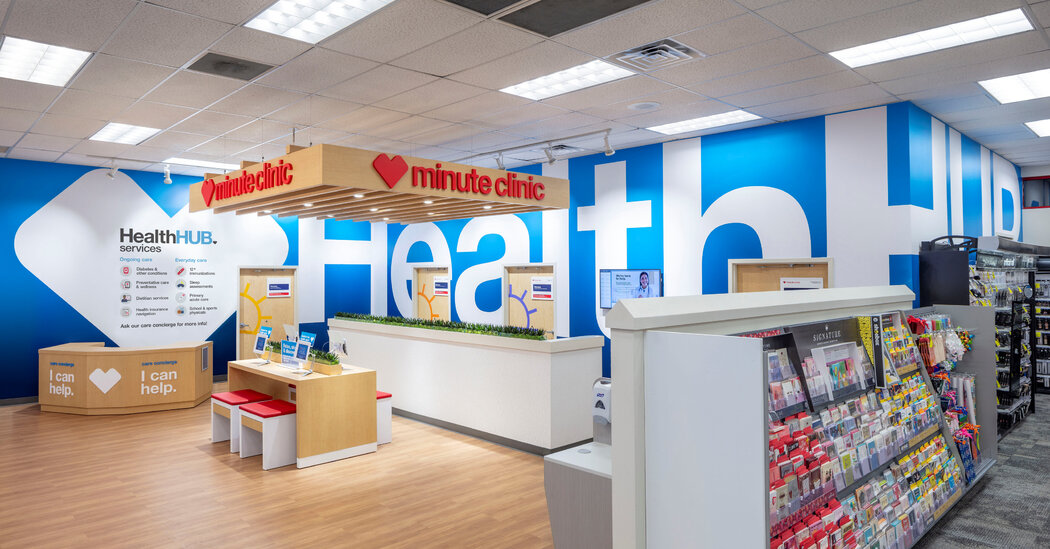
CVS, Walmart, Rite Aid and other large chains are working to integrate behavioral health services.Finding a therapist can be a tough and time-consuming process involving multiple phone calls, waiting lists and insurance hurdles.But what if you were able to walk into your corner drugstore for a bottle of shampoo and also had the option of scheduling a walk-in session for mental health treatment?That’s the future that CVS, the largest retail pharmacy in the United States, is envisioning. Since January the company has added licensed clinical social workers trained in cognitive behavioral therapy to 13 locations in the Houston, Philadelphia and Tampa metro areas. The providers will offer mental health assessments, referrals and counseling either in person or via telehealth, a CVS spokeswoman said, and this spring the company plans to expand to 34 locations in those same regions.The social workers are available during the day, and also on evenings and weekends in the company’s MinuteClinics, which provide a variety of nonemergency health care services either via walk-in or by appointment. The hours are more flexible than what therapists might normally offer, and the social workers partner with the clinic’s nurse practitioners and pharmacists to give prescriptions when needed, said Dr. Daniel Knecht, the vice president of clinical product at CVS Health.CVS is just one of a growing number of retailers who are recognizing the unmet need for mental health providers and hoping to fill the gap.On Thursday, Walmart announced it is acquiring MeMD, which offers online medical and mental health care. Walmart currently provides counseling via Walmart Health, a health center located in a separate building alongside Walmart Supercenters. In Georgia, Walmart Health offers in-person mental health counseling and in Arkansas customers can receive online counseling. Later this year, counseling services will become available at Walmart Health locations in Illinois and Florida, a spokeswoman said.In addition, Rite Aid is piloting teletherapy in the “virtual care rooms” of 13 stores in Idaho, New Hampshire, Pennsylvania and Virginia, a spokesman said. The company declined to elaborate on when the program started or whether there are any plans to expand.And Walgreens is facilitating therapy appointments via the company’s web platform Walgreens Find Care, which connects customers to teletherapy from BetterHelp or Sanvello. Walgreens also offers free access to online mental health screenings through a partnership with Mental Health America, a spokesman said.“I think it’s a smart model,” Dr. Kali D. Cyrus, a psychiatrist at Sibley Memorial Hospital in Washington, D.C., and assistant professor at Johns Hopkins, said of the various therapy programs.“By expanding availability, you increase visibility — and that helps reduce stigma,” Dr. Cyrus said. But she questioned whether the therapy clinics will have a standardized approach when giving out mental health advice, making referrals or offering risk assessments. The licensing and training of providers may differ between states, she added, and different states might have varying protocols for managing psychiatric emergencies; or limited availability of outpatient providers or inpatient hospital beds.A recent government accountability report found “longstanding concerns about the availability of behavioral health treatment, particularly for low-income individuals,” in part because of the shortage of qualified behavioral health professionals.In the past year, the number of people reporting symptoms of anxiety or depression nearly quadrupled compared to the year prior, according to the Centers for Disease Control and Prevention. And in 2020, there was a 27 percent increase in calls to the Substance Abuse and Mental Health Services Administration National Helpline compared to the number of calls in 2019.Some grocery chains with pharmacies located inside their stores are also addressing disparities in access to mental health services.Albertsons, whose banners include Vons, Safeway, Shaw’s and Pavilions, does not offer therapy, but their pharmacists in 23 states administer injectable antipsychotic drugs as well as injectable medications to help treat substance abuse, a program that has been underway for nearly a decade.Omer Gajial, the senior vice president of pharmacy and health at Albertsons, said the pharmacies offer convenient hours. Most Albertsons pharmacies are open from 8 a.m. to 9 p.m., he said, and some are open 24 hours a day, seven days a week.If a patient is uninsured or underinsured, he added, the pharmacy will help connect them with manufacturer rebate programs or a nonprofit foundation that can help fund the treatment.CVS, which merged with the insurance provider Aetna three years ago, aims to reduce overall health costs with its mental health pilot program, Dr. Knecht said. Mental health issues that are not addressed become crises, he added, “so our aspiration is to make mental health services accessible and locally available so we can address these issues before they continue to expand and result in substantial morbidity and poor outcomes.”Removing obstacles to mental health care by making providers more accessible is helpful, said Vaile Wright, senior director of health care innovation at the American Psychological Association, “but they are never the No. 1 barrier to accessing treatment,” she said. “Cost is.”Psychiatrists are less likely to take insurance than other types of physicians, and many psychologists, social workers and others who offer therapy likewise decline insurance because they say payments by insurers are relatively low and managed care companies sometimes subject them to intrusive audits.The mental health services provided by the CVS MinuteClinics are covered by many major health insurers and Employee Assistance Program plans, a spokeswoman said.“Pricing options without insurance range between $129 for an initial assessment to $69 for a 30-minute session, with many options in between,” she added.At Walmart, the initial therapy session is $60 and the 45-minute follow-up sessions cost $45, according to the company’s website.If you’re considering using a retail location to receive therapy, be sure to ask the same questions you would of any new therapist, experts advise. Some examples include:Where were you trained?What kind of license do you have?What is your specialty?How will we monitor my progress?How long will my session last, and how many sessions are available to me?Is there follow-through if I need a referral?How much will this cost?How will my data be stored and shared?In addition, if you identify as L.G.B.T. or are a member of another minority group — or if you already know that you suffer from a particular condition like anxiety or depression — it’s helpful to know whether the therapist has worked with similar populations in the past and whether they have had cultural competence training, said Alfiee Breland-Noble, a health disparities researcher and founder of the AAKOMA Project, a mental health nonprofit for teenagers and their families.“These are places where everybody goes,” Dr. Breland-Noble said of the retailers. “What remains to be seen is: How will increased accessibility limit — or manage, or reduce — stigma in communities where stigma is so high?”“Are you going to walk into a store where everyone can see you walk into the designated clinical area?” she asked.At CVS, sessions with a therapist are held in a private consultation room, Dr. Knecht said. Customers can also speak with someone virtually via a telehealth platform if they don’t wish to visit the store in person.Riana Elyse Anderson, a clinical psychologist who researches how race and mental health care intersect, is hopeful that the mental health services offered by retailers could help make a difference in people’s lives.“The average person doesn’t need intense long-term care,” Dr. Anderson said. “So even if only four meetings were possible with the possibility of a referral, that’s at least going to help the average person feel better — and that’s what’s needed during chronically challenging times like now. I think it’s a great way to get people some relief.”

Read more →

Therapy on Aisle 7: Retailers Are Entering the Mental Health Market

CVS, Walmart, Rite Aid and other large chains are working to integrate behavioral health services.Finding a therapist can be a tough and time-consuming process involving multiple phone calls, waiting lists and insurance hurdles.But what if you were able to walk into your corner drugstore for a bottle of shampoo and also had the option of scheduling a walk-in session for mental health treatment?That’s the future that CVS, the largest retail pharmacy in the United States, is envisioning. Since January the company has added licensed clinical social workers trained in cognitive behavioral therapy to 13 locations in the Houston, Philadelphia and Tampa metro areas. The providers will offer mental health assessments, referrals and counseling either in person or via telehealth, a CVS spokeswoman said, and this spring the company plans to expand to 34 locations in those same regions.The social workers are available during the day, and also on evenings and weekends in the company’s MinuteClinics, which provide a variety of nonemergency health care services either via walk-in or by appointment. The hours are more flexible than what therapists might normally offer, and the social workers partner with the clinic’s nurse practitioners and pharmacists to give prescriptions when needed, said Dr. Daniel Knecht, the vice president of clinical product at CVS Health.CVS is just one of a growing number of retailers who are recognizing the unmet need for mental health providers and hoping to fill the gap.On Thursday, Walmart announced it is acquiring MeMD, which offers online medical and mental health care. Walmart currently provides counseling via Walmart Health, a health center located in a separate building alongside Walmart Supercenters. In Georgia, Walmart Health offers in-person mental health counseling and in Arkansas customers can receive online counseling. Later this year, counseling services will become available at Walmart Health locations in Illinois and Florida, a spokeswoman said.In addition, Rite Aid is piloting teletherapy in the “virtual care rooms” of 13 stores in Idaho, New Hampshire, Pennsylvania and Virginia, a spokesman said. The company declined to elaborate on when the program started or whether there are any plans to expand.And Walgreens is facilitating therapy appointments via the company’s web platform Walgreens Find Care, which connects customers to teletherapy from BetterHelp or Sanvello. Walgreens also offers free access to online mental health screenings through a partnership with Mental Health America, a spokesman said.“I think it’s a smart model,” Dr. Kali D. Cyrus, a psychiatrist at Sibley Memorial Hospital in Washington, D.C., and assistant professor at Johns Hopkins, said of the various therapy programs.“By expanding availability, you increase visibility — and that helps reduce stigma,” Dr. Cyrus said. But she questioned whether the therapy clinics will have a standardized approach when giving out mental health advice, making referrals or offering risk assessments. The licensing and training of providers may differ between states, she added, and different states might have varying protocols for managing psychiatric emergencies; or limited availability of outpatient providers or inpatient hospital beds.A recent government accountability report found “longstanding concerns about the availability of behavioral health treatment, particularly for low-income individuals,” in part because of the shortage of qualified behavioral health professionals.In the past year, the number of people reporting symptoms of anxiety or depression nearly quadrupled compared to the year prior, according to the Centers for Disease Control and Prevention. And in 2020, there was a 27 percent increase in calls to the Substance Abuse and Mental Health Services Administration National Helpline compared to the number of calls in 2019.Some grocery chains with pharmacies located inside their stores are also addressing disparities in access to mental health services.Albertsons, whose banners include Vons, Safeway, Shaw’s and Pavilions, does not offer therapy, but their pharmacists in 23 states administer injectable antipsychotic drugs as well as injectable medications to help treat substance abuse, a program that has been underway for nearly a decade.Omer Gajial, the senior vice president of pharmacy and health at Albertsons, said the pharmacies offer convenient hours. Most Albertsons pharmacies are open from 8 a.m. to 9 p.m., he said, and some are open 24 hours a day, seven days a week.If a patient is uninsured or underinsured, he added, the pharmacy will help connect them with manufacturer rebate programs or a nonprofit foundation that can help fund the treatment.CVS, which merged with the insurance provider Aetna three years ago, aims to reduce overall health costs with its mental health pilot program, Dr. Knecht said. Mental health issues that are not addressed become crises, he added, “so our aspiration is to make mental health services accessible and locally available so we can address these issues before they continue to expand and result in substantial morbidity and poor outcomes.”Removing obstacles to mental health care by making providers more accessible is helpful, said Vaile Wright, senior director of health care innovation at the American Psychological Association, “but they are never the No. 1 barrier to accessing treatment,” she said. “Cost is.”Psychiatrists are less likely to take insurance than other types of physicians, and many psychologists, social workers and others who offer therapy likewise decline insurance because they say payments by insurers are relatively low and managed care companies sometimes subject them to intrusive audits.The mental health services provided by the CVS MinuteClinics are covered by many major health insurers and Employee Assistance Program plans, a spokeswoman said.“Pricing options without insurance range between $129 for an initial assessment to $69 for a 30-minute session, with many options in between,” she added.At Walmart, the initial therapy session is $60 and the 45-minute follow-up sessions cost $45, according to the company’s website.If you’re considering using a retail location to receive therapy, be sure to ask the same questions you would of any new therapist, experts advise. Some examples include:Where were you trained?What kind of license do you have?What is your specialty?How will we monitor my progress?How long will my session last, and how many sessions are available to me?Is there follow-through if I need a referral?How much will this cost?How will my data be stored and shared?In addition, if you identify as L.G.B.T. or are a member of another minority group — or if you already know that you suffer from a particular condition like anxiety or depression — it’s helpful to know whether the therapist has worked with similar populations in the past and whether they have had cultural competence training, said Alfiee Breland-Noble, a health disparities researcher and founder of the AAKOMA Project, a mental health nonprofit for teenagers and their families.“These are places where everybody goes,” Dr. Breland-Noble said of the retailers. “What remains to be seen is: How will increased accessibility limit — or manage, or reduce — stigma in communities where stigma is so high?”“Are you going to walk into a store where everyone can see you walk into the designated clinical area?” she asked.At CVS, sessions with a therapist are held in a private consultation room, Dr. Knecht said. Customers can also speak with someone virtually via a telehealth platform if they don’t wish to visit the store in person.Riana Elyse Anderson, a clinical psychologist who researches how race and mental health care intersect, is hopeful that the mental health services offered by retailers could help make a difference in people’s lives.“The average person doesn’t need intense long-term care,” Dr. Anderson said. “So even if only four meetings were possible with the possibility of a referral, that’s at least going to help the average person feel better — and that’s what’s needed during chronically challenging times like now. I think it’s a great way to get people some relief.”

Read more →

India Covid: How bad is the second wave?

SharecloseShare pageCopy linkAbout sharingimage copyrightGetty ImagesIndia has been hit by a huge second coronavirus wave, but its government has said the pandemic is showing signs of slowing down in some regions. What’s happening to infection rates? India’s surge in infections began around mid-March and increased rapidly, reaching a peak of more than 400,000 recorded daily cases on Friday, 30 April. Over subsequent days the numbers fell, with just under 360,000 on Monday, 3 May – leading to speculation that a peak had been reached.But in the past few days, they have started to rise again, in line with a weekly pattern of fluctuations that shows the numbers usually dipping on a Monday. And on Thursday, 6 May, the number of new recorded daily infections reached a new high of more than 414,000. The seven-day moving average (smoothing out daily fluctuations) is also still trending upwards.Are testing levels being maintained?Accurate assessments of the extent of the virus are only possible with widespread testing.India has been conducting nearly two million tests a day. This dipped at the start of this month to 1.5 million.But by Wednesday, 5 May, daily testing was back at almost two million again.This temporary fall in testing may go some way to explaining the extent of the dip in recorded daily infections in the first few days of May.Testing has also been highly variable across the country, with some regions showing significant declines.”This happened during the previous peak, in September, too,” World Health Organization (WHO) consultant and economist Dr Rijo John says.”When India was about to touch 100,000 cases per day, the testing rates fell.” When the authorities say case levels have fallen in some states – Maharashtra, Gujarat, and Telangana and the capital, Delhi – these same states have also seen a fall in testing. In mid-April, when Delhi was conducting nearly 100,000 tests a day, recorded daily case numbers were around 16,000. But by the end of April, when the case numbers had risen by more than 55%, testing had fallen by 20%, suggesting a much higher underlying level of infections.Similar trends were observed in Gujarat and Telangana.image copyrightGetty ImagesTesting capacity is clearly under great strain, with people unable to access tests because facilities are overburdened, Dr John says.And across the country, the rate of testing, about 1.3 per 1,000 people, compares with three in the US and 15 in the UK.What proportion of tests are positive?A high percentage of positive tests suggests the likelihood of many more people in the community with undetected coronavirus, according to Johns Hopkins University.And last year, the WHO recommended countries waited until their positive test rate was below 5% for at least two weeks before considering easing restrictions. Gautam Menon, a mathematical modeller and professor of physics and biology, at Ashoka University, near Delhi, says: “Test positivity rates are still quite high, over 20% countrywide. “So I would certainly think there is no reason yet to believe that India is past its second wave.”What kind of tests are being used?India mainly uses two types.Polymerase chain reaction (PCR) tests are considered the gold standard, although there have been reports of new variants going undetected even in symptomatic patients. But some state health authorities have been moving over to rapid antigen tests, which are quicker and easier to administer but less reliable.image copyrightGetty ImagesIn Delhi, nearly 35% of tests in April were rapid antigen. The Indian Council for Medical Research (ICMR) has now recommended that rapid antigen tests be used more widely to deal given the current surge in cases.It has also relaxed rules regarding getting mandatory PCR tests for travellers to “reduce the burden on laboratories”. Read more from Reality CheckSend us your questions

Read more →

Health Advocate or Big Brother? Companies Weigh Requiring Vaccines.

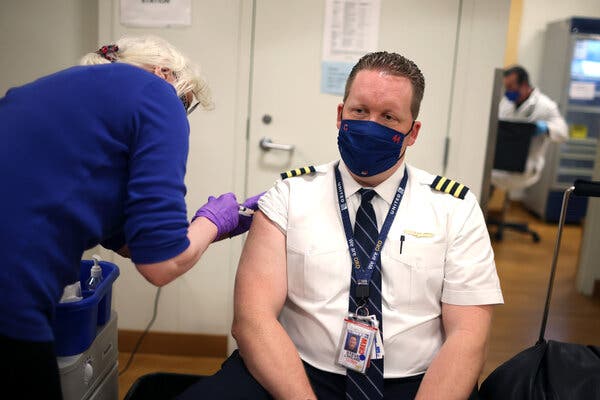
It is a delicate decision balancing employee health and personal privacy. Some companies are sidestepping the issue by offering incentives to those who get shots.As American companies prepare to bring large numbers of workers back to the office in the coming months, executives are facing one of their most delicate pandemic-related decisions: Should they require employees to be vaccinated?Take the case of United Airlines. In January, the chief executive, Scott Kirby, indicated at a company town hall that he wanted to require all of his roughly 96,000 employees to get coronavirus vaccines once they became widely available.“I think it’s the right thing to do,” Mr. Kirby said, before urging other corporations to follow suit. It has been four months. No major airlines have made a similar pledge — and United Airlines is waffling.“It’s still something we are considering, but no final decisions have been made,” a spokeswoman, Leslie Scott, said.For the country’s largest companies, mandatory vaccinations would protect service workers and lower the anxiety for returning office employees. That includes those who have been vaccinated but may be reluctant to return without knowing whether their colleagues have as well. And there is a public service element: The goal of herd immunity has slipped as the pace of vaccinations has slowed.But making vaccinations mandatory could risk a backlash, and perhaps even litigation, from those who view it as an invasion of privacy and a Big Brother-like move to control the lives of employees.A United Airlines vaccine clinic at O’Hare airport in Chicago. Employers are using on-site vaccinations to encourage workers to get shots.Scott Olson/Getty ImagesIn polls, executives show a willingness to require vaccinations. In a survey of 1,339 employers conducted by Arizona State University’s College of Health Solutions and funded by the Rockefeller Foundation, 44 percent of U.S. respondents said they planned to mandate vaccinations for their companies. In a separate poll of 446 employers conducted by Willis Towers Watson, a risk-management firm, 23 percent of respondents said they were “planning or considering requiring employees to get vaccinated for them to return to the worksite.”That discrepancy, said Mara Aspinall, who led the Arizona State poll, may have to do with the timing of the surveys and the pace at which executives are growing comfortable with the vaccines. Arizona State conducted its survey in March, while Willis Towers led its survey between Feb. 23 and March 12.Despite what surveys have found, few executives have taken the step of mandating vaccines. It seems that most are hoping that encouragement, whether forceful or subtle, will be enough.“While legally in the United States, employers can mandate vaccines while providing accommodations for religious and for health reasons, socially, in terms of the social acceptability of these decisions, it’s much more tenuous,” said Laura Boudreau, a professor of public policy at Columbia University. “And so the reputational risks to these companies of getting this wrong are really high.”Douglas Brayley, an employment lawyer at the global law firm Ropes & Gray, warns clients of the implications of following through on a mandate, he said.“What if 10 percent of your work force refuses? Are you prepared to lay off that 10 percent?” he said he asked clients. “Or what if it’s someone high-level or in a key role, would you be prepared to impose consequences? And then they sometimes get more nervous.”He added, “Anytime you would have them putting out a mandate, but then carrying through the consequences unevenly, that would create a risk of potentially unlawful unfair treatment.”Companies that require vaccines may also be concerned about any side effects or medical issues that an employee might claim were caused by the vaccine.“They could be held liable for any sort of adverse effects that might happen a year or two down the road,” said Karl Minges, chair of health administration and policy at the University of New Haven.Some companies are sidestepping the problem and trying incentives instead. Amtrak is paying employees two hours’ worth of regular wages per shot upon proof of vaccination. Darden, which owns Olive Garden and other restaurants, told employees it would offer hourly employees two hours of pay for each dose they receive, while emphasizing it would not make doses mandatory. Target is offering a $5 coupon to all customers and employees who receive their vaccination at a CVS at Target location.For restaurants, making vaccinations mandatory could make hiring workers even more difficult.Philip Cheung for The New York TimesIn the United States, there’s nothing new about vaccines being required for participation in public life. The Supreme Court ruled about a century ago that states could require vaccinations for children attending public school. And universities like Rutgers have instituted mandatory Covid-19 vaccinations.But the pandemic brings up a host of complications that companies typically prefer to avoid, involving the private lives, religious preferences and medical histories of employees, such as whether an employee is pregnant, breastfeeding or immuno-compromised, information they may not want to reveal.Major union groups, like the A.F.L.-C.I.O., have not aggressively pushed the issue either. They are facing dueling forces — standing up for individual worker’s rights on the one hand and protecting one another on the other. Unions have also been arguing for stronger workplace safety measures, efforts that could be complicated by companies’ arguing that mandatory vaccinations reduce the need for such accommodations. The return to work protocols negotiated between the Alliance of Motion Picture & Television Producers and Hollywood’s unions, for instance, will not include mandatory vaccinations.“There are going to be some people who may have legitimate reasons for not getting the vaccine or for not wanting to talk about it,” said Carrie Altieri, who works in communications for IBM’s People and Culture business. “It’s not an easy issue at this point.” IBM is working with New York State on a digital passport linking a person’s vaccination records to an app to show businesses, like performance venues, that may require vaccination. It is not, though, requiring vaccinations for its employees.For some businesses like restaurants, which are already struggling to hire workers, mandating vaccinations could make hiring even more difficult. And there are questions of logistics and execution. How can companies confirm the veracity of those who say they’ve been vaccinated?Companies may need to hire additional staff, potentially with medical training, to handle such tasks, which could saddle businesses — particularly small ones — with burdensome costs.Vivint, a home security company based in Utah with 10,000 employees, began offering vaccines in its on-site clinic this week, after the state approved the company to distribute 100 shots a week to its staff. It paid $3,000 for the necessary medical-grade freezer.“We’re not requiring employees to get vaccinated, but we’re highly encouraging it,” said Starr Fowler, senior vice president for human resources. “For a lot of our employees, particularly those that are younger, the easier that we make it for them, the more likely they’re going to do it.”At Salesforce Tower park in San Francisco, up to 100 fully vaccinated employees can volunteer to work on designated floors.Jason Henry for The New York TimesOthers are experimenting with splitting up their work forces. Salesforce is introducing a policy in certain U.S. offices, including Salesforce Tower in San Francisco, where up to 100 fully vaccinated employees can volunteer to work on designated floors. The New York Stock Exchange issued a memo to trading firms saying they would be allowed to increase their staff on the floor, provided all the employees have been vaccinated.The Equal Employment Opportunity Commission issued guidance in December stating that employers were indeed legally permitted to require employees to be vaccinated before they return to offices. But the threat of litigation still looms.“To be concerned about the possibility of litigation seems to me to be a perfectly legitimate concern,” said Eric Feldman, a law professor at the University of Pennsylvania. He added, “It would seem to me that employers are going to find themselves in a fairly strong position legally — but that doesn’t mean they’re not going to get sued.”Legislation that would limit the ability to require vaccines for students, employees or the public in general has been proposed in at least 25 states, according to the National Conference of State Legislatures. Some of those restrictions pertain only to vaccines that, like those for Covid-19, have yet to be granted full approval by the Food and Drug Administration. (The coronavirus vaccines have been granted conditional approval for emergency use.)Pfizer is expected to file for full approval of its Covid-19 vaccine soon. Others are expected to follow.Speaking at a Wall Street Journal conference this week, Jamie Dimon, the chief executive of JPMorgan Chase, mentioned “legal issues about requiring vaccines” when asked about bringing workers back to the office. A press officer for the bank, which plans to open its offices on May 17 on a voluntary basis, said it strongly encouraged vaccines for employees — barring any religious or health restrictions — but would not require them. A spokeswoman for Goldman Sachs, which has not guided employees either way, declined to comment.One potential path for companies seeking a middle ground is to mandate the shots only for new hires. Still, there is a fine line between encouraging and requiring shots — sometimes resulting in conflicting messages to employees.The investment bank Jefferies sent a memo to employees in early February stating “verification of vaccination will be required to access the office.” On Feb. 24 came a follow-up memo. “We did not intend to make it sound as if we are mandating vaccines,” it said.Reporting was contributed by

Read more →

Covid-19 vaccines: Why some African states have leftover doses

SharecloseShare pageCopy linkAbout sharingimage copyrightReutersDespite many African countries struggling to obtain enough Covid-19 vaccines, some have thousands of expired doses they have been unable to use.Which countries have unused vaccines?Malawi has been left with 16,400 doses of the Oxford-AstraZeneca vaccine, while South Sudan has 59,000 – all now past their expiry date, 13 April.Both countries say they have decided to destroy these consignments, donated via the African Union, despite the World Health Organization (WHO) asking for them to be kept while it investigates whether the expiry date can be safely extended.image copyrightReutersThe Democratic Republic of Congo, meanwhile, says it cannot use most of the 1.7 million Oxford-AstraZeneca doses it received under the global Covax scheme, for poorer countries.Only about 1,000 of the doses had been administered by the end of April. And most of this batch – with an expiry date of 24 June – is now being sent to Togo and Ghana, one of the countries to have already used up its initial vaccine supply.Why have vaccines not been used?The Oxford-AstraZeneca vaccine can be stored safely in normal refrigerated conditions for up to six months after production.And the African Union is now redistributing batches originally delivered to South Africa in February, with a 13 April expiry date.The South African government decided not to use them, concerned the vaccine offered insufficient protection from the variant prevalent in the country.New variants causing concern in AfricaAnd, in late March, one million doses were sold on to the African Union to give to other African countries.But some, such as South Sudan, say they were not made aware of the expiry date.Nigeria, meanwhile, said it would be unable to use all the doses in time. So some were reassigned to neighbouring Togo and Ghana. And some were even sent to Jamaica.The WHO says only Togo and The Gambia have confirmed they used all these doses by the expiry date.And information about what has happened to the rest is currently unavailable.What caused delays in using vaccines?Many countries failed to prepare adequately before receiving the vaccines, Phionah Atuhebwe, from the WHO in Africa, says.”That is one of the reasons we are seeing the slow pace of rollout,” she says.And some countries also faced financial challenges.Africa Centres for Disease Control head John Nkengasong says countries need more support to increase the numbers of health workers and obtain supplies, such as personal protective equipment.And those who have vaccines approaching or beyond their expiry date should contact the WHO or Africa CDC.”The continent as a whole knows how to vaccinate and has been vaccinating for other diseases,” he says. “But the key is how do you scale that up – and… at speed?”image copyrightReutersFor DR Congo, the former Zaire, the problem is not only weak health services but also a very poor transport network – making the delivery of vaccines to remote areas a major issue. By air, boat and foot to deliver measles vaccines in DR CongoTo complicate matters further, the country suspended its Oxford-AstraZeneca vaccine rollout in mid-March, amid safety concerns, and resumed it on only 19 April – more than a month later.What about vaccine hesitancy?Some experts and politicians blame concerns over the safety and efficacy of vaccines in general for the slow uptake in many countries in Africa – but it is hard to quantify that impact. “It took a while to convince people,” Sierra Leone Health Minister Austin Demby tells BBC News”So it is not just vaccine hesitancy, it is like [having] vaccine sceptics to start with.” image copyrightReutersMalawi virologist Gama Bandawe says mistrust of vaccines has played a role in the country being unable to use all the supplies it has received.And South Africa’s decision to stop using the Oxford-AstraZeneca vaccine, amid concerns around cases of blood clots, may have added to these doubts.”The government did the best they could – but perhaps the general public has not been as receptive as was expected,” he says. Rare blood clots – what you need to knowA study commissioned by Africa CDC on Covid-19 vaccine perceptions in 15 countries indicated a significant proportion of people had concerns around vaccine safety.On average, about 20% of respondents said they would not have a vaccine – but the proportion varied from below 10% in Ethiopia, Niger and Tunisia to 41% in DR Congo.GLOBAL SPREAD: Tracking the coronavirus pandemicSYMPTOMS: What are the symptoms of the coronavirus?VARIANTS: How worrying are the new coronavirus variants?TRACKER: Coronavirus cases in AfricaRead more from Reality CheckSend us your questions

Read more →

Covid and pregnancy – should you get the vaccine?

As the Covid vaccine is rolled out to younger age groups, what should you do if you’re expecting a baby?The guidance for pregnant people in the UK was changed last month following new data from the USA involving the Pfizer and Moderna vaccines.BBC News Health Reporter Laura Foster looks at what the science says.Video by Laura Foster

Read more →

Sugar-sweetened drinks linked to increased risk of colorectal cancer in women under 50, study finds

Colorectal cancer diagnoses have increased among people under age 50 in recent years and researchers are seeking reasons why. A new study led by Washington University School of Medicine in St. Louis has found a link between drinking sugar-sweetened beverages and an increased risk of developing colorectal cancer in women under age 50. The findings suggest that heavy consumption of sugary drinks during adolescence (ages 13 to 18) and adulthood can increase the disease risk.
The study, published online May 6 in the journal Gut, provides more support for public health efforts that encourage people to reduce the amount of sugar they consume.
“Colorectal cancer in younger adults remains relatively rare, but the fact that the rates have been increasing over the past three decades — and we don’t understand why — is a major public health concern and a priority in cancer prevention,” said senior author Yin Cao, ScD, an associate professor of surgery and of medicine in the Division of Public Health Sciences at Washington University. “Due to the increase in colorectal cancer at younger ages, the average age of colorectal cancer diagnosis has gone down from 72 years to 66 years. These cancers are more advanced at diagnosis and have different characteristics compared with cancers from older populations.
“Our lab is funded by the National Cancer Institute (NCI) and the National Comprehensive Cancer Network to identify risk factors, the molecular landscapes, and precision screening strategies for these cancers so that they can be detected earlier and even prevented,” said Cao, who also has a master’s of public health. “In past work, we have shown that poor diet quality was associated with increased risk of early-onset colorectal cancer precursors, but we have not previously examined specific nutrients or foods.”
Compared with women who drank less than one 8-ounce serving per week of sugar-sweetened beverages, those who drank two or more servings per day had just over twice the risk of developing early-onset colorectal cancer, meaning it was diagnosed before age 50. The researchers calculated a 16% increase in risk for each 8-ounce serving per day. And from ages 13 to 18, an important time for growth and development, each daily serving was linked to a 32% increased risk of eventually developing colorectal cancer before age 50.
Sugar-sweetened drink consumption has been linked to metabolic health problems, such as type 2 diabetes and obesity, including in children. But less is known about whether such high-sugar beverages could have a role in the increasing incidence of colorectal cancer in younger people. Like early-onset colorectal cancer rates, consumption of such drinks has increased over the past 20 years, with the highest consumption level found among adolescents and young adults ages 20 to 34.

Read more →

Thin and brittle bones strongly linked to women's heart disease risk

Thin and brittle bones are strongly linked to women’s heart disease risk, with thinning of the lower (lumbar) spine, top of the thigh bone (femoral neck), and hip especially predictive of a heightened heart attack and stroke risk, suggests research in the journal Heart.
Osteoporosis, often dubbed brittle bone disease, is common, particularly among women after the menopause. It is characterised by thinning and weakened bones and a heightened fracture risk.
Previously published research indicates that people with osteoporosis often have atherosclerosis (artery hardening and narrowing), suggesting that both conditions may be linked.
The risk of a cardiovascular death is higher in women (21%) than it is in men (15%), and the predictive risk framework for heart disease is skewed towards men, so factors that better identify women at higher risk of a heart attack or stroke are needed, say the researchers.
Millions of women are screened for osteoporosis using a DXA scan, so this assessment might provide an ideal opportunity to identify any potential associations between thinning bones and atherosclerosis, and those women most at risk of heart disease, without incurring any additional costs or further exposure to radiation, they add.
To test this out, the researchers reviewed the medical records of 50-80 year old women who had had a DXA scan to check for osteoporosis at Seoul National University Bundang Hospital between 2005 and 2014.

Read more →

Covid: Putin says Sputnik vaccines 'reliable as Kalashnikovs'

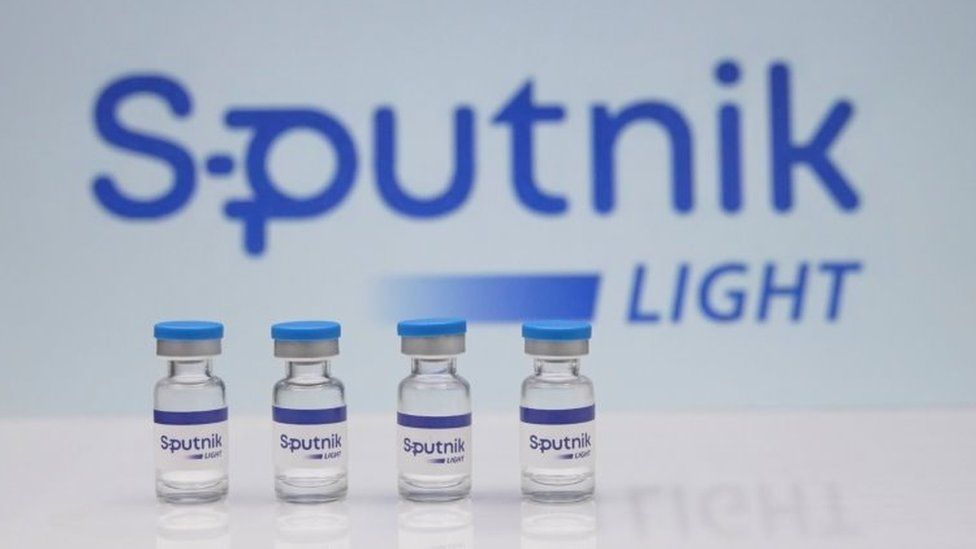
SharecloseShare pageCopy linkAbout sharingimage copyrightRDIF Handout via ReutersPresident Vladimir Putin has heralded Russia’s vaccine offering as “reliable as a Kalashnikov assault rifle”.The comment was made during a video conference on Thursday with Deputy Prime Minister Tatyana Golikova.It came as the country’s health officials registered a single-dose version of the Sputnik V vaccine on Thursday, dubbed Sputnik Light.Mr Putin’s comparison referenced the Soviet Union-era weapon that remains popular and widely used still today.He was quoting a comment originally made by an Austrian doctor earlier this year about the jab’s efficacy.How Russia’s Covid vaccine is dividing EuropeHow do we know Covid vaccines are safe?How fast is vaccine progress around the world?The Sputnik V vaccine works in a similar way to others developed by Oxford/AstraZeneca and Janssen/Johnson & Johnson. It uses a cold-type virus, engineered to be harmless, as a carrier to deliver a small fragment of the coronavirus to the body.Critics of the Putin administration were sceptical when the vaccine was given speedy regulatory approval in Moscow last year, but late-stage trials have found it offers high levels of protection against Covid-19. The two-dose version of the jab has now been authorised in dozens of other countries around the world.image copyrightReutersSputnik Light, a single-use version where recipients only get the first jab, was officially authorised in Russia on Thursday.In a press release, its makers said a single dose had demonstrated 79.4% efficacy during the country’s vaccine roll-out.The vaccines that work and others on the way”The single-dose regiment allows for immunisation of a larger number of people in a shorter time frame, furthering the fight against the pandemic during the acute phase,” the statement said. The authorisation comes amid an ongoing international row over whether patents should be waived on vaccine technology to boost production.

Read more →