How fasting diets could harm future generations

Fasting diets could impact the health of future generations according to new research from the University of East Anglia (UEA).
Fasting diets have risen in popularity in recent years, however little is known about the long-term impact of these diets, particularly for future generations.
New research, published today in the journal Proceedings of the Royal Society B, reveals that reduced food intake in roundworms (Caenorhabditis elegans) has a detrimental effect on three generations of offspring — particularly when those descendants have access to unlimited food.
Lead researcher Dr Edward Ivimey-Cook, from UEA’s School of Biological Sciences, said: “We know that reduced food intake increases the lifespan in many animals and can potentially improve health in humans. However, little is known about the long-term effects of reduced food intake, including time-limited fasting, on distant descendants.
“We wanted to find out more about the potential long-term impact of fasting diets.”
The team investigated the effect of time-limited fasting on lifespan and reproduction in roundworms and across three generations of their descendants.

Read more →

New findings linking brain immune system to psychosis

New research at Karolinska Institutet in Sweden suggests a link between psychosis and a genetic change that affects the brain’s immune system. The study published in Molecular Psychiatry may impact the development of modern medicines for bipolar disorder or schizophrenia.
Psychosis affects approximately 2-3 per cent of the population and is characterized by a change in the perception of reality, often with elements of hallucinations and paranoid reactions.
Most of the people affected are patients with schizophrenia, but people with bipolar disorder may also experience psychotic symptoms.
The antipsychotics available today often have insufficient efficacy, and for patients, their life situation can be difficult.
The average life expectancy of people with schizophrenia is approximately 15 years shorter than that of the general population, according to Sweden’s National Board of Health and Welfare.
“It is not entirely known what biological mechanisms cause psychosis, but recent research suggests that immune activation in the brain’s glial cells may be the cause. People with psychosis have elevated levels of kynurenic acid in the brain, a messenger that transmits information from the brain’s immune system to the neurons,” says Goran Engberg, Professor at the Department of Physiology and Pharmacology, Karolinska Institutet, and the study’s corresponding author.

Read more →

COVID-19 vaccine does not damage the placenta in pregnancy

A new Northwestern Medicine study of placentas from patients who received the COVID-19 vaccine during pregnancy found no evidence of injury, adding to the growing literature that COVID-19 vaccines are safe in pregnancy.
“The placenta is like the black box in an airplane. If something goes wrong with a pregnancy, we usually see changes in the placenta that can help us figure out what happened,” said corresponding author Dr. Jeffery Goldstein, assistant professor of pathology at Northwestern University Feinberg School of Medicine and a Northwestern Medicine pathologist. “From what we can tell, the COVID vaccine does not damage the placenta.”
The study will be published May 11 in the journal Obstetrics & Gynecology. To the authors’ knowledge, it is the first study to examine the impact of the COVID vaccines on the placenta.
“We have reached a stage in vaccine distribution where we are seeing vaccine hesitancy, and this hesitancy is pronounced for pregnant people,” said study co-author Dr. Emily Miller, Northwestern Medicine maternal fetal medicine physician and assistant professor of obstetrics and gynecology at Feinberg. “Our team hopes these data, albeit preliminary, can reduce concerns about the risk of the vaccine to the pregnancy.”
The study authors collected placentas from 84 vaccinated patients and 116 unvaccinated patients who delivered at Prentice Women’s Hospital in Chicago and pathologically examined the placentas whole and microscopically following birth. Most patients received vaccines — either Moderna or Pfizer — during their third trimester.
Last May, Goldstein, Miller and collaborators from Northwestern and Ann & Robert H. Lurie Children’s Hospital of Chicago published a study that found placentas of women who tested positive for the COVID-19 virus while pregnant showed evidence of injury (abnormal blood flow between mother and baby in utero). Pregnant patients who want to get vaccinated to avoid contracting the disease should feel safe doing so, Miller said.

Read more →

As India halts vaccine exports, Nepal faces its own Covid crisis

SharecloseShare pageCopy linkAbout sharingimage copyrightAFPIn a choked voice, Parasuram Maurya described desperately running from one hospital to another to save his father from Covid-19.Sundar Maurya, a farmer from the south-western town of Narainapur, complained of breathing difficulties and tested positive on 3 May. Within days, his condition worsened. Mr Maurya took his father, who is in his mid-50s, to three medical facilities in the Banke district but all refused him admission due to a shortage of beds and oxygen. By the time he managed to find a bed, it was too late.”We are devastated, he was the main breadwinner of the family,” Mr Maurya told the BBC. “Now I have to take care of my own family and three younger brothers. My mother has been crying inconsolably.”Thousands of people like Mr Maurya have lost their loved ones in Nepal, a nation now reeling from a second wave of the virus.”If we don’t manage this right now, the situation will become catastrophic,” said Dr Samir Kumar Adhikari, the chief of the government’s Health Emergency Operation Centre.”In Kathmandu valley, almost all of the intensive care beds and ventilators are full,” he said. “Even in hospitals where beds are available, they cannot admit patients due to a lack of oxygen. We have also run out of vaccines.”image copyrightGetty ImagesNepal, a Himalayan nation of about 30 million people, is one of the least developed countries in the world.Landlocked and sandwiched between China in the north and India in the south, it depends on India for most of its supplies, especially medical equipment and liquid oxygen. With India stopping exports of oxygen due to the worsening situation there, Kathmandu is now struggling to find alternative supplies.Like many other Asian nations, Nepal somehow managed to escape the first wave without any serious damage. But the second wave has been devastating. Daily infections hovered at around 150 at the beginning of April but in a month the figure has passed 9,000. More than 4,000 people have died.China to set up ‘separation line’ on Mount EverestIndia’s neighbours are battling new Covid waveNepali health officials say the current daily positivity rate is nearly 50%, meaning that one in two people are testing positive for Covid. An estimated 80,000 people are in home isolation, and officials are warning of many more deaths in the coming weeks.”We rank Nepal 9th among the 10 top countries in terms of daily increase in Covid-19 cases. Of all those countries, Nepal has the smallest population but it has the highest case positivity rate,” Sara Beysolow Nyanti, the UN resident co-ordinator in Nepal told the BBC.image copyrightUnicefLike in neighbouring India, normal life had begun to resume a few months ago when daily cases fell below 100. The country was in a hurry to get back to normality in order to recover from the economic impact of the lockdowns. Masks, sanitation and social distancing were ignored. At the same time, Nepal was hit by a political crisis. Prime Minister K P Sharma Oli, facing rebellion in his own party, dissolved parliament last December and called for a snap election. But the Supreme Court reinstated parliament in February this year.Gulf prince takes vaccines on Everest trip How Indian pilgrims became Covid super-spreadersMr Oli was also facing criticism from the opposition and civil society over the government’s handling of the coronavirus. There have been pro- and anti-Oli protests in Kathmandu and other parts of the country.Prime Minister K P Sharma Oli lost the vote of confidence in parliament on Monday. It’s not clear who will form the next government, with no party having a clear majority. Experts blame the political wrangling and infighting for the sharp turn for the worse in the pandemic.”The politicians were busy trying to hold on to power, their attention was not on the health of the people but on retaining power,” said Dr Rajan Pandey, chief consultant physician at Bheri hospital, in Nepalgunj city.image copyrightUnicefNepalgunj, near the border with India, is one of the worst affected regions in Nepal. Every day, hundreds of migrant workers from India are returning through the land border amid fears that some of them may be carrying the virus. Fearing quarantine, many enter the country illegally and go to their villages. There are reports of some of the returnees falling sick.But migrant labourers alone should not be blamed for the second wave, said Dr Pandey.”Two months ago, the government and the opposition held huge rallies all over the country. People celebrated religious festivals and organised marriage ceremonies – all contributing to this second wave,” he said.The situation has been exacerbated by the fact that Nepal has now suspended its vaccination programme after it ran out of doses. Initially, India donated about a million doses of AstraZeneca vaccine, and Nepal secured doses from the global vaccine sharing programme Covax and from China. Officials in Nepal say altogether 2.1 million people have had the vaccine and out of that number 400,000 have received both doses. But with Delhi abruptly suspending the export of vaccines, Nepal is in limbo, alongside Bangladesh and Sri Lanka, increasingly looking to China and Russia to meet their demands.”Nepal has not been able to secure vaccines for even 20% of those who need to be vaccinated. So, Nepal should be prioritised at the top,” the UN official Ms Nyanti said. “I appeal to the countries which can spare vaccine to send them to Nepal immediately.”You may also be interested in

Read more →

How Italy's healthcare staff survived the pandemic

SharecloseShare pageCopy linkAbout sharingimage copyrightPaolo MirandaNurses across the globe have been instrumental in helping fight Covid-19, but it’s been a job that has taken a heavy toll – both physically and mentally. Nowhere has this been more apparent than in Italy, the first country in Europe to be overwhelmed by the virus in 2020 – and one of the first to impose a national lockdown.On International Nurses Day, healthcare workers there who spoke to the BBC at the start of the pandemic explain how they found ways to cope with the trauma of the last year.’We carry everything we’ve seen’ image copyrightPaolo Miranda”I never thought I would get my life back,” says Paolo Miranda, an intensive care nurse in Cremona who last year decided to document the bleak situation inside his unit by taking photographs. The portraits showed how his colleagues were coping after the first wave – as the pandemic became the “new normal” and people stopped celebrating them as heroes. “I never want to forget what happened to us. It will soon become history,” he told the BBC at the time. “Although the emergency is slowing down, we feel surrounded by darkness.”It’s like we are full of wounds. We carry everything we’ve seen inside us.”image copyrightPaolo MirandaOne major change has happened for Paolo since then – he’s become a dad. “We called our daughter Vittoria, which means victory. Bringing a new life into the world during such a disastrous situation gave us a lot of hope.”Paolo, who says he has post-traumatic stress disorder (PTSD) from the events of the past year, says many of his colleagues have also decided to have children – almost in defiance of all the death and suffering they’ve had to endure. “My daughter is helping me so much to deal with burnout. I come home, I look at her, she smiles back… it’s wonderful.”‘I had to treat Covid deniers’In February 2020, Italy became the global centre of the pandemic – and a cautionary tale of what happens when a healthcare system in one of the wealthiest parts of the world collapses. At the time, Martina Benedetti, an intensive care nurse in Tuscany, told the BBC she wasn’t sure she wanted to be a nurse any more. She’s had a change of heart since then, describing her job as “wonderful”, but warned that it’s not for everyone. “I feel like I have aged 10 years. I used to be carefree and light-hearted… that person is gone.” image copyrightMartina Benedtti/DoDoWriting helped her cope. After a long shift, she’d go home and before bed write down her feelings, which she later turned into an e-book. Martina says it’s been particularly hard to deal with patients who denied the existence of Covid – some of whom ended up in her intensive care unit. “I had to treat people who were inciting others on social media to not wear masks, and called nurses liars.” But Martina said that on some occasions, she managed to change their minds.”One Covid denier, after they got discharged went on Facebook and wrote the exact opposite of what he used to think. It was a victory for me.”‘I discovered a strength I didn’t know I had’A study conducted on Italian nurses by the EngageMinds HUB research centre found those who engaged with their patients showed lower levels of PTSD and burnout. “Often patients and their relatives are seen as a burden that slows down an emergency response,” says Dr Serena Barello, one of the authors of the study.”But taking the time to explain things to them, sharing responsibilities, joy and pain, means there is an extra human resource in your team – and ultimately this makes the job easier.” It also found 90% of those involved in the study never considered leaving their jobs or asking for a transfer during the pandemic – instead they felt an immense sense of pride, a feeling echoed by care home doctor Elisa Nanino.”The pandemic gave me confirmation that I am in the right job. I discovered a strength I didn’t know I had. I saw people die, I cried, but I also saved people’s lives. It’s priceless.” Elisa says when she got home from work and couldn’t switch off, cooking helped her. She would make batches of tiramisu and bring them to her hospital to share with her colleagues. Her biggest piece of advice for healthcare workers is not to feel guilty about those they couldn’t save.”It’s simply impossible to save all the sick people that come in front of you during a pandemic. You can only do your best, but don’t go home and agonise over it.” image copyrightPAOLO MIRANDAFor Martina, it was difficult to talk to friends and family because they didn’t fully understand what she was going through. She said it was her colleagues who helped her carry on. “My best piece of advice for nurses out there who are dealing with a crisis is to work as a team,” she says.”When you are crumbling, trying to hide it is just a waste of time. You’ll get nowhere by yourself. Talk to your colleagues – they are probably going through the same thing.” ‘Finding peace of mind again’As a result of the pandemic, Dr Barello worries many nurses and doctors will experience PTSD, which can affect someone months or even years later. image copyrightSofia Bettiza”When you finally have time to reflect on what happened, and society is moving on, it can all come crashing down and you feel more exhausted and emotionally distressed.”She says hospitals have to step up and offer staff the psychological support they need and push them to take care of themselves – including encouraging them to reclaim their private lives, which have completely disappeared for the past year-and-a-half. This could include resuming hobbies that were abandoned, spending time with family, doing sports – especially outdoors. Martina intends to do just that.”I am planning a trip in the mountains with my husband – somewhere in the middle of nature, isolated, where I can finally find peace of mind again.”

Read more →

Coronavirus in India: 'My city is under siege from Covid-19'

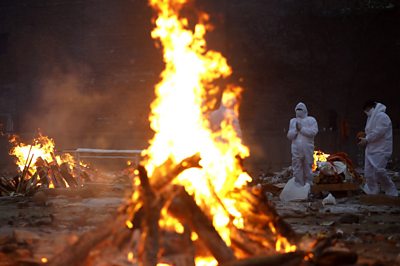
The BBC’s Vikas Pandey has called Delhi home for more than a decade – but life in India’s capital has changed beyond recognition under a deadly second wave of Covid-19 infections. For more than a month now, people have been desperately trying to find help for their loved ones amid acute shortages of hospital beds, crucial drugs and oxygen. But thousands have died, many without receiving the treatment they needed.Here Vikas Pandey, along with his colleague Anshul Verma, take us on a journey through the city, and the daily struggle of finding medical care, oxygen cylinders and even a space at a crematorium. Additional footage: Reuters and AFP news agencies

Read more →

C.D.C. Chief Defends Pandemic Guidance as Impatience Mounts

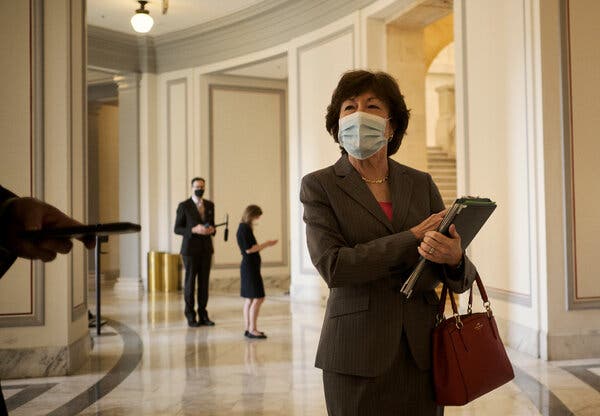
At a Senate hearing on the federal government’s pandemic response, Republicans criticized the government’s guidance for cruise ships, fishermen, summer camps and outdoor mask wearing.WASHINGTON — The director of the Centers for Disease Control and Prevention on Tuesday defended the agency against accusations that federal scientists were being too slow to update their pandemic-control guidance and overly conservative with their recommendations, especially on outdoor mask wearing.At a Senate hearing with other top federal health officials on the federal government’s pandemic response, Republicans accused the C.D.C.’s director, Dr. Rochelle P. Walensky, of accommodating special interests in the agency’s guidance for schools and of failing to recognize the low risk of outdoor transmission of the coronavirus.They said that the agency had lost the trust of Americans looking to return to normal life.Their complaints echoed mounting exasperation — even among some public health experts — with the federal government’s pace in relaxing its recommendations as states across the country move to reopen their economies.Frustrations ranged from the practical — asking children to wear masks at camp — to the fantastic — suggestions that the National Institutes of Health had conspired with the Chinese to supercharge viruses, an accusation that Dr. Anthony S. Fauci called “entirely and completely incorrect.”And they came as the White House moved to increase access to coronavirus vaccines with a new pledge from the ride-share giants Uber and Lyft, which President Biden said would begin offering free rides to and from tens of thousands of vaccination sites.Senator Susan Collins, Republican of Maine, complained at the hearing that the C.D.C. had allowed the American Federation of Teachers to exert undue influence over its school reopening guidance, compromising its scientific integrity.Dr. Walensky said that a change to the schools guidance was because of an “oversight” — its draft guidance had neglected to include materials on how to protect teachers with compromised immune systems. The back-and-forth was a normal part of the agency’s process for drafting guidance, she said, when agency scientists consider outside advice from industry experts. C.D.C. scientists wrote the recommendations themselves, Dr. Walensky said.Ms. Collins also accused the C.D.C. of using faulty data in its recent mask guidance for the outdoors. The agency announced last month that “less than 10 percent” of transmission was occurring outdoors, a statistic infectious disease experts said was a misleading exaggeration. Dr. Walensky said that the C.D.C. had used a rigorous aggregation of studies in a renowned medical publication, The Journal of Infectious Diseases, to back that figure.Senator Susan Collins, Republican of Maine, complained at the Senate hearing that the C.D.C. had allowed the American Federation of Teachers to exert undue influence over its latest school reopening guidance.T.J. Kirkpatrick for The New York TimesAnd Ms. Collins quoted pediatricians saying that the C.D.C.’s guidance for summer camps — in which federal officials said that children could be within three feet of peers in same-group settings but must wear masks at all times — was illogical. Dr. Walensky allowed that the guidance would change now that adolescents can receive the vaccine.“We have unnecessary barriers to reopening schools, exaggerating the risks of outdoor transmission and unworkable restrictions on summer camps,” Ms. Collins said. “It matters because it undermines public confidence in your recommendations, in the recommendations that do make sense.”Dr. Walensky said that the C.D.C. was working to update its guidance as more Americans get vaccinated and as scientists glean new insight. The agency’s drafting process — seeking internal and external expert input — was collaborative and responsive, she said.Senator Bill Cassidy, Republican of Louisiana, told Dr. Walensky that the public was “beginning to disregard what you say that’s true,” warning of consequences if the C.D.C. did not update guidance on how Americans could return to the office. He also accused the agency of being slow to acknowledge the minimal risk of outdoor transmission.“The American people have just lost patience with us,” he said.As health officials defended the Biden administration’s work, the White House announced its latest moves to bolster the nation’s vaccinations. In a meeting with six governors from both parties, including Republicans from Ohio and Utah, Mr. Biden said that the ride-sharing initiative was part of an aggressive new phase of the administration’s efforts to address vaccine hesitancy and access.The White House said that Uber and Lyft would promote the free rides until July 4, the target date of Mr. Biden’s goal of at least partly vaccinating 70 percent of adults.Health officials have said that Americans remain eager to get inoculated — providers are administering about 2.19 million doses per day on average — but a lack of transportation has hindered access.On average, about 2.19 million doses of the coronavirus vaccine are being administered per day in the United States.Kevin Mohatt for The New York TimesThe Senate hearing on Tuesday was dominated by discussion of the C.D.C.’s guidance materials. Senator Richard M. Burr, Republican of North Carolina, linked the agency’s guidance-drafting process to the administration’s ability to get more Americans vaccinated.“If we continue to fail at the trust that they have in us making the calls that are appropriate,” he said, then “we’re going to fail.”Senator Lisa Murkowski, Republican of Alaska, said that her state was still waiting on the C.D.C. to update its cruise ship guidance, which was threatening to sap the state’s tourism industry.She also said that federal mask requirements for transportation hubs were compromising the work of fishermen, who faced more danger in wearing a mask than not but who are fearful of failing to comply with the government’s orders.“You’re out on a boat. The winds are howling. Your mask is soggy wet,” Ms. Murkowski said. “Tell me how anybody thinks that this is a sane and a sound policy.”On the other side of the United States, fisherman were struggling with the same enforcement policies, said Senator Maggie Hassan, Democrat of New Hampshire. She said she had met with some in her state who had been fully vaccinated but nagged by members of the Coast Guard about keeping masks on.Dr. Walensky said the agency was finalizing guidance to deal with the problem.At one point on Tuesday, Senator Christopher S. Murphy, Democrat of Connecticut, stepped in to defend the officials testifying.“We suffered through four years with a president who literally made things up about this virus, who simplified the story over and over and over again,” he said. “We still have a lot to learn. And so I, frankly, appreciate the fact that we have leaders today who recognize that we still have gaps in information who occasionally may err on the side of caution in order to save lives.”The hearing took several heated detours to address accusations that the National Institutes of Health, where Dr. Fauci is a top official, had supported research in a laboratory in Wuhan, China, where some top Trump administration officials maintained the novel coronavirus might have leaked from. Most scientists agree that the coronavirus most likely emerged in the natural world and spread to humans from animals.Senator Rand Paul, Republican of Kentucky, who is known for sparring with Dr. Fauci, accused the government’s top infectious disease expert of backing an American scientist’s collaboration with the Wuhan Institute of Virology. The institute houses a state-of-the-art laboratory known for its research on coronaviruses.Dr. Fauci quickly shot down the suggestion about so-called gain of function research, saying the N.I.H. had never supported such work there.Katie Rogers contributed reporting.

Read more →

CDC Chief Defends Coronavirus Pandemic Guidance as Impatience Mounts

At a Senate hearing on the federal government’s pandemic response, Republicans criticized the government’s guidance for cruise ships, fishermen, summer camps and outdoor mask wearing.WASHINGTON — The director of the Centers for Disease Control and Prevention on Tuesday defended the agency against accusations that federal scientists were being too slow to update their pandemic-control guidance and overly conservative with their recommendations, especially on outdoor mask wearing.At a Senate hearing with other top federal health officials on the federal government’s pandemic response, Republicans accused the C.D.C.’s director, Dr. Rochelle P. Walensky, of accommodating special interests in the agency’s guidance for schools and of failing to recognize the low risk of outdoor transmission of the coronavirus.They said that the agency had lost the trust of Americans looking to return to normal life.Their complaints echoed mounting exasperation — even among some public health experts — with the federal government’s pace in relaxing its recommendations as states across the country move to reopen their economies.Frustrations ranged from the practical — asking children to wear masks at camp — to the fantastic — suggestions that the National Institutes of Health had conspired with the Chinese to supercharge viruses, an accusation that Dr. Anthony S. Fauci called “entirely and completely incorrect.”And they came as the White House moved to increase access to coronavirus vaccines with a new pledge from the ride-share giants Uber and Lyft, which President Biden said would begin offering free rides to and from tens of thousands of vaccination sites.Senator Susan Collins, Republican of Maine, complained at the hearing that the C.D.C. had allowed the American Federation of Teachers to exert undue influence over its school reopening guidance, compromising its scientific integrity.Dr. Walensky said that a change to the schools guidance was because of an “oversight” — its draft guidance had neglected to include materials on how to protect teachers with compromised immune systems. The back-and-forth was a normal part of the agency’s process for drafting guidance, she said, when agency scientists consider outside advice from industry experts. C.D.C. scientists wrote the recommendations themselves, Dr. Walensky said.Ms. Collins also accused the C.D.C. of using faulty data in its recent mask guidance for the outdoors. The agency announced last month that “less than 10 percent” of transmission was occurring outdoors, a statistic infectious disease experts said was a misleading exaggeration. Dr. Walensky said that the C.D.C. had used a rigorous aggregation of studies in a renowned medical publication, The Journal of Infectious Diseases, to back that figure.Senator Susan Collins, Republican of Maine, complained at the Senate hearing that the C.D.C. had allowed the American Federation of Teachers to exert undue influence over its latest school reopening guidance.T.J. Kirkpatrick for The New York TimesAnd Ms. Collins quoted pediatricians saying that the C.D.C.’s guidance for summer camps — in which federal officials said that children could be within three feet of peers in same-group settings but must wear masks at all times — was illogical. Dr. Walensky allowed that the guidance would change now that adolescents can receive the vaccine.“We have unnecessary barriers to reopening schools, exaggerating the risks of outdoor transmission and unworkable restrictions on summer camps,” Ms. Collins said. “It matters because it undermines public confidence in your recommendations, in the recommendations that do make sense.”Dr. Walensky said that the C.D.C. was working to update its guidance as more Americans get vaccinated and as scientists glean new insight. The agency’s drafting process — seeking internal and external expert input — was collaborative and responsive, she said.Senator Bill Cassidy, Republican of Louisiana, told Dr. Walensky that the public was “beginning to disregard what you say that’s true,” warning of consequences if the C.D.C. did not update guidance on how Americans could return to the office. He also accused the agency of being slow to acknowledge the minimal risk of outdoor transmission.“The American people have just lost patience with us,” he said.As health officials defended the Biden administration’s work, the White House announced its latest moves to bolster the nation’s vaccinations. In a meeting with six governors from both parties, including Republicans from Ohio and Utah, Mr. Biden said that the ride-sharing initiative was part of an aggressive new phase of the administration’s efforts to address vaccine hesitancy and access.The White House said that Uber and Lyft would promote the free rides until July 4, the target date of Mr. Biden’s goal of at least partly vaccinating 70 percent of adults.Health officials have said that Americans remain eager to get inoculated — providers are administering about 2.19 million doses per day on average — but a lack of transportation has hindered access.On average, about 2.19 million doses of the coronavirus vaccine are being administered per day in the United States.Kevin Mohatt for The New York TimesThe Senate hearing on Tuesday was dominated by discussion of the C.D.C.’s guidance materials. Senator Richard M. Burr, Republican of North Carolina, linked the agency’s guidance-drafting process to the administration’s ability to get more Americans vaccinated.“If we continue to fail at the trust that they have in us making the calls that are appropriate,” he said, then “we’re going to fail.”Senator Lisa Murkowski, Republican of Alaska, said that her state was still waiting on the C.D.C. to update its cruise ship guidance, which was threatening to sap the state’s tourism industry.She also said that federal mask requirements for transportation hubs were compromising the work of fishermen, who faced more danger in wearing a mask than not but who are fearful of failing to comply with the government’s orders.“You’re out on a boat. The winds are howling. Your mask is soggy wet,” Ms. Murkowski said. “Tell me how anybody thinks that this is a sane and a sound policy.”On the other side of the United States, fisherman were struggling with the same enforcement policies, said Senator Maggie Hassan, Democrat of New Hampshire. She said she had met with some in her state who had been fully vaccinated but nagged by members of the Coast Guard about keeping masks on.Dr. Walensky said the agency was finalizing guidance to deal with the problem.At one point on Tuesday, Senator Christopher S. Murphy, Democrat of Connecticut, stepped in to defend the officials testifying.“We suffered through four years with a president who literally made things up about this virus, who simplified the story over and over and over again,” he said. “We still have a lot to learn. And so I, frankly, appreciate the fact that we have leaders today who recognize that we still have gaps in information who occasionally may err on the side of caution in order to save lives.”The hearing took several heated detours to address accusations that the National Institutes of Health, where Dr. Fauci is a top official, had supported research in a laboratory in Wuhan, China, where some top Trump administration officials maintained the novel coronavirus might have leaked from. Most scientists agree that the coronavirus most likely emerged in the natural world and spread to humans from animals.Senator Rand Paul, Republican of Kentucky, who is known for sparring with Dr. Fauci, accused the government’s top infectious disease expert of backing an American scientist’s collaboration with the Wuhan Institute of Virology. The institute houses a state-of-the-art laboratory known for its research on coronaviruses.Dr. Fauci quickly shot down the suggestion about so-called gain of function research, saying the N.I.H. had never supported such work there.Katie Rogers contributed reporting.

Read more →

Pregnant women hospitalized for COVID-19 infection do not face increased risk of death, new study suggests

Pregnant women who develop severe COVID-19 infections that require hospitalization for pneumonia and other complications may not be more likely to die from these infections than non-pregnant women. In fact, they may have significantly lower death rates than their non-pregnant counterparts. That is the finding of a new study published today in the Annals of Internal Medicine conducted by researchers at the University of Maryland School of Medicine (UMSOM).
The study examined medical records from nearly 1,100 pregnant women and more than 9,800 non-pregnant patients aged 15 to 45 who were hospitalized with COVID-19 and pneumonia. Slightly less than 1 percent of the pregnant patients died from COVID-19 compared to 3.5 percent of non-pregnant patients, according to the study findings.
There are, however, some important caveats to the study data in terms of differences between the two populations. Pregnant patients were more likely to be younger and have fewer health conditions, including diabetes, obesity, hypertension, and chronic lung disease, compared to the non-pregnant patients. Given the small number of deaths seen in the study, the researchers were unable to control for these differences to determine whether they significantly affected mortality risk.
“I think this is reassuring news for women who are pregnant and worried about getting infected with COVID-19 as new variants emerge,” said study corresponding author Anthony Harris, MD, MPH, Professor of Epidemiology & Public Health at UMSOM. “While the study does not tell us for certain that pregnancy does not pose added risks for women, the data certainly point in that direction.”
Researchers from The University of Texas Health Science Center at Houston also participated in this study. UMSOM faculty who were co-authors of this study include Katherine Goodman, JD, PhD, Lisa Pineles, MA, Lyndsay O’Hara, PhD, Gita Nadimpalli, MD, MPH, Laurence Magder, PhD, and Jonathan Baghdadi, MD, PhD.
“I am so pleased we can provide some reassuring news to pregnant women who have faced an added burden during the COVID-19 pandemic,” said E. Albert Reece, MD, PhD, MBA, Executive Vice President for Medical Affairs, UM Baltimore, and the John Z. and Akiko K. Bowers Distinguished Professor and Dean, University of Maryland School of Medicine. “This is an important study that adds to our knowledge of the COVID-19 pandemic at a critical time.”
Story Source:
Materials provided by University of Maryland School of Medicine. Original written by Deborah Kotz. Note: Content may be edited for style and length.

Read more →

COVID-19 alters gray matter volume in the brain, new study shows

Covid-19 patients who receive oxygen therapy or experience fever show reduced gray matter volume in the frontal-temporal network of the brain, according to a new study led by researchers at Georgia State University and the Georgia Institute of Technology.
The study found lower gray matter volume in this brain region was associated with a higher level of disability among Covid-19 patients, even six months after hospital discharge.
Gray matter is vital for processing information in the brain and gray matter abnormality may affect how well neurons function and communicate. The study, published in the May 2021 issue of Neurobiology of Stress, indicates gray matter in the frontal network could represent a core region for brain involvement in Covid-19, even beyond damage related to clinical manifestations of the disease, such as stroke.
The researchers, who are affiliated with the Center for Translational Research in Neuroimaging and Data Science (TReNDS), analyzed computed tomography scans in 120 neurological patients, including 58 with acute Covid-19 and 62 without Covid-19, matched for age, gender and disease. They used source-based morphometry analysis, which boosts the statistical power for studies with a moderate sample size.
“Science has shown that the brain’s structure affects its function, and abnormal brain imaging has emerged as a major feature of Covid?19,” said Kuaikuai Duan, the study’s first author, a graduate research assistant at TReNDS and Ph.D. student in Georgia Tech’s School of Electrical and Computer Engineering. “Previous studies have examined how the brain is affected by Covid-19 using a univariate approach, but ours is the first to use a multivariate, data-driven approach to link these changes to specific Covid-19 characteristics (for example fever and lack of oxygen) and outcome (disability level).”
The analysis showed patients with higher levels of disability had lower gray matter volume in the superior, medial and middle frontal gyri at discharge and six months later, even when controlling for cerebrovascular diseases. Gray matter volume in this region was also significantly reduced in patients receiving oxygen therapy compared to patients not receiving oxygen therapy. Patients with fever had a significant reduction in gray matter volume in the inferior and middle temporal gyri and the fusiform gyrus compared to patients without fever. The results suggest Covid-19 may affect the frontal-temporal network through fever or lack of oxygen.
Reduced gray matter in the superior, medial and middle frontal gyri was also present in patients with agitation compared to patients without agitation. This implies that gray matter changes in the frontal region of the brain may underlie the mood disturbances commonly exhibited by Covid-19 patients.
“Neurological complications are increasingly documented for patients with Covid-19,” said Vince Calhoun, senior author of the study and director of TReNDS. Calhoun is Distinguished University Professor of Psychology at Georgia State and holds appointments in the School of Electrical and Computer Engineering at Georgia Tech and in neurology and psychiatry at Emory University. “A reduction of gray matter has also been shown to be present in other mood disorders such as schizophrenia and is likely related to the way that gray matter influences neuron function.”
The study’s findings demonstrate changes to the frontal-temporal network could be used as a biomarker to determine the likely prognosis of Covid-19 or evaluate treatment options for the disease. Next, the researchers hope to replicate the study on a larger sample size that includes many types of brain scans and different populations of Covid-19 patients.
TReNDS is a partnership among Georgia State, Georgia Tech and Emory University and is focused on improving our understanding of the human brain using advanced analytic approaches. The center uses large-scale data sharing and multi-modal data fusion techniques, including deep learning, genomics, brain mapping and artificial intelligence.
Story Source:
Materials provided by Georgia Institute of Technology. Note: Content may be edited for style and length.

Read more →