Workplace pandemic protocols impact employee behavior outside work

Employer COVID-19 safety measures influenced worker precautions even when they were not on the clock, according to a new study out of Washington State University.
The study found that workplace cultures that adopted COVID-19 prevention measures, such as daily health checks and encouraging sick workers to stay home, resulted in less “sickness presenteeism” or going places when feeling ill. The effect was found both inside and outside of work — meaning fewer employees with COVID-19 symptoms showed up to work and other public places like grocery stores, gyms and restaurants.
The same held true for attitudes toward the COVID-19 prevention measures recommended by the Centers for Disease Control and Prevention such as mask wearing and social distancing: employees working for companies with strong COVID-19 prevention measures were more likely to have positive attitudes toward the CDC guidelines.
“The workplace COVID-19 climate had a direct effect on shaping employee attitudes towards the personal, preventative health actions that the CDC recommends,” said Tahira Probst, WSU psychology professor and lead author of the study published in the Journal of Occupational and Environmental Medicine. “Public health officials and employers should be aware of the impact that organizations and workplaces can have on stemming the tide of the pandemic. It’s not just that employers have an impact on transmission that occurs within the workplace, but they are also influencing those same employees’ attitudes and behaviors outside of the workplace.”
For the study, the researchers surveyed more than 300 working adults recruited on the Amazon Mechanical Turk crowdsourcing website in three waves during the pandemic holiday surge. They first surveyed the workers in October 2020 to assess the COVID-19 climate of their workplaces; then in December 2020, about their attitudes toward the CDC prevention guidelines, and finally in February 2021, about their work and non-work behaviors when sick or exposed to COVID-19.
The study found a significant connection between the workplace COVID-19 climate, employee attitudes toward the pandemic prevention measures, and ultimately whether they showed up to work or other public places while feeling ill with COVID-19 symptoms or following known exposure to the virus.
The respondents came from 44 U.S. states and Washington D.C. While the survey did not use a nationally representative sample, the respondents’ demographics — with a median age of 40, 59% male and 76% white — aligned well with the general labor force with a median age of 40-44, 53% male and 78% white. However, the survey group was generally more highly educated with 67% reporting having a college degree or higher, compared to 40% in the general labor force.
During the survey period, about half of the respondents were working onsite and half remotely. Interestingly, the study found that even the remote workers were influenced by their employers’ COVID-19 workplace climate. Remote workers were less likely to frequent public spaces after exposure to the virus or while ill when working for a company with strong prevention measures in place.
The researchers noted that the many U.S. organizations have long-standing cultures stigmatizing sick leave and encouraging sickness presenteeism. The good news, the authors point out, is that workplaces can help curb the spread of COVID-19 by actively encouraging sick employees to stay home, instituting daily health checks, and adopting other CDC workplace health and safety precautions.
The pandemic has forced some organizations to examine their culture around sick leave, and Probst is interested to see if this will become a long-term change.
“One of the more enduring consequences of the pandemic might be that organizations not only offer more sick leave but also encourage employees to stay home if they’re sick,” said Probst. “Frankly, prior to COVID-19, a lot of our culture has been: ‘unless you’re gravely ill and can’t get out of bed, you should be at work.’ That behavior spreads diseases and ultimately reduces productivity. We’re hopeful that the pandemic might institute a re-thinking of this norm moving forward.”
Story Source:
Materials provided by Washington State University. Original written by Sara Zaske. Note: Content may be edited for style and length.

Read more →

Malawi burns thousands of Covid-19 vaccine doses

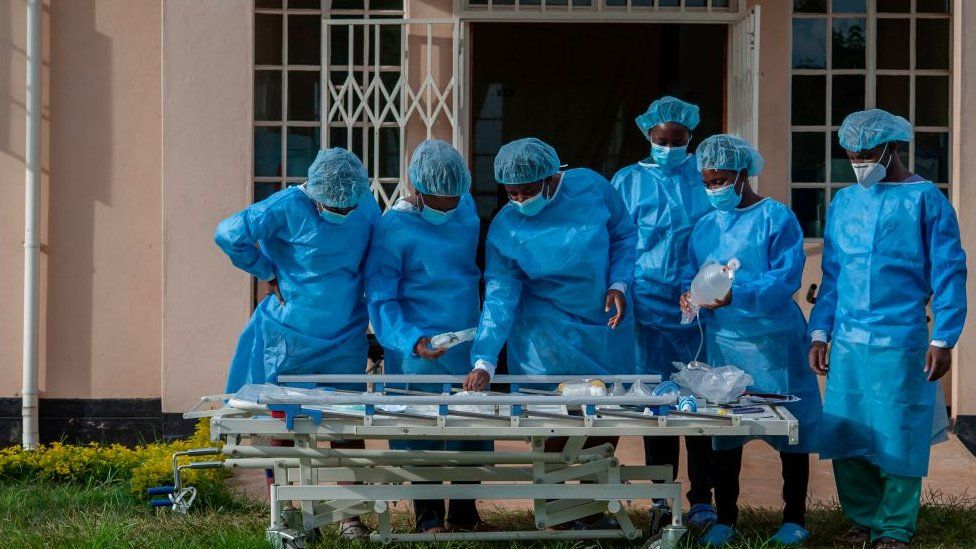
SharecloseShare pageCopy linkAbout sharingimage copyrightGetty ImagesHealth authorities in Malawi have incinerated 19,610 expired doses of the AstraZeneca coronavirus vaccine, saying it will reassure the public that any vaccines they do get are safe. It is the first African country to publicly do this.The World Health Organization initially urged countries not to destroy expired doses but has now changed its advice.Uptake of the vaccine in Malawi has been low and health workers hope the move will increase public confidence.Out of a population of about 18 million people, the country has recorded 34,232 confirmed coronavirus cases and 1,153 deaths.Africa Live: Latest updates on this and other storiesWhy are vaccines going to waste in Africa?DR Congo in race against time to vaccinate peopleMalawi received 102,000 doses of the AstraZeneca vaccine from the African Union on 26 March and used almost 80%.But the expiry date on the labels was 13 April so vials were taken out of the cold chain.Malawi’s Principal Health Secretary told the BBC that it was unfortunate they had to destroy the vials but the benefits outweighed the risks.”When news spread that we had out-of-date vaccines, we noticed that people were not coming to our clinics to get immunised,” said Dr Charles Mwansambo.”If we don’t burn them, people we will think that we are using expired vaccines in our facilities and if they don’t come Covid-19, will hit them hard.”He added that burning the doses was “just a formality” as they had already been destroyed. Malawi’s Health Minister Khumbize Chiponda was photographed closing the incineration chamber on Wednesday.On the streets of the capital Lilongwe, some people are worried about the safety of the vaccine.”I would like to get vaccinated but how sure am I if I go to the hospital I won’t be given the expired vaccines?” shopkeeper Jack Chitete told the BBC.”I have heard a lot of stories about people getting blood clots and some even dying after getting immunised. Are those people telling lies? If it is the truth, why are we being given the same vaccines?” asked another shopkeeper, Mphatso Chipenda.The link between the AstraZeneca vaccine and rare blood clots is not yet proven, and health experts say the risk from Covid-19 is far higher, so advise people to get vaccinated if they can.Rare blood clots – what you need to knowMalawi is not the only country in Africa to have expired vaccines. The WHO initially asked them to hold onto the vaccines until it could establish whether they could be still be used.But it now says vaccines already sent out by the manufacturer with a set expiry date should be destroyed.”While discarding vaccines is deeply regrettable in the context of any immunisation programme, WHO recommends that these expired doses should be removed from the distribution chain and safely disposed of,” it said in a statement on 17 May.Other vaccines that are currently in use have a shelf-life of up to 36 months. The challenge with Covid-19 vaccines is that they have been in use for less than a year and there is no substantive data around their effectiveness after long periods.GLOBAL SPREAD: Tracking the coronavirus pandemicSYMPTOMS: What are the symptoms of the coronavirus?VARIANTS: How worrying are the new coronavirus variants?TRACKER: Coronavirus cases in Africa

Read more →

As Restrictions Loosen, Families Travel Far and Spend Big

Newly vaccinated families are opting for private jets, luxury resorts and guided tours in elaborate new twists on the old-fashioned family reunion.Jeff Belcher, 41, wouldn’t necessarily have chosen Williamsburg, Va., as the destination for his family’s first vacation since travel restrictions began to ease. But when his extended family decided to travel to the American Revolution-era town for a reunion this summer, he knew that he, his wife and their three children wouldn’t miss it.Their group of 18, which will include his parents, his sister, his aunt and uncle, and his mother-in-law and sister-in-law, will gather at the end of July and stay in several adjoining rented condos. There are plans to visit historical battlefields, check out the recreations of Jamestown Settlement ships, and enjoy outdoor meals while the family’s youngest generation — eight kids in total — play together after more than a year apart.Far-flung families are combining traveling and being together — two of the most longed-for practices during more than a year of pandemic lockdowns — into elaborate new twists on the old-fashioned family reunion. In a recent survey by Wyndham Destinations, the nation’s largest timeshare company, 75 percent of respondents said they were planning to travel for a family reunion in 2021; in a March survey from American Express Travel, 71 percent of respondents said they planned to travel to visit loved ones they hadn’t been able to see during the pandemic, and 60 percent said a 2021 family reunion was in the works.At Woodloch, a Pennsylvania family resort in the Pocono Mountains, bookings for 2021 are outpacing 2019.Properties that cater to large-scale gatherings are feeling the windfall. At Woodloch, a Pennsylvania family resort in the Pocono Mountains, multigenerational travel has always been their bread and butter. But bookings for 2021 are already outpacing 2019, with 117 reservations currently on the books (2019 saw 162 bookings total). “Demand is stronger than it has ever been,” said Rory O’Fee, Woodloch’s director of marketing.Salamander Hotels & Resorts, which has five properties in Florida, Virginia, South Carolina and Jamaica, has seen 506 family reunions already booked in 2021, accounting for $2.47 million in revenue. In the full calendar year of 2019, they saw only 368 events total, worth about $1.31 million. Club Med said that 16 percent of its 2021 bookings are multigenerational, compared with 3 percent in 2019.Guided tours are also newly becoming more popular with families looking to reunite: Guy Young, president of Insight Vacations, launched several new small private group trips — which can be booked for as few as 12 people and include a private bus and travel director — after noting that extended families accounted for 20 percent of his business in March and April, compared to a prepandemic average of 8 percent. “Coming out of Covid, with families separated for many months, we saw a significant increase in demand for multigenerational family travel,” he said.Reuniting at long lastMr. Belcher hopes his family’s reunion trip to Williamsburg, which will require a nearly nine-hour drive from his home in Livonia, Mich., will offer an opportunity to mend some of the tensions that have built up in the past year. Mr. Belcher and his wife, Stephanie, a financial educator, have been strict about mask-wearing for themselves and their children, who are 9, 5 and almost 6 months. Other family members have been more relaxed, which is one of the reasons they have spent so many months apart. “I am hoping to make some post-Covid memories, starting to hopefully put some of this behind us,” Mr. Belcher said, noting that all the adults attending the reunion will be vaccinated, and as long as there are no additional strangers in the room, they will allow their children to be unmasked, just like the adults, at indoor family events. “Before all of this happened, we were a very close family.”Traveling together will also offer families a chance to reconnect offline after many months of Skype and screen time.Esther Palevsky, 70, lives in Solon, Ohio, and hasn’t seen her 7-year-old grandson, Sylvester, since before the pandemic. So this summer, she and her husband, Mark, 71, will fly to Reno, Nev. — their first flight in more than a year — and then drive to California’s Lake Tahoe. Ms. Palevsky’s daughter, Stacey, and her son-in-law, Ben Lewis, will drive with Sylvester from San Francisco to meet them, and the family will spend several nights at an Airbnb in the Sierra Nevada mountains. It will be a new experience for Mr. and Ms. Palevsky, who prefer to take cruises when they have vacation time. Neither has ever been to Lake Tahoe, and they have limited experience with Airbnb. The location and accommodations, said Ms. Palevsky, didn’t matter much. She just wants to squeeze her grandson.“Just thinking about hugging him again, I get teary-eyed,” said Ms. Palevsky, who has been reading chapter books with Sylvester over video chat throughout the pandemic in order to stay in touch. “I’m sure I’ll see Sylvester and think about how big he looks. On the tablet, you just can’t tell.”Sandy Pappas, the owner of Sandy Pappas Travel, said that on an average year, 5 percent of her clients are booking family reunion trips. This year, that number is already between 15 and 20 percent.“I do a lot of family travel but it’s usually just a family of four or five. Now I’m getting two adult kids and their families and grandparents, and sometimes both sets of grandparents. And everyone is spending more money because nobody ate out or traveled in 2020, so they have funds left over,” she said.In the Caribbean, the Mandarin Oriental on Canouan is a popular destination for family reunions.Not your old-fashioned family reunionDomestic destinations are popular, Ms. Pappas said, but so is the Caribbean.On Canouan, a tiny crescent-shaped island in St. Vincent and the Grenadines, the Mandarin Oriental is fielding frequent requests for family reunions from Americans as well as travelers from Britain and Germany. The groups range from eight to 11 guests, said the general manager, Duarte Correia. “Many of our guests want to reunite with loved ones they have only been able to connect with by phone or on the virtual video platforms, like Zoom, for a year or more,” he said.At ÀNI Private Resorts’s property in the Dominican Republic, 11 of the 16 bookings for this summer, which are all property buyouts, are for family reunions. The resort says that’s a 35 percent increase over 2019’s traffic. At the Four Seasons Resort in Anguilla, four- and five-bedroom villas were totally sold out over spring break, and reservations for this summer are 25 percent higher than they were in 2019. The Tryall Club, meanwhile, an all-villa property in Jamaica, has seen a 294 percent increase in overall bookings, and says 70 percent of those are for families or multigenerational groups.While the demand for travel across all sectors is high, family travel was predicted to eventually lead the way for the industry’s rebound after a staggering collapse. Travel advisers spent most of 2020 creating socially distanced itineraries for nuclear families that were already living together during lockdown. But now, they say, the most popular type of family trip is the reunion that brings far-flung relatives back into the fold. Kate Johnson, the owner of KJ Travel in Houston, says she has seen a sixfold increase in family reunion travel compared to last year, and she expects the number to continue to climb. She is also planning her own family reunion trip with 17 family members, including her daughters, their grandparents, cousins and aunts, to Disney World in Florida, in November.“When I get requests and I see how tight availability is for accommodation, it definitely makes me feel a sense of urgency to get my own family to start planning,” she said.Properties are leaning into the trend, rolling out packages geared toward family reunions and even hiring dedicated staff to shepherd the events.After noticing that a nearly 20 percent spike in bookings was coming from seniors looking to reconnect with younger family, the Deer Path Inn, in Lake Forest, Ill., relaunched its Gramping Getaway Package, which includes an outdoor scavenger hunt and an afternoon tea that can be enjoyed by all ages, including little ones as well as Gram and Gramps.Meanwhile, the Westin Cape Coral Resort at Marina Village created a new staff position to oversee such group trips: Chief Reunion Officer. Tosha Wollney, who was promoted to the position from her previous post of senior catering sales executive, will be busy: In 2019 the property had two family reunions, and in the last five weeks alone, they’ve booked five.The average size of the groups, she said, is between 30 and 40 family members. Her work involves customizing dinner menus to incorporate family recipes, creating specialty cocktails named after the family, and planning recreational activities like cornhole, fishing and golf tournaments.“It’s not like 20 years ago, when families would run around with potato sacks,” she said. “It’s more sophisticated.”Private jets, budget-busting plansAnd after using the act of planning for future travel to get many isolated families through the darkest months of the pandemic, many of the reunions on the books are truly budget-bustingPrivate jet travel, which surged during the pandemic, is increasingly popular among large families. Jessica Fisher, the founder of the aviation marketplace Flyjets, said private jet bookings for families on her site have doubled since last year. “There is this readiness to ‘move’ in safe ways among groups, especially for those who are choosing to reunite with extended family,” she said in an email.Spending is up, as well, as families splurge on longer and more elaborate trips together than they might have prepandemic. “During the worst of Covid, when people were unable to see their grandparents, what started happening was clients planning these epic, complex itineraries for the future,” said Brendan Drewniany, the communications director for the luxury travel company Black Tomato. “The rise of multigenerational is the biggest trend we can track.”The company has seen a 70 percent increase in multigenerational bookings over the past two months, and a 55 percent increase in average spending for family trips. Last month, they debuted five new travel itineraries called “Take Me On a Story,” each offering real-world immersions in scenes from classic children’s books and aimed directly at children and grandparents traveling together.“People want to make up for lost time,” Mr. Drewniany said. “They’re really open to where they go. They just want to be together.”Follow New York Times Travel on Instagram, Twitter and Facebook. And sign up for our weekly Travel Dispatch newsletter to receive expert tips on traveling smarter and inspiration for your next vacation. Dreaming up a future getaway or just armchair traveling? Check out our 52 Places list for 2021.

Read more →

E-Bikes Can Provide a Good Workout

Pedal-assisted electric bikes provided a faster and more “fun” commute while raising breathing and heart rates enough to contribute to fitness.Does riding an electric bike to work count as exercise, and not just a mode of transportation?It can, if you ride right, according to a pragmatic new study comparing the physiological effects of e-bikes and standard road bicycles during a simulated commute. The study, which involved riders new to e-cycling, found that most could complete their commutes faster and with less effort on e-bikes than standard bicycles, while elevating their breathing and heart rates enough to get a meaningful workout.But the benefits varied and depended, to some extent, on how people’s bikes were adjusted and how they adjusted to the bikes. The findings have particular relevance at the moment, as pandemic restrictions loosen and offices reopen, and many of us consider options other than packed trains to move ourselves from our homes to elsewhere.In America, few of us bike to work. By most estimates, only about one-half of 1 percent of American workers regularly commute on a bicycle, a number that has been shrinking, not rising, in recent decades. Asked why, most people tell researchers that bike commuting requires too much time, perspiration and accident risk. Simultaneously, though, people report a growing interest in improving their health and reducing their ecological impact by driving less.In theory, both these hopes and concerns could be met or minimized with e-bikes. An alluring technological compromise between a standard, self-powered bicycle and a scooter, e-bikes look almost like regular bikes but are fitted with battery-powered electric motors that assist pedaling, slightly juicing each stroke.With most e-bikes, this assistance is small, similar to riding with a placid tailwind, and ceases once you reach a maximum speed of 20 miles per hour or stop pedaling. The motor will not turn the pedals for you. (Some e-bikes, categorized as Type 2 models, have a throttle and will pedal for you, up to a speed of 20 miles per hour, and Type 3 e-bikes power you to a maximum speed of 28 miles per hour. Many localities do not allow Type 3 models on bike paths. You can learn more about e-bike regulations at www.peopleforbikes.org/electric-bikes/policies-and-laws.)Essentially, e-bikes are designed to make riding less taxing, which means commuters should arrive at their destinations more swiftly and with less sweat. They can also provide a psychological boost, helping riders feel capable of tackling hills they might otherwise avoid. But whether they also complete a workout while e-riding has been less clear.So, for the new study, which was published in March in the Translational Journal of the American College of Sports Medicine, researchers at Miami University in Oxford, Ohio, decided to ask inexperienced cyclists to faux commute. To do so, they recruited 30 local men and women, aged 19 to 61, and invited them to the physiology lab to check their fitness levels, along with their current attitudes about e-bikes and commuting.Then, they equipped each volunteer with a standard road bike and an e-bike and asked them to commute on each bike at their preferred pace for three miles, a distance the scientists considered typical for bike commutes in America. The cyclists pedaled around a flat loop course, once on the road bikes and twice with the e-bike. On one of these rides, their bike was set to a low level of pedal assistance, and on the other, the oomph was upped until the motor sent more than 200 watts of power to the pedals. Throughout, the commuters wore timers, heart rate monitors and facial masks to measure their oxygen consumption.Afterward, to no one’s surprise, the scientists found that the motorized bikes were zippy. On e-bikes, at either assistance level, riders covered the three miles several minutes faster than on the standard bike — about 11 or 12 minutes on an e-bike, on average, compared to about 14 minutes on a regular bike. They also reported that riding the e-bike felt easier. Even so, their heart rates and respiration generally rose enough for those commutes to qualify as moderate exercise, based on standard physiological benchmarks, the scientists decided, and should, over time, contribute to health and fitness.But the cyclists’ results were not all uniform or constructive. A few riders’ efforts, especially when they used the higher assistance setting on the e-bikes, were too physiologically mild to count as moderate exercise. Almost everyone also burned about 30 percent fewer calories while e-biking than road riding — 344 to 422 calories, on average, on an e-bike, versus 505 calories on a regular bike — which may be a consideration if someone is hoping to use bike commuting to help drop weight. And several riders told the researchers they worried about safety and control on the e-bikes, although most, after the two rides, reported greater confidence in their bike handling skills, and called the e-commutes, compared to the road biking, more fun.This study, though, was obviously small-scale and short-term, involving only three brief pseudo-commutes. Still, the findings suggest that “riding an e-bike, like other forms of active transport, can be as good for the person doing it as for the environment,” says Helaine Alessio, the chair of the department of kinesiology at Miami University, who led the new study with her colleague Kyle Timmerman and others.But to increase your potential health benefits the most, she says, keep the pedal assistance level set as low as is comfortable for you. Also, for the sake of safety, practice riding a new e-bike — or any standard bike — on a lightly trafficked route until you feel poised and secure with bike handling. Wear bright, visible clothing, too, and “choose your commuting route wisely,” Dr. Alessio says. “Look for bike paths and bike lanes whenever possible, even if you need to go a little bit out of your way.”

Read more →

Amphotericin-B: Concern over 'black fungus' drug shortage as cases rise

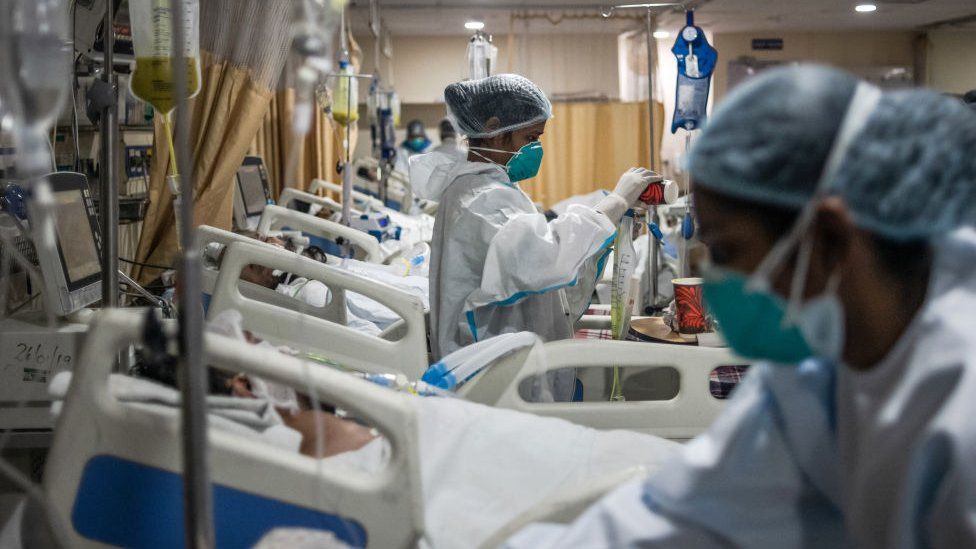
SharecloseShare pageCopy linkAbout sharingimage copyrightGetty ImagesAn anti-fungal drug used in the treatment of a rare infection called mucormycosis, or “black fungus”, is in short supply across states in India.Amphotericin B, which is manufactured by many Indian firms, is also on sale on the black market.There are many emergency appeals on social media for the drug as mucormycosis cases rise.Doctors say the infection could be triggered by the use of steroids in severely-ill Covid patients.Mucormycosis is caused by exposure to mucor mould which is commonly found in soil, plants, manure and decaying fruits and vegetables. The deadly ‘black fungus’ maiming Covid patientsIndia’s holiest river is swollen with bodiesSix hospitals, three days and a Covid nightmareIt affects the sinuses, the brain and the lungs and can be dangerous in diabetic or severely immunocompromised people, such as cancer patients or people with HIV/AIDS. Many patients arrive for treatment late, when they are already losing vision, and doctors have to surgically remove the eye to stop the infection from reaching the brain.image copyrightGetty ImagesLast week, Maharashtra’s health minister Rajesh Tope said there were 1,500 cases of the infection in the state, which is one of the worst affected in the second wave of Covid-19 in India.As many as 52 people people have died due to mucormycosis in the state since the coronavirus outbreak started last year, a senior health department told PTI news agency last week. Officials in Gujarat state said that close to 900 cases of “black fungus” had been reported in the past month.The owner of a big pharmacy in Ghaziabad city in Uttar Pradesh state told the BBC that earlier the injection had been easily available but had become difficult to procure since demand shot up three weeks ago. With a severe shortage of the drug across cities, there has been a flood of frantic SOS pleas on Twitter. Urgently required:Amphotericin BPatient name: RavindraNaiduAge: 62 yrsLocation: TirupatiHosptial: AmaraContact: Shyam 9949954433Please help@JSPSriram @charan_tweetz @6eChaithu @kiranbs45 @HiHyderabad @gopal_karneedi pic.twitter.com/k68Qjk5pcO— Sindhuja (@Sindhuj33493004) May 18, 2021
The BBC is not responsible for the content of external sites.View original tweet on TwitterVery Urgent Requirement .. Help Needed for my Friend in #Delhi Admitted in hospital Max Super speciality hospital. Need #AmphotericinB injections #Ambisome .. Pls RT and help.. @SonuSood @ynakg2 @VK84015570 @vamsikaka @vizagobelix Contact Attendee Number : 9704116367 pic.twitter.com/z3pSA7uxBv— M a n u (@Manu_Tweetz) May 18, 2021
The BBC is not responsible for the content of external sites.View original tweet on TwitterDoctors say amphotericin B or “ampho-B” is an anti-fungal intravenous injection which has to be administered every day for up to eight weeks to patients diagnosed with mucormycosis. There are two forms of the drug available: standard amphotericin B deoxycholate and liposomal amphotericin.”We prefer the liposomal form since it is safer, more effective and has lesser side effects. The flip side being that it is more expensive,” Dr Akshay Nair, a Mumbai-based eye surgeon, told the BBC.Concerns over mucormycosis are putting extra financial pressure on some families. Paying for treatment can run into hundreds of thousands of rupees. And families pay a lot more if they have to buy the drug on the black market.

Read more →

A new theory for what's happening in the brain when something looks familiar

When a person views a familiar image, even having seen it just once before for a few seconds, something unique happens in the human brain.
Until recently, neuroscientists believed that vigorous activity in a visual part of the brain called the inferotemporal (IT) cortex meant the person was looking at something novel, like the face of a stranger or a never-before-seen painting. Less IT cortex activity, on the other hand, indicated familiarity.
But something about that theory, called repetition suppression, didn’t hold up for University of Pennsylvania neuroscientist Nicole Rust. “Different images produce different amounts of activation even when they are all novel,” says Rust, an associate professor in the Department of Psychology. Beyond that, other factors — an image’s brightness, for instance, or its contrast — result in a similar effect.
In a paper published in the Proceedings of the National Academy of Sciences, she and postdoctoral fellow Vahid Mehrpour, along with Penn research associate Travis Meyer and Eero Simoncelli of New York University, propose a new theory, one in which the brain understands the level of activation expected from a sensory input and corrects for it, leaving behind the signal for familiarity. They call it sensory referenced suppression.
The visual system
Rust’s lab focuses on systems and computational neuroscience, which combines measurements of neural activity and mathematical modeling to figure out what’s happening in the brain. One aspect relates to the visual system. “The big central problem of vision is how to get the information from the world into our heads in an interpretable way. We know that our sensory systems have to break it down,” she says.

Read more →

A gentler strategy for avoiding childhood dental decay

The combination of a carb-heavy diet and poor oral hygiene can leave children with early childhood caries (ECC), a severe form of dental decay that can have a lasting impact on their oral and overall health.
A few years ago, scientists from Penn’s School of Dental Medicine found that the dental plaque that gives rise to ECC is composed of both a bacterial species, Streptococcus mutans, and a fungus, Candida albicans. The two form a sticky symbiosis, known scientifically as a biofilm, that becomes extremely virulent and difficult to displace from the tooth surface.
Now, a new study from the group offers a strategy for disrupting this biofilm by targeting the yeast-bacterial interactions that make ECC plaques so intractable. In contrast to some current treatments for ECC, which use antimicrobial agents that can have off-target effects, potentially harming healthy tissues, this treatment uses an enzyme specific to the bonds that exist between microbes.
“We thought this could be a new way of approaching the problem of ECCs that would intervene in the synergistic interaction between bacteria and yeast,” says Geelsu Hwang, an assistant professor in Penn Dental Medicine and senior author on the study, published in the journal mBio. “This offers us another tool for disrupting this virulent biofilm.”
The work builds off findings from a 2017 paper by Hwang and colleagues, including Hyun (Michel) Koo of Penn Dental Medicine, which found that molecules call mannans on the Candida cell wall bound tightly to an enzyme secreted by S. mutans, glycosyltransferases (Gftb). In addition to facilitating the cross-kingdom binding, Gftb also contributes to the stubbornness of dental biofilms by manufacturing gluelike polymers called glucans in the presence of sugars.
While some cases of ECC are treated with drugs that kill the microbes directly, potentially reducing the number of pathogens in the mouth, this doesn’t always effectively break down the biofilm and can have off-target effects on “good” microbes as well as the soft tissues in the oral cavity.

Read more →

Google AI tool can help patients identify skin conditions

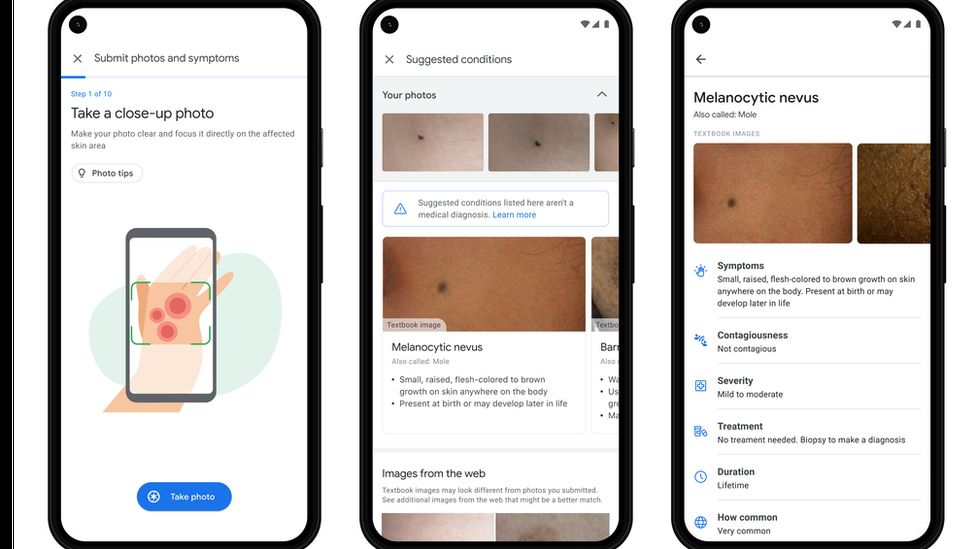
SharecloseShare pageCopy linkAbout sharingimage copyrightGoogleGoogle has unveiled a tool that uses artificial intelligence to help spot skin, hair and nail conditions, based on images uploaded by patients.A trial of the “dermatology assist tool”, unveiled at the tech giant’s annual developer conference, Google IO, should launch later this year, it said.The app has been awarded a CE mark for use as a medical tool in Europe.A cancer expert said AI advances could enable doctors to provide more tailored treatment to patients.The AI can recognise 288 skin conditions but is not designed to be a substitute for medical diagnosis and treatment, the firm said.It has taken three years to develop, and has been trained on a dataset of 65,000 images of diagnosed conditions, as well as millions of images showing marks people were concerned about, and thousands of pictures of healthy skin, in all shades and tones.As well as using images, the app also requires patients to answer a series of questions online.It is based on previous tools developed by Google for learning to spot the symptoms of certain cancers and tuberculosis.Currently none of these tools is approved as an alternative to human diagnosis.Google says there are some 10 billion searches for skin, hair and nail issues on its search engine every year.Dermatology Assist has not yet been given clearance by the Food and Drug Administration (FDA) for use in the US, but a similar machine-learning model built by British firm Optellum was recently approved by the FDA for use as an assistant in the diagnosis of lung cancer.Professor Tim Underwood, head of cancer sciences at the University of Southampton, said such tools had the potential to provide more tailored treatments to patients.”The application of AI, both in cancer and in other areas of medicine, informs the conversation around what the diagnosis might be and what treatment to offer to an individual,” he said.This is not the first AI in healthcare, but it is significant for putting the tool in the hands of the public rather than doctors. Google views this AI as better than searching for the information yourself, rather than a substitute for medical advice. Whether people use it like that is another matter – we already know the internet is a source of both medical panic and false reassurance. How people might use the AI has fed into a design that aims to prioritise safety. Medical tools like this, yes even those with an AI at the helm, have to strike a balance. Do you focus on catching everyone who has a disease or on ruling out those who are healthy to avoid unnecessary worry or treatments? One always comes at the cost of the other. The doctors and developers involved told me the AI has been optimised to avoid missing “alarming or scary” conditions such as skin cancer. The flip side is some people will be advised to check out something that will turn out to be benign.

Read more →

Jim Klobuchar, Minnesota Newspaperman and Amy’s Father, Dies at 93

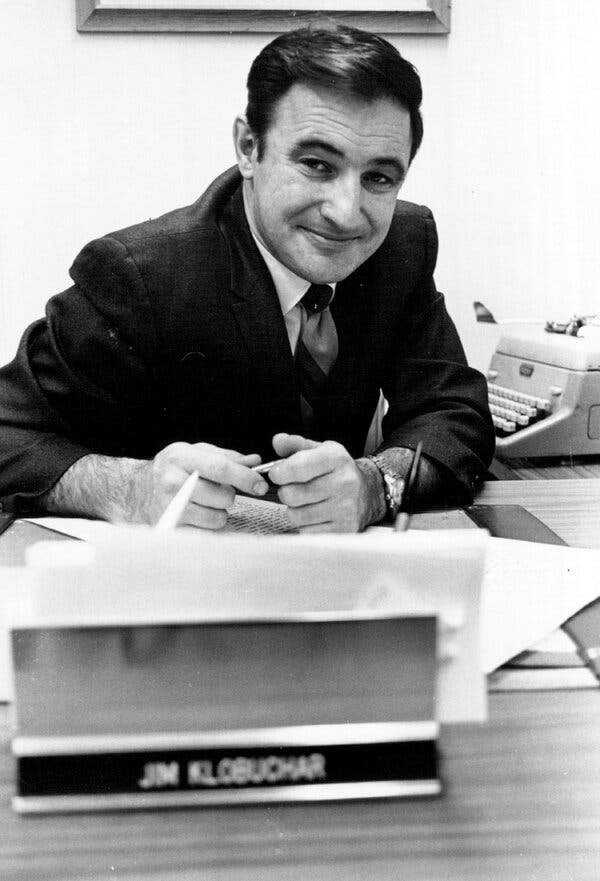
He rose to folk hero status with his derring-do as a journalist and came to national attention when his daughter, Senator Amy Klobuchar, spoke openly about his struggles with alcoholism.Jim Klobuchar was a renowned sportswriter and general interest columnist in Minnesota for decades.Straight out of central casting, he was celebrated for his derring-do: He once held a piece of chalk between his lips while a sharpshooter took aim at it. He was a finalist for NASA’s initiative to send a journalist into space, until the Challenger explosion in 1986 ended the program. He scaled the Matterhorn eight times and Kilimanjaro five.And he could make readers weep, as when he wrote about a 5-year-old girl with a brain tumor who loved to ride the rails: “She was cradled in her mother’s lap on the observation car of the Milwaukee Road’s Hiawatha, a tidy young lady. A dying little girl, taking her last train ride.”But he did not come to national attention until 2018, when his daughter, Senator Amy Klobuchar, Democrat of Minnesota, mentioned him during the contentious televised hearings on Judge Brett M. Kavanaugh’s nomination to the Supreme Court.During her questioning of the nominee, Ms. Klobuchar noted that her father, then 90, was a recovering alcoholic who still attended meetings of Alcoholics Anonymous. She asked Judge Kavanaugh whether he had ever drunk so much that he could not recollect events. He turned the question back on her, a breach of decorum for which he later apologized. She accepted the apology, adding, “When you have a parent that’s an alcoholic, you’re pretty careful about drinking.”By then her father had been sober for more than 25 years. When she ran for the Democratic president nomination in 2020, Senator Klobuchar spoke often of his successful treatment and proposed spending billions of dollars to treat substance abuse.Mr. Klobuchar in 1974 at his desk at The Minneapolis Star, where we wrote a long-running column about whatever he wanted.Getty ImagesMr. Klobuchar died on Wednesday at a care facility in Burnsville, a suburb of the Twin Cities. He was 93. Senator Klobuchar, who announced his death on Twitter, did not specify a cause but said he had had Alzheimer’s disease. He survived a bout with Covid-19 last year.Mr. Klobuchar was long popular in Minnesota, even a folk hero. In addition to his newspaper columns — 8,400 of them by the time he retired from The Minneapolis Star Tribune in 1995 — he wrote 23 books, held a football clinic for women, hosted talk shows and for almost four decades led annual “Jaunt with Jim” bicycling trips around the state, stopping at pay phones along the road to call in and dictate his column. After he and his first wife, Rose (Heuberger) Klobuchar, divorced in 1976, he and Amy began taking long-distance biking trips to bond with each other.As a young journalist for The Associated Press, he experienced an especially heady moment the day after the 1960 presidential election, when John F. Kennedy and Richard M. Nixon were still neck and neck, with three states yet to report results. Mr. Klobuchar wrote the nationwide bulletin announcing that Mr. Kennedy had won Minnesota, giving him enough electoral votes to clinch the presidency. The scoop appeared in papers across the country.James John Klobuchar was born on April 9, 1928, in Ely, a small city on the Iron Range of northern Minnesota, where he grew up. His father, Michael Klobuchar, worked in the iron ore mines. His mother, Mary (Pucel) Klobuchar, was a homemaker.From an early age, Jim read The Duluth Herald, and his mother encouraged him to pursue a career in journalism, Senator Klobuchar wrote in her 2015 memoir, “The Senator Next Door.”He graduated from Ely Junior College (now Vermilion Community College) in 1948, then enrolled at the University of Minnesota, graduating with a degree in journalism in 1950.He landed a job as wire editor at The Bismarck Daily Tribune. But six months later he was drafted into the Army and assigned to a new psychological warfare unit in Stuttgart, Germany, where he wrote anti-communist material.He returned briefly to the Bismarck paper, then was recruited by The Associated Press in Minneapolis, where he scored his election scoop. He joined The Minneapolis Tribune in 1961 as a sports reporter, focusing on the Minnesota Vikings.He left The Tribune in 1965 for the competing St. Paul Pioneer Press, but it wasn’t long before The Minneapolis Star lured him away by giving him a column to write about whatever he wanted.Mr. Klobuchar in 2015. He came to national attention when Senator Klobuchar spoke publicly of his  overcoming alcohol addiction.Aaron Lavinsky/Star Tribune, via Associated PressThis was the heyday of print journalism, when newspapers sent their star writers all over the world. During the height of the Cold War, Mr. Klobuchar reported from Moscow. He covered the murder and funeral of Aldo Moro, Italy’s former prime minister. in 1978. He challenged the pool hustler Minnesota Fats to a game. He wrote about an air service that employed topless flight attendants. He played a reporter in the 1974 movie “The Wrestler,” with Ed Asner.But it was not all smooth sailing. He was suspended twice, once for writing a speech for a politician, and once for making up a quote in a story that he thought was an obvious satire.He also took his drinking too far, his daughter said in her book. For a time, heavy drinking was part of his colorful public persona. When he was charged with a couple of alcohol-related driving offenses in the mid-1970s, nothing much happened.But the public’s attitude toward drinking and driving underwent a sea change, and when he was arrested in 1993 for driving under the influence, he lost his license and was threatened with jail. He wrote a front-page apology to his readers. And in an accompanying note, the paper’s editor, Tim McGuire, said that Mr. Klobuchar had “endangered lives” and that the paper was insisting that he seek treatment.He complied. He entered an inpatient rehabilitation center, attended Alcoholics Anonymous meetings and found God. Ms. Klobuchar wrote that his readers forgave him.“It was his very flaws that made my dad so appealing to them,” she said. “His rough-and-tumble life growing up and his personal struggles had a huge influence on his writing. That’s why he was at his best when he wrote about what he called ‘the heroes among us’ — ordinary people doing extraordinary things.”In addition to Senator Klobuchar, he is survived by another daughter, Meagan; his wife, Susan Wilkes; his brother, Dick; and a granddaughter.When he decided to retire from The Star Tribune in 1995, Mr. Klobuchar told his office mates that he wanted no fuss, just to leave quietly. After he had packed up his things and was headed for the door, an editor got on the public-address system and announced: “This is Jim Klobuchar’s last day. That’s 43 years of journalism going out the door.”Everyone stood and applauded.

Read more →

Vaccinating children before poor morally wrong, Oxford scientist says

SharecloseShare pageCopy linkAbout sharingimage copyrightGetty ImagesOffering children in some richer countries a coronavirus vaccine before some high-risk people in poorer ones is “morally wrong”, a group of MPs has been told.Prof Andrew Pollard, who helped develop the Oxford-AstraZeneca vaccine, said the “inequity” of vaccine distribution must change “urgently”.The US and Canada have made a jab available to children as young as 12.But in many low-income countries those most at risk are yet to be vaccinated.’Appalling circumstances'”The overall aim of a global vaccination programme in a pandemic is to stop people dying,” said Prof Pollard, director of the Oxford Vaccine Group, who led the trials for the Oxford-AstraZeneca vaccine.”I have worked in Nepal and Bangladesh and colleagues there are facing the most appalling circumstances – they’re not working in a situation where there’s an NHS to support them,” he told the All-Party Parliamentary Group on Coronavirus.”It feels completely wrong to be in a situation morally where we are allowing that to happen whilst in many countries vaccines are being rolled out to younger and younger populations at very, very low risk. “Children have near to zero risk of severe disease or death.”‘Global problem’The Pfizer vaccine, which has been approved in the US and Canada, has completed trials in adolescents. And a number of other Covid vaccines are being tested on this age group and younger.But Prof Pollard said: “The main issue at the moment is to try and make sure the doses go to those in greatest need. “This is a global problem which impacts our economies and puts pressure on health systems.”‘Absolute urgency’Studies show over-50s, people with certain health conditions and healthcare workers are most likely to become seriously ill or die from coronavirus – but many in parts of Africa and South Asia are still waiting for a vaccine.Campaigners warn supply shortages are a huge concern.Covax, the international scheme to ensure equal access to Covid vaccines, is currently short of 140 million doses, after a disruption in supply from India.Unicef and the World Health Organization have both called on wealthier countries to share their surplus supplies, as some have ordered enough to vaccinate their populations many times over. Prime Minister Boris Johnson said in February most of the UK’s surplus supply would be donated to poorer countries – but a specific timescale has not been confirmed.India’s Covid crisis hits vaccine-sharing schemeProf Pollard said his key message to the government would be to act with “absolute urgency” or “many millions could die between now and September”.”We can’t wait until later this year to make decisions, he said. “It has to be now that we look at redistribution and how we get doses to countries that have poor access at the moment – and that is through Covax.”UK pledges surplus Covid vaccines to poorer nationsAnother witness told the MPs’ panel richer countries were “hoarding doses” and he feared they would do the same with potential booster shots in the future.But the production of vaccine in low- and middle-income countries would prevent this.”We hear from so many manufacturers in places like Pakistan and Bangladesh and Indonesia – they’re ready, they’ve got some capacity,” Prof Gavin Yamey, director of the Centre for Policy Impact in Global Health, at Duke University, in the US, said.”It’s fine to continue donating – but there has to be a long-term vision. “This pandemic could be with us for years.”Is it really just going to be charity – drip, drip, drip of a few doses from rich countries? “That’s not a long-term vision.”LOOK-UP TOOL: How many cases in your area?OXFORD JAB: What is the Oxford-AstraZeneca vaccine?GLOBAL SPREAD: How many worldwide cases are there?THE R NUMBER: What it means and why it mattersEPIDEMIC v PANDEMIC: What’s the difference?VACCINE: When will I get the jab?NEW VARIANTS: How worried should we be?COVID IMMUNITY: Can you catch it twice?DELIVERIES: How can I get a takeaway safely?LOCKDOWN TIPS: Five ways to stay positive

Read more →