Can a Smartwatch Save Your Life?

The advent of wearable devices that monitor our heart rhythms both excites and worries doctors.By Sean DongOn a recent Saturday, my 87-year-old mother was feeling a bit woozy, so she pressed a button on the side of her Apple watch to reveal her ECG, a recording of her heart’s electric rhythm. Thirty seconds later, three messages appeared on the watch’s screen. One showed the characteristic zigzag spikes of the ECG, or electrocardiogram. The second revealed that her heart rate, usually 80 beats per minutes, was down to only 40. The third said the results were “inconclusive,” with the advice: “Call your doctor.”My mother is a hardy octogenarian. She walks about a mile every day, works out with a trainer (currently via Zoom) three times a week and, as she often used to say, planks nearly as well as her former sorority sister, the late Ruth Bader Ginsburg.After leaving a message with her doctor’s office, she called my brother, a doctor who lives nearby, and told him she was exhausted and “just not feeling right.” He came over immediately and took her to the emergency room.There, the hospital’s electrocardiogram, which provides a more detailed readout than the watch, showed that the electrical signals in the top part of the heart were not being transmitted properly to the bottom. Her heart was beating, but too slowly. The staff rushed her to the cardiac care unit, where doctors implanted a pacemaker the next morning.When she called a longtime friend to tell her the story, the friend responded that she’d likewise had a recent smartwatch scare: her heart rate was sky-high, reaching 182. Her doctor had her wear a Holter monitor, a medical-grade portable ECG device that monitors heart rhythm continuously, for four days and advised her to keep a diary of symptoms, such as chest pain or a skipped heartbeat. She didn’t notice any, and the report from the Holter device revealed that everything was fine.The advent of smartwatches that retrieve heart physiology both excites and worries physicians. In addition to Apple, a number of companies make wearable E.C.G. monitors for home use, including Samsung, Withing, Fitbit and AliveCor. And for every story like my mother’s, in which a warning leads to the placement a potentially lifesaving pacemaker, there are many more like her friend’s, in which minor variations in heartbeats lead to needless work-ups, treatments with risky side effects and lots of unnecessary anxiety.So are these wearables worth it?Conclusive evidence about their accuracy and cost effectiveness is lacking, though an Apple-sponsored study from 2019 published in The New England Journal of Medicine suggested they may help to detect some kinds of abnormal heart rhythms, particularly in the elderly. A slew of additional studies are underway, including ones to assess whether a smartwatch can actually help to save lives, or whether mobility measures such as step count lead to fewer heart attacks and hospitalizations.Most of these at-home E.C.G. watches are designed to record heart rate and detect atrial fibrillation, the most common irregular heart rhythm, which affects up to six million Americans. A-fib, as it’s called, increases the risk of strokes, leading to 150,000 deaths and 450,000 hospitalizations a year. But doctors say that many people have an irregular heartbeat every now and then that doesn’t have clinical implications.Like many new technologies that uncover things in the body that doctors don’t yet fully understand, these devices may alert the user about an irregular heartbeat, but not all irregularities are dangerous. “It’s like we just invented the microscope and are seeing microorganisms, and we don’t know what they are,” said Dr. Harlan Krumholz, director of the Center for Outcomes Research and Evaluation at Yale. “We are seeing things, and we aren’t sure if it denotes extra risk.”Most watches wait to send an alert until there have been about five abnormal beats within an hour or so, rather than after every altered rhythm. Still, that doesn’t mean the abnormality is dangerous.“As a cardiologist, I really like at-home devices,” said Dr. Gary Rogal, medical director of cardiovascular services at RWJBarnabas Health in West Orange, N.J., whose team cared for my mother. But he clarified he likes them only for patients in whom he feels there’s an indication to look for something, such as those with an existing heart condition or a family history of heart disease. “I would never subscribe to the concept that everyone should be monitored. You’ll see stuff and it will make you crazy, but you’re probably fine.”The American Heart Association agrees that smartwatch monitors could be beneficial, even lifesaving, for some, but Dr. Mariell Jessup, the group’s chief science and medical officer, said, “we do not have enough data yet to recommend it for everyone.”Even electrocardiograms performed at a doctor’s office aren’t routinely recommended for everyone. The U.S. Preventive Services Task Force, a group of experts that advises on screening tests, says there is not enough evidence to show that routine ECGs are effective and worries about the costs, and potential dangers, of further testing. And doctors worry that as more and more people wear these devices that might spot meaningless heart arrhythmias, there could be a flood of unnecessary follow-up testing and too much treatment.“That’s what keeps me up at night,” said Dr. Joseph Ross, a professor of medicine and public health at Yale who is among a team of investigators conducting a randomized clinical trial that compares a group wearing the Apple watch to a control group wearing a smartwatch without the E.C.G. app. “If someone with an occasional abnormal rhythm that would never have caused a stroke undergoes an extensive work-up or is put on a blood thinner, the risk of a dangerous bleed or other harm outweighs the benefits of potentially preventing a stroke.”Dr. Steven Lubitz, an associate professor of medicine at Harvard Medical School and cardiologist at Massachusetts General Hospital, fears that customers will think the watches provide a safeguard for overall heart health and assume, for example, they check for signs of heart attacks, which they do not.“Your mother’s story is the hope for all of these devices. In her case, the technology led to a diagnosis of a dangerously slow heart rate,” he said. “To date, most of the tech work on heart rate has been focused on detecting A-fib. Similar rigor may be required to validate the detection of other health conditions.” We may be on the verge of entering a new era of medicine in which patients can glance at their wrists to check their emails and heart rhythms and notify their physicians if something seems awry. In the perfect health care world, cardiologists envision a day where they can prescribe a watch or other small clip-on device to high-risk patients and insurance would cover the cost. Otherwise, the advent of new technology would only help those who can afford it, exacerbating health inequities.As Dr. Ross noted, “I want to see more scrutiny, to know whether these digital devices that consumers can purchase are making our patients’ lives better.”Two weeks after her surgery, my mother was doing her one-minute planks and lifting weights with her Zoom personal trainer. Maybe, without the watch, my mother would have been OK and just felt really tired until she called her doctor on Monday. Or maybe not.

Read more →
Breast implant victims to receive compensation

SharecloseShare pageCopy linkAbout sharingMore than 2,500 women who were victims of the PIP breast implant scandal should receive compensation, a French appeal court has decided.It also upheld an earlier judgement finding German company TUV Rheinland, which awarded safety certificates for the faulty implants, negligent. The case in Paris involved 540 British women, who say they suffered long-term health effects.The results could have far-reaching implications for other victims. PIP breast implant scandal: Victims visited by bailiffsPIP breast implants: ‘serious lessons must be learned’Jan Spivey, one of the women in the case, was given PIP implants after she had a mastectomy due to breast cancer. After hearing the decision, she said she felt “elated and exhausted”.”It’s been a very long journey,” she said.”We’ve been in and out of court, and that’s been really difficult for women. We’ve got health issues and we’ve got lots of other responsibilities too – PIP has had an impact on the whole of our lives.”It’s been an inescapable issue.”Jan developed aching joints, pain and fatigue after having the implants, and once they were removed it was clear they had been leaking silicone into her body.”My PIP implants from 20 years ago are still impacting on my life and my health and my wellbeing, even today,” Jan said.”I think I’ve been angry every single day for the 20 years I’ve been affected by PIP.”Another woman affected by the case, Nicola Mason – who had breast implants which then ruptured – said the court decision was “a victory, it’s amazing”.”We’ve waited a long time for this,” she told the Today programme on BBC Radio 4.Nicola first found out about the rupture when she was pregnant, after noticing a large lump under her arm. She said it was “quite traumatic and there was absolutely nothing I could do”.Eventually, the implants were removed but she says she has been left with a massive lump of silicone under her arm which still flares up.”I don’t think anyone knows the long-term effects,” she says.Cheap siliconeBetween 2001 and 2010 the substandard implants were manufactured by the French company Poly Implant Prothèse or PIP.It was liquidated in 2010 and its founder was later given a prison sentence after it emerged the implants were filled with cheap, industrial-grade silicone which was not cleared for human use. It is estimated up to 400,000 women worldwide have received the illegal implants. Latin America was worst hit, in particular Colombia, where there are estimated to be 60,000 victims. In the UK it is thought 47,000 women are affected.Olivier Aumaître, the lawyer representing Jan Spivey and around 2,700 others in the current case, is hoping that after a 10-year legal battle, Thursday will be an important moment.”We will probably reach a turning point. A positive decision will probably put an end to the long period of doubt we’ve been going through during so many years. And the weight of compensation will be widely open for victims.” The case, known as TUV1, was the first to be brought, a decade ago, against TUV Rheinland which issued European safety certificates for the PIP implants.The Appeal Court in Paris will decide whether the German company was negligent and if so whether the women should receive compensation.The ruling is expected to have wider implications for almost 20,000 other women, half of whom are British, who are taking similar legal action in France.Alifie Jones is at home with her son where she has been recovering after having her faulty PIP breast implants removed – just last month. She was finally convinced by a friend to take them out after suffering years of extreme exhaustion and debilitating pain.She says the worst thing about it was wondering why she felt so ill all the time: “Not knowing what it was, the mysterious illnesses, not being able to exercise. Not being vibrant, having my life, sort of stolen from me in a way.” The surgeon was shocked by what he found when he removed one of the implants. It had broken into multiple pieces inside her – exposing her body to an industrial-grade silicone gel.”I can’t believe they were allowed to be implanted in me. I don’t know how they got through regulations, don’t know how they got in me. “But I feel guilty that I messed about with my body and I put them in in the first place. But I’m angry that a human being can do that to another human being.”TUV Rheinland dispute the liability but declined to comment.Did you receive a PIP implant? Share your experiences by emailing haveyoursay@bbc.co.uk.Please include a contact number if you are willing to speak to a BBC journalist. You can also get in touch in the following ways:WhatsApp: +44 7756 165803Tweet: @BBC_HaveYourSayUpload pictures or videoPlease read our terms & conditions and privacy policy

If you are reading this page and can’t see the form you will need to visit the mobile version of the BBC website to submit your question or comment or you can email us at HaveYourSay@bbc.co.uk. Please include your name, age and location with any submission.

Read more →

Lord Coe pleads for resumption of weekly community event Parkrun

World Athletics president Lord Coe has backed the return of Parkrun describing it as “one of the nation’s greatest public health initiatives.” The weekly community running events take place in hundreds of parks across the UK, but were suspended in March because of the coronavirus pandemic.Organisers say plans to resume in early June “hang in the balance” with under half of its venues granting permission.The Parkrun movement was founded in Bushy Park, London, in 2002 by Paul Sinton-Hewitt and is now active in 22 countries.

Read more →

US v Canada: Who won the vaccine rollout?

The BBC’s Ritu Prasad and Holly Honderich take a look at the vaccine rollout in their respective countries – from Canada’s race to catch up on jabs to the US’ odd vaccination incentives. So what’s the final Covid grade for these North American neighbours?

Read more →

Covid-19: What went wrong in Singapore and Taiwan?

SharecloseShare pageCopy linkAbout sharingimage copyrightGetty ImagesThey’ve been hailed as virus success stories – places that have seen virtually zero or single-digit Covid cases since the start of the year.But this month, Singapore and Taiwan have both seen a sudden and aggressive rise in cases – with Singapore logging 248 new cases just last week, and Taiwan 1,200 local infections. Both places have gone into a heightened state of restrictions, limiting the size of social gatherings and closing schools.By global standards, these numbers may seem small – but for these places, these figures would have been unthinkable just months ago. So what exactly went wrong?A tale of complacency: TaiwanTaiwan was among the first places to ban foreign visitors almost as soon as China reported the emergence of the virus – and these tough border restrictions still remain in place. Locally however, the population started to become complacent – as did its government. Hospitals stopped aggressively testing people for Covid, even those with a fever – a common symptom of the virus, according to Associate Professor Lin Hsien-ho of the National Taiwan University. According to online publication Our World in Data, Taiwan was administering just 0.57 virus tests per 1,000 people in mid-Feb. This compared to Singapore’s rate of 6.21 and the UK’s rate of 8.68 at around the same period. “There was a general assumption even with people showing symptoms that the probability of having Covid-19 was essentially zero,” Dr Lin told the BBC, adding that it stemmed from a belief that the virus could not break through Taiwan’s strong borders. “Doctors were not taking it seriously, hospitals were not alert, they were not doing a lot of contact tracing. There was definitely a certain sense of complacency.”This was especially highlighted when Taiwan relaxed its quarantine requirements for non-vaccinated airline pilots from an initial 14-day period, to five days – and then, just three days.Shortly afterwards, a cluster broke out connected to a handful of China Airlines pilots who had been staying at a Novotel near Taoyuan Airport. Many of those linked to this cluster were later found to have contracted the UK variant, known as B.1.1.7.The virus then spread through the community, eventually making its way to Taiwan’s “tea houses” – adult entertainment venues. image copyrightGetty Images”You had people singing, drinking, coming into frequent contact in an indoor setting. It was not just one teahouse but many on the same street – it was a very large super spreader event,” said Dr Lin. Professor Chen Chien-jen, an epidemiologist and former vice-president of Taiwan, says the fact that many who tested positive were unwilling to declare they had visited such adult entertainment venues made contact tracing even more difficult. “It just reminds us that even when a very small proportion of the population breaks the rules, it will lead to leakages,” said Dr Chen. He also adds that Taiwan failed to look at Japan’s adult entertainment industry – which at one point was also a hotbed of infections – before it was ordered shut. “We didn’t learn the lesson from Japan and reflect that Taiwan might have these same issues,” he said. According to Associate Professor Alex Cook of the National University of Singapore (NUS), Taiwan’s situation is a “a reflection of the constant risk of a strategy that puts too much emphasis on border control and not enough on measures to prevent within country spread”.Cracks in the wall: Singapore In Singapore however, it was a different story. Measures here have always been stringent despite low cases – public gatherings were kept to a maximum of eight, clubs have not been allowed to open and there is still a cap on mass gatherings like weddings.But there were still gaps in its vaccine playbook, and by late May, Singapore’s Changi Airport – which also boasts a popular shopping centre – had turned into the country’s biggest Covid cluster this year.Authorities later found out that a number of infected airport staff had been working in a zone that received travellers from high-risk countries, including those in South Asia. Some of these workers then went on to have their meals in the airport’s food courts – which are open to members of the public – further spreading the virus. Singapore has now closed its passenger terminals to members of the public temporarily as a result. image copyrightGetty ImagesMany of the infected were later found to have a highly contagious variant that first surfaced in India – known as B.1.617.Singapore has now also announced that it would segregate flights and passengers from high-risk countries and regions from those arriving from lower-risk places. Staff will also be ring-fenced and segregated by zones.Some online are asking why such measures were not taken earlier, noting potential loopholes were pointed out up to a month ago.But one expert said he thinks it was “inevitable” that the new variant would have found its way into Singapore. “I understand why people are feeling frustrated because the majority of Singaporeans have been extremely compliant,” said Prof Teo Yik Ying, dean of the NUS School of Public Health. “But we are not like China which can keep its borders completely shut. Our reputation as a country, our economy, is linked to our position as a trade hub.”[Also] if we look at the US last year, its worst virus cases came in not from China, but from travellers that went to Europe. So how many countries can Singapore close its borders to? We have to understand it’s never just closing off one country.”But Prof Cook says the country is still in a “very good position” to rein in its outbreak. “I’m hesitant to say that ‘things went wrong’, since Singapore is still, despite the stepping up of measures, in a very good position,” he said. “If we compare it to the UK, the typical daily cases is around 10% of the UK’s level after adjusting for population size. In other words, Singapore is tightening measures to pre-empt getting to a point where the virus can run amok.”A slow vaccination drive There is one problem that’s plaguing both Singapore and Taiwan: vaccines. Many in Taiwan didn’t want to take the vaccine when things were going well, with fears around the AstraZeneca vaccine – the main one Taiwan currently stocks – further adding to this hesitancy. Is the Oxford-AstraZeneca vaccine safe?The vaccines that work – and the others on the wayThe current rise in cases however, means that people in Taiwan are now flocking to get the vaccine. The only problem is – there isn’t enough to go around. Taiwan has to date received just 300,000 vaccines – for a population of 24 million. image copyrightGetty Images”We have tried our best to purchase vaccines from international companies but we didn’t get much. The only way to sustain our supply is to manufacture ourselves, this is very important for Taiwan,” said Dr Chen.Taiwan is currently working on producing two local vaccines, which could be available as quickly as the end of July. It’s a similar tale in Singapore. Around 30% of people have received at least one dose of the vaccine, according to Our World in Data, the highest vaccination rate in South East Asia. But the country is limited by its vaccine supply – though the government expects to vaccinate its entire population by the end of the year. “Ultimately we are limited by the supply. In countries like the UK, US, China, they have the capabilities to produce their own vaccines,” said Prof Teo. “We anticipate that the need for vaccines is going to be long term, so that’s why we are moving towards having our own manufacturing capabilities. Then we will no longer be reliant.”Prof Teo adds that the spike in both places is a lesson for countries that may now be seeing a dip in cases.”When we see countries in Europe, or the US starting to relax measures, I think they should be very cautious and look around the world to see what is happening,” he said. “What’s happened in Taiwan, Singapore – it’s a sign that we should not let our guard down.”

Read more →

100 Million Vaccine Doses Held Up Over Contamination Concerns, Emergent Reveals

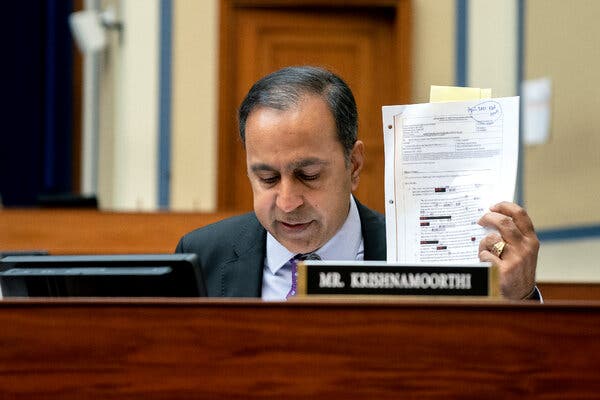
Executives from Emergent, which ruined millions of coronavirus vaccine doses, divulged to Congress the scope of the regulatory review of its troubled Baltimore plant.WASHINGTON — The chief executive of Emergent BioSolutions, whose Baltimore plant ruined millions of coronavirus vaccine doses, disclosed for the first time on Wednesday that more than 100 million doses of Johnson & Johnson’s vaccine are now on hold as regulators check them for possible contamination.In more than three hours of testimony before a House subcommittee, the chief executive, Robert G. Kramer, calmly acknowledged unsanitary conditions, including mold and peeling paint, at the Baltimore plant. He conceded that Johnson & Johnson — not Emergent — had discovered contaminated doses, and he fended off aggressive questions from Democrats about his stock sales and hundreds of thousands of dollars in bonuses for top company executives.Emergent’s Bayview Baltimore plant was forced to halt operations a month ago after contamination spoiled the equivalent of 15 million doses, but Mr. Kramer told lawmakers that he expected the facility to resume production “in a matter of days.” He said he took “very seriously” a report by federal regulators that revealed manufacturing deficiencies and accepted “full responsibility.”“No one is more disappointed than we are that we had to suspend our 24/7 manufacturing of new vaccine,” Mr. Kramer told the panel, adding, “I apologize for the failure of our controls.”Mr. Kramer’s appearance before the House Select Subcommittee on the Coronavirus Crisis, which has opened a broad inquiry into his company, offered the public its first glimpse of the men who run Emergent, a politically connected federal contractor that dominates a niche market in biodefense preparedness, with the U.S. government as its prime customer.Testifying virtually, Mr. Kramer was joined by the firm’s founder and executive chairman, Fuad El-Hibri, who over the past two decades has expanded Emergent from a small biotech outfit into a company with $1.5 billion in annual revenues. Executive compensation documents made public by the subcommittee show that the company’s board praised Mr. El-Hibri, who cashed in stock shares and options worth more than $42 million last year, for “leveraging his critical relationships with key customers, Congress and other stakeholders.”Among those members of Congress is Representative Steve Scalise of Louisiana, the No. 2 House Republican and the top Republican on the House subcommittee. Federal campaign records show that since 2018, Mr. El-Hibri and his wife have donated more than $150,000 to groups affiliated with Mr. Scalise. The company’s political action committee has given about $1.4 million over the past 10 years to members of both parties.Mr. El-Hibri expressed contrition on Wednesday. “The cross-contamination incident is unacceptable,” he said, “period.”Mr. Kramer’s estimate of 100 million doses on hold added 30 million to the number of Johnson & Johnson doses that are effectively quarantined because of regulatory concerns about contamination. Federal officials had previously estimated that the equivalent of about 70 million doses — most of that destined for domestic use — could not be released, pending tests for purity.House Democrats began their inquiry into Emergent after The New York Times documented months of problems at the Baltimore plant, including failure to properly disinfect equipment and to protect against viral and bacterial contamination.Representative Raja Krishnamoorthi asked Mr. Kramer if he would consider turning over his bonus to American taxpayers.Stefani Reynolds for The New York TimesHours before the hearing began, committee staff members released confidential audits, previously reported by The Times, that cited repeated violations of manufacturing standards. A top federal manufacturing expert echoed those concerns in a June 2020 report, warning that Emergent lacked trained staff and adequate quality control.“My teenage son’s room gives your facility a run for its money,” Representative Raja Krishnamoorthi, Democrat of Illinois, told Mr. Kramer.Mr. Kramer initially testified that contamination of the Johnson & Johnson doses “was identified through our quality control procedures and checks and balances.” But under questioning, he acknowledged that a Johnson & Johnson lab in the Netherlands had picked up the problem. Johnson & Johnson hired Emergent to produce its vaccine and, at the insistence of the Biden administration, is now asserting greater control over the plant.The federal government awarded Emergent a $628 million contract last year, mostly to reserve space at the Baltimore plant for vaccine production. Among other things, lawmakers are looking into whether the company leveraged its contacts with a top Trump administration official, Dr. Robert Kadlec, to win that contract and whether federal officials ignored known deficiencies in giving Emergent the work.Mr. El-Hibri told lawmakers that the government and Johnson & Johnson were aware of the risks.“Everyone went into this with their eyes wide open, that this is a facility that had never manufactured a licensed product before,” he said. While the Baltimore plant was “not in perfect condition — far from it,” he argued that the facility “had the highest level of state of readiness” among the plants the government had to choose from.For Republicans, including Mr. Scalise, Wednesday’s session became a vehicle to defend Emergent and the Trump administration, and to raise other virus-related issues: the unproven theory that the coronavirus leaked from a laboratory in China, the “lies of the Communist Party of China,” mask mandates and the Biden administration’s call for a waiver of an international intellectual property agreement.“You are a reputable company that has done yeoman’s work to protect this country in biodefense,” exclaimed Representative Mark E. Green, Republican of Tennessee, adding, “So you gave your folks a bonus for their incredible work.”Emergent is skilled at working Washington. Its board is stocked with former government officials, and Senate lobbying disclosures show that the company has spent an average of $3 million a year on lobbying over the past decade. That is about the same as two pharmaceutical giants, AstraZeneca and Bristol Myers Squibb, whose annual revenues are at least 17 times higher.Democrats pressed Mr. Kramer and Mr. El-Hibri about their contacts with Dr. Kadlec, who previously consulted for Emergent. Documents show that Emergent agreed to pay him $120,000 annually between 2012 and 2015 for his consulting work, and that he recommended that Emergent be given a “priority rating” so that the contract could be approved speedily. Dr. Kadlec has said he did not negotiate the deal but did sign off on it.“Did you or any other Emergent executives speak to or socialize with Dr. Kadlec while these contracts were being issued?” Representative Nydia M. Velázquez, Democrat of New York, asked Mr. Kramer.“Congresswoman,” he replied carefully, “I did not have any conversations with Dr. Kadlec about this.”The government has so far paid Emergent $271 million, even though American regulators have yet to clear a single dose of vaccine produced at the Baltimore plant.Emergent was forced to halt operations a month ago after contamination spoiled the equivalent of 15 million Johnson & Johnson doses.Jim Lo Scalzo/EPA, via ShutterstockA Times investigation found that Emergent has exercised outsize influence over the Strategic National Stockpile, the nation’s emergency medical reserve; in some years, the company’s anthrax vaccine has accounted for as much as half the stockpile’s budget.The investigation found that some federal officials felt the company was gouging taxpayers — an issue that also came up at Wednesday’s hearing when Representative Carolyn B. Maloney, Democrat of New York, demanded to know how much it cost to make the vaccine and what it sold for. Mr. El-Hibri promised to supply the information later.Company executives also view their coronavirus work as one of the “prime drivers” of its 2020 revenues, according to a memorandum released on Wednesday by committee staff members. The executives were rewarded for what the company’s board called “exemplary overall 2020 corporate performance including significantly outperforming revenue and earnings targets.”Mr. Kramer received a $1.2 million cash bonus in 2020, the records show, and also sold about $10 million worth of stock this year, in trades that he said were scheduled in advance and approved by the company. Three of the company’s executive vice presidents received bonuses ranging from $445,000 to $462,000 each.Sean Kirk, the executive responsible for overseeing development and manufacturing operations at all of Emergent’s manufacturing sites, received a special bonus of $100,000 last year, in addition to his regular bonus of $320,611, in part for expanding the company’s contract manufacturing capability to address Covid-19, the documents show. Mr. Kirk is now on personal leave.Emergent officials “appear to have wasted taxpayer dollars while lining their own pockets,” Ms. Maloney charged.Mr. Krishnamoorthi asked Mr. Kramer if he would consider turning over his bonus to the American taxpayers.“I will not make that commitment,” Mr. Kramer replied.“I didn’t think so,” Mr. Krishnamoorthi shot back.Rebecca R. Ruiz

Read more →

Contamination Woes Hold Back 100 Million Vaccine Doses

Executives from Emergent, which ruined millions of coronavirus vaccine doses, divulged to Congress the scope of the regulatory review of its troubled Baltimore plant.WASHINGTON — The chief executive of Emergent BioSolutions, whose Baltimore plant ruined millions of coronavirus vaccine doses, disclosed for the first time on Wednesday that more than 100 million doses of Johnson & Johnson’s vaccine are now on hold as regulators check them for possible contamination.In more than three hours of testimony before a House subcommittee, the chief executive, Robert G. Kramer, calmly acknowledged unsanitary conditions, including mold and peeling paint, at the Baltimore plant. He conceded that Johnson & Johnson — not Emergent — had discovered contaminated doses, and he fended off aggressive questions from Democrats about his stock sales and hundreds of thousands of dollars in bonuses for top company executives.Emergent’s Bayview Baltimore plant was forced to halt operations a month ago after contamination spoiled the equivalent of 15 million doses, but Mr. Kramer told lawmakers that he expected the facility to resume production “in a matter of days.” He said he took “very seriously” a report by federal regulators that revealed manufacturing deficiencies and accepted “full responsibility.”“No one is more disappointed than we are that we had to suspend our 24/7 manufacturing of new vaccine,” Mr. Kramer told the panel, adding, “I apologize for the failure of our controls.”Mr. Kramer’s appearance before the House Select Subcommittee on the Coronavirus Crisis, which has opened a broad inquiry into his company, offered the public its first glimpse of the men who run Emergent, a politically connected federal contractor that dominates a niche market in biodefense preparedness, with the U.S. government as its prime customer.Testifying virtually, Mr. Kramer was joined by the firm’s founder and executive chairman, Fuad El-Hibri, who over the past two decades has expanded Emergent from a small biotech outfit into a company with $1.5 billion in annual revenues. Executive compensation documents made public by the subcommittee show that the company’s board praised Mr. El-Hibri, who cashed in stock shares and options worth more than $42 million last year, for “leveraging his critical relationships with key customers, Congress and other stakeholders.”Among those members of Congress is Representative Steve Scalise of Louisiana, the No. 2 House Republican and the top Republican on the House subcommittee. Federal campaign records show that since 2018, Mr. El-Hibri and his wife have donated more than $150,000 to groups affiliated with Mr. Scalise. The company’s political action committee has given about $1.4 million over the past 10 years to members of both parties.Mr. El-Hibri expressed contrition on Wednesday. “The cross-contamination incident is unacceptable,” he said, “period.”Mr. Kramer’s estimate of 100 million doses on hold added 30 million to the number of Johnson & Johnson doses that are effectively quarantined because of regulatory concerns about contamination. Federal officials had previously estimated that the equivalent of about 70 million doses — most of that destined for domestic use — could not be released, pending tests for purity.House Democrats began their inquiry into Emergent after The New York Times documented months of problems at the Baltimore plant, including failure to properly disinfect equipment and to protect against viral and bacterial contamination.Representative Raja Krishnamoorthi asked Mr. Kramer if he would consider turning over his bonus to American taxpayers.Stefani Reynolds for The New York TimesHours before the hearing began, committee staff members released confidential audits, previously reported by The Times, that cited repeated violations of manufacturing standards. A top federal manufacturing expert echoed those concerns in a June 2020 report, warning that Emergent lacked trained staff and adequate quality control.“My teenage son’s room gives your facility a run for its money,” Representative Raja Krishnamoorthi, Democrat of Illinois, told Mr. Kramer.Mr. Kramer initially testified that contamination of the Johnson & Johnson doses “was identified through our quality control procedures and checks and balances.” But under questioning, he acknowledged that a Johnson & Johnson lab in the Netherlands had picked up the problem. Johnson & Johnson hired Emergent to produce its vaccine and, at the insistence of the Biden administration, is now asserting greater control over the plant.The federal government awarded Emergent a $628 million contract last year, mostly to reserve space at the Baltimore plant for vaccine production. Among other things, lawmakers are looking into whether the company leveraged its contacts with a top Trump administration official, Dr. Robert Kadlec, to win that contract and whether federal officials ignored known deficiencies in giving Emergent the work.Mr. El-Hibri told lawmakers that the government and Johnson & Johnson were aware of the risks.“Everyone went into this with their eyes wide open, that this is a facility that had never manufactured a licensed product before,” he said. While the Baltimore plant was “not in perfect condition — far from it,” he argued that the facility “had the highest level of state of readiness” among the plants the government had to choose from.For Republicans, including Mr. Scalise, Wednesday’s session became a vehicle to defend Emergent and the Trump administration, and to raise other virus-related issues: the unproven theory that the coronavirus leaked from a laboratory in China, the “lies of the Communist Party of China,” mask mandates and the Biden administration’s call for a waiver of an international intellectual property agreement.“You are a reputable company that has done yeoman’s work to protect this country in biodefense,” exclaimed Representative Mark E. Green, Republican of Tennessee, adding, “So you gave your folks a bonus for their incredible work.”Emergent is skilled at working Washington. Its board is stocked with former government officials, and Senate lobbying disclosures show that the company has spent an average of $3 million a year on lobbying over the past decade. That is about the same as two pharmaceutical giants, AstraZeneca and Bristol Myers Squibb, whose annual revenues are at least 17 times higher.Democrats pressed Mr. Kramer and Mr. El-Hibri about their contacts with Dr. Kadlec, who previously consulted for Emergent. Documents show that Emergent agreed to pay him $120,000 annually between 2012 and 2015 for his consulting work, and that he recommended that Emergent be given a “priority rating” so that the contract could be approved speedily. Dr. Kadlec has said he did not negotiate the deal but did sign off on it.“Did you or any other Emergent executives speak to or socialize with Dr. Kadlec while these contracts were being issued?” Representative Nydia M. Velázquez, Democrat of New York, asked Mr. Kramer.“Congresswoman,” he replied carefully, “I did not have any conversations with Dr. Kadlec about this.”The government has so far paid Emergent $271 million, even though American regulators have yet to clear a single dose of vaccine produced at the Baltimore plant.Emergent was forced to halt operations a month ago after contamination spoiled the equivalent of 15 million Johnson & Johnson doses.Jim Lo Scalzo/EPA, via ShutterstockA Times investigation found that Emergent has exercised outsize influence over the Strategic National Stockpile, the nation’s emergency medical reserve; in some years, the company’s anthrax vaccine has accounted for as much as half the stockpile’s budget.The investigation found that some federal officials felt the company was gouging taxpayers — an issue that also came up at Wednesday’s hearing when Representative Carolyn B. Maloney, Democrat of New York, demanded to know how much it cost to make the vaccine and what it sold for. Mr. El-Hibri promised to supply the information later.Company executives also view their coronavirus work as one of the “prime drivers” of its 2020 revenues, according to a memorandum released on Wednesday by committee staff members. The executives were rewarded for what the company’s board called “exemplary overall 2020 corporate performance including significantly outperforming revenue and earnings targets.”Mr. Kramer received a $1.2 million cash bonus in 2020, the records show, and also sold about $10 million worth of stock this year, in trades that he said were scheduled in advance and approved by the company. Three of the company’s executive vice presidents received bonuses ranging from $445,000 to $462,000 each.Sean Kirk, the executive responsible for overseeing development and manufacturing operations at all of Emergent’s manufacturing sites, received a special bonus of $100,000 last year, in addition to his regular bonus of $320,611, in part for expanding the company’s contract manufacturing capability to address Covid-19, the documents show. Mr. Kirk is now on personal leave.Emergent officials “appear to have wasted taxpayer dollars while lining their own pockets,” Ms. Maloney charged.Mr. Krishnamoorthi asked Mr. Kramer if he would consider turning over his bonus to the American taxpayers.“I will not make that commitment,” Mr. Kramer replied.“I didn’t think so,” Mr. Krishnamoorthi shot back.Rebecca R. Ruiz

Read more →

New Covid-19 Cases Dramatically Fell in Nursing Homes After Vaccination

Nursing home residents, considered among the most vulnerable to Covid-19, appear to receive significant protection from vaccination, according to new research published Wednesday in the New England Journal of Medicine.In a letter to the editor, the researchers said that the use of vaccinations also appeared to protect nursing home residents who did not get the immunization. That finding suggests, researchers said, that unvaccinated residents benefit when others around them receive the shot.“These findings show the real world effectiveness” of the Pfizer-BioNTech and Moderna vaccines “in a vulnerable nursing home population,” the researchers wrote.The findings conform to recent guidance from the Centers for Disease Control and Prevention about the protective benefit of vaccination. The federal agency, in hoping to encourage widespread immunizations, has said that those who get inoculated face sharply reduced risk, but considerable risk remains for those who do not.The nursing home population has been one of the hardest hit during the pandemic; residents faced significant threat because of the ease of spread in close quarters among people with weakened immune systems. Since the pandemic began in the United States, more than 132,000 residents have died, representing about one-third of all the country’s deaths from Covid-19.The study published Wednesday drew from more than 20,000 residents of 280 nursing homes in 21 states. Of those, almost 4,000 were unvaccinated and the rest received either the Pfizer or Moderna vaccines. About 70 percent had received two doses.The study looked at residents of nursing home that had received at least one dose as of Feb. 15 and anyone at the facilities present on the first day of their vaccination clinic who had not yet been vaccinated as of March 31.After receiving a first dose, 4.5 percent of residents still contracted the virus, although most cases were asymptomatic, researchers wrote. Of those receiving the second dose, only 0.3 percent got the virus after 14 days.The benefit carried over to those in the same nursing homes who did not get vaccinated. Their rate of infection dropped to 0.3 percent from 4.3 percent. For all groups, most infections were asymptomatic; and the rate of both symptomatic and asymptomatic infections decreased over time.“Robust vaccine coverage among residents and staff, together with the continued use of face masks and other infection-control measures, is likely to afford protection for a small number of unvaccinated residents,” the researchers wrote.

Read more →

Children's physical activity linked to academic achievement via regulation of emotions

A new study of children in the U.K. suggests that physical activity is linked to emotional regulation in early childhood, which in turn predicts academic achievement. Fotini Vasilopoulos and Michelle Ellefson of the University of Cambridge, U.K. (Vasilopoulos now at University of London, UK), present these findings in the open-access journal PLOS ONE on May 19, 2021.
Previous research suggests that physical activity in childhood can boost self-regulation — the skill of controlling one’s emotions and behavior as required by a given context. However, previous studies of the impact of physical activity on academic outcomes have had mixed findings.
To better understand the interplay between physical activity, self-regulation, and academics, Vasilopoulos and Ellefson used the Millennium Cohort Study, a longitudinal study of 4,043 children in the U.K. Parents and teachers filled out questionnaires to measure the emotional and behavioral components of the children’s self-regulation skills at ages 7, 11, and 14. Children’s physical activity was assessed according to several parameters, including intensity, duration, and enjoyment.
Statistical analysis of the data showed that a greater degree of physical activity was linked to greater emotional regulation, but not behavioral regulation, across all three time points when measurements were taken. However, when the researchers accounted for the children’s socioeconomic status, physical activity was linked to lower emotional regulation and had a negligible link with behavioral regulation.
The analysis also suggested that, for 7-year-olds, physical activity positively predicted emotional regulation skills resulting in higher academic achievement throughout early primary school. For 11-year-olds, physical activity appeared to positively impact academic achievement via behavioral regulation. After accounting for socioeconomic status, these links were even more pronounced.
These findings suggest that early and sustained physical activity is an important element in children’s development and schooling. The researchers note that evaluating childhood risks for poor academic achievement is complex, as evidenced, in part, by the influence of socioeconomic status on the results. The findings demonstrate the importance of ensuring that children have access to forms of physical activity, particularly for children from less-advantaged settings who lack the resources or opportunities to participate in physical activity than their better-advantaged peers.
The authors add: “Physical activity is linked to emotional regulation in early childhood and behavioural regulation in middle childhood. This relationship predicts academic attainment, suggesting that early and sustained physical activity is an important element in children’s development and schooling. The findings demonstrate the importance of ensuring that children have access to forms of physical activity, particularly for children from less-advantaged settings who lack the resources or opportunities to participate in physical activity than their better-advantaged peers.”
Story Source:
Materials provided by PLOS. Note: Content may be edited for style and length.

Read more →

Panorama: Great Ormond Street Hospital criticised over children's treatment

Sammy had to be fed through a tube and didn’t eat for six years after being diagnosed with a rare gut disease.It was only after visiting another doctor that Sammy’s family realised he may never have had the disease in the first place.He’s since been weaned off his treatment of potent medication and is able to eat again. Great Ormond Street Hospital said: “We have acknowledged publicly we have not always got the care right and have apologised and we are now confident that there have been vast improvements across the service.”

Read more →