A novel defense mechanism for SARS-CoV-2 discovered

Scientists from Hokkaido University have discovered a novel defensive response to SARS-CoV-2 that involves the viral pattern recognition receptor RIG-I. Upregulating expression of this protein could strengthen the immune response in COPD patients.
In the 18 months since the first report of COVID-19 and the spread of the pandemic, there has been a large amount of research into understanding it and developing menas to treat it. COVID-19 does not affect all infected individuals equally. Many individuals are asymptomatic; of those who are symptomatic, the large majority have mild symptoms, and only a small number have severe cases. The reasons for this are not fully understood and are an important area of ongoing research.
A team of scientists from Hokkaido University, led by Professor Akinori Takaoka of the Institute for Genetic Medicine, has shown that RIG-I, a biological molecule that detects RNA viruses, restrains SARS-CoV-2 replication in human lung cells. Their findings, which could help predict COVID-19 patient outcomes, were published in the journal Nature Immunology.
To date, over 162 million people have been affected by COVID-19. About 40% — 45% of these individuals are asymptomatic; as for the rest, around 35% — 40% experienced a mild form of the disease, while the remaining 19% were affected by symptoms that were severe enough to warrant hospitalisation or were fatal, which are usually associated with comorbidities and risk factors such as chronic obstructive pulmonary disease (COPD). This range of symptoms indicates that there are vast differences between individual responses to the virus.
Microbial pathogens in our body are detected by proteins called pattern recognition receptors (PRRs), which also trigger immune responses to these pathogens. Viral infections are detected by a subset of PRRs; the scientists focused their attention on the protein RIG-I, which belongs to this subset. RIG-I is known to be critical for the detection and response to RNA viruses such as the influenza virus.
In experiments carried out in cell culture lines, the scientists found that there was little innate immune response to SARS-CoV-2 in pulmonary cells, suggesting the signaling pathway leading to immune response was aborted. Nevertheless, viral replication was suppressed. The scientists investigated the role of RIG-I and found that its deficiency caused increased viral replication. Further experiments confirmed that the suppression of viral replication was dependent on RIG-I.
A single previous study has shown that RIG-I expression is downregulated in pulmonary cells of COPD patients. Using primary pulmonary cells from two COPD patients, the scientists showed that this downregulation of RIG-I resulted in the detection of viral replication after 5 days . They also demonstrated that treatment of these COPD cells with all-trans retinoic acid (ATRA), which upregulates the expression of RIG-I, significantly reduced viral titres in the cells. Furthermore, using RIG-I mutants, they were able to elucidate the mechanisms by which RIG-I suppressed SARS-CoV-2 replication: The helicase domain, a structural element in RIG-I, interacts with the viral RNA, blocking a virus-derived enzyme responsible for replication.
This study has demonstrated a unique viral recognition mode of RIG-I, termed the RIG-I-mediated signaling-abortive anti-SARS-CoV-2 defense mechanism. It has also indicated that RIG-I expression levels are one of the potential parameters for the prediction of COVID-19 patient outcomes. Further work must be done to uncover factors or conditions that modulate RIG-I expression levels, and may lead to new strategies to control SARS-CoV-2 infection.
Story Source:
Materials provided by Hokkaido University. Note: Content may be edited for style and length.

Read more →

Critically ill Covid-19 patients 'more likely' to die in Africa

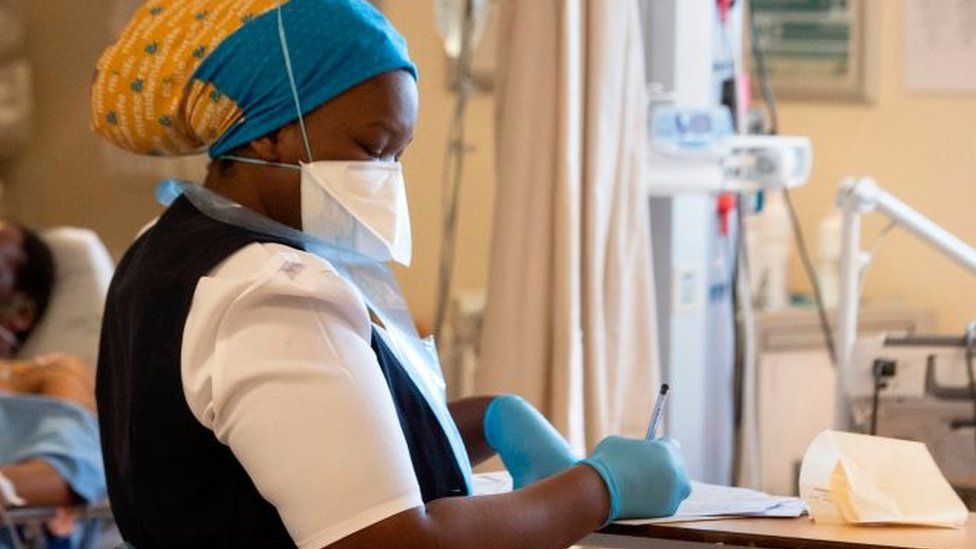
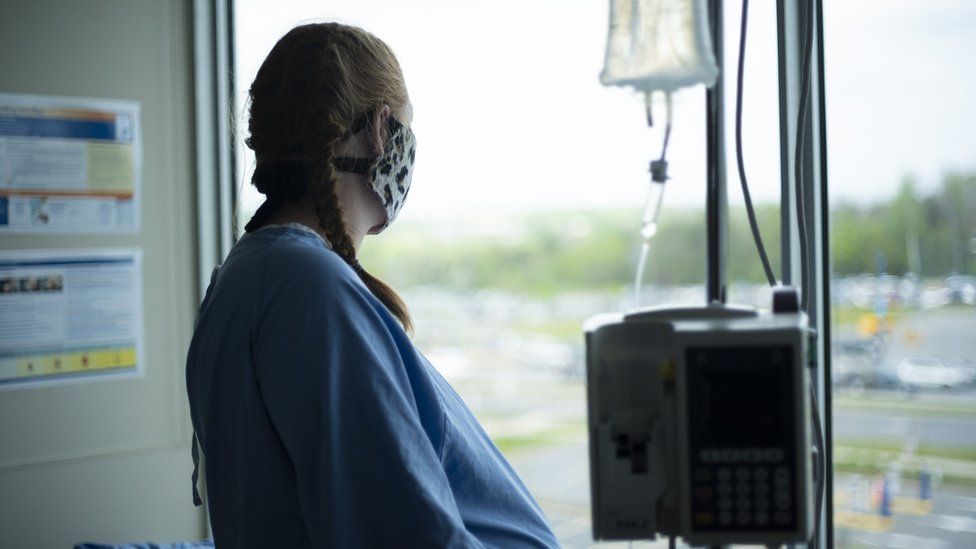
SharecloseShare pageCopy linkAbout sharingimage copyrightAFPHospital patients in Africa who are critically ill with Covid-19 are far more likely to die than in other parts of the world, a study suggests.A shortage of critical care resources was a key problem, it says.This includes both a lack of specialised staff and equipment such as blood oxygen monitors.The researchers hope their work will help inform the way severely ill patients are managed where resources are limited.Despite the high mortality rates of Covid-19 patients who have ended up in hospital in Africa, the continent in general has recorded some of the lowest numbers of deaths from the virus.Africa, which has 17% of the world’s population, accounts for 4% of registered Covid-19 deaths.Africa Live: Latest updates on this and other storiesDR Congo in race against time to vaccinate peopleResearchers looked at more than 3,000 patients in 64 hospital across 10 African countries for the study published in the The Lancet medical journal.They found that nearly half who needed intensive care died whereas the global average was less than a third.”Mortality is way higher in Africa than any other region because of limited resources,” one of the leaders of the research, Prof Bruce Biccard from the University of Cape Town in South Africa, told the BBC’s Newsday programme. “In fact only one of two patients who are referred to critical care actually get into critical care. And once they’re there, therapies we can provide are way less than they should be.”The researchers also said that in some cases the resources that were available were underused.”It is shocking to see that 68% of hospitals had access to dialysis but only 10% of the patients received it, as well as to see that proning [turning a patient on their front] was not optimised,” Dr Bruce Kirenga and Dr Pauline Byakika-Kibwika from Uganda’s Makerere University said, commenting on the research.They highlighted the lack of skilled staff to use available equipment as well as poor maintenance.Prof Biccard, who works at South Africa’s Groote Schuur Hospital, said that the findings showed that inequality in the distribution of vaccines around the world needed to be addressed.”If you have limited critical care resources which can’t even cope at the moment, what we really need to focus on is vaccinations… because the one thing about vaccination is that it stops severe infections,” he told the BBC.GLOBAL SPREAD: Tracking the coronavirus pandemicSYMPTOMS: What are the symptoms of the coronavirus?VARIANTS: How worrying are the new coronavirus variants?TRACKER: Coronavirus cases in Africa

Read more →

What Activities Can Unvaccinated Children Do? Advice From 828 Experts.

This phase of the pandemic, when adults can be vaccinated but young children cannot, is confusing for many families.Children playing at the U.S. National Arboretum in Washington last month. Public health experts say being outdoors is a safer way for children to socialize. Amr Alfiky/The New York TimesAs vaccinated Americans return to many parts of their prepandemic lives this summer, one group will be left out: children under 12, who cannot yet be vaccinated. So what should families with young children do when everyone else starts socializing again?We asked experts as part of an informal New York Times survey. The group of 828 who responded included epidemiologists, who study public health, and pediatric infectious disease physicians, who research and treat children sick with diseases like Covid-19.They noted that this phase was temporary. Pfizer has said vaccines for children ages 2 and up could come as soon as September. Of the survey respondents with young children, 92 percent said they would vaccinate their own children as soon as a shot was approved. (Only five said no; some were undecided.) In the meantime, families with young children may need to retain more precautions, like masking and distancing, than their childless friends do. But they said some minimally risky activities could help counteract the mental health effects of pandemic living.“Kids need to be able to be kids,” said Mac McCullough, an associate professor at Arizona State. “Outdoor activity isn’t perfectly safe, but its benefits are likely to outweigh its risks across an entire population.”We asked the experts about a few situations that families could encounter, and how they suggested parents and unvaccinated children should behave. There was no consensus, but they mostly advised weighing the relatively small health risks against the benefits of widening children’s worlds. As always, epidemiologists — who tend to be a very cautious group — emphasized that it would depend on the exact circumstances, and on local case rates.“I think a lot of families are frustrated and feel left out and anxious as to how to navigate life now,” said Dr. Sahera Dirajlal-Fargo, an infectious disease pediatrician at Case Western Reserve University. “Children have asked me, ‘Everyone else gets to move on, what about us?’ I am focusing on what we know families can do safely, and we know so much more than we did last year.”Here’s what they said.Indoor and crowded outdoor public placesNew guidance from the Centers for Disease Control and Prevention says that vaccinated people can go almost everywhere without a mask. But what should families with unvaccinated children do, since it’s impossible to know whether maskless people in public places are vaccinated? A slight majority said that despite that uncertainty, children could still go inside public places or be in outdoor crowds, as long as they wore masks. “As a mom, I’m not going to bring my children into such places if I can avoid it. But over all, I think the risk is very low, particularly if children wear masks.”Kelly Hirko, assistant professor, Michigan State University“Our children look to us — anywhere I would want them to mask, I’ll be masking as well, to set the example.”Corinne McDaniels-Davidson, director, San Diego State University Institute for Public Health“Huge problem here. The onus is now on children (and parents) to deal with and overcome problems generated from adults who refuse to get vaccinated (and likely won’t wear masks anymore).”Alan Kinlaw, assistant professor, University of North Carolina at Chapel HillIndoor social gatherings with other unvaccinated childrenVaccinated people can socialize indoors with one other household of unvaccinated people, the C.D.C. says. But what about two families getting together, when the adults are vaccinated but the children are not? The plurality of experts said two families with unvaccinated children could gather indoors, but should limit the number of families they see this way, like in a pod.“We will try to stay outdoors where possible, but will allow kids to be indoors without masks with a few select families.”Emily Henkle, research assistant professor of epidemiology, Oregon Health and Science University-Portland State University“With my unvaccinated children, we will not be socializing maskless indoors with other families with kids. My kids go to school and day care, and I am not willing to risk introducing Covid in those settings due to our family’s socialization activities.”Stina Mair, associate professor of behavioral and community health sciences, University of Pittsburgh“C.D.C. research has shown that schools have not been major sources of community transmission, but extracurricular activities are a different story. Unmasked activities among children should be limited to outdoor settings. When indoors, children should be masked.”Zack Hicks, epidemiology surveillance coordinator, Nebraska Department of Health and Human Services, 2019-20“This will not be easy to decide. For me, it will depend on the number of Covid-19 cases in my community and the latest data on the severity of the variants among children.”Laura Anderson, associate professor of health research, McMaster UniversityOutdoor activities where masks aren’t an optionUnvaccinated children are encouraged to continue wearing masks around other people, but there are some activities when that’s not possible. If they’re outdoors, and at low risk, it’s probably fine, eight in 10 said.“I think we need to make some sacrifices to have a more normal summer for our children. If we are outside, I think children will be able to eat and swim. When not doing those things directly, they should wear a mask.”Megan Benka-Coker, assistant professor of health sciences, Gettysburg College“I would not let my kids be in crowds of strangers who were not wearing masks, like in a crowded pool. I would ask them to wear a mask with other unvaccinated people, or keep distance when eating.”Ryan Carnahan, professor of epidemiology, University of IowaIndoor activities where masks aren’t an optionBut when it comes to indoor activities where masks cannot be worn at all times, children probably can’t safely do them this summer, three-quarters of the experts said.“There is a higher risk of acquiring the infection indoors. Also, as more variants emerge, some of them may be more serious for the children.”Asad Ansari, physician, Beacon Children’s Hospital“I fear these activities are what will drive the pandemic once adults are vaccinated.”Christopher J. Lehmann, physician and fellow for adult and pediatric infectious diseases, University of Chicago“Camps were able to safely open last summer with strict quarantine and testing protocols. I would encourage families to identify safe opportunities to get kids involved in these kinds of experiences. Eating inside a restaurant doesn’t seem like a necessary activity for children this summer.”Rosa Ergas, syndromic surveillance coordinator, Massachusetts Department of Public HealthTrips by planeIt’s most likely safe for children to fly this summer, as long as they’re fully masked and everyone else on the plane is, too, 86 percent of the experts said. But they said this should be done with caution — consider double masking and limiting the number and length of flights.“The risk of transmission goes up the longer the flight, but assuming everyone is masked, air travel is fairly safe.”Laura Hammitt, physician and associate professor of public health, Johns Hopkins“Until my children are vaccinated, we are not flying.”Laura Stadler, physician and professor of pediatrics, Division of Infectious Diseases, Kentucky Children’s HospitalOutdoor playgrounds and sportsAlmost two-thirds of the experts said unvaccinated children should still wear masks while at playgrounds or playing sports outdoors, even though the virus is much less likely to spread outside.“I consider masks necessary in outdoor situations when children will be very close together, which is often the case in sports and at playgrounds.”Caitlin McGrath, physician and pediatric infectious diseases fellow, University of Washington“For many sports, there is a low risk of transmission when playing outdoors unmasked, including sports such as tennis and volleyball and likely even soccer. The risk of transmission while playing unmasked goes up for contact sports.”Felice Adler, physician and associate professor of clinical pediatrics, University of California, Irvine“The only situation where I might still recommend wearing a mask is if the children are in close quarters — for example, huddled together talking on the playground or sitting together in the dugout. When they are moving around and playing, masks are not necessary.”Alison Tribble, physician and assistant professor of pediatrics, University of MichiganAdvice for vaccine-hesitant parentsThis phase of the pandemic — with children becoming more of the focus — will become easier when children under 12 can be vaccinated. But some parents are hesitant about vaccinating their children, especially considering that the risk to them from Covid-19 is still so small.Some epidemiologists and physicians were discussing this in their own families. Of the 8 percent who were unsure about vaccinating their young children, several said it was because they had not yet convinced their spouse that it was the best course of action.But as a group, the experts surveyed were unconflicted about vaccinating children. Many cited the risk of long-term physical and neurological effects of Covid-19, which are still unknown in children. And they worried about new variants of the virus that could become more dangerous for children.“We’re still learning about the long-term effects of Covid-19 in asymptomatic and mildly symptomatic previously healthy individuals,” said Ms. Ergas, of the Massachusetts Department of Public Health. “I’m not panicked about my kids getting Covid, but I’d rather they didn’t.”Others were more concerned. “I suspect that a proportion of children who have a Covid-19 infection will go on to have problems that are due to inflammation,” said Dr. Jessica Ericson, an infectious disease pediatrician at Penn State College of Medicine. “The long-term consequences of Covid-19 are unknown at this point, but unlikely to be zero. This is in contrast to vaccination, which has no plausible long-term consequences.”Beyond children’s health, they said, pediatric vaccines were necessary for the greater good. The pandemic is unlikely to end in the United States until children are vaccinated, they said. Even though children are less likely than adults to spread the coronavirus, as long as the virus can replicate, it will mutate, whether carriers are symptomatic adults or asymptomatic children. Also, even if Americans achieve widespread immunity, the virus will continue to spread and mutate in parts of the world without the same access to vaccines.“It’s a big, altruistic ask for below-12s to be vaccinated in large numbers,” said Andrew Noymer, an epidemiologist at the University of California, Irvine. “The overwhelming majority of cases are not going to be sick. It’s not for their benefit; it’s to prevent them from spreading it to others.”Dr. Andrew Handel, an infectious disease pediatrician at Stony Brook Medicine, said: “Once approved, I will enthusiastically have my children vaccinated. These vaccines are the best solution we have to the tremendous damage posed by this disease.”The costs of isolationEven as the experts urged continued caution until a pediatric vaccine arrives, they also emphasized that parents needed to weigh the risks of continued social isolation. Over all, the experts were somewhat more concerned about the mental health consequences of the pandemic for children than about its effects on their physical health.“Isolation of children is detrimental to their mental and physical health,” said Kevin Andresen, leader of the Covid response team for the Colorado Department of Public Health. “Finding safe ways to have children socialize and play needs our full attention while we continue to evaluate vaccine efficacy in this group.”Marissa Brash, chair of the department of public health at Azusa Pacific University, said: “We have done as many Zoom play dates as we can for my 9-year-old. She’s navigated Facebook friends. She’s streamed Netflix movies together over FaceTime. But nothing substitutes cartwheels and climbing trees and building sand castles.”They have started meeting a friend at a park: “The impact this has had on my daughter’s mental health is staggering.”The experts urged patience for a little longer. And many expressed optimism that children could bounce back from this difficult period.“Most children don’t mind the masks, they have hand washing down, and are much more tolerant and accepting of all these changes,” said Dr. Dirajlal-Fargo of Case Western. “Most of them have been fantastic and, if anything, have taught us how to behave during this pandemic.”Our survey was distributed by email to members of five groups: the Society for Epidemiologic Research; the Council of State and Territorial Epidemiologists; the Pediatric Infectious Diseases Society; the Decision Sciences for Child Health Collaborative; and the American Academy of Pediatrics subspecialty group on epidemiology, public health and evidence. Responses were collected between April 28 and May 10. After the announcement of the C.D.C.’s new policy on mask use for vaccinated people on May 13, we sent a series of follow-up questions to survey respondents and collected responses between Monday and Thursday. For various reasons, the number of responses differed by question.

Read more →

Family Caregivers Feel the Pandemic’s Weight

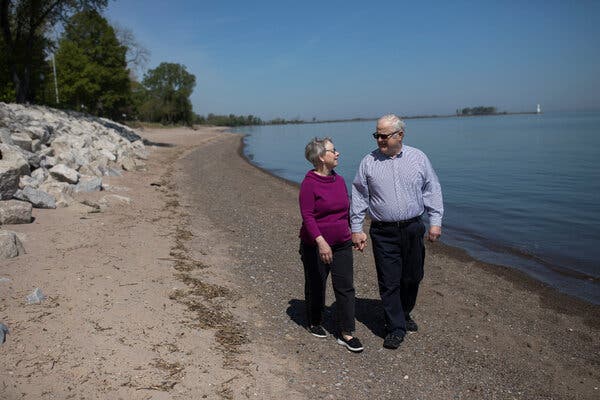
Early studies reveal the toll that lockdowns, isolation and stress have taken on those who care for older Americans.Mary Ann Boor could see her husband’s Alzheimer’s disease progressing, and her responsibilities as his caregiver intensifying.For years, David Boor had carefully taken diabetes medications. But as he grew forgetful, Ms. Boor had to start monitoring the doses and timing. She took over the driving and then the finances; she had to begin helping him bathe and dress.The Boors, retired high school teachers who moved to a lakefront retirement home in Huron, Ohio, were managing on their own. “Then, about the time I thought maybe I should look into home health aides, the pandemic struck and I was leery of people coming into the house,” Ms. Boor, 71, recalled.Her husband, 72, was a cancer survivor, she said, and “I didn’t feel I could take the chance, expose him to something that could be so serious.”Through the many surges of Covid-19, several forms of support fell away. Ms. Boor’s yoga studio, a frequent refuge, shut down. Friends and relatives who occasionally kept Mr. Boor company, giving his wife a few hours’ break, couldn’t come. Her sleep suffered.“It certainly put some additional burdens on me,” Ms. Boor said. “I was always thinking about, What if he gets sick? Or, what would happen if I became ill? That scared me even more.”Most older Americans who need help with the so-called activities of daily living — bathing, dressing, eating, using a toilet — don’t receive any kind of paid care, at home or in care facilities. They rely on unpaid family caregivers.Now, early research is showing how those caregivers struggled through 2020, as the pandemic made an already stressful job tougher.A study recently published in The Gerontologist, comparing 576 family caregivers to nearly 3,000 non-caregivers, found significantly higher rates of anxiety, depression and disturbed sleep among the caregivers (average age, 59), most of whom were caring for people over 65.The caregivers also reported less social interaction and more worries about finances and food, even after controlling for factors like income and employment.“The pandemic has exacerbated things,” said Scott Beach, a social psychologist at the University of Pittsburgh and lead author of the study. “It impacted everybody, but it impacted caregivers more.”The online survey, conducted in April and May of 2020, found disparate effects, as in many aspects of the Covid crisis. “Female caregivers, young caregivers, lower-income people and those providing more care — both personal and medical care — all were worse off,” Dr. Beach said.If they were caring for people with cognitive disabilities like dementia, or with behavioral and emotional problems, “they fared really poorly,” he added.At about the same time, Sung S. Park, a sociologist and demographer at the Harvard Center for Population and Development Studies, used a nationally representative online panel to explore caregivers’ mental and physical health. Her study distinguished between short-term caregivers, who had provided assistance for a year or less, and those who had been in the role longer.The findings, from nearly 4,800 respondents, showed that while caregivers suffered more psychological distress and fatigue than non-caregivers, the length of service made a pronounced difference. Long-term caregivers had much higher rates of physical symptoms like headaches, body aches and abdominal discomfort.The surges and shutdowns created a variety of problems for caregivers, said Grace Whiting, president and chief executive of the National Alliance for Caregiving. Some, like Ms. Boor, were afraid to bring helpers into their homes, paid or unpaid.For others, as adult day centers and senior centers closed, “the feeling of being alone, with no relief valve for the complex emotions that come with caregiving, was amplified,” Ms. Whiting said.Ms. Boor is still managing her husband’s care mostly alone. She said she copes with stress by knitting and talking to her daughter by phone.Maddie McGarvey for The New York TimesCarol Brown moved from Missouri back into her childhood home in Livermore, Calif., in November 2019 to care for her 88-year-old mother, who could no longer live alone safely.Although Ms. Brown, 58, felt glad to be able to keep her mother at home, “I cried a lot, watching my mother aging, feeling my own upheaval,” she said. What helped was a twice-monthly caregiver support group whose members, like her, were women caring for mothers with dementia.“It was emotionally good to be with them,” Ms. Brown said. “They’d all been through the wringer. And they were a font of information.”She misses their support. With the pandemic, the group moved online, but Ms. Brown found Zoom sessions unsatisfying and stopped participating.Other caregivers ran into trouble accessing health care, either for themselves or their loved ones. Ora Larson, 82, was scheduled for back surgery in the spring of 2020 in St. Paul, Minn., and was looking forward to relief from the disabling pain of spinal stenosis. Then, as hospitals filled with Covid patients, her operation was postponed until October, then delayed again.As she waited, “her ability to get all kinds of therapy went away,” said her daughter, Susan Larson, 57. “She couldn’t go to exercise, or have a physical therapist or trainer come to the house, so she got weaker and weaker and her pain increased.”As Ms. Larson watched her lively mother grow depressed and lose much of her ability to walk, “I felt stressed in the way you do when you’re not sure what your next move is going to be,” she said. Her mother finally underwent surgery in March and is recovering well.Further studies will reveal more about the ongoing effects of Covid on caregivers. Perhaps they adapted as the pandemic ground on, and their stress abated. Some welcome the meaning and purpose that comes with helping family members.But the cumulative negative effects, month after month, could also mean greater hardship. And as Dr. Park pointed out, “there would be a greater probability of bereavement and grieving.”The caregivers interviewed here, and their family members, have been vaccinated and are slowly starting to resume visits and local excursions. But they also recognize that elder care tends to grow more demanding, not less. Those they care for have lost ground physically and cognitively, and may be unable to return to their prepandemic selves.Stacey Lantagne, 40, a law professor at the University of Mississippi, spent the pandemic with her family in Rhode Island, where she helped care for her grandmother while also teaching a full course load online.Her grandmother, 89, had loved attending a dementia day program three days a week, and Ms. Lantagne was relieved when it reopened and she could safely return. “But she hadn’t left the house in so long that she was really frightened,” Ms. Lantagne said. So her grandmother attends just twice weekly; the family hopes she can increase her participation soon.Several Biden administration proposals could bring some relief for family caregivers, who have saved the health care system so much money while sacrificing so much themselves.The American Jobs Plan, which sees caregiving as part of the nation’s infrastructure, would allocate $400 billion to expand access to home and community care for the elderly and disabled through Medicaid, while raising wages and benefits for home care workers. (It may not do much for seniors who don’t qualify for Medicaid, however.)The American Families Plan would establish paid family and medical leave nationally, guaranteeing up to 12 weeks of paid leave by the program’s 10th year.When Mr. Biden announced the plan in April, pointing out that it would cover the cost of care not only for children but also for seniors, “I was tearing up on my couch,” Ms. Whiting said. “It was remarkable to hear him talk about elder care as a normal part of life.”Those proposals face a fight in the Senate, however. For now, as usual, family caregivers remain largely on their own.The Boors have been able to resume some family visits, but Ms. Boor is still managing her husband’s care virtually alone. She copes with stress by knitting and talking to her daughter by phone.And she prays. “I ask God for some help, and he’s always there for me,” she said.

Read more →

Children and the Covid Vaccine: What Parents Need to Know

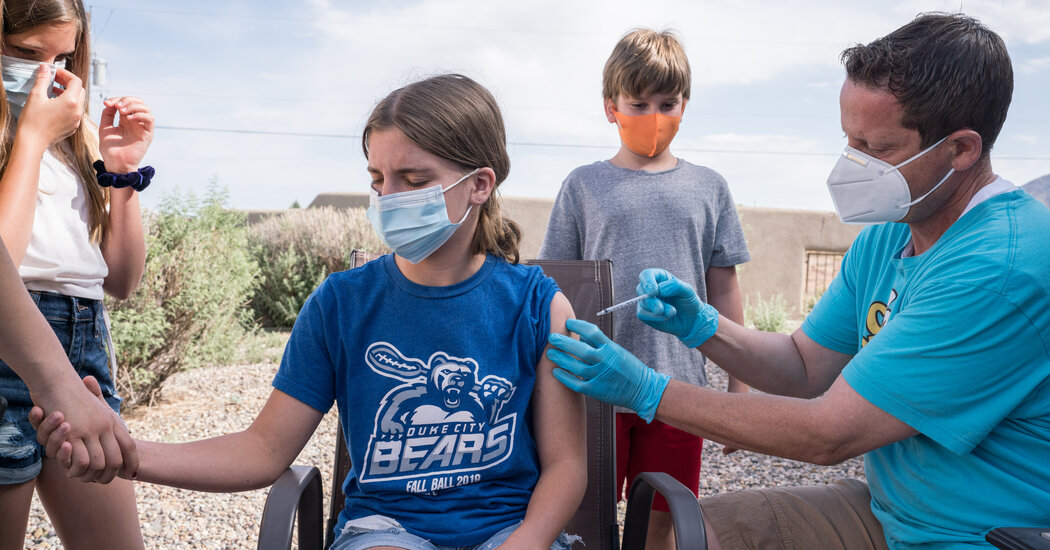
Children 12 to 17 are now eligible to get vaccinated against Covid-19. Here’s what we know about giving Covid shots to kids.Many parents who have eagerly lined up to get vaccinated against Covid-19 still have questions about getting their children the shot. Now that children 12 to 17 are eligible, we’ve answered common questions about young people and the vaccine.Here’s what you need to know:What vaccines are approved for children?When will younger children be eligible?Is the amount of vaccine given to children any different than for adults?Where can I get my child vaccinated?Can a child who recently got other vaccinations get the Covid shot?Are the side effects any different for children than adults?Can a child with allergies get the vaccine?Can I give my child Tylenol to minimize the side effects of the vaccine?Can schools require Covid vaccines for students?Has this type of vaccine ever been used in children before? How does it work?How many children were studied in the clinical trials and for how long?What do we know about long-term effects of these vaccines on growing bodies?Given the low risk of Covid to children, why not wait for more data to get my child vaccinated?What vaccines are approved for children?The Food and Drug Administration so far has approved only the Pfizer-BioNTech vaccine for young people aged 12 to 17. The vaccine has been approved for use in 16- and 17-year-olds since December, although in most states, eligibility for older teens was delayed until April. In May, children ages 12 to 15 became eligible for the Pfizer shot. Two other vaccines are likely to be approved for children in the coming months. Moderna is testing its vaccine in 3,000 children ages 12 to 17 and may have results for that age group within weeks. Johnson & Johnson in April also began studying 12- to 17-year-olds.When will younger children be eligible?Younger children will probably be eligible this fall. Pfizer plans to seek emergency authorization in September for children between the ages of 2 and 11, and results from Moderna’s clinical trial in children as young as 6 months are expected by the end of the year.Dr. James Conway, a pediatric infectious disease specialist at the University of Wisconsin School of Medicine and Public Health who oversees vaccination programs there, said vaccines will likely be available for 5- to 11-year-olds in late 2021, and for babies over 6 months, toddlers and preschoolers in early 2022.Is the amount of vaccine given to children any different than for adults?The dosage of Pfizer vaccine approved for 12- to 17-year-olds is identical to the dosage approved for adults: two doses of 30 micrograms each given three weeks apart.It’s possible that when the Pfizer vaccine is approved for even younger children, or when Moderna and Johnson & Johnson complete the research on their vaccines, that the recommended doses may be different than those given to adults.The Moderna trial, for instance, is studying different dosing strategies in 6,750 healthy children in the United States and Canada. In adults, the standard dose is 100 micrograms given four weeks apart. In Moderna’s study of children aged 2 to 11, the company is testing doses of either 50 or 100 micrograms. In children younger than 2 years, Moderna is studying shots of 25, 50 or 100 micrograms.Where can I get my child vaccinated?Younger adolescents will be able to get the shot in a variety of locations, including their pediatrician’s office. Shots also will be offered at pharmacies and school-based clinics. Check your local health department website or with your pediatrician for details. Some sites may require appointments, while others will offer shots on a walk-in basis. Your area may offer mobile vaccination units in neighborhoods, parks, camps and other places where children congregate.Can a child who recently got other vaccinations get the Covid shot?Many parents are confused about whether they need to time Covid shots with other childhood vaccinations because the Centers for Disease Control and Prevention recently changed its guidance. Previously, the agency said children and adults should wait two weeks before or after a Covid vaccine to receive any other inoculation. The C.D.C. said the initial restriction was a precautionary measure in the early days of vaccine distribution, but now says Covid vaccines and other vaccines can be given without regard to timing.“Experience with other vaccines has shown that the way our bodies develop protection, known as an immune response, after getting vaccinated and possible side effects of vaccines are generally the same when given alone or with other vaccines,” the C.D.C. says.The American Academy of Pediatrics issued a statement supporting the change, particularly for children and adolescents who are due for other childhood vaccinations or who have fallen behind the recommended schedule. The C.D.C. notes that if multiple vaccines are administered at a single visit, the injections may be given in different parts of the body.Are the side effects any different for children than adults?Fevers were slightly more common in 12- to 15-year-olds compared to adults, but in general, the side effects reported in children have been similar to those seen in older people. The F.D.A. stated that the most commonly reported side effects in the adolescent clinical trial participants were pain at the injection site, tiredness, headache, chills, muscle pain, fever and joint pain. Side effects typically lasted one to three days. Although pain at the injection site was common after both shots, more adolescents reported side effects after the second dose than after the first dose. In general, younger people tend to have a more powerful immune response than older people because they have more robust immune systems. It’s possible that children may experience more side effects than their parents did from the same shot.Can a child with allergies get the vaccine?Children should not get the Pfizer vaccine if they have a history of severe allergic reaction to any ingredient (such as polyethylene glycol) in the vaccine. Allergies to the vaccine ingredients are rare. You can find a full list of the ingredients here. The vaccine does not contain eggs, preservatives or latex. If you have doubts or aren’t sure, talk to your pediatrician before getting your child vaccinated.If your child has severe allergies to anything else (medications, foods, bees), plan to remain at the vaccination site after the injection for 30 minutes, instead of the 15 minutes that the general population is recommended to wait.Can I give my child Tylenol to minimize the side effects of the vaccine?You should not give your child a pain reliever before getting vaccinated. And don’t give it right after the shot to ward off side effects either. Wait to see if symptoms develop and the child expresses discomfort before giving acetaminophen (Tylenol) or ibuprofen. Studies show that many parents make the mistake of giving children over-the-counter pain relievers right before childhood vaccinations in hopes of reducing side effects. But blunting side effects by pre-medicating can also blunt the effectiveness of the vaccine. If your child develops a headache, body aches or other side effects requiring pain relief, it’s fine to give them the recommended dose of an over-the-counter pain reliever.Can schools require Covid vaccines for students?The answer depends on whether your child attends public or private school. Private schools, day care centers and camps can decide whether to require students to be vaccinated against Covid-19 as a condition of returning to school or the facility. So far more than 100 colleges have announced they will mandate vaccines before students can head to campus in the fall.For public K-12 schools, vaccination requirements are largely left up to the states. All 50 states have legislation requiring specified vaccines for students, although no state currently requires children to receive the Covid-19 vaccine as a condition of returning to school, according to the National Conference of State Legislatures. Exemptions to school immunization requirements vary, but all states grant exemptions to children for medical reasons. Children of parents who have religious objections to immunizations can receive a religious exemption in 44 states and Washington, D.C. And 15 states allow philosophical exemptions for children whose parents object to immunizations because of personal, moral or other beliefs.Has this type of vaccine ever been used in children before? How does it work?The Pfizer and Moderna vaccines use something called mRNA technology — the “m” stands for messenger. Think of the mRNA molecule like a set of instructions. While a traditional vaccine uses a weakened or inactivated germ to trigger an immune response in our bodies, the mRNA vaccines carry a set of instructions to teach our cells how to make a protein that will trigger an immune response and produce antibodies to the virus.Although mRNA technology has been studied for about 15 years, this is the first time it’s been used in a vaccine. It’s also being studied to treat cancer, muscular dystrophy and other diseases.Dr. Paul Offit, director of the vaccine education center at Children’s Hospital of Philadelphia and a member of the Food and Drug Administration’s vaccine advisory panel, notes that while mRNA vaccines are new, mRNA molecules occur naturally throughout the human body.“Every child in their cells has about 200,000 copies of messenger RNA,” said Dr. Offit. “Every cell in your body has these molecules which are making proteins and enzymes so you can continue to live. Although the technology is new for a vaccine, it’s not like it’s a molecule we haven’t seen before. I understand the anxiety, but it’s no different than when you make insulin or hemoglobin or albumin or any of the other proteins your body makes.”Here’s how it works. When your child gets the Pfizer shot in the arm, the injection includes the messenger molecule, which is packaged in an oily bubble that fuses to a cell. The cell then uses the mRNA molecule as a set of instructions to make something called a “spike protein,” which protrudes from the cell’s surface. (The surface of the coronavirus is covered with similar spikes.)A child’s immune system quickly recognizes that the spike protein is a foreign invader, and begins attacking it. The vaccine has essentially trained the immune system to recognize and attack the spike. Now, if your child ever comes into contact with the actual coronavirus, their immune system has learned how to handle it. You can learn more about mRNA vaccines from the Centers for Disease Control and Prevention website.How many children were studied in the clinical trials and for how long?The study that led to the Pfizer vaccine’s approval for children began in March. The study enrolled 2,260 participants ages 12 to 15. Of those children, 1,131 received the vaccine (two shots, given three weeks apart) and 1,129 received saline placebo shots. The vaccine worked even better in children than it does in adults. No children in the vaccine group got sick with Covid-19, while 18 children in the placebo group became ill. The company is still gathering information, including testing the trial participants every two weeks for the coronavirus.Beyond the clinical trials, health officials are continuing to gather information on the 3.76 million young people in the United States aged 12 to 17 who have received at least one dose of the Pfizer shot, according to C.D.C. data.What do we know about long-term effects of these vaccines on growing bodies?Scientists have only about six months of data on the vaccine in adults and older teens and a few months of data on young children. But given that the vaccine’s mRNA molecule mimics a natural human process, experts say they are confident that the vaccines are safe for growing bodies.Dr. Kristin Oliver, a pediatrician and vaccine expert at Mount Sinai Hospital in New York, said that while there hasn’t been long-term research on whether there are lasting side effects of the vaccine, “we also don’t expect any.” She said parents have raised specific concerns about whether the vaccine could affect puberty or fertility, but there’s not a biologically plausible explanation for why the vaccine would have any effect in those areas.“There has to be some sort of biologic plausibility for why a vaccine or why an immune response could interfere with those things. And there just isn’t,” said Dr. Oliver. “I’m a worrier, and this possibility of unknown long-term side effects from the mRNA vaccines just isn’t keeping me up at night.”One reassuring fact about the mRNA vaccines is that the molecule is destroyed by the cell once it completes its mission, so it doesn’t stay in the body.“This is one of the better technologies if you’re worried about something staying in your child’s body,” said Dr. Ibukun C. Kalu, a professor of pediatrics at Duke University. “There’s no way it can become stored in the DNA or trigger some long term cascade that will impact a child’s reproductive organs.”Another common worry among parents is the effect of a new drug or vaccine on brain development. Dr. Offit noted that the body has a blood-brain barrier that prevents most proteins from entering the brain. “Your brain is an immunologically protected site,” he said.Given the low risk of Covid to children, why not wait for more data to get my child vaccinated?While children are less likely to develop severe illness from Covid-19, they are still at risk. Nearly four million children in the United States have tested positive for the virus since the start of the pandemic, according to the American Academy of Pediatrics, and more than 300 have died. This past winter, doctors reported growing numbers of patients with Multisystem Inflammatory Syndrome in Children, or MIS-C, a condition linked to Covid which can affect multiple organs, including the heart.Dr. Megan Ranney, an emergency room physician and professor at Brown University in Providence, R.I., said she had “zero safety concerns” about the Pfizer-BioNTech vaccine, noting that hundreds of millions of people worldwide had received it. Her 12-year-old daughter will get vaccinated, and her 9-year-old son will be immunized when he’s eligible, she said.“The risk of your child catching Covid and getting really sick is low, but it’s not zero,” said Dr. Ranney. “And the risk of them getting sick or hospitalized or worse with Covid or with the post-Covid multi-inflammatory syndrome is higher than the risk of something bad from this vaccine.”Currently about 24 percent of the Covid cases in the United States are in young children, said Dr. Offit. He notes that more American children have died from Covid during the pandemic than die annually from other illnesses for which children are regularly vaccinated. About 75 to 150 children in the United States die of flu each year, he said, and about 100 children die of chickenpox.“If I had to convince a parent, I would bring them into the hospital with me and let them round on our Covid ward to see what this disease looks like,” said Dr. Offit. “There’s every reason to get them vaccinated. If I had a 12- to 15-year-old, I would vaccinate them in a minute.”Additional reporting contributed by

Read more →

First They Fought the Virus. Now They Battle the Medical Bills.

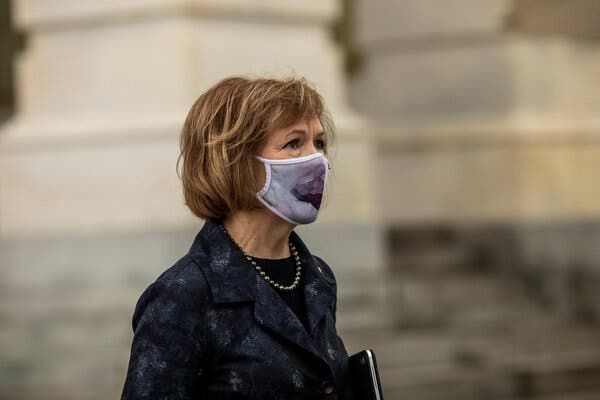
One coronavirus survivor manages her medical bills in color-coded folders: green, red and tan for different types of documents. A man whose father died of the virus last fall uses an Excel spreadsheet to organize the outstanding debts. It has 457 rows, one for each of his father’s bills, totaling over $1 million.These are people who are facing the financial version of long-haul Covid: They’ve found their lives and finances upended by medical bills resulting from a bout with the virus.Their desks and coffee tables have stacks of billing documents. They are fluent in the jargon of coronavirus medical coding, after hundreds of hours of phone calls discussing the charges with hospitals, doctors and insurers.“People think there is some relief program for medical bills for coronavirus patients,” said Jennifer Miller, a psychologist near Milwaukee who is working with a lawyer to challenge thousands in outstanding debt from two emergency room visits last year. “It just doesn’t exist.”Americans with other serious illnesses regularly face exorbitant and confusing bills after treatment, but things were supposed to be different for coronavirus patients. Many large health plans wrote special rules, waiving co-payments and deductibles for coronavirus hospitalizations. When doctors and hospitals accepted bailout funds, Congress barred them from “balance-billing” patients — the practice of seeking additional payment beyond what the insurer has paid.Interviews with more than a dozen patients suggest those efforts have fallen short. Some with private insurance are bearing the costs of their coronavirus treatments, and the bills can stretch into the tens of thousands of dollars.“There are things I’ve researched, and known I should do, but I have a fear of being blindsided by the bills,” said Lauren Lueder, a 33-year-old teacher who lives in Detroit. She has depleted $7,000 in savings to pay for treatment so far. “You end up with a battery of tests, and every single thing adds up. I don’t have the disposable income to constantly pay for that.”For 10 months, The New York Times has tracked the high costs of coronavirus testing and treatment through a crowdsourced database that includes more than 800 medical bills submitted by readers. If you have a bill to submit, you can do so here.Those bills show that some hospitals are not complying with the ban on balance billing. Some are incorrectly coding visits, meaning the special coronavirus protections that insurers put in place are not applied. Others are going after debts of patients who died from the virus, pursuing estates that would otherwise go to family members.Hospitals and insurers say that they have tried to adapt to the different billing guidance for the pandemic, but that confusion can arise when new charge codes are created and new rules set up quickly.Coronavirus patients face significant direct costs: the money pulled out of savings and retirement accounts to pay doctors and hospitals. Many are also struggling with indirect costs, like the hours spent calling providers and insurers to sort out what is actually owed, and the mental strain of worrying about how to pay.Ms. Miller, like many other patients, described trying to sort out her complicated medical charges — in her case in color-coded folders — while also battling the mental “brain fog” that affects as many as half of coronavirus long-haul patients.“I have a Ph.D., but this is beyond my abilities,” she said. “I haven’t even begun to look at my 2021 bills because we’re still dealing with 2020 bills. When the bills come nonstop, you can only deal with so much.”The United States is estimated to have spent over $30 billion on coronavirus hospitalizations since the pandemic began, according to Chris Sloan, a principal at the health research firm Avalere. The average cost of each hospital stay is $23,489. Little research has been published on how much of that cost is billed to patients. “The government is focused on getting the vaccine out, but it doesn’t look like there is anyone out there thinking more about the long-term impacts on the people experiencing unusually high costs from Covid,” said Nancy-Ann DeParle, a former Obama administration health policy adviser and co-chair of the Covid Patient Recovery Alliance, a new nonprofit that plans to study the issue.Patients who have tried to take advantage of their insurers’ cost waivers are sometimes finding themselves thwarted by hospitals and providers that don’t code their bills as related to coronavirus. Without the right coding, the patients’ normal deductibles and co-payments apply.One coronavirus patient in Chicago recounted spending 50 hours trying to get the coding for an M.R.I. scan changed, to show it was related to coronavirus. His insurer will pay the entire bill if that happens — but if not, he is responsible for $1,600. So far, the issue is still unresolved.Senator Tina Smith of Minnesota, the lead sponsor of a bill to make coronavirus care free.Jason Andrew for The New York Times“I’ve heard so many stories of people being completely stymied filling out reimbursement forms and trying to get insurance to cover them,” said Senator Tina Smith, Democrat of Minnesota, the lead sponsor of a bill to make coronavirus care free. “It’s almost as if the system is designed to make it hard to get reimbursed.”Congress mandated that insurers make coronavirus testing free last spring, but never wrote a similar requirement for treatment coverage — in part because insurers were volunteering to waive patient costs, she said.Insurers are now starting to wind down those special protections: Aetna, Anthem and UnitedHealthcare — three of the country’s largest health plans — have ended some portion of their waivers this year. They have decided to treat the virus the same as the many other diseases that send patients to doctors’ offices and hospitals.Some emphasized they are now focused on ensuring patients get Covid vaccines without facing any costs.“There was a feeling that many private plans were initially covering treatment, but now that is petering out and leaving people on the hook,” Senator Smith said.Some Covid financial long-haulers never became ill themselves, but are overwhelmed by the bills that deceased loved ones left behind.Rebecca Gale, 64, lost her husband of 25 years, Michael, to coronavirus last summer. Their insurance fully covered most of the “big stack” of medical bills that Ms. Gale received after his death. But it paid only a small portion of the $50,009 air ambulance bill for Mr. Gale’s transport between hospitals when his condition was deteriorating.“I cry every day; this is just another thing that breaks my heart, that on top of losing my husband I have to deal with this,” Ms. Gale said.The family’s health insurance plan limits its coverage of air ambulances to $10,000, and the air ambulance company spent months pursuing an additional $40,009 from Mr. Gale’s estate. Ms. Gale retired last year, from a job at an Ohio automotive factory stamping car parts, anticipating she would get to spend more time with her husband. After he died and the bills started to show up, she considered looking for a part-time job to help pay the charges.Health care companies have discretion over what to do about the debts of deceased patients, sometimes pursuing their estates for reimbursement.The air ambulance company, PHI Medical, declined to comment on Mr. Gale’s bill but said in a statement that it “followed the regulatory requirements” for billing coronavirus patients. It did cancel the charges, however, after The Times inquired about the bill.Shubham Chandra left a well-paying job at a New York City start-up partly to manage the hundreds of medical bills resulting from his father’s seven-month hospitalization. His father, a cardiologist, died from coronavirus last fall.For months he has spent 10 to 20 hours a week working through the charges, using his mornings for reading through new bills, and his afternoons for calls to insurers and hospitals. His spreadsheet recently showed 97 bills rejected by insurance with a potential of over $400,000 the family could owe. Mr. Chandra tells providers that his father is no longer alive, but the bills continue to accumulate.“A large part of my life is thinking about these bills,” he said. “It can become an impediment to my day-to-day. It’s hard to sleep when you have hundreds of thousands of dollars in outstanding debts.”Some coronavirus patients are postponing additional medical care for long-term side effects until they can resolve their existing debts. They are finding that long-haul coronavirus often requires visits to multiple specialists and many scans to resolve lingering symptoms, but they worry about piling up more debt.Irena Schulz, 61, a retired biologist who lives in South Carolina, became ill with coronavirus last summer. She has multiple lingering side effects, including problems with her hearing and her kidneys. She recently received a $5,400 bill for hearing aids (to help with coronavirus-related hearing loss) that she had expected her health insurance to cover.She has eschewed trips to the emergency room when feeling ill because she worries about the costs. She’s managing her kidney-related pain by herself, at home, until she feels she can afford to see a specialist.“I keep on with Tylenol and drinking a lot of water, and I’ve noticed it does help if I drink a lot of pineapple juice,” she said. “If the pain gets past a certain threshold, I’ll see a doctor. We’re retired, we’re on a fixed income, and there are only so many things you can accumulate on the credit card.”

Read more →

Stillbirth risk in pregnancy may increase with Covid

SharecloseShare pageCopy linkAbout sharingimage copyrightGetty ImagesA large UK study suggests having coronavirus around the time of birth may increase the chance of stillbirths and premature births – although the overall risks remain low.Scientists say while most pregnancies are not affected, their findings should encourage pregnant women to have jabs as soon as they are eligible.The majority are offered vaccines when they are rolled out to their age group. The study appears in the American Journal of Obstetrics and Gynecology. The research, led by the National Maternity and Perinatal Audit, looked at data involving more than 340,000 women who gave birth in England between the end of May 2020 and January 2021. All women were tested for the virus when they were admitted for births – whether they had symptoms or not.The study found:3,527 had positive testsOf those, 30 had stillbirths (deaths occurring after 24 weeks of pregnancy)Scientists calculate 8.5 per 1,000 women who had a positive test went on to experience a stillbirthThis compares to 3.4 per 1,000 women who had a negative test12% of women who had a positive coronavirus test gave birth prematurely (before 37 weeks)This compares to 5.8% of women who had negative testsIt was more common for women who had Covid-19 at the time of birth to be younger and from a black, Asian or other minority ethnic backgroundResearchers say a higher risk of stillbirth and prematurity, as well as a greater chance of having a Caesarean section, remained even once factors such as the mother’s age, ethnicity, socio-economic background and common health conditions were taken into account. Babies born to women who tested positive were more likely to need special neonatal intensive care because they were born early and needed more support – rather than being infected with coronavirus itself. Pregnant women should be offered Covid vaccineWho can book their Covid vaccine now?’Miracle’ baby born to Covid coma mumProfessor Asma Khalil, co-author of the paper, said it was important for women and healthcare workers to be aware of the potential risks.She added: “This study is the largest yet in England to describe the pregnancy outcomes in pregnant women who had tested positive for Covid-19 around the time of birth. “While it is reassuring that the overall increases in the rate of stillbirth and pre-term birth remain low, this study does show that the risk of stillbirth or premature birth may be increased in women who have the infection around the time of birth. “This highlights the importance of Covid-19 vaccination for pregnant women; it reduces the risk not just to themselves, but also to their babies.”Dr Mary Ross-Davie, from the Royal College of Midwives, agreed that vaccination was key in protecting people from the virus. She added: “While the increased risk of a stillbirth or pre-term birth remains low when women have Covid-19 in pregnancy, the important message here is that pregnant women, like all of us, should continue to take precautions to reduce their chances of exposure to the virus. “This includes continuing social distancing, hand-washing and mask-wearing,” she said. Related Internet LinksCoronavirus infection and pregnancy.websitePregnancy and coronavirus (COVID-19) – NHS.websiteThe BBC is not responsible for the content of external sites.

Read more →

India Covid: Dying mother's final message

Dimple Arora was a 34 year-old-dentist with everything to live for when she died of Covid-19.Her husband Ravish told the BBC’s Orla Guerin that his wife’s death should be a warning to the UK.More than 250,000 people have died of Covid-19 in India so far, according to official figures.

Read more →

Jane Brody and Anthony Fauci on Staying Fit and Focused at 80 and Beyond

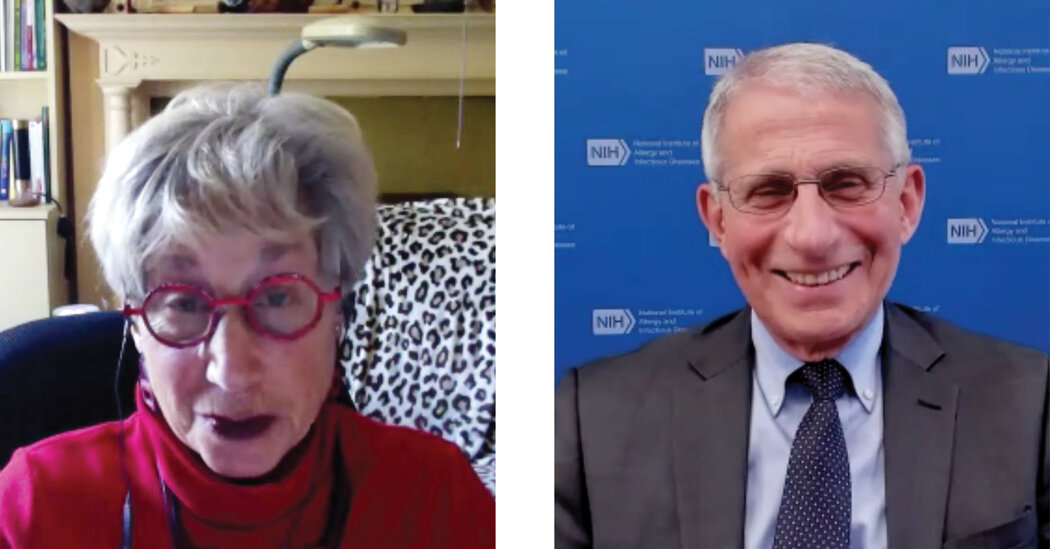
The Times’s longtime Personal Health columnist and the nation’s most famous doctor met recently to talk about life as octogenarians and beyond. Listen to their conversation.If you want advice about staying healthy in your 80s, who better to ask than two 80-year-olds who have dedicated their careers to public health?Recently Jane E. Brody, who has written The Times’s Personal Health column for 45 years, and Dr. Anthony S. Fauci, who for 37 years has led the National Institute of Allergy and Infectious Diseases, met via Zoom for the first time to talk about living well as octogenarians. They shared laughs, talked about the challenges of exercising with a security detail and offered advice for thriving as you age.“Take care of yourself, get some reasonable sleep, don’t get overcome by stress, a good diet,” said Dr. Fauci, who turned 80 in December 2020. “Enjoy life, but don’t do things in excess. Exercise is really important. I think that the fact that I’ve been a marathon and 10K runner for the last multiple decades has been very important in my staying fit, looking fit and feeling fit.”Ms. Brody, who celebrated her 80th birthday this month, agreed. “I think you have to continue doing that,” she said. “People ask me, ‘How do you do it?’ I said, ‘Well, I don’t stop.’ If you stop, it’s all over. Don’t stop. Keep going, keep going.”Listen to their conversation.Jane Brody and Dr. Tony Fauci Discuss Life After 80What’s the secret to healthy aging? What was life like growing up in 1940s Brooklyn? Does retirement loom? Those answers and more in a lively conversation with Jane and Tony.

Read more →

The Latest Coronavirus Comes From Dogs

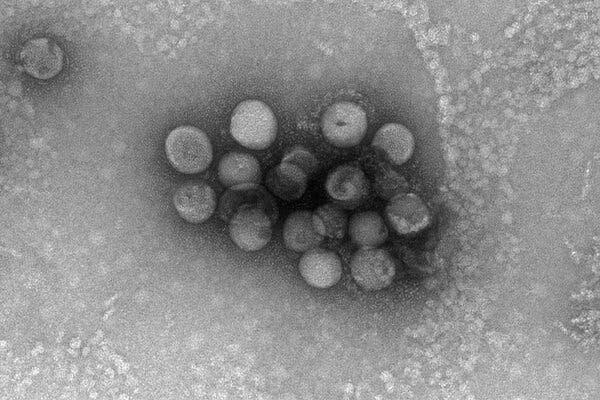
A newly identified coronavirus may not pose a serious threat, but the finding highlights the need to monitor animal viruses more proactively, scientists say.Scientists have discovered a new canine coronavirus in a child who was hospitalized with pneumonia in Malaysia in 2018. If the virus is confirmed to be a human pathogen, it would be the eighth coronavirus, and the first canine coronavirus, known to cause disease in humans.It is not yet clear whether this specific virus poses a serious threat to humans, the researchers stress. The study does not prove that the pneumonia was caused by the virus, which may not be capable of spreading between people. But the finding, which was published on Thursday in the journal Clinical Infectious Diseases, highlights the need to more proactively search for viruses that could jump from animals into humans, the scientists said.“I think the key message here is that these things are probably happening all over the world, where people come in contact with animals, especially intense contact, and we’re not picking them up,” said Dr. Gregory Gray, an infectious disease epidemiologist at Duke University who is one of the study’s authors. “We should be looking for these things. If we can catch them early and find out that these viruses are successful in the human host, then we can mitigate them before they become a pandemic virus.”Seven coronaviruses are currently known to infect humans. In addition to SARS-CoV-2, which is the virus that causes Covid-19, there are coronaviruses that cause SARS, MERS and the common cold. Many of these viruses are believed to have originated in bats, but can jump from bats to humans, either directly or after a stopover in another animal host.Scientists have known for decades that coronaviruses can cause disease in dogs, but until now there has been no evidence that canine coronaviruses can infect people.Scientists still cannot be certain whether it was a dog that transmitted the new virus to the patient; it likely was a dog, Dr. Gray said, but another, intermediate animal host, including a cat, may have been responsible.(There is also no evidence that dogs transmit SARS-CoV-2 to humans, although both cats and dogs can catch it.)The new research began last spring, after the pandemic hit, when Dr. Gray asked Leshan Xiu, a doctoral student, to develop a screening tool that could help them detect all kinds of coronaviruses, not just the ones that scientists already knew about.Then they used the technique, a variation on the gold-standard P.C.R. test that is commonly used to diagnose Covid, to analyze some old patient specimens. The samples were nasopharyngeal swabs taken from 301 people who had been hospitalized with pneumonia in Sarawak, Malaysia, in 2017 and 2018.In eight of the specimens, they detected what seemed like a novel coronavirus, similar to those known to infect dogs. These specimens were primarily from children who lived in settings or areas in which contact with domestic and wild animals was common.At first, Dr. Gray said, he and his colleagues thought that they had made a mistake. “If we examine 300 patients and eight of them show a canine coronavirus that had never been seen before, you go, ‘This must be a contaminant, this must be — this can’t be true,’” he said.Scientists detected a new canine coronavirus in a pneumonia patient hospitalized in Malaysia in 2018. It appeared to be a combination of two known canine coronaviruses, and to contain fragments of both a cat coronavirus and a pig coronavirus.Ohio State University’s Molecular and Cellular Imaging CenterSo they sent the samples to Dr. Anastasia Vlasova, a veterinarian and virologist at Ohio State University for further investigation. Using a slightly less sensitive screening technique, she confirmed that two of the eight samples did appear to contain a novel canine coronavirus. Moreover, one of those samples proved capable of causing damage to canine cells, she found.Then she assembled the complete genome of the virus from this sample. Its genome closely matched that of other known canine coronaviruses. “It is highly similar to a number of previously characterized canine coronaviruses, but it’s a novel strain,” Dr. Vlasova said.The virus seemed to be a combination of two previously identified canine coronaviruses, and also contained fragments of both a cat coronavirus and a pig coronavirus. (These recombinant coronaviruses are common in dogs, Dr. Vlasova said.)It also had an unusual genetic mutation, a deletion in what is commonly known as the N gene, which codes for an important structural protein. This deletion has not been documented in other canine coronaviruses, Dr. Vlasova said, but similar mutations have appeared in the viruses that cause Covid and SARS. “So what does this mean?” Dr. Gray asks. “Well, you know, we don’t know exactly.”Although much more research is needed, one possibility is that the mutation may help animal coronaviruses to adapt to human hosts, the researchers said.It is too soon to say whether this virus poses a risk to humans. Researchers have not yet proved that this virus is the cause of the pneumonia that sent patients to the hospital. And they have not yet studied whether people who may contract the virus from animals can spread it to other people.“We have to be careful, because things show up all the time that don’t become outbreaks,” said John Lednicky, a virologist at the University of Florida who was not an author of the study.Nevertheless, the study is “extremely important,” he said. “The fact that it’s a coronavirus again once again tells us this is a group of viruses that deserves further study.” He added, “We should take this seriously and look for it, because if we start seeing more cases, that’s when the alarm bells should go off.”Indeed, one possibility is that coronaviruses may be spreading between humans and other species, including dogs, far more frequently than has been known.“At this moment we do not really have any reason to believe that this virus is going to be causing a pandemic,” Dr. Vlasova said. “What kind of attention we want to draw to this research is that transmission of coronaviruses from animal sources to humans is probably a very, very, very common event. And up until now it was mostly ignored.”The findings underscore the need to conduct more targeted, proactive viral surveillance, focusing in particular on the human-animal interface, the researchers said. “We need to shift more toward a ‘one health’ approach of sampling humans who have intense exposure to animals and sampling their animals,” Dr. Gray said. “And where we see a virus that has seemed to be beginning to adapt either way — a human virus, for instance in livestock, a livestock virus in humans — we need to pay attention to that.”The scientists plan to conduct further research, including studies to see how prevalent the virus may be and whether it is also present in healthy people, Dr. Gray said.In the meantime, there is no need to fear the family pet, Dr. Lednicky said. “Humans and dogs have been together for a long time,” he said. “We’ve probably been exchanging these viruses; they just weren’t recognized.”

Read more →