Covid-Sniffin

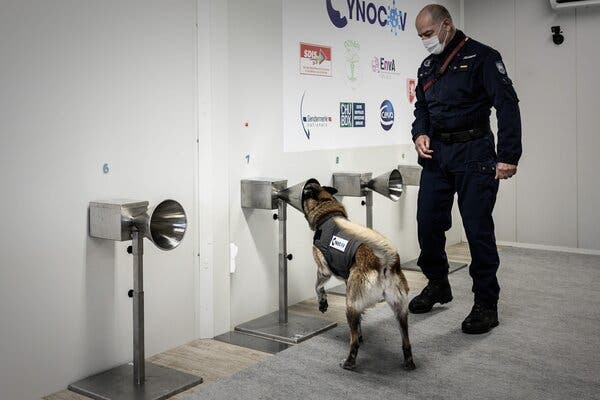
Logistics, cost and official standards are needed for the dogs to fulfill their potential in medical fields.Dog noses are great Covid-19 detectors, according to numerous laboratory studies, and Covid sniffing dogs have already started working in airports in other countries and at a few events in the United States, like a Miami Heat basketball game.But some experts in public health and in training scent dogs say that more information and planning are needed to be certain they are accurate in real life situations.“There are no national standards” for scent dogs, according to Cynthia M. Otto, director of the Penn Vet Working Dog Center at the University of Pennsylvania School of Veterinary Medicine and one of the authors of a new paper on scent dog use in Covid detection.And although private groups certify drug-sniffing and bomb and rescue dogs, similar programs for medical detection do not exist, according to the new paper in the journal Disaster Medicine and Public Health Preparedness.Lois Privor-Dumm, a public health researcher at Johns Hopkins University and the senior author of the paper, said there was no question that dogs have great potential in medical fields. But she wants to explore how they could be deployed on a large scale, such as by the government.“What are all the ethical considerations? What are the regulatory considerations? How practical is this?” she asked. Not only the quality of detection but logistics and cost would be central to any widespread application, as with any public health intervention.Quality control is a first step, and a large one. Medical scent detection is more complicated than drug or bomb detection, Dr. Otto said. A dog working an airport for drugs or explosive detection has a consistent context and a fairly straightforward target odor. In Covid detection, researchers know that the dogs can distinguish an infected person’s sweat or urine. But they don’t know what chemicals the dog is identifying.Because human scents vary, medical detection dogs have to be trained on many different people. “We have all of the ethnicities and ages and diets and all of these things that make human smell,” Dr. Otto said.The symptoms of many medical conditions are similar to those of Covid, and dogs that detect scents associated with fever or pneumonia would be ineffective. So the human subjects used in training dogs, Dr. Otto said, must include “lots of people that are negative, but might have a cough or might have a fever or other things.” If the dogs mistook flu for Covid, that would obviously be a crucial mistake.Sniffer dog training in Libourne, France, in January. Philippe Lopez/Agence France-Presse — Getty ImagesAlso, dogs can be trained on sweat, or saliva or urine. In the United Arab Emirates, the dogs worked with urine samples. In Miami, they just walked along a line of people.Any positive cases of Covid infection that the dogs detect are usually confirmed with what is now the gold standard for confirming the presence of the coronavirus, a P.C.R. test. A review of research published last week concluded, however, that dogs performed better than the test.But these are experimental results. Dogs do well in detecting explosives and other substances at a distance, but so far Dr. Otto said she was not aware of published research attesting to the accuracy of dogs sniffing people in a line rather than urine or sweat.If the government were to conduct or approve dogs for Covid detection in an official way, some standards would have to be established on how dogs should be trained and how their performance should be evaluated. Dr. Otto is on a committee at the National Institute of Standards and Technology now meeting to develop standards for scent detection dogs in a variety of situations, including detection of Covid.She said that even if standards are clearly set, finding enough dogs to conduct widespread scent detection is another hurdle. Trained dogs are not easy to come by. “We have a shortage of dogs in this country for bomb detection. We’ve been dealing with that for years,” she said.Dogs can be retrained from one scent to another, but that itself can be tricky. “Some countries are actually taking their dogs that are trained on bombs and training them on Covid. But you know, all you have to do is think about at an airport, if you have a dog that sniffs both Covid and bombs and they alert, what do you have?”Well-trained dogs are also costly and require paid, well-trained human handlers. According to the report, dogs may cost $10,000 and scent training per dog is $16,000. The Transportation Security Administration, for example, has a $12 million training facility in San Antonio for explosive detection dogs and handlers, and estimates the training cost for dogs and handlers at $33,000 for explosive detection and $46,000 for passenger screening.All these issues will determine how dogs are used in the future. Their ability is a given. “I think they absolutely can do it.” Dr. Otto said. “It’s just how we implement them.”

Read more →

What to Know About Testing and Vaccine Requirements for Travel

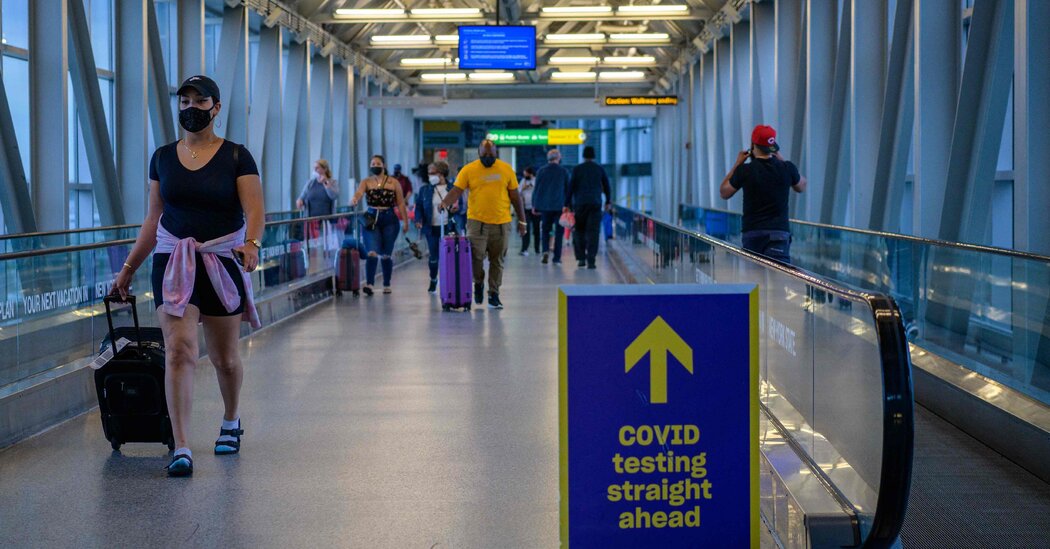
Do you need to be vaccinated or have a negative Covid-19 test for your next trip? Check this guide before traveling domestically or abroad.As vaccinations ramp up and regulations loosen for people in the United States, many are planning travel for summer and beyond, with experts predicting that July 4 will be the biggest travel weekend since the beginning of the pandemic.But with regulations shifting, people might have questions about testing or vaccination requirements for their trips. The Centers for Disease Control and Prevention recently eased travel recommendations to more than 100 countries. Some countries are completely open to vaccinated travelers, while others require a negative coronavirus test result in order to enter.In the United States, the C.D.C. has advised that vaccinated people no longer need to wear masks in most places and released new travel guidelines that said domestic travel is safe for them. But travelers must take note of local advice and regulations, as these can vary state by state.Here’s everything you need to consider about testing and vaccinations before you travel within the U.S. or internationally.Are there testing and vaccination requirements for domestic travel?For most places, no. You do not need to be vaccinated for any domestic travel. Hawaii is the only state that requires a negative test for travel.In Hawaii, the test must be administered within 72 hours of arrival and the results uploaded to its Safe Travel platform to avoid a mandatory quarantine when entering the state or for some inter-county travel, though the latter restrictions are set to end on June 15.Alternatively in Hawaii, you can also provide proof that you’ve recovered from Covid-19 in the past 90 days, including both a positive test result and a letter from a doctor clearing you to travel.The state’s governor, David Ige, said this month that people who received their vaccination in the state of Hawaii may bypass testing and quarantine requirements starting on June 15, and that anyone vaccinated in the U.S. will be able to enter Hawaii without testing once the state has reached a 60 percent vaccination rate.If you are unvaccinated, you should continue to adhere to social distancing and mask-wearing protocols while traveling domestically, the C.D.C. said. You can use the C.D.C.’s Travel Planner to check guidelines by state.What are the testing and vaccination rules for international travel?While testing and vaccination requirements vary by destination country, everyone arriving in the U.S. — even vaccinated Americans — must present a negative test result upon entry.Many nations are still closed to American travelers. Those that are open may require a negative test, proof of vaccination or evidence of recovery (or a combination of these) to enter.The United Kingdom, for instance, requires that American travelers, regardless of vaccination status, provide proof of a negative test taken within 72 hours of departure, quarantine upon arrival and take two additional tests during their stay. Children under 11 are exempt from these requirements, as are some other people depending on their reason for travel.Some European countries are allowing in Americans who are vaccinated or who can show a negative test, with more expected to follow suit.Canada is still closed to Americans, with few exceptions, and will remain so until at least early July, said Patty Hajdu, the country’s minister of health, in a news conference in June. The U.S.-Mexico land border is closed for nonessential travel until at least June 21, but air travel is allowed and the country does not require a negative test for entry. Because of its high risk level, the C.D.C. recommends that travelers be fully vaccinated before traveling to Mexico.Consult the C.D.C.’s inventory of international travel health notices for more information on regulations by country.“Travelers should always check with their airline and the embassy of the country they are visiting to ensure they have the proper documentation required to enter the country,” said Perry Flint, a spokesman for The International Air Transport Association, a global airline industry group.What test should I take, and where and when?To enter the U.S., travelers must show a negative result to a nucleic acid amplification test (NAAT) — PCR is a type of NAAT test — or an antigen test, also known as a rapid test, taken in the three days before departure, according to the C.D.C.Some airports offer on-site testing, such as Heathrow Airport in England, or Rome’s Fiumicino International Airport in Italy.Josh Alexander, a New York-based luxury travel agent for Protravel International, said that many international hotels, including most Four Seasons hotels and resorts, are offering on-site rapid tests for free or at a nominal cost.Testing at local clinics is also available in many places, though you should check availability at your destination ahead of time and book if you can. It may also come at a high cost. Mr. Alexander said that PCR tests abroad can range from $50 to $150.The C.D.C. said that it allows for a three-day time frame rather than 72 hours to allow flexibility in the time of day the test can be taken. For instance, if you are flying out on a Friday, the test may be taken at any time on Tuesday.But, when it comes to international destinations, Mr. Alexander recommends erring on the side of caution when timing your test by calculating it based on time of arrival at your destination.“Rules are constantly changing,” he said, “so we’re just trying to always tell people they should always be as conservative as possible to eliminate any gray area.”What are the requirements for minors?The C.D.C. testing recommendations apply to all children 2 years and older, which means your toddler also needs to deliver a negative Covid-19 test to enter the U.S. from abroad. When traveling, children should wear masks, practice social distancing and wash hands often, the C.D.C. said.“If the kids are age 12 and older, get ’em vaccinated,” said William Schaffner, an infectious disease expert at Vanderbilt University, in an email.If you’re traveling to a country within the European Union that is open to travelers from the U.S., children who cannot be vaccinated should have a negative PCR test taken no more than 72 hours before arrival at your destination, and additional testing may be required upon arrival.Travelers should check with their airline or destination country website for relevant requirements.What if I want to go on a cruise?Rules vary from one cruise line to another, with some planning to require that all passengers and crew be vaccinated, and others adopting a hybrid model.But recent laws passed in Florida and Texas banning businesses from requiring proof of vaccination to use their services may complicate this plan.Celebrity Cruises, set to be the first U.S. cruise ship to restart operations on June 26 from Fort Lauderdale, Fla., said it’s optimistic that a resolution would be reached in time. It is requiring that guests 16 years and older be vaccinated, while children will be tested at the terminal.Carnival Cruises said on Monday that its first ship would set sail from the Port of Galveston, in Texas, on July 3 and would be available only for vaccinated passengers. Norwegian, which will begin to operate cruises from Miami in August, said it will require the same through October 31 and has threatened to skip Florida ports if the state does not allow cruise lines an exemption from the law banning vaccine requirements.Christine Duffy, the president of Carnival Cruise Line, said in a statement on June 7 that “the current CDC requirements for cruising with a guest base that is unvaccinated will make it very difficult to deliver the experience our guests expect, especially given the large number of families with younger children who sail with us.”“As a result, our alternative is to operate our ships from the U.S. during the month of July with vaccinated guests,” she said.But even if you are vaccinated, you must also consider the requirements of the country where the cruise is disembarking. The Caribbean island of St. Maarten, for instance, where Celebrity Cruises started sailing on June 5, requires a negative test in addition to proof of vaccination.What documents should I bring with me if I travel?This will also depend on where you’re going, but a good rule of thumb is to carry your physical vaccine card, if you have it, and proof of a negative test, if it is required.Mr. Alexander, the travel agent, recommends people bring the original documents. While a number of digital health certificates — which show vaccine status and test results — are in the works, he said, they are not yet widely accepted. You should check, also, that your document is in the correct language. The United Kingdom, for instance, requires that test results be in English, Spanish or French. CommonPass, from the Geneva-based nonprofit the Commons Project Foundation, and the I.A.T.A. Travel Pass are two apps providing digital access to vaccine and testing records for travel. The European Union will be releasing its own digital Covid certificate for E.U. citizens by July 1, though it is unclear whether Americans will be able to use it.You should check with your airline to see if the app you want to use will be accepted at your destination. Both the CommonPass and I.A.T.A. websites list destinations and airline partners accepting the digital health certificates.Mr. Alexander added that some countries, such as Croatia, may also require proof of a return flight or confirmation of your hotel booking or other accommodation, though this is rare. In South Africa, which has implemented a curfew, travelers may need to show their flight ticket to law enforcement officers to show they are allowed to be in transit.But these shifting regulations should not dissuade people from traveling, Mr. Alexander said.“If you’re vaccinated and you’re following safe precautions, you can still have a great experience,” he said.

Read more →

Milton Keynes girl, 6, cheered by classmates on first 100m walk

A six-year-old girl with an extremely rare genetic disorder has walked 100m (328ft), surrounded by supportive classmates.Bea was born with neonatal Marfan syndrome, which severely affects her muscles, has had two major heart operations and needs a ventilator 24 hours a day.Her school near Milton Keynes held a fancy dress day to raise money for a new wheelchair and walking frame to help her cope with the condition, which is believed to affect fewer than 100 people worldwide.Her mother Jennifer Pykett said: “Two weeks ago, I think the furthest she’d walked was about 10 metres. It’s a wonder that she’s doing what she’s doing. We’re exceptionally proud of her.”

Read more →

Vaccinating children against Covid-19

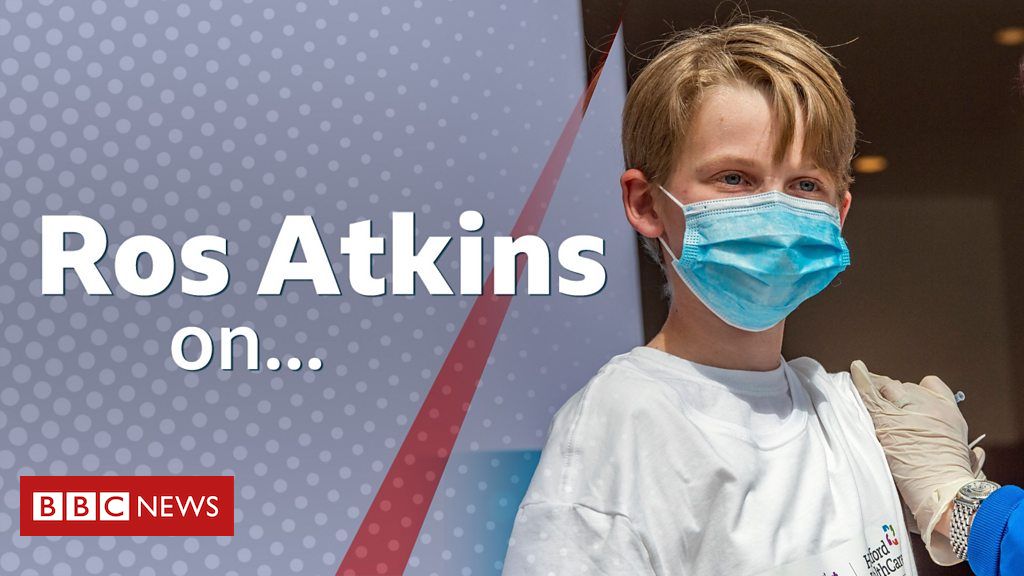
Several countries have given emergency approval to the use of the Pfizer vaccine for children aged 12-15. But the decision to vaccinate adolescents against Covid-19 is not without controversy. Ros Atkins takes a look at the issues.Video produced by Mary Fuller, Tom Brada, Ben Tobias

Read more →

Vitamin D deficiency may increase risk for addiction to opioids and ultraviolet rays

Vitamin D deficiency strongly exaggerates the craving for and effects of opioids, potentially increasing the risk for dependence and addiction, according to a new study led by researchers at Massachusetts General Hospital (MGH). These findings, published in Science Advances, suggest that addressing the common problem of vitamin D deficiency with inexpensive supplements could play a part in combating the ongoing scourge of opioid addiction.
Earlier work by David E. Fisher, MD, PhD, director of the Mass General Cancer Center’s Melanoma Program and director of MGH’s Cutaneous Biology Research Center (CBRC), laid the foundation for the current study. In 2007, Fisher and his team found something unexpected: Exposure to ultraviolet (UV) rays (specifically the form called UVB), causes the skin to produce the hormone endorphin, which is chemically related to morphine, heroin and other opioids — in fact, all activate the same receptors in the brain. A subsequent study by Fisher found that UV exposure raises endorphin levels in mice, which then display behavior consistent with opioid addiction.
Endorphin is sometimes called a “feel good” hormone because it induces a sense of mild euphoria. Studies have suggested that some people develop urges to sunbathe and visit tanning salons that mirror the behaviors of opioid addicts. Fisher and his colleagues speculated that people may seek out UVB because they unknowingly crave the endorphin rush. But that suggests a major contradiction. “Why would we evolve to be behaviorally drawn towards the most common carcinogen that exists?” asked Fisher. After all, sun exposure is the primary cause of skin cancer, to say nothing of wrinkles and other skin damage.
Fisher believes that the only explanation for why humans and other animals seek out the sun is that exposure to UV radiation is necessary for production of vitamin D, which our bodies can’t formulate on their own. Vitamin D promotes uptake of calcium, which is essential for building bone. As tribes of humans migrated north during prehistoric times, an evolutionary alteration might have been needed to compel them to step out of caves and into the sunshine on bitterly cold days. Otherwise, small children would have died of prolonged vitamin D deficiency (the cause of rickets) and weak bones might have shattered when people ran from predators, leaving them vulnerable.
This theory led Fisher and colleagues to hypothesize that sun seeking is driven by vitamin D deficiency, with the goal of increasing synthesis of the hormone for survival, and that vitamin D deficiency might also make the body more sensitive to the effects of opioids, potentially contributing to addiction. “Our goal in this study was to understand the relationship between vitamin D signaling in the body and UV-seeking and opioid-seeking behaviors,” says lead author Lajos V. Kemény, MD, PhD, a postdoctoral research fellow in Dermatology at MGH.
In the Science Advances paper, Fisher, Kemény and a multidisciplinary team from several institutions addressed the question from dual perspectives. In one arm of the study, they compared normal laboratory mice with mice that were deficient in vitamin D (either through special breeding or by removing vitamin D from their diets). “We found that modulating vitamin D levels changes multiple addictive behaviors to both UV and opioids,” says Kemény. Importantly, when the mice were conditioned with modest doses of morphine, those deficient in vitamin D continued seeking out the drug, behavior that was less common among the normal mice. When morphine was withdrawn, the mice with low vitamin D levels were far more likely to develop withdrawal symptoms.
The study also found that morphine worked more effectively as a pain reliever in mice with vitamin D deficiency — that is, the opioid had an exaggerated response in these mice, which may be concerning if it’s true in humans, too, says Fisher. After all, consider a surgery patient who receives morphine for pain control after the operation. If that patient is deficient in vitamin D, the euphoric effects of morphine could be exaggerated, says Fisher, “and that person is more likely to become addicted.”
The lab data suggesting that vitamin D deficiency increases addictive behavior was supported by several accompanying analyses of human health records. One showed that patients with modestly low vitamin D levels were 50 percent more likely than others with normal levels to use opioids, while patients who had severe vitamin D deficiency were 90 percent more likely. Another analysis found that patients diagnosed with opioid use disorder (OUD) were more likely than others to be deficient in vitamin D.
Back in the lab, one of the study’s other critical findings could have significant implications, says Fisher. “When we corrected vitamin D levels in the deficient mice, their opioid responses reversed and returned to normal,” he says. In humans, vitamin D deficiency is widespread, but is safely and easily treated with low-cost dietary supplements, notes Fisher. While more research is needed, he believes that treating vitamin D deficiency may offer a new way to help reduce the risk for OUD and bolster existing treatments for the disorder. “Our results suggests that we may have an opportunity in the public health arena to influence the opioid epidemic,” says Fisher.

Read more →

New discovery shows human cells can write RNA sequences into DNA

Cells contain machinery that duplicates DNA into a new set that goes into a newly formed cell. That same class of machines, called polymerases, also build RNA messages, which are like notes copied from the central DNA repository of recipes, so they can be read more efficiently into proteins. But polymerases were thought to only work in one direction DNA into DNA or RNA. This prevents RNA messages from being rewritten back into the master recipe book of genomic DNA. Now, Thomas Jefferson University researchers provide the first evidence that RNA segments can be written back into DNA, which potentially challenges the central dogma in biology and could have wide implications affecting many fields of biology.
“This work opens the door to many other studies that will help us understand the significance of having a mechanism for converting RNA messages into DNA in our own cells,” says Richard Pomerantz, PhD, associate professor of biochemistry and molecular biology at Thomas Jefferson University. “The reality that a human polymerase can do this with high efficiency, raises many questions.” For example, this finding suggests that RNA messages can be used as templates for repairing or re-writing genomic DNA.
The work was published June 11th in the journal Science Advances.
Together with first author Gurushankar Chandramouly and other collaborators, Dr. Pomerantz’s team started by investigating one very unusual polymerase, called polymerase theta. Of the 14 DNA polymerases in mammalian cells, only three do the bulk of the work of duplicating the entire genome to prepare for cell division. The remaining 11 are mostly involved in detecting and making repairs when there’s a break or error in the DNA strands. Polymerase theta repairs DNA, but is very error-prone and makes many errors or mutations. The researchers therefore noticed that some of polymerase theta’s “bad” qualities were ones it shared with another cellular machine, albeit one more common in viruses — the reverse transcriptase. Like Pol theta, HIV reverse transcriptase acts as a DNA polymerase, but can also bind RNA and read RNA back into a DNA strand.
In a series of elegant experiments, the researchers tested polymerase theta against the reverse transcriptase from HIV, which is one of the best studied of its kind. They showed that polymerase theta was capable of converting RNA messages into DNA, which it did as well as HIV reverse transcriptase, and that it actually did a better job than when duplicating DNA to DNA. Polymerase theta was more efficient and introduced fewer errors when using an RNA template to write new DNA messages, than when duplicating DNA into DNA, suggesting that this function could be its primary purpose in the cell.
The group collaborated with Dr. Xiaojiang S. Chen’s lab at USC and used x-ray crystallography to define the structure and found that this molecule was able to change shape in order to accommodate the more bulky RNA molecule — a feat unique among polymerases.
“Our research suggests that polymerase theta’s main function is to act as a reverse transcriptase,” says Dr. Pomerantz. “In healthy cells, the purpose of this molecule may be toward RNA-mediated DNA repair. In unhealthy cells, such as cancer cells, polymerase theta is highly expressed and promotes cancer cell growth and drug resistance. It will be exciting to further understand how polymerase theta’s activity on RNA contributes to DNA repair and cancer-cell proliferation.”
This research was supported by NIH grants 1R01GM130889-01 and 1R01GM137124-01, and R01CA197506 and R01CA240392. This research was also supported in part by a Tower Cancer Research Foundation grant.
Story Source:
Materials provided by Thomas Jefferson University. Note: Content may be edited for style and length.

Read more →

C.D.C. Investigating Cases of Heart Inflammation Following Immunization

Federal officials are reviewing nearly 800 cases of rare heart problems following immunization with the coronavirus vaccines made by Pfizer-BioNTech and Moderna, according to data presented at a vaccine safety meeting on Thursday.Not all of the cases are likely to be verified or related to vaccines, and experts believe the benefits of immunization far outweigh the risk of these rare complications. But the reports have worried some researchers. More than half of the heart problems were reported in people ages 12 to 24, while the same age group accounted for only 9 percent of the millions of doses administered.“We clearly have an imbalance there,” said Dr. Tom Shimabukuro, a vaccine expert at the Centers for Disease Control and Prevention who presented the data. Advisers to the agency will meet on June 18 to explore the potential links to the complications: myocarditis, inflammation of the heart muscle, and pericarditis, inflammation of the membrane surrounding the heart.About two-thirds of the cases were in young males, with a median age of 30 years. The numbers are higher than would be expected for that age group, officials said, but have not yet been definitively linked to the vaccines.As of May 31, 216 people had experienced myocarditis or pericarditis after one dose of either vaccine, and 573 after the second dose. Most cases have been mild, but 15 patients remain in hospitals. The second dose of the Pfizer-BioNTech vaccine was linked to about twice as many cases as the second dose of the vaccine made by Moderna.There were 79 reported cases of the heart problems among those 16 or 17 years old, compared with a maximum of 19 cases expected for that group. And in the group of young people ages 18 to 24 years, there were 196 cases, compared with an expected maximum of 83.But the true incidence may be lower, Dr. Shimabukuro said. Immunizations of younger teenagers began only last month, and data from that age group in particular are limited.

Read more →

AI predicts how patients with viral infections, including COVID-19, will fare

Researchers at University of California San Diego School of Medicine used an artificial intelligence (AI) algorithm to sift through terabytes of gene expression data — which genes are “on” or “off” during infection — to look for shared patterns in patients with past pandemic viral infections, including SARS, MERS and swine flu.
Two telltale signatures emerged from the study, published June 11, 2021 in eBiomedicine. One, a set of 166 genes, reveals how the human immune system responds to viral infections. A second set of 20 signature genes predicts the severity of a patient’s disease. For example, the need to hospitalize or use a mechanical ventilator. The algorithm’s utility was validated using lung tissues collected at autopsies from deceased patients with COVID-19 and animal models of the infection.
“These viral pandemic-associated signatures tell us how a person’s immune system responds to a viral infection and how severe it might get, and that gives us a map for this and future pandemics,” said Pradipta Ghosh, MD, professor of cellular and molecular medicine at UC San Diego School of Medicine and Moores Cancer Center.
Ghosh co-led the study with Debashis Sahoo, PhD, assistant professor of pediatrics at UC San Diego School of Medicine and of computer science and engineering at Jacobs School of Engineering, and Soumita Das, PhD, associate professor of pathology at UC San Diego School of Medicine.
During a viral infection, the immune system releases small proteins called cytokines into the blood. These proteins guide immune cells to the site of infection to help get rid of the infection. Sometimes, though, the body releases too many cytokines, creating a runaway immune system that attacks its own healthy tissue. This mishap, known as a cytokine storm, is believed to be one of the reasons some virally infected patients, including some with the common flu, succumb to the infection while others do not.
But the nature, extent and source of fatal cytokine storms, who is at greatest risk and how it might best be treated have long been unclear.

Read more →

An omega-3 that's poison for tumors

So-called “good fatty acids” are essential for human health and much sought after by those who try to eat healthily. Among the Omega-3 fatty acids, DHA or docosahexaenoic acid is crucial to brain function, vision and the regulation of inflammatory phenomena.
In addition to these virtues, DHA is also associated with a reduction in the incidence of cancer. How it works is the subject of a major discovery by a multidisciplinary team of University of Louvain (UCLouvain) researchers, who have just elucidated the biochemical mechanism that allows DHA and other related fatty acids to slow the development of tumours. This is a major advance that has recently been published in the journal Cell Metabolism.
Key to the discovery: interdisciplinarity
In 2016, Olivier Feron’s UCLouvain team, which specialises in oncology, discovered that cells in an acidic microenvironment (acidosis) within tumours replace glucose with lipids as an energy source in order to multiply. In collaboration with UCLouvain’s Cyril Corbet, Prof. Feron demonstrated in 2020 that these same cells are the most aggressive and acquire the ability to leave the original tumour to generate metastases. Meanwhile, Yvan Larondelle, a professor in the UCLouvain Faculty of Bioengineering, whose team is developing improved dietary lipid sources, proposed to Prof. Feron that they combine their skills in a research project, led by PhD candidate Emeline Dierge, to evaluate the behaviour of tumour cells in the presence of different fatty acids.
Thanks to the support of the Fondation Louvain, the Belgian Cancer Foundation and the Télévie telethon, the team quickly identified that these acidotic tumour cells responded in diametrically opposite ways depending on the fatty acid they were absorbing. Within a few weeks, the results were both impressive and surprising. “We soon found that certain fatty acids stimulated the tumour cells while others killed them,” the researchers explained. DHA literally poisons them.
A fatal overload
The poison acts on tumour cells via a phenomenon called ferroptosis, a type of cell death linked to the peroxidation of certain fatty acids. The greater the amount of unsaturated fatty acids in the cell, the greater the risk of their oxidation. Normally, in the acidic compartment within tumours, cells store these fatty acids in lipid droplets, a kind of bundle in which fatty acids are protected from oxidation. But in the presence of a large amount of DHA, the tumour cell is overwhelmed and cannot store the DHA, which oxidises and leads to cell death. By using a lipid metabolism inhibitor that prevents the formation of lipid droplets, researchers were able to observe that this phenomenon is further amplified, which confirms the identified mechanism and opens the door to combined treatment possibilities.
For their study, UCLouvain researchers used a 3D tumour cell culture system, called spheroids. In the presence of DHA, spheroids first grow and then implode. The team also administered a DHA-enriched diet to mice with tumours. The result: tumour development was significantly slowed compared to that in mice on a conventional diet.
This UCLouvain study shows the value of DHA in fighting cancer. “For an adult,” the UCLouvain researchers stated, “it’s recommended to consume at least 250 mg of DHA per day. But studies show that our diet provides on average only 50 to 100 mg per day. This is well below the minimum recommended intake.”
Story Source:
Materials provided by Université catholique de Louvain. Note: Content may be edited for style and length.

Read more →