New class of compounds found to block coronavirus reproduction

A human genetic mechanism hijacked by SARS-CoV-2, the coronavirus behind the COVID-19 pandemic, to help it spread also makes it vulnerable to a new class of drug candidates, a new study finds.
Led by researchers at NYU Grossman School of Medicine, a research team showed that coronavirus reproduction in infected human cells requires chemical changes made by the human protein METTL3 to RNA, a key form of genetic material. Additional human proteins involved in the recognition of modified RNA, YTHDF1 and YTHDF3, were also found to be important to the process.
Published online in Genes and Development on June 24, the study showed for the first time that a molecular inhibitor of METTL3, designed by Storm Therapeutics Ltd and called STM2457, dramatically reduced in cell cultures the replication of both pandemic SARS-CoV-2 and, a less severe, seasonal coronavirus, HCoV-OC43, one cause of the common cold.
“Our results represent the first time a chemical inhibitor of METTL3 has been shown to have an anti-viral effect for coronaviruses, or any virus,” says senior study author Ian Mohr, PhD, professor in the Department of Microbiology at NYU Langone Health. “This represents a necessary step in drug development, identifies new targets, and reveals an unexpected strategy to halt the coronavirus lifecycle.”
Turning Virus’ Weaknesses Against Them
The current study builds on a growing understanding of gene regulation. It has long been established that sequences of As, Gs, Cs and Ts, the molecular letters in the DNA code of genes, are copied into messenger RNA (mRNA) molecules that carry the information to the machinery that determines which proteins are made. Only recently has the importance of chemical modification to mRNAs become apparent in the control of protein production. In some instances this process is controlled by the attachment of a methyl group (one carbon and three hydrogens) to an RNA chain, which turns that genetic message off.

Read more →

Abnormal response to cellular stress is associated with Huntington's disease

A new University of California, Irvine-led study finds that the persistence of a marker of chronic cellular stress, previously associated with neurodegenerative diseases such as amyotrophic lateral sclerosis (ALS) and frontotemporal dementia (FTD), also takes place in the brains of Huntington’s disease (HD) patients.
Chronic cellular stress results in the abnormal accumulation of stress granules (SGs), which are clumps of protein and RNAs that gather in the cell. Prior to this study, published in the Journal of Clinical Investigation, it was not known if these types of granules were a pathological feature of HD, an inherited and progressive neurodegenerative disorder that typically strikes in the prime of life.
In addition to identifying SGs as a pathological feature of HD, researchers made several other discoveries including that extracellular vesicles, which float in cerebrospinal fluid (CSF) and act as a messaging system between cells in the brain, can potentially alter the behavior of other cells and impact the abnormal accumulation of the granules. They also found that TAR DNA-binding protein 43 (TDP43) is mislocalized, which has emerged as a critical feature of multiple neurodegenerative diseases.
“We were initially interested in whether the profile of these messages could serve as a biomarker for HD and investigated whether the vesicles from HD patients contain messages that are different from those of unaffected individuals,” said first author Isabella I. Sanchez, PhD, from the Thompson Laboratory at UCI School of Medicine.
Researchers found that the CSF of HD patients carried messages in the form of small non-coding RNAs (miRNAs) that did were predicted to alter the production of proteins that are indispensable for SG formation. They soon identified a key player in SG dynamics, GTPase-activating protein-binding protein 1 (G3BP1), as a predicted target.
“This finding regarding the miRNAs was very exciting, as we had simultaneously started investigations to characterize SGs in HD brain tissues. SGs can be very difficult to detect in brain tissues, and it just so happened that we had narrowed down the adequate conditions and were ready to being characterizing G3BP1 SGs in HD mouse and HD patient brains,” said Leslie M. Thompson, PhD, Donald Bren and UCI Chancellor’s professor in the Departments of Psychiatry & Human Behavior and Biological Chemistry at the UCI School of Medicine, and Neurobiology and Behavior at the UCI School of Biological Sciences.
While SG formation is a normal physiological process that enables cells to overcome stressful conditions, the SG pathology in HD may result from an accumulation G3BP1 SGs that initially served a protective function, but develop into hyper-stable structures over time.
“We hope that our findings will inform future studies aimed at understanding how SG accumulation affects HD progression, and whether targeting SG pathology is a viable therapeutic avenue in the fight against HD,” said Robert Spitale, PhD, professor in the Department of Pharmaceutical Sciences and also a lead author of the study.
Story Source:
Materials provided by University of California – Irvine. Note: Content may be edited for style and length.

Read more →

Roadmap to HIV eradication via stem cell therapy

In a groundbreaking study, a team of UC Davis researchers has discovered a special type of stem cell that can reduce the amount of the virus causing AIDS, boosting the body’s antiviral immunity and repairing and restoring the gut’s lymphoid follicles damaged by the simian immunodeficiency virus (SIV), the equivalent of the human immunodeficiency virus (HIV) in non-human primates.
The study, published June 22 in JCI Insight, showed the mechanism through which mesenchymal stem/stromal cells (MSCs) enhance the body’s immune response to the virus. It also provides a roadmap for developing multi-pronged HIV eradication strategies.
“Impaired immune functions in HIV infection and incomplete immune recovery pose obstacles for eradicating HIV,” said Satya Dandekar, senior author of this paper. “Our objective was to develop strategies to boost immunity against the virus and empower the host immune system to eradicate the virus. We sought to repair, regenerate and restore the lymphoid follicles that are damaged by the viral infection.”
The lymphoid tissue in the gut is an early site for viral replication and the establishment of viral reservoirs. Dandekar’s group has previously shown that an HIV infection causes severe loss of gut mucosal T immune cells and disrupts the gut epithelial barrier lining, leading to a leaky gut.
“The lymphoid follicles are organized structures where the long-term immune attack is launched against pathogens by generating antibody response targeting the virus. These important regions are functionally impaired very early following HIV infection,” Dandekar said.
While antiretroviral drugs effectively suppress viral replication, they do not repair the damage caused by the virus to the immune system. On their own, these drugs cannot restore the functionality of the lymphoid follicles damaged by HIV infection.

Read more →

Tree pollen carries SARS-CoV-2 particles farther, facilitates virus spread, study finds

Most models explaining how viruses are transmitted focus on viral particles escaping one person to infect a nearby person. A study on the role of microscopic particles in how viruses are transmitted suggests pollen is nothing to sneeze at.
In Physics of Fluids, by AIP Publishing, Talib Dbouk and Dimitris Drikakis investigate how pollen facilitates the spread of an RNA virus like the COVID-19 virus. The study draws on cutting-edge computational approaches for analyzing fluid dynamics to mimic the pollen movement from a willow tree, a prototypical pollen emitter. Airborne pollen grains contribute to the spread of airborne viruses, especially in crowded environments.
“To our knowledge, this is the first time we show through modeling and simulation how airborne pollen micrograins are transported in a light breeze, contributing to airborne virus transmission in crowds outdoors,” Drikakis said.
The researchers noticed a correlation between COVID-19 infection rates and the pollen concentration on the National Allergy Map. Each pollen grain can carry hundreds of virus particles at a time. Trees alone can put 1,500 grains per cubic meter into the air on heavy days.
The researchers set to work by creating all the pollen-producing parts of their computational willow tree. They simulated outdoor gatherings of roughly 10 or 100 people, some of them shedding COVID-19 particles, and subjected the people to 10,000 pollen grains.
“One of the significant challenges is the re-creation of an utterly realistic environment of a mature willow tree,” said Dbouk. “This included thousands of tree leaves and pollen grain particles, hundreds of stems and a realistic gathering of a crowd of about 100 individuals at about 20 meters from the tree.”
Tuning the model to the temperature, windspeed, and humidity of a typical spring day in the U.S., the pollen passed through the crowd in less than one minute, which could significantly affect the virus load carried along and increase the risk of infection.
The authors said the 6-foot distance often cited for COVID-19 recommendations might not be adequate for those at risk for the disease in crowded areas with high pollen. New recommendations based on local pollen levels could be used to manage the infection risk better.
While calling attention to other forms of COVID-19 transmission, the authors hope their study stokes further interest in the fluid dynamics of plants.
Next, they look to better understand the mechanisms underlying the interaction between airborne pollen grains and the human respiratory system under different environmental conditions.
Story Source:
Materials provided by American Institute of Physics. Note: Content may be edited for style and length.

Read more →

Pandemic drives largest decrease in U.S. life expectancy since 1943

U.S. life expectancy decreased by 1.87 years between 2018 and 2020, a drop not seen since World War II, according to new research from Virginia Commonwealth University, the University of Colorado Boulder and the Urban Institute.
The numbers are even worse for people of color. On average, whereas life expectancy among white Americans decreased by 1.36 years in 2020, it decreased by 3.25 years in Black Americans and 3.88 years in Hispanic Americans.
The data will be released June 23 in The BMJ, a journal published by the British Medical Association.
Other countries also saw declines in life expectancy between 2018 and 2020, but the loss of life expectancy in the U.S. was 8.5 times that of the average for 16 peer countries. The declines for minority populations were 15 to 18 times larger than other countries.
“When the pandemic came, my naïve assumption was that it would not have a big impact on the preexisting gap between the U.S. and peer countries,” said Steven Woolf, M.D., the study’s lead author and director emeritus of VCU’s Center on Society and Health. “It was a global pandemic, and I assumed that every country would take a hit. What I did not anticipate was how badly the U.S. would fare in the pandemic and the enormous death toll that the U.S. would experience.”
The U.S. death toll has surpassed 600,000, according to Johns Hopkins University’s Coronavirus Resource Center. Excess deaths, which exceed the official count, may contribute to the impact of the pandemic, according to previous research led by Woolf.

Read more →

Heart Problems After Vaccination Are Very Rare, Federal Researchers Say

More than 1,200 cases have been reported, mostly mild and more often in young men and boys. The benefits of vaccination still far outweigh the risks, experts said.The coronavirus vaccines made by Pfizer-BioNTech and Moderna may have caused heart problems in more than 1,200 Americans, including about 500 who were younger than age 30, according to data reported on Wednesday by researchers at the Centers for Disease Control and Prevention.Still, the benefits of immunization greatly outweighed the risks, and advisers to the C.D.C. strongly recommended vaccination for all Americans 12 and older.The heart problems reported are myocarditis, an inflammation of the heart muscle; and pericarditis, inflammation of the lining around the heart. The risk is higher after the second dose of an mRNA vaccine than after the first, the researchers reported, and much higher in men than in women.But overall, the side effect is very uncommon — just 12.6 cases per million second doses administered. The researchers estimated that out of a million second doses given to boys ages 12 to 17, the vaccines might cause a maximum of 70 myocarditis cases, but would prevent 5,700 infections, 2,215 hospitalizations and two deaths.Agency researchers presented the data to members of the Advisory Committee on Immunization Practices, which makes recommendations on vaccine use in the United States. (The scientists grouped pericarditis with myocarditis for reporting purposes.)Most cases were mild, with symptoms like fatigue, chest pain and disturbances in heart rhythm that quickly cleared up, the researchers said. Of the 484 cases reported in Americans under age 30, the C.D.C. has definitively linked 323 cases to vaccination. The rest remain under investigation.“These events are really very rare, extremely rare,” said Dr. Brian Feingold, an expert on heart inflammation in children at the UPMC Children’s Hospital of Pittsburgh. “That needs to be taken in context with illness and morbidity and mortality related to Covid.”Separately, more than a dozen federal and professional medical organizations said in a joint statement on Wednesday that myocarditis “is an extremely rare side effect, and only an exceedingly small number of people will experience it after vaccination.”Federal researchers on Wednesday also presented early safety data regarding the six million doses of vaccines administered to children ages 12 to 15. The side effects — usually fatigue and pain at the injection site — were similar to those observed in young people ages 16 to 25.“To date, the Covid-19 vaccines authorized in the U.S. have demonstrated a high degree of safety,” said Dr. Matthew F. Daley, a senior investigator at Kaiser Permanente Colorado and a member of the advisory committee.The C.D.C. advisers met as the Biden administration publicly acknowledged that it expected to fall short of its goal of getting 70 percent of Americans at least partly vaccinated by July 4. The shortfall, officials said on Tuesday, resulted in part from reluctance among younger Americans to be immunized.About two out of every 100,000 people aged 15 to 18 — about two-thirds of them male — are hospitalized each year with myocarditis, according to data presented at the meeting. Patients with the most severe cases may require mechanical support, like a ventilator, or a heart transplant.Even those with mild symptoms must refrain from exercise for about six months after recovery. It’s unclear what typically causes the condition, or why it’s more common in young men than in women.The first cases of myocarditis linked to coronavirus vaccines were reported in Israel, mostly among young men aged 16 to 19. Israel recorded 148 cases from December to May, 95 percent of them mild.In the United States, too, myocarditis has been more common in men and boys: Up to 80 percent of cases diagnosed after the second dose were in males. There has also been a clear age difference, with the side effect clustered in individuals in their late teens and early 20s.About 318 million coronavirus vaccine doses have been administered in the United States as of June 21, and 150 million people are considered to be fully protected. Most of the myocarditis symptoms emerged within about four days of the first or second dose.“We have clear evidence here of onset for the vaccinated cases within the first week,” said Dr. Tom Shimabukuro, a vaccine expert at the C.D.C. who presented the new data. There is also a dose effect, he said, adding, “The rates are higher for both vaccines after dose two.”The vast majority of patients with the side effect fully recover, noted Dr. James de Lemos, a cardiologist at the University of Texas Southwestern Medical Center in Dallas, who reported one of the first cases in January. Covid-19 itself may cause heart problems in young people. A large study of collegiate athletes showed that 2.3 percent of those who had recovered from Covid-19 had heart abnormalities consistent with myocarditis.“It’s going to be manifold more common to get heart muscle inflammation from getting Covid than you would from getting a vaccine, even in young men,” Dr. de Lemos said.More than 4,000 children infected with the coronavirus developed multisystem inflammatory syndrome, which includes heart symptoms. Some children have also died, while none have died from vaccination, Dr. Feingold noted. “You can say no to the vaccine, but you’re assuming other risks.”The C.D.C. recommends vaccination for all Americans over age 12. But on Wednesday, officials suggested that anyone who develops myocarditis after the first dose should defer a second dose until they discuss the risks with a health care provider.The C.D.C.’s recommendations may influence decisions about whether to immunize children younger than 12 as vaccines become available for that age group. Some experts have questioned whether the benefits to children outweigh the potential risks, given the low odds of developing serious illness from the virus in young children.Still, the agency reported this month that the number of Covid-19-related hospitalizations among adolescents in the United States was about three times higher than hospitalizations linked to influenza over three recent flu seasons.The overall number of infections has steeply dropped since January, but as more adults have been vaccinated, the proportion of children in the total has risen. About one-third of new infections reported in May were in Americans aged 12 to 29, and 316 deaths have been recorded in this age group since April.Vaccination is becoming an even more urgent priority, given more contagious variants of the coronavirus now circulating in the United States, Dr. Paul Offit, a member of the Food and Drug Administration’s vaccine safety committee, said in an interview.“We are not close to being near where we need to be” in terms of the percentage of Americans who should be vaccinated, said Dr. Offit, who is also a pediatrician at the Children’s Hospital of Philadelphia. “And you’re going to head into winter when you’re going to have a generally undervaccinated population.”

Read more →

Drug doubles down on bone cancer, metastasis

Bone cancer is hard to treat and prone to metastasis. Research teams at Rice University and Baylor College of Medicine have a new strategy to attack it.
Chemist Han Xiao at Rice and biologist Xiang Zhang at Baylor and their labs have developed an antibody conjugate called BonTarg that delivers drugs to bone tumors and inhibits metastasis.
Their open-access study, which appears in Science Advances, shows how Xiao’s pClick technology can be used to link bone-targeting antibodies and therapeutic molecules.
In experiments, they used pClick to couple a molecule used to treat osteoporosis, alendronate, with the HER2-targeting antibody trastuzumab used to treat breast cancer and found it significantly enhanced the concentration of the antibody at tumor sites.
They reported the combination also inhibited secondary metastasis from infected organs seeded by bone tumors.
“Bone cancer is really challenging to treat, and clinical trials of different treatments have been disappointing for people with bone metastasis,” said Xiao, who joined Rice in 2017 with funding from the Cancer Prevention and Research Institute of Texas (CPRIT). “We feel our strategy is a real game changer.”
“Getting effective concentrations of drugs to bone tumors has been challenging because bones are hard, their networks of blood vessels is limited and drugs have tended to attach to adjacent healthy tissues,” Zhang said.

Read more →

Scientists obtain real-time look at how cancers evolve

From amoebas to zebras, all living things evolve. They change over time as pressures from the environment cause individuals with certain traits to become more common in a population while those with other traits become less common.
Cancer is no different. Within a growing tumor, cancer cells with the best ability to compete for resources and withstand environmental stressors will come to dominate in frequency. It’s “survival of the fittest” on a microscopic scale.
But fitness — how well suited any particular individual is to its environment — isn’t set in stone; it can change when the environment changes. The cancer cells that might do best in an environment saturated with chemotherapy drugs are likely to be different than the ones that will thrive in an environment without those drugs. So, predicting how tumors will evolve over time, especially in response to treatment, is a major challenge for scientists.
A new study by researchers at Memorial Sloan Kettering in collaboration with researchers at the University of British Columbia/BC Cancer in Canada suggests that one day it may be possible to make those predictions. The study, published June 23, 2021, in the journal Nature, was led by MSK computational biologist Sohrab Shah and BC Cancer breast cancer researcher Samuel Aparicio. The scientists showed that a machine-learning approach, built using principles of population genetics that describe how populations change over time, could accurately predict how human breast cancer tumors will evolve.
“Population genetic models of evolution match up nicely to cancer, but for a number of practical reasons it’s been a challenge to apply these to the evolution of real human cancers,” says Dr. Shah, Chief of Computational Oncology at MSK. “In this study, we show it’s possible to overcome some of those barriers.”
Ultimately, the approach could provide a means to predict whether a patient’s tumor is likely to stop responding to a particular treatment and identify the cells that are likely to be responsible for a relapse. This could mean highly tailored treatments, delivered at the optimal time, to produce better outcomes for people with cancer.

Read more →

Scientist Finds Early Virus Sequences That Had Been Mysteriously Deleted

By rooting through files stored on Google Cloud, a researcher says he recovered 13 early coronavirus sequences that had disappeared from a database last year.About a year ago, genetic sequences from more than 200 viruses that caused early cases of Covid-19 in Wuhan disappeared from an online scientific database.Now, by rooting through files stored on Google Cloud, a researcher in Seattle reports that he has recovered 13 of those original sequences — intriguing new information for discerning when and how the virus may have spilled over from a bat or another animal into humans.The new analysis, released on Tuesday, bolsters earlier suggestions that a variety of coronaviruses may have been circulating in Wuhan before the initial outbreaks linked to animal and seafood markets in December 2019.As the Biden administration investigates the contested origins of the virus, known as SARS-CoV-2, the study neither strengthens nor discounts the hypothesis that the pathogen leaked out of a famous Wuhan lab. But it does raise questions about why original sequences were deleted, and suggests that there may be more revelations to recover from the far corners of the internet.“This is a great piece of sleuth work for sure, and it significantly advances efforts to understand the origin of SARS-CoV-2,” said Michael Worobey, an evolutionary biologist at the University of Arizona who was not involved in the study.Jesse Bloom, a virologist at the Fred Hutchinson Cancer Research Center who wrote the new report, called the deletion of these sequences suspicious. It “seems likely that the sequences were deleted to obscure their existence,” he wrote in the paper, which has not yet been peer-reviewed or published in a scientific journal.Dr. Bloom and Dr. Worobey belong to an outspoken group of scientists who have called for more research into how the pandemic began. In a letter published in May, they complained that there wasn’t enough information to determine whether it was more likely that a lab leak spread the coronavirus, or that it leapt to humans from contact with an infected animal outside of a lab.The genetic sequences of viral samples hold crucial clues about how SARS-CoV-2 shifted to our species from another animal, most likely a bat. Most precious of all are sequences from early in the pandemic, because they take scientists closer to the original spillover event.As Dr. Bloom was reviewing what genetic data had been published by various research groups, he came across a March 2020 study with a spreadsheet that included information on 241 genetic sequences collected by scientists at Wuhan University. The spreadsheet indicated that the scientists had uploaded the sequences to an online database called the Sequence Read Archive, managed by the U.S. government’s National Library of Medicine.But when Dr. Bloom looked for the Wuhan sequences in the database earlier this month, his only result was “no item found.”Puzzled, he went back to the spreadsheet for any further clues. It indicated that the 241 sequences had been collected by a scientist named Aisi Fu at Renmin Hospital in Wuhan. Searching medical literature, Dr. Bloom eventually found another study posted online in March 2020 by Dr. Fu and colleagues, describing a new experimental test for SARS-CoV-2. The Chinese scientists published it in a scientific journal three months later.In that study, the scientists wrote that they had looked at 45 samples from nasal swabs taken “from outpatients with suspected Covid-19 early in the epidemic.” They then searched for a portion of SARS-CoV-2’s genetic material in the swabs. The researchers did not publish the actual sequences of the genes they fished out of the samples. Instead, they only published some mutations in the viruses.But a number of clues indicated to Dr. Bloom that the samples were the source of the 241 missing sequences. The papers included no explanation as to why the sequences had been uploaded to the Sequence Read Archive, only to disappear later.Perusing the archive, Dr. Bloom figured out that many of the sequences were stored as files on Google Cloud. Each sequence was contained in a file in the cloud, and the names of the files all shared the same basic format, he reported.Dr. Bloom swapped in the code for a missing sequence from Wuhan. Suddenly, he had the sequence. All told, he managed to recover 13 sequences from the cloud this way.With this new data, Dr. Bloom looked back once more at the early stages of the pandemic. He combined the 13 sequences with other published sequences of early coronaviruses, hoping to make progress on building the family tree of SARS-CoV-2.Working out all the steps by which SARS-CoV-2 evolved from a bat virus has been a challenge because scientists still have a limited number of samples to study. Some of the earliest samples come from the Huanan Seafood Wholesale Market in Wuhan, where an outbreak occurred in December 2019.But those market viruses actually have three extra mutations that are missing from SARS-CoV-2 samples collected weeks later. In other words, those later viruses look more like coronaviruses found in bats, supporting the idea that there was some early lineage of the virus that did not pass through the seafood market.Dr. Bloom found that the deleted sequences he recovered from the cloud also lack those extra mutations. “They’re three steps more similar to the bat coronaviruses than the viruses from the Huanan fish market,” Dr. Bloom said.The Wuhan Huanan Wholesale Seafood Market in January 2020.Dake Kang/Associated PressThis suggests, he said, that by the time SARS-CoV-2 reached the market, it had been circulating for awhile in Wuhan or beyond. The market viruses, he argued, aren’t representative of full diversity of coronaviruses already loose in late 2019.“Maybe our picture of what was present early in Wuhan from what has been sequenced might be somewhat biased,” he said.In his report, Dr. Bloom acknowledged that this conclusion would have to be confirmed with a deeper analysis of the virus sequences. Dr. Worobey said that he and his colleagues are working on a large-scale study of SARS-CoV-2 genes to better understand its origin and that they’ll now add Dr. Bloom’s 13 recovered sequences.“These additional data will play a big role in that effort,” Dr. Worobey said.It’s not clear why this valuable information went missing in the first place. Scientists can request that files be deleted by sending an email to the managers of the Sequence Read Archive. The National Library of Medicine, which manages the archive, said that the 13 sequences were removed last summer.“These SARS-CoV-2 sequences were submitted for posting in SRA in March 2020 and subsequently requested to be withdrawn by the submitting investigator in June 2020,” said Renata Myles, a spokeswoman for the National Institutes of Health.She said that the investigator, whom she did not name, told the archive managers that the sequences were being updated and would be added to a different database. But Dr. Bloom has searched every database he knows of, and has yet to find them. “Obviously I can’t rule out that the sequences are on some other database or web page somewhere, but I have not been able to find them any of the obvious places I’ve looked,” he said.Three of the co-authors of the 2020 testing study that produced the 13 sequences did not immediately respond to emails inquiring about Dr. Bloom’s finding. That study did not give contact information for another co-author, Dr. Fu, who was also named on the spreadsheet from the other study.Some scientists are skeptical that there is anything sinister behind the removal of the sequences. “I don’t really understand how this points to a cover-up,” said Stephen Goldstein, a virologist at the University of Utah.Dr. Goldstein noted that the testing paper listed the individual mutations the Wuhan researchers found in their tests. Although the full sequences are no longer in the archive, the key information has been public for over a year, he said. It was just tucked away in a format that is hard for researchers to find.“We all missed this relatively obscure paper,” Dr. Goldstein said.“You can’t really say why they were removed,” Dr. Bloom acknowledged in an interview. “You can say that the practical consequence of removing them was that people didn’t notice they existed.” He also noted that the Chinese government ordered the destruction of a number of early samples of the virus and barred the publication of papers on the coronavirus without its approval.For his part, Dr. Worobey still wants answers. “I hope we hear from the authors who generated, but then deleted, these crucial sequences so we can understand more about their motivation for doing so,” he said. “It certainly is strange at face value and really demands an explanation.”Regardless of what happened to these 13 sequences, Dr. Bloom now wonders what other clues might be discovered online. In order to reconstruct the origin of Covid-19, all those clues potentially matter.“Ideally, we need to try to find as many other early sequences as possible,” he said. “And I think this study suggests that we should look everywhere.”

Read more →

Musical Chairs? Why Swapping Seats Could Reduce Orchestra Aerosols.

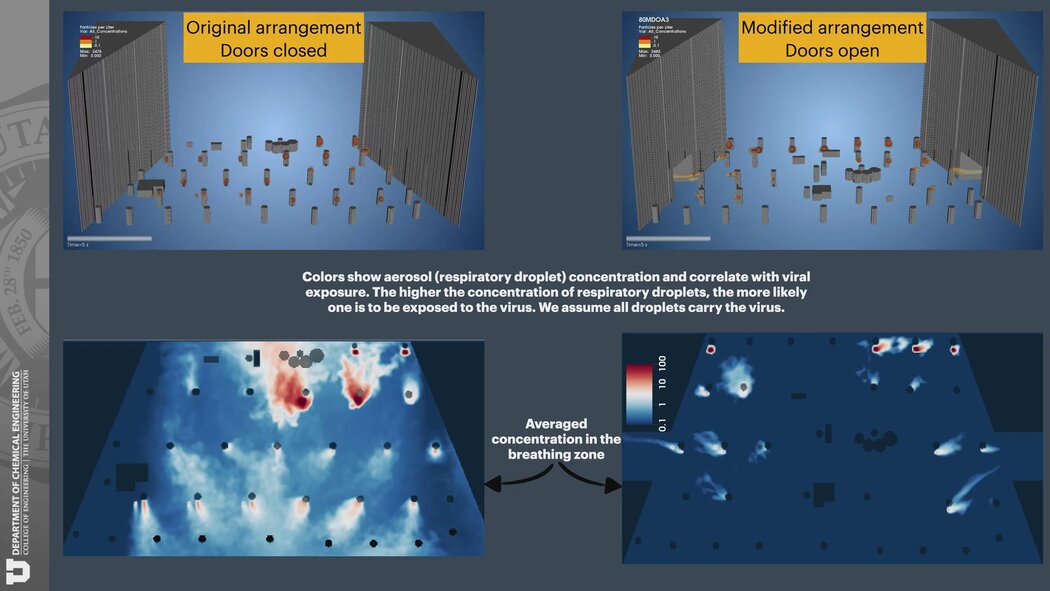
Moving super-spreading instruments, like the trumpet, closer to air vents could limit the aerosol buildup on stage, according to a new study.If musical instruments were people, trumpets would be super spreaders. When a trumpeter blows into the mouthpiece, tiny respiratory droplets, known as aerosols, travel out of the musician’s mouth, whiz through the brass tubing and spray into the air.During a deadly pandemic, when a musician might unwittingly be exhaling an infectious virus, that poses a potential problem for orchestras. And the trumpet is not the only musical health hazard.“Wind instruments are like machines to aerosolize respiratory droplets,” said Tony Saad, a chemical engineer and expert in computational fluid dynamics at the University of Utah.A simple but radical change — rearranging the musicians — could significantly reduce the aerosol buildup on stage, Dr. Saad and his colleagues reported in a new study, which was published in Science Advances on Wednesday.The work began last summer, when the Utah Symphony began to wonder whether, and how, they could return to performing safely.“They were looking for people that could provide insight into mitigation strategies that people would have some faith in,” said James Sutherland, a chemical engineer at the University of Utah and a co-author of the study.Comparison of aerosol concentrations, both instantaneous and averaged, for the baseline scenario and for the proposed mitigation strategy.Hedworth et alThe researchers created a detailed computer model of the symphony’s concert hall, noting the location of every air vent and the rate of air flow through the HVAC system.Then they mapped the typical position of each musician. The Utah Symphony, like most modern orchestras, positioned its musicians in a standard pattern, with the string instruments at the front of the stage, followed by several rows of woodwinds and brass instruments — the flutes and oboes, then the bassoons and clarinets, and then the trumpets and French horns. The trombones and the percussion section were positioned at the very back of the stage.To model the spread of aerosols during a concert, they incorporated recent research led by Jiarong Hong, a mechanical engineer at the University of Minnesota. Working with the Minnesota Orchestra, Dr. Hong and his colleagues had measured the concentration and size of aerosol particles emitted by a variety of different wind instruments. (Among their findings: The trumpet, bass trombone and oboe posed the highest risk.)With these parameters in place, Dr. Saad and Dr. Sutherland used what are known as computational fluid dynamics simulations to model how the air, and aerosols, would flow through the Utah concert hall when all the musicians were playing.The simulation revealed complex patterns of airflow. In general, the air flowed down from the air supply vents in the ceiling to the air return vents in the floor at the back of the stage. But two distinct vortices, at the front and the back of the stage, also formed, they found. “You see these large regions that are recirculating like a big tornado,” Dr. Saad said.Aerosols can get caught in these vortices, swirling around and around the stage and building up over time.The trumpets, which emitted large, concentrated aerosol clouds, posed a particular problem. As the instruments’ aerosol plumes traveled toward the air vents at the back of the stage, they passed directly through the percussionists’ breathing zone.“We saw this and said, ‘OK, this is a big problem, we’ve got to solve this,’” Dr. Sutherland said. “And given the insight we had into how the flow was moving, we said, ‘Well, let’s move some of these instruments around.’”They knew the idea might be controversial; orchestras have generally been arranged the same way for decades, for reasons that include both acoustics and tradition. “We asked them when we started the project, ‘What constraints do we have to work with? Can we move people?” Dr. Sutherland said. “And they said, ‘You do whatever you think you can to mitigate risk.’”A visualization of the proposed seating arrangement for the orchestra. Colors indicate the speed at which the respiratory aerosols are being emitted at (red is high, blue is low) and size indicates the amount of aerosols emitted per second.Hedworth et alThey moved the trumpets to the very back of the stage, right next to the air-return vents. Then they shifted the other wind instruments from the middle of the stage, moving them either closer to the back air vents or to the stage doors, which they suggested opening.These moves, the team hoped, would allow the aerosols to flow directly out of the concert hall, without passing through the breathing zones of other musicians or getting caught in an onstage vortex. “You want the smoker to sit close to the window,” Dr. Saad said. “That’s exactly what we did here.”Finally, they moved the instruments that do not generate aerosols at all — the piano and the percussion section — to the center of the stage. Together, these tweaks reduced the average aerosol concentration in the musicians’ breathing zones a hundredfold, the researchers calculated.Although the precise air flow patterns will be different in every venue, the general principles should hold everywhere, the team said. Orchestras can reduce the risk of aerosol spread by positioning the highest risk instruments near open doors and air return vents. (Orchestras that cannot do their own computer modeling could put a fog machine onstage and track how the fog flows, the researchers suggested.)Dr. Hong, who was not involved in the Utah study, praised the modeling work. “Simulating the flow inside an orchestra hall is not easy,” he said. “They did beautiful work in terms of characterizing flow.”But he questioned whether moving musicians was really a practical solution. “We work with musicians closely, and they don’t like to be rearranged,” he said. (He did note, however, that “for a student band, I think it’s perfectly fine.”)Instead, he proposed a different, albeit equally unconventional, solution: Masks, for the instruments. In a recent study, he found that covering the bell of a trumpet with a single layer of acoustic fabric could reduce particle emissions by about 60 percent without compromising sound quality.The Utah Symphony, for its part, proved open to rethinking the seating. And when it took the stage last fall, it did so with the stage doors open and the wind instruments at the rear.“That was a huge challenge for the musicians,” said Steven Brosvik, the president and chief executive of the Utah Symphony and Utah Opera. “But they all dove into it, and said, ‘Let’s go, let’s give it a try.’”It took a few weeks for the musicians to get comfortable with the new arrangement, and they plan to return to their traditional seating configuration this fall, Mr. Brosvik said. But the simulations gave the musicians peace of mind and allowed them to get back onstage, he said: “For us, it was life changing.”The researchers were pleased with how willing the musicians were to embrace an unusual solution, although their findings may have hit some instrumentalists harder than others. As Dr. Sutherland said, “We had to apologize to the trumpets in advance.”

Read more →