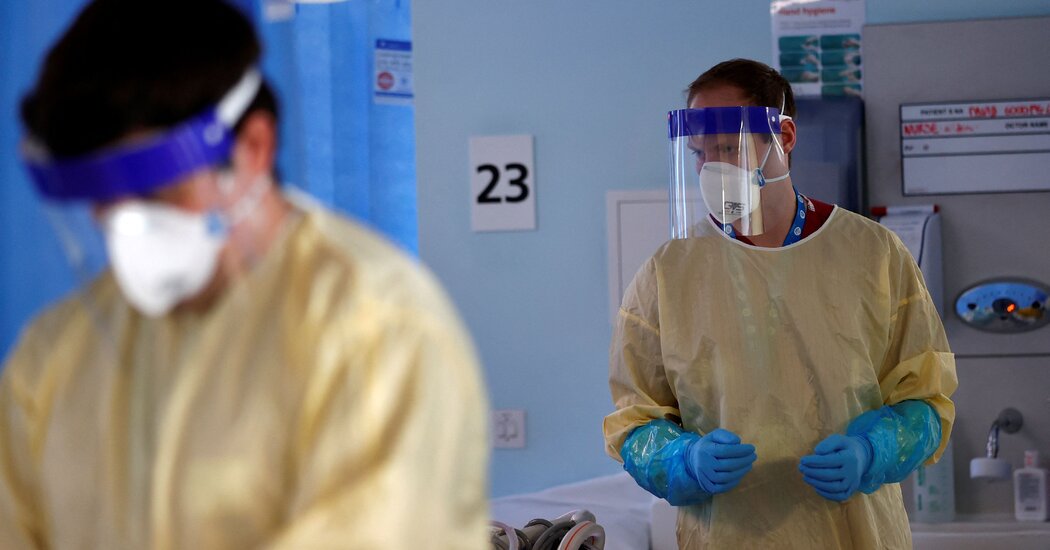
Vaccine hesitancy: Your job or the jab?

Health workers once on the frontline of the pandemic are now embroiled in a row over vaccine mandates.In Houston, a group of nurses is standing up against the state’s largest hospital system, which is requiring them to get vaccinated or lose their jobs. As more Americans return to the office, public health officials say falling vaccination rates and viral anti-vax rhetoric are threatening the nation’s pandemic recovery.

Read more →

Moderna and Pfizer-BioNTech vaccines prime T cells to fight SARS-CoV-2 variants, study finds

Researchers at La Jolla Institute for Immunology (LJI) have found that T cells from people who have recovered from COVID-19 or received the Moderna or Pfizer-BioNTech vaccines are still able to recognize several concerning SARS-CoV-2 variants.
Their new study, published online on July 1, 2021 in Cell Reports Medicine, shows that both CD4+ “helper” T cells and CD8+ “killer” T cells can still recognize mutated forms of the virus. This reactivity is key to the body’s complex immune response to the virus, which allows the body to kill infected cells and stop severe infections.
“This study suggests that the impact of mutations found in the variants of concern is limited,” says LJI Professor Alessandro Sette, Dr.Bio.Sci., study senior author and member of the LJI Center for Infectious Disease and Vaccine Research. “We can presume that T cells would still be available as a line of defense against viral infection.”
The researchers emphasize that the study only addresses how the body’s T cells respond to Variants of Concern (VOCs). The researchers emphasize that several of these variants, are linked to lower levels of virus-fighting antibodies.
The current study includes data on four of the most prevalent VOCs. Ongoing studies have been expanded to a larger panel of variants, including the Delta (B.1.617.2) variant, which became prevalent after this study had been initiated. The team has also established relationships with more than 20 different laboratories around the world to help monitor T cell reactivity to VOCs.
“These variants are still a concern, but our study shows that even if there is a decrease in antibodies, as other studies have shown, the T cells remain largely unaffected,” says LJI Instructor Alba Grifoni, Ph.D. “The vaccines still work.”
The Johnson & Johnson/Janssen COVID-19 vaccine was not part of this study because it was not available at the time the study was launched.

Read more →

How long can a person live? The 21st century may see a record-breaker

The number of people who live past the age of 100 has been on the rise for decades, up to nearly half a million people worldwide.
There are, however, far fewer “supercentenarians,” people who live to age 110 or even longer. The oldest living person, Jeanne Calment of France, was 122 when she died in 1997; currently, the world’s oldest person is 118-year-old Kane Tanaka of Japan.
Such extreme longevity, according to new research by the University of Washington, likely will continue to rise slowly by the end of this century, and estimates show that a lifespan of 125 years, or even 130 years, is possible.
“People are fascinated by the extremes of humanity, whether it’s going to the moon, how fast someone can run in the Olympics, or even how long someone can live,” said lead author Michael Pearce, a UW doctoral student in statistics. “With this work, we quantify how likely we believe it is that some individual will reach various extreme ages this century.”
Longevity has ramifications for government and economic policies, as well as individuals’ own health care and lifestyle decisions, rendering what’s probable, or even possible, relevant at all levels of society.
The new study, published June 30 in Demographic Research, uses statistical modeling to examine the extremes of human life. With ongoing research into aging, the prospects of future medical and scientific discoveries and the relatively small number of people to have verifiably reached age 110 or older, experts have debated the possible limits to what is referred to as the maximum reported age at death. While some scientists argue that disease and basic cell deterioration lead to a natural limit on human lifespan, others maintain there is no cap, as evidenced by record-breaking supercentenarians.

Read more →

Delta Variant Not Driving Hospitalization Surge in England, Data Shows

The Delta variant, which is now responsible for most coronavirus infections in England, is not driving a surge of new hospitalizations there, according to data released by Public Health England on Thursday.Although the number of coronavirus cases has ticked slowly upward in recent weeks, hospitalization rates remain exceedingly low. Of every 100,000 new cases in England, just 1.9 are admitted to the hospital.That rate, which is based on data collected between June 21 and June 27, is the same as it was the previous week and remains considerably lower than it was during England’s surge last winter. In January, the hospitalization rate peaked at 37.2 hospital admissions for every 100,000 cases.The data suggest that countries with high vaccination rates are unlikely to see major surges in hospitalizations from Delta. Nearly 75 percent of adults in England — including 95 percent of those who are 80 or older — have had at least one shot, according to the agency’s numbers.Earlier this month, England had delayed its plans to reopen after Delta caused a spike in new cases.Case rates are highest among young adults, who are the least likely to be vaccinated, Public Health England reported. (Among those under 40, just 34 percent have been at least partially vaccinated.) Young people are less likely to develop severe Covid-19, which could explain why the spread of Delta has not resulted in a wave of hospitalizations.Breakthrough infections, or those that occur in people who are fully vaccinated, tend to cause mild or no symptoms.At a separate news conference on Thursday, the European Medicines Agency noted that vaccination should provide good protection against Delta.“We are aware of the concerns that are caused by the rapid spread of the Delta variant and all the variants,” Marco Cavaleri, the head of biological health threats and vaccine strategy at the agency, said at the briefing. Given the research that has been done so far, the four vaccines that are approved in the European Union — Pfizer-BioNTech, Moderna, AstraZeneca and Johnson & Jonson — all seem to protect against the Delta variant, he said.In one recent study, for instance, researchers found that the Pfizer vaccine was 88 percent effective at protecting against symptomatic disease caused by Delta, a performance that nearly matches its 95 percent effectiveness against the original version of the virus. A single dose of the vaccine, however, is much less effective.“Expediting vaccination and maintaining public health measures remain very important tools to fight the pandemic,” Dr. Cavaleri said. “In particular, making sure that vulnerable and elderly people complete their vaccination course as soon as possible is paramount.”

Read more →

Study ties milder COVID-19 symptoms to prior run-ins with other coronaviruses

A study by Stanford University School of Medicine investigators hints that people with COVID-19 may experience milder symptoms if certain cells of their immune systems “remember” previous encounters with seasonal coronaviruses — the ones that cause about a quarter of the common colds kids get.
These immune cells are better equipped to mobilize quickly against SARS-CoV-2, the coronavirus responsible for COVID-19, if they’ve already met its gentler cousins, the scientists concluded.
The findings may help explain why some people, particularly children, seem much more resilient than others to infection by SARS-CoV-2, the coronavirus that causes COVID-19. They also might make it possible to predict which people are likely to develop the most severe symptoms of COVID-19.
The immune cells in question, called killer T cells, roam through the blood and lymph, park in tissues and carry out stop-and-frisk operations on resident cells. The study, published online July 1 in Science Immunology, showed that killer T cells taken from the sickest COVID-19 patients exhibit fewer signs of having had previous run-ins with common-cold-causing coronaviruses.
Discussions about immunity to COVID-19 often center on antibodies — proteins that can latch onto a virus before it’s able to infect a vulnerable cell. But antibodies are easily fooled, said Mark Davis, PhD, a professor of microbiology and immunology; director of Stanford’s Institute for Immunity, Transplantation and Infection; and a Howard Hughes Medical Institute investigator. Davis is the study’s senior author.
“Pathogens evolve quickly and ‘learn’ to hide their critical features from our antibodies,” said Davis, who is also the Burt and Marion Avery Family Professor. But T cells recognize pathogens in a different way, and they’re tough to fool.

Read more →

COVID-19 aggravates antibiotic misuse in India, study finds

The COVID-19 catastrophe in India has resulted in more than 30 million people infected with the virus and nearly 400,000 deaths, though experts are concerned that the figures most likely are much higher. Meanwhile, another public health crisis has emerged along with COVID-19: the widespread misuse of antibiotics.
During India’s first surge of COVID-19, antibiotic sales soared, suggesting the drugs were used to treat mild and moderate cases of COVID-19, according to research led by Washington University School of Medicine in St. Louis. Such use is considered inappropriate because antibiotics are only effective against bacterial infections, not viral infections such as COVID-19, and overuse increases the risk for drug-resistant infections.
“Antibiotic resistance is one of the greatest threats to global public health,” said the study’s senior author, infectious diseases specialist Sumanth Gandra, MD, an associate professor of medicine and an associate hospital epidemiologist at Barnes-Jewish Hospital. “Overuse of antibiotics lessens their ability to effectively treat minor injuries and common infections such as pneumonia, which means that these conditions can become serious and deadly. Bacteria that have become resistant to antibiotics don’t have boundaries. They can spread to any person in any country.”
The study, conducted in collaboration with McGill University in Canada, is published July 1 in PLOS Medicine. Giorgia Sulis, MD, PhD, a postdoctoral researcher at McGill, is the first author.
Antibiotics are life-saving medications. However, unchecked, germs learn to defy the antibiotics designed to kill them while also multiplying in force. Along with more illnesses and deaths, antibiotic resistance leads to increased hospital stays and medical costs.
In high-income countries such as the United States, United Kingdom and Canada, overall antibiotic use plunged in 2020, even during COVID-19 peaks. “This is because physicians in high-income countries generally did not prescribe antibiotics for mild and moderate COVID-19 cases,” Gandra explained. “The uptick in India indicates that COVID-19 guidelines were not followed.”
Also worrisome are prior data analyses concluding that COVID-19 cases and deaths in India surpass the official estimates. “In reality, the problem is likely much worse,” said Gandra, who also serves on a World Health Organization (WHO) committee focused on reducing antibiotic prescriptions in low- and middle-income countries.

Read more →

Plastic drapes reduce hypothermia in premature babies

Most babies born prematurely or with health problems are quickly whisked away to the Neonatal Intensive Care Unit (NICU) where they might require assisted heating devices to regulate their temperature. A University of Houston College of Nursing researcher is reporting that the traditional use of cloth blankets and towels during peripherally inserted central catheter (PICC) placement may hinder heat transfer from the assisted heating mechanisms, increasing the risk for neonatal hypothermia. In Advances in Neonatal Care, Huong (Kelle) Phan, clinical assistant professor, reports that a plastic drape lowers the incidence of hypothermia.
“The use of the plastic drape is a quality improvement to reduce the hypothermia rate in very low birth-weight (VLBW) neonates by replacing cloth blanket/towels with a plastic drape during PICC placement,” said Phan. “A plastic drape shows promise in improving nursing practice by providing improved thermoregulation for premature neonates during PICC placement.”
When a premature baby’s body temperature drops below 36.5°C, the baby may experience cold stress, which is a cause for concern. The recommended temperature range for postnatal stabilization is between 36.5° and 37.5°C.
Phan’s research project included implementing plastic drapes over three months, during 58 PICC procedures in a Level-3 NICU. A pre-/posttest was used to evaluate the impact of the intervention on hypothermia rates compared with a baseline cloth group and a concurrent cloth cohort.
“After the 3-month implementation period, the hypothermia rate for the intervention group was lower than that for the baseline cloth group (5.2% and 11.3%, respectively). Post-PICC hypothermia rates were significantly lower for the intervention group than for the concurrent cloth cohort,” said Phan.
This evidence demonstrated plastic drapes reduced the hypothermia rate in the NICU for VLBW neonates during PICC placement compared with cloth blankets or towels.
“Phan’s innovative nursing intervention of using the plastic drape during a PICC insertion helps some of our most vulnerable patients, those infants that must be treated in neonatal intensive care units,” said Kathryn Tart, founding dean and Humana Endowed Dean’s Chair in Nursing, UH College of Nursing.
Phan recommends further research to replicate findings with larger samples of PICC insertions, using a plastic drape in the operating room and other NICU procedures. 
Story Source:
Materials provided by University of Houston. Original written by Laurie Fickman. Note: Content may be edited for style and length.

Read more →

Newly discovered genetic variants in a single gene cause neurodevelopmental disorder

Mayo Clinic researchers have discovered that genetic variants in a neuro-associated gene called SPTBN1 are responsible for causing a neurodevelopmental disorder. The study, published in Nature Genetics, is a first step in finding a potential therapeutic strategy for this disorder, and it increases the number of genes known to be associated with conditions that affect how the brain functions.
“The gene can now be included in genetic testing for people suspected of having a neurodevelopmental disorder, which may end the diagnostic odyssey these people and their families have endured,” says Margot Cousin, Ph.D., a translational genomics researcher in Mayo Clinic’s Center for Individualized Medicine and the study’s lead author.
For the global study, a collaboration with The University of North Carolina at Chapel Hill, researchers investigated disease-causing variants of the SPTBN1 gene in 29 people with clinical neurodevelopmental symptoms, including language and motor delays, intellectual disability, autistic features, seizures, behavioral and movement abnormalities, and variable dysmorphic facial features. Overall, the team identified 28 unique variants.
Dr. Cousin says most of the genetic variants were not inherited, but rather newly occurred in the patients who were affected.
“We showed through multiple different model systems, including computational protein modeling, human- and mouse cell-based systems, patient-derived cell systems, and in vivo mouse studies, the impact the variants have on the function of the protein encoded by the SPTBN1 gene,” Dr. Cousin explains. “I had a hunch this gene was the answer for these patients, but it wasn’t until we accrued and studied more patients with variants in SPTBN1 that we could see how the variants had damaging effects on the protein and we could begin putting the story together.”
The SPTBN1 gene codes for a protein called beta-two spectrin, which is abundantly expressed in the brain and other parts of the body. Beta-two spectrin makes protein networks within cells, and it is essential for the brain’s development and connectivity.

Read more →

Novel microscopy method provides look into future of cell biology

What if a microscope allowed us to explore the 3D microcosm of blood vessels, nerves, and cancer cells instantaneously in virtual reality? What if it could provide views from multiple directions in real time without physically moving the specimen and worked up to 100 times faster than current technology?
UT Southwestern scientists collaborated with colleagues in England and Australia to build and test a novel optical device that converts commonly used microscopes into multiangle projection imaging systems. The invention, described in an article in today’s Nature Methods, could open new avenues in advanced microscopy, the researchers say.
“It is a completely new technology, although the theoretical foundations for it can be found in old computer science literature,” says corresponding author Reto Fiolka, Ph.D. Both he and co-author Kevin Dean, Ph.D., are assistant professors of cell biology and in the Lyda Hill Department of Bioinformatics at UT Southwestern.
“It is as if you are holding the biological specimen with your hand, rotating it, and inspecting it, which is an incredibly intuitive way to interact with a sample. By rapidly imaging the sample from two different perspectives, we can interactively visualize the sample in virtual reality on the fly,” says Dean, director of the UTSW Microscopy Innovation Laboratory, which collaborates with researchers across campus to develop custom instruments that leverage advances in light microscopy.
Currently, acquiring 3D-image information from a microscope requires a data-intensive process, in which hundreds of 2D images of the specimen are assembled into a so-called image stack. To visualize the data, the image stack is then loaded into a graphics software program that performs computations to form two-dimensional projections from different viewing perspectives on a computer screen, the researchers explain.
“Those two steps require a lot of time and may need a very powerful and expensive computer to interact with the data,” Fiolka says.

Read more →

Fibromyalgia likely the result of autoimmune problems

New research from the Institute of Psychiatry, Psychology & Neuroscience (IoPPN) at King’s College London, in collaboration with the University of Liverpool and the Karolinska Institute, has shown that many of the symptoms in fibromyalgia syndrome (FMS) are caused by antibodies that increase the activity of pain-sensing nerves throughout the body.
The results show that fibromyalgia is a disease of the immune system, rather than the currently held view that it originates in the brain.
The study, published today in the Journal of Clinical Investigation, demonstrates that the increased pain sensitivity, muscle weakness, reduced movement, and reduced number of small nerve-fibres in the skin that are typical of FMS, are all a consequence of patient antibodies.
The researchers injected mice with antibodies from people living with FMS and observed that the mice rapidly developed an increased sensitivity to pressure and cold, as well as displaying reduced movement grip strength. In contrast, mice that were injected with antibodies from healthy people were unaffected, demonstrating that patient antibodies cause, or at least are a major contributor to the disease.
Furthermore, the mice injected with fibromyalgia antibodies recovered after a few weeks, when antibodies had been cleared from their system. This finding strongly suggests that therapies which reduce antibody levels in patients are likely to be effective treatments. Such therapies are already available and are used to treat other disorders that are caused by autoantibodies.
Dr David Andersson, the study’s primary investigator from King’s IoPPN said “The implications of this study are profound. Establishing that fibromyalgia is an autoimmune disorder will transform how we view the condition and should pave the way for more effective treatments for the millions of people affected. Our work has uncovered a whole new area of therapeutic options and should give real hope to fibromyalgia patients.
“Previous exploration of therapies has been hampered by our limited understanding of the illness. This should now change. Treatment for FMS is focussed on gentle aerobic exercises, as well as drug and psychological therapies designed to manage pain, although these have proven ineffective in most patients and have left behind an enormous unmet clinical need.”
Current estimates suggest that at least 1 in 40 people are affected by FMS worldwide (80% of which are women) and is commonly characterised by widespread pain throughout the body, as well as fatigue (often referred to as ‘fibro fog’) and emotional distress. It most commonly develops between the ages of 25 and 55, although children can also get it.
Dr Andreas Goebel, the study’s principle clinical investigator from the University of Liverpool said, “When I initiated this study in the UK, I expected that some fibromyalgia cases may be autoimmune. But David’s team have discovered pain-causing antibodies in each recruited patient. The results offer amazing hope that the invisible, devastating symptoms of fibromyalgia will become treatable.”
Professor Camilla Svensson, the study’s primary investigator from Karolinska Institute said, “Antibodies from people with FMS living in two different countries, the UK and Sweden, gave similar results, which adds enormous strength to our findings. The next step will be to identify what factors the symptom-inducing antibodies bind to. This will help us not only in terms of developing novel treatment strategies for FMS, but also of blood-based tests for diagnosis, which are missing today.
Dr Craig Bullock, Research Discovery and Innovations Lead at Versus Arthritis said “Fibromyalgia affects millions of people in the UK and can have a devastating impact on quality of life. It causes pain all over the body, fatigue, disturbed sleep and regular flare-ups where symptoms get even worse.
“Fibromyalgia is a particularly difficult condition to diagnose and manage because its causes are unknown. This research shows that antibodies found in human blood can cause fibromyalgia-like symptoms in mice, suggesting that these antibodies play a crucial role in the condition. Further research is needed but this offers hope to the millions of people with fibromyalgia that an effective treatment could be found in the relatively near future.”
Story Source:
Materials provided by King’s College London. Note: Content may be edited for style and length.

Read more →